Categories
Machinery

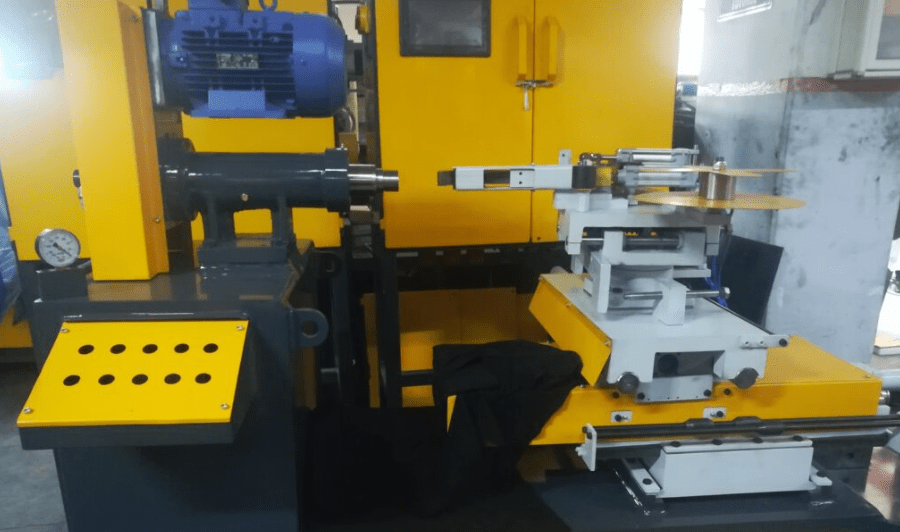
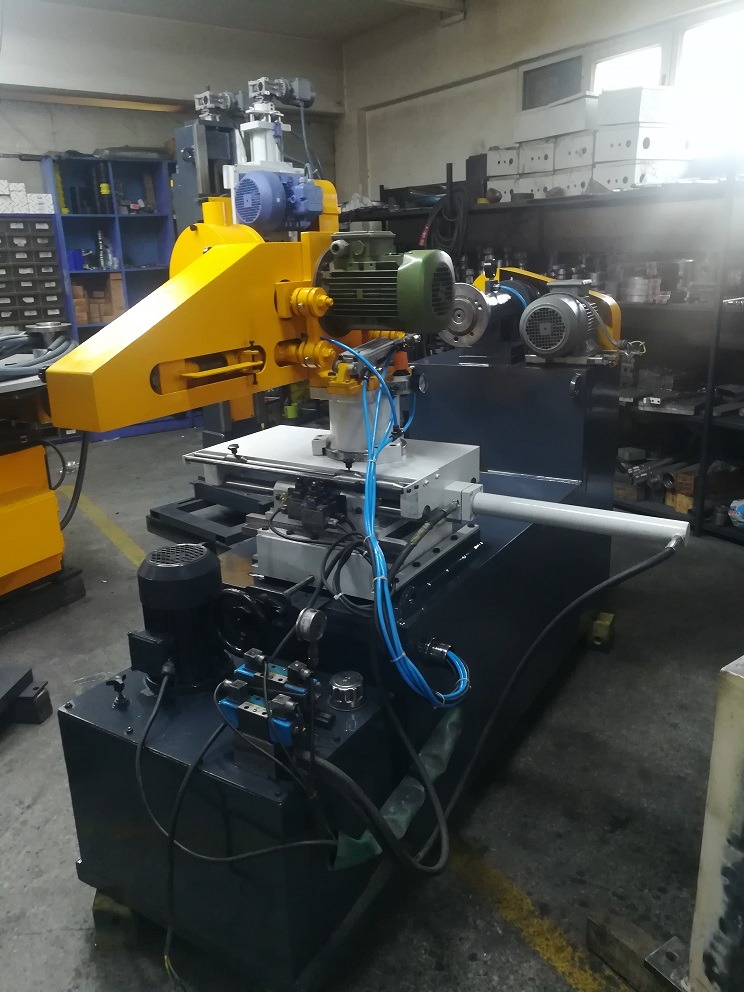
Helmet shell forming press for Kevlar helmet manufacturing

Helmet shell forming press for Kevlar helmet manufacturing

Helmet shell forming press for Kevlar helmet manufacturing: Body armor and helmets are crucial protective gear used in various fields such as military, law enforcement, and high-risk professions. Their manufacturing involves advanced materials and engineering processes to provide maximum protection against ballistic threats, blunt force, and other hazards.

Body Armor Manufacturing

  1. Materials Used:
    • Aramid Fibers (e.g., Kevlar): These synthetic fibers are woven into sheets and layered to create a flexible, lightweight armor that can stop bullets.
    • UHMWPE (Ultra-High-Molecular-Weight Polyethylene): A lightweight alternative to aramid fibers, often used in soft and hard armor.
    • Steel or Ceramic Plates: Hard armor plates made of steel or ceramic are used to stop high-velocity rounds and provide additional protection in “hard” body armor vests.
    • Graphene: Emerging in research for its potential to improve the strength-to-weight ratio of body armor.
  2. Manufacturing Process:
    • Weaving or Layering: For soft armor, the aramid or UHMWPE fibers are woven or layered together to form a flexible, strong sheet.
    • Molding or Pressing: Hard armor plates (such as ceramic or steel) are molded or pressed into shape.
    • Laminating: In some cases, several layers of woven fibers or materials are laminated together to enhance protection.
    • Cutting and Shaping: Once the material is prepared, it is cut to the appropriate shape for vests, plates, or inserts.
  3. Testing:
    • Body armor undergoes rigorous testing, including ballistic testing (shooting projectiles at the material) and physical durability tests (e.g., puncture resistance and wear).
  4. Customization: Armor can be tailored to specific needs, such as for different threat levels (e.g., handgun vs. rifle threats) or to fit the user’s body shape and size.

Helmet Manufacturing

  1. Materials Used:
    • Fiberglass: Offers a lightweight and cost-effective solution for helmets.
    • Kevlar and Aramid Fibers: These materials are woven into the shell or used in combination with other materials to form a strong and lightweight helmet.
    • Carbon Fiber: Known for its high strength-to-weight ratio, carbon fiber is used in advanced helmets for maximum protection without added weight.
    • Polycarbonate or ABS: These thermoplastics are commonly used in riot helmets or lower-cost tactical helmets.
  2. Manufacturing Process:
    • Molding: The outer shell of the helmet is typically molded using a plastic or composite material, followed by curing in an oven to solidify the shape.
    • Liner Installation: Helmets have an inner foam or energy-absorbing liner (such as expanded polystyrene) to reduce the impact on the wearer’s head.
    • Suspension Systems: Helmets often include suspension systems (e.g., chin straps, padding) for comfort and stability. These systems also help absorb shock in case of impact.
  3. Testing:
    • Ballistic Testing: Helmets undergo ballistic tests to ensure they meet safety standards against various types of projectiles (e.g., small arms fire).
    • Impact and Penetration Testing: Helmets are subjected to blunt force trauma testing, simulating impacts from blunt objects and sharp objects.
    • Environmental Durability: Helmets are also tested for durability in extreme conditions, such as high and low temperatures, moisture, and saltwater exposure.
  4. Customization:
    • Helmets can be customized for different environments (e.g., combat, riot control, or industrial applications) by adding accessories like visors, communication systems, or night-vision mounts.

Current Trends and Innovations:

  • Smart Armor: Some manufacturers are incorporating electronic sensors or integrated communication systems into body armor to monitor the wearer’s health and environmental conditions.
  • Lightweight Materials: Continuous research is focused on reducing the weight of armor while maintaining or improving its protective capabilities, often using materials like graphene or advanced composites.
  • Modular Armor: Systems that allow the user to adapt the armor configuration (e.g., adding or removing plates or inserts) depending on mission requirements.

Body armor and helmet manufacturing requires precision, rigorous testing, and the use of high-performance materials to ensure the protection and safety of the user.

Body armor and helmet manufacturing is a highly specialized field, involving advanced materials and engineering to create protective gear for military, law enforcement, and other high-risk professions. The process starts with selecting materials that balance strength, weight, and flexibility. For body armor, materials like Kevlar, UHMWPE, and ceramic or steel plates are commonly used. These materials are woven, layered, or molded to form soft or hard armor, which is then tested for its ability to withstand ballistic threats, blunt force, and wear and tear. The manufacturing process also involves cutting and shaping the materials to fit specific body shapes or armor configurations.

In helmet manufacturing, materials like fiberglass, carbon fiber, and polycarbonate are molded into shells that are paired with foam liners to absorb impacts. Suspension systems inside helmets help ensure a snug, comfortable fit while also aiding in shock absorption. Helmets undergo extensive testing to meet safety standards, including ballistic testing and impact resistance. The integration of smart technologies into both body armor and helmets is an emerging trend, with sensors and communication systems being added for monitoring the wearer’s health and environment. Innovations continue to focus on reducing the weight of the gear without compromising protection, as well as improving overall comfort and adaptability. The manufacturing of both body armor and helmets requires a combination of material science, engineering, and rigorous testing to ensure they provide the highest level of protection in a variety of hazardous environments.

The evolution of body armor and helmets has been driven by the constant need to adapt to new threats, emerging technologies, and environmental challenges. As military and law enforcement needs become more specialized, manufacturers are developing more advanced and customizable solutions to meet those demands.

For example, body armor is increasingly becoming modular, with systems that allow the wearer to add or remove plates or inserts depending on the situation. This adaptability is crucial for personnel who may face varying threats, such as handgun rounds in one scenario and rifle fire in another. With modular systems, body armor can be tailored not only to threat levels but also to comfort and mobility, which is critical for soldiers or police officers who need to remain agile.

In helmets, advancements have focused on improving the helmet’s ability to absorb and disperse impact forces. The incorporation of energy-dispersing materials, like advanced foams and composites, allows for helmets that provide better protection against blunt force trauma while remaining lightweight. Additionally, helmets are now designed with additional features like integrated communication systems, night vision mounts, and face shields, offering more versatility in combat or tactical operations.

A major challenge in both body armor and helmet design is maintaining a balance between weight and protection. While stronger materials provide better protection, they often come at the cost of increased weight, which can hinder the wearer’s mobility. To combat this, manufacturers are constantly exploring new materials, such as graphene, which offer superior strength-to-weight ratios. Graphene is particularly attractive because it is incredibly strong yet light, making it a potential game-changer for the future of personal protective equipment.

Research and development are also shifting towards “smart armor,” which can integrate sensors to monitor the wearer’s physical condition, such as heart rate, body temperature, or the impact forces they experience. This data could be sent to a central system for real-time analysis, providing vital information that could improve the effectiveness of operations or lead to timely medical interventions in case of injury.

The future of body armor and helmets will likely see more integrated systems that not only protect physically but also enhance situational awareness and communication. As these technologies continue to develop, the primary goal remains to provide the wearer with the best possible protection without compromising on comfort, weight, or mobility.

Injection molding plays a significant role in the manufacturing of both body armor and helmets, especially for producing hard armor plates, helmet shells, and some of the inner components of protective gear. It is an efficient, precise, and scalable manufacturing technique that allows for the production of complex shapes and components with high consistency and minimal waste. Here’s how injection molding is used in the process:

Injection Molding in Body Armor Manufacturing

While most body armor is made from woven or layered fibers (like Kevlar or UHMWPE), injection molding is primarily used for producing hard armor plates or inserts. These hard plates are typically used in high-threat environments to protect against rifle rounds or armor-piercing ammunition.

  1. Material Selection:
    • Polycarbonate, Nylon, or ABS Plastics: For certain types of hard armor, injection molding is used with high-strength thermoplastics like polycarbonate or nylon. These materials are chosen for their ability to absorb impact energy and their durability.
    • Composite Materials: More advanced body armor might use composite materials, such as a blend of thermoplastic resins reinforced with fibers (like carbon fiber or aramid fibers) that can be injected into molds to create armor plates that are both strong and lightweight.
  2. Molding Process:
    • Heating and Injection: The material is heated to a molten state and then injected into a mold under high pressure. The mold shape is pre-designed to match the required body armor plate form, ensuring a precise fit and a consistent thickness of material.
    • Cooling and Solidifying: Once the material is injected into the mold, it is rapidly cooled and solidified to form the final armor plate shape. The cooling process needs to be controlled carefully to avoid warping or weakening the structure of the plate.
    • Finishing: After removal from the mold, the plates may undergo additional finishing processes such as trimming, polishing, or coating to improve their surface durability and effectiveness.
  3. Benefits for Body Armor:
    • Cost-Effectiveness: Injection molding allows for mass production, making it a cost-effective option for producing a large volume of hard armor components.
    • Consistency and Precision: The high-pressure molding process ensures uniformity in shape and size, which is critical for ensuring proper fit and protection.
    • Complex Geometries: Injection molding can create plates or inserts with complex geometries, like curved or multi-layered designs, which are crucial for optimizing coverage and comfort.

Injection Molding in Helmet Manufacturing

Helmets, particularly tactical and military helmets, also utilize injection molding for various components, including the helmet shell and inner components like liners and suspension systems.

  1. Helmet Shells:
    • Material Selection: Materials such as fiberglass, polycarbonate, and ABS are commonly used in helmet shells. In some advanced applications, carbon fiber composites or high-performance thermoplastic resins are used for greater strength and reduced weight.
    • Molding Process: The injection molding process starts with the creation of the shell using the chosen thermoplastic material. The material is injected into a mold that defines the helmet’s outer shape. For composite helmets, layers of resin and reinforcing fibers may be added before the molding process.
    • Surface Finish: Once the molding is completed, the shell can be further treated with coatings for impact resistance, aesthetics, or camouflage. Additional layers of impact-absorbing foam may also be inserted into the shell for added protection.
  2. Liners and Suspension Systems:
    • Foam Liners: Many helmets feature a foam liner that is also manufactured using injection molding techniques. These liners help absorb the energy of impacts and distribute forces across the head to reduce injury. The foam is molded into a specific shape to fit the contours of the helmet shell and the wearer’s head.
    • Suspension Systems: The inner suspension systems, which hold the helmet in place and help with comfort, are often made with thermoplastic materials using injection molding. These systems may include adjustable straps, padding, and comfort foam to ensure a snug, secure fit.
  3. Customization and Integration:
    • Add-ons: Injection molding allows for the easy integration of add-ons such as face shields, visors, or mounts for communication devices and night-vision equipment. These components can be molded to exact specifications and fitted into the helmet design.
    • Increased Comfort: Since the molding process allows for complex internal geometries, helmets can be designed with optimized comfort features, like ventilation channels or customized padding patterns, which improve wearability during extended use.
  4. Benefits for Helmet Manufacturing:
    • Durability and Strength: The molded helmet shell provides excellent durability, and injection molding allows the production of helmets that are both tough and lightweight, critical for tactical situations where every ounce counts.
    • Scalability: Like body armor, helmet production benefits from the scalability of injection molding, allowing manufacturers to produce large quantities at consistent quality and performance.
    • Cost Efficiency: The high efficiency of injection molding makes it a cost-effective process, especially when mass-producing helmet shells and components.

Challenges and Considerations

While injection molding offers many benefits, there are some challenges to consider:

  • Material Limitations: The process is often limited to certain thermoplastics and composites. Materials that need to be highly impact-resistant or lightweight (such as ceramic plates for armor) may require additional post-processing or other manufacturing methods.
  • Complexity of Design: Injection molds are expensive to create, so for highly specialized or low-volume products, it may not always be the most economical choice.
  • Material Performance: For body armor, especially, material performance must be carefully tested to ensure that injection-molded parts meet the necessary safety standards, particularly for ballistic resistance.

Injection molding is an essential technology in the production of body armor and helmets, especially when mass production, consistency, and complex design features are required. While it may not be suitable for every part of the gear, its application in hard armor plates, helmet shells, and certain internal components continues to make it a key manufacturing process in the industry.

Injection molding is increasingly used in the manufacturing of body armor and helmets due to its ability to produce high volumes of precise, durable components. In body armor, it’s particularly effective for creating hard armor plates and inserts, which are designed to stop high-velocity rounds. The process involves injecting molten material, such as polycarbonate, nylon, or composite resins, into molds under high pressure. This method ensures uniformity in thickness, shape, and size, which is critical for ensuring the protective gear fits correctly and performs consistently. For helmets, injection molding is utilized to create the outer shell from materials like polycarbonate, fiberglass, or ABS plastic. The mold forms the helmet shell, which is then combined with foam liners that absorb impact and provide comfort. The molding process also enables the integration of complex features like ventilation channels, suspension systems, and mounts for additional equipment. Injection molding is beneficial for these products because it offers cost efficiency, scalability, and the ability to produce components with intricate shapes. However, challenges remain, particularly regarding the material choices and ensuring the final product meets the required standards for protection and durability.

As injection molding continues to evolve, its role in body armor and helmet manufacturing becomes increasingly integral, particularly in meeting the demands for both efficiency and performance. One of the significant advantages of injection molding is its ability to scale production quickly and with precision. For body armor, especially hard armor plates, this means manufacturers can produce large quantities of plates that are uniform in design and meet rigorous safety standards. The ability to mass-produce parts like this is vital in military and law enforcement settings, where large numbers of high-quality protective gear are required quickly. In helmet production, injection molding helps ensure the helmet shell is lightweight yet strong enough to withstand impacts. This is especially important for military and tactical helmets, where weight is a constant concern for users who need to maintain mobility without sacrificing safety.

Another advantage of injection molding in helmet manufacturing is the ease with which additional components can be integrated into the design. With molds, it is possible to create features like built-in communication system mounts, visors, and even modular attachment points for accessories. These integrated systems allow for a more streamlined design, where all necessary features are part of the initial mold, making assembly faster and more cost-effective.

Moreover, the process’s precision allows for better customization of helmets and body armor. For example, helmets can be designed with custom internal geometries for different head shapes and sizes, improving comfort and fit. The suspension systems and padding inside helmets, which are critical for comfort and shock absorption, can also be produced through injection molding, allowing for consistent and reliable comfort features that enhance the user experience.

Despite these advantages, there are still limitations. The choice of materials is a critical factor because some materials required for optimal protection—such as certain ceramics for hard armor plates—may not lend themselves well to injection molding. Additionally, the complexity of the molds can make them expensive to design and produce, especially for highly specialized components or low-volume production runs. However, for large-scale manufacturing where uniformity, durability, and cost-efficiency are priorities, injection molding remains an essential tool in the production of body armor and helmets.

Looking ahead, the future of injection molding in this field is likely to be influenced by new materials and technologies. For example, advancements in thermoplastics, composites, and even 3D printing techniques could allow for more lightweight, yet highly protective, materials to be injected into molds. The integration of smart technologies, such as sensors embedded in the armor or helmets, could also benefit from injection molding, enabling the seamless production of multifunctional gear that not only protects but also communicates real-time data about the wearer’s status.

Ultimately, the continuous advancements in injection molding will support the development of more efficient, durable, and versatile body armor and helmet designs, improving both the safety and comfort of those who rely on this protective gear.

Laminating machine for body armour and helmet manufacturing

Laminating machines are crucial in the manufacturing of both body armor and helmets, particularly for producing multi-layered protective materials that offer enhanced strength and flexibility. The lamination process involves bonding multiple layers of materials together to form a composite structure, which improves the overall performance of body armor and helmets in terms of impact resistance, durability, and comfort.

In the context of body armor and helmet manufacturing, laminating machines are used to combine materials such as aramid fibers (like Kevlar), UHMWPE, carbon fiber, or fiberglass with resins to create strong, lightweight, and flexible layers that can withstand impacts, ballistic threats, and other hazards. The laminating process typically involves applying heat, pressure, and sometimes vacuum, to bond these layers together while ensuring consistency and uniformity in the final product.

For body armor, laminating machines are essential in creating the soft armor layers. These layers are typically made from fibers such as Kevlar or UHMWPE, which are woven or braided to form sheets. These sheets are then layered with resin or adhesives and passed through a laminating machine, which consolidates the layers by applying controlled heat and pressure. The result is a rigid, flexible armor that provides protection without adding excessive weight. The laminated structure enhances the energy-absorbing properties of the armor, ensuring it can dissipate the force of a bullet or other projectile effectively.

In helmet manufacturing, laminating machines are used to bond the helmet’s composite materials, such as fiberglass or carbon fiber, with resin. The laminating process can create the outer shell of the helmet, which is strong yet lightweight, to protect against impacts. Additionally, helmet linings or internal padding materials, often made from foam or other shock-absorbing materials, can be laminated for enhanced comfort and to improve the helmet’s overall performance in absorbing and dissipating impact energy.

The laminating process can be done using several techniques, such as heat-pressing, vacuum-bagging, or autoclaving. Each method has its advantages and is chosen based on the type of materials used, the desired thickness of the laminated structure, and the overall design of the body armor or helmet. For example, autoclaving is a common method used in advanced helmet manufacturing, where the layers of composite materials are sealed in a vacuum bag and then subjected to high pressure and heat in an autoclave to form the helmet shell. This method ensures a strong bond between layers and reduces the chance of defects in the final product.

The use of laminating machines offers several advantages in the production of body armor and helmets. The process ensures consistent and uniform layer bonding, reducing material waste and improving the overall strength of the finished product. It also allows for the production of complex, multi-layered designs that can be tailored to specific threat levels and requirements. Additionally, laminating machines can be adjusted to accommodate various materials, enabling manufacturers to experiment with new composites or hybrid structures that can provide superior protection.

One of the challenges in using laminating machines is ensuring that the process is optimized for each material and layer combination. For example, if the heat and pressure are not carefully controlled, the layers may not bond properly, compromising the strength and effectiveness of the armor or helmet. Furthermore, the choice of adhesive or resin used in the laminating process must be carefully selected to ensure it provides the necessary bond strength while maintaining the flexibility and weight characteristics required for comfort and performance.

In conclusion, laminating machines are a critical tool in the production of body armor and helmets, enabling manufacturers to create high-performance, multi-layered protective materials. By applying controlled heat, pressure, and sometimes vacuum, these machines ensure that the various layers are bonded together to form a strong, durable, and lightweight product that offers superior protection against ballistic threats and impacts. With continued advancements in materials and lamination technologies, the role of laminating machines will remain essential in producing cutting-edge personal protective equipment.

Laminating machines are essential in creating the multi-layered composites used in body armor and helmet manufacturing, ensuring the performance of protective gear. These machines apply controlled heat and pressure to bond different layers of materials, such as aramid fibers, UHMWPE, fiberglass, or carbon fiber, with resins or adhesives. The laminating process enhances the strength, durability, and flexibility of the finished product, ensuring it can effectively absorb and dissipate impact forces from ballistic threats or blunt trauma.

For body armor, laminating machines enable the production of soft armor layers that combine fibers like Kevlar or UHMWPE with resins, creating a flexible yet tough material capable of stopping bullets and other projectiles. The layers are consolidated under heat and pressure to form a durable, lightweight composite that provides the necessary protection. In helmet manufacturing, the same process is applied to create composite shells made from fiberglass or carbon fiber, which are lightweight yet strong enough to resist impacts. These laminating machines can use various techniques, such as heat-pressing, vacuum-bagging, or autoclaving, depending on the materials used and the desired performance characteristics.

The main advantage of laminating machines is their ability to produce consistent, uniform layers that contribute to the overall strength and quality of the armor or helmet. They also allow for the customization of materials, enabling manufacturers to experiment with different composites or hybrid materials that offer superior protection. However, careful control of heat, pressure, and resin application is crucial in ensuring the integrity of the final product, as improper bonding could compromise its protective capabilities. With the continuous evolution of materials and lamination technologies, these machines will remain a fundamental part of manufacturing high-performance protective gear, ensuring that body armor and helmets offer the best possible protection while remaining lightweight and comfortable.

As laminating technology continues to improve, the precision and efficiency of laminating machines are increasingly pivotal in meeting the growing demands for high-performance protective gear. In the case of body armor, the evolution of materials and their integration into the lamination process is key. For instance, researchers are exploring more advanced composite materials, including high-strength, lightweight fibers and new resin formulations that offer enhanced resistance to heat, moisture, and chemical exposure, which could further improve the overall protection of body armor. These innovations in materials require laminating machines that can handle more advanced processing methods, allowing for tighter control over temperature and pressure during the bonding process.

Similarly, the use of laminating machines in helmet manufacturing is benefiting from advancements in materials like graphene and other nanomaterials. These materials offer exceptional strength-to-weight ratios, which could lead to helmets that are both more protective and lighter, without compromising comfort or mobility. As new materials are developed, the laminating process will have to evolve to accommodate these advanced composites, ensuring that the bond between layers remains consistent and secure.

Moreover, the introduction of automation and smart technology into the laminating process is streamlining production, improving both consistency and efficiency. Automated laminating machines can monitor factors such as temperature, pressure, and resin flow in real-time, ensuring that each layer is properly bonded for optimal performance. This integration of advanced sensors and control systems helps reduce the risk of human error and material defects, ultimately leading to higher-quality products with fewer variations.

One of the exciting prospects for the future of laminating machines in body armor and helmet manufacturing is the possibility of creating “smart” armor systems that combine traditional protective materials with embedded sensors. These sensors could monitor the condition of the wearer, providing real-time data on their health, such as heart rate, body temperature, and stress levels. With these smart features, laminating machines would play a crucial role in integrating both passive protective materials and active sensing technologies into a single, unified system.

As these technologies continue to advance, laminating machines will not only serve the purpose of ensuring the structural integrity of body armor and helmets but also help create more advanced, multi-functional gear. This could lead to protective equipment that is not just protective but also adaptive and responsive, offering wearers both physical safety and real-time data that can enhance situational awareness and safety.

Ultimately, the ongoing development of laminating technologies will allow manufacturers to keep up with the growing demands for more sophisticated protective gear. With each improvement, the process will become more efficient, more customizable, and better equipped to handle the diverse range of materials and design complexities required for next-generation body armor and helmets. This will ensure that personal protective equipment continues to evolve in line with the latest advancements in materials science, manufacturing techniques, and wearable technology.

Hydraulic press for body armour and helmet manufacturing

Parts to be produced by Composite Press for Ballistic Panels

Hydraulic presses are critical in the manufacturing of body armor and helmets, as they provide the force needed to shape, bond, and compress materials into the desired forms. These presses use hydraulic power to exert a consistent and controlled amount of pressure, which is essential for processes like molding, lamination, and compression, where precision and uniformity are key. In both body armor and helmet manufacturing, hydraulic presses ensure that materials are processed correctly to meet the necessary strength, durability, and protection standards.

In body armor manufacturing, hydraulic presses are often used to shape and compress composite materials like fiberglass, aramid fibers (such as Kevlar), and polyethylene into rigid, durable plates. These plates are the hard armor inserts that provide protection against high-velocity threats like bullets. The press applies even pressure across the composite layers, ensuring that they bond tightly together and that the resulting plate is uniform in thickness, shape, and structure. This uniformity is crucial, as any inconsistencies in the armor plate could reduce its ability to effectively stop a bullet or other projectile.

For helmets, hydraulic presses are used to mold the outer shell of the helmet from materials such as polycarbonate, fiberglass, or carbon fiber composites. In the case of composite helmets, the press applies the necessary pressure to bond layers of resin and reinforcing fibers, creating a strong yet lightweight shell. Additionally, hydraulic presses can be used to compress foam materials or other padding that form the inner liner of the helmet. The foam liners help absorb impacts and provide comfort to the wearer. The press ensures that these components are tightly compressed to maintain their structural integrity and protective properties.

The hydraulic press’s role is also crucial in the process of forming multi-layered structures, such as the combination of ballistic-resistant materials with foam or other shock-absorbing layers. These multi-layered designs are typical in both body armor and helmets, where different materials are combined to offer protection against various types of threats. For example, in helmet manufacturing, a high-strength composite outer shell may be combined with an inner foam layer for impact resistance, and the hydraulic press ensures that these layers bond together effectively, maintaining both the integrity of the shell and the cushioning properties of the foam.

One of the advantages of using hydraulic presses in these manufacturing processes is the ability to apply consistent and uniform pressure over large areas. This consistency ensures that every part produced is of the same high quality, which is essential in the production of personal protective equipment. Variations in pressure or molding can lead to weak points in the final product, which could compromise its effectiveness in real-world situations.

Hydraulic presses are also relatively adaptable. Different types of materials, such as thermoplastics, resins, and composites, can be processed effectively using these presses, making them versatile tools for producing a wide range of body armor and helmet components. For example, for helmets made from advanced materials like carbon fiber, the hydraulic press can help ensure the material is molded into the correct shape while maintaining its strength-to-weight ratio.

One of the ongoing challenges in the use of hydraulic presses in body armor and helmet manufacturing is the optimization of pressure and heat settings for different materials. Some materials require higher or lower pressure, and the process must be carefully controlled to ensure that the final product maintains its protective qualities without being overly rigid or brittle. The flexibility of the hydraulic press makes it easier to adjust settings for different materials, but close monitoring and precision are necessary to avoid damaging the materials or compromising their performance.

Another aspect of hydraulic press use is its role in the development of new materials and designs. As manufacturers continue to experiment with new composites and multi-material designs, the hydraulic press will be instrumental in shaping and compressing these innovative materials into final products that meet the required protective standards. The press’s ability to apply precise and consistent force makes it an indispensable tool in the development of next-generation body armor and helmets.

In summary, hydraulic presses are essential to the manufacturing of body armor and helmets, offering the ability to mold, shape, and compress materials into the required forms with high precision. The consistency, versatility, and adaptability of hydraulic presses make them indispensable for producing the high-quality, protective gear needed by military personnel, law enforcement, and other professionals who rely on body armor and helmets for their safety. As material science continues to advance, the role of hydraulic presses in producing cutting-edge protective gear will only grow, allowing manufacturers to create stronger, lighter, and more comfortable protective equipment.

Hydraulic presses play a pivotal role in the production of body armor and helmets by applying controlled pressure to mold, bond, and shape various materials into the final protective gear. In body armor, these presses are used to shape composite materials like Kevlar, UHMWPE, fiberglass, and carbon fiber into hard plates and inserts that are designed to withstand high-velocity impacts, such as bullets or shrapnel. The even, consistent pressure from the hydraulic press ensures that the materials are uniformly compacted, which is crucial for achieving the required strength and ballistic resistance. By molding these composite layers together, the press ensures that the final product is strong, lightweight, and capable of absorbing and dispersing the energy from incoming projectiles.

In helmet manufacturing, hydraulic presses are used in the production of the outer shell and the inner components. For the shell, materials like polycarbonate, fiberglass, or carbon fiber are shaped by the press to create a protective outer layer that is both tough and lightweight. The press also helps in molding foam or padding materials that are used for the inner lining of the helmet, which provides comfort and additional impact absorption. The press ensures that the foam is compacted correctly, maintaining its shock-absorbing properties while ensuring the helmet’s structure is sound and reliable.

The versatility of hydraulic presses is evident in their ability to handle a wide range of materials and processing requirements. Whether it’s forming thermoplastic materials, compressing resins into composites, or molding advanced fibers into protective layers, hydraulic presses provide the necessary force and precision for these complex tasks. However, careful control of pressure and temperature is essential. Too much pressure can lead to material deformation or loss of protective qualities, while too little pressure can result in weak bonds or improperly formed products.

As new materials and designs continue to emerge in the field of body armor and helmets, hydraulic presses will remain integral to their production. Their ability to handle complex, multi-layered composite structures is especially important as manufacturers work to combine new lightweight materials with high-performance resins or adhesives. The hydraulic press will continue to be a vital tool in creating protective gear that balances strength, weight, and comfort for those who rely on body armor and helmets for their safety in high-risk environments.

The continuous advancement of hydraulic press technology is enabling even more precise control over the forming and bonding processes, which is particularly important as manufacturers push the limits of material performance in both body armor and helmet applications. Modern hydraulic presses often feature programmable control systems that allow for exact adjustments in pressure, temperature, dwell time, and speed, all of which are critical in ensuring the integrity of the final product. These controls help avoid inconsistencies and ensure repeatability across large production runs, which is vital for ensuring that every piece of armor or helmet meets the stringent performance standards required for life-saving equipment.

In the case of advanced composite materials, such as those used in military-grade armor or combat helmets, the pressing process may involve multiple stages. For example, a series of layers—each with specific orientations or materials—may be laid up manually or via automation, and then transferred into a mold where the hydraulic press applies heat and pressure. This staged process can help optimize fiber alignment and resin distribution, which directly impacts the strength and ballistic resistance of the finished product. In some systems, presses are combined with vacuum or autoclave environments to further enhance resin flow and eliminate air pockets, ensuring the composite structure is fully consolidated and free from internal weaknesses.

Another key area where hydraulic presses are becoming increasingly relevant is in the production of ergonomic or contoured designs. Unlike flat armor plates or standard helmet shapes, newer designs often include curvature to better fit the human body or improve aerodynamics and comfort. Forming these shapes reliably and efficiently requires presses with specialized dies and molds that maintain uniform pressure distribution even across complex geometries. This capacity is particularly valuable in producing customized armor panels for female personnel or mission-specific helmet shapes for airborne or mechanized forces.

Furthermore, the integration of advanced monitoring systems into hydraulic presses is enhancing quality assurance. Sensors embedded within the press can detect fluctuations in temperature, pressure, or material flow, allowing for real-time adjustments and reducing the risk of defective parts. These systems also enable comprehensive data logging for traceability, which is increasingly important in defense and law enforcement procurement where rigorous certification and quality records are mandatory.

As sustainability becomes a more pressing concern, hydraulic presses are also being adapted to support greener manufacturing practices. This includes the ability to process bio-based or recyclable composites, as well as more energy-efficient press systems that minimize waste heat and use hydraulic fluids with lower environmental impact. In addition, by allowing for more accurate material forming and bonding, hydraulic presses reduce the amount of scrap material generated, contributing to more sustainable production cycles.

In short, the hydraulic press is not just a shaping tool but a cornerstone of modern body armor and helmet production. Its ability to adapt to new materials, complex shapes, and high-volume production while maintaining precision and repeatability makes it indispensable. As protective gear continues to evolve toward lighter, smarter, and more ergonomic designs, hydraulic presses will remain central to turning advanced material science into real-world, field-ready protection.

Helmet shell forming for body armour and helmet manufacturing

Fiber-reinforced Materials used by the Composite Presses

Helmet shell forming is a critical stage in the manufacturing process of protective helmets used by military, law enforcement, and security personnel, and it directly determines the structural integrity, impact resistance, and overall effectiveness of the helmet. This process involves shaping high-performance materials—typically advanced composites like aramid fibers (e.g., Kevlar), ultra-high-molecular-weight polyethylene (UHMWPE), carbon fiber, or fiberglass—into a hardened outer shell that can absorb and deflect kinetic energy from ballistic threats, blunt impacts, and fragmentation.

The shell forming process typically begins with material preparation, where sheets or fabrics impregnated with resin are cut into specific patterns. These are then carefully laid into a mold that corresponds to the helmet’s design—often using a multi-layer stacking method to ensure optimal fiber orientation and maximum strength. Once the layup is complete, the mold is closed and subjected to heat and pressure through processes such as compression molding, vacuum-assisted resin transfer molding (VARTM), or autoclaving. These forming techniques ensure that the resin flows uniformly through the layers and that the composite material conforms precisely to the helmet’s shape while eliminating voids or air pockets that could compromise protection.

Compression molding, which uses a hydraulic press, is one of the most common methods for helmet shell forming. In this process, the material layup is placed into a heated mold, and a matching upper mold applies pressure. The heat softens the resin, and the pressure causes it to flow, impregnating all fiber layers while curing the shell into its final hardened form. This results in a smooth, consistent, and high-strength shell that forms the core of the protective helmet.

In high-end applications, autoclave curing may be used. This involves placing the mold and helmet layup into a sealed chamber where heat and pressure are uniformly applied under vacuum conditions. This method allows for extremely tight control of resin content and distribution, often resulting in superior mechanical properties and a high-quality finish, but it is more time- and cost-intensive.

After the shell is cured and removed from the mold, it undergoes trimming to remove excess material and to create openings for accessories such as visors, straps, communication systems, or ventilation ports. The shell may also be post-cured in an oven to ensure complete resin hardening, improving thermal stability and durability. The outer surface is then often sanded, coated, or painted for UV protection, camouflage, and durability.

Helmet shell forming must also consider ergonomic and anatomical factors. The shell must fit comfortably while accommodating the padding, harness system, and additional attachments. Therefore, molds are designed with careful attention to anthropometric data to provide optimal coverage, balance, and wearer comfort without compromising mobility or field of view.

Ongoing developments in materials and forming techniques are pushing the boundaries of helmet performance. Hybrid constructions using layered combinations of carbon fiber and aramid, for example, are becoming more common to achieve a balance between lightweight construction and ballistic protection. New shell designs incorporating modular or reconfigurable components are also being explored, especially for integrated systems that include electronics, night vision mounts, and communications.

In conclusion, helmet shell forming is a sophisticated, precision-driven process that transforms flat composite fabrics into contoured, high-strength protective shells. It requires careful material selection, expertly engineered molds, and controlled thermal and pressure environments to ensure the final product meets stringent performance standards. As combat and operational requirements evolve, the technology behind helmet shell forming continues to advance, delivering helmets that are lighter, stronger, more comfortable, and better integrated with modern battlefield systems.

The precision required in helmet shell forming extends to the smallest details of the process, as even minor defects in the shell can compromise its protective capabilities. Factors such as fiber alignment, resin-to-fiber ratio, curing temperature, and pressure all play a significant role in the final mechanical properties of the helmet. Any inconsistency in these parameters can lead to weak spots or delamination within the composite structure, which would reduce the helmet’s ability to absorb impact or withstand ballistic threats. This is why modern helmet manufacturing often includes rigorous quality control measures during and after shell forming, including non-destructive testing methods like ultrasonic inspection or X-ray analysis to detect internal flaws without damaging the product.

In addition to the structural performance, the forming process is also critical in achieving uniform thickness and proper contouring, especially around high-stress areas like the crown, side edges, and rim of the helmet. These areas are subject to greater forces during impact and need precise reinforcement to maintain consistent protection. Advanced forming techniques allow for variable thickness across the shell, increasing material where it is most needed while reducing unnecessary weight elsewhere. This optimization helps to improve balance and comfort, which are essential in long-duration operational scenarios.

Another important consideration is compatibility with other components, as today’s helmets are not just standalone protection devices but are often part of integrated soldier systems. Helmet shells must accommodate rails, mounts, and ports for communication devices, night vision systems, face shields, and ballistic visors. Therefore, the forming process must ensure that the shell not only provides ballistic integrity but also maintains dimensional accuracy to align with these modular systems. In some cases, embedded reinforcements or inserts are added during shell forming to provide additional structural support at mounting points, further enhancing the helmet’s durability and utility.

As innovations in materials continue to emerge, the shell forming process must adapt to accommodate the properties of newer high-performance fibers and resins. For example, the use of thermoplastic composites, which can be reheated and reshaped, introduces possibilities for repairable and recyclable helmets, offering sustainability benefits alongside functional performance. These materials require different forming protocols, including lower temperature ranges and potentially faster cycle times, which can improve throughput in mass production without compromising quality.

The push for lighter and more adaptive helmets has also driven interest in hybrid material systems and complex shell geometries. Multi-axial fiber reinforcements, gradient material layouts, and embedded sensor technologies are now being explored within the shell structure itself, adding layers of functionality while maintaining core protective roles. These advancements rely on precise forming conditions, which further underscore the importance of continually evolving helmet shell forming equipment and methods.

Ultimately, helmet shell forming represents a convergence of materials science, mechanical engineering, and ergonomic design. It is the foundational process that defines the helmet’s strength, weight, comfort, and ability to integrate with other technologies. As threats become more diverse and operational demands increase, the development of more sophisticated shell forming techniques will continue to be essential in delivering next-generation protective helmets that enhance survivability and performance across military, law enforcement, and specialized civilian applications.

As helmet shell forming continues to evolve, manufacturers are increasingly exploring automation and digital technologies to improve efficiency, precision, and consistency. Automated systems and robotic arms are being integrated into the production process to handle repetitive tasks such as material placement, mold handling, and shell trimming. These systems help reduce human error and increase throughput, allowing for higher production volumes without sacrificing the quality of the finished product. Automation also supports the scalability of production, making it easier to meet large demands while maintaining tight tolerances and uniformity across multiple units.

Another area of innovation in helmet shell forming is the use of 3D printing technologies, which are being explored for creating complex internal structures or customized helmet components. While 3D printing of entire helmet shells is still in its infancy due to material limitations, it holds potential for producing intricate inner frameworks that can be integrated with traditional helmet shells. These structures could enhance the helmet’s impact resistance, ventilation, or energy absorption by optimizing the internal geometry, while the outer shell retains its ballistic integrity. This could lead to helmets that are not only lighter but also more efficient in terms of impact energy management.

The integration of smart technologies within the helmet, such as sensors for monitoring vital signs, environmental conditions, or the wearer’s position, is also influencing the shell forming process. These technologies require specialized slots, connectors, or even built-in wiring channels within the helmet’s structure, which must be seamlessly incorporated into the shell without weakening its protective capabilities. Forming processes are becoming more advanced to allow for these embedded technologies, with precise mold designs and additional reinforcement at critical points to support integrated electronics.

Additionally, the demand for helmets that can withstand a broader range of threats—such as fragmentation, blunt force trauma, and chemical exposure—is prompting manufacturers to rethink the design of the shell and the materials used in forming. Some helmets are now being designed to provide multi-threat protection, which involves creating shells with multiple layers of different materials, each optimized for a specific type of threat. For example, a helmet might have a base layer of high-strength aramid fibers for ballistic protection, followed by a layer of shock-absorbing foam to protect against blunt force trauma, and an outer layer of polycarbonate or composite for added durability and resistance to abrasions. Each of these materials must be formed with the appropriate pressure, temperature, and curing times to ensure that they perform as intended when combined.

The continued development of advanced coatings is another area that complements the helmet shell forming process. Protective coatings that add resistance to environmental factors like heat, cold, moisture, or chemicals are increasingly applied during or after shell forming. These coatings can be integral to the helmet’s performance in extreme conditions, ensuring it doesn’t degrade over time or become vulnerable to external threats like acids or salts. Some coatings also provide anti-glare or anti-reflective properties, enhancing the helmet’s effectiveness in tactical environments where stealth and visibility are critical.

As global standards for protective equipment continue to evolve, helmet shell forming processes must also adapt to meet more stringent regulations and certification requirements. These standards ensure that helmets provide reliable protection against a range of hazards, including high-velocity projectiles, blunt trauma, and environmental factors. As a result, manufacturers must stay ahead of regulatory changes and continually refine their forming processes to maintain compliance with these evolving requirements.

The overall trend in helmet manufacturing is toward producing lighter, stronger, and more multifunctional helmets that are not only protective but also adaptable to a range of operational needs. Whether it’s for military personnel in combat, law enforcement officers in tactical situations, or first responders in hazardous environments, helmets are being designed to integrate more seamlessly with other gear, enhance wearer comfort, and provide advanced protection from a wider array of threats.

Ultimately, the helmet shell forming process is at the heart of this innovation. By continuously refining materials, improving manufacturing techniques, and incorporating new technologies, manufacturers can create helmets that not only meet but exceed the performance expectations of modern protective gear. As demands for advanced protection, comfort, and adaptability continue to grow, the process of helmet shell forming will remain a critical area of focus for the next generation of protective headgear.

Kevlar preform molding machine for helmet manufacturing

Kevlar preform molding machines are specialized equipment used in the production of helmet shells, particularly in the manufacturing of ballistic helmets. These machines are designed to shape Kevlar fibers, which are known for their high tensile strength, durability, and resistance to impact, into preforms or molded shells that serve as the foundational protective structure of the helmet. The preform molding process is key to creating the helmet’s outer shell, which is the first line of defense against ballistic and blunt-force impacts.

The process of using a Kevlar preform molding machine typically starts with the preparation of Kevlar fabric or fiber, which is cut into specific patterns or layers that will be stacked to form the helmet shell. The Kevlar fibers are impregnated with resin to provide the material with rigidity and to enhance its ballistic properties. Once the fibers are prepared, they are loaded into the preform molding machine.

The preform molding machine utilizes high heat and pressure to mold the Kevlar layers into a desired shape, typically the outer shell of a helmet. The machine applies even pressure across the entire mold, ensuring that the fibers are uniformly compressed and bonded together. This pressure helps the resin to cure, forming a solid, durable structure. The heat is essential for activating the resin and ensuring it fully bonds the fibers together, while the pressure ensures that the fibers are properly aligned and compacted, creating a consistent thickness and strength across the entire shell.

One of the advantages of using Kevlar preform molding machines is the precision with which the machine can control the molding process. By adjusting temperature, pressure, and curing time, manufacturers can optimize the material’s performance, ensuring the helmet meets the required ballistic standards and is lightweight yet strong. Kevlar is a material known for its high strength-to-weight ratio, which is particularly important in helmet manufacturing, as it provides optimal protection without adding unnecessary weight that would hinder mobility or comfort.

These machines also help in creating more intricate and complex helmet shapes, accommodating different designs and customizations that may be required for specific end users, such as military personnel or law enforcement officers. This level of customization is possible due to the flexibility of the preform molding process, which allows for the incorporation of different layers, reinforcements, or even hybrid materials within the helmet design.

Moreover, the Kevlar preform molding machine can be adapted for use with other composite materials. As the demand for advanced helmets increases, manufacturers are exploring the use of hybrid materials, such as a combination of Kevlar and carbon fiber or aramid blends, to create even stronger, lighter, and more flexible helmet shells. In such cases, the preform molding machine must be able to handle the unique requirements of each material, ensuring that all layers are properly integrated during the molding process.

In addition to its role in molding the outer shell, the Kevlar preform molding machine can be used to mold inner components of the helmet, such as padding or impact-resistant liners. These components contribute to the helmet’s overall ability to protect the wearer from blunt-force trauma, and the molding machine ensures that each component is shaped to fit precisely within the shell.

While the use of Kevlar preform molding machines provides significant advantages in terms of efficiency, precision, and material optimization, they also come with a set of challenges. For example, the cost of the machinery and the specialized skills required to operate it can be significant. Additionally, ensuring that each molded helmet meets strict safety and quality standards requires continuous monitoring and testing, both during and after the molding process.

As the helmet manufacturing industry evolves, the integration of automation and digital technologies in Kevlar preform molding machines is becoming more common. Automated systems can help streamline the production process, reduce human error, and ensure consistency in the final product. These advancements may include real-time monitoring systems that track temperature, pressure, and curing time, as well as advanced robotic arms for handling the molded helmets and adding additional components, such as visors or chin straps.

In conclusion, Kevlar preform molding machines are a vital component in the production of high-performance helmets, providing the precision and consistency necessary to create helmets that meet rigorous safety standards. By optimizing the molding process for Kevlar, manufacturers can produce helmets that offer excellent ballistic protection while remaining lightweight and comfortable for the wearer. As technology continues to advance, these machines will likely evolve to accommodate new materials, designs, and manufacturing techniques, ensuring that protective headgear keeps pace with the ever-changing demands of safety and performance.

Kevlar preform molding machines are integral to the production of modern ballistic helmets because they offer a combination of speed, precision, and efficiency. These machines ensure that Kevlar’s exceptional properties—such as its high tensile strength, durability, and resistance to abrasion—are fully realized in the final helmet shell. By applying a controlled amount of pressure and heat to the pre-impregnated Kevlar material, these machines mold the fiber into the precise shape required for the helmet. This process not only ensures uniformity in the finished product but also enhances the overall structural integrity of the helmet.

With the increasing demand for lightweight and high-performance helmets, manufacturers have focused on improving the molding techniques. Advanced systems are now capable of adjusting various parameters, such as molding time, temperature, and pressure, during the production process to optimize the material properties of the Kevlar preform. This allows manufacturers to tailor the helmet’s mechanical characteristics, such as its resistance to penetration, impact absorption, and deflection, to meet specific safety standards. Fine-tuning these parameters also helps in achieving the best balance between strength and weight, which is critical for helmets that need to provide protection without being overly burdensome for the wearer.

The ability of Kevlar preform molding machines to handle complex geometries is particularly beneficial in meeting the growing demand for ergonomic designs. Helmet shells are no longer just flat or simple shapes; modern helmets are designed to fit a wide range of head sizes and shapes while providing optimal protection and comfort. The molding machines are capable of creating custom contours that align with the human head’s natural curvature, providing a better fit and reducing pressure points. This is vital, especially for long-term wear, where comfort plays a crucial role in ensuring that the helmet remains effective in real-world scenarios.

Beyond standard ballistic helmets, Kevlar preform molding machines can be adapted for the production of specialized headgear, such as riot helmets, combat helmets, or even helmets used for space exploration. These machines can be customized to handle varying material combinations, such as adding carbon fiber or other high-strength materials to the Kevlar layers to further enhance impact resistance or reduce weight. Hybrid helmets, which combine different materials, are becoming increasingly popular because they allow for tailoring of the helmet’s properties to meet the exact needs of the wearer. For example, helmets designed for specific military units may incorporate additional features like mounts for communication systems, night vision devices, or ballistic visors, all of which require careful molding to ensure the helmet shell can accommodate these additions without compromising its protective capabilities.

In addition to improving the molding process itself, innovations in quality control and testing are also helping to ensure the helmets meet stringent performance standards. Automated inspection systems are now being integrated into the production line to detect any inconsistencies or defects in the molded helmets. These systems use advanced sensors and imaging technologies to check for issues such as surface imperfections, dimensional inaccuracies, or structural flaws. Real-time data analytics can track the entire production process, ensuring that the molding parameters are within acceptable ranges and that each helmet is produced to specification.

Another factor driving innovation in Kevlar preform molding machines is the push for sustainability. As environmental concerns grow, there is increasing interest in producing helmets from recyclable materials or making helmets that are easier to recycle after their useful life. Some manufacturers are investigating the use of bio-based resins and fibers in the molding process, as well as exploring ways to reduce waste material during production. These advancements could lead to more sustainable helmet production processes, reducing the environmental impact of manufacturing while maintaining high standards of protection.

With the ongoing advancements in materials science and manufacturing technology, Kevlar preform molding machines will continue to evolve. The future of helmet production may see even greater integration of automation, artificial intelligence, and smart technology to improve manufacturing processes, reduce lead times, and enhance the overall quality of the product. These technologies will also likely enable greater customization, allowing helmets to be made to measure for specific individuals or use cases. As threats become more diverse and protective gear requirements become more complex, the ability to quickly and efficiently mold helmets with superior protective qualities will remain a cornerstone of the industry, ensuring that the helmets of tomorrow provide the necessary defense against a wide range of dangers.

As technology advances, the future of Kevlar preform molding machines in helmet manufacturing may also embrace innovations in automation, material science, and smart manufacturing techniques. The development of AI-driven systems capable of optimizing the molding process in real time is already in progress. These systems can use data from sensors embedded in the machinery to monitor pressure, temperature, and curing times, adjusting the process dynamically to ensure the optimal molding of each helmet shell. By continuously learning from previous production cycles, AI systems could significantly reduce the risk of defects, improve consistency, and allow manufacturers to adapt quickly to new material formulations or design changes.

In addition to machine intelligence, digital twin technology—where a virtual replica of the manufacturing process is created and monitored in real-time—holds potential for the future of helmet manufacturing. By creating a digital model of the production process, manufacturers can simulate different scenarios and predict the outcomes of various changes to parameters like pressure, temperature, and resin formulations. This could enable faster innovation, reduced prototyping costs, and more efficient quality control by catching potential issues before they arise in physical production.

The trend toward lightweight yet robust protective gear will continue to drive the development of new composite materials. In addition to traditional Kevlar, materials like graphene, carbon nanotubes, and ultra-high-molecular-weight polyethylene (UHMWPE) are being explored for their exceptional strength-to-weight ratios. Integrating these materials with Kevlar in the preform molding process could create helmets that are even lighter and more resistant to high-velocity impacts while maintaining or enhancing the level of protection against blunt force trauma and fragmentation. These new materials might require further adjustments in molding machines, such as modified temperature settings or more sophisticated pressure systems to accommodate the different characteristics of the composites.

Another area of interest is the exploration of helmets with adaptive features, such as smart helmets that integrate sensors for monitoring the wearer’s physical condition or environmental conditions in real time. In this context, Kevlar preform molding machines could be adapted to create specialized cavities or channels for the seamless integration of such electronics, ensuring that the helmet maintains its structural integrity while providing additional functionality. For instance, sensors embedded within the helmet could monitor impact forces during a blast or collision, alerting medics to potential injuries, or track the wearer’s biometric data to ensure they are operating within safe physical limits.

Moreover, as defense and law enforcement requirements become more specialized, there will likely be an increasing demand for customized helmets. The rise in individualized equipment design could lead to helmets that are tailored not only for specific mission profiles (e.g., airborne units, special forces, or riot police) but also to individual anatomical needs. A helmet designed with a custom-fit preform molding process could provide better protection, improved comfort, and reduced fatigue over long periods of use. The preform molding machine’s ability to adjust its pressure and molding cycle could allow for more personalized features, such as additional padding or reinforcement in specific areas of the shell where protection is most needed.

The focus on sustainability will further shape the evolution of Kevlar preform molding machines. Manufacturers are already exploring the possibility of using recycled materials, including Kevlar waste from the production process itself, or incorporating bio-based resins that are less harmful to the environment. In this context, molding machines could become more energy-efficient, with improved heat management and reduced cycle times, which would not only lower operational costs but also reduce the environmental footprint of helmet manufacturing. This trend toward sustainability is also pushing the development of recycling programs that could allow end-users to return old helmets for repurposing, reducing waste in the long term.

Global standards and certifications for protective headgear continue to evolve as new threats emerge and technologies develop. This ensures that helmets are not just effective against traditional dangers, such as ballistic impacts and blunt trauma, but also against new and increasingly sophisticated threats like cyber-attacks (via helmet-integrated electronics) or environmental hazards (such as extreme heat or chemical exposure). The need to meet these standards may prompt further innovations in the molding process, leading to helmets that can provide multi-threat protection while maintaining the comfort, mobility, and adaptability needed for modern operations.

Finally, Kevlar preform molding machines are likely to play a central role in the continued evolution of body armor systems. As the boundaries between helmets, body armor, and other personal protective equipment (PPE) continue to blur, manufacturers may look to integrate helmet shells into larger protective suits. These integrated systems could offer uniform protection from head to toe, with Kevlar preform molding machines enabling the molding of interconnected layers that work together seamlessly, providing a higher level of protection against multiple types of threats.

In conclusion, as the demand for advanced, lightweight, and multifunctional protective gear continues to grow, the role of Kevlar preform molding machines in helmet manufacturing will only become more crucial. The continued refinement of these machines, driven by innovations in automation, smart manufacturing, and materials science, will ensure that future helmets meet increasingly sophisticated safety standards while being lighter, more comfortable, and more adaptable. Whether for military, law enforcement, or industrial use, Kevlar helmet shells will remain at the forefront of personal protective equipment, providing a vital line of defense for wearers across a wide range of high-risk environments.

Compression molding press for Kevlar body armour manufacturing

Compression molding presses are essential pieces of equipment in the manufacturing of Kevlar-based body armor. This molding technique involves placing pre-impregnated Kevlar fabric or composite materials into a heated mold, where heat and pressure are applied to form the desired shape. Compression molding is widely used in the production of advanced body armor, including ballistic vests and plates, because it offers several advantages, such as uniform material distribution, controlled thickness, and the ability to produce complex shapes with high precision.

The process begins with the preparation of Kevlar fibers, which are typically woven into fabric and then pre-impregnated with a resin or polymer matrix. This pre-impregnated material, often referred to as prepreg, is crucial for ensuring that the resin is evenly distributed throughout the Kevlar fibers, ensuring that the final product will have consistent strength and durability. The pre-impregnated Kevlar is cut to the appropriate size and placed into the mold cavity of the compression molding press.

Once the material is in place, the mold is closed, and the press applies heat and pressure to the material. The heat activates the resin, allowing it to bond the Kevlar fibers together, while the pressure ensures that the fibers are compacted and aligned in the desired orientation. This combination of heat and pressure results in a dense, strong, and uniform structure that retains the high-impact resistance and ballistic protection that Kevlar is known for.

Compression molding presses are particularly well-suited for body armor manufacturing because they allow for precise control over the molding parameters, including temperature, pressure, and cycle time. The ability to fine-tune these parameters is crucial in achieving the correct material properties for ballistic protection. For example, increasing the pressure may enhance the density of the Kevlar layers, making the body armor stronger and more resistant to penetration. Adjusting the temperature can affect the curing process of the resin, ensuring that the bonding of the fibers occurs uniformly and fully.

The molding press also allows for the production of complex, multi-layered body armor. Multiple layers of Kevlar can be stacked in the mold, and the press will apply pressure to bond them together in a uniform manner. This multi-layered structure is critical for increasing the armor’s protective capabilities, as each layer absorbs and disperses impact energy, significantly enhancing the overall strength of the body armor. The layering process also provides flexibility, as manufacturers can incorporate different types of materials or composites into each layer to optimize the performance of the body armor in specific threat scenarios.

One of the key advantages of compression molding presses is their ability to produce body armor with consistent thickness and high-quality surface finishes. The even distribution of pressure ensures that the material is uniformly compacted across the entire mold, which is critical for ensuring that the body armor performs reliably. In addition, the use of precision molds allows manufacturers to produce body armor components with complex shapes and contours, ensuring that they fit comfortably and securely on the wearer’s body.

These presses can also be equipped with automated systems to further improve the efficiency of the manufacturing process. For example, automated loading and unloading systems can reduce cycle times and human intervention, allowing for faster production rates. Temperature and pressure sensors can be incorporated into the molding press to provide real-time feedback, ensuring that each cycle is consistent and that the final product meets quality standards. In some cases, robotic arms or conveyor systems may be used to handle the finished body armor pieces, streamlining the overall production process and reducing the risk of damage to the materials.

The development of compression molding presses for Kevlar body armor manufacturing has been accompanied by the emergence of advanced materials and new molding technologies. For example, hybrid composites that combine Kevlar with materials like carbon fiber or UHMWPE (Ultra-High Molecular Weight Polyethylene) are being explored to enhance the protective properties of body armor. Compression molding presses must be adaptable to handle these new material combinations, ensuring that they can deliver the same level of high-quality results.

As the need for more advanced, lighter, and stronger body armor continues to grow, manufacturers are increasingly turning to compression molding presses that integrate the latest in smart technology. These presses are becoming more automated and integrated with digital systems for real-time monitoring and adjustments. This allows manufacturers to optimize the molding process for different designs, materials, and production volumes, ensuring that the final product meets the ever-evolving requirements of modern body armor.

In summary, compression molding presses play a crucial role in the production of high-performance Kevlar body armor by providing precise control over the molding process and enabling the creation of multi-layered, complex designs that offer superior ballistic protection. With continued advancements in materials and manufacturing technology, compression molding presses are poised to remain a cornerstone of body armor production, enabling manufacturers to meet the increasing demand for lighter, stronger, and more protective armor solutions.

Compression molding presses continue to evolve with the increasing demand for high-performance body armor. These presses provide a critical advantage by ensuring that each layer of Kevlar or composite material is consistently molded to meet the specific performance requirements, whether it’s for military, law enforcement, or civilian protective gear. As armor technology progresses, these presses are being refined to accommodate newer materials, improving not only strength but also flexibility, comfort, and weight reduction. The precision of the molding process, with its ability to control temperature, pressure, and cycle time, ensures that each piece of body armor provides reliable protection against various threats such as ballistic impacts, stab wounds, and blunt-force trauma.

With advancements in automation, the molding process is becoming more efficient, with reduced human intervention leading to increased production speeds and decreased likelihood of errors. These automated systems are designed to monitor and adjust parameters in real time, guaranteeing that the desired material properties are achieved consistently throughout the production batch. This automation reduces cycle times and enhances the ability to produce body armor in larger quantities without sacrificing quality. Additionally, automation improves the ergonomics of the manufacturing process, reducing the physical strain on workers and increasing safety in the production environment.

The integration of artificial intelligence and machine learning into compression molding presses is also improving the manufacturing process. AI systems can analyze data collected from sensors embedded in the presses, such as temperature, pressure, and curing time, to identify patterns and predict the best adjustments needed for optimal results. Over time, these systems learn from previous production cycles, optimizing each subsequent run and making the process more efficient and accurate. By fine-tuning the molding process, manufacturers can ensure that the final body armor pieces meet or exceed stringent safety standards, providing wearers with maximum protection.

Sustainability is another factor that is influencing the development of compression molding presses for body armor production. As the focus on reducing environmental impact increases, manufacturers are seeking ways to incorporate recycled or eco-friendly materials into the production process. Compression molding presses are adapting to handle these new materials, which may include recycled Kevlar fibers or bio-based resins. This shift toward more sustainable materials is helping the industry reduce its carbon footprint while still maintaining the high standards of performance that are required for protective gear.

Another innovation in the field of compression molding for body armor is the move toward multi-functional armor designs. Manufacturers are working on integrating additional features into the armor, such as plates for additional ballistic protection or internal padding for comfort and shock absorption. Compression molding presses are capable of molding complex, multi-layered structures that combine Kevlar with other materials such as ceramics or metals to create hybrid armor systems. These systems offer superior protection by leveraging the unique properties of each material, creating armor that is stronger, lighter, and more effective at stopping a wider range of threats.

As the demand for more personalized protective gear grows, there is a push for the customization of body armor to fit individual needs. Compression molding presses can be adapted to create custom-fit body armor, taking into account factors like body shape and specific mission requirements. This customization could involve molding plates that contour to the wearer’s body or integrating specific features for comfort, such as moisture-wicking linings or adjustable straps. The flexibility of the compression molding process allows manufacturers to offer products that not only meet standardized protective requirements but also provide a higher level of comfort and effectiveness for the wearer.

In the future, we may also see further advances in the integration of smart technologies into body armor. Compression molding presses will likely play a role in incorporating sensors, communication devices, or health-monitoring systems into body armor. For example, integrating sensors into the armor that track the wearer’s physical condition or detect environmental threats could enhance the safety and performance of the gear. These sensors might be integrated during the molding process, ensuring that the helmet or vest retains its structural integrity while offering additional capabilities like real-time monitoring of vital signs or impact detection.

The continuous improvement of compression molding presses for Kevlar body armor manufacturing will ensure that these protective gear systems continue to evolve to meet the increasingly complex needs of modern-day users. The ability to adapt to new materials, integrate advanced technologies, and streamline the production process will be key to ensuring that body armor remains effective, efficient, and comfortable. With the continued integration of automation, sustainability, and customization, compression molding presses will remain at the forefront of body armor manufacturing, playing a crucial role in the protection of individuals in

A Kevlar lamination machine plays a crucial role in the production of body armor, particularly in the creation of multi-layered ballistic vests, helmets, and other protective gear. The lamination process involves bonding multiple layers of Kevlar fabric, typically pre-impregnated with a resin or adhesive, to create a dense, durable structure capable of absorbing and dispersing ballistic energy. The Kevlar lamination machine is designed to ensure that these layers are bonded with uniform pressure, heat, and time, creating a solid, protective material.

The basic process starts with the preparation of Kevlar fabric, which is woven into sheets and then pre-impregnated with resin or other bonding agents. These prepregs are laid out in layers that will form the final body armor product. The laminated Kevlar is then placed into the lamination machine, where heat and pressure are applied to bond the layers together. The process ensures that the resin cures evenly throughout the fabric, resulting in a solid, cohesive material that retains the high strength-to-weight ratio that Kevlar is known for.

Lamination machines are specifically designed to apply controlled heat and pressure to the material. The pressure ensures that the layers of Kevlar are tightly compacted, enhancing the ballistic properties by improving the fiber alignment and reducing voids between the layers. The heat activates the resin, allowing it to bond the fibers together, ensuring the durability and flexibility of the final laminated material. The temperature, pressure, and cycle time can all be adjusted to meet the specific requirements for different types of body armor. The combination of these factors plays a crucial role in achieving the desired characteristics of the finished product, such as strength, flexibility, and impact resistance.

One of the key benefits of using a Kevlar lamination machine is the ability to produce multi-layered armor that provides superior protection. By stacking several layers of Kevlar, each layer absorbs a portion of the impact energy from a ballistic threat, improving the overall performance of the body armor. Each layer of Kevlar is designed to work together, creating a synergistic effect that enhances the armor’s ability to stop or slow down projectiles, reducing the risk of injury to the wearer. The lamination process also allows for the integration of additional materials, such as ceramic or metal plates, within the layers to further improve ballistic performance.

The lamination machine also helps ensure the uniformity of the final product. By controlling the lamination process, manufacturers can ensure that each piece of armor is consistent in terms of thickness, bonding strength, and structural integrity. This uniformity is critical to meeting safety standards and ensuring that the armor will perform reliably in real-world scenarios. Advanced lamination machines are often equipped with sensors and automated systems that monitor the process, adjusting the temperature, pressure, and cycle time as needed to maintain optimal results.

Another advantage of the Kevlar lamination process is that it allows for flexibility in terms of design and customization. Armor manufacturers can vary the number of layers, thickness, and material types used in the lamination process to meet specific protection requirements. For instance, tactical vests designed for military use may feature more layers and heavier-duty materials than civilian body armor, while law enforcement officers may require a combination of flexibility and enhanced protection. The lamination machine can accommodate these variations, enabling manufacturers to produce body armor tailored to the needs of different users.

Kevlar lamination machines can also be used to produce other protective gear, such as helmets and shields, by molding Kevlar layers into specific shapes. This ability to create complex forms while maintaining the strength and integrity of the material makes lamination machines highly versatile. As the demand for specialized armor grows, manufacturers can modify lamination machines to handle a wider range of materials, including hybrid composites, which combine Kevlar with other advanced fibers such as carbon fiber or UHMWPE. These hybrid materials can offer superior protection while remaining lightweight, and the lamination process can ensure that these materials are properly bonded and shaped.

The continued advancement of lamination technology also includes the integration of automation and digital monitoring. Many modern Kevlar lamination machines are now automated, which allows for faster and more consistent production of body armor. These machines can incorporate sensors that track key variables such as temperature, pressure, and curing time, providing real-time feedback to optimize the process. This automation also reduces human error and increases the efficiency of production, allowing manufacturers to meet high demand without sacrificing quality.

Sustainability is an increasing consideration in the manufacturing of body armor, and Kevlar lamination machines are adapting to this trend. Manufacturers are exploring the use of recyclable materials, such as recycled Kevlar fibers, and eco-friendly resins that are less harmful to the environment. The lamination machine can be adjusted to work with these alternative materials, ensuring that body armor remains durable and protective while reducing the environmental footprint of its production.

In conclusion, Kevlar lamination machines are essential for producing high-performance body armor, offering manufacturers the ability to create strong, flexible, and multi-layered protective gear. By applying controlled heat and pressure to bond Kevlar fibers, lamination machines ensure that the final product has the necessary ballistic properties to protect the wearer. As body armor technology continues to evolve, lamination machines will remain central to the production of advanced protective gear, supporting the integration of new materials, customization options, and sustainable practices.

The ongoing development of Kevlar lamination machines will likely see an increasing emphasis on efficiency, precision, and adaptability. One key area of advancement is the integration of more sophisticated automation and AI-driven systems to further optimize the lamination process. These machines will be able to analyze real-time data from embedded sensors to monitor and adjust parameters such as temperature, pressure, and resin flow dynamically. Such capabilities will ensure that the lamination process is not only faster but also more precise, resulting in consistent, high-quality body armor with minimal waste. Automation could also extend to the entire production line, reducing human intervention and increasing throughput without compromising the quality of the final product.

Another significant trend in Kevlar lamination machines is the continued evolution towards multi-material composites. As manufacturers explore the combination of Kevlar with other advanced fibers like carbon fiber, UHMWPE (Ultra High Molecular Weight Polyethylene), and graphene, lamination machines must be able to handle these new materials effectively. These hybrid composites offer enhanced protection characteristics, such as superior strength, durability, and lighter weight, while still maintaining the core benefits of Kevlar. The versatility of modern lamination machines, which can accommodate different materials and adjust molding parameters accordingly, is becoming increasingly important as body armor needs grow more specialized and diverse.

In addition to handling new materials, the future of Kevlar lamination machines may involve the ability to incorporate smart technologies into body armor. This could include the integration of sensors or communication devices directly into the layers during the lamination process, allowing the finished armor to serve multiple functions beyond physical protection. For example, embedded sensors could monitor the wearer’s vital signs, detect impacts, or even provide real-time feedback on the status of the armor’s integrity. Incorporating these technologies into the lamination process would require advanced machine designs that ensure the electronic components do not compromise the ballistic performance of the armor while maintaining the comfort and wearability of the gear.

Sustainability will continue to be a major driver for innovation in Kevlar lamination machines. The growing focus on environmentally responsible manufacturing practices will likely lead to the use of recycled Kevlar fibers and more eco-friendly resins or adhesives. Lamination machines of the future will need to be capable of working with these materials without sacrificing the protective capabilities of the finished armor. The pressure is also on to reduce energy consumption in the molding process. Manufacturers will need to refine the lamination cycle times and heating processes to minimize energy use while still achieving the required performance levels.

As body armor systems become more specialized to meet the needs of different users—such as military, law enforcement, or civilian applications—there will be a growing need for customization. Kevlar lamination machines will play a central role in enabling tailored armor designs, whether by adjusting the number of layers, material combinations, or specific shapes. Custom-fit body armor could become more common, where each piece is made to match the individual anatomy of the wearer, offering improved comfort, mobility, and overall effectiveness. The lamination process would need to accommodate these variations without introducing complexity or reducing production speed, pushing manufacturers to develop more flexible and versatile machines.

Moreover, as the demand for body armor with multi-threat capabilities increases, lamination machines will be expected to produce armor that provides protection from a wider range of hazards, such as ballistic impacts, stab wounds, fragmentation, and even chemical or environmental threats. This will require the integration of additional protective layers, possibly using ceramic, metal, or advanced composite materials, into the lamination process. The challenge for lamination machines will be to handle these complex structures while ensuring uniform bonding and maintaining the armor’s integrity.

Looking ahead, Kevlar lamination machines will likely become a cornerstone of the broader trend toward lightweight, high-performance protective gear that offers greater mobility and comfort without sacrificing safety. With continued advancements in material science and manufacturing technology, the lamination process will allow manufacturers to produce armor that is not only stronger and more effective but also lighter, more flexible, and adaptable to a wider variety of environments and scenarios. As this technology evolves, we can expect body armor to continue advancing, offering better protection, more versatility, and greater comfort for those who rely on it in high-risk situations.

Ballistic panel press for Kevlar body armour manufacturing

A ballistic panel press is a specialized machine used in the manufacturing of Kevlar body armor, specifically for the production of ballistic panels. These panels are critical components in body armor systems, as they provide the primary protection against ballistic threats. The press is designed to apply the necessary pressure and heat to layers of Kevlar fabric, resin, and other composite materials, fusing them together to form a dense, high-strength panel that can effectively stop or slow down projectiles.

The process begins by layering multiple sheets of Kevlar fabric, which may be pre-impregnated with resin or coated with an adhesive material. These layers are then placed into the ballistic panel press, which typically consists of a large, hydraulically operated platen that can apply consistent and uniform pressure across the entire panel. The pressure is crucial for compacting the Kevlar fibers and ensuring a uniform bond between the layers. In addition to pressure, heat is often applied to activate the resin and bond the materials together, creating a solid, cohesive structure.

The ballistic panel press is designed to ensure that the layers of Kevlar are properly aligned and uniformly pressed to maximize the material’s ballistic protection properties. By applying consistent pressure, the press ensures that there are no air gaps or inconsistencies between the layers, which could compromise the armor’s performance. This uniformity is essential because any weak spots in the panel could allow a projectile to penetrate the armor, putting the wearer at risk. The application of heat also ensures that the resin cures evenly, creating a strong bond that enhances the overall strength and durability of the panel.

In many ballistic panel presses, the process is controlled by automated systems that monitor and adjust variables such as pressure, temperature, and time to ensure optimal results. These systems allow manufacturers to fine-tune the press to achieve specific material properties, such as increased stiffness, flexibility, or resistance to specific types of ballistic threats. For example, increasing the pressure can improve the density and overall impact resistance of the Kevlar panel, while adjusting the temperature can influence the curing of the resin, ensuring a stronger bond between the layers.

One of the primary advantages of using a ballistic panel press is the ability to create uniform, high-quality panels with consistent thickness and strength. This uniformity is critical for meeting stringent safety standards and ensuring that the body armor provides reliable protection. By using a press, manufacturers can produce panels that meet precise thickness tolerances, which is important for both the performance of the body armor and its fit on the wearer. The consistency of the panels also ensures that the armor is able to stop or slow down projectiles in a predictable manner, increasing the effectiveness of the protective gear.

Ballistic panel presses can also be designed to handle complex shapes and sizes, allowing manufacturers to create panels that fit various types of armor, including vests, plates, and shields. The ability to customize the shape of the panels ensures that body armor can be tailored to the specific needs of the wearer. For example, plates can be molded to fit the chest, back, or sides, and ballistic shields can be created in different shapes for law enforcement or military applications.

The lamination process in the ballistic panel press also allows for the integration of other materials to enhance the performance of the armor. For instance, additional layers of ceramic or steel plates can be inserted into the press along with the Kevlar layers to provide additional protection against armor-piercing rounds or high-velocity projectiles. The ceramic plates, for example, are designed to shatter upon impact, absorbing and dispersing the energy of the projectile, while the Kevlar layers provide additional energy dissipation and prevent penetration. Hybrid armor systems that combine multiple materials can be produced efficiently using a ballistic panel press, providing multi-threat protection in a single piece of body armor.

The use of a ballistic panel press is also crucial in ensuring that the finished panels are durable and resistant to wear and tear. The high pressures applied during the molding process help to eliminate any voids or air pockets, which could weaken the structure of the armor. Additionally, the uniformity of the panels helps to maintain their integrity over time, ensuring that the body armor remains effective throughout its service life.

Another advantage of the ballistic panel press is its ability to streamline the production process. By automating the pressing, heating, and curing stages, manufacturers can produce large quantities of high-quality ballistic panels with minimal manual labor. This efficiency is particularly important in high-demand industries such as law enforcement and military, where rapid production times are often required. Automation also reduces the risk of human error, ensuring that the final product consistently meets safety and quality standards.

The continued advancement of ballistic panel presses is also focused on increasing the versatility and flexibility of these machines. For example, newer models of ballistic panel presses may incorporate smart technologies, such as sensors and AI-driven control systems, to monitor the pressing process and make real-time adjustments. These technologies help to optimize the pressing conditions for different materials and panel designs, improving the overall performance of the body armor.

Additionally, the growing emphasis on sustainability in manufacturing has led to innovations in the materials used in ballistic panel presses. Manufacturers are increasingly exploring the use of recycled Kevlar fibers or alternative eco-friendly resins in the lamination process. Ballistic panel presses that can handle these sustainable materials while maintaining the necessary performance standards will play a key role in reducing the environmental impact of body armor production.

In summary, ballistic panel presses are a critical component in the manufacturing of Kevlar body armor, providing the necessary pressure and heat to create strong, uniform, and reliable protective panels. These machines ensure that the final body armor product meets stringent safety standards, offering consistent protection against ballistic threats. As technology continues to advance, ballistic panel presses will become even more efficient, customizable, and capable of handling a wider range of materials, further enhancing the effectiveness and versatility of modern body armor.

Ballistic panel presses continue to evolve with advancements in materials science, manufacturing technology, and automation. As the demand for lighter, more flexible, and stronger body armor grows, ballistic panel presses are becoming increasingly sophisticated. The ability to create multi-layered, high-performance armor systems with varying materials such as advanced polymers, carbon fiber, and hybrid composites is now possible through specialized presses designed to handle these complex layers and bonding processes. This ensures that the body armor is not only effective at stopping projectiles but also offers added benefits such as increased comfort, reduced weight, and improved mobility for the wearer.

The integration of smart manufacturing techniques into ballistic panel presses is another area of significant growth. Using real-time data from sensors embedded in the press, manufacturers can now monitor the curing process, pressure distribution, and even the material properties of the composite armor panels. Artificial intelligence (AI) systems can optimize these parameters automatically, making adjustments to temperature, pressure, or cycle time to ensure that the final panel achieves the desired properties. This real-time optimization process reduces human error, improves production efficiency, and allows for more precise control over the quality of each panel.

Additionally, the introduction of additive manufacturing or 3D printing into the production process could further enhance the versatility of ballistic panel presses. By combining 3D printing with traditional lamination techniques, manufacturers can create more intricate and customized armor solutions, such as designs that better fit the body contours of individual users. This combination would provide both tailored protection and comfort while maintaining the necessary strength and ballistic resistance.

As the world shifts towards greater environmental sustainability, ballistic panel presses are adapting to include eco-friendly practices. This includes the incorporation of recycled materials, such as repurposed Kevlar fibers, into the production process. By developing presses that can efficiently handle recycled or biodegradable composites without compromising the protective qualities of the finished armor, manufacturers can reduce the environmental footprint of body armor production. Innovations in the use of bio-based resins or adhesives that are less harmful to the environment are also being integrated into the process, ensuring that the final product is both sustainable and effective.

The continued focus on safety and performance is pushing manufacturers to design armor that can withstand a broader range of threats, including high-velocity projectiles, explosives, and even environmental hazards like heat or chemical exposure. As a result, ballistic panel presses are becoming more adaptable, capable of molding a wider range of materials that can provide multi-threat protection in different combat or tactical environments. For example, some presses now allow the integration of ceramic or metal plates within the Kevlar laminate to provide added protection against armor-piercing ammunition.

Furthermore, the push for lighter and more ergonomic body armor has led to the development of panels that offer the same level of protection but are thinner and lighter. Ballistic panel presses must, therefore, be capable of compacting the materials without compromising their effectiveness. Manufacturers are constantly refining the press technology to ensure that the layers of Kevlar and other composite materials are compressed to the optimal density, providing the necessary protection while reducing the overall weight of the armor.

Customization in body armor manufacturing is becoming increasingly important, with users seeking armor tailored to their specific needs. For example, military personnel may need more robust protection for specific types of threats, while law enforcement officers may require lighter, more flexible armor that allows for easier movement and comfort during long shifts. Ballistic panel presses are increasingly being designed to handle custom orders, enabling manufacturers to produce armor tailored to the individual user’s body shape, preferred level of protection, and operational requirements. This trend is expected to grow as the demand for personalized protective gear continues to rise.

Finally, the integration of wearable technology and sensors into body armor systems is another key area where ballistic panel presses will play a role in the future. With the increasing use of smart textiles and embedded sensors that can monitor the wearer’s health, detect impacts, or even provide communication capabilities, ballistic panel presses will need to accommodate the molding of these technologies into the armor. This requires precision and careful control over the pressing process to ensure that the embedded components do not affect the armor’s protective capabilities while still allowing for the integration of advanced features.

The future of ballistic panel presses will likely see a continued focus on automation, sustainability, and customization, with the goal of producing stronger, lighter, and more adaptable body armor. As the technology improves, so too will the performance and versatility of the body armor, offering enhanced protection for users in a wide variety of settings. Whether for military, law enforcement, or civilian applications, ballistic panel presses will remain a cornerstone of the body armor manufacturing process, ensuring that the protective gear continues to evolve to meet the ever-changing demands of modern-day threats.

Helmet shell forming press for Kevlar helmet manufacturing

Fiber-reinforced Materials used by the Composite Presses

A helmet shell forming press is an essential piece of equipment in the manufacturing of Kevlar helmets. This machine is designed to shape and mold the Kevlar composite material into the desired shell form, which serves as the outer protective layer of the helmet. The forming process requires precise control of temperature, pressure, and molding time to ensure that the helmet shell achieves the necessary strength, durability, and ballistic resistance.

The process typically begins with the preparation of Kevlar fabric, which is often combined with resin to create a composite material that has both strength and flexibility. The fabric is usually pre-impregnated with resin, or it can be combined with a hardening agent that allows it to cure when heat and pressure are applied. This composite material is then placed into the mold of the helmet shell forming press. The mold is typically designed to match the shape of the helmet, and it can be customized depending on the specific requirements for the end-use, such as military, law enforcement, or sporting applications.

The helmet shell forming press works by applying both heat and pressure to the composite material. The heat activates the resin or adhesive, causing it to bond and cure, while the pressure helps to shape the material into the desired form. The press must apply uniform pressure across the entire mold to ensure that the helmet shell is formed evenly and has no weak spots or air pockets, which could compromise its protective properties. The pressure and temperature are carefully controlled to optimize the curing process, ensuring that the resin hardens evenly and the Kevlar fibers are tightly bonded, resulting in a strong and durable helmet shell.

In many cases, the forming press will feature a hydraulic or pneumatic system that provides the necessary force to shape the material. The machine typically consists of upper and lower platens that close around the mold, with the upper platen applying pressure to the material and the lower platen supporting the mold. These presses can be equipped with temperature control systems, such as heating elements or heated platens, to ensure the material reaches the optimal temperature for curing. The heating process is carefully monitored, as it must be precise to avoid over-heating, which could damage the material, or under-heating, which might result in incomplete curing.

The forming press is often equipped with automated controls that monitor the temperature, pressure, and cycle time during the molding process. These systems ensure that each helmet shell is produced consistently, with minimal variation in thickness, strength, and other key characteristics. Automation helps to improve production efficiency, allowing manufacturers to produce large volumes of helmet shells with high consistency and quality.

The use of a helmet shell forming press offers several key advantages. One of the most important benefits is the ability to create lightweight helmets that still provide superior ballistic protection. The uniform pressure applied by the press ensures that the Kevlar composite material is compacted to the optimal density, offering both strength and flexibility while keeping the helmet lightweight. This is crucial in ensuring that the helmet provides effective protection without causing unnecessary strain or discomfort for the wearer.

Another advantage of using a helmet shell forming press is the ability to produce helmets with complex shapes or designs. The press can be adapted to create different styles of helmets, whether they are full-coverage military helmets, tactical law enforcement helmets, or more specialized designs. Some advanced forming presses also allow for the integration of additional materials, such as carbon fiber, ceramic plates, or impact-absorbing foam, into the shell during the molding process. These additional materials can further enhance the helmet’s protective capabilities, providing greater resistance to ballistic impacts, blunt force trauma, and even environmental hazards like heat or chemical exposure.

Customization is another area where the helmet shell forming press excels. Manufacturers can adjust the pressure, temperature, and cycle times to meet specific requirements for different types of helmets. For example, military helmets may require thicker shells and additional layers of material for enhanced ballistic protection, while law enforcement helmets might need a balance of strength and mobility. The forming press allows for these variations, enabling manufacturers to produce helmets that are tailored to the specific needs of different users.

The shell forming press also helps to ensure that the final product meets stringent safety and performance standards. Because the press allows for precise control over the molding process, manufacturers can produce helmet shells that consistently meet regulatory requirements for ballistic performance, impact resistance, and other safety criteria. The uniformity of the helmet shells produced by the press is critical for ensuring that the helmets provide reliable protection in real-world scenarios.

In addition to producing the helmet shell itself, the forming press may also play a role in the integration of various components that contribute to the overall functionality of the helmet. For example, attachment points for visors, communication systems, and other accessories can be incorporated into the molding process, allowing the helmet shell to be manufactured in a single step without the need for additional assembly.

As the demand for advanced helmet designs grows, the helmet shell forming press is also evolving. Manufacturers are now incorporating more advanced technologies, such as automated molding systems and smart sensors, into the press to improve both the quality and efficiency of the process. These technologies can provide real-time feedback on the molding process, allowing for more precise control over the helmet’s physical properties and ensuring that the helmets are manufactured to the highest standards.

Sustainability is also a growing concern in the manufacturing of body armor, including helmets. The production of Kevlar helmets can involve the use of resins and adhesives that may have an environmental impact. As a result, manufacturers are exploring more eco-friendly materials and production methods, such as using recycled fibers or bio-based resins. Helmet shell forming presses will need to adapt to accommodate these new materials, ensuring that the helmets remain protective while minimizing their environmental footprint.

In conclusion, the helmet shell forming press is a crucial piece of equipment in the production of Kevlar helmets. By applying heat and pressure to the composite material, the press shapes the Kevlar into a durable, high-performance helmet shell capable of providing superior protection. With advancements in automation, customization, and material science, the helmet shell forming press will continue to play a central role in the development of modern, effective, and lightweight body armor. As helmet technology evolves, the press will remain an indispensable tool for ensuring that the helmets produced offer optimal safety, comfort, and performance for users in a variety of environments.

As the demand for more advanced and customized protective helmets increases, the future of helmet shell forming presses will likely include even more automation and precision control. The trend towards smart manufacturing will further enhance the capabilities of these presses, enabling them to make real-time adjustments based on data such as the thickness of the layers, the density of the material, and the overall structural integrity of the helmet. By using sensors and AI-powered systems, manufacturers will be able to monitor the entire molding process, ensuring that the conditions remain optimal and that every helmet shell produced meets the desired performance criteria.

Advancements in material science will also play a significant role in the evolution of helmet shell forming presses. While Kevlar is currently one of the primary materials used for ballistic helmets, there is a growing interest in integrating other advanced fibers and composites, such as carbon fiber, aramid, UHMWPE (Ultra High Molecular Weight Polyethylene), and even graphene. These materials can offer improved strength-to-weight ratios, providing even more lightweight yet highly protective helmets. Helmet shell forming presses will need to be adaptable to handle these new materials while still providing the required molding pressure and heat to ensure the material bonds correctly and retains its ballistic protection properties.

As helmet designs become more sophisticated and demand for multi-functional helmets grows, the forming press will also be tasked with creating helmets that incorporate additional features such as integrated communication systems, visors, or environmental sensors. These helmets could include functionalities like heads-up displays, augmented reality, or real-time biometric monitoring, which would require specialized moldings to house these components without compromising the helmet’s overall protective qualities. The ability to mold complex shapes with precision and to integrate multiple materials and components will be key to future helmet manufacturing processes.

Furthermore, as environmental concerns become more pressing, sustainability will continue to drive innovation in helmet shell manufacturing. The need to reduce the environmental impact of body armor production will encourage the use of recycled materials and the development of biodegradable composites. Manufacturers will be looking for ways to minimize waste during the molding process, which could lead to improvements in the efficiency of material usage and reductions in energy consumption. This could involve innovations in the molding press itself, making it possible to use materials like recycled Kevlar fibers or more environmentally friendly resins without compromising the helmet’s protective performance.

Another area of improvement will likely be the versatility of the helmet shell forming presses, enabling them to produce different helmet types more quickly and with greater customization options. As special forces, law enforcement, and industrial workers increasingly demand personalized helmets to meet specific protective needs, presses will need to handle custom designs with ease. This could involve more flexible mold configurations, allowing for different shell shapes or thicknesses depending on the requirements of the helmet, whether it’s designed for combat, tactical missions, or industrial applications where additional head protection is necessary.

The growing focus on comfort and ergonomics will also influence the design of helmet shell forming presses. Future helmet designs may incorporate features like adjustable padding, integrated ventilation systems, or customizable inner linings, which will require precision molding techniques to ensure that these features work seamlessly with the outer shell. The press will need to accommodate not just the core shell but also these ergonomic and functional enhancements, ensuring that the helmet remains lightweight and comfortable, while still providing full ballistic protection.

In addition to traditional molding processes, there may be increasing use of hybrid manufacturing techniques, such as 3D printing or additive manufacturing, in helmet shell production. These techniques could offer greater flexibility in terms of design, allowing for the creation of intricate internal structures that optimize strength and impact resistance. Hybrid systems that combine both additive and traditional molding processes could be integrated with the helmet shell forming press to improve the overall manufacturing efficiency and expand the design possibilities for helmets.

The future of helmet shell forming presses will be shaped by advancements in both materials and manufacturing technology. The demand for stronger, lighter, and more comfortable helmets will drive innovation in molding techniques and press designs. By incorporating smart manufacturing systems, adapting to new materials, and integrating customizable features, helmet shell forming presses will continue to evolve to meet the needs of military, law enforcement, and industrial users who rely on high-performance head protection. As these presses become more advanced, they will play an even more crucial role in ensuring that helmets not only provide superior protection but also enhance the wearer’s comfort, functionality, and overall safety.

Autoclave curing system for Kevlar helmet manufacturing

An autoclave curing system is a critical component in the manufacturing process of Kevlar helmets, especially when it comes to ensuring that the Kevlar composite material reaches its full ballistic and structural potential. This system uses controlled heat and pressure within a sealed environment to cure the Kevlar layers, resin, and other composite materials used in the helmet shell. The curing process inside the autoclave is necessary to bond the layers of Kevlar and resin together, transforming the raw materials into a strong, durable, and impact-resistant helmet that can withstand ballistic threats.

The process begins by placing the pre-impregnated Kevlar fabric or Kevlar-resin laminate layers inside a mold, which is then loaded into the autoclave. The mold holds the materials in place while they undergo curing. The autoclave is a high-pressure vessel that operates under controlled conditions of both temperature and pressure. Once the materials are loaded into the autoclave, the system is sealed, and the curing cycle begins. The temperature inside the autoclave typically ranges between 120°C (248°F) to 180°C (356°F), depending on the type of resin being used. The pressure is usually maintained at around 1.5 to 3 bar (15 to 30 psi) to help the materials consolidate and form a strong bond.

As the temperature increases, the resin inside the composite materials begins to flow and bond the layers of Kevlar fibers together. The pressure ensures that the composite layers are compacted tightly, eliminating any air gaps or inconsistencies between the materials, which could weaken the final helmet. The uniform application of heat and pressure in the autoclave is key to achieving the desired structural integrity and ballistic performance of the helmet shell. The cure cycle is carefully timed to allow the resin to fully cure and bond with the Kevlar fibers, turning the laminate material into a solid, high-performance helmet shell.

The autoclave curing process is essential for creating a uniform, high-strength helmet shell. By applying both heat and pressure in a controlled environment, the autoclave helps to create a helmet that has superior ballistic protection. It also ensures that the helmet is both lightweight and rigid, which is important for comfort and mobility without sacrificing safety. The heat causes the resin to crosslink and harden, giving the helmet its final form while maintaining the inherent strength and flexibility of the Kevlar fibers.

One of the advantages of using an autoclave curing system is the consistency and quality it offers. The ability to control temperature, pressure, and cycle time ensures that every helmet shell is produced to the same high standard, with uniform material properties across all units. This consistency is vital for meeting stringent military, law enforcement, and industrial standards for ballistic protection. Moreover, the process can be carefully monitored with advanced sensors and automated control systems that track the curing cycle in real-time, making adjustments as needed to ensure the best possible outcome.

The autoclave system also provides the flexibility to integrate various materials into the helmet shell during the curing process. For example, ceramic inserts or carbon fiber layers can be added for additional protection against specific ballistic threats. These materials can be placed in the mold alongside the Kevlar layers before the autoclave process begins, allowing them to bond and cure together during the curing cycle. This results in a helmet that offers multi-threat protection, such as improved resistance against armor-piercing rounds, high-velocity projectiles, or blunt force trauma.

Another benefit of using an autoclave curing system in Kevlar helmet manufacturing is the ability to produce helmets with complex shapes and designs. The high-pressure environment inside the autoclave helps to mold the composite materials into intricate forms that may be required for specific helmet types or functions. Whether it’s a full-coverage helmet for military use or a more tactical, lightweight design for law enforcement, the autoclave ensures that the helmet shell maintains its strength and protective qualities while conforming to the desired shape.

The use of an autoclave also helps in the reduction of production defects. The high-pressure environment ensures that there are no air pockets, voids, or weak spots within the helmet material. Such imperfections can significantly reduce the ballistic performance of the helmet and are not acceptable in critical protective gear. By using an autoclave, manufacturers can achieve the highest level of quality control and ensure that each helmet shell meets the required safety standards.

The integration of advanced control systems in modern autoclaves allows manufacturers to automate much of the curing process. Automated monitoring and control of temperature, pressure, and cycle time ensure that the process remains consistent and that human error is minimized. Real-time data from the autoclave can be used to track each batch of helmets through the curing process, providing manufacturers with detailed feedback on the quality and performance of each unit. This allows for faster identification and resolution of potential issues, improving the overall efficiency of the production line.

Sustainability is also becoming an important factor in the production of Kevlar helmets. As environmental concerns continue to grow, manufacturers are seeking ways to reduce the environmental impact of the production process. Autoclave systems are being adapted to accommodate more eco-friendly materials, such as bio-based resins and recycled fibers, without compromising the protective performance of the helmets. Energy-efficient autoclaves, which use less energy and generate fewer emissions, are also being developed to further minimize the environmental footprint of helmet manufacturing.

In conclusion, an autoclave curing system is a crucial part of the Kevlar helmet manufacturing process, ensuring that the helmet shells are durable, strong, and capable of providing the required ballistic protection. By applying controlled heat and pressure, the autoclave helps to create a solid bond between the layers of Kevlar and resin, producing a helmet that is both lightweight and protective. The use of an autoclave ensures consistency, quality, and precision in the manufacturing process, while allowing for customization with additional materials and design features. As helmet technology advances, the autoclave system will continue to play a vital role in ensuring the production of high-performance, reliable, and safe helmets for military, law enforcement, and industrial applications.

As the demand for more advanced and specialized helmets increases, the role of autoclave curing systems will continue to evolve, with several key trends shaping their future. One of the most significant developments is the ongoing improvement in material technologies. Advanced composites, hybrid materials, and nanomaterials are gradually making their way into helmet designs, and the autoclave system must be able to accommodate these new materials. For instance, ultra-high-performance fibers like carbon nanotubes, graphene, or advanced aramids may offer even better strength-to-weight ratios and improved ballistic protection. These materials require precise temperature and pressure management to ensure they bond correctly and provide the desired protective qualities. As such, the ability of autoclaves to handle such complex, high-performance materials will be crucial for future helmet manufacturing.

Another trend is the increasing integration of automation and digital technologies in the curing process. The incorporation of artificial intelligence (AI), machine learning, and IoT (Internet of Things) sensors into autoclave systems will allow manufacturers to fine-tune the curing process in real-time. These technologies can monitor various parameters, such as temperature gradients, pressure fluctuations, and material consistency, providing instant feedback to optimize the curing cycle. With automated systems in place, manufacturers can ensure more precise control over the curing process, reducing the likelihood of defects and enhancing overall product quality. Furthermore, data collected throughout the manufacturing process can be used for predictive maintenance, identifying potential issues before they become critical and ensuring that autoclaves run at optimal efficiency.

In addition to improving automation and materials handling, autoclave systems are becoming more energy-efficient. With sustainability being a growing concern in the manufacturing sector, there is an increased focus on reducing energy consumption during the curing process. Energy-efficient autoclaves utilize advanced insulation, heat recovery systems, and optimized cycle times to minimize energy usage while maintaining the necessary temperature and pressure for effective curing. These improvements not only reduce the environmental impact of helmet production but also help manufacturers reduce operational costs, making the process more sustainable and cost-effective.

Moreover, customization will play a more significant role in the future of autoclave curing systems for Kevlar helmets. As end-users demand more personalized and specialized helmets, manufacturers will need to accommodate custom mold designs, different thicknesses, and variations in layering materials. Autoclave systems must evolve to handle these custom configurations, allowing for a greater range of helmet types, from tactical military helmets with enhanced protection to law enforcement helmets that prioritize comfort and mobility. The flexibility of modern autoclaves will be key to producing helmets that meet these varied requirements without compromising on performance or quality.

Additionally, manufacturers are increasingly adopting sustainable materials and eco-friendly practices throughout the entire production process. The autoclave system plays a pivotal role in ensuring that these new, environmentally friendly materials cure correctly and provide the necessary protective qualities. Biodegradable resins, recycled Kevlar fibers, and other eco-conscious materials are being incorporated into helmet production to reduce waste and the environmental footprint. Autoclave manufacturers are working to make their systems compatible with these new materials, ensuring that they maintain their effectiveness without compromising the helmet’s safety standards.

The future of autoclave curing systems will also see increased collaboration between material scientists, helmet manufacturers, and equipment suppliers. As helmet designs become more advanced, incorporating features like integrated communication systems, heads-up displays, or smart sensors, the autoclave curing system will need to evolve to support the inclusion of these technologies into the helmet. Whether it’s curing materials that house electronic components or ensuring that the cured shell has the necessary structural integrity to support added functionalities, autoclave systems will play a crucial role in ensuring that helmets are not only protective but also incorporate these additional features seamlessly.

Finally, the scalability of autoclave curing systems will become more important as demand for helmets increases worldwide. As military, law enforcement, and industrial sectors grow in size and diversity, manufacturers will need to be able to produce helmets in larger volumes while maintaining high-quality standards. Autoclave systems will continue to be developed with this scalability in mind, enabling manufacturers to produce helmets in batches or even shift to high-throughput, continuous manufacturing processes without sacrificing the precision required for optimal ballistic protection.

In summary, the future of autoclave curing systems for Kevlar helmet manufacturing will be defined by improvements in automation, energy efficiency, material compatibility, and customization. These advancements will not only help manufacturers produce stronger, lighter, and more comfortable helmets but also ensure that helmets meet the increasing demand for specialized protection in diverse environments. As technology continues to evolve, autoclave curing systems will remain an integral part of the production process, enabling the creation of helmets that offer superior protection while meeting the unique needs of the users.

Resin infusion for body armour and helmet manufacturing

Resin infusion is a widely used process in the manufacturing of body armor and helmets, particularly for creating high-performance composite materials such as those used in Kevlar or other advanced fibers. The process involves the infusion of resin into dry reinforcement fabrics (like Kevlar, carbon fiber, or fiberglass) to form a solid, rigid composite structure that offers superior strength, durability, and ballistic protection. Resin infusion is preferred in many cases because it allows for the efficient, high-quality production of complex shapes and the ability to control the final properties of the material.

In resin infusion, dry reinforcement fabrics are arranged into the desired shape of the body armor or helmet. These fabrics can be made from various materials depending on the required protection, such as Kevlar for ballistic resistance or carbon fiber for strength and lightweight properties. Once the reinforcement layers are in place, the next step is to introduce the resin, which will bond the fabric layers together and provide the necessary rigidity to the final composite.

The resin infusion process is typically carried out in a vacuum bagging environment. A vacuum bag is placed over the layup of dry fabric layers, and the system is then sealed. A vacuum pump is used to remove the air from the bag, creating a low-pressure environment. This vacuum helps to pull the resin into the fibers of the reinforcement fabric, ensuring that the resin completely saturates the fibers, filling all the voids and ensuring an even distribution throughout the composite material. This vacuum-assisted method eliminates the risk of air pockets or voids in the final material, which could weaken the structure and compromise the ballistic protection.

Once the vacuum is applied, the resin is introduced through one or more ports in the vacuum bag, and it is drawn into the reinforcement fabric by the vacuum pressure. This ensures that the resin penetrates deeply into the fabric, creating a well-bonded composite material. The type of resin used in the infusion process can vary, but epoxy resins are commonly used for their excellent mechanical properties and compatibility with high-performance fibers. The resin not only bonds the fibers together but also cures and hardens over time to form a solid structure capable of withstanding ballistic impacts and other stresses.

After the resin has been fully infused into the fabric, the entire assembly is typically placed into an oven or autoclave for curing. Curing is a critical step that ensures the resin fully hardens and bonds with the fabric. The curing process involves applying heat to the material, which accelerates the chemical reaction that causes the resin to cure and harden. The temperature and time required for curing will depend on the specific resin used, as well as the material configuration and thickness of the composite. The autoclave or oven creates a controlled environment that ensures consistent heating, allowing the composite material to achieve the desired mechanical properties.

The resin infusion process offers several advantages for body armor and helmet manufacturing. One key benefit is the ability to create lightweight yet strong composite materials. The resin bonds tightly with the fibers, creating a rigid structure that provides excellent ballistic protection without significantly adding weight to the final product. This is particularly important for helmets and body armor, where weight reduction is critical for comfort and mobility. Resin infusion also allows for the production of complex shapes with uniform material properties, making it ideal for creating custom helmet designs or multi-layered body armor panels.

Additionally, resin infusion is an efficient and scalable process, allowing manufacturers to produce large quantities of high-quality composite materials. The vacuum-assisted nature of the process ensures that the resin is evenly distributed, which helps to reduce material waste and ensures that the final product meets the required performance standards. This method also allows for precise control over the amount of resin used, which can be adjusted depending on the specific needs of the application, such as the desired level of ballistic protection or impact resistance.

Another benefit of resin infusion is the ability to incorporate multiple layers of reinforcement fabric, which can improve the performance characteristics of the final product. For example, combining layers of Kevlar with carbon fiber or ceramic materials can enhance the ballistic protection of a helmet or body armor panel, providing multi-threat protection against a range of projectiles and blunt force impacts. The resin infusion process enables manufacturers to create these multi-layered composites, each layer contributing to the overall protective properties of the armor.

Furthermore, the resin infusion method is more environmentally friendly than some other manufacturing processes, such as traditional molding or resin transfer molding (RTM). Because it uses a vacuum system to draw resin into the fabric, there is less excess resin waste generated, and the materials are more fully utilized. This efficiency reduces the environmental footprint of the manufacturing process, which is becoming increasingly important in industries focused on sustainability.

Despite these advantages, there are some challenges associated with resin infusion. The process requires precise control of the resin infusion and curing stages to ensure that the final product achieves the desired quality. Variations in temperature, pressure, or resin distribution can lead to defects such as voids, uneven thickness, or weak spots, which could compromise the protective capabilities of the body armor or helmet. To mitigate these risks, manufacturers must carefully monitor and control every stage of the resin infusion process, often using advanced sensors and automated systems to ensure that all parameters are within the desired specifications.

Additionally, while resin infusion is an efficient method for producing high-performance composites, it can be time-consuming. The process requires careful preparation, including arranging the reinforcement fabrics, applying the vacuum, and waiting for the resin to fully infuse. The curing process also takes time, particularly when using autoclaves or ovens to achieve the required resin hardness. As a result, production timelines may be longer than those of simpler manufacturing methods, which can be a consideration for manufacturers looking to scale production quickly.

In summary, resin infusion is a powerful and effective method for manufacturing high-performance composite materials used in body armor and helmet manufacturing. By infusing resin into reinforcement fabrics such as Kevlar, carbon fiber, or fiberglass, manufacturers can create lightweight, strong, and durable materials capable of providing excellent ballistic protection. The process offers advantages in terms of material efficiency, customization, and scalability, making it ideal for producing advanced armor systems. However, careful control of the infusion and curing process is essential to ensure consistent quality and performance. As technology continues to evolve, resin infusion may play an increasingly important role in the development of next-generation body armor and helmet designs.

As the field of body armor and helmet manufacturing continues to advance, resin infusion techniques are expected to evolve and become even more refined. One key area of development is the integration of new, advanced composite materials. Researchers are exploring innovative fibers, resins, and additives that could significantly improve the performance of body armor and helmets. For instance, the use of thermoplastic resins and hybrid composites could lead to lighter, more flexible armor while still providing the same, or even improved, level of ballistic protection. Resin infusion could be adapted to handle these new materials, ensuring that the infusion process is optimized for their unique properties. The ability to infuse resins into intricate fabric structures will allow for the development of even more complex, multi-layered systems that provide advanced protection against a wide range of threats, from high-velocity projectiles to blunt force trauma.

Additionally, advancements in automation and smart manufacturing are expected to transform resin infusion processes. The use of automated resin infusion systems, which incorporate robotics, AI-driven sensors, and real-time monitoring, will make the process more precise and efficient. For example, automated systems could be employed to lay out the reinforcement fabrics with exact precision, ensuring that each layer of material is correctly oriented for maximum strength. Real-time sensors could monitor the infusion of resin to ensure that it is evenly distributed and thoroughly absorbed by the fabric, preventing the formation of air pockets or weak spots. These smart systems could also track the curing process, adjusting temperatures and pressure in real-time to ensure optimal results. As a result, the manufacturing process would become more consistent, with fewer defects and faster production cycles, enabling manufacturers to meet the growing demand for protective gear.

Another area of potential growth is in the customization of body armor and helmet designs. With increasing demand for personalized protective gear, especially from military, law enforcement, and industrial sectors, resin infusion allows for greater flexibility in tailoring body armor and helmets to specific needs. For example, customization could include producing different shapes or thicknesses of armor for various types of missions or environmental conditions. Resin infusion’s ability to create complex geometries and layers could allow for the creation of body armor or helmets that are specifically designed to integrate with other technologies, such as communication systems, heads-up displays, or wearable sensors. This would not only enhance the functionality of the protective gear but also provide a more comfortable and versatile experience for the wearer.

As sustainability becomes an increasingly important consideration in manufacturing, resin infusion is poised to benefit from the rise of eco-friendly materials and processes. Manufacturers are exploring bio-based resins, recycled fibers, and sustainable production methods that reduce waste and environmental impact. Bio-based resins, for example, are derived from renewable resources such as plant-based materials and can offer similar performance characteristics to traditional petroleum-based resins. Incorporating these sustainable materials into resin infusion processes could significantly reduce the carbon footprint of body armor and helmet manufacturing. Additionally, innovations in recycling techniques could allow for the reuse of composite materials, further reducing waste in the production cycle.

The role of resin infusion in creating lightweight, high-strength body armor and helmets will become even more critical as the demand for comfort and mobility grows. Lighter armor systems provide enhanced mobility for soldiers, police officers, and industrial workers, which can be critical in high-stress environments. Resin infusion allows manufacturers to carefully control the density and thickness of the composite material, ensuring that the final product is as light as possible without sacrificing protection. This balance of weight and protection is particularly important for helmets, where the user needs to retain full range of motion and comfort while still being adequately protected. The ability to create lightweight armor that performs at a high level without compromising on comfort is likely to drive further innovation in resin infusion technologies.

Furthermore, the development of new curing methods, such as faster curing resins or lower-temperature curing cycles, could make the resin infusion process even more efficient. Speeding up the curing process without sacrificing the integrity of the composite material would allow manufacturers to produce protective gear more quickly, which is particularly beneficial for meeting urgent demand in the military and law enforcement sectors. Additionally, reducing the temperature required for curing could open the door to new materials that are sensitive to heat, such as advanced electronics or certain polymers. This could lead to the development of smart helmets and body armor that incorporate electronic components for communication, monitoring, or augmented reality without compromising the protective capabilities of the material.

In conclusion, resin infusion is poised to play a central role in the future of body armor and helmet manufacturing. As technology continues to improve, so will the versatility, efficiency, and performance of resin infusion systems. The ability to use advanced materials, customize designs, and reduce production time while maintaining high-quality standards will be key to meeting the evolving demands for protective gear. As sustainability becomes an increasingly important consideration, the development of eco-friendly resins and manufacturing techniques will also be a critical factor in shaping the future of resin infusion in body armor and helmet production. With these advancements, resin infusion will continue to be a key process in the creation of lightweight, durable, and high-performance protective gear for a wide range of applications.

As resin infusion technology continues to evolve, another crucial development will be the integration of advanced monitoring and quality control systems within the manufacturing process. Smart sensors embedded within the resin infusion equipment can continuously monitor critical parameters such as resin viscosity, fiber saturation, temperature, and pressure during infusion and curing. This real-time data can be used not only to ensure optimal process conditions but also to detect any anomalies or inconsistencies early in the production cycle. If any issue is detected, adjustments can be made immediately to correct the problem before it affects the final product. This level of control is crucial for ensuring the high-performance standards required for body armor and helmet manufacturing, particularly when the protective gear is meant to withstand severe impact or ballistic threats.

Moreover, this data-driven approach can be tied into digital twins or predictive maintenance systems. Digital twins are virtual replicas of the resin infusion equipment and the final composite product, which can be continuously updated with real-time data to simulate and predict the behavior of the system or product under various conditions. This approach allows manufacturers to perform virtual testing of body armor or helmet designs before they are physically produced, significantly reducing the time and cost involved in product development. Predictive maintenance, on the other hand, can help extend the lifespan of manufacturing equipment by forecasting potential breakdowns or inefficiencies before they occur, preventing costly downtime and ensuring continuous production.

In parallel with these advancements, there is likely to be a greater emphasis on research and development for novel resins and composites that can further enhance the performance of body armor and helmets. For instance, self-healing materials are an area of growing interest, where the resin-infused composites could be designed to repair minor cracks or damages automatically when exposed to environmental stimuli. This innovation could lead to the production of body armor and helmets with extended lifespans, providing ongoing protection even after sustained impact. Additionally, integrating materials with enhanced resistance to extreme temperatures or chemical agents could open up new applications for protective gear in hazardous environments.

Another exciting possibility is the integration of additive manufacturing, or 3D printing, with resin infusion processes. 3D printing allows for the creation of highly customized or complex structures that traditional molding processes may struggle to achieve. By combining 3D printing with resin infusion, manufacturers could potentially create body armor or helmet layers that are both lightweight and optimized for specific areas of the wearer’s body, offering a more personalized fit and targeted protection. For example, parts of the body armor could be reinforced with 3D-printed lattice structures that provide additional support in high-risk areas without adding unnecessary weight. This would also make it easier to incorporate varying thicknesses or different types of composite materials into a single piece of protective gear.

The future of resin infusion also holds the potential for advanced multi-functional armor systems. For example, helmets and body armor could be developed to integrate not just ballistic protection but also capabilities like impact monitoring, communication, or environmental sensing. Incorporating electronics into the resin infusion process would require careful control of the materials and curing process to ensure that the final composite maintains its protective qualities while also allowing for the embedding of sensors or wiring. Smart helmets could potentially have built-in communication systems, heads-up displays, or sensors that monitor the wearer’s vital signs, providing real-time data to command centers or medical personnel. This integration of multiple technologies within a single piece of protective gear could redefine the future of body armor and helmets, offering a new level of functionality and protection.

Further improvements in resin infusion technology could also lead to cost reductions for manufacturers. While the process is already efficient and scalable, innovations in automation, process control, and material selection could make it even more affordable for manufacturers to produce high-performance body armor and helmets at scale. Lower production costs would make advanced protective gear more accessible, especially for industries outside of traditional military and law enforcement, such as private security, industrial workers, and emergency responders.

In summary, the future of resin infusion in body armor and helmet manufacturing is incredibly promising. The combination of advanced materials, automation, real-time monitoring, and digital technologies will create more efficient, customizable, and high-performance protective gear. Innovations like self-healing materials, 3D-printed structures, and smart capabilities will likely transform the industry, allowing manufacturers to produce gear that is not only protective but also highly functional and adaptable to the evolving needs of wearers. As these technologies continue to mature, resin infusion will play a central role in shaping the next generation of body armor and helmets, offering enhanced protection, comfort, and functionality for a wide range of applications.

Composite layering for body armour and helmet manufacturing

Composite layering is a critical technique in the manufacturing of body armor and helmets, where multiple layers of different materials are combined to create a final product that offers superior protection, durability, and performance. This technique is widely used to enhance the protective properties of the armor while maintaining its weight and comfort, which are essential for the wearer’s mobility and usability.

In the context of body armor and helmet manufacturing, composite layering typically involves the strategic arrangement of various materials, such as aramid fibers (e.g., Kevlar), high-strength fibers like carbon fiber, ceramic tiles, fiberglass, or ultra-high-molecular-weight polyethylene (UHMWPE). These materials are selected for their unique properties, such as impact resistance, ballistic performance, and the ability to absorb or disperse energy. The layering process is carefully designed to optimize the performance of each material in relation to the threats the armor is designed to protect against.

The basic concept of composite layering is to create a multi-layered structure where each layer contributes to the overall protective capacity. The outer layers are usually designed to absorb or deflect incoming projectiles, while the inner layers work to absorb and dissipate the energy from the impact, reducing the risk of injury to the wearer.

  1. Outer Layer:
    The outer layer of the composite is typically made from high-tensile-strength fibers like Kevlar, UHMWPE, or carbon fiber. These materials are chosen for their ability to resist penetration and to distribute the energy of the incoming projectile over a larger surface area. The outer layer serves as the first line of defense against ballistic threats, providing the initial resistance to impacts and preventing the armor from being punctured.
    • Kevlar is commonly used because of its high tensile strength and ability to absorb the energy of impacts, particularly from bullets and shrapnel. It also offers good flexibility, allowing for more comfortable and wearable armor.
    • UHMWPE is used in applications requiring very light weight and high ballistic protection. This material has a low weight-to-strength ratio, making it suitable for producing lighter armor while maintaining high protective performance.
    • Carbon Fiber is often used for lightweight applications where high strength and stiffness are needed, such as in helmets or composite armor.
  2. Intermediate Layers:
    Intermediate layers can be added between the outer and inner layers to provide additional impact resistance, energy absorption, and enhanced durability. These layers may consist of woven fibers, fabric laminates, or specialized materials like aramid fibers, which are known for their ability to absorb energy and prevent penetration.
    • Aramid Fiber Layers (such as those made from Nomex or Kevlar) can be woven or layered to absorb the force of the impact, helping to slow down or stop the projectile. These layers are crucial in preventing penetration and distributing the force across the surface of the armor.
    • Fiberglass is sometimes incorporated in intermediate layers for its toughness, resistance to abrasion, and additional energy absorption.
  3. Inner Layer:
    The inner layer is typically made from softer, more flexible materials designed to help distribute the impact energy across the body and prevent blunt force trauma. This layer is often constructed from materials that offer cushioning and comfort, such as foam padding or softer layers of aramid fibers. These materials help reduce the risk of injury from the kinetic energy that passes through the outer layers, minimizing the effect of blunt force trauma.
    • Foam or Gel Padding can be included as an inner layer to help absorb impact energy and improve comfort. In some designs, materials like memory foam or polymer gels are used for additional cushioning, which can be particularly important for helmets where comfort is a critical consideration.
    • Ballistic Nylon is another material sometimes used for the inner layers, providing additional energy absorption while being flexible enough to maintain comfort.
  4. Ceramic or Composite Plates (for hard armor):
    In hard armor systems, such as plate carriers, additional layers of materials like ceramic tiles or composite plates are used to increase the armor’s ability to withstand high-velocity impacts, such as those from armor-piercing rounds. These plates are often used in conjunction with soft armor layers to provide enhanced protection against higher-threat scenarios.
    • Ceramic Plates are often used in conjunction with softer materials like aramid fibers or UHMWPE. When a projectile strikes the ceramic plate, the ceramic cracks and shatters, absorbing a significant amount of the projectile’s energy and preventing it from penetrating deeper into the armor. The remaining energy is absorbed by the underlying layers.
    • Polymer Composites are also used in hard armor systems. These composites are designed to be lightweight and strong, providing protection against high-impact rounds while reducing overall weight.
  5. Multi-layered Structure for Helmets:
    In helmet manufacturing, a multi-layered structure typically involves the use of hard outer shells combined with soft inner layers. The outer shell is designed to resist direct impacts and penetration, while the inner layers distribute the impact energy and absorb the shock to protect the wearer’s head.
    • The outer shell of a helmet is usually made from composite materials like fiberglasscarbon fiber, or Kevlar, depending on the required level of protection and weight.
    • Beneath the outer shell, additional layers like foam padding or polymer shock absorbers are used to cushion the impact and prevent injury to the wearer’s skull.

Advantages of Composite Layering:

  • Enhanced Ballistic Protection: Each layer plays a specific role in absorbing and dispersing energy, improving the overall protective performance against a range of ballistic threats, including bullets, shrapnel, and other projectiles.
  • Lightweight: By combining multiple materials with different properties, composite layering allows manufacturers to create armor that offers strong protection while maintaining a relatively low weight, making it more comfortable and wearable for the user.
  • Increased Durability: The multi-layer approach helps improve the durability of the armor. If one layer is compromised, the other layers can still provide protection, ensuring that the armor remains functional even after taking a hit.
  • Customizability: Composite layering allows for customization based on specific needs. For example, manufacturers can vary the number and type of layers depending on the level of protection required, such as lighter armor for law enforcement or heavier armor for military applications.

Challenges of Composite Layering:

  • Cost: The use of multiple high-performance materials in composite layering can be expensive, especially when advanced fibers like carbon fiber or UHMWPE are incorporated. The complexity of the layering process also adds to the cost.
  • Manufacturing Complexity: The production of multi-layered body armor and helmets can be complex and time-consuming, requiring precise control over the materials, layering process, and curing stages. Any inconsistencies in the layering or bonding process could compromise the protective performance of the final product.
  • Weight vs. Protection: Achieving the right balance between weight and protection is always a challenge. While adding more layers can increase protection, it also adds weight, which may compromise comfort and mobility for the wearer. Manufacturers must carefully design each layer to optimize both strength and weight.

In conclusion, composite layering is a vital technique in the production of body armor and helmets, enabling the creation of protective gear that is both strong and lightweight. By strategically combining different materials with specific properties, manufacturers can produce armor that offers effective protection against a wide range of threats. As material technologies continue to evolve, composite layering techniques will likely become even more advanced, providing even better performance while keeping weight and manufacturing costs under control.

The continuous evolution of composite layering in body armor and helmet manufacturing focuses on optimizing performance through new materials, design innovations, and production techniques. As new technologies emerge, the potential for even more sophisticated multi-material combinations increases. One of the ongoing developments is the use of nanomaterials, such as carbon nanotubes or graphene, which are being explored for their extraordinary strength-to-weight ratios. These materials could be integrated into the composite layering to offer even better ballistic protection while maintaining lightness. Graphene, for instance, has shown promise as a reinforcement material due to its impressive mechanical properties and its ability to enhance the impact resistance of traditional composite materials.

Additionally, the integration of advanced polymers, such as thermoplastic elastomers or self-healing resins, could lead to the development of armor that not only provides superior protection but also has the ability to repair itself after minor impacts or damage. This would extend the service life of the armor, reducing the need for frequent replacements and offering continued protection throughout its lifecycle. Self-healing materials are especially valuable in situations where body armor or helmets might sustain multiple impacts during combat or high-risk operations, ensuring that the protective capabilities remain intact even after repeated use.

Another key area of innovation is the use of 3D printing in conjunction with composite layering. While traditional methods of layering involve manual lamination or molding, 3D printing enables the creation of highly complex, optimized geometries for armor plates and helmet shells. This allows for customized, lightweight structures that enhance protection by selectively reinforcing areas that are more vulnerable to impacts. In helmets, for example, 3D printing could enable the design of internal lattice structures that provide added strength and energy absorption while reducing weight. The ability to print materials with specific mechanical properties in different areas of a single piece of armor could lead to new levels of customization, where the armor is tailored to specific threats or user requirements.

At the same time, computational modeling and simulation play an increasingly important role in the design and optimization of composite layering. Engineers can now use advanced software to simulate the behavior of various composite materials under different impact scenarios, allowing them to test and refine armor designs virtually before any physical prototypes are made. This reduces the time and cost associated with trial and error in the development process. By predicting how each layer of the composite will interact with incoming projectiles or forces, manufacturers can create more effective, highly efficient protective gear without having to go through extensive physical testing.

The rise of smart materials is another exciting development in composite layering for body armor and helmets. Smart materials are designed to change their properties in response to environmental stimuli, such as pressure, temperature, or electrical signals. These materials could be used in the inner layers of armor to enhance energy absorption or to activate specific protective mechanisms when a certain threshold is reached. For example, a smart material might stiffen upon impact to increase protection and then return to a more flexible state afterward to improve comfort. This level of adaptability could make body armor and helmets more dynamic, responding to the type of threat faced and ensuring optimal protection in real-time.

Sustainability is also a growing concern in the development of composite materials for armor. With increasing environmental awareness, there is pressure to create body armor and helmets that are not only effective but also environmentally friendly. The development of biodegradable composites, the use of recycled fibers, or even the use of plant-based resins is being explored as part of a broader push for sustainability in manufacturing. These eco-friendly materials would reduce the carbon footprint of the production process while maintaining the protective qualities necessary for armor applications. Furthermore, the growing emphasis on recycling within the defense and law enforcement sectors means that there could be efforts to repurpose used body armor and helmets, giving them a second life through the recovery and reprocessing of the materials.

Another future direction for composite layering involves the potential for multi-functional systems. Body armor and helmets might evolve from simple protective devices to more integrated systems that provide additional features, such as communication, monitoring, or situational awareness. This could include embedding electronic systems into the armor itself, such as sensors to monitor the wearer’s health metrics, GPS for location tracking, or augmented reality (AR) displays. The challenge will be ensuring that these added functionalities do not compromise the protective performance of the armor while still providing significant added value for the wearer.

Finally, as the defense and protective gear industries continue to push for greater performance, there may be a trend toward modular designs in composite body armor and helmets. Instead of producing rigid, single-piece designs, manufacturers could focus on creating modular systems that allow for easy replacement or upgrading of individual components. For example, a helmet could have interchangeable layers or plates that are tailored to different types of threats, such as ballistic rounds, blunt force impacts, or environmental hazards. This would offer flexibility to the wearer, allowing them to adapt their protective gear based on specific operational needs.

In conclusion, the future of composite layering in body armor and helmet manufacturing is filled with exciting possibilities. Advances in materials science, smart technologies, sustainability, and customization will continue to shape the development of protective gear. The ability to combine multiple materials with unique properties into a single, high-performance structure will drive the evolution of armor that is not only stronger and lighter but also more adaptive, sustainable, and functional. As new technologies emerge, composite layering will remain at the heart of innovation in protective gear, ensuring that soldiers, law enforcement, and other users are equipped with the best possible protection against a wide range of threats.

Laminating machine for body armour and helmet manufacturing

A laminating machine used in body armour and helmet manufacturing is a crucial piece of equipment designed to bond multiple layers of composite materials—such as aramid fibers (Kevlar), ultra-high-molecular-weight polyethylene (UHMWPE), fiberglass, or other ballistic fabrics—into a unified, high-strength laminate. These laminates are the foundational elements of protective gear, forming the flexible or rigid panels used in bullet-resistant vests, ballistic helmets, and insert plates. The lamination process not only ensures mechanical integrity but also enhances the ballistic performance, durability, and flexibility of the final product.

In operation, a laminating machine typically applies controlled heat and pressure to layers of fabric that are pre-impregnated with resin or combined with adhesive films. This can be done through roll laminators, platen presses, or continuous belt systems, depending on the scale and type of armor being produced. Precise control of temperature, pressure, and time is critical during this process, as any deviation can result in delamination, weak bonding, or defects that could compromise protection. For ballistic applications, the goal is to achieve strong adhesion between layers while maintaining the inherent energy-dissipating properties of the fibers.

Advanced laminating machines may incorporate vacuum or autoclave-assisted systems to eliminate trapped air bubbles and ensure uniform resin distribution. Some systems are equipped with programmable logic controllers (PLCs) and digital interfaces, allowing operators to tailor lamination parameters to specific material types or performance requirements. This level of control is vital for repeatability and quality assurance, especially in large-scale production.

In helmet manufacturing, laminating machines are used to produce curved, pre-formed laminates that will later be molded into the helmet’s shell shape. This often involves placing plies of aramid or UHMWPE fabric into a mold, where they are laminated in a layered, overlapping pattern to ensure full coverage and strength. The pre-laminated structures are then subjected to forming or compression molding processes to achieve the final helmet geometry.

The use of laminating machines in body armor manufacturing also facilitates the development of multi-threat panels, which combine ballistic protection with stab or spike resistance. These composite panels often require the integration of different material types—each with unique mechanical behaviors—into a single laminated unit. A laminating machine ensures that these materials are bonded seamlessly, preventing shifting or misalignment that could compromise protective performance.

Ultimately, the laminating machine is an indispensable asset in the production line of modern protective gear, enabling manufacturers to create consistent, high-performance laminates that meet the demanding standards of military, law enforcement, and civilian security applications. As advancements in composite materials continue, laminating machines are evolving to handle newer, thinner, and more thermally sensitive fabrics, supporting the production of lighter, more comfortable, and equally protective body armor and helmets.

The continuous use of laminating machines in body armour and helmet manufacturing represents a pivotal phase in ensuring the structural reliability and ballistic integrity of protective composites. As demand increases for lighter, more ergonomic body armour and advanced helmet systems, the lamination process must be executed with increasingly tighter tolerances and improved consistency. In high-end production environments, laminating machines are integrated into automated lines that include robotic armatures for material handling, laser-guided alignment systems, and closed-loop feedback systems that monitor pressure, temperature, and resin flow in real time. These integrations significantly reduce the possibility of human error, improve throughput, and maintain strict adherence to ballistic protection standards such as NIJ (National Institute of Justice) or STANAG (NATO standards).

In practice, the laminating machine’s role is more than just adhesion—it plays a critical role in defining the mechanical and ballistic characteristics of the final product. The pressure applied during lamination compresses the fiber layers to eliminate micro-gaps, enhancing energy dispersion across the laminate when impacted by a projectile. The heat, on the other hand, activates resin systems, curing them into a rigid or semi-rigid matrix that locks the fibers in place, preserving their orientation and maximizing their tensile strength. For materials like aramids and UHMWPE, where directional fiber alignment determines the energy absorption capability, this uniformity directly correlates to field performance. Improper lamination can lead to weak points where delamination or fiber pull-out might occur upon impact, which in high-risk situations could mean the difference between life and death.

Further advancements in laminating technology include the use of thermoplastic prepregs, which require precise thermal cycling to bond without degrading the base materials. These prepregs are particularly popular in next-generation helmet production, where weight savings are critical. Thermoplastic matrices also allow for post-forming, enabling manufacturers to mold pre-laminated sheets into complex helmet shapes without compromising structural cohesion. Laminating machines adapted for these materials often include zoned heating elements, differential pressure chambers, and cooling stages that solidify the composite’s shape immediately after curing. The result is a laminate that is structurally sound, highly consistent, and tailored for downstream processes like trimming, edge sealing, and assembly.

In the realm of modular armor systems, laminating machines are increasingly used to produce scalable panels that can be cut into various sizes and inserted into soft armor vests or rigid armor carriers. These modular panels are laminated in large sheets and then die-cut or waterjet-cut into precise shapes. Here, the lamination quality is especially important because any bonding failure at the edges or corners can lead to fiber fraying, delamination, or failure under stress. In some cases, post-lamination treatments such as edge taping or polyurethane overcoats are applied, but the base lamination must remain structurally intact and reliable.

In helmet manufacturing, lamination is often carried out in stages, beginning with flat or slightly curved panels that are laminated and partially cured, then trimmed and assembled into the helmet mold where they undergo final shaping and compression. The ability of the laminating machine to create preforms that retain their flexibility while being structurally sound is essential for this staged process. Furthermore, as modern helmet systems incorporate additional features like mounting rails, visors, communications headsets, and shock liners, the underlying shell produced via lamination must maintain not only ballistic protection but also structural compatibility with accessory mounting and impact resistance.

Quality assurance is a vital component of lamination in protective gear manufacturing. Laminating machines used in this sector are typically outfitted with in-line inspection systems that use ultrasonic scanning, thermal imaging, or X-ray technology to detect voids, resin inconsistencies, and delamination. These non-destructive testing methods ensure that every batch meets rigorous safety specifications before further processing. Moreover, as regulations evolve and standards become more stringent, manufacturers must continuously calibrate and upgrade their laminating equipment to comply with the latest compliance requirements.

The development of eco-friendly resin systems and recyclable composites is also influencing the evolution of laminating machines. Manufacturers are experimenting with bio-based epoxy resins, thermoplastic matrices derived from renewable sources, and fabrics made from recycled aramid fibers. These environmentally conscious materials often behave differently under heat and pressure, requiring new lamination profiles and equipment modifications. Future laminating machines may feature adaptive intelligence systems capable of self-adjusting parameters based on real-time data from sensors embedded within the material, further enhancing efficiency and material compatibility.

Overall, the laminating machine is not just a tool for gluing materials together—it is a precision instrument that determines the performance, safety, and longevity of the armor or helmet. Its role in defining the strength and uniformity of ballistic laminates makes it a cornerstone of modern protective gear production. As the industry continues to evolve toward lighter, stronger, and more adaptive armor systems, the laminating process—and the machines that carry it out—will remain central to innovation and mission-critical reliability in protective solutions for military, law enforcement, and civilian security markets.

Fiber braiding for body armour and helmet manufacturing

Fiber braiding in body armour and helmet manufacturing is a specialized technique used to create complex, multidirectional reinforcement structures that enhance the mechanical performance and ballistic resistance of composite components. Unlike traditional woven or unidirectional fabrics, braided fibers are interlaced in a continuous helical pattern around a core or mold, resulting in tubular or near-net-shape preforms that conform to three-dimensional geometries. This makes braiding especially valuable in helmet shell production and in the fabrication of contoured armor components where uniform coverage, structural integrity, and seamless strength are critical.

The braiding process involves the use of a braiding machine, where multiple spools of high-performance fibers—typically aramid (like Kevlar), UHMWPE, carbon fiber, or hybrid blends—are wound through a set of interlacing carriers that move in opposing circular paths. The fibers cross over one another at predetermined angles, creating an architecture that distributes loads efficiently across multiple axes. This multidirectional reinforcement is particularly advantageous in ballistic applications because it provides enhanced energy dissipation upon impact, reducing the likelihood of penetration or localized failure.

In helmet manufacturing, fiber braiding enables the creation of seamless shell preforms with controlled thickness and fiber orientation. The braided preform is often placed into a mold and impregnated with resin via vacuum-assisted resin transfer molding (VARTM) or resin infusion techniques, then cured under pressure and heat to form the final composite structure. The result is a helmet shell that offers superior impact resistance, high stiffness-to-weight ratio, and consistent ballistic performance across the entire surface. The braided structure also eliminates weak points associated with seams or overlaps, which can be present in traditionally laid-up composites.

For body armour applications, fiber braiding can be used to create contoured inserts, edge-reinforced plates, or modular protective elements with customized geometries. While flat armor panels are typically manufactured using layered fabric laminates, braided inserts can be designed to reinforce areas of high stress or potential impact concentration, such as side panels, shoulder regions, or pelvic protection modules. Braided structures can also serve as integral reinforcement within soft armor carriers, helping to maintain the shape of the vest and improve energy dispersion during blunt force impacts.

Another significant advantage of fiber braiding is its compatibility with automated, repeatable production. Once the braiding pattern is programmed, machines can produce identical preforms with minimal material waste and high dimensional accuracy. This scalability is crucial for large-scale defense contracts or law enforcement procurement programs where consistent quality and cost efficiency are vital. Additionally, computer-controlled braiding systems allow for precise control over braid angle, layer thickness, and hybridization—enabling the integration of multiple fiber types within a single structure to fine-tune properties like flexibility, weight, and ballistic performance.

Hybrid fiber braiding is a growing area of interest, where different materials—such as Kevlar for toughness, carbon fiber for rigidity, and glass fiber for cost-effectiveness—are combined in strategic configurations. This approach allows engineers to tailor the armor’s performance based on threat level, operational environment, or user mobility requirements. For instance, a helmet might use an inner layer of braided carbon for stiffness and outer layers of braided Kevlar to absorb impact energy and resist penetration.

Moreover, braided fiber structures are well-suited for integration with advanced composite systems, such as those using shape-memory polymers or embedded sensors. These features can be incorporated into the braiding process, enabling the development of smart helmets and armor with embedded communication, environmental monitoring, or damage detection capabilities. The uniformity and customizability of braiding make it an ideal platform for these advanced functionalities.

In summary, fiber braiding offers a high-performance, adaptable manufacturing method for body armour and helmets, producing components with superior strength, flexibility, and impact resistance. As materials science and braiding technologies continue to advance, this method is expected to play an increasingly important role in the production of next-generation protective gear, delivering lightweight, high-performance solutions for military, law enforcement, and civilian applications.

Fiber braiding in body armour and helmet manufacturing represents a sophisticated method for producing highly durable and structurally optimized protective components. This technique involves interlacing high-performance fibers such as aramid (Kevlar), UHMWPE, or carbon fiber in complex helical or biaxial patterns using precision-controlled braiding machines. The advantage of braiding over traditional woven or unidirectional laminates lies in its ability to produce seamless, near-net-shape preforms that offer excellent conformability, multidirectional strength, and minimal material waste. In helmet manufacturing, for example, braiding allows for the continuous reinforcement of the entire shell without overlaps or discontinuities, which improves the uniformity of ballistic protection and eliminates potential weak spots caused by seams. The braided structure distributes impact forces more evenly across the helmet’s surface, helping to reduce blunt trauma and improve penetration resistance under high-velocity impact.

These braided preforms can be impregnated with resin through vacuum-assisted resin transfer molding or resin infusion and then cured in molds that define the final shape. The fiber orientation and density can be precisely controlled during the braiding process, allowing manufacturers to reinforce specific areas of the helmet or armor component based on anticipated stress concentrations. In body armour applications, braided inserts or reinforcements can be integrated into soft or hard armor systems to provide enhanced protection in areas prone to higher impact, such as the sides, shoulders, or lower torso. Additionally, braiding supports the inclusion of hybrid fiber configurations, where different fiber types are woven together to balance stiffness, toughness, and weight. For instance, combining carbon fiber with Kevlar in a single braided layer can offer high rigidity along with excellent energy absorption.

This adaptability makes braided composites ideal for multi-threat protection where both ballistic and blunt force threats must be mitigated. Braiding also lends itself well to automated, repeatable production, which is essential for maintaining consistency and quality at scale. Computerized braiding machines can be programmed to produce preforms with specific braid angles, layer counts, and dimensions, reducing manual intervention and error. This automation is especially valuable in defense production, where standardized performance and compliance with protection standards are mandatory. Moreover, braided components are increasingly being used as a base for integrating advanced features such as embedded sensors for structural health monitoring, communication systems, or temperature and impact tracking.

In future-forward manufacturing, the use of smart materials in combination with fiber braiding could lead to adaptive armor systems that respond dynamically to impact or environmental changes. Lightweight braided structures may also support exoskeleton interfaces or modular armor kits that can be configured by end users based on mission requirements. As the industry evolves, fiber braiding stands out as a core technology for creating durable, lightweight, and intelligent protective gear that meets the complex demands of modern security forces and combat scenarios. Its ability to provide superior mechanical performance while supporting design freedom and functional integration ensures that it will remain a central process in the advancement of body armour and helmet technologies.

As fiber braiding continues to evolve in body armor and helmet manufacturing, it opens up new possibilities for the next generation of protective gear. One of the key benefits of braiding is its ability to create three-dimensional structures with superior mechanical properties that are not easily achievable with traditional textile manufacturing techniques. The continuous, interlocking fibers in braided preforms result in a high level of tensile strength, which is essential for withstanding the high-energy impacts experienced in ballistic scenarios. Moreover, the braided configuration allows for greater flexibility, which is important for comfort and mobility in protective gear. This makes braided composites particularly well-suited for applications where both protection and ease of movement are essential, such as in military, law enforcement, and tactical operations.

Another significant advantage is the reduction of manufacturing waste. Unlike traditional methods that may require cutting or shaping fabric to fit specific molds, the braiding process produces near-net-shape components directly, minimizing material wastage and reducing the need for additional trimming or processing. This not only improves the overall efficiency of the production process but also supports sustainability initiatives within the defense industry, where reducing environmental impact is becoming a growing concern.

As demand increases for lighter, more effective body armor, fiber braiding provides a pathway to reducing the overall weight of protective gear without compromising performance. By carefully optimizing the fiber angle and layer structure during the braiding process, manufacturers can produce armor components that are both lightweight and highly protective. In helmets, this could mean reducing the overall weight while still maintaining the ability to absorb and dissipate the energy from ballistic impacts or blunt force trauma. Lighter helmets and vests directly enhance comfort and reduce fatigue for wearers, leading to improved operational effectiveness in the field.

Moreover, the versatility of fiber braiding allows manufacturers to create hybrid structures that combine multiple materials to achieve a balance of properties. For example, a helmet could be braided with a combination of aramid fibers for high energy absorption, carbon fiber for structural integrity, and UHMWPE for resistance to abrasion and penetration. This hybrid approach allows for tailored designs that meet specific threat profiles, whether it’s stopping bullets, deflecting shrapnel, or absorbing impacts from blunt force. Additionally, the use of advanced materials like graphene or carbon nanotubes in braided fibers could further enhance the performance of body armor and helmets, providing even higher strength-to-weight ratios and better energy absorption characteristics.

The integration of smart technologies within braided structures is another avenue for innovation. By incorporating sensors, such as strain gauges or temperature sensors, directly into the braided fibers, manufacturers could create helmets and armor that are capable of real-time monitoring of the wearer’s condition. This could include tracking the impact force, detecting damage to the armor, or even monitoring vital signs such as heart rate and body temperature. These smart systems could provide valuable feedback to the wearer or their command center, allowing for immediate assessments of armor integrity and wearer status in high-risk situations.

Furthermore, the use of braiding in armor production could also lead to more modular and customizable systems. Modular armor components—such as interchangeable plates or adjustable vests—could be produced using braided preforms that fit into different configurations based on mission-specific needs. This approach allows for rapid adaptation to changing threat environments, where different types of armor may be needed for different types of threats (e.g., ballistic, edged weapons, or blast effects). The modular nature of braided systems also ensures that worn or damaged sections can be easily replaced, extending the overall lifespan of the protective gear.

As fiber braiding technology advances, the development of fully integrated, multi-functional armor systems may also become more feasible. These could include helmets with built-in communication systems, energy harvesting technologies, or even augmented reality (AR) displays. Such innovations would not only enhance the wearer’s safety but also improve their situational awareness, making them more effective in complex operational environments. The combination of high-performance materials, smart technologies, and adaptable design will undoubtedly shape the future of body armor and helmet manufacturing.

In conclusion, fiber braiding is a powerful and versatile technology that holds significant promise for the continued advancement of body armor and helmet systems. By enabling the production of complex, multidirectional reinforcement structures, fiber braiding enhances ballistic performance, impact resistance, and overall durability while supporting lighter, more flexible, and comfortable designs. As manufacturers explore new materials, smart technologies, and hybrid fiber combinations, fiber braiding will remain a key enabler in the development of next-generation protective gear that meets the ever-evolving needs of defense, law enforcement, and civilian protection.

Hydraulic press for body armour and helmet manufacturing

A hydraulic press in body armor and helmet manufacturing is a critical piece of equipment used to apply controlled pressure to composite materials, helping shape, mold, and cure the components that make up the final protective gear. This press operates by using hydraulic force to compress materials, ensuring consistent molding, compaction, and consolidation of layered fibers or composite matrices under high pressure. This process is crucial in producing the final shape of components like ballistic plates, helmets, and other armor elements that require uniformity, strength, and durability.

In the context of body armor, hydraulic presses are used to form composite materials such as aramid (Kevlar), UHMWPE (ultra-high-molecular-weight polyethylene), fiberglass, or carbon fiber into rigid or semi-rigid panels. These panels are designed to absorb and dissipate the energy from ballistic threats, such as bullets, shrapnel, or blunt force trauma. The hydraulic press applies pressure to these layers, ensuring they bond together without air pockets, voids, or misalignments that could compromise their protective qualities.

In helmet manufacturing, hydraulic presses are used in the molding process, where composite materials—often including Kevlar or UHMWPE—are layered into a mold and subjected to high pressure. The press forces the material to take the precise shape of the helmet shell while simultaneously compacting the fibers to eliminate any gaps and ensuring a strong, uniform bond. This molding process is essential for creating helmets with a smooth, continuous surface, which is critical for both ballistic performance and comfort. The result is a helmet shell that is lightweight yet highly resistant to impact, capable of absorbing and distributing the force from projectiles, blunt impacts, and other hazards.

Additionally, hydraulic presses are often used in combination with heat during the molding process. This heat, applied via a heating element or integrated into the press, activates thermoset resins or cures thermoplastic materials within the composite layers, turning the flexible or malleable materials into solid, durable structures. The application of heat and pressure together ensures that the material reaches its optimal state of strength, stiffness, and durability. Once the components are molded and cured, they are removed from the press and allowed to cool before undergoing further finishing processes, such as trimming, sanding, or coating.

The use of hydraulic presses is particularly valuable for achieving the precise dimensions and consistent thicknesses required for high-performance armor systems. As these presses are capable of exerting a significant amount of force, they can effectively shape even high-density composite materials that are difficult to manipulate by hand or through less controlled processes. The ability to apply uniform pressure ensures that the final armor panels and helmets meet strict safety standards and have the structural integrity necessary to withstand various threats.

In large-scale manufacturing operations, hydraulic presses can be automated for higher throughput and more consistent production. Automated presses can be equipped with programmable logic controllers (PLCs) to monitor and control factors like pressure, temperature, and mold timing, ensuring that each press cycle produces components that adhere to the required specifications. Furthermore, the incorporation of advanced sensors and real-time feedback mechanisms allows manufacturers to fine-tune the press settings for different materials or product configurations, optimizing both performance and material usage.

In conclusion, the hydraulic press is a fundamental tool in the manufacturing of body armor and helmets, playing a crucial role in shaping and consolidating composite materials under controlled conditions. Its ability to apply consistent pressure ensures that the final products—whether they are rigid ballistic plates or flexible helmet shells—achieve the necessary strength, durability, and performance required to protect the wearer from a variety of threats. With the continued advancement of composite materials and manufacturing technologies, hydraulic presses will remain integral to producing high-quality, reliable protective gear.

The hydraulic press is essential in ensuring the precision and strength of body armor and helmets during their manufacturing processes. By applying consistent and controlled pressure to the composite materials, the press helps consolidate layers of fibers or resins into a cohesive, strong structure. The application of pressure ensures that the materials are molded into the correct shape and that air pockets or voids are eliminated, which could otherwise compromise the structural integrity of the finished product. This is particularly important in creating the dense, high-performance layers needed for ballistic protection. In helmets, the press not only shapes the material into a smooth, consistent shell but also aids in creating a dense matrix that enhances impact resistance and protects against penetration by high-velocity projectiles.

The versatility of hydraulic presses extends beyond shaping and consolidation—they can also be used in combination with heat to activate resins in thermoset composites or cure thermoplastics, ensuring that the materials bond and harden into a durable and rigid form. This combined pressure and heat application is what turns flexible materials into fully functional protective gear, providing both structural rigidity and energy absorption properties. By maintaining precise control over the temperature and pressure applied, manufacturers can ensure that each layer or component of the armor is fully optimized for performance.

In large-scale production, hydraulic presses can be automated to increase manufacturing efficiency and reduce human error. Automated presses equipped with advanced controls can adjust pressure, time, and temperature for different materials or designs, ensuring that each batch of armor components meets exacting standards. Automated systems are also capable of repeating the same process consistently, which is crucial for maintaining uniform quality across large production runs. This automation not only speeds up the manufacturing process but also reduces the potential for defects, leading to fewer rejected components and higher yields.

In helmet production, the hydraulic press is key to achieving a smooth, uniform finish for the helmet shell. As the press molds the composite materials, it forces them into the contours of the mold, ensuring that the helmet has the proper shape for comfort and protection. This process ensures that the helmet will fit securely on the wearer’s head while providing maximum protection against ballistic threats. Additionally, the press compacts the layers of material to the optimal thickness, ensuring that the helmet’s structure is strong enough to absorb and distribute the force of an impact. This allows for the creation of lightweight, durable helmets that are both protective and comfortable for the wearer.

Hydraulic presses also play a significant role in the final stages of manufacturing, where components are removed from the mold, cooled, and then finished. Once the material has been shaped and cured, the components undergo additional processes like trimming, sanding, or coating. The use of hydraulic presses during the initial molding and curing stages ensures that the base material is already close to its final form, reducing the need for extensive post-processing. This leads to a more efficient production process and a product that meets stringent performance and safety standards.

In high-performance armor manufacturing, the consistent application of pressure from hydraulic presses ensures that each layer of material is properly fused together, creating a solid structure capable of withstanding extreme forces. This is especially important in modern, high-tech armor systems that combine multiple layers of materials, each with different properties—such as lightweight composites for flexibility, hard ceramics for penetration resistance, and soft materials for impact absorption. Hydraulic presses are capable of handling these complex, multi-material systems, ensuring that each layer is properly consolidated and bonded for maximum effectiveness.

In addition to their role in shaping and curing, hydraulic presses also contribute to the development of more advanced armor systems. For instance, the integration of new materials like graphene, which is known for its remarkable strength and lightness, may require adjustments to the hydraulic press process to optimize performance. With the continued evolution of armor technology, hydraulic presses will remain a vital tool in producing the next generation of protective gear that combines cutting-edge materials with precision manufacturing techniques.

Ultimately, the hydraulic press is a cornerstone of modern body armor and helmet manufacturing. Its ability to apply controlled pressure, combined with heat, ensures that the final product is strong, durable, and reliable. Whether forming the rigid plates used in ballistic vests or the intricate, lightweight shells of helmets, the hydraulic press plays a vital role in shaping the materials that provide protection in the most dangerous environments. With ongoing advances in material science and manufacturing automation, the hydraulic press will continue to be an essential component in producing high-performance protective gear for military, law enforcement, and civilian use.

Vacuum forming for body armour and helmet manufacturing

Vacuum forming in body armour and helmet manufacturing is a thermoplastic shaping process used to create lightweight, contoured components by heating a plastic sheet until pliable and then drawing it over a mold using vacuum pressure. In the context of protective gear, vacuum forming is typically used for producing outer shells, support structures, or carriers rather than ballistic components themselves. However, it plays a vital role in shaping parts that contribute to the overall functionality, ergonomics, and aesthetics of body armour and helmet systems.

In helmet manufacturing, vacuum forming is particularly useful for producing the outer shell or non-ballistic layers of a helmet. Thermoplastic sheets such as ABS, polycarbonate, or high-density polyethylene (HDPE) are heated until they become flexible, then formed over a helmet-shaped mold. The vacuum removes air between the mold and the sheet, ensuring a tight, precise fit. Once cooled, the shaped plastic retains the mold’s contours, resulting in a lightweight, rigid outer shell. This shell can serve as a cover for the ballistic core or as a structural base for padding, harness systems, and external attachments like visors, mounts, or communication devices.

In body armour, vacuum forming is used to shape carriers, trauma plates, and inserts that conform to the human torso. For example, thermoplastic layers may be vacuum formed over curved molds to produce trauma plates that fit snugly under or over soft armor panels. These shaped components enhance wearer comfort, ensure uniform protection across curved surfaces, and help distribute the impact energy from a ballistic strike more effectively. Vacuum-formed components can also act as rigid housings or enclosures for hybrid armor systems where electronics or modular components are embedded.

The vacuum forming process supports high repeatability and rapid prototyping, which is advantageous in developing custom-fitted armor for specialized applications or for adapting existing systems to different body shapes and operational requirements. This makes it particularly useful in law enforcement, special forces, or tactical gear applications where weight, mobility, and fit are critical. Compared to other molding methods, vacuum forming is faster and more cost-effective for medium- to high-volume production, especially for large or lightweight parts that do not require extreme mechanical strength.

Modern vacuum forming systems often include CNC trimming machines that precisely cut the formed parts to specification after molding. This automation ensures clean edges, consistent dimensions, and proper integration with other components. The formed shells or panels can then be laminated, padded, or coated with additional layers such as anti-abrasion films, camouflage finishes, or chemical-resistant coatings depending on operational needs.

While vacuum forming does not create the ballistic core of protective gear, it enables the integration and housing of ballistic components into complete, wearable systems. It also contributes to the reduction of total system weight and increases modularity, allowing for customizable, field-adaptable armor configurations. The precision and speed of vacuum forming support high-volume production without sacrificing quality, making it an indispensable technique in the broader process of body armour and helmet manufacturing.

Vacuum forming continues to play a pivotal role in refining the ergonomic and structural design of modern body armour and helmets. By leveraging its ability to create custom-contoured shapes quickly and efficiently, manufacturers can tailor armor systems to better fit the human form, enhancing comfort without compromising protection. This is particularly important for achieving a low profile and reducing bulk in tactical scenarios where agility and freedom of movement are critical. Vacuum-formed components can closely match anatomical curves, allowing for better distribution of weight across the wearer’s body and reducing pressure points that might otherwise cause fatigue or discomfort during prolonged use.

Moreover, the speed and cost-effectiveness of vacuum forming make it highly suitable for producing prototypes and testing new designs. Manufacturers can easily alter mold geometries and quickly produce new samples for fit testing or field trials, accelerating the product development cycle. This adaptability is especially useful when integrating new technologies into body armour systems, such as embedded sensors, active cooling units, or quick-release mechanisms, which require precise housing and mechanical protection within the armor structure. Vacuum forming provides a method to encapsulate or enclose such systems securely without adding excessive weight or complexity.

In helmet manufacturing, vacuum forming enables the production of outer shells that not only provide structural support for ballistic cores but also serve as the platform for mounting accessories such as night vision systems, communication headsets, and face shields. These shells can be produced with consistent wall thicknesses and surface finishes, ensuring uniform appearance and mechanical properties. Additionally, they offer an ideal base for post-processing treatments such as painting, hydrographic printing, or applying anti-scratch and UV-resistant coatings, which enhance the helmet’s durability and operational longevity in diverse environmental conditions.

Another advantage of vacuum forming is its compatibility with a wide range of thermoplastic materials, allowing manufacturers to choose from materials that best match the intended application. Polycarbonate and ABS offer high impact resistance and rigidity, while HDPE and polypropylene provide excellent chemical resistance and flexibility. Multi-layer thermoplastic sheets can also be vacuum formed to produce parts with enhanced functional properties, such as integrated energy absorption, improved thermal insulation, or flame retardancy. This material flexibility supports the development of gear suited for specific threats, environmental challenges, or mission profiles.

Vacuum forming can also be integrated with other processes such as foam lamination, textile covering, or component embedding to produce hybrid armor parts. For instance, a vacuum-formed panel may be backed with energy-absorbing foam and wrapped in ballistic fabric to create a complete trauma panel assembly. Similarly, vacuum-formed helmet shells may be lined with impact-damping foams or textile liners before final assembly. These integrated components improve the overall performance of the armor system while maintaining streamlined production workflows.

As wearable technology becomes increasingly important in defense and law enforcement, vacuum forming also offers a solution for incorporating electronics and smart components into protective gear. Lightweight, vacuum-formed housings can securely hold battery packs, GPS modules, or communication systems without compromising the armor’s structural integrity. These components can be embedded directly into armor plates or helmet shells during production, enabling the development of smart armor systems that provide real-time data on wearer status, environmental conditions, or threat detection.

In high-volume manufacturing environments, modern vacuum forming machines can be fully automated, with robotic sheet loading, infrared heating systems, and computerized mold movement ensuring consistent cycle times and quality. Precision control over forming parameters such as temperature, vacuum level, and forming speed allows for tight tolerances and reduced scrap rates. As a result, vacuum forming is not only cost-effective for prototyping but also scalable for mass production, making it ideal for both government contracts and commercial protective equipment markets.

Ultimately, vacuum forming supports the evolution of body armour and helmet manufacturing by enabling lightweight, ergonomic, and modular solutions that enhance wearer performance and protection. Its ability to produce complex shapes with speed and consistency, coupled with material versatility and integration potential, ensures it remains a critical manufacturing technique in the development of next-generation protective gear.

Vacuum forming’s contribution extends beyond structural shaping into the realm of system integration and product aesthetics. In tactical and defense applications, the visual and functional consistency of body armor and helmets is essential not only for professionalism and identification but also for psychological deterrence. The smooth, clean finish achievable with vacuum-formed components allows for seamless application of paints, decals, unit markings, or camouflage patterns, which can be important in both military and law enforcement environments. Additionally, the ability to form complex surface textures or raised features directly into the part during molding means branding, surface grip, or mounting interfaces can be included without the need for additional machining or assembly.

In terms of wearability, vacuum-formed parts contribute to enhanced modularity and user customization. For instance, body armor systems often use vacuum-formed carriers or panels with built-in channels or recesses that allow for the attachment of MOLLE webbing, pouches, or holsters. These structured, semi-rigid components provide support without adding unnecessary weight, improving load distribution and allowing the user to reconfigure their gear based on mission requirements. Similarly, helmet shells may feature integrated ridges or brackets formed during vacuum processing that serve as bases for rails, clips, or straps, avoiding the need to drill or modify ballistic surfaces after production.

The environmental benefits of vacuum forming also make it an attractive option. Many thermoplastic materials used in this process are recyclable, and the minimal waste generated during forming and trimming can often be reused or reprocessed. In addition, the energy required to heat and form thin plastic sheets is relatively low compared to more intensive molding methods, helping reduce the overall carbon footprint of the manufacturing process. This is increasingly important as governments and organizations seek sustainable practices in their procurement and production systems.

Vacuum forming is also adaptable to rapid tooling techniques, such as using 3D-printed or CNC-machined molds for short production runs. This allows manufacturers to create small batches of customized equipment or respond quickly to urgent demands without the delays associated with traditional mold fabrication. It’s particularly useful in situations where armor must be tailored to fit unusual body shapes, accommodate medical devices, or integrate nonstandard equipment.

Because vacuum forming exerts less mechanical stress on the material compared to methods like compression molding, it also reduces the likelihood of introducing defects such as warping, cracking, or fiber delamination in composite-backed thermoplastics. This process gentleness makes it suitable for forming over pre-assembled inserts or embedded components that might be sensitive to high force or pressure.

As body armor and helmet designs continue to evolve toward lighter, smarter, and more adaptable systems, the manufacturing techniques used must offer the same flexibility and performance. Vacuum forming meets these demands by providing a reliable, scalable, and economical method of producing components that meet strict functional and aesthetic standards. Whether used alone or in conjunction with other processes such as lamination, resin infusion, or CNC trimming, vacuum forming remains a core capability within the advanced manufacturing toolbox for protective gear.

In addition to its functional and manufacturing advantages, vacuum forming supports the growing trend of modular and upgradable protective systems. Modern battlefield and tactical scenarios demand equipment that can be quickly reconfigured based on mission needs, terrain, and threat level. Vacuum-formed parts can be designed with built-in modular features such as slots, grooves, and recessed mounts that accept add-ons like ballistic plates, communication units, or hydration systems. This allows end-users to customize their gear in the field without tools, supporting rapid transitions between roles or environments.

The lightweight nature of vacuum-formed components also reduces overall equipment burden, which directly translates to improved soldier endurance and mobility. In helmet systems, lighter external shells made via vacuum forming reduce neck strain and allow for the comfortable addition of night vision goggles, lights, or other head-mounted devices. The consistent shape and weight distribution of these shells also improve helmet balance, which is critical during extended operations. For body armor, vacuum-formed supports and carriers distribute the weight of heavy ballistic plates more evenly, minimizing localized pressure on the shoulders or lower back and improving wearer performance over time.

As protective equipment moves toward increased integration of electronics, vacuum forming continues to prove its value as a protective and structural housing method. Whether used to encapsulate sensors, route internal wiring, or form rigid compartments for batteries and processors, vacuum-formed housings offer a non-intrusive way to incorporate technology into armor systems. This is especially important in the development of smart armor platforms, where power management, communication, and data collection must coexist with traditional ballistic protection in a single, streamlined unit.

In terms of material science, vacuum forming remains a highly compatible method as newer thermoplastic composites are developed for armor applications. Thermoplastic laminates with embedded aramid or glass fibers can now be vacuum formed into semi-structural components, offering both shape and added strength. This expands the design possibilities for creating hybrid armor systems that combine hard and soft protection layers with minimal bulk. As nanocomposites and advanced fiber-reinforced sheets become more accessible, vacuum forming will likely play a key role in forming and shaping these materials without compromising their integrity.

Looking ahead, innovations in mold-making, such as metal additive manufacturing and high-speed CNC machining, are making vacuum forming even more responsive to design changes. Molds with integrated cooling channels or variable surface textures allow for better control over part shrinkage, finish, and consistency. This level of precision is crucial for meeting tight tolerances required in personal protective equipment, especially when ensuring compatibility between multiple parts or systems assembled together.

In training and simulation environments, vacuum forming is also used to produce non-ballistic replica gear that mirrors the weight, form, and feel of actual armor without the cost or safety constraints of ballistic materials. This equipment can be used in drills, mock combat, or physical conditioning programs to safely prepare personnel for real-world conditions. The low cost and rapid production capabilities of vacuum forming make it ideal for producing such gear in volume without sacrificing realism.

Finally, vacuum forming aligns well with the demand for scalable and decentralized production. Its relatively simple setup and low capital investment allow smaller manufacturing operations or regional suppliers to produce high-quality components without requiring massive infrastructure. This decentralization supports agile supply chains, ensures equipment availability during crises or surges in demand, and allows for localized adaptation of armor systems to specific user needs.

Overall, vacuum forming is not just a legacy technique for shaping plastics—it is an evolving, adaptable manufacturing solution that continues to meet the growing technical, ergonomic, and operational requirements of modern body armor and helmet manufacturing.

Hot press for body armour and helmet manufacturing

Hot pressing is a critical process in the manufacturing of body armour and helmets, particularly for components made of thermosetting and thermoplastic composite materials like aramid fibers (Kevlar), ultra-high-molecular-weight polyethylene (UHMWPE), and other ballistic fabrics impregnated with resin systems. In this method, heat and pressure are simultaneously applied to composite layers placed within a mold. The application of heat activates the resin system, while the pressure consolidates and shapes the material into a dense, uniform structure. This combination ensures excellent bonding between layers, minimal voids, and optimal mechanical properties for ballistic protection.

In body armour production, hot pressing is commonly used to produce rigid ballistic plates and trauma inserts. Multiple layers of aramid or polyethylene fabric—pre-impregnated with resin or dry layered with a separately added resin system—are stacked in a specific orientation, placed into a heated press mold, and subjected to high pressure and controlled temperature for a set duration. This process cures the resin, consolidates the layers into a single, monolithic structure, and molds the plate into ergonomic shapes that contour to the human torso. These contoured plates provide enhanced wearer comfort and coverage, while the pressure ensures the laminate’s integrity and consistent performance against ballistic threats.

In helmet manufacturing, hot pressing plays a similar role during the preform molding or final shaping of the helmet shell. Layers of Kevlar or other ballistic fabrics are arranged into a preform that roughly matches the final helmet geometry. This preform is then placed into a matched-die mold within a hot press, where heat and pressure transform the layered structure into a hardened, three-dimensional shell. This press-molding step is essential for achieving the curved, compound shapes typical of ballistic helmets while ensuring the consolidation of all material layers into a strong and resilient protective structure. The result is a lightweight, impact-resistant shell with high energy dissipation capacity.

Hot presses offer precise control over processing parameters such as temperature ramp rate, dwell time, pressure level, and cooling cycle. This control is vital for optimizing resin flow, fiber wet-out, and the elimination of air voids—factors that directly influence the ballistic and mechanical performance of the final product. Uniformity in pressure and temperature across the mold surface ensures consistent quality from part to part, which is especially important in high-volume production or when manufacturing armor to rigorous military specifications.

Advanced hot pressing systems often incorporate programmable logic controllers (PLCs) and automation for improved repeatability, data logging, and quality assurance. This enables real-time monitoring and adjustment of process parameters, reduces operator dependency, and increases throughput. In modern facilities, hot pressing can be seamlessly integrated with preforming stations, trimming equipment, and inspection systems to create a streamlined manufacturing cell capable of producing complex armor components efficiently.

Beyond forming and curing, hot pressing is also used in hybrid laminate manufacturing where different materials—such as ceramics and composites—are bonded together. For example, in some hard armor plates, a ceramic strike face may be bonded to a composite backing using a hot press, allowing the two layers to act in synergy: the ceramic shatters and blunts the projectile, while the composite absorbs and distributes the remaining energy. The heat and pressure ensure a reliable bond between dissimilar materials without the need for mechanical fasteners or thick adhesive layers, preserving the plate’s slim profile and weight efficiency.

Overall, hot pressing remains one of the most effective and widely used techniques in the production of high-performance body armour and helmets. It enables precise control over material properties, shape, and consistency, making it indispensable in the creation of protective gear that meets the highest standards of safety, durability, and ergonomic performance.

Hot pressing continues to be a foundational process in the manufacturing workflow of ballistic protection systems due to its ability to produce structurally sound and dimensionally accurate components. The simultaneous application of heat and pressure not only cures resin systems effectively but also enhances the fiber-resin interface, which is critical for ballistic resistance. A strong bond between the fibers and matrix ensures that the impact energy from projectiles is efficiently distributed and dissipated across the surface area, reducing localized failure and increasing the likelihood of stopping high-velocity threats.

The molds used in hot pressing are typically machined from steel or aluminum alloys and are designed with precision to match the complex contours required in ergonomic armor and helmet designs. These molds are often coated with non-stick or release-agent treatments to allow for easy removal of cured parts and to prevent surface defects. In high-end operations, multi-zone heating elements embedded in the molds help maintain uniform temperature distribution, which is particularly important for large or compound-curved components to prevent warping, uneven curing, or internal stresses.

One of the advantages of hot pressing over other methods like cold pressing or vacuum bagging is the superior compaction it provides. The pressure, often in the range of several hundred psi, compresses the laminate layers, driving out air pockets and excess resin. This results in a denser, thinner composite with higher fiber volume fraction—translating directly into better mechanical performance, impact resistance, and reduced weight. These factors are crucial for body armour and helmets, where every gram saved without sacrificing protection contributes to improved soldier agility and reduced fatigue.

In helmet manufacturing, hot pressing can be used for both intermediate forming stages and final curing. After the initial preforming of fabric layers into a rough dome shape, the material is placed into a heated matched-die mold for final shaping. The heat softens the thermosetting resin, while the pressure ensures the layers conform exactly to the mold’s contours. Once cured, the helmet shell emerges as a stiff, lightweight structure with consistent thickness and shape. These shells can then be trimmed, drilled, and finished with mounting hardware or padding systems.

The scalability of hot pressing is another significant benefit. In industrial settings, multiple molds can be processed in large multi-platen presses simultaneously, enabling high-volume production of armor plates or helmets with identical performance characteristics. Automated loading and unloading systems reduce cycle times and improve consistency, making the process suitable for fulfilling large defense or law enforcement contracts. Additionally, tooling and press settings can be adjusted for different armor designs or custom configurations without major retooling, supporting flexible production requirements.

Hot pressing also complements hybrid manufacturing approaches. For example, in layered armor systems where multiple types of fibers (like aramid, UHMWPE, or glass fiber) are used in combination, hot pressing ensures even consolidation across different material types, which may otherwise cure or deform at different rates. This versatility enables the production of armor tailored to specific threat levels, environmental conditions, or mission profiles. In some cases, metal components such as stiffeners, connectors, or inserts are also embedded into the laminate during the hot press cycle, creating integrated structures without compromising the protective function.

Advancements in thermoplastic matrix systems are expanding the use of hot pressing even further. Unlike thermosets, thermoplastics can be reheated and reformed, offering greater recyclability and post-processing options. With the proper hot press setup, these materials can be formed quickly, cooled rapidly, and shaped into highly durable protective gear. Thermoplastic helmets and plates are particularly advantageous in environments where resistance to moisture, chemicals, or UV exposure is critical.

From a quality control standpoint, the repeatability and precision of hot pressing make it easier to maintain strict tolerance and certification standards. With embedded sensors and data acquisition systems, each press cycle can be monitored and logged for traceability, ensuring that every armor plate or helmet meets the exact specifications required for battlefield or tactical use. This traceability is essential for certification by military agencies or compliance with international ballistic standards.

Ultimately, the role of hot pressing in body armour and helmet manufacturing remains central not just for shaping but for engineering the protective performance into the final product. Its ability to precisely manipulate materials under controlled conditions makes it a cornerstone process in the production of lightweight, high-strength, and mission-ready ballistic protection systems.

Autoclave curing for body armour and helmet manufacturing

Autoclave curing plays a vital role in the production of advanced body armour and helmet systems, especially when high-performance composite materials such as aramid fibers (e.g., Kevlar), carbon fibers, or ultra-high-molecular-weight polyethylene (UHMWPE) are combined with resin matrices in complex shapes. This process involves placing preformed composite layups—often pre-impregnated with resin (prepregs)—into a sealed mold, which is then loaded into an autoclave. The autoclave applies controlled heat, pressure, and vacuum uniformly across the part, curing the resin and consolidating the laminate into a single, dense structure. This high-fidelity method ensures exceptional material uniformity, minimal void content, and superior mechanical performance.

Autoclave curing is especially valued for its ability to produce parts with high fiber volume fractions and excellent surface quality. In helmet manufacturing, this precision is critical, as the curved geometry of the helmet shell must meet strict tolerances to provide full coverage without warping or delamination. The autoclave process allows for the gradual and even heating of the entire component, ensuring that the resin flows correctly into all layers and bonds uniformly without the risk of hot spots, dry zones, or fiber shifting. The controlled pressure, often ranging from 85 to 200 psi, ensures intimate contact between layers and the mold, reducing microvoids that could compromise ballistic performance.

In body armour plate production, autoclave curing is employed when manufacturing multi-layer composite panels designed for high-threat protection. The ability to apply both heat and vacuum simultaneously allows for precise degassing and resin consolidation, which is particularly important when incorporating complex hybrid material layups or embedding ceramic strike faces into the laminate. This results in thin, high-strength armor plates capable of stopping multiple projectiles while maintaining a manageable weight profile.

Autoclave-cured composites also exhibit excellent interlaminar shear strength and impact resistance, properties that are vital in absorbing and distributing kinetic energy from high-velocity rounds or blunt trauma. Furthermore, the dimensional accuracy and superior finish of autoclaved parts reduce the need for post-processing steps such as trimming, sanding, or reworking, which helps maintain the structural integrity of the ballistic component.

The autoclave process is programmable and repeatable, supporting rigorous quality control and certification requirements. Parameters such as ramp rates, hold temperatures, dwell times, and vacuum levels are digitally monitored and recorded throughout the cycle. This allows manufacturers to maintain detailed records for traceability and compliance with defense or law enforcement standards, including those set by NIJ, STANAG, or ISO specifications. Autoclaves also accommodate a wide variety of mold types, from high-temperature steel tools for thermoset resins to reusable silicone or composite molds for prototyping or low-rate production.

While autoclave curing is more resource-intensive than other methods like compression or vacuum bag molding, it is often the method of choice for mission-critical protective components where reliability, consistency, and performance cannot be compromised. The high-pressure environment enables the use of toughened resin systems that might not cure effectively under standard atmospheric conditions, expanding the range of possible composite formulations and performance characteristics.

In modern armour development, autoclave systems are often integrated into automated production lines with robotic layup, computer-aided mold design, and advanced non-destructive inspection tools such as ultrasonic scanning or thermography. This integration supports scalable and consistent manufacturing of high-specification protective gear with optimized material usage and minimal waste. Autoclaves with large working chambers can cure multiple helmet shells or body plates simultaneously, increasing throughput while maintaining strict quality standards.

Ultimately, autoclave curing offers unmatched control over the final material properties of composite-based armour and helmets, ensuring that every component delivers consistent ballistic protection, structural integrity, and ergonomic fit. As protective gear continues to evolve in response to emerging threats and mission requirements, the autoclave remains a critical asset in the manufacturing arsenal, enabling the next generation of lightweight, high-performance protective systems.

Beyond structural and ballistic performance, autoclave curing supports the growing demand for ergonomic and mission-specific customization in body armour and helmet systems. By enabling precise molding of complex geometries, autoclave-cured components can be tailored to fit the unique contours of the human body or to integrate seamlessly with accessory systems like communications headsets, night vision mounts, or modular load-bearing vests. This level of fit and integration is only achievable when materials are consolidated under uniform pressure and temperature, ensuring that every curve and detail in the mold is accurately transferred to the final part without deformation or compromise in structural integrity.

The process also allows for the inclusion of advanced features directly within the molded part. For example, embedded mounting points, channels for wiring, or reinforcement zones can be strategically placed within the laminate during layup and preserved during curing due to the controlled, distortion-free consolidation environment the autoclave provides. This allows manufacturers to build smarter, multi-functional armour systems without the need for additional fasteners, adhesives, or secondary operations that could introduce weak points or increase overall weight.

Autoclave curing also aligns well with the industry’s move toward sustainable and high-reliability production methods. By reducing the likelihood of voids, delaminations, or incomplete cures, the process minimizes part rejection rates and ensures more consistent ballistic performance from unit to unit. Moreover, the ability to process both thermoset and thermoplastic composite systems expands the range of recyclable or reworkable components, which is becoming increasingly relevant in environmentally conscious defense procurement and end-of-life material management strategies.

The surface finish quality of autoclave-cured components is another notable advantage, especially for outer helmet shells and exposed armour panels where a clean, uniform appearance is important for both functional coating applications and visual conformity to standards. This reduces the need for extensive sanding or priming prior to the application of paints, IR camouflage, hydrophobic coatings, or anti-abrasion finishes. The clean surface also aids in achieving strong adhesion between the composite base and external layers or edge trims.

For cutting-edge military and aerospace-grade applications, autoclave systems may incorporate inert gas purging or pressure cycling to further fine-tune the curing environment. These advanced capabilities help prevent oxidation of sensitive resins or fibers during high-temperature cycles, which is particularly relevant for carbon fiber-reinforced composites. As materials evolve to include graphene-enhanced fabrics or nano-fiber-reinforced prepregs, the need for highly controllable, contaminant-free curing processes becomes even more critical—an area where autoclaves excel.

Autoclave curing also supports layered assembly strategies, where multiple pre-cured and co-cured components are joined in a single consolidation cycle. This technique enables the integration of stiffeners, inserts, and even curved ceramic plates within the composite body of the armour or helmet. It also allows for the creation of gradient material systems, where layers transition from rigid to semi-flexible to achieve optimal trauma reduction, deflection, and user comfort in a single monolithic form.

Despite its high upfront equipment and operating costs, the long-term reliability, performance consistency, and design freedom offered by autoclave curing make it indispensable for premium and high-threat-level protective systems. In elite military, special forces, and aerospace-linked defense programs, the assurance of zero-defect tolerances and maximum mechanical performance justifies the investment in autoclave technology. As digital manufacturing, real-time process control, and materials science continue to advance, autoclave curing will remain at the forefront of high-performance armour and helmet production, ensuring that the next generation of protective gear is lighter, stronger, and more adaptive than ever before.

The scalability and integration of autoclave curing into modern production ecosystems further reinforce its central role in body armour and helmet manufacturing. In high-throughput environments, manufacturers leverage large-format autoclaves that accommodate multiple molds simultaneously, optimizing batch cycles and maintaining uniformity across components. This batch consistency is especially critical when producing armour systems for large deployments, where interchangeability and uniform protection levels must be guaranteed across hundreds or thousands of units. Coupled with digital process logging, each cured part can be traced back to its precise curing conditions, providing a comprehensive quality assurance trail that meets military and law enforcement procurement standards.

Automation within the autoclave process is also expanding through the use of computer-controlled recipe management systems. These systems automate the ramp-up and ramp-down of temperature and pressure, reducing human error and ensuring that each cycle follows the exact parameters required for the resin system in use. This is especially useful in composite designs that involve hybrid materials or dual-cure systems, where even minor deviations in the cure cycle could affect bond strength or long-term durability. Autoclave control systems may also include redundancy features and fail-safes to ensure uninterrupted curing in mission-critical applications, where part failure is unacceptable.

Integration with upstream processes like robotic tape laying or automated fiber placement (AFP) enhances the throughput and repeatability of the entire composite manufacturing workflow. Once layups are completed by robots with micron-level accuracy, they are transferred to the autoclave, where the consolidation process locks in the designed fiber orientation and geometry. This seamless transition from digital design to final product minimizes variability and supports the production of structurally optimized, lightweight components that can outperform traditional hand-laid composites in ballistic impact testing.

As helmet and body armour designs increasingly demand multifunctionality, autoclave-cured composites offer the versatility needed to integrate disparate capabilities into a unified form. This includes embedding sensors for impact or positional tracking, incorporating antenna structures for communication systems, or building in conductive layers for electromagnetic shielding—all without compromising the mechanical or ballistic integrity of the part. The autoclave environment ensures that such embedded systems are encapsulated securely and cured in a defect-free matrix, enhancing durability under extreme operating conditions.

From a research and development standpoint, autoclave curing provides a controlled platform for testing new material formulations, including next-generation resin systems with improved toughness, flame resistance, or reduced cure times. Researchers can use programmable autoclave settings to explore how minor variations in process parameters affect the final performance of experimental laminates. This accelerates material qualification for future combat equipment and supports faster iteration cycles in design optimization for both protective function and wearer comfort.

As the demand for lighter and more agile protective gear continues to rise, especially for mobile infantry and special operations units, the autoclave process will remain critical in enabling thin-profile, high-strength solutions that meet the most stringent weight-to-performance ratios. Its unparalleled control over curing dynamics, laminate integrity, and material interface bonding ensures that components meet their design intent precisely—whether for stopping high-velocity projectiles, dissipating blunt impact, or integrating advanced wearable technologies.

In summary, autoclave curing is not merely a manufacturing step—it is a performance enabler that defines the structural integrity, functional reliability, and design sophistication of modern body armour and helmet systems. As protective technologies evolve to meet asymmetric threats and integrate with broader battlefield systems, autoclave processes will continue to provide the backbone for producing the next generation of intelligent, lightweight, and mission-adaptable personal protective equipment.

Compression molding is a core manufacturing method for producing high-performance body armour and helmets, particularly those made from composite materials like aramid fibers (e.g., Kevlar), UHMWPE, or hybrid fiber-resin systems. This process involves placing dry fabrics or resin-impregnated fiber layups (known as prepregs) into a matched metal mold. The mold is then closed and subjected to high pressure and elevated temperature, which together compress and cure the material into its final shape. The result is a dense, uniform composite with excellent mechanical and ballistic properties.

In body armour production, compression molding is used extensively to manufacture rigid ballistic panels and plates. The mold design ensures the correct curvature, thickness profile, and edge finish necessary for ergonomic fit and coverage. Layers of high-strength fiber material are carefully arranged in the mold in a specific sequence and orientation that optimizes ballistic performance. When the mold is closed and heated, the resin softens and flows into the fiber network, and the applied pressure ensures complete compaction and bonding. This eliminates voids and air pockets, which are critical to avoid because even minor defects can cause failure under ballistic impact.

Helmet manufacturing uses compression molding in a similar way but typically involves more complex, dome-shaped molds that match the anatomical profile of the head. The fabric preform is laid into the lower mold half, sometimes assisted by vacuum or mechanical preforming tools to shape it. The upper mold then closes with substantial force, and heat is applied. This pressure not only consolidates the fibers and resin into a high-strength shell but also ensures that the curved geometry is preserved precisely. The process results in a monolithic helmet shell that exhibits consistent thickness, curvature, and resistance to deformation under stress.

Compression molding offers several advantages over other manufacturing methods. It enables faster cycle times than autoclaving and does not require the high-pressure vacuum systems of resin infusion or prepreg layup. Additionally, once a mold is designed and fabricated, the process becomes highly repeatable, making it well-suited for high-volume production. The combination of heat and pressure provides excellent fiber wet-out and allows for control over the final fiber-resin ratio, a key factor in determining ballistic effectiveness and impact absorption.

Materials used in compression molding for armour and helmets are often engineered for specific threat levels. These may include unidirectional tapes, woven fabrics, or non-woven mats impregnated with toughened epoxy or thermoplastic resins. The process allows for the inclusion of impact-absorbing layers, ceramic strike faces (in the case of hard armour plates), or embedded structural features without disrupting the laminate integrity. Furthermore, the ability to control temperature profiles across the mold enables tailored curing for hybrid materials or multi-layer structures.

Another important feature of compression molding is its ability to integrate finishing steps within the molding cycle. For example, edge shaping, mounting points, and surface textures can be molded directly into the part, reducing the need for post-processing. This not only saves time but also minimizes the risk of damaging the part during trimming or machining. In helmet manufacturing, the shell may exit the mold nearly ready for assembly, requiring only minor finishing before liner installation and hardware attachment.

Modern compression molding presses are digitally controlled and offer real-time monitoring of temperature, pressure, and cycle time. This ensures consistent output quality and allows for precise adaptation to different material systems or component designs. For defense manufacturers, this level of process control is crucial in meeting certification standards for ballistic protection and mechanical durability.

Compression molding is also compatible with emerging thermoplastic composite systems, which are gaining popularity due to their recyclability, damage tolerance, and fast processing characteristics. These materials can be reshaped under heat, offering repairability and potential reuse—a growing consideration in sustainable manufacturing of protective gear.

Ultimately, compression molding remains one of the most efficient and reliable methods for producing high-strength, lightweight, and precision-molded body armour and helmet components. Its balance of performance, production speed, and scalability make it a foundational process in both military and law enforcement protective equipment manufacturing.

The versatility of compression molding also allows for the incorporation of multi-functional elements into the protective gear, such as integrated communication systems, mounts for additional gear, or internal channels for air circulation. In helmets, this may include the integration of ventilation pathways or helmet pads, all molded directly into the structure to avoid any weak points or additional components that could compromise the integrity of the protection. Additionally, as the material is compressed, it undergoes an almost perfect consolidation, which maximizes the effectiveness of the armor and ensures a seamless bond between fibers and resin, resulting in better ballistic performance.

The process is also well-suited to the growing demand for hybrid armor systems, where different materials or layers are combined to offer a balance of high-energy impact resistance, comfort, and reduced weight. For example, hard armor plates may feature a ceramic strike face layer bonded to a backing made of aramid or UHMWPE fibers, all encapsulated through compression molding to form a composite system capable of withstanding high-velocity rounds. The compression molding process allows these components to bond firmly, eliminating the need for additional adhesives or bonding agents that might reduce the overall strength of the system. The result is armor with improved multi-hit capabilities and superior trauma resistance.

Furthermore, compression molding plays a significant role in controlling the weight of body armor and helmets, a key consideration for soldiers and law enforcement officers who rely on agility and comfort. Through careful design and material selection, the process can produce armor that meets stringent protection standards while keeping the weight as low as possible. Lightweight composite materials, such as carbon fiber or glass fiber, can be effectively processed using compression molding to produce robust yet lightweight protective systems.

From a sustainability standpoint, compression molding is advantageous as it generates minimal waste compared to other manufacturing techniques like hand-laying composites. Excess resin can be recycled and reused in future production cycles, contributing to a more environmentally friendly manufacturing process. Moreover, as demand for more sustainable practices in defense procurement grows, compression molding’s efficiency and recyclability align well with industry trends toward reducing carbon footprints and improving the lifecycle management of protective gear.

Additionally, the ability to produce complex, high-performance parts quickly and consistently makes compression molding particularly attractive in environments where rapid response times and large-volume production are critical. Manufacturers can scale up production to meet large orders for military or police forces without sacrificing the quality or ballistic performance of the protective gear. As the demand for personalized or mission-specific protective equipment grows, the flexibility of compression molding makes it a valuable tool for custom armor solutions that still meet strict quality assurance and certification requirements.

While it has its limitations, such as the potential for larger parts to be more difficult to mold accurately without advanced tools or high-pressure systems, compression molding remains a cornerstone of modern body armor and helmet manufacturing due to its speed, cost-efficiency, and the high-quality results it produces. It stands alongside other advanced manufacturing techniques, such as autoclave curing or resin infusion, providing a reliable option for creating durable and lightweight personal protection solutions across a variety of applications, from military defense to law enforcement and private security. As technology evolves, compression molding will continue to adapt, enabling manufacturers to produce increasingly sophisticated and versatile protective systems.

As the technology behind compression molding continues to evolve, manufacturers are pushing the boundaries of material innovation to create more advanced and specialized armor systems. Newer, high-performance resins, such as thermoplastics, offer advantages in terms of faster curing times, improved toughness, and potential recyclability, which aligns with the growing emphasis on sustainability in defense manufacturing. These resins, when combined with advanced fiber reinforcements, can be molded into complex shapes that offer both lightweight protection and durability, particularly useful in military helmets where both ballistic resistance and comfort are paramount.

Another area of development is the integration of advanced impact-absorbing materials within the compression molding process. For instance, energy-dissipating foams or viscoelastic polymers could be layered or integrated into the armor during molding, enhancing the multi-hit resistance and reducing the blunt force trauma experienced by the wearer. By molding such materials directly into the composite structure, the need for additional layers or padding is eliminated, resulting in a more streamlined and efficient design. This also improves overall performance by minimizing any potential gaps or inconsistencies between different layers of material.

One of the most significant advancements in compression molding is the ability to design and manufacture armor systems that offer more specialized protection. For example, anti-ballistic plates used in body armor may be optimized for specific threats, such as armor-piercing rounds or fragmentation, by fine-tuning the molding process to include different layers of material in specific orientations. Compression molding allows for precise control over the fiber alignment and resin distribution, ensuring that each layer of the composite is optimized for the type of threat it is intended to counter. This precision is vital for maintaining the balance between protection, weight, and flexibility.

In helmet manufacturing, the ability to customize the mold shape and integrate additional components within the same compression molding cycle enhances the level of functionality. As helmets evolve to incorporate more electronic systems, including communication devices, head-mounted displays, or even sensors that monitor the user’s vital signs, compression molding provides an efficient way to integrate these components without sacrificing the helmet’s primary function of protection. The growing trend towards integrated “smart” helmets, which combine protective and technological features, relies heavily on compression molding’s ability to produce uniform, high-quality structures that can house these advanced systems.

Moreover, the use of advanced simulation tools and digital design techniques is improving the overall efficiency of the compression molding process. Finite element analysis (FEA) and computational fluid dynamics (CFD) allow engineers to predict the behavior of materials under pressure and heat before physical production begins. These tools enable optimization of mold design, ensuring that each part produced meets the required performance standards while minimizing material waste and production costs. The integration of digital twin technologies further allows manufacturers to monitor and adjust the compression molding process in real time, ensuring that each cycle remains within the specified parameters for optimal part quality.

As the demand for more specialized body armor and helmets grows, so too does the need for flexibility in the manufacturing process. Compression molding excels in this area, as it allows for quick adjustments to mold designs and material formulations. Small design changes, such as altering the number of layers, the type of reinforcement, or the inclusion of additional protective elements, can be made without significant disruption to the production line. This flexibility is especially valuable in markets where the threat landscape is constantly changing, and rapid innovation is required to stay ahead of evolving risks.

On the manufacturing side, advancements in automation are improving the efficiency of the compression molding process. Automated systems can precisely place fiber reinforcements into molds, reducing labor costs and minimizing the risk of human error. Automated quality control systems, such as in-line ultrasonic testing or visual inspection systems, help ensure that each part produced meets stringent standards. These systems can detect any flaws or inconsistencies, such as voids or uneven curing, that could compromise the part’s ballistic performance.

Furthermore, as manufacturers look to optimize the production process and reduce costs, some are exploring hybrid molding techniques that combine compression molding with other manufacturing methods. For example, compression molding could be used in conjunction with injection molding to produce components that require both high-strength, fiber-reinforced layers and more intricate, detailed features such as mounting points, fastening systems, or helmet liners. This hybrid approach offers the potential to combine the strengths of multiple manufacturing techniques while minimizing the trade-offs typically associated with relying on a single method.

In conclusion, compression molding continues to be a pivotal technology in the manufacturing of body armour and helmets. Its ability to deliver high-quality, repeatable results in a cost-effective and efficient manner makes it ideal for producing protective gear that meets the ever-growing demands of modern defense applications. With ongoing advancements in materials, process automation, and design optimization, compression molding will remain at the forefront of manufacturing technologies, enabling the production of lightweight, durable, and highly protective systems for military, law enforcement, and civilian use.

Ballistic pressing for body armour and helmet manufacturing

Ballistic pressing is a critical manufacturing process used in the production of body armour and helmets, particularly in the creation of high-performance ballistic panels and rigid components designed to withstand the impact of projectiles. This method is often employed to create the hard outer shell or strike face of armor plates, as well as composite layers that provide resistance to high-velocity impacts. Ballistic pressing typically involves the application of high pressure and temperature to layers of composite materials, which are then molded into the desired shape.

In body armour manufacturing, ballistic pressing is essential for creating the hard armour plates often used in plate carriers. These plates need to stop a wide range of threats, including high-velocity projectiles like armor-piercing rounds. To achieve this, the composite materials—such as ceramic tiles, aramid fibers, UHMWPE (Ultra High Molecular Weight Polyethylene), or a combination of these—are pressed together under controlled conditions to achieve maximum density and uniformity. The pressure ensures that the layers are tightly compacted, reducing voids or weak spots that could cause the armor to fail under ballistic impact.

The process typically involves stacking various materials, such as ceramic discs, aramid or UHMWPE layers, and backing materials like foam or fiberglass, depending on the type of armour being produced. The materials are then placed into a mold and subjected to high-pressure hydraulic pressing. The combination of heat and pressure cures the resin or binds the composite materials, ensuring that the layers fuse together effectively. This allows the armor to maintain its integrity when subjected to ballistic forces, providing enhanced protection.

In helmet manufacturing, ballistic pressing plays a key role in forming the outer shell of the helmet. The shell must be able to withstand impacts from various projectiles while maintaining the necessary structural integrity to protect the wearer’s head. The process often involves the use of advanced composite materials like Kevlar, carbon fiber, or fiberglass. These materials are laid in layers within a mold, and pressure is applied to form the helmet shape. The press ensures that the fibers are tightly compacted and fully bonded with the resin, resulting in a strong, lightweight shell that offers both impact resistance and ballistic protection.

One of the key advantages of ballistic pressing is its ability to produce components with exceptional uniformity and consistency. Because the pressure and heat are carefully controlled, manufacturers can produce large batches of body armour or helmet components that meet strict performance standards for ballistic protection. This repeatability is crucial in military and law enforcement applications, where uniform protection is essential for ensuring the safety of all personnel.

Additionally, ballistic pressing is an efficient and cost-effective method, particularly when compared to more labor-intensive processes like hand-laying or autoclave curing. The high-pressure molds used in ballistic pressing allow for faster cycle times, making it possible to produce large quantities of armor or helmet components in a shorter time frame. This is especially important in military and law enforcement applications, where the demand for protective gear can be high, and turnaround times need to be as fast as possible.

Moreover, ballistic pressing can be combined with other manufacturing techniques to enhance the performance of the final product. For example, armor plates can be combined with softer, energy-absorbing layers like foam or soft ballistic fabrics, which are also pressed in a separate cycle. This combination creates a multi-layered protective system that maximizes both ballistic resistance and comfort for the wearer. In helmets, additional components such as impact-absorbing liners or communication system mounts can be integrated into the final press cycle, reducing the need for additional assembly steps.

Ballistic pressing also allows for greater customization and design flexibility. As the materials are molded under high pressure, they can take on complex shapes and curves, allowing for the production of ergonomically shaped armor plates or helmets that fit the wearer’s body more comfortably. This customization enhances both the overall protection and comfort of the user, as well as improving the mobility and effectiveness of the gear in the field.

In conclusion, ballistic pressing is a highly effective process for producing body armour and helmet components that offer superior protection against ballistic threats. The application of heat and pressure ensures that composite materials are compacted into dense, strong, and uniform layers, providing the necessary ballistic resistance. Whether for armor plates or helmet shells, ballistic pressing delivers cost-effective, high-quality results that meet the rigorous standards required by military, law enforcement, and civilian protective equipment manufacturers. The ability to efficiently produce uniform and customizable components makes ballistic pressing a cornerstone technique in the manufacture of advanced protective gear.

Ballistic pressing also provides an edge in terms of scalability and consistency across production runs. In high-volume manufacturing environments, this method allows for the quick turnaround of large orders, ensuring that the components meet strict quality assurance standards while remaining cost-effective. It’s particularly valuable for large-scale defense contracts or military needs, where hundreds or thousands of units must be produced on time without compromising quality. The consistent output and repeatable process inherent in ballistic pressing enable manufacturers to meet the exact specifications required for various ballistic threats, from handguns to high-powered rifles, ensuring that the protective equipment performs as expected in real-world scenarios.

The versatility of ballistic pressing makes it suitable for both hard and soft armor applications. While hard armor plates typically use a mix of materials like ceramics and composites to provide resistance against high-velocity projectiles, ballistic pressing can also be employed for soft body armor, which relies on layers of flexible, high-strength fabrics like aramid fibers or UHMWPE. In soft armor production, pressing can ensure that the layers are bonded tightly together and aligned for maximum protection, providing lightweight, flexible armor solutions that are comfortable and effective for everyday use in law enforcement and military settings.

Moreover, as materials science continues to evolve, ballistic pressing will likely see even more innovations in material combinations and designs. For instance, researchers are continually exploring hybrid materials that combine the strength of ceramics with the flexibility and energy-absorbing properties of modern fibers. These hybrid solutions offer the potential for armor that can stop a broader range of projectiles while being lighter and more comfortable than traditional armor. Ballistic pressing, with its ability to apply consistent pressure and heat, allows for these advanced material combinations to be fused together effectively, producing armor components that are both strong and adaptable.

As the threat landscape shifts, manufacturers are also developing armor that can withstand new types of threats, such as explosive devices or small arms fire from a variety of angles. Ballistic pressing’s flexibility enables armor components to be optimized for these varied threats. It allows for the production of curved or angular plates that maximize coverage while reducing weight, providing better protection without sacrificing mobility. In helmet manufacturing, this also means helmets can be designed to offer more specialized protection for specific areas of the head, such as the face shield or neck guard, while still maintaining the ballistic integrity of the entire structure.

In the future, advancements in automation and process control will further enhance the efficiency and precision of ballistic pressing. Automation can optimize the placement of materials, ensuring that every layer is perfectly aligned for maximum protection. Real-time monitoring systems can track temperature, pressure, and mold integrity, providing immediate feedback and making adjustments as necessary. This continuous feedback loop ensures that every part produced meets the required specifications and eliminates potential defects that could undermine the protective capabilities of the armor or helmet.

Additionally, the growing demand for multi-functional protective gear is pushing ballistic pressing to innovate further. Helmet designs, for example, are increasingly incorporating electronic components, such as communications systems, sensors for impact detection, and other specialized systems. Ballistic pressing allows these components to be integrated into the helmet’s structure seamlessly, ensuring that the final product is both protective and functional. This trend towards “smart” armor, which combines physical protection with digital capabilities, relies on manufacturing methods like ballistic pressing to produce the robust yet lightweight components needed to support modern technologies.

In conclusion, ballistic pressing plays a vital role in the manufacturing of body armor and helmets, providing high performance, repeatability, and efficiency for producing protective gear that meets the rigorous demands of modern defense and law enforcement applications. The process continues to evolve, driven by advancements in materials science, automation, and design, offering increased protection, customization, and functionality for users in the field. As threats become more diverse and specialized, ballistic pressing will remain a cornerstone technology for producing armor systems that ensure the safety, mobility, and effectiveness of personnel.

Thermoforming for body armour and helmet manufacturing

Thermoforming is a versatile manufacturing technique used in the production of body armour and helmets, particularly in creating components that require specific shapes, surface finishes, or lightweight, durable properties. The process involves heating a thermoplastic material to a pliable state and then molding it into a specific shape by applying pressure or vacuum to form the material over a mold. This method is widely employed in helmet manufacturing and the production of certain body armor components, particularly for creating outer shells and structural elements that need to be strong yet lightweight.

In helmet manufacturing, thermoforming is often used to create the outer shell, which must be both rigid enough to provide ballistic protection and lightweight enough for comfort during prolonged use. Typically, high-performance thermoplastic materials like polycarbonate, ABS (Acrylonitrile Butadiene Styrene), or fiberglass-reinforced plastics are used for thermoforming. These materials offer excellent impact resistance and durability, making them ideal for protecting the wearer from ballistic and blunt force impacts. After the material is heated to the right temperature, it is placed over a mold that defines the helmet’s shape. A vacuum or pressure is applied to ensure that the thermoplastic forms tightly around the mold, ensuring a precise fit and uniform thickness.

The thermoforming process allows manufacturers to create helmet shells that have the necessary ballistic resistance while maintaining a lightweight and ergonomic profile. The ability to heat the material evenly and shape it precisely reduces the risk of defects or weak spots, ensuring consistent quality across production runs. Additionally, thermoforming can accommodate complex geometries, allowing for the production of helmet shells with intricate designs or additional features, such as ventilation channels, ear protection, or mounts for communication systems.

For body armor, thermoforming is used to create lightweight, rigid components such as outer protective shells, which are typically part of hard armor systems. The hard outer shell is often made from a combination of thermoplastic materials and composite fibers, such as fiberglass or carbon fiber. These materials are heated to their forming temperature and then molded into the desired shape using a vacuum or pressure press. This process ensures that the outer shell is uniform in thickness and has the structural integrity required to protect the wearer from high-velocity projectiles. In combination with softer, flexible inner layers—often made from aramid fibers like Kevlar or UHMWPE—the thermoformed outer shell provides a critical layer of protection while remaining lightweight and durable.

One of the key advantages of thermoforming is the ability to produce large quantities of components quickly and efficiently. The process is highly repeatable, ensuring that each part produced meets strict standards for performance and quality. Thermoforming also allows for the integration of additional features, such as padding or shock-absorbing layers, within the final product. This capability makes it easier to design body armor that is not only protective but also comfortable to wear over extended periods.

Another important benefit of thermoforming is its cost-effectiveness. Because it is a relatively simple and fast process, manufacturers can produce high-quality components at a lower cost compared to other methods, such as compression molding or autoclaving, which may require more complex equipment or longer production times. Additionally, because thermoforming uses thermoplastics, which can be reheated and reshaped, it offers the potential for recycling and reusing materials, making it a more sustainable option in comparison to other composite-based manufacturing techniques.

Thermoforming can also be used in combination with other processes, such as vacuum forming, to create multi-layered protective systems. For example, a helmet or armor shell may be thermoformed with specific reinforcements, such as fiber or foam layers, to enhance its impact resistance and comfort. This layering process provides the necessary balance between strength and flexibility, ensuring that the finished product is both protective and comfortable.

In the future, advances in material science are likely to further improve the performance of thermoforming in body armor and helmet manufacturing. The development of new thermoplastics with enhanced ballistic properties, along with improvements in thermoforming technology, will continue to drive innovation in protective gear. The ability to integrate smart technologies—such as sensors for impact detection, health monitoring, or communication systems—into the molded structure is another area of growth. These innovations are particularly important for the military, law enforcement, and emergency response sectors, where high-performance, multi-functional protective gear is increasingly in demand.

In conclusion, thermoforming is a valuable and efficient technique in the manufacturing of body armor and helmets, offering a balance of performance, cost-effectiveness, and versatility. Its ability to produce complex, high-quality components quickly and efficiently makes it ideal for producing lightweight, durable, and protective gear that meets the evolving needs of defense and law enforcement professionals. As materials and technology continue to advance, thermoforming will remain a key process for creating advanced body armor and helmet systems that provide both superior protection and comfort.

Thermoforming also offers great flexibility in terms of customization and design. Manufacturers can easily adjust the mold design to accommodate specific user needs, such as creating helmets or body armor with tailored fits, unique surface finishes, or integrated features. For example, helmets can be designed with specific channels for ventilation or mounts for communication devices. Similarly, body armor components can be customized to better fit different body shapes and sizes, providing a higher level of comfort and mobility. The ability to adjust these design elements during the thermoforming process is a significant advantage, particularly in situations where personalized or mission-specific armor is required.

The process is particularly advantageous for producing smaller, intricate components that may not be suitable for other, more complex methods of manufacturing. For example, helmets with advanced communication systems, light mounts, or visors can be thermoformed as a single piece, integrating all necessary components seamlessly. This reduces the need for additional assembly steps, saving both time and labor costs. It also ensures that the final product maintains a high level of structural integrity, as there are fewer joints or seams that could become points of failure under stress.

In addition to military and law enforcement applications, thermoforming can be highly effective for producing protective gear for sports, such as football or motocross helmets. These applications benefit from the lightweight, high-strength materials used in the process, as well as the ability to mold complex shapes and contours for comfort and impact protection. While the performance requirements may differ from those in ballistic armor, the principles of thermoforming remain largely the same, providing an efficient and effective way to produce protective headgear.

The process also offers some environmental benefits. Since thermoplastics can be reheated and reshaped, any material waste generated during production can potentially be recycled and reused. This ability to reuse material reduces overall material costs and minimizes waste, aligning with the growing push for sustainability in manufacturing. In the context of body armor and helmet production, this becomes particularly important as manufacturers look for ways to make their processes more eco-friendly while still delivering high-performance products.

As the demand for multifunctional armor grows, manufacturers are exploring ways to integrate additional protective and technological features directly into the molded shell. For instance, helmets and body armor may include integrated impact sensors that detect and measure the severity of a hit or deploy protective layers automatically in response to certain impacts. Thermoforming is an ideal process for embedding such features, as it can accommodate electronic components or sensors while maintaining the structural integrity needed for ballistic or blunt-force protection.

In the future, innovations in smart materials and polymers will likely enhance the capabilities of thermoforming. Researchers are currently exploring materials that respond dynamically to external forces, such as impact-sensitive polymers that become more rigid upon impact. These materials, combined with thermoforming, could lead to even more advanced armor solutions that are both lighter and more protective. Additionally, as additive manufacturing (3D printing) continues to advance, it is possible that thermoforming and 3D printing will be combined to create even more sophisticated and customized armor systems, particularly for specific body regions or high-risk environments.

In summary, thermoforming remains an essential technique in the production of body armor and helmets, offering high versatility, efficiency, and the ability to create protective gear that is both durable and lightweight. With its capacity for rapid production, customization, and integration of advanced features, thermoforming is well-suited to meet the evolving needs of defense, law enforcement, and other industries requiring protective equipment. As the technology behind both materials and manufacturing processes continues to advance, thermoforming will play an even more critical role in shaping the future of protective armor systems.

Composite layering for body armour and helmet manufacturing

Composite layering is a fundamental technique in the manufacture of body armour and helmets, playing a crucial role in enhancing the protective capabilities of these products. This process involves layering different materials, often combining fibers, resins, and other materials to create a multi-layered structure that offers superior protection against a range of threats, including ballistic projectiles, blunt force trauma, and environmental factors.

In body armour manufacturing, composite layering is especially important in creating flexible yet strong materials capable of stopping bullets and other high-velocity projectiles. The most common fibers used in this process are aramid fibers such as Kevlar, UHMWPE (Ultra High Molecular Weight Polyethylene), and Twaron. These fibers are woven into layers and combined with a resin matrix, often epoxy or polyurethane, which binds the fibers together and enhances the overall strength and durability of the material. The combination of these fibers with resin creates a composite that is both lightweight and extremely resistant to impact.

The layering process begins with preparing the fibers, which are often cut into specific shapes and sizes to match the intended armor design. These fibers are then laid in layers, often at different orientations to maximize their strength and provide multi-directional protection. For example, the fibers may be aligned at 0°, 45°, and 90° angles relative to each other to ensure that the armor can resist impacts from different angles and directions. Each layer of fibers is impregnated with resin and then pressed or vacuum-bagged to remove any air pockets, ensuring a compact and uniform structure. After curing, the resulting material forms a strong, flexible panel that is capable of absorbing and dissipating the energy from a ballistic impact.

In helmet manufacturing, composite layering plays a similarly important role in creating protective shells that offer both impact resistance and comfort. A typical modern ballistic helmet may consist of several layers of composite materials, such as carbon fiber, aramid fibers, or fiberglass. These materials are combined to create a strong, yet lightweight outer shell that can absorb and disperse the energy of an incoming projectile or blunt force. The layering of different materials allows the helmet to provide optimal protection while maintaining a comfortable weight for the wearer.

The process starts with the preparation of the composite layers, where fibers are cut, aligned, and then placed in the mold that defines the shape of the helmet. Each layer is impregnated with resin and pressed into the mold, either by hand or using automated machines, ensuring that the fibers bond properly and form a seamless, solid structure. The resin is then cured, either by heat or through chemical hardening, which solidifies the material into a rigid, durable helmet shell. The layering of different materials at precise angles also helps to ensure that the helmet is resistant to a variety of ballistic threats, from small-caliber rounds to larger projectiles.

The key advantage of composite layering is its ability to combine different materials, each with specific properties, to create a balanced solution that offers maximum protection while keeping weight to a minimum. For example, aramid fibers such as Kevlar are well-known for their ability to absorb energy and resist penetration, making them ideal for stopping bullets and shrapnel. However, they can be less effective at withstanding blunt force or crushing impacts. By combining aramid fibers with materials like carbon fiber or fiberglass, which offer excellent rigidity and resistance to crushing forces, manufacturers can create a composite material that provides a broader range of protection.

Another significant advantage of composite layering is its ability to be tailored to the specific needs of the user. For example, body armor plates can be designed with varying thicknesses or densities in different regions to provide additional protection where it is most needed, such as the chest, back, or sides. This customization is achieved by adjusting the number of layers, the orientation of the fibers, and the type of materials used. Similarly, helmets can be designed with different layering configurations depending on the type of threat they are intended to protect against, as well as factors like comfort and mobility. For example, the outer layer of a helmet may focus on ballistic protection, while the inner layers are designed to absorb shock and reduce the risk of concussive injuries.

Composite layering also allows for greater flexibility in design and manufacturing. Layers can be added or removed depending on the specific threat level required, allowing manufacturers to create armor that is tailored for different levels of protection. This ability to fine-tune the number and type of layers provides an efficient way to produce armor and helmets that meet the needs of both military and law enforcement personnel, as well as civilians who require personal protective equipment. For example, lightweight body armor designed for law enforcement may have fewer layers or thinner materials compared to heavy-duty military armor designed to withstand high-powered rifle rounds.

Furthermore, composite layering can be used in combination with other manufacturing techniques to further enhance the performance of body armor and helmets. For example, thermoplastic composites can be used in combination with fiber layering to create a hard outer shell that provides additional protection from impact and projectile penetration. Similarly, armor components can be designed with additional layers of energy-absorbing materials, such as foam or elastomers, to enhance comfort and reduce blunt force trauma. The combination of composite layering with these other materials creates multi-functional, high-performance protective gear that offers a more comprehensive level of protection.

As materials science continues to advance, the potential for new composite materials and layering techniques continues to grow. Researchers are exploring the use of new fiber materials, such as graphene or carbon nanotubes, which offer exceptional strength-to-weight ratios and could revolutionize the way armor is designed. These innovations in composite materials will continue to drive improvements in the effectiveness, comfort, and overall performance of body armor and helmets.

In conclusion, composite layering is a critical technique in the manufacturing of body armor and helmets, offering a combination of lightweight protection, durability, and flexibility. The ability to layer different materials with specific properties allows manufacturers to create products that can withstand a wide range of ballistic and blunt force threats. As material technology continues to evolve, composite layering will remain a cornerstone technique in the development of advanced protective gear, helping to keep users safe while offering enhanced comfort and performance.

Composite layering in body armor and helmet manufacturing also contributes to the overall durability and longevity of the products. The layered design helps distribute the force of impacts over a larger surface area, reducing the likelihood of localized damage that could compromise the integrity of the armor or helmet. This ability to spread out the force from a projectile or impact is particularly important in helmets, which need to protect critical areas of the head while maintaining structural integrity under high stress. Similarly, in body armor, this force distribution increases the likelihood of preventing penetration, allowing the layers to absorb and disperse the energy more effectively across the material.

Another key advantage of composite layering is its resistance to wear and environmental factors. Materials such as aramid fibers and carbon fibers are known for their resistance to corrosion, moisture, and extreme temperatures. This is critical for military and law enforcement personnel who may operate in harsh environments, such as desert conditions, rain, or high humidity, where armor and helmets are exposed to stressors that could degrade their protective qualities. By using composite layering techniques, manufacturers can ensure that the final products retain their performance over time, even under tough operational conditions. The outermost layers of body armor or helmets can be treated with coatings that provide additional resistance to abrasions, UV radiation, and chemicals, enhancing the longevity and performance of the product.

Another factor that makes composite layering so effective is its ability to optimize the balance between weight and protection. Traditional materials used in armor, such as steel or aluminum, often sacrifice comfort and mobility for strength, leading to heavier and bulkier designs. However, composite materials, particularly advanced fibers like Kevlar, allow manufacturers to create lighter products that provide comparable or superior protection. This results in armor and helmets that offer enhanced comfort for the wearer, reducing fatigue during prolonged use. Lighter armor also means that users are less restricted in their movements, which is particularly important for military personnel or law enforcement officers who need to remain agile and mobile in the field.

The customization potential of composite layering also contributes to its popularity in armor and helmet production. Different layers can be added to address specific threats, such as sharp objects, fragmentation, or different types of ammunition. For example, a helmet may feature an outer layer of hard carbon fiber or fiberglass to stop ballistic threats, followed by a layer of energy-absorbing foam that helps reduce the severity of blunt force impacts, and an inner layer of comfort padding to ensure proper fit and minimize the risk of injury from prolonged pressure points. Similarly, body armor can be designed with varying levels of hardness and flexibility, allowing for custom solutions that meet specific threat levels or operational needs.

Manufacturers are also beginning to explore the integration of advanced technologies into composite layering. For example, embedding sensors into armor or helmets during the layering process can enable the creation of “smart” protective gear. These sensors could monitor vital signs, detect impacts, or assess the extent of damage to the armor, providing valuable information to the wearer or their command center. Such innovations will continue to drive the evolution of personal protective equipment, ensuring that the gear is not only physically protective but also provides real-time data for decision-making in high-stakes situations.

In addition to its high level of protection and customization, composite layering is also highly adaptable to different forms of manufacturing. Techniques such as vacuum bagging, compression molding, and autoclaving can all be used in combination with composite layering to enhance the bonding and curing processes. These manufacturing techniques ensure that the layers are evenly distributed, properly cured, and bonded together to create a uniform, high-performance product. This adaptability makes composite layering an excellent option for creating a wide range of protective gear, from ballistic plates and vests to helmets and shields.

In the future, we can expect further advancements in composite layering materials, with an increasing focus on reducing environmental impact and improving the sustainability of production methods. Bio-based composites and recyclable fibers are areas of research that could make body armor and helmets more eco-friendly, as they would reduce reliance on petrochemical-based materials and promote circularity in manufacturing. These developments, combined with innovations in materials science and production techniques, will likely lead to even more efficient and sustainable manufacturing processes, further improving the performance and accessibility of protective gear.

In conclusion, composite layering is an indispensable technique in the manufacture of body armor and helmets, offering an effective way to combine multiple materials with specific properties to enhance protection, durability, comfort, and overall performance. By leveraging the strength, flexibility, and versatility of composite materials, manufacturers can create armor and helmets that are tailored to meet a wide range of threat levels and user needs. As technology and materials science continue to evolve, the potential for composite layering to drive the next generation of personal protective equipment remains immense, ensuring that those who rely on such gear will continue to benefit from enhanced protection and performance.

Ballistic pressing for body armour and helmet manufacturing

Ballistic pressing is a specialized manufacturing process used in the production of body armor and helmets to create high-performance materials capable of resisting ballistic threats. This technique involves applying controlled pressure and heat to composite materials, typically layered fiber-reinforced fabrics, to compact them into dense, strong panels or shells that provide the necessary protection against bullets, shrapnel, and other projectiles. The goal of ballistic pressing is to create a uniform, durable material that can absorb and dissipate the energy from high-velocity impacts while maintaining its structural integrity under stress.

In body armor manufacturing, ballistic pressing is often used to form the composite panels that make up the armor plates. The process typically begins with the preparation of high-performance fibers, such as aramid (e.g., Kevlar) or ultra-high-molecular-weight polyethylene (UHMWPE), which are woven into fabric layers. These layers are then impregnated with a resin matrix, which binds the fibers together and enhances the overall mechanical properties of the material. The resin matrix is carefully selected to ensure it provides both impact resistance and flexibility.

Once the fibers are arranged and impregnated with resin, the material is placed into a press. The ballistic press uses a combination of heat and pressure to mold the fibers into a compact, solid form, ensuring that the layers are tightly bound together. This step is crucial because it reduces the porosity of the material and increases its density, which is essential for improving ballistic resistance. The heat helps to cure the resin, while the pressure ensures the material is uniformly compressed, eliminating any air pockets or inconsistencies that could weaken the final product.

Ballistic pressing also allows manufacturers to control the thickness and density of the final material, tailoring it to meet specific protection levels. For instance, a body armor plate may have several layers of fiber, with each layer pressed to varying degrees to balance flexibility and protection. The outermost layers of the armor plate may be pressed to a higher density for improved resistance to penetration, while the inner layers may be pressed to a lower density to allow for better energy absorption and flexibility. This layered approach provides optimal protection against both kinetic and blunt force impacts.

In helmet manufacturing, ballistic pressing is similarly used to create the protective outer shell. Helmets require a balance of rigidity to withstand ballistic impacts and lightweight properties for comfort and mobility. The shell is typically made from composite materials, such as a combination of Kevlar, carbon fiber, fiberglass, or other high-strength fibers. By using ballistic pressing, manufacturers can ensure that these materials are properly bonded and compacted into a uniform shell that offers the necessary ballistic resistance while maintaining a manageable weight. The press applies heat and pressure to the layered fibers, molding the shell into the required shape and curing the resin to create a strong, impact-resistant outer layer.

One of the primary benefits of ballistic pressing is the ability to produce highly consistent and repeatable results. Because the pressure and temperature are precisely controlled, manufacturers can produce large quantities of body armor and helmet components with minimal variation in quality. This is particularly important in industries like defense and law enforcement, where protective gear must meet strict performance standards. The repeatability of ballistic pressing ensures that each piece of armor or helmet provides the same level of protection and durability, even across large production runs.

Additionally, ballistic pressing can be combined with other techniques, such as vacuum bagging or autoclaving, to further enhance the performance of the material. For example, vacuum bagging can help remove air pockets from the composite material before it is pressed, ensuring a denser, more consistent product. Autoclaving, which involves using high-pressure steam to cure the resin, can further improve the strength and rigidity of the final material, making it even more effective at stopping ballistic threats.

The process is also highly adaptable. Manufacturers can use ballistic pressing to create different types of armor, including soft armor (e.g., vests and inserts), hard armor (e.g., plates and shields), and helmets. By adjusting the materials used, the number of layers, and the pressure applied, manufacturers can create products that meet specific protection levels and requirements. For example, a soft armor vest may require less pressure during pressing to maintain flexibility, while a hard armor plate may need higher pressure to achieve the necessary rigidity and resistance to high-velocity projectiles.

As with any advanced manufacturing process, there are also environmental considerations. Ballistic pressing often requires specialized equipment and energy-intensive processes, particularly when heat is applied during the press. However, there is ongoing research into improving the efficiency of these systems, reducing energy consumption, and exploring more sustainable materials. For instance, bio-based resins and fibers are being investigated as potential alternatives to traditional petrochemical-based materials, with the aim of reducing the environmental impact of the manufacturing process.

In the future, advancements in material science may further improve the performance of ballistic pressing in body armor and helmet manufacturing. Researchers are exploring new composite materials, such as carbon nanotubes or graphene, which offer exceptional strength-to-weight ratios and could enhance the ballistic protection capabilities of armor and helmets. As these materials are developed, they may be integrated into ballistic pressing processes, leading to even lighter, more effective protective gear. Furthermore, innovations in smart materials and sensors may allow for the creation of “intelligent” armor that can respond to specific threats in real time, providing enhanced protection and adaptability.

In conclusion, ballistic pressing is a key technique in the manufacturing of body armor and helmets, providing a method for creating high-performance materials that offer superior ballistic resistance and durability. The combination of heat and pressure ensures that composite materials are tightly bonded, dense, and uniformly distributed, resulting in armor and helmets that can effectively protect against a variety of threats. As material science and manufacturing technology continue to evolve, ballistic pressing will remain an essential process for producing advanced, high-quality protective gear.

Ballistic pressing is particularly important because it allows for the production of armor and helmets with consistent and reliable performance. Each layer of material is carefully pressed to ensure uniformity, which is essential for ensuring that the final product offers predictable protection. The uniformity achieved through ballistic pressing also plays a significant role in improving comfort and functionality, as the armor or helmet will maintain its intended shape, form, and effectiveness throughout its service life. This consistency means that soldiers, law enforcement officers, and others who rely on such protective gear can trust that their equipment will perform as expected under critical conditions.

Another key benefit of ballistic pressing is its efficiency in scaling up production. Once the press is calibrated, manufacturers can produce large quantities of armor or helmet components without sacrificing quality. This makes the process ideal for meeting the high demand in military and law enforcement sectors, where both speed and performance are crucial. Additionally, the process can be automated to a large extent, further reducing labor costs and human error. Automated systems can ensure that each piece is processed in the same way, maintaining high standards across production runs.

Ballistic pressing can also contribute to the overall cost-effectiveness of armor and helmet manufacturing. By optimizing the use of materials and minimizing waste, manufacturers can reduce the costs associated with raw materials. Since the pressure applied during the pressing process compacts the material, there is less need for excess layers or thicknesses, making the armor or helmet lighter without compromising protection. This reduction in material usage can lead to significant cost savings, especially when producing large quantities of protective gear. It also makes the final products more affordable for end users while still maintaining high standards of protection.

In addition to traditional military and law enforcement applications, ballistic pressing can also be adapted for use in other industries that require impact resistance and protection. For example, civilian applications such as protective gear for sports or industrial workers can benefit from the same principles of ballistic pressing. In sports, for instance, helmets designed for contact sports like American football or motorsports may undergo ballistic pressing to ensure they meet safety standards while providing lightweight comfort. In industrial settings, workers who are exposed to heavy machinery, sharp objects, or other physical risks can wear body armor made through ballistic pressing to safeguard against injury.

As technology advances, it’s likely that new methods and improvements will be made in ballistic pressing, making it more energy-efficient and sustainable. For example, the development of more advanced composite materials could lead to stronger, lighter, and more cost-effective armor and helmets. The integration of nanotechnology and advanced fibers could enhance the impact resistance of body armor and helmets, providing even better protection with less material. Additionally, the combination of ballistic pressing with other manufacturing techniques, like 3D printing or injection molding, could allow for even more precise and tailored designs, further improving the fit and effectiveness of protective gear.

Furthermore, research into smart materials may also influence the development of ballistic pressing. These materials can respond to environmental factors, such as changes in temperature or impact, by becoming more rigid when subjected to a certain force. The application of such materials in conjunction with ballistic pressing could result in even more adaptive and intelligent protective gear that offers dynamic protection based on the severity of the threat. This would represent a significant leap forward in personal protective equipment, providing a level of customization and response that is currently not possible with traditional materials.

Ultimately, ballistic pressing plays a crucial role in the production of body armor and helmets, providing an efficient and effective method for creating strong, reliable, and lightweight protective gear. By continuing to refine this process and integrating new materials and technologies, manufacturers can continue to improve the safety and performance of armor and helmets. As the demand for advanced personal protection grows, the continued evolution of ballistic pressing will ensure that protective gear remains at the forefront of defense and safety.

Helmet shell forming press for Kevlar helmet manufacturing

Helmet shell forming is a critical process in the manufacturing of Kevlar helmets, which are designed to provide ballistic protection while being lightweight and durable. The helmet shell serves as the outermost layer of protection, absorbing and deflecting impacts from projectiles, blunt forces, and shrapnel. The use of a helmet shell forming press is essential in shaping the Kevlar composite into the proper helmet structure while ensuring optimal strength, impact resistance, and comfort.

The process begins with the preparation of Kevlar fibers, which are typically woven into sheets or fabric. Kevlar is known for its exceptional strength-to-weight ratio and resistance to impact, making it an ideal material for ballistic helmets. These fiber sheets are then impregnated with resin, which bonds the fibers together and helps to enhance the material’s structural integrity. The resin is carefully selected to ensure that it maintains the desired flexibility and toughness, allowing the helmet to withstand impacts while offering comfort for long-term wear.

Once the fibers are prepared and impregnated with resin, the helmet shell forming press is used to shape the material into the desired form. The press works by applying both heat and pressure to the Kevlar composite, molding it into the helmet’s outer shell. The press typically consists of a heated mold, which is designed to match the shape of the helmet, and hydraulic mechanisms that apply consistent, controlled pressure to ensure the material is properly compacted and shaped. The heat activates the resin, causing it to cure and harden, while the pressure ensures that the Kevlar layers are tightly bound together and form a solid, uniform structure.

The shell forming press must be carefully calibrated to ensure that the pressure and temperature are applied uniformly across the entire surface of the helmet. This uniformity is essential for ensuring that the helmet provides consistent protection and meets strict quality standards. If the pressure or temperature is uneven, it could lead to weak spots in the helmet, which could compromise its ability to resist impacts. Additionally, the mold must be precise to ensure that the helmet shell has the correct shape and size, providing a comfortable fit for the wearer while also offering optimal protection for the head.

One of the key advantages of using a helmet shell forming press is the ability to produce helmets in large quantities with consistent quality. The process is highly repeatable, which is particularly important for military and law enforcement agencies that require a large number of helmets for their personnel. The use of advanced hydraulic and heating technologies in the press ensures that each helmet is produced to the same high standards, minimizing the risk of defects and ensuring that every unit offers the same level of protection.

The press can be adjusted to produce helmets of different sizes and configurations, depending on the specific requirements of the user. For example, the helmet’s thickness can be adjusted to provide more protection in certain areas, such as the crown or sides, while maintaining a lightweight design overall. The press can also accommodate variations in the materials used, such as combining Kevlar with other fibers like carbon fiber or fiberglass to achieve specific properties, such as increased rigidity or enhanced impact resistance.

Once the helmet shell is formed, it undergoes additional curing processes to ensure that the resin is fully hardened and the helmet reaches its maximum strength. This may involve further heat treatment or the use of an autoclave, which applies both heat and pressure to fully cure the resin and further compress the material. The result is a helmet shell that is both strong and lightweight, capable of withstanding ballistic threats, blunt force impacts, and other hazards.

After the shell is fully formed and cured, the next step involves trimming and finishing the helmet to ensure it fits properly and meets quality standards. The edges of the helmet shell are trimmed to remove any excess material, and any imperfections in the surface are smoothed out. The interior of the helmet is then lined with padding or other comfort materials, which help absorb shock and reduce the risk of injury from blunt force impacts. These comfort layers also ensure that the helmet fits securely on the wearer’s head, enhancing both protection and comfort.

One of the key benefits of using a helmet shell forming press in the production of Kevlar helmets is its ability to create helmets with superior ballistic resistance. The press ensures that the Kevlar fibers are compacted to the optimal density, enhancing their ability to absorb and dissipate the energy from high-velocity impacts. By applying consistent pressure and heat, the press ensures that the fibers are properly aligned and bonded, creating a strong, uniform structure that is capable of stopping bullets, shrapnel, and other threats.

The use of advanced technology in helmet shell forming presses has also allowed for the development of helmets that are not only protective but also lightweight and comfortable. The ability to fine-tune the pressure and temperature during the molding process allows manufacturers to create helmets that provide maximum protection without sacrificing comfort or mobility. The lightweight nature of Kevlar ensures that the helmet can be worn for extended periods without causing fatigue, making it ideal for military, law enforcement, and other high-performance applications.

In the future, the helmet shell forming process may continue to evolve as new materials and technologies are developed. For example, the integration of carbon nanotubes or graphene into the Kevlar composite could result in even stronger, lighter helmets with improved ballistic properties. The use of 3D printing or other advanced manufacturing techniques may also allow for even more precise control over the helmet’s design, enabling the creation of helmets with customized features to meet specific user needs.

In conclusion, the helmet shell forming press plays a vital role in the production of high-quality Kevlar helmets by shaping and bonding the composite materials into a durable, protective shell. The use of heat and pressure in this process ensures that the helmet maintains its strength and impact resistance while remaining lightweight and comfortable for the wearer. As technology continues to advance, the helmet shell forming process will likely continue to improve, resulting in even more effective and efficient protective gear for military, law enforcement, and civilian applications.

The helmet shell forming process for Kevlar helmet manufacturing is crucial for ensuring that the helmet meets the required safety standards while offering maximum protection without compromising comfort. The ability to precisely control the temperature and pressure during the forming process allows manufacturers to create helmets that are both lightweight and strong, making them suitable for various high-risk environments, such as military combat zones or law enforcement operations. The controlled heat activates the resin, binding the Kevlar fibers together and allowing the material to form a rigid, durable shell capable of withstanding significant impacts. The press ensures that the layers of Kevlar are tightly compacted and aligned in a way that optimizes the helmet’s ability to disperse and absorb energy from ballistic threats, whether from bullets, shrapnel, or other projectiles. Additionally, the consistency achieved through the helmet shell forming press contributes to the uniform quality of each helmet produced, ensuring that each one provides the same level of protection, regardless of when or where it is manufactured.

The efficiency of this process also contributes to the scalability of production. Because the forming press is highly automated, manufacturers can produce large quantities of helmets while maintaining high levels of quality control. This is particularly important when supplying large organizations like the military, police forces, or security agencies that require a significant number of helmets. Automated presses reduce labor costs, speed up the manufacturing process, and help minimize human error, ensuring that each helmet meets strict safety standards. Furthermore, the precision of the helmet shell forming press ensures that the helmet fits the wearer perfectly, which is essential for comfort and optimal performance. Ill-fitting helmets can lead to discomfort or even safety risks, as they may not provide adequate protection in critical areas.

In addition to producing high-quality protective gear, the shell forming process also allows for customization. Helmet designs can be adjusted for different shapes, sizes, and specific protective needs. For example, some helmets might require extra protection on the sides, while others may have additional reinforcement at the crown or face. The helmet shell forming press offers the flexibility to accommodate these design variations, ensuring that helmets meet diverse requirements. This customization capability also extends to integrating additional layers of protection, such as blast attenuation or enhanced impact absorption, by incorporating specialized composite materials during the manufacturing process. These layers can be fine-tuned during the molding process to achieve the desired balance of weight, protection, and comfort.

The forming press also plays a role in ensuring the helmet’s structural integrity over its lifespan. Kevlar, by nature, is a durable and resilient material, but the shell forming process enhances its performance, allowing it to maintain its protective properties even after prolonged exposure to extreme conditions such as heat, moisture, or impacts. This durability is vital in military or law enforcement applications, where helmets are exposed to harsh environments and need to maintain their ballistic resistance over time.

As helmet manufacturing continues to advance, future innovations may further enhance the helmet shell forming process. One possibility is the integration of smart materials that respond dynamically to threats. These materials could alter their structure or rigidity in response to an incoming projectile, offering real-time adaptive protection. Additionally, further developments in nanotechnology and advanced composites could lead to helmets that are even lighter, more impact-resistant, and more comfortable to wear. The combination of traditional materials like Kevlar with cutting-edge technologies could result in helmets that offer unmatched protection while being more comfortable and versatile for the wearer.

Moreover, environmental sustainability could become an increasingly important factor in helmet manufacturing. The use of more eco-friendly resins, recycled fibers, and energy-efficient processes could reduce the environmental impact of helmet production. Manufacturers are also exploring ways to create helmets that are not only high-performance but also sustainable, reducing waste and promoting a circular economy in which materials can be reused or recycled at the end of their lifecycle.

In conclusion, the helmet shell forming press plays a fundamental role in the production of Kevlar helmets by ensuring consistent, high-quality helmets that offer superior ballistic protection, lightweight design, and optimal comfort. Through advanced molding technology, manufacturers can produce helmets in large quantities while maintaining precise standards for protection and performance. As materials and technologies continue to evolve, the helmet shell forming process will likely see even more improvements, allowing for the production of helmets that offer even greater protection and functionality, making them essential tools for personal safety in high-risk situations.

The Kevlar preform molding machine is a specialized piece of equipment used in the manufacturing of ballistic helmets. This machine plays a crucial role in shaping and consolidating Kevlar fibers into preforms, which are later used to create the helmet’s structure. Preform molding is a highly effective process because it allows for the creation of complex, uniform, and lightweight shapes while maintaining the exceptional strength and impact resistance that Kevlar provides.

The process begins with the preparation of Kevlar fibers. These fibers are typically woven into a fabric or mat, which is then cut into preform shapes. The preforms are designed to fit the mold of the helmet shell and are placed into the molding machine. In some cases, the preforms are layered and coated with a resin to help bond the fibers together, forming a composite structure that is both lightweight and incredibly strong. The resin also plays a crucial role in enhancing the ballistic properties of the helmet, ensuring that it is capable of withstanding impacts from projectiles or shrapnel.

Once the preforms are placed inside the mold, the Kevlar preform molding machine uses heat and pressure to shape the material into the desired form. The pressure is applied evenly across the surface of the preform to ensure that the fibers are compressed and that any air pockets are eliminated. The heat activates the resin, causing it to cure and harden, which helps bind the fibers together into a solid and uniform structure. This process allows the Kevlar to maintain its strength and flexibility while achieving the exact shape needed for the helmet.

One of the key advantages of using a preform molding machine is that it offers a high degree of control over the final shape and thickness of the helmet shell. The machine can be adjusted to apply different levels of pressure and heat, allowing manufacturers to create helmets with varying levels of rigidity and flexibility. The ability to adjust these parameters is essential for tailoring the helmet to specific ballistic protection requirements while maintaining comfort for the wearer.

The preform molding process also ensures that the Kevlar fibers are aligned and compacted in a way that optimizes the helmet’s impact resistance. By carefully controlling the alignment and compaction of the fibers, the molding machine helps to create a helmet shell that can efficiently absorb and dissipate the energy from high-velocity impacts. This is critical for providing the wearer with the highest level of protection.

After the molding process is complete, the helmet shell is removed from the mold and undergoes further processing. Additional steps may include trimming the helmet to remove any excess material, as well as curing the helmet further in an autoclave to ensure that the resin has fully hardened. The final result is a helmet shell that is both strong and lightweight, offering superior ballistic protection without being cumbersome or uncomfortable for the wearer.

The Kevlar preform molding machine offers several other advantages in helmet manufacturing. It allows for consistent, repeatable production, which is critical in industries such as defense and law enforcement where the quality and reliability of protective gear are paramount. The precision of the molding process ensures that every helmet meets the same high standards, providing uniform protection for all users. Moreover, the molding machine reduces material waste by ensuring that only the required amount of Kevlar and resin is used to form the helmet shell, making the process more efficient and cost-effective.

As helmet manufacturing continues to advance, future improvements in Kevlar preform molding technology may further enhance the performance and versatility of the helmets produced. For example, the integration of advanced composites or hybrid materials could improve the helmet’s resistance to different types of threats, such as fragmentation or blunt force trauma. Additionally, innovations in molding machinery, such as the incorporation of automated processes or more precise heat and pressure control systems, could streamline production and reduce manufacturing costs while maintaining or improving product quality.

In conclusion, the Kevlar preform molding machine is an essential tool in the production of ballistic helmets. It ensures the creation of high-quality, durable, and protective helmet shells by precisely shaping and consolidating Kevlar fibers. By offering control over the molding process and enabling consistent production, the machine helps manufacturers produce helmets that meet stringent safety standards while providing comfort and mobility for the wearer. As technology evolves, the continued refinement of preform molding techniques will likely lead to even more advanced helmet designs, offering better protection and greater functionality for a range of high-risk applications.

The Kevlar preform molding machine is a pivotal part of the process in manufacturing helmets that need to provide optimal protection while maintaining lightweight characteristics. The machine is designed to ensure that the Kevlar fibers are precisely molded and consolidated to form a shell that offers superior ballistic resistance. This method significantly enhances the structural integrity of the helmet, ensuring it can absorb and dissipate the energy from impacts such as bullets, shrapnel, and blunt force trauma. The molding process itself is highly controlled, applying heat and pressure to create the necessary uniformity and strength in the final product. As the resin cures under heat, it effectively binds the Kevlar fibers, ensuring that the composite material is both strong and lightweight, meeting the rigorous standards required for ballistic protection.

One of the key advantages of the preform molding machine is its ability to produce helmets with consistent quality. By controlling the amount of pressure and heat, manufacturers can ensure that each helmet is shaped precisely to fit its intended design. This repeatability is crucial in defense and law enforcement applications, where uniform protection is vital for ensuring the safety of personnel. The molding machine not only produces the necessary shape but also ensures that there are no inconsistencies or weak points in the helmet structure, providing reliable performance under pressure.

The use of this machinery also significantly reduces material waste. Since the machine molds the Kevlar precisely, it only uses the necessary amount of material, making the process more efficient and cost-effective. This is a critical factor in large-scale manufacturing, where the cost of raw materials can be significant. The precise molding of Kevlar ensures that the resulting helmet shells are both strong and lightweight, contributing to comfort and effectiveness for the wearer. It also helps optimize material usage, which ultimately lowers production costs and can lead to more affordable helmets without compromising their performance.

The machine’s ability to mold helmets with varying thicknesses and shapes also allows for customization based on specific needs. For example, certain parts of the helmet may require thicker layers for added protection in areas more likely to be impacted, while other areas can be made thinner to reduce weight and improve comfort. This customization is particularly useful in situations where different types of ballistic threats are anticipated, such as in military or law enforcement applications, where personnel may encounter various forms of danger.

Once the helmet shell is molded, it undergoes additional steps, such as trimming, finishing, and possibly further curing, to ensure that it is fully prepared for use. The finishing process may involve smoothing out rough edges, removing any excess material, and ensuring that the helmet is the correct size and shape for its intended user. After these steps, the helmet is ready to be outfitted with inner padding and other comfort features, such as chin straps and ventilation systems, that ensure a secure fit and enhance the overall user experience.

In terms of innovation, future advancements in the Kevlar preform molding machine could lead to even more precise and efficient manufacturing processes. Improvements in automation, material science, and molding technology could make the process even faster and more reliable. As new materials are developed, manufacturers may be able to integrate composites that offer improved ballistic properties, further enhancing the protection provided by the helmets. Additionally, advancements in mold design could allow for the creation of helmets with even more advanced features, such as integrated communication systems or enhanced comfort technologies, without sacrificing the essential protective qualities.

In the future, there may also be an increasing focus on sustainability in the production of Kevlar helmets. Manufacturers are exploring the use of more eco-friendly resins and renewable resources, which could reduce the environmental impact of helmet production. Recycling and reusing materials in the process could help create a more sustainable production cycle while still maintaining the high standards required for protective gear.

Ultimately, the Kevlar preform molding machine plays a crucial role in the creation of helmets that provide exceptional protection and comfort. By allowing for the precise shaping of Kevlar fibers, this machine ensures the durability and ballistic resistance necessary for high-risk applications. As technology continues to advance, the machines and processes used to create these helmets will likely evolve, offering even greater protection, comfort, and customization for the users who rely on this life-saving gear.

Ballistic panel press for Kevlar body armour manufacturing

The ballistic panel press is a critical piece of machinery in the manufacturing process of Kevlar body armor, playing a pivotal role in ensuring the production of high-performance protective panels. These panels, once formed, are used in ballistic vests, plates, and other armor configurations designed to protect individuals from a wide range of threats, including bullets, shrapnel, and blunt force trauma. The primary function of the ballistic panel press is to compress and consolidate multiple layers of Kevlar fabric and resin, creating a strong, lightweight, and flexible panel that can effectively absorb and disperse the energy from impacts.

The process starts with preparing the Kevlar fabric, which is typically woven into sheets or mats. Kevlar is chosen for its exceptional strength-to-weight ratio, which is essential in body armor manufacturing. The fabric is usually layered, with each layer contributing to the overall strength of the panel. In some cases, other materials, such as carbon fiber or polyethylene, may be combined with Kevlar to enhance performance. These layers are then coated with resin, which serves to bond the fibers together, providing additional rigidity and impact resistance once the panel is formed.

The prepared layers of Kevlar and resin are placed inside the ballistic panel press, which consists of a hydraulic or mechanical system capable of applying both heat and pressure. The press works by exerting even, consistent pressure across the panel’s surface, while also heating the material to activate the resin. This combination of heat and pressure forces the fibers to bond together tightly, eliminating air pockets and creating a uniform, solid structure. The curing process, in which the resin hardens, ensures that the Kevlar fibers remain firmly in place and enhances the overall impact resistance of the panel.

The amount of pressure applied during the molding process is critical for ensuring the panel’s strength and integrity. Too much pressure can lead to the fibers being over-compressed, while too little can result in weak spots or an inconsistent panel structure. The temperature control during the curing process is equally important, as it ensures the resin hardens properly without compromising the flexibility or strength of the Kevlar fibers. The press is often calibrated to handle specific materials and panel thicknesses, making it highly customizable for different armor designs and protection levels.

Once the molding process is complete, the ballistic panel is removed from the press and typically undergoes additional quality checks to ensure it meets the necessary safety and performance standards. These checks may involve testing the panel’s resistance to ballistic threats, including live-fire tests, to ensure that it meets the required specifications for stopping projectiles. Panels are also tested for flexibility, as body armor must be comfortable to wear for extended periods without hindering mobility.

The ballistic panel press offers several benefits in the manufacturing of body armor. First, it provides a consistent, repeatable process, which is essential for producing large quantities of armor with uniform quality. This consistency is particularly important for military, law enforcement, and other organizations where reliability and protection are critical. The ability to adjust the pressure, temperature, and cycle time in the press also allows manufacturers to tailor the panels to meet specific protection levels, whether it is for soft armor (such as vests) or hard armor plates designed to stop high-velocity projectiles.

Additionally, the press allows manufacturers to create panels with varying thicknesses and layer configurations. For example, a panel might need more layers of Kevlar in specific areas, such as the chest or back, where vital organs are located. The ballistic panel press enables precise control over the number of layers and the alignment of the fibers, ensuring that the final panel has the appropriate strength and flexibility in different regions.

Another advantage of the ballistic panel press is its efficiency in terms of production speed and material usage. The machine minimizes waste by accurately molding the Kevlar and resin into the desired shape and size. In large-scale production environments, this efficiency is crucial for keeping costs down and ensuring that the manufacturing process remains economically viable while still maintaining high standards of safety and quality.

Moreover, the press can be used in combination with other processes, such as vacuum bagging or autoclave curing, to further enhance the performance of the ballistic panels. In vacuum bagging, the panels are sealed in a vacuum bag that removes any remaining air and ensures that the fibers are evenly compressed. Autoclave curing, on the other hand, involves subjecting the panels to both heat and pressure in an autoclave chamber, which can further enhance the bonding of the Kevlar fibers and resin, improving the panel’s ballistic properties.

The technology used in the ballistic panel press continues to evolve, with advancements focused on improving the precision of the press, increasing its efficiency, and expanding its capabilities. For example, the integration of automation into the process can reduce labor costs and improve consistency by minimizing human error. Additionally, the development of new composite materials, such as lightweight ceramic plates or advanced polymers, may be incorporated into the panel press to create even more protective and lightweight body armor options.

In the future, ballistic panel presses may also become more environmentally friendly, incorporating eco-conscious technologies such as sustainable materials or energy-efficient heating systems. Manufacturers are increasingly aware of the environmental impact of their production processes and may seek to implement more sustainable practices in the future.

Overall, the ballistic panel press is an essential piece of equipment in the production of Kevlar body armor, ensuring the creation of protective panels that meet the highest standards of durability, performance, and comfort. Through precise molding and curing, the press enables the efficient production of armor that provides reliable protection against a wide range of threats. As technology advances, the ballistic panel press will likely continue to improve, enabling manufacturers to create even more effective and lightweight body armor for military, law enforcement, and civilian applications.

The ballistic panel press is essential for producing highly effective body armor, and its precision ensures that every panel meets stringent safety and performance requirements. After the Kevlar fabric is layered and resin-coated, the press uses controlled heat and pressure to shape the panel into a durable and consistent form, critical for effective protection. The combination of heat and pressure activates the resin, which hardens to bind the fibers together, creating a solid, impact-resistant structure that absorbs and disperses energy from projectiles. The uniformity of the press ensures that the ballistic panels maintain the required strength, whether used in soft armor like vests or hard plates for more intense protection. Once the panels are pressed and cured, they undergo rigorous testing to verify their ballistic capabilities, ensuring that they can withstand real-world threats like bullets, shrapnel, and other high-velocity impacts.

The process also offers significant advantages in terms of production efficiency. By precisely controlling the amount of pressure and heat applied, the press reduces material waste, ensuring that the Kevlar and resin are used optimally for each panel. This makes the process more cost-effective while maintaining high-quality standards. Additionally, the press ensures that the panels produced are consistent in quality, which is crucial when manufacturing large quantities of armor. This consistency provides confidence that each piece of armor will offer the same level of protection, regardless of when or where it is produced.

Customization is also a significant benefit of the ballistic panel press. It allows manufacturers to create panels with varying thicknesses and configurations, tailoring them to the specific needs of different applications. Some areas of the body, like the chest or back, may require thicker or more reinforced panels for added protection, and the press can adjust to these varying requirements. This flexibility in design ensures that the final body armor is not only protective but also comfortable, allowing for mobility while providing high levels of protection in critical areas.

Another advantage is the ability to integrate additional technologies and materials into the process. For example, advanced materials like ceramic plates or polyethylene may be used alongside Kevlar to enhance protection, especially in high-risk environments where armor needs to withstand armor-piercing rounds. By combining these materials within the press, manufacturers can create multilayered armor systems that offer superior protection without sacrificing comfort or flexibility.

The continued evolution of ballistic panel presses is expected to lead to even more advanced production capabilities. Automation and robotics could play a larger role in increasing production speed and reducing human error, ultimately making the process faster and more cost-efficient. Innovations in molding technology and materials science will likely lead to even stronger and lighter armor solutions, incorporating new composites that offer enhanced ballistic performance while maintaining comfort and ease of use.

As the industry moves forward, manufacturers will also increasingly focus on sustainability. Efforts to reduce the environmental impact of production are becoming more common, and manufacturers are exploring ways to use eco-friendly materials, reduce energy consumption, and recycle excess materials from the molding process. These sustainable practices can help make the production of body armor more environmentally responsible, contributing to a more sustainable manufacturing cycle.

In conclusion, the ballistic panel press is a fundamental piece of equipment in the creation of Kevlar body armor, providing essential functions like shaping, consolidating, and curing the armor panels. Its ability to precisely control pressure and heat ensures that the final product is both strong and lightweight, offering high levels of protection. The process is highly efficient, cost-effective, and consistent, making it an ideal method for producing high-quality armor in large quantities. With continuous advancements in technology, the ballistic panel press will play a crucial role in shaping the future of body armor, contributing to the development of even more effective, lightweight, and sustainable protective solutions.

Hydraulic press for body armour and helmet manufacturing

The hydraulic press is a crucial piece of equipment in the manufacturing of body armor and helmets, particularly when using materials like Kevlar, carbon fiber, or other advanced composites. This press is designed to apply immense pressure to mold, shape, and consolidate materials into the desired form, creating strong, durable, and protective armor components.

The process typically begins with layering the protective material, such as Kevlar fabric, along with resins or other binding agents, to create the layers necessary for ballistic protection. These layers are then placed in a mold that is inserted into the hydraulic press. The press works by exerting uniform pressure across the material, compacting the fibers and resin, and ensuring that the layers bond together under controlled conditions.

The hydraulic press uses high-pressure systems to compress the materials at various stages of the manufacturing process. The force applied by the press ensures that the composite materials are tightly packed and fully consolidated, which is essential for achieving the required ballistic properties. It also helps remove any air pockets that could weaken the structure of the material, ensuring the final product is free from defects that could compromise its integrity.

One of the primary advantages of the hydraulic press in body armor and helmet manufacturing is its ability to apply consistent and uniform pressure. This ensures that each piece of armor or helmet shell is formed with the same level of strength, providing reliable protection for the wearer. The press can be calibrated to adjust the pressure, temperature, and curing time, giving manufacturers full control over the final characteristics of the material. This level of precision is essential, as the thickness and density of the material must be carefully managed to balance protection, comfort, and weight.

In helmet manufacturing, the hydraulic press is used to form the shell of the helmet from composite materials, including the layering of Kevlar or fiberglass. The high pressure helps to shape the material into the desired form while maintaining its strength and impact resistance. For body armor, the press is used to consolidate the ballistic panels, compressing the materials to ensure they meet specific protection standards. By consolidating the layers of protective material, the hydraulic press ensures that the armor will be effective against threats such as bullets, shrapnel, and blunt force.

The hydraulic press also plays a key role in the manufacturing of hard armor plates, which are typically made of materials like ceramic or metal combined with composites. In these applications, the press helps shape and form the ceramic tiles or other hard materials, ensuring that they bond effectively with the underlying layers to create a rigid, durable protective plate. The combination of the hydraulic press and other specialized equipment like autoclaves or vacuum bagging systems allows for the creation of multilayered armor systems that offer superior protection while remaining lightweight.

In terms of customization, the hydraulic press offers manufacturers the ability to produce armor and helmets with varying thicknesses and densities to meet specific protection requirements. For example, a military helmet might require a thicker shell for enhanced protection, while a law enforcement helmet might prioritize lighter weight for comfort and maneuverability. The hydraulic press can accommodate these differences by adjusting the molding parameters to create custom protection solutions based on the intended use.

The versatility of the hydraulic press extends to the production of other body armor components, such as shoulder or groin protectors, ballistic shields, and inserts. It is also widely used in the creation of composite armor for vehicles, such as armored cars or military tanks, where it helps to form the composite panels that provide structural integrity and protection against explosive devices and projectiles.

Moreover, the hydraulic press offers high throughput capabilities, which is essential for large-scale production. The ability to produce multiple armor pieces simultaneously and efficiently reduces manufacturing time and costs, making the process more viable for mass production. This efficiency is critical for industries like defense and law enforcement, where large quantities of protective gear are needed to ensure the safety of personnel.

In the future, advancements in hydraulic press technology may allow for even greater precision and automation in the body armor and helmet manufacturing processes. For example, the integration of digital controls and sensors could further enhance the ability to monitor and adjust the pressure, temperature, and curing time in real-time, ensuring that each piece of armor or helmet is produced to the exact specifications required. Additionally, the introduction of more advanced materials, such as nanocomposites or bio-inspired fibers, may necessitate the development of hydraulic presses capable of handling these new materials and processes.

Overall, the hydraulic press is an indispensable tool in the production of body armor and helmets, offering the ability to create high-quality, protective gear with consistent performance and reliability. Through its precise application of pressure, the hydraulic press ensures that the materials used in body armor and helmets achieve the necessary strength and impact resistance to protect individuals from a wide range of threats. With ongoing advancements in material science and manufacturing technology, the role of the hydraulic press in the production of protective gear will likely continue to evolve, improving both the performance and efficiency of body armor and helmet manufacturing.

The hydraulic press is an indispensable tool in body armor and helmet manufacturing, offering precise control over the molding and shaping of protective materials. By applying controlled pressure and heat, the press ensures that layers of Kevlar, carbon fiber, or other composites are fused together, creating strong, durable panels or shells. The process not only compacts the fibers but also activates the resin or bonding agents used, creating a uniform and solid structure essential for effective ballistic protection. This controlled compression eliminates air pockets and ensures a consistent, high-quality product that can withstand impact from bullets, shrapnel, or blunt force trauma.

The versatility of the hydraulic press allows manufacturers to adjust parameters such as pressure, temperature, and molding time to meet specific requirements, whether producing lightweight body armor or heavier, more rigid protective plates for high-risk environments. In helmet manufacturing, for example, the press helps form the shell while maintaining the necessary strength to absorb and dissipate energy from impacts. Similarly, in body armor production, it consolidates layers of material into a solid, reliable panel, ensuring each piece of armor meets the required protection standards. This precision makes the hydraulic press an essential tool for manufacturers looking to deliver consistent and reliable safety equipment.

Additionally, the press offers efficiency in mass production. It enables manufacturers to create multiple armor pieces simultaneously, which reduces manufacturing time and costs, making large-scale production more feasible. This is particularly important in industries where high volumes of protective gear are required, such as military, law enforcement, and security sectors. The hydraulic press can also accommodate custom designs, allowing manufacturers to create armor with varying thicknesses or specific shapes based on the user’s needs. For example, different areas of the body, such as the chest, back, or sides, may require varying levels of protection, and the press allows for these adjustments.

In advanced applications, the hydraulic press is used in the production of hard armor plates, such as ceramic or composite-based inserts that offer enhanced protection. The press shapes these materials, bonding them effectively with other layers to form a complete, rigid protective plate. The integration of advanced technologies like autoclaves or vacuum bagging systems with the hydraulic press can further optimize the production process by ensuring even pressure distribution and eliminating air pockets, which enhances the overall performance of the final product.

The continued development of hydraulic press technology will likely lead to further advancements in manufacturing body armor and helmets. Automation, digital controls, and enhanced sensors will allow for even more precise control over the process, improving both consistency and efficiency. Future innovations may also include the use of cutting-edge materials, such as nanomaterials or bio-inspired composites, which will require further refinement in press technology to accommodate these new substances. With the evolving demands of the industry, hydraulic presses will continue to play a central role in ensuring that protective gear is both highly effective and cost-efficient, meeting the ever-increasing standards of safety and performance required in military, law enforcement, and personal protection.

Helmet shell forming for body armour and helmet manufacturing

Helmet shell forming is a vital process in the manufacturing of protective helmets used in body armor applications, such as military, law enforcement, and industrial safety gear. The process involves shaping the outer shell of the helmet, which is designed to protect the wearer from impacts, shrapnel, and other threats. The shell is typically made from materials like Kevlar, fiberglass, carbon fiber, or thermoplastic composites, which provide a balance of strength, durability, and lightweight performance.

The forming process begins with preparing the raw materials. For helmets made from composite materials like Kevlar or carbon fiber, layers of fabric are often used. These fabrics are carefully layered and impregnated with resin to provide the necessary structural integrity. In some cases, pre-impregnated or pre-cured fabrics (known as prepreg) are used to simplify the process and improve consistency. The composite materials are then placed in a mold that is designed to give the helmet its final shape.

A variety of forming techniques are used depending on the materials and the desired properties of the helmet. One common method is vacuum forming, where the composite layers are placed into a heated mold. A vacuum is applied to remove any air pockets, ensuring a tight, uniform fit of the material against the mold surface. The heat activates the resin, allowing it to cure and bond the fibers together while maintaining the shape of the shell. This process is particularly effective for producing helmets with intricate shapes or those made from lightweight thermoplastic composites.

In another method, compression molding is used to form the helmet shell. This technique involves placing the composite material between two heated mold halves and then applying pressure. The pressure forces the material to conform to the mold, compacting it into a solid structure. Compression molding is often used for thermoplastic helmets, where the material is heated to a soft, pliable state and then molded into its final shape under pressure. This method provides precise control over the thickness and density of the shell, ensuring it meets the required protection standards.

Another forming method commonly used is the hot press process. This involves placing the composite material in a mold and applying both heat and pressure to shape the helmet shell. The heat activates the resin, while the pressure ensures the material conforms to the mold and solidifies into the desired shape. Hot pressing is particularly effective for creating helmets with a smooth surface finish and high strength-to-weight ratios, making it a preferred method for military and law enforcement helmet manufacturing.

For helmets made of thermoplastics like polycarbonate, injection molding can be used to produce the shell. In this process, the thermoplastic material is heated until it becomes molten and is then injected into a mold cavity under high pressure. Once the material cools and solidifies, the helmet shell is ejected from the mold. Injection molding offers high efficiency and is suitable for large production runs, but the material choice is often limited to specific thermoplastics that provide sufficient impact resistance.

The choice of forming method depends on several factors, including the type of material being used, the complexity of the helmet design, and the required level of ballistic or impact protection. Each technique has its advantages, and manufacturers may use a combination of these methods in different stages of production to achieve the desired performance characteristics for the final product.

Once the helmet shell is formed, additional steps are typically required to complete the manufacturing process. These include trimming the excess material from the shell, adding internal padding or lining for comfort, and attaching other components such as visors, straps, and ear protection. The helmet shell may also undergo additional testing, such as impact resistance testing, to ensure that it meets industry standards for safety and performance.

In high-performance helmet manufacturing, such as military or tactical helmets, the shell may be reinforced with additional materials like aramid fibers, ceramic inserts, or specialized coatings to increase its ability to resist ballistic threats. This can involve layering different materials in the mold or applying coatings after the shell has been formed, further enhancing the helmet’s protective properties.

The helmet shell forming process plays a critical role in ensuring the structural integrity and performance of the final product. By utilizing advanced materials and forming technologies, manufacturers can create helmets that provide superior protection while remaining lightweight and comfortable for the wearer. As technology advances, new materials and manufacturing techniques may emerge, allowing for even more effective and efficient helmet shell forming processes in the future.

Helmet shell forming is a critical aspect of helmet manufacturing, as it directly influences the protection and comfort offered by the final product. The process requires a careful balance of material properties, mold design, and precision in shaping to ensure the helmet can withstand various types of impacts while remaining lightweight and ergonomic for the user. One of the main objectives during helmet shell forming is to ensure that the materials used have optimal impact resistance and the capacity to absorb and dissipate the force of an impact. The shell must also be shaped to fit the head comfortably while providing proper coverage and protection from potential threats.

Advanced composite materials, like Kevlar and carbon fiber, are frequently used in helmet shell forming due to their superior strength-to-weight ratios. These materials are often layered and bonded with resins or other polymers to provide the necessary structural integrity and durability. The molding process, whether it involves vacuum forming, compression molding, or hot pressing, plays a crucial role in ensuring that the material bonds effectively and is uniformly distributed throughout the shell. This ensures that no weak spots are present, which could potentially compromise the helmet’s protective capabilities.

The molding process itself can vary based on the material used. For example, in vacuum forming, the material is heated to a pliable state and placed in a vacuum-formed mold, which ensures that it takes the shape of the mold while removing any trapped air that might cause inconsistencies. This process is particularly useful for creating helmets with complex shapes or designs, such as those needed in tactical or military applications. On the other hand, compression molding and hot pressing apply heat and pressure to the material in a more controlled manner, ensuring that the helmet shell achieves the right density and consistency needed for impact resistance. These methods also ensure the uniformity of the material, minimizing any variations that could affect the helmet’s performance.

Once the shell is formed, it may undergo additional processes to improve its performance, such as incorporating impact-resistant liners or foam padding on the inside. These inner layers help absorb the shock from impacts, further increasing the overall effectiveness of the helmet. Some helmets also feature additional reinforcements, such as ceramic or steel inserts, that enhance protection against ballistic threats. In military or law enforcement applications, the helmet’s outer surface may be coated with specialized finishes or materials designed to offer additional resistance to abrasions, extreme temperatures, or other environmental factors.

The shell forming process also involves stringent quality control measures to ensure that every helmet produced meets the required standards. This can include various tests to assess the helmet’s impact resistance, such as drop tests, penetration tests, and ballistic tests. Ensuring that the helmet can withstand different types of impact, including blunt force trauma, gunshots, or shrapnel, is essential to its performance in real-world conditions. Manufacturers often adhere to international safety standards, such as those set by organizations like the National Institute of Justice (NIJ) or the European Union (EU), to ensure that the helmets provide a consistent level of protection.

The future of helmet shell forming is likely to see advancements in both material science and manufacturing technologies. New composite materials, such as ultra-lightweight yet highly impact-resistant polymers or nanomaterials, may offer even greater protection with less weight. Additionally, the integration of 3D printing or additive manufacturing could open up new possibilities for creating helmet shells with even more precise shapes, reducing waste in production, and allowing for more customized solutions tailored to specific needs. As these technologies evolve, they will likely lead to helmets that offer even better protection, more comfort, and greater versatility, making them more suitable for a wider range of applications, from military and law enforcement to sports and industrial safety.

Ballistic panel press for Kevlar body armour manufacturing

A ballistic panel press is an essential piece of equipment used in the manufacturing of Kevlar body armor. The primary function of the ballistic panel press is to consolidate and shape layers of Kevlar fabric (or other similar materials) into solid, durable panels that provide effective ballistic protection. These panels are used in various forms of body armor, including vests, plates, and shields, offering protection against bullets, shrapnel, and other high-velocity projectiles.

The process begins with the preparation of Kevlar fabric, which is typically woven into sheets and layered for additional strength. The number of layers can vary depending on the required level of protection; more layers typically result in higher protection levels. These layers are then coated with a resin or bonding agent to enhance their structural integrity and ensure that they bond together securely during the pressing process.

The panels are placed into the press, which uses heat and pressure to compress the layers into a dense, cohesive structure. The pressure applied by the ballistic panel press ensures that the Kevlar fibers are tightly packed together, filling any air gaps and creating a solid, compact matrix that can effectively absorb and disperse the energy of incoming projectiles. The heat activates the resin, causing it to cure and harden, bonding the layers of Kevlar into a solid, impact-resistant panel.

One of the key advantages of the ballistic panel press is its ability to produce uniform, high-quality panels with consistent thickness and density, which is crucial for ensuring the reliability and performance of body armor. The press can be calibrated to apply precise amounts of pressure and heat, ensuring that each panel meets the required ballistic protection standards, such as those set by the National Institute of Justice (NIJ) or other international bodies. This consistency is essential for mass production, where every panel must offer the same level of protection and quality.

The press also plays a significant role in optimizing the material usage during production. By applying precise pressure, the press ensures that the Kevlar and resin are used efficiently, minimizing material waste and maximizing the yield from each batch. This is particularly important for maintaining cost-effectiveness in large-scale body armor production.

In some cases, the ballistic panel press may also be used in combination with other processes, such as vacuum bagging or autoclaving, to further enhance the consolidation and curing of the panels. These processes help to ensure that the panels are free from air pockets, bubbles, or inconsistencies, which could compromise their protective capabilities. The combination of heat, pressure, and additional processes ensures that the final product is strong, durable, and capable of withstanding the intense forces generated by ballistic threats.

Customization is another advantage of the ballistic panel press. Different types of body armor may require panels with varying levels of thickness or rigidity, depending on their intended use. For example, soft body armor may require thinner, more flexible panels, while hard armor plates might need thicker, more rigid panels for enhanced protection. The press allows for these variations by adjusting the pressure and temperature to meet the specific requirements of each design.

Once the panels are formed, they undergo rigorous testing to verify their ballistic performance. This can include a range of tests, such as firing live rounds at the panels to assess their ability to stop or deflect bullets, as well as penetration testing to ensure the panels can resist shrapnel or other projectiles. Panels that pass these tests are then used in the final construction of body armor products, ensuring that the wearer receives reliable protection.

The ballistic panel press is a crucial part of the armor manufacturing process, as it ensures the strength, consistency, and durability of the finished panels. As technology advances, improvements in press design, material science, and automation may lead to even more efficient, cost-effective, and precise manufacturing processes. This will continue to enhance the production of high-quality, lightweight body armor that provides superior protection against a wide range of threats.

The ballistic panel press is a pivotal element in the production of Kevlar body armor, ensuring that the protective panels are both durable and effective in stopping high-velocity projectiles. By compressing multiple layers of Kevlar fabric under controlled heat and pressure, the press ensures that the fibers are tightly bonded together, eliminating any gaps that could compromise the panel’s ballistic resistance. This precise control over the manufacturing process is critical for maintaining the uniformity and strength of the armor panels, ensuring that each one can offer reliable protection. The application of heat helps activate the resin that bonds the fibers together, creating a solid and cohesive structure that can resist deformation under impact.

The press also plays a key role in the efficiency of the production process. By utilizing consistent pressure and temperature, manufacturers can produce large quantities of ballistic panels with minimal waste. The even distribution of pressure across the material ensures that all areas of the panel are uniformly compacted, reducing the risk of weak points that could fail under stress. This consistency is crucial in mass production, where large volumes of body armor need to meet strict performance standards.

As the technology behind the ballistic panel press advances, manufacturers are able to produce lighter, stronger, and more flexible panels that offer enhanced protection without sacrificing comfort. Innovations in materials, such as hybrid composites that combine Kevlar with other fibers or coatings, allow for panels that are more resistant to multiple types of threats, including both blunt force trauma and high-velocity projectiles. The press itself continues to evolve, incorporating automation and advanced sensors to monitor and adjust the pressing process in real-time, further improving consistency and quality control.

The end result is a ballistic panel that can withstand the forces of bullets, shrapnel, and other hazards, while maintaining a balance between strength and weight. This is essential not only for the effectiveness of the armor but also for ensuring that the wearer can remain mobile and comfortable in high-risk situations. As new challenges emerge in the field of personal protection, the ballistic panel press will continue to play a crucial role in adapting the manufacturing process to meet these evolving needs, ensuring that body armor remains an essential tool for safety and security in a variety of industries.

EMS Metalworking Machines

We design, manufacture and assembly metalworking machinery such as:

  • Hydraulic transfer press
  • Glass mosaic press
  • Hydraulic deep drawing press
  • Casting press
  • Hydraulic cold forming press
  • Hydroforming press
  • Composite press
  • Silicone rubber moulding press
  • Brake pad press
  • Melamine press
  • SMC & BMC Press
  • Labrotaroy press
  • Edge cutting trimming machine
  • Edge curling machine
  • Trimming beading machine
  • Trimming joggling machine
  • Cookware production line
  • Pipe bending machine
  • Profile bending machine
  • Bandsaw for metal
  • Cylindrical welding machine
  • Horizontal pres and cookware
  • Kitchenware, hotelware
  • Bakeware and cuttlery production machinery

as a complete line as well as an individual machine such as:

  • Edge cutting trimming beading machines
  • Polishing and grinding machines for pot and pans
  • Hydraulic drawing presses
  • Circle blanking machines
  • Riveting machine
  • Hole punching machines
  • Press feeding machine

You can check our machinery at work at: EMS Metalworking Machinery – YouTube

Applications:

Flange-punching

Beading and ribbing

Flanging

Trimming

Curling

Lock-seaming

Ribbing
Categories
Machinery

Kevlar preform molding machine for helmet manufacturing

Kevlar preform molding machine for helmet manufacturing

Kevlar preform molding machine for helmet manufacturing: Body armor and helmets are crucial protective gear used in various fields such as military, law enforcement, and high-risk professions. Their manufacturing involves advanced materials and engineering processes to provide maximum protection against ballistic threats, blunt force, and other hazards.

Body Armor Manufacturing

  1. Materials Used:
    • Aramid Fibers (e.g., Kevlar): These synthetic fibers are woven into sheets and layered to create a flexible, lightweight armor that can stop bullets.
    • UHMWPE (Ultra-High-Molecular-Weight Polyethylene): A lightweight alternative to aramid fibers, often used in soft and hard armor.
    • Steel or Ceramic Plates: Hard armor plates made of steel or ceramic are used to stop high-velocity rounds and provide additional protection in “hard” body armor vests.
    • Graphene: Emerging in research for its potential to improve the strength-to-weight ratio of body armor.
  2. Manufacturing Process:
    • Weaving or Layering: For soft armor, the aramid or UHMWPE fibers are woven or layered together to form a flexible, strong sheet.
    • Molding or Pressing: Hard armor plates (such as ceramic or steel) are molded or pressed into shape.
    • Laminating: In some cases, several layers of woven fibers or materials are laminated together to enhance protection.
    • Cutting and Shaping: Once the material is prepared, it is cut to the appropriate shape for vests, plates, or inserts.
  3. Testing:
    • Body armor undergoes rigorous testing, including ballistic testing (shooting projectiles at the material) and physical durability tests (e.g., puncture resistance and wear).
  4. Customization: Armor can be tailored to specific needs, such as for different threat levels (e.g., handgun vs. rifle threats) or to fit the user’s body shape and size.

Helmet Manufacturing

  1. Materials Used:
    • Fiberglass: Offers a lightweight and cost-effective solution for helmets.
    • Kevlar and Aramid Fibers: These materials are woven into the shell or used in combination with other materials to form a strong and lightweight helmet.
    • Carbon Fiber: Known for its high strength-to-weight ratio, carbon fiber is used in advanced helmets for maximum protection without added weight.
    • Polycarbonate or ABS: These thermoplastics are commonly used in riot helmets or lower-cost tactical helmets.
  2. Manufacturing Process:
    • Molding: The outer shell of the helmet is typically molded using a plastic or composite material, followed by curing in an oven to solidify the shape.
    • Liner Installation: Helmets have an inner foam or energy-absorbing liner (such as expanded polystyrene) to reduce the impact on the wearer’s head.
    • Suspension Systems: Helmets often include suspension systems (e.g., chin straps, padding) for comfort and stability. These systems also help absorb shock in case of impact.
  3. Testing:
    • Ballistic Testing: Helmets undergo ballistic tests to ensure they meet safety standards against various types of projectiles (e.g., small arms fire).
    • Impact and Penetration Testing: Helmets are subjected to blunt force trauma testing, simulating impacts from blunt objects and sharp objects.
    • Environmental Durability: Helmets are also tested for durability in extreme conditions, such as high and low temperatures, moisture, and saltwater exposure.
  4. Customization:
    • Helmets can be customized for different environments (e.g., combat, riot control, or industrial applications) by adding accessories like visors, communication systems, or night-vision mounts.

Current Trends and Innovations:

  • Smart Armor: Some manufacturers are incorporating electronic sensors or integrated communication systems into body armor to monitor the wearer’s health and environmental conditions.
  • Lightweight Materials: Continuous research is focused on reducing the weight of armor while maintaining or improving its protective capabilities, often using materials like graphene or advanced composites.
  • Modular Armor: Systems that allow the user to adapt the armor configuration (e.g., adding or removing plates or inserts) depending on mission requirements.

Body armor and helmet manufacturing requires precision, rigorous testing, and the use of high-performance materials to ensure the protection and safety of the user.

Body armor and helmet manufacturing is a highly specialized field, involving advanced materials and engineering to create protective gear for military, law enforcement, and other high-risk professions. The process starts with selecting materials that balance strength, weight, and flexibility. For body armor, materials like Kevlar, UHMWPE, and ceramic or steel plates are commonly used. These materials are woven, layered, or molded to form soft or hard armor, which is then tested for its ability to withstand ballistic threats, blunt force, and wear and tear. The manufacturing process also involves cutting and shaping the materials to fit specific body shapes or armor configurations.

In helmet manufacturing, materials like fiberglass, carbon fiber, and polycarbonate are molded into shells that are paired with foam liners to absorb impacts. Suspension systems inside helmets help ensure a snug, comfortable fit while also aiding in shock absorption. Helmets undergo extensive testing to meet safety standards, including ballistic testing and impact resistance. The integration of smart technologies into both body armor and helmets is an emerging trend, with sensors and communication systems being added for monitoring the wearer’s health and environment. Innovations continue to focus on reducing the weight of the gear without compromising protection, as well as improving overall comfort and adaptability. The manufacturing of both body armor and helmets requires a combination of material science, engineering, and rigorous testing to ensure they provide the highest level of protection in a variety of hazardous environments.

The evolution of body armor and helmets has been driven by the constant need to adapt to new threats, emerging technologies, and environmental challenges. As military and law enforcement needs become more specialized, manufacturers are developing more advanced and customizable solutions to meet those demands.

For example, body armor is increasingly becoming modular, with systems that allow the wearer to add or remove plates or inserts depending on the situation. This adaptability is crucial for personnel who may face varying threats, such as handgun rounds in one scenario and rifle fire in another. With modular systems, body armor can be tailored not only to threat levels but also to comfort and mobility, which is critical for soldiers or police officers who need to remain agile.

In helmets, advancements have focused on improving the helmet’s ability to absorb and disperse impact forces. The incorporation of energy-dispersing materials, like advanced foams and composites, allows for helmets that provide better protection against blunt force trauma while remaining lightweight. Additionally, helmets are now designed with additional features like integrated communication systems, night vision mounts, and face shields, offering more versatility in combat or tactical operations.

A major challenge in both body armor and helmet design is maintaining a balance between weight and protection. While stronger materials provide better protection, they often come at the cost of increased weight, which can hinder the wearer’s mobility. To combat this, manufacturers are constantly exploring new materials, such as graphene, which offer superior strength-to-weight ratios. Graphene is particularly attractive because it is incredibly strong yet light, making it a potential game-changer for the future of personal protective equipment.

Research and development are also shifting towards “smart armor,” which can integrate sensors to monitor the wearer’s physical condition, such as heart rate, body temperature, or the impact forces they experience. This data could be sent to a central system for real-time analysis, providing vital information that could improve the effectiveness of operations or lead to timely medical interventions in case of injury.

The future of body armor and helmets will likely see more integrated systems that not only protect physically but also enhance situational awareness and communication. As these technologies continue to develop, the primary goal remains to provide the wearer with the best possible protection without compromising on comfort, weight, or mobility.

Injection molding plays a significant role in the manufacturing of both body armor and helmets, especially for producing hard armor plates, helmet shells, and some of the inner components of protective gear. It is an efficient, precise, and scalable manufacturing technique that allows for the production of complex shapes and components with high consistency and minimal waste. Here’s how injection molding is used in the process:

Injection Molding in Body Armor Manufacturing

While most body armor is made from woven or layered fibers (like Kevlar or UHMWPE), injection molding is primarily used for producing hard armor plates or inserts. These hard plates are typically used in high-threat environments to protect against rifle rounds or armor-piercing ammunition.

  1. Material Selection:
    • Polycarbonate, Nylon, or ABS Plastics: For certain types of hard armor, injection molding is used with high-strength thermoplastics like polycarbonate or nylon. These materials are chosen for their ability to absorb impact energy and their durability.
    • Composite Materials: More advanced body armor might use composite materials, such as a blend of thermoplastic resins reinforced with fibers (like carbon fiber or aramid fibers) that can be injected into molds to create armor plates that are both strong and lightweight.
  2. Molding Process:
    • Heating and Injection: The material is heated to a molten state and then injected into a mold under high pressure. The mold shape is pre-designed to match the required body armor plate form, ensuring a precise fit and a consistent thickness of material.
    • Cooling and Solidifying: Once the material is injected into the mold, it is rapidly cooled and solidified to form the final armor plate shape. The cooling process needs to be controlled carefully to avoid warping or weakening the structure of the plate.
    • Finishing: After removal from the mold, the plates may undergo additional finishing processes such as trimming, polishing, or coating to improve their surface durability and effectiveness.
  3. Benefits for Body Armor:
    • Cost-Effectiveness: Injection molding allows for mass production, making it a cost-effective option for producing a large volume of hard armor components.
    • Consistency and Precision: The high-pressure molding process ensures uniformity in shape and size, which is critical for ensuring proper fit and protection.
    • Complex Geometries: Injection molding can create plates or inserts with complex geometries, like curved or multi-layered designs, which are crucial for optimizing coverage and comfort.

Injection Molding in Helmet Manufacturing

Helmets, particularly tactical and military helmets, also utilize injection molding for various components, including the helmet shell and inner components like liners and suspension systems.

  1. Helmet Shells:
    • Material Selection: Materials such as fiberglass, polycarbonate, and ABS are commonly used in helmet shells. In some advanced applications, carbon fiber composites or high-performance thermoplastic resins are used for greater strength and reduced weight.
    • Molding Process: The injection molding process starts with the creation of the shell using the chosen thermoplastic material. The material is injected into a mold that defines the helmet’s outer shape. For composite helmets, layers of resin and reinforcing fibers may be added before the molding process.
    • Surface Finish: Once the molding is completed, the shell can be further treated with coatings for impact resistance, aesthetics, or camouflage. Additional layers of impact-absorbing foam may also be inserted into the shell for added protection.
  2. Liners and Suspension Systems:
    • Foam Liners: Many helmets feature a foam liner that is also manufactured using injection molding techniques. These liners help absorb the energy of impacts and distribute forces across the head to reduce injury. The foam is molded into a specific shape to fit the contours of the helmet shell and the wearer’s head.
    • Suspension Systems: The inner suspension systems, which hold the helmet in place and help with comfort, are often made with thermoplastic materials using injection molding. These systems may include adjustable straps, padding, and comfort foam to ensure a snug, secure fit.
  3. Customization and Integration:
    • Add-ons: Injection molding allows for the easy integration of add-ons such as face shields, visors, or mounts for communication devices and night-vision equipment. These components can be molded to exact specifications and fitted into the helmet design.
    • Increased Comfort: Since the molding process allows for complex internal geometries, helmets can be designed with optimized comfort features, like ventilation channels or customized padding patterns, which improve wearability during extended use.
  4. Benefits for Helmet Manufacturing:
    • Durability and Strength: The molded helmet shell provides excellent durability, and injection molding allows the production of helmets that are both tough and lightweight, critical for tactical situations where every ounce counts.
    • Scalability: Like body armor, helmet production benefits from the scalability of injection molding, allowing manufacturers to produce large quantities at consistent quality and performance.
    • Cost Efficiency: The high efficiency of injection molding makes it a cost-effective process, especially when mass-producing helmet shells and components.

Challenges and Considerations

While injection molding offers many benefits, there are some challenges to consider:

  • Material Limitations: The process is often limited to certain thermoplastics and composites. Materials that need to be highly impact-resistant or lightweight (such as ceramic plates for armor) may require additional post-processing or other manufacturing methods.
  • Complexity of Design: Injection molds are expensive to create, so for highly specialized or low-volume products, it may not always be the most economical choice.
  • Material Performance: For body armor, especially, material performance must be carefully tested to ensure that injection-molded parts meet the necessary safety standards, particularly for ballistic resistance.

Injection molding is an essential technology in the production of body armor and helmets, especially when mass production, consistency, and complex design features are required. While it may not be suitable for every part of the gear, its application in hard armor plates, helmet shells, and certain internal components continues to make it a key manufacturing process in the industry.

Injection molding is increasingly used in the manufacturing of body armor and helmets due to its ability to produce high volumes of precise, durable components. In body armor, it’s particularly effective for creating hard armor plates and inserts, which are designed to stop high-velocity rounds. The process involves injecting molten material, such as polycarbonate, nylon, or composite resins, into molds under high pressure. This method ensures uniformity in thickness, shape, and size, which is critical for ensuring the protective gear fits correctly and performs consistently. For helmets, injection molding is utilized to create the outer shell from materials like polycarbonate, fiberglass, or ABS plastic. The mold forms the helmet shell, which is then combined with foam liners that absorb impact and provide comfort. The molding process also enables the integration of complex features like ventilation channels, suspension systems, and mounts for additional equipment. Injection molding is beneficial for these products because it offers cost efficiency, scalability, and the ability to produce components with intricate shapes. However, challenges remain, particularly regarding the material choices and ensuring the final product meets the required standards for protection and durability.

As injection molding continues to evolve, its role in body armor and helmet manufacturing becomes increasingly integral, particularly in meeting the demands for both efficiency and performance. One of the significant advantages of injection molding is its ability to scale production quickly and with precision. For body armor, especially hard armor plates, this means manufacturers can produce large quantities of plates that are uniform in design and meet rigorous safety standards. The ability to mass-produce parts like this is vital in military and law enforcement settings, where large numbers of high-quality protective gear are required quickly. In helmet production, injection molding helps ensure the helmet shell is lightweight yet strong enough to withstand impacts. This is especially important for military and tactical helmets, where weight is a constant concern for users who need to maintain mobility without sacrificing safety.

Another advantage of injection molding in helmet manufacturing is the ease with which additional components can be integrated into the design. With molds, it is possible to create features like built-in communication system mounts, visors, and even modular attachment points for accessories. These integrated systems allow for a more streamlined design, where all necessary features are part of the initial mold, making assembly faster and more cost-effective.

Moreover, the process’s precision allows for better customization of helmets and body armor. For example, helmets can be designed with custom internal geometries for different head shapes and sizes, improving comfort and fit. The suspension systems and padding inside helmets, which are critical for comfort and shock absorption, can also be produced through injection molding, allowing for consistent and reliable comfort features that enhance the user experience.

Despite these advantages, there are still limitations. The choice of materials is a critical factor because some materials required for optimal protection—such as certain ceramics for hard armor plates—may not lend themselves well to injection molding. Additionally, the complexity of the molds can make them expensive to design and produce, especially for highly specialized components or low-volume production runs. However, for large-scale manufacturing where uniformity, durability, and cost-efficiency are priorities, injection molding remains an essential tool in the production of body armor and helmets.

Looking ahead, the future of injection molding in this field is likely to be influenced by new materials and technologies. For example, advancements in thermoplastics, composites, and even 3D printing techniques could allow for more lightweight, yet highly protective, materials to be injected into molds. The integration of smart technologies, such as sensors embedded in the armor or helmets, could also benefit from injection molding, enabling the seamless production of multifunctional gear that not only protects but also communicates real-time data about the wearer’s status.

Ultimately, the continuous advancements in injection molding will support the development of more efficient, durable, and versatile body armor and helmet designs, improving both the safety and comfort of those who rely on this protective gear.

Laminating machine for body armour and helmet manufacturing

Laminating machines are crucial in the manufacturing of both body armor and helmets, particularly for producing multi-layered protective materials that offer enhanced strength and flexibility. The lamination process involves bonding multiple layers of materials together to form a composite structure, which improves the overall performance of body armor and helmets in terms of impact resistance, durability, and comfort.

In the context of body armor and helmet manufacturing, laminating machines are used to combine materials such as aramid fibers (like Kevlar), UHMWPE, carbon fiber, or fiberglass with resins to create strong, lightweight, and flexible layers that can withstand impacts, ballistic threats, and other hazards. The laminating process typically involves applying heat, pressure, and sometimes vacuum, to bond these layers together while ensuring consistency and uniformity in the final product.

For body armor, laminating machines are essential in creating the soft armor layers. These layers are typically made from fibers such as Kevlar or UHMWPE, which are woven or braided to form sheets. These sheets are then layered with resin or adhesives and passed through a laminating machine, which consolidates the layers by applying controlled heat and pressure. The result is a rigid, flexible armor that provides protection without adding excessive weight. The laminated structure enhances the energy-absorbing properties of the armor, ensuring it can dissipate the force of a bullet or other projectile effectively.

In helmet manufacturing, laminating machines are used to bond the helmet’s composite materials, such as fiberglass or carbon fiber, with resin. The laminating process can create the outer shell of the helmet, which is strong yet lightweight, to protect against impacts. Additionally, helmet linings or internal padding materials, often made from foam or other shock-absorbing materials, can be laminated for enhanced comfort and to improve the helmet’s overall performance in absorbing and dissipating impact energy.

The laminating process can be done using several techniques, such as heat-pressing, vacuum-bagging, or autoclaving. Each method has its advantages and is chosen based on the type of materials used, the desired thickness of the laminated structure, and the overall design of the body armor or helmet. For example, autoclaving is a common method used in advanced helmet manufacturing, where the layers of composite materials are sealed in a vacuum bag and then subjected to high pressure and heat in an autoclave to form the helmet shell. This method ensures a strong bond between layers and reduces the chance of defects in the final product.

The use of laminating machines offers several advantages in the production of body armor and helmets. The process ensures consistent and uniform layer bonding, reducing material waste and improving the overall strength of the finished product. It also allows for the production of complex, multi-layered designs that can be tailored to specific threat levels and requirements. Additionally, laminating machines can be adjusted to accommodate various materials, enabling manufacturers to experiment with new composites or hybrid structures that can provide superior protection.

One of the challenges in using laminating machines is ensuring that the process is optimized for each material and layer combination. For example, if the heat and pressure are not carefully controlled, the layers may not bond properly, compromising the strength and effectiveness of the armor or helmet. Furthermore, the choice of adhesive or resin used in the laminating process must be carefully selected to ensure it provides the necessary bond strength while maintaining the flexibility and weight characteristics required for comfort and performance.

In conclusion, laminating machines are a critical tool in the production of body armor and helmets, enabling manufacturers to create high-performance, multi-layered protective materials. By applying controlled heat, pressure, and sometimes vacuum, these machines ensure that the various layers are bonded together to form a strong, durable, and lightweight product that offers superior protection against ballistic threats and impacts. With continued advancements in materials and lamination technologies, the role of laminating machines will remain essential in producing cutting-edge personal protective equipment.

Laminating machines are essential in creating the multi-layered composites used in body armor and helmet manufacturing, ensuring the performance of protective gear. These machines apply controlled heat and pressure to bond different layers of materials, such as aramid fibers, UHMWPE, fiberglass, or carbon fiber, with resins or adhesives. The laminating process enhances the strength, durability, and flexibility of the finished product, ensuring it can effectively absorb and dissipate impact forces from ballistic threats or blunt trauma.

For body armor, laminating machines enable the production of soft armor layers that combine fibers like Kevlar or UHMWPE with resins, creating a flexible yet tough material capable of stopping bullets and other projectiles. The layers are consolidated under heat and pressure to form a durable, lightweight composite that provides the necessary protection. In helmet manufacturing, the same process is applied to create composite shells made from fiberglass or carbon fiber, which are lightweight yet strong enough to resist impacts. These laminating machines can use various techniques, such as heat-pressing, vacuum-bagging, or autoclaving, depending on the materials used and the desired performance characteristics.

The main advantage of laminating machines is their ability to produce consistent, uniform layers that contribute to the overall strength and quality of the armor or helmet. They also allow for the customization of materials, enabling manufacturers to experiment with different composites or hybrid materials that offer superior protection. However, careful control of heat, pressure, and resin application is crucial in ensuring the integrity of the final product, as improper bonding could compromise its protective capabilities. With the continuous evolution of materials and lamination technologies, these machines will remain a fundamental part of manufacturing high-performance protective gear, ensuring that body armor and helmets offer the best possible protection while remaining lightweight and comfortable.

As laminating technology continues to improve, the precision and efficiency of laminating machines are increasingly pivotal in meeting the growing demands for high-performance protective gear. In the case of body armor, the evolution of materials and their integration into the lamination process is key. For instance, researchers are exploring more advanced composite materials, including high-strength, lightweight fibers and new resin formulations that offer enhanced resistance to heat, moisture, and chemical exposure, which could further improve the overall protection of body armor. These innovations in materials require laminating machines that can handle more advanced processing methods, allowing for tighter control over temperature and pressure during the bonding process.

Similarly, the use of laminating machines in helmet manufacturing is benefiting from advancements in materials like graphene and other nanomaterials. These materials offer exceptional strength-to-weight ratios, which could lead to helmets that are both more protective and lighter, without compromising comfort or mobility. As new materials are developed, the laminating process will have to evolve to accommodate these advanced composites, ensuring that the bond between layers remains consistent and secure.

Moreover, the introduction of automation and smart technology into the laminating process is streamlining production, improving both consistency and efficiency. Automated laminating machines can monitor factors such as temperature, pressure, and resin flow in real-time, ensuring that each layer is properly bonded for optimal performance. This integration of advanced sensors and control systems helps reduce the risk of human error and material defects, ultimately leading to higher-quality products with fewer variations.

One of the exciting prospects for the future of laminating machines in body armor and helmet manufacturing is the possibility of creating “smart” armor systems that combine traditional protective materials with embedded sensors. These sensors could monitor the condition of the wearer, providing real-time data on their health, such as heart rate, body temperature, and stress levels. With these smart features, laminating machines would play a crucial role in integrating both passive protective materials and active sensing technologies into a single, unified system.

As these technologies continue to advance, laminating machines will not only serve the purpose of ensuring the structural integrity of body armor and helmets but also help create more advanced, multi-functional gear. This could lead to protective equipment that is not just protective but also adaptive and responsive, offering wearers both physical safety and real-time data that can enhance situational awareness and safety.

Ultimately, the ongoing development of laminating technologies will allow manufacturers to keep up with the growing demands for more sophisticated protective gear. With each improvement, the process will become more efficient, more customizable, and better equipped to handle the diverse range of materials and design complexities required for next-generation body armor and helmets. This will ensure that personal protective equipment continues to evolve in line with the latest advancements in materials science, manufacturing techniques, and wearable technology.

Hydraulic press for body armour and helmet manufacturing

Parts to be produced by Composite Press for Ballistic Panels

Hydraulic presses are critical in the manufacturing of body armor and helmets, as they provide the force needed to shape, bond, and compress materials into the desired forms. These presses use hydraulic power to exert a consistent and controlled amount of pressure, which is essential for processes like molding, lamination, and compression, where precision and uniformity are key. In both body armor and helmet manufacturing, hydraulic presses ensure that materials are processed correctly to meet the necessary strength, durability, and protection standards.

In body armor manufacturing, hydraulic presses are often used to shape and compress composite materials like fiberglass, aramid fibers (such as Kevlar), and polyethylene into rigid, durable plates. These plates are the hard armor inserts that provide protection against high-velocity threats like bullets. The press applies even pressure across the composite layers, ensuring that they bond tightly together and that the resulting plate is uniform in thickness, shape, and structure. This uniformity is crucial, as any inconsistencies in the armor plate could reduce its ability to effectively stop a bullet or other projectile.

For helmets, hydraulic presses are used to mold the outer shell of the helmet from materials such as polycarbonate, fiberglass, or carbon fiber composites. In the case of composite helmets, the press applies the necessary pressure to bond layers of resin and reinforcing fibers, creating a strong yet lightweight shell. Additionally, hydraulic presses can be used to compress foam materials or other padding that form the inner liner of the helmet. The foam liners help absorb impacts and provide comfort to the wearer. The press ensures that these components are tightly compressed to maintain their structural integrity and protective properties.

The hydraulic press’s role is also crucial in the process of forming multi-layered structures, such as the combination of ballistic-resistant materials with foam or other shock-absorbing layers. These multi-layered designs are typical in both body armor and helmets, where different materials are combined to offer protection against various types of threats. For example, in helmet manufacturing, a high-strength composite outer shell may be combined with an inner foam layer for impact resistance, and the hydraulic press ensures that these layers bond together effectively, maintaining both the integrity of the shell and the cushioning properties of the foam.

One of the advantages of using hydraulic presses in these manufacturing processes is the ability to apply consistent and uniform pressure over large areas. This consistency ensures that every part produced is of the same high quality, which is essential in the production of personal protective equipment. Variations in pressure or molding can lead to weak points in the final product, which could compromise its effectiveness in real-world situations.

Hydraulic presses are also relatively adaptable. Different types of materials, such as thermoplastics, resins, and composites, can be processed effectively using these presses, making them versatile tools for producing a wide range of body armor and helmet components. For example, for helmets made from advanced materials like carbon fiber, the hydraulic press can help ensure the material is molded into the correct shape while maintaining its strength-to-weight ratio.

One of the ongoing challenges in the use of hydraulic presses in body armor and helmet manufacturing is the optimization of pressure and heat settings for different materials. Some materials require higher or lower pressure, and the process must be carefully controlled to ensure that the final product maintains its protective qualities without being overly rigid or brittle. The flexibility of the hydraulic press makes it easier to adjust settings for different materials, but close monitoring and precision are necessary to avoid damaging the materials or compromising their performance.

Another aspect of hydraulic press use is its role in the development of new materials and designs. As manufacturers continue to experiment with new composites and multi-material designs, the hydraulic press will be instrumental in shaping and compressing these innovative materials into final products that meet the required protective standards. The press’s ability to apply precise and consistent force makes it an indispensable tool in the development of next-generation body armor and helmets.

In summary, hydraulic presses are essential to the manufacturing of body armor and helmets, offering the ability to mold, shape, and compress materials into the required forms with high precision. The consistency, versatility, and adaptability of hydraulic presses make them indispensable for producing the high-quality, protective gear needed by military personnel, law enforcement, and other professionals who rely on body armor and helmets for their safety. As material science continues to advance, the role of hydraulic presses in producing cutting-edge protective gear will only grow, allowing manufacturers to create stronger, lighter, and more comfortable protective equipment.

Hydraulic presses play a pivotal role in the production of body armor and helmets by applying controlled pressure to mold, bond, and shape various materials into the final protective gear. In body armor, these presses are used to shape composite materials like Kevlar, UHMWPE, fiberglass, and carbon fiber into hard plates and inserts that are designed to withstand high-velocity impacts, such as bullets or shrapnel. The even, consistent pressure from the hydraulic press ensures that the materials are uniformly compacted, which is crucial for achieving the required strength and ballistic resistance. By molding these composite layers together, the press ensures that the final product is strong, lightweight, and capable of absorbing and dispersing the energy from incoming projectiles.

In helmet manufacturing, hydraulic presses are used in the production of the outer shell and the inner components. For the shell, materials like polycarbonate, fiberglass, or carbon fiber are shaped by the press to create a protective outer layer that is both tough and lightweight. The press also helps in molding foam or padding materials that are used for the inner lining of the helmet, which provides comfort and additional impact absorption. The press ensures that the foam is compacted correctly, maintaining its shock-absorbing properties while ensuring the helmet’s structure is sound and reliable.

The versatility of hydraulic presses is evident in their ability to handle a wide range of materials and processing requirements. Whether it’s forming thermoplastic materials, compressing resins into composites, or molding advanced fibers into protective layers, hydraulic presses provide the necessary force and precision for these complex tasks. However, careful control of pressure and temperature is essential. Too much pressure can lead to material deformation or loss of protective qualities, while too little pressure can result in weak bonds or improperly formed products.

As new materials and designs continue to emerge in the field of body armor and helmets, hydraulic presses will remain integral to their production. Their ability to handle complex, multi-layered composite structures is especially important as manufacturers work to combine new lightweight materials with high-performance resins or adhesives. The hydraulic press will continue to be a vital tool in creating protective gear that balances strength, weight, and comfort for those who rely on body armor and helmets for their safety in high-risk environments.

The continuous advancement of hydraulic press technology is enabling even more precise control over the forming and bonding processes, which is particularly important as manufacturers push the limits of material performance in both body armor and helmet applications. Modern hydraulic presses often feature programmable control systems that allow for exact adjustments in pressure, temperature, dwell time, and speed, all of which are critical in ensuring the integrity of the final product. These controls help avoid inconsistencies and ensure repeatability across large production runs, which is vital for ensuring that every piece of armor or helmet meets the stringent performance standards required for life-saving equipment.

In the case of advanced composite materials, such as those used in military-grade armor or combat helmets, the pressing process may involve multiple stages. For example, a series of layers—each with specific orientations or materials—may be laid up manually or via automation, and then transferred into a mold where the hydraulic press applies heat and pressure. This staged process can help optimize fiber alignment and resin distribution, which directly impacts the strength and ballistic resistance of the finished product. In some systems, presses are combined with vacuum or autoclave environments to further enhance resin flow and eliminate air pockets, ensuring the composite structure is fully consolidated and free from internal weaknesses.

Another key area where hydraulic presses are becoming increasingly relevant is in the production of ergonomic or contoured designs. Unlike flat armor plates or standard helmet shapes, newer designs often include curvature to better fit the human body or improve aerodynamics and comfort. Forming these shapes reliably and efficiently requires presses with specialized dies and molds that maintain uniform pressure distribution even across complex geometries. This capacity is particularly valuable in producing customized armor panels for female personnel or mission-specific helmet shapes for airborne or mechanized forces.

Furthermore, the integration of advanced monitoring systems into hydraulic presses is enhancing quality assurance. Sensors embedded within the press can detect fluctuations in temperature, pressure, or material flow, allowing for real-time adjustments and reducing the risk of defective parts. These systems also enable comprehensive data logging for traceability, which is increasingly important in defense and law enforcement procurement where rigorous certification and quality records are mandatory.

As sustainability becomes a more pressing concern, hydraulic presses are also being adapted to support greener manufacturing practices. This includes the ability to process bio-based or recyclable composites, as well as more energy-efficient press systems that minimize waste heat and use hydraulic fluids with lower environmental impact. In addition, by allowing for more accurate material forming and bonding, hydraulic presses reduce the amount of scrap material generated, contributing to more sustainable production cycles.

In short, the hydraulic press is not just a shaping tool but a cornerstone of modern body armor and helmet production. Its ability to adapt to new materials, complex shapes, and high-volume production while maintaining precision and repeatability makes it indispensable. As protective gear continues to evolve toward lighter, smarter, and more ergonomic designs, hydraulic presses will remain central to turning advanced material science into real-world, field-ready protection.

Helmet shell forming for body armour and helmet manufacturing

Fiber-reinforced Materials used by the Composite Presses

Helmet shell forming is a critical stage in the manufacturing process of protective helmets used by military, law enforcement, and security personnel, and it directly determines the structural integrity, impact resistance, and overall effectiveness of the helmet. This process involves shaping high-performance materials—typically advanced composites like aramid fibers (e.g., Kevlar), ultra-high-molecular-weight polyethylene (UHMWPE), carbon fiber, or fiberglass—into a hardened outer shell that can absorb and deflect kinetic energy from ballistic threats, blunt impacts, and fragmentation.

The shell forming process typically begins with material preparation, where sheets or fabrics impregnated with resin are cut into specific patterns. These are then carefully laid into a mold that corresponds to the helmet’s design—often using a multi-layer stacking method to ensure optimal fiber orientation and maximum strength. Once the layup is complete, the mold is closed and subjected to heat and pressure through processes such as compression molding, vacuum-assisted resin transfer molding (VARTM), or autoclaving. These forming techniques ensure that the resin flows uniformly through the layers and that the composite material conforms precisely to the helmet’s shape while eliminating voids or air pockets that could compromise protection.

Compression molding, which uses a hydraulic press, is one of the most common methods for helmet shell forming. In this process, the material layup is placed into a heated mold, and a matching upper mold applies pressure. The heat softens the resin, and the pressure causes it to flow, impregnating all fiber layers while curing the shell into its final hardened form. This results in a smooth, consistent, and high-strength shell that forms the core of the protective helmet.

In high-end applications, autoclave curing may be used. This involves placing the mold and helmet layup into a sealed chamber where heat and pressure are uniformly applied under vacuum conditions. This method allows for extremely tight control of resin content and distribution, often resulting in superior mechanical properties and a high-quality finish, but it is more time- and cost-intensive.

After the shell is cured and removed from the mold, it undergoes trimming to remove excess material and to create openings for accessories such as visors, straps, communication systems, or ventilation ports. The shell may also be post-cured in an oven to ensure complete resin hardening, improving thermal stability and durability. The outer surface is then often sanded, coated, or painted for UV protection, camouflage, and durability.

Helmet shell forming must also consider ergonomic and anatomical factors. The shell must fit comfortably while accommodating the padding, harness system, and additional attachments. Therefore, molds are designed with careful attention to anthropometric data to provide optimal coverage, balance, and wearer comfort without compromising mobility or field of view.

Ongoing developments in materials and forming techniques are pushing the boundaries of helmet performance. Hybrid constructions using layered combinations of carbon fiber and aramid, for example, are becoming more common to achieve a balance between lightweight construction and ballistic protection. New shell designs incorporating modular or reconfigurable components are also being explored, especially for integrated systems that include electronics, night vision mounts, and communications.

In conclusion, helmet shell forming is a sophisticated, precision-driven process that transforms flat composite fabrics into contoured, high-strength protective shells. It requires careful material selection, expertly engineered molds, and controlled thermal and pressure environments to ensure the final product meets stringent performance standards. As combat and operational requirements evolve, the technology behind helmet shell forming continues to advance, delivering helmets that are lighter, stronger, more comfortable, and better integrated with modern battlefield systems.

The precision required in helmet shell forming extends to the smallest details of the process, as even minor defects in the shell can compromise its protective capabilities. Factors such as fiber alignment, resin-to-fiber ratio, curing temperature, and pressure all play a significant role in the final mechanical properties of the helmet. Any inconsistency in these parameters can lead to weak spots or delamination within the composite structure, which would reduce the helmet’s ability to absorb impact or withstand ballistic threats. This is why modern helmet manufacturing often includes rigorous quality control measures during and after shell forming, including non-destructive testing methods like ultrasonic inspection or X-ray analysis to detect internal flaws without damaging the product.

In addition to the structural performance, the forming process is also critical in achieving uniform thickness and proper contouring, especially around high-stress areas like the crown, side edges, and rim of the helmet. These areas are subject to greater forces during impact and need precise reinforcement to maintain consistent protection. Advanced forming techniques allow for variable thickness across the shell, increasing material where it is most needed while reducing unnecessary weight elsewhere. This optimization helps to improve balance and comfort, which are essential in long-duration operational scenarios.

Another important consideration is compatibility with other components, as today’s helmets are not just standalone protection devices but are often part of integrated soldier systems. Helmet shells must accommodate rails, mounts, and ports for communication devices, night vision systems, face shields, and ballistic visors. Therefore, the forming process must ensure that the shell not only provides ballistic integrity but also maintains dimensional accuracy to align with these modular systems. In some cases, embedded reinforcements or inserts are added during shell forming to provide additional structural support at mounting points, further enhancing the helmet’s durability and utility.

As innovations in materials continue to emerge, the shell forming process must adapt to accommodate the properties of newer high-performance fibers and resins. For example, the use of thermoplastic composites, which can be reheated and reshaped, introduces possibilities for repairable and recyclable helmets, offering sustainability benefits alongside functional performance. These materials require different forming protocols, including lower temperature ranges and potentially faster cycle times, which can improve throughput in mass production without compromising quality.

The push for lighter and more adaptive helmets has also driven interest in hybrid material systems and complex shell geometries. Multi-axial fiber reinforcements, gradient material layouts, and embedded sensor technologies are now being explored within the shell structure itself, adding layers of functionality while maintaining core protective roles. These advancements rely on precise forming conditions, which further underscore the importance of continually evolving helmet shell forming equipment and methods.

Ultimately, helmet shell forming represents a convergence of materials science, mechanical engineering, and ergonomic design. It is the foundational process that defines the helmet’s strength, weight, comfort, and ability to integrate with other technologies. As threats become more diverse and operational demands increase, the development of more sophisticated shell forming techniques will continue to be essential in delivering next-generation protective helmets that enhance survivability and performance across military, law enforcement, and specialized civilian applications.

As helmet shell forming continues to evolve, manufacturers are increasingly exploring automation and digital technologies to improve efficiency, precision, and consistency. Automated systems and robotic arms are being integrated into the production process to handle repetitive tasks such as material placement, mold handling, and shell trimming. These systems help reduce human error and increase throughput, allowing for higher production volumes without sacrificing the quality of the finished product. Automation also supports the scalability of production, making it easier to meet large demands while maintaining tight tolerances and uniformity across multiple units.

Another area of innovation in helmet shell forming is the use of 3D printing technologies, which are being explored for creating complex internal structures or customized helmet components. While 3D printing of entire helmet shells is still in its infancy due to material limitations, it holds potential for producing intricate inner frameworks that can be integrated with traditional helmet shells. These structures could enhance the helmet’s impact resistance, ventilation, or energy absorption by optimizing the internal geometry, while the outer shell retains its ballistic integrity. This could lead to helmets that are not only lighter but also more efficient in terms of impact energy management.

The integration of smart technologies within the helmet, such as sensors for monitoring vital signs, environmental conditions, or the wearer’s position, is also influencing the shell forming process. These technologies require specialized slots, connectors, or even built-in wiring channels within the helmet’s structure, which must be seamlessly incorporated into the shell without weakening its protective capabilities. Forming processes are becoming more advanced to allow for these embedded technologies, with precise mold designs and additional reinforcement at critical points to support integrated electronics.

Additionally, the demand for helmets that can withstand a broader range of threats—such as fragmentation, blunt force trauma, and chemical exposure—is prompting manufacturers to rethink the design of the shell and the materials used in forming. Some helmets are now being designed to provide multi-threat protection, which involves creating shells with multiple layers of different materials, each optimized for a specific type of threat. For example, a helmet might have a base layer of high-strength aramid fibers for ballistic protection, followed by a layer of shock-absorbing foam to protect against blunt force trauma, and an outer layer of polycarbonate or composite for added durability and resistance to abrasions. Each of these materials must be formed with the appropriate pressure, temperature, and curing times to ensure that they perform as intended when combined.

The continued development of advanced coatings is another area that complements the helmet shell forming process. Protective coatings that add resistance to environmental factors like heat, cold, moisture, or chemicals are increasingly applied during or after shell forming. These coatings can be integral to the helmet’s performance in extreme conditions, ensuring it doesn’t degrade over time or become vulnerable to external threats like acids or salts. Some coatings also provide anti-glare or anti-reflective properties, enhancing the helmet’s effectiveness in tactical environments where stealth and visibility are critical.

As global standards for protective equipment continue to evolve, helmet shell forming processes must also adapt to meet more stringent regulations and certification requirements. These standards ensure that helmets provide reliable protection against a range of hazards, including high-velocity projectiles, blunt trauma, and environmental factors. As a result, manufacturers must stay ahead of regulatory changes and continually refine their forming processes to maintain compliance with these evolving requirements.

The overall trend in helmet manufacturing is toward producing lighter, stronger, and more multifunctional helmets that are not only protective but also adaptable to a range of operational needs. Whether it’s for military personnel in combat, law enforcement officers in tactical situations, or first responders in hazardous environments, helmets are being designed to integrate more seamlessly with other gear, enhance wearer comfort, and provide advanced protection from a wider array of threats.

Ultimately, the helmet shell forming process is at the heart of this innovation. By continuously refining materials, improving manufacturing techniques, and incorporating new technologies, manufacturers can create helmets that not only meet but exceed the performance expectations of modern protective gear. As demands for advanced protection, comfort, and adaptability continue to grow, the process of helmet shell forming will remain a critical area of focus for the next generation of protective headgear.

Kevlar preform molding machine for helmet manufacturing

Kevlar preform molding machines are specialized equipment used in the production of helmet shells, particularly in the manufacturing of ballistic helmets. These machines are designed to shape Kevlar fibers, which are known for their high tensile strength, durability, and resistance to impact, into preforms or molded shells that serve as the foundational protective structure of the helmet. The preform molding process is key to creating the helmet’s outer shell, which is the first line of defense against ballistic and blunt-force impacts.

The process of using a Kevlar preform molding machine typically starts with the preparation of Kevlar fabric or fiber, which is cut into specific patterns or layers that will be stacked to form the helmet shell. The Kevlar fibers are impregnated with resin to provide the material with rigidity and to enhance its ballistic properties. Once the fibers are prepared, they are loaded into the preform molding machine.

The preform molding machine utilizes high heat and pressure to mold the Kevlar layers into a desired shape, typically the outer shell of a helmet. The machine applies even pressure across the entire mold, ensuring that the fibers are uniformly compressed and bonded together. This pressure helps the resin to cure, forming a solid, durable structure. The heat is essential for activating the resin and ensuring it fully bonds the fibers together, while the pressure ensures that the fibers are properly aligned and compacted, creating a consistent thickness and strength across the entire shell.

One of the advantages of using Kevlar preform molding machines is the precision with which the machine can control the molding process. By adjusting temperature, pressure, and curing time, manufacturers can optimize the material’s performance, ensuring the helmet meets the required ballistic standards and is lightweight yet strong. Kevlar is a material known for its high strength-to-weight ratio, which is particularly important in helmet manufacturing, as it provides optimal protection without adding unnecessary weight that would hinder mobility or comfort.

These machines also help in creating more intricate and complex helmet shapes, accommodating different designs and customizations that may be required for specific end users, such as military personnel or law enforcement officers. This level of customization is possible due to the flexibility of the preform molding process, which allows for the incorporation of different layers, reinforcements, or even hybrid materials within the helmet design.

Moreover, the Kevlar preform molding machine can be adapted for use with other composite materials. As the demand for advanced helmets increases, manufacturers are exploring the use of hybrid materials, such as a combination of Kevlar and carbon fiber or aramid blends, to create even stronger, lighter, and more flexible helmet shells. In such cases, the preform molding machine must be able to handle the unique requirements of each material, ensuring that all layers are properly integrated during the molding process.

In addition to its role in molding the outer shell, the Kevlar preform molding machine can be used to mold inner components of the helmet, such as padding or impact-resistant liners. These components contribute to the helmet’s overall ability to protect the wearer from blunt-force trauma, and the molding machine ensures that each component is shaped to fit precisely within the shell.

While the use of Kevlar preform molding machines provides significant advantages in terms of efficiency, precision, and material optimization, they also come with a set of challenges. For example, the cost of the machinery and the specialized skills required to operate it can be significant. Additionally, ensuring that each molded helmet meets strict safety and quality standards requires continuous monitoring and testing, both during and after the molding process.

As the helmet manufacturing industry evolves, the integration of automation and digital technologies in Kevlar preform molding machines is becoming more common. Automated systems can help streamline the production process, reduce human error, and ensure consistency in the final product. These advancements may include real-time monitoring systems that track temperature, pressure, and curing time, as well as advanced robotic arms for handling the molded helmets and adding additional components, such as visors or chin straps.

In conclusion, Kevlar preform molding machines are a vital component in the production of high-performance helmets, providing the precision and consistency necessary to create helmets that meet rigorous safety standards. By optimizing the molding process for Kevlar, manufacturers can produce helmets that offer excellent ballistic protection while remaining lightweight and comfortable for the wearer. As technology continues to advance, these machines will likely evolve to accommodate new materials, designs, and manufacturing techniques, ensuring that protective headgear keeps pace with the ever-changing demands of safety and performance.

Kevlar preform molding machines are integral to the production of modern ballistic helmets because they offer a combination of speed, precision, and efficiency. These machines ensure that Kevlar’s exceptional properties—such as its high tensile strength, durability, and resistance to abrasion—are fully realized in the final helmet shell. By applying a controlled amount of pressure and heat to the pre-impregnated Kevlar material, these machines mold the fiber into the precise shape required for the helmet. This process not only ensures uniformity in the finished product but also enhances the overall structural integrity of the helmet.

With the increasing demand for lightweight and high-performance helmets, manufacturers have focused on improving the molding techniques. Advanced systems are now capable of adjusting various parameters, such as molding time, temperature, and pressure, during the production process to optimize the material properties of the Kevlar preform. This allows manufacturers to tailor the helmet’s mechanical characteristics, such as its resistance to penetration, impact absorption, and deflection, to meet specific safety standards. Fine-tuning these parameters also helps in achieving the best balance between strength and weight, which is critical for helmets that need to provide protection without being overly burdensome for the wearer.

The ability of Kevlar preform molding machines to handle complex geometries is particularly beneficial in meeting the growing demand for ergonomic designs. Helmet shells are no longer just flat or simple shapes; modern helmets are designed to fit a wide range of head sizes and shapes while providing optimal protection and comfort. The molding machines are capable of creating custom contours that align with the human head’s natural curvature, providing a better fit and reducing pressure points. This is vital, especially for long-term wear, where comfort plays a crucial role in ensuring that the helmet remains effective in real-world scenarios.

Beyond standard ballistic helmets, Kevlar preform molding machines can be adapted for the production of specialized headgear, such as riot helmets, combat helmets, or even helmets used for space exploration. These machines can be customized to handle varying material combinations, such as adding carbon fiber or other high-strength materials to the Kevlar layers to further enhance impact resistance or reduce weight. Hybrid helmets, which combine different materials, are becoming increasingly popular because they allow for tailoring of the helmet’s properties to meet the exact needs of the wearer. For example, helmets designed for specific military units may incorporate additional features like mounts for communication systems, night vision devices, or ballistic visors, all of which require careful molding to ensure the helmet shell can accommodate these additions without compromising its protective capabilities.

In addition to improving the molding process itself, innovations in quality control and testing are also helping to ensure the helmets meet stringent performance standards. Automated inspection systems are now being integrated into the production line to detect any inconsistencies or defects in the molded helmets. These systems use advanced sensors and imaging technologies to check for issues such as surface imperfections, dimensional inaccuracies, or structural flaws. Real-time data analytics can track the entire production process, ensuring that the molding parameters are within acceptable ranges and that each helmet is produced to specification.

Another factor driving innovation in Kevlar preform molding machines is the push for sustainability. As environmental concerns grow, there is increasing interest in producing helmets from recyclable materials or making helmets that are easier to recycle after their useful life. Some manufacturers are investigating the use of bio-based resins and fibers in the molding process, as well as exploring ways to reduce waste material during production. These advancements could lead to more sustainable helmet production processes, reducing the environmental impact of manufacturing while maintaining high standards of protection.

With the ongoing advancements in materials science and manufacturing technology, Kevlar preform molding machines will continue to evolve. The future of helmet production may see even greater integration of automation, artificial intelligence, and smart technology to improve manufacturing processes, reduce lead times, and enhance the overall quality of the product. These technologies will also likely enable greater customization, allowing helmets to be made to measure for specific individuals or use cases. As threats become more diverse and protective gear requirements become more complex, the ability to quickly and efficiently mold helmets with superior protective qualities will remain a cornerstone of the industry, ensuring that the helmets of tomorrow provide the necessary defense against a wide range of dangers.

As technology advances, the future of Kevlar preform molding machines in helmet manufacturing may also embrace innovations in automation, material science, and smart manufacturing techniques. The development of AI-driven systems capable of optimizing the molding process in real time is already in progress. These systems can use data from sensors embedded in the machinery to monitor pressure, temperature, and curing times, adjusting the process dynamically to ensure the optimal molding of each helmet shell. By continuously learning from previous production cycles, AI systems could significantly reduce the risk of defects, improve consistency, and allow manufacturers to adapt quickly to new material formulations or design changes.

In addition to machine intelligence, digital twin technology—where a virtual replica of the manufacturing process is created and monitored in real-time—holds potential for the future of helmet manufacturing. By creating a digital model of the production process, manufacturers can simulate different scenarios and predict the outcomes of various changes to parameters like pressure, temperature, and resin formulations. This could enable faster innovation, reduced prototyping costs, and more efficient quality control by catching potential issues before they arise in physical production.

The trend toward lightweight yet robust protective gear will continue to drive the development of new composite materials. In addition to traditional Kevlar, materials like graphene, carbon nanotubes, and ultra-high-molecular-weight polyethylene (UHMWPE) are being explored for their exceptional strength-to-weight ratios. Integrating these materials with Kevlar in the preform molding process could create helmets that are even lighter and more resistant to high-velocity impacts while maintaining or enhancing the level of protection against blunt force trauma and fragmentation. These new materials might require further adjustments in molding machines, such as modified temperature settings or more sophisticated pressure systems to accommodate the different characteristics of the composites.

Another area of interest is the exploration of helmets with adaptive features, such as smart helmets that integrate sensors for monitoring the wearer’s physical condition or environmental conditions in real time. In this context, Kevlar preform molding machines could be adapted to create specialized cavities or channels for the seamless integration of such electronics, ensuring that the helmet maintains its structural integrity while providing additional functionality. For instance, sensors embedded within the helmet could monitor impact forces during a blast or collision, alerting medics to potential injuries, or track the wearer’s biometric data to ensure they are operating within safe physical limits.

Moreover, as defense and law enforcement requirements become more specialized, there will likely be an increasing demand for customized helmets. The rise in individualized equipment design could lead to helmets that are tailored not only for specific mission profiles (e.g., airborne units, special forces, or riot police) but also to individual anatomical needs. A helmet designed with a custom-fit preform molding process could provide better protection, improved comfort, and reduced fatigue over long periods of use. The preform molding machine’s ability to adjust its pressure and molding cycle could allow for more personalized features, such as additional padding or reinforcement in specific areas of the shell where protection is most needed.

The focus on sustainability will further shape the evolution of Kevlar preform molding machines. Manufacturers are already exploring the possibility of using recycled materials, including Kevlar waste from the production process itself, or incorporating bio-based resins that are less harmful to the environment. In this context, molding machines could become more energy-efficient, with improved heat management and reduced cycle times, which would not only lower operational costs but also reduce the environmental footprint of helmet manufacturing. This trend toward sustainability is also pushing the development of recycling programs that could allow end-users to return old helmets for repurposing, reducing waste in the long term.

Global standards and certifications for protective headgear continue to evolve as new threats emerge and technologies develop. This ensures that helmets are not just effective against traditional dangers, such as ballistic impacts and blunt trauma, but also against new and increasingly sophisticated threats like cyber-attacks (via helmet-integrated electronics) or environmental hazards (such as extreme heat or chemical exposure). The need to meet these standards may prompt further innovations in the molding process, leading to helmets that can provide multi-threat protection while maintaining the comfort, mobility, and adaptability needed for modern operations.

Finally, Kevlar preform molding machines are likely to play a central role in the continued evolution of body armor systems. As the boundaries between helmets, body armor, and other personal protective equipment (PPE) continue to blur, manufacturers may look to integrate helmet shells into larger protective suits. These integrated systems could offer uniform protection from head to toe, with Kevlar preform molding machines enabling the molding of interconnected layers that work together seamlessly, providing a higher level of protection against multiple types of threats.

In conclusion, as the demand for advanced, lightweight, and multifunctional protective gear continues to grow, the role of Kevlar preform molding machines in helmet manufacturing will only become more crucial. The continued refinement of these machines, driven by innovations in automation, smart manufacturing, and materials science, will ensure that future helmets meet increasingly sophisticated safety standards while being lighter, more comfortable, and more adaptable. Whether for military, law enforcement, or industrial use, Kevlar helmet shells will remain at the forefront of personal protective equipment, providing a vital line of defense for wearers across a wide range of high-risk environments.

Compression molding press for Kevlar body armour manufacturing

Compression molding presses are essential pieces of equipment in the manufacturing of Kevlar-based body armor. This molding technique involves placing pre-impregnated Kevlar fabric or composite materials into a heated mold, where heat and pressure are applied to form the desired shape. Compression molding is widely used in the production of advanced body armor, including ballistic vests and plates, because it offers several advantages, such as uniform material distribution, controlled thickness, and the ability to produce complex shapes with high precision.

The process begins with the preparation of Kevlar fibers, which are typically woven into fabric and then pre-impregnated with a resin or polymer matrix. This pre-impregnated material, often referred to as prepreg, is crucial for ensuring that the resin is evenly distributed throughout the Kevlar fibers, ensuring that the final product will have consistent strength and durability. The pre-impregnated Kevlar is cut to the appropriate size and placed into the mold cavity of the compression molding press.

Once the material is in place, the mold is closed, and the press applies heat and pressure to the material. The heat activates the resin, allowing it to bond the Kevlar fibers together, while the pressure ensures that the fibers are compacted and aligned in the desired orientation. This combination of heat and pressure results in a dense, strong, and uniform structure that retains the high-impact resistance and ballistic protection that Kevlar is known for.

Compression molding presses are particularly well-suited for body armor manufacturing because they allow for precise control over the molding parameters, including temperature, pressure, and cycle time. The ability to fine-tune these parameters is crucial in achieving the correct material properties for ballistic protection. For example, increasing the pressure may enhance the density of the Kevlar layers, making the body armor stronger and more resistant to penetration. Adjusting the temperature can affect the curing process of the resin, ensuring that the bonding of the fibers occurs uniformly and fully.

The molding press also allows for the production of complex, multi-layered body armor. Multiple layers of Kevlar can be stacked in the mold, and the press will apply pressure to bond them together in a uniform manner. This multi-layered structure is critical for increasing the armor’s protective capabilities, as each layer absorbs and disperses impact energy, significantly enhancing the overall strength of the body armor. The layering process also provides flexibility, as manufacturers can incorporate different types of materials or composites into each layer to optimize the performance of the body armor in specific threat scenarios.

One of the key advantages of compression molding presses is their ability to produce body armor with consistent thickness and high-quality surface finishes. The even distribution of pressure ensures that the material is uniformly compacted across the entire mold, which is critical for ensuring that the body armor performs reliably. In addition, the use of precision molds allows manufacturers to produce body armor components with complex shapes and contours, ensuring that they fit comfortably and securely on the wearer’s body.

These presses can also be equipped with automated systems to further improve the efficiency of the manufacturing process. For example, automated loading and unloading systems can reduce cycle times and human intervention, allowing for faster production rates. Temperature and pressure sensors can be incorporated into the molding press to provide real-time feedback, ensuring that each cycle is consistent and that the final product meets quality standards. In some cases, robotic arms or conveyor systems may be used to handle the finished body armor pieces, streamlining the overall production process and reducing the risk of damage to the materials.

The development of compression molding presses for Kevlar body armor manufacturing has been accompanied by the emergence of advanced materials and new molding technologies. For example, hybrid composites that combine Kevlar with materials like carbon fiber or UHMWPE (Ultra-High Molecular Weight Polyethylene) are being explored to enhance the protective properties of body armor. Compression molding presses must be adaptable to handle these new material combinations, ensuring that they can deliver the same level of high-quality results.

As the need for more advanced, lighter, and stronger body armor continues to grow, manufacturers are increasingly turning to compression molding presses that integrate the latest in smart technology. These presses are becoming more automated and integrated with digital systems for real-time monitoring and adjustments. This allows manufacturers to optimize the molding process for different designs, materials, and production volumes, ensuring that the final product meets the ever-evolving requirements of modern body armor.

In summary, compression molding presses play a crucial role in the production of high-performance Kevlar body armor by providing precise control over the molding process and enabling the creation of multi-layered, complex designs that offer superior ballistic protection. With continued advancements in materials and manufacturing technology, compression molding presses are poised to remain a cornerstone of body armor production, enabling manufacturers to meet the increasing demand for lighter, stronger, and more protective armor solutions.

Compression molding presses continue to evolve with the increasing demand for high-performance body armor. These presses provide a critical advantage by ensuring that each layer of Kevlar or composite material is consistently molded to meet the specific performance requirements, whether it’s for military, law enforcement, or civilian protective gear. As armor technology progresses, these presses are being refined to accommodate newer materials, improving not only strength but also flexibility, comfort, and weight reduction. The precision of the molding process, with its ability to control temperature, pressure, and cycle time, ensures that each piece of body armor provides reliable protection against various threats such as ballistic impacts, stab wounds, and blunt-force trauma.

With advancements in automation, the molding process is becoming more efficient, with reduced human intervention leading to increased production speeds and decreased likelihood of errors. These automated systems are designed to monitor and adjust parameters in real time, guaranteeing that the desired material properties are achieved consistently throughout the production batch. This automation reduces cycle times and enhances the ability to produce body armor in larger quantities without sacrificing quality. Additionally, automation improves the ergonomics of the manufacturing process, reducing the physical strain on workers and increasing safety in the production environment.

The integration of artificial intelligence and machine learning into compression molding presses is also improving the manufacturing process. AI systems can analyze data collected from sensors embedded in the presses, such as temperature, pressure, and curing time, to identify patterns and predict the best adjustments needed for optimal results. Over time, these systems learn from previous production cycles, optimizing each subsequent run and making the process more efficient and accurate. By fine-tuning the molding process, manufacturers can ensure that the final body armor pieces meet or exceed stringent safety standards, providing wearers with maximum protection.

Sustainability is another factor that is influencing the development of compression molding presses for body armor production. As the focus on reducing environmental impact increases, manufacturers are seeking ways to incorporate recycled or eco-friendly materials into the production process. Compression molding presses are adapting to handle these new materials, which may include recycled Kevlar fibers or bio-based resins. This shift toward more sustainable materials is helping the industry reduce its carbon footprint while still maintaining the high standards of performance that are required for protective gear.

Another innovation in the field of compression molding for body armor is the move toward multi-functional armor designs. Manufacturers are working on integrating additional features into the armor, such as plates for additional ballistic protection or internal padding for comfort and shock absorption. Compression molding presses are capable of molding complex, multi-layered structures that combine Kevlar with other materials such as ceramics or metals to create hybrid armor systems. These systems offer superior protection by leveraging the unique properties of each material, creating armor that is stronger, lighter, and more effective at stopping a wider range of threats.

As the demand for more personalized protective gear grows, there is a push for the customization of body armor to fit individual needs. Compression molding presses can be adapted to create custom-fit body armor, taking into account factors like body shape and specific mission requirements. This customization could involve molding plates that contour to the wearer’s body or integrating specific features for comfort, such as moisture-wicking linings or adjustable straps. The flexibility of the compression molding process allows manufacturers to offer products that not only meet standardized protective requirements but also provide a higher level of comfort and effectiveness for the wearer.

In the future, we may also see further advances in the integration of smart technologies into body armor. Compression molding presses will likely play a role in incorporating sensors, communication devices, or health-monitoring systems into body armor. For example, integrating sensors into the armor that track the wearer’s physical condition or detect environmental threats could enhance the safety and performance of the gear. These sensors might be integrated during the molding process, ensuring that the helmet or vest retains its structural integrity while offering additional capabilities like real-time monitoring of vital signs or impact detection.

The continuous improvement of compression molding presses for Kevlar body armor manufacturing will ensure that these protective gear systems continue to evolve to meet the increasingly complex needs of modern-day users. The ability to adapt to new materials, integrate advanced technologies, and streamline the production process will be key to ensuring that body armor remains effective, efficient, and comfortable. With the continued integration of automation, sustainability, and customization, compression molding presses will remain at the forefront of body armor manufacturing, playing a crucial role in the protection of individuals in

A Kevlar lamination machine plays a crucial role in the production of body armor, particularly in the creation of multi-layered ballistic vests, helmets, and other protective gear. The lamination process involves bonding multiple layers of Kevlar fabric, typically pre-impregnated with a resin or adhesive, to create a dense, durable structure capable of absorbing and dispersing ballistic energy. The Kevlar lamination machine is designed to ensure that these layers are bonded with uniform pressure, heat, and time, creating a solid, protective material.

The basic process starts with the preparation of Kevlar fabric, which is woven into sheets and then pre-impregnated with resin or other bonding agents. These prepregs are laid out in layers that will form the final body armor product. The laminated Kevlar is then placed into the lamination machine, where heat and pressure are applied to bond the layers together. The process ensures that the resin cures evenly throughout the fabric, resulting in a solid, cohesive material that retains the high strength-to-weight ratio that Kevlar is known for.

Lamination machines are specifically designed to apply controlled heat and pressure to the material. The pressure ensures that the layers of Kevlar are tightly compacted, enhancing the ballistic properties by improving the fiber alignment and reducing voids between the layers. The heat activates the resin, allowing it to bond the fibers together, ensuring the durability and flexibility of the final laminated material. The temperature, pressure, and cycle time can all be adjusted to meet the specific requirements for different types of body armor. The combination of these factors plays a crucial role in achieving the desired characteristics of the finished product, such as strength, flexibility, and impact resistance.

One of the key benefits of using a Kevlar lamination machine is the ability to produce multi-layered armor that provides superior protection. By stacking several layers of Kevlar, each layer absorbs a portion of the impact energy from a ballistic threat, improving the overall performance of the body armor. Each layer of Kevlar is designed to work together, creating a synergistic effect that enhances the armor’s ability to stop or slow down projectiles, reducing the risk of injury to the wearer. The lamination process also allows for the integration of additional materials, such as ceramic or metal plates, within the layers to further improve ballistic performance.

The lamination machine also helps ensure the uniformity of the final product. By controlling the lamination process, manufacturers can ensure that each piece of armor is consistent in terms of thickness, bonding strength, and structural integrity. This uniformity is critical to meeting safety standards and ensuring that the armor will perform reliably in real-world scenarios. Advanced lamination machines are often equipped with sensors and automated systems that monitor the process, adjusting the temperature, pressure, and cycle time as needed to maintain optimal results.

Another advantage of the Kevlar lamination process is that it allows for flexibility in terms of design and customization. Armor manufacturers can vary the number of layers, thickness, and material types used in the lamination process to meet specific protection requirements. For instance, tactical vests designed for military use may feature more layers and heavier-duty materials than civilian body armor, while law enforcement officers may require a combination of flexibility and enhanced protection. The lamination machine can accommodate these variations, enabling manufacturers to produce body armor tailored to the needs of different users.

Kevlar lamination machines can also be used to produce other protective gear, such as helmets and shields, by molding Kevlar layers into specific shapes. This ability to create complex forms while maintaining the strength and integrity of the material makes lamination machines highly versatile. As the demand for specialized armor grows, manufacturers can modify lamination machines to handle a wider range of materials, including hybrid composites, which combine Kevlar with other advanced fibers such as carbon fiber or UHMWPE. These hybrid materials can offer superior protection while remaining lightweight, and the lamination process can ensure that these materials are properly bonded and shaped.

The continued advancement of lamination technology also includes the integration of automation and digital monitoring. Many modern Kevlar lamination machines are now automated, which allows for faster and more consistent production of body armor. These machines can incorporate sensors that track key variables such as temperature, pressure, and curing time, providing real-time feedback to optimize the process. This automation also reduces human error and increases the efficiency of production, allowing manufacturers to meet high demand without sacrificing quality.

Sustainability is an increasing consideration in the manufacturing of body armor, and Kevlar lamination machines are adapting to this trend. Manufacturers are exploring the use of recyclable materials, such as recycled Kevlar fibers, and eco-friendly resins that are less harmful to the environment. The lamination machine can be adjusted to work with these alternative materials, ensuring that body armor remains durable and protective while reducing the environmental footprint of its production.

In conclusion, Kevlar lamination machines are essential for producing high-performance body armor, offering manufacturers the ability to create strong, flexible, and multi-layered protective gear. By applying controlled heat and pressure to bond Kevlar fibers, lamination machines ensure that the final product has the necessary ballistic properties to protect the wearer. As body armor technology continues to evolve, lamination machines will remain central to the production of advanced protective gear, supporting the integration of new materials, customization options, and sustainable practices.

The ongoing development of Kevlar lamination machines will likely see an increasing emphasis on efficiency, precision, and adaptability. One key area of advancement is the integration of more sophisticated automation and AI-driven systems to further optimize the lamination process. These machines will be able to analyze real-time data from embedded sensors to monitor and adjust parameters such as temperature, pressure, and resin flow dynamically. Such capabilities will ensure that the lamination process is not only faster but also more precise, resulting in consistent, high-quality body armor with minimal waste. Automation could also extend to the entire production line, reducing human intervention and increasing throughput without compromising the quality of the final product.

Another significant trend in Kevlar lamination machines is the continued evolution towards multi-material composites. As manufacturers explore the combination of Kevlar with other advanced fibers like carbon fiber, UHMWPE (Ultra High Molecular Weight Polyethylene), and graphene, lamination machines must be able to handle these new materials effectively. These hybrid composites offer enhanced protection characteristics, such as superior strength, durability, and lighter weight, while still maintaining the core benefits of Kevlar. The versatility of modern lamination machines, which can accommodate different materials and adjust molding parameters accordingly, is becoming increasingly important as body armor needs grow more specialized and diverse.

In addition to handling new materials, the future of Kevlar lamination machines may involve the ability to incorporate smart technologies into body armor. This could include the integration of sensors or communication devices directly into the layers during the lamination process, allowing the finished armor to serve multiple functions beyond physical protection. For example, embedded sensors could monitor the wearer’s vital signs, detect impacts, or even provide real-time feedback on the status of the armor’s integrity. Incorporating these technologies into the lamination process would require advanced machine designs that ensure the electronic components do not compromise the ballistic performance of the armor while maintaining the comfort and wearability of the gear.

Sustainability will continue to be a major driver for innovation in Kevlar lamination machines. The growing focus on environmentally responsible manufacturing practices will likely lead to the use of recycled Kevlar fibers and more eco-friendly resins or adhesives. Lamination machines of the future will need to be capable of working with these materials without sacrificing the protective capabilities of the finished armor. The pressure is also on to reduce energy consumption in the molding process. Manufacturers will need to refine the lamination cycle times and heating processes to minimize energy use while still achieving the required performance levels.

As body armor systems become more specialized to meet the needs of different users—such as military, law enforcement, or civilian applications—there will be a growing need for customization. Kevlar lamination machines will play a central role in enabling tailored armor designs, whether by adjusting the number of layers, material combinations, or specific shapes. Custom-fit body armor could become more common, where each piece is made to match the individual anatomy of the wearer, offering improved comfort, mobility, and overall effectiveness. The lamination process would need to accommodate these variations without introducing complexity or reducing production speed, pushing manufacturers to develop more flexible and versatile machines.

Moreover, as the demand for body armor with multi-threat capabilities increases, lamination machines will be expected to produce armor that provides protection from a wider range of hazards, such as ballistic impacts, stab wounds, fragmentation, and even chemical or environmental threats. This will require the integration of additional protective layers, possibly using ceramic, metal, or advanced composite materials, into the lamination process. The challenge for lamination machines will be to handle these complex structures while ensuring uniform bonding and maintaining the armor’s integrity.

Looking ahead, Kevlar lamination machines will likely become a cornerstone of the broader trend toward lightweight, high-performance protective gear that offers greater mobility and comfort without sacrificing safety. With continued advancements in material science and manufacturing technology, the lamination process will allow manufacturers to produce armor that is not only stronger and more effective but also lighter, more flexible, and adaptable to a wider variety of environments and scenarios. As this technology evolves, we can expect body armor to continue advancing, offering better protection, more versatility, and greater comfort for those who rely on it in high-risk situations.

Ballistic panel press for Kevlar body armour manufacturing

A ballistic panel press is a specialized machine used in the manufacturing of Kevlar body armor, specifically for the production of ballistic panels. These panels are critical components in body armor systems, as they provide the primary protection against ballistic threats. The press is designed to apply the necessary pressure and heat to layers of Kevlar fabric, resin, and other composite materials, fusing them together to form a dense, high-strength panel that can effectively stop or slow down projectiles.

The process begins by layering multiple sheets of Kevlar fabric, which may be pre-impregnated with resin or coated with an adhesive material. These layers are then placed into the ballistic panel press, which typically consists of a large, hydraulically operated platen that can apply consistent and uniform pressure across the entire panel. The pressure is crucial for compacting the Kevlar fibers and ensuring a uniform bond between the layers. In addition to pressure, heat is often applied to activate the resin and bond the materials together, creating a solid, cohesive structure.

The ballistic panel press is designed to ensure that the layers of Kevlar are properly aligned and uniformly pressed to maximize the material’s ballistic protection properties. By applying consistent pressure, the press ensures that there are no air gaps or inconsistencies between the layers, which could compromise the armor’s performance. This uniformity is essential because any weak spots in the panel could allow a projectile to penetrate the armor, putting the wearer at risk. The application of heat also ensures that the resin cures evenly, creating a strong bond that enhances the overall strength and durability of the panel.

In many ballistic panel presses, the process is controlled by automated systems that monitor and adjust variables such as pressure, temperature, and time to ensure optimal results. These systems allow manufacturers to fine-tune the press to achieve specific material properties, such as increased stiffness, flexibility, or resistance to specific types of ballistic threats. For example, increasing the pressure can improve the density and overall impact resistance of the Kevlar panel, while adjusting the temperature can influence the curing of the resin, ensuring a stronger bond between the layers.

One of the primary advantages of using a ballistic panel press is the ability to create uniform, high-quality panels with consistent thickness and strength. This uniformity is critical for meeting stringent safety standards and ensuring that the body armor provides reliable protection. By using a press, manufacturers can produce panels that meet precise thickness tolerances, which is important for both the performance of the body armor and its fit on the wearer. The consistency of the panels also ensures that the armor is able to stop or slow down projectiles in a predictable manner, increasing the effectiveness of the protective gear.

Ballistic panel presses can also be designed to handle complex shapes and sizes, allowing manufacturers to create panels that fit various types of armor, including vests, plates, and shields. The ability to customize the shape of the panels ensures that body armor can be tailored to the specific needs of the wearer. For example, plates can be molded to fit the chest, back, or sides, and ballistic shields can be created in different shapes for law enforcement or military applications.

The lamination process in the ballistic panel press also allows for the integration of other materials to enhance the performance of the armor. For instance, additional layers of ceramic or steel plates can be inserted into the press along with the Kevlar layers to provide additional protection against armor-piercing rounds or high-velocity projectiles. The ceramic plates, for example, are designed to shatter upon impact, absorbing and dispersing the energy of the projectile, while the Kevlar layers provide additional energy dissipation and prevent penetration. Hybrid armor systems that combine multiple materials can be produced efficiently using a ballistic panel press, providing multi-threat protection in a single piece of body armor.

The use of a ballistic panel press is also crucial in ensuring that the finished panels are durable and resistant to wear and tear. The high pressures applied during the molding process help to eliminate any voids or air pockets, which could weaken the structure of the armor. Additionally, the uniformity of the panels helps to maintain their integrity over time, ensuring that the body armor remains effective throughout its service life.

Another advantage of the ballistic panel press is its ability to streamline the production process. By automating the pressing, heating, and curing stages, manufacturers can produce large quantities of high-quality ballistic panels with minimal manual labor. This efficiency is particularly important in high-demand industries such as law enforcement and military, where rapid production times are often required. Automation also reduces the risk of human error, ensuring that the final product consistently meets safety and quality standards.

The continued advancement of ballistic panel presses is also focused on increasing the versatility and flexibility of these machines. For example, newer models of ballistic panel presses may incorporate smart technologies, such as sensors and AI-driven control systems, to monitor the pressing process and make real-time adjustments. These technologies help to optimize the pressing conditions for different materials and panel designs, improving the overall performance of the body armor.

Additionally, the growing emphasis on sustainability in manufacturing has led to innovations in the materials used in ballistic panel presses. Manufacturers are increasingly exploring the use of recycled Kevlar fibers or alternative eco-friendly resins in the lamination process. Ballistic panel presses that can handle these sustainable materials while maintaining the necessary performance standards will play a key role in reducing the environmental impact of body armor production.

In summary, ballistic panel presses are a critical component in the manufacturing of Kevlar body armor, providing the necessary pressure and heat to create strong, uniform, and reliable protective panels. These machines ensure that the final body armor product meets stringent safety standards, offering consistent protection against ballistic threats. As technology continues to advance, ballistic panel presses will become even more efficient, customizable, and capable of handling a wider range of materials, further enhancing the effectiveness and versatility of modern body armor.

Ballistic panel presses continue to evolve with advancements in materials science, manufacturing technology, and automation. As the demand for lighter, more flexible, and stronger body armor grows, ballistic panel presses are becoming increasingly sophisticated. The ability to create multi-layered, high-performance armor systems with varying materials such as advanced polymers, carbon fiber, and hybrid composites is now possible through specialized presses designed to handle these complex layers and bonding processes. This ensures that the body armor is not only effective at stopping projectiles but also offers added benefits such as increased comfort, reduced weight, and improved mobility for the wearer.

The integration of smart manufacturing techniques into ballistic panel presses is another area of significant growth. Using real-time data from sensors embedded in the press, manufacturers can now monitor the curing process, pressure distribution, and even the material properties of the composite armor panels. Artificial intelligence (AI) systems can optimize these parameters automatically, making adjustments to temperature, pressure, or cycle time to ensure that the final panel achieves the desired properties. This real-time optimization process reduces human error, improves production efficiency, and allows for more precise control over the quality of each panel.

Additionally, the introduction of additive manufacturing or 3D printing into the production process could further enhance the versatility of ballistic panel presses. By combining 3D printing with traditional lamination techniques, manufacturers can create more intricate and customized armor solutions, such as designs that better fit the body contours of individual users. This combination would provide both tailored protection and comfort while maintaining the necessary strength and ballistic resistance.

As the world shifts towards greater environmental sustainability, ballistic panel presses are adapting to include eco-friendly practices. This includes the incorporation of recycled materials, such as repurposed Kevlar fibers, into the production process. By developing presses that can efficiently handle recycled or biodegradable composites without compromising the protective qualities of the finished armor, manufacturers can reduce the environmental footprint of body armor production. Innovations in the use of bio-based resins or adhesives that are less harmful to the environment are also being integrated into the process, ensuring that the final product is both sustainable and effective.

The continued focus on safety and performance is pushing manufacturers to design armor that can withstand a broader range of threats, including high-velocity projectiles, explosives, and even environmental hazards like heat or chemical exposure. As a result, ballistic panel presses are becoming more adaptable, capable of molding a wider range of materials that can provide multi-threat protection in different combat or tactical environments. For example, some presses now allow the integration of ceramic or metal plates within the Kevlar laminate to provide added protection against armor-piercing ammunition.

Furthermore, the push for lighter and more ergonomic body armor has led to the development of panels that offer the same level of protection but are thinner and lighter. Ballistic panel presses must, therefore, be capable of compacting the materials without compromising their effectiveness. Manufacturers are constantly refining the press technology to ensure that the layers of Kevlar and other composite materials are compressed to the optimal density, providing the necessary protection while reducing the overall weight of the armor.

Customization in body armor manufacturing is becoming increasingly important, with users seeking armor tailored to their specific needs. For example, military personnel may need more robust protection for specific types of threats, while law enforcement officers may require lighter, more flexible armor that allows for easier movement and comfort during long shifts. Ballistic panel presses are increasingly being designed to handle custom orders, enabling manufacturers to produce armor tailored to the individual user’s body shape, preferred level of protection, and operational requirements. This trend is expected to grow as the demand for personalized protective gear continues to rise.

Finally, the integration of wearable technology and sensors into body armor systems is another key area where ballistic panel presses will play a role in the future. With the increasing use of smart textiles and embedded sensors that can monitor the wearer’s health, detect impacts, or even provide communication capabilities, ballistic panel presses will need to accommodate the molding of these technologies into the armor. This requires precision and careful control over the pressing process to ensure that the embedded components do not affect the armor’s protective capabilities while still allowing for the integration of advanced features.

The future of ballistic panel presses will likely see a continued focus on automation, sustainability, and customization, with the goal of producing stronger, lighter, and more adaptable body armor. As the technology improves, so too will the performance and versatility of the body armor, offering enhanced protection for users in a wide variety of settings. Whether for military, law enforcement, or civilian applications, ballistic panel presses will remain a cornerstone of the body armor manufacturing process, ensuring that the protective gear continues to evolve to meet the ever-changing demands of modern-day threats.

Helmet shell forming press for Kevlar helmet manufacturing

Fiber-reinforced Materials used by the Composite Presses

A helmet shell forming press is an essential piece of equipment in the manufacturing of Kevlar helmets. This machine is designed to shape and mold the Kevlar composite material into the desired shell form, which serves as the outer protective layer of the helmet. The forming process requires precise control of temperature, pressure, and molding time to ensure that the helmet shell achieves the necessary strength, durability, and ballistic resistance.

The process typically begins with the preparation of Kevlar fabric, which is often combined with resin to create a composite material that has both strength and flexibility. The fabric is usually pre-impregnated with resin, or it can be combined with a hardening agent that allows it to cure when heat and pressure are applied. This composite material is then placed into the mold of the helmet shell forming press. The mold is typically designed to match the shape of the helmet, and it can be customized depending on the specific requirements for the end-use, such as military, law enforcement, or sporting applications.

The helmet shell forming press works by applying both heat and pressure to the composite material. The heat activates the resin or adhesive, causing it to bond and cure, while the pressure helps to shape the material into the desired form. The press must apply uniform pressure across the entire mold to ensure that the helmet shell is formed evenly and has no weak spots or air pockets, which could compromise its protective properties. The pressure and temperature are carefully controlled to optimize the curing process, ensuring that the resin hardens evenly and the Kevlar fibers are tightly bonded, resulting in a strong and durable helmet shell.

In many cases, the forming press will feature a hydraulic or pneumatic system that provides the necessary force to shape the material. The machine typically consists of upper and lower platens that close around the mold, with the upper platen applying pressure to the material and the lower platen supporting the mold. These presses can be equipped with temperature control systems, such as heating elements or heated platens, to ensure the material reaches the optimal temperature for curing. The heating process is carefully monitored, as it must be precise to avoid over-heating, which could damage the material, or under-heating, which might result in incomplete curing.

The forming press is often equipped with automated controls that monitor the temperature, pressure, and cycle time during the molding process. These systems ensure that each helmet shell is produced consistently, with minimal variation in thickness, strength, and other key characteristics. Automation helps to improve production efficiency, allowing manufacturers to produce large volumes of helmet shells with high consistency and quality.

The use of a helmet shell forming press offers several key advantages. One of the most important benefits is the ability to create lightweight helmets that still provide superior ballistic protection. The uniform pressure applied by the press ensures that the Kevlar composite material is compacted to the optimal density, offering both strength and flexibility while keeping the helmet lightweight. This is crucial in ensuring that the helmet provides effective protection without causing unnecessary strain or discomfort for the wearer.

Another advantage of using a helmet shell forming press is the ability to produce helmets with complex shapes or designs. The press can be adapted to create different styles of helmets, whether they are full-coverage military helmets, tactical law enforcement helmets, or more specialized designs. Some advanced forming presses also allow for the integration of additional materials, such as carbon fiber, ceramic plates, or impact-absorbing foam, into the shell during the molding process. These additional materials can further enhance the helmet’s protective capabilities, providing greater resistance to ballistic impacts, blunt force trauma, and even environmental hazards like heat or chemical exposure.

Customization is another area where the helmet shell forming press excels. Manufacturers can adjust the pressure, temperature, and cycle times to meet specific requirements for different types of helmets. For example, military helmets may require thicker shells and additional layers of material for enhanced ballistic protection, while law enforcement helmets might need a balance of strength and mobility. The forming press allows for these variations, enabling manufacturers to produce helmets that are tailored to the specific needs of different users.

The shell forming press also helps to ensure that the final product meets stringent safety and performance standards. Because the press allows for precise control over the molding process, manufacturers can produce helmet shells that consistently meet regulatory requirements for ballistic performance, impact resistance, and other safety criteria. The uniformity of the helmet shells produced by the press is critical for ensuring that the helmets provide reliable protection in real-world scenarios.

In addition to producing the helmet shell itself, the forming press may also play a role in the integration of various components that contribute to the overall functionality of the helmet. For example, attachment points for visors, communication systems, and other accessories can be incorporated into the molding process, allowing the helmet shell to be manufactured in a single step without the need for additional assembly.

As the demand for advanced helmet designs grows, the helmet shell forming press is also evolving. Manufacturers are now incorporating more advanced technologies, such as automated molding systems and smart sensors, into the press to improve both the quality and efficiency of the process. These technologies can provide real-time feedback on the molding process, allowing for more precise control over the helmet’s physical properties and ensuring that the helmets are manufactured to the highest standards.

Sustainability is also a growing concern in the manufacturing of body armor, including helmets. The production of Kevlar helmets can involve the use of resins and adhesives that may have an environmental impact. As a result, manufacturers are exploring more eco-friendly materials and production methods, such as using recycled fibers or bio-based resins. Helmet shell forming presses will need to adapt to accommodate these new materials, ensuring that the helmets remain protective while minimizing their environmental footprint.

In conclusion, the helmet shell forming press is a crucial piece of equipment in the production of Kevlar helmets. By applying heat and pressure to the composite material, the press shapes the Kevlar into a durable, high-performance helmet shell capable of providing superior protection. With advancements in automation, customization, and material science, the helmet shell forming press will continue to play a central role in the development of modern, effective, and lightweight body armor. As helmet technology evolves, the press will remain an indispensable tool for ensuring that the helmets produced offer optimal safety, comfort, and performance for users in a variety of environments.

As the demand for more advanced and customized protective helmets increases, the future of helmet shell forming presses will likely include even more automation and precision control. The trend towards smart manufacturing will further enhance the capabilities of these presses, enabling them to make real-time adjustments based on data such as the thickness of the layers, the density of the material, and the overall structural integrity of the helmet. By using sensors and AI-powered systems, manufacturers will be able to monitor the entire molding process, ensuring that the conditions remain optimal and that every helmet shell produced meets the desired performance criteria.

Advancements in material science will also play a significant role in the evolution of helmet shell forming presses. While Kevlar is currently one of the primary materials used for ballistic helmets, there is a growing interest in integrating other advanced fibers and composites, such as carbon fiber, aramid, UHMWPE (Ultra High Molecular Weight Polyethylene), and even graphene. These materials can offer improved strength-to-weight ratios, providing even more lightweight yet highly protective helmets. Helmet shell forming presses will need to be adaptable to handle these new materials while still providing the required molding pressure and heat to ensure the material bonds correctly and retains its ballistic protection properties.

As helmet designs become more sophisticated and demand for multi-functional helmets grows, the forming press will also be tasked with creating helmets that incorporate additional features such as integrated communication systems, visors, or environmental sensors. These helmets could include functionalities like heads-up displays, augmented reality, or real-time biometric monitoring, which would require specialized moldings to house these components without compromising the helmet’s overall protective qualities. The ability to mold complex shapes with precision and to integrate multiple materials and components will be key to future helmet manufacturing processes.

Furthermore, as environmental concerns become more pressing, sustainability will continue to drive innovation in helmet shell manufacturing. The need to reduce the environmental impact of body armor production will encourage the use of recycled materials and the development of biodegradable composites. Manufacturers will be looking for ways to minimize waste during the molding process, which could lead to improvements in the efficiency of material usage and reductions in energy consumption. This could involve innovations in the molding press itself, making it possible to use materials like recycled Kevlar fibers or more environmentally friendly resins without compromising the helmet’s protective performance.

Another area of improvement will likely be the versatility of the helmet shell forming presses, enabling them to produce different helmet types more quickly and with greater customization options. As special forces, law enforcement, and industrial workers increasingly demand personalized helmets to meet specific protective needs, presses will need to handle custom designs with ease. This could involve more flexible mold configurations, allowing for different shell shapes or thicknesses depending on the requirements of the helmet, whether it’s designed for combat, tactical missions, or industrial applications where additional head protection is necessary.

The growing focus on comfort and ergonomics will also influence the design of helmet shell forming presses. Future helmet designs may incorporate features like adjustable padding, integrated ventilation systems, or customizable inner linings, which will require precision molding techniques to ensure that these features work seamlessly with the outer shell. The press will need to accommodate not just the core shell but also these ergonomic and functional enhancements, ensuring that the helmet remains lightweight and comfortable, while still providing full ballistic protection.

In addition to traditional molding processes, there may be increasing use of hybrid manufacturing techniques, such as 3D printing or additive manufacturing, in helmet shell production. These techniques could offer greater flexibility in terms of design, allowing for the creation of intricate internal structures that optimize strength and impact resistance. Hybrid systems that combine both additive and traditional molding processes could be integrated with the helmet shell forming press to improve the overall manufacturing efficiency and expand the design possibilities for helmets.

The future of helmet shell forming presses will be shaped by advancements in both materials and manufacturing technology. The demand for stronger, lighter, and more comfortable helmets will drive innovation in molding techniques and press designs. By incorporating smart manufacturing systems, adapting to new materials, and integrating customizable features, helmet shell forming presses will continue to evolve to meet the needs of military, law enforcement, and industrial users who rely on high-performance head protection. As these presses become more advanced, they will play an even more crucial role in ensuring that helmets not only provide superior protection but also enhance the wearer’s comfort, functionality, and overall safety.

Autoclave curing system for Kevlar helmet manufacturing

An autoclave curing system is a critical component in the manufacturing process of Kevlar helmets, especially when it comes to ensuring that the Kevlar composite material reaches its full ballistic and structural potential. This system uses controlled heat and pressure within a sealed environment to cure the Kevlar layers, resin, and other composite materials used in the helmet shell. The curing process inside the autoclave is necessary to bond the layers of Kevlar and resin together, transforming the raw materials into a strong, durable, and impact-resistant helmet that can withstand ballistic threats.

The process begins by placing the pre-impregnated Kevlar fabric or Kevlar-resin laminate layers inside a mold, which is then loaded into the autoclave. The mold holds the materials in place while they undergo curing. The autoclave is a high-pressure vessel that operates under controlled conditions of both temperature and pressure. Once the materials are loaded into the autoclave, the system is sealed, and the curing cycle begins. The temperature inside the autoclave typically ranges between 120°C (248°F) to 180°C (356°F), depending on the type of resin being used. The pressure is usually maintained at around 1.5 to 3 bar (15 to 30 psi) to help the materials consolidate and form a strong bond.

As the temperature increases, the resin inside the composite materials begins to flow and bond the layers of Kevlar fibers together. The pressure ensures that the composite layers are compacted tightly, eliminating any air gaps or inconsistencies between the materials, which could weaken the final helmet. The uniform application of heat and pressure in the autoclave is key to achieving the desired structural integrity and ballistic performance of the helmet shell. The cure cycle is carefully timed to allow the resin to fully cure and bond with the Kevlar fibers, turning the laminate material into a solid, high-performance helmet shell.

The autoclave curing process is essential for creating a uniform, high-strength helmet shell. By applying both heat and pressure in a controlled environment, the autoclave helps to create a helmet that has superior ballistic protection. It also ensures that the helmet is both lightweight and rigid, which is important for comfort and mobility without sacrificing safety. The heat causes the resin to crosslink and harden, giving the helmet its final form while maintaining the inherent strength and flexibility of the Kevlar fibers.

One of the advantages of using an autoclave curing system is the consistency and quality it offers. The ability to control temperature, pressure, and cycle time ensures that every helmet shell is produced to the same high standard, with uniform material properties across all units. This consistency is vital for meeting stringent military, law enforcement, and industrial standards for ballistic protection. Moreover, the process can be carefully monitored with advanced sensors and automated control systems that track the curing cycle in real-time, making adjustments as needed to ensure the best possible outcome.

The autoclave system also provides the flexibility to integrate various materials into the helmet shell during the curing process. For example, ceramic inserts or carbon fiber layers can be added for additional protection against specific ballistic threats. These materials can be placed in the mold alongside the Kevlar layers before the autoclave process begins, allowing them to bond and cure together during the curing cycle. This results in a helmet that offers multi-threat protection, such as improved resistance against armor-piercing rounds, high-velocity projectiles, or blunt force trauma.

Another benefit of using an autoclave curing system in Kevlar helmet manufacturing is the ability to produce helmets with complex shapes and designs. The high-pressure environment inside the autoclave helps to mold the composite materials into intricate forms that may be required for specific helmet types or functions. Whether it’s a full-coverage helmet for military use or a more tactical, lightweight design for law enforcement, the autoclave ensures that the helmet shell maintains its strength and protective qualities while conforming to the desired shape.

The use of an autoclave also helps in the reduction of production defects. The high-pressure environment ensures that there are no air pockets, voids, or weak spots within the helmet material. Such imperfections can significantly reduce the ballistic performance of the helmet and are not acceptable in critical protective gear. By using an autoclave, manufacturers can achieve the highest level of quality control and ensure that each helmet shell meets the required safety standards.

The integration of advanced control systems in modern autoclaves allows manufacturers to automate much of the curing process. Automated monitoring and control of temperature, pressure, and cycle time ensure that the process remains consistent and that human error is minimized. Real-time data from the autoclave can be used to track each batch of helmets through the curing process, providing manufacturers with detailed feedback on the quality and performance of each unit. This allows for faster identification and resolution of potential issues, improving the overall efficiency of the production line.

Sustainability is also becoming an important factor in the production of Kevlar helmets. As environmental concerns continue to grow, manufacturers are seeking ways to reduce the environmental impact of the production process. Autoclave systems are being adapted to accommodate more eco-friendly materials, such as bio-based resins and recycled fibers, without compromising the protective performance of the helmets. Energy-efficient autoclaves, which use less energy and generate fewer emissions, are also being developed to further minimize the environmental footprint of helmet manufacturing.

In conclusion, an autoclave curing system is a crucial part of the Kevlar helmet manufacturing process, ensuring that the helmet shells are durable, strong, and capable of providing the required ballistic protection. By applying controlled heat and pressure, the autoclave helps to create a solid bond between the layers of Kevlar and resin, producing a helmet that is both lightweight and protective. The use of an autoclave ensures consistency, quality, and precision in the manufacturing process, while allowing for customization with additional materials and design features. As helmet technology advances, the autoclave system will continue to play a vital role in ensuring the production of high-performance, reliable, and safe helmets for military, law enforcement, and industrial applications.

As the demand for more advanced and specialized helmets increases, the role of autoclave curing systems will continue to evolve, with several key trends shaping their future. One of the most significant developments is the ongoing improvement in material technologies. Advanced composites, hybrid materials, and nanomaterials are gradually making their way into helmet designs, and the autoclave system must be able to accommodate these new materials. For instance, ultra-high-performance fibers like carbon nanotubes, graphene, or advanced aramids may offer even better strength-to-weight ratios and improved ballistic protection. These materials require precise temperature and pressure management to ensure they bond correctly and provide the desired protective qualities. As such, the ability of autoclaves to handle such complex, high-performance materials will be crucial for future helmet manufacturing.

Another trend is the increasing integration of automation and digital technologies in the curing process. The incorporation of artificial intelligence (AI), machine learning, and IoT (Internet of Things) sensors into autoclave systems will allow manufacturers to fine-tune the curing process in real-time. These technologies can monitor various parameters, such as temperature gradients, pressure fluctuations, and material consistency, providing instant feedback to optimize the curing cycle. With automated systems in place, manufacturers can ensure more precise control over the curing process, reducing the likelihood of defects and enhancing overall product quality. Furthermore, data collected throughout the manufacturing process can be used for predictive maintenance, identifying potential issues before they become critical and ensuring that autoclaves run at optimal efficiency.

In addition to improving automation and materials handling, autoclave systems are becoming more energy-efficient. With sustainability being a growing concern in the manufacturing sector, there is an increased focus on reducing energy consumption during the curing process. Energy-efficient autoclaves utilize advanced insulation, heat recovery systems, and optimized cycle times to minimize energy usage while maintaining the necessary temperature and pressure for effective curing. These improvements not only reduce the environmental impact of helmet production but also help manufacturers reduce operational costs, making the process more sustainable and cost-effective.

Moreover, customization will play a more significant role in the future of autoclave curing systems for Kevlar helmets. As end-users demand more personalized and specialized helmets, manufacturers will need to accommodate custom mold designs, different thicknesses, and variations in layering materials. Autoclave systems must evolve to handle these custom configurations, allowing for a greater range of helmet types, from tactical military helmets with enhanced protection to law enforcement helmets that prioritize comfort and mobility. The flexibility of modern autoclaves will be key to producing helmets that meet these varied requirements without compromising on performance or quality.

Additionally, manufacturers are increasingly adopting sustainable materials and eco-friendly practices throughout the entire production process. The autoclave system plays a pivotal role in ensuring that these new, environmentally friendly materials cure correctly and provide the necessary protective qualities. Biodegradable resins, recycled Kevlar fibers, and other eco-conscious materials are being incorporated into helmet production to reduce waste and the environmental footprint. Autoclave manufacturers are working to make their systems compatible with these new materials, ensuring that they maintain their effectiveness without compromising the helmet’s safety standards.

The future of autoclave curing systems will also see increased collaboration between material scientists, helmet manufacturers, and equipment suppliers. As helmet designs become more advanced, incorporating features like integrated communication systems, heads-up displays, or smart sensors, the autoclave curing system will need to evolve to support the inclusion of these technologies into the helmet. Whether it’s curing materials that house electronic components or ensuring that the cured shell has the necessary structural integrity to support added functionalities, autoclave systems will play a crucial role in ensuring that helmets are not only protective but also incorporate these additional features seamlessly.

Finally, the scalability of autoclave curing systems will become more important as demand for helmets increases worldwide. As military, law enforcement, and industrial sectors grow in size and diversity, manufacturers will need to be able to produce helmets in larger volumes while maintaining high-quality standards. Autoclave systems will continue to be developed with this scalability in mind, enabling manufacturers to produce helmets in batches or even shift to high-throughput, continuous manufacturing processes without sacrificing the precision required for optimal ballistic protection.

In summary, the future of autoclave curing systems for Kevlar helmet manufacturing will be defined by improvements in automation, energy efficiency, material compatibility, and customization. These advancements will not only help manufacturers produce stronger, lighter, and more comfortable helmets but also ensure that helmets meet the increasing demand for specialized protection in diverse environments. As technology continues to evolve, autoclave curing systems will remain an integral part of the production process, enabling the creation of helmets that offer superior protection while meeting the unique needs of the users.

Resin infusion for body armour and helmet manufacturing

Resin infusion is a widely used process in the manufacturing of body armor and helmets, particularly for creating high-performance composite materials such as those used in Kevlar or other advanced fibers. The process involves the infusion of resin into dry reinforcement fabrics (like Kevlar, carbon fiber, or fiberglass) to form a solid, rigid composite structure that offers superior strength, durability, and ballistic protection. Resin infusion is preferred in many cases because it allows for the efficient, high-quality production of complex shapes and the ability to control the final properties of the material.

In resin infusion, dry reinforcement fabrics are arranged into the desired shape of the body armor or helmet. These fabrics can be made from various materials depending on the required protection, such as Kevlar for ballistic resistance or carbon fiber for strength and lightweight properties. Once the reinforcement layers are in place, the next step is to introduce the resin, which will bond the fabric layers together and provide the necessary rigidity to the final composite.

The resin infusion process is typically carried out in a vacuum bagging environment. A vacuum bag is placed over the layup of dry fabric layers, and the system is then sealed. A vacuum pump is used to remove the air from the bag, creating a low-pressure environment. This vacuum helps to pull the resin into the fibers of the reinforcement fabric, ensuring that the resin completely saturates the fibers, filling all the voids and ensuring an even distribution throughout the composite material. This vacuum-assisted method eliminates the risk of air pockets or voids in the final material, which could weaken the structure and compromise the ballistic protection.

Once the vacuum is applied, the resin is introduced through one or more ports in the vacuum bag, and it is drawn into the reinforcement fabric by the vacuum pressure. This ensures that the resin penetrates deeply into the fabric, creating a well-bonded composite material. The type of resin used in the infusion process can vary, but epoxy resins are commonly used for their excellent mechanical properties and compatibility with high-performance fibers. The resin not only bonds the fibers together but also cures and hardens over time to form a solid structure capable of withstanding ballistic impacts and other stresses.

After the resin has been fully infused into the fabric, the entire assembly is typically placed into an oven or autoclave for curing. Curing is a critical step that ensures the resin fully hardens and bonds with the fabric. The curing process involves applying heat to the material, which accelerates the chemical reaction that causes the resin to cure and harden. The temperature and time required for curing will depend on the specific resin used, as well as the material configuration and thickness of the composite. The autoclave or oven creates a controlled environment that ensures consistent heating, allowing the composite material to achieve the desired mechanical properties.

The resin infusion process offers several advantages for body armor and helmet manufacturing. One key benefit is the ability to create lightweight yet strong composite materials. The resin bonds tightly with the fibers, creating a rigid structure that provides excellent ballistic protection without significantly adding weight to the final product. This is particularly important for helmets and body armor, where weight reduction is critical for comfort and mobility. Resin infusion also allows for the production of complex shapes with uniform material properties, making it ideal for creating custom helmet designs or multi-layered body armor panels.

Additionally, resin infusion is an efficient and scalable process, allowing manufacturers to produce large quantities of high-quality composite materials. The vacuum-assisted nature of the process ensures that the resin is evenly distributed, which helps to reduce material waste and ensures that the final product meets the required performance standards. This method also allows for precise control over the amount of resin used, which can be adjusted depending on the specific needs of the application, such as the desired level of ballistic protection or impact resistance.

Another benefit of resin infusion is the ability to incorporate multiple layers of reinforcement fabric, which can improve the performance characteristics of the final product. For example, combining layers of Kevlar with carbon fiber or ceramic materials can enhance the ballistic protection of a helmet or body armor panel, providing multi-threat protection against a range of projectiles and blunt force impacts. The resin infusion process enables manufacturers to create these multi-layered composites, each layer contributing to the overall protective properties of the armor.

Furthermore, the resin infusion method is more environmentally friendly than some other manufacturing processes, such as traditional molding or resin transfer molding (RTM). Because it uses a vacuum system to draw resin into the fabric, there is less excess resin waste generated, and the materials are more fully utilized. This efficiency reduces the environmental footprint of the manufacturing process, which is becoming increasingly important in industries focused on sustainability.

Despite these advantages, there are some challenges associated with resin infusion. The process requires precise control of the resin infusion and curing stages to ensure that the final product achieves the desired quality. Variations in temperature, pressure, or resin distribution can lead to defects such as voids, uneven thickness, or weak spots, which could compromise the protective capabilities of the body armor or helmet. To mitigate these risks, manufacturers must carefully monitor and control every stage of the resin infusion process, often using advanced sensors and automated systems to ensure that all parameters are within the desired specifications.

Additionally, while resin infusion is an efficient method for producing high-performance composites, it can be time-consuming. The process requires careful preparation, including arranging the reinforcement fabrics, applying the vacuum, and waiting for the resin to fully infuse. The curing process also takes time, particularly when using autoclaves or ovens to achieve the required resin hardness. As a result, production timelines may be longer than those of simpler manufacturing methods, which can be a consideration for manufacturers looking to scale production quickly.

In summary, resin infusion is a powerful and effective method for manufacturing high-performance composite materials used in body armor and helmet manufacturing. By infusing resin into reinforcement fabrics such as Kevlar, carbon fiber, or fiberglass, manufacturers can create lightweight, strong, and durable materials capable of providing excellent ballistic protection. The process offers advantages in terms of material efficiency, customization, and scalability, making it ideal for producing advanced armor systems. However, careful control of the infusion and curing process is essential to ensure consistent quality and performance. As technology continues to evolve, resin infusion may play an increasingly important role in the development of next-generation body armor and helmet designs.

As the field of body armor and helmet manufacturing continues to advance, resin infusion techniques are expected to evolve and become even more refined. One key area of development is the integration of new, advanced composite materials. Researchers are exploring innovative fibers, resins, and additives that could significantly improve the performance of body armor and helmets. For instance, the use of thermoplastic resins and hybrid composites could lead to lighter, more flexible armor while still providing the same, or even improved, level of ballistic protection. Resin infusion could be adapted to handle these new materials, ensuring that the infusion process is optimized for their unique properties. The ability to infuse resins into intricate fabric structures will allow for the development of even more complex, multi-layered systems that provide advanced protection against a wide range of threats, from high-velocity projectiles to blunt force trauma.

Additionally, advancements in automation and smart manufacturing are expected to transform resin infusion processes. The use of automated resin infusion systems, which incorporate robotics, AI-driven sensors, and real-time monitoring, will make the process more precise and efficient. For example, automated systems could be employed to lay out the reinforcement fabrics with exact precision, ensuring that each layer of material is correctly oriented for maximum strength. Real-time sensors could monitor the infusion of resin to ensure that it is evenly distributed and thoroughly absorbed by the fabric, preventing the formation of air pockets or weak spots. These smart systems could also track the curing process, adjusting temperatures and pressure in real-time to ensure optimal results. As a result, the manufacturing process would become more consistent, with fewer defects and faster production cycles, enabling manufacturers to meet the growing demand for protective gear.

Another area of potential growth is in the customization of body armor and helmet designs. With increasing demand for personalized protective gear, especially from military, law enforcement, and industrial sectors, resin infusion allows for greater flexibility in tailoring body armor and helmets to specific needs. For example, customization could include producing different shapes or thicknesses of armor for various types of missions or environmental conditions. Resin infusion’s ability to create complex geometries and layers could allow for the creation of body armor or helmets that are specifically designed to integrate with other technologies, such as communication systems, heads-up displays, or wearable sensors. This would not only enhance the functionality of the protective gear but also provide a more comfortable and versatile experience for the wearer.

As sustainability becomes an increasingly important consideration in manufacturing, resin infusion is poised to benefit from the rise of eco-friendly materials and processes. Manufacturers are exploring bio-based resins, recycled fibers, and sustainable production methods that reduce waste and environmental impact. Bio-based resins, for example, are derived from renewable resources such as plant-based materials and can offer similar performance characteristics to traditional petroleum-based resins. Incorporating these sustainable materials into resin infusion processes could significantly reduce the carbon footprint of body armor and helmet manufacturing. Additionally, innovations in recycling techniques could allow for the reuse of composite materials, further reducing waste in the production cycle.

The role of resin infusion in creating lightweight, high-strength body armor and helmets will become even more critical as the demand for comfort and mobility grows. Lighter armor systems provide enhanced mobility for soldiers, police officers, and industrial workers, which can be critical in high-stress environments. Resin infusion allows manufacturers to carefully control the density and thickness of the composite material, ensuring that the final product is as light as possible without sacrificing protection. This balance of weight and protection is particularly important for helmets, where the user needs to retain full range of motion and comfort while still being adequately protected. The ability to create lightweight armor that performs at a high level without compromising on comfort is likely to drive further innovation in resin infusion technologies.

Furthermore, the development of new curing methods, such as faster curing resins or lower-temperature curing cycles, could make the resin infusion process even more efficient. Speeding up the curing process without sacrificing the integrity of the composite material would allow manufacturers to produce protective gear more quickly, which is particularly beneficial for meeting urgent demand in the military and law enforcement sectors. Additionally, reducing the temperature required for curing could open the door to new materials that are sensitive to heat, such as advanced electronics or certain polymers. This could lead to the development of smart helmets and body armor that incorporate electronic components for communication, monitoring, or augmented reality without compromising the protective capabilities of the material.

In conclusion, resin infusion is poised to play a central role in the future of body armor and helmet manufacturing. As technology continues to improve, so will the versatility, efficiency, and performance of resin infusion systems. The ability to use advanced materials, customize designs, and reduce production time while maintaining high-quality standards will be key to meeting the evolving demands for protective gear. As sustainability becomes an increasingly important consideration, the development of eco-friendly resins and manufacturing techniques will also be a critical factor in shaping the future of resin infusion in body armor and helmet production. With these advancements, resin infusion will continue to be a key process in the creation of lightweight, durable, and high-performance protective gear for a wide range of applications.

As resin infusion technology continues to evolve, another crucial development will be the integration of advanced monitoring and quality control systems within the manufacturing process. Smart sensors embedded within the resin infusion equipment can continuously monitor critical parameters such as resin viscosity, fiber saturation, temperature, and pressure during infusion and curing. This real-time data can be used not only to ensure optimal process conditions but also to detect any anomalies or inconsistencies early in the production cycle. If any issue is detected, adjustments can be made immediately to correct the problem before it affects the final product. This level of control is crucial for ensuring the high-performance standards required for body armor and helmet manufacturing, particularly when the protective gear is meant to withstand severe impact or ballistic threats.

Moreover, this data-driven approach can be tied into digital twins or predictive maintenance systems. Digital twins are virtual replicas of the resin infusion equipment and the final composite product, which can be continuously updated with real-time data to simulate and predict the behavior of the system or product under various conditions. This approach allows manufacturers to perform virtual testing of body armor or helmet designs before they are physically produced, significantly reducing the time and cost involved in product development. Predictive maintenance, on the other hand, can help extend the lifespan of manufacturing equipment by forecasting potential breakdowns or inefficiencies before they occur, preventing costly downtime and ensuring continuous production.

In parallel with these advancements, there is likely to be a greater emphasis on research and development for novel resins and composites that can further enhance the performance of body armor and helmets. For instance, self-healing materials are an area of growing interest, where the resin-infused composites could be designed to repair minor cracks or damages automatically when exposed to environmental stimuli. This innovation could lead to the production of body armor and helmets with extended lifespans, providing ongoing protection even after sustained impact. Additionally, integrating materials with enhanced resistance to extreme temperatures or chemical agents could open up new applications for protective gear in hazardous environments.

Another exciting possibility is the integration of additive manufacturing, or 3D printing, with resin infusion processes. 3D printing allows for the creation of highly customized or complex structures that traditional molding processes may struggle to achieve. By combining 3D printing with resin infusion, manufacturers could potentially create body armor or helmet layers that are both lightweight and optimized for specific areas of the wearer’s body, offering a more personalized fit and targeted protection. For example, parts of the body armor could be reinforced with 3D-printed lattice structures that provide additional support in high-risk areas without adding unnecessary weight. This would also make it easier to incorporate varying thicknesses or different types of composite materials into a single piece of protective gear.

The future of resin infusion also holds the potential for advanced multi-functional armor systems. For example, helmets and body armor could be developed to integrate not just ballistic protection but also capabilities like impact monitoring, communication, or environmental sensing. Incorporating electronics into the resin infusion process would require careful control of the materials and curing process to ensure that the final composite maintains its protective qualities while also allowing for the embedding of sensors or wiring. Smart helmets could potentially have built-in communication systems, heads-up displays, or sensors that monitor the wearer’s vital signs, providing real-time data to command centers or medical personnel. This integration of multiple technologies within a single piece of protective gear could redefine the future of body armor and helmets, offering a new level of functionality and protection.

Further improvements in resin infusion technology could also lead to cost reductions for manufacturers. While the process is already efficient and scalable, innovations in automation, process control, and material selection could make it even more affordable for manufacturers to produce high-performance body armor and helmets at scale. Lower production costs would make advanced protective gear more accessible, especially for industries outside of traditional military and law enforcement, such as private security, industrial workers, and emergency responders.

In summary, the future of resin infusion in body armor and helmet manufacturing is incredibly promising. The combination of advanced materials, automation, real-time monitoring, and digital technologies will create more efficient, customizable, and high-performance protective gear. Innovations like self-healing materials, 3D-printed structures, and smart capabilities will likely transform the industry, allowing manufacturers to produce gear that is not only protective but also highly functional and adaptable to the evolving needs of wearers. As these technologies continue to mature, resin infusion will play a central role in shaping the next generation of body armor and helmets, offering enhanced protection, comfort, and functionality for a wide range of applications.

Composite layering for body armour and helmet manufacturing

Composite layering is a critical technique in the manufacturing of body armor and helmets, where multiple layers of different materials are combined to create a final product that offers superior protection, durability, and performance. This technique is widely used to enhance the protective properties of the armor while maintaining its weight and comfort, which are essential for the wearer’s mobility and usability.

In the context of body armor and helmet manufacturing, composite layering typically involves the strategic arrangement of various materials, such as aramid fibers (e.g., Kevlar), high-strength fibers like carbon fiber, ceramic tiles, fiberglass, or ultra-high-molecular-weight polyethylene (UHMWPE). These materials are selected for their unique properties, such as impact resistance, ballistic performance, and the ability to absorb or disperse energy. The layering process is carefully designed to optimize the performance of each material in relation to the threats the armor is designed to protect against.

The basic concept of composite layering is to create a multi-layered structure where each layer contributes to the overall protective capacity. The outer layers are usually designed to absorb or deflect incoming projectiles, while the inner layers work to absorb and dissipate the energy from the impact, reducing the risk of injury to the wearer.

  1. Outer Layer:
    The outer layer of the composite is typically made from high-tensile-strength fibers like Kevlar, UHMWPE, or carbon fiber. These materials are chosen for their ability to resist penetration and to distribute the energy of the incoming projectile over a larger surface area. The outer layer serves as the first line of defense against ballistic threats, providing the initial resistance to impacts and preventing the armor from being punctured.
    • Kevlar is commonly used because of its high tensile strength and ability to absorb the energy of impacts, particularly from bullets and shrapnel. It also offers good flexibility, allowing for more comfortable and wearable armor.
    • UHMWPE is used in applications requiring very light weight and high ballistic protection. This material has a low weight-to-strength ratio, making it suitable for producing lighter armor while maintaining high protective performance.
    • Carbon Fiber is often used for lightweight applications where high strength and stiffness are needed, such as in helmets or composite armor.
  2. Intermediate Layers:
    Intermediate layers can be added between the outer and inner layers to provide additional impact resistance, energy absorption, and enhanced durability. These layers may consist of woven fibers, fabric laminates, or specialized materials like aramid fibers, which are known for their ability to absorb energy and prevent penetration.
    • Aramid Fiber Layers (such as those made from Nomex or Kevlar) can be woven or layered to absorb the force of the impact, helping to slow down or stop the projectile. These layers are crucial in preventing penetration and distributing the force across the surface of the armor.
    • Fiberglass is sometimes incorporated in intermediate layers for its toughness, resistance to abrasion, and additional energy absorption.
  3. Inner Layer:
    The inner layer is typically made from softer, more flexible materials designed to help distribute the impact energy across the body and prevent blunt force trauma. This layer is often constructed from materials that offer cushioning and comfort, such as foam padding or softer layers of aramid fibers. These materials help reduce the risk of injury from the kinetic energy that passes through the outer layers, minimizing the effect of blunt force trauma.
    • Foam or Gel Padding can be included as an inner layer to help absorb impact energy and improve comfort. In some designs, materials like memory foam or polymer gels are used for additional cushioning, which can be particularly important for helmets where comfort is a critical consideration.
    • Ballistic Nylon is another material sometimes used for the inner layers, providing additional energy absorption while being flexible enough to maintain comfort.
  4. Ceramic or Composite Plates (for hard armor):
    In hard armor systems, such as plate carriers, additional layers of materials like ceramic tiles or composite plates are used to increase the armor’s ability to withstand high-velocity impacts, such as those from armor-piercing rounds. These plates are often used in conjunction with soft armor layers to provide enhanced protection against higher-threat scenarios.
    • Ceramic Plates are often used in conjunction with softer materials like aramid fibers or UHMWPE. When a projectile strikes the ceramic plate, the ceramic cracks and shatters, absorbing a significant amount of the projectile’s energy and preventing it from penetrating deeper into the armor. The remaining energy is absorbed by the underlying layers.
    • Polymer Composites are also used in hard armor systems. These composites are designed to be lightweight and strong, providing protection against high-impact rounds while reducing overall weight.
  5. Multi-layered Structure for Helmets:
    In helmet manufacturing, a multi-layered structure typically involves the use of hard outer shells combined with soft inner layers. The outer shell is designed to resist direct impacts and penetration, while the inner layers distribute the impact energy and absorb the shock to protect the wearer’s head.
    • The outer shell of a helmet is usually made from composite materials like fiberglasscarbon fiber, or Kevlar, depending on the required level of protection and weight.
    • Beneath the outer shell, additional layers like foam padding or polymer shock absorbers are used to cushion the impact and prevent injury to the wearer’s skull.

Advantages of Composite Layering:

  • Enhanced Ballistic Protection: Each layer plays a specific role in absorbing and dispersing energy, improving the overall protective performance against a range of ballistic threats, including bullets, shrapnel, and other projectiles.
  • Lightweight: By combining multiple materials with different properties, composite layering allows manufacturers to create armor that offers strong protection while maintaining a relatively low weight, making it more comfortable and wearable for the user.
  • Increased Durability: The multi-layer approach helps improve the durability of the armor. If one layer is compromised, the other layers can still provide protection, ensuring that the armor remains functional even after taking a hit.
  • Customizability: Composite layering allows for customization based on specific needs. For example, manufacturers can vary the number and type of layers depending on the level of protection required, such as lighter armor for law enforcement or heavier armor for military applications.

Challenges of Composite Layering:

  • Cost: The use of multiple high-performance materials in composite layering can be expensive, especially when advanced fibers like carbon fiber or UHMWPE are incorporated. The complexity of the layering process also adds to the cost.
  • Manufacturing Complexity: The production of multi-layered body armor and helmets can be complex and time-consuming, requiring precise control over the materials, layering process, and curing stages. Any inconsistencies in the layering or bonding process could compromise the protective performance of the final product.
  • Weight vs. Protection: Achieving the right balance between weight and protection is always a challenge. While adding more layers can increase protection, it also adds weight, which may compromise comfort and mobility for the wearer. Manufacturers must carefully design each layer to optimize both strength and weight.

In conclusion, composite layering is a vital technique in the production of body armor and helmets, enabling the creation of protective gear that is both strong and lightweight. By strategically combining different materials with specific properties, manufacturers can produce armor that offers effective protection against a wide range of threats. As material technologies continue to evolve, composite layering techniques will likely become even more advanced, providing even better performance while keeping weight and manufacturing costs under control.

The continuous evolution of composite layering in body armor and helmet manufacturing focuses on optimizing performance through new materials, design innovations, and production techniques. As new technologies emerge, the potential for even more sophisticated multi-material combinations increases. One of the ongoing developments is the use of nanomaterials, such as carbon nanotubes or graphene, which are being explored for their extraordinary strength-to-weight ratios. These materials could be integrated into the composite layering to offer even better ballistic protection while maintaining lightness. Graphene, for instance, has shown promise as a reinforcement material due to its impressive mechanical properties and its ability to enhance the impact resistance of traditional composite materials.

Additionally, the integration of advanced polymers, such as thermoplastic elastomers or self-healing resins, could lead to the development of armor that not only provides superior protection but also has the ability to repair itself after minor impacts or damage. This would extend the service life of the armor, reducing the need for frequent replacements and offering continued protection throughout its lifecycle. Self-healing materials are especially valuable in situations where body armor or helmets might sustain multiple impacts during combat or high-risk operations, ensuring that the protective capabilities remain intact even after repeated use.

Another key area of innovation is the use of 3D printing in conjunction with composite layering. While traditional methods of layering involve manual lamination or molding, 3D printing enables the creation of highly complex, optimized geometries for armor plates and helmet shells. This allows for customized, lightweight structures that enhance protection by selectively reinforcing areas that are more vulnerable to impacts. In helmets, for example, 3D printing could enable the design of internal lattice structures that provide added strength and energy absorption while reducing weight. The ability to print materials with specific mechanical properties in different areas of a single piece of armor could lead to new levels of customization, where the armor is tailored to specific threats or user requirements.

At the same time, computational modeling and simulation play an increasingly important role in the design and optimization of composite layering. Engineers can now use advanced software to simulate the behavior of various composite materials under different impact scenarios, allowing them to test and refine armor designs virtually before any physical prototypes are made. This reduces the time and cost associated with trial and error in the development process. By predicting how each layer of the composite will interact with incoming projectiles or forces, manufacturers can create more effective, highly efficient protective gear without having to go through extensive physical testing.

The rise of smart materials is another exciting development in composite layering for body armor and helmets. Smart materials are designed to change their properties in response to environmental stimuli, such as pressure, temperature, or electrical signals. These materials could be used in the inner layers of armor to enhance energy absorption or to activate specific protective mechanisms when a certain threshold is reached. For example, a smart material might stiffen upon impact to increase protection and then return to a more flexible state afterward to improve comfort. This level of adaptability could make body armor and helmets more dynamic, responding to the type of threat faced and ensuring optimal protection in real-time.

Sustainability is also a growing concern in the development of composite materials for armor. With increasing environmental awareness, there is pressure to create body armor and helmets that are not only effective but also environmentally friendly. The development of biodegradable composites, the use of recycled fibers, or even the use of plant-based resins is being explored as part of a broader push for sustainability in manufacturing. These eco-friendly materials would reduce the carbon footprint of the production process while maintaining the protective qualities necessary for armor applications. Furthermore, the growing emphasis on recycling within the defense and law enforcement sectors means that there could be efforts to repurpose used body armor and helmets, giving them a second life through the recovery and reprocessing of the materials.

Another future direction for composite layering involves the potential for multi-functional systems. Body armor and helmets might evolve from simple protective devices to more integrated systems that provide additional features, such as communication, monitoring, or situational awareness. This could include embedding electronic systems into the armor itself, such as sensors to monitor the wearer’s health metrics, GPS for location tracking, or augmented reality (AR) displays. The challenge will be ensuring that these added functionalities do not compromise the protective performance of the armor while still providing significant added value for the wearer.

Finally, as the defense and protective gear industries continue to push for greater performance, there may be a trend toward modular designs in composite body armor and helmets. Instead of producing rigid, single-piece designs, manufacturers could focus on creating modular systems that allow for easy replacement or upgrading of individual components. For example, a helmet could have interchangeable layers or plates that are tailored to different types of threats, such as ballistic rounds, blunt force impacts, or environmental hazards. This would offer flexibility to the wearer, allowing them to adapt their protective gear based on specific operational needs.

In conclusion, the future of composite layering in body armor and helmet manufacturing is filled with exciting possibilities. Advances in materials science, smart technologies, sustainability, and customization will continue to shape the development of protective gear. The ability to combine multiple materials with unique properties into a single, high-performance structure will drive the evolution of armor that is not only stronger and lighter but also more adaptive, sustainable, and functional. As new technologies emerge, composite layering will remain at the heart of innovation in protective gear, ensuring that soldiers, law enforcement, and other users are equipped with the best possible protection against a wide range of threats.

Laminating machine for body armour and helmet manufacturing

A laminating machine used in body armour and helmet manufacturing is a crucial piece of equipment designed to bond multiple layers of composite materials—such as aramid fibers (Kevlar), ultra-high-molecular-weight polyethylene (UHMWPE), fiberglass, or other ballistic fabrics—into a unified, high-strength laminate. These laminates are the foundational elements of protective gear, forming the flexible or rigid panels used in bullet-resistant vests, ballistic helmets, and insert plates. The lamination process not only ensures mechanical integrity but also enhances the ballistic performance, durability, and flexibility of the final product.

In operation, a laminating machine typically applies controlled heat and pressure to layers of fabric that are pre-impregnated with resin or combined with adhesive films. This can be done through roll laminators, platen presses, or continuous belt systems, depending on the scale and type of armor being produced. Precise control of temperature, pressure, and time is critical during this process, as any deviation can result in delamination, weak bonding, or defects that could compromise protection. For ballistic applications, the goal is to achieve strong adhesion between layers while maintaining the inherent energy-dissipating properties of the fibers.

Advanced laminating machines may incorporate vacuum or autoclave-assisted systems to eliminate trapped air bubbles and ensure uniform resin distribution. Some systems are equipped with programmable logic controllers (PLCs) and digital interfaces, allowing operators to tailor lamination parameters to specific material types or performance requirements. This level of control is vital for repeatability and quality assurance, especially in large-scale production.

In helmet manufacturing, laminating machines are used to produce curved, pre-formed laminates that will later be molded into the helmet’s shell shape. This often involves placing plies of aramid or UHMWPE fabric into a mold, where they are laminated in a layered, overlapping pattern to ensure full coverage and strength. The pre-laminated structures are then subjected to forming or compression molding processes to achieve the final helmet geometry.

The use of laminating machines in body armor manufacturing also facilitates the development of multi-threat panels, which combine ballistic protection with stab or spike resistance. These composite panels often require the integration of different material types—each with unique mechanical behaviors—into a single laminated unit. A laminating machine ensures that these materials are bonded seamlessly, preventing shifting or misalignment that could compromise protective performance.

Ultimately, the laminating machine is an indispensable asset in the production line of modern protective gear, enabling manufacturers to create consistent, high-performance laminates that meet the demanding standards of military, law enforcement, and civilian security applications. As advancements in composite materials continue, laminating machines are evolving to handle newer, thinner, and more thermally sensitive fabrics, supporting the production of lighter, more comfortable, and equally protective body armor and helmets.

The continuous use of laminating machines in body armour and helmet manufacturing represents a pivotal phase in ensuring the structural reliability and ballistic integrity of protective composites. As demand increases for lighter, more ergonomic body armour and advanced helmet systems, the lamination process must be executed with increasingly tighter tolerances and improved consistency. In high-end production environments, laminating machines are integrated into automated lines that include robotic armatures for material handling, laser-guided alignment systems, and closed-loop feedback systems that monitor pressure, temperature, and resin flow in real time. These integrations significantly reduce the possibility of human error, improve throughput, and maintain strict adherence to ballistic protection standards such as NIJ (National Institute of Justice) or STANAG (NATO standards).

In practice, the laminating machine’s role is more than just adhesion—it plays a critical role in defining the mechanical and ballistic characteristics of the final product. The pressure applied during lamination compresses the fiber layers to eliminate micro-gaps, enhancing energy dispersion across the laminate when impacted by a projectile. The heat, on the other hand, activates resin systems, curing them into a rigid or semi-rigid matrix that locks the fibers in place, preserving their orientation and maximizing their tensile strength. For materials like aramids and UHMWPE, where directional fiber alignment determines the energy absorption capability, this uniformity directly correlates to field performance. Improper lamination can lead to weak points where delamination or fiber pull-out might occur upon impact, which in high-risk situations could mean the difference between life and death.

Further advancements in laminating technology include the use of thermoplastic prepregs, which require precise thermal cycling to bond without degrading the base materials. These prepregs are particularly popular in next-generation helmet production, where weight savings are critical. Thermoplastic matrices also allow for post-forming, enabling manufacturers to mold pre-laminated sheets into complex helmet shapes without compromising structural cohesion. Laminating machines adapted for these materials often include zoned heating elements, differential pressure chambers, and cooling stages that solidify the composite’s shape immediately after curing. The result is a laminate that is structurally sound, highly consistent, and tailored for downstream processes like trimming, edge sealing, and assembly.

In the realm of modular armor systems, laminating machines are increasingly used to produce scalable panels that can be cut into various sizes and inserted into soft armor vests or rigid armor carriers. These modular panels are laminated in large sheets and then die-cut or waterjet-cut into precise shapes. Here, the lamination quality is especially important because any bonding failure at the edges or corners can lead to fiber fraying, delamination, or failure under stress. In some cases, post-lamination treatments such as edge taping or polyurethane overcoats are applied, but the base lamination must remain structurally intact and reliable.

In helmet manufacturing, lamination is often carried out in stages, beginning with flat or slightly curved panels that are laminated and partially cured, then trimmed and assembled into the helmet mold where they undergo final shaping and compression. The ability of the laminating machine to create preforms that retain their flexibility while being structurally sound is essential for this staged process. Furthermore, as modern helmet systems incorporate additional features like mounting rails, visors, communications headsets, and shock liners, the underlying shell produced via lamination must maintain not only ballistic protection but also structural compatibility with accessory mounting and impact resistance.

Quality assurance is a vital component of lamination in protective gear manufacturing. Laminating machines used in this sector are typically outfitted with in-line inspection systems that use ultrasonic scanning, thermal imaging, or X-ray technology to detect voids, resin inconsistencies, and delamination. These non-destructive testing methods ensure that every batch meets rigorous safety specifications before further processing. Moreover, as regulations evolve and standards become more stringent, manufacturers must continuously calibrate and upgrade their laminating equipment to comply with the latest compliance requirements.

The development of eco-friendly resin systems and recyclable composites is also influencing the evolution of laminating machines. Manufacturers are experimenting with bio-based epoxy resins, thermoplastic matrices derived from renewable sources, and fabrics made from recycled aramid fibers. These environmentally conscious materials often behave differently under heat and pressure, requiring new lamination profiles and equipment modifications. Future laminating machines may feature adaptive intelligence systems capable of self-adjusting parameters based on real-time data from sensors embedded within the material, further enhancing efficiency and material compatibility.

Overall, the laminating machine is not just a tool for gluing materials together—it is a precision instrument that determines the performance, safety, and longevity of the armor or helmet. Its role in defining the strength and uniformity of ballistic laminates makes it a cornerstone of modern protective gear production. As the industry continues to evolve toward lighter, stronger, and more adaptive armor systems, the laminating process—and the machines that carry it out—will remain central to innovation and mission-critical reliability in protective solutions for military, law enforcement, and civilian security markets.

Fiber braiding for body armour and helmet manufacturing

Fiber braiding in body armour and helmet manufacturing is a specialized technique used to create complex, multidirectional reinforcement structures that enhance the mechanical performance and ballistic resistance of composite components. Unlike traditional woven or unidirectional fabrics, braided fibers are interlaced in a continuous helical pattern around a core or mold, resulting in tubular or near-net-shape preforms that conform to three-dimensional geometries. This makes braiding especially valuable in helmet shell production and in the fabrication of contoured armor components where uniform coverage, structural integrity, and seamless strength are critical.

The braiding process involves the use of a braiding machine, where multiple spools of high-performance fibers—typically aramid (like Kevlar), UHMWPE, carbon fiber, or hybrid blends—are wound through a set of interlacing carriers that move in opposing circular paths. The fibers cross over one another at predetermined angles, creating an architecture that distributes loads efficiently across multiple axes. This multidirectional reinforcement is particularly advantageous in ballistic applications because it provides enhanced energy dissipation upon impact, reducing the likelihood of penetration or localized failure.

In helmet manufacturing, fiber braiding enables the creation of seamless shell preforms with controlled thickness and fiber orientation. The braided preform is often placed into a mold and impregnated with resin via vacuum-assisted resin transfer molding (VARTM) or resin infusion techniques, then cured under pressure and heat to form the final composite structure. The result is a helmet shell that offers superior impact resistance, high stiffness-to-weight ratio, and consistent ballistic performance across the entire surface. The braided structure also eliminates weak points associated with seams or overlaps, which can be present in traditionally laid-up composites.

For body armour applications, fiber braiding can be used to create contoured inserts, edge-reinforced plates, or modular protective elements with customized geometries. While flat armor panels are typically manufactured using layered fabric laminates, braided inserts can be designed to reinforce areas of high stress or potential impact concentration, such as side panels, shoulder regions, or pelvic protection modules. Braided structures can also serve as integral reinforcement within soft armor carriers, helping to maintain the shape of the vest and improve energy dispersion during blunt force impacts.

Another significant advantage of fiber braiding is its compatibility with automated, repeatable production. Once the braiding pattern is programmed, machines can produce identical preforms with minimal material waste and high dimensional accuracy. This scalability is crucial for large-scale defense contracts or law enforcement procurement programs where consistent quality and cost efficiency are vital. Additionally, computer-controlled braiding systems allow for precise control over braid angle, layer thickness, and hybridization—enabling the integration of multiple fiber types within a single structure to fine-tune properties like flexibility, weight, and ballistic performance.

Hybrid fiber braiding is a growing area of interest, where different materials—such as Kevlar for toughness, carbon fiber for rigidity, and glass fiber for cost-effectiveness—are combined in strategic configurations. This approach allows engineers to tailor the armor’s performance based on threat level, operational environment, or user mobility requirements. For instance, a helmet might use an inner layer of braided carbon for stiffness and outer layers of braided Kevlar to absorb impact energy and resist penetration.

Moreover, braided fiber structures are well-suited for integration with advanced composite systems, such as those using shape-memory polymers or embedded sensors. These features can be incorporated into the braiding process, enabling the development of smart helmets and armor with embedded communication, environmental monitoring, or damage detection capabilities. The uniformity and customizability of braiding make it an ideal platform for these advanced functionalities.

In summary, fiber braiding offers a high-performance, adaptable manufacturing method for body armour and helmets, producing components with superior strength, flexibility, and impact resistance. As materials science and braiding technologies continue to advance, this method is expected to play an increasingly important role in the production of next-generation protective gear, delivering lightweight, high-performance solutions for military, law enforcement, and civilian applications.

Fiber braiding in body armour and helmet manufacturing represents a sophisticated method for producing highly durable and structurally optimized protective components. This technique involves interlacing high-performance fibers such as aramid (Kevlar), UHMWPE, or carbon fiber in complex helical or biaxial patterns using precision-controlled braiding machines. The advantage of braiding over traditional woven or unidirectional laminates lies in its ability to produce seamless, near-net-shape preforms that offer excellent conformability, multidirectional strength, and minimal material waste. In helmet manufacturing, for example, braiding allows for the continuous reinforcement of the entire shell without overlaps or discontinuities, which improves the uniformity of ballistic protection and eliminates potential weak spots caused by seams. The braided structure distributes impact forces more evenly across the helmet’s surface, helping to reduce blunt trauma and improve penetration resistance under high-velocity impact.

These braided preforms can be impregnated with resin through vacuum-assisted resin transfer molding or resin infusion and then cured in molds that define the final shape. The fiber orientation and density can be precisely controlled during the braiding process, allowing manufacturers to reinforce specific areas of the helmet or armor component based on anticipated stress concentrations. In body armour applications, braided inserts or reinforcements can be integrated into soft or hard armor systems to provide enhanced protection in areas prone to higher impact, such as the sides, shoulders, or lower torso. Additionally, braiding supports the inclusion of hybrid fiber configurations, where different fiber types are woven together to balance stiffness, toughness, and weight. For instance, combining carbon fiber with Kevlar in a single braided layer can offer high rigidity along with excellent energy absorption.

This adaptability makes braided composites ideal for multi-threat protection where both ballistic and blunt force threats must be mitigated. Braiding also lends itself well to automated, repeatable production, which is essential for maintaining consistency and quality at scale. Computerized braiding machines can be programmed to produce preforms with specific braid angles, layer counts, and dimensions, reducing manual intervention and error. This automation is especially valuable in defense production, where standardized performance and compliance with protection standards are mandatory. Moreover, braided components are increasingly being used as a base for integrating advanced features such as embedded sensors for structural health monitoring, communication systems, or temperature and impact tracking.

In future-forward manufacturing, the use of smart materials in combination with fiber braiding could lead to adaptive armor systems that respond dynamically to impact or environmental changes. Lightweight braided structures may also support exoskeleton interfaces or modular armor kits that can be configured by end users based on mission requirements. As the industry evolves, fiber braiding stands out as a core technology for creating durable, lightweight, and intelligent protective gear that meets the complex demands of modern security forces and combat scenarios. Its ability to provide superior mechanical performance while supporting design freedom and functional integration ensures that it will remain a central process in the advancement of body armour and helmet technologies.

As fiber braiding continues to evolve in body armor and helmet manufacturing, it opens up new possibilities for the next generation of protective gear. One of the key benefits of braiding is its ability to create three-dimensional structures with superior mechanical properties that are not easily achievable with traditional textile manufacturing techniques. The continuous, interlocking fibers in braided preforms result in a high level of tensile strength, which is essential for withstanding the high-energy impacts experienced in ballistic scenarios. Moreover, the braided configuration allows for greater flexibility, which is important for comfort and mobility in protective gear. This makes braided composites particularly well-suited for applications where both protection and ease of movement are essential, such as in military, law enforcement, and tactical operations.

Another significant advantage is the reduction of manufacturing waste. Unlike traditional methods that may require cutting or shaping fabric to fit specific molds, the braiding process produces near-net-shape components directly, minimizing material wastage and reducing the need for additional trimming or processing. This not only improves the overall efficiency of the production process but also supports sustainability initiatives within the defense industry, where reducing environmental impact is becoming a growing concern.

As demand increases for lighter, more effective body armor, fiber braiding provides a pathway to reducing the overall weight of protective gear without compromising performance. By carefully optimizing the fiber angle and layer structure during the braiding process, manufacturers can produce armor components that are both lightweight and highly protective. In helmets, this could mean reducing the overall weight while still maintaining the ability to absorb and dissipate the energy from ballistic impacts or blunt force trauma. Lighter helmets and vests directly enhance comfort and reduce fatigue for wearers, leading to improved operational effectiveness in the field.

Moreover, the versatility of fiber braiding allows manufacturers to create hybrid structures that combine multiple materials to achieve a balance of properties. For example, a helmet could be braided with a combination of aramid fibers for high energy absorption, carbon fiber for structural integrity, and UHMWPE for resistance to abrasion and penetration. This hybrid approach allows for tailored designs that meet specific threat profiles, whether it’s stopping bullets, deflecting shrapnel, or absorbing impacts from blunt force. Additionally, the use of advanced materials like graphene or carbon nanotubes in braided fibers could further enhance the performance of body armor and helmets, providing even higher strength-to-weight ratios and better energy absorption characteristics.

The integration of smart technologies within braided structures is another avenue for innovation. By incorporating sensors, such as strain gauges or temperature sensors, directly into the braided fibers, manufacturers could create helmets and armor that are capable of real-time monitoring of the wearer’s condition. This could include tracking the impact force, detecting damage to the armor, or even monitoring vital signs such as heart rate and body temperature. These smart systems could provide valuable feedback to the wearer or their command center, allowing for immediate assessments of armor integrity and wearer status in high-risk situations.

Furthermore, the use of braiding in armor production could also lead to more modular and customizable systems. Modular armor components—such as interchangeable plates or adjustable vests—could be produced using braided preforms that fit into different configurations based on mission-specific needs. This approach allows for rapid adaptation to changing threat environments, where different types of armor may be needed for different types of threats (e.g., ballistic, edged weapons, or blast effects). The modular nature of braided systems also ensures that worn or damaged sections can be easily replaced, extending the overall lifespan of the protective gear.

As fiber braiding technology advances, the development of fully integrated, multi-functional armor systems may also become more feasible. These could include helmets with built-in communication systems, energy harvesting technologies, or even augmented reality (AR) displays. Such innovations would not only enhance the wearer’s safety but also improve their situational awareness, making them more effective in complex operational environments. The combination of high-performance materials, smart technologies, and adaptable design will undoubtedly shape the future of body armor and helmet manufacturing.

In conclusion, fiber braiding is a powerful and versatile technology that holds significant promise for the continued advancement of body armor and helmet systems. By enabling the production of complex, multidirectional reinforcement structures, fiber braiding enhances ballistic performance, impact resistance, and overall durability while supporting lighter, more flexible, and comfortable designs. As manufacturers explore new materials, smart technologies, and hybrid fiber combinations, fiber braiding will remain a key enabler in the development of next-generation protective gear that meets the ever-evolving needs of defense, law enforcement, and civilian protection.

Hydraulic press for body armour and helmet manufacturing

A hydraulic press in body armor and helmet manufacturing is a critical piece of equipment used to apply controlled pressure to composite materials, helping shape, mold, and cure the components that make up the final protective gear. This press operates by using hydraulic force to compress materials, ensuring consistent molding, compaction, and consolidation of layered fibers or composite matrices under high pressure. This process is crucial in producing the final shape of components like ballistic plates, helmets, and other armor elements that require uniformity, strength, and durability.

In the context of body armor, hydraulic presses are used to form composite materials such as aramid (Kevlar), UHMWPE (ultra-high-molecular-weight polyethylene), fiberglass, or carbon fiber into rigid or semi-rigid panels. These panels are designed to absorb and dissipate the energy from ballistic threats, such as bullets, shrapnel, or blunt force trauma. The hydraulic press applies pressure to these layers, ensuring they bond together without air pockets, voids, or misalignments that could compromise their protective qualities.

In helmet manufacturing, hydraulic presses are used in the molding process, where composite materials—often including Kevlar or UHMWPE—are layered into a mold and subjected to high pressure. The press forces the material to take the precise shape of the helmet shell while simultaneously compacting the fibers to eliminate any gaps and ensuring a strong, uniform bond. This molding process is essential for creating helmets with a smooth, continuous surface, which is critical for both ballistic performance and comfort. The result is a helmet shell that is lightweight yet highly resistant to impact, capable of absorbing and distributing the force from projectiles, blunt impacts, and other hazards.

Additionally, hydraulic presses are often used in combination with heat during the molding process. This heat, applied via a heating element or integrated into the press, activates thermoset resins or cures thermoplastic materials within the composite layers, turning the flexible or malleable materials into solid, durable structures. The application of heat and pressure together ensures that the material reaches its optimal state of strength, stiffness, and durability. Once the components are molded and cured, they are removed from the press and allowed to cool before undergoing further finishing processes, such as trimming, sanding, or coating.

The use of hydraulic presses is particularly valuable for achieving the precise dimensions and consistent thicknesses required for high-performance armor systems. As these presses are capable of exerting a significant amount of force, they can effectively shape even high-density composite materials that are difficult to manipulate by hand or through less controlled processes. The ability to apply uniform pressure ensures that the final armor panels and helmets meet strict safety standards and have the structural integrity necessary to withstand various threats.

In large-scale manufacturing operations, hydraulic presses can be automated for higher throughput and more consistent production. Automated presses can be equipped with programmable logic controllers (PLCs) to monitor and control factors like pressure, temperature, and mold timing, ensuring that each press cycle produces components that adhere to the required specifications. Furthermore, the incorporation of advanced sensors and real-time feedback mechanisms allows manufacturers to fine-tune the press settings for different materials or product configurations, optimizing both performance and material usage.

In conclusion, the hydraulic press is a fundamental tool in the manufacturing of body armor and helmets, playing a crucial role in shaping and consolidating composite materials under controlled conditions. Its ability to apply consistent pressure ensures that the final products—whether they are rigid ballistic plates or flexible helmet shells—achieve the necessary strength, durability, and performance required to protect the wearer from a variety of threats. With the continued advancement of composite materials and manufacturing technologies, hydraulic presses will remain integral to producing high-quality, reliable protective gear.

The hydraulic press is essential in ensuring the precision and strength of body armor and helmets during their manufacturing processes. By applying consistent and controlled pressure to the composite materials, the press helps consolidate layers of fibers or resins into a cohesive, strong structure. The application of pressure ensures that the materials are molded into the correct shape and that air pockets or voids are eliminated, which could otherwise compromise the structural integrity of the finished product. This is particularly important in creating the dense, high-performance layers needed for ballistic protection. In helmets, the press not only shapes the material into a smooth, consistent shell but also aids in creating a dense matrix that enhances impact resistance and protects against penetration by high-velocity projectiles.

The versatility of hydraulic presses extends beyond shaping and consolidation—they can also be used in combination with heat to activate resins in thermoset composites or cure thermoplastics, ensuring that the materials bond and harden into a durable and rigid form. This combined pressure and heat application is what turns flexible materials into fully functional protective gear, providing both structural rigidity and energy absorption properties. By maintaining precise control over the temperature and pressure applied, manufacturers can ensure that each layer or component of the armor is fully optimized for performance.

In large-scale production, hydraulic presses can be automated to increase manufacturing efficiency and reduce human error. Automated presses equipped with advanced controls can adjust pressure, time, and temperature for different materials or designs, ensuring that each batch of armor components meets exacting standards. Automated systems are also capable of repeating the same process consistently, which is crucial for maintaining uniform quality across large production runs. This automation not only speeds up the manufacturing process but also reduces the potential for defects, leading to fewer rejected components and higher yields.

In helmet production, the hydraulic press is key to achieving a smooth, uniform finish for the helmet shell. As the press molds the composite materials, it forces them into the contours of the mold, ensuring that the helmet has the proper shape for comfort and protection. This process ensures that the helmet will fit securely on the wearer’s head while providing maximum protection against ballistic threats. Additionally, the press compacts the layers of material to the optimal thickness, ensuring that the helmet’s structure is strong enough to absorb and distribute the force of an impact. This allows for the creation of lightweight, durable helmets that are both protective and comfortable for the wearer.

Hydraulic presses also play a significant role in the final stages of manufacturing, where components are removed from the mold, cooled, and then finished. Once the material has been shaped and cured, the components undergo additional processes like trimming, sanding, or coating. The use of hydraulic presses during the initial molding and curing stages ensures that the base material is already close to its final form, reducing the need for extensive post-processing. This leads to a more efficient production process and a product that meets stringent performance and safety standards.

In high-performance armor manufacturing, the consistent application of pressure from hydraulic presses ensures that each layer of material is properly fused together, creating a solid structure capable of withstanding extreme forces. This is especially important in modern, high-tech armor systems that combine multiple layers of materials, each with different properties—such as lightweight composites for flexibility, hard ceramics for penetration resistance, and soft materials for impact absorption. Hydraulic presses are capable of handling these complex, multi-material systems, ensuring that each layer is properly consolidated and bonded for maximum effectiveness.

In addition to their role in shaping and curing, hydraulic presses also contribute to the development of more advanced armor systems. For instance, the integration of new materials like graphene, which is known for its remarkable strength and lightness, may require adjustments to the hydraulic press process to optimize performance. With the continued evolution of armor technology, hydraulic presses will remain a vital tool in producing the next generation of protective gear that combines cutting-edge materials with precision manufacturing techniques.

Ultimately, the hydraulic press is a cornerstone of modern body armor and helmet manufacturing. Its ability to apply controlled pressure, combined with heat, ensures that the final product is strong, durable, and reliable. Whether forming the rigid plates used in ballistic vests or the intricate, lightweight shells of helmets, the hydraulic press plays a vital role in shaping the materials that provide protection in the most dangerous environments. With ongoing advances in material science and manufacturing automation, the hydraulic press will continue to be an essential component in producing high-performance protective gear for military, law enforcement, and civilian use.

Vacuum forming for body armour and helmet manufacturing

Vacuum forming in body armour and helmet manufacturing is a thermoplastic shaping process used to create lightweight, contoured components by heating a plastic sheet until pliable and then drawing it over a mold using vacuum pressure. In the context of protective gear, vacuum forming is typically used for producing outer shells, support structures, or carriers rather than ballistic components themselves. However, it plays a vital role in shaping parts that contribute to the overall functionality, ergonomics, and aesthetics of body armour and helmet systems.

In helmet manufacturing, vacuum forming is particularly useful for producing the outer shell or non-ballistic layers of a helmet. Thermoplastic sheets such as ABS, polycarbonate, or high-density polyethylene (HDPE) are heated until they become flexible, then formed over a helmet-shaped mold. The vacuum removes air between the mold and the sheet, ensuring a tight, precise fit. Once cooled, the shaped plastic retains the mold’s contours, resulting in a lightweight, rigid outer shell. This shell can serve as a cover for the ballistic core or as a structural base for padding, harness systems, and external attachments like visors, mounts, or communication devices.

In body armour, vacuum forming is used to shape carriers, trauma plates, and inserts that conform to the human torso. For example, thermoplastic layers may be vacuum formed over curved molds to produce trauma plates that fit snugly under or over soft armor panels. These shaped components enhance wearer comfort, ensure uniform protection across curved surfaces, and help distribute the impact energy from a ballistic strike more effectively. Vacuum-formed components can also act as rigid housings or enclosures for hybrid armor systems where electronics or modular components are embedded.

The vacuum forming process supports high repeatability and rapid prototyping, which is advantageous in developing custom-fitted armor for specialized applications or for adapting existing systems to different body shapes and operational requirements. This makes it particularly useful in law enforcement, special forces, or tactical gear applications where weight, mobility, and fit are critical. Compared to other molding methods, vacuum forming is faster and more cost-effective for medium- to high-volume production, especially for large or lightweight parts that do not require extreme mechanical strength.

Modern vacuum forming systems often include CNC trimming machines that precisely cut the formed parts to specification after molding. This automation ensures clean edges, consistent dimensions, and proper integration with other components. The formed shells or panels can then be laminated, padded, or coated with additional layers such as anti-abrasion films, camouflage finishes, or chemical-resistant coatings depending on operational needs.

While vacuum forming does not create the ballistic core of protective gear, it enables the integration and housing of ballistic components into complete, wearable systems. It also contributes to the reduction of total system weight and increases modularity, allowing for customizable, field-adaptable armor configurations. The precision and speed of vacuum forming support high-volume production without sacrificing quality, making it an indispensable technique in the broader process of body armour and helmet manufacturing.

Vacuum forming continues to play a pivotal role in refining the ergonomic and structural design of modern body armour and helmets. By leveraging its ability to create custom-contoured shapes quickly and efficiently, manufacturers can tailor armor systems to better fit the human form, enhancing comfort without compromising protection. This is particularly important for achieving a low profile and reducing bulk in tactical scenarios where agility and freedom of movement are critical. Vacuum-formed components can closely match anatomical curves, allowing for better distribution of weight across the wearer’s body and reducing pressure points that might otherwise cause fatigue or discomfort during prolonged use.

Moreover, the speed and cost-effectiveness of vacuum forming make it highly suitable for producing prototypes and testing new designs. Manufacturers can easily alter mold geometries and quickly produce new samples for fit testing or field trials, accelerating the product development cycle. This adaptability is especially useful when integrating new technologies into body armour systems, such as embedded sensors, active cooling units, or quick-release mechanisms, which require precise housing and mechanical protection within the armor structure. Vacuum forming provides a method to encapsulate or enclose such systems securely without adding excessive weight or complexity.

In helmet manufacturing, vacuum forming enables the production of outer shells that not only provide structural support for ballistic cores but also serve as the platform for mounting accessories such as night vision systems, communication headsets, and face shields. These shells can be produced with consistent wall thicknesses and surface finishes, ensuring uniform appearance and mechanical properties. Additionally, they offer an ideal base for post-processing treatments such as painting, hydrographic printing, or applying anti-scratch and UV-resistant coatings, which enhance the helmet’s durability and operational longevity in diverse environmental conditions.

Another advantage of vacuum forming is its compatibility with a wide range of thermoplastic materials, allowing manufacturers to choose from materials that best match the intended application. Polycarbonate and ABS offer high impact resistance and rigidity, while HDPE and polypropylene provide excellent chemical resistance and flexibility. Multi-layer thermoplastic sheets can also be vacuum formed to produce parts with enhanced functional properties, such as integrated energy absorption, improved thermal insulation, or flame retardancy. This material flexibility supports the development of gear suited for specific threats, environmental challenges, or mission profiles.

Vacuum forming can also be integrated with other processes such as foam lamination, textile covering, or component embedding to produce hybrid armor parts. For instance, a vacuum-formed panel may be backed with energy-absorbing foam and wrapped in ballistic fabric to create a complete trauma panel assembly. Similarly, vacuum-formed helmet shells may be lined with impact-damping foams or textile liners before final assembly. These integrated components improve the overall performance of the armor system while maintaining streamlined production workflows.

As wearable technology becomes increasingly important in defense and law enforcement, vacuum forming also offers a solution for incorporating electronics and smart components into protective gear. Lightweight, vacuum-formed housings can securely hold battery packs, GPS modules, or communication systems without compromising the armor’s structural integrity. These components can be embedded directly into armor plates or helmet shells during production, enabling the development of smart armor systems that provide real-time data on wearer status, environmental conditions, or threat detection.

In high-volume manufacturing environments, modern vacuum forming machines can be fully automated, with robotic sheet loading, infrared heating systems, and computerized mold movement ensuring consistent cycle times and quality. Precision control over forming parameters such as temperature, vacuum level, and forming speed allows for tight tolerances and reduced scrap rates. As a result, vacuum forming is not only cost-effective for prototyping but also scalable for mass production, making it ideal for both government contracts and commercial protective equipment markets.

Ultimately, vacuum forming supports the evolution of body armour and helmet manufacturing by enabling lightweight, ergonomic, and modular solutions that enhance wearer performance and protection. Its ability to produce complex shapes with speed and consistency, coupled with material versatility and integration potential, ensures it remains a critical manufacturing technique in the development of next-generation protective gear.

Vacuum forming’s contribution extends beyond structural shaping into the realm of system integration and product aesthetics. In tactical and defense applications, the visual and functional consistency of body armor and helmets is essential not only for professionalism and identification but also for psychological deterrence. The smooth, clean finish achievable with vacuum-formed components allows for seamless application of paints, decals, unit markings, or camouflage patterns, which can be important in both military and law enforcement environments. Additionally, the ability to form complex surface textures or raised features directly into the part during molding means branding, surface grip, or mounting interfaces can be included without the need for additional machining or assembly.

In terms of wearability, vacuum-formed parts contribute to enhanced modularity and user customization. For instance, body armor systems often use vacuum-formed carriers or panels with built-in channels or recesses that allow for the attachment of MOLLE webbing, pouches, or holsters. These structured, semi-rigid components provide support without adding unnecessary weight, improving load distribution and allowing the user to reconfigure their gear based on mission requirements. Similarly, helmet shells may feature integrated ridges or brackets formed during vacuum processing that serve as bases for rails, clips, or straps, avoiding the need to drill or modify ballistic surfaces after production.

The environmental benefits of vacuum forming also make it an attractive option. Many thermoplastic materials used in this process are recyclable, and the minimal waste generated during forming and trimming can often be reused or reprocessed. In addition, the energy required to heat and form thin plastic sheets is relatively low compared to more intensive molding methods, helping reduce the overall carbon footprint of the manufacturing process. This is increasingly important as governments and organizations seek sustainable practices in their procurement and production systems.

Vacuum forming is also adaptable to rapid tooling techniques, such as using 3D-printed or CNC-machined molds for short production runs. This allows manufacturers to create small batches of customized equipment or respond quickly to urgent demands without the delays associated with traditional mold fabrication. It’s particularly useful in situations where armor must be tailored to fit unusual body shapes, accommodate medical devices, or integrate nonstandard equipment.

Because vacuum forming exerts less mechanical stress on the material compared to methods like compression molding, it also reduces the likelihood of introducing defects such as warping, cracking, or fiber delamination in composite-backed thermoplastics. This process gentleness makes it suitable for forming over pre-assembled inserts or embedded components that might be sensitive to high force or pressure.

As body armor and helmet designs continue to evolve toward lighter, smarter, and more adaptable systems, the manufacturing techniques used must offer the same flexibility and performance. Vacuum forming meets these demands by providing a reliable, scalable, and economical method of producing components that meet strict functional and aesthetic standards. Whether used alone or in conjunction with other processes such as lamination, resin infusion, or CNC trimming, vacuum forming remains a core capability within the advanced manufacturing toolbox for protective gear.

In addition to its functional and manufacturing advantages, vacuum forming supports the growing trend of modular and upgradable protective systems. Modern battlefield and tactical scenarios demand equipment that can be quickly reconfigured based on mission needs, terrain, and threat level. Vacuum-formed parts can be designed with built-in modular features such as slots, grooves, and recessed mounts that accept add-ons like ballistic plates, communication units, or hydration systems. This allows end-users to customize their gear in the field without tools, supporting rapid transitions between roles or environments.

The lightweight nature of vacuum-formed components also reduces overall equipment burden, which directly translates to improved soldier endurance and mobility. In helmet systems, lighter external shells made via vacuum forming reduce neck strain and allow for the comfortable addition of night vision goggles, lights, or other head-mounted devices. The consistent shape and weight distribution of these shells also improve helmet balance, which is critical during extended operations. For body armor, vacuum-formed supports and carriers distribute the weight of heavy ballistic plates more evenly, minimizing localized pressure on the shoulders or lower back and improving wearer performance over time.

As protective equipment moves toward increased integration of electronics, vacuum forming continues to prove its value as a protective and structural housing method. Whether used to encapsulate sensors, route internal wiring, or form rigid compartments for batteries and processors, vacuum-formed housings offer a non-intrusive way to incorporate technology into armor systems. This is especially important in the development of smart armor platforms, where power management, communication, and data collection must coexist with traditional ballistic protection in a single, streamlined unit.

In terms of material science, vacuum forming remains a highly compatible method as newer thermoplastic composites are developed for armor applications. Thermoplastic laminates with embedded aramid or glass fibers can now be vacuum formed into semi-structural components, offering both shape and added strength. This expands the design possibilities for creating hybrid armor systems that combine hard and soft protection layers with minimal bulk. As nanocomposites and advanced fiber-reinforced sheets become more accessible, vacuum forming will likely play a key role in forming and shaping these materials without compromising their integrity.

Looking ahead, innovations in mold-making, such as metal additive manufacturing and high-speed CNC machining, are making vacuum forming even more responsive to design changes. Molds with integrated cooling channels or variable surface textures allow for better control over part shrinkage, finish, and consistency. This level of precision is crucial for meeting tight tolerances required in personal protective equipment, especially when ensuring compatibility between multiple parts or systems assembled together.

In training and simulation environments, vacuum forming is also used to produce non-ballistic replica gear that mirrors the weight, form, and feel of actual armor without the cost or safety constraints of ballistic materials. This equipment can be used in drills, mock combat, or physical conditioning programs to safely prepare personnel for real-world conditions. The low cost and rapid production capabilities of vacuum forming make it ideal for producing such gear in volume without sacrificing realism.

Finally, vacuum forming aligns well with the demand for scalable and decentralized production. Its relatively simple setup and low capital investment allow smaller manufacturing operations or regional suppliers to produce high-quality components without requiring massive infrastructure. This decentralization supports agile supply chains, ensures equipment availability during crises or surges in demand, and allows for localized adaptation of armor systems to specific user needs.

Overall, vacuum forming is not just a legacy technique for shaping plastics—it is an evolving, adaptable manufacturing solution that continues to meet the growing technical, ergonomic, and operational requirements of modern body armor and helmet manufacturing.

Hot press for body armour and helmet manufacturing

Hot pressing is a critical process in the manufacturing of body armour and helmets, particularly for components made of thermosetting and thermoplastic composite materials like aramid fibers (Kevlar), ultra-high-molecular-weight polyethylene (UHMWPE), and other ballistic fabrics impregnated with resin systems. In this method, heat and pressure are simultaneously applied to composite layers placed within a mold. The application of heat activates the resin system, while the pressure consolidates and shapes the material into a dense, uniform structure. This combination ensures excellent bonding between layers, minimal voids, and optimal mechanical properties for ballistic protection.

In body armour production, hot pressing is commonly used to produce rigid ballistic plates and trauma inserts. Multiple layers of aramid or polyethylene fabric—pre-impregnated with resin or dry layered with a separately added resin system—are stacked in a specific orientation, placed into a heated press mold, and subjected to high pressure and controlled temperature for a set duration. This process cures the resin, consolidates the layers into a single, monolithic structure, and molds the plate into ergonomic shapes that contour to the human torso. These contoured plates provide enhanced wearer comfort and coverage, while the pressure ensures the laminate’s integrity and consistent performance against ballistic threats.

In helmet manufacturing, hot pressing plays a similar role during the preform molding or final shaping of the helmet shell. Layers of Kevlar or other ballistic fabrics are arranged into a preform that roughly matches the final helmet geometry. This preform is then placed into a matched-die mold within a hot press, where heat and pressure transform the layered structure into a hardened, three-dimensional shell. This press-molding step is essential for achieving the curved, compound shapes typical of ballistic helmets while ensuring the consolidation of all material layers into a strong and resilient protective structure. The result is a lightweight, impact-resistant shell with high energy dissipation capacity.

Hot presses offer precise control over processing parameters such as temperature ramp rate, dwell time, pressure level, and cooling cycle. This control is vital for optimizing resin flow, fiber wet-out, and the elimination of air voids—factors that directly influence the ballistic and mechanical performance of the final product. Uniformity in pressure and temperature across the mold surface ensures consistent quality from part to part, which is especially important in high-volume production or when manufacturing armor to rigorous military specifications.

Advanced hot pressing systems often incorporate programmable logic controllers (PLCs) and automation for improved repeatability, data logging, and quality assurance. This enables real-time monitoring and adjustment of process parameters, reduces operator dependency, and increases throughput. In modern facilities, hot pressing can be seamlessly integrated with preforming stations, trimming equipment, and inspection systems to create a streamlined manufacturing cell capable of producing complex armor components efficiently.

Beyond forming and curing, hot pressing is also used in hybrid laminate manufacturing where different materials—such as ceramics and composites—are bonded together. For example, in some hard armor plates, a ceramic strike face may be bonded to a composite backing using a hot press, allowing the two layers to act in synergy: the ceramic shatters and blunts the projectile, while the composite absorbs and distributes the remaining energy. The heat and pressure ensure a reliable bond between dissimilar materials without the need for mechanical fasteners or thick adhesive layers, preserving the plate’s slim profile and weight efficiency.

Overall, hot pressing remains one of the most effective and widely used techniques in the production of high-performance body armour and helmets. It enables precise control over material properties, shape, and consistency, making it indispensable in the creation of protective gear that meets the highest standards of safety, durability, and ergonomic performance.

Hot pressing continues to be a foundational process in the manufacturing workflow of ballistic protection systems due to its ability to produce structurally sound and dimensionally accurate components. The simultaneous application of heat and pressure not only cures resin systems effectively but also enhances the fiber-resin interface, which is critical for ballistic resistance. A strong bond between the fibers and matrix ensures that the impact energy from projectiles is efficiently distributed and dissipated across the surface area, reducing localized failure and increasing the likelihood of stopping high-velocity threats.

The molds used in hot pressing are typically machined from steel or aluminum alloys and are designed with precision to match the complex contours required in ergonomic armor and helmet designs. These molds are often coated with non-stick or release-agent treatments to allow for easy removal of cured parts and to prevent surface defects. In high-end operations, multi-zone heating elements embedded in the molds help maintain uniform temperature distribution, which is particularly important for large or compound-curved components to prevent warping, uneven curing, or internal stresses.

One of the advantages of hot pressing over other methods like cold pressing or vacuum bagging is the superior compaction it provides. The pressure, often in the range of several hundred psi, compresses the laminate layers, driving out air pockets and excess resin. This results in a denser, thinner composite with higher fiber volume fraction—translating directly into better mechanical performance, impact resistance, and reduced weight. These factors are crucial for body armour and helmets, where every gram saved without sacrificing protection contributes to improved soldier agility and reduced fatigue.

In helmet manufacturing, hot pressing can be used for both intermediate forming stages and final curing. After the initial preforming of fabric layers into a rough dome shape, the material is placed into a heated matched-die mold for final shaping. The heat softens the thermosetting resin, while the pressure ensures the layers conform exactly to the mold’s contours. Once cured, the helmet shell emerges as a stiff, lightweight structure with consistent thickness and shape. These shells can then be trimmed, drilled, and finished with mounting hardware or padding systems.

The scalability of hot pressing is another significant benefit. In industrial settings, multiple molds can be processed in large multi-platen presses simultaneously, enabling high-volume production of armor plates or helmets with identical performance characteristics. Automated loading and unloading systems reduce cycle times and improve consistency, making the process suitable for fulfilling large defense or law enforcement contracts. Additionally, tooling and press settings can be adjusted for different armor designs or custom configurations without major retooling, supporting flexible production requirements.

Hot pressing also complements hybrid manufacturing approaches. For example, in layered armor systems where multiple types of fibers (like aramid, UHMWPE, or glass fiber) are used in combination, hot pressing ensures even consolidation across different material types, which may otherwise cure or deform at different rates. This versatility enables the production of armor tailored to specific threat levels, environmental conditions, or mission profiles. In some cases, metal components such as stiffeners, connectors, or inserts are also embedded into the laminate during the hot press cycle, creating integrated structures without compromising the protective function.

Advancements in thermoplastic matrix systems are expanding the use of hot pressing even further. Unlike thermosets, thermoplastics can be reheated and reformed, offering greater recyclability and post-processing options. With the proper hot press setup, these materials can be formed quickly, cooled rapidly, and shaped into highly durable protective gear. Thermoplastic helmets and plates are particularly advantageous in environments where resistance to moisture, chemicals, or UV exposure is critical.

From a quality control standpoint, the repeatability and precision of hot pressing make it easier to maintain strict tolerance and certification standards. With embedded sensors and data acquisition systems, each press cycle can be monitored and logged for traceability, ensuring that every armor plate or helmet meets the exact specifications required for battlefield or tactical use. This traceability is essential for certification by military agencies or compliance with international ballistic standards.

Ultimately, the role of hot pressing in body armour and helmet manufacturing remains central not just for shaping but for engineering the protective performance into the final product. Its ability to precisely manipulate materials under controlled conditions makes it a cornerstone process in the production of lightweight, high-strength, and mission-ready ballistic protection systems.

Autoclave curing for body armour and helmet manufacturing

Autoclave curing plays a vital role in the production of advanced body armour and helmet systems, especially when high-performance composite materials such as aramid fibers (e.g., Kevlar), carbon fibers, or ultra-high-molecular-weight polyethylene (UHMWPE) are combined with resin matrices in complex shapes. This process involves placing preformed composite layups—often pre-impregnated with resin (prepregs)—into a sealed mold, which is then loaded into an autoclave. The autoclave applies controlled heat, pressure, and vacuum uniformly across the part, curing the resin and consolidating the laminate into a single, dense structure. This high-fidelity method ensures exceptional material uniformity, minimal void content, and superior mechanical performance.

Autoclave curing is especially valued for its ability to produce parts with high fiber volume fractions and excellent surface quality. In helmet manufacturing, this precision is critical, as the curved geometry of the helmet shell must meet strict tolerances to provide full coverage without warping or delamination. The autoclave process allows for the gradual and even heating of the entire component, ensuring that the resin flows correctly into all layers and bonds uniformly without the risk of hot spots, dry zones, or fiber shifting. The controlled pressure, often ranging from 85 to 200 psi, ensures intimate contact between layers and the mold, reducing microvoids that could compromise ballistic performance.

In body armour plate production, autoclave curing is employed when manufacturing multi-layer composite panels designed for high-threat protection. The ability to apply both heat and vacuum simultaneously allows for precise degassing and resin consolidation, which is particularly important when incorporating complex hybrid material layups or embedding ceramic strike faces into the laminate. This results in thin, high-strength armor plates capable of stopping multiple projectiles while maintaining a manageable weight profile.

Autoclave-cured composites also exhibit excellent interlaminar shear strength and impact resistance, properties that are vital in absorbing and distributing kinetic energy from high-velocity rounds or blunt trauma. Furthermore, the dimensional accuracy and superior finish of autoclaved parts reduce the need for post-processing steps such as trimming, sanding, or reworking, which helps maintain the structural integrity of the ballistic component.

The autoclave process is programmable and repeatable, supporting rigorous quality control and certification requirements. Parameters such as ramp rates, hold temperatures, dwell times, and vacuum levels are digitally monitored and recorded throughout the cycle. This allows manufacturers to maintain detailed records for traceability and compliance with defense or law enforcement standards, including those set by NIJ, STANAG, or ISO specifications. Autoclaves also accommodate a wide variety of mold types, from high-temperature steel tools for thermoset resins to reusable silicone or composite molds for prototyping or low-rate production.

While autoclave curing is more resource-intensive than other methods like compression or vacuum bag molding, it is often the method of choice for mission-critical protective components where reliability, consistency, and performance cannot be compromised. The high-pressure environment enables the use of toughened resin systems that might not cure effectively under standard atmospheric conditions, expanding the range of possible composite formulations and performance characteristics.

In modern armour development, autoclave systems are often integrated into automated production lines with robotic layup, computer-aided mold design, and advanced non-destructive inspection tools such as ultrasonic scanning or thermography. This integration supports scalable and consistent manufacturing of high-specification protective gear with optimized material usage and minimal waste. Autoclaves with large working chambers can cure multiple helmet shells or body plates simultaneously, increasing throughput while maintaining strict quality standards.

Ultimately, autoclave curing offers unmatched control over the final material properties of composite-based armour and helmets, ensuring that every component delivers consistent ballistic protection, structural integrity, and ergonomic fit. As protective gear continues to evolve in response to emerging threats and mission requirements, the autoclave remains a critical asset in the manufacturing arsenal, enabling the next generation of lightweight, high-performance protective systems.

Beyond structural and ballistic performance, autoclave curing supports the growing demand for ergonomic and mission-specific customization in body armour and helmet systems. By enabling precise molding of complex geometries, autoclave-cured components can be tailored to fit the unique contours of the human body or to integrate seamlessly with accessory systems like communications headsets, night vision mounts, or modular load-bearing vests. This level of fit and integration is only achievable when materials are consolidated under uniform pressure and temperature, ensuring that every curve and detail in the mold is accurately transferred to the final part without deformation or compromise in structural integrity.

The process also allows for the inclusion of advanced features directly within the molded part. For example, embedded mounting points, channels for wiring, or reinforcement zones can be strategically placed within the laminate during layup and preserved during curing due to the controlled, distortion-free consolidation environment the autoclave provides. This allows manufacturers to build smarter, multi-functional armour systems without the need for additional fasteners, adhesives, or secondary operations that could introduce weak points or increase overall weight.

Autoclave curing also aligns well with the industry’s move toward sustainable and high-reliability production methods. By reducing the likelihood of voids, delaminations, or incomplete cures, the process minimizes part rejection rates and ensures more consistent ballistic performance from unit to unit. Moreover, the ability to process both thermoset and thermoplastic composite systems expands the range of recyclable or reworkable components, which is becoming increasingly relevant in environmentally conscious defense procurement and end-of-life material management strategies.

The surface finish quality of autoclave-cured components is another notable advantage, especially for outer helmet shells and exposed armour panels where a clean, uniform appearance is important for both functional coating applications and visual conformity to standards. This reduces the need for extensive sanding or priming prior to the application of paints, IR camouflage, hydrophobic coatings, or anti-abrasion finishes. The clean surface also aids in achieving strong adhesion between the composite base and external layers or edge trims.

For cutting-edge military and aerospace-grade applications, autoclave systems may incorporate inert gas purging or pressure cycling to further fine-tune the curing environment. These advanced capabilities help prevent oxidation of sensitive resins or fibers during high-temperature cycles, which is particularly relevant for carbon fiber-reinforced composites. As materials evolve to include graphene-enhanced fabrics or nano-fiber-reinforced prepregs, the need for highly controllable, contaminant-free curing processes becomes even more critical—an area where autoclaves excel.

Autoclave curing also supports layered assembly strategies, where multiple pre-cured and co-cured components are joined in a single consolidation cycle. This technique enables the integration of stiffeners, inserts, and even curved ceramic plates within the composite body of the armour or helmet. It also allows for the creation of gradient material systems, where layers transition from rigid to semi-flexible to achieve optimal trauma reduction, deflection, and user comfort in a single monolithic form.

Despite its high upfront equipment and operating costs, the long-term reliability, performance consistency, and design freedom offered by autoclave curing make it indispensable for premium and high-threat-level protective systems. In elite military, special forces, and aerospace-linked defense programs, the assurance of zero-defect tolerances and maximum mechanical performance justifies the investment in autoclave technology. As digital manufacturing, real-time process control, and materials science continue to advance, autoclave curing will remain at the forefront of high-performance armour and helmet production, ensuring that the next generation of protective gear is lighter, stronger, and more adaptive than ever before.

The scalability and integration of autoclave curing into modern production ecosystems further reinforce its central role in body armour and helmet manufacturing. In high-throughput environments, manufacturers leverage large-format autoclaves that accommodate multiple molds simultaneously, optimizing batch cycles and maintaining uniformity across components. This batch consistency is especially critical when producing armour systems for large deployments, where interchangeability and uniform protection levels must be guaranteed across hundreds or thousands of units. Coupled with digital process logging, each cured part can be traced back to its precise curing conditions, providing a comprehensive quality assurance trail that meets military and law enforcement procurement standards.

Automation within the autoclave process is also expanding through the use of computer-controlled recipe management systems. These systems automate the ramp-up and ramp-down of temperature and pressure, reducing human error and ensuring that each cycle follows the exact parameters required for the resin system in use. This is especially useful in composite designs that involve hybrid materials or dual-cure systems, where even minor deviations in the cure cycle could affect bond strength or long-term durability. Autoclave control systems may also include redundancy features and fail-safes to ensure uninterrupted curing in mission-critical applications, where part failure is unacceptable.

Integration with upstream processes like robotic tape laying or automated fiber placement (AFP) enhances the throughput and repeatability of the entire composite manufacturing workflow. Once layups are completed by robots with micron-level accuracy, they are transferred to the autoclave, where the consolidation process locks in the designed fiber orientation and geometry. This seamless transition from digital design to final product minimizes variability and supports the production of structurally optimized, lightweight components that can outperform traditional hand-laid composites in ballistic impact testing.

As helmet and body armour designs increasingly demand multifunctionality, autoclave-cured composites offer the versatility needed to integrate disparate capabilities into a unified form. This includes embedding sensors for impact or positional tracking, incorporating antenna structures for communication systems, or building in conductive layers for electromagnetic shielding—all without compromising the mechanical or ballistic integrity of the part. The autoclave environment ensures that such embedded systems are encapsulated securely and cured in a defect-free matrix, enhancing durability under extreme operating conditions.

From a research and development standpoint, autoclave curing provides a controlled platform for testing new material formulations, including next-generation resin systems with improved toughness, flame resistance, or reduced cure times. Researchers can use programmable autoclave settings to explore how minor variations in process parameters affect the final performance of experimental laminates. This accelerates material qualification for future combat equipment and supports faster iteration cycles in design optimization for both protective function and wearer comfort.

As the demand for lighter and more agile protective gear continues to rise, especially for mobile infantry and special operations units, the autoclave process will remain critical in enabling thin-profile, high-strength solutions that meet the most stringent weight-to-performance ratios. Its unparalleled control over curing dynamics, laminate integrity, and material interface bonding ensures that components meet their design intent precisely—whether for stopping high-velocity projectiles, dissipating blunt impact, or integrating advanced wearable technologies.

In summary, autoclave curing is not merely a manufacturing step—it is a performance enabler that defines the structural integrity, functional reliability, and design sophistication of modern body armour and helmet systems. As protective technologies evolve to meet asymmetric threats and integrate with broader battlefield systems, autoclave processes will continue to provide the backbone for producing the next generation of intelligent, lightweight, and mission-adaptable personal protective equipment.

Compression molding is a core manufacturing method for producing high-performance body armour and helmets, particularly those made from composite materials like aramid fibers (e.g., Kevlar), UHMWPE, or hybrid fiber-resin systems. This process involves placing dry fabrics or resin-impregnated fiber layups (known as prepregs) into a matched metal mold. The mold is then closed and subjected to high pressure and elevated temperature, which together compress and cure the material into its final shape. The result is a dense, uniform composite with excellent mechanical and ballistic properties.

In body armour production, compression molding is used extensively to manufacture rigid ballistic panels and plates. The mold design ensures the correct curvature, thickness profile, and edge finish necessary for ergonomic fit and coverage. Layers of high-strength fiber material are carefully arranged in the mold in a specific sequence and orientation that optimizes ballistic performance. When the mold is closed and heated, the resin softens and flows into the fiber network, and the applied pressure ensures complete compaction and bonding. This eliminates voids and air pockets, which are critical to avoid because even minor defects can cause failure under ballistic impact.

Helmet manufacturing uses compression molding in a similar way but typically involves more complex, dome-shaped molds that match the anatomical profile of the head. The fabric preform is laid into the lower mold half, sometimes assisted by vacuum or mechanical preforming tools to shape it. The upper mold then closes with substantial force, and heat is applied. This pressure not only consolidates the fibers and resin into a high-strength shell but also ensures that the curved geometry is preserved precisely. The process results in a monolithic helmet shell that exhibits consistent thickness, curvature, and resistance to deformation under stress.

Compression molding offers several advantages over other manufacturing methods. It enables faster cycle times than autoclaving and does not require the high-pressure vacuum systems of resin infusion or prepreg layup. Additionally, once a mold is designed and fabricated, the process becomes highly repeatable, making it well-suited for high-volume production. The combination of heat and pressure provides excellent fiber wet-out and allows for control over the final fiber-resin ratio, a key factor in determining ballistic effectiveness and impact absorption.

Materials used in compression molding for armour and helmets are often engineered for specific threat levels. These may include unidirectional tapes, woven fabrics, or non-woven mats impregnated with toughened epoxy or thermoplastic resins. The process allows for the inclusion of impact-absorbing layers, ceramic strike faces (in the case of hard armour plates), or embedded structural features without disrupting the laminate integrity. Furthermore, the ability to control temperature profiles across the mold enables tailored curing for hybrid materials or multi-layer structures.

Another important feature of compression molding is its ability to integrate finishing steps within the molding cycle. For example, edge shaping, mounting points, and surface textures can be molded directly into the part, reducing the need for post-processing. This not only saves time but also minimizes the risk of damaging the part during trimming or machining. In helmet manufacturing, the shell may exit the mold nearly ready for assembly, requiring only minor finishing before liner installation and hardware attachment.

Modern compression molding presses are digitally controlled and offer real-time monitoring of temperature, pressure, and cycle time. This ensures consistent output quality and allows for precise adaptation to different material systems or component designs. For defense manufacturers, this level of process control is crucial in meeting certification standards for ballistic protection and mechanical durability.

Compression molding is also compatible with emerging thermoplastic composite systems, which are gaining popularity due to their recyclability, damage tolerance, and fast processing characteristics. These materials can be reshaped under heat, offering repairability and potential reuse—a growing consideration in sustainable manufacturing of protective gear.

Ultimately, compression molding remains one of the most efficient and reliable methods for producing high-strength, lightweight, and precision-molded body armour and helmet components. Its balance of performance, production speed, and scalability make it a foundational process in both military and law enforcement protective equipment manufacturing.

The versatility of compression molding also allows for the incorporation of multi-functional elements into the protective gear, such as integrated communication systems, mounts for additional gear, or internal channels for air circulation. In helmets, this may include the integration of ventilation pathways or helmet pads, all molded directly into the structure to avoid any weak points or additional components that could compromise the integrity of the protection. Additionally, as the material is compressed, it undergoes an almost perfect consolidation, which maximizes the effectiveness of the armor and ensures a seamless bond between fibers and resin, resulting in better ballistic performance.

The process is also well-suited to the growing demand for hybrid armor systems, where different materials or layers are combined to offer a balance of high-energy impact resistance, comfort, and reduced weight. For example, hard armor plates may feature a ceramic strike face layer bonded to a backing made of aramid or UHMWPE fibers, all encapsulated through compression molding to form a composite system capable of withstanding high-velocity rounds. The compression molding process allows these components to bond firmly, eliminating the need for additional adhesives or bonding agents that might reduce the overall strength of the system. The result is armor with improved multi-hit capabilities and superior trauma resistance.

Furthermore, compression molding plays a significant role in controlling the weight of body armor and helmets, a key consideration for soldiers and law enforcement officers who rely on agility and comfort. Through careful design and material selection, the process can produce armor that meets stringent protection standards while keeping the weight as low as possible. Lightweight composite materials, such as carbon fiber or glass fiber, can be effectively processed using compression molding to produce robust yet lightweight protective systems.

From a sustainability standpoint, compression molding is advantageous as it generates minimal waste compared to other manufacturing techniques like hand-laying composites. Excess resin can be recycled and reused in future production cycles, contributing to a more environmentally friendly manufacturing process. Moreover, as demand for more sustainable practices in defense procurement grows, compression molding’s efficiency and recyclability align well with industry trends toward reducing carbon footprints and improving the lifecycle management of protective gear.

Additionally, the ability to produce complex, high-performance parts quickly and consistently makes compression molding particularly attractive in environments where rapid response times and large-volume production are critical. Manufacturers can scale up production to meet large orders for military or police forces without sacrificing the quality or ballistic performance of the protective gear. As the demand for personalized or mission-specific protective equipment grows, the flexibility of compression molding makes it a valuable tool for custom armor solutions that still meet strict quality assurance and certification requirements.

While it has its limitations, such as the potential for larger parts to be more difficult to mold accurately without advanced tools or high-pressure systems, compression molding remains a cornerstone of modern body armor and helmet manufacturing due to its speed, cost-efficiency, and the high-quality results it produces. It stands alongside other advanced manufacturing techniques, such as autoclave curing or resin infusion, providing a reliable option for creating durable and lightweight personal protection solutions across a variety of applications, from military defense to law enforcement and private security. As technology evolves, compression molding will continue to adapt, enabling manufacturers to produce increasingly sophisticated and versatile protective systems.

As the technology behind compression molding continues to evolve, manufacturers are pushing the boundaries of material innovation to create more advanced and specialized armor systems. Newer, high-performance resins, such as thermoplastics, offer advantages in terms of faster curing times, improved toughness, and potential recyclability, which aligns with the growing emphasis on sustainability in defense manufacturing. These resins, when combined with advanced fiber reinforcements, can be molded into complex shapes that offer both lightweight protection and durability, particularly useful in military helmets where both ballistic resistance and comfort are paramount.

Another area of development is the integration of advanced impact-absorbing materials within the compression molding process. For instance, energy-dissipating foams or viscoelastic polymers could be layered or integrated into the armor during molding, enhancing the multi-hit resistance and reducing the blunt force trauma experienced by the wearer. By molding such materials directly into the composite structure, the need for additional layers or padding is eliminated, resulting in a more streamlined and efficient design. This also improves overall performance by minimizing any potential gaps or inconsistencies between different layers of material.

One of the most significant advancements in compression molding is the ability to design and manufacture armor systems that offer more specialized protection. For example, anti-ballistic plates used in body armor may be optimized for specific threats, such as armor-piercing rounds or fragmentation, by fine-tuning the molding process to include different layers of material in specific orientations. Compression molding allows for precise control over the fiber alignment and resin distribution, ensuring that each layer of the composite is optimized for the type of threat it is intended to counter. This precision is vital for maintaining the balance between protection, weight, and flexibility.

In helmet manufacturing, the ability to customize the mold shape and integrate additional components within the same compression molding cycle enhances the level of functionality. As helmets evolve to incorporate more electronic systems, including communication devices, head-mounted displays, or even sensors that monitor the user’s vital signs, compression molding provides an efficient way to integrate these components without sacrificing the helmet’s primary function of protection. The growing trend towards integrated “smart” helmets, which combine protective and technological features, relies heavily on compression molding’s ability to produce uniform, high-quality structures that can house these advanced systems.

Moreover, the use of advanced simulation tools and digital design techniques is improving the overall efficiency of the compression molding process. Finite element analysis (FEA) and computational fluid dynamics (CFD) allow engineers to predict the behavior of materials under pressure and heat before physical production begins. These tools enable optimization of mold design, ensuring that each part produced meets the required performance standards while minimizing material waste and production costs. The integration of digital twin technologies further allows manufacturers to monitor and adjust the compression molding process in real time, ensuring that each cycle remains within the specified parameters for optimal part quality.

As the demand for more specialized body armor and helmets grows, so too does the need for flexibility in the manufacturing process. Compression molding excels in this area, as it allows for quick adjustments to mold designs and material formulations. Small design changes, such as altering the number of layers, the type of reinforcement, or the inclusion of additional protective elements, can be made without significant disruption to the production line. This flexibility is especially valuable in markets where the threat landscape is constantly changing, and rapid innovation is required to stay ahead of evolving risks.

On the manufacturing side, advancements in automation are improving the efficiency of the compression molding process. Automated systems can precisely place fiber reinforcements into molds, reducing labor costs and minimizing the risk of human error. Automated quality control systems, such as in-line ultrasonic testing or visual inspection systems, help ensure that each part produced meets stringent standards. These systems can detect any flaws or inconsistencies, such as voids or uneven curing, that could compromise the part’s ballistic performance.

Furthermore, as manufacturers look to optimize the production process and reduce costs, some are exploring hybrid molding techniques that combine compression molding with other manufacturing methods. For example, compression molding could be used in conjunction with injection molding to produce components that require both high-strength, fiber-reinforced layers and more intricate, detailed features such as mounting points, fastening systems, or helmet liners. This hybrid approach offers the potential to combine the strengths of multiple manufacturing techniques while minimizing the trade-offs typically associated with relying on a single method.

In conclusion, compression molding continues to be a pivotal technology in the manufacturing of body armour and helmets. Its ability to deliver high-quality, repeatable results in a cost-effective and efficient manner makes it ideal for producing protective gear that meets the ever-growing demands of modern defense applications. With ongoing advancements in materials, process automation, and design optimization, compression molding will remain at the forefront of manufacturing technologies, enabling the production of lightweight, durable, and highly protective systems for military, law enforcement, and civilian use.

Ballistic pressing for body armour and helmet manufacturing

Ballistic pressing is a critical manufacturing process used in the production of body armour and helmets, particularly in the creation of high-performance ballistic panels and rigid components designed to withstand the impact of projectiles. This method is often employed to create the hard outer shell or strike face of armor plates, as well as composite layers that provide resistance to high-velocity impacts. Ballistic pressing typically involves the application of high pressure and temperature to layers of composite materials, which are then molded into the desired shape.

In body armour manufacturing, ballistic pressing is essential for creating the hard armour plates often used in plate carriers. These plates need to stop a wide range of threats, including high-velocity projectiles like armor-piercing rounds. To achieve this, the composite materials—such as ceramic tiles, aramid fibers, UHMWPE (Ultra High Molecular Weight Polyethylene), or a combination of these—are pressed together under controlled conditions to achieve maximum density and uniformity. The pressure ensures that the layers are tightly compacted, reducing voids or weak spots that could cause the armor to fail under ballistic impact.

The process typically involves stacking various materials, such as ceramic discs, aramid or UHMWPE layers, and backing materials like foam or fiberglass, depending on the type of armour being produced. The materials are then placed into a mold and subjected to high-pressure hydraulic pressing. The combination of heat and pressure cures the resin or binds the composite materials, ensuring that the layers fuse together effectively. This allows the armor to maintain its integrity when subjected to ballistic forces, providing enhanced protection.

In helmet manufacturing, ballistic pressing plays a key role in forming the outer shell of the helmet. The shell must be able to withstand impacts from various projectiles while maintaining the necessary structural integrity to protect the wearer’s head. The process often involves the use of advanced composite materials like Kevlar, carbon fiber, or fiberglass. These materials are laid in layers within a mold, and pressure is applied to form the helmet shape. The press ensures that the fibers are tightly compacted and fully bonded with the resin, resulting in a strong, lightweight shell that offers both impact resistance and ballistic protection.

One of the key advantages of ballistic pressing is its ability to produce components with exceptional uniformity and consistency. Because the pressure and heat are carefully controlled, manufacturers can produce large batches of body armour or helmet components that meet strict performance standards for ballistic protection. This repeatability is crucial in military and law enforcement applications, where uniform protection is essential for ensuring the safety of all personnel.

Additionally, ballistic pressing is an efficient and cost-effective method, particularly when compared to more labor-intensive processes like hand-laying or autoclave curing. The high-pressure molds used in ballistic pressing allow for faster cycle times, making it possible to produce large quantities of armor or helmet components in a shorter time frame. This is especially important in military and law enforcement applications, where the demand for protective gear can be high, and turnaround times need to be as fast as possible.

Moreover, ballistic pressing can be combined with other manufacturing techniques to enhance the performance of the final product. For example, armor plates can be combined with softer, energy-absorbing layers like foam or soft ballistic fabrics, which are also pressed in a separate cycle. This combination creates a multi-layered protective system that maximizes both ballistic resistance and comfort for the wearer. In helmets, additional components such as impact-absorbing liners or communication system mounts can be integrated into the final press cycle, reducing the need for additional assembly steps.

Ballistic pressing also allows for greater customization and design flexibility. As the materials are molded under high pressure, they can take on complex shapes and curves, allowing for the production of ergonomically shaped armor plates or helmets that fit the wearer’s body more comfortably. This customization enhances both the overall protection and comfort of the user, as well as improving the mobility and effectiveness of the gear in the field.

In conclusion, ballistic pressing is a highly effective process for producing body armour and helmet components that offer superior protection against ballistic threats. The application of heat and pressure ensures that composite materials are compacted into dense, strong, and uniform layers, providing the necessary ballistic resistance. Whether for armor plates or helmet shells, ballistic pressing delivers cost-effective, high-quality results that meet the rigorous standards required by military, law enforcement, and civilian protective equipment manufacturers. The ability to efficiently produce uniform and customizable components makes ballistic pressing a cornerstone technique in the manufacture of advanced protective gear.

Ballistic pressing also provides an edge in terms of scalability and consistency across production runs. In high-volume manufacturing environments, this method allows for the quick turnaround of large orders, ensuring that the components meet strict quality assurance standards while remaining cost-effective. It’s particularly valuable for large-scale defense contracts or military needs, where hundreds or thousands of units must be produced on time without compromising quality. The consistent output and repeatable process inherent in ballistic pressing enable manufacturers to meet the exact specifications required for various ballistic threats, from handguns to high-powered rifles, ensuring that the protective equipment performs as expected in real-world scenarios.

The versatility of ballistic pressing makes it suitable for both hard and soft armor applications. While hard armor plates typically use a mix of materials like ceramics and composites to provide resistance against high-velocity projectiles, ballistic pressing can also be employed for soft body armor, which relies on layers of flexible, high-strength fabrics like aramid fibers or UHMWPE. In soft armor production, pressing can ensure that the layers are bonded tightly together and aligned for maximum protection, providing lightweight, flexible armor solutions that are comfortable and effective for everyday use in law enforcement and military settings.

Moreover, as materials science continues to evolve, ballistic pressing will likely see even more innovations in material combinations and designs. For instance, researchers are continually exploring hybrid materials that combine the strength of ceramics with the flexibility and energy-absorbing properties of modern fibers. These hybrid solutions offer the potential for armor that can stop a broader range of projectiles while being lighter and more comfortable than traditional armor. Ballistic pressing, with its ability to apply consistent pressure and heat, allows for these advanced material combinations to be fused together effectively, producing armor components that are both strong and adaptable.

As the threat landscape shifts, manufacturers are also developing armor that can withstand new types of threats, such as explosive devices or small arms fire from a variety of angles. Ballistic pressing’s flexibility enables armor components to be optimized for these varied threats. It allows for the production of curved or angular plates that maximize coverage while reducing weight, providing better protection without sacrificing mobility. In helmet manufacturing, this also means helmets can be designed to offer more specialized protection for specific areas of the head, such as the face shield or neck guard, while still maintaining the ballistic integrity of the entire structure.

In the future, advancements in automation and process control will further enhance the efficiency and precision of ballistic pressing. Automation can optimize the placement of materials, ensuring that every layer is perfectly aligned for maximum protection. Real-time monitoring systems can track temperature, pressure, and mold integrity, providing immediate feedback and making adjustments as necessary. This continuous feedback loop ensures that every part produced meets the required specifications and eliminates potential defects that could undermine the protective capabilities of the armor or helmet.

Additionally, the growing demand for multi-functional protective gear is pushing ballistic pressing to innovate further. Helmet designs, for example, are increasingly incorporating electronic components, such as communications systems, sensors for impact detection, and other specialized systems. Ballistic pressing allows these components to be integrated into the helmet’s structure seamlessly, ensuring that the final product is both protective and functional. This trend towards “smart” armor, which combines physical protection with digital capabilities, relies on manufacturing methods like ballistic pressing to produce the robust yet lightweight components needed to support modern technologies.

In conclusion, ballistic pressing plays a vital role in the manufacturing of body armor and helmets, providing high performance, repeatability, and efficiency for producing protective gear that meets the rigorous demands of modern defense and law enforcement applications. The process continues to evolve, driven by advancements in materials science, automation, and design, offering increased protection, customization, and functionality for users in the field. As threats become more diverse and specialized, ballistic pressing will remain a cornerstone technology for producing armor systems that ensure the safety, mobility, and effectiveness of personnel.

Thermoforming for body armour and helmet manufacturing

Thermoforming is a versatile manufacturing technique used in the production of body armour and helmets, particularly in creating components that require specific shapes, surface finishes, or lightweight, durable properties. The process involves heating a thermoplastic material to a pliable state and then molding it into a specific shape by applying pressure or vacuum to form the material over a mold. This method is widely employed in helmet manufacturing and the production of certain body armor components, particularly for creating outer shells and structural elements that need to be strong yet lightweight.

In helmet manufacturing, thermoforming is often used to create the outer shell, which must be both rigid enough to provide ballistic protection and lightweight enough for comfort during prolonged use. Typically, high-performance thermoplastic materials like polycarbonate, ABS (Acrylonitrile Butadiene Styrene), or fiberglass-reinforced plastics are used for thermoforming. These materials offer excellent impact resistance and durability, making them ideal for protecting the wearer from ballistic and blunt force impacts. After the material is heated to the right temperature, it is placed over a mold that defines the helmet’s shape. A vacuum or pressure is applied to ensure that the thermoplastic forms tightly around the mold, ensuring a precise fit and uniform thickness.

The thermoforming process allows manufacturers to create helmet shells that have the necessary ballistic resistance while maintaining a lightweight and ergonomic profile. The ability to heat the material evenly and shape it precisely reduces the risk of defects or weak spots, ensuring consistent quality across production runs. Additionally, thermoforming can accommodate complex geometries, allowing for the production of helmet shells with intricate designs or additional features, such as ventilation channels, ear protection, or mounts for communication systems.

For body armor, thermoforming is used to create lightweight, rigid components such as outer protective shells, which are typically part of hard armor systems. The hard outer shell is often made from a combination of thermoplastic materials and composite fibers, such as fiberglass or carbon fiber. These materials are heated to their forming temperature and then molded into the desired shape using a vacuum or pressure press. This process ensures that the outer shell is uniform in thickness and has the structural integrity required to protect the wearer from high-velocity projectiles. In combination with softer, flexible inner layers—often made from aramid fibers like Kevlar or UHMWPE—the thermoformed outer shell provides a critical layer of protection while remaining lightweight and durable.

One of the key advantages of thermoforming is the ability to produce large quantities of components quickly and efficiently. The process is highly repeatable, ensuring that each part produced meets strict standards for performance and quality. Thermoforming also allows for the integration of additional features, such as padding or shock-absorbing layers, within the final product. This capability makes it easier to design body armor that is not only protective but also comfortable to wear over extended periods.

Another important benefit of thermoforming is its cost-effectiveness. Because it is a relatively simple and fast process, manufacturers can produce high-quality components at a lower cost compared to other methods, such as compression molding or autoclaving, which may require more complex equipment or longer production times. Additionally, because thermoforming uses thermoplastics, which can be reheated and reshaped, it offers the potential for recycling and reusing materials, making it a more sustainable option in comparison to other composite-based manufacturing techniques.

Thermoforming can also be used in combination with other processes, such as vacuum forming, to create multi-layered protective systems. For example, a helmet or armor shell may be thermoformed with specific reinforcements, such as fiber or foam layers, to enhance its impact resistance and comfort. This layering process provides the necessary balance between strength and flexibility, ensuring that the finished product is both protective and comfortable.

In the future, advances in material science are likely to further improve the performance of thermoforming in body armor and helmet manufacturing. The development of new thermoplastics with enhanced ballistic properties, along with improvements in thermoforming technology, will continue to drive innovation in protective gear. The ability to integrate smart technologies—such as sensors for impact detection, health monitoring, or communication systems—into the molded structure is another area of growth. These innovations are particularly important for the military, law enforcement, and emergency response sectors, where high-performance, multi-functional protective gear is increasingly in demand.

In conclusion, thermoforming is a valuable and efficient technique in the manufacturing of body armor and helmets, offering a balance of performance, cost-effectiveness, and versatility. Its ability to produce complex, high-quality components quickly and efficiently makes it ideal for producing lightweight, durable, and protective gear that meets the evolving needs of defense and law enforcement professionals. As materials and technology continue to advance, thermoforming will remain a key process for creating advanced body armor and helmet systems that provide both superior protection and comfort.

Thermoforming also offers great flexibility in terms of customization and design. Manufacturers can easily adjust the mold design to accommodate specific user needs, such as creating helmets or body armor with tailored fits, unique surface finishes, or integrated features. For example, helmets can be designed with specific channels for ventilation or mounts for communication devices. Similarly, body armor components can be customized to better fit different body shapes and sizes, providing a higher level of comfort and mobility. The ability to adjust these design elements during the thermoforming process is a significant advantage, particularly in situations where personalized or mission-specific armor is required.

The process is particularly advantageous for producing smaller, intricate components that may not be suitable for other, more complex methods of manufacturing. For example, helmets with advanced communication systems, light mounts, or visors can be thermoformed as a single piece, integrating all necessary components seamlessly. This reduces the need for additional assembly steps, saving both time and labor costs. It also ensures that the final product maintains a high level of structural integrity, as there are fewer joints or seams that could become points of failure under stress.

In addition to military and law enforcement applications, thermoforming can be highly effective for producing protective gear for sports, such as football or motocross helmets. These applications benefit from the lightweight, high-strength materials used in the process, as well as the ability to mold complex shapes and contours for comfort and impact protection. While the performance requirements may differ from those in ballistic armor, the principles of thermoforming remain largely the same, providing an efficient and effective way to produce protective headgear.

The process also offers some environmental benefits. Since thermoplastics can be reheated and reshaped, any material waste generated during production can potentially be recycled and reused. This ability to reuse material reduces overall material costs and minimizes waste, aligning with the growing push for sustainability in manufacturing. In the context of body armor and helmet production, this becomes particularly important as manufacturers look for ways to make their processes more eco-friendly while still delivering high-performance products.

As the demand for multifunctional armor grows, manufacturers are exploring ways to integrate additional protective and technological features directly into the molded shell. For instance, helmets and body armor may include integrated impact sensors that detect and measure the severity of a hit or deploy protective layers automatically in response to certain impacts. Thermoforming is an ideal process for embedding such features, as it can accommodate electronic components or sensors while maintaining the structural integrity needed for ballistic or blunt-force protection.

In the future, innovations in smart materials and polymers will likely enhance the capabilities of thermoforming. Researchers are currently exploring materials that respond dynamically to external forces, such as impact-sensitive polymers that become more rigid upon impact. These materials, combined with thermoforming, could lead to even more advanced armor solutions that are both lighter and more protective. Additionally, as additive manufacturing (3D printing) continues to advance, it is possible that thermoforming and 3D printing will be combined to create even more sophisticated and customized armor systems, particularly for specific body regions or high-risk environments.

In summary, thermoforming remains an essential technique in the production of body armor and helmets, offering high versatility, efficiency, and the ability to create protective gear that is both durable and lightweight. With its capacity for rapid production, customization, and integration of advanced features, thermoforming is well-suited to meet the evolving needs of defense, law enforcement, and other industries requiring protective equipment. As the technology behind both materials and manufacturing processes continues to advance, thermoforming will play an even more critical role in shaping the future of protective armor systems.

Composite layering for body armour and helmet manufacturing

Composite layering is a fundamental technique in the manufacture of body armour and helmets, playing a crucial role in enhancing the protective capabilities of these products. This process involves layering different materials, often combining fibers, resins, and other materials to create a multi-layered structure that offers superior protection against a range of threats, including ballistic projectiles, blunt force trauma, and environmental factors.

In body armour manufacturing, composite layering is especially important in creating flexible yet strong materials capable of stopping bullets and other high-velocity projectiles. The most common fibers used in this process are aramid fibers such as Kevlar, UHMWPE (Ultra High Molecular Weight Polyethylene), and Twaron. These fibers are woven into layers and combined with a resin matrix, often epoxy or polyurethane, which binds the fibers together and enhances the overall strength and durability of the material. The combination of these fibers with resin creates a composite that is both lightweight and extremely resistant to impact.

The layering process begins with preparing the fibers, which are often cut into specific shapes and sizes to match the intended armor design. These fibers are then laid in layers, often at different orientations to maximize their strength and provide multi-directional protection. For example, the fibers may be aligned at 0°, 45°, and 90° angles relative to each other to ensure that the armor can resist impacts from different angles and directions. Each layer of fibers is impregnated with resin and then pressed or vacuum-bagged to remove any air pockets, ensuring a compact and uniform structure. After curing, the resulting material forms a strong, flexible panel that is capable of absorbing and dissipating the energy from a ballistic impact.

In helmet manufacturing, composite layering plays a similarly important role in creating protective shells that offer both impact resistance and comfort. A typical modern ballistic helmet may consist of several layers of composite materials, such as carbon fiber, aramid fibers, or fiberglass. These materials are combined to create a strong, yet lightweight outer shell that can absorb and disperse the energy of an incoming projectile or blunt force. The layering of different materials allows the helmet to provide optimal protection while maintaining a comfortable weight for the wearer.

The process starts with the preparation of the composite layers, where fibers are cut, aligned, and then placed in the mold that defines the shape of the helmet. Each layer is impregnated with resin and pressed into the mold, either by hand or using automated machines, ensuring that the fibers bond properly and form a seamless, solid structure. The resin is then cured, either by heat or through chemical hardening, which solidifies the material into a rigid, durable helmet shell. The layering of different materials at precise angles also helps to ensure that the helmet is resistant to a variety of ballistic threats, from small-caliber rounds to larger projectiles.

The key advantage of composite layering is its ability to combine different materials, each with specific properties, to create a balanced solution that offers maximum protection while keeping weight to a minimum. For example, aramid fibers such as Kevlar are well-known for their ability to absorb energy and resist penetration, making them ideal for stopping bullets and shrapnel. However, they can be less effective at withstanding blunt force or crushing impacts. By combining aramid fibers with materials like carbon fiber or fiberglass, which offer excellent rigidity and resistance to crushing forces, manufacturers can create a composite material that provides a broader range of protection.

Another significant advantage of composite layering is its ability to be tailored to the specific needs of the user. For example, body armor plates can be designed with varying thicknesses or densities in different regions to provide additional protection where it is most needed, such as the chest, back, or sides. This customization is achieved by adjusting the number of layers, the orientation of the fibers, and the type of materials used. Similarly, helmets can be designed with different layering configurations depending on the type of threat they are intended to protect against, as well as factors like comfort and mobility. For example, the outer layer of a helmet may focus on ballistic protection, while the inner layers are designed to absorb shock and reduce the risk of concussive injuries.

Composite layering also allows for greater flexibility in design and manufacturing. Layers can be added or removed depending on the specific threat level required, allowing manufacturers to create armor that is tailored for different levels of protection. This ability to fine-tune the number and type of layers provides an efficient way to produce armor and helmets that meet the needs of both military and law enforcement personnel, as well as civilians who require personal protective equipment. For example, lightweight body armor designed for law enforcement may have fewer layers or thinner materials compared to heavy-duty military armor designed to withstand high-powered rifle rounds.

Furthermore, composite layering can be used in combination with other manufacturing techniques to further enhance the performance of body armor and helmets. For example, thermoplastic composites can be used in combination with fiber layering to create a hard outer shell that provides additional protection from impact and projectile penetration. Similarly, armor components can be designed with additional layers of energy-absorbing materials, such as foam or elastomers, to enhance comfort and reduce blunt force trauma. The combination of composite layering with these other materials creates multi-functional, high-performance protective gear that offers a more comprehensive level of protection.

As materials science continues to advance, the potential for new composite materials and layering techniques continues to grow. Researchers are exploring the use of new fiber materials, such as graphene or carbon nanotubes, which offer exceptional strength-to-weight ratios and could revolutionize the way armor is designed. These innovations in composite materials will continue to drive improvements in the effectiveness, comfort, and overall performance of body armor and helmets.

In conclusion, composite layering is a critical technique in the manufacturing of body armor and helmets, offering a combination of lightweight protection, durability, and flexibility. The ability to layer different materials with specific properties allows manufacturers to create products that can withstand a wide range of ballistic and blunt force threats. As material technology continues to evolve, composite layering will remain a cornerstone technique in the development of advanced protective gear, helping to keep users safe while offering enhanced comfort and performance.

Composite layering in body armor and helmet manufacturing also contributes to the overall durability and longevity of the products. The layered design helps distribute the force of impacts over a larger surface area, reducing the likelihood of localized damage that could compromise the integrity of the armor or helmet. This ability to spread out the force from a projectile or impact is particularly important in helmets, which need to protect critical areas of the head while maintaining structural integrity under high stress. Similarly, in body armor, this force distribution increases the likelihood of preventing penetration, allowing the layers to absorb and disperse the energy more effectively across the material.

Another key advantage of composite layering is its resistance to wear and environmental factors. Materials such as aramid fibers and carbon fibers are known for their resistance to corrosion, moisture, and extreme temperatures. This is critical for military and law enforcement personnel who may operate in harsh environments, such as desert conditions, rain, or high humidity, where armor and helmets are exposed to stressors that could degrade their protective qualities. By using composite layering techniques, manufacturers can ensure that the final products retain their performance over time, even under tough operational conditions. The outermost layers of body armor or helmets can be treated with coatings that provide additional resistance to abrasions, UV radiation, and chemicals, enhancing the longevity and performance of the product.

Another factor that makes composite layering so effective is its ability to optimize the balance between weight and protection. Traditional materials used in armor, such as steel or aluminum, often sacrifice comfort and mobility for strength, leading to heavier and bulkier designs. However, composite materials, particularly advanced fibers like Kevlar, allow manufacturers to create lighter products that provide comparable or superior protection. This results in armor and helmets that offer enhanced comfort for the wearer, reducing fatigue during prolonged use. Lighter armor also means that users are less restricted in their movements, which is particularly important for military personnel or law enforcement officers who need to remain agile and mobile in the field.

The customization potential of composite layering also contributes to its popularity in armor and helmet production. Different layers can be added to address specific threats, such as sharp objects, fragmentation, or different types of ammunition. For example, a helmet may feature an outer layer of hard carbon fiber or fiberglass to stop ballistic threats, followed by a layer of energy-absorbing foam that helps reduce the severity of blunt force impacts, and an inner layer of comfort padding to ensure proper fit and minimize the risk of injury from prolonged pressure points. Similarly, body armor can be designed with varying levels of hardness and flexibility, allowing for custom solutions that meet specific threat levels or operational needs.

Manufacturers are also beginning to explore the integration of advanced technologies into composite layering. For example, embedding sensors into armor or helmets during the layering process can enable the creation of “smart” protective gear. These sensors could monitor vital signs, detect impacts, or assess the extent of damage to the armor, providing valuable information to the wearer or their command center. Such innovations will continue to drive the evolution of personal protective equipment, ensuring that the gear is not only physically protective but also provides real-time data for decision-making in high-stakes situations.

In addition to its high level of protection and customization, composite layering is also highly adaptable to different forms of manufacturing. Techniques such as vacuum bagging, compression molding, and autoclaving can all be used in combination with composite layering to enhance the bonding and curing processes. These manufacturing techniques ensure that the layers are evenly distributed, properly cured, and bonded together to create a uniform, high-performance product. This adaptability makes composite layering an excellent option for creating a wide range of protective gear, from ballistic plates and vests to helmets and shields.

In the future, we can expect further advancements in composite layering materials, with an increasing focus on reducing environmental impact and improving the sustainability of production methods. Bio-based composites and recyclable fibers are areas of research that could make body armor and helmets more eco-friendly, as they would reduce reliance on petrochemical-based materials and promote circularity in manufacturing. These developments, combined with innovations in materials science and production techniques, will likely lead to even more efficient and sustainable manufacturing processes, further improving the performance and accessibility of protective gear.

In conclusion, composite layering is an indispensable technique in the manufacture of body armor and helmets, offering an effective way to combine multiple materials with specific properties to enhance protection, durability, comfort, and overall performance. By leveraging the strength, flexibility, and versatility of composite materials, manufacturers can create armor and helmets that are tailored to meet a wide range of threat levels and user needs. As technology and materials science continue to evolve, the potential for composite layering to drive the next generation of personal protective equipment remains immense, ensuring that those who rely on such gear will continue to benefit from enhanced protection and performance.

Ballistic pressing for body armour and helmet manufacturing

Ballistic pressing is a specialized manufacturing process used in the production of body armor and helmets to create high-performance materials capable of resisting ballistic threats. This technique involves applying controlled pressure and heat to composite materials, typically layered fiber-reinforced fabrics, to compact them into dense, strong panels or shells that provide the necessary protection against bullets, shrapnel, and other projectiles. The goal of ballistic pressing is to create a uniform, durable material that can absorb and dissipate the energy from high-velocity impacts while maintaining its structural integrity under stress.

In body armor manufacturing, ballistic pressing is often used to form the composite panels that make up the armor plates. The process typically begins with the preparation of high-performance fibers, such as aramid (e.g., Kevlar) or ultra-high-molecular-weight polyethylene (UHMWPE), which are woven into fabric layers. These layers are then impregnated with a resin matrix, which binds the fibers together and enhances the overall mechanical properties of the material. The resin matrix is carefully selected to ensure it provides both impact resistance and flexibility.

Once the fibers are arranged and impregnated with resin, the material is placed into a press. The ballistic press uses a combination of heat and pressure to mold the fibers into a compact, solid form, ensuring that the layers are tightly bound together. This step is crucial because it reduces the porosity of the material and increases its density, which is essential for improving ballistic resistance. The heat helps to cure the resin, while the pressure ensures the material is uniformly compressed, eliminating any air pockets or inconsistencies that could weaken the final product.

Ballistic pressing also allows manufacturers to control the thickness and density of the final material, tailoring it to meet specific protection levels. For instance, a body armor plate may have several layers of fiber, with each layer pressed to varying degrees to balance flexibility and protection. The outermost layers of the armor plate may be pressed to a higher density for improved resistance to penetration, while the inner layers may be pressed to a lower density to allow for better energy absorption and flexibility. This layered approach provides optimal protection against both kinetic and blunt force impacts.

In helmet manufacturing, ballistic pressing is similarly used to create the protective outer shell. Helmets require a balance of rigidity to withstand ballistic impacts and lightweight properties for comfort and mobility. The shell is typically made from composite materials, such as a combination of Kevlar, carbon fiber, fiberglass, or other high-strength fibers. By using ballistic pressing, manufacturers can ensure that these materials are properly bonded and compacted into a uniform shell that offers the necessary ballistic resistance while maintaining a manageable weight. The press applies heat and pressure to the layered fibers, molding the shell into the required shape and curing the resin to create a strong, impact-resistant outer layer.

One of the primary benefits of ballistic pressing is the ability to produce highly consistent and repeatable results. Because the pressure and temperature are precisely controlled, manufacturers can produce large quantities of body armor and helmet components with minimal variation in quality. This is particularly important in industries like defense and law enforcement, where protective gear must meet strict performance standards. The repeatability of ballistic pressing ensures that each piece of armor or helmet provides the same level of protection and durability, even across large production runs.

Additionally, ballistic pressing can be combined with other techniques, such as vacuum bagging or autoclaving, to further enhance the performance of the material. For example, vacuum bagging can help remove air pockets from the composite material before it is pressed, ensuring a denser, more consistent product. Autoclaving, which involves using high-pressure steam to cure the resin, can further improve the strength and rigidity of the final material, making it even more effective at stopping ballistic threats.

The process is also highly adaptable. Manufacturers can use ballistic pressing to create different types of armor, including soft armor (e.g., vests and inserts), hard armor (e.g., plates and shields), and helmets. By adjusting the materials used, the number of layers, and the pressure applied, manufacturers can create products that meet specific protection levels and requirements. For example, a soft armor vest may require less pressure during pressing to maintain flexibility, while a hard armor plate may need higher pressure to achieve the necessary rigidity and resistance to high-velocity projectiles.

As with any advanced manufacturing process, there are also environmental considerations. Ballistic pressing often requires specialized equipment and energy-intensive processes, particularly when heat is applied during the press. However, there is ongoing research into improving the efficiency of these systems, reducing energy consumption, and exploring more sustainable materials. For instance, bio-based resins and fibers are being investigated as potential alternatives to traditional petrochemical-based materials, with the aim of reducing the environmental impact of the manufacturing process.

In the future, advancements in material science may further improve the performance of ballistic pressing in body armor and helmet manufacturing. Researchers are exploring new composite materials, such as carbon nanotubes or graphene, which offer exceptional strength-to-weight ratios and could enhance the ballistic protection capabilities of armor and helmets. As these materials are developed, they may be integrated into ballistic pressing processes, leading to even lighter, more effective protective gear. Furthermore, innovations in smart materials and sensors may allow for the creation of “intelligent” armor that can respond to specific threats in real time, providing enhanced protection and adaptability.

In conclusion, ballistic pressing is a key technique in the manufacturing of body armor and helmets, providing a method for creating high-performance materials that offer superior ballistic resistance and durability. The combination of heat and pressure ensures that composite materials are tightly bonded, dense, and uniformly distributed, resulting in armor and helmets that can effectively protect against a variety of threats. As material science and manufacturing technology continue to evolve, ballistic pressing will remain an essential process for producing advanced, high-quality protective gear.

Ballistic pressing is particularly important because it allows for the production of armor and helmets with consistent and reliable performance. Each layer of material is carefully pressed to ensure uniformity, which is essential for ensuring that the final product offers predictable protection. The uniformity achieved through ballistic pressing also plays a significant role in improving comfort and functionality, as the armor or helmet will maintain its intended shape, form, and effectiveness throughout its service life. This consistency means that soldiers, law enforcement officers, and others who rely on such protective gear can trust that their equipment will perform as expected under critical conditions.

Another key benefit of ballistic pressing is its efficiency in scaling up production. Once the press is calibrated, manufacturers can produce large quantities of armor or helmet components without sacrificing quality. This makes the process ideal for meeting the high demand in military and law enforcement sectors, where both speed and performance are crucial. Additionally, the process can be automated to a large extent, further reducing labor costs and human error. Automated systems can ensure that each piece is processed in the same way, maintaining high standards across production runs.

Ballistic pressing can also contribute to the overall cost-effectiveness of armor and helmet manufacturing. By optimizing the use of materials and minimizing waste, manufacturers can reduce the costs associated with raw materials. Since the pressure applied during the pressing process compacts the material, there is less need for excess layers or thicknesses, making the armor or helmet lighter without compromising protection. This reduction in material usage can lead to significant cost savings, especially when producing large quantities of protective gear. It also makes the final products more affordable for end users while still maintaining high standards of protection.

In addition to traditional military and law enforcement applications, ballistic pressing can also be adapted for use in other industries that require impact resistance and protection. For example, civilian applications such as protective gear for sports or industrial workers can benefit from the same principles of ballistic pressing. In sports, for instance, helmets designed for contact sports like American football or motorsports may undergo ballistic pressing to ensure they meet safety standards while providing lightweight comfort. In industrial settings, workers who are exposed to heavy machinery, sharp objects, or other physical risks can wear body armor made through ballistic pressing to safeguard against injury.

As technology advances, it’s likely that new methods and improvements will be made in ballistic pressing, making it more energy-efficient and sustainable. For example, the development of more advanced composite materials could lead to stronger, lighter, and more cost-effective armor and helmets. The integration of nanotechnology and advanced fibers could enhance the impact resistance of body armor and helmets, providing even better protection with less material. Additionally, the combination of ballistic pressing with other manufacturing techniques, like 3D printing or injection molding, could allow for even more precise and tailored designs, further improving the fit and effectiveness of protective gear.

Furthermore, research into smart materials may also influence the development of ballistic pressing. These materials can respond to environmental factors, such as changes in temperature or impact, by becoming more rigid when subjected to a certain force. The application of such materials in conjunction with ballistic pressing could result in even more adaptive and intelligent protective gear that offers dynamic protection based on the severity of the threat. This would represent a significant leap forward in personal protective equipment, providing a level of customization and response that is currently not possible with traditional materials.

Ultimately, ballistic pressing plays a crucial role in the production of body armor and helmets, providing an efficient and effective method for creating strong, reliable, and lightweight protective gear. By continuing to refine this process and integrating new materials and technologies, manufacturers can continue to improve the safety and performance of armor and helmets. As the demand for advanced personal protection grows, the continued evolution of ballistic pressing will ensure that protective gear remains at the forefront of defense and safety.

Helmet shell forming press for Kevlar helmet manufacturing

Helmet shell forming is a critical process in the manufacturing of Kevlar helmets, which are designed to provide ballistic protection while being lightweight and durable. The helmet shell serves as the outermost layer of protection, absorbing and deflecting impacts from projectiles, blunt forces, and shrapnel. The use of a helmet shell forming press is essential in shaping the Kevlar composite into the proper helmet structure while ensuring optimal strength, impact resistance, and comfort.

The process begins with the preparation of Kevlar fibers, which are typically woven into sheets or fabric. Kevlar is known for its exceptional strength-to-weight ratio and resistance to impact, making it an ideal material for ballistic helmets. These fiber sheets are then impregnated with resin, which bonds the fibers together and helps to enhance the material’s structural integrity. The resin is carefully selected to ensure that it maintains the desired flexibility and toughness, allowing the helmet to withstand impacts while offering comfort for long-term wear.

Once the fibers are prepared and impregnated with resin, the helmet shell forming press is used to shape the material into the desired form. The press works by applying both heat and pressure to the Kevlar composite, molding it into the helmet’s outer shell. The press typically consists of a heated mold, which is designed to match the shape of the helmet, and hydraulic mechanisms that apply consistent, controlled pressure to ensure the material is properly compacted and shaped. The heat activates the resin, causing it to cure and harden, while the pressure ensures that the Kevlar layers are tightly bound together and form a solid, uniform structure.

The shell forming press must be carefully calibrated to ensure that the pressure and temperature are applied uniformly across the entire surface of the helmet. This uniformity is essential for ensuring that the helmet provides consistent protection and meets strict quality standards. If the pressure or temperature is uneven, it could lead to weak spots in the helmet, which could compromise its ability to resist impacts. Additionally, the mold must be precise to ensure that the helmet shell has the correct shape and size, providing a comfortable fit for the wearer while also offering optimal protection for the head.

One of the key advantages of using a helmet shell forming press is the ability to produce helmets in large quantities with consistent quality. The process is highly repeatable, which is particularly important for military and law enforcement agencies that require a large number of helmets for their personnel. The use of advanced hydraulic and heating technologies in the press ensures that each helmet is produced to the same high standards, minimizing the risk of defects and ensuring that every unit offers the same level of protection.

The press can be adjusted to produce helmets of different sizes and configurations, depending on the specific requirements of the user. For example, the helmet’s thickness can be adjusted to provide more protection in certain areas, such as the crown or sides, while maintaining a lightweight design overall. The press can also accommodate variations in the materials used, such as combining Kevlar with other fibers like carbon fiber or fiberglass to achieve specific properties, such as increased rigidity or enhanced impact resistance.

Once the helmet shell is formed, it undergoes additional curing processes to ensure that the resin is fully hardened and the helmet reaches its maximum strength. This may involve further heat treatment or the use of an autoclave, which applies both heat and pressure to fully cure the resin and further compress the material. The result is a helmet shell that is both strong and lightweight, capable of withstanding ballistic threats, blunt force impacts, and other hazards.

After the shell is fully formed and cured, the next step involves trimming and finishing the helmet to ensure it fits properly and meets quality standards. The edges of the helmet shell are trimmed to remove any excess material, and any imperfections in the surface are smoothed out. The interior of the helmet is then lined with padding or other comfort materials, which help absorb shock and reduce the risk of injury from blunt force impacts. These comfort layers also ensure that the helmet fits securely on the wearer’s head, enhancing both protection and comfort.

One of the key benefits of using a helmet shell forming press in the production of Kevlar helmets is its ability to create helmets with superior ballistic resistance. The press ensures that the Kevlar fibers are compacted to the optimal density, enhancing their ability to absorb and dissipate the energy from high-velocity impacts. By applying consistent pressure and heat, the press ensures that the fibers are properly aligned and bonded, creating a strong, uniform structure that is capable of stopping bullets, shrapnel, and other threats.

The use of advanced technology in helmet shell forming presses has also allowed for the development of helmets that are not only protective but also lightweight and comfortable. The ability to fine-tune the pressure and temperature during the molding process allows manufacturers to create helmets that provide maximum protection without sacrificing comfort or mobility. The lightweight nature of Kevlar ensures that the helmet can be worn for extended periods without causing fatigue, making it ideal for military, law enforcement, and other high-performance applications.

In the future, the helmet shell forming process may continue to evolve as new materials and technologies are developed. For example, the integration of carbon nanotubes or graphene into the Kevlar composite could result in even stronger, lighter helmets with improved ballistic properties. The use of 3D printing or other advanced manufacturing techniques may also allow for even more precise control over the helmet’s design, enabling the creation of helmets with customized features to meet specific user needs.

In conclusion, the helmet shell forming press plays a vital role in the production of high-quality Kevlar helmets by shaping and bonding the composite materials into a durable, protective shell. The use of heat and pressure in this process ensures that the helmet maintains its strength and impact resistance while remaining lightweight and comfortable for the wearer. As technology continues to advance, the helmet shell forming process will likely continue to improve, resulting in even more effective and efficient protective gear for military, law enforcement, and civilian applications.

The helmet shell forming process for Kevlar helmet manufacturing is crucial for ensuring that the helmet meets the required safety standards while offering maximum protection without compromising comfort. The ability to precisely control the temperature and pressure during the forming process allows manufacturers to create helmets that are both lightweight and strong, making them suitable for various high-risk environments, such as military combat zones or law enforcement operations. The controlled heat activates the resin, binding the Kevlar fibers together and allowing the material to form a rigid, durable shell capable of withstanding significant impacts. The press ensures that the layers of Kevlar are tightly compacted and aligned in a way that optimizes the helmet’s ability to disperse and absorb energy from ballistic threats, whether from bullets, shrapnel, or other projectiles. Additionally, the consistency achieved through the helmet shell forming press contributes to the uniform quality of each helmet produced, ensuring that each one provides the same level of protection, regardless of when or where it is manufactured.

The efficiency of this process also contributes to the scalability of production. Because the forming press is highly automated, manufacturers can produce large quantities of helmets while maintaining high levels of quality control. This is particularly important when supplying large organizations like the military, police forces, or security agencies that require a significant number of helmets. Automated presses reduce labor costs, speed up the manufacturing process, and help minimize human error, ensuring that each helmet meets strict safety standards. Furthermore, the precision of the helmet shell forming press ensures that the helmet fits the wearer perfectly, which is essential for comfort and optimal performance. Ill-fitting helmets can lead to discomfort or even safety risks, as they may not provide adequate protection in critical areas.

In addition to producing high-quality protective gear, the shell forming process also allows for customization. Helmet designs can be adjusted for different shapes, sizes, and specific protective needs. For example, some helmets might require extra protection on the sides, while others may have additional reinforcement at the crown or face. The helmet shell forming press offers the flexibility to accommodate these design variations, ensuring that helmets meet diverse requirements. This customization capability also extends to integrating additional layers of protection, such as blast attenuation or enhanced impact absorption, by incorporating specialized composite materials during the manufacturing process. These layers can be fine-tuned during the molding process to achieve the desired balance of weight, protection, and comfort.

The forming press also plays a role in ensuring the helmet’s structural integrity over its lifespan. Kevlar, by nature, is a durable and resilient material, but the shell forming process enhances its performance, allowing it to maintain its protective properties even after prolonged exposure to extreme conditions such as heat, moisture, or impacts. This durability is vital in military or law enforcement applications, where helmets are exposed to harsh environments and need to maintain their ballistic resistance over time.

As helmet manufacturing continues to advance, future innovations may further enhance the helmet shell forming process. One possibility is the integration of smart materials that respond dynamically to threats. These materials could alter their structure or rigidity in response to an incoming projectile, offering real-time adaptive protection. Additionally, further developments in nanotechnology and advanced composites could lead to helmets that are even lighter, more impact-resistant, and more comfortable to wear. The combination of traditional materials like Kevlar with cutting-edge technologies could result in helmets that offer unmatched protection while being more comfortable and versatile for the wearer.

Moreover, environmental sustainability could become an increasingly important factor in helmet manufacturing. The use of more eco-friendly resins, recycled fibers, and energy-efficient processes could reduce the environmental impact of helmet production. Manufacturers are also exploring ways to create helmets that are not only high-performance but also sustainable, reducing waste and promoting a circular economy in which materials can be reused or recycled at the end of their lifecycle.

In conclusion, the helmet shell forming press plays a fundamental role in the production of Kevlar helmets by ensuring consistent, high-quality helmets that offer superior ballistic protection, lightweight design, and optimal comfort. Through advanced molding technology, manufacturers can produce helmets in large quantities while maintaining precise standards for protection and performance. As materials and technologies continue to evolve, the helmet shell forming process will likely see even more improvements, allowing for the production of helmets that offer even greater protection and functionality, making them essential tools for personal safety in high-risk situations.

The Kevlar preform molding machine is a specialized piece of equipment used in the manufacturing of ballistic helmets. This machine plays a crucial role in shaping and consolidating Kevlar fibers into preforms, which are later used to create the helmet’s structure. Preform molding is a highly effective process because it allows for the creation of complex, uniform, and lightweight shapes while maintaining the exceptional strength and impact resistance that Kevlar provides.

The process begins with the preparation of Kevlar fibers. These fibers are typically woven into a fabric or mat, which is then cut into preform shapes. The preforms are designed to fit the mold of the helmet shell and are placed into the molding machine. In some cases, the preforms are layered and coated with a resin to help bond the fibers together, forming a composite structure that is both lightweight and incredibly strong. The resin also plays a crucial role in enhancing the ballistic properties of the helmet, ensuring that it is capable of withstanding impacts from projectiles or shrapnel.

Once the preforms are placed inside the mold, the Kevlar preform molding machine uses heat and pressure to shape the material into the desired form. The pressure is applied evenly across the surface of the preform to ensure that the fibers are compressed and that any air pockets are eliminated. The heat activates the resin, causing it to cure and harden, which helps bind the fibers together into a solid and uniform structure. This process allows the Kevlar to maintain its strength and flexibility while achieving the exact shape needed for the helmet.

One of the key advantages of using a preform molding machine is that it offers a high degree of control over the final shape and thickness of the helmet shell. The machine can be adjusted to apply different levels of pressure and heat, allowing manufacturers to create helmets with varying levels of rigidity and flexibility. The ability to adjust these parameters is essential for tailoring the helmet to specific ballistic protection requirements while maintaining comfort for the wearer.

The preform molding process also ensures that the Kevlar fibers are aligned and compacted in a way that optimizes the helmet’s impact resistance. By carefully controlling the alignment and compaction of the fibers, the molding machine helps to create a helmet shell that can efficiently absorb and dissipate the energy from high-velocity impacts. This is critical for providing the wearer with the highest level of protection.

After the molding process is complete, the helmet shell is removed from the mold and undergoes further processing. Additional steps may include trimming the helmet to remove any excess material, as well as curing the helmet further in an autoclave to ensure that the resin has fully hardened. The final result is a helmet shell that is both strong and lightweight, offering superior ballistic protection without being cumbersome or uncomfortable for the wearer.

The Kevlar preform molding machine offers several other advantages in helmet manufacturing. It allows for consistent, repeatable production, which is critical in industries such as defense and law enforcement where the quality and reliability of protective gear are paramount. The precision of the molding process ensures that every helmet meets the same high standards, providing uniform protection for all users. Moreover, the molding machine reduces material waste by ensuring that only the required amount of Kevlar and resin is used to form the helmet shell, making the process more efficient and cost-effective.

As helmet manufacturing continues to advance, future improvements in Kevlar preform molding technology may further enhance the performance and versatility of the helmets produced. For example, the integration of advanced composites or hybrid materials could improve the helmet’s resistance to different types of threats, such as fragmentation or blunt force trauma. Additionally, innovations in molding machinery, such as the incorporation of automated processes or more precise heat and pressure control systems, could streamline production and reduce manufacturing costs while maintaining or improving product quality.

In conclusion, the Kevlar preform molding machine is an essential tool in the production of ballistic helmets. It ensures the creation of high-quality, durable, and protective helmet shells by precisely shaping and consolidating Kevlar fibers. By offering control over the molding process and enabling consistent production, the machine helps manufacturers produce helmets that meet stringent safety standards while providing comfort and mobility for the wearer. As technology evolves, the continued refinement of preform molding techniques will likely lead to even more advanced helmet designs, offering better protection and greater functionality for a range of high-risk applications.

The Kevlar preform molding machine is a pivotal part of the process in manufacturing helmets that need to provide optimal protection while maintaining lightweight characteristics. The machine is designed to ensure that the Kevlar fibers are precisely molded and consolidated to form a shell that offers superior ballistic resistance. This method significantly enhances the structural integrity of the helmet, ensuring it can absorb and dissipate the energy from impacts such as bullets, shrapnel, and blunt force trauma. The molding process itself is highly controlled, applying heat and pressure to create the necessary uniformity and strength in the final product. As the resin cures under heat, it effectively binds the Kevlar fibers, ensuring that the composite material is both strong and lightweight, meeting the rigorous standards required for ballistic protection.

One of the key advantages of the preform molding machine is its ability to produce helmets with consistent quality. By controlling the amount of pressure and heat, manufacturers can ensure that each helmet is shaped precisely to fit its intended design. This repeatability is crucial in defense and law enforcement applications, where uniform protection is vital for ensuring the safety of personnel. The molding machine not only produces the necessary shape but also ensures that there are no inconsistencies or weak points in the helmet structure, providing reliable performance under pressure.

The use of this machinery also significantly reduces material waste. Since the machine molds the Kevlar precisely, it only uses the necessary amount of material, making the process more efficient and cost-effective. This is a critical factor in large-scale manufacturing, where the cost of raw materials can be significant. The precise molding of Kevlar ensures that the resulting helmet shells are both strong and lightweight, contributing to comfort and effectiveness for the wearer. It also helps optimize material usage, which ultimately lowers production costs and can lead to more affordable helmets without compromising their performance.

The machine’s ability to mold helmets with varying thicknesses and shapes also allows for customization based on specific needs. For example, certain parts of the helmet may require thicker layers for added protection in areas more likely to be impacted, while other areas can be made thinner to reduce weight and improve comfort. This customization is particularly useful in situations where different types of ballistic threats are anticipated, such as in military or law enforcement applications, where personnel may encounter various forms of danger.

Once the helmet shell is molded, it undergoes additional steps, such as trimming, finishing, and possibly further curing, to ensure that it is fully prepared for use. The finishing process may involve smoothing out rough edges, removing any excess material, and ensuring that the helmet is the correct size and shape for its intended user. After these steps, the helmet is ready to be outfitted with inner padding and other comfort features, such as chin straps and ventilation systems, that ensure a secure fit and enhance the overall user experience.

In terms of innovation, future advancements in the Kevlar preform molding machine could lead to even more precise and efficient manufacturing processes. Improvements in automation, material science, and molding technology could make the process even faster and more reliable. As new materials are developed, manufacturers may be able to integrate composites that offer improved ballistic properties, further enhancing the protection provided by the helmets. Additionally, advancements in mold design could allow for the creation of helmets with even more advanced features, such as integrated communication systems or enhanced comfort technologies, without sacrificing the essential protective qualities.

In the future, there may also be an increasing focus on sustainability in the production of Kevlar helmets. Manufacturers are exploring the use of more eco-friendly resins and renewable resources, which could reduce the environmental impact of helmet production. Recycling and reusing materials in the process could help create a more sustainable production cycle while still maintaining the high standards required for protective gear.

Ultimately, the Kevlar preform molding machine plays a crucial role in the creation of helmets that provide exceptional protection and comfort. By allowing for the precise shaping of Kevlar fibers, this machine ensures the durability and ballistic resistance necessary for high-risk applications. As technology continues to advance, the machines and processes used to create these helmets will likely evolve, offering even greater protection, comfort, and customization for the users who rely on this life-saving gear.

Ballistic panel press for Kevlar body armour manufacturing

The ballistic panel press is a critical piece of machinery in the manufacturing process of Kevlar body armor, playing a pivotal role in ensuring the production of high-performance protective panels. These panels, once formed, are used in ballistic vests, plates, and other armor configurations designed to protect individuals from a wide range of threats, including bullets, shrapnel, and blunt force trauma. The primary function of the ballistic panel press is to compress and consolidate multiple layers of Kevlar fabric and resin, creating a strong, lightweight, and flexible panel that can effectively absorb and disperse the energy from impacts.

The process starts with preparing the Kevlar fabric, which is typically woven into sheets or mats. Kevlar is chosen for its exceptional strength-to-weight ratio, which is essential in body armor manufacturing. The fabric is usually layered, with each layer contributing to the overall strength of the panel. In some cases, other materials, such as carbon fiber or polyethylene, may be combined with Kevlar to enhance performance. These layers are then coated with resin, which serves to bond the fibers together, providing additional rigidity and impact resistance once the panel is formed.

The prepared layers of Kevlar and resin are placed inside the ballistic panel press, which consists of a hydraulic or mechanical system capable of applying both heat and pressure. The press works by exerting even, consistent pressure across the panel’s surface, while also heating the material to activate the resin. This combination of heat and pressure forces the fibers to bond together tightly, eliminating air pockets and creating a uniform, solid structure. The curing process, in which the resin hardens, ensures that the Kevlar fibers remain firmly in place and enhances the overall impact resistance of the panel.

The amount of pressure applied during the molding process is critical for ensuring the panel’s strength and integrity. Too much pressure can lead to the fibers being over-compressed, while too little can result in weak spots or an inconsistent panel structure. The temperature control during the curing process is equally important, as it ensures the resin hardens properly without compromising the flexibility or strength of the Kevlar fibers. The press is often calibrated to handle specific materials and panel thicknesses, making it highly customizable for different armor designs and protection levels.

Once the molding process is complete, the ballistic panel is removed from the press and typically undergoes additional quality checks to ensure it meets the necessary safety and performance standards. These checks may involve testing the panel’s resistance to ballistic threats, including live-fire tests, to ensure that it meets the required specifications for stopping projectiles. Panels are also tested for flexibility, as body armor must be comfortable to wear for extended periods without hindering mobility.

The ballistic panel press offers several benefits in the manufacturing of body armor. First, it provides a consistent, repeatable process, which is essential for producing large quantities of armor with uniform quality. This consistency is particularly important for military, law enforcement, and other organizations where reliability and protection are critical. The ability to adjust the pressure, temperature, and cycle time in the press also allows manufacturers to tailor the panels to meet specific protection levels, whether it is for soft armor (such as vests) or hard armor plates designed to stop high-velocity projectiles.

Additionally, the press allows manufacturers to create panels with varying thicknesses and layer configurations. For example, a panel might need more layers of Kevlar in specific areas, such as the chest or back, where vital organs are located. The ballistic panel press enables precise control over the number of layers and the alignment of the fibers, ensuring that the final panel has the appropriate strength and flexibility in different regions.

Another advantage of the ballistic panel press is its efficiency in terms of production speed and material usage. The machine minimizes waste by accurately molding the Kevlar and resin into the desired shape and size. In large-scale production environments, this efficiency is crucial for keeping costs down and ensuring that the manufacturing process remains economically viable while still maintaining high standards of safety and quality.

Moreover, the press can be used in combination with other processes, such as vacuum bagging or autoclave curing, to further enhance the performance of the ballistic panels. In vacuum bagging, the panels are sealed in a vacuum bag that removes any remaining air and ensures that the fibers are evenly compressed. Autoclave curing, on the other hand, involves subjecting the panels to both heat and pressure in an autoclave chamber, which can further enhance the bonding of the Kevlar fibers and resin, improving the panel’s ballistic properties.

The technology used in the ballistic panel press continues to evolve, with advancements focused on improving the precision of the press, increasing its efficiency, and expanding its capabilities. For example, the integration of automation into the process can reduce labor costs and improve consistency by minimizing human error. Additionally, the development of new composite materials, such as lightweight ceramic plates or advanced polymers, may be incorporated into the panel press to create even more protective and lightweight body armor options.

In the future, ballistic panel presses may also become more environmentally friendly, incorporating eco-conscious technologies such as sustainable materials or energy-efficient heating systems. Manufacturers are increasingly aware of the environmental impact of their production processes and may seek to implement more sustainable practices in the future.

Overall, the ballistic panel press is an essential piece of equipment in the production of Kevlar body armor, ensuring the creation of protective panels that meet the highest standards of durability, performance, and comfort. Through precise molding and curing, the press enables the efficient production of armor that provides reliable protection against a wide range of threats. As technology advances, the ballistic panel press will likely continue to improve, enabling manufacturers to create even more effective and lightweight body armor for military, law enforcement, and civilian applications.

The ballistic panel press is essential for producing highly effective body armor, and its precision ensures that every panel meets stringent safety and performance requirements. After the Kevlar fabric is layered and resin-coated, the press uses controlled heat and pressure to shape the panel into a durable and consistent form, critical for effective protection. The combination of heat and pressure activates the resin, which hardens to bind the fibers together, creating a solid, impact-resistant structure that absorbs and disperses energy from projectiles. The uniformity of the press ensures that the ballistic panels maintain the required strength, whether used in soft armor like vests or hard plates for more intense protection. Once the panels are pressed and cured, they undergo rigorous testing to verify their ballistic capabilities, ensuring that they can withstand real-world threats like bullets, shrapnel, and other high-velocity impacts.

The process also offers significant advantages in terms of production efficiency. By precisely controlling the amount of pressure and heat applied, the press reduces material waste, ensuring that the Kevlar and resin are used optimally for each panel. This makes the process more cost-effective while maintaining high-quality standards. Additionally, the press ensures that the panels produced are consistent in quality, which is crucial when manufacturing large quantities of armor. This consistency provides confidence that each piece of armor will offer the same level of protection, regardless of when or where it is produced.

Customization is also a significant benefit of the ballistic panel press. It allows manufacturers to create panels with varying thicknesses and configurations, tailoring them to the specific needs of different applications. Some areas of the body, like the chest or back, may require thicker or more reinforced panels for added protection, and the press can adjust to these varying requirements. This flexibility in design ensures that the final body armor is not only protective but also comfortable, allowing for mobility while providing high levels of protection in critical areas.

Another advantage is the ability to integrate additional technologies and materials into the process. For example, advanced materials like ceramic plates or polyethylene may be used alongside Kevlar to enhance protection, especially in high-risk environments where armor needs to withstand armor-piercing rounds. By combining these materials within the press, manufacturers can create multilayered armor systems that offer superior protection without sacrificing comfort or flexibility.

The continued evolution of ballistic panel presses is expected to lead to even more advanced production capabilities. Automation and robotics could play a larger role in increasing production speed and reducing human error, ultimately making the process faster and more cost-efficient. Innovations in molding technology and materials science will likely lead to even stronger and lighter armor solutions, incorporating new composites that offer enhanced ballistic performance while maintaining comfort and ease of use.

As the industry moves forward, manufacturers will also increasingly focus on sustainability. Efforts to reduce the environmental impact of production are becoming more common, and manufacturers are exploring ways to use eco-friendly materials, reduce energy consumption, and recycle excess materials from the molding process. These sustainable practices can help make the production of body armor more environmentally responsible, contributing to a more sustainable manufacturing cycle.

In conclusion, the ballistic panel press is a fundamental piece of equipment in the creation of Kevlar body armor, providing essential functions like shaping, consolidating, and curing the armor panels. Its ability to precisely control pressure and heat ensures that the final product is both strong and lightweight, offering high levels of protection. The process is highly efficient, cost-effective, and consistent, making it an ideal method for producing high-quality armor in large quantities. With continuous advancements in technology, the ballistic panel press will play a crucial role in shaping the future of body armor, contributing to the development of even more effective, lightweight, and sustainable protective solutions.

Hydraulic press for body armour and helmet manufacturing

The hydraulic press is a crucial piece of equipment in the manufacturing of body armor and helmets, particularly when using materials like Kevlar, carbon fiber, or other advanced composites. This press is designed to apply immense pressure to mold, shape, and consolidate materials into the desired form, creating strong, durable, and protective armor components.

The process typically begins with layering the protective material, such as Kevlar fabric, along with resins or other binding agents, to create the layers necessary for ballistic protection. These layers are then placed in a mold that is inserted into the hydraulic press. The press works by exerting uniform pressure across the material, compacting the fibers and resin, and ensuring that the layers bond together under controlled conditions.

The hydraulic press uses high-pressure systems to compress the materials at various stages of the manufacturing process. The force applied by the press ensures that the composite materials are tightly packed and fully consolidated, which is essential for achieving the required ballistic properties. It also helps remove any air pockets that could weaken the structure of the material, ensuring the final product is free from defects that could compromise its integrity.

One of the primary advantages of the hydraulic press in body armor and helmet manufacturing is its ability to apply consistent and uniform pressure. This ensures that each piece of armor or helmet shell is formed with the same level of strength, providing reliable protection for the wearer. The press can be calibrated to adjust the pressure, temperature, and curing time, giving manufacturers full control over the final characteristics of the material. This level of precision is essential, as the thickness and density of the material must be carefully managed to balance protection, comfort, and weight.

In helmet manufacturing, the hydraulic press is used to form the shell of the helmet from composite materials, including the layering of Kevlar or fiberglass. The high pressure helps to shape the material into the desired form while maintaining its strength and impact resistance. For body armor, the press is used to consolidate the ballistic panels, compressing the materials to ensure they meet specific protection standards. By consolidating the layers of protective material, the hydraulic press ensures that the armor will be effective against threats such as bullets, shrapnel, and blunt force.

The hydraulic press also plays a key role in the manufacturing of hard armor plates, which are typically made of materials like ceramic or metal combined with composites. In these applications, the press helps shape and form the ceramic tiles or other hard materials, ensuring that they bond effectively with the underlying layers to create a rigid, durable protective plate. The combination of the hydraulic press and other specialized equipment like autoclaves or vacuum bagging systems allows for the creation of multilayered armor systems that offer superior protection while remaining lightweight.

In terms of customization, the hydraulic press offers manufacturers the ability to produce armor and helmets with varying thicknesses and densities to meet specific protection requirements. For example, a military helmet might require a thicker shell for enhanced protection, while a law enforcement helmet might prioritize lighter weight for comfort and maneuverability. The hydraulic press can accommodate these differences by adjusting the molding parameters to create custom protection solutions based on the intended use.

The versatility of the hydraulic press extends to the production of other body armor components, such as shoulder or groin protectors, ballistic shields, and inserts. It is also widely used in the creation of composite armor for vehicles, such as armored cars or military tanks, where it helps to form the composite panels that provide structural integrity and protection against explosive devices and projectiles.

Moreover, the hydraulic press offers high throughput capabilities, which is essential for large-scale production. The ability to produce multiple armor pieces simultaneously and efficiently reduces manufacturing time and costs, making the process more viable for mass production. This efficiency is critical for industries like defense and law enforcement, where large quantities of protective gear are needed to ensure the safety of personnel.

In the future, advancements in hydraulic press technology may allow for even greater precision and automation in the body armor and helmet manufacturing processes. For example, the integration of digital controls and sensors could further enhance the ability to monitor and adjust the pressure, temperature, and curing time in real-time, ensuring that each piece of armor or helmet is produced to the exact specifications required. Additionally, the introduction of more advanced materials, such as nanocomposites or bio-inspired fibers, may necessitate the development of hydraulic presses capable of handling these new materials and processes.

Overall, the hydraulic press is an indispensable tool in the production of body armor and helmets, offering the ability to create high-quality, protective gear with consistent performance and reliability. Through its precise application of pressure, the hydraulic press ensures that the materials used in body armor and helmets achieve the necessary strength and impact resistance to protect individuals from a wide range of threats. With ongoing advancements in material science and manufacturing technology, the role of the hydraulic press in the production of protective gear will likely continue to evolve, improving both the performance and efficiency of body armor and helmet manufacturing.

The hydraulic press is an indispensable tool in body armor and helmet manufacturing, offering precise control over the molding and shaping of protective materials. By applying controlled pressure and heat, the press ensures that layers of Kevlar, carbon fiber, or other composites are fused together, creating strong, durable panels or shells. The process not only compacts the fibers but also activates the resin or bonding agents used, creating a uniform and solid structure essential for effective ballistic protection. This controlled compression eliminates air pockets and ensures a consistent, high-quality product that can withstand impact from bullets, shrapnel, or blunt force trauma.

The versatility of the hydraulic press allows manufacturers to adjust parameters such as pressure, temperature, and molding time to meet specific requirements, whether producing lightweight body armor or heavier, more rigid protective plates for high-risk environments. In helmet manufacturing, for example, the press helps form the shell while maintaining the necessary strength to absorb and dissipate energy from impacts. Similarly, in body armor production, it consolidates layers of material into a solid, reliable panel, ensuring each piece of armor meets the required protection standards. This precision makes the hydraulic press an essential tool for manufacturers looking to deliver consistent and reliable safety equipment.

Additionally, the press offers efficiency in mass production. It enables manufacturers to create multiple armor pieces simultaneously, which reduces manufacturing time and costs, making large-scale production more feasible. This is particularly important in industries where high volumes of protective gear are required, such as military, law enforcement, and security sectors. The hydraulic press can also accommodate custom designs, allowing manufacturers to create armor with varying thicknesses or specific shapes based on the user’s needs. For example, different areas of the body, such as the chest, back, or sides, may require varying levels of protection, and the press allows for these adjustments.

In advanced applications, the hydraulic press is used in the production of hard armor plates, such as ceramic or composite-based inserts that offer enhanced protection. The press shapes these materials, bonding them effectively with other layers to form a complete, rigid protective plate. The integration of advanced technologies like autoclaves or vacuum bagging systems with the hydraulic press can further optimize the production process by ensuring even pressure distribution and eliminating air pockets, which enhances the overall performance of the final product.

The continued development of hydraulic press technology will likely lead to further advancements in manufacturing body armor and helmets. Automation, digital controls, and enhanced sensors will allow for even more precise control over the process, improving both consistency and efficiency. Future innovations may also include the use of cutting-edge materials, such as nanomaterials or bio-inspired composites, which will require further refinement in press technology to accommodate these new substances. With the evolving demands of the industry, hydraulic presses will continue to play a central role in ensuring that protective gear is both highly effective and cost-efficient, meeting the ever-increasing standards of safety and performance required in military, law enforcement, and personal protection.

Helmet shell forming for body armour and helmet manufacturing

Helmet shell forming is a vital process in the manufacturing of protective helmets used in body armor applications, such as military, law enforcement, and industrial safety gear. The process involves shaping the outer shell of the helmet, which is designed to protect the wearer from impacts, shrapnel, and other threats. The shell is typically made from materials like Kevlar, fiberglass, carbon fiber, or thermoplastic composites, which provide a balance of strength, durability, and lightweight performance.

The forming process begins with preparing the raw materials. For helmets made from composite materials like Kevlar or carbon fiber, layers of fabric are often used. These fabrics are carefully layered and impregnated with resin to provide the necessary structural integrity. In some cases, pre-impregnated or pre-cured fabrics (known as prepreg) are used to simplify the process and improve consistency. The composite materials are then placed in a mold that is designed to give the helmet its final shape.

A variety of forming techniques are used depending on the materials and the desired properties of the helmet. One common method is vacuum forming, where the composite layers are placed into a heated mold. A vacuum is applied to remove any air pockets, ensuring a tight, uniform fit of the material against the mold surface. The heat activates the resin, allowing it to cure and bond the fibers together while maintaining the shape of the shell. This process is particularly effective for producing helmets with intricate shapes or those made from lightweight thermoplastic composites.

In another method, compression molding is used to form the helmet shell. This technique involves placing the composite material between two heated mold halves and then applying pressure. The pressure forces the material to conform to the mold, compacting it into a solid structure. Compression molding is often used for thermoplastic helmets, where the material is heated to a soft, pliable state and then molded into its final shape under pressure. This method provides precise control over the thickness and density of the shell, ensuring it meets the required protection standards.

Another forming method commonly used is the hot press process. This involves placing the composite material in a mold and applying both heat and pressure to shape the helmet shell. The heat activates the resin, while the pressure ensures the material conforms to the mold and solidifies into the desired shape. Hot pressing is particularly effective for creating helmets with a smooth surface finish and high strength-to-weight ratios, making it a preferred method for military and law enforcement helmet manufacturing.

For helmets made of thermoplastics like polycarbonate, injection molding can be used to produce the shell. In this process, the thermoplastic material is heated until it becomes molten and is then injected into a mold cavity under high pressure. Once the material cools and solidifies, the helmet shell is ejected from the mold. Injection molding offers high efficiency and is suitable for large production runs, but the material choice is often limited to specific thermoplastics that provide sufficient impact resistance.

The choice of forming method depends on several factors, including the type of material being used, the complexity of the helmet design, and the required level of ballistic or impact protection. Each technique has its advantages, and manufacturers may use a combination of these methods in different stages of production to achieve the desired performance characteristics for the final product.

Once the helmet shell is formed, additional steps are typically required to complete the manufacturing process. These include trimming the excess material from the shell, adding internal padding or lining for comfort, and attaching other components such as visors, straps, and ear protection. The helmet shell may also undergo additional testing, such as impact resistance testing, to ensure that it meets industry standards for safety and performance.

In high-performance helmet manufacturing, such as military or tactical helmets, the shell may be reinforced with additional materials like aramid fibers, ceramic inserts, or specialized coatings to increase its ability to resist ballistic threats. This can involve layering different materials in the mold or applying coatings after the shell has been formed, further enhancing the helmet’s protective properties.

The helmet shell forming process plays a critical role in ensuring the structural integrity and performance of the final product. By utilizing advanced materials and forming technologies, manufacturers can create helmets that provide superior protection while remaining lightweight and comfortable for the wearer. As technology advances, new materials and manufacturing techniques may emerge, allowing for even more effective and efficient helmet shell forming processes in the future.

Helmet shell forming is a critical aspect of helmet manufacturing, as it directly influences the protection and comfort offered by the final product. The process requires a careful balance of material properties, mold design, and precision in shaping to ensure the helmet can withstand various types of impacts while remaining lightweight and ergonomic for the user. One of the main objectives during helmet shell forming is to ensure that the materials used have optimal impact resistance and the capacity to absorb and dissipate the force of an impact. The shell must also be shaped to fit the head comfortably while providing proper coverage and protection from potential threats.

Advanced composite materials, like Kevlar and carbon fiber, are frequently used in helmet shell forming due to their superior strength-to-weight ratios. These materials are often layered and bonded with resins or other polymers to provide the necessary structural integrity and durability. The molding process, whether it involves vacuum forming, compression molding, or hot pressing, plays a crucial role in ensuring that the material bonds effectively and is uniformly distributed throughout the shell. This ensures that no weak spots are present, which could potentially compromise the helmet’s protective capabilities.

The molding process itself can vary based on the material used. For example, in vacuum forming, the material is heated to a pliable state and placed in a vacuum-formed mold, which ensures that it takes the shape of the mold while removing any trapped air that might cause inconsistencies. This process is particularly useful for creating helmets with complex shapes or designs, such as those needed in tactical or military applications. On the other hand, compression molding and hot pressing apply heat and pressure to the material in a more controlled manner, ensuring that the helmet shell achieves the right density and consistency needed for impact resistance. These methods also ensure the uniformity of the material, minimizing any variations that could affect the helmet’s performance.

Once the shell is formed, it may undergo additional processes to improve its performance, such as incorporating impact-resistant liners or foam padding on the inside. These inner layers help absorb the shock from impacts, further increasing the overall effectiveness of the helmet. Some helmets also feature additional reinforcements, such as ceramic or steel inserts, that enhance protection against ballistic threats. In military or law enforcement applications, the helmet’s outer surface may be coated with specialized finishes or materials designed to offer additional resistance to abrasions, extreme temperatures, or other environmental factors.

The shell forming process also involves stringent quality control measures to ensure that every helmet produced meets the required standards. This can include various tests to assess the helmet’s impact resistance, such as drop tests, penetration tests, and ballistic tests. Ensuring that the helmet can withstand different types of impact, including blunt force trauma, gunshots, or shrapnel, is essential to its performance in real-world conditions. Manufacturers often adhere to international safety standards, such as those set by organizations like the National Institute of Justice (NIJ) or the European Union (EU), to ensure that the helmets provide a consistent level of protection.

The future of helmet shell forming is likely to see advancements in both material science and manufacturing technologies. New composite materials, such as ultra-lightweight yet highly impact-resistant polymers or nanomaterials, may offer even greater protection with less weight. Additionally, the integration of 3D printing or additive manufacturing could open up new possibilities for creating helmet shells with even more precise shapes, reducing waste in production, and allowing for more customized solutions tailored to specific needs. As these technologies evolve, they will likely lead to helmets that offer even better protection, more comfort, and greater versatility, making them more suitable for a wider range of applications, from military and law enforcement to sports and industrial safety.

Ballistic panel press for Kevlar body armour manufacturing

A ballistic panel press is an essential piece of equipment used in the manufacturing of Kevlar body armor. The primary function of the ballistic panel press is to consolidate and shape layers of Kevlar fabric (or other similar materials) into solid, durable panels that provide effective ballistic protection. These panels are used in various forms of body armor, including vests, plates, and shields, offering protection against bullets, shrapnel, and other high-velocity projectiles.

The process begins with the preparation of Kevlar fabric, which is typically woven into sheets and layered for additional strength. The number of layers can vary depending on the required level of protection; more layers typically result in higher protection levels. These layers are then coated with a resin or bonding agent to enhance their structural integrity and ensure that they bond together securely during the pressing process.

The panels are placed into the press, which uses heat and pressure to compress the layers into a dense, cohesive structure. The pressure applied by the ballistic panel press ensures that the Kevlar fibers are tightly packed together, filling any air gaps and creating a solid, compact matrix that can effectively absorb and disperse the energy of incoming projectiles. The heat activates the resin, causing it to cure and harden, bonding the layers of Kevlar into a solid, impact-resistant panel.

One of the key advantages of the ballistic panel press is its ability to produce uniform, high-quality panels with consistent thickness and density, which is crucial for ensuring the reliability and performance of body armor. The press can be calibrated to apply precise amounts of pressure and heat, ensuring that each panel meets the required ballistic protection standards, such as those set by the National Institute of Justice (NIJ) or other international bodies. This consistency is essential for mass production, where every panel must offer the same level of protection and quality.

The press also plays a significant role in optimizing the material usage during production. By applying precise pressure, the press ensures that the Kevlar and resin are used efficiently, minimizing material waste and maximizing the yield from each batch. This is particularly important for maintaining cost-effectiveness in large-scale body armor production.

In some cases, the ballistic panel press may also be used in combination with other processes, such as vacuum bagging or autoclaving, to further enhance the consolidation and curing of the panels. These processes help to ensure that the panels are free from air pockets, bubbles, or inconsistencies, which could compromise their protective capabilities. The combination of heat, pressure, and additional processes ensures that the final product is strong, durable, and capable of withstanding the intense forces generated by ballistic threats.

Customization is another advantage of the ballistic panel press. Different types of body armor may require panels with varying levels of thickness or rigidity, depending on their intended use. For example, soft body armor may require thinner, more flexible panels, while hard armor plates might need thicker, more rigid panels for enhanced protection. The press allows for these variations by adjusting the pressure and temperature to meet the specific requirements of each design.

Once the panels are formed, they undergo rigorous testing to verify their ballistic performance. This can include a range of tests, such as firing live rounds at the panels to assess their ability to stop or deflect bullets, as well as penetration testing to ensure the panels can resist shrapnel or other projectiles. Panels that pass these tests are then used in the final construction of body armor products, ensuring that the wearer receives reliable protection.

The ballistic panel press is a crucial part of the armor manufacturing process, as it ensures the strength, consistency, and durability of the finished panels. As technology advances, improvements in press design, material science, and automation may lead to even more efficient, cost-effective, and precise manufacturing processes. This will continue to enhance the production of high-quality, lightweight body armor that provides superior protection against a wide range of threats.

The ballistic panel press is a pivotal element in the production of Kevlar body armor, ensuring that the protective panels are both durable and effective in stopping high-velocity projectiles. By compressing multiple layers of Kevlar fabric under controlled heat and pressure, the press ensures that the fibers are tightly bonded together, eliminating any gaps that could compromise the panel’s ballistic resistance. This precise control over the manufacturing process is critical for maintaining the uniformity and strength of the armor panels, ensuring that each one can offer reliable protection. The application of heat helps activate the resin that bonds the fibers together, creating a solid and cohesive structure that can resist deformation under impact.

The press also plays a key role in the efficiency of the production process. By utilizing consistent pressure and temperature, manufacturers can produce large quantities of ballistic panels with minimal waste. The even distribution of pressure across the material ensures that all areas of the panel are uniformly compacted, reducing the risk of weak points that could fail under stress. This consistency is crucial in mass production, where large volumes of body armor need to meet strict performance standards.

As the technology behind the ballistic panel press advances, manufacturers are able to produce lighter, stronger, and more flexible panels that offer enhanced protection without sacrificing comfort. Innovations in materials, such as hybrid composites that combine Kevlar with other fibers or coatings, allow for panels that are more resistant to multiple types of threats, including both blunt force trauma and high-velocity projectiles. The press itself continues to evolve, incorporating automation and advanced sensors to monitor and adjust the pressing process in real-time, further improving consistency and quality control.

The end result is a ballistic panel that can withstand the forces of bullets, shrapnel, and other hazards, while maintaining a balance between strength and weight. This is essential not only for the effectiveness of the armor but also for ensuring that the wearer can remain mobile and comfortable in high-risk situations. As new challenges emerge in the field of personal protection, the ballistic panel press will continue to play a crucial role in adapting the manufacturing process to meet these evolving needs, ensuring that body armor remains an essential tool for safety and security in a variety of industries.

EMS Metalworking Machines

We design, manufacture and assembly metalworking machinery such as:

  • Hydraulic transfer press
  • Glass mosaic press
  • Hydraulic deep drawing press
  • Casting press
  • Hydraulic cold forming press
  • Hydroforming press
  • Composite press
  • Silicone rubber moulding press
  • Brake pad press
  • Melamine press
  • SMC & BMC Press
  • Labrotaroy press
  • Edge cutting trimming machine
  • Edge curling machine
  • Trimming beading machine
  • Trimming joggling machine
  • Cookware production line
  • Pipe bending machine
  • Profile bending machine
  • Bandsaw for metal
  • Cylindrical welding machine
  • Horizontal pres and cookware
  • Kitchenware, hotelware
  • Bakeware and cuttlery production machinery

as a complete line as well as an individual machine such as:

  • Edge cutting trimming beading machines
  • Polishing and grinding machines for pot and pans
  • Hydraulic drawing presses
  • Circle blanking machines
  • Riveting machine
  • Hole punching machines
  • Press feeding machine

You can check our machinery at work at: EMS Metalworking Machinery – YouTube

Applications:

Flange-punching

Beading and ribbing

Flanging

Trimming

Curling

Lock-seaming

Ribbing
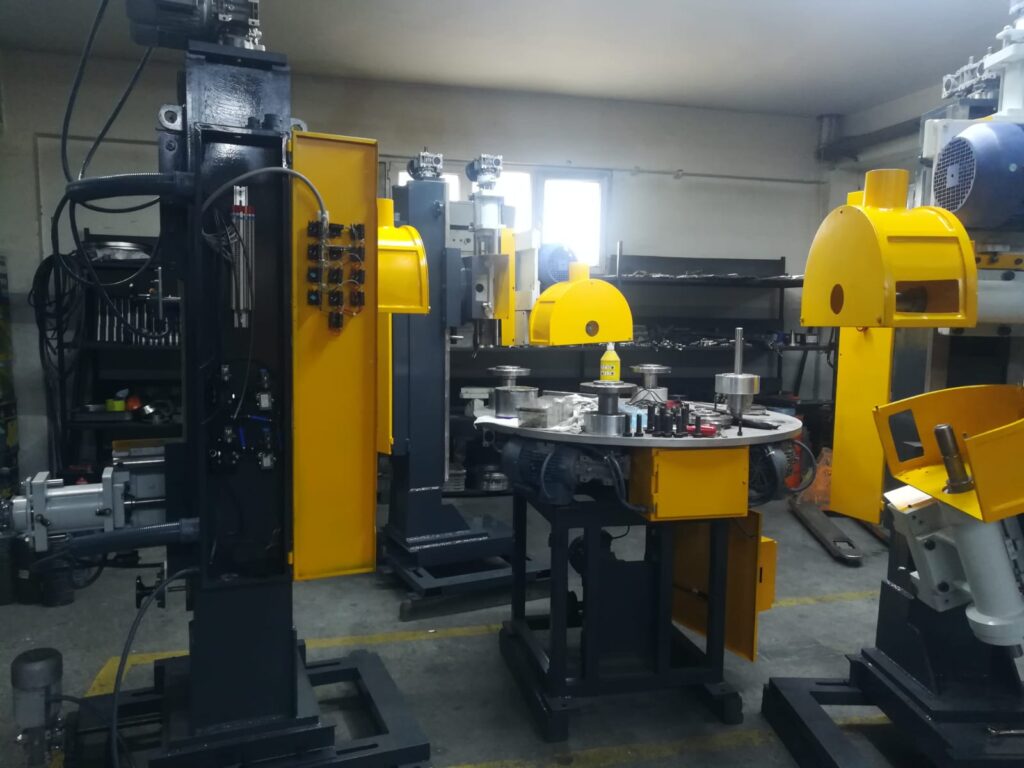
Categories
Machinery

Ballistic panel press for Kevlar body armour manufacturing

Ballistic panel press for Kevlar body armour manufacturing

Ballistic panel press for Kevlar body armour manufacturing: Body armor and helmets are crucial protective gear used in various fields such as military, law enforcement, and high-risk professions. Their manufacturing involves advanced materials and engineering processes to provide maximum protection against ballistic threats, blunt force, and other hazards.

Body Armor Manufacturing

  1. Materials Used:
    • Aramid Fibers (e.g., Kevlar): These synthetic fibers are woven into sheets and layered to create a flexible, lightweight armor that can stop bullets.
    • UHMWPE (Ultra-High-Molecular-Weight Polyethylene): A lightweight alternative to aramid fibers, often used in soft and hard armor.
    • Steel or Ceramic Plates: Hard armor plates made of steel or ceramic are used to stop high-velocity rounds and provide additional protection in “hard” body armor vests.
    • Graphene: Emerging in research for its potential to improve the strength-to-weight ratio of body armor.
  2. Manufacturing Process:
    • Weaving or Layering: For soft armor, the aramid or UHMWPE fibers are woven or layered together to form a flexible, strong sheet.
    • Molding or Pressing: Hard armor plates (such as ceramic or steel) are molded or pressed into shape.
    • Laminating: In some cases, several layers of woven fibers or materials are laminated together to enhance protection.
    • Cutting and Shaping: Once the material is prepared, it is cut to the appropriate shape for vests, plates, or inserts.
  3. Testing:
    • Body armor undergoes rigorous testing, including ballistic testing (shooting projectiles at the material) and physical durability tests (e.g., puncture resistance and wear).
  4. Customization: Armor can be tailored to specific needs, such as for different threat levels (e.g., handgun vs. rifle threats) or to fit the user’s body shape and size.

Helmet Manufacturing

  1. Materials Used:
    • Fiberglass: Offers a lightweight and cost-effective solution for helmets.
    • Kevlar and Aramid Fibers: These materials are woven into the shell or used in combination with other materials to form a strong and lightweight helmet.
    • Carbon Fiber: Known for its high strength-to-weight ratio, carbon fiber is used in advanced helmets for maximum protection without added weight.
    • Polycarbonate or ABS: These thermoplastics are commonly used in riot helmets or lower-cost tactical helmets.
  2. Manufacturing Process:
    • Molding: The outer shell of the helmet is typically molded using a plastic or composite material, followed by curing in an oven to solidify the shape.
    • Liner Installation: Helmets have an inner foam or energy-absorbing liner (such as expanded polystyrene) to reduce the impact on the wearer’s head.
    • Suspension Systems: Helmets often include suspension systems (e.g., chin straps, padding) for comfort and stability. These systems also help absorb shock in case of impact.
  3. Testing:
    • Ballistic Testing: Helmets undergo ballistic tests to ensure they meet safety standards against various types of projectiles (e.g., small arms fire).
    • Impact and Penetration Testing: Helmets are subjected to blunt force trauma testing, simulating impacts from blunt objects and sharp objects.
    • Environmental Durability: Helmets are also tested for durability in extreme conditions, such as high and low temperatures, moisture, and saltwater exposure.
  4. Customization:
    • Helmets can be customized for different environments (e.g., combat, riot control, or industrial applications) by adding accessories like visors, communication systems, or night-vision mounts.

Current Trends and Innovations:

  • Smart Armor: Some manufacturers are incorporating electronic sensors or integrated communication systems into body armor to monitor the wearer’s health and environmental conditions.
  • Lightweight Materials: Continuous research is focused on reducing the weight of armor while maintaining or improving its protective capabilities, often using materials like graphene or advanced composites.
  • Modular Armor: Systems that allow the user to adapt the armor configuration (e.g., adding or removing plates or inserts) depending on mission requirements.

Body armor and helmet manufacturing requires precision, rigorous testing, and the use of high-performance materials to ensure the protection and safety of the user.

Body armor and helmet manufacturing is a highly specialized field, involving advanced materials and engineering to create protective gear for military, law enforcement, and other high-risk professions. The process starts with selecting materials that balance strength, weight, and flexibility. For body armor, materials like Kevlar, UHMWPE, and ceramic or steel plates are commonly used. These materials are woven, layered, or molded to form soft or hard armor, which is then tested for its ability to withstand ballistic threats, blunt force, and wear and tear. The manufacturing process also involves cutting and shaping the materials to fit specific body shapes or armor configurations.

In helmet manufacturing, materials like fiberglass, carbon fiber, and polycarbonate are molded into shells that are paired with foam liners to absorb impacts. Suspension systems inside helmets help ensure a snug, comfortable fit while also aiding in shock absorption. Helmets undergo extensive testing to meet safety standards, including ballistic testing and impact resistance. The integration of smart technologies into both body armor and helmets is an emerging trend, with sensors and communication systems being added for monitoring the wearer’s health and environment. Innovations continue to focus on reducing the weight of the gear without compromising protection, as well as improving overall comfort and adaptability. The manufacturing of both body armor and helmets requires a combination of material science, engineering, and rigorous testing to ensure they provide the highest level of protection in a variety of hazardous environments.

The evolution of body armor and helmets has been driven by the constant need to adapt to new threats, emerging technologies, and environmental challenges. As military and law enforcement needs become more specialized, manufacturers are developing more advanced and customizable solutions to meet those demands.

For example, body armor is increasingly becoming modular, with systems that allow the wearer to add or remove plates or inserts depending on the situation. This adaptability is crucial for personnel who may face varying threats, such as handgun rounds in one scenario and rifle fire in another. With modular systems, body armor can be tailored not only to threat levels but also to comfort and mobility, which is critical for soldiers or police officers who need to remain agile.

In helmets, advancements have focused on improving the helmet’s ability to absorb and disperse impact forces. The incorporation of energy-dispersing materials, like advanced foams and composites, allows for helmets that provide better protection against blunt force trauma while remaining lightweight. Additionally, helmets are now designed with additional features like integrated communication systems, night vision mounts, and face shields, offering more versatility in combat or tactical operations.

A major challenge in both body armor and helmet design is maintaining a balance between weight and protection. While stronger materials provide better protection, they often come at the cost of increased weight, which can hinder the wearer’s mobility. To combat this, manufacturers are constantly exploring new materials, such as graphene, which offer superior strength-to-weight ratios. Graphene is particularly attractive because it is incredibly strong yet light, making it a potential game-changer for the future of personal protective equipment.

Research and development are also shifting towards “smart armor,” which can integrate sensors to monitor the wearer’s physical condition, such as heart rate, body temperature, or the impact forces they experience. This data could be sent to a central system for real-time analysis, providing vital information that could improve the effectiveness of operations or lead to timely medical interventions in case of injury.

The future of body armor and helmets will likely see more integrated systems that not only protect physically but also enhance situational awareness and communication. As these technologies continue to develop, the primary goal remains to provide the wearer with the best possible protection without compromising on comfort, weight, or mobility.

Injection molding plays a significant role in the manufacturing of both body armor and helmets, especially for producing hard armor plates, helmet shells, and some of the inner components of protective gear. It is an efficient, precise, and scalable manufacturing technique that allows for the production of complex shapes and components with high consistency and minimal waste. Here’s how injection molding is used in the process:

Injection Molding in Body Armor Manufacturing

While most body armor is made from woven or layered fibers (like Kevlar or UHMWPE), injection molding is primarily used for producing hard armor plates or inserts. These hard plates are typically used in high-threat environments to protect against rifle rounds or armor-piercing ammunition.

  1. Material Selection:
    • Polycarbonate, Nylon, or ABS Plastics: For certain types of hard armor, injection molding is used with high-strength thermoplastics like polycarbonate or nylon. These materials are chosen for their ability to absorb impact energy and their durability.
    • Composite Materials: More advanced body armor might use composite materials, such as a blend of thermoplastic resins reinforced with fibers (like carbon fiber or aramid fibers) that can be injected into molds to create armor plates that are both strong and lightweight.
  2. Molding Process:
    • Heating and Injection: The material is heated to a molten state and then injected into a mold under high pressure. The mold shape is pre-designed to match the required body armor plate form, ensuring a precise fit and a consistent thickness of material.
    • Cooling and Solidifying: Once the material is injected into the mold, it is rapidly cooled and solidified to form the final armor plate shape. The cooling process needs to be controlled carefully to avoid warping or weakening the structure of the plate.
    • Finishing: After removal from the mold, the plates may undergo additional finishing processes such as trimming, polishing, or coating to improve their surface durability and effectiveness.
  3. Benefits for Body Armor:
    • Cost-Effectiveness: Injection molding allows for mass production, making it a cost-effective option for producing a large volume of hard armor components.
    • Consistency and Precision: The high-pressure molding process ensures uniformity in shape and size, which is critical for ensuring proper fit and protection.
    • Complex Geometries: Injection molding can create plates or inserts with complex geometries, like curved or multi-layered designs, which are crucial for optimizing coverage and comfort.

Injection Molding in Helmet Manufacturing

Helmets, particularly tactical and military helmets, also utilize injection molding for various components, including the helmet shell and inner components like liners and suspension systems.

  1. Helmet Shells:
    • Material Selection: Materials such as fiberglass, polycarbonate, and ABS are commonly used in helmet shells. In some advanced applications, carbon fiber composites or high-performance thermoplastic resins are used for greater strength and reduced weight.
    • Molding Process: The injection molding process starts with the creation of the shell using the chosen thermoplastic material. The material is injected into a mold that defines the helmet’s outer shape. For composite helmets, layers of resin and reinforcing fibers may be added before the molding process.
    • Surface Finish: Once the molding is completed, the shell can be further treated with coatings for impact resistance, aesthetics, or camouflage. Additional layers of impact-absorbing foam may also be inserted into the shell for added protection.
  2. Liners and Suspension Systems:
    • Foam Liners: Many helmets feature a foam liner that is also manufactured using injection molding techniques. These liners help absorb the energy of impacts and distribute forces across the head to reduce injury. The foam is molded into a specific shape to fit the contours of the helmet shell and the wearer’s head.
    • Suspension Systems: The inner suspension systems, which hold the helmet in place and help with comfort, are often made with thermoplastic materials using injection molding. These systems may include adjustable straps, padding, and comfort foam to ensure a snug, secure fit.
  3. Customization and Integration:
    • Add-ons: Injection molding allows for the easy integration of add-ons such as face shields, visors, or mounts for communication devices and night-vision equipment. These components can be molded to exact specifications and fitted into the helmet design.
    • Increased Comfort: Since the molding process allows for complex internal geometries, helmets can be designed with optimized comfort features, like ventilation channels or customized padding patterns, which improve wearability during extended use.
  4. Benefits for Helmet Manufacturing:
    • Durability and Strength: The molded helmet shell provides excellent durability, and injection molding allows the production of helmets that are both tough and lightweight, critical for tactical situations where every ounce counts.
    • Scalability: Like body armor, helmet production benefits from the scalability of injection molding, allowing manufacturers to produce large quantities at consistent quality and performance.
    • Cost Efficiency: The high efficiency of injection molding makes it a cost-effective process, especially when mass-producing helmet shells and components.

Challenges and Considerations

While injection molding offers many benefits, there are some challenges to consider:

  • Material Limitations: The process is often limited to certain thermoplastics and composites. Materials that need to be highly impact-resistant or lightweight (such as ceramic plates for armor) may require additional post-processing or other manufacturing methods.
  • Complexity of Design: Injection molds are expensive to create, so for highly specialized or low-volume products, it may not always be the most economical choice.
  • Material Performance: For body armor, especially, material performance must be carefully tested to ensure that injection-molded parts meet the necessary safety standards, particularly for ballistic resistance.

Injection molding is an essential technology in the production of body armor and helmets, especially when mass production, consistency, and complex design features are required. While it may not be suitable for every part of the gear, its application in hard armor plates, helmet shells, and certain internal components continues to make it a key manufacturing process in the industry.

Injection molding is increasingly used in the manufacturing of body armor and helmets due to its ability to produce high volumes of precise, durable components. In body armor, it’s particularly effective for creating hard armor plates and inserts, which are designed to stop high-velocity rounds. The process involves injecting molten material, such as polycarbonate, nylon, or composite resins, into molds under high pressure. This method ensures uniformity in thickness, shape, and size, which is critical for ensuring the protective gear fits correctly and performs consistently. For helmets, injection molding is utilized to create the outer shell from materials like polycarbonate, fiberglass, or ABS plastic. The mold forms the helmet shell, which is then combined with foam liners that absorb impact and provide comfort. The molding process also enables the integration of complex features like ventilation channels, suspension systems, and mounts for additional equipment. Injection molding is beneficial for these products because it offers cost efficiency, scalability, and the ability to produce components with intricate shapes. However, challenges remain, particularly regarding the material choices and ensuring the final product meets the required standards for protection and durability.

As injection molding continues to evolve, its role in body armor and helmet manufacturing becomes increasingly integral, particularly in meeting the demands for both efficiency and performance. One of the significant advantages of injection molding is its ability to scale production quickly and with precision. For body armor, especially hard armor plates, this means manufacturers can produce large quantities of plates that are uniform in design and meet rigorous safety standards. The ability to mass-produce parts like this is vital in military and law enforcement settings, where large numbers of high-quality protective gear are required quickly. In helmet production, injection molding helps ensure the helmet shell is lightweight yet strong enough to withstand impacts. This is especially important for military and tactical helmets, where weight is a constant concern for users who need to maintain mobility without sacrificing safety.

Another advantage of injection molding in helmet manufacturing is the ease with which additional components can be integrated into the design. With molds, it is possible to create features like built-in communication system mounts, visors, and even modular attachment points for accessories. These integrated systems allow for a more streamlined design, where all necessary features are part of the initial mold, making assembly faster and more cost-effective.

Moreover, the process’s precision allows for better customization of helmets and body armor. For example, helmets can be designed with custom internal geometries for different head shapes and sizes, improving comfort and fit. The suspension systems and padding inside helmets, which are critical for comfort and shock absorption, can also be produced through injection molding, allowing for consistent and reliable comfort features that enhance the user experience.

Despite these advantages, there are still limitations. The choice of materials is a critical factor because some materials required for optimal protection—such as certain ceramics for hard armor plates—may not lend themselves well to injection molding. Additionally, the complexity of the molds can make them expensive to design and produce, especially for highly specialized components or low-volume production runs. However, for large-scale manufacturing where uniformity, durability, and cost-efficiency are priorities, injection molding remains an essential tool in the production of body armor and helmets.

Looking ahead, the future of injection molding in this field is likely to be influenced by new materials and technologies. For example, advancements in thermoplastics, composites, and even 3D printing techniques could allow for more lightweight, yet highly protective, materials to be injected into molds. The integration of smart technologies, such as sensors embedded in the armor or helmets, could also benefit from injection molding, enabling the seamless production of multifunctional gear that not only protects but also communicates real-time data about the wearer’s status.

Ultimately, the continuous advancements in injection molding will support the development of more efficient, durable, and versatile body armor and helmet designs, improving both the safety and comfort of those who rely on this protective gear.

Laminating machine for body armour and helmet manufacturing

Laminating machines are crucial in the manufacturing of both body armor and helmets, particularly for producing multi-layered protective materials that offer enhanced strength and flexibility. The lamination process involves bonding multiple layers of materials together to form a composite structure, which improves the overall performance of body armor and helmets in terms of impact resistance, durability, and comfort.

In the context of body armor and helmet manufacturing, laminating machines are used to combine materials such as aramid fibers (like Kevlar), UHMWPE, carbon fiber, or fiberglass with resins to create strong, lightweight, and flexible layers that can withstand impacts, ballistic threats, and other hazards. The laminating process typically involves applying heat, pressure, and sometimes vacuum, to bond these layers together while ensuring consistency and uniformity in the final product.

For body armor, laminating machines are essential in creating the soft armor layers. These layers are typically made from fibers such as Kevlar or UHMWPE, which are woven or braided to form sheets. These sheets are then layered with resin or adhesives and passed through a laminating machine, which consolidates the layers by applying controlled heat and pressure. The result is a rigid, flexible armor that provides protection without adding excessive weight. The laminated structure enhances the energy-absorbing properties of the armor, ensuring it can dissipate the force of a bullet or other projectile effectively.

In helmet manufacturing, laminating machines are used to bond the helmet’s composite materials, such as fiberglass or carbon fiber, with resin. The laminating process can create the outer shell of the helmet, which is strong yet lightweight, to protect against impacts. Additionally, helmet linings or internal padding materials, often made from foam or other shock-absorbing materials, can be laminated for enhanced comfort and to improve the helmet’s overall performance in absorbing and dissipating impact energy.

The laminating process can be done using several techniques, such as heat-pressing, vacuum-bagging, or autoclaving. Each method has its advantages and is chosen based on the type of materials used, the desired thickness of the laminated structure, and the overall design of the body armor or helmet. For example, autoclaving is a common method used in advanced helmet manufacturing, where the layers of composite materials are sealed in a vacuum bag and then subjected to high pressure and heat in an autoclave to form the helmet shell. This method ensures a strong bond between layers and reduces the chance of defects in the final product.

The use of laminating machines offers several advantages in the production of body armor and helmets. The process ensures consistent and uniform layer bonding, reducing material waste and improving the overall strength of the finished product. It also allows for the production of complex, multi-layered designs that can be tailored to specific threat levels and requirements. Additionally, laminating machines can be adjusted to accommodate various materials, enabling manufacturers to experiment with new composites or hybrid structures that can provide superior protection.

One of the challenges in using laminating machines is ensuring that the process is optimized for each material and layer combination. For example, if the heat and pressure are not carefully controlled, the layers may not bond properly, compromising the strength and effectiveness of the armor or helmet. Furthermore, the choice of adhesive or resin used in the laminating process must be carefully selected to ensure it provides the necessary bond strength while maintaining the flexibility and weight characteristics required for comfort and performance.

In conclusion, laminating machines are a critical tool in the production of body armor and helmets, enabling manufacturers to create high-performance, multi-layered protective materials. By applying controlled heat, pressure, and sometimes vacuum, these machines ensure that the various layers are bonded together to form a strong, durable, and lightweight product that offers superior protection against ballistic threats and impacts. With continued advancements in materials and lamination technologies, the role of laminating machines will remain essential in producing cutting-edge personal protective equipment.

Laminating machines are essential in creating the multi-layered composites used in body armor and helmet manufacturing, ensuring the performance of protective gear. These machines apply controlled heat and pressure to bond different layers of materials, such as aramid fibers, UHMWPE, fiberglass, or carbon fiber, with resins or adhesives. The laminating process enhances the strength, durability, and flexibility of the finished product, ensuring it can effectively absorb and dissipate impact forces from ballistic threats or blunt trauma.

For body armor, laminating machines enable the production of soft armor layers that combine fibers like Kevlar or UHMWPE with resins, creating a flexible yet tough material capable of stopping bullets and other projectiles. The layers are consolidated under heat and pressure to form a durable, lightweight composite that provides the necessary protection. In helmet manufacturing, the same process is applied to create composite shells made from fiberglass or carbon fiber, which are lightweight yet strong enough to resist impacts. These laminating machines can use various techniques, such as heat-pressing, vacuum-bagging, or autoclaving, depending on the materials used and the desired performance characteristics.

The main advantage of laminating machines is their ability to produce consistent, uniform layers that contribute to the overall strength and quality of the armor or helmet. They also allow for the customization of materials, enabling manufacturers to experiment with different composites or hybrid materials that offer superior protection. However, careful control of heat, pressure, and resin application is crucial in ensuring the integrity of the final product, as improper bonding could compromise its protective capabilities. With the continuous evolution of materials and lamination technologies, these machines will remain a fundamental part of manufacturing high-performance protective gear, ensuring that body armor and helmets offer the best possible protection while remaining lightweight and comfortable.

As laminating technology continues to improve, the precision and efficiency of laminating machines are increasingly pivotal in meeting the growing demands for high-performance protective gear. In the case of body armor, the evolution of materials and their integration into the lamination process is key. For instance, researchers are exploring more advanced composite materials, including high-strength, lightweight fibers and new resin formulations that offer enhanced resistance to heat, moisture, and chemical exposure, which could further improve the overall protection of body armor. These innovations in materials require laminating machines that can handle more advanced processing methods, allowing for tighter control over temperature and pressure during the bonding process.

Similarly, the use of laminating machines in helmet manufacturing is benefiting from advancements in materials like graphene and other nanomaterials. These materials offer exceptional strength-to-weight ratios, which could lead to helmets that are both more protective and lighter, without compromising comfort or mobility. As new materials are developed, the laminating process will have to evolve to accommodate these advanced composites, ensuring that the bond between layers remains consistent and secure.

Moreover, the introduction of automation and smart technology into the laminating process is streamlining production, improving both consistency and efficiency. Automated laminating machines can monitor factors such as temperature, pressure, and resin flow in real-time, ensuring that each layer is properly bonded for optimal performance. This integration of advanced sensors and control systems helps reduce the risk of human error and material defects, ultimately leading to higher-quality products with fewer variations.

One of the exciting prospects for the future of laminating machines in body armor and helmet manufacturing is the possibility of creating “smart” armor systems that combine traditional protective materials with embedded sensors. These sensors could monitor the condition of the wearer, providing real-time data on their health, such as heart rate, body temperature, and stress levels. With these smart features, laminating machines would play a crucial role in integrating both passive protective materials and active sensing technologies into a single, unified system.

As these technologies continue to advance, laminating machines will not only serve the purpose of ensuring the structural integrity of body armor and helmets but also help create more advanced, multi-functional gear. This could lead to protective equipment that is not just protective but also adaptive and responsive, offering wearers both physical safety and real-time data that can enhance situational awareness and safety.

Ultimately, the ongoing development of laminating technologies will allow manufacturers to keep up with the growing demands for more sophisticated protective gear. With each improvement, the process will become more efficient, more customizable, and better equipped to handle the diverse range of materials and design complexities required for next-generation body armor and helmets. This will ensure that personal protective equipment continues to evolve in line with the latest advancements in materials science, manufacturing techniques, and wearable technology.

Hydraulic press for body armour and helmet manufacturing

Parts to be produced by Composite Press for Ballistic Panels

Hydraulic presses are critical in the manufacturing of body armor and helmets, as they provide the force needed to shape, bond, and compress materials into the desired forms. These presses use hydraulic power to exert a consistent and controlled amount of pressure, which is essential for processes like molding, lamination, and compression, where precision and uniformity are key. In both body armor and helmet manufacturing, hydraulic presses ensure that materials are processed correctly to meet the necessary strength, durability, and protection standards.

In body armor manufacturing, hydraulic presses are often used to shape and compress composite materials like fiberglass, aramid fibers (such as Kevlar), and polyethylene into rigid, durable plates. These plates are the hard armor inserts that provide protection against high-velocity threats like bullets. The press applies even pressure across the composite layers, ensuring that they bond tightly together and that the resulting plate is uniform in thickness, shape, and structure. This uniformity is crucial, as any inconsistencies in the armor plate could reduce its ability to effectively stop a bullet or other projectile.

For helmets, hydraulic presses are used to mold the outer shell of the helmet from materials such as polycarbonate, fiberglass, or carbon fiber composites. In the case of composite helmets, the press applies the necessary pressure to bond layers of resin and reinforcing fibers, creating a strong yet lightweight shell. Additionally, hydraulic presses can be used to compress foam materials or other padding that form the inner liner of the helmet. The foam liners help absorb impacts and provide comfort to the wearer. The press ensures that these components are tightly compressed to maintain their structural integrity and protective properties.

The hydraulic press’s role is also crucial in the process of forming multi-layered structures, such as the combination of ballistic-resistant materials with foam or other shock-absorbing layers. These multi-layered designs are typical in both body armor and helmets, where different materials are combined to offer protection against various types of threats. For example, in helmet manufacturing, a high-strength composite outer shell may be combined with an inner foam layer for impact resistance, and the hydraulic press ensures that these layers bond together effectively, maintaining both the integrity of the shell and the cushioning properties of the foam.

One of the advantages of using hydraulic presses in these manufacturing processes is the ability to apply consistent and uniform pressure over large areas. This consistency ensures that every part produced is of the same high quality, which is essential in the production of personal protective equipment. Variations in pressure or molding can lead to weak points in the final product, which could compromise its effectiveness in real-world situations.

Hydraulic presses are also relatively adaptable. Different types of materials, such as thermoplastics, resins, and composites, can be processed effectively using these presses, making them versatile tools for producing a wide range of body armor and helmet components. For example, for helmets made from advanced materials like carbon fiber, the hydraulic press can help ensure the material is molded into the correct shape while maintaining its strength-to-weight ratio.

One of the ongoing challenges in the use of hydraulic presses in body armor and helmet manufacturing is the optimization of pressure and heat settings for different materials. Some materials require higher or lower pressure, and the process must be carefully controlled to ensure that the final product maintains its protective qualities without being overly rigid or brittle. The flexibility of the hydraulic press makes it easier to adjust settings for different materials, but close monitoring and precision are necessary to avoid damaging the materials or compromising their performance.

Another aspect of hydraulic press use is its role in the development of new materials and designs. As manufacturers continue to experiment with new composites and multi-material designs, the hydraulic press will be instrumental in shaping and compressing these innovative materials into final products that meet the required protective standards. The press’s ability to apply precise and consistent force makes it an indispensable tool in the development of next-generation body armor and helmets.

In summary, hydraulic presses are essential to the manufacturing of body armor and helmets, offering the ability to mold, shape, and compress materials into the required forms with high precision. The consistency, versatility, and adaptability of hydraulic presses make them indispensable for producing the high-quality, protective gear needed by military personnel, law enforcement, and other professionals who rely on body armor and helmets for their safety. As material science continues to advance, the role of hydraulic presses in producing cutting-edge protective gear will only grow, allowing manufacturers to create stronger, lighter, and more comfortable protective equipment.

Hydraulic presses play a pivotal role in the production of body armor and helmets by applying controlled pressure to mold, bond, and shape various materials into the final protective gear. In body armor, these presses are used to shape composite materials like Kevlar, UHMWPE, fiberglass, and carbon fiber into hard plates and inserts that are designed to withstand high-velocity impacts, such as bullets or shrapnel. The even, consistent pressure from the hydraulic press ensures that the materials are uniformly compacted, which is crucial for achieving the required strength and ballistic resistance. By molding these composite layers together, the press ensures that the final product is strong, lightweight, and capable of absorbing and dispersing the energy from incoming projectiles.

In helmet manufacturing, hydraulic presses are used in the production of the outer shell and the inner components. For the shell, materials like polycarbonate, fiberglass, or carbon fiber are shaped by the press to create a protective outer layer that is both tough and lightweight. The press also helps in molding foam or padding materials that are used for the inner lining of the helmet, which provides comfort and additional impact absorption. The press ensures that the foam is compacted correctly, maintaining its shock-absorbing properties while ensuring the helmet’s structure is sound and reliable.

The versatility of hydraulic presses is evident in their ability to handle a wide range of materials and processing requirements. Whether it’s forming thermoplastic materials, compressing resins into composites, or molding advanced fibers into protective layers, hydraulic presses provide the necessary force and precision for these complex tasks. However, careful control of pressure and temperature is essential. Too much pressure can lead to material deformation or loss of protective qualities, while too little pressure can result in weak bonds or improperly formed products.

As new materials and designs continue to emerge in the field of body armor and helmets, hydraulic presses will remain integral to their production. Their ability to handle complex, multi-layered composite structures is especially important as manufacturers work to combine new lightweight materials with high-performance resins or adhesives. The hydraulic press will continue to be a vital tool in creating protective gear that balances strength, weight, and comfort for those who rely on body armor and helmets for their safety in high-risk environments.

The continuous advancement of hydraulic press technology is enabling even more precise control over the forming and bonding processes, which is particularly important as manufacturers push the limits of material performance in both body armor and helmet applications. Modern hydraulic presses often feature programmable control systems that allow for exact adjustments in pressure, temperature, dwell time, and speed, all of which are critical in ensuring the integrity of the final product. These controls help avoid inconsistencies and ensure repeatability across large production runs, which is vital for ensuring that every piece of armor or helmet meets the stringent performance standards required for life-saving equipment.

In the case of advanced composite materials, such as those used in military-grade armor or combat helmets, the pressing process may involve multiple stages. For example, a series of layers—each with specific orientations or materials—may be laid up manually or via automation, and then transferred into a mold where the hydraulic press applies heat and pressure. This staged process can help optimize fiber alignment and resin distribution, which directly impacts the strength and ballistic resistance of the finished product. In some systems, presses are combined with vacuum or autoclave environments to further enhance resin flow and eliminate air pockets, ensuring the composite structure is fully consolidated and free from internal weaknesses.

Another key area where hydraulic presses are becoming increasingly relevant is in the production of ergonomic or contoured designs. Unlike flat armor plates or standard helmet shapes, newer designs often include curvature to better fit the human body or improve aerodynamics and comfort. Forming these shapes reliably and efficiently requires presses with specialized dies and molds that maintain uniform pressure distribution even across complex geometries. This capacity is particularly valuable in producing customized armor panels for female personnel or mission-specific helmet shapes for airborne or mechanized forces.

Furthermore, the integration of advanced monitoring systems into hydraulic presses is enhancing quality assurance. Sensors embedded within the press can detect fluctuations in temperature, pressure, or material flow, allowing for real-time adjustments and reducing the risk of defective parts. These systems also enable comprehensive data logging for traceability, which is increasingly important in defense and law enforcement procurement where rigorous certification and quality records are mandatory.

As sustainability becomes a more pressing concern, hydraulic presses are also being adapted to support greener manufacturing practices. This includes the ability to process bio-based or recyclable composites, as well as more energy-efficient press systems that minimize waste heat and use hydraulic fluids with lower environmental impact. In addition, by allowing for more accurate material forming and bonding, hydraulic presses reduce the amount of scrap material generated, contributing to more sustainable production cycles.

In short, the hydraulic press is not just a shaping tool but a cornerstone of modern body armor and helmet production. Its ability to adapt to new materials, complex shapes, and high-volume production while maintaining precision and repeatability makes it indispensable. As protective gear continues to evolve toward lighter, smarter, and more ergonomic designs, hydraulic presses will remain central to turning advanced material science into real-world, field-ready protection.

Helmet shell forming for body armour and helmet manufacturing

Fiber-reinforced Materials used by the Composite Presses

Helmet shell forming is a critical stage in the manufacturing process of protective helmets used by military, law enforcement, and security personnel, and it directly determines the structural integrity, impact resistance, and overall effectiveness of the helmet. This process involves shaping high-performance materials—typically advanced composites like aramid fibers (e.g., Kevlar), ultra-high-molecular-weight polyethylene (UHMWPE), carbon fiber, or fiberglass—into a hardened outer shell that can absorb and deflect kinetic energy from ballistic threats, blunt impacts, and fragmentation.

The shell forming process typically begins with material preparation, where sheets or fabrics impregnated with resin are cut into specific patterns. These are then carefully laid into a mold that corresponds to the helmet’s design—often using a multi-layer stacking method to ensure optimal fiber orientation and maximum strength. Once the layup is complete, the mold is closed and subjected to heat and pressure through processes such as compression molding, vacuum-assisted resin transfer molding (VARTM), or autoclaving. These forming techniques ensure that the resin flows uniformly through the layers and that the composite material conforms precisely to the helmet’s shape while eliminating voids or air pockets that could compromise protection.

Compression molding, which uses a hydraulic press, is one of the most common methods for helmet shell forming. In this process, the material layup is placed into a heated mold, and a matching upper mold applies pressure. The heat softens the resin, and the pressure causes it to flow, impregnating all fiber layers while curing the shell into its final hardened form. This results in a smooth, consistent, and high-strength shell that forms the core of the protective helmet.

In high-end applications, autoclave curing may be used. This involves placing the mold and helmet layup into a sealed chamber where heat and pressure are uniformly applied under vacuum conditions. This method allows for extremely tight control of resin content and distribution, often resulting in superior mechanical properties and a high-quality finish, but it is more time- and cost-intensive.

After the shell is cured and removed from the mold, it undergoes trimming to remove excess material and to create openings for accessories such as visors, straps, communication systems, or ventilation ports. The shell may also be post-cured in an oven to ensure complete resin hardening, improving thermal stability and durability. The outer surface is then often sanded, coated, or painted for UV protection, camouflage, and durability.

Helmet shell forming must also consider ergonomic and anatomical factors. The shell must fit comfortably while accommodating the padding, harness system, and additional attachments. Therefore, molds are designed with careful attention to anthropometric data to provide optimal coverage, balance, and wearer comfort without compromising mobility or field of view.

Ongoing developments in materials and forming techniques are pushing the boundaries of helmet performance. Hybrid constructions using layered combinations of carbon fiber and aramid, for example, are becoming more common to achieve a balance between lightweight construction and ballistic protection. New shell designs incorporating modular or reconfigurable components are also being explored, especially for integrated systems that include electronics, night vision mounts, and communications.

In conclusion, helmet shell forming is a sophisticated, precision-driven process that transforms flat composite fabrics into contoured, high-strength protective shells. It requires careful material selection, expertly engineered molds, and controlled thermal and pressure environments to ensure the final product meets stringent performance standards. As combat and operational requirements evolve, the technology behind helmet shell forming continues to advance, delivering helmets that are lighter, stronger, more comfortable, and better integrated with modern battlefield systems.

The precision required in helmet shell forming extends to the smallest details of the process, as even minor defects in the shell can compromise its protective capabilities. Factors such as fiber alignment, resin-to-fiber ratio, curing temperature, and pressure all play a significant role in the final mechanical properties of the helmet. Any inconsistency in these parameters can lead to weak spots or delamination within the composite structure, which would reduce the helmet’s ability to absorb impact or withstand ballistic threats. This is why modern helmet manufacturing often includes rigorous quality control measures during and after shell forming, including non-destructive testing methods like ultrasonic inspection or X-ray analysis to detect internal flaws without damaging the product.

In addition to the structural performance, the forming process is also critical in achieving uniform thickness and proper contouring, especially around high-stress areas like the crown, side edges, and rim of the helmet. These areas are subject to greater forces during impact and need precise reinforcement to maintain consistent protection. Advanced forming techniques allow for variable thickness across the shell, increasing material where it is most needed while reducing unnecessary weight elsewhere. This optimization helps to improve balance and comfort, which are essential in long-duration operational scenarios.

Another important consideration is compatibility with other components, as today’s helmets are not just standalone protection devices but are often part of integrated soldier systems. Helmet shells must accommodate rails, mounts, and ports for communication devices, night vision systems, face shields, and ballistic visors. Therefore, the forming process must ensure that the shell not only provides ballistic integrity but also maintains dimensional accuracy to align with these modular systems. In some cases, embedded reinforcements or inserts are added during shell forming to provide additional structural support at mounting points, further enhancing the helmet’s durability and utility.

As innovations in materials continue to emerge, the shell forming process must adapt to accommodate the properties of newer high-performance fibers and resins. For example, the use of thermoplastic composites, which can be reheated and reshaped, introduces possibilities for repairable and recyclable helmets, offering sustainability benefits alongside functional performance. These materials require different forming protocols, including lower temperature ranges and potentially faster cycle times, which can improve throughput in mass production without compromising quality.

The push for lighter and more adaptive helmets has also driven interest in hybrid material systems and complex shell geometries. Multi-axial fiber reinforcements, gradient material layouts, and embedded sensor technologies are now being explored within the shell structure itself, adding layers of functionality while maintaining core protective roles. These advancements rely on precise forming conditions, which further underscore the importance of continually evolving helmet shell forming equipment and methods.

Ultimately, helmet shell forming represents a convergence of materials science, mechanical engineering, and ergonomic design. It is the foundational process that defines the helmet’s strength, weight, comfort, and ability to integrate with other technologies. As threats become more diverse and operational demands increase, the development of more sophisticated shell forming techniques will continue to be essential in delivering next-generation protective helmets that enhance survivability and performance across military, law enforcement, and specialized civilian applications.

As helmet shell forming continues to evolve, manufacturers are increasingly exploring automation and digital technologies to improve efficiency, precision, and consistency. Automated systems and robotic arms are being integrated into the production process to handle repetitive tasks such as material placement, mold handling, and shell trimming. These systems help reduce human error and increase throughput, allowing for higher production volumes without sacrificing the quality of the finished product. Automation also supports the scalability of production, making it easier to meet large demands while maintaining tight tolerances and uniformity across multiple units.

Another area of innovation in helmet shell forming is the use of 3D printing technologies, which are being explored for creating complex internal structures or customized helmet components. While 3D printing of entire helmet shells is still in its infancy due to material limitations, it holds potential for producing intricate inner frameworks that can be integrated with traditional helmet shells. These structures could enhance the helmet’s impact resistance, ventilation, or energy absorption by optimizing the internal geometry, while the outer shell retains its ballistic integrity. This could lead to helmets that are not only lighter but also more efficient in terms of impact energy management.

The integration of smart technologies within the helmet, such as sensors for monitoring vital signs, environmental conditions, or the wearer’s position, is also influencing the shell forming process. These technologies require specialized slots, connectors, or even built-in wiring channels within the helmet’s structure, which must be seamlessly incorporated into the shell without weakening its protective capabilities. Forming processes are becoming more advanced to allow for these embedded technologies, with precise mold designs and additional reinforcement at critical points to support integrated electronics.

Additionally, the demand for helmets that can withstand a broader range of threats—such as fragmentation, blunt force trauma, and chemical exposure—is prompting manufacturers to rethink the design of the shell and the materials used in forming. Some helmets are now being designed to provide multi-threat protection, which involves creating shells with multiple layers of different materials, each optimized for a specific type of threat. For example, a helmet might have a base layer of high-strength aramid fibers for ballistic protection, followed by a layer of shock-absorbing foam to protect against blunt force trauma, and an outer layer of polycarbonate or composite for added durability and resistance to abrasions. Each of these materials must be formed with the appropriate pressure, temperature, and curing times to ensure that they perform as intended when combined.

The continued development of advanced coatings is another area that complements the helmet shell forming process. Protective coatings that add resistance to environmental factors like heat, cold, moisture, or chemicals are increasingly applied during or after shell forming. These coatings can be integral to the helmet’s performance in extreme conditions, ensuring it doesn’t degrade over time or become vulnerable to external threats like acids or salts. Some coatings also provide anti-glare or anti-reflective properties, enhancing the helmet’s effectiveness in tactical environments where stealth and visibility are critical.

As global standards for protective equipment continue to evolve, helmet shell forming processes must also adapt to meet more stringent regulations and certification requirements. These standards ensure that helmets provide reliable protection against a range of hazards, including high-velocity projectiles, blunt trauma, and environmental factors. As a result, manufacturers must stay ahead of regulatory changes and continually refine their forming processes to maintain compliance with these evolving requirements.

The overall trend in helmet manufacturing is toward producing lighter, stronger, and more multifunctional helmets that are not only protective but also adaptable to a range of operational needs. Whether it’s for military personnel in combat, law enforcement officers in tactical situations, or first responders in hazardous environments, helmets are being designed to integrate more seamlessly with other gear, enhance wearer comfort, and provide advanced protection from a wider array of threats.

Ultimately, the helmet shell forming process is at the heart of this innovation. By continuously refining materials, improving manufacturing techniques, and incorporating new technologies, manufacturers can create helmets that not only meet but exceed the performance expectations of modern protective gear. As demands for advanced protection, comfort, and adaptability continue to grow, the process of helmet shell forming will remain a critical area of focus for the next generation of protective headgear.

Kevlar preform molding machine for helmet manufacturing

Kevlar preform molding machines are specialized equipment used in the production of helmet shells, particularly in the manufacturing of ballistic helmets. These machines are designed to shape Kevlar fibers, which are known for their high tensile strength, durability, and resistance to impact, into preforms or molded shells that serve as the foundational protective structure of the helmet. The preform molding process is key to creating the helmet’s outer shell, which is the first line of defense against ballistic and blunt-force impacts.

The process of using a Kevlar preform molding machine typically starts with the preparation of Kevlar fabric or fiber, which is cut into specific patterns or layers that will be stacked to form the helmet shell. The Kevlar fibers are impregnated with resin to provide the material with rigidity and to enhance its ballistic properties. Once the fibers are prepared, they are loaded into the preform molding machine.

The preform molding machine utilizes high heat and pressure to mold the Kevlar layers into a desired shape, typically the outer shell of a helmet. The machine applies even pressure across the entire mold, ensuring that the fibers are uniformly compressed and bonded together. This pressure helps the resin to cure, forming a solid, durable structure. The heat is essential for activating the resin and ensuring it fully bonds the fibers together, while the pressure ensures that the fibers are properly aligned and compacted, creating a consistent thickness and strength across the entire shell.

One of the advantages of using Kevlar preform molding machines is the precision with which the machine can control the molding process. By adjusting temperature, pressure, and curing time, manufacturers can optimize the material’s performance, ensuring the helmet meets the required ballistic standards and is lightweight yet strong. Kevlar is a material known for its high strength-to-weight ratio, which is particularly important in helmet manufacturing, as it provides optimal protection without adding unnecessary weight that would hinder mobility or comfort.

These machines also help in creating more intricate and complex helmet shapes, accommodating different designs and customizations that may be required for specific end users, such as military personnel or law enforcement officers. This level of customization is possible due to the flexibility of the preform molding process, which allows for the incorporation of different layers, reinforcements, or even hybrid materials within the helmet design.

Moreover, the Kevlar preform molding machine can be adapted for use with other composite materials. As the demand for advanced helmets increases, manufacturers are exploring the use of hybrid materials, such as a combination of Kevlar and carbon fiber or aramid blends, to create even stronger, lighter, and more flexible helmet shells. In such cases, the preform molding machine must be able to handle the unique requirements of each material, ensuring that all layers are properly integrated during the molding process.

In addition to its role in molding the outer shell, the Kevlar preform molding machine can be used to mold inner components of the helmet, such as padding or impact-resistant liners. These components contribute to the helmet’s overall ability to protect the wearer from blunt-force trauma, and the molding machine ensures that each component is shaped to fit precisely within the shell.

While the use of Kevlar preform molding machines provides significant advantages in terms of efficiency, precision, and material optimization, they also come with a set of challenges. For example, the cost of the machinery and the specialized skills required to operate it can be significant. Additionally, ensuring that each molded helmet meets strict safety and quality standards requires continuous monitoring and testing, both during and after the molding process.

As the helmet manufacturing industry evolves, the integration of automation and digital technologies in Kevlar preform molding machines is becoming more common. Automated systems can help streamline the production process, reduce human error, and ensure consistency in the final product. These advancements may include real-time monitoring systems that track temperature, pressure, and curing time, as well as advanced robotic arms for handling the molded helmets and adding additional components, such as visors or chin straps.

In conclusion, Kevlar preform molding machines are a vital component in the production of high-performance helmets, providing the precision and consistency necessary to create helmets that meet rigorous safety standards. By optimizing the molding process for Kevlar, manufacturers can produce helmets that offer excellent ballistic protection while remaining lightweight and comfortable for the wearer. As technology continues to advance, these machines will likely evolve to accommodate new materials, designs, and manufacturing techniques, ensuring that protective headgear keeps pace with the ever-changing demands of safety and performance.

Kevlar preform molding machines are integral to the production of modern ballistic helmets because they offer a combination of speed, precision, and efficiency. These machines ensure that Kevlar’s exceptional properties—such as its high tensile strength, durability, and resistance to abrasion—are fully realized in the final helmet shell. By applying a controlled amount of pressure and heat to the pre-impregnated Kevlar material, these machines mold the fiber into the precise shape required for the helmet. This process not only ensures uniformity in the finished product but also enhances the overall structural integrity of the helmet.

With the increasing demand for lightweight and high-performance helmets, manufacturers have focused on improving the molding techniques. Advanced systems are now capable of adjusting various parameters, such as molding time, temperature, and pressure, during the production process to optimize the material properties of the Kevlar preform. This allows manufacturers to tailor the helmet’s mechanical characteristics, such as its resistance to penetration, impact absorption, and deflection, to meet specific safety standards. Fine-tuning these parameters also helps in achieving the best balance between strength and weight, which is critical for helmets that need to provide protection without being overly burdensome for the wearer.

The ability of Kevlar preform molding machines to handle complex geometries is particularly beneficial in meeting the growing demand for ergonomic designs. Helmet shells are no longer just flat or simple shapes; modern helmets are designed to fit a wide range of head sizes and shapes while providing optimal protection and comfort. The molding machines are capable of creating custom contours that align with the human head’s natural curvature, providing a better fit and reducing pressure points. This is vital, especially for long-term wear, where comfort plays a crucial role in ensuring that the helmet remains effective in real-world scenarios.

Beyond standard ballistic helmets, Kevlar preform molding machines can be adapted for the production of specialized headgear, such as riot helmets, combat helmets, or even helmets used for space exploration. These machines can be customized to handle varying material combinations, such as adding carbon fiber or other high-strength materials to the Kevlar layers to further enhance impact resistance or reduce weight. Hybrid helmets, which combine different materials, are becoming increasingly popular because they allow for tailoring of the helmet’s properties to meet the exact needs of the wearer. For example, helmets designed for specific military units may incorporate additional features like mounts for communication systems, night vision devices, or ballistic visors, all of which require careful molding to ensure the helmet shell can accommodate these additions without compromising its protective capabilities.

In addition to improving the molding process itself, innovations in quality control and testing are also helping to ensure the helmets meet stringent performance standards. Automated inspection systems are now being integrated into the production line to detect any inconsistencies or defects in the molded helmets. These systems use advanced sensors and imaging technologies to check for issues such as surface imperfections, dimensional inaccuracies, or structural flaws. Real-time data analytics can track the entire production process, ensuring that the molding parameters are within acceptable ranges and that each helmet is produced to specification.

Another factor driving innovation in Kevlar preform molding machines is the push for sustainability. As environmental concerns grow, there is increasing interest in producing helmets from recyclable materials or making helmets that are easier to recycle after their useful life. Some manufacturers are investigating the use of bio-based resins and fibers in the molding process, as well as exploring ways to reduce waste material during production. These advancements could lead to more sustainable helmet production processes, reducing the environmental impact of manufacturing while maintaining high standards of protection.

With the ongoing advancements in materials science and manufacturing technology, Kevlar preform molding machines will continue to evolve. The future of helmet production may see even greater integration of automation, artificial intelligence, and smart technology to improve manufacturing processes, reduce lead times, and enhance the overall quality of the product. These technologies will also likely enable greater customization, allowing helmets to be made to measure for specific individuals or use cases. As threats become more diverse and protective gear requirements become more complex, the ability to quickly and efficiently mold helmets with superior protective qualities will remain a cornerstone of the industry, ensuring that the helmets of tomorrow provide the necessary defense against a wide range of dangers.

As technology advances, the future of Kevlar preform molding machines in helmet manufacturing may also embrace innovations in automation, material science, and smart manufacturing techniques. The development of AI-driven systems capable of optimizing the molding process in real time is already in progress. These systems can use data from sensors embedded in the machinery to monitor pressure, temperature, and curing times, adjusting the process dynamically to ensure the optimal molding of each helmet shell. By continuously learning from previous production cycles, AI systems could significantly reduce the risk of defects, improve consistency, and allow manufacturers to adapt quickly to new material formulations or design changes.

In addition to machine intelligence, digital twin technology—where a virtual replica of the manufacturing process is created and monitored in real-time—holds potential for the future of helmet manufacturing. By creating a digital model of the production process, manufacturers can simulate different scenarios and predict the outcomes of various changes to parameters like pressure, temperature, and resin formulations. This could enable faster innovation, reduced prototyping costs, and more efficient quality control by catching potential issues before they arise in physical production.

The trend toward lightweight yet robust protective gear will continue to drive the development of new composite materials. In addition to traditional Kevlar, materials like graphene, carbon nanotubes, and ultra-high-molecular-weight polyethylene (UHMWPE) are being explored for their exceptional strength-to-weight ratios. Integrating these materials with Kevlar in the preform molding process could create helmets that are even lighter and more resistant to high-velocity impacts while maintaining or enhancing the level of protection against blunt force trauma and fragmentation. These new materials might require further adjustments in molding machines, such as modified temperature settings or more sophisticated pressure systems to accommodate the different characteristics of the composites.

Another area of interest is the exploration of helmets with adaptive features, such as smart helmets that integrate sensors for monitoring the wearer’s physical condition or environmental conditions in real time. In this context, Kevlar preform molding machines could be adapted to create specialized cavities or channels for the seamless integration of such electronics, ensuring that the helmet maintains its structural integrity while providing additional functionality. For instance, sensors embedded within the helmet could monitor impact forces during a blast or collision, alerting medics to potential injuries, or track the wearer’s biometric data to ensure they are operating within safe physical limits.

Moreover, as defense and law enforcement requirements become more specialized, there will likely be an increasing demand for customized helmets. The rise in individualized equipment design could lead to helmets that are tailored not only for specific mission profiles (e.g., airborne units, special forces, or riot police) but also to individual anatomical needs. A helmet designed with a custom-fit preform molding process could provide better protection, improved comfort, and reduced fatigue over long periods of use. The preform molding machine’s ability to adjust its pressure and molding cycle could allow for more personalized features, such as additional padding or reinforcement in specific areas of the shell where protection is most needed.

The focus on sustainability will further shape the evolution of Kevlar preform molding machines. Manufacturers are already exploring the possibility of using recycled materials, including Kevlar waste from the production process itself, or incorporating bio-based resins that are less harmful to the environment. In this context, molding machines could become more energy-efficient, with improved heat management and reduced cycle times, which would not only lower operational costs but also reduce the environmental footprint of helmet manufacturing. This trend toward sustainability is also pushing the development of recycling programs that could allow end-users to return old helmets for repurposing, reducing waste in the long term.

Global standards and certifications for protective headgear continue to evolve as new threats emerge and technologies develop. This ensures that helmets are not just effective against traditional dangers, such as ballistic impacts and blunt trauma, but also against new and increasingly sophisticated threats like cyber-attacks (via helmet-integrated electronics) or environmental hazards (such as extreme heat or chemical exposure). The need to meet these standards may prompt further innovations in the molding process, leading to helmets that can provide multi-threat protection while maintaining the comfort, mobility, and adaptability needed for modern operations.

Finally, Kevlar preform molding machines are likely to play a central role in the continued evolution of body armor systems. As the boundaries between helmets, body armor, and other personal protective equipment (PPE) continue to blur, manufacturers may look to integrate helmet shells into larger protective suits. These integrated systems could offer uniform protection from head to toe, with Kevlar preform molding machines enabling the molding of interconnected layers that work together seamlessly, providing a higher level of protection against multiple types of threats.

In conclusion, as the demand for advanced, lightweight, and multifunctional protective gear continues to grow, the role of Kevlar preform molding machines in helmet manufacturing will only become more crucial. The continued refinement of these machines, driven by innovations in automation, smart manufacturing, and materials science, will ensure that future helmets meet increasingly sophisticated safety standards while being lighter, more comfortable, and more adaptable. Whether for military, law enforcement, or industrial use, Kevlar helmet shells will remain at the forefront of personal protective equipment, providing a vital line of defense for wearers across a wide range of high-risk environments.

Compression molding press for Kevlar body armour manufacturing

Compression molding presses are essential pieces of equipment in the manufacturing of Kevlar-based body armor. This molding technique involves placing pre-impregnated Kevlar fabric or composite materials into a heated mold, where heat and pressure are applied to form the desired shape. Compression molding is widely used in the production of advanced body armor, including ballistic vests and plates, because it offers several advantages, such as uniform material distribution, controlled thickness, and the ability to produce complex shapes with high precision.

The process begins with the preparation of Kevlar fibers, which are typically woven into fabric and then pre-impregnated with a resin or polymer matrix. This pre-impregnated material, often referred to as prepreg, is crucial for ensuring that the resin is evenly distributed throughout the Kevlar fibers, ensuring that the final product will have consistent strength and durability. The pre-impregnated Kevlar is cut to the appropriate size and placed into the mold cavity of the compression molding press.

Once the material is in place, the mold is closed, and the press applies heat and pressure to the material. The heat activates the resin, allowing it to bond the Kevlar fibers together, while the pressure ensures that the fibers are compacted and aligned in the desired orientation. This combination of heat and pressure results in a dense, strong, and uniform structure that retains the high-impact resistance and ballistic protection that Kevlar is known for.

Compression molding presses are particularly well-suited for body armor manufacturing because they allow for precise control over the molding parameters, including temperature, pressure, and cycle time. The ability to fine-tune these parameters is crucial in achieving the correct material properties for ballistic protection. For example, increasing the pressure may enhance the density of the Kevlar layers, making the body armor stronger and more resistant to penetration. Adjusting the temperature can affect the curing process of the resin, ensuring that the bonding of the fibers occurs uniformly and fully.

The molding press also allows for the production of complex, multi-layered body armor. Multiple layers of Kevlar can be stacked in the mold, and the press will apply pressure to bond them together in a uniform manner. This multi-layered structure is critical for increasing the armor’s protective capabilities, as each layer absorbs and disperses impact energy, significantly enhancing the overall strength of the body armor. The layering process also provides flexibility, as manufacturers can incorporate different types of materials or composites into each layer to optimize the performance of the body armor in specific threat scenarios.

One of the key advantages of compression molding presses is their ability to produce body armor with consistent thickness and high-quality surface finishes. The even distribution of pressure ensures that the material is uniformly compacted across the entire mold, which is critical for ensuring that the body armor performs reliably. In addition, the use of precision molds allows manufacturers to produce body armor components with complex shapes and contours, ensuring that they fit comfortably and securely on the wearer’s body.

These presses can also be equipped with automated systems to further improve the efficiency of the manufacturing process. For example, automated loading and unloading systems can reduce cycle times and human intervention, allowing for faster production rates. Temperature and pressure sensors can be incorporated into the molding press to provide real-time feedback, ensuring that each cycle is consistent and that the final product meets quality standards. In some cases, robotic arms or conveyor systems may be used to handle the finished body armor pieces, streamlining the overall production process and reducing the risk of damage to the materials.

The development of compression molding presses for Kevlar body armor manufacturing has been accompanied by the emergence of advanced materials and new molding technologies. For example, hybrid composites that combine Kevlar with materials like carbon fiber or UHMWPE (Ultra-High Molecular Weight Polyethylene) are being explored to enhance the protective properties of body armor. Compression molding presses must be adaptable to handle these new material combinations, ensuring that they can deliver the same level of high-quality results.

As the need for more advanced, lighter, and stronger body armor continues to grow, manufacturers are increasingly turning to compression molding presses that integrate the latest in smart technology. These presses are becoming more automated and integrated with digital systems for real-time monitoring and adjustments. This allows manufacturers to optimize the molding process for different designs, materials, and production volumes, ensuring that the final product meets the ever-evolving requirements of modern body armor.

In summary, compression molding presses play a crucial role in the production of high-performance Kevlar body armor by providing precise control over the molding process and enabling the creation of multi-layered, complex designs that offer superior ballistic protection. With continued advancements in materials and manufacturing technology, compression molding presses are poised to remain a cornerstone of body armor production, enabling manufacturers to meet the increasing demand for lighter, stronger, and more protective armor solutions.

Compression molding presses continue to evolve with the increasing demand for high-performance body armor. These presses provide a critical advantage by ensuring that each layer of Kevlar or composite material is consistently molded to meet the specific performance requirements, whether it’s for military, law enforcement, or civilian protective gear. As armor technology progresses, these presses are being refined to accommodate newer materials, improving not only strength but also flexibility, comfort, and weight reduction. The precision of the molding process, with its ability to control temperature, pressure, and cycle time, ensures that each piece of body armor provides reliable protection against various threats such as ballistic impacts, stab wounds, and blunt-force trauma.

With advancements in automation, the molding process is becoming more efficient, with reduced human intervention leading to increased production speeds and decreased likelihood of errors. These automated systems are designed to monitor and adjust parameters in real time, guaranteeing that the desired material properties are achieved consistently throughout the production batch. This automation reduces cycle times and enhances the ability to produce body armor in larger quantities without sacrificing quality. Additionally, automation improves the ergonomics of the manufacturing process, reducing the physical strain on workers and increasing safety in the production environment.

The integration of artificial intelligence and machine learning into compression molding presses is also improving the manufacturing process. AI systems can analyze data collected from sensors embedded in the presses, such as temperature, pressure, and curing time, to identify patterns and predict the best adjustments needed for optimal results. Over time, these systems learn from previous production cycles, optimizing each subsequent run and making the process more efficient and accurate. By fine-tuning the molding process, manufacturers can ensure that the final body armor pieces meet or exceed stringent safety standards, providing wearers with maximum protection.

Sustainability is another factor that is influencing the development of compression molding presses for body armor production. As the focus on reducing environmental impact increases, manufacturers are seeking ways to incorporate recycled or eco-friendly materials into the production process. Compression molding presses are adapting to handle these new materials, which may include recycled Kevlar fibers or bio-based resins. This shift toward more sustainable materials is helping the industry reduce its carbon footprint while still maintaining the high standards of performance that are required for protective gear.

Another innovation in the field of compression molding for body armor is the move toward multi-functional armor designs. Manufacturers are working on integrating additional features into the armor, such as plates for additional ballistic protection or internal padding for comfort and shock absorption. Compression molding presses are capable of molding complex, multi-layered structures that combine Kevlar with other materials such as ceramics or metals to create hybrid armor systems. These systems offer superior protection by leveraging the unique properties of each material, creating armor that is stronger, lighter, and more effective at stopping a wider range of threats.

As the demand for more personalized protective gear grows, there is a push for the customization of body armor to fit individual needs. Compression molding presses can be adapted to create custom-fit body armor, taking into account factors like body shape and specific mission requirements. This customization could involve molding plates that contour to the wearer’s body or integrating specific features for comfort, such as moisture-wicking linings or adjustable straps. The flexibility of the compression molding process allows manufacturers to offer products that not only meet standardized protective requirements but also provide a higher level of comfort and effectiveness for the wearer.

In the future, we may also see further advances in the integration of smart technologies into body armor. Compression molding presses will likely play a role in incorporating sensors, communication devices, or health-monitoring systems into body armor. For example, integrating sensors into the armor that track the wearer’s physical condition or detect environmental threats could enhance the safety and performance of the gear. These sensors might be integrated during the molding process, ensuring that the helmet or vest retains its structural integrity while offering additional capabilities like real-time monitoring of vital signs or impact detection.

The continuous improvement of compression molding presses for Kevlar body armor manufacturing will ensure that these protective gear systems continue to evolve to meet the increasingly complex needs of modern-day users. The ability to adapt to new materials, integrate advanced technologies, and streamline the production process will be key to ensuring that body armor remains effective, efficient, and comfortable. With the continued integration of automation, sustainability, and customization, compression molding presses will remain at the forefront of body armor manufacturing, playing a crucial role in the protection of individuals in

A Kevlar lamination machine plays a crucial role in the production of body armor, particularly in the creation of multi-layered ballistic vests, helmets, and other protective gear. The lamination process involves bonding multiple layers of Kevlar fabric, typically pre-impregnated with a resin or adhesive, to create a dense, durable structure capable of absorbing and dispersing ballistic energy. The Kevlar lamination machine is designed to ensure that these layers are bonded with uniform pressure, heat, and time, creating a solid, protective material.

The basic process starts with the preparation of Kevlar fabric, which is woven into sheets and then pre-impregnated with resin or other bonding agents. These prepregs are laid out in layers that will form the final body armor product. The laminated Kevlar is then placed into the lamination machine, where heat and pressure are applied to bond the layers together. The process ensures that the resin cures evenly throughout the fabric, resulting in a solid, cohesive material that retains the high strength-to-weight ratio that Kevlar is known for.

Lamination machines are specifically designed to apply controlled heat and pressure to the material. The pressure ensures that the layers of Kevlar are tightly compacted, enhancing the ballistic properties by improving the fiber alignment and reducing voids between the layers. The heat activates the resin, allowing it to bond the fibers together, ensuring the durability and flexibility of the final laminated material. The temperature, pressure, and cycle time can all be adjusted to meet the specific requirements for different types of body armor. The combination of these factors plays a crucial role in achieving the desired characteristics of the finished product, such as strength, flexibility, and impact resistance.

One of the key benefits of using a Kevlar lamination machine is the ability to produce multi-layered armor that provides superior protection. By stacking several layers of Kevlar, each layer absorbs a portion of the impact energy from a ballistic threat, improving the overall performance of the body armor. Each layer of Kevlar is designed to work together, creating a synergistic effect that enhances the armor’s ability to stop or slow down projectiles, reducing the risk of injury to the wearer. The lamination process also allows for the integration of additional materials, such as ceramic or metal plates, within the layers to further improve ballistic performance.

The lamination machine also helps ensure the uniformity of the final product. By controlling the lamination process, manufacturers can ensure that each piece of armor is consistent in terms of thickness, bonding strength, and structural integrity. This uniformity is critical to meeting safety standards and ensuring that the armor will perform reliably in real-world scenarios. Advanced lamination machines are often equipped with sensors and automated systems that monitor the process, adjusting the temperature, pressure, and cycle time as needed to maintain optimal results.

Another advantage of the Kevlar lamination process is that it allows for flexibility in terms of design and customization. Armor manufacturers can vary the number of layers, thickness, and material types used in the lamination process to meet specific protection requirements. For instance, tactical vests designed for military use may feature more layers and heavier-duty materials than civilian body armor, while law enforcement officers may require a combination of flexibility and enhanced protection. The lamination machine can accommodate these variations, enabling manufacturers to produce body armor tailored to the needs of different users.

Kevlar lamination machines can also be used to produce other protective gear, such as helmets and shields, by molding Kevlar layers into specific shapes. This ability to create complex forms while maintaining the strength and integrity of the material makes lamination machines highly versatile. As the demand for specialized armor grows, manufacturers can modify lamination machines to handle a wider range of materials, including hybrid composites, which combine Kevlar with other advanced fibers such as carbon fiber or UHMWPE. These hybrid materials can offer superior protection while remaining lightweight, and the lamination process can ensure that these materials are properly bonded and shaped.

The continued advancement of lamination technology also includes the integration of automation and digital monitoring. Many modern Kevlar lamination machines are now automated, which allows for faster and more consistent production of body armor. These machines can incorporate sensors that track key variables such as temperature, pressure, and curing time, providing real-time feedback to optimize the process. This automation also reduces human error and increases the efficiency of production, allowing manufacturers to meet high demand without sacrificing quality.

Sustainability is an increasing consideration in the manufacturing of body armor, and Kevlar lamination machines are adapting to this trend. Manufacturers are exploring the use of recyclable materials, such as recycled Kevlar fibers, and eco-friendly resins that are less harmful to the environment. The lamination machine can be adjusted to work with these alternative materials, ensuring that body armor remains durable and protective while reducing the environmental footprint of its production.

In conclusion, Kevlar lamination machines are essential for producing high-performance body armor, offering manufacturers the ability to create strong, flexible, and multi-layered protective gear. By applying controlled heat and pressure to bond Kevlar fibers, lamination machines ensure that the final product has the necessary ballistic properties to protect the wearer. As body armor technology continues to evolve, lamination machines will remain central to the production of advanced protective gear, supporting the integration of new materials, customization options, and sustainable practices.

The ongoing development of Kevlar lamination machines will likely see an increasing emphasis on efficiency, precision, and adaptability. One key area of advancement is the integration of more sophisticated automation and AI-driven systems to further optimize the lamination process. These machines will be able to analyze real-time data from embedded sensors to monitor and adjust parameters such as temperature, pressure, and resin flow dynamically. Such capabilities will ensure that the lamination process is not only faster but also more precise, resulting in consistent, high-quality body armor with minimal waste. Automation could also extend to the entire production line, reducing human intervention and increasing throughput without compromising the quality of the final product.

Another significant trend in Kevlar lamination machines is the continued evolution towards multi-material composites. As manufacturers explore the combination of Kevlar with other advanced fibers like carbon fiber, UHMWPE (Ultra High Molecular Weight Polyethylene), and graphene, lamination machines must be able to handle these new materials effectively. These hybrid composites offer enhanced protection characteristics, such as superior strength, durability, and lighter weight, while still maintaining the core benefits of Kevlar. The versatility of modern lamination machines, which can accommodate different materials and adjust molding parameters accordingly, is becoming increasingly important as body armor needs grow more specialized and diverse.

In addition to handling new materials, the future of Kevlar lamination machines may involve the ability to incorporate smart technologies into body armor. This could include the integration of sensors or communication devices directly into the layers during the lamination process, allowing the finished armor to serve multiple functions beyond physical protection. For example, embedded sensors could monitor the wearer’s vital signs, detect impacts, or even provide real-time feedback on the status of the armor’s integrity. Incorporating these technologies into the lamination process would require advanced machine designs that ensure the electronic components do not compromise the ballistic performance of the armor while maintaining the comfort and wearability of the gear.

Sustainability will continue to be a major driver for innovation in Kevlar lamination machines. The growing focus on environmentally responsible manufacturing practices will likely lead to the use of recycled Kevlar fibers and more eco-friendly resins or adhesives. Lamination machines of the future will need to be capable of working with these materials without sacrificing the protective capabilities of the finished armor. The pressure is also on to reduce energy consumption in the molding process. Manufacturers will need to refine the lamination cycle times and heating processes to minimize energy use while still achieving the required performance levels.

As body armor systems become more specialized to meet the needs of different users—such as military, law enforcement, or civilian applications—there will be a growing need for customization. Kevlar lamination machines will play a central role in enabling tailored armor designs, whether by adjusting the number of layers, material combinations, or specific shapes. Custom-fit body armor could become more common, where each piece is made to match the individual anatomy of the wearer, offering improved comfort, mobility, and overall effectiveness. The lamination process would need to accommodate these variations without introducing complexity or reducing production speed, pushing manufacturers to develop more flexible and versatile machines.

Moreover, as the demand for body armor with multi-threat capabilities increases, lamination machines will be expected to produce armor that provides protection from a wider range of hazards, such as ballistic impacts, stab wounds, fragmentation, and even chemical or environmental threats. This will require the integration of additional protective layers, possibly using ceramic, metal, or advanced composite materials, into the lamination process. The challenge for lamination machines will be to handle these complex structures while ensuring uniform bonding and maintaining the armor’s integrity.

Looking ahead, Kevlar lamination machines will likely become a cornerstone of the broader trend toward lightweight, high-performance protective gear that offers greater mobility and comfort without sacrificing safety. With continued advancements in material science and manufacturing technology, the lamination process will allow manufacturers to produce armor that is not only stronger and more effective but also lighter, more flexible, and adaptable to a wider variety of environments and scenarios. As this technology evolves, we can expect body armor to continue advancing, offering better protection, more versatility, and greater comfort for those who rely on it in high-risk situations.

Ballistic panel press for Kevlar body armour manufacturing

A ballistic panel press is a specialized machine used in the manufacturing of Kevlar body armor, specifically for the production of ballistic panels. These panels are critical components in body armor systems, as they provide the primary protection against ballistic threats. The press is designed to apply the necessary pressure and heat to layers of Kevlar fabric, resin, and other composite materials, fusing them together to form a dense, high-strength panel that can effectively stop or slow down projectiles.

The process begins by layering multiple sheets of Kevlar fabric, which may be pre-impregnated with resin or coated with an adhesive material. These layers are then placed into the ballistic panel press, which typically consists of a large, hydraulically operated platen that can apply consistent and uniform pressure across the entire panel. The pressure is crucial for compacting the Kevlar fibers and ensuring a uniform bond between the layers. In addition to pressure, heat is often applied to activate the resin and bond the materials together, creating a solid, cohesive structure.

The ballistic panel press is designed to ensure that the layers of Kevlar are properly aligned and uniformly pressed to maximize the material’s ballistic protection properties. By applying consistent pressure, the press ensures that there are no air gaps or inconsistencies between the layers, which could compromise the armor’s performance. This uniformity is essential because any weak spots in the panel could allow a projectile to penetrate the armor, putting the wearer at risk. The application of heat also ensures that the resin cures evenly, creating a strong bond that enhances the overall strength and durability of the panel.

In many ballistic panel presses, the process is controlled by automated systems that monitor and adjust variables such as pressure, temperature, and time to ensure optimal results. These systems allow manufacturers to fine-tune the press to achieve specific material properties, such as increased stiffness, flexibility, or resistance to specific types of ballistic threats. For example, increasing the pressure can improve the density and overall impact resistance of the Kevlar panel, while adjusting the temperature can influence the curing of the resin, ensuring a stronger bond between the layers.

One of the primary advantages of using a ballistic panel press is the ability to create uniform, high-quality panels with consistent thickness and strength. This uniformity is critical for meeting stringent safety standards and ensuring that the body armor provides reliable protection. By using a press, manufacturers can produce panels that meet precise thickness tolerances, which is important for both the performance of the body armor and its fit on the wearer. The consistency of the panels also ensures that the armor is able to stop or slow down projectiles in a predictable manner, increasing the effectiveness of the protective gear.

Ballistic panel presses can also be designed to handle complex shapes and sizes, allowing manufacturers to create panels that fit various types of armor, including vests, plates, and shields. The ability to customize the shape of the panels ensures that body armor can be tailored to the specific needs of the wearer. For example, plates can be molded to fit the chest, back, or sides, and ballistic shields can be created in different shapes for law enforcement or military applications.

The lamination process in the ballistic panel press also allows for the integration of other materials to enhance the performance of the armor. For instance, additional layers of ceramic or steel plates can be inserted into the press along with the Kevlar layers to provide additional protection against armor-piercing rounds or high-velocity projectiles. The ceramic plates, for example, are designed to shatter upon impact, absorbing and dispersing the energy of the projectile, while the Kevlar layers provide additional energy dissipation and prevent penetration. Hybrid armor systems that combine multiple materials can be produced efficiently using a ballistic panel press, providing multi-threat protection in a single piece of body armor.

The use of a ballistic panel press is also crucial in ensuring that the finished panels are durable and resistant to wear and tear. The high pressures applied during the molding process help to eliminate any voids or air pockets, which could weaken the structure of the armor. Additionally, the uniformity of the panels helps to maintain their integrity over time, ensuring that the body armor remains effective throughout its service life.

Another advantage of the ballistic panel press is its ability to streamline the production process. By automating the pressing, heating, and curing stages, manufacturers can produce large quantities of high-quality ballistic panels with minimal manual labor. This efficiency is particularly important in high-demand industries such as law enforcement and military, where rapid production times are often required. Automation also reduces the risk of human error, ensuring that the final product consistently meets safety and quality standards.

The continued advancement of ballistic panel presses is also focused on increasing the versatility and flexibility of these machines. For example, newer models of ballistic panel presses may incorporate smart technologies, such as sensors and AI-driven control systems, to monitor the pressing process and make real-time adjustments. These technologies help to optimize the pressing conditions for different materials and panel designs, improving the overall performance of the body armor.

Additionally, the growing emphasis on sustainability in manufacturing has led to innovations in the materials used in ballistic panel presses. Manufacturers are increasingly exploring the use of recycled Kevlar fibers or alternative eco-friendly resins in the lamination process. Ballistic panel presses that can handle these sustainable materials while maintaining the necessary performance standards will play a key role in reducing the environmental impact of body armor production.

In summary, ballistic panel presses are a critical component in the manufacturing of Kevlar body armor, providing the necessary pressure and heat to create strong, uniform, and reliable protective panels. These machines ensure that the final body armor product meets stringent safety standards, offering consistent protection against ballistic threats. As technology continues to advance, ballistic panel presses will become even more efficient, customizable, and capable of handling a wider range of materials, further enhancing the effectiveness and versatility of modern body armor.

Ballistic panel presses continue to evolve with advancements in materials science, manufacturing technology, and automation. As the demand for lighter, more flexible, and stronger body armor grows, ballistic panel presses are becoming increasingly sophisticated. The ability to create multi-layered, high-performance armor systems with varying materials such as advanced polymers, carbon fiber, and hybrid composites is now possible through specialized presses designed to handle these complex layers and bonding processes. This ensures that the body armor is not only effective at stopping projectiles but also offers added benefits such as increased comfort, reduced weight, and improved mobility for the wearer.

The integration of smart manufacturing techniques into ballistic panel presses is another area of significant growth. Using real-time data from sensors embedded in the press, manufacturers can now monitor the curing process, pressure distribution, and even the material properties of the composite armor panels. Artificial intelligence (AI) systems can optimize these parameters automatically, making adjustments to temperature, pressure, or cycle time to ensure that the final panel achieves the desired properties. This real-time optimization process reduces human error, improves production efficiency, and allows for more precise control over the quality of each panel.

Additionally, the introduction of additive manufacturing or 3D printing into the production process could further enhance the versatility of ballistic panel presses. By combining 3D printing with traditional lamination techniques, manufacturers can create more intricate and customized armor solutions, such as designs that better fit the body contours of individual users. This combination would provide both tailored protection and comfort while maintaining the necessary strength and ballistic resistance.

As the world shifts towards greater environmental sustainability, ballistic panel presses are adapting to include eco-friendly practices. This includes the incorporation of recycled materials, such as repurposed Kevlar fibers, into the production process. By developing presses that can efficiently handle recycled or biodegradable composites without compromising the protective qualities of the finished armor, manufacturers can reduce the environmental footprint of body armor production. Innovations in the use of bio-based resins or adhesives that are less harmful to the environment are also being integrated into the process, ensuring that the final product is both sustainable and effective.

The continued focus on safety and performance is pushing manufacturers to design armor that can withstand a broader range of threats, including high-velocity projectiles, explosives, and even environmental hazards like heat or chemical exposure. As a result, ballistic panel presses are becoming more adaptable, capable of molding a wider range of materials that can provide multi-threat protection in different combat or tactical environments. For example, some presses now allow the integration of ceramic or metal plates within the Kevlar laminate to provide added protection against armor-piercing ammunition.

Furthermore, the push for lighter and more ergonomic body armor has led to the development of panels that offer the same level of protection but are thinner and lighter. Ballistic panel presses must, therefore, be capable of compacting the materials without compromising their effectiveness. Manufacturers are constantly refining the press technology to ensure that the layers of Kevlar and other composite materials are compressed to the optimal density, providing the necessary protection while reducing the overall weight of the armor.

Customization in body armor manufacturing is becoming increasingly important, with users seeking armor tailored to their specific needs. For example, military personnel may need more robust protection for specific types of threats, while law enforcement officers may require lighter, more flexible armor that allows for easier movement and comfort during long shifts. Ballistic panel presses are increasingly being designed to handle custom orders, enabling manufacturers to produce armor tailored to the individual user’s body shape, preferred level of protection, and operational requirements. This trend is expected to grow as the demand for personalized protective gear continues to rise.

Finally, the integration of wearable technology and sensors into body armor systems is another key area where ballistic panel presses will play a role in the future. With the increasing use of smart textiles and embedded sensors that can monitor the wearer’s health, detect impacts, or even provide communication capabilities, ballistic panel presses will need to accommodate the molding of these technologies into the armor. This requires precision and careful control over the pressing process to ensure that the embedded components do not affect the armor’s protective capabilities while still allowing for the integration of advanced features.

The future of ballistic panel presses will likely see a continued focus on automation, sustainability, and customization, with the goal of producing stronger, lighter, and more adaptable body armor. As the technology improves, so too will the performance and versatility of the body armor, offering enhanced protection for users in a wide variety of settings. Whether for military, law enforcement, or civilian applications, ballistic panel presses will remain a cornerstone of the body armor manufacturing process, ensuring that the protective gear continues to evolve to meet the ever-changing demands of modern-day threats.

Helmet shell forming press for Kevlar helmet manufacturing

Fiber-reinforced Materials used by the Composite Presses

A helmet shell forming press is an essential piece of equipment in the manufacturing of Kevlar helmets. This machine is designed to shape and mold the Kevlar composite material into the desired shell form, which serves as the outer protective layer of the helmet. The forming process requires precise control of temperature, pressure, and molding time to ensure that the helmet shell achieves the necessary strength, durability, and ballistic resistance.

The process typically begins with the preparation of Kevlar fabric, which is often combined with resin to create a composite material that has both strength and flexibility. The fabric is usually pre-impregnated with resin, or it can be combined with a hardening agent that allows it to cure when heat and pressure are applied. This composite material is then placed into the mold of the helmet shell forming press. The mold is typically designed to match the shape of the helmet, and it can be customized depending on the specific requirements for the end-use, such as military, law enforcement, or sporting applications.

The helmet shell forming press works by applying both heat and pressure to the composite material. The heat activates the resin or adhesive, causing it to bond and cure, while the pressure helps to shape the material into the desired form. The press must apply uniform pressure across the entire mold to ensure that the helmet shell is formed evenly and has no weak spots or air pockets, which could compromise its protective properties. The pressure and temperature are carefully controlled to optimize the curing process, ensuring that the resin hardens evenly and the Kevlar fibers are tightly bonded, resulting in a strong and durable helmet shell.

In many cases, the forming press will feature a hydraulic or pneumatic system that provides the necessary force to shape the material. The machine typically consists of upper and lower platens that close around the mold, with the upper platen applying pressure to the material and the lower platen supporting the mold. These presses can be equipped with temperature control systems, such as heating elements or heated platens, to ensure the material reaches the optimal temperature for curing. The heating process is carefully monitored, as it must be precise to avoid over-heating, which could damage the material, or under-heating, which might result in incomplete curing.

The forming press is often equipped with automated controls that monitor the temperature, pressure, and cycle time during the molding process. These systems ensure that each helmet shell is produced consistently, with minimal variation in thickness, strength, and other key characteristics. Automation helps to improve production efficiency, allowing manufacturers to produce large volumes of helmet shells with high consistency and quality.

The use of a helmet shell forming press offers several key advantages. One of the most important benefits is the ability to create lightweight helmets that still provide superior ballistic protection. The uniform pressure applied by the press ensures that the Kevlar composite material is compacted to the optimal density, offering both strength and flexibility while keeping the helmet lightweight. This is crucial in ensuring that the helmet provides effective protection without causing unnecessary strain or discomfort for the wearer.

Another advantage of using a helmet shell forming press is the ability to produce helmets with complex shapes or designs. The press can be adapted to create different styles of helmets, whether they are full-coverage military helmets, tactical law enforcement helmets, or more specialized designs. Some advanced forming presses also allow for the integration of additional materials, such as carbon fiber, ceramic plates, or impact-absorbing foam, into the shell during the molding process. These additional materials can further enhance the helmet’s protective capabilities, providing greater resistance to ballistic impacts, blunt force trauma, and even environmental hazards like heat or chemical exposure.

Customization is another area where the helmet shell forming press excels. Manufacturers can adjust the pressure, temperature, and cycle times to meet specific requirements for different types of helmets. For example, military helmets may require thicker shells and additional layers of material for enhanced ballistic protection, while law enforcement helmets might need a balance of strength and mobility. The forming press allows for these variations, enabling manufacturers to produce helmets that are tailored to the specific needs of different users.

The shell forming press also helps to ensure that the final product meets stringent safety and performance standards. Because the press allows for precise control over the molding process, manufacturers can produce helmet shells that consistently meet regulatory requirements for ballistic performance, impact resistance, and other safety criteria. The uniformity of the helmet shells produced by the press is critical for ensuring that the helmets provide reliable protection in real-world scenarios.

In addition to producing the helmet shell itself, the forming press may also play a role in the integration of various components that contribute to the overall functionality of the helmet. For example, attachment points for visors, communication systems, and other accessories can be incorporated into the molding process, allowing the helmet shell to be manufactured in a single step without the need for additional assembly.

As the demand for advanced helmet designs grows, the helmet shell forming press is also evolving. Manufacturers are now incorporating more advanced technologies, such as automated molding systems and smart sensors, into the press to improve both the quality and efficiency of the process. These technologies can provide real-time feedback on the molding process, allowing for more precise control over the helmet’s physical properties and ensuring that the helmets are manufactured to the highest standards.

Sustainability is also a growing concern in the manufacturing of body armor, including helmets. The production of Kevlar helmets can involve the use of resins and adhesives that may have an environmental impact. As a result, manufacturers are exploring more eco-friendly materials and production methods, such as using recycled fibers or bio-based resins. Helmet shell forming presses will need to adapt to accommodate these new materials, ensuring that the helmets remain protective while minimizing their environmental footprint.

In conclusion, the helmet shell forming press is a crucial piece of equipment in the production of Kevlar helmets. By applying heat and pressure to the composite material, the press shapes the Kevlar into a durable, high-performance helmet shell capable of providing superior protection. With advancements in automation, customization, and material science, the helmet shell forming press will continue to play a central role in the development of modern, effective, and lightweight body armor. As helmet technology evolves, the press will remain an indispensable tool for ensuring that the helmets produced offer optimal safety, comfort, and performance for users in a variety of environments.

As the demand for more advanced and customized protective helmets increases, the future of helmet shell forming presses will likely include even more automation and precision control. The trend towards smart manufacturing will further enhance the capabilities of these presses, enabling them to make real-time adjustments based on data such as the thickness of the layers, the density of the material, and the overall structural integrity of the helmet. By using sensors and AI-powered systems, manufacturers will be able to monitor the entire molding process, ensuring that the conditions remain optimal and that every helmet shell produced meets the desired performance criteria.

Advancements in material science will also play a significant role in the evolution of helmet shell forming presses. While Kevlar is currently one of the primary materials used for ballistic helmets, there is a growing interest in integrating other advanced fibers and composites, such as carbon fiber, aramid, UHMWPE (Ultra High Molecular Weight Polyethylene), and even graphene. These materials can offer improved strength-to-weight ratios, providing even more lightweight yet highly protective helmets. Helmet shell forming presses will need to be adaptable to handle these new materials while still providing the required molding pressure and heat to ensure the material bonds correctly and retains its ballistic protection properties.

As helmet designs become more sophisticated and demand for multi-functional helmets grows, the forming press will also be tasked with creating helmets that incorporate additional features such as integrated communication systems, visors, or environmental sensors. These helmets could include functionalities like heads-up displays, augmented reality, or real-time biometric monitoring, which would require specialized moldings to house these components without compromising the helmet’s overall protective qualities. The ability to mold complex shapes with precision and to integrate multiple materials and components will be key to future helmet manufacturing processes.

Furthermore, as environmental concerns become more pressing, sustainability will continue to drive innovation in helmet shell manufacturing. The need to reduce the environmental impact of body armor production will encourage the use of recycled materials and the development of biodegradable composites. Manufacturers will be looking for ways to minimize waste during the molding process, which could lead to improvements in the efficiency of material usage and reductions in energy consumption. This could involve innovations in the molding press itself, making it possible to use materials like recycled Kevlar fibers or more environmentally friendly resins without compromising the helmet’s protective performance.

Another area of improvement will likely be the versatility of the helmet shell forming presses, enabling them to produce different helmet types more quickly and with greater customization options. As special forces, law enforcement, and industrial workers increasingly demand personalized helmets to meet specific protective needs, presses will need to handle custom designs with ease. This could involve more flexible mold configurations, allowing for different shell shapes or thicknesses depending on the requirements of the helmet, whether it’s designed for combat, tactical missions, or industrial applications where additional head protection is necessary.

The growing focus on comfort and ergonomics will also influence the design of helmet shell forming presses. Future helmet designs may incorporate features like adjustable padding, integrated ventilation systems, or customizable inner linings, which will require precision molding techniques to ensure that these features work seamlessly with the outer shell. The press will need to accommodate not just the core shell but also these ergonomic and functional enhancements, ensuring that the helmet remains lightweight and comfortable, while still providing full ballistic protection.

In addition to traditional molding processes, there may be increasing use of hybrid manufacturing techniques, such as 3D printing or additive manufacturing, in helmet shell production. These techniques could offer greater flexibility in terms of design, allowing for the creation of intricate internal structures that optimize strength and impact resistance. Hybrid systems that combine both additive and traditional molding processes could be integrated with the helmet shell forming press to improve the overall manufacturing efficiency and expand the design possibilities for helmets.

The future of helmet shell forming presses will be shaped by advancements in both materials and manufacturing technology. The demand for stronger, lighter, and more comfortable helmets will drive innovation in molding techniques and press designs. By incorporating smart manufacturing systems, adapting to new materials, and integrating customizable features, helmet shell forming presses will continue to evolve to meet the needs of military, law enforcement, and industrial users who rely on high-performance head protection. As these presses become more advanced, they will play an even more crucial role in ensuring that helmets not only provide superior protection but also enhance the wearer’s comfort, functionality, and overall safety.

Autoclave curing system for Kevlar helmet manufacturing

An autoclave curing system is a critical component in the manufacturing process of Kevlar helmets, especially when it comes to ensuring that the Kevlar composite material reaches its full ballistic and structural potential. This system uses controlled heat and pressure within a sealed environment to cure the Kevlar layers, resin, and other composite materials used in the helmet shell. The curing process inside the autoclave is necessary to bond the layers of Kevlar and resin together, transforming the raw materials into a strong, durable, and impact-resistant helmet that can withstand ballistic threats.

The process begins by placing the pre-impregnated Kevlar fabric or Kevlar-resin laminate layers inside a mold, which is then loaded into the autoclave. The mold holds the materials in place while they undergo curing. The autoclave is a high-pressure vessel that operates under controlled conditions of both temperature and pressure. Once the materials are loaded into the autoclave, the system is sealed, and the curing cycle begins. The temperature inside the autoclave typically ranges between 120°C (248°F) to 180°C (356°F), depending on the type of resin being used. The pressure is usually maintained at around 1.5 to 3 bar (15 to 30 psi) to help the materials consolidate and form a strong bond.

As the temperature increases, the resin inside the composite materials begins to flow and bond the layers of Kevlar fibers together. The pressure ensures that the composite layers are compacted tightly, eliminating any air gaps or inconsistencies between the materials, which could weaken the final helmet. The uniform application of heat and pressure in the autoclave is key to achieving the desired structural integrity and ballistic performance of the helmet shell. The cure cycle is carefully timed to allow the resin to fully cure and bond with the Kevlar fibers, turning the laminate material into a solid, high-performance helmet shell.

The autoclave curing process is essential for creating a uniform, high-strength helmet shell. By applying both heat and pressure in a controlled environment, the autoclave helps to create a helmet that has superior ballistic protection. It also ensures that the helmet is both lightweight and rigid, which is important for comfort and mobility without sacrificing safety. The heat causes the resin to crosslink and harden, giving the helmet its final form while maintaining the inherent strength and flexibility of the Kevlar fibers.

One of the advantages of using an autoclave curing system is the consistency and quality it offers. The ability to control temperature, pressure, and cycle time ensures that every helmet shell is produced to the same high standard, with uniform material properties across all units. This consistency is vital for meeting stringent military, law enforcement, and industrial standards for ballistic protection. Moreover, the process can be carefully monitored with advanced sensors and automated control systems that track the curing cycle in real-time, making adjustments as needed to ensure the best possible outcome.

The autoclave system also provides the flexibility to integrate various materials into the helmet shell during the curing process. For example, ceramic inserts or carbon fiber layers can be added for additional protection against specific ballistic threats. These materials can be placed in the mold alongside the Kevlar layers before the autoclave process begins, allowing them to bond and cure together during the curing cycle. This results in a helmet that offers multi-threat protection, such as improved resistance against armor-piercing rounds, high-velocity projectiles, or blunt force trauma.

Another benefit of using an autoclave curing system in Kevlar helmet manufacturing is the ability to produce helmets with complex shapes and designs. The high-pressure environment inside the autoclave helps to mold the composite materials into intricate forms that may be required for specific helmet types or functions. Whether it’s a full-coverage helmet for military use or a more tactical, lightweight design for law enforcement, the autoclave ensures that the helmet shell maintains its strength and protective qualities while conforming to the desired shape.

The use of an autoclave also helps in the reduction of production defects. The high-pressure environment ensures that there are no air pockets, voids, or weak spots within the helmet material. Such imperfections can significantly reduce the ballistic performance of the helmet and are not acceptable in critical protective gear. By using an autoclave, manufacturers can achieve the highest level of quality control and ensure that each helmet shell meets the required safety standards.

The integration of advanced control systems in modern autoclaves allows manufacturers to automate much of the curing process. Automated monitoring and control of temperature, pressure, and cycle time ensure that the process remains consistent and that human error is minimized. Real-time data from the autoclave can be used to track each batch of helmets through the curing process, providing manufacturers with detailed feedback on the quality and performance of each unit. This allows for faster identification and resolution of potential issues, improving the overall efficiency of the production line.

Sustainability is also becoming an important factor in the production of Kevlar helmets. As environmental concerns continue to grow, manufacturers are seeking ways to reduce the environmental impact of the production process. Autoclave systems are being adapted to accommodate more eco-friendly materials, such as bio-based resins and recycled fibers, without compromising the protective performance of the helmets. Energy-efficient autoclaves, which use less energy and generate fewer emissions, are also being developed to further minimize the environmental footprint of helmet manufacturing.

In conclusion, an autoclave curing system is a crucial part of the Kevlar helmet manufacturing process, ensuring that the helmet shells are durable, strong, and capable of providing the required ballistic protection. By applying controlled heat and pressure, the autoclave helps to create a solid bond between the layers of Kevlar and resin, producing a helmet that is both lightweight and protective. The use of an autoclave ensures consistency, quality, and precision in the manufacturing process, while allowing for customization with additional materials and design features. As helmet technology advances, the autoclave system will continue to play a vital role in ensuring the production of high-performance, reliable, and safe helmets for military, law enforcement, and industrial applications.

As the demand for more advanced and specialized helmets increases, the role of autoclave curing systems will continue to evolve, with several key trends shaping their future. One of the most significant developments is the ongoing improvement in material technologies. Advanced composites, hybrid materials, and nanomaterials are gradually making their way into helmet designs, and the autoclave system must be able to accommodate these new materials. For instance, ultra-high-performance fibers like carbon nanotubes, graphene, or advanced aramids may offer even better strength-to-weight ratios and improved ballistic protection. These materials require precise temperature and pressure management to ensure they bond correctly and provide the desired protective qualities. As such, the ability of autoclaves to handle such complex, high-performance materials will be crucial for future helmet manufacturing.

Another trend is the increasing integration of automation and digital technologies in the curing process. The incorporation of artificial intelligence (AI), machine learning, and IoT (Internet of Things) sensors into autoclave systems will allow manufacturers to fine-tune the curing process in real-time. These technologies can monitor various parameters, such as temperature gradients, pressure fluctuations, and material consistency, providing instant feedback to optimize the curing cycle. With automated systems in place, manufacturers can ensure more precise control over the curing process, reducing the likelihood of defects and enhancing overall product quality. Furthermore, data collected throughout the manufacturing process can be used for predictive maintenance, identifying potential issues before they become critical and ensuring that autoclaves run at optimal efficiency.

In addition to improving automation and materials handling, autoclave systems are becoming more energy-efficient. With sustainability being a growing concern in the manufacturing sector, there is an increased focus on reducing energy consumption during the curing process. Energy-efficient autoclaves utilize advanced insulation, heat recovery systems, and optimized cycle times to minimize energy usage while maintaining the necessary temperature and pressure for effective curing. These improvements not only reduce the environmental impact of helmet production but also help manufacturers reduce operational costs, making the process more sustainable and cost-effective.

Moreover, customization will play a more significant role in the future of autoclave curing systems for Kevlar helmets. As end-users demand more personalized and specialized helmets, manufacturers will need to accommodate custom mold designs, different thicknesses, and variations in layering materials. Autoclave systems must evolve to handle these custom configurations, allowing for a greater range of helmet types, from tactical military helmets with enhanced protection to law enforcement helmets that prioritize comfort and mobility. The flexibility of modern autoclaves will be key to producing helmets that meet these varied requirements without compromising on performance or quality.

Additionally, manufacturers are increasingly adopting sustainable materials and eco-friendly practices throughout the entire production process. The autoclave system plays a pivotal role in ensuring that these new, environmentally friendly materials cure correctly and provide the necessary protective qualities. Biodegradable resins, recycled Kevlar fibers, and other eco-conscious materials are being incorporated into helmet production to reduce waste and the environmental footprint. Autoclave manufacturers are working to make their systems compatible with these new materials, ensuring that they maintain their effectiveness without compromising the helmet’s safety standards.

The future of autoclave curing systems will also see increased collaboration between material scientists, helmet manufacturers, and equipment suppliers. As helmet designs become more advanced, incorporating features like integrated communication systems, heads-up displays, or smart sensors, the autoclave curing system will need to evolve to support the inclusion of these technologies into the helmet. Whether it’s curing materials that house electronic components or ensuring that the cured shell has the necessary structural integrity to support added functionalities, autoclave systems will play a crucial role in ensuring that helmets are not only protective but also incorporate these additional features seamlessly.

Finally, the scalability of autoclave curing systems will become more important as demand for helmets increases worldwide. As military, law enforcement, and industrial sectors grow in size and diversity, manufacturers will need to be able to produce helmets in larger volumes while maintaining high-quality standards. Autoclave systems will continue to be developed with this scalability in mind, enabling manufacturers to produce helmets in batches or even shift to high-throughput, continuous manufacturing processes without sacrificing the precision required for optimal ballistic protection.

In summary, the future of autoclave curing systems for Kevlar helmet manufacturing will be defined by improvements in automation, energy efficiency, material compatibility, and customization. These advancements will not only help manufacturers produce stronger, lighter, and more comfortable helmets but also ensure that helmets meet the increasing demand for specialized protection in diverse environments. As technology continues to evolve, autoclave curing systems will remain an integral part of the production process, enabling the creation of helmets that offer superior protection while meeting the unique needs of the users.

Resin infusion for body armour and helmet manufacturing

Resin infusion is a widely used process in the manufacturing of body armor and helmets, particularly for creating high-performance composite materials such as those used in Kevlar or other advanced fibers. The process involves the infusion of resin into dry reinforcement fabrics (like Kevlar, carbon fiber, or fiberglass) to form a solid, rigid composite structure that offers superior strength, durability, and ballistic protection. Resin infusion is preferred in many cases because it allows for the efficient, high-quality production of complex shapes and the ability to control the final properties of the material.

In resin infusion, dry reinforcement fabrics are arranged into the desired shape of the body armor or helmet. These fabrics can be made from various materials depending on the required protection, such as Kevlar for ballistic resistance or carbon fiber for strength and lightweight properties. Once the reinforcement layers are in place, the next step is to introduce the resin, which will bond the fabric layers together and provide the necessary rigidity to the final composite.

The resin infusion process is typically carried out in a vacuum bagging environment. A vacuum bag is placed over the layup of dry fabric layers, and the system is then sealed. A vacuum pump is used to remove the air from the bag, creating a low-pressure environment. This vacuum helps to pull the resin into the fibers of the reinforcement fabric, ensuring that the resin completely saturates the fibers, filling all the voids and ensuring an even distribution throughout the composite material. This vacuum-assisted method eliminates the risk of air pockets or voids in the final material, which could weaken the structure and compromise the ballistic protection.

Once the vacuum is applied, the resin is introduced through one or more ports in the vacuum bag, and it is drawn into the reinforcement fabric by the vacuum pressure. This ensures that the resin penetrates deeply into the fabric, creating a well-bonded composite material. The type of resin used in the infusion process can vary, but epoxy resins are commonly used for their excellent mechanical properties and compatibility with high-performance fibers. The resin not only bonds the fibers together but also cures and hardens over time to form a solid structure capable of withstanding ballistic impacts and other stresses.

After the resin has been fully infused into the fabric, the entire assembly is typically placed into an oven or autoclave for curing. Curing is a critical step that ensures the resin fully hardens and bonds with the fabric. The curing process involves applying heat to the material, which accelerates the chemical reaction that causes the resin to cure and harden. The temperature and time required for curing will depend on the specific resin used, as well as the material configuration and thickness of the composite. The autoclave or oven creates a controlled environment that ensures consistent heating, allowing the composite material to achieve the desired mechanical properties.

The resin infusion process offers several advantages for body armor and helmet manufacturing. One key benefit is the ability to create lightweight yet strong composite materials. The resin bonds tightly with the fibers, creating a rigid structure that provides excellent ballistic protection without significantly adding weight to the final product. This is particularly important for helmets and body armor, where weight reduction is critical for comfort and mobility. Resin infusion also allows for the production of complex shapes with uniform material properties, making it ideal for creating custom helmet designs or multi-layered body armor panels.

Additionally, resin infusion is an efficient and scalable process, allowing manufacturers to produce large quantities of high-quality composite materials. The vacuum-assisted nature of the process ensures that the resin is evenly distributed, which helps to reduce material waste and ensures that the final product meets the required performance standards. This method also allows for precise control over the amount of resin used, which can be adjusted depending on the specific needs of the application, such as the desired level of ballistic protection or impact resistance.

Another benefit of resin infusion is the ability to incorporate multiple layers of reinforcement fabric, which can improve the performance characteristics of the final product. For example, combining layers of Kevlar with carbon fiber or ceramic materials can enhance the ballistic protection of a helmet or body armor panel, providing multi-threat protection against a range of projectiles and blunt force impacts. The resin infusion process enables manufacturers to create these multi-layered composites, each layer contributing to the overall protective properties of the armor.

Furthermore, the resin infusion method is more environmentally friendly than some other manufacturing processes, such as traditional molding or resin transfer molding (RTM). Because it uses a vacuum system to draw resin into the fabric, there is less excess resin waste generated, and the materials are more fully utilized. This efficiency reduces the environmental footprint of the manufacturing process, which is becoming increasingly important in industries focused on sustainability.

Despite these advantages, there are some challenges associated with resin infusion. The process requires precise control of the resin infusion and curing stages to ensure that the final product achieves the desired quality. Variations in temperature, pressure, or resin distribution can lead to defects such as voids, uneven thickness, or weak spots, which could compromise the protective capabilities of the body armor or helmet. To mitigate these risks, manufacturers must carefully monitor and control every stage of the resin infusion process, often using advanced sensors and automated systems to ensure that all parameters are within the desired specifications.

Additionally, while resin infusion is an efficient method for producing high-performance composites, it can be time-consuming. The process requires careful preparation, including arranging the reinforcement fabrics, applying the vacuum, and waiting for the resin to fully infuse. The curing process also takes time, particularly when using autoclaves or ovens to achieve the required resin hardness. As a result, production timelines may be longer than those of simpler manufacturing methods, which can be a consideration for manufacturers looking to scale production quickly.

In summary, resin infusion is a powerful and effective method for manufacturing high-performance composite materials used in body armor and helmet manufacturing. By infusing resin into reinforcement fabrics such as Kevlar, carbon fiber, or fiberglass, manufacturers can create lightweight, strong, and durable materials capable of providing excellent ballistic protection. The process offers advantages in terms of material efficiency, customization, and scalability, making it ideal for producing advanced armor systems. However, careful control of the infusion and curing process is essential to ensure consistent quality and performance. As technology continues to evolve, resin infusion may play an increasingly important role in the development of next-generation body armor and helmet designs.

As the field of body armor and helmet manufacturing continues to advance, resin infusion techniques are expected to evolve and become even more refined. One key area of development is the integration of new, advanced composite materials. Researchers are exploring innovative fibers, resins, and additives that could significantly improve the performance of body armor and helmets. For instance, the use of thermoplastic resins and hybrid composites could lead to lighter, more flexible armor while still providing the same, or even improved, level of ballistic protection. Resin infusion could be adapted to handle these new materials, ensuring that the infusion process is optimized for their unique properties. The ability to infuse resins into intricate fabric structures will allow for the development of even more complex, multi-layered systems that provide advanced protection against a wide range of threats, from high-velocity projectiles to blunt force trauma.

Additionally, advancements in automation and smart manufacturing are expected to transform resin infusion processes. The use of automated resin infusion systems, which incorporate robotics, AI-driven sensors, and real-time monitoring, will make the process more precise and efficient. For example, automated systems could be employed to lay out the reinforcement fabrics with exact precision, ensuring that each layer of material is correctly oriented for maximum strength. Real-time sensors could monitor the infusion of resin to ensure that it is evenly distributed and thoroughly absorbed by the fabric, preventing the formation of air pockets or weak spots. These smart systems could also track the curing process, adjusting temperatures and pressure in real-time to ensure optimal results. As a result, the manufacturing process would become more consistent, with fewer defects and faster production cycles, enabling manufacturers to meet the growing demand for protective gear.

Another area of potential growth is in the customization of body armor and helmet designs. With increasing demand for personalized protective gear, especially from military, law enforcement, and industrial sectors, resin infusion allows for greater flexibility in tailoring body armor and helmets to specific needs. For example, customization could include producing different shapes or thicknesses of armor for various types of missions or environmental conditions. Resin infusion’s ability to create complex geometries and layers could allow for the creation of body armor or helmets that are specifically designed to integrate with other technologies, such as communication systems, heads-up displays, or wearable sensors. This would not only enhance the functionality of the protective gear but also provide a more comfortable and versatile experience for the wearer.

As sustainability becomes an increasingly important consideration in manufacturing, resin infusion is poised to benefit from the rise of eco-friendly materials and processes. Manufacturers are exploring bio-based resins, recycled fibers, and sustainable production methods that reduce waste and environmental impact. Bio-based resins, for example, are derived from renewable resources such as plant-based materials and can offer similar performance characteristics to traditional petroleum-based resins. Incorporating these sustainable materials into resin infusion processes could significantly reduce the carbon footprint of body armor and helmet manufacturing. Additionally, innovations in recycling techniques could allow for the reuse of composite materials, further reducing waste in the production cycle.

The role of resin infusion in creating lightweight, high-strength body armor and helmets will become even more critical as the demand for comfort and mobility grows. Lighter armor systems provide enhanced mobility for soldiers, police officers, and industrial workers, which can be critical in high-stress environments. Resin infusion allows manufacturers to carefully control the density and thickness of the composite material, ensuring that the final product is as light as possible without sacrificing protection. This balance of weight and protection is particularly important for helmets, where the user needs to retain full range of motion and comfort while still being adequately protected. The ability to create lightweight armor that performs at a high level without compromising on comfort is likely to drive further innovation in resin infusion technologies.

Furthermore, the development of new curing methods, such as faster curing resins or lower-temperature curing cycles, could make the resin infusion process even more efficient. Speeding up the curing process without sacrificing the integrity of the composite material would allow manufacturers to produce protective gear more quickly, which is particularly beneficial for meeting urgent demand in the military and law enforcement sectors. Additionally, reducing the temperature required for curing could open the door to new materials that are sensitive to heat, such as advanced electronics or certain polymers. This could lead to the development of smart helmets and body armor that incorporate electronic components for communication, monitoring, or augmented reality without compromising the protective capabilities of the material.

In conclusion, resin infusion is poised to play a central role in the future of body armor and helmet manufacturing. As technology continues to improve, so will the versatility, efficiency, and performance of resin infusion systems. The ability to use advanced materials, customize designs, and reduce production time while maintaining high-quality standards will be key to meeting the evolving demands for protective gear. As sustainability becomes an increasingly important consideration, the development of eco-friendly resins and manufacturing techniques will also be a critical factor in shaping the future of resin infusion in body armor and helmet production. With these advancements, resin infusion will continue to be a key process in the creation of lightweight, durable, and high-performance protective gear for a wide range of applications.

As resin infusion technology continues to evolve, another crucial development will be the integration of advanced monitoring and quality control systems within the manufacturing process. Smart sensors embedded within the resin infusion equipment can continuously monitor critical parameters such as resin viscosity, fiber saturation, temperature, and pressure during infusion and curing. This real-time data can be used not only to ensure optimal process conditions but also to detect any anomalies or inconsistencies early in the production cycle. If any issue is detected, adjustments can be made immediately to correct the problem before it affects the final product. This level of control is crucial for ensuring the high-performance standards required for body armor and helmet manufacturing, particularly when the protective gear is meant to withstand severe impact or ballistic threats.

Moreover, this data-driven approach can be tied into digital twins or predictive maintenance systems. Digital twins are virtual replicas of the resin infusion equipment and the final composite product, which can be continuously updated with real-time data to simulate and predict the behavior of the system or product under various conditions. This approach allows manufacturers to perform virtual testing of body armor or helmet designs before they are physically produced, significantly reducing the time and cost involved in product development. Predictive maintenance, on the other hand, can help extend the lifespan of manufacturing equipment by forecasting potential breakdowns or inefficiencies before they occur, preventing costly downtime and ensuring continuous production.

In parallel with these advancements, there is likely to be a greater emphasis on research and development for novel resins and composites that can further enhance the performance of body armor and helmets. For instance, self-healing materials are an area of growing interest, where the resin-infused composites could be designed to repair minor cracks or damages automatically when exposed to environmental stimuli. This innovation could lead to the production of body armor and helmets with extended lifespans, providing ongoing protection even after sustained impact. Additionally, integrating materials with enhanced resistance to extreme temperatures or chemical agents could open up new applications for protective gear in hazardous environments.

Another exciting possibility is the integration of additive manufacturing, or 3D printing, with resin infusion processes. 3D printing allows for the creation of highly customized or complex structures that traditional molding processes may struggle to achieve. By combining 3D printing with resin infusion, manufacturers could potentially create body armor or helmet layers that are both lightweight and optimized for specific areas of the wearer’s body, offering a more personalized fit and targeted protection. For example, parts of the body armor could be reinforced with 3D-printed lattice structures that provide additional support in high-risk areas without adding unnecessary weight. This would also make it easier to incorporate varying thicknesses or different types of composite materials into a single piece of protective gear.

The future of resin infusion also holds the potential for advanced multi-functional armor systems. For example, helmets and body armor could be developed to integrate not just ballistic protection but also capabilities like impact monitoring, communication, or environmental sensing. Incorporating electronics into the resin infusion process would require careful control of the materials and curing process to ensure that the final composite maintains its protective qualities while also allowing for the embedding of sensors or wiring. Smart helmets could potentially have built-in communication systems, heads-up displays, or sensors that monitor the wearer’s vital signs, providing real-time data to command centers or medical personnel. This integration of multiple technologies within a single piece of protective gear could redefine the future of body armor and helmets, offering a new level of functionality and protection.

Further improvements in resin infusion technology could also lead to cost reductions for manufacturers. While the process is already efficient and scalable, innovations in automation, process control, and material selection could make it even more affordable for manufacturers to produce high-performance body armor and helmets at scale. Lower production costs would make advanced protective gear more accessible, especially for industries outside of traditional military and law enforcement, such as private security, industrial workers, and emergency responders.

In summary, the future of resin infusion in body armor and helmet manufacturing is incredibly promising. The combination of advanced materials, automation, real-time monitoring, and digital technologies will create more efficient, customizable, and high-performance protective gear. Innovations like self-healing materials, 3D-printed structures, and smart capabilities will likely transform the industry, allowing manufacturers to produce gear that is not only protective but also highly functional and adaptable to the evolving needs of wearers. As these technologies continue to mature, resin infusion will play a central role in shaping the next generation of body armor and helmets, offering enhanced protection, comfort, and functionality for a wide range of applications.

Composite layering for body armour and helmet manufacturing

Composite layering is a critical technique in the manufacturing of body armor and helmets, where multiple layers of different materials are combined to create a final product that offers superior protection, durability, and performance. This technique is widely used to enhance the protective properties of the armor while maintaining its weight and comfort, which are essential for the wearer’s mobility and usability.

In the context of body armor and helmet manufacturing, composite layering typically involves the strategic arrangement of various materials, such as aramid fibers (e.g., Kevlar), high-strength fibers like carbon fiber, ceramic tiles, fiberglass, or ultra-high-molecular-weight polyethylene (UHMWPE). These materials are selected for their unique properties, such as impact resistance, ballistic performance, and the ability to absorb or disperse energy. The layering process is carefully designed to optimize the performance of each material in relation to the threats the armor is designed to protect against.

The basic concept of composite layering is to create a multi-layered structure where each layer contributes to the overall protective capacity. The outer layers are usually designed to absorb or deflect incoming projectiles, while the inner layers work to absorb and dissipate the energy from the impact, reducing the risk of injury to the wearer.

  1. Outer Layer:
    The outer layer of the composite is typically made from high-tensile-strength fibers like Kevlar, UHMWPE, or carbon fiber. These materials are chosen for their ability to resist penetration and to distribute the energy of the incoming projectile over a larger surface area. The outer layer serves as the first line of defense against ballistic threats, providing the initial resistance to impacts and preventing the armor from being punctured.
    • Kevlar is commonly used because of its high tensile strength and ability to absorb the energy of impacts, particularly from bullets and shrapnel. It also offers good flexibility, allowing for more comfortable and wearable armor.
    • UHMWPE is used in applications requiring very light weight and high ballistic protection. This material has a low weight-to-strength ratio, making it suitable for producing lighter armor while maintaining high protective performance.
    • Carbon Fiber is often used for lightweight applications where high strength and stiffness are needed, such as in helmets or composite armor.
  2. Intermediate Layers:
    Intermediate layers can be added between the outer and inner layers to provide additional impact resistance, energy absorption, and enhanced durability. These layers may consist of woven fibers, fabric laminates, or specialized materials like aramid fibers, which are known for their ability to absorb energy and prevent penetration.
    • Aramid Fiber Layers (such as those made from Nomex or Kevlar) can be woven or layered to absorb the force of the impact, helping to slow down or stop the projectile. These layers are crucial in preventing penetration and distributing the force across the surface of the armor.
    • Fiberglass is sometimes incorporated in intermediate layers for its toughness, resistance to abrasion, and additional energy absorption.
  3. Inner Layer:
    The inner layer is typically made from softer, more flexible materials designed to help distribute the impact energy across the body and prevent blunt force trauma. This layer is often constructed from materials that offer cushioning and comfort, such as foam padding or softer layers of aramid fibers. These materials help reduce the risk of injury from the kinetic energy that passes through the outer layers, minimizing the effect of blunt force trauma.
    • Foam or Gel Padding can be included as an inner layer to help absorb impact energy and improve comfort. In some designs, materials like memory foam or polymer gels are used for additional cushioning, which can be particularly important for helmets where comfort is a critical consideration.
    • Ballistic Nylon is another material sometimes used for the inner layers, providing additional energy absorption while being flexible enough to maintain comfort.
  4. Ceramic or Composite Plates (for hard armor):
    In hard armor systems, such as plate carriers, additional layers of materials like ceramic tiles or composite plates are used to increase the armor’s ability to withstand high-velocity impacts, such as those from armor-piercing rounds. These plates are often used in conjunction with soft armor layers to provide enhanced protection against higher-threat scenarios.
    • Ceramic Plates are often used in conjunction with softer materials like aramid fibers or UHMWPE. When a projectile strikes the ceramic plate, the ceramic cracks and shatters, absorbing a significant amount of the projectile’s energy and preventing it from penetrating deeper into the armor. The remaining energy is absorbed by the underlying layers.
    • Polymer Composites are also used in hard armor systems. These composites are designed to be lightweight and strong, providing protection against high-impact rounds while reducing overall weight.
  5. Multi-layered Structure for Helmets:
    In helmet manufacturing, a multi-layered structure typically involves the use of hard outer shells combined with soft inner layers. The outer shell is designed to resist direct impacts and penetration, while the inner layers distribute the impact energy and absorb the shock to protect the wearer’s head.
    • The outer shell of a helmet is usually made from composite materials like fiberglasscarbon fiber, or Kevlar, depending on the required level of protection and weight.
    • Beneath the outer shell, additional layers like foam padding or polymer shock absorbers are used to cushion the impact and prevent injury to the wearer’s skull.

Advantages of Composite Layering:

  • Enhanced Ballistic Protection: Each layer plays a specific role in absorbing and dispersing energy, improving the overall protective performance against a range of ballistic threats, including bullets, shrapnel, and other projectiles.
  • Lightweight: By combining multiple materials with different properties, composite layering allows manufacturers to create armor that offers strong protection while maintaining a relatively low weight, making it more comfortable and wearable for the user.
  • Increased Durability: The multi-layer approach helps improve the durability of the armor. If one layer is compromised, the other layers can still provide protection, ensuring that the armor remains functional even after taking a hit.
  • Customizability: Composite layering allows for customization based on specific needs. For example, manufacturers can vary the number and type of layers depending on the level of protection required, such as lighter armor for law enforcement or heavier armor for military applications.

Challenges of Composite Layering:

  • Cost: The use of multiple high-performance materials in composite layering can be expensive, especially when advanced fibers like carbon fiber or UHMWPE are incorporated. The complexity of the layering process also adds to the cost.
  • Manufacturing Complexity: The production of multi-layered body armor and helmets can be complex and time-consuming, requiring precise control over the materials, layering process, and curing stages. Any inconsistencies in the layering or bonding process could compromise the protective performance of the final product.
  • Weight vs. Protection: Achieving the right balance between weight and protection is always a challenge. While adding more layers can increase protection, it also adds weight, which may compromise comfort and mobility for the wearer. Manufacturers must carefully design each layer to optimize both strength and weight.

In conclusion, composite layering is a vital technique in the production of body armor and helmets, enabling the creation of protective gear that is both strong and lightweight. By strategically combining different materials with specific properties, manufacturers can produce armor that offers effective protection against a wide range of threats. As material technologies continue to evolve, composite layering techniques will likely become even more advanced, providing even better performance while keeping weight and manufacturing costs under control.

The continuous evolution of composite layering in body armor and helmet manufacturing focuses on optimizing performance through new materials, design innovations, and production techniques. As new technologies emerge, the potential for even more sophisticated multi-material combinations increases. One of the ongoing developments is the use of nanomaterials, such as carbon nanotubes or graphene, which are being explored for their extraordinary strength-to-weight ratios. These materials could be integrated into the composite layering to offer even better ballistic protection while maintaining lightness. Graphene, for instance, has shown promise as a reinforcement material due to its impressive mechanical properties and its ability to enhance the impact resistance of traditional composite materials.

Additionally, the integration of advanced polymers, such as thermoplastic elastomers or self-healing resins, could lead to the development of armor that not only provides superior protection but also has the ability to repair itself after minor impacts or damage. This would extend the service life of the armor, reducing the need for frequent replacements and offering continued protection throughout its lifecycle. Self-healing materials are especially valuable in situations where body armor or helmets might sustain multiple impacts during combat or high-risk operations, ensuring that the protective capabilities remain intact even after repeated use.

Another key area of innovation is the use of 3D printing in conjunction with composite layering. While traditional methods of layering involve manual lamination or molding, 3D printing enables the creation of highly complex, optimized geometries for armor plates and helmet shells. This allows for customized, lightweight structures that enhance protection by selectively reinforcing areas that are more vulnerable to impacts. In helmets, for example, 3D printing could enable the design of internal lattice structures that provide added strength and energy absorption while reducing weight. The ability to print materials with specific mechanical properties in different areas of a single piece of armor could lead to new levels of customization, where the armor is tailored to specific threats or user requirements.

At the same time, computational modeling and simulation play an increasingly important role in the design and optimization of composite layering. Engineers can now use advanced software to simulate the behavior of various composite materials under different impact scenarios, allowing them to test and refine armor designs virtually before any physical prototypes are made. This reduces the time and cost associated with trial and error in the development process. By predicting how each layer of the composite will interact with incoming projectiles or forces, manufacturers can create more effective, highly efficient protective gear without having to go through extensive physical testing.

The rise of smart materials is another exciting development in composite layering for body armor and helmets. Smart materials are designed to change their properties in response to environmental stimuli, such as pressure, temperature, or electrical signals. These materials could be used in the inner layers of armor to enhance energy absorption or to activate specific protective mechanisms when a certain threshold is reached. For example, a smart material might stiffen upon impact to increase protection and then return to a more flexible state afterward to improve comfort. This level of adaptability could make body armor and helmets more dynamic, responding to the type of threat faced and ensuring optimal protection in real-time.

Sustainability is also a growing concern in the development of composite materials for armor. With increasing environmental awareness, there is pressure to create body armor and helmets that are not only effective but also environmentally friendly. The development of biodegradable composites, the use of recycled fibers, or even the use of plant-based resins is being explored as part of a broader push for sustainability in manufacturing. These eco-friendly materials would reduce the carbon footprint of the production process while maintaining the protective qualities necessary for armor applications. Furthermore, the growing emphasis on recycling within the defense and law enforcement sectors means that there could be efforts to repurpose used body armor and helmets, giving them a second life through the recovery and reprocessing of the materials.

Another future direction for composite layering involves the potential for multi-functional systems. Body armor and helmets might evolve from simple protective devices to more integrated systems that provide additional features, such as communication, monitoring, or situational awareness. This could include embedding electronic systems into the armor itself, such as sensors to monitor the wearer’s health metrics, GPS for location tracking, or augmented reality (AR) displays. The challenge will be ensuring that these added functionalities do not compromise the protective performance of the armor while still providing significant added value for the wearer.

Finally, as the defense and protective gear industries continue to push for greater performance, there may be a trend toward modular designs in composite body armor and helmets. Instead of producing rigid, single-piece designs, manufacturers could focus on creating modular systems that allow for easy replacement or upgrading of individual components. For example, a helmet could have interchangeable layers or plates that are tailored to different types of threats, such as ballistic rounds, blunt force impacts, or environmental hazards. This would offer flexibility to the wearer, allowing them to adapt their protective gear based on specific operational needs.

In conclusion, the future of composite layering in body armor and helmet manufacturing is filled with exciting possibilities. Advances in materials science, smart technologies, sustainability, and customization will continue to shape the development of protective gear. The ability to combine multiple materials with unique properties into a single, high-performance structure will drive the evolution of armor that is not only stronger and lighter but also more adaptive, sustainable, and functional. As new technologies emerge, composite layering will remain at the heart of innovation in protective gear, ensuring that soldiers, law enforcement, and other users are equipped with the best possible protection against a wide range of threats.

Laminating machine for body armour and helmet manufacturing

A laminating machine used in body armour and helmet manufacturing is a crucial piece of equipment designed to bond multiple layers of composite materials—such as aramid fibers (Kevlar), ultra-high-molecular-weight polyethylene (UHMWPE), fiberglass, or other ballistic fabrics—into a unified, high-strength laminate. These laminates are the foundational elements of protective gear, forming the flexible or rigid panels used in bullet-resistant vests, ballistic helmets, and insert plates. The lamination process not only ensures mechanical integrity but also enhances the ballistic performance, durability, and flexibility of the final product.

In operation, a laminating machine typically applies controlled heat and pressure to layers of fabric that are pre-impregnated with resin or combined with adhesive films. This can be done through roll laminators, platen presses, or continuous belt systems, depending on the scale and type of armor being produced. Precise control of temperature, pressure, and time is critical during this process, as any deviation can result in delamination, weak bonding, or defects that could compromise protection. For ballistic applications, the goal is to achieve strong adhesion between layers while maintaining the inherent energy-dissipating properties of the fibers.

Advanced laminating machines may incorporate vacuum or autoclave-assisted systems to eliminate trapped air bubbles and ensure uniform resin distribution. Some systems are equipped with programmable logic controllers (PLCs) and digital interfaces, allowing operators to tailor lamination parameters to specific material types or performance requirements. This level of control is vital for repeatability and quality assurance, especially in large-scale production.

In helmet manufacturing, laminating machines are used to produce curved, pre-formed laminates that will later be molded into the helmet’s shell shape. This often involves placing plies of aramid or UHMWPE fabric into a mold, where they are laminated in a layered, overlapping pattern to ensure full coverage and strength. The pre-laminated structures are then subjected to forming or compression molding processes to achieve the final helmet geometry.

The use of laminating machines in body armor manufacturing also facilitates the development of multi-threat panels, which combine ballistic protection with stab or spike resistance. These composite panels often require the integration of different material types—each with unique mechanical behaviors—into a single laminated unit. A laminating machine ensures that these materials are bonded seamlessly, preventing shifting or misalignment that could compromise protective performance.

Ultimately, the laminating machine is an indispensable asset in the production line of modern protective gear, enabling manufacturers to create consistent, high-performance laminates that meet the demanding standards of military, law enforcement, and civilian security applications. As advancements in composite materials continue, laminating machines are evolving to handle newer, thinner, and more thermally sensitive fabrics, supporting the production of lighter, more comfortable, and equally protective body armor and helmets.

The continuous use of laminating machines in body armour and helmet manufacturing represents a pivotal phase in ensuring the structural reliability and ballistic integrity of protective composites. As demand increases for lighter, more ergonomic body armour and advanced helmet systems, the lamination process must be executed with increasingly tighter tolerances and improved consistency. In high-end production environments, laminating machines are integrated into automated lines that include robotic armatures for material handling, laser-guided alignment systems, and closed-loop feedback systems that monitor pressure, temperature, and resin flow in real time. These integrations significantly reduce the possibility of human error, improve throughput, and maintain strict adherence to ballistic protection standards such as NIJ (National Institute of Justice) or STANAG (NATO standards).

In practice, the laminating machine’s role is more than just adhesion—it plays a critical role in defining the mechanical and ballistic characteristics of the final product. The pressure applied during lamination compresses the fiber layers to eliminate micro-gaps, enhancing energy dispersion across the laminate when impacted by a projectile. The heat, on the other hand, activates resin systems, curing them into a rigid or semi-rigid matrix that locks the fibers in place, preserving their orientation and maximizing their tensile strength. For materials like aramids and UHMWPE, where directional fiber alignment determines the energy absorption capability, this uniformity directly correlates to field performance. Improper lamination can lead to weak points where delamination or fiber pull-out might occur upon impact, which in high-risk situations could mean the difference between life and death.

Further advancements in laminating technology include the use of thermoplastic prepregs, which require precise thermal cycling to bond without degrading the base materials. These prepregs are particularly popular in next-generation helmet production, where weight savings are critical. Thermoplastic matrices also allow for post-forming, enabling manufacturers to mold pre-laminated sheets into complex helmet shapes without compromising structural cohesion. Laminating machines adapted for these materials often include zoned heating elements, differential pressure chambers, and cooling stages that solidify the composite’s shape immediately after curing. The result is a laminate that is structurally sound, highly consistent, and tailored for downstream processes like trimming, edge sealing, and assembly.

In the realm of modular armor systems, laminating machines are increasingly used to produce scalable panels that can be cut into various sizes and inserted into soft armor vests or rigid armor carriers. These modular panels are laminated in large sheets and then die-cut or waterjet-cut into precise shapes. Here, the lamination quality is especially important because any bonding failure at the edges or corners can lead to fiber fraying, delamination, or failure under stress. In some cases, post-lamination treatments such as edge taping or polyurethane overcoats are applied, but the base lamination must remain structurally intact and reliable.

In helmet manufacturing, lamination is often carried out in stages, beginning with flat or slightly curved panels that are laminated and partially cured, then trimmed and assembled into the helmet mold where they undergo final shaping and compression. The ability of the laminating machine to create preforms that retain their flexibility while being structurally sound is essential for this staged process. Furthermore, as modern helmet systems incorporate additional features like mounting rails, visors, communications headsets, and shock liners, the underlying shell produced via lamination must maintain not only ballistic protection but also structural compatibility with accessory mounting and impact resistance.

Quality assurance is a vital component of lamination in protective gear manufacturing. Laminating machines used in this sector are typically outfitted with in-line inspection systems that use ultrasonic scanning, thermal imaging, or X-ray technology to detect voids, resin inconsistencies, and delamination. These non-destructive testing methods ensure that every batch meets rigorous safety specifications before further processing. Moreover, as regulations evolve and standards become more stringent, manufacturers must continuously calibrate and upgrade their laminating equipment to comply with the latest compliance requirements.

The development of eco-friendly resin systems and recyclable composites is also influencing the evolution of laminating machines. Manufacturers are experimenting with bio-based epoxy resins, thermoplastic matrices derived from renewable sources, and fabrics made from recycled aramid fibers. These environmentally conscious materials often behave differently under heat and pressure, requiring new lamination profiles and equipment modifications. Future laminating machines may feature adaptive intelligence systems capable of self-adjusting parameters based on real-time data from sensors embedded within the material, further enhancing efficiency and material compatibility.

Overall, the laminating machine is not just a tool for gluing materials together—it is a precision instrument that determines the performance, safety, and longevity of the armor or helmet. Its role in defining the strength and uniformity of ballistic laminates makes it a cornerstone of modern protective gear production. As the industry continues to evolve toward lighter, stronger, and more adaptive armor systems, the laminating process—and the machines that carry it out—will remain central to innovation and mission-critical reliability in protective solutions for military, law enforcement, and civilian security markets.

Fiber braiding for body armour and helmet manufacturing

Fiber braiding in body armour and helmet manufacturing is a specialized technique used to create complex, multidirectional reinforcement structures that enhance the mechanical performance and ballistic resistance of composite components. Unlike traditional woven or unidirectional fabrics, braided fibers are interlaced in a continuous helical pattern around a core or mold, resulting in tubular or near-net-shape preforms that conform to three-dimensional geometries. This makes braiding especially valuable in helmet shell production and in the fabrication of contoured armor components where uniform coverage, structural integrity, and seamless strength are critical.

The braiding process involves the use of a braiding machine, where multiple spools of high-performance fibers—typically aramid (like Kevlar), UHMWPE, carbon fiber, or hybrid blends—are wound through a set of interlacing carriers that move in opposing circular paths. The fibers cross over one another at predetermined angles, creating an architecture that distributes loads efficiently across multiple axes. This multidirectional reinforcement is particularly advantageous in ballistic applications because it provides enhanced energy dissipation upon impact, reducing the likelihood of penetration or localized failure.

In helmet manufacturing, fiber braiding enables the creation of seamless shell preforms with controlled thickness and fiber orientation. The braided preform is often placed into a mold and impregnated with resin via vacuum-assisted resin transfer molding (VARTM) or resin infusion techniques, then cured under pressure and heat to form the final composite structure. The result is a helmet shell that offers superior impact resistance, high stiffness-to-weight ratio, and consistent ballistic performance across the entire surface. The braided structure also eliminates weak points associated with seams or overlaps, which can be present in traditionally laid-up composites.

For body armour applications, fiber braiding can be used to create contoured inserts, edge-reinforced plates, or modular protective elements with customized geometries. While flat armor panels are typically manufactured using layered fabric laminates, braided inserts can be designed to reinforce areas of high stress or potential impact concentration, such as side panels, shoulder regions, or pelvic protection modules. Braided structures can also serve as integral reinforcement within soft armor carriers, helping to maintain the shape of the vest and improve energy dispersion during blunt force impacts.

Another significant advantage of fiber braiding is its compatibility with automated, repeatable production. Once the braiding pattern is programmed, machines can produce identical preforms with minimal material waste and high dimensional accuracy. This scalability is crucial for large-scale defense contracts or law enforcement procurement programs where consistent quality and cost efficiency are vital. Additionally, computer-controlled braiding systems allow for precise control over braid angle, layer thickness, and hybridization—enabling the integration of multiple fiber types within a single structure to fine-tune properties like flexibility, weight, and ballistic performance.

Hybrid fiber braiding is a growing area of interest, where different materials—such as Kevlar for toughness, carbon fiber for rigidity, and glass fiber for cost-effectiveness—are combined in strategic configurations. This approach allows engineers to tailor the armor’s performance based on threat level, operational environment, or user mobility requirements. For instance, a helmet might use an inner layer of braided carbon for stiffness and outer layers of braided Kevlar to absorb impact energy and resist penetration.

Moreover, braided fiber structures are well-suited for integration with advanced composite systems, such as those using shape-memory polymers or embedded sensors. These features can be incorporated into the braiding process, enabling the development of smart helmets and armor with embedded communication, environmental monitoring, or damage detection capabilities. The uniformity and customizability of braiding make it an ideal platform for these advanced functionalities.

In summary, fiber braiding offers a high-performance, adaptable manufacturing method for body armour and helmets, producing components with superior strength, flexibility, and impact resistance. As materials science and braiding technologies continue to advance, this method is expected to play an increasingly important role in the production of next-generation protective gear, delivering lightweight, high-performance solutions for military, law enforcement, and civilian applications.

Fiber braiding in body armour and helmet manufacturing represents a sophisticated method for producing highly durable and structurally optimized protective components. This technique involves interlacing high-performance fibers such as aramid (Kevlar), UHMWPE, or carbon fiber in complex helical or biaxial patterns using precision-controlled braiding machines. The advantage of braiding over traditional woven or unidirectional laminates lies in its ability to produce seamless, near-net-shape preforms that offer excellent conformability, multidirectional strength, and minimal material waste. In helmet manufacturing, for example, braiding allows for the continuous reinforcement of the entire shell without overlaps or discontinuities, which improves the uniformity of ballistic protection and eliminates potential weak spots caused by seams. The braided structure distributes impact forces more evenly across the helmet’s surface, helping to reduce blunt trauma and improve penetration resistance under high-velocity impact.

These braided preforms can be impregnated with resin through vacuum-assisted resin transfer molding or resin infusion and then cured in molds that define the final shape. The fiber orientation and density can be precisely controlled during the braiding process, allowing manufacturers to reinforce specific areas of the helmet or armor component based on anticipated stress concentrations. In body armour applications, braided inserts or reinforcements can be integrated into soft or hard armor systems to provide enhanced protection in areas prone to higher impact, such as the sides, shoulders, or lower torso. Additionally, braiding supports the inclusion of hybrid fiber configurations, where different fiber types are woven together to balance stiffness, toughness, and weight. For instance, combining carbon fiber with Kevlar in a single braided layer can offer high rigidity along with excellent energy absorption.

This adaptability makes braided composites ideal for multi-threat protection where both ballistic and blunt force threats must be mitigated. Braiding also lends itself well to automated, repeatable production, which is essential for maintaining consistency and quality at scale. Computerized braiding machines can be programmed to produce preforms with specific braid angles, layer counts, and dimensions, reducing manual intervention and error. This automation is especially valuable in defense production, where standardized performance and compliance with protection standards are mandatory. Moreover, braided components are increasingly being used as a base for integrating advanced features such as embedded sensors for structural health monitoring, communication systems, or temperature and impact tracking.

In future-forward manufacturing, the use of smart materials in combination with fiber braiding could lead to adaptive armor systems that respond dynamically to impact or environmental changes. Lightweight braided structures may also support exoskeleton interfaces or modular armor kits that can be configured by end users based on mission requirements. As the industry evolves, fiber braiding stands out as a core technology for creating durable, lightweight, and intelligent protective gear that meets the complex demands of modern security forces and combat scenarios. Its ability to provide superior mechanical performance while supporting design freedom and functional integration ensures that it will remain a central process in the advancement of body armour and helmet technologies.

As fiber braiding continues to evolve in body armor and helmet manufacturing, it opens up new possibilities for the next generation of protective gear. One of the key benefits of braiding is its ability to create three-dimensional structures with superior mechanical properties that are not easily achievable with traditional textile manufacturing techniques. The continuous, interlocking fibers in braided preforms result in a high level of tensile strength, which is essential for withstanding the high-energy impacts experienced in ballistic scenarios. Moreover, the braided configuration allows for greater flexibility, which is important for comfort and mobility in protective gear. This makes braided composites particularly well-suited for applications where both protection and ease of movement are essential, such as in military, law enforcement, and tactical operations.

Another significant advantage is the reduction of manufacturing waste. Unlike traditional methods that may require cutting or shaping fabric to fit specific molds, the braiding process produces near-net-shape components directly, minimizing material wastage and reducing the need for additional trimming or processing. This not only improves the overall efficiency of the production process but also supports sustainability initiatives within the defense industry, where reducing environmental impact is becoming a growing concern.

As demand increases for lighter, more effective body armor, fiber braiding provides a pathway to reducing the overall weight of protective gear without compromising performance. By carefully optimizing the fiber angle and layer structure during the braiding process, manufacturers can produce armor components that are both lightweight and highly protective. In helmets, this could mean reducing the overall weight while still maintaining the ability to absorb and dissipate the energy from ballistic impacts or blunt force trauma. Lighter helmets and vests directly enhance comfort and reduce fatigue for wearers, leading to improved operational effectiveness in the field.

Moreover, the versatility of fiber braiding allows manufacturers to create hybrid structures that combine multiple materials to achieve a balance of properties. For example, a helmet could be braided with a combination of aramid fibers for high energy absorption, carbon fiber for structural integrity, and UHMWPE for resistance to abrasion and penetration. This hybrid approach allows for tailored designs that meet specific threat profiles, whether it’s stopping bullets, deflecting shrapnel, or absorbing impacts from blunt force. Additionally, the use of advanced materials like graphene or carbon nanotubes in braided fibers could further enhance the performance of body armor and helmets, providing even higher strength-to-weight ratios and better energy absorption characteristics.

The integration of smart technologies within braided structures is another avenue for innovation. By incorporating sensors, such as strain gauges or temperature sensors, directly into the braided fibers, manufacturers could create helmets and armor that are capable of real-time monitoring of the wearer’s condition. This could include tracking the impact force, detecting damage to the armor, or even monitoring vital signs such as heart rate and body temperature. These smart systems could provide valuable feedback to the wearer or their command center, allowing for immediate assessments of armor integrity and wearer status in high-risk situations.

Furthermore, the use of braiding in armor production could also lead to more modular and customizable systems. Modular armor components—such as interchangeable plates or adjustable vests—could be produced using braided preforms that fit into different configurations based on mission-specific needs. This approach allows for rapid adaptation to changing threat environments, where different types of armor may be needed for different types of threats (e.g., ballistic, edged weapons, or blast effects). The modular nature of braided systems also ensures that worn or damaged sections can be easily replaced, extending the overall lifespan of the protective gear.

As fiber braiding technology advances, the development of fully integrated, multi-functional armor systems may also become more feasible. These could include helmets with built-in communication systems, energy harvesting technologies, or even augmented reality (AR) displays. Such innovations would not only enhance the wearer’s safety but also improve their situational awareness, making them more effective in complex operational environments. The combination of high-performance materials, smart technologies, and adaptable design will undoubtedly shape the future of body armor and helmet manufacturing.

In conclusion, fiber braiding is a powerful and versatile technology that holds significant promise for the continued advancement of body armor and helmet systems. By enabling the production of complex, multidirectional reinforcement structures, fiber braiding enhances ballistic performance, impact resistance, and overall durability while supporting lighter, more flexible, and comfortable designs. As manufacturers explore new materials, smart technologies, and hybrid fiber combinations, fiber braiding will remain a key enabler in the development of next-generation protective gear that meets the ever-evolving needs of defense, law enforcement, and civilian protection.

Hydraulic press for body armour and helmet manufacturing

A hydraulic press in body armor and helmet manufacturing is a critical piece of equipment used to apply controlled pressure to composite materials, helping shape, mold, and cure the components that make up the final protective gear. This press operates by using hydraulic force to compress materials, ensuring consistent molding, compaction, and consolidation of layered fibers or composite matrices under high pressure. This process is crucial in producing the final shape of components like ballistic plates, helmets, and other armor elements that require uniformity, strength, and durability.

In the context of body armor, hydraulic presses are used to form composite materials such as aramid (Kevlar), UHMWPE (ultra-high-molecular-weight polyethylene), fiberglass, or carbon fiber into rigid or semi-rigid panels. These panels are designed to absorb and dissipate the energy from ballistic threats, such as bullets, shrapnel, or blunt force trauma. The hydraulic press applies pressure to these layers, ensuring they bond together without air pockets, voids, or misalignments that could compromise their protective qualities.

In helmet manufacturing, hydraulic presses are used in the molding process, where composite materials—often including Kevlar or UHMWPE—are layered into a mold and subjected to high pressure. The press forces the material to take the precise shape of the helmet shell while simultaneously compacting the fibers to eliminate any gaps and ensuring a strong, uniform bond. This molding process is essential for creating helmets with a smooth, continuous surface, which is critical for both ballistic performance and comfort. The result is a helmet shell that is lightweight yet highly resistant to impact, capable of absorbing and distributing the force from projectiles, blunt impacts, and other hazards.

Additionally, hydraulic presses are often used in combination with heat during the molding process. This heat, applied via a heating element or integrated into the press, activates thermoset resins or cures thermoplastic materials within the composite layers, turning the flexible or malleable materials into solid, durable structures. The application of heat and pressure together ensures that the material reaches its optimal state of strength, stiffness, and durability. Once the components are molded and cured, they are removed from the press and allowed to cool before undergoing further finishing processes, such as trimming, sanding, or coating.

The use of hydraulic presses is particularly valuable for achieving the precise dimensions and consistent thicknesses required for high-performance armor systems. As these presses are capable of exerting a significant amount of force, they can effectively shape even high-density composite materials that are difficult to manipulate by hand or through less controlled processes. The ability to apply uniform pressure ensures that the final armor panels and helmets meet strict safety standards and have the structural integrity necessary to withstand various threats.

In large-scale manufacturing operations, hydraulic presses can be automated for higher throughput and more consistent production. Automated presses can be equipped with programmable logic controllers (PLCs) to monitor and control factors like pressure, temperature, and mold timing, ensuring that each press cycle produces components that adhere to the required specifications. Furthermore, the incorporation of advanced sensors and real-time feedback mechanisms allows manufacturers to fine-tune the press settings for different materials or product configurations, optimizing both performance and material usage.

In conclusion, the hydraulic press is a fundamental tool in the manufacturing of body armor and helmets, playing a crucial role in shaping and consolidating composite materials under controlled conditions. Its ability to apply consistent pressure ensures that the final products—whether they are rigid ballistic plates or flexible helmet shells—achieve the necessary strength, durability, and performance required to protect the wearer from a variety of threats. With the continued advancement of composite materials and manufacturing technologies, hydraulic presses will remain integral to producing high-quality, reliable protective gear.

The hydraulic press is essential in ensuring the precision and strength of body armor and helmets during their manufacturing processes. By applying consistent and controlled pressure to the composite materials, the press helps consolidate layers of fibers or resins into a cohesive, strong structure. The application of pressure ensures that the materials are molded into the correct shape and that air pockets or voids are eliminated, which could otherwise compromise the structural integrity of the finished product. This is particularly important in creating the dense, high-performance layers needed for ballistic protection. In helmets, the press not only shapes the material into a smooth, consistent shell but also aids in creating a dense matrix that enhances impact resistance and protects against penetration by high-velocity projectiles.

The versatility of hydraulic presses extends beyond shaping and consolidation—they can also be used in combination with heat to activate resins in thermoset composites or cure thermoplastics, ensuring that the materials bond and harden into a durable and rigid form. This combined pressure and heat application is what turns flexible materials into fully functional protective gear, providing both structural rigidity and energy absorption properties. By maintaining precise control over the temperature and pressure applied, manufacturers can ensure that each layer or component of the armor is fully optimized for performance.

In large-scale production, hydraulic presses can be automated to increase manufacturing efficiency and reduce human error. Automated presses equipped with advanced controls can adjust pressure, time, and temperature for different materials or designs, ensuring that each batch of armor components meets exacting standards. Automated systems are also capable of repeating the same process consistently, which is crucial for maintaining uniform quality across large production runs. This automation not only speeds up the manufacturing process but also reduces the potential for defects, leading to fewer rejected components and higher yields.

In helmet production, the hydraulic press is key to achieving a smooth, uniform finish for the helmet shell. As the press molds the composite materials, it forces them into the contours of the mold, ensuring that the helmet has the proper shape for comfort and protection. This process ensures that the helmet will fit securely on the wearer’s head while providing maximum protection against ballistic threats. Additionally, the press compacts the layers of material to the optimal thickness, ensuring that the helmet’s structure is strong enough to absorb and distribute the force of an impact. This allows for the creation of lightweight, durable helmets that are both protective and comfortable for the wearer.

Hydraulic presses also play a significant role in the final stages of manufacturing, where components are removed from the mold, cooled, and then finished. Once the material has been shaped and cured, the components undergo additional processes like trimming, sanding, or coating. The use of hydraulic presses during the initial molding and curing stages ensures that the base material is already close to its final form, reducing the need for extensive post-processing. This leads to a more efficient production process and a product that meets stringent performance and safety standards.

In high-performance armor manufacturing, the consistent application of pressure from hydraulic presses ensures that each layer of material is properly fused together, creating a solid structure capable of withstanding extreme forces. This is especially important in modern, high-tech armor systems that combine multiple layers of materials, each with different properties—such as lightweight composites for flexibility, hard ceramics for penetration resistance, and soft materials for impact absorption. Hydraulic presses are capable of handling these complex, multi-material systems, ensuring that each layer is properly consolidated and bonded for maximum effectiveness.

In addition to their role in shaping and curing, hydraulic presses also contribute to the development of more advanced armor systems. For instance, the integration of new materials like graphene, which is known for its remarkable strength and lightness, may require adjustments to the hydraulic press process to optimize performance. With the continued evolution of armor technology, hydraulic presses will remain a vital tool in producing the next generation of protective gear that combines cutting-edge materials with precision manufacturing techniques.

Ultimately, the hydraulic press is a cornerstone of modern body armor and helmet manufacturing. Its ability to apply controlled pressure, combined with heat, ensures that the final product is strong, durable, and reliable. Whether forming the rigid plates used in ballistic vests or the intricate, lightweight shells of helmets, the hydraulic press plays a vital role in shaping the materials that provide protection in the most dangerous environments. With ongoing advances in material science and manufacturing automation, the hydraulic press will continue to be an essential component in producing high-performance protective gear for military, law enforcement, and civilian use.

Vacuum forming for body armour and helmet manufacturing

Vacuum forming in body armour and helmet manufacturing is a thermoplastic shaping process used to create lightweight, contoured components by heating a plastic sheet until pliable and then drawing it over a mold using vacuum pressure. In the context of protective gear, vacuum forming is typically used for producing outer shells, support structures, or carriers rather than ballistic components themselves. However, it plays a vital role in shaping parts that contribute to the overall functionality, ergonomics, and aesthetics of body armour and helmet systems.

In helmet manufacturing, vacuum forming is particularly useful for producing the outer shell or non-ballistic layers of a helmet. Thermoplastic sheets such as ABS, polycarbonate, or high-density polyethylene (HDPE) are heated until they become flexible, then formed over a helmet-shaped mold. The vacuum removes air between the mold and the sheet, ensuring a tight, precise fit. Once cooled, the shaped plastic retains the mold’s contours, resulting in a lightweight, rigid outer shell. This shell can serve as a cover for the ballistic core or as a structural base for padding, harness systems, and external attachments like visors, mounts, or communication devices.

In body armour, vacuum forming is used to shape carriers, trauma plates, and inserts that conform to the human torso. For example, thermoplastic layers may be vacuum formed over curved molds to produce trauma plates that fit snugly under or over soft armor panels. These shaped components enhance wearer comfort, ensure uniform protection across curved surfaces, and help distribute the impact energy from a ballistic strike more effectively. Vacuum-formed components can also act as rigid housings or enclosures for hybrid armor systems where electronics or modular components are embedded.

The vacuum forming process supports high repeatability and rapid prototyping, which is advantageous in developing custom-fitted armor for specialized applications or for adapting existing systems to different body shapes and operational requirements. This makes it particularly useful in law enforcement, special forces, or tactical gear applications where weight, mobility, and fit are critical. Compared to other molding methods, vacuum forming is faster and more cost-effective for medium- to high-volume production, especially for large or lightweight parts that do not require extreme mechanical strength.

Modern vacuum forming systems often include CNC trimming machines that precisely cut the formed parts to specification after molding. This automation ensures clean edges, consistent dimensions, and proper integration with other components. The formed shells or panels can then be laminated, padded, or coated with additional layers such as anti-abrasion films, camouflage finishes, or chemical-resistant coatings depending on operational needs.

While vacuum forming does not create the ballistic core of protective gear, it enables the integration and housing of ballistic components into complete, wearable systems. It also contributes to the reduction of total system weight and increases modularity, allowing for customizable, field-adaptable armor configurations. The precision and speed of vacuum forming support high-volume production without sacrificing quality, making it an indispensable technique in the broader process of body armour and helmet manufacturing.

Vacuum forming continues to play a pivotal role in refining the ergonomic and structural design of modern body armour and helmets. By leveraging its ability to create custom-contoured shapes quickly and efficiently, manufacturers can tailor armor systems to better fit the human form, enhancing comfort without compromising protection. This is particularly important for achieving a low profile and reducing bulk in tactical scenarios where agility and freedom of movement are critical. Vacuum-formed components can closely match anatomical curves, allowing for better distribution of weight across the wearer’s body and reducing pressure points that might otherwise cause fatigue or discomfort during prolonged use.

Moreover, the speed and cost-effectiveness of vacuum forming make it highly suitable for producing prototypes and testing new designs. Manufacturers can easily alter mold geometries and quickly produce new samples for fit testing or field trials, accelerating the product development cycle. This adaptability is especially useful when integrating new technologies into body armour systems, such as embedded sensors, active cooling units, or quick-release mechanisms, which require precise housing and mechanical protection within the armor structure. Vacuum forming provides a method to encapsulate or enclose such systems securely without adding excessive weight or complexity.

In helmet manufacturing, vacuum forming enables the production of outer shells that not only provide structural support for ballistic cores but also serve as the platform for mounting accessories such as night vision systems, communication headsets, and face shields. These shells can be produced with consistent wall thicknesses and surface finishes, ensuring uniform appearance and mechanical properties. Additionally, they offer an ideal base for post-processing treatments such as painting, hydrographic printing, or applying anti-scratch and UV-resistant coatings, which enhance the helmet’s durability and operational longevity in diverse environmental conditions.

Another advantage of vacuum forming is its compatibility with a wide range of thermoplastic materials, allowing manufacturers to choose from materials that best match the intended application. Polycarbonate and ABS offer high impact resistance and rigidity, while HDPE and polypropylene provide excellent chemical resistance and flexibility. Multi-layer thermoplastic sheets can also be vacuum formed to produce parts with enhanced functional properties, such as integrated energy absorption, improved thermal insulation, or flame retardancy. This material flexibility supports the development of gear suited for specific threats, environmental challenges, or mission profiles.

Vacuum forming can also be integrated with other processes such as foam lamination, textile covering, or component embedding to produce hybrid armor parts. For instance, a vacuum-formed panel may be backed with energy-absorbing foam and wrapped in ballistic fabric to create a complete trauma panel assembly. Similarly, vacuum-formed helmet shells may be lined with impact-damping foams or textile liners before final assembly. These integrated components improve the overall performance of the armor system while maintaining streamlined production workflows.

As wearable technology becomes increasingly important in defense and law enforcement, vacuum forming also offers a solution for incorporating electronics and smart components into protective gear. Lightweight, vacuum-formed housings can securely hold battery packs, GPS modules, or communication systems without compromising the armor’s structural integrity. These components can be embedded directly into armor plates or helmet shells during production, enabling the development of smart armor systems that provide real-time data on wearer status, environmental conditions, or threat detection.

In high-volume manufacturing environments, modern vacuum forming machines can be fully automated, with robotic sheet loading, infrared heating systems, and computerized mold movement ensuring consistent cycle times and quality. Precision control over forming parameters such as temperature, vacuum level, and forming speed allows for tight tolerances and reduced scrap rates. As a result, vacuum forming is not only cost-effective for prototyping but also scalable for mass production, making it ideal for both government contracts and commercial protective equipment markets.

Ultimately, vacuum forming supports the evolution of body armour and helmet manufacturing by enabling lightweight, ergonomic, and modular solutions that enhance wearer performance and protection. Its ability to produce complex shapes with speed and consistency, coupled with material versatility and integration potential, ensures it remains a critical manufacturing technique in the development of next-generation protective gear.

Vacuum forming’s contribution extends beyond structural shaping into the realm of system integration and product aesthetics. In tactical and defense applications, the visual and functional consistency of body armor and helmets is essential not only for professionalism and identification but also for psychological deterrence. The smooth, clean finish achievable with vacuum-formed components allows for seamless application of paints, decals, unit markings, or camouflage patterns, which can be important in both military and law enforcement environments. Additionally, the ability to form complex surface textures or raised features directly into the part during molding means branding, surface grip, or mounting interfaces can be included without the need for additional machining or assembly.

In terms of wearability, vacuum-formed parts contribute to enhanced modularity and user customization. For instance, body armor systems often use vacuum-formed carriers or panels with built-in channels or recesses that allow for the attachment of MOLLE webbing, pouches, or holsters. These structured, semi-rigid components provide support without adding unnecessary weight, improving load distribution and allowing the user to reconfigure their gear based on mission requirements. Similarly, helmet shells may feature integrated ridges or brackets formed during vacuum processing that serve as bases for rails, clips, or straps, avoiding the need to drill or modify ballistic surfaces after production.

The environmental benefits of vacuum forming also make it an attractive option. Many thermoplastic materials used in this process are recyclable, and the minimal waste generated during forming and trimming can often be reused or reprocessed. In addition, the energy required to heat and form thin plastic sheets is relatively low compared to more intensive molding methods, helping reduce the overall carbon footprint of the manufacturing process. This is increasingly important as governments and organizations seek sustainable practices in their procurement and production systems.

Vacuum forming is also adaptable to rapid tooling techniques, such as using 3D-printed or CNC-machined molds for short production runs. This allows manufacturers to create small batches of customized equipment or respond quickly to urgent demands without the delays associated with traditional mold fabrication. It’s particularly useful in situations where armor must be tailored to fit unusual body shapes, accommodate medical devices, or integrate nonstandard equipment.

Because vacuum forming exerts less mechanical stress on the material compared to methods like compression molding, it also reduces the likelihood of introducing defects such as warping, cracking, or fiber delamination in composite-backed thermoplastics. This process gentleness makes it suitable for forming over pre-assembled inserts or embedded components that might be sensitive to high force or pressure.

As body armor and helmet designs continue to evolve toward lighter, smarter, and more adaptable systems, the manufacturing techniques used must offer the same flexibility and performance. Vacuum forming meets these demands by providing a reliable, scalable, and economical method of producing components that meet strict functional and aesthetic standards. Whether used alone or in conjunction with other processes such as lamination, resin infusion, or CNC trimming, vacuum forming remains a core capability within the advanced manufacturing toolbox for protective gear.

In addition to its functional and manufacturing advantages, vacuum forming supports the growing trend of modular and upgradable protective systems. Modern battlefield and tactical scenarios demand equipment that can be quickly reconfigured based on mission needs, terrain, and threat level. Vacuum-formed parts can be designed with built-in modular features such as slots, grooves, and recessed mounts that accept add-ons like ballistic plates, communication units, or hydration systems. This allows end-users to customize their gear in the field without tools, supporting rapid transitions between roles or environments.

The lightweight nature of vacuum-formed components also reduces overall equipment burden, which directly translates to improved soldier endurance and mobility. In helmet systems, lighter external shells made via vacuum forming reduce neck strain and allow for the comfortable addition of night vision goggles, lights, or other head-mounted devices. The consistent shape and weight distribution of these shells also improve helmet balance, which is critical during extended operations. For body armor, vacuum-formed supports and carriers distribute the weight of heavy ballistic plates more evenly, minimizing localized pressure on the shoulders or lower back and improving wearer performance over time.

As protective equipment moves toward increased integration of electronics, vacuum forming continues to prove its value as a protective and structural housing method. Whether used to encapsulate sensors, route internal wiring, or form rigid compartments for batteries and processors, vacuum-formed housings offer a non-intrusive way to incorporate technology into armor systems. This is especially important in the development of smart armor platforms, where power management, communication, and data collection must coexist with traditional ballistic protection in a single, streamlined unit.

In terms of material science, vacuum forming remains a highly compatible method as newer thermoplastic composites are developed for armor applications. Thermoplastic laminates with embedded aramid or glass fibers can now be vacuum formed into semi-structural components, offering both shape and added strength. This expands the design possibilities for creating hybrid armor systems that combine hard and soft protection layers with minimal bulk. As nanocomposites and advanced fiber-reinforced sheets become more accessible, vacuum forming will likely play a key role in forming and shaping these materials without compromising their integrity.

Looking ahead, innovations in mold-making, such as metal additive manufacturing and high-speed CNC machining, are making vacuum forming even more responsive to design changes. Molds with integrated cooling channels or variable surface textures allow for better control over part shrinkage, finish, and consistency. This level of precision is crucial for meeting tight tolerances required in personal protective equipment, especially when ensuring compatibility between multiple parts or systems assembled together.

In training and simulation environments, vacuum forming is also used to produce non-ballistic replica gear that mirrors the weight, form, and feel of actual armor without the cost or safety constraints of ballistic materials. This equipment can be used in drills, mock combat, or physical conditioning programs to safely prepare personnel for real-world conditions. The low cost and rapid production capabilities of vacuum forming make it ideal for producing such gear in volume without sacrificing realism.

Finally, vacuum forming aligns well with the demand for scalable and decentralized production. Its relatively simple setup and low capital investment allow smaller manufacturing operations or regional suppliers to produce high-quality components without requiring massive infrastructure. This decentralization supports agile supply chains, ensures equipment availability during crises or surges in demand, and allows for localized adaptation of armor systems to specific user needs.

Overall, vacuum forming is not just a legacy technique for shaping plastics—it is an evolving, adaptable manufacturing solution that continues to meet the growing technical, ergonomic, and operational requirements of modern body armor and helmet manufacturing.

Hot press for body armour and helmet manufacturing

Hot pressing is a critical process in the manufacturing of body armour and helmets, particularly for components made of thermosetting and thermoplastic composite materials like aramid fibers (Kevlar), ultra-high-molecular-weight polyethylene (UHMWPE), and other ballistic fabrics impregnated with resin systems. In this method, heat and pressure are simultaneously applied to composite layers placed within a mold. The application of heat activates the resin system, while the pressure consolidates and shapes the material into a dense, uniform structure. This combination ensures excellent bonding between layers, minimal voids, and optimal mechanical properties for ballistic protection.

In body armour production, hot pressing is commonly used to produce rigid ballistic plates and trauma inserts. Multiple layers of aramid or polyethylene fabric—pre-impregnated with resin or dry layered with a separately added resin system—are stacked in a specific orientation, placed into a heated press mold, and subjected to high pressure and controlled temperature for a set duration. This process cures the resin, consolidates the layers into a single, monolithic structure, and molds the plate into ergonomic shapes that contour to the human torso. These contoured plates provide enhanced wearer comfort and coverage, while the pressure ensures the laminate’s integrity and consistent performance against ballistic threats.

In helmet manufacturing, hot pressing plays a similar role during the preform molding or final shaping of the helmet shell. Layers of Kevlar or other ballistic fabrics are arranged into a preform that roughly matches the final helmet geometry. This preform is then placed into a matched-die mold within a hot press, where heat and pressure transform the layered structure into a hardened, three-dimensional shell. This press-molding step is essential for achieving the curved, compound shapes typical of ballistic helmets while ensuring the consolidation of all material layers into a strong and resilient protective structure. The result is a lightweight, impact-resistant shell with high energy dissipation capacity.

Hot presses offer precise control over processing parameters such as temperature ramp rate, dwell time, pressure level, and cooling cycle. This control is vital for optimizing resin flow, fiber wet-out, and the elimination of air voids—factors that directly influence the ballistic and mechanical performance of the final product. Uniformity in pressure and temperature across the mold surface ensures consistent quality from part to part, which is especially important in high-volume production or when manufacturing armor to rigorous military specifications.

Advanced hot pressing systems often incorporate programmable logic controllers (PLCs) and automation for improved repeatability, data logging, and quality assurance. This enables real-time monitoring and adjustment of process parameters, reduces operator dependency, and increases throughput. In modern facilities, hot pressing can be seamlessly integrated with preforming stations, trimming equipment, and inspection systems to create a streamlined manufacturing cell capable of producing complex armor components efficiently.

Beyond forming and curing, hot pressing is also used in hybrid laminate manufacturing where different materials—such as ceramics and composites—are bonded together. For example, in some hard armor plates, a ceramic strike face may be bonded to a composite backing using a hot press, allowing the two layers to act in synergy: the ceramic shatters and blunts the projectile, while the composite absorbs and distributes the remaining energy. The heat and pressure ensure a reliable bond between dissimilar materials without the need for mechanical fasteners or thick adhesive layers, preserving the plate’s slim profile and weight efficiency.

Overall, hot pressing remains one of the most effective and widely used techniques in the production of high-performance body armour and helmets. It enables precise control over material properties, shape, and consistency, making it indispensable in the creation of protective gear that meets the highest standards of safety, durability, and ergonomic performance.

Hot pressing continues to be a foundational process in the manufacturing workflow of ballistic protection systems due to its ability to produce structurally sound and dimensionally accurate components. The simultaneous application of heat and pressure not only cures resin systems effectively but also enhances the fiber-resin interface, which is critical for ballistic resistance. A strong bond between the fibers and matrix ensures that the impact energy from projectiles is efficiently distributed and dissipated across the surface area, reducing localized failure and increasing the likelihood of stopping high-velocity threats.

The molds used in hot pressing are typically machined from steel or aluminum alloys and are designed with precision to match the complex contours required in ergonomic armor and helmet designs. These molds are often coated with non-stick or release-agent treatments to allow for easy removal of cured parts and to prevent surface defects. In high-end operations, multi-zone heating elements embedded in the molds help maintain uniform temperature distribution, which is particularly important for large or compound-curved components to prevent warping, uneven curing, or internal stresses.

One of the advantages of hot pressing over other methods like cold pressing or vacuum bagging is the superior compaction it provides. The pressure, often in the range of several hundred psi, compresses the laminate layers, driving out air pockets and excess resin. This results in a denser, thinner composite with higher fiber volume fraction—translating directly into better mechanical performance, impact resistance, and reduced weight. These factors are crucial for body armour and helmets, where every gram saved without sacrificing protection contributes to improved soldier agility and reduced fatigue.

In helmet manufacturing, hot pressing can be used for both intermediate forming stages and final curing. After the initial preforming of fabric layers into a rough dome shape, the material is placed into a heated matched-die mold for final shaping. The heat softens the thermosetting resin, while the pressure ensures the layers conform exactly to the mold’s contours. Once cured, the helmet shell emerges as a stiff, lightweight structure with consistent thickness and shape. These shells can then be trimmed, drilled, and finished with mounting hardware or padding systems.

The scalability of hot pressing is another significant benefit. In industrial settings, multiple molds can be processed in large multi-platen presses simultaneously, enabling high-volume production of armor plates or helmets with identical performance characteristics. Automated loading and unloading systems reduce cycle times and improve consistency, making the process suitable for fulfilling large defense or law enforcement contracts. Additionally, tooling and press settings can be adjusted for different armor designs or custom configurations without major retooling, supporting flexible production requirements.

Hot pressing also complements hybrid manufacturing approaches. For example, in layered armor systems where multiple types of fibers (like aramid, UHMWPE, or glass fiber) are used in combination, hot pressing ensures even consolidation across different material types, which may otherwise cure or deform at different rates. This versatility enables the production of armor tailored to specific threat levels, environmental conditions, or mission profiles. In some cases, metal components such as stiffeners, connectors, or inserts are also embedded into the laminate during the hot press cycle, creating integrated structures without compromising the protective function.

Advancements in thermoplastic matrix systems are expanding the use of hot pressing even further. Unlike thermosets, thermoplastics can be reheated and reformed, offering greater recyclability and post-processing options. With the proper hot press setup, these materials can be formed quickly, cooled rapidly, and shaped into highly durable protective gear. Thermoplastic helmets and plates are particularly advantageous in environments where resistance to moisture, chemicals, or UV exposure is critical.

From a quality control standpoint, the repeatability and precision of hot pressing make it easier to maintain strict tolerance and certification standards. With embedded sensors and data acquisition systems, each press cycle can be monitored and logged for traceability, ensuring that every armor plate or helmet meets the exact specifications required for battlefield or tactical use. This traceability is essential for certification by military agencies or compliance with international ballistic standards.

Ultimately, the role of hot pressing in body armour and helmet manufacturing remains central not just for shaping but for engineering the protective performance into the final product. Its ability to precisely manipulate materials under controlled conditions makes it a cornerstone process in the production of lightweight, high-strength, and mission-ready ballistic protection systems.

Autoclave curing for body armour and helmet manufacturing

Autoclave curing plays a vital role in the production of advanced body armour and helmet systems, especially when high-performance composite materials such as aramid fibers (e.g., Kevlar), carbon fibers, or ultra-high-molecular-weight polyethylene (UHMWPE) are combined with resin matrices in complex shapes. This process involves placing preformed composite layups—often pre-impregnated with resin (prepregs)—into a sealed mold, which is then loaded into an autoclave. The autoclave applies controlled heat, pressure, and vacuum uniformly across the part, curing the resin and consolidating the laminate into a single, dense structure. This high-fidelity method ensures exceptional material uniformity, minimal void content, and superior mechanical performance.

Autoclave curing is especially valued for its ability to produce parts with high fiber volume fractions and excellent surface quality. In helmet manufacturing, this precision is critical, as the curved geometry of the helmet shell must meet strict tolerances to provide full coverage without warping or delamination. The autoclave process allows for the gradual and even heating of the entire component, ensuring that the resin flows correctly into all layers and bonds uniformly without the risk of hot spots, dry zones, or fiber shifting. The controlled pressure, often ranging from 85 to 200 psi, ensures intimate contact between layers and the mold, reducing microvoids that could compromise ballistic performance.

In body armour plate production, autoclave curing is employed when manufacturing multi-layer composite panels designed for high-threat protection. The ability to apply both heat and vacuum simultaneously allows for precise degassing and resin consolidation, which is particularly important when incorporating complex hybrid material layups or embedding ceramic strike faces into the laminate. This results in thin, high-strength armor plates capable of stopping multiple projectiles while maintaining a manageable weight profile.

Autoclave-cured composites also exhibit excellent interlaminar shear strength and impact resistance, properties that are vital in absorbing and distributing kinetic energy from high-velocity rounds or blunt trauma. Furthermore, the dimensional accuracy and superior finish of autoclaved parts reduce the need for post-processing steps such as trimming, sanding, or reworking, which helps maintain the structural integrity of the ballistic component.

The autoclave process is programmable and repeatable, supporting rigorous quality control and certification requirements. Parameters such as ramp rates, hold temperatures, dwell times, and vacuum levels are digitally monitored and recorded throughout the cycle. This allows manufacturers to maintain detailed records for traceability and compliance with defense or law enforcement standards, including those set by NIJ, STANAG, or ISO specifications. Autoclaves also accommodate a wide variety of mold types, from high-temperature steel tools for thermoset resins to reusable silicone or composite molds for prototyping or low-rate production.

While autoclave curing is more resource-intensive than other methods like compression or vacuum bag molding, it is often the method of choice for mission-critical protective components where reliability, consistency, and performance cannot be compromised. The high-pressure environment enables the use of toughened resin systems that might not cure effectively under standard atmospheric conditions, expanding the range of possible composite formulations and performance characteristics.

In modern armour development, autoclave systems are often integrated into automated production lines with robotic layup, computer-aided mold design, and advanced non-destructive inspection tools such as ultrasonic scanning or thermography. This integration supports scalable and consistent manufacturing of high-specification protective gear with optimized material usage and minimal waste. Autoclaves with large working chambers can cure multiple helmet shells or body plates simultaneously, increasing throughput while maintaining strict quality standards.

Ultimately, autoclave curing offers unmatched control over the final material properties of composite-based armour and helmets, ensuring that every component delivers consistent ballistic protection, structural integrity, and ergonomic fit. As protective gear continues to evolve in response to emerging threats and mission requirements, the autoclave remains a critical asset in the manufacturing arsenal, enabling the next generation of lightweight, high-performance protective systems.

Beyond structural and ballistic performance, autoclave curing supports the growing demand for ergonomic and mission-specific customization in body armour and helmet systems. By enabling precise molding of complex geometries, autoclave-cured components can be tailored to fit the unique contours of the human body or to integrate seamlessly with accessory systems like communications headsets, night vision mounts, or modular load-bearing vests. This level of fit and integration is only achievable when materials are consolidated under uniform pressure and temperature, ensuring that every curve and detail in the mold is accurately transferred to the final part without deformation or compromise in structural integrity.

The process also allows for the inclusion of advanced features directly within the molded part. For example, embedded mounting points, channels for wiring, or reinforcement zones can be strategically placed within the laminate during layup and preserved during curing due to the controlled, distortion-free consolidation environment the autoclave provides. This allows manufacturers to build smarter, multi-functional armour systems without the need for additional fasteners, adhesives, or secondary operations that could introduce weak points or increase overall weight.

Autoclave curing also aligns well with the industry’s move toward sustainable and high-reliability production methods. By reducing the likelihood of voids, delaminations, or incomplete cures, the process minimizes part rejection rates and ensures more consistent ballistic performance from unit to unit. Moreover, the ability to process both thermoset and thermoplastic composite systems expands the range of recyclable or reworkable components, which is becoming increasingly relevant in environmentally conscious defense procurement and end-of-life material management strategies.

The surface finish quality of autoclave-cured components is another notable advantage, especially for outer helmet shells and exposed armour panels where a clean, uniform appearance is important for both functional coating applications and visual conformity to standards. This reduces the need for extensive sanding or priming prior to the application of paints, IR camouflage, hydrophobic coatings, or anti-abrasion finishes. The clean surface also aids in achieving strong adhesion between the composite base and external layers or edge trims.

For cutting-edge military and aerospace-grade applications, autoclave systems may incorporate inert gas purging or pressure cycling to further fine-tune the curing environment. These advanced capabilities help prevent oxidation of sensitive resins or fibers during high-temperature cycles, which is particularly relevant for carbon fiber-reinforced composites. As materials evolve to include graphene-enhanced fabrics or nano-fiber-reinforced prepregs, the need for highly controllable, contaminant-free curing processes becomes even more critical—an area where autoclaves excel.

Autoclave curing also supports layered assembly strategies, where multiple pre-cured and co-cured components are joined in a single consolidation cycle. This technique enables the integration of stiffeners, inserts, and even curved ceramic plates within the composite body of the armour or helmet. It also allows for the creation of gradient material systems, where layers transition from rigid to semi-flexible to achieve optimal trauma reduction, deflection, and user comfort in a single monolithic form.

Despite its high upfront equipment and operating costs, the long-term reliability, performance consistency, and design freedom offered by autoclave curing make it indispensable for premium and high-threat-level protective systems. In elite military, special forces, and aerospace-linked defense programs, the assurance of zero-defect tolerances and maximum mechanical performance justifies the investment in autoclave technology. As digital manufacturing, real-time process control, and materials science continue to advance, autoclave curing will remain at the forefront of high-performance armour and helmet production, ensuring that the next generation of protective gear is lighter, stronger, and more adaptive than ever before.

The scalability and integration of autoclave curing into modern production ecosystems further reinforce its central role in body armour and helmet manufacturing. In high-throughput environments, manufacturers leverage large-format autoclaves that accommodate multiple molds simultaneously, optimizing batch cycles and maintaining uniformity across components. This batch consistency is especially critical when producing armour systems for large deployments, where interchangeability and uniform protection levels must be guaranteed across hundreds or thousands of units. Coupled with digital process logging, each cured part can be traced back to its precise curing conditions, providing a comprehensive quality assurance trail that meets military and law enforcement procurement standards.

Automation within the autoclave process is also expanding through the use of computer-controlled recipe management systems. These systems automate the ramp-up and ramp-down of temperature and pressure, reducing human error and ensuring that each cycle follows the exact parameters required for the resin system in use. This is especially useful in composite designs that involve hybrid materials or dual-cure systems, where even minor deviations in the cure cycle could affect bond strength or long-term durability. Autoclave control systems may also include redundancy features and fail-safes to ensure uninterrupted curing in mission-critical applications, where part failure is unacceptable.

Integration with upstream processes like robotic tape laying or automated fiber placement (AFP) enhances the throughput and repeatability of the entire composite manufacturing workflow. Once layups are completed by robots with micron-level accuracy, they are transferred to the autoclave, where the consolidation process locks in the designed fiber orientation and geometry. This seamless transition from digital design to final product minimizes variability and supports the production of structurally optimized, lightweight components that can outperform traditional hand-laid composites in ballistic impact testing.

As helmet and body armour designs increasingly demand multifunctionality, autoclave-cured composites offer the versatility needed to integrate disparate capabilities into a unified form. This includes embedding sensors for impact or positional tracking, incorporating antenna structures for communication systems, or building in conductive layers for electromagnetic shielding—all without compromising the mechanical or ballistic integrity of the part. The autoclave environment ensures that such embedded systems are encapsulated securely and cured in a defect-free matrix, enhancing durability under extreme operating conditions.

From a research and development standpoint, autoclave curing provides a controlled platform for testing new material formulations, including next-generation resin systems with improved toughness, flame resistance, or reduced cure times. Researchers can use programmable autoclave settings to explore how minor variations in process parameters affect the final performance of experimental laminates. This accelerates material qualification for future combat equipment and supports faster iteration cycles in design optimization for both protective function and wearer comfort.

As the demand for lighter and more agile protective gear continues to rise, especially for mobile infantry and special operations units, the autoclave process will remain critical in enabling thin-profile, high-strength solutions that meet the most stringent weight-to-performance ratios. Its unparalleled control over curing dynamics, laminate integrity, and material interface bonding ensures that components meet their design intent precisely—whether for stopping high-velocity projectiles, dissipating blunt impact, or integrating advanced wearable technologies.

In summary, autoclave curing is not merely a manufacturing step—it is a performance enabler that defines the structural integrity, functional reliability, and design sophistication of modern body armour and helmet systems. As protective technologies evolve to meet asymmetric threats and integrate with broader battlefield systems, autoclave processes will continue to provide the backbone for producing the next generation of intelligent, lightweight, and mission-adaptable personal protective equipment.

Compression molding is a core manufacturing method for producing high-performance body armour and helmets, particularly those made from composite materials like aramid fibers (e.g., Kevlar), UHMWPE, or hybrid fiber-resin systems. This process involves placing dry fabrics or resin-impregnated fiber layups (known as prepregs) into a matched metal mold. The mold is then closed and subjected to high pressure and elevated temperature, which together compress and cure the material into its final shape. The result is a dense, uniform composite with excellent mechanical and ballistic properties.

In body armour production, compression molding is used extensively to manufacture rigid ballistic panels and plates. The mold design ensures the correct curvature, thickness profile, and edge finish necessary for ergonomic fit and coverage. Layers of high-strength fiber material are carefully arranged in the mold in a specific sequence and orientation that optimizes ballistic performance. When the mold is closed and heated, the resin softens and flows into the fiber network, and the applied pressure ensures complete compaction and bonding. This eliminates voids and air pockets, which are critical to avoid because even minor defects can cause failure under ballistic impact.

Helmet manufacturing uses compression molding in a similar way but typically involves more complex, dome-shaped molds that match the anatomical profile of the head. The fabric preform is laid into the lower mold half, sometimes assisted by vacuum or mechanical preforming tools to shape it. The upper mold then closes with substantial force, and heat is applied. This pressure not only consolidates the fibers and resin into a high-strength shell but also ensures that the curved geometry is preserved precisely. The process results in a monolithic helmet shell that exhibits consistent thickness, curvature, and resistance to deformation under stress.

Compression molding offers several advantages over other manufacturing methods. It enables faster cycle times than autoclaving and does not require the high-pressure vacuum systems of resin infusion or prepreg layup. Additionally, once a mold is designed and fabricated, the process becomes highly repeatable, making it well-suited for high-volume production. The combination of heat and pressure provides excellent fiber wet-out and allows for control over the final fiber-resin ratio, a key factor in determining ballistic effectiveness and impact absorption.

Materials used in compression molding for armour and helmets are often engineered for specific threat levels. These may include unidirectional tapes, woven fabrics, or non-woven mats impregnated with toughened epoxy or thermoplastic resins. The process allows for the inclusion of impact-absorbing layers, ceramic strike faces (in the case of hard armour plates), or embedded structural features without disrupting the laminate integrity. Furthermore, the ability to control temperature profiles across the mold enables tailored curing for hybrid materials or multi-layer structures.

Another important feature of compression molding is its ability to integrate finishing steps within the molding cycle. For example, edge shaping, mounting points, and surface textures can be molded directly into the part, reducing the need for post-processing. This not only saves time but also minimizes the risk of damaging the part during trimming or machining. In helmet manufacturing, the shell may exit the mold nearly ready for assembly, requiring only minor finishing before liner installation and hardware attachment.

Modern compression molding presses are digitally controlled and offer real-time monitoring of temperature, pressure, and cycle time. This ensures consistent output quality and allows for precise adaptation to different material systems or component designs. For defense manufacturers, this level of process control is crucial in meeting certification standards for ballistic protection and mechanical durability.

Compression molding is also compatible with emerging thermoplastic composite systems, which are gaining popularity due to their recyclability, damage tolerance, and fast processing characteristics. These materials can be reshaped under heat, offering repairability and potential reuse—a growing consideration in sustainable manufacturing of protective gear.

Ultimately, compression molding remains one of the most efficient and reliable methods for producing high-strength, lightweight, and precision-molded body armour and helmet components. Its balance of performance, production speed, and scalability make it a foundational process in both military and law enforcement protective equipment manufacturing.

The versatility of compression molding also allows for the incorporation of multi-functional elements into the protective gear, such as integrated communication systems, mounts for additional gear, or internal channels for air circulation. In helmets, this may include the integration of ventilation pathways or helmet pads, all molded directly into the structure to avoid any weak points or additional components that could compromise the integrity of the protection. Additionally, as the material is compressed, it undergoes an almost perfect consolidation, which maximizes the effectiveness of the armor and ensures a seamless bond between fibers and resin, resulting in better ballistic performance.

The process is also well-suited to the growing demand for hybrid armor systems, where different materials or layers are combined to offer a balance of high-energy impact resistance, comfort, and reduced weight. For example, hard armor plates may feature a ceramic strike face layer bonded to a backing made of aramid or UHMWPE fibers, all encapsulated through compression molding to form a composite system capable of withstanding high-velocity rounds. The compression molding process allows these components to bond firmly, eliminating the need for additional adhesives or bonding agents that might reduce the overall strength of the system. The result is armor with improved multi-hit capabilities and superior trauma resistance.

Furthermore, compression molding plays a significant role in controlling the weight of body armor and helmets, a key consideration for soldiers and law enforcement officers who rely on agility and comfort. Through careful design and material selection, the process can produce armor that meets stringent protection standards while keeping the weight as low as possible. Lightweight composite materials, such as carbon fiber or glass fiber, can be effectively processed using compression molding to produce robust yet lightweight protective systems.

From a sustainability standpoint, compression molding is advantageous as it generates minimal waste compared to other manufacturing techniques like hand-laying composites. Excess resin can be recycled and reused in future production cycles, contributing to a more environmentally friendly manufacturing process. Moreover, as demand for more sustainable practices in defense procurement grows, compression molding’s efficiency and recyclability align well with industry trends toward reducing carbon footprints and improving the lifecycle management of protective gear.

Additionally, the ability to produce complex, high-performance parts quickly and consistently makes compression molding particularly attractive in environments where rapid response times and large-volume production are critical. Manufacturers can scale up production to meet large orders for military or police forces without sacrificing the quality or ballistic performance of the protective gear. As the demand for personalized or mission-specific protective equipment grows, the flexibility of compression molding makes it a valuable tool for custom armor solutions that still meet strict quality assurance and certification requirements.

While it has its limitations, such as the potential for larger parts to be more difficult to mold accurately without advanced tools or high-pressure systems, compression molding remains a cornerstone of modern body armor and helmet manufacturing due to its speed, cost-efficiency, and the high-quality results it produces. It stands alongside other advanced manufacturing techniques, such as autoclave curing or resin infusion, providing a reliable option for creating durable and lightweight personal protection solutions across a variety of applications, from military defense to law enforcement and private security. As technology evolves, compression molding will continue to adapt, enabling manufacturers to produce increasingly sophisticated and versatile protective systems.

As the technology behind compression molding continues to evolve, manufacturers are pushing the boundaries of material innovation to create more advanced and specialized armor systems. Newer, high-performance resins, such as thermoplastics, offer advantages in terms of faster curing times, improved toughness, and potential recyclability, which aligns with the growing emphasis on sustainability in defense manufacturing. These resins, when combined with advanced fiber reinforcements, can be molded into complex shapes that offer both lightweight protection and durability, particularly useful in military helmets where both ballistic resistance and comfort are paramount.

Another area of development is the integration of advanced impact-absorbing materials within the compression molding process. For instance, energy-dissipating foams or viscoelastic polymers could be layered or integrated into the armor during molding, enhancing the multi-hit resistance and reducing the blunt force trauma experienced by the wearer. By molding such materials directly into the composite structure, the need for additional layers or padding is eliminated, resulting in a more streamlined and efficient design. This also improves overall performance by minimizing any potential gaps or inconsistencies between different layers of material.

One of the most significant advancements in compression molding is the ability to design and manufacture armor systems that offer more specialized protection. For example, anti-ballistic plates used in body armor may be optimized for specific threats, such as armor-piercing rounds or fragmentation, by fine-tuning the molding process to include different layers of material in specific orientations. Compression molding allows for precise control over the fiber alignment and resin distribution, ensuring that each layer of the composite is optimized for the type of threat it is intended to counter. This precision is vital for maintaining the balance between protection, weight, and flexibility.

In helmet manufacturing, the ability to customize the mold shape and integrate additional components within the same compression molding cycle enhances the level of functionality. As helmets evolve to incorporate more electronic systems, including communication devices, head-mounted displays, or even sensors that monitor the user’s vital signs, compression molding provides an efficient way to integrate these components without sacrificing the helmet’s primary function of protection. The growing trend towards integrated “smart” helmets, which combine protective and technological features, relies heavily on compression molding’s ability to produce uniform, high-quality structures that can house these advanced systems.

Moreover, the use of advanced simulation tools and digital design techniques is improving the overall efficiency of the compression molding process. Finite element analysis (FEA) and computational fluid dynamics (CFD) allow engineers to predict the behavior of materials under pressure and heat before physical production begins. These tools enable optimization of mold design, ensuring that each part produced meets the required performance standards while minimizing material waste and production costs. The integration of digital twin technologies further allows manufacturers to monitor and adjust the compression molding process in real time, ensuring that each cycle remains within the specified parameters for optimal part quality.

As the demand for more specialized body armor and helmets grows, so too does the need for flexibility in the manufacturing process. Compression molding excels in this area, as it allows for quick adjustments to mold designs and material formulations. Small design changes, such as altering the number of layers, the type of reinforcement, or the inclusion of additional protective elements, can be made without significant disruption to the production line. This flexibility is especially valuable in markets where the threat landscape is constantly changing, and rapid innovation is required to stay ahead of evolving risks.

On the manufacturing side, advancements in automation are improving the efficiency of the compression molding process. Automated systems can precisely place fiber reinforcements into molds, reducing labor costs and minimizing the risk of human error. Automated quality control systems, such as in-line ultrasonic testing or visual inspection systems, help ensure that each part produced meets stringent standards. These systems can detect any flaws or inconsistencies, such as voids or uneven curing, that could compromise the part’s ballistic performance.

Furthermore, as manufacturers look to optimize the production process and reduce costs, some are exploring hybrid molding techniques that combine compression molding with other manufacturing methods. For example, compression molding could be used in conjunction with injection molding to produce components that require both high-strength, fiber-reinforced layers and more intricate, detailed features such as mounting points, fastening systems, or helmet liners. This hybrid approach offers the potential to combine the strengths of multiple manufacturing techniques while minimizing the trade-offs typically associated with relying on a single method.

In conclusion, compression molding continues to be a pivotal technology in the manufacturing of body armour and helmets. Its ability to deliver high-quality, repeatable results in a cost-effective and efficient manner makes it ideal for producing protective gear that meets the ever-growing demands of modern defense applications. With ongoing advancements in materials, process automation, and design optimization, compression molding will remain at the forefront of manufacturing technologies, enabling the production of lightweight, durable, and highly protective systems for military, law enforcement, and civilian use.

Ballistic pressing for body armour and helmet manufacturing

Ballistic pressing is a critical manufacturing process used in the production of body armour and helmets, particularly in the creation of high-performance ballistic panels and rigid components designed to withstand the impact of projectiles. This method is often employed to create the hard outer shell or strike face of armor plates, as well as composite layers that provide resistance to high-velocity impacts. Ballistic pressing typically involves the application of high pressure and temperature to layers of composite materials, which are then molded into the desired shape.

In body armour manufacturing, ballistic pressing is essential for creating the hard armour plates often used in plate carriers. These plates need to stop a wide range of threats, including high-velocity projectiles like armor-piercing rounds. To achieve this, the composite materials—such as ceramic tiles, aramid fibers, UHMWPE (Ultra High Molecular Weight Polyethylene), or a combination of these—are pressed together under controlled conditions to achieve maximum density and uniformity. The pressure ensures that the layers are tightly compacted, reducing voids or weak spots that could cause the armor to fail under ballistic impact.

The process typically involves stacking various materials, such as ceramic discs, aramid or UHMWPE layers, and backing materials like foam or fiberglass, depending on the type of armour being produced. The materials are then placed into a mold and subjected to high-pressure hydraulic pressing. The combination of heat and pressure cures the resin or binds the composite materials, ensuring that the layers fuse together effectively. This allows the armor to maintain its integrity when subjected to ballistic forces, providing enhanced protection.

In helmet manufacturing, ballistic pressing plays a key role in forming the outer shell of the helmet. The shell must be able to withstand impacts from various projectiles while maintaining the necessary structural integrity to protect the wearer’s head. The process often involves the use of advanced composite materials like Kevlar, carbon fiber, or fiberglass. These materials are laid in layers within a mold, and pressure is applied to form the helmet shape. The press ensures that the fibers are tightly compacted and fully bonded with the resin, resulting in a strong, lightweight shell that offers both impact resistance and ballistic protection.

One of the key advantages of ballistic pressing is its ability to produce components with exceptional uniformity and consistency. Because the pressure and heat are carefully controlled, manufacturers can produce large batches of body armour or helmet components that meet strict performance standards for ballistic protection. This repeatability is crucial in military and law enforcement applications, where uniform protection is essential for ensuring the safety of all personnel.

Additionally, ballistic pressing is an efficient and cost-effective method, particularly when compared to more labor-intensive processes like hand-laying or autoclave curing. The high-pressure molds used in ballistic pressing allow for faster cycle times, making it possible to produce large quantities of armor or helmet components in a shorter time frame. This is especially important in military and law enforcement applications, where the demand for protective gear can be high, and turnaround times need to be as fast as possible.

Moreover, ballistic pressing can be combined with other manufacturing techniques to enhance the performance of the final product. For example, armor plates can be combined with softer, energy-absorbing layers like foam or soft ballistic fabrics, which are also pressed in a separate cycle. This combination creates a multi-layered protective system that maximizes both ballistic resistance and comfort for the wearer. In helmets, additional components such as impact-absorbing liners or communication system mounts can be integrated into the final press cycle, reducing the need for additional assembly steps.

Ballistic pressing also allows for greater customization and design flexibility. As the materials are molded under high pressure, they can take on complex shapes and curves, allowing for the production of ergonomically shaped armor plates or helmets that fit the wearer’s body more comfortably. This customization enhances both the overall protection and comfort of the user, as well as improving the mobility and effectiveness of the gear in the field.

In conclusion, ballistic pressing is a highly effective process for producing body armour and helmet components that offer superior protection against ballistic threats. The application of heat and pressure ensures that composite materials are compacted into dense, strong, and uniform layers, providing the necessary ballistic resistance. Whether for armor plates or helmet shells, ballistic pressing delivers cost-effective, high-quality results that meet the rigorous standards required by military, law enforcement, and civilian protective equipment manufacturers. The ability to efficiently produce uniform and customizable components makes ballistic pressing a cornerstone technique in the manufacture of advanced protective gear.

Ballistic pressing also provides an edge in terms of scalability and consistency across production runs. In high-volume manufacturing environments, this method allows for the quick turnaround of large orders, ensuring that the components meet strict quality assurance standards while remaining cost-effective. It’s particularly valuable for large-scale defense contracts or military needs, where hundreds or thousands of units must be produced on time without compromising quality. The consistent output and repeatable process inherent in ballistic pressing enable manufacturers to meet the exact specifications required for various ballistic threats, from handguns to high-powered rifles, ensuring that the protective equipment performs as expected in real-world scenarios.

The versatility of ballistic pressing makes it suitable for both hard and soft armor applications. While hard armor plates typically use a mix of materials like ceramics and composites to provide resistance against high-velocity projectiles, ballistic pressing can also be employed for soft body armor, which relies on layers of flexible, high-strength fabrics like aramid fibers or UHMWPE. In soft armor production, pressing can ensure that the layers are bonded tightly together and aligned for maximum protection, providing lightweight, flexible armor solutions that are comfortable and effective for everyday use in law enforcement and military settings.

Moreover, as materials science continues to evolve, ballistic pressing will likely see even more innovations in material combinations and designs. For instance, researchers are continually exploring hybrid materials that combine the strength of ceramics with the flexibility and energy-absorbing properties of modern fibers. These hybrid solutions offer the potential for armor that can stop a broader range of projectiles while being lighter and more comfortable than traditional armor. Ballistic pressing, with its ability to apply consistent pressure and heat, allows for these advanced material combinations to be fused together effectively, producing armor components that are both strong and adaptable.

As the threat landscape shifts, manufacturers are also developing armor that can withstand new types of threats, such as explosive devices or small arms fire from a variety of angles. Ballistic pressing’s flexibility enables armor components to be optimized for these varied threats. It allows for the production of curved or angular plates that maximize coverage while reducing weight, providing better protection without sacrificing mobility. In helmet manufacturing, this also means helmets can be designed to offer more specialized protection for specific areas of the head, such as the face shield or neck guard, while still maintaining the ballistic integrity of the entire structure.

In the future, advancements in automation and process control will further enhance the efficiency and precision of ballistic pressing. Automation can optimize the placement of materials, ensuring that every layer is perfectly aligned for maximum protection. Real-time monitoring systems can track temperature, pressure, and mold integrity, providing immediate feedback and making adjustments as necessary. This continuous feedback loop ensures that every part produced meets the required specifications and eliminates potential defects that could undermine the protective capabilities of the armor or helmet.

Additionally, the growing demand for multi-functional protective gear is pushing ballistic pressing to innovate further. Helmet designs, for example, are increasingly incorporating electronic components, such as communications systems, sensors for impact detection, and other specialized systems. Ballistic pressing allows these components to be integrated into the helmet’s structure seamlessly, ensuring that the final product is both protective and functional. This trend towards “smart” armor, which combines physical protection with digital capabilities, relies on manufacturing methods like ballistic pressing to produce the robust yet lightweight components needed to support modern technologies.

In conclusion, ballistic pressing plays a vital role in the manufacturing of body armor and helmets, providing high performance, repeatability, and efficiency for producing protective gear that meets the rigorous demands of modern defense and law enforcement applications. The process continues to evolve, driven by advancements in materials science, automation, and design, offering increased protection, customization, and functionality for users in the field. As threats become more diverse and specialized, ballistic pressing will remain a cornerstone technology for producing armor systems that ensure the safety, mobility, and effectiveness of personnel.

Thermoforming for body armour and helmet manufacturing

Thermoforming is a versatile manufacturing technique used in the production of body armour and helmets, particularly in creating components that require specific shapes, surface finishes, or lightweight, durable properties. The process involves heating a thermoplastic material to a pliable state and then molding it into a specific shape by applying pressure or vacuum to form the material over a mold. This method is widely employed in helmet manufacturing and the production of certain body armor components, particularly for creating outer shells and structural elements that need to be strong yet lightweight.

In helmet manufacturing, thermoforming is often used to create the outer shell, which must be both rigid enough to provide ballistic protection and lightweight enough for comfort during prolonged use. Typically, high-performance thermoplastic materials like polycarbonate, ABS (Acrylonitrile Butadiene Styrene), or fiberglass-reinforced plastics are used for thermoforming. These materials offer excellent impact resistance and durability, making them ideal for protecting the wearer from ballistic and blunt force impacts. After the material is heated to the right temperature, it is placed over a mold that defines the helmet’s shape. A vacuum or pressure is applied to ensure that the thermoplastic forms tightly around the mold, ensuring a precise fit and uniform thickness.

The thermoforming process allows manufacturers to create helmet shells that have the necessary ballistic resistance while maintaining a lightweight and ergonomic profile. The ability to heat the material evenly and shape it precisely reduces the risk of defects or weak spots, ensuring consistent quality across production runs. Additionally, thermoforming can accommodate complex geometries, allowing for the production of helmet shells with intricate designs or additional features, such as ventilation channels, ear protection, or mounts for communication systems.

For body armor, thermoforming is used to create lightweight, rigid components such as outer protective shells, which are typically part of hard armor systems. The hard outer shell is often made from a combination of thermoplastic materials and composite fibers, such as fiberglass or carbon fiber. These materials are heated to their forming temperature and then molded into the desired shape using a vacuum or pressure press. This process ensures that the outer shell is uniform in thickness and has the structural integrity required to protect the wearer from high-velocity projectiles. In combination with softer, flexible inner layers—often made from aramid fibers like Kevlar or UHMWPE—the thermoformed outer shell provides a critical layer of protection while remaining lightweight and durable.

One of the key advantages of thermoforming is the ability to produce large quantities of components quickly and efficiently. The process is highly repeatable, ensuring that each part produced meets strict standards for performance and quality. Thermoforming also allows for the integration of additional features, such as padding or shock-absorbing layers, within the final product. This capability makes it easier to design body armor that is not only protective but also comfortable to wear over extended periods.

Another important benefit of thermoforming is its cost-effectiveness. Because it is a relatively simple and fast process, manufacturers can produce high-quality components at a lower cost compared to other methods, such as compression molding or autoclaving, which may require more complex equipment or longer production times. Additionally, because thermoforming uses thermoplastics, which can be reheated and reshaped, it offers the potential for recycling and reusing materials, making it a more sustainable option in comparison to other composite-based manufacturing techniques.

Thermoforming can also be used in combination with other processes, such as vacuum forming, to create multi-layered protective systems. For example, a helmet or armor shell may be thermoformed with specific reinforcements, such as fiber or foam layers, to enhance its impact resistance and comfort. This layering process provides the necessary balance between strength and flexibility, ensuring that the finished product is both protective and comfortable.

In the future, advances in material science are likely to further improve the performance of thermoforming in body armor and helmet manufacturing. The development of new thermoplastics with enhanced ballistic properties, along with improvements in thermoforming technology, will continue to drive innovation in protective gear. The ability to integrate smart technologies—such as sensors for impact detection, health monitoring, or communication systems—into the molded structure is another area of growth. These innovations are particularly important for the military, law enforcement, and emergency response sectors, where high-performance, multi-functional protective gear is increasingly in demand.

In conclusion, thermoforming is a valuable and efficient technique in the manufacturing of body armor and helmets, offering a balance of performance, cost-effectiveness, and versatility. Its ability to produce complex, high-quality components quickly and efficiently makes it ideal for producing lightweight, durable, and protective gear that meets the evolving needs of defense and law enforcement professionals. As materials and technology continue to advance, thermoforming will remain a key process for creating advanced body armor and helmet systems that provide both superior protection and comfort.

Thermoforming also offers great flexibility in terms of customization and design. Manufacturers can easily adjust the mold design to accommodate specific user needs, such as creating helmets or body armor with tailored fits, unique surface finishes, or integrated features. For example, helmets can be designed with specific channels for ventilation or mounts for communication devices. Similarly, body armor components can be customized to better fit different body shapes and sizes, providing a higher level of comfort and mobility. The ability to adjust these design elements during the thermoforming process is a significant advantage, particularly in situations where personalized or mission-specific armor is required.

The process is particularly advantageous for producing smaller, intricate components that may not be suitable for other, more complex methods of manufacturing. For example, helmets with advanced communication systems, light mounts, or visors can be thermoformed as a single piece, integrating all necessary components seamlessly. This reduces the need for additional assembly steps, saving both time and labor costs. It also ensures that the final product maintains a high level of structural integrity, as there are fewer joints or seams that could become points of failure under stress.

In addition to military and law enforcement applications, thermoforming can be highly effective for producing protective gear for sports, such as football or motocross helmets. These applications benefit from the lightweight, high-strength materials used in the process, as well as the ability to mold complex shapes and contours for comfort and impact protection. While the performance requirements may differ from those in ballistic armor, the principles of thermoforming remain largely the same, providing an efficient and effective way to produce protective headgear.

The process also offers some environmental benefits. Since thermoplastics can be reheated and reshaped, any material waste generated during production can potentially be recycled and reused. This ability to reuse material reduces overall material costs and minimizes waste, aligning with the growing push for sustainability in manufacturing. In the context of body armor and helmet production, this becomes particularly important as manufacturers look for ways to make their processes more eco-friendly while still delivering high-performance products.

As the demand for multifunctional armor grows, manufacturers are exploring ways to integrate additional protective and technological features directly into the molded shell. For instance, helmets and body armor may include integrated impact sensors that detect and measure the severity of a hit or deploy protective layers automatically in response to certain impacts. Thermoforming is an ideal process for embedding such features, as it can accommodate electronic components or sensors while maintaining the structural integrity needed for ballistic or blunt-force protection.

In the future, innovations in smart materials and polymers will likely enhance the capabilities of thermoforming. Researchers are currently exploring materials that respond dynamically to external forces, such as impact-sensitive polymers that become more rigid upon impact. These materials, combined with thermoforming, could lead to even more advanced armor solutions that are both lighter and more protective. Additionally, as additive manufacturing (3D printing) continues to advance, it is possible that thermoforming and 3D printing will be combined to create even more sophisticated and customized armor systems, particularly for specific body regions or high-risk environments.

In summary, thermoforming remains an essential technique in the production of body armor and helmets, offering high versatility, efficiency, and the ability to create protective gear that is both durable and lightweight. With its capacity for rapid production, customization, and integration of advanced features, thermoforming is well-suited to meet the evolving needs of defense, law enforcement, and other industries requiring protective equipment. As the technology behind both materials and manufacturing processes continues to advance, thermoforming will play an even more critical role in shaping the future of protective armor systems.

Composite layering for body armour and helmet manufacturing

Composite layering is a fundamental technique in the manufacture of body armour and helmets, playing a crucial role in enhancing the protective capabilities of these products. This process involves layering different materials, often combining fibers, resins, and other materials to create a multi-layered structure that offers superior protection against a range of threats, including ballistic projectiles, blunt force trauma, and environmental factors.

In body armour manufacturing, composite layering is especially important in creating flexible yet strong materials capable of stopping bullets and other high-velocity projectiles. The most common fibers used in this process are aramid fibers such as Kevlar, UHMWPE (Ultra High Molecular Weight Polyethylene), and Twaron. These fibers are woven into layers and combined with a resin matrix, often epoxy or polyurethane, which binds the fibers together and enhances the overall strength and durability of the material. The combination of these fibers with resin creates a composite that is both lightweight and extremely resistant to impact.

The layering process begins with preparing the fibers, which are often cut into specific shapes and sizes to match the intended armor design. These fibers are then laid in layers, often at different orientations to maximize their strength and provide multi-directional protection. For example, the fibers may be aligned at 0°, 45°, and 90° angles relative to each other to ensure that the armor can resist impacts from different angles and directions. Each layer of fibers is impregnated with resin and then pressed or vacuum-bagged to remove any air pockets, ensuring a compact and uniform structure. After curing, the resulting material forms a strong, flexible panel that is capable of absorbing and dissipating the energy from a ballistic impact.

In helmet manufacturing, composite layering plays a similarly important role in creating protective shells that offer both impact resistance and comfort. A typical modern ballistic helmet may consist of several layers of composite materials, such as carbon fiber, aramid fibers, or fiberglass. These materials are combined to create a strong, yet lightweight outer shell that can absorb and disperse the energy of an incoming projectile or blunt force. The layering of different materials allows the helmet to provide optimal protection while maintaining a comfortable weight for the wearer.

The process starts with the preparation of the composite layers, where fibers are cut, aligned, and then placed in the mold that defines the shape of the helmet. Each layer is impregnated with resin and pressed into the mold, either by hand or using automated machines, ensuring that the fibers bond properly and form a seamless, solid structure. The resin is then cured, either by heat or through chemical hardening, which solidifies the material into a rigid, durable helmet shell. The layering of different materials at precise angles also helps to ensure that the helmet is resistant to a variety of ballistic threats, from small-caliber rounds to larger projectiles.

The key advantage of composite layering is its ability to combine different materials, each with specific properties, to create a balanced solution that offers maximum protection while keeping weight to a minimum. For example, aramid fibers such as Kevlar are well-known for their ability to absorb energy and resist penetration, making them ideal for stopping bullets and shrapnel. However, they can be less effective at withstanding blunt force or crushing impacts. By combining aramid fibers with materials like carbon fiber or fiberglass, which offer excellent rigidity and resistance to crushing forces, manufacturers can create a composite material that provides a broader range of protection.

Another significant advantage of composite layering is its ability to be tailored to the specific needs of the user. For example, body armor plates can be designed with varying thicknesses or densities in different regions to provide additional protection where it is most needed, such as the chest, back, or sides. This customization is achieved by adjusting the number of layers, the orientation of the fibers, and the type of materials used. Similarly, helmets can be designed with different layering configurations depending on the type of threat they are intended to protect against, as well as factors like comfort and mobility. For example, the outer layer of a helmet may focus on ballistic protection, while the inner layers are designed to absorb shock and reduce the risk of concussive injuries.

Composite layering also allows for greater flexibility in design and manufacturing. Layers can be added or removed depending on the specific threat level required, allowing manufacturers to create armor that is tailored for different levels of protection. This ability to fine-tune the number and type of layers provides an efficient way to produce armor and helmets that meet the needs of both military and law enforcement personnel, as well as civilians who require personal protective equipment. For example, lightweight body armor designed for law enforcement may have fewer layers or thinner materials compared to heavy-duty military armor designed to withstand high-powered rifle rounds.

Furthermore, composite layering can be used in combination with other manufacturing techniques to further enhance the performance of body armor and helmets. For example, thermoplastic composites can be used in combination with fiber layering to create a hard outer shell that provides additional protection from impact and projectile penetration. Similarly, armor components can be designed with additional layers of energy-absorbing materials, such as foam or elastomers, to enhance comfort and reduce blunt force trauma. The combination of composite layering with these other materials creates multi-functional, high-performance protective gear that offers a more comprehensive level of protection.

As materials science continues to advance, the potential for new composite materials and layering techniques continues to grow. Researchers are exploring the use of new fiber materials, such as graphene or carbon nanotubes, which offer exceptional strength-to-weight ratios and could revolutionize the way armor is designed. These innovations in composite materials will continue to drive improvements in the effectiveness, comfort, and overall performance of body armor and helmets.

In conclusion, composite layering is a critical technique in the manufacturing of body armor and helmets, offering a combination of lightweight protection, durability, and flexibility. The ability to layer different materials with specific properties allows manufacturers to create products that can withstand a wide range of ballistic and blunt force threats. As material technology continues to evolve, composite layering will remain a cornerstone technique in the development of advanced protective gear, helping to keep users safe while offering enhanced comfort and performance.

Composite layering in body armor and helmet manufacturing also contributes to the overall durability and longevity of the products. The layered design helps distribute the force of impacts over a larger surface area, reducing the likelihood of localized damage that could compromise the integrity of the armor or helmet. This ability to spread out the force from a projectile or impact is particularly important in helmets, which need to protect critical areas of the head while maintaining structural integrity under high stress. Similarly, in body armor, this force distribution increases the likelihood of preventing penetration, allowing the layers to absorb and disperse the energy more effectively across the material.

Another key advantage of composite layering is its resistance to wear and environmental factors. Materials such as aramid fibers and carbon fibers are known for their resistance to corrosion, moisture, and extreme temperatures. This is critical for military and law enforcement personnel who may operate in harsh environments, such as desert conditions, rain, or high humidity, where armor and helmets are exposed to stressors that could degrade their protective qualities. By using composite layering techniques, manufacturers can ensure that the final products retain their performance over time, even under tough operational conditions. The outermost layers of body armor or helmets can be treated with coatings that provide additional resistance to abrasions, UV radiation, and chemicals, enhancing the longevity and performance of the product.

Another factor that makes composite layering so effective is its ability to optimize the balance between weight and protection. Traditional materials used in armor, such as steel or aluminum, often sacrifice comfort and mobility for strength, leading to heavier and bulkier designs. However, composite materials, particularly advanced fibers like Kevlar, allow manufacturers to create lighter products that provide comparable or superior protection. This results in armor and helmets that offer enhanced comfort for the wearer, reducing fatigue during prolonged use. Lighter armor also means that users are less restricted in their movements, which is particularly important for military personnel or law enforcement officers who need to remain agile and mobile in the field.

The customization potential of composite layering also contributes to its popularity in armor and helmet production. Different layers can be added to address specific threats, such as sharp objects, fragmentation, or different types of ammunition. For example, a helmet may feature an outer layer of hard carbon fiber or fiberglass to stop ballistic threats, followed by a layer of energy-absorbing foam that helps reduce the severity of blunt force impacts, and an inner layer of comfort padding to ensure proper fit and minimize the risk of injury from prolonged pressure points. Similarly, body armor can be designed with varying levels of hardness and flexibility, allowing for custom solutions that meet specific threat levels or operational needs.

Manufacturers are also beginning to explore the integration of advanced technologies into composite layering. For example, embedding sensors into armor or helmets during the layering process can enable the creation of “smart” protective gear. These sensors could monitor vital signs, detect impacts, or assess the extent of damage to the armor, providing valuable information to the wearer or their command center. Such innovations will continue to drive the evolution of personal protective equipment, ensuring that the gear is not only physically protective but also provides real-time data for decision-making in high-stakes situations.

In addition to its high level of protection and customization, composite layering is also highly adaptable to different forms of manufacturing. Techniques such as vacuum bagging, compression molding, and autoclaving can all be used in combination with composite layering to enhance the bonding and curing processes. These manufacturing techniques ensure that the layers are evenly distributed, properly cured, and bonded together to create a uniform, high-performance product. This adaptability makes composite layering an excellent option for creating a wide range of protective gear, from ballistic plates and vests to helmets and shields.

In the future, we can expect further advancements in composite layering materials, with an increasing focus on reducing environmental impact and improving the sustainability of production methods. Bio-based composites and recyclable fibers are areas of research that could make body armor and helmets more eco-friendly, as they would reduce reliance on petrochemical-based materials and promote circularity in manufacturing. These developments, combined with innovations in materials science and production techniques, will likely lead to even more efficient and sustainable manufacturing processes, further improving the performance and accessibility of protective gear.

In conclusion, composite layering is an indispensable technique in the manufacture of body armor and helmets, offering an effective way to combine multiple materials with specific properties to enhance protection, durability, comfort, and overall performance. By leveraging the strength, flexibility, and versatility of composite materials, manufacturers can create armor and helmets that are tailored to meet a wide range of threat levels and user needs. As technology and materials science continue to evolve, the potential for composite layering to drive the next generation of personal protective equipment remains immense, ensuring that those who rely on such gear will continue to benefit from enhanced protection and performance.

Ballistic pressing for body armour and helmet manufacturing

Ballistic pressing is a specialized manufacturing process used in the production of body armor and helmets to create high-performance materials capable of resisting ballistic threats. This technique involves applying controlled pressure and heat to composite materials, typically layered fiber-reinforced fabrics, to compact them into dense, strong panels or shells that provide the necessary protection against bullets, shrapnel, and other projectiles. The goal of ballistic pressing is to create a uniform, durable material that can absorb and dissipate the energy from high-velocity impacts while maintaining its structural integrity under stress.

In body armor manufacturing, ballistic pressing is often used to form the composite panels that make up the armor plates. The process typically begins with the preparation of high-performance fibers, such as aramid (e.g., Kevlar) or ultra-high-molecular-weight polyethylene (UHMWPE), which are woven into fabric layers. These layers are then impregnated with a resin matrix, which binds the fibers together and enhances the overall mechanical properties of the material. The resin matrix is carefully selected to ensure it provides both impact resistance and flexibility.

Once the fibers are arranged and impregnated with resin, the material is placed into a press. The ballistic press uses a combination of heat and pressure to mold the fibers into a compact, solid form, ensuring that the layers are tightly bound together. This step is crucial because it reduces the porosity of the material and increases its density, which is essential for improving ballistic resistance. The heat helps to cure the resin, while the pressure ensures the material is uniformly compressed, eliminating any air pockets or inconsistencies that could weaken the final product.

Ballistic pressing also allows manufacturers to control the thickness and density of the final material, tailoring it to meet specific protection levels. For instance, a body armor plate may have several layers of fiber, with each layer pressed to varying degrees to balance flexibility and protection. The outermost layers of the armor plate may be pressed to a higher density for improved resistance to penetration, while the inner layers may be pressed to a lower density to allow for better energy absorption and flexibility. This layered approach provides optimal protection against both kinetic and blunt force impacts.

In helmet manufacturing, ballistic pressing is similarly used to create the protective outer shell. Helmets require a balance of rigidity to withstand ballistic impacts and lightweight properties for comfort and mobility. The shell is typically made from composite materials, such as a combination of Kevlar, carbon fiber, fiberglass, or other high-strength fibers. By using ballistic pressing, manufacturers can ensure that these materials are properly bonded and compacted into a uniform shell that offers the necessary ballistic resistance while maintaining a manageable weight. The press applies heat and pressure to the layered fibers, molding the shell into the required shape and curing the resin to create a strong, impact-resistant outer layer.

One of the primary benefits of ballistic pressing is the ability to produce highly consistent and repeatable results. Because the pressure and temperature are precisely controlled, manufacturers can produce large quantities of body armor and helmet components with minimal variation in quality. This is particularly important in industries like defense and law enforcement, where protective gear must meet strict performance standards. The repeatability of ballistic pressing ensures that each piece of armor or helmet provides the same level of protection and durability, even across large production runs.

Additionally, ballistic pressing can be combined with other techniques, such as vacuum bagging or autoclaving, to further enhance the performance of the material. For example, vacuum bagging can help remove air pockets from the composite material before it is pressed, ensuring a denser, more consistent product. Autoclaving, which involves using high-pressure steam to cure the resin, can further improve the strength and rigidity of the final material, making it even more effective at stopping ballistic threats.

The process is also highly adaptable. Manufacturers can use ballistic pressing to create different types of armor, including soft armor (e.g., vests and inserts), hard armor (e.g., plates and shields), and helmets. By adjusting the materials used, the number of layers, and the pressure applied, manufacturers can create products that meet specific protection levels and requirements. For example, a soft armor vest may require less pressure during pressing to maintain flexibility, while a hard armor plate may need higher pressure to achieve the necessary rigidity and resistance to high-velocity projectiles.

As with any advanced manufacturing process, there are also environmental considerations. Ballistic pressing often requires specialized equipment and energy-intensive processes, particularly when heat is applied during the press. However, there is ongoing research into improving the efficiency of these systems, reducing energy consumption, and exploring more sustainable materials. For instance, bio-based resins and fibers are being investigated as potential alternatives to traditional petrochemical-based materials, with the aim of reducing the environmental impact of the manufacturing process.

In the future, advancements in material science may further improve the performance of ballistic pressing in body armor and helmet manufacturing. Researchers are exploring new composite materials, such as carbon nanotubes or graphene, which offer exceptional strength-to-weight ratios and could enhance the ballistic protection capabilities of armor and helmets. As these materials are developed, they may be integrated into ballistic pressing processes, leading to even lighter, more effective protective gear. Furthermore, innovations in smart materials and sensors may allow for the creation of “intelligent” armor that can respond to specific threats in real time, providing enhanced protection and adaptability.

In conclusion, ballistic pressing is a key technique in the manufacturing of body armor and helmets, providing a method for creating high-performance materials that offer superior ballistic resistance and durability. The combination of heat and pressure ensures that composite materials are tightly bonded, dense, and uniformly distributed, resulting in armor and helmets that can effectively protect against a variety of threats. As material science and manufacturing technology continue to evolve, ballistic pressing will remain an essential process for producing advanced, high-quality protective gear.

Ballistic pressing is particularly important because it allows for the production of armor and helmets with consistent and reliable performance. Each layer of material is carefully pressed to ensure uniformity, which is essential for ensuring that the final product offers predictable protection. The uniformity achieved through ballistic pressing also plays a significant role in improving comfort and functionality, as the armor or helmet will maintain its intended shape, form, and effectiveness throughout its service life. This consistency means that soldiers, law enforcement officers, and others who rely on such protective gear can trust that their equipment will perform as expected under critical conditions.

Another key benefit of ballistic pressing is its efficiency in scaling up production. Once the press is calibrated, manufacturers can produce large quantities of armor or helmet components without sacrificing quality. This makes the process ideal for meeting the high demand in military and law enforcement sectors, where both speed and performance are crucial. Additionally, the process can be automated to a large extent, further reducing labor costs and human error. Automated systems can ensure that each piece is processed in the same way, maintaining high standards across production runs.

Ballistic pressing can also contribute to the overall cost-effectiveness of armor and helmet manufacturing. By optimizing the use of materials and minimizing waste, manufacturers can reduce the costs associated with raw materials. Since the pressure applied during the pressing process compacts the material, there is less need for excess layers or thicknesses, making the armor or helmet lighter without compromising protection. This reduction in material usage can lead to significant cost savings, especially when producing large quantities of protective gear. It also makes the final products more affordable for end users while still maintaining high standards of protection.

In addition to traditional military and law enforcement applications, ballistic pressing can also be adapted for use in other industries that require impact resistance and protection. For example, civilian applications such as protective gear for sports or industrial workers can benefit from the same principles of ballistic pressing. In sports, for instance, helmets designed for contact sports like American football or motorsports may undergo ballistic pressing to ensure they meet safety standards while providing lightweight comfort. In industrial settings, workers who are exposed to heavy machinery, sharp objects, or other physical risks can wear body armor made through ballistic pressing to safeguard against injury.

As technology advances, it’s likely that new methods and improvements will be made in ballistic pressing, making it more energy-efficient and sustainable. For example, the development of more advanced composite materials could lead to stronger, lighter, and more cost-effective armor and helmets. The integration of nanotechnology and advanced fibers could enhance the impact resistance of body armor and helmets, providing even better protection with less material. Additionally, the combination of ballistic pressing with other manufacturing techniques, like 3D printing or injection molding, could allow for even more precise and tailored designs, further improving the fit and effectiveness of protective gear.

Furthermore, research into smart materials may also influence the development of ballistic pressing. These materials can respond to environmental factors, such as changes in temperature or impact, by becoming more rigid when subjected to a certain force. The application of such materials in conjunction with ballistic pressing could result in even more adaptive and intelligent protective gear that offers dynamic protection based on the severity of the threat. This would represent a significant leap forward in personal protective equipment, providing a level of customization and response that is currently not possible with traditional materials.

Ultimately, ballistic pressing plays a crucial role in the production of body armor and helmets, providing an efficient and effective method for creating strong, reliable, and lightweight protective gear. By continuing to refine this process and integrating new materials and technologies, manufacturers can continue to improve the safety and performance of armor and helmets. As the demand for advanced personal protection grows, the continued evolution of ballistic pressing will ensure that protective gear remains at the forefront of defense and safety.

Helmet shell forming press for Kevlar helmet manufacturing

Helmet shell forming is a critical process in the manufacturing of Kevlar helmets, which are designed to provide ballistic protection while being lightweight and durable. The helmet shell serves as the outermost layer of protection, absorbing and deflecting impacts from projectiles, blunt forces, and shrapnel. The use of a helmet shell forming press is essential in shaping the Kevlar composite into the proper helmet structure while ensuring optimal strength, impact resistance, and comfort.

The process begins with the preparation of Kevlar fibers, which are typically woven into sheets or fabric. Kevlar is known for its exceptional strength-to-weight ratio and resistance to impact, making it an ideal material for ballistic helmets. These fiber sheets are then impregnated with resin, which bonds the fibers together and helps to enhance the material’s structural integrity. The resin is carefully selected to ensure that it maintains the desired flexibility and toughness, allowing the helmet to withstand impacts while offering comfort for long-term wear.

Once the fibers are prepared and impregnated with resin, the helmet shell forming press is used to shape the material into the desired form. The press works by applying both heat and pressure to the Kevlar composite, molding it into the helmet’s outer shell. The press typically consists of a heated mold, which is designed to match the shape of the helmet, and hydraulic mechanisms that apply consistent, controlled pressure to ensure the material is properly compacted and shaped. The heat activates the resin, causing it to cure and harden, while the pressure ensures that the Kevlar layers are tightly bound together and form a solid, uniform structure.

The shell forming press must be carefully calibrated to ensure that the pressure and temperature are applied uniformly across the entire surface of the helmet. This uniformity is essential for ensuring that the helmet provides consistent protection and meets strict quality standards. If the pressure or temperature is uneven, it could lead to weak spots in the helmet, which could compromise its ability to resist impacts. Additionally, the mold must be precise to ensure that the helmet shell has the correct shape and size, providing a comfortable fit for the wearer while also offering optimal protection for the head.

One of the key advantages of using a helmet shell forming press is the ability to produce helmets in large quantities with consistent quality. The process is highly repeatable, which is particularly important for military and law enforcement agencies that require a large number of helmets for their personnel. The use of advanced hydraulic and heating technologies in the press ensures that each helmet is produced to the same high standards, minimizing the risk of defects and ensuring that every unit offers the same level of protection.

The press can be adjusted to produce helmets of different sizes and configurations, depending on the specific requirements of the user. For example, the helmet’s thickness can be adjusted to provide more protection in certain areas, such as the crown or sides, while maintaining a lightweight design overall. The press can also accommodate variations in the materials used, such as combining Kevlar with other fibers like carbon fiber or fiberglass to achieve specific properties, such as increased rigidity or enhanced impact resistance.

Once the helmet shell is formed, it undergoes additional curing processes to ensure that the resin is fully hardened and the helmet reaches its maximum strength. This may involve further heat treatment or the use of an autoclave, which applies both heat and pressure to fully cure the resin and further compress the material. The result is a helmet shell that is both strong and lightweight, capable of withstanding ballistic threats, blunt force impacts, and other hazards.

After the shell is fully formed and cured, the next step involves trimming and finishing the helmet to ensure it fits properly and meets quality standards. The edges of the helmet shell are trimmed to remove any excess material, and any imperfections in the surface are smoothed out. The interior of the helmet is then lined with padding or other comfort materials, which help absorb shock and reduce the risk of injury from blunt force impacts. These comfort layers also ensure that the helmet fits securely on the wearer’s head, enhancing both protection and comfort.

One of the key benefits of using a helmet shell forming press in the production of Kevlar helmets is its ability to create helmets with superior ballistic resistance. The press ensures that the Kevlar fibers are compacted to the optimal density, enhancing their ability to absorb and dissipate the energy from high-velocity impacts. By applying consistent pressure and heat, the press ensures that the fibers are properly aligned and bonded, creating a strong, uniform structure that is capable of stopping bullets, shrapnel, and other threats.

The use of advanced technology in helmet shell forming presses has also allowed for the development of helmets that are not only protective but also lightweight and comfortable. The ability to fine-tune the pressure and temperature during the molding process allows manufacturers to create helmets that provide maximum protection without sacrificing comfort or mobility. The lightweight nature of Kevlar ensures that the helmet can be worn for extended periods without causing fatigue, making it ideal for military, law enforcement, and other high-performance applications.

In the future, the helmet shell forming process may continue to evolve as new materials and technologies are developed. For example, the integration of carbon nanotubes or graphene into the Kevlar composite could result in even stronger, lighter helmets with improved ballistic properties. The use of 3D printing or other advanced manufacturing techniques may also allow for even more precise control over the helmet’s design, enabling the creation of helmets with customized features to meet specific user needs.

In conclusion, the helmet shell forming press plays a vital role in the production of high-quality Kevlar helmets by shaping and bonding the composite materials into a durable, protective shell. The use of heat and pressure in this process ensures that the helmet maintains its strength and impact resistance while remaining lightweight and comfortable for the wearer. As technology continues to advance, the helmet shell forming process will likely continue to improve, resulting in even more effective and efficient protective gear for military, law enforcement, and civilian applications.

The helmet shell forming process for Kevlar helmet manufacturing is crucial for ensuring that the helmet meets the required safety standards while offering maximum protection without compromising comfort. The ability to precisely control the temperature and pressure during the forming process allows manufacturers to create helmets that are both lightweight and strong, making them suitable for various high-risk environments, such as military combat zones or law enforcement operations. The controlled heat activates the resin, binding the Kevlar fibers together and allowing the material to form a rigid, durable shell capable of withstanding significant impacts. The press ensures that the layers of Kevlar are tightly compacted and aligned in a way that optimizes the helmet’s ability to disperse and absorb energy from ballistic threats, whether from bullets, shrapnel, or other projectiles. Additionally, the consistency achieved through the helmet shell forming press contributes to the uniform quality of each helmet produced, ensuring that each one provides the same level of protection, regardless of when or where it is manufactured.

The efficiency of this process also contributes to the scalability of production. Because the forming press is highly automated, manufacturers can produce large quantities of helmets while maintaining high levels of quality control. This is particularly important when supplying large organizations like the military, police forces, or security agencies that require a significant number of helmets. Automated presses reduce labor costs, speed up the manufacturing process, and help minimize human error, ensuring that each helmet meets strict safety standards. Furthermore, the precision of the helmet shell forming press ensures that the helmet fits the wearer perfectly, which is essential for comfort and optimal performance. Ill-fitting helmets can lead to discomfort or even safety risks, as they may not provide adequate protection in critical areas.

In addition to producing high-quality protective gear, the shell forming process also allows for customization. Helmet designs can be adjusted for different shapes, sizes, and specific protective needs. For example, some helmets might require extra protection on the sides, while others may have additional reinforcement at the crown or face. The helmet shell forming press offers the flexibility to accommodate these design variations, ensuring that helmets meet diverse requirements. This customization capability also extends to integrating additional layers of protection, such as blast attenuation or enhanced impact absorption, by incorporating specialized composite materials during the manufacturing process. These layers can be fine-tuned during the molding process to achieve the desired balance of weight, protection, and comfort.

The forming press also plays a role in ensuring the helmet’s structural integrity over its lifespan. Kevlar, by nature, is a durable and resilient material, but the shell forming process enhances its performance, allowing it to maintain its protective properties even after prolonged exposure to extreme conditions such as heat, moisture, or impacts. This durability is vital in military or law enforcement applications, where helmets are exposed to harsh environments and need to maintain their ballistic resistance over time.

As helmet manufacturing continues to advance, future innovations may further enhance the helmet shell forming process. One possibility is the integration of smart materials that respond dynamically to threats. These materials could alter their structure or rigidity in response to an incoming projectile, offering real-time adaptive protection. Additionally, further developments in nanotechnology and advanced composites could lead to helmets that are even lighter, more impact-resistant, and more comfortable to wear. The combination of traditional materials like Kevlar with cutting-edge technologies could result in helmets that offer unmatched protection while being more comfortable and versatile for the wearer.

Moreover, environmental sustainability could become an increasingly important factor in helmet manufacturing. The use of more eco-friendly resins, recycled fibers, and energy-efficient processes could reduce the environmental impact of helmet production. Manufacturers are also exploring ways to create helmets that are not only high-performance but also sustainable, reducing waste and promoting a circular economy in which materials can be reused or recycled at the end of their lifecycle.

In conclusion, the helmet shell forming press plays a fundamental role in the production of Kevlar helmets by ensuring consistent, high-quality helmets that offer superior ballistic protection, lightweight design, and optimal comfort. Through advanced molding technology, manufacturers can produce helmets in large quantities while maintaining precise standards for protection and performance. As materials and technologies continue to evolve, the helmet shell forming process will likely see even more improvements, allowing for the production of helmets that offer even greater protection and functionality, making them essential tools for personal safety in high-risk situations.

The Kevlar preform molding machine is a specialized piece of equipment used in the manufacturing of ballistic helmets. This machine plays a crucial role in shaping and consolidating Kevlar fibers into preforms, which are later used to create the helmet’s structure. Preform molding is a highly effective process because it allows for the creation of complex, uniform, and lightweight shapes while maintaining the exceptional strength and impact resistance that Kevlar provides.

The process begins with the preparation of Kevlar fibers. These fibers are typically woven into a fabric or mat, which is then cut into preform shapes. The preforms are designed to fit the mold of the helmet shell and are placed into the molding machine. In some cases, the preforms are layered and coated with a resin to help bond the fibers together, forming a composite structure that is both lightweight and incredibly strong. The resin also plays a crucial role in enhancing the ballistic properties of the helmet, ensuring that it is capable of withstanding impacts from projectiles or shrapnel.

Once the preforms are placed inside the mold, the Kevlar preform molding machine uses heat and pressure to shape the material into the desired form. The pressure is applied evenly across the surface of the preform to ensure that the fibers are compressed and that any air pockets are eliminated. The heat activates the resin, causing it to cure and harden, which helps bind the fibers together into a solid and uniform structure. This process allows the Kevlar to maintain its strength and flexibility while achieving the exact shape needed for the helmet.

One of the key advantages of using a preform molding machine is that it offers a high degree of control over the final shape and thickness of the helmet shell. The machine can be adjusted to apply different levels of pressure and heat, allowing manufacturers to create helmets with varying levels of rigidity and flexibility. The ability to adjust these parameters is essential for tailoring the helmet to specific ballistic protection requirements while maintaining comfort for the wearer.

The preform molding process also ensures that the Kevlar fibers are aligned and compacted in a way that optimizes the helmet’s impact resistance. By carefully controlling the alignment and compaction of the fibers, the molding machine helps to create a helmet shell that can efficiently absorb and dissipate the energy from high-velocity impacts. This is critical for providing the wearer with the highest level of protection.

After the molding process is complete, the helmet shell is removed from the mold and undergoes further processing. Additional steps may include trimming the helmet to remove any excess material, as well as curing the helmet further in an autoclave to ensure that the resin has fully hardened. The final result is a helmet shell that is both strong and lightweight, offering superior ballistic protection without being cumbersome or uncomfortable for the wearer.

The Kevlar preform molding machine offers several other advantages in helmet manufacturing. It allows for consistent, repeatable production, which is critical in industries such as defense and law enforcement where the quality and reliability of protective gear are paramount. The precision of the molding process ensures that every helmet meets the same high standards, providing uniform protection for all users. Moreover, the molding machine reduces material waste by ensuring that only the required amount of Kevlar and resin is used to form the helmet shell, making the process more efficient and cost-effective.

As helmet manufacturing continues to advance, future improvements in Kevlar preform molding technology may further enhance the performance and versatility of the helmets produced. For example, the integration of advanced composites or hybrid materials could improve the helmet’s resistance to different types of threats, such as fragmentation or blunt force trauma. Additionally, innovations in molding machinery, such as the incorporation of automated processes or more precise heat and pressure control systems, could streamline production and reduce manufacturing costs while maintaining or improving product quality.

In conclusion, the Kevlar preform molding machine is an essential tool in the production of ballistic helmets. It ensures the creation of high-quality, durable, and protective helmet shells by precisely shaping and consolidating Kevlar fibers. By offering control over the molding process and enabling consistent production, the machine helps manufacturers produce helmets that meet stringent safety standards while providing comfort and mobility for the wearer. As technology evolves, the continued refinement of preform molding techniques will likely lead to even more advanced helmet designs, offering better protection and greater functionality for a range of high-risk applications.

The Kevlar preform molding machine is a pivotal part of the process in manufacturing helmets that need to provide optimal protection while maintaining lightweight characteristics. The machine is designed to ensure that the Kevlar fibers are precisely molded and consolidated to form a shell that offers superior ballistic resistance. This method significantly enhances the structural integrity of the helmet, ensuring it can absorb and dissipate the energy from impacts such as bullets, shrapnel, and blunt force trauma. The molding process itself is highly controlled, applying heat and pressure to create the necessary uniformity and strength in the final product. As the resin cures under heat, it effectively binds the Kevlar fibers, ensuring that the composite material is both strong and lightweight, meeting the rigorous standards required for ballistic protection.

One of the key advantages of the preform molding machine is its ability to produce helmets with consistent quality. By controlling the amount of pressure and heat, manufacturers can ensure that each helmet is shaped precisely to fit its intended design. This repeatability is crucial in defense and law enforcement applications, where uniform protection is vital for ensuring the safety of personnel. The molding machine not only produces the necessary shape but also ensures that there are no inconsistencies or weak points in the helmet structure, providing reliable performance under pressure.

The use of this machinery also significantly reduces material waste. Since the machine molds the Kevlar precisely, it only uses the necessary amount of material, making the process more efficient and cost-effective. This is a critical factor in large-scale manufacturing, where the cost of raw materials can be significant. The precise molding of Kevlar ensures that the resulting helmet shells are both strong and lightweight, contributing to comfort and effectiveness for the wearer. It also helps optimize material usage, which ultimately lowers production costs and can lead to more affordable helmets without compromising their performance.

The machine’s ability to mold helmets with varying thicknesses and shapes also allows for customization based on specific needs. For example, certain parts of the helmet may require thicker layers for added protection in areas more likely to be impacted, while other areas can be made thinner to reduce weight and improve comfort. This customization is particularly useful in situations where different types of ballistic threats are anticipated, such as in military or law enforcement applications, where personnel may encounter various forms of danger.

Once the helmet shell is molded, it undergoes additional steps, such as trimming, finishing, and possibly further curing, to ensure that it is fully prepared for use. The finishing process may involve smoothing out rough edges, removing any excess material, and ensuring that the helmet is the correct size and shape for its intended user. After these steps, the helmet is ready to be outfitted with inner padding and other comfort features, such as chin straps and ventilation systems, that ensure a secure fit and enhance the overall user experience.

In terms of innovation, future advancements in the Kevlar preform molding machine could lead to even more precise and efficient manufacturing processes. Improvements in automation, material science, and molding technology could make the process even faster and more reliable. As new materials are developed, manufacturers may be able to integrate composites that offer improved ballistic properties, further enhancing the protection provided by the helmets. Additionally, advancements in mold design could allow for the creation of helmets with even more advanced features, such as integrated communication systems or enhanced comfort technologies, without sacrificing the essential protective qualities.

In the future, there may also be an increasing focus on sustainability in the production of Kevlar helmets. Manufacturers are exploring the use of more eco-friendly resins and renewable resources, which could reduce the environmental impact of helmet production. Recycling and reusing materials in the process could help create a more sustainable production cycle while still maintaining the high standards required for protective gear.

Ultimately, the Kevlar preform molding machine plays a crucial role in the creation of helmets that provide exceptional protection and comfort. By allowing for the precise shaping of Kevlar fibers, this machine ensures the durability and ballistic resistance necessary for high-risk applications. As technology continues to advance, the machines and processes used to create these helmets will likely evolve, offering even greater protection, comfort, and customization for the users who rely on this life-saving gear.

Ballistic panel press for Kevlar body armour manufacturing

The ballistic panel press is a critical piece of machinery in the manufacturing process of Kevlar body armor, playing a pivotal role in ensuring the production of high-performance protective panels. These panels, once formed, are used in ballistic vests, plates, and other armor configurations designed to protect individuals from a wide range of threats, including bullets, shrapnel, and blunt force trauma. The primary function of the ballistic panel press is to compress and consolidate multiple layers of Kevlar fabric and resin, creating a strong, lightweight, and flexible panel that can effectively absorb and disperse the energy from impacts.

The process starts with preparing the Kevlar fabric, which is typically woven into sheets or mats. Kevlar is chosen for its exceptional strength-to-weight ratio, which is essential in body armor manufacturing. The fabric is usually layered, with each layer contributing to the overall strength of the panel. In some cases, other materials, such as carbon fiber or polyethylene, may be combined with Kevlar to enhance performance. These layers are then coated with resin, which serves to bond the fibers together, providing additional rigidity and impact resistance once the panel is formed.

The prepared layers of Kevlar and resin are placed inside the ballistic panel press, which consists of a hydraulic or mechanical system capable of applying both heat and pressure. The press works by exerting even, consistent pressure across the panel’s surface, while also heating the material to activate the resin. This combination of heat and pressure forces the fibers to bond together tightly, eliminating air pockets and creating a uniform, solid structure. The curing process, in which the resin hardens, ensures that the Kevlar fibers remain firmly in place and enhances the overall impact resistance of the panel.

The amount of pressure applied during the molding process is critical for ensuring the panel’s strength and integrity. Too much pressure can lead to the fibers being over-compressed, while too little can result in weak spots or an inconsistent panel structure. The temperature control during the curing process is equally important, as it ensures the resin hardens properly without compromising the flexibility or strength of the Kevlar fibers. The press is often calibrated to handle specific materials and panel thicknesses, making it highly customizable for different armor designs and protection levels.

Once the molding process is complete, the ballistic panel is removed from the press and typically undergoes additional quality checks to ensure it meets the necessary safety and performance standards. These checks may involve testing the panel’s resistance to ballistic threats, including live-fire tests, to ensure that it meets the required specifications for stopping projectiles. Panels are also tested for flexibility, as body armor must be comfortable to wear for extended periods without hindering mobility.

The ballistic panel press offers several benefits in the manufacturing of body armor. First, it provides a consistent, repeatable process, which is essential for producing large quantities of armor with uniform quality. This consistency is particularly important for military, law enforcement, and other organizations where reliability and protection are critical. The ability to adjust the pressure, temperature, and cycle time in the press also allows manufacturers to tailor the panels to meet specific protection levels, whether it is for soft armor (such as vests) or hard armor plates designed to stop high-velocity projectiles.

Additionally, the press allows manufacturers to create panels with varying thicknesses and layer configurations. For example, a panel might need more layers of Kevlar in specific areas, such as the chest or back, where vital organs are located. The ballistic panel press enables precise control over the number of layers and the alignment of the fibers, ensuring that the final panel has the appropriate strength and flexibility in different regions.

Another advantage of the ballistic panel press is its efficiency in terms of production speed and material usage. The machine minimizes waste by accurately molding the Kevlar and resin into the desired shape and size. In large-scale production environments, this efficiency is crucial for keeping costs down and ensuring that the manufacturing process remains economically viable while still maintaining high standards of safety and quality.

Moreover, the press can be used in combination with other processes, such as vacuum bagging or autoclave curing, to further enhance the performance of the ballistic panels. In vacuum bagging, the panels are sealed in a vacuum bag that removes any remaining air and ensures that the fibers are evenly compressed. Autoclave curing, on the other hand, involves subjecting the panels to both heat and pressure in an autoclave chamber, which can further enhance the bonding of the Kevlar fibers and resin, improving the panel’s ballistic properties.

The technology used in the ballistic panel press continues to evolve, with advancements focused on improving the precision of the press, increasing its efficiency, and expanding its capabilities. For example, the integration of automation into the process can reduce labor costs and improve consistency by minimizing human error. Additionally, the development of new composite materials, such as lightweight ceramic plates or advanced polymers, may be incorporated into the panel press to create even more protective and lightweight body armor options.

In the future, ballistic panel presses may also become more environmentally friendly, incorporating eco-conscious technologies such as sustainable materials or energy-efficient heating systems. Manufacturers are increasingly aware of the environmental impact of their production processes and may seek to implement more sustainable practices in the future.

Overall, the ballistic panel press is an essential piece of equipment in the production of Kevlar body armor, ensuring the creation of protective panels that meet the highest standards of durability, performance, and comfort. Through precise molding and curing, the press enables the efficient production of armor that provides reliable protection against a wide range of threats. As technology advances, the ballistic panel press will likely continue to improve, enabling manufacturers to create even more effective and lightweight body armor for military, law enforcement, and civilian applications.

The ballistic panel press is essential for producing highly effective body armor, and its precision ensures that every panel meets stringent safety and performance requirements. After the Kevlar fabric is layered and resin-coated, the press uses controlled heat and pressure to shape the panel into a durable and consistent form, critical for effective protection. The combination of heat and pressure activates the resin, which hardens to bind the fibers together, creating a solid, impact-resistant structure that absorbs and disperses energy from projectiles. The uniformity of the press ensures that the ballistic panels maintain the required strength, whether used in soft armor like vests or hard plates for more intense protection. Once the panels are pressed and cured, they undergo rigorous testing to verify their ballistic capabilities, ensuring that they can withstand real-world threats like bullets, shrapnel, and other high-velocity impacts.

The process also offers significant advantages in terms of production efficiency. By precisely controlling the amount of pressure and heat applied, the press reduces material waste, ensuring that the Kevlar and resin are used optimally for each panel. This makes the process more cost-effective while maintaining high-quality standards. Additionally, the press ensures that the panels produced are consistent in quality, which is crucial when manufacturing large quantities of armor. This consistency provides confidence that each piece of armor will offer the same level of protection, regardless of when or where it is produced.

Customization is also a significant benefit of the ballistic panel press. It allows manufacturers to create panels with varying thicknesses and configurations, tailoring them to the specific needs of different applications. Some areas of the body, like the chest or back, may require thicker or more reinforced panels for added protection, and the press can adjust to these varying requirements. This flexibility in design ensures that the final body armor is not only protective but also comfortable, allowing for mobility while providing high levels of protection in critical areas.

Another advantage is the ability to integrate additional technologies and materials into the process. For example, advanced materials like ceramic plates or polyethylene may be used alongside Kevlar to enhance protection, especially in high-risk environments where armor needs to withstand armor-piercing rounds. By combining these materials within the press, manufacturers can create multilayered armor systems that offer superior protection without sacrificing comfort or flexibility.

The continued evolution of ballistic panel presses is expected to lead to even more advanced production capabilities. Automation and robotics could play a larger role in increasing production speed and reducing human error, ultimately making the process faster and more cost-efficient. Innovations in molding technology and materials science will likely lead to even stronger and lighter armor solutions, incorporating new composites that offer enhanced ballistic performance while maintaining comfort and ease of use.

As the industry moves forward, manufacturers will also increasingly focus on sustainability. Efforts to reduce the environmental impact of production are becoming more common, and manufacturers are exploring ways to use eco-friendly materials, reduce energy consumption, and recycle excess materials from the molding process. These sustainable practices can help make the production of body armor more environmentally responsible, contributing to a more sustainable manufacturing cycle.

In conclusion, the ballistic panel press is a fundamental piece of equipment in the creation of Kevlar body armor, providing essential functions like shaping, consolidating, and curing the armor panels. Its ability to precisely control pressure and heat ensures that the final product is both strong and lightweight, offering high levels of protection. The process is highly efficient, cost-effective, and consistent, making it an ideal method for producing high-quality armor in large quantities. With continuous advancements in technology, the ballistic panel press will play a crucial role in shaping the future of body armor, contributing to the development of even more effective, lightweight, and sustainable protective solutions.

Hydraulic press for body armour and helmet manufacturing

The hydraulic press is a crucial piece of equipment in the manufacturing of body armor and helmets, particularly when using materials like Kevlar, carbon fiber, or other advanced composites. This press is designed to apply immense pressure to mold, shape, and consolidate materials into the desired form, creating strong, durable, and protective armor components.

The process typically begins with layering the protective material, such as Kevlar fabric, along with resins or other binding agents, to create the layers necessary for ballistic protection. These layers are then placed in a mold that is inserted into the hydraulic press. The press works by exerting uniform pressure across the material, compacting the fibers and resin, and ensuring that the layers bond together under controlled conditions.

The hydraulic press uses high-pressure systems to compress the materials at various stages of the manufacturing process. The force applied by the press ensures that the composite materials are tightly packed and fully consolidated, which is essential for achieving the required ballistic properties. It also helps remove any air pockets that could weaken the structure of the material, ensuring the final product is free from defects that could compromise its integrity.

One of the primary advantages of the hydraulic press in body armor and helmet manufacturing is its ability to apply consistent and uniform pressure. This ensures that each piece of armor or helmet shell is formed with the same level of strength, providing reliable protection for the wearer. The press can be calibrated to adjust the pressure, temperature, and curing time, giving manufacturers full control over the final characteristics of the material. This level of precision is essential, as the thickness and density of the material must be carefully managed to balance protection, comfort, and weight.

In helmet manufacturing, the hydraulic press is used to form the shell of the helmet from composite materials, including the layering of Kevlar or fiberglass. The high pressure helps to shape the material into the desired form while maintaining its strength and impact resistance. For body armor, the press is used to consolidate the ballistic panels, compressing the materials to ensure they meet specific protection standards. By consolidating the layers of protective material, the hydraulic press ensures that the armor will be effective against threats such as bullets, shrapnel, and blunt force.

The hydraulic press also plays a key role in the manufacturing of hard armor plates, which are typically made of materials like ceramic or metal combined with composites. In these applications, the press helps shape and form the ceramic tiles or other hard materials, ensuring that they bond effectively with the underlying layers to create a rigid, durable protective plate. The combination of the hydraulic press and other specialized equipment like autoclaves or vacuum bagging systems allows for the creation of multilayered armor systems that offer superior protection while remaining lightweight.

In terms of customization, the hydraulic press offers manufacturers the ability to produce armor and helmets with varying thicknesses and densities to meet specific protection requirements. For example, a military helmet might require a thicker shell for enhanced protection, while a law enforcement helmet might prioritize lighter weight for comfort and maneuverability. The hydraulic press can accommodate these differences by adjusting the molding parameters to create custom protection solutions based on the intended use.

The versatility of the hydraulic press extends to the production of other body armor components, such as shoulder or groin protectors, ballistic shields, and inserts. It is also widely used in the creation of composite armor for vehicles, such as armored cars or military tanks, where it helps to form the composite panels that provide structural integrity and protection against explosive devices and projectiles.

Moreover, the hydraulic press offers high throughput capabilities, which is essential for large-scale production. The ability to produce multiple armor pieces simultaneously and efficiently reduces manufacturing time and costs, making the process more viable for mass production. This efficiency is critical for industries like defense and law enforcement, where large quantities of protective gear are needed to ensure the safety of personnel.

In the future, advancements in hydraulic press technology may allow for even greater precision and automation in the body armor and helmet manufacturing processes. For example, the integration of digital controls and sensors could further enhance the ability to monitor and adjust the pressure, temperature, and curing time in real-time, ensuring that each piece of armor or helmet is produced to the exact specifications required. Additionally, the introduction of more advanced materials, such as nanocomposites or bio-inspired fibers, may necessitate the development of hydraulic presses capable of handling these new materials and processes.

Overall, the hydraulic press is an indispensable tool in the production of body armor and helmets, offering the ability to create high-quality, protective gear with consistent performance and reliability. Through its precise application of pressure, the hydraulic press ensures that the materials used in body armor and helmets achieve the necessary strength and impact resistance to protect individuals from a wide range of threats. With ongoing advancements in material science and manufacturing technology, the role of the hydraulic press in the production of protective gear will likely continue to evolve, improving both the performance and efficiency of body armor and helmet manufacturing.

The hydraulic press is an indispensable tool in body armor and helmet manufacturing, offering precise control over the molding and shaping of protective materials. By applying controlled pressure and heat, the press ensures that layers of Kevlar, carbon fiber, or other composites are fused together, creating strong, durable panels or shells. The process not only compacts the fibers but also activates the resin or bonding agents used, creating a uniform and solid structure essential for effective ballistic protection. This controlled compression eliminates air pockets and ensures a consistent, high-quality product that can withstand impact from bullets, shrapnel, or blunt force trauma.

The versatility of the hydraulic press allows manufacturers to adjust parameters such as pressure, temperature, and molding time to meet specific requirements, whether producing lightweight body armor or heavier, more rigid protective plates for high-risk environments. In helmet manufacturing, for example, the press helps form the shell while maintaining the necessary strength to absorb and dissipate energy from impacts. Similarly, in body armor production, it consolidates layers of material into a solid, reliable panel, ensuring each piece of armor meets the required protection standards. This precision makes the hydraulic press an essential tool for manufacturers looking to deliver consistent and reliable safety equipment.

Additionally, the press offers efficiency in mass production. It enables manufacturers to create multiple armor pieces simultaneously, which reduces manufacturing time and costs, making large-scale production more feasible. This is particularly important in industries where high volumes of protective gear are required, such as military, law enforcement, and security sectors. The hydraulic press can also accommodate custom designs, allowing manufacturers to create armor with varying thicknesses or specific shapes based on the user’s needs. For example, different areas of the body, such as the chest, back, or sides, may require varying levels of protection, and the press allows for these adjustments.

In advanced applications, the hydraulic press is used in the production of hard armor plates, such as ceramic or composite-based inserts that offer enhanced protection. The press shapes these materials, bonding them effectively with other layers to form a complete, rigid protective plate. The integration of advanced technologies like autoclaves or vacuum bagging systems with the hydraulic press can further optimize the production process by ensuring even pressure distribution and eliminating air pockets, which enhances the overall performance of the final product.

The continued development of hydraulic press technology will likely lead to further advancements in manufacturing body armor and helmets. Automation, digital controls, and enhanced sensors will allow for even more precise control over the process, improving both consistency and efficiency. Future innovations may also include the use of cutting-edge materials, such as nanomaterials or bio-inspired composites, which will require further refinement in press technology to accommodate these new substances. With the evolving demands of the industry, hydraulic presses will continue to play a central role in ensuring that protective gear is both highly effective and cost-efficient, meeting the ever-increasing standards of safety and performance required in military, law enforcement, and personal protection.

Helmet shell forming for body armour and helmet manufacturing

Helmet shell forming is a vital process in the manufacturing of protective helmets used in body armor applications, such as military, law enforcement, and industrial safety gear. The process involves shaping the outer shell of the helmet, which is designed to protect the wearer from impacts, shrapnel, and other threats. The shell is typically made from materials like Kevlar, fiberglass, carbon fiber, or thermoplastic composites, which provide a balance of strength, durability, and lightweight performance.

The forming process begins with preparing the raw materials. For helmets made from composite materials like Kevlar or carbon fiber, layers of fabric are often used. These fabrics are carefully layered and impregnated with resin to provide the necessary structural integrity. In some cases, pre-impregnated or pre-cured fabrics (known as prepreg) are used to simplify the process and improve consistency. The composite materials are then placed in a mold that is designed to give the helmet its final shape.

A variety of forming techniques are used depending on the materials and the desired properties of the helmet. One common method is vacuum forming, where the composite layers are placed into a heated mold. A vacuum is applied to remove any air pockets, ensuring a tight, uniform fit of the material against the mold surface. The heat activates the resin, allowing it to cure and bond the fibers together while maintaining the shape of the shell. This process is particularly effective for producing helmets with intricate shapes or those made from lightweight thermoplastic composites.

In another method, compression molding is used to form the helmet shell. This technique involves placing the composite material between two heated mold halves and then applying pressure. The pressure forces the material to conform to the mold, compacting it into a solid structure. Compression molding is often used for thermoplastic helmets, where the material is heated to a soft, pliable state and then molded into its final shape under pressure. This method provides precise control over the thickness and density of the shell, ensuring it meets the required protection standards.

Another forming method commonly used is the hot press process. This involves placing the composite material in a mold and applying both heat and pressure to shape the helmet shell. The heat activates the resin, while the pressure ensures the material conforms to the mold and solidifies into the desired shape. Hot pressing is particularly effective for creating helmets with a smooth surface finish and high strength-to-weight ratios, making it a preferred method for military and law enforcement helmet manufacturing.

For helmets made of thermoplastics like polycarbonate, injection molding can be used to produce the shell. In this process, the thermoplastic material is heated until it becomes molten and is then injected into a mold cavity under high pressure. Once the material cools and solidifies, the helmet shell is ejected from the mold. Injection molding offers high efficiency and is suitable for large production runs, but the material choice is often limited to specific thermoplastics that provide sufficient impact resistance.

The choice of forming method depends on several factors, including the type of material being used, the complexity of the helmet design, and the required level of ballistic or impact protection. Each technique has its advantages, and manufacturers may use a combination of these methods in different stages of production to achieve the desired performance characteristics for the final product.

Once the helmet shell is formed, additional steps are typically required to complete the manufacturing process. These include trimming the excess material from the shell, adding internal padding or lining for comfort, and attaching other components such as visors, straps, and ear protection. The helmet shell may also undergo additional testing, such as impact resistance testing, to ensure that it meets industry standards for safety and performance.

In high-performance helmet manufacturing, such as military or tactical helmets, the shell may be reinforced with additional materials like aramid fibers, ceramic inserts, or specialized coatings to increase its ability to resist ballistic threats. This can involve layering different materials in the mold or applying coatings after the shell has been formed, further enhancing the helmet’s protective properties.

The helmet shell forming process plays a critical role in ensuring the structural integrity and performance of the final product. By utilizing advanced materials and forming technologies, manufacturers can create helmets that provide superior protection while remaining lightweight and comfortable for the wearer. As technology advances, new materials and manufacturing techniques may emerge, allowing for even more effective and efficient helmet shell forming processes in the future.

Helmet shell forming is a critical aspect of helmet manufacturing, as it directly influences the protection and comfort offered by the final product. The process requires a careful balance of material properties, mold design, and precision in shaping to ensure the helmet can withstand various types of impacts while remaining lightweight and ergonomic for the user. One of the main objectives during helmet shell forming is to ensure that the materials used have optimal impact resistance and the capacity to absorb and dissipate the force of an impact. The shell must also be shaped to fit the head comfortably while providing proper coverage and protection from potential threats.

Advanced composite materials, like Kevlar and carbon fiber, are frequently used in helmet shell forming due to their superior strength-to-weight ratios. These materials are often layered and bonded with resins or other polymers to provide the necessary structural integrity and durability. The molding process, whether it involves vacuum forming, compression molding, or hot pressing, plays a crucial role in ensuring that the material bonds effectively and is uniformly distributed throughout the shell. This ensures that no weak spots are present, which could potentially compromise the helmet’s protective capabilities.

The molding process itself can vary based on the material used. For example, in vacuum forming, the material is heated to a pliable state and placed in a vacuum-formed mold, which ensures that it takes the shape of the mold while removing any trapped air that might cause inconsistencies. This process is particularly useful for creating helmets with complex shapes or designs, such as those needed in tactical or military applications. On the other hand, compression molding and hot pressing apply heat and pressure to the material in a more controlled manner, ensuring that the helmet shell achieves the right density and consistency needed for impact resistance. These methods also ensure the uniformity of the material, minimizing any variations that could affect the helmet’s performance.

Once the shell is formed, it may undergo additional processes to improve its performance, such as incorporating impact-resistant liners or foam padding on the inside. These inner layers help absorb the shock from impacts, further increasing the overall effectiveness of the helmet. Some helmets also feature additional reinforcements, such as ceramic or steel inserts, that enhance protection against ballistic threats. In military or law enforcement applications, the helmet’s outer surface may be coated with specialized finishes or materials designed to offer additional resistance to abrasions, extreme temperatures, or other environmental factors.

The shell forming process also involves stringent quality control measures to ensure that every helmet produced meets the required standards. This can include various tests to assess the helmet’s impact resistance, such as drop tests, penetration tests, and ballistic tests. Ensuring that the helmet can withstand different types of impact, including blunt force trauma, gunshots, or shrapnel, is essential to its performance in real-world conditions. Manufacturers often adhere to international safety standards, such as those set by organizations like the National Institute of Justice (NIJ) or the European Union (EU), to ensure that the helmets provide a consistent level of protection.

The future of helmet shell forming is likely to see advancements in both material science and manufacturing technologies. New composite materials, such as ultra-lightweight yet highly impact-resistant polymers or nanomaterials, may offer even greater protection with less weight. Additionally, the integration of 3D printing or additive manufacturing could open up new possibilities for creating helmet shells with even more precise shapes, reducing waste in production, and allowing for more customized solutions tailored to specific needs. As these technologies evolve, they will likely lead to helmets that offer even better protection, more comfort, and greater versatility, making them more suitable for a wider range of applications, from military and law enforcement to sports and industrial safety.

Ballistic panel press for Kevlar body armour manufacturing

A ballistic panel press is an essential piece of equipment used in the manufacturing of Kevlar body armor. The primary function of the ballistic panel press is to consolidate and shape layers of Kevlar fabric (or other similar materials) into solid, durable panels that provide effective ballistic protection. These panels are used in various forms of body armor, including vests, plates, and shields, offering protection against bullets, shrapnel, and other high-velocity projectiles.

The process begins with the preparation of Kevlar fabric, which is typically woven into sheets and layered for additional strength. The number of layers can vary depending on the required level of protection; more layers typically result in higher protection levels. These layers are then coated with a resin or bonding agent to enhance their structural integrity and ensure that they bond together securely during the pressing process.

The panels are placed into the press, which uses heat and pressure to compress the layers into a dense, cohesive structure. The pressure applied by the ballistic panel press ensures that the Kevlar fibers are tightly packed together, filling any air gaps and creating a solid, compact matrix that can effectively absorb and disperse the energy of incoming projectiles. The heat activates the resin, causing it to cure and harden, bonding the layers of Kevlar into a solid, impact-resistant panel.

One of the key advantages of the ballistic panel press is its ability to produce uniform, high-quality panels with consistent thickness and density, which is crucial for ensuring the reliability and performance of body armor. The press can be calibrated to apply precise amounts of pressure and heat, ensuring that each panel meets the required ballistic protection standards, such as those set by the National Institute of Justice (NIJ) or other international bodies. This consistency is essential for mass production, where every panel must offer the same level of protection and quality.

The press also plays a significant role in optimizing the material usage during production. By applying precise pressure, the press ensures that the Kevlar and resin are used efficiently, minimizing material waste and maximizing the yield from each batch. This is particularly important for maintaining cost-effectiveness in large-scale body armor production.

In some cases, the ballistic panel press may also be used in combination with other processes, such as vacuum bagging or autoclaving, to further enhance the consolidation and curing of the panels. These processes help to ensure that the panels are free from air pockets, bubbles, or inconsistencies, which could compromise their protective capabilities. The combination of heat, pressure, and additional processes ensures that the final product is strong, durable, and capable of withstanding the intense forces generated by ballistic threats.

Customization is another advantage of the ballistic panel press. Different types of body armor may require panels with varying levels of thickness or rigidity, depending on their intended use. For example, soft body armor may require thinner, more flexible panels, while hard armor plates might need thicker, more rigid panels for enhanced protection. The press allows for these variations by adjusting the pressure and temperature to meet the specific requirements of each design.

Once the panels are formed, they undergo rigorous testing to verify their ballistic performance. This can include a range of tests, such as firing live rounds at the panels to assess their ability to stop or deflect bullets, as well as penetration testing to ensure the panels can resist shrapnel or other projectiles. Panels that pass these tests are then used in the final construction of body armor products, ensuring that the wearer receives reliable protection.

The ballistic panel press is a crucial part of the armor manufacturing process, as it ensures the strength, consistency, and durability of the finished panels. As technology advances, improvements in press design, material science, and automation may lead to even more efficient, cost-effective, and precise manufacturing processes. This will continue to enhance the production of high-quality, lightweight body armor that provides superior protection against a wide range of threats.

The ballistic panel press is a pivotal element in the production of Kevlar body armor, ensuring that the protective panels are both durable and effective in stopping high-velocity projectiles. By compressing multiple layers of Kevlar fabric under controlled heat and pressure, the press ensures that the fibers are tightly bonded together, eliminating any gaps that could compromise the panel’s ballistic resistance. This precise control over the manufacturing process is critical for maintaining the uniformity and strength of the armor panels, ensuring that each one can offer reliable protection. The application of heat helps activate the resin that bonds the fibers together, creating a solid and cohesive structure that can resist deformation under impact.

The press also plays a key role in the efficiency of the production process. By utilizing consistent pressure and temperature, manufacturers can produce large quantities of ballistic panels with minimal waste. The even distribution of pressure across the material ensures that all areas of the panel are uniformly compacted, reducing the risk of weak points that could fail under stress. This consistency is crucial in mass production, where large volumes of body armor need to meet strict performance standards.

As the technology behind the ballistic panel press advances, manufacturers are able to produce lighter, stronger, and more flexible panels that offer enhanced protection without sacrificing comfort. Innovations in materials, such as hybrid composites that combine Kevlar with other fibers or coatings, allow for panels that are more resistant to multiple types of threats, including both blunt force trauma and high-velocity projectiles. The press itself continues to evolve, incorporating automation and advanced sensors to monitor and adjust the pressing process in real-time, further improving consistency and quality control.

The end result is a ballistic panel that can withstand the forces of bullets, shrapnel, and other hazards, while maintaining a balance between strength and weight. This is essential not only for the effectiveness of the armor but also for ensuring that the wearer can remain mobile and comfortable in high-risk situations. As new challenges emerge in the field of personal protection, the ballistic panel press will continue to play a crucial role in adapting the manufacturing process to meet these evolving needs, ensuring that body armor remains an essential tool for safety and security in a variety of industries.

EMS Metalworking Machines

We design, manufacture and assembly metalworking machinery such as:

  • Hydraulic transfer press
  • Glass mosaic press
  • Hydraulic deep drawing press
  • Casting press
  • Hydraulic cold forming press
  • Hydroforming press
  • Composite press
  • Silicone rubber moulding press
  • Brake pad press
  • Melamine press
  • SMC & BMC Press
  • Labrotaroy press
  • Edge cutting trimming machine
  • Edge curling machine
  • Trimming beading machine
  • Trimming joggling machine
  • Cookware production line
  • Pipe bending machine
  • Profile bending machine
  • Bandsaw for metal
  • Cylindrical welding machine
  • Horizontal pres and cookware
  • Kitchenware, hotelware
  • Bakeware and cuttlery production machinery

as a complete line as well as an individual machine such as:

  • Edge cutting trimming beading machines
  • Polishing and grinding machines for pot and pans
  • Hydraulic drawing presses
  • Circle blanking machines
  • Riveting machine
  • Hole punching machines
  • Press feeding machine

You can check our machinery at work at: EMS Metalworking Machinery – YouTube

Applications:

Flange-punching

Beading and ribbing

Flanging

Trimming

Curling

Lock-seaming

Ribbing
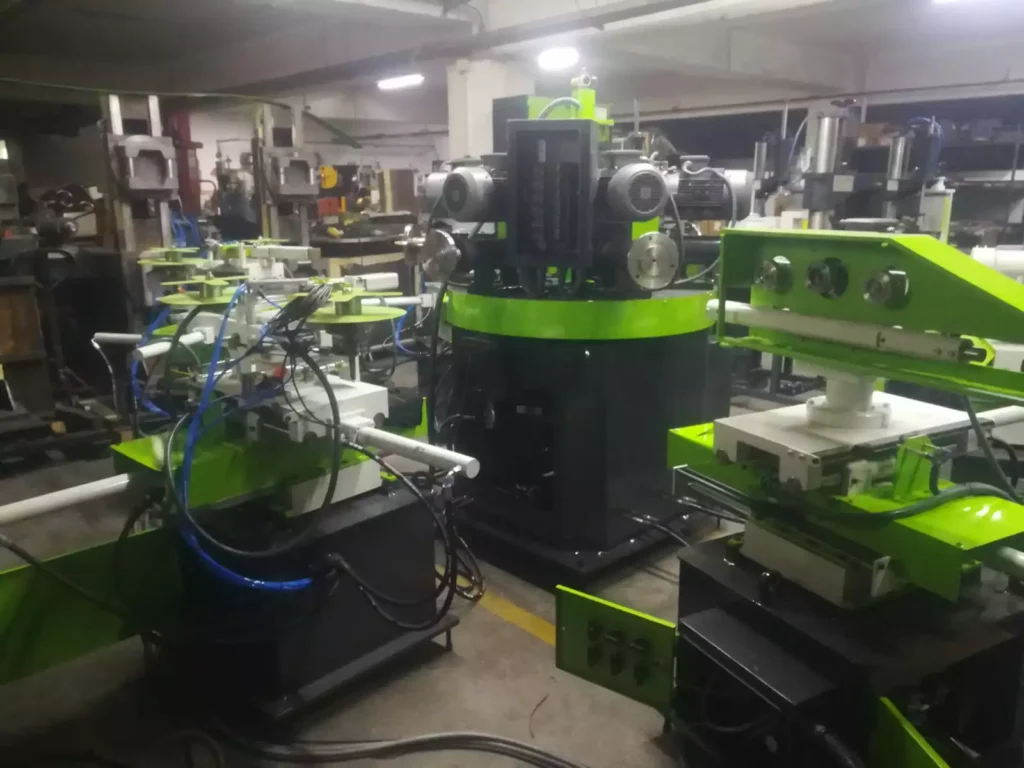
Categories
Machinery

Kevlar lamination machine for body armour manufacturing

Kevlar lamination machine for body armour manufacturing

Kevlar lamination machine for body armour manufacturing: Body armor and helmets are crucial protective gear used in various fields such as military, law enforcement, and high-risk professions. Their manufacturing involves advanced materials and engineering processes to provide maximum protection against ballistic threats, blunt force, and other hazards.

Body Armor Manufacturing

  1. Materials Used:
    • Aramid Fibers (e.g., Kevlar): These synthetic fibers are woven into sheets and layered to create a flexible, lightweight armor that can stop bullets.
    • UHMWPE (Ultra-High-Molecular-Weight Polyethylene): A lightweight alternative to aramid fibers, often used in soft and hard armor.
    • Steel or Ceramic Plates: Hard armor plates made of steel or ceramic are used to stop high-velocity rounds and provide additional protection in “hard” body armor vests.
    • Graphene: Emerging in research for its potential to improve the strength-to-weight ratio of body armor.
  2. Manufacturing Process:
    • Weaving or Layering: For soft armor, the aramid or UHMWPE fibers are woven or layered together to form a flexible, strong sheet.
    • Molding or Pressing: Hard armor plates (such as ceramic or steel) are molded or pressed into shape.
    • Laminating: In some cases, several layers of woven fibers or materials are laminated together to enhance protection.
    • Cutting and Shaping: Once the material is prepared, it is cut to the appropriate shape for vests, plates, or inserts.
  3. Testing:
    • Body armor undergoes rigorous testing, including ballistic testing (shooting projectiles at the material) and physical durability tests (e.g., puncture resistance and wear).
  4. Customization: Armor can be tailored to specific needs, such as for different threat levels (e.g., handgun vs. rifle threats) or to fit the user’s body shape and size.

Helmet Manufacturing

  1. Materials Used:
    • Fiberglass: Offers a lightweight and cost-effective solution for helmets.
    • Kevlar and Aramid Fibers: These materials are woven into the shell or used in combination with other materials to form a strong and lightweight helmet.
    • Carbon Fiber: Known for its high strength-to-weight ratio, carbon fiber is used in advanced helmets for maximum protection without added weight.
    • Polycarbonate or ABS: These thermoplastics are commonly used in riot helmets or lower-cost tactical helmets.
  2. Manufacturing Process:
    • Molding: The outer shell of the helmet is typically molded using a plastic or composite material, followed by curing in an oven to solidify the shape.
    • Liner Installation: Helmets have an inner foam or energy-absorbing liner (such as expanded polystyrene) to reduce the impact on the wearer’s head.
    • Suspension Systems: Helmets often include suspension systems (e.g., chin straps, padding) for comfort and stability. These systems also help absorb shock in case of impact.
  3. Testing:
    • Ballistic Testing: Helmets undergo ballistic tests to ensure they meet safety standards against various types of projectiles (e.g., small arms fire).
    • Impact and Penetration Testing: Helmets are subjected to blunt force trauma testing, simulating impacts from blunt objects and sharp objects.
    • Environmental Durability: Helmets are also tested for durability in extreme conditions, such as high and low temperatures, moisture, and saltwater exposure.
  4. Customization:
    • Helmets can be customized for different environments (e.g., combat, riot control, or industrial applications) by adding accessories like visors, communication systems, or night-vision mounts.

Current Trends and Innovations:

  • Smart Armor: Some manufacturers are incorporating electronic sensors or integrated communication systems into body armor to monitor the wearer’s health and environmental conditions.
  • Lightweight Materials: Continuous research is focused on reducing the weight of armor while maintaining or improving its protective capabilities, often using materials like graphene or advanced composites.
  • Modular Armor: Systems that allow the user to adapt the armor configuration (e.g., adding or removing plates or inserts) depending on mission requirements.

Body armor and helmet manufacturing requires precision, rigorous testing, and the use of high-performance materials to ensure the protection and safety of the user.

Body armor and helmet manufacturing is a highly specialized field, involving advanced materials and engineering to create protective gear for military, law enforcement, and other high-risk professions. The process starts with selecting materials that balance strength, weight, and flexibility. For body armor, materials like Kevlar, UHMWPE, and ceramic or steel plates are commonly used. These materials are woven, layered, or molded to form soft or hard armor, which is then tested for its ability to withstand ballistic threats, blunt force, and wear and tear. The manufacturing process also involves cutting and shaping the materials to fit specific body shapes or armor configurations.

In helmet manufacturing, materials like fiberglass, carbon fiber, and polycarbonate are molded into shells that are paired with foam liners to absorb impacts. Suspension systems inside helmets help ensure a snug, comfortable fit while also aiding in shock absorption. Helmets undergo extensive testing to meet safety standards, including ballistic testing and impact resistance. The integration of smart technologies into both body armor and helmets is an emerging trend, with sensors and communication systems being added for monitoring the wearer’s health and environment. Innovations continue to focus on reducing the weight of the gear without compromising protection, as well as improving overall comfort and adaptability. The manufacturing of both body armor and helmets requires a combination of material science, engineering, and rigorous testing to ensure they provide the highest level of protection in a variety of hazardous environments.

The evolution of body armor and helmets has been driven by the constant need to adapt to new threats, emerging technologies, and environmental challenges. As military and law enforcement needs become more specialized, manufacturers are developing more advanced and customizable solutions to meet those demands.

For example, body armor is increasingly becoming modular, with systems that allow the wearer to add or remove plates or inserts depending on the situation. This adaptability is crucial for personnel who may face varying threats, such as handgun rounds in one scenario and rifle fire in another. With modular systems, body armor can be tailored not only to threat levels but also to comfort and mobility, which is critical for soldiers or police officers who need to remain agile.

In helmets, advancements have focused on improving the helmet’s ability to absorb and disperse impact forces. The incorporation of energy-dispersing materials, like advanced foams and composites, allows for helmets that provide better protection against blunt force trauma while remaining lightweight. Additionally, helmets are now designed with additional features like integrated communication systems, night vision mounts, and face shields, offering more versatility in combat or tactical operations.

A major challenge in both body armor and helmet design is maintaining a balance between weight and protection. While stronger materials provide better protection, they often come at the cost of increased weight, which can hinder the wearer’s mobility. To combat this, manufacturers are constantly exploring new materials, such as graphene, which offer superior strength-to-weight ratios. Graphene is particularly attractive because it is incredibly strong yet light, making it a potential game-changer for the future of personal protective equipment.

Research and development are also shifting towards “smart armor,” which can integrate sensors to monitor the wearer’s physical condition, such as heart rate, body temperature, or the impact forces they experience. This data could be sent to a central system for real-time analysis, providing vital information that could improve the effectiveness of operations or lead to timely medical interventions in case of injury.

The future of body armor and helmets will likely see more integrated systems that not only protect physically but also enhance situational awareness and communication. As these technologies continue to develop, the primary goal remains to provide the wearer with the best possible protection without compromising on comfort, weight, or mobility.

Injection molding plays a significant role in the manufacturing of both body armor and helmets, especially for producing hard armor plates, helmet shells, and some of the inner components of protective gear. It is an efficient, precise, and scalable manufacturing technique that allows for the production of complex shapes and components with high consistency and minimal waste. Here’s how injection molding is used in the process:

Injection Molding in Body Armor Manufacturing

While most body armor is made from woven or layered fibers (like Kevlar or UHMWPE), injection molding is primarily used for producing hard armor plates or inserts. These hard plates are typically used in high-threat environments to protect against rifle rounds or armor-piercing ammunition.

  1. Material Selection:
    • Polycarbonate, Nylon, or ABS Plastics: For certain types of hard armor, injection molding is used with high-strength thermoplastics like polycarbonate or nylon. These materials are chosen for their ability to absorb impact energy and their durability.
    • Composite Materials: More advanced body armor might use composite materials, such as a blend of thermoplastic resins reinforced with fibers (like carbon fiber or aramid fibers) that can be injected into molds to create armor plates that are both strong and lightweight.
  2. Molding Process:
    • Heating and Injection: The material is heated to a molten state and then injected into a mold under high pressure. The mold shape is pre-designed to match the required body armor plate form, ensuring a precise fit and a consistent thickness of material.
    • Cooling and Solidifying: Once the material is injected into the mold, it is rapidly cooled and solidified to form the final armor plate shape. The cooling process needs to be controlled carefully to avoid warping or weakening the structure of the plate.
    • Finishing: After removal from the mold, the plates may undergo additional finishing processes such as trimming, polishing, or coating to improve their surface durability and effectiveness.
  3. Benefits for Body Armor:
    • Cost-Effectiveness: Injection molding allows for mass production, making it a cost-effective option for producing a large volume of hard armor components.
    • Consistency and Precision: The high-pressure molding process ensures uniformity in shape and size, which is critical for ensuring proper fit and protection.
    • Complex Geometries: Injection molding can create plates or inserts with complex geometries, like curved or multi-layered designs, which are crucial for optimizing coverage and comfort.

Injection Molding in Helmet Manufacturing

Helmets, particularly tactical and military helmets, also utilize injection molding for various components, including the helmet shell and inner components like liners and suspension systems.

  1. Helmet Shells:
    • Material Selection: Materials such as fiberglass, polycarbonate, and ABS are commonly used in helmet shells. In some advanced applications, carbon fiber composites or high-performance thermoplastic resins are used for greater strength and reduced weight.
    • Molding Process: The injection molding process starts with the creation of the shell using the chosen thermoplastic material. The material is injected into a mold that defines the helmet’s outer shape. For composite helmets, layers of resin and reinforcing fibers may be added before the molding process.
    • Surface Finish: Once the molding is completed, the shell can be further treated with coatings for impact resistance, aesthetics, or camouflage. Additional layers of impact-absorbing foam may also be inserted into the shell for added protection.
  2. Liners and Suspension Systems:
    • Foam Liners: Many helmets feature a foam liner that is also manufactured using injection molding techniques. These liners help absorb the energy of impacts and distribute forces across the head to reduce injury. The foam is molded into a specific shape to fit the contours of the helmet shell and the wearer’s head.
    • Suspension Systems: The inner suspension systems, which hold the helmet in place and help with comfort, are often made with thermoplastic materials using injection molding. These systems may include adjustable straps, padding, and comfort foam to ensure a snug, secure fit.
  3. Customization and Integration:
    • Add-ons: Injection molding allows for the easy integration of add-ons such as face shields, visors, or mounts for communication devices and night-vision equipment. These components can be molded to exact specifications and fitted into the helmet design.
    • Increased Comfort: Since the molding process allows for complex internal geometries, helmets can be designed with optimized comfort features, like ventilation channels or customized padding patterns, which improve wearability during extended use.
  4. Benefits for Helmet Manufacturing:
    • Durability and Strength: The molded helmet shell provides excellent durability, and injection molding allows the production of helmets that are both tough and lightweight, critical for tactical situations where every ounce counts.
    • Scalability: Like body armor, helmet production benefits from the scalability of injection molding, allowing manufacturers to produce large quantities at consistent quality and performance.
    • Cost Efficiency: The high efficiency of injection molding makes it a cost-effective process, especially when mass-producing helmet shells and components.

Challenges and Considerations

While injection molding offers many benefits, there are some challenges to consider:

  • Material Limitations: The process is often limited to certain thermoplastics and composites. Materials that need to be highly impact-resistant or lightweight (such as ceramic plates for armor) may require additional post-processing or other manufacturing methods.
  • Complexity of Design: Injection molds are expensive to create, so for highly specialized or low-volume products, it may not always be the most economical choice.
  • Material Performance: For body armor, especially, material performance must be carefully tested to ensure that injection-molded parts meet the necessary safety standards, particularly for ballistic resistance.

Injection molding is an essential technology in the production of body armor and helmets, especially when mass production, consistency, and complex design features are required. While it may not be suitable for every part of the gear, its application in hard armor plates, helmet shells, and certain internal components continues to make it a key manufacturing process in the industry.

Injection molding is increasingly used in the manufacturing of body armor and helmets due to its ability to produce high volumes of precise, durable components. In body armor, it’s particularly effective for creating hard armor plates and inserts, which are designed to stop high-velocity rounds. The process involves injecting molten material, such as polycarbonate, nylon, or composite resins, into molds under high pressure. This method ensures uniformity in thickness, shape, and size, which is critical for ensuring the protective gear fits correctly and performs consistently. For helmets, injection molding is utilized to create the outer shell from materials like polycarbonate, fiberglass, or ABS plastic. The mold forms the helmet shell, which is then combined with foam liners that absorb impact and provide comfort. The molding process also enables the integration of complex features like ventilation channels, suspension systems, and mounts for additional equipment. Injection molding is beneficial for these products because it offers cost efficiency, scalability, and the ability to produce components with intricate shapes. However, challenges remain, particularly regarding the material choices and ensuring the final product meets the required standards for protection and durability.

As injection molding continues to evolve, its role in body armor and helmet manufacturing becomes increasingly integral, particularly in meeting the demands for both efficiency and performance. One of the significant advantages of injection molding is its ability to scale production quickly and with precision. For body armor, especially hard armor plates, this means manufacturers can produce large quantities of plates that are uniform in design and meet rigorous safety standards. The ability to mass-produce parts like this is vital in military and law enforcement settings, where large numbers of high-quality protective gear are required quickly. In helmet production, injection molding helps ensure the helmet shell is lightweight yet strong enough to withstand impacts. This is especially important for military and tactical helmets, where weight is a constant concern for users who need to maintain mobility without sacrificing safety.

Another advantage of injection molding in helmet manufacturing is the ease with which additional components can be integrated into the design. With molds, it is possible to create features like built-in communication system mounts, visors, and even modular attachment points for accessories. These integrated systems allow for a more streamlined design, where all necessary features are part of the initial mold, making assembly faster and more cost-effective.

Moreover, the process’s precision allows for better customization of helmets and body armor. For example, helmets can be designed with custom internal geometries for different head shapes and sizes, improving comfort and fit. The suspension systems and padding inside helmets, which are critical for comfort and shock absorption, can also be produced through injection molding, allowing for consistent and reliable comfort features that enhance the user experience.

Despite these advantages, there are still limitations. The choice of materials is a critical factor because some materials required for optimal protection—such as certain ceramics for hard armor plates—may not lend themselves well to injection molding. Additionally, the complexity of the molds can make them expensive to design and produce, especially for highly specialized components or low-volume production runs. However, for large-scale manufacturing where uniformity, durability, and cost-efficiency are priorities, injection molding remains an essential tool in the production of body armor and helmets.

Looking ahead, the future of injection molding in this field is likely to be influenced by new materials and technologies. For example, advancements in thermoplastics, composites, and even 3D printing techniques could allow for more lightweight, yet highly protective, materials to be injected into molds. The integration of smart technologies, such as sensors embedded in the armor or helmets, could also benefit from injection molding, enabling the seamless production of multifunctional gear that not only protects but also communicates real-time data about the wearer’s status.

Ultimately, the continuous advancements in injection molding will support the development of more efficient, durable, and versatile body armor and helmet designs, improving both the safety and comfort of those who rely on this protective gear.

Laminating machine for body armour and helmet manufacturing

Laminating machines are crucial in the manufacturing of both body armor and helmets, particularly for producing multi-layered protective materials that offer enhanced strength and flexibility. The lamination process involves bonding multiple layers of materials together to form a composite structure, which improves the overall performance of body armor and helmets in terms of impact resistance, durability, and comfort.

In the context of body armor and helmet manufacturing, laminating machines are used to combine materials such as aramid fibers (like Kevlar), UHMWPE, carbon fiber, or fiberglass with resins to create strong, lightweight, and flexible layers that can withstand impacts, ballistic threats, and other hazards. The laminating process typically involves applying heat, pressure, and sometimes vacuum, to bond these layers together while ensuring consistency and uniformity in the final product.

For body armor, laminating machines are essential in creating the soft armor layers. These layers are typically made from fibers such as Kevlar or UHMWPE, which are woven or braided to form sheets. These sheets are then layered with resin or adhesives and passed through a laminating machine, which consolidates the layers by applying controlled heat and pressure. The result is a rigid, flexible armor that provides protection without adding excessive weight. The laminated structure enhances the energy-absorbing properties of the armor, ensuring it can dissipate the force of a bullet or other projectile effectively.

In helmet manufacturing, laminating machines are used to bond the helmet’s composite materials, such as fiberglass or carbon fiber, with resin. The laminating process can create the outer shell of the helmet, which is strong yet lightweight, to protect against impacts. Additionally, helmet linings or internal padding materials, often made from foam or other shock-absorbing materials, can be laminated for enhanced comfort and to improve the helmet’s overall performance in absorbing and dissipating impact energy.

The laminating process can be done using several techniques, such as heat-pressing, vacuum-bagging, or autoclaving. Each method has its advantages and is chosen based on the type of materials used, the desired thickness of the laminated structure, and the overall design of the body armor or helmet. For example, autoclaving is a common method used in advanced helmet manufacturing, where the layers of composite materials are sealed in a vacuum bag and then subjected to high pressure and heat in an autoclave to form the helmet shell. This method ensures a strong bond between layers and reduces the chance of defects in the final product.

The use of laminating machines offers several advantages in the production of body armor and helmets. The process ensures consistent and uniform layer bonding, reducing material waste and improving the overall strength of the finished product. It also allows for the production of complex, multi-layered designs that can be tailored to specific threat levels and requirements. Additionally, laminating machines can be adjusted to accommodate various materials, enabling manufacturers to experiment with new composites or hybrid structures that can provide superior protection.

One of the challenges in using laminating machines is ensuring that the process is optimized for each material and layer combination. For example, if the heat and pressure are not carefully controlled, the layers may not bond properly, compromising the strength and effectiveness of the armor or helmet. Furthermore, the choice of adhesive or resin used in the laminating process must be carefully selected to ensure it provides the necessary bond strength while maintaining the flexibility and weight characteristics required for comfort and performance.

In conclusion, laminating machines are a critical tool in the production of body armor and helmets, enabling manufacturers to create high-performance, multi-layered protective materials. By applying controlled heat, pressure, and sometimes vacuum, these machines ensure that the various layers are bonded together to form a strong, durable, and lightweight product that offers superior protection against ballistic threats and impacts. With continued advancements in materials and lamination technologies, the role of laminating machines will remain essential in producing cutting-edge personal protective equipment.

Laminating machines are essential in creating the multi-layered composites used in body armor and helmet manufacturing, ensuring the performance of protective gear. These machines apply controlled heat and pressure to bond different layers of materials, such as aramid fibers, UHMWPE, fiberglass, or carbon fiber, with resins or adhesives. The laminating process enhances the strength, durability, and flexibility of the finished product, ensuring it can effectively absorb and dissipate impact forces from ballistic threats or blunt trauma.

For body armor, laminating machines enable the production of soft armor layers that combine fibers like Kevlar or UHMWPE with resins, creating a flexible yet tough material capable of stopping bullets and other projectiles. The layers are consolidated under heat and pressure to form a durable, lightweight composite that provides the necessary protection. In helmet manufacturing, the same process is applied to create composite shells made from fiberglass or carbon fiber, which are lightweight yet strong enough to resist impacts. These laminating machines can use various techniques, such as heat-pressing, vacuum-bagging, or autoclaving, depending on the materials used and the desired performance characteristics.

The main advantage of laminating machines is their ability to produce consistent, uniform layers that contribute to the overall strength and quality of the armor or helmet. They also allow for the customization of materials, enabling manufacturers to experiment with different composites or hybrid materials that offer superior protection. However, careful control of heat, pressure, and resin application is crucial in ensuring the integrity of the final product, as improper bonding could compromise its protective capabilities. With the continuous evolution of materials and lamination technologies, these machines will remain a fundamental part of manufacturing high-performance protective gear, ensuring that body armor and helmets offer the best possible protection while remaining lightweight and comfortable.

As laminating technology continues to improve, the precision and efficiency of laminating machines are increasingly pivotal in meeting the growing demands for high-performance protective gear. In the case of body armor, the evolution of materials and their integration into the lamination process is key. For instance, researchers are exploring more advanced composite materials, including high-strength, lightweight fibers and new resin formulations that offer enhanced resistance to heat, moisture, and chemical exposure, which could further improve the overall protection of body armor. These innovations in materials require laminating machines that can handle more advanced processing methods, allowing for tighter control over temperature and pressure during the bonding process.

Similarly, the use of laminating machines in helmet manufacturing is benefiting from advancements in materials like graphene and other nanomaterials. These materials offer exceptional strength-to-weight ratios, which could lead to helmets that are both more protective and lighter, without compromising comfort or mobility. As new materials are developed, the laminating process will have to evolve to accommodate these advanced composites, ensuring that the bond between layers remains consistent and secure.

Moreover, the introduction of automation and smart technology into the laminating process is streamlining production, improving both consistency and efficiency. Automated laminating machines can monitor factors such as temperature, pressure, and resin flow in real-time, ensuring that each layer is properly bonded for optimal performance. This integration of advanced sensors and control systems helps reduce the risk of human error and material defects, ultimately leading to higher-quality products with fewer variations.

One of the exciting prospects for the future of laminating machines in body armor and helmet manufacturing is the possibility of creating “smart” armor systems that combine traditional protective materials with embedded sensors. These sensors could monitor the condition of the wearer, providing real-time data on their health, such as heart rate, body temperature, and stress levels. With these smart features, laminating machines would play a crucial role in integrating both passive protective materials and active sensing technologies into a single, unified system.

As these technologies continue to advance, laminating machines will not only serve the purpose of ensuring the structural integrity of body armor and helmets but also help create more advanced, multi-functional gear. This could lead to protective equipment that is not just protective but also adaptive and responsive, offering wearers both physical safety and real-time data that can enhance situational awareness and safety.

Ultimately, the ongoing development of laminating technologies will allow manufacturers to keep up with the growing demands for more sophisticated protective gear. With each improvement, the process will become more efficient, more customizable, and better equipped to handle the diverse range of materials and design complexities required for next-generation body armor and helmets. This will ensure that personal protective equipment continues to evolve in line with the latest advancements in materials science, manufacturing techniques, and wearable technology.

Hydraulic press for body armour and helmet manufacturing

Parts to be produced by Composite Press for Ballistic Panels

Hydraulic presses are critical in the manufacturing of body armor and helmets, as they provide the force needed to shape, bond, and compress materials into the desired forms. These presses use hydraulic power to exert a consistent and controlled amount of pressure, which is essential for processes like molding, lamination, and compression, where precision and uniformity are key. In both body armor and helmet manufacturing, hydraulic presses ensure that materials are processed correctly to meet the necessary strength, durability, and protection standards.

In body armor manufacturing, hydraulic presses are often used to shape and compress composite materials like fiberglass, aramid fibers (such as Kevlar), and polyethylene into rigid, durable plates. These plates are the hard armor inserts that provide protection against high-velocity threats like bullets. The press applies even pressure across the composite layers, ensuring that they bond tightly together and that the resulting plate is uniform in thickness, shape, and structure. This uniformity is crucial, as any inconsistencies in the armor plate could reduce its ability to effectively stop a bullet or other projectile.

For helmets, hydraulic presses are used to mold the outer shell of the helmet from materials such as polycarbonate, fiberglass, or carbon fiber composites. In the case of composite helmets, the press applies the necessary pressure to bond layers of resin and reinforcing fibers, creating a strong yet lightweight shell. Additionally, hydraulic presses can be used to compress foam materials or other padding that form the inner liner of the helmet. The foam liners help absorb impacts and provide comfort to the wearer. The press ensures that these components are tightly compressed to maintain their structural integrity and protective properties.

The hydraulic press’s role is also crucial in the process of forming multi-layered structures, such as the combination of ballistic-resistant materials with foam or other shock-absorbing layers. These multi-layered designs are typical in both body armor and helmets, where different materials are combined to offer protection against various types of threats. For example, in helmet manufacturing, a high-strength composite outer shell may be combined with an inner foam layer for impact resistance, and the hydraulic press ensures that these layers bond together effectively, maintaining both the integrity of the shell and the cushioning properties of the foam.

One of the advantages of using hydraulic presses in these manufacturing processes is the ability to apply consistent and uniform pressure over large areas. This consistency ensures that every part produced is of the same high quality, which is essential in the production of personal protective equipment. Variations in pressure or molding can lead to weak points in the final product, which could compromise its effectiveness in real-world situations.

Hydraulic presses are also relatively adaptable. Different types of materials, such as thermoplastics, resins, and composites, can be processed effectively using these presses, making them versatile tools for producing a wide range of body armor and helmet components. For example, for helmets made from advanced materials like carbon fiber, the hydraulic press can help ensure the material is molded into the correct shape while maintaining its strength-to-weight ratio.

One of the ongoing challenges in the use of hydraulic presses in body armor and helmet manufacturing is the optimization of pressure and heat settings for different materials. Some materials require higher or lower pressure, and the process must be carefully controlled to ensure that the final product maintains its protective qualities without being overly rigid or brittle. The flexibility of the hydraulic press makes it easier to adjust settings for different materials, but close monitoring and precision are necessary to avoid damaging the materials or compromising their performance.

Another aspect of hydraulic press use is its role in the development of new materials and designs. As manufacturers continue to experiment with new composites and multi-material designs, the hydraulic press will be instrumental in shaping and compressing these innovative materials into final products that meet the required protective standards. The press’s ability to apply precise and consistent force makes it an indispensable tool in the development of next-generation body armor and helmets.

In summary, hydraulic presses are essential to the manufacturing of body armor and helmets, offering the ability to mold, shape, and compress materials into the required forms with high precision. The consistency, versatility, and adaptability of hydraulic presses make them indispensable for producing the high-quality, protective gear needed by military personnel, law enforcement, and other professionals who rely on body armor and helmets for their safety. As material science continues to advance, the role of hydraulic presses in producing cutting-edge protective gear will only grow, allowing manufacturers to create stronger, lighter, and more comfortable protective equipment.

Hydraulic presses play a pivotal role in the production of body armor and helmets by applying controlled pressure to mold, bond, and shape various materials into the final protective gear. In body armor, these presses are used to shape composite materials like Kevlar, UHMWPE, fiberglass, and carbon fiber into hard plates and inserts that are designed to withstand high-velocity impacts, such as bullets or shrapnel. The even, consistent pressure from the hydraulic press ensures that the materials are uniformly compacted, which is crucial for achieving the required strength and ballistic resistance. By molding these composite layers together, the press ensures that the final product is strong, lightweight, and capable of absorbing and dispersing the energy from incoming projectiles.

In helmet manufacturing, hydraulic presses are used in the production of the outer shell and the inner components. For the shell, materials like polycarbonate, fiberglass, or carbon fiber are shaped by the press to create a protective outer layer that is both tough and lightweight. The press also helps in molding foam or padding materials that are used for the inner lining of the helmet, which provides comfort and additional impact absorption. The press ensures that the foam is compacted correctly, maintaining its shock-absorbing properties while ensuring the helmet’s structure is sound and reliable.

The versatility of hydraulic presses is evident in their ability to handle a wide range of materials and processing requirements. Whether it’s forming thermoplastic materials, compressing resins into composites, or molding advanced fibers into protective layers, hydraulic presses provide the necessary force and precision for these complex tasks. However, careful control of pressure and temperature is essential. Too much pressure can lead to material deformation or loss of protective qualities, while too little pressure can result in weak bonds or improperly formed products.

As new materials and designs continue to emerge in the field of body armor and helmets, hydraulic presses will remain integral to their production. Their ability to handle complex, multi-layered composite structures is especially important as manufacturers work to combine new lightweight materials with high-performance resins or adhesives. The hydraulic press will continue to be a vital tool in creating protective gear that balances strength, weight, and comfort for those who rely on body armor and helmets for their safety in high-risk environments.

The continuous advancement of hydraulic press technology is enabling even more precise control over the forming and bonding processes, which is particularly important as manufacturers push the limits of material performance in both body armor and helmet applications. Modern hydraulic presses often feature programmable control systems that allow for exact adjustments in pressure, temperature, dwell time, and speed, all of which are critical in ensuring the integrity of the final product. These controls help avoid inconsistencies and ensure repeatability across large production runs, which is vital for ensuring that every piece of armor or helmet meets the stringent performance standards required for life-saving equipment.

In the case of advanced composite materials, such as those used in military-grade armor or combat helmets, the pressing process may involve multiple stages. For example, a series of layers—each with specific orientations or materials—may be laid up manually or via automation, and then transferred into a mold where the hydraulic press applies heat and pressure. This staged process can help optimize fiber alignment and resin distribution, which directly impacts the strength and ballistic resistance of the finished product. In some systems, presses are combined with vacuum or autoclave environments to further enhance resin flow and eliminate air pockets, ensuring the composite structure is fully consolidated and free from internal weaknesses.

Another key area where hydraulic presses are becoming increasingly relevant is in the production of ergonomic or contoured designs. Unlike flat armor plates or standard helmet shapes, newer designs often include curvature to better fit the human body or improve aerodynamics and comfort. Forming these shapes reliably and efficiently requires presses with specialized dies and molds that maintain uniform pressure distribution even across complex geometries. This capacity is particularly valuable in producing customized armor panels for female personnel or mission-specific helmet shapes for airborne or mechanized forces.

Furthermore, the integration of advanced monitoring systems into hydraulic presses is enhancing quality assurance. Sensors embedded within the press can detect fluctuations in temperature, pressure, or material flow, allowing for real-time adjustments and reducing the risk of defective parts. These systems also enable comprehensive data logging for traceability, which is increasingly important in defense and law enforcement procurement where rigorous certification and quality records are mandatory.

As sustainability becomes a more pressing concern, hydraulic presses are also being adapted to support greener manufacturing practices. This includes the ability to process bio-based or recyclable composites, as well as more energy-efficient press systems that minimize waste heat and use hydraulic fluids with lower environmental impact. In addition, by allowing for more accurate material forming and bonding, hydraulic presses reduce the amount of scrap material generated, contributing to more sustainable production cycles.

In short, the hydraulic press is not just a shaping tool but a cornerstone of modern body armor and helmet production. Its ability to adapt to new materials, complex shapes, and high-volume production while maintaining precision and repeatability makes it indispensable. As protective gear continues to evolve toward lighter, smarter, and more ergonomic designs, hydraulic presses will remain central to turning advanced material science into real-world, field-ready protection.

Helmet shell forming for body armour and helmet manufacturing

Fiber-reinforced Materials used by the Composite Presses

Helmet shell forming is a critical stage in the manufacturing process of protective helmets used by military, law enforcement, and security personnel, and it directly determines the structural integrity, impact resistance, and overall effectiveness of the helmet. This process involves shaping high-performance materials—typically advanced composites like aramid fibers (e.g., Kevlar), ultra-high-molecular-weight polyethylene (UHMWPE), carbon fiber, or fiberglass—into a hardened outer shell that can absorb and deflect kinetic energy from ballistic threats, blunt impacts, and fragmentation.

The shell forming process typically begins with material preparation, where sheets or fabrics impregnated with resin are cut into specific patterns. These are then carefully laid into a mold that corresponds to the helmet’s design—often using a multi-layer stacking method to ensure optimal fiber orientation and maximum strength. Once the layup is complete, the mold is closed and subjected to heat and pressure through processes such as compression molding, vacuum-assisted resin transfer molding (VARTM), or autoclaving. These forming techniques ensure that the resin flows uniformly through the layers and that the composite material conforms precisely to the helmet’s shape while eliminating voids or air pockets that could compromise protection.

Compression molding, which uses a hydraulic press, is one of the most common methods for helmet shell forming. In this process, the material layup is placed into a heated mold, and a matching upper mold applies pressure. The heat softens the resin, and the pressure causes it to flow, impregnating all fiber layers while curing the shell into its final hardened form. This results in a smooth, consistent, and high-strength shell that forms the core of the protective helmet.

In high-end applications, autoclave curing may be used. This involves placing the mold and helmet layup into a sealed chamber where heat and pressure are uniformly applied under vacuum conditions. This method allows for extremely tight control of resin content and distribution, often resulting in superior mechanical properties and a high-quality finish, but it is more time- and cost-intensive.

After the shell is cured and removed from the mold, it undergoes trimming to remove excess material and to create openings for accessories such as visors, straps, communication systems, or ventilation ports. The shell may also be post-cured in an oven to ensure complete resin hardening, improving thermal stability and durability. The outer surface is then often sanded, coated, or painted for UV protection, camouflage, and durability.

Helmet shell forming must also consider ergonomic and anatomical factors. The shell must fit comfortably while accommodating the padding, harness system, and additional attachments. Therefore, molds are designed with careful attention to anthropometric data to provide optimal coverage, balance, and wearer comfort without compromising mobility or field of view.

Ongoing developments in materials and forming techniques are pushing the boundaries of helmet performance. Hybrid constructions using layered combinations of carbon fiber and aramid, for example, are becoming more common to achieve a balance between lightweight construction and ballistic protection. New shell designs incorporating modular or reconfigurable components are also being explored, especially for integrated systems that include electronics, night vision mounts, and communications.

In conclusion, helmet shell forming is a sophisticated, precision-driven process that transforms flat composite fabrics into contoured, high-strength protective shells. It requires careful material selection, expertly engineered molds, and controlled thermal and pressure environments to ensure the final product meets stringent performance standards. As combat and operational requirements evolve, the technology behind helmet shell forming continues to advance, delivering helmets that are lighter, stronger, more comfortable, and better integrated with modern battlefield systems.

The precision required in helmet shell forming extends to the smallest details of the process, as even minor defects in the shell can compromise its protective capabilities. Factors such as fiber alignment, resin-to-fiber ratio, curing temperature, and pressure all play a significant role in the final mechanical properties of the helmet. Any inconsistency in these parameters can lead to weak spots or delamination within the composite structure, which would reduce the helmet’s ability to absorb impact or withstand ballistic threats. This is why modern helmet manufacturing often includes rigorous quality control measures during and after shell forming, including non-destructive testing methods like ultrasonic inspection or X-ray analysis to detect internal flaws without damaging the product.

In addition to the structural performance, the forming process is also critical in achieving uniform thickness and proper contouring, especially around high-stress areas like the crown, side edges, and rim of the helmet. These areas are subject to greater forces during impact and need precise reinforcement to maintain consistent protection. Advanced forming techniques allow for variable thickness across the shell, increasing material where it is most needed while reducing unnecessary weight elsewhere. This optimization helps to improve balance and comfort, which are essential in long-duration operational scenarios.

Another important consideration is compatibility with other components, as today’s helmets are not just standalone protection devices but are often part of integrated soldier systems. Helmet shells must accommodate rails, mounts, and ports for communication devices, night vision systems, face shields, and ballistic visors. Therefore, the forming process must ensure that the shell not only provides ballistic integrity but also maintains dimensional accuracy to align with these modular systems. In some cases, embedded reinforcements or inserts are added during shell forming to provide additional structural support at mounting points, further enhancing the helmet’s durability and utility.

As innovations in materials continue to emerge, the shell forming process must adapt to accommodate the properties of newer high-performance fibers and resins. For example, the use of thermoplastic composites, which can be reheated and reshaped, introduces possibilities for repairable and recyclable helmets, offering sustainability benefits alongside functional performance. These materials require different forming protocols, including lower temperature ranges and potentially faster cycle times, which can improve throughput in mass production without compromising quality.

The push for lighter and more adaptive helmets has also driven interest in hybrid material systems and complex shell geometries. Multi-axial fiber reinforcements, gradient material layouts, and embedded sensor technologies are now being explored within the shell structure itself, adding layers of functionality while maintaining core protective roles. These advancements rely on precise forming conditions, which further underscore the importance of continually evolving helmet shell forming equipment and methods.

Ultimately, helmet shell forming represents a convergence of materials science, mechanical engineering, and ergonomic design. It is the foundational process that defines the helmet’s strength, weight, comfort, and ability to integrate with other technologies. As threats become more diverse and operational demands increase, the development of more sophisticated shell forming techniques will continue to be essential in delivering next-generation protective helmets that enhance survivability and performance across military, law enforcement, and specialized civilian applications.

As helmet shell forming continues to evolve, manufacturers are increasingly exploring automation and digital technologies to improve efficiency, precision, and consistency. Automated systems and robotic arms are being integrated into the production process to handle repetitive tasks such as material placement, mold handling, and shell trimming. These systems help reduce human error and increase throughput, allowing for higher production volumes without sacrificing the quality of the finished product. Automation also supports the scalability of production, making it easier to meet large demands while maintaining tight tolerances and uniformity across multiple units.

Another area of innovation in helmet shell forming is the use of 3D printing technologies, which are being explored for creating complex internal structures or customized helmet components. While 3D printing of entire helmet shells is still in its infancy due to material limitations, it holds potential for producing intricate inner frameworks that can be integrated with traditional helmet shells. These structures could enhance the helmet’s impact resistance, ventilation, or energy absorption by optimizing the internal geometry, while the outer shell retains its ballistic integrity. This could lead to helmets that are not only lighter but also more efficient in terms of impact energy management.

The integration of smart technologies within the helmet, such as sensors for monitoring vital signs, environmental conditions, or the wearer’s position, is also influencing the shell forming process. These technologies require specialized slots, connectors, or even built-in wiring channels within the helmet’s structure, which must be seamlessly incorporated into the shell without weakening its protective capabilities. Forming processes are becoming more advanced to allow for these embedded technologies, with precise mold designs and additional reinforcement at critical points to support integrated electronics.

Additionally, the demand for helmets that can withstand a broader range of threats—such as fragmentation, blunt force trauma, and chemical exposure—is prompting manufacturers to rethink the design of the shell and the materials used in forming. Some helmets are now being designed to provide multi-threat protection, which involves creating shells with multiple layers of different materials, each optimized for a specific type of threat. For example, a helmet might have a base layer of high-strength aramid fibers for ballistic protection, followed by a layer of shock-absorbing foam to protect against blunt force trauma, and an outer layer of polycarbonate or composite for added durability and resistance to abrasions. Each of these materials must be formed with the appropriate pressure, temperature, and curing times to ensure that they perform as intended when combined.

The continued development of advanced coatings is another area that complements the helmet shell forming process. Protective coatings that add resistance to environmental factors like heat, cold, moisture, or chemicals are increasingly applied during or after shell forming. These coatings can be integral to the helmet’s performance in extreme conditions, ensuring it doesn’t degrade over time or become vulnerable to external threats like acids or salts. Some coatings also provide anti-glare or anti-reflective properties, enhancing the helmet’s effectiveness in tactical environments where stealth and visibility are critical.

As global standards for protective equipment continue to evolve, helmet shell forming processes must also adapt to meet more stringent regulations and certification requirements. These standards ensure that helmets provide reliable protection against a range of hazards, including high-velocity projectiles, blunt trauma, and environmental factors. As a result, manufacturers must stay ahead of regulatory changes and continually refine their forming processes to maintain compliance with these evolving requirements.

The overall trend in helmet manufacturing is toward producing lighter, stronger, and more multifunctional helmets that are not only protective but also adaptable to a range of operational needs. Whether it’s for military personnel in combat, law enforcement officers in tactical situations, or first responders in hazardous environments, helmets are being designed to integrate more seamlessly with other gear, enhance wearer comfort, and provide advanced protection from a wider array of threats.

Ultimately, the helmet shell forming process is at the heart of this innovation. By continuously refining materials, improving manufacturing techniques, and incorporating new technologies, manufacturers can create helmets that not only meet but exceed the performance expectations of modern protective gear. As demands for advanced protection, comfort, and adaptability continue to grow, the process of helmet shell forming will remain a critical area of focus for the next generation of protective headgear.

Kevlar preform molding machine for helmet manufacturing

Kevlar preform molding machines are specialized equipment used in the production of helmet shells, particularly in the manufacturing of ballistic helmets. These machines are designed to shape Kevlar fibers, which are known for their high tensile strength, durability, and resistance to impact, into preforms or molded shells that serve as the foundational protective structure of the helmet. The preform molding process is key to creating the helmet’s outer shell, which is the first line of defense against ballistic and blunt-force impacts.

The process of using a Kevlar preform molding machine typically starts with the preparation of Kevlar fabric or fiber, which is cut into specific patterns or layers that will be stacked to form the helmet shell. The Kevlar fibers are impregnated with resin to provide the material with rigidity and to enhance its ballistic properties. Once the fibers are prepared, they are loaded into the preform molding machine.

The preform molding machine utilizes high heat and pressure to mold the Kevlar layers into a desired shape, typically the outer shell of a helmet. The machine applies even pressure across the entire mold, ensuring that the fibers are uniformly compressed and bonded together. This pressure helps the resin to cure, forming a solid, durable structure. The heat is essential for activating the resin and ensuring it fully bonds the fibers together, while the pressure ensures that the fibers are properly aligned and compacted, creating a consistent thickness and strength across the entire shell.

One of the advantages of using Kevlar preform molding machines is the precision with which the machine can control the molding process. By adjusting temperature, pressure, and curing time, manufacturers can optimize the material’s performance, ensuring the helmet meets the required ballistic standards and is lightweight yet strong. Kevlar is a material known for its high strength-to-weight ratio, which is particularly important in helmet manufacturing, as it provides optimal protection without adding unnecessary weight that would hinder mobility or comfort.

These machines also help in creating more intricate and complex helmet shapes, accommodating different designs and customizations that may be required for specific end users, such as military personnel or law enforcement officers. This level of customization is possible due to the flexibility of the preform molding process, which allows for the incorporation of different layers, reinforcements, or even hybrid materials within the helmet design.

Moreover, the Kevlar preform molding machine can be adapted for use with other composite materials. As the demand for advanced helmets increases, manufacturers are exploring the use of hybrid materials, such as a combination of Kevlar and carbon fiber or aramid blends, to create even stronger, lighter, and more flexible helmet shells. In such cases, the preform molding machine must be able to handle the unique requirements of each material, ensuring that all layers are properly integrated during the molding process.

In addition to its role in molding the outer shell, the Kevlar preform molding machine can be used to mold inner components of the helmet, such as padding or impact-resistant liners. These components contribute to the helmet’s overall ability to protect the wearer from blunt-force trauma, and the molding machine ensures that each component is shaped to fit precisely within the shell.

While the use of Kevlar preform molding machines provides significant advantages in terms of efficiency, precision, and material optimization, they also come with a set of challenges. For example, the cost of the machinery and the specialized skills required to operate it can be significant. Additionally, ensuring that each molded helmet meets strict safety and quality standards requires continuous monitoring and testing, both during and after the molding process.

As the helmet manufacturing industry evolves, the integration of automation and digital technologies in Kevlar preform molding machines is becoming more common. Automated systems can help streamline the production process, reduce human error, and ensure consistency in the final product. These advancements may include real-time monitoring systems that track temperature, pressure, and curing time, as well as advanced robotic arms for handling the molded helmets and adding additional components, such as visors or chin straps.

In conclusion, Kevlar preform molding machines are a vital component in the production of high-performance helmets, providing the precision and consistency necessary to create helmets that meet rigorous safety standards. By optimizing the molding process for Kevlar, manufacturers can produce helmets that offer excellent ballistic protection while remaining lightweight and comfortable for the wearer. As technology continues to advance, these machines will likely evolve to accommodate new materials, designs, and manufacturing techniques, ensuring that protective headgear keeps pace with the ever-changing demands of safety and performance.

Kevlar preform molding machines are integral to the production of modern ballistic helmets because they offer a combination of speed, precision, and efficiency. These machines ensure that Kevlar’s exceptional properties—such as its high tensile strength, durability, and resistance to abrasion—are fully realized in the final helmet shell. By applying a controlled amount of pressure and heat to the pre-impregnated Kevlar material, these machines mold the fiber into the precise shape required for the helmet. This process not only ensures uniformity in the finished product but also enhances the overall structural integrity of the helmet.

With the increasing demand for lightweight and high-performance helmets, manufacturers have focused on improving the molding techniques. Advanced systems are now capable of adjusting various parameters, such as molding time, temperature, and pressure, during the production process to optimize the material properties of the Kevlar preform. This allows manufacturers to tailor the helmet’s mechanical characteristics, such as its resistance to penetration, impact absorption, and deflection, to meet specific safety standards. Fine-tuning these parameters also helps in achieving the best balance between strength and weight, which is critical for helmets that need to provide protection without being overly burdensome for the wearer.

The ability of Kevlar preform molding machines to handle complex geometries is particularly beneficial in meeting the growing demand for ergonomic designs. Helmet shells are no longer just flat or simple shapes; modern helmets are designed to fit a wide range of head sizes and shapes while providing optimal protection and comfort. The molding machines are capable of creating custom contours that align with the human head’s natural curvature, providing a better fit and reducing pressure points. This is vital, especially for long-term wear, where comfort plays a crucial role in ensuring that the helmet remains effective in real-world scenarios.

Beyond standard ballistic helmets, Kevlar preform molding machines can be adapted for the production of specialized headgear, such as riot helmets, combat helmets, or even helmets used for space exploration. These machines can be customized to handle varying material combinations, such as adding carbon fiber or other high-strength materials to the Kevlar layers to further enhance impact resistance or reduce weight. Hybrid helmets, which combine different materials, are becoming increasingly popular because they allow for tailoring of the helmet’s properties to meet the exact needs of the wearer. For example, helmets designed for specific military units may incorporate additional features like mounts for communication systems, night vision devices, or ballistic visors, all of which require careful molding to ensure the helmet shell can accommodate these additions without compromising its protective capabilities.

In addition to improving the molding process itself, innovations in quality control and testing are also helping to ensure the helmets meet stringent performance standards. Automated inspection systems are now being integrated into the production line to detect any inconsistencies or defects in the molded helmets. These systems use advanced sensors and imaging technologies to check for issues such as surface imperfections, dimensional inaccuracies, or structural flaws. Real-time data analytics can track the entire production process, ensuring that the molding parameters are within acceptable ranges and that each helmet is produced to specification.

Another factor driving innovation in Kevlar preform molding machines is the push for sustainability. As environmental concerns grow, there is increasing interest in producing helmets from recyclable materials or making helmets that are easier to recycle after their useful life. Some manufacturers are investigating the use of bio-based resins and fibers in the molding process, as well as exploring ways to reduce waste material during production. These advancements could lead to more sustainable helmet production processes, reducing the environmental impact of manufacturing while maintaining high standards of protection.

With the ongoing advancements in materials science and manufacturing technology, Kevlar preform molding machines will continue to evolve. The future of helmet production may see even greater integration of automation, artificial intelligence, and smart technology to improve manufacturing processes, reduce lead times, and enhance the overall quality of the product. These technologies will also likely enable greater customization, allowing helmets to be made to measure for specific individuals or use cases. As threats become more diverse and protective gear requirements become more complex, the ability to quickly and efficiently mold helmets with superior protective qualities will remain a cornerstone of the industry, ensuring that the helmets of tomorrow provide the necessary defense against a wide range of dangers.

As technology advances, the future of Kevlar preform molding machines in helmet manufacturing may also embrace innovations in automation, material science, and smart manufacturing techniques. The development of AI-driven systems capable of optimizing the molding process in real time is already in progress. These systems can use data from sensors embedded in the machinery to monitor pressure, temperature, and curing times, adjusting the process dynamically to ensure the optimal molding of each helmet shell. By continuously learning from previous production cycles, AI systems could significantly reduce the risk of defects, improve consistency, and allow manufacturers to adapt quickly to new material formulations or design changes.

In addition to machine intelligence, digital twin technology—where a virtual replica of the manufacturing process is created and monitored in real-time—holds potential for the future of helmet manufacturing. By creating a digital model of the production process, manufacturers can simulate different scenarios and predict the outcomes of various changes to parameters like pressure, temperature, and resin formulations. This could enable faster innovation, reduced prototyping costs, and more efficient quality control by catching potential issues before they arise in physical production.

The trend toward lightweight yet robust protective gear will continue to drive the development of new composite materials. In addition to traditional Kevlar, materials like graphene, carbon nanotubes, and ultra-high-molecular-weight polyethylene (UHMWPE) are being explored for their exceptional strength-to-weight ratios. Integrating these materials with Kevlar in the preform molding process could create helmets that are even lighter and more resistant to high-velocity impacts while maintaining or enhancing the level of protection against blunt force trauma and fragmentation. These new materials might require further adjustments in molding machines, such as modified temperature settings or more sophisticated pressure systems to accommodate the different characteristics of the composites.

Another area of interest is the exploration of helmets with adaptive features, such as smart helmets that integrate sensors for monitoring the wearer’s physical condition or environmental conditions in real time. In this context, Kevlar preform molding machines could be adapted to create specialized cavities or channels for the seamless integration of such electronics, ensuring that the helmet maintains its structural integrity while providing additional functionality. For instance, sensors embedded within the helmet could monitor impact forces during a blast or collision, alerting medics to potential injuries, or track the wearer’s biometric data to ensure they are operating within safe physical limits.

Moreover, as defense and law enforcement requirements become more specialized, there will likely be an increasing demand for customized helmets. The rise in individualized equipment design could lead to helmets that are tailored not only for specific mission profiles (e.g., airborne units, special forces, or riot police) but also to individual anatomical needs. A helmet designed with a custom-fit preform molding process could provide better protection, improved comfort, and reduced fatigue over long periods of use. The preform molding machine’s ability to adjust its pressure and molding cycle could allow for more personalized features, such as additional padding or reinforcement in specific areas of the shell where protection is most needed.

The focus on sustainability will further shape the evolution of Kevlar preform molding machines. Manufacturers are already exploring the possibility of using recycled materials, including Kevlar waste from the production process itself, or incorporating bio-based resins that are less harmful to the environment. In this context, molding machines could become more energy-efficient, with improved heat management and reduced cycle times, which would not only lower operational costs but also reduce the environmental footprint of helmet manufacturing. This trend toward sustainability is also pushing the development of recycling programs that could allow end-users to return old helmets for repurposing, reducing waste in the long term.

Global standards and certifications for protective headgear continue to evolve as new threats emerge and technologies develop. This ensures that helmets are not just effective against traditional dangers, such as ballistic impacts and blunt trauma, but also against new and increasingly sophisticated threats like cyber-attacks (via helmet-integrated electronics) or environmental hazards (such as extreme heat or chemical exposure). The need to meet these standards may prompt further innovations in the molding process, leading to helmets that can provide multi-threat protection while maintaining the comfort, mobility, and adaptability needed for modern operations.

Finally, Kevlar preform molding machines are likely to play a central role in the continued evolution of body armor systems. As the boundaries between helmets, body armor, and other personal protective equipment (PPE) continue to blur, manufacturers may look to integrate helmet shells into larger protective suits. These integrated systems could offer uniform protection from head to toe, with Kevlar preform molding machines enabling the molding of interconnected layers that work together seamlessly, providing a higher level of protection against multiple types of threats.

In conclusion, as the demand for advanced, lightweight, and multifunctional protective gear continues to grow, the role of Kevlar preform molding machines in helmet manufacturing will only become more crucial. The continued refinement of these machines, driven by innovations in automation, smart manufacturing, and materials science, will ensure that future helmets meet increasingly sophisticated safety standards while being lighter, more comfortable, and more adaptable. Whether for military, law enforcement, or industrial use, Kevlar helmet shells will remain at the forefront of personal protective equipment, providing a vital line of defense for wearers across a wide range of high-risk environments.

Compression molding press for Kevlar body armour manufacturing

Compression molding presses are essential pieces of equipment in the manufacturing of Kevlar-based body armor. This molding technique involves placing pre-impregnated Kevlar fabric or composite materials into a heated mold, where heat and pressure are applied to form the desired shape. Compression molding is widely used in the production of advanced body armor, including ballistic vests and plates, because it offers several advantages, such as uniform material distribution, controlled thickness, and the ability to produce complex shapes with high precision.

The process begins with the preparation of Kevlar fibers, which are typically woven into fabric and then pre-impregnated with a resin or polymer matrix. This pre-impregnated material, often referred to as prepreg, is crucial for ensuring that the resin is evenly distributed throughout the Kevlar fibers, ensuring that the final product will have consistent strength and durability. The pre-impregnated Kevlar is cut to the appropriate size and placed into the mold cavity of the compression molding press.

Once the material is in place, the mold is closed, and the press applies heat and pressure to the material. The heat activates the resin, allowing it to bond the Kevlar fibers together, while the pressure ensures that the fibers are compacted and aligned in the desired orientation. This combination of heat and pressure results in a dense, strong, and uniform structure that retains the high-impact resistance and ballistic protection that Kevlar is known for.

Compression molding presses are particularly well-suited for body armor manufacturing because they allow for precise control over the molding parameters, including temperature, pressure, and cycle time. The ability to fine-tune these parameters is crucial in achieving the correct material properties for ballistic protection. For example, increasing the pressure may enhance the density of the Kevlar layers, making the body armor stronger and more resistant to penetration. Adjusting the temperature can affect the curing process of the resin, ensuring that the bonding of the fibers occurs uniformly and fully.

The molding press also allows for the production of complex, multi-layered body armor. Multiple layers of Kevlar can be stacked in the mold, and the press will apply pressure to bond them together in a uniform manner. This multi-layered structure is critical for increasing the armor’s protective capabilities, as each layer absorbs and disperses impact energy, significantly enhancing the overall strength of the body armor. The layering process also provides flexibility, as manufacturers can incorporate different types of materials or composites into each layer to optimize the performance of the body armor in specific threat scenarios.

One of the key advantages of compression molding presses is their ability to produce body armor with consistent thickness and high-quality surface finishes. The even distribution of pressure ensures that the material is uniformly compacted across the entire mold, which is critical for ensuring that the body armor performs reliably. In addition, the use of precision molds allows manufacturers to produce body armor components with complex shapes and contours, ensuring that they fit comfortably and securely on the wearer’s body.

These presses can also be equipped with automated systems to further improve the efficiency of the manufacturing process. For example, automated loading and unloading systems can reduce cycle times and human intervention, allowing for faster production rates. Temperature and pressure sensors can be incorporated into the molding press to provide real-time feedback, ensuring that each cycle is consistent and that the final product meets quality standards. In some cases, robotic arms or conveyor systems may be used to handle the finished body armor pieces, streamlining the overall production process and reducing the risk of damage to the materials.

The development of compression molding presses for Kevlar body armor manufacturing has been accompanied by the emergence of advanced materials and new molding technologies. For example, hybrid composites that combine Kevlar with materials like carbon fiber or UHMWPE (Ultra-High Molecular Weight Polyethylene) are being explored to enhance the protective properties of body armor. Compression molding presses must be adaptable to handle these new material combinations, ensuring that they can deliver the same level of high-quality results.

As the need for more advanced, lighter, and stronger body armor continues to grow, manufacturers are increasingly turning to compression molding presses that integrate the latest in smart technology. These presses are becoming more automated and integrated with digital systems for real-time monitoring and adjustments. This allows manufacturers to optimize the molding process for different designs, materials, and production volumes, ensuring that the final product meets the ever-evolving requirements of modern body armor.

In summary, compression molding presses play a crucial role in the production of high-performance Kevlar body armor by providing precise control over the molding process and enabling the creation of multi-layered, complex designs that offer superior ballistic protection. With continued advancements in materials and manufacturing technology, compression molding presses are poised to remain a cornerstone of body armor production, enabling manufacturers to meet the increasing demand for lighter, stronger, and more protective armor solutions.

Compression molding presses continue to evolve with the increasing demand for high-performance body armor. These presses provide a critical advantage by ensuring that each layer of Kevlar or composite material is consistently molded to meet the specific performance requirements, whether it’s for military, law enforcement, or civilian protective gear. As armor technology progresses, these presses are being refined to accommodate newer materials, improving not only strength but also flexibility, comfort, and weight reduction. The precision of the molding process, with its ability to control temperature, pressure, and cycle time, ensures that each piece of body armor provides reliable protection against various threats such as ballistic impacts, stab wounds, and blunt-force trauma.

With advancements in automation, the molding process is becoming more efficient, with reduced human intervention leading to increased production speeds and decreased likelihood of errors. These automated systems are designed to monitor and adjust parameters in real time, guaranteeing that the desired material properties are achieved consistently throughout the production batch. This automation reduces cycle times and enhances the ability to produce body armor in larger quantities without sacrificing quality. Additionally, automation improves the ergonomics of the manufacturing process, reducing the physical strain on workers and increasing safety in the production environment.

The integration of artificial intelligence and machine learning into compression molding presses is also improving the manufacturing process. AI systems can analyze data collected from sensors embedded in the presses, such as temperature, pressure, and curing time, to identify patterns and predict the best adjustments needed for optimal results. Over time, these systems learn from previous production cycles, optimizing each subsequent run and making the process more efficient and accurate. By fine-tuning the molding process, manufacturers can ensure that the final body armor pieces meet or exceed stringent safety standards, providing wearers with maximum protection.

Sustainability is another factor that is influencing the development of compression molding presses for body armor production. As the focus on reducing environmental impact increases, manufacturers are seeking ways to incorporate recycled or eco-friendly materials into the production process. Compression molding presses are adapting to handle these new materials, which may include recycled Kevlar fibers or bio-based resins. This shift toward more sustainable materials is helping the industry reduce its carbon footprint while still maintaining the high standards of performance that are required for protective gear.

Another innovation in the field of compression molding for body armor is the move toward multi-functional armor designs. Manufacturers are working on integrating additional features into the armor, such as plates for additional ballistic protection or internal padding for comfort and shock absorption. Compression molding presses are capable of molding complex, multi-layered structures that combine Kevlar with other materials such as ceramics or metals to create hybrid armor systems. These systems offer superior protection by leveraging the unique properties of each material, creating armor that is stronger, lighter, and more effective at stopping a wider range of threats.

As the demand for more personalized protective gear grows, there is a push for the customization of body armor to fit individual needs. Compression molding presses can be adapted to create custom-fit body armor, taking into account factors like body shape and specific mission requirements. This customization could involve molding plates that contour to the wearer’s body or integrating specific features for comfort, such as moisture-wicking linings or adjustable straps. The flexibility of the compression molding process allows manufacturers to offer products that not only meet standardized protective requirements but also provide a higher level of comfort and effectiveness for the wearer.

In the future, we may also see further advances in the integration of smart technologies into body armor. Compression molding presses will likely play a role in incorporating sensors, communication devices, or health-monitoring systems into body armor. For example, integrating sensors into the armor that track the wearer’s physical condition or detect environmental threats could enhance the safety and performance of the gear. These sensors might be integrated during the molding process, ensuring that the helmet or vest retains its structural integrity while offering additional capabilities like real-time monitoring of vital signs or impact detection.

The continuous improvement of compression molding presses for Kevlar body armor manufacturing will ensure that these protective gear systems continue to evolve to meet the increasingly complex needs of modern-day users. The ability to adapt to new materials, integrate advanced technologies, and streamline the production process will be key to ensuring that body armor remains effective, efficient, and comfortable. With the continued integration of automation, sustainability, and customization, compression molding presses will remain at the forefront of body armor manufacturing, playing a crucial role in the protection of individuals in

A Kevlar lamination machine plays a crucial role in the production of body armor, particularly in the creation of multi-layered ballistic vests, helmets, and other protective gear. The lamination process involves bonding multiple layers of Kevlar fabric, typically pre-impregnated with a resin or adhesive, to create a dense, durable structure capable of absorbing and dispersing ballistic energy. The Kevlar lamination machine is designed to ensure that these layers are bonded with uniform pressure, heat, and time, creating a solid, protective material.

The basic process starts with the preparation of Kevlar fabric, which is woven into sheets and then pre-impregnated with resin or other bonding agents. These prepregs are laid out in layers that will form the final body armor product. The laminated Kevlar is then placed into the lamination machine, where heat and pressure are applied to bond the layers together. The process ensures that the resin cures evenly throughout the fabric, resulting in a solid, cohesive material that retains the high strength-to-weight ratio that Kevlar is known for.

Lamination machines are specifically designed to apply controlled heat and pressure to the material. The pressure ensures that the layers of Kevlar are tightly compacted, enhancing the ballistic properties by improving the fiber alignment and reducing voids between the layers. The heat activates the resin, allowing it to bond the fibers together, ensuring the durability and flexibility of the final laminated material. The temperature, pressure, and cycle time can all be adjusted to meet the specific requirements for different types of body armor. The combination of these factors plays a crucial role in achieving the desired characteristics of the finished product, such as strength, flexibility, and impact resistance.

One of the key benefits of using a Kevlar lamination machine is the ability to produce multi-layered armor that provides superior protection. By stacking several layers of Kevlar, each layer absorbs a portion of the impact energy from a ballistic threat, improving the overall performance of the body armor. Each layer of Kevlar is designed to work together, creating a synergistic effect that enhances the armor’s ability to stop or slow down projectiles, reducing the risk of injury to the wearer. The lamination process also allows for the integration of additional materials, such as ceramic or metal plates, within the layers to further improve ballistic performance.

The lamination machine also helps ensure the uniformity of the final product. By controlling the lamination process, manufacturers can ensure that each piece of armor is consistent in terms of thickness, bonding strength, and structural integrity. This uniformity is critical to meeting safety standards and ensuring that the armor will perform reliably in real-world scenarios. Advanced lamination machines are often equipped with sensors and automated systems that monitor the process, adjusting the temperature, pressure, and cycle time as needed to maintain optimal results.

Another advantage of the Kevlar lamination process is that it allows for flexibility in terms of design and customization. Armor manufacturers can vary the number of layers, thickness, and material types used in the lamination process to meet specific protection requirements. For instance, tactical vests designed for military use may feature more layers and heavier-duty materials than civilian body armor, while law enforcement officers may require a combination of flexibility and enhanced protection. The lamination machine can accommodate these variations, enabling manufacturers to produce body armor tailored to the needs of different users.

Kevlar lamination machines can also be used to produce other protective gear, such as helmets and shields, by molding Kevlar layers into specific shapes. This ability to create complex forms while maintaining the strength and integrity of the material makes lamination machines highly versatile. As the demand for specialized armor grows, manufacturers can modify lamination machines to handle a wider range of materials, including hybrid composites, which combine Kevlar with other advanced fibers such as carbon fiber or UHMWPE. These hybrid materials can offer superior protection while remaining lightweight, and the lamination process can ensure that these materials are properly bonded and shaped.

The continued advancement of lamination technology also includes the integration of automation and digital monitoring. Many modern Kevlar lamination machines are now automated, which allows for faster and more consistent production of body armor. These machines can incorporate sensors that track key variables such as temperature, pressure, and curing time, providing real-time feedback to optimize the process. This automation also reduces human error and increases the efficiency of production, allowing manufacturers to meet high demand without sacrificing quality.

Sustainability is an increasing consideration in the manufacturing of body armor, and Kevlar lamination machines are adapting to this trend. Manufacturers are exploring the use of recyclable materials, such as recycled Kevlar fibers, and eco-friendly resins that are less harmful to the environment. The lamination machine can be adjusted to work with these alternative materials, ensuring that body armor remains durable and protective while reducing the environmental footprint of its production.

In conclusion, Kevlar lamination machines are essential for producing high-performance body armor, offering manufacturers the ability to create strong, flexible, and multi-layered protective gear. By applying controlled heat and pressure to bond Kevlar fibers, lamination machines ensure that the final product has the necessary ballistic properties to protect the wearer. As body armor technology continues to evolve, lamination machines will remain central to the production of advanced protective gear, supporting the integration of new materials, customization options, and sustainable practices.

The ongoing development of Kevlar lamination machines will likely see an increasing emphasis on efficiency, precision, and adaptability. One key area of advancement is the integration of more sophisticated automation and AI-driven systems to further optimize the lamination process. These machines will be able to analyze real-time data from embedded sensors to monitor and adjust parameters such as temperature, pressure, and resin flow dynamically. Such capabilities will ensure that the lamination process is not only faster but also more precise, resulting in consistent, high-quality body armor with minimal waste. Automation could also extend to the entire production line, reducing human intervention and increasing throughput without compromising the quality of the final product.

Another significant trend in Kevlar lamination machines is the continued evolution towards multi-material composites. As manufacturers explore the combination of Kevlar with other advanced fibers like carbon fiber, UHMWPE (Ultra High Molecular Weight Polyethylene), and graphene, lamination machines must be able to handle these new materials effectively. These hybrid composites offer enhanced protection characteristics, such as superior strength, durability, and lighter weight, while still maintaining the core benefits of Kevlar. The versatility of modern lamination machines, which can accommodate different materials and adjust molding parameters accordingly, is becoming increasingly important as body armor needs grow more specialized and diverse.

In addition to handling new materials, the future of Kevlar lamination machines may involve the ability to incorporate smart technologies into body armor. This could include the integration of sensors or communication devices directly into the layers during the lamination process, allowing the finished armor to serve multiple functions beyond physical protection. For example, embedded sensors could monitor the wearer’s vital signs, detect impacts, or even provide real-time feedback on the status of the armor’s integrity. Incorporating these technologies into the lamination process would require advanced machine designs that ensure the electronic components do not compromise the ballistic performance of the armor while maintaining the comfort and wearability of the gear.

Sustainability will continue to be a major driver for innovation in Kevlar lamination machines. The growing focus on environmentally responsible manufacturing practices will likely lead to the use of recycled Kevlar fibers and more eco-friendly resins or adhesives. Lamination machines of the future will need to be capable of working with these materials without sacrificing the protective capabilities of the finished armor. The pressure is also on to reduce energy consumption in the molding process. Manufacturers will need to refine the lamination cycle times and heating processes to minimize energy use while still achieving the required performance levels.

As body armor systems become more specialized to meet the needs of different users—such as military, law enforcement, or civilian applications—there will be a growing need for customization. Kevlar lamination machines will play a central role in enabling tailored armor designs, whether by adjusting the number of layers, material combinations, or specific shapes. Custom-fit body armor could become more common, where each piece is made to match the individual anatomy of the wearer, offering improved comfort, mobility, and overall effectiveness. The lamination process would need to accommodate these variations without introducing complexity or reducing production speed, pushing manufacturers to develop more flexible and versatile machines.

Moreover, as the demand for body armor with multi-threat capabilities increases, lamination machines will be expected to produce armor that provides protection from a wider range of hazards, such as ballistic impacts, stab wounds, fragmentation, and even chemical or environmental threats. This will require the integration of additional protective layers, possibly using ceramic, metal, or advanced composite materials, into the lamination process. The challenge for lamination machines will be to handle these complex structures while ensuring uniform bonding and maintaining the armor’s integrity.

Looking ahead, Kevlar lamination machines will likely become a cornerstone of the broader trend toward lightweight, high-performance protective gear that offers greater mobility and comfort without sacrificing safety. With continued advancements in material science and manufacturing technology, the lamination process will allow manufacturers to produce armor that is not only stronger and more effective but also lighter, more flexible, and adaptable to a wider variety of environments and scenarios. As this technology evolves, we can expect body armor to continue advancing, offering better protection, more versatility, and greater comfort for those who rely on it in high-risk situations.

Ballistic panel press for Kevlar body armour manufacturing

A ballistic panel press is a specialized machine used in the manufacturing of Kevlar body armor, specifically for the production of ballistic panels. These panels are critical components in body armor systems, as they provide the primary protection against ballistic threats. The press is designed to apply the necessary pressure and heat to layers of Kevlar fabric, resin, and other composite materials, fusing them together to form a dense, high-strength panel that can effectively stop or slow down projectiles.

The process begins by layering multiple sheets of Kevlar fabric, which may be pre-impregnated with resin or coated with an adhesive material. These layers are then placed into the ballistic panel press, which typically consists of a large, hydraulically operated platen that can apply consistent and uniform pressure across the entire panel. The pressure is crucial for compacting the Kevlar fibers and ensuring a uniform bond between the layers. In addition to pressure, heat is often applied to activate the resin and bond the materials together, creating a solid, cohesive structure.

The ballistic panel press is designed to ensure that the layers of Kevlar are properly aligned and uniformly pressed to maximize the material’s ballistic protection properties. By applying consistent pressure, the press ensures that there are no air gaps or inconsistencies between the layers, which could compromise the armor’s performance. This uniformity is essential because any weak spots in the panel could allow a projectile to penetrate the armor, putting the wearer at risk. The application of heat also ensures that the resin cures evenly, creating a strong bond that enhances the overall strength and durability of the panel.

In many ballistic panel presses, the process is controlled by automated systems that monitor and adjust variables such as pressure, temperature, and time to ensure optimal results. These systems allow manufacturers to fine-tune the press to achieve specific material properties, such as increased stiffness, flexibility, or resistance to specific types of ballistic threats. For example, increasing the pressure can improve the density and overall impact resistance of the Kevlar panel, while adjusting the temperature can influence the curing of the resin, ensuring a stronger bond between the layers.

One of the primary advantages of using a ballistic panel press is the ability to create uniform, high-quality panels with consistent thickness and strength. This uniformity is critical for meeting stringent safety standards and ensuring that the body armor provides reliable protection. By using a press, manufacturers can produce panels that meet precise thickness tolerances, which is important for both the performance of the body armor and its fit on the wearer. The consistency of the panels also ensures that the armor is able to stop or slow down projectiles in a predictable manner, increasing the effectiveness of the protective gear.

Ballistic panel presses can also be designed to handle complex shapes and sizes, allowing manufacturers to create panels that fit various types of armor, including vests, plates, and shields. The ability to customize the shape of the panels ensures that body armor can be tailored to the specific needs of the wearer. For example, plates can be molded to fit the chest, back, or sides, and ballistic shields can be created in different shapes for law enforcement or military applications.

The lamination process in the ballistic panel press also allows for the integration of other materials to enhance the performance of the armor. For instance, additional layers of ceramic or steel plates can be inserted into the press along with the Kevlar layers to provide additional protection against armor-piercing rounds or high-velocity projectiles. The ceramic plates, for example, are designed to shatter upon impact, absorbing and dispersing the energy of the projectile, while the Kevlar layers provide additional energy dissipation and prevent penetration. Hybrid armor systems that combine multiple materials can be produced efficiently using a ballistic panel press, providing multi-threat protection in a single piece of body armor.

The use of a ballistic panel press is also crucial in ensuring that the finished panels are durable and resistant to wear and tear. The high pressures applied during the molding process help to eliminate any voids or air pockets, which could weaken the structure of the armor. Additionally, the uniformity of the panels helps to maintain their integrity over time, ensuring that the body armor remains effective throughout its service life.

Another advantage of the ballistic panel press is its ability to streamline the production process. By automating the pressing, heating, and curing stages, manufacturers can produce large quantities of high-quality ballistic panels with minimal manual labor. This efficiency is particularly important in high-demand industries such as law enforcement and military, where rapid production times are often required. Automation also reduces the risk of human error, ensuring that the final product consistently meets safety and quality standards.

The continued advancement of ballistic panel presses is also focused on increasing the versatility and flexibility of these machines. For example, newer models of ballistic panel presses may incorporate smart technologies, such as sensors and AI-driven control systems, to monitor the pressing process and make real-time adjustments. These technologies help to optimize the pressing conditions for different materials and panel designs, improving the overall performance of the body armor.

Additionally, the growing emphasis on sustainability in manufacturing has led to innovations in the materials used in ballistic panel presses. Manufacturers are increasingly exploring the use of recycled Kevlar fibers or alternative eco-friendly resins in the lamination process. Ballistic panel presses that can handle these sustainable materials while maintaining the necessary performance standards will play a key role in reducing the environmental impact of body armor production.

In summary, ballistic panel presses are a critical component in the manufacturing of Kevlar body armor, providing the necessary pressure and heat to create strong, uniform, and reliable protective panels. These machines ensure that the final body armor product meets stringent safety standards, offering consistent protection against ballistic threats. As technology continues to advance, ballistic panel presses will become even more efficient, customizable, and capable of handling a wider range of materials, further enhancing the effectiveness and versatility of modern body armor.

Ballistic panel presses continue to evolve with advancements in materials science, manufacturing technology, and automation. As the demand for lighter, more flexible, and stronger body armor grows, ballistic panel presses are becoming increasingly sophisticated. The ability to create multi-layered, high-performance armor systems with varying materials such as advanced polymers, carbon fiber, and hybrid composites is now possible through specialized presses designed to handle these complex layers and bonding processes. This ensures that the body armor is not only effective at stopping projectiles but also offers added benefits such as increased comfort, reduced weight, and improved mobility for the wearer.

The integration of smart manufacturing techniques into ballistic panel presses is another area of significant growth. Using real-time data from sensors embedded in the press, manufacturers can now monitor the curing process, pressure distribution, and even the material properties of the composite armor panels. Artificial intelligence (AI) systems can optimize these parameters automatically, making adjustments to temperature, pressure, or cycle time to ensure that the final panel achieves the desired properties. This real-time optimization process reduces human error, improves production efficiency, and allows for more precise control over the quality of each panel.

Additionally, the introduction of additive manufacturing or 3D printing into the production process could further enhance the versatility of ballistic panel presses. By combining 3D printing with traditional lamination techniques, manufacturers can create more intricate and customized armor solutions, such as designs that better fit the body contours of individual users. This combination would provide both tailored protection and comfort while maintaining the necessary strength and ballistic resistance.

As the world shifts towards greater environmental sustainability, ballistic panel presses are adapting to include eco-friendly practices. This includes the incorporation of recycled materials, such as repurposed Kevlar fibers, into the production process. By developing presses that can efficiently handle recycled or biodegradable composites without compromising the protective qualities of the finished armor, manufacturers can reduce the environmental footprint of body armor production. Innovations in the use of bio-based resins or adhesives that are less harmful to the environment are also being integrated into the process, ensuring that the final product is both sustainable and effective.

The continued focus on safety and performance is pushing manufacturers to design armor that can withstand a broader range of threats, including high-velocity projectiles, explosives, and even environmental hazards like heat or chemical exposure. As a result, ballistic panel presses are becoming more adaptable, capable of molding a wider range of materials that can provide multi-threat protection in different combat or tactical environments. For example, some presses now allow the integration of ceramic or metal plates within the Kevlar laminate to provide added protection against armor-piercing ammunition.

Furthermore, the push for lighter and more ergonomic body armor has led to the development of panels that offer the same level of protection but are thinner and lighter. Ballistic panel presses must, therefore, be capable of compacting the materials without compromising their effectiveness. Manufacturers are constantly refining the press technology to ensure that the layers of Kevlar and other composite materials are compressed to the optimal density, providing the necessary protection while reducing the overall weight of the armor.

Customization in body armor manufacturing is becoming increasingly important, with users seeking armor tailored to their specific needs. For example, military personnel may need more robust protection for specific types of threats, while law enforcement officers may require lighter, more flexible armor that allows for easier movement and comfort during long shifts. Ballistic panel presses are increasingly being designed to handle custom orders, enabling manufacturers to produce armor tailored to the individual user’s body shape, preferred level of protection, and operational requirements. This trend is expected to grow as the demand for personalized protective gear continues to rise.

Finally, the integration of wearable technology and sensors into body armor systems is another key area where ballistic panel presses will play a role in the future. With the increasing use of smart textiles and embedded sensors that can monitor the wearer’s health, detect impacts, or even provide communication capabilities, ballistic panel presses will need to accommodate the molding of these technologies into the armor. This requires precision and careful control over the pressing process to ensure that the embedded components do not affect the armor’s protective capabilities while still allowing for the integration of advanced features.

The future of ballistic panel presses will likely see a continued focus on automation, sustainability, and customization, with the goal of producing stronger, lighter, and more adaptable body armor. As the technology improves, so too will the performance and versatility of the body armor, offering enhanced protection for users in a wide variety of settings. Whether for military, law enforcement, or civilian applications, ballistic panel presses will remain a cornerstone of the body armor manufacturing process, ensuring that the protective gear continues to evolve to meet the ever-changing demands of modern-day threats.

Helmet shell forming press for Kevlar helmet manufacturing

Fiber-reinforced Materials used by the Composite Presses

A helmet shell forming press is an essential piece of equipment in the manufacturing of Kevlar helmets. This machine is designed to shape and mold the Kevlar composite material into the desired shell form, which serves as the outer protective layer of the helmet. The forming process requires precise control of temperature, pressure, and molding time to ensure that the helmet shell achieves the necessary strength, durability, and ballistic resistance.

The process typically begins with the preparation of Kevlar fabric, which is often combined with resin to create a composite material that has both strength and flexibility. The fabric is usually pre-impregnated with resin, or it can be combined with a hardening agent that allows it to cure when heat and pressure are applied. This composite material is then placed into the mold of the helmet shell forming press. The mold is typically designed to match the shape of the helmet, and it can be customized depending on the specific requirements for the end-use, such as military, law enforcement, or sporting applications.

The helmet shell forming press works by applying both heat and pressure to the composite material. The heat activates the resin or adhesive, causing it to bond and cure, while the pressure helps to shape the material into the desired form. The press must apply uniform pressure across the entire mold to ensure that the helmet shell is formed evenly and has no weak spots or air pockets, which could compromise its protective properties. The pressure and temperature are carefully controlled to optimize the curing process, ensuring that the resin hardens evenly and the Kevlar fibers are tightly bonded, resulting in a strong and durable helmet shell.

In many cases, the forming press will feature a hydraulic or pneumatic system that provides the necessary force to shape the material. The machine typically consists of upper and lower platens that close around the mold, with the upper platen applying pressure to the material and the lower platen supporting the mold. These presses can be equipped with temperature control systems, such as heating elements or heated platens, to ensure the material reaches the optimal temperature for curing. The heating process is carefully monitored, as it must be precise to avoid over-heating, which could damage the material, or under-heating, which might result in incomplete curing.

The forming press is often equipped with automated controls that monitor the temperature, pressure, and cycle time during the molding process. These systems ensure that each helmet shell is produced consistently, with minimal variation in thickness, strength, and other key characteristics. Automation helps to improve production efficiency, allowing manufacturers to produce large volumes of helmet shells with high consistency and quality.

The use of a helmet shell forming press offers several key advantages. One of the most important benefits is the ability to create lightweight helmets that still provide superior ballistic protection. The uniform pressure applied by the press ensures that the Kevlar composite material is compacted to the optimal density, offering both strength and flexibility while keeping the helmet lightweight. This is crucial in ensuring that the helmet provides effective protection without causing unnecessary strain or discomfort for the wearer.

Another advantage of using a helmet shell forming press is the ability to produce helmets with complex shapes or designs. The press can be adapted to create different styles of helmets, whether they are full-coverage military helmets, tactical law enforcement helmets, or more specialized designs. Some advanced forming presses also allow for the integration of additional materials, such as carbon fiber, ceramic plates, or impact-absorbing foam, into the shell during the molding process. These additional materials can further enhance the helmet’s protective capabilities, providing greater resistance to ballistic impacts, blunt force trauma, and even environmental hazards like heat or chemical exposure.

Customization is another area where the helmet shell forming press excels. Manufacturers can adjust the pressure, temperature, and cycle times to meet specific requirements for different types of helmets. For example, military helmets may require thicker shells and additional layers of material for enhanced ballistic protection, while law enforcement helmets might need a balance of strength and mobility. The forming press allows for these variations, enabling manufacturers to produce helmets that are tailored to the specific needs of different users.

The shell forming press also helps to ensure that the final product meets stringent safety and performance standards. Because the press allows for precise control over the molding process, manufacturers can produce helmet shells that consistently meet regulatory requirements for ballistic performance, impact resistance, and other safety criteria. The uniformity of the helmet shells produced by the press is critical for ensuring that the helmets provide reliable protection in real-world scenarios.

In addition to producing the helmet shell itself, the forming press may also play a role in the integration of various components that contribute to the overall functionality of the helmet. For example, attachment points for visors, communication systems, and other accessories can be incorporated into the molding process, allowing the helmet shell to be manufactured in a single step without the need for additional assembly.

As the demand for advanced helmet designs grows, the helmet shell forming press is also evolving. Manufacturers are now incorporating more advanced technologies, such as automated molding systems and smart sensors, into the press to improve both the quality and efficiency of the process. These technologies can provide real-time feedback on the molding process, allowing for more precise control over the helmet’s physical properties and ensuring that the helmets are manufactured to the highest standards.

Sustainability is also a growing concern in the manufacturing of body armor, including helmets. The production of Kevlar helmets can involve the use of resins and adhesives that may have an environmental impact. As a result, manufacturers are exploring more eco-friendly materials and production methods, such as using recycled fibers or bio-based resins. Helmet shell forming presses will need to adapt to accommodate these new materials, ensuring that the helmets remain protective while minimizing their environmental footprint.

In conclusion, the helmet shell forming press is a crucial piece of equipment in the production of Kevlar helmets. By applying heat and pressure to the composite material, the press shapes the Kevlar into a durable, high-performance helmet shell capable of providing superior protection. With advancements in automation, customization, and material science, the helmet shell forming press will continue to play a central role in the development of modern, effective, and lightweight body armor. As helmet technology evolves, the press will remain an indispensable tool for ensuring that the helmets produced offer optimal safety, comfort, and performance for users in a variety of environments.

As the demand for more advanced and customized protective helmets increases, the future of helmet shell forming presses will likely include even more automation and precision control. The trend towards smart manufacturing will further enhance the capabilities of these presses, enabling them to make real-time adjustments based on data such as the thickness of the layers, the density of the material, and the overall structural integrity of the helmet. By using sensors and AI-powered systems, manufacturers will be able to monitor the entire molding process, ensuring that the conditions remain optimal and that every helmet shell produced meets the desired performance criteria.

Advancements in material science will also play a significant role in the evolution of helmet shell forming presses. While Kevlar is currently one of the primary materials used for ballistic helmets, there is a growing interest in integrating other advanced fibers and composites, such as carbon fiber, aramid, UHMWPE (Ultra High Molecular Weight Polyethylene), and even graphene. These materials can offer improved strength-to-weight ratios, providing even more lightweight yet highly protective helmets. Helmet shell forming presses will need to be adaptable to handle these new materials while still providing the required molding pressure and heat to ensure the material bonds correctly and retains its ballistic protection properties.

As helmet designs become more sophisticated and demand for multi-functional helmets grows, the forming press will also be tasked with creating helmets that incorporate additional features such as integrated communication systems, visors, or environmental sensors. These helmets could include functionalities like heads-up displays, augmented reality, or real-time biometric monitoring, which would require specialized moldings to house these components without compromising the helmet’s overall protective qualities. The ability to mold complex shapes with precision and to integrate multiple materials and components will be key to future helmet manufacturing processes.

Furthermore, as environmental concerns become more pressing, sustainability will continue to drive innovation in helmet shell manufacturing. The need to reduce the environmental impact of body armor production will encourage the use of recycled materials and the development of biodegradable composites. Manufacturers will be looking for ways to minimize waste during the molding process, which could lead to improvements in the efficiency of material usage and reductions in energy consumption. This could involve innovations in the molding press itself, making it possible to use materials like recycled Kevlar fibers or more environmentally friendly resins without compromising the helmet’s protective performance.

Another area of improvement will likely be the versatility of the helmet shell forming presses, enabling them to produce different helmet types more quickly and with greater customization options. As special forces, law enforcement, and industrial workers increasingly demand personalized helmets to meet specific protective needs, presses will need to handle custom designs with ease. This could involve more flexible mold configurations, allowing for different shell shapes or thicknesses depending on the requirements of the helmet, whether it’s designed for combat, tactical missions, or industrial applications where additional head protection is necessary.

The growing focus on comfort and ergonomics will also influence the design of helmet shell forming presses. Future helmet designs may incorporate features like adjustable padding, integrated ventilation systems, or customizable inner linings, which will require precision molding techniques to ensure that these features work seamlessly with the outer shell. The press will need to accommodate not just the core shell but also these ergonomic and functional enhancements, ensuring that the helmet remains lightweight and comfortable, while still providing full ballistic protection.

In addition to traditional molding processes, there may be increasing use of hybrid manufacturing techniques, such as 3D printing or additive manufacturing, in helmet shell production. These techniques could offer greater flexibility in terms of design, allowing for the creation of intricate internal structures that optimize strength and impact resistance. Hybrid systems that combine both additive and traditional molding processes could be integrated with the helmet shell forming press to improve the overall manufacturing efficiency and expand the design possibilities for helmets.

The future of helmet shell forming presses will be shaped by advancements in both materials and manufacturing technology. The demand for stronger, lighter, and more comfortable helmets will drive innovation in molding techniques and press designs. By incorporating smart manufacturing systems, adapting to new materials, and integrating customizable features, helmet shell forming presses will continue to evolve to meet the needs of military, law enforcement, and industrial users who rely on high-performance head protection. As these presses become more advanced, they will play an even more crucial role in ensuring that helmets not only provide superior protection but also enhance the wearer’s comfort, functionality, and overall safety.

Autoclave curing system for Kevlar helmet manufacturing

An autoclave curing system is a critical component in the manufacturing process of Kevlar helmets, especially when it comes to ensuring that the Kevlar composite material reaches its full ballistic and structural potential. This system uses controlled heat and pressure within a sealed environment to cure the Kevlar layers, resin, and other composite materials used in the helmet shell. The curing process inside the autoclave is necessary to bond the layers of Kevlar and resin together, transforming the raw materials into a strong, durable, and impact-resistant helmet that can withstand ballistic threats.

The process begins by placing the pre-impregnated Kevlar fabric or Kevlar-resin laminate layers inside a mold, which is then loaded into the autoclave. The mold holds the materials in place while they undergo curing. The autoclave is a high-pressure vessel that operates under controlled conditions of both temperature and pressure. Once the materials are loaded into the autoclave, the system is sealed, and the curing cycle begins. The temperature inside the autoclave typically ranges between 120°C (248°F) to 180°C (356°F), depending on the type of resin being used. The pressure is usually maintained at around 1.5 to 3 bar (15 to 30 psi) to help the materials consolidate and form a strong bond.

As the temperature increases, the resin inside the composite materials begins to flow and bond the layers of Kevlar fibers together. The pressure ensures that the composite layers are compacted tightly, eliminating any air gaps or inconsistencies between the materials, which could weaken the final helmet. The uniform application of heat and pressure in the autoclave is key to achieving the desired structural integrity and ballistic performance of the helmet shell. The cure cycle is carefully timed to allow the resin to fully cure and bond with the Kevlar fibers, turning the laminate material into a solid, high-performance helmet shell.

The autoclave curing process is essential for creating a uniform, high-strength helmet shell. By applying both heat and pressure in a controlled environment, the autoclave helps to create a helmet that has superior ballistic protection. It also ensures that the helmet is both lightweight and rigid, which is important for comfort and mobility without sacrificing safety. The heat causes the resin to crosslink and harden, giving the helmet its final form while maintaining the inherent strength and flexibility of the Kevlar fibers.

One of the advantages of using an autoclave curing system is the consistency and quality it offers. The ability to control temperature, pressure, and cycle time ensures that every helmet shell is produced to the same high standard, with uniform material properties across all units. This consistency is vital for meeting stringent military, law enforcement, and industrial standards for ballistic protection. Moreover, the process can be carefully monitored with advanced sensors and automated control systems that track the curing cycle in real-time, making adjustments as needed to ensure the best possible outcome.

The autoclave system also provides the flexibility to integrate various materials into the helmet shell during the curing process. For example, ceramic inserts or carbon fiber layers can be added for additional protection against specific ballistic threats. These materials can be placed in the mold alongside the Kevlar layers before the autoclave process begins, allowing them to bond and cure together during the curing cycle. This results in a helmet that offers multi-threat protection, such as improved resistance against armor-piercing rounds, high-velocity projectiles, or blunt force trauma.

Another benefit of using an autoclave curing system in Kevlar helmet manufacturing is the ability to produce helmets with complex shapes and designs. The high-pressure environment inside the autoclave helps to mold the composite materials into intricate forms that may be required for specific helmet types or functions. Whether it’s a full-coverage helmet for military use or a more tactical, lightweight design for law enforcement, the autoclave ensures that the helmet shell maintains its strength and protective qualities while conforming to the desired shape.

The use of an autoclave also helps in the reduction of production defects. The high-pressure environment ensures that there are no air pockets, voids, or weak spots within the helmet material. Such imperfections can significantly reduce the ballistic performance of the helmet and are not acceptable in critical protective gear. By using an autoclave, manufacturers can achieve the highest level of quality control and ensure that each helmet shell meets the required safety standards.

The integration of advanced control systems in modern autoclaves allows manufacturers to automate much of the curing process. Automated monitoring and control of temperature, pressure, and cycle time ensure that the process remains consistent and that human error is minimized. Real-time data from the autoclave can be used to track each batch of helmets through the curing process, providing manufacturers with detailed feedback on the quality and performance of each unit. This allows for faster identification and resolution of potential issues, improving the overall efficiency of the production line.

Sustainability is also becoming an important factor in the production of Kevlar helmets. As environmental concerns continue to grow, manufacturers are seeking ways to reduce the environmental impact of the production process. Autoclave systems are being adapted to accommodate more eco-friendly materials, such as bio-based resins and recycled fibers, without compromising the protective performance of the helmets. Energy-efficient autoclaves, which use less energy and generate fewer emissions, are also being developed to further minimize the environmental footprint of helmet manufacturing.

In conclusion, an autoclave curing system is a crucial part of the Kevlar helmet manufacturing process, ensuring that the helmet shells are durable, strong, and capable of providing the required ballistic protection. By applying controlled heat and pressure, the autoclave helps to create a solid bond between the layers of Kevlar and resin, producing a helmet that is both lightweight and protective. The use of an autoclave ensures consistency, quality, and precision in the manufacturing process, while allowing for customization with additional materials and design features. As helmet technology advances, the autoclave system will continue to play a vital role in ensuring the production of high-performance, reliable, and safe helmets for military, law enforcement, and industrial applications.

As the demand for more advanced and specialized helmets increases, the role of autoclave curing systems will continue to evolve, with several key trends shaping their future. One of the most significant developments is the ongoing improvement in material technologies. Advanced composites, hybrid materials, and nanomaterials are gradually making their way into helmet designs, and the autoclave system must be able to accommodate these new materials. For instance, ultra-high-performance fibers like carbon nanotubes, graphene, or advanced aramids may offer even better strength-to-weight ratios and improved ballistic protection. These materials require precise temperature and pressure management to ensure they bond correctly and provide the desired protective qualities. As such, the ability of autoclaves to handle such complex, high-performance materials will be crucial for future helmet manufacturing.

Another trend is the increasing integration of automation and digital technologies in the curing process. The incorporation of artificial intelligence (AI), machine learning, and IoT (Internet of Things) sensors into autoclave systems will allow manufacturers to fine-tune the curing process in real-time. These technologies can monitor various parameters, such as temperature gradients, pressure fluctuations, and material consistency, providing instant feedback to optimize the curing cycle. With automated systems in place, manufacturers can ensure more precise control over the curing process, reducing the likelihood of defects and enhancing overall product quality. Furthermore, data collected throughout the manufacturing process can be used for predictive maintenance, identifying potential issues before they become critical and ensuring that autoclaves run at optimal efficiency.

In addition to improving automation and materials handling, autoclave systems are becoming more energy-efficient. With sustainability being a growing concern in the manufacturing sector, there is an increased focus on reducing energy consumption during the curing process. Energy-efficient autoclaves utilize advanced insulation, heat recovery systems, and optimized cycle times to minimize energy usage while maintaining the necessary temperature and pressure for effective curing. These improvements not only reduce the environmental impact of helmet production but also help manufacturers reduce operational costs, making the process more sustainable and cost-effective.

Moreover, customization will play a more significant role in the future of autoclave curing systems for Kevlar helmets. As end-users demand more personalized and specialized helmets, manufacturers will need to accommodate custom mold designs, different thicknesses, and variations in layering materials. Autoclave systems must evolve to handle these custom configurations, allowing for a greater range of helmet types, from tactical military helmets with enhanced protection to law enforcement helmets that prioritize comfort and mobility. The flexibility of modern autoclaves will be key to producing helmets that meet these varied requirements without compromising on performance or quality.

Additionally, manufacturers are increasingly adopting sustainable materials and eco-friendly practices throughout the entire production process. The autoclave system plays a pivotal role in ensuring that these new, environmentally friendly materials cure correctly and provide the necessary protective qualities. Biodegradable resins, recycled Kevlar fibers, and other eco-conscious materials are being incorporated into helmet production to reduce waste and the environmental footprint. Autoclave manufacturers are working to make their systems compatible with these new materials, ensuring that they maintain their effectiveness without compromising the helmet’s safety standards.

The future of autoclave curing systems will also see increased collaboration between material scientists, helmet manufacturers, and equipment suppliers. As helmet designs become more advanced, incorporating features like integrated communication systems, heads-up displays, or smart sensors, the autoclave curing system will need to evolve to support the inclusion of these technologies into the helmet. Whether it’s curing materials that house electronic components or ensuring that the cured shell has the necessary structural integrity to support added functionalities, autoclave systems will play a crucial role in ensuring that helmets are not only protective but also incorporate these additional features seamlessly.

Finally, the scalability of autoclave curing systems will become more important as demand for helmets increases worldwide. As military, law enforcement, and industrial sectors grow in size and diversity, manufacturers will need to be able to produce helmets in larger volumes while maintaining high-quality standards. Autoclave systems will continue to be developed with this scalability in mind, enabling manufacturers to produce helmets in batches or even shift to high-throughput, continuous manufacturing processes without sacrificing the precision required for optimal ballistic protection.

In summary, the future of autoclave curing systems for Kevlar helmet manufacturing will be defined by improvements in automation, energy efficiency, material compatibility, and customization. These advancements will not only help manufacturers produce stronger, lighter, and more comfortable helmets but also ensure that helmets meet the increasing demand for specialized protection in diverse environments. As technology continues to evolve, autoclave curing systems will remain an integral part of the production process, enabling the creation of helmets that offer superior protection while meeting the unique needs of the users.

Resin infusion for body armour and helmet manufacturing

Resin infusion is a widely used process in the manufacturing of body armor and helmets, particularly for creating high-performance composite materials such as those used in Kevlar or other advanced fibers. The process involves the infusion of resin into dry reinforcement fabrics (like Kevlar, carbon fiber, or fiberglass) to form a solid, rigid composite structure that offers superior strength, durability, and ballistic protection. Resin infusion is preferred in many cases because it allows for the efficient, high-quality production of complex shapes and the ability to control the final properties of the material.

In resin infusion, dry reinforcement fabrics are arranged into the desired shape of the body armor or helmet. These fabrics can be made from various materials depending on the required protection, such as Kevlar for ballistic resistance or carbon fiber for strength and lightweight properties. Once the reinforcement layers are in place, the next step is to introduce the resin, which will bond the fabric layers together and provide the necessary rigidity to the final composite.

The resin infusion process is typically carried out in a vacuum bagging environment. A vacuum bag is placed over the layup of dry fabric layers, and the system is then sealed. A vacuum pump is used to remove the air from the bag, creating a low-pressure environment. This vacuum helps to pull the resin into the fibers of the reinforcement fabric, ensuring that the resin completely saturates the fibers, filling all the voids and ensuring an even distribution throughout the composite material. This vacuum-assisted method eliminates the risk of air pockets or voids in the final material, which could weaken the structure and compromise the ballistic protection.

Once the vacuum is applied, the resin is introduced through one or more ports in the vacuum bag, and it is drawn into the reinforcement fabric by the vacuum pressure. This ensures that the resin penetrates deeply into the fabric, creating a well-bonded composite material. The type of resin used in the infusion process can vary, but epoxy resins are commonly used for their excellent mechanical properties and compatibility with high-performance fibers. The resin not only bonds the fibers together but also cures and hardens over time to form a solid structure capable of withstanding ballistic impacts and other stresses.

After the resin has been fully infused into the fabric, the entire assembly is typically placed into an oven or autoclave for curing. Curing is a critical step that ensures the resin fully hardens and bonds with the fabric. The curing process involves applying heat to the material, which accelerates the chemical reaction that causes the resin to cure and harden. The temperature and time required for curing will depend on the specific resin used, as well as the material configuration and thickness of the composite. The autoclave or oven creates a controlled environment that ensures consistent heating, allowing the composite material to achieve the desired mechanical properties.

The resin infusion process offers several advantages for body armor and helmet manufacturing. One key benefit is the ability to create lightweight yet strong composite materials. The resin bonds tightly with the fibers, creating a rigid structure that provides excellent ballistic protection without significantly adding weight to the final product. This is particularly important for helmets and body armor, where weight reduction is critical for comfort and mobility. Resin infusion also allows for the production of complex shapes with uniform material properties, making it ideal for creating custom helmet designs or multi-layered body armor panels.

Additionally, resin infusion is an efficient and scalable process, allowing manufacturers to produce large quantities of high-quality composite materials. The vacuum-assisted nature of the process ensures that the resin is evenly distributed, which helps to reduce material waste and ensures that the final product meets the required performance standards. This method also allows for precise control over the amount of resin used, which can be adjusted depending on the specific needs of the application, such as the desired level of ballistic protection or impact resistance.

Another benefit of resin infusion is the ability to incorporate multiple layers of reinforcement fabric, which can improve the performance characteristics of the final product. For example, combining layers of Kevlar with carbon fiber or ceramic materials can enhance the ballistic protection of a helmet or body armor panel, providing multi-threat protection against a range of projectiles and blunt force impacts. The resin infusion process enables manufacturers to create these multi-layered composites, each layer contributing to the overall protective properties of the armor.

Furthermore, the resin infusion method is more environmentally friendly than some other manufacturing processes, such as traditional molding or resin transfer molding (RTM). Because it uses a vacuum system to draw resin into the fabric, there is less excess resin waste generated, and the materials are more fully utilized. This efficiency reduces the environmental footprint of the manufacturing process, which is becoming increasingly important in industries focused on sustainability.

Despite these advantages, there are some challenges associated with resin infusion. The process requires precise control of the resin infusion and curing stages to ensure that the final product achieves the desired quality. Variations in temperature, pressure, or resin distribution can lead to defects such as voids, uneven thickness, or weak spots, which could compromise the protective capabilities of the body armor or helmet. To mitigate these risks, manufacturers must carefully monitor and control every stage of the resin infusion process, often using advanced sensors and automated systems to ensure that all parameters are within the desired specifications.

Additionally, while resin infusion is an efficient method for producing high-performance composites, it can be time-consuming. The process requires careful preparation, including arranging the reinforcement fabrics, applying the vacuum, and waiting for the resin to fully infuse. The curing process also takes time, particularly when using autoclaves or ovens to achieve the required resin hardness. As a result, production timelines may be longer than those of simpler manufacturing methods, which can be a consideration for manufacturers looking to scale production quickly.

In summary, resin infusion is a powerful and effective method for manufacturing high-performance composite materials used in body armor and helmet manufacturing. By infusing resin into reinforcement fabrics such as Kevlar, carbon fiber, or fiberglass, manufacturers can create lightweight, strong, and durable materials capable of providing excellent ballistic protection. The process offers advantages in terms of material efficiency, customization, and scalability, making it ideal for producing advanced armor systems. However, careful control of the infusion and curing process is essential to ensure consistent quality and performance. As technology continues to evolve, resin infusion may play an increasingly important role in the development of next-generation body armor and helmet designs.

As the field of body armor and helmet manufacturing continues to advance, resin infusion techniques are expected to evolve and become even more refined. One key area of development is the integration of new, advanced composite materials. Researchers are exploring innovative fibers, resins, and additives that could significantly improve the performance of body armor and helmets. For instance, the use of thermoplastic resins and hybrid composites could lead to lighter, more flexible armor while still providing the same, or even improved, level of ballistic protection. Resin infusion could be adapted to handle these new materials, ensuring that the infusion process is optimized for their unique properties. The ability to infuse resins into intricate fabric structures will allow for the development of even more complex, multi-layered systems that provide advanced protection against a wide range of threats, from high-velocity projectiles to blunt force trauma.

Additionally, advancements in automation and smart manufacturing are expected to transform resin infusion processes. The use of automated resin infusion systems, which incorporate robotics, AI-driven sensors, and real-time monitoring, will make the process more precise and efficient. For example, automated systems could be employed to lay out the reinforcement fabrics with exact precision, ensuring that each layer of material is correctly oriented for maximum strength. Real-time sensors could monitor the infusion of resin to ensure that it is evenly distributed and thoroughly absorbed by the fabric, preventing the formation of air pockets or weak spots. These smart systems could also track the curing process, adjusting temperatures and pressure in real-time to ensure optimal results. As a result, the manufacturing process would become more consistent, with fewer defects and faster production cycles, enabling manufacturers to meet the growing demand for protective gear.

Another area of potential growth is in the customization of body armor and helmet designs. With increasing demand for personalized protective gear, especially from military, law enforcement, and industrial sectors, resin infusion allows for greater flexibility in tailoring body armor and helmets to specific needs. For example, customization could include producing different shapes or thicknesses of armor for various types of missions or environmental conditions. Resin infusion’s ability to create complex geometries and layers could allow for the creation of body armor or helmets that are specifically designed to integrate with other technologies, such as communication systems, heads-up displays, or wearable sensors. This would not only enhance the functionality of the protective gear but also provide a more comfortable and versatile experience for the wearer.

As sustainability becomes an increasingly important consideration in manufacturing, resin infusion is poised to benefit from the rise of eco-friendly materials and processes. Manufacturers are exploring bio-based resins, recycled fibers, and sustainable production methods that reduce waste and environmental impact. Bio-based resins, for example, are derived from renewable resources such as plant-based materials and can offer similar performance characteristics to traditional petroleum-based resins. Incorporating these sustainable materials into resin infusion processes could significantly reduce the carbon footprint of body armor and helmet manufacturing. Additionally, innovations in recycling techniques could allow for the reuse of composite materials, further reducing waste in the production cycle.

The role of resin infusion in creating lightweight, high-strength body armor and helmets will become even more critical as the demand for comfort and mobility grows. Lighter armor systems provide enhanced mobility for soldiers, police officers, and industrial workers, which can be critical in high-stress environments. Resin infusion allows manufacturers to carefully control the density and thickness of the composite material, ensuring that the final product is as light as possible without sacrificing protection. This balance of weight and protection is particularly important for helmets, where the user needs to retain full range of motion and comfort while still being adequately protected. The ability to create lightweight armor that performs at a high level without compromising on comfort is likely to drive further innovation in resin infusion technologies.

Furthermore, the development of new curing methods, such as faster curing resins or lower-temperature curing cycles, could make the resin infusion process even more efficient. Speeding up the curing process without sacrificing the integrity of the composite material would allow manufacturers to produce protective gear more quickly, which is particularly beneficial for meeting urgent demand in the military and law enforcement sectors. Additionally, reducing the temperature required for curing could open the door to new materials that are sensitive to heat, such as advanced electronics or certain polymers. This could lead to the development of smart helmets and body armor that incorporate electronic components for communication, monitoring, or augmented reality without compromising the protective capabilities of the material.

In conclusion, resin infusion is poised to play a central role in the future of body armor and helmet manufacturing. As technology continues to improve, so will the versatility, efficiency, and performance of resin infusion systems. The ability to use advanced materials, customize designs, and reduce production time while maintaining high-quality standards will be key to meeting the evolving demands for protective gear. As sustainability becomes an increasingly important consideration, the development of eco-friendly resins and manufacturing techniques will also be a critical factor in shaping the future of resin infusion in body armor and helmet production. With these advancements, resin infusion will continue to be a key process in the creation of lightweight, durable, and high-performance protective gear for a wide range of applications.

As resin infusion technology continues to evolve, another crucial development will be the integration of advanced monitoring and quality control systems within the manufacturing process. Smart sensors embedded within the resin infusion equipment can continuously monitor critical parameters such as resin viscosity, fiber saturation, temperature, and pressure during infusion and curing. This real-time data can be used not only to ensure optimal process conditions but also to detect any anomalies or inconsistencies early in the production cycle. If any issue is detected, adjustments can be made immediately to correct the problem before it affects the final product. This level of control is crucial for ensuring the high-performance standards required for body armor and helmet manufacturing, particularly when the protective gear is meant to withstand severe impact or ballistic threats.

Moreover, this data-driven approach can be tied into digital twins or predictive maintenance systems. Digital twins are virtual replicas of the resin infusion equipment and the final composite product, which can be continuously updated with real-time data to simulate and predict the behavior of the system or product under various conditions. This approach allows manufacturers to perform virtual testing of body armor or helmet designs before they are physically produced, significantly reducing the time and cost involved in product development. Predictive maintenance, on the other hand, can help extend the lifespan of manufacturing equipment by forecasting potential breakdowns or inefficiencies before they occur, preventing costly downtime and ensuring continuous production.

In parallel with these advancements, there is likely to be a greater emphasis on research and development for novel resins and composites that can further enhance the performance of body armor and helmets. For instance, self-healing materials are an area of growing interest, where the resin-infused composites could be designed to repair minor cracks or damages automatically when exposed to environmental stimuli. This innovation could lead to the production of body armor and helmets with extended lifespans, providing ongoing protection even after sustained impact. Additionally, integrating materials with enhanced resistance to extreme temperatures or chemical agents could open up new applications for protective gear in hazardous environments.

Another exciting possibility is the integration of additive manufacturing, or 3D printing, with resin infusion processes. 3D printing allows for the creation of highly customized or complex structures that traditional molding processes may struggle to achieve. By combining 3D printing with resin infusion, manufacturers could potentially create body armor or helmet layers that are both lightweight and optimized for specific areas of the wearer’s body, offering a more personalized fit and targeted protection. For example, parts of the body armor could be reinforced with 3D-printed lattice structures that provide additional support in high-risk areas without adding unnecessary weight. This would also make it easier to incorporate varying thicknesses or different types of composite materials into a single piece of protective gear.

The future of resin infusion also holds the potential for advanced multi-functional armor systems. For example, helmets and body armor could be developed to integrate not just ballistic protection but also capabilities like impact monitoring, communication, or environmental sensing. Incorporating electronics into the resin infusion process would require careful control of the materials and curing process to ensure that the final composite maintains its protective qualities while also allowing for the embedding of sensors or wiring. Smart helmets could potentially have built-in communication systems, heads-up displays, or sensors that monitor the wearer’s vital signs, providing real-time data to command centers or medical personnel. This integration of multiple technologies within a single piece of protective gear could redefine the future of body armor and helmets, offering a new level of functionality and protection.

Further improvements in resin infusion technology could also lead to cost reductions for manufacturers. While the process is already efficient and scalable, innovations in automation, process control, and material selection could make it even more affordable for manufacturers to produce high-performance body armor and helmets at scale. Lower production costs would make advanced protective gear more accessible, especially for industries outside of traditional military and law enforcement, such as private security, industrial workers, and emergency responders.

In summary, the future of resin infusion in body armor and helmet manufacturing is incredibly promising. The combination of advanced materials, automation, real-time monitoring, and digital technologies will create more efficient, customizable, and high-performance protective gear. Innovations like self-healing materials, 3D-printed structures, and smart capabilities will likely transform the industry, allowing manufacturers to produce gear that is not only protective but also highly functional and adaptable to the evolving needs of wearers. As these technologies continue to mature, resin infusion will play a central role in shaping the next generation of body armor and helmets, offering enhanced protection, comfort, and functionality for a wide range of applications.

Composite layering for body armour and helmet manufacturing

Composite layering is a critical technique in the manufacturing of body armor and helmets, where multiple layers of different materials are combined to create a final product that offers superior protection, durability, and performance. This technique is widely used to enhance the protective properties of the armor while maintaining its weight and comfort, which are essential for the wearer’s mobility and usability.

In the context of body armor and helmet manufacturing, composite layering typically involves the strategic arrangement of various materials, such as aramid fibers (e.g., Kevlar), high-strength fibers like carbon fiber, ceramic tiles, fiberglass, or ultra-high-molecular-weight polyethylene (UHMWPE). These materials are selected for their unique properties, such as impact resistance, ballistic performance, and the ability to absorb or disperse energy. The layering process is carefully designed to optimize the performance of each material in relation to the threats the armor is designed to protect against.

The basic concept of composite layering is to create a multi-layered structure where each layer contributes to the overall protective capacity. The outer layers are usually designed to absorb or deflect incoming projectiles, while the inner layers work to absorb and dissipate the energy from the impact, reducing the risk of injury to the wearer.

  1. Outer Layer:
    The outer layer of the composite is typically made from high-tensile-strength fibers like Kevlar, UHMWPE, or carbon fiber. These materials are chosen for their ability to resist penetration and to distribute the energy of the incoming projectile over a larger surface area. The outer layer serves as the first line of defense against ballistic threats, providing the initial resistance to impacts and preventing the armor from being punctured.
    • Kevlar is commonly used because of its high tensile strength and ability to absorb the energy of impacts, particularly from bullets and shrapnel. It also offers good flexibility, allowing for more comfortable and wearable armor.
    • UHMWPE is used in applications requiring very light weight and high ballistic protection. This material has a low weight-to-strength ratio, making it suitable for producing lighter armor while maintaining high protective performance.
    • Carbon Fiber is often used for lightweight applications where high strength and stiffness are needed, such as in helmets or composite armor.
  2. Intermediate Layers:
    Intermediate layers can be added between the outer and inner layers to provide additional impact resistance, energy absorption, and enhanced durability. These layers may consist of woven fibers, fabric laminates, or specialized materials like aramid fibers, which are known for their ability to absorb energy and prevent penetration.
    • Aramid Fiber Layers (such as those made from Nomex or Kevlar) can be woven or layered to absorb the force of the impact, helping to slow down or stop the projectile. These layers are crucial in preventing penetration and distributing the force across the surface of the armor.
    • Fiberglass is sometimes incorporated in intermediate layers for its toughness, resistance to abrasion, and additional energy absorption.
  3. Inner Layer:
    The inner layer is typically made from softer, more flexible materials designed to help distribute the impact energy across the body and prevent blunt force trauma. This layer is often constructed from materials that offer cushioning and comfort, such as foam padding or softer layers of aramid fibers. These materials help reduce the risk of injury from the kinetic energy that passes through the outer layers, minimizing the effect of blunt force trauma.
    • Foam or Gel Padding can be included as an inner layer to help absorb impact energy and improve comfort. In some designs, materials like memory foam or polymer gels are used for additional cushioning, which can be particularly important for helmets where comfort is a critical consideration.
    • Ballistic Nylon is another material sometimes used for the inner layers, providing additional energy absorption while being flexible enough to maintain comfort.
  4. Ceramic or Composite Plates (for hard armor):
    In hard armor systems, such as plate carriers, additional layers of materials like ceramic tiles or composite plates are used to increase the armor’s ability to withstand high-velocity impacts, such as those from armor-piercing rounds. These plates are often used in conjunction with soft armor layers to provide enhanced protection against higher-threat scenarios.
    • Ceramic Plates are often used in conjunction with softer materials like aramid fibers or UHMWPE. When a projectile strikes the ceramic plate, the ceramic cracks and shatters, absorbing a significant amount of the projectile’s energy and preventing it from penetrating deeper into the armor. The remaining energy is absorbed by the underlying layers.
    • Polymer Composites are also used in hard armor systems. These composites are designed to be lightweight and strong, providing protection against high-impact rounds while reducing overall weight.
  5. Multi-layered Structure for Helmets:
    In helmet manufacturing, a multi-layered structure typically involves the use of hard outer shells combined with soft inner layers. The outer shell is designed to resist direct impacts and penetration, while the inner layers distribute the impact energy and absorb the shock to protect the wearer’s head.
    • The outer shell of a helmet is usually made from composite materials like fiberglasscarbon fiber, or Kevlar, depending on the required level of protection and weight.
    • Beneath the outer shell, additional layers like foam padding or polymer shock absorbers are used to cushion the impact and prevent injury to the wearer’s skull.

Advantages of Composite Layering:

  • Enhanced Ballistic Protection: Each layer plays a specific role in absorbing and dispersing energy, improving the overall protective performance against a range of ballistic threats, including bullets, shrapnel, and other projectiles.
  • Lightweight: By combining multiple materials with different properties, composite layering allows manufacturers to create armor that offers strong protection while maintaining a relatively low weight, making it more comfortable and wearable for the user.
  • Increased Durability: The multi-layer approach helps improve the durability of the armor. If one layer is compromised, the other layers can still provide protection, ensuring that the armor remains functional even after taking a hit.
  • Customizability: Composite layering allows for customization based on specific needs. For example, manufacturers can vary the number and type of layers depending on the level of protection required, such as lighter armor for law enforcement or heavier armor for military applications.

Challenges of Composite Layering:

  • Cost: The use of multiple high-performance materials in composite layering can be expensive, especially when advanced fibers like carbon fiber or UHMWPE are incorporated. The complexity of the layering process also adds to the cost.
  • Manufacturing Complexity: The production of multi-layered body armor and helmets can be complex and time-consuming, requiring precise control over the materials, layering process, and curing stages. Any inconsistencies in the layering or bonding process could compromise the protective performance of the final product.
  • Weight vs. Protection: Achieving the right balance between weight and protection is always a challenge. While adding more layers can increase protection, it also adds weight, which may compromise comfort and mobility for the wearer. Manufacturers must carefully design each layer to optimize both strength and weight.

In conclusion, composite layering is a vital technique in the production of body armor and helmets, enabling the creation of protective gear that is both strong and lightweight. By strategically combining different materials with specific properties, manufacturers can produce armor that offers effective protection against a wide range of threats. As material technologies continue to evolve, composite layering techniques will likely become even more advanced, providing even better performance while keeping weight and manufacturing costs under control.

The continuous evolution of composite layering in body armor and helmet manufacturing focuses on optimizing performance through new materials, design innovations, and production techniques. As new technologies emerge, the potential for even more sophisticated multi-material combinations increases. One of the ongoing developments is the use of nanomaterials, such as carbon nanotubes or graphene, which are being explored for their extraordinary strength-to-weight ratios. These materials could be integrated into the composite layering to offer even better ballistic protection while maintaining lightness. Graphene, for instance, has shown promise as a reinforcement material due to its impressive mechanical properties and its ability to enhance the impact resistance of traditional composite materials.

Additionally, the integration of advanced polymers, such as thermoplastic elastomers or self-healing resins, could lead to the development of armor that not only provides superior protection but also has the ability to repair itself after minor impacts or damage. This would extend the service life of the armor, reducing the need for frequent replacements and offering continued protection throughout its lifecycle. Self-healing materials are especially valuable in situations where body armor or helmets might sustain multiple impacts during combat or high-risk operations, ensuring that the protective capabilities remain intact even after repeated use.

Another key area of innovation is the use of 3D printing in conjunction with composite layering. While traditional methods of layering involve manual lamination or molding, 3D printing enables the creation of highly complex, optimized geometries for armor plates and helmet shells. This allows for customized, lightweight structures that enhance protection by selectively reinforcing areas that are more vulnerable to impacts. In helmets, for example, 3D printing could enable the design of internal lattice structures that provide added strength and energy absorption while reducing weight. The ability to print materials with specific mechanical properties in different areas of a single piece of armor could lead to new levels of customization, where the armor is tailored to specific threats or user requirements.

At the same time, computational modeling and simulation play an increasingly important role in the design and optimization of composite layering. Engineers can now use advanced software to simulate the behavior of various composite materials under different impact scenarios, allowing them to test and refine armor designs virtually before any physical prototypes are made. This reduces the time and cost associated with trial and error in the development process. By predicting how each layer of the composite will interact with incoming projectiles or forces, manufacturers can create more effective, highly efficient protective gear without having to go through extensive physical testing.

The rise of smart materials is another exciting development in composite layering for body armor and helmets. Smart materials are designed to change their properties in response to environmental stimuli, such as pressure, temperature, or electrical signals. These materials could be used in the inner layers of armor to enhance energy absorption or to activate specific protective mechanisms when a certain threshold is reached. For example, a smart material might stiffen upon impact to increase protection and then return to a more flexible state afterward to improve comfort. This level of adaptability could make body armor and helmets more dynamic, responding to the type of threat faced and ensuring optimal protection in real-time.

Sustainability is also a growing concern in the development of composite materials for armor. With increasing environmental awareness, there is pressure to create body armor and helmets that are not only effective but also environmentally friendly. The development of biodegradable composites, the use of recycled fibers, or even the use of plant-based resins is being explored as part of a broader push for sustainability in manufacturing. These eco-friendly materials would reduce the carbon footprint of the production process while maintaining the protective qualities necessary for armor applications. Furthermore, the growing emphasis on recycling within the defense and law enforcement sectors means that there could be efforts to repurpose used body armor and helmets, giving them a second life through the recovery and reprocessing of the materials.

Another future direction for composite layering involves the potential for multi-functional systems. Body armor and helmets might evolve from simple protective devices to more integrated systems that provide additional features, such as communication, monitoring, or situational awareness. This could include embedding electronic systems into the armor itself, such as sensors to monitor the wearer’s health metrics, GPS for location tracking, or augmented reality (AR) displays. The challenge will be ensuring that these added functionalities do not compromise the protective performance of the armor while still providing significant added value for the wearer.

Finally, as the defense and protective gear industries continue to push for greater performance, there may be a trend toward modular designs in composite body armor and helmets. Instead of producing rigid, single-piece designs, manufacturers could focus on creating modular systems that allow for easy replacement or upgrading of individual components. For example, a helmet could have interchangeable layers or plates that are tailored to different types of threats, such as ballistic rounds, blunt force impacts, or environmental hazards. This would offer flexibility to the wearer, allowing them to adapt their protective gear based on specific operational needs.

In conclusion, the future of composite layering in body armor and helmet manufacturing is filled with exciting possibilities. Advances in materials science, smart technologies, sustainability, and customization will continue to shape the development of protective gear. The ability to combine multiple materials with unique properties into a single, high-performance structure will drive the evolution of armor that is not only stronger and lighter but also more adaptive, sustainable, and functional. As new technologies emerge, composite layering will remain at the heart of innovation in protective gear, ensuring that soldiers, law enforcement, and other users are equipped with the best possible protection against a wide range of threats.

Laminating machine for body armour and helmet manufacturing

A laminating machine used in body armour and helmet manufacturing is a crucial piece of equipment designed to bond multiple layers of composite materials—such as aramid fibers (Kevlar), ultra-high-molecular-weight polyethylene (UHMWPE), fiberglass, or other ballistic fabrics—into a unified, high-strength laminate. These laminates are the foundational elements of protective gear, forming the flexible or rigid panels used in bullet-resistant vests, ballistic helmets, and insert plates. The lamination process not only ensures mechanical integrity but also enhances the ballistic performance, durability, and flexibility of the final product.

In operation, a laminating machine typically applies controlled heat and pressure to layers of fabric that are pre-impregnated with resin or combined with adhesive films. This can be done through roll laminators, platen presses, or continuous belt systems, depending on the scale and type of armor being produced. Precise control of temperature, pressure, and time is critical during this process, as any deviation can result in delamination, weak bonding, or defects that could compromise protection. For ballistic applications, the goal is to achieve strong adhesion between layers while maintaining the inherent energy-dissipating properties of the fibers.

Advanced laminating machines may incorporate vacuum or autoclave-assisted systems to eliminate trapped air bubbles and ensure uniform resin distribution. Some systems are equipped with programmable logic controllers (PLCs) and digital interfaces, allowing operators to tailor lamination parameters to specific material types or performance requirements. This level of control is vital for repeatability and quality assurance, especially in large-scale production.

In helmet manufacturing, laminating machines are used to produce curved, pre-formed laminates that will later be molded into the helmet’s shell shape. This often involves placing plies of aramid or UHMWPE fabric into a mold, where they are laminated in a layered, overlapping pattern to ensure full coverage and strength. The pre-laminated structures are then subjected to forming or compression molding processes to achieve the final helmet geometry.

The use of laminating machines in body armor manufacturing also facilitates the development of multi-threat panels, which combine ballistic protection with stab or spike resistance. These composite panels often require the integration of different material types—each with unique mechanical behaviors—into a single laminated unit. A laminating machine ensures that these materials are bonded seamlessly, preventing shifting or misalignment that could compromise protective performance.

Ultimately, the laminating machine is an indispensable asset in the production line of modern protective gear, enabling manufacturers to create consistent, high-performance laminates that meet the demanding standards of military, law enforcement, and civilian security applications. As advancements in composite materials continue, laminating machines are evolving to handle newer, thinner, and more thermally sensitive fabrics, supporting the production of lighter, more comfortable, and equally protective body armor and helmets.

The continuous use of laminating machines in body armour and helmet manufacturing represents a pivotal phase in ensuring the structural reliability and ballistic integrity of protective composites. As demand increases for lighter, more ergonomic body armour and advanced helmet systems, the lamination process must be executed with increasingly tighter tolerances and improved consistency. In high-end production environments, laminating machines are integrated into automated lines that include robotic armatures for material handling, laser-guided alignment systems, and closed-loop feedback systems that monitor pressure, temperature, and resin flow in real time. These integrations significantly reduce the possibility of human error, improve throughput, and maintain strict adherence to ballistic protection standards such as NIJ (National Institute of Justice) or STANAG (NATO standards).

In practice, the laminating machine’s role is more than just adhesion—it plays a critical role in defining the mechanical and ballistic characteristics of the final product. The pressure applied during lamination compresses the fiber layers to eliminate micro-gaps, enhancing energy dispersion across the laminate when impacted by a projectile. The heat, on the other hand, activates resin systems, curing them into a rigid or semi-rigid matrix that locks the fibers in place, preserving their orientation and maximizing their tensile strength. For materials like aramids and UHMWPE, where directional fiber alignment determines the energy absorption capability, this uniformity directly correlates to field performance. Improper lamination can lead to weak points where delamination or fiber pull-out might occur upon impact, which in high-risk situations could mean the difference between life and death.

Further advancements in laminating technology include the use of thermoplastic prepregs, which require precise thermal cycling to bond without degrading the base materials. These prepregs are particularly popular in next-generation helmet production, where weight savings are critical. Thermoplastic matrices also allow for post-forming, enabling manufacturers to mold pre-laminated sheets into complex helmet shapes without compromising structural cohesion. Laminating machines adapted for these materials often include zoned heating elements, differential pressure chambers, and cooling stages that solidify the composite’s shape immediately after curing. The result is a laminate that is structurally sound, highly consistent, and tailored for downstream processes like trimming, edge sealing, and assembly.

In the realm of modular armor systems, laminating machines are increasingly used to produce scalable panels that can be cut into various sizes and inserted into soft armor vests or rigid armor carriers. These modular panels are laminated in large sheets and then die-cut or waterjet-cut into precise shapes. Here, the lamination quality is especially important because any bonding failure at the edges or corners can lead to fiber fraying, delamination, or failure under stress. In some cases, post-lamination treatments such as edge taping or polyurethane overcoats are applied, but the base lamination must remain structurally intact and reliable.

In helmet manufacturing, lamination is often carried out in stages, beginning with flat or slightly curved panels that are laminated and partially cured, then trimmed and assembled into the helmet mold where they undergo final shaping and compression. The ability of the laminating machine to create preforms that retain their flexibility while being structurally sound is essential for this staged process. Furthermore, as modern helmet systems incorporate additional features like mounting rails, visors, communications headsets, and shock liners, the underlying shell produced via lamination must maintain not only ballistic protection but also structural compatibility with accessory mounting and impact resistance.

Quality assurance is a vital component of lamination in protective gear manufacturing. Laminating machines used in this sector are typically outfitted with in-line inspection systems that use ultrasonic scanning, thermal imaging, or X-ray technology to detect voids, resin inconsistencies, and delamination. These non-destructive testing methods ensure that every batch meets rigorous safety specifications before further processing. Moreover, as regulations evolve and standards become more stringent, manufacturers must continuously calibrate and upgrade their laminating equipment to comply with the latest compliance requirements.

The development of eco-friendly resin systems and recyclable composites is also influencing the evolution of laminating machines. Manufacturers are experimenting with bio-based epoxy resins, thermoplastic matrices derived from renewable sources, and fabrics made from recycled aramid fibers. These environmentally conscious materials often behave differently under heat and pressure, requiring new lamination profiles and equipment modifications. Future laminating machines may feature adaptive intelligence systems capable of self-adjusting parameters based on real-time data from sensors embedded within the material, further enhancing efficiency and material compatibility.

Overall, the laminating machine is not just a tool for gluing materials together—it is a precision instrument that determines the performance, safety, and longevity of the armor or helmet. Its role in defining the strength and uniformity of ballistic laminates makes it a cornerstone of modern protective gear production. As the industry continues to evolve toward lighter, stronger, and more adaptive armor systems, the laminating process—and the machines that carry it out—will remain central to innovation and mission-critical reliability in protective solutions for military, law enforcement, and civilian security markets.

Fiber braiding for body armour and helmet manufacturing

Fiber braiding in body armour and helmet manufacturing is a specialized technique used to create complex, multidirectional reinforcement structures that enhance the mechanical performance and ballistic resistance of composite components. Unlike traditional woven or unidirectional fabrics, braided fibers are interlaced in a continuous helical pattern around a core or mold, resulting in tubular or near-net-shape preforms that conform to three-dimensional geometries. This makes braiding especially valuable in helmet shell production and in the fabrication of contoured armor components where uniform coverage, structural integrity, and seamless strength are critical.

The braiding process involves the use of a braiding machine, where multiple spools of high-performance fibers—typically aramid (like Kevlar), UHMWPE, carbon fiber, or hybrid blends—are wound through a set of interlacing carriers that move in opposing circular paths. The fibers cross over one another at predetermined angles, creating an architecture that distributes loads efficiently across multiple axes. This multidirectional reinforcement is particularly advantageous in ballistic applications because it provides enhanced energy dissipation upon impact, reducing the likelihood of penetration or localized failure.

In helmet manufacturing, fiber braiding enables the creation of seamless shell preforms with controlled thickness and fiber orientation. The braided preform is often placed into a mold and impregnated with resin via vacuum-assisted resin transfer molding (VARTM) or resin infusion techniques, then cured under pressure and heat to form the final composite structure. The result is a helmet shell that offers superior impact resistance, high stiffness-to-weight ratio, and consistent ballistic performance across the entire surface. The braided structure also eliminates weak points associated with seams or overlaps, which can be present in traditionally laid-up composites.

For body armour applications, fiber braiding can be used to create contoured inserts, edge-reinforced plates, or modular protective elements with customized geometries. While flat armor panels are typically manufactured using layered fabric laminates, braided inserts can be designed to reinforce areas of high stress or potential impact concentration, such as side panels, shoulder regions, or pelvic protection modules. Braided structures can also serve as integral reinforcement within soft armor carriers, helping to maintain the shape of the vest and improve energy dispersion during blunt force impacts.

Another significant advantage of fiber braiding is its compatibility with automated, repeatable production. Once the braiding pattern is programmed, machines can produce identical preforms with minimal material waste and high dimensional accuracy. This scalability is crucial for large-scale defense contracts or law enforcement procurement programs where consistent quality and cost efficiency are vital. Additionally, computer-controlled braiding systems allow for precise control over braid angle, layer thickness, and hybridization—enabling the integration of multiple fiber types within a single structure to fine-tune properties like flexibility, weight, and ballistic performance.

Hybrid fiber braiding is a growing area of interest, where different materials—such as Kevlar for toughness, carbon fiber for rigidity, and glass fiber for cost-effectiveness—are combined in strategic configurations. This approach allows engineers to tailor the armor’s performance based on threat level, operational environment, or user mobility requirements. For instance, a helmet might use an inner layer of braided carbon for stiffness and outer layers of braided Kevlar to absorb impact energy and resist penetration.

Moreover, braided fiber structures are well-suited for integration with advanced composite systems, such as those using shape-memory polymers or embedded sensors. These features can be incorporated into the braiding process, enabling the development of smart helmets and armor with embedded communication, environmental monitoring, or damage detection capabilities. The uniformity and customizability of braiding make it an ideal platform for these advanced functionalities.

In summary, fiber braiding offers a high-performance, adaptable manufacturing method for body armour and helmets, producing components with superior strength, flexibility, and impact resistance. As materials science and braiding technologies continue to advance, this method is expected to play an increasingly important role in the production of next-generation protective gear, delivering lightweight, high-performance solutions for military, law enforcement, and civilian applications.

Fiber braiding in body armour and helmet manufacturing represents a sophisticated method for producing highly durable and structurally optimized protective components. This technique involves interlacing high-performance fibers such as aramid (Kevlar), UHMWPE, or carbon fiber in complex helical or biaxial patterns using precision-controlled braiding machines. The advantage of braiding over traditional woven or unidirectional laminates lies in its ability to produce seamless, near-net-shape preforms that offer excellent conformability, multidirectional strength, and minimal material waste. In helmet manufacturing, for example, braiding allows for the continuous reinforcement of the entire shell without overlaps or discontinuities, which improves the uniformity of ballistic protection and eliminates potential weak spots caused by seams. The braided structure distributes impact forces more evenly across the helmet’s surface, helping to reduce blunt trauma and improve penetration resistance under high-velocity impact.

These braided preforms can be impregnated with resin through vacuum-assisted resin transfer molding or resin infusion and then cured in molds that define the final shape. The fiber orientation and density can be precisely controlled during the braiding process, allowing manufacturers to reinforce specific areas of the helmet or armor component based on anticipated stress concentrations. In body armour applications, braided inserts or reinforcements can be integrated into soft or hard armor systems to provide enhanced protection in areas prone to higher impact, such as the sides, shoulders, or lower torso. Additionally, braiding supports the inclusion of hybrid fiber configurations, where different fiber types are woven together to balance stiffness, toughness, and weight. For instance, combining carbon fiber with Kevlar in a single braided layer can offer high rigidity along with excellent energy absorption.

This adaptability makes braided composites ideal for multi-threat protection where both ballistic and blunt force threats must be mitigated. Braiding also lends itself well to automated, repeatable production, which is essential for maintaining consistency and quality at scale. Computerized braiding machines can be programmed to produce preforms with specific braid angles, layer counts, and dimensions, reducing manual intervention and error. This automation is especially valuable in defense production, where standardized performance and compliance with protection standards are mandatory. Moreover, braided components are increasingly being used as a base for integrating advanced features such as embedded sensors for structural health monitoring, communication systems, or temperature and impact tracking.

In future-forward manufacturing, the use of smart materials in combination with fiber braiding could lead to adaptive armor systems that respond dynamically to impact or environmental changes. Lightweight braided structures may also support exoskeleton interfaces or modular armor kits that can be configured by end users based on mission requirements. As the industry evolves, fiber braiding stands out as a core technology for creating durable, lightweight, and intelligent protective gear that meets the complex demands of modern security forces and combat scenarios. Its ability to provide superior mechanical performance while supporting design freedom and functional integration ensures that it will remain a central process in the advancement of body armour and helmet technologies.

As fiber braiding continues to evolve in body armor and helmet manufacturing, it opens up new possibilities for the next generation of protective gear. One of the key benefits of braiding is its ability to create three-dimensional structures with superior mechanical properties that are not easily achievable with traditional textile manufacturing techniques. The continuous, interlocking fibers in braided preforms result in a high level of tensile strength, which is essential for withstanding the high-energy impacts experienced in ballistic scenarios. Moreover, the braided configuration allows for greater flexibility, which is important for comfort and mobility in protective gear. This makes braided composites particularly well-suited for applications where both protection and ease of movement are essential, such as in military, law enforcement, and tactical operations.

Another significant advantage is the reduction of manufacturing waste. Unlike traditional methods that may require cutting or shaping fabric to fit specific molds, the braiding process produces near-net-shape components directly, minimizing material wastage and reducing the need for additional trimming or processing. This not only improves the overall efficiency of the production process but also supports sustainability initiatives within the defense industry, where reducing environmental impact is becoming a growing concern.

As demand increases for lighter, more effective body armor, fiber braiding provides a pathway to reducing the overall weight of protective gear without compromising performance. By carefully optimizing the fiber angle and layer structure during the braiding process, manufacturers can produce armor components that are both lightweight and highly protective. In helmets, this could mean reducing the overall weight while still maintaining the ability to absorb and dissipate the energy from ballistic impacts or blunt force trauma. Lighter helmets and vests directly enhance comfort and reduce fatigue for wearers, leading to improved operational effectiveness in the field.

Moreover, the versatility of fiber braiding allows manufacturers to create hybrid structures that combine multiple materials to achieve a balance of properties. For example, a helmet could be braided with a combination of aramid fibers for high energy absorption, carbon fiber for structural integrity, and UHMWPE for resistance to abrasion and penetration. This hybrid approach allows for tailored designs that meet specific threat profiles, whether it’s stopping bullets, deflecting shrapnel, or absorbing impacts from blunt force. Additionally, the use of advanced materials like graphene or carbon nanotubes in braided fibers could further enhance the performance of body armor and helmets, providing even higher strength-to-weight ratios and better energy absorption characteristics.

The integration of smart technologies within braided structures is another avenue for innovation. By incorporating sensors, such as strain gauges or temperature sensors, directly into the braided fibers, manufacturers could create helmets and armor that are capable of real-time monitoring of the wearer’s condition. This could include tracking the impact force, detecting damage to the armor, or even monitoring vital signs such as heart rate and body temperature. These smart systems could provide valuable feedback to the wearer or their command center, allowing for immediate assessments of armor integrity and wearer status in high-risk situations.

Furthermore, the use of braiding in armor production could also lead to more modular and customizable systems. Modular armor components—such as interchangeable plates or adjustable vests—could be produced using braided preforms that fit into different configurations based on mission-specific needs. This approach allows for rapid adaptation to changing threat environments, where different types of armor may be needed for different types of threats (e.g., ballistic, edged weapons, or blast effects). The modular nature of braided systems also ensures that worn or damaged sections can be easily replaced, extending the overall lifespan of the protective gear.

As fiber braiding technology advances, the development of fully integrated, multi-functional armor systems may also become more feasible. These could include helmets with built-in communication systems, energy harvesting technologies, or even augmented reality (AR) displays. Such innovations would not only enhance the wearer’s safety but also improve their situational awareness, making them more effective in complex operational environments. The combination of high-performance materials, smart technologies, and adaptable design will undoubtedly shape the future of body armor and helmet manufacturing.

In conclusion, fiber braiding is a powerful and versatile technology that holds significant promise for the continued advancement of body armor and helmet systems. By enabling the production of complex, multidirectional reinforcement structures, fiber braiding enhances ballistic performance, impact resistance, and overall durability while supporting lighter, more flexible, and comfortable designs. As manufacturers explore new materials, smart technologies, and hybrid fiber combinations, fiber braiding will remain a key enabler in the development of next-generation protective gear that meets the ever-evolving needs of defense, law enforcement, and civilian protection.

Hydraulic press for body armour and helmet manufacturing

A hydraulic press in body armor and helmet manufacturing is a critical piece of equipment used to apply controlled pressure to composite materials, helping shape, mold, and cure the components that make up the final protective gear. This press operates by using hydraulic force to compress materials, ensuring consistent molding, compaction, and consolidation of layered fibers or composite matrices under high pressure. This process is crucial in producing the final shape of components like ballistic plates, helmets, and other armor elements that require uniformity, strength, and durability.

In the context of body armor, hydraulic presses are used to form composite materials such as aramid (Kevlar), UHMWPE (ultra-high-molecular-weight polyethylene), fiberglass, or carbon fiber into rigid or semi-rigid panels. These panels are designed to absorb and dissipate the energy from ballistic threats, such as bullets, shrapnel, or blunt force trauma. The hydraulic press applies pressure to these layers, ensuring they bond together without air pockets, voids, or misalignments that could compromise their protective qualities.

In helmet manufacturing, hydraulic presses are used in the molding process, where composite materials—often including Kevlar or UHMWPE—are layered into a mold and subjected to high pressure. The press forces the material to take the precise shape of the helmet shell while simultaneously compacting the fibers to eliminate any gaps and ensuring a strong, uniform bond. This molding process is essential for creating helmets with a smooth, continuous surface, which is critical for both ballistic performance and comfort. The result is a helmet shell that is lightweight yet highly resistant to impact, capable of absorbing and distributing the force from projectiles, blunt impacts, and other hazards.

Additionally, hydraulic presses are often used in combination with heat during the molding process. This heat, applied via a heating element or integrated into the press, activates thermoset resins or cures thermoplastic materials within the composite layers, turning the flexible or malleable materials into solid, durable structures. The application of heat and pressure together ensures that the material reaches its optimal state of strength, stiffness, and durability. Once the components are molded and cured, they are removed from the press and allowed to cool before undergoing further finishing processes, such as trimming, sanding, or coating.

The use of hydraulic presses is particularly valuable for achieving the precise dimensions and consistent thicknesses required for high-performance armor systems. As these presses are capable of exerting a significant amount of force, they can effectively shape even high-density composite materials that are difficult to manipulate by hand or through less controlled processes. The ability to apply uniform pressure ensures that the final armor panels and helmets meet strict safety standards and have the structural integrity necessary to withstand various threats.

In large-scale manufacturing operations, hydraulic presses can be automated for higher throughput and more consistent production. Automated presses can be equipped with programmable logic controllers (PLCs) to monitor and control factors like pressure, temperature, and mold timing, ensuring that each press cycle produces components that adhere to the required specifications. Furthermore, the incorporation of advanced sensors and real-time feedback mechanisms allows manufacturers to fine-tune the press settings for different materials or product configurations, optimizing both performance and material usage.

In conclusion, the hydraulic press is a fundamental tool in the manufacturing of body armor and helmets, playing a crucial role in shaping and consolidating composite materials under controlled conditions. Its ability to apply consistent pressure ensures that the final products—whether they are rigid ballistic plates or flexible helmet shells—achieve the necessary strength, durability, and performance required to protect the wearer from a variety of threats. With the continued advancement of composite materials and manufacturing technologies, hydraulic presses will remain integral to producing high-quality, reliable protective gear.

The hydraulic press is essential in ensuring the precision and strength of body armor and helmets during their manufacturing processes. By applying consistent and controlled pressure to the composite materials, the press helps consolidate layers of fibers or resins into a cohesive, strong structure. The application of pressure ensures that the materials are molded into the correct shape and that air pockets or voids are eliminated, which could otherwise compromise the structural integrity of the finished product. This is particularly important in creating the dense, high-performance layers needed for ballistic protection. In helmets, the press not only shapes the material into a smooth, consistent shell but also aids in creating a dense matrix that enhances impact resistance and protects against penetration by high-velocity projectiles.

The versatility of hydraulic presses extends beyond shaping and consolidation—they can also be used in combination with heat to activate resins in thermoset composites or cure thermoplastics, ensuring that the materials bond and harden into a durable and rigid form. This combined pressure and heat application is what turns flexible materials into fully functional protective gear, providing both structural rigidity and energy absorption properties. By maintaining precise control over the temperature and pressure applied, manufacturers can ensure that each layer or component of the armor is fully optimized for performance.

In large-scale production, hydraulic presses can be automated to increase manufacturing efficiency and reduce human error. Automated presses equipped with advanced controls can adjust pressure, time, and temperature for different materials or designs, ensuring that each batch of armor components meets exacting standards. Automated systems are also capable of repeating the same process consistently, which is crucial for maintaining uniform quality across large production runs. This automation not only speeds up the manufacturing process but also reduces the potential for defects, leading to fewer rejected components and higher yields.

In helmet production, the hydraulic press is key to achieving a smooth, uniform finish for the helmet shell. As the press molds the composite materials, it forces them into the contours of the mold, ensuring that the helmet has the proper shape for comfort and protection. This process ensures that the helmet will fit securely on the wearer’s head while providing maximum protection against ballistic threats. Additionally, the press compacts the layers of material to the optimal thickness, ensuring that the helmet’s structure is strong enough to absorb and distribute the force of an impact. This allows for the creation of lightweight, durable helmets that are both protective and comfortable for the wearer.

Hydraulic presses also play a significant role in the final stages of manufacturing, where components are removed from the mold, cooled, and then finished. Once the material has been shaped and cured, the components undergo additional processes like trimming, sanding, or coating. The use of hydraulic presses during the initial molding and curing stages ensures that the base material is already close to its final form, reducing the need for extensive post-processing. This leads to a more efficient production process and a product that meets stringent performance and safety standards.

In high-performance armor manufacturing, the consistent application of pressure from hydraulic presses ensures that each layer of material is properly fused together, creating a solid structure capable of withstanding extreme forces. This is especially important in modern, high-tech armor systems that combine multiple layers of materials, each with different properties—such as lightweight composites for flexibility, hard ceramics for penetration resistance, and soft materials for impact absorption. Hydraulic presses are capable of handling these complex, multi-material systems, ensuring that each layer is properly consolidated and bonded for maximum effectiveness.

In addition to their role in shaping and curing, hydraulic presses also contribute to the development of more advanced armor systems. For instance, the integration of new materials like graphene, which is known for its remarkable strength and lightness, may require adjustments to the hydraulic press process to optimize performance. With the continued evolution of armor technology, hydraulic presses will remain a vital tool in producing the next generation of protective gear that combines cutting-edge materials with precision manufacturing techniques.

Ultimately, the hydraulic press is a cornerstone of modern body armor and helmet manufacturing. Its ability to apply controlled pressure, combined with heat, ensures that the final product is strong, durable, and reliable. Whether forming the rigid plates used in ballistic vests or the intricate, lightweight shells of helmets, the hydraulic press plays a vital role in shaping the materials that provide protection in the most dangerous environments. With ongoing advances in material science and manufacturing automation, the hydraulic press will continue to be an essential component in producing high-performance protective gear for military, law enforcement, and civilian use.

Vacuum forming for body armour and helmet manufacturing

Vacuum forming in body armour and helmet manufacturing is a thermoplastic shaping process used to create lightweight, contoured components by heating a plastic sheet until pliable and then drawing it over a mold using vacuum pressure. In the context of protective gear, vacuum forming is typically used for producing outer shells, support structures, or carriers rather than ballistic components themselves. However, it plays a vital role in shaping parts that contribute to the overall functionality, ergonomics, and aesthetics of body armour and helmet systems.

In helmet manufacturing, vacuum forming is particularly useful for producing the outer shell or non-ballistic layers of a helmet. Thermoplastic sheets such as ABS, polycarbonate, or high-density polyethylene (HDPE) are heated until they become flexible, then formed over a helmet-shaped mold. The vacuum removes air between the mold and the sheet, ensuring a tight, precise fit. Once cooled, the shaped plastic retains the mold’s contours, resulting in a lightweight, rigid outer shell. This shell can serve as a cover for the ballistic core or as a structural base for padding, harness systems, and external attachments like visors, mounts, or communication devices.

In body armour, vacuum forming is used to shape carriers, trauma plates, and inserts that conform to the human torso. For example, thermoplastic layers may be vacuum formed over curved molds to produce trauma plates that fit snugly under or over soft armor panels. These shaped components enhance wearer comfort, ensure uniform protection across curved surfaces, and help distribute the impact energy from a ballistic strike more effectively. Vacuum-formed components can also act as rigid housings or enclosures for hybrid armor systems where electronics or modular components are embedded.

The vacuum forming process supports high repeatability and rapid prototyping, which is advantageous in developing custom-fitted armor for specialized applications or for adapting existing systems to different body shapes and operational requirements. This makes it particularly useful in law enforcement, special forces, or tactical gear applications where weight, mobility, and fit are critical. Compared to other molding methods, vacuum forming is faster and more cost-effective for medium- to high-volume production, especially for large or lightweight parts that do not require extreme mechanical strength.

Modern vacuum forming systems often include CNC trimming machines that precisely cut the formed parts to specification after molding. This automation ensures clean edges, consistent dimensions, and proper integration with other components. The formed shells or panels can then be laminated, padded, or coated with additional layers such as anti-abrasion films, camouflage finishes, or chemical-resistant coatings depending on operational needs.

While vacuum forming does not create the ballistic core of protective gear, it enables the integration and housing of ballistic components into complete, wearable systems. It also contributes to the reduction of total system weight and increases modularity, allowing for customizable, field-adaptable armor configurations. The precision and speed of vacuum forming support high-volume production without sacrificing quality, making it an indispensable technique in the broader process of body armour and helmet manufacturing.

Vacuum forming continues to play a pivotal role in refining the ergonomic and structural design of modern body armour and helmets. By leveraging its ability to create custom-contoured shapes quickly and efficiently, manufacturers can tailor armor systems to better fit the human form, enhancing comfort without compromising protection. This is particularly important for achieving a low profile and reducing bulk in tactical scenarios where agility and freedom of movement are critical. Vacuum-formed components can closely match anatomical curves, allowing for better distribution of weight across the wearer’s body and reducing pressure points that might otherwise cause fatigue or discomfort during prolonged use.

Moreover, the speed and cost-effectiveness of vacuum forming make it highly suitable for producing prototypes and testing new designs. Manufacturers can easily alter mold geometries and quickly produce new samples for fit testing or field trials, accelerating the product development cycle. This adaptability is especially useful when integrating new technologies into body armour systems, such as embedded sensors, active cooling units, or quick-release mechanisms, which require precise housing and mechanical protection within the armor structure. Vacuum forming provides a method to encapsulate or enclose such systems securely without adding excessive weight or complexity.

In helmet manufacturing, vacuum forming enables the production of outer shells that not only provide structural support for ballistic cores but also serve as the platform for mounting accessories such as night vision systems, communication headsets, and face shields. These shells can be produced with consistent wall thicknesses and surface finishes, ensuring uniform appearance and mechanical properties. Additionally, they offer an ideal base for post-processing treatments such as painting, hydrographic printing, or applying anti-scratch and UV-resistant coatings, which enhance the helmet’s durability and operational longevity in diverse environmental conditions.

Another advantage of vacuum forming is its compatibility with a wide range of thermoplastic materials, allowing manufacturers to choose from materials that best match the intended application. Polycarbonate and ABS offer high impact resistance and rigidity, while HDPE and polypropylene provide excellent chemical resistance and flexibility. Multi-layer thermoplastic sheets can also be vacuum formed to produce parts with enhanced functional properties, such as integrated energy absorption, improved thermal insulation, or flame retardancy. This material flexibility supports the development of gear suited for specific threats, environmental challenges, or mission profiles.

Vacuum forming can also be integrated with other processes such as foam lamination, textile covering, or component embedding to produce hybrid armor parts. For instance, a vacuum-formed panel may be backed with energy-absorbing foam and wrapped in ballistic fabric to create a complete trauma panel assembly. Similarly, vacuum-formed helmet shells may be lined with impact-damping foams or textile liners before final assembly. These integrated components improve the overall performance of the armor system while maintaining streamlined production workflows.

As wearable technology becomes increasingly important in defense and law enforcement, vacuum forming also offers a solution for incorporating electronics and smart components into protective gear. Lightweight, vacuum-formed housings can securely hold battery packs, GPS modules, or communication systems without compromising the armor’s structural integrity. These components can be embedded directly into armor plates or helmet shells during production, enabling the development of smart armor systems that provide real-time data on wearer status, environmental conditions, or threat detection.

In high-volume manufacturing environments, modern vacuum forming machines can be fully automated, with robotic sheet loading, infrared heating systems, and computerized mold movement ensuring consistent cycle times and quality. Precision control over forming parameters such as temperature, vacuum level, and forming speed allows for tight tolerances and reduced scrap rates. As a result, vacuum forming is not only cost-effective for prototyping but also scalable for mass production, making it ideal for both government contracts and commercial protective equipment markets.

Ultimately, vacuum forming supports the evolution of body armour and helmet manufacturing by enabling lightweight, ergonomic, and modular solutions that enhance wearer performance and protection. Its ability to produce complex shapes with speed and consistency, coupled with material versatility and integration potential, ensures it remains a critical manufacturing technique in the development of next-generation protective gear.

Vacuum forming’s contribution extends beyond structural shaping into the realm of system integration and product aesthetics. In tactical and defense applications, the visual and functional consistency of body armor and helmets is essential not only for professionalism and identification but also for psychological deterrence. The smooth, clean finish achievable with vacuum-formed components allows for seamless application of paints, decals, unit markings, or camouflage patterns, which can be important in both military and law enforcement environments. Additionally, the ability to form complex surface textures or raised features directly into the part during molding means branding, surface grip, or mounting interfaces can be included without the need for additional machining or assembly.

In terms of wearability, vacuum-formed parts contribute to enhanced modularity and user customization. For instance, body armor systems often use vacuum-formed carriers or panels with built-in channels or recesses that allow for the attachment of MOLLE webbing, pouches, or holsters. These structured, semi-rigid components provide support without adding unnecessary weight, improving load distribution and allowing the user to reconfigure their gear based on mission requirements. Similarly, helmet shells may feature integrated ridges or brackets formed during vacuum processing that serve as bases for rails, clips, or straps, avoiding the need to drill or modify ballistic surfaces after production.

The environmental benefits of vacuum forming also make it an attractive option. Many thermoplastic materials used in this process are recyclable, and the minimal waste generated during forming and trimming can often be reused or reprocessed. In addition, the energy required to heat and form thin plastic sheets is relatively low compared to more intensive molding methods, helping reduce the overall carbon footprint of the manufacturing process. This is increasingly important as governments and organizations seek sustainable practices in their procurement and production systems.

Vacuum forming is also adaptable to rapid tooling techniques, such as using 3D-printed or CNC-machined molds for short production runs. This allows manufacturers to create small batches of customized equipment or respond quickly to urgent demands without the delays associated with traditional mold fabrication. It’s particularly useful in situations where armor must be tailored to fit unusual body shapes, accommodate medical devices, or integrate nonstandard equipment.

Because vacuum forming exerts less mechanical stress on the material compared to methods like compression molding, it also reduces the likelihood of introducing defects such as warping, cracking, or fiber delamination in composite-backed thermoplastics. This process gentleness makes it suitable for forming over pre-assembled inserts or embedded components that might be sensitive to high force or pressure.

As body armor and helmet designs continue to evolve toward lighter, smarter, and more adaptable systems, the manufacturing techniques used must offer the same flexibility and performance. Vacuum forming meets these demands by providing a reliable, scalable, and economical method of producing components that meet strict functional and aesthetic standards. Whether used alone or in conjunction with other processes such as lamination, resin infusion, or CNC trimming, vacuum forming remains a core capability within the advanced manufacturing toolbox for protective gear.

In addition to its functional and manufacturing advantages, vacuum forming supports the growing trend of modular and upgradable protective systems. Modern battlefield and tactical scenarios demand equipment that can be quickly reconfigured based on mission needs, terrain, and threat level. Vacuum-formed parts can be designed with built-in modular features such as slots, grooves, and recessed mounts that accept add-ons like ballistic plates, communication units, or hydration systems. This allows end-users to customize their gear in the field without tools, supporting rapid transitions between roles or environments.

The lightweight nature of vacuum-formed components also reduces overall equipment burden, which directly translates to improved soldier endurance and mobility. In helmet systems, lighter external shells made via vacuum forming reduce neck strain and allow for the comfortable addition of night vision goggles, lights, or other head-mounted devices. The consistent shape and weight distribution of these shells also improve helmet balance, which is critical during extended operations. For body armor, vacuum-formed supports and carriers distribute the weight of heavy ballistic plates more evenly, minimizing localized pressure on the shoulders or lower back and improving wearer performance over time.

As protective equipment moves toward increased integration of electronics, vacuum forming continues to prove its value as a protective and structural housing method. Whether used to encapsulate sensors, route internal wiring, or form rigid compartments for batteries and processors, vacuum-formed housings offer a non-intrusive way to incorporate technology into armor systems. This is especially important in the development of smart armor platforms, where power management, communication, and data collection must coexist with traditional ballistic protection in a single, streamlined unit.

In terms of material science, vacuum forming remains a highly compatible method as newer thermoplastic composites are developed for armor applications. Thermoplastic laminates with embedded aramid or glass fibers can now be vacuum formed into semi-structural components, offering both shape and added strength. This expands the design possibilities for creating hybrid armor systems that combine hard and soft protection layers with minimal bulk. As nanocomposites and advanced fiber-reinforced sheets become more accessible, vacuum forming will likely play a key role in forming and shaping these materials without compromising their integrity.

Looking ahead, innovations in mold-making, such as metal additive manufacturing and high-speed CNC machining, are making vacuum forming even more responsive to design changes. Molds with integrated cooling channels or variable surface textures allow for better control over part shrinkage, finish, and consistency. This level of precision is crucial for meeting tight tolerances required in personal protective equipment, especially when ensuring compatibility between multiple parts or systems assembled together.

In training and simulation environments, vacuum forming is also used to produce non-ballistic replica gear that mirrors the weight, form, and feel of actual armor without the cost or safety constraints of ballistic materials. This equipment can be used in drills, mock combat, or physical conditioning programs to safely prepare personnel for real-world conditions. The low cost and rapid production capabilities of vacuum forming make it ideal for producing such gear in volume without sacrificing realism.

Finally, vacuum forming aligns well with the demand for scalable and decentralized production. Its relatively simple setup and low capital investment allow smaller manufacturing operations or regional suppliers to produce high-quality components without requiring massive infrastructure. This decentralization supports agile supply chains, ensures equipment availability during crises or surges in demand, and allows for localized adaptation of armor systems to specific user needs.

Overall, vacuum forming is not just a legacy technique for shaping plastics—it is an evolving, adaptable manufacturing solution that continues to meet the growing technical, ergonomic, and operational requirements of modern body armor and helmet manufacturing.

Hot press for body armour and helmet manufacturing

Hot pressing is a critical process in the manufacturing of body armour and helmets, particularly for components made of thermosetting and thermoplastic composite materials like aramid fibers (Kevlar), ultra-high-molecular-weight polyethylene (UHMWPE), and other ballistic fabrics impregnated with resin systems. In this method, heat and pressure are simultaneously applied to composite layers placed within a mold. The application of heat activates the resin system, while the pressure consolidates and shapes the material into a dense, uniform structure. This combination ensures excellent bonding between layers, minimal voids, and optimal mechanical properties for ballistic protection.

In body armour production, hot pressing is commonly used to produce rigid ballistic plates and trauma inserts. Multiple layers of aramid or polyethylene fabric—pre-impregnated with resin or dry layered with a separately added resin system—are stacked in a specific orientation, placed into a heated press mold, and subjected to high pressure and controlled temperature for a set duration. This process cures the resin, consolidates the layers into a single, monolithic structure, and molds the plate into ergonomic shapes that contour to the human torso. These contoured plates provide enhanced wearer comfort and coverage, while the pressure ensures the laminate’s integrity and consistent performance against ballistic threats.

In helmet manufacturing, hot pressing plays a similar role during the preform molding or final shaping of the helmet shell. Layers of Kevlar or other ballistic fabrics are arranged into a preform that roughly matches the final helmet geometry. This preform is then placed into a matched-die mold within a hot press, where heat and pressure transform the layered structure into a hardened, three-dimensional shell. This press-molding step is essential for achieving the curved, compound shapes typical of ballistic helmets while ensuring the consolidation of all material layers into a strong and resilient protective structure. The result is a lightweight, impact-resistant shell with high energy dissipation capacity.

Hot presses offer precise control over processing parameters such as temperature ramp rate, dwell time, pressure level, and cooling cycle. This control is vital for optimizing resin flow, fiber wet-out, and the elimination of air voids—factors that directly influence the ballistic and mechanical performance of the final product. Uniformity in pressure and temperature across the mold surface ensures consistent quality from part to part, which is especially important in high-volume production or when manufacturing armor to rigorous military specifications.

Advanced hot pressing systems often incorporate programmable logic controllers (PLCs) and automation for improved repeatability, data logging, and quality assurance. This enables real-time monitoring and adjustment of process parameters, reduces operator dependency, and increases throughput. In modern facilities, hot pressing can be seamlessly integrated with preforming stations, trimming equipment, and inspection systems to create a streamlined manufacturing cell capable of producing complex armor components efficiently.

Beyond forming and curing, hot pressing is also used in hybrid laminate manufacturing where different materials—such as ceramics and composites—are bonded together. For example, in some hard armor plates, a ceramic strike face may be bonded to a composite backing using a hot press, allowing the two layers to act in synergy: the ceramic shatters and blunts the projectile, while the composite absorbs and distributes the remaining energy. The heat and pressure ensure a reliable bond between dissimilar materials without the need for mechanical fasteners or thick adhesive layers, preserving the plate’s slim profile and weight efficiency.

Overall, hot pressing remains one of the most effective and widely used techniques in the production of high-performance body armour and helmets. It enables precise control over material properties, shape, and consistency, making it indispensable in the creation of protective gear that meets the highest standards of safety, durability, and ergonomic performance.

Hot pressing continues to be a foundational process in the manufacturing workflow of ballistic protection systems due to its ability to produce structurally sound and dimensionally accurate components. The simultaneous application of heat and pressure not only cures resin systems effectively but also enhances the fiber-resin interface, which is critical for ballistic resistance. A strong bond between the fibers and matrix ensures that the impact energy from projectiles is efficiently distributed and dissipated across the surface area, reducing localized failure and increasing the likelihood of stopping high-velocity threats.

The molds used in hot pressing are typically machined from steel or aluminum alloys and are designed with precision to match the complex contours required in ergonomic armor and helmet designs. These molds are often coated with non-stick or release-agent treatments to allow for easy removal of cured parts and to prevent surface defects. In high-end operations, multi-zone heating elements embedded in the molds help maintain uniform temperature distribution, which is particularly important for large or compound-curved components to prevent warping, uneven curing, or internal stresses.

One of the advantages of hot pressing over other methods like cold pressing or vacuum bagging is the superior compaction it provides. The pressure, often in the range of several hundred psi, compresses the laminate layers, driving out air pockets and excess resin. This results in a denser, thinner composite with higher fiber volume fraction—translating directly into better mechanical performance, impact resistance, and reduced weight. These factors are crucial for body armour and helmets, where every gram saved without sacrificing protection contributes to improved soldier agility and reduced fatigue.

In helmet manufacturing, hot pressing can be used for both intermediate forming stages and final curing. After the initial preforming of fabric layers into a rough dome shape, the material is placed into a heated matched-die mold for final shaping. The heat softens the thermosetting resin, while the pressure ensures the layers conform exactly to the mold’s contours. Once cured, the helmet shell emerges as a stiff, lightweight structure with consistent thickness and shape. These shells can then be trimmed, drilled, and finished with mounting hardware or padding systems.

The scalability of hot pressing is another significant benefit. In industrial settings, multiple molds can be processed in large multi-platen presses simultaneously, enabling high-volume production of armor plates or helmets with identical performance characteristics. Automated loading and unloading systems reduce cycle times and improve consistency, making the process suitable for fulfilling large defense or law enforcement contracts. Additionally, tooling and press settings can be adjusted for different armor designs or custom configurations without major retooling, supporting flexible production requirements.

Hot pressing also complements hybrid manufacturing approaches. For example, in layered armor systems where multiple types of fibers (like aramid, UHMWPE, or glass fiber) are used in combination, hot pressing ensures even consolidation across different material types, which may otherwise cure or deform at different rates. This versatility enables the production of armor tailored to specific threat levels, environmental conditions, or mission profiles. In some cases, metal components such as stiffeners, connectors, or inserts are also embedded into the laminate during the hot press cycle, creating integrated structures without compromising the protective function.

Advancements in thermoplastic matrix systems are expanding the use of hot pressing even further. Unlike thermosets, thermoplastics can be reheated and reformed, offering greater recyclability and post-processing options. With the proper hot press setup, these materials can be formed quickly, cooled rapidly, and shaped into highly durable protective gear. Thermoplastic helmets and plates are particularly advantageous in environments where resistance to moisture, chemicals, or UV exposure is critical.

From a quality control standpoint, the repeatability and precision of hot pressing make it easier to maintain strict tolerance and certification standards. With embedded sensors and data acquisition systems, each press cycle can be monitored and logged for traceability, ensuring that every armor plate or helmet meets the exact specifications required for battlefield or tactical use. This traceability is essential for certification by military agencies or compliance with international ballistic standards.

Ultimately, the role of hot pressing in body armour and helmet manufacturing remains central not just for shaping but for engineering the protective performance into the final product. Its ability to precisely manipulate materials under controlled conditions makes it a cornerstone process in the production of lightweight, high-strength, and mission-ready ballistic protection systems.

Autoclave curing for body armour and helmet manufacturing

Autoclave curing plays a vital role in the production of advanced body armour and helmet systems, especially when high-performance composite materials such as aramid fibers (e.g., Kevlar), carbon fibers, or ultra-high-molecular-weight polyethylene (UHMWPE) are combined with resin matrices in complex shapes. This process involves placing preformed composite layups—often pre-impregnated with resin (prepregs)—into a sealed mold, which is then loaded into an autoclave. The autoclave applies controlled heat, pressure, and vacuum uniformly across the part, curing the resin and consolidating the laminate into a single, dense structure. This high-fidelity method ensures exceptional material uniformity, minimal void content, and superior mechanical performance.

Autoclave curing is especially valued for its ability to produce parts with high fiber volume fractions and excellent surface quality. In helmet manufacturing, this precision is critical, as the curved geometry of the helmet shell must meet strict tolerances to provide full coverage without warping or delamination. The autoclave process allows for the gradual and even heating of the entire component, ensuring that the resin flows correctly into all layers and bonds uniformly without the risk of hot spots, dry zones, or fiber shifting. The controlled pressure, often ranging from 85 to 200 psi, ensures intimate contact between layers and the mold, reducing microvoids that could compromise ballistic performance.

In body armour plate production, autoclave curing is employed when manufacturing multi-layer composite panels designed for high-threat protection. The ability to apply both heat and vacuum simultaneously allows for precise degassing and resin consolidation, which is particularly important when incorporating complex hybrid material layups or embedding ceramic strike faces into the laminate. This results in thin, high-strength armor plates capable of stopping multiple projectiles while maintaining a manageable weight profile.

Autoclave-cured composites also exhibit excellent interlaminar shear strength and impact resistance, properties that are vital in absorbing and distributing kinetic energy from high-velocity rounds or blunt trauma. Furthermore, the dimensional accuracy and superior finish of autoclaved parts reduce the need for post-processing steps such as trimming, sanding, or reworking, which helps maintain the structural integrity of the ballistic component.

The autoclave process is programmable and repeatable, supporting rigorous quality control and certification requirements. Parameters such as ramp rates, hold temperatures, dwell times, and vacuum levels are digitally monitored and recorded throughout the cycle. This allows manufacturers to maintain detailed records for traceability and compliance with defense or law enforcement standards, including those set by NIJ, STANAG, or ISO specifications. Autoclaves also accommodate a wide variety of mold types, from high-temperature steel tools for thermoset resins to reusable silicone or composite molds for prototyping or low-rate production.

While autoclave curing is more resource-intensive than other methods like compression or vacuum bag molding, it is often the method of choice for mission-critical protective components where reliability, consistency, and performance cannot be compromised. The high-pressure environment enables the use of toughened resin systems that might not cure effectively under standard atmospheric conditions, expanding the range of possible composite formulations and performance characteristics.

In modern armour development, autoclave systems are often integrated into automated production lines with robotic layup, computer-aided mold design, and advanced non-destructive inspection tools such as ultrasonic scanning or thermography. This integration supports scalable and consistent manufacturing of high-specification protective gear with optimized material usage and minimal waste. Autoclaves with large working chambers can cure multiple helmet shells or body plates simultaneously, increasing throughput while maintaining strict quality standards.

Ultimately, autoclave curing offers unmatched control over the final material properties of composite-based armour and helmets, ensuring that every component delivers consistent ballistic protection, structural integrity, and ergonomic fit. As protective gear continues to evolve in response to emerging threats and mission requirements, the autoclave remains a critical asset in the manufacturing arsenal, enabling the next generation of lightweight, high-performance protective systems.

Beyond structural and ballistic performance, autoclave curing supports the growing demand for ergonomic and mission-specific customization in body armour and helmet systems. By enabling precise molding of complex geometries, autoclave-cured components can be tailored to fit the unique contours of the human body or to integrate seamlessly with accessory systems like communications headsets, night vision mounts, or modular load-bearing vests. This level of fit and integration is only achievable when materials are consolidated under uniform pressure and temperature, ensuring that every curve and detail in the mold is accurately transferred to the final part without deformation or compromise in structural integrity.

The process also allows for the inclusion of advanced features directly within the molded part. For example, embedded mounting points, channels for wiring, or reinforcement zones can be strategically placed within the laminate during layup and preserved during curing due to the controlled, distortion-free consolidation environment the autoclave provides. This allows manufacturers to build smarter, multi-functional armour systems without the need for additional fasteners, adhesives, or secondary operations that could introduce weak points or increase overall weight.

Autoclave curing also aligns well with the industry’s move toward sustainable and high-reliability production methods. By reducing the likelihood of voids, delaminations, or incomplete cures, the process minimizes part rejection rates and ensures more consistent ballistic performance from unit to unit. Moreover, the ability to process both thermoset and thermoplastic composite systems expands the range of recyclable or reworkable components, which is becoming increasingly relevant in environmentally conscious defense procurement and end-of-life material management strategies.

The surface finish quality of autoclave-cured components is another notable advantage, especially for outer helmet shells and exposed armour panels where a clean, uniform appearance is important for both functional coating applications and visual conformity to standards. This reduces the need for extensive sanding or priming prior to the application of paints, IR camouflage, hydrophobic coatings, or anti-abrasion finishes. The clean surface also aids in achieving strong adhesion between the composite base and external layers or edge trims.

For cutting-edge military and aerospace-grade applications, autoclave systems may incorporate inert gas purging or pressure cycling to further fine-tune the curing environment. These advanced capabilities help prevent oxidation of sensitive resins or fibers during high-temperature cycles, which is particularly relevant for carbon fiber-reinforced composites. As materials evolve to include graphene-enhanced fabrics or nano-fiber-reinforced prepregs, the need for highly controllable, contaminant-free curing processes becomes even more critical—an area where autoclaves excel.

Autoclave curing also supports layered assembly strategies, where multiple pre-cured and co-cured components are joined in a single consolidation cycle. This technique enables the integration of stiffeners, inserts, and even curved ceramic plates within the composite body of the armour or helmet. It also allows for the creation of gradient material systems, where layers transition from rigid to semi-flexible to achieve optimal trauma reduction, deflection, and user comfort in a single monolithic form.

Despite its high upfront equipment and operating costs, the long-term reliability, performance consistency, and design freedom offered by autoclave curing make it indispensable for premium and high-threat-level protective systems. In elite military, special forces, and aerospace-linked defense programs, the assurance of zero-defect tolerances and maximum mechanical performance justifies the investment in autoclave technology. As digital manufacturing, real-time process control, and materials science continue to advance, autoclave curing will remain at the forefront of high-performance armour and helmet production, ensuring that the next generation of protective gear is lighter, stronger, and more adaptive than ever before.

The scalability and integration of autoclave curing into modern production ecosystems further reinforce its central role in body armour and helmet manufacturing. In high-throughput environments, manufacturers leverage large-format autoclaves that accommodate multiple molds simultaneously, optimizing batch cycles and maintaining uniformity across components. This batch consistency is especially critical when producing armour systems for large deployments, where interchangeability and uniform protection levels must be guaranteed across hundreds or thousands of units. Coupled with digital process logging, each cured part can be traced back to its precise curing conditions, providing a comprehensive quality assurance trail that meets military and law enforcement procurement standards.

Automation within the autoclave process is also expanding through the use of computer-controlled recipe management systems. These systems automate the ramp-up and ramp-down of temperature and pressure, reducing human error and ensuring that each cycle follows the exact parameters required for the resin system in use. This is especially useful in composite designs that involve hybrid materials or dual-cure systems, where even minor deviations in the cure cycle could affect bond strength or long-term durability. Autoclave control systems may also include redundancy features and fail-safes to ensure uninterrupted curing in mission-critical applications, where part failure is unacceptable.

Integration with upstream processes like robotic tape laying or automated fiber placement (AFP) enhances the throughput and repeatability of the entire composite manufacturing workflow. Once layups are completed by robots with micron-level accuracy, they are transferred to the autoclave, where the consolidation process locks in the designed fiber orientation and geometry. This seamless transition from digital design to final product minimizes variability and supports the production of structurally optimized, lightweight components that can outperform traditional hand-laid composites in ballistic impact testing.

As helmet and body armour designs increasingly demand multifunctionality, autoclave-cured composites offer the versatility needed to integrate disparate capabilities into a unified form. This includes embedding sensors for impact or positional tracking, incorporating antenna structures for communication systems, or building in conductive layers for electromagnetic shielding—all without compromising the mechanical or ballistic integrity of the part. The autoclave environment ensures that such embedded systems are encapsulated securely and cured in a defect-free matrix, enhancing durability under extreme operating conditions.

From a research and development standpoint, autoclave curing provides a controlled platform for testing new material formulations, including next-generation resin systems with improved toughness, flame resistance, or reduced cure times. Researchers can use programmable autoclave settings to explore how minor variations in process parameters affect the final performance of experimental laminates. This accelerates material qualification for future combat equipment and supports faster iteration cycles in design optimization for both protective function and wearer comfort.

As the demand for lighter and more agile protective gear continues to rise, especially for mobile infantry and special operations units, the autoclave process will remain critical in enabling thin-profile, high-strength solutions that meet the most stringent weight-to-performance ratios. Its unparalleled control over curing dynamics, laminate integrity, and material interface bonding ensures that components meet their design intent precisely—whether for stopping high-velocity projectiles, dissipating blunt impact, or integrating advanced wearable technologies.

In summary, autoclave curing is not merely a manufacturing step—it is a performance enabler that defines the structural integrity, functional reliability, and design sophistication of modern body armour and helmet systems. As protective technologies evolve to meet asymmetric threats and integrate with broader battlefield systems, autoclave processes will continue to provide the backbone for producing the next generation of intelligent, lightweight, and mission-adaptable personal protective equipment.

Compression molding is a core manufacturing method for producing high-performance body armour and helmets, particularly those made from composite materials like aramid fibers (e.g., Kevlar), UHMWPE, or hybrid fiber-resin systems. This process involves placing dry fabrics or resin-impregnated fiber layups (known as prepregs) into a matched metal mold. The mold is then closed and subjected to high pressure and elevated temperature, which together compress and cure the material into its final shape. The result is a dense, uniform composite with excellent mechanical and ballistic properties.

In body armour production, compression molding is used extensively to manufacture rigid ballistic panels and plates. The mold design ensures the correct curvature, thickness profile, and edge finish necessary for ergonomic fit and coverage. Layers of high-strength fiber material are carefully arranged in the mold in a specific sequence and orientation that optimizes ballistic performance. When the mold is closed and heated, the resin softens and flows into the fiber network, and the applied pressure ensures complete compaction and bonding. This eliminates voids and air pockets, which are critical to avoid because even minor defects can cause failure under ballistic impact.

Helmet manufacturing uses compression molding in a similar way but typically involves more complex, dome-shaped molds that match the anatomical profile of the head. The fabric preform is laid into the lower mold half, sometimes assisted by vacuum or mechanical preforming tools to shape it. The upper mold then closes with substantial force, and heat is applied. This pressure not only consolidates the fibers and resin into a high-strength shell but also ensures that the curved geometry is preserved precisely. The process results in a monolithic helmet shell that exhibits consistent thickness, curvature, and resistance to deformation under stress.

Compression molding offers several advantages over other manufacturing methods. It enables faster cycle times than autoclaving and does not require the high-pressure vacuum systems of resin infusion or prepreg layup. Additionally, once a mold is designed and fabricated, the process becomes highly repeatable, making it well-suited for high-volume production. The combination of heat and pressure provides excellent fiber wet-out and allows for control over the final fiber-resin ratio, a key factor in determining ballistic effectiveness and impact absorption.

Materials used in compression molding for armour and helmets are often engineered for specific threat levels. These may include unidirectional tapes, woven fabrics, or non-woven mats impregnated with toughened epoxy or thermoplastic resins. The process allows for the inclusion of impact-absorbing layers, ceramic strike faces (in the case of hard armour plates), or embedded structural features without disrupting the laminate integrity. Furthermore, the ability to control temperature profiles across the mold enables tailored curing for hybrid materials or multi-layer structures.

Another important feature of compression molding is its ability to integrate finishing steps within the molding cycle. For example, edge shaping, mounting points, and surface textures can be molded directly into the part, reducing the need for post-processing. This not only saves time but also minimizes the risk of damaging the part during trimming or machining. In helmet manufacturing, the shell may exit the mold nearly ready for assembly, requiring only minor finishing before liner installation and hardware attachment.

Modern compression molding presses are digitally controlled and offer real-time monitoring of temperature, pressure, and cycle time. This ensures consistent output quality and allows for precise adaptation to different material systems or component designs. For defense manufacturers, this level of process control is crucial in meeting certification standards for ballistic protection and mechanical durability.

Compression molding is also compatible with emerging thermoplastic composite systems, which are gaining popularity due to their recyclability, damage tolerance, and fast processing characteristics. These materials can be reshaped under heat, offering repairability and potential reuse—a growing consideration in sustainable manufacturing of protective gear.

Ultimately, compression molding remains one of the most efficient and reliable methods for producing high-strength, lightweight, and precision-molded body armour and helmet components. Its balance of performance, production speed, and scalability make it a foundational process in both military and law enforcement protective equipment manufacturing.

The versatility of compression molding also allows for the incorporation of multi-functional elements into the protective gear, such as integrated communication systems, mounts for additional gear, or internal channels for air circulation. In helmets, this may include the integration of ventilation pathways or helmet pads, all molded directly into the structure to avoid any weak points or additional components that could compromise the integrity of the protection. Additionally, as the material is compressed, it undergoes an almost perfect consolidation, which maximizes the effectiveness of the armor and ensures a seamless bond between fibers and resin, resulting in better ballistic performance.

The process is also well-suited to the growing demand for hybrid armor systems, where different materials or layers are combined to offer a balance of high-energy impact resistance, comfort, and reduced weight. For example, hard armor plates may feature a ceramic strike face layer bonded to a backing made of aramid or UHMWPE fibers, all encapsulated through compression molding to form a composite system capable of withstanding high-velocity rounds. The compression molding process allows these components to bond firmly, eliminating the need for additional adhesives or bonding agents that might reduce the overall strength of the system. The result is armor with improved multi-hit capabilities and superior trauma resistance.

Furthermore, compression molding plays a significant role in controlling the weight of body armor and helmets, a key consideration for soldiers and law enforcement officers who rely on agility and comfort. Through careful design and material selection, the process can produce armor that meets stringent protection standards while keeping the weight as low as possible. Lightweight composite materials, such as carbon fiber or glass fiber, can be effectively processed using compression molding to produce robust yet lightweight protective systems.

From a sustainability standpoint, compression molding is advantageous as it generates minimal waste compared to other manufacturing techniques like hand-laying composites. Excess resin can be recycled and reused in future production cycles, contributing to a more environmentally friendly manufacturing process. Moreover, as demand for more sustainable practices in defense procurement grows, compression molding’s efficiency and recyclability align well with industry trends toward reducing carbon footprints and improving the lifecycle management of protective gear.

Additionally, the ability to produce complex, high-performance parts quickly and consistently makes compression molding particularly attractive in environments where rapid response times and large-volume production are critical. Manufacturers can scale up production to meet large orders for military or police forces without sacrificing the quality or ballistic performance of the protective gear. As the demand for personalized or mission-specific protective equipment grows, the flexibility of compression molding makes it a valuable tool for custom armor solutions that still meet strict quality assurance and certification requirements.

While it has its limitations, such as the potential for larger parts to be more difficult to mold accurately without advanced tools or high-pressure systems, compression molding remains a cornerstone of modern body armor and helmet manufacturing due to its speed, cost-efficiency, and the high-quality results it produces. It stands alongside other advanced manufacturing techniques, such as autoclave curing or resin infusion, providing a reliable option for creating durable and lightweight personal protection solutions across a variety of applications, from military defense to law enforcement and private security. As technology evolves, compression molding will continue to adapt, enabling manufacturers to produce increasingly sophisticated and versatile protective systems.

As the technology behind compression molding continues to evolve, manufacturers are pushing the boundaries of material innovation to create more advanced and specialized armor systems. Newer, high-performance resins, such as thermoplastics, offer advantages in terms of faster curing times, improved toughness, and potential recyclability, which aligns with the growing emphasis on sustainability in defense manufacturing. These resins, when combined with advanced fiber reinforcements, can be molded into complex shapes that offer both lightweight protection and durability, particularly useful in military helmets where both ballistic resistance and comfort are paramount.

Another area of development is the integration of advanced impact-absorbing materials within the compression molding process. For instance, energy-dissipating foams or viscoelastic polymers could be layered or integrated into the armor during molding, enhancing the multi-hit resistance and reducing the blunt force trauma experienced by the wearer. By molding such materials directly into the composite structure, the need for additional layers or padding is eliminated, resulting in a more streamlined and efficient design. This also improves overall performance by minimizing any potential gaps or inconsistencies between different layers of material.

One of the most significant advancements in compression molding is the ability to design and manufacture armor systems that offer more specialized protection. For example, anti-ballistic plates used in body armor may be optimized for specific threats, such as armor-piercing rounds or fragmentation, by fine-tuning the molding process to include different layers of material in specific orientations. Compression molding allows for precise control over the fiber alignment and resin distribution, ensuring that each layer of the composite is optimized for the type of threat it is intended to counter. This precision is vital for maintaining the balance between protection, weight, and flexibility.

In helmet manufacturing, the ability to customize the mold shape and integrate additional components within the same compression molding cycle enhances the level of functionality. As helmets evolve to incorporate more electronic systems, including communication devices, head-mounted displays, or even sensors that monitor the user’s vital signs, compression molding provides an efficient way to integrate these components without sacrificing the helmet’s primary function of protection. The growing trend towards integrated “smart” helmets, which combine protective and technological features, relies heavily on compression molding’s ability to produce uniform, high-quality structures that can house these advanced systems.

Moreover, the use of advanced simulation tools and digital design techniques is improving the overall efficiency of the compression molding process. Finite element analysis (FEA) and computational fluid dynamics (CFD) allow engineers to predict the behavior of materials under pressure and heat before physical production begins. These tools enable optimization of mold design, ensuring that each part produced meets the required performance standards while minimizing material waste and production costs. The integration of digital twin technologies further allows manufacturers to monitor and adjust the compression molding process in real time, ensuring that each cycle remains within the specified parameters for optimal part quality.

As the demand for more specialized body armor and helmets grows, so too does the need for flexibility in the manufacturing process. Compression molding excels in this area, as it allows for quick adjustments to mold designs and material formulations. Small design changes, such as altering the number of layers, the type of reinforcement, or the inclusion of additional protective elements, can be made without significant disruption to the production line. This flexibility is especially valuable in markets where the threat landscape is constantly changing, and rapid innovation is required to stay ahead of evolving risks.

On the manufacturing side, advancements in automation are improving the efficiency of the compression molding process. Automated systems can precisely place fiber reinforcements into molds, reducing labor costs and minimizing the risk of human error. Automated quality control systems, such as in-line ultrasonic testing or visual inspection systems, help ensure that each part produced meets stringent standards. These systems can detect any flaws or inconsistencies, such as voids or uneven curing, that could compromise the part’s ballistic performance.

Furthermore, as manufacturers look to optimize the production process and reduce costs, some are exploring hybrid molding techniques that combine compression molding with other manufacturing methods. For example, compression molding could be used in conjunction with injection molding to produce components that require both high-strength, fiber-reinforced layers and more intricate, detailed features such as mounting points, fastening systems, or helmet liners. This hybrid approach offers the potential to combine the strengths of multiple manufacturing techniques while minimizing the trade-offs typically associated with relying on a single method.

In conclusion, compression molding continues to be a pivotal technology in the manufacturing of body armour and helmets. Its ability to deliver high-quality, repeatable results in a cost-effective and efficient manner makes it ideal for producing protective gear that meets the ever-growing demands of modern defense applications. With ongoing advancements in materials, process automation, and design optimization, compression molding will remain at the forefront of manufacturing technologies, enabling the production of lightweight, durable, and highly protective systems for military, law enforcement, and civilian use.

Ballistic pressing for body armour and helmet manufacturing

Ballistic pressing is a critical manufacturing process used in the production of body armour and helmets, particularly in the creation of high-performance ballistic panels and rigid components designed to withstand the impact of projectiles. This method is often employed to create the hard outer shell or strike face of armor plates, as well as composite layers that provide resistance to high-velocity impacts. Ballistic pressing typically involves the application of high pressure and temperature to layers of composite materials, which are then molded into the desired shape.

In body armour manufacturing, ballistic pressing is essential for creating the hard armour plates often used in plate carriers. These plates need to stop a wide range of threats, including high-velocity projectiles like armor-piercing rounds. To achieve this, the composite materials—such as ceramic tiles, aramid fibers, UHMWPE (Ultra High Molecular Weight Polyethylene), or a combination of these—are pressed together under controlled conditions to achieve maximum density and uniformity. The pressure ensures that the layers are tightly compacted, reducing voids or weak spots that could cause the armor to fail under ballistic impact.

The process typically involves stacking various materials, such as ceramic discs, aramid or UHMWPE layers, and backing materials like foam or fiberglass, depending on the type of armour being produced. The materials are then placed into a mold and subjected to high-pressure hydraulic pressing. The combination of heat and pressure cures the resin or binds the composite materials, ensuring that the layers fuse together effectively. This allows the armor to maintain its integrity when subjected to ballistic forces, providing enhanced protection.

In helmet manufacturing, ballistic pressing plays a key role in forming the outer shell of the helmet. The shell must be able to withstand impacts from various projectiles while maintaining the necessary structural integrity to protect the wearer’s head. The process often involves the use of advanced composite materials like Kevlar, carbon fiber, or fiberglass. These materials are laid in layers within a mold, and pressure is applied to form the helmet shape. The press ensures that the fibers are tightly compacted and fully bonded with the resin, resulting in a strong, lightweight shell that offers both impact resistance and ballistic protection.

One of the key advantages of ballistic pressing is its ability to produce components with exceptional uniformity and consistency. Because the pressure and heat are carefully controlled, manufacturers can produce large batches of body armour or helmet components that meet strict performance standards for ballistic protection. This repeatability is crucial in military and law enforcement applications, where uniform protection is essential for ensuring the safety of all personnel.

Additionally, ballistic pressing is an efficient and cost-effective method, particularly when compared to more labor-intensive processes like hand-laying or autoclave curing. The high-pressure molds used in ballistic pressing allow for faster cycle times, making it possible to produce large quantities of armor or helmet components in a shorter time frame. This is especially important in military and law enforcement applications, where the demand for protective gear can be high, and turnaround times need to be as fast as possible.

Moreover, ballistic pressing can be combined with other manufacturing techniques to enhance the performance of the final product. For example, armor plates can be combined with softer, energy-absorbing layers like foam or soft ballistic fabrics, which are also pressed in a separate cycle. This combination creates a multi-layered protective system that maximizes both ballistic resistance and comfort for the wearer. In helmets, additional components such as impact-absorbing liners or communication system mounts can be integrated into the final press cycle, reducing the need for additional assembly steps.

Ballistic pressing also allows for greater customization and design flexibility. As the materials are molded under high pressure, they can take on complex shapes and curves, allowing for the production of ergonomically shaped armor plates or helmets that fit the wearer’s body more comfortably. This customization enhances both the overall protection and comfort of the user, as well as improving the mobility and effectiveness of the gear in the field.

In conclusion, ballistic pressing is a highly effective process for producing body armour and helmet components that offer superior protection against ballistic threats. The application of heat and pressure ensures that composite materials are compacted into dense, strong, and uniform layers, providing the necessary ballistic resistance. Whether for armor plates or helmet shells, ballistic pressing delivers cost-effective, high-quality results that meet the rigorous standards required by military, law enforcement, and civilian protective equipment manufacturers. The ability to efficiently produce uniform and customizable components makes ballistic pressing a cornerstone technique in the manufacture of advanced protective gear.

Ballistic pressing also provides an edge in terms of scalability and consistency across production runs. In high-volume manufacturing environments, this method allows for the quick turnaround of large orders, ensuring that the components meet strict quality assurance standards while remaining cost-effective. It’s particularly valuable for large-scale defense contracts or military needs, where hundreds or thousands of units must be produced on time without compromising quality. The consistent output and repeatable process inherent in ballistic pressing enable manufacturers to meet the exact specifications required for various ballistic threats, from handguns to high-powered rifles, ensuring that the protective equipment performs as expected in real-world scenarios.

The versatility of ballistic pressing makes it suitable for both hard and soft armor applications. While hard armor plates typically use a mix of materials like ceramics and composites to provide resistance against high-velocity projectiles, ballistic pressing can also be employed for soft body armor, which relies on layers of flexible, high-strength fabrics like aramid fibers or UHMWPE. In soft armor production, pressing can ensure that the layers are bonded tightly together and aligned for maximum protection, providing lightweight, flexible armor solutions that are comfortable and effective for everyday use in law enforcement and military settings.

Moreover, as materials science continues to evolve, ballistic pressing will likely see even more innovations in material combinations and designs. For instance, researchers are continually exploring hybrid materials that combine the strength of ceramics with the flexibility and energy-absorbing properties of modern fibers. These hybrid solutions offer the potential for armor that can stop a broader range of projectiles while being lighter and more comfortable than traditional armor. Ballistic pressing, with its ability to apply consistent pressure and heat, allows for these advanced material combinations to be fused together effectively, producing armor components that are both strong and adaptable.

As the threat landscape shifts, manufacturers are also developing armor that can withstand new types of threats, such as explosive devices or small arms fire from a variety of angles. Ballistic pressing’s flexibility enables armor components to be optimized for these varied threats. It allows for the production of curved or angular plates that maximize coverage while reducing weight, providing better protection without sacrificing mobility. In helmet manufacturing, this also means helmets can be designed to offer more specialized protection for specific areas of the head, such as the face shield or neck guard, while still maintaining the ballistic integrity of the entire structure.

In the future, advancements in automation and process control will further enhance the efficiency and precision of ballistic pressing. Automation can optimize the placement of materials, ensuring that every layer is perfectly aligned for maximum protection. Real-time monitoring systems can track temperature, pressure, and mold integrity, providing immediate feedback and making adjustments as necessary. This continuous feedback loop ensures that every part produced meets the required specifications and eliminates potential defects that could undermine the protective capabilities of the armor or helmet.

Additionally, the growing demand for multi-functional protective gear is pushing ballistic pressing to innovate further. Helmet designs, for example, are increasingly incorporating electronic components, such as communications systems, sensors for impact detection, and other specialized systems. Ballistic pressing allows these components to be integrated into the helmet’s structure seamlessly, ensuring that the final product is both protective and functional. This trend towards “smart” armor, which combines physical protection with digital capabilities, relies on manufacturing methods like ballistic pressing to produce the robust yet lightweight components needed to support modern technologies.

In conclusion, ballistic pressing plays a vital role in the manufacturing of body armor and helmets, providing high performance, repeatability, and efficiency for producing protective gear that meets the rigorous demands of modern defense and law enforcement applications. The process continues to evolve, driven by advancements in materials science, automation, and design, offering increased protection, customization, and functionality for users in the field. As threats become more diverse and specialized, ballistic pressing will remain a cornerstone technology for producing armor systems that ensure the safety, mobility, and effectiveness of personnel.

Thermoforming for body armour and helmet manufacturing

Thermoforming is a versatile manufacturing technique used in the production of body armour and helmets, particularly in creating components that require specific shapes, surface finishes, or lightweight, durable properties. The process involves heating a thermoplastic material to a pliable state and then molding it into a specific shape by applying pressure or vacuum to form the material over a mold. This method is widely employed in helmet manufacturing and the production of certain body armor components, particularly for creating outer shells and structural elements that need to be strong yet lightweight.

In helmet manufacturing, thermoforming is often used to create the outer shell, which must be both rigid enough to provide ballistic protection and lightweight enough for comfort during prolonged use. Typically, high-performance thermoplastic materials like polycarbonate, ABS (Acrylonitrile Butadiene Styrene), or fiberglass-reinforced plastics are used for thermoforming. These materials offer excellent impact resistance and durability, making them ideal for protecting the wearer from ballistic and blunt force impacts. After the material is heated to the right temperature, it is placed over a mold that defines the helmet’s shape. A vacuum or pressure is applied to ensure that the thermoplastic forms tightly around the mold, ensuring a precise fit and uniform thickness.

The thermoforming process allows manufacturers to create helmet shells that have the necessary ballistic resistance while maintaining a lightweight and ergonomic profile. The ability to heat the material evenly and shape it precisely reduces the risk of defects or weak spots, ensuring consistent quality across production runs. Additionally, thermoforming can accommodate complex geometries, allowing for the production of helmet shells with intricate designs or additional features, such as ventilation channels, ear protection, or mounts for communication systems.

For body armor, thermoforming is used to create lightweight, rigid components such as outer protective shells, which are typically part of hard armor systems. The hard outer shell is often made from a combination of thermoplastic materials and composite fibers, such as fiberglass or carbon fiber. These materials are heated to their forming temperature and then molded into the desired shape using a vacuum or pressure press. This process ensures that the outer shell is uniform in thickness and has the structural integrity required to protect the wearer from high-velocity projectiles. In combination with softer, flexible inner layers—often made from aramid fibers like Kevlar or UHMWPE—the thermoformed outer shell provides a critical layer of protection while remaining lightweight and durable.

One of the key advantages of thermoforming is the ability to produce large quantities of components quickly and efficiently. The process is highly repeatable, ensuring that each part produced meets strict standards for performance and quality. Thermoforming also allows for the integration of additional features, such as padding or shock-absorbing layers, within the final product. This capability makes it easier to design body armor that is not only protective but also comfortable to wear over extended periods.

Another important benefit of thermoforming is its cost-effectiveness. Because it is a relatively simple and fast process, manufacturers can produce high-quality components at a lower cost compared to other methods, such as compression molding or autoclaving, which may require more complex equipment or longer production times. Additionally, because thermoforming uses thermoplastics, which can be reheated and reshaped, it offers the potential for recycling and reusing materials, making it a more sustainable option in comparison to other composite-based manufacturing techniques.

Thermoforming can also be used in combination with other processes, such as vacuum forming, to create multi-layered protective systems. For example, a helmet or armor shell may be thermoformed with specific reinforcements, such as fiber or foam layers, to enhance its impact resistance and comfort. This layering process provides the necessary balance between strength and flexibility, ensuring that the finished product is both protective and comfortable.

In the future, advances in material science are likely to further improve the performance of thermoforming in body armor and helmet manufacturing. The development of new thermoplastics with enhanced ballistic properties, along with improvements in thermoforming technology, will continue to drive innovation in protective gear. The ability to integrate smart technologies—such as sensors for impact detection, health monitoring, or communication systems—into the molded structure is another area of growth. These innovations are particularly important for the military, law enforcement, and emergency response sectors, where high-performance, multi-functional protective gear is increasingly in demand.

In conclusion, thermoforming is a valuable and efficient technique in the manufacturing of body armor and helmets, offering a balance of performance, cost-effectiveness, and versatility. Its ability to produce complex, high-quality components quickly and efficiently makes it ideal for producing lightweight, durable, and protective gear that meets the evolving needs of defense and law enforcement professionals. As materials and technology continue to advance, thermoforming will remain a key process for creating advanced body armor and helmet systems that provide both superior protection and comfort.

Thermoforming also offers great flexibility in terms of customization and design. Manufacturers can easily adjust the mold design to accommodate specific user needs, such as creating helmets or body armor with tailored fits, unique surface finishes, or integrated features. For example, helmets can be designed with specific channels for ventilation or mounts for communication devices. Similarly, body armor components can be customized to better fit different body shapes and sizes, providing a higher level of comfort and mobility. The ability to adjust these design elements during the thermoforming process is a significant advantage, particularly in situations where personalized or mission-specific armor is required.

The process is particularly advantageous for producing smaller, intricate components that may not be suitable for other, more complex methods of manufacturing. For example, helmets with advanced communication systems, light mounts, or visors can be thermoformed as a single piece, integrating all necessary components seamlessly. This reduces the need for additional assembly steps, saving both time and labor costs. It also ensures that the final product maintains a high level of structural integrity, as there are fewer joints or seams that could become points of failure under stress.

In addition to military and law enforcement applications, thermoforming can be highly effective for producing protective gear for sports, such as football or motocross helmets. These applications benefit from the lightweight, high-strength materials used in the process, as well as the ability to mold complex shapes and contours for comfort and impact protection. While the performance requirements may differ from those in ballistic armor, the principles of thermoforming remain largely the same, providing an efficient and effective way to produce protective headgear.

The process also offers some environmental benefits. Since thermoplastics can be reheated and reshaped, any material waste generated during production can potentially be recycled and reused. This ability to reuse material reduces overall material costs and minimizes waste, aligning with the growing push for sustainability in manufacturing. In the context of body armor and helmet production, this becomes particularly important as manufacturers look for ways to make their processes more eco-friendly while still delivering high-performance products.

As the demand for multifunctional armor grows, manufacturers are exploring ways to integrate additional protective and technological features directly into the molded shell. For instance, helmets and body armor may include integrated impact sensors that detect and measure the severity of a hit or deploy protective layers automatically in response to certain impacts. Thermoforming is an ideal process for embedding such features, as it can accommodate electronic components or sensors while maintaining the structural integrity needed for ballistic or blunt-force protection.

In the future, innovations in smart materials and polymers will likely enhance the capabilities of thermoforming. Researchers are currently exploring materials that respond dynamically to external forces, such as impact-sensitive polymers that become more rigid upon impact. These materials, combined with thermoforming, could lead to even more advanced armor solutions that are both lighter and more protective. Additionally, as additive manufacturing (3D printing) continues to advance, it is possible that thermoforming and 3D printing will be combined to create even more sophisticated and customized armor systems, particularly for specific body regions or high-risk environments.

In summary, thermoforming remains an essential technique in the production of body armor and helmets, offering high versatility, efficiency, and the ability to create protective gear that is both durable and lightweight. With its capacity for rapid production, customization, and integration of advanced features, thermoforming is well-suited to meet the evolving needs of defense, law enforcement, and other industries requiring protective equipment. As the technology behind both materials and manufacturing processes continues to advance, thermoforming will play an even more critical role in shaping the future of protective armor systems.

Composite layering for body armour and helmet manufacturing

Composite layering is a fundamental technique in the manufacture of body armour and helmets, playing a crucial role in enhancing the protective capabilities of these products. This process involves layering different materials, often combining fibers, resins, and other materials to create a multi-layered structure that offers superior protection against a range of threats, including ballistic projectiles, blunt force trauma, and environmental factors.

In body armour manufacturing, composite layering is especially important in creating flexible yet strong materials capable of stopping bullets and other high-velocity projectiles. The most common fibers used in this process are aramid fibers such as Kevlar, UHMWPE (Ultra High Molecular Weight Polyethylene), and Twaron. These fibers are woven into layers and combined with a resin matrix, often epoxy or polyurethane, which binds the fibers together and enhances the overall strength and durability of the material. The combination of these fibers with resin creates a composite that is both lightweight and extremely resistant to impact.

The layering process begins with preparing the fibers, which are often cut into specific shapes and sizes to match the intended armor design. These fibers are then laid in layers, often at different orientations to maximize their strength and provide multi-directional protection. For example, the fibers may be aligned at 0°, 45°, and 90° angles relative to each other to ensure that the armor can resist impacts from different angles and directions. Each layer of fibers is impregnated with resin and then pressed or vacuum-bagged to remove any air pockets, ensuring a compact and uniform structure. After curing, the resulting material forms a strong, flexible panel that is capable of absorbing and dissipating the energy from a ballistic impact.

In helmet manufacturing, composite layering plays a similarly important role in creating protective shells that offer both impact resistance and comfort. A typical modern ballistic helmet may consist of several layers of composite materials, such as carbon fiber, aramid fibers, or fiberglass. These materials are combined to create a strong, yet lightweight outer shell that can absorb and disperse the energy of an incoming projectile or blunt force. The layering of different materials allows the helmet to provide optimal protection while maintaining a comfortable weight for the wearer.

The process starts with the preparation of the composite layers, where fibers are cut, aligned, and then placed in the mold that defines the shape of the helmet. Each layer is impregnated with resin and pressed into the mold, either by hand or using automated machines, ensuring that the fibers bond properly and form a seamless, solid structure. The resin is then cured, either by heat or through chemical hardening, which solidifies the material into a rigid, durable helmet shell. The layering of different materials at precise angles also helps to ensure that the helmet is resistant to a variety of ballistic threats, from small-caliber rounds to larger projectiles.

The key advantage of composite layering is its ability to combine different materials, each with specific properties, to create a balanced solution that offers maximum protection while keeping weight to a minimum. For example, aramid fibers such as Kevlar are well-known for their ability to absorb energy and resist penetration, making them ideal for stopping bullets and shrapnel. However, they can be less effective at withstanding blunt force or crushing impacts. By combining aramid fibers with materials like carbon fiber or fiberglass, which offer excellent rigidity and resistance to crushing forces, manufacturers can create a composite material that provides a broader range of protection.

Another significant advantage of composite layering is its ability to be tailored to the specific needs of the user. For example, body armor plates can be designed with varying thicknesses or densities in different regions to provide additional protection where it is most needed, such as the chest, back, or sides. This customization is achieved by adjusting the number of layers, the orientation of the fibers, and the type of materials used. Similarly, helmets can be designed with different layering configurations depending on the type of threat they are intended to protect against, as well as factors like comfort and mobility. For example, the outer layer of a helmet may focus on ballistic protection, while the inner layers are designed to absorb shock and reduce the risk of concussive injuries.

Composite layering also allows for greater flexibility in design and manufacturing. Layers can be added or removed depending on the specific threat level required, allowing manufacturers to create armor that is tailored for different levels of protection. This ability to fine-tune the number and type of layers provides an efficient way to produce armor and helmets that meet the needs of both military and law enforcement personnel, as well as civilians who require personal protective equipment. For example, lightweight body armor designed for law enforcement may have fewer layers or thinner materials compared to heavy-duty military armor designed to withstand high-powered rifle rounds.

Furthermore, composite layering can be used in combination with other manufacturing techniques to further enhance the performance of body armor and helmets. For example, thermoplastic composites can be used in combination with fiber layering to create a hard outer shell that provides additional protection from impact and projectile penetration. Similarly, armor components can be designed with additional layers of energy-absorbing materials, such as foam or elastomers, to enhance comfort and reduce blunt force trauma. The combination of composite layering with these other materials creates multi-functional, high-performance protective gear that offers a more comprehensive level of protection.

As materials science continues to advance, the potential for new composite materials and layering techniques continues to grow. Researchers are exploring the use of new fiber materials, such as graphene or carbon nanotubes, which offer exceptional strength-to-weight ratios and could revolutionize the way armor is designed. These innovations in composite materials will continue to drive improvements in the effectiveness, comfort, and overall performance of body armor and helmets.

In conclusion, composite layering is a critical technique in the manufacturing of body armor and helmets, offering a combination of lightweight protection, durability, and flexibility. The ability to layer different materials with specific properties allows manufacturers to create products that can withstand a wide range of ballistic and blunt force threats. As material technology continues to evolve, composite layering will remain a cornerstone technique in the development of advanced protective gear, helping to keep users safe while offering enhanced comfort and performance.

Composite layering in body armor and helmet manufacturing also contributes to the overall durability and longevity of the products. The layered design helps distribute the force of impacts over a larger surface area, reducing the likelihood of localized damage that could compromise the integrity of the armor or helmet. This ability to spread out the force from a projectile or impact is particularly important in helmets, which need to protect critical areas of the head while maintaining structural integrity under high stress. Similarly, in body armor, this force distribution increases the likelihood of preventing penetration, allowing the layers to absorb and disperse the energy more effectively across the material.

Another key advantage of composite layering is its resistance to wear and environmental factors. Materials such as aramid fibers and carbon fibers are known for their resistance to corrosion, moisture, and extreme temperatures. This is critical for military and law enforcement personnel who may operate in harsh environments, such as desert conditions, rain, or high humidity, where armor and helmets are exposed to stressors that could degrade their protective qualities. By using composite layering techniques, manufacturers can ensure that the final products retain their performance over time, even under tough operational conditions. The outermost layers of body armor or helmets can be treated with coatings that provide additional resistance to abrasions, UV radiation, and chemicals, enhancing the longevity and performance of the product.

Another factor that makes composite layering so effective is its ability to optimize the balance between weight and protection. Traditional materials used in armor, such as steel or aluminum, often sacrifice comfort and mobility for strength, leading to heavier and bulkier designs. However, composite materials, particularly advanced fibers like Kevlar, allow manufacturers to create lighter products that provide comparable or superior protection. This results in armor and helmets that offer enhanced comfort for the wearer, reducing fatigue during prolonged use. Lighter armor also means that users are less restricted in their movements, which is particularly important for military personnel or law enforcement officers who need to remain agile and mobile in the field.

The customization potential of composite layering also contributes to its popularity in armor and helmet production. Different layers can be added to address specific threats, such as sharp objects, fragmentation, or different types of ammunition. For example, a helmet may feature an outer layer of hard carbon fiber or fiberglass to stop ballistic threats, followed by a layer of energy-absorbing foam that helps reduce the severity of blunt force impacts, and an inner layer of comfort padding to ensure proper fit and minimize the risk of injury from prolonged pressure points. Similarly, body armor can be designed with varying levels of hardness and flexibility, allowing for custom solutions that meet specific threat levels or operational needs.

Manufacturers are also beginning to explore the integration of advanced technologies into composite layering. For example, embedding sensors into armor or helmets during the layering process can enable the creation of “smart” protective gear. These sensors could monitor vital signs, detect impacts, or assess the extent of damage to the armor, providing valuable information to the wearer or their command center. Such innovations will continue to drive the evolution of personal protective equipment, ensuring that the gear is not only physically protective but also provides real-time data for decision-making in high-stakes situations.

In addition to its high level of protection and customization, composite layering is also highly adaptable to different forms of manufacturing. Techniques such as vacuum bagging, compression molding, and autoclaving can all be used in combination with composite layering to enhance the bonding and curing processes. These manufacturing techniques ensure that the layers are evenly distributed, properly cured, and bonded together to create a uniform, high-performance product. This adaptability makes composite layering an excellent option for creating a wide range of protective gear, from ballistic plates and vests to helmets and shields.

In the future, we can expect further advancements in composite layering materials, with an increasing focus on reducing environmental impact and improving the sustainability of production methods. Bio-based composites and recyclable fibers are areas of research that could make body armor and helmets more eco-friendly, as they would reduce reliance on petrochemical-based materials and promote circularity in manufacturing. These developments, combined with innovations in materials science and production techniques, will likely lead to even more efficient and sustainable manufacturing processes, further improving the performance and accessibility of protective gear.

In conclusion, composite layering is an indispensable technique in the manufacture of body armor and helmets, offering an effective way to combine multiple materials with specific properties to enhance protection, durability, comfort, and overall performance. By leveraging the strength, flexibility, and versatility of composite materials, manufacturers can create armor and helmets that are tailored to meet a wide range of threat levels and user needs. As technology and materials science continue to evolve, the potential for composite layering to drive the next generation of personal protective equipment remains immense, ensuring that those who rely on such gear will continue to benefit from enhanced protection and performance.

Ballistic pressing for body armour and helmet manufacturing

Ballistic pressing is a specialized manufacturing process used in the production of body armor and helmets to create high-performance materials capable of resisting ballistic threats. This technique involves applying controlled pressure and heat to composite materials, typically layered fiber-reinforced fabrics, to compact them into dense, strong panels or shells that provide the necessary protection against bullets, shrapnel, and other projectiles. The goal of ballistic pressing is to create a uniform, durable material that can absorb and dissipate the energy from high-velocity impacts while maintaining its structural integrity under stress.

In body armor manufacturing, ballistic pressing is often used to form the composite panels that make up the armor plates. The process typically begins with the preparation of high-performance fibers, such as aramid (e.g., Kevlar) or ultra-high-molecular-weight polyethylene (UHMWPE), which are woven into fabric layers. These layers are then impregnated with a resin matrix, which binds the fibers together and enhances the overall mechanical properties of the material. The resin matrix is carefully selected to ensure it provides both impact resistance and flexibility.

Once the fibers are arranged and impregnated with resin, the material is placed into a press. The ballistic press uses a combination of heat and pressure to mold the fibers into a compact, solid form, ensuring that the layers are tightly bound together. This step is crucial because it reduces the porosity of the material and increases its density, which is essential for improving ballistic resistance. The heat helps to cure the resin, while the pressure ensures the material is uniformly compressed, eliminating any air pockets or inconsistencies that could weaken the final product.

Ballistic pressing also allows manufacturers to control the thickness and density of the final material, tailoring it to meet specific protection levels. For instance, a body armor plate may have several layers of fiber, with each layer pressed to varying degrees to balance flexibility and protection. The outermost layers of the armor plate may be pressed to a higher density for improved resistance to penetration, while the inner layers may be pressed to a lower density to allow for better energy absorption and flexibility. This layered approach provides optimal protection against both kinetic and blunt force impacts.

In helmet manufacturing, ballistic pressing is similarly used to create the protective outer shell. Helmets require a balance of rigidity to withstand ballistic impacts and lightweight properties for comfort and mobility. The shell is typically made from composite materials, such as a combination of Kevlar, carbon fiber, fiberglass, or other high-strength fibers. By using ballistic pressing, manufacturers can ensure that these materials are properly bonded and compacted into a uniform shell that offers the necessary ballistic resistance while maintaining a manageable weight. The press applies heat and pressure to the layered fibers, molding the shell into the required shape and curing the resin to create a strong, impact-resistant outer layer.

One of the primary benefits of ballistic pressing is the ability to produce highly consistent and repeatable results. Because the pressure and temperature are precisely controlled, manufacturers can produce large quantities of body armor and helmet components with minimal variation in quality. This is particularly important in industries like defense and law enforcement, where protective gear must meet strict performance standards. The repeatability of ballistic pressing ensures that each piece of armor or helmet provides the same level of protection and durability, even across large production runs.

Additionally, ballistic pressing can be combined with other techniques, such as vacuum bagging or autoclaving, to further enhance the performance of the material. For example, vacuum bagging can help remove air pockets from the composite material before it is pressed, ensuring a denser, more consistent product. Autoclaving, which involves using high-pressure steam to cure the resin, can further improve the strength and rigidity of the final material, making it even more effective at stopping ballistic threats.

The process is also highly adaptable. Manufacturers can use ballistic pressing to create different types of armor, including soft armor (e.g., vests and inserts), hard armor (e.g., plates and shields), and helmets. By adjusting the materials used, the number of layers, and the pressure applied, manufacturers can create products that meet specific protection levels and requirements. For example, a soft armor vest may require less pressure during pressing to maintain flexibility, while a hard armor plate may need higher pressure to achieve the necessary rigidity and resistance to high-velocity projectiles.

As with any advanced manufacturing process, there are also environmental considerations. Ballistic pressing often requires specialized equipment and energy-intensive processes, particularly when heat is applied during the press. However, there is ongoing research into improving the efficiency of these systems, reducing energy consumption, and exploring more sustainable materials. For instance, bio-based resins and fibers are being investigated as potential alternatives to traditional petrochemical-based materials, with the aim of reducing the environmental impact of the manufacturing process.

In the future, advancements in material science may further improve the performance of ballistic pressing in body armor and helmet manufacturing. Researchers are exploring new composite materials, such as carbon nanotubes or graphene, which offer exceptional strength-to-weight ratios and could enhance the ballistic protection capabilities of armor and helmets. As these materials are developed, they may be integrated into ballistic pressing processes, leading to even lighter, more effective protective gear. Furthermore, innovations in smart materials and sensors may allow for the creation of “intelligent” armor that can respond to specific threats in real time, providing enhanced protection and adaptability.

In conclusion, ballistic pressing is a key technique in the manufacturing of body armor and helmets, providing a method for creating high-performance materials that offer superior ballistic resistance and durability. The combination of heat and pressure ensures that composite materials are tightly bonded, dense, and uniformly distributed, resulting in armor and helmets that can effectively protect against a variety of threats. As material science and manufacturing technology continue to evolve, ballistic pressing will remain an essential process for producing advanced, high-quality protective gear.

Ballistic pressing is particularly important because it allows for the production of armor and helmets with consistent and reliable performance. Each layer of material is carefully pressed to ensure uniformity, which is essential for ensuring that the final product offers predictable protection. The uniformity achieved through ballistic pressing also plays a significant role in improving comfort and functionality, as the armor or helmet will maintain its intended shape, form, and effectiveness throughout its service life. This consistency means that soldiers, law enforcement officers, and others who rely on such protective gear can trust that their equipment will perform as expected under critical conditions.

Another key benefit of ballistic pressing is its efficiency in scaling up production. Once the press is calibrated, manufacturers can produce large quantities of armor or helmet components without sacrificing quality. This makes the process ideal for meeting the high demand in military and law enforcement sectors, where both speed and performance are crucial. Additionally, the process can be automated to a large extent, further reducing labor costs and human error. Automated systems can ensure that each piece is processed in the same way, maintaining high standards across production runs.

Ballistic pressing can also contribute to the overall cost-effectiveness of armor and helmet manufacturing. By optimizing the use of materials and minimizing waste, manufacturers can reduce the costs associated with raw materials. Since the pressure applied during the pressing process compacts the material, there is less need for excess layers or thicknesses, making the armor or helmet lighter without compromising protection. This reduction in material usage can lead to significant cost savings, especially when producing large quantities of protective gear. It also makes the final products more affordable for end users while still maintaining high standards of protection.

In addition to traditional military and law enforcement applications, ballistic pressing can also be adapted for use in other industries that require impact resistance and protection. For example, civilian applications such as protective gear for sports or industrial workers can benefit from the same principles of ballistic pressing. In sports, for instance, helmets designed for contact sports like American football or motorsports may undergo ballistic pressing to ensure they meet safety standards while providing lightweight comfort. In industrial settings, workers who are exposed to heavy machinery, sharp objects, or other physical risks can wear body armor made through ballistic pressing to safeguard against injury.

As technology advances, it’s likely that new methods and improvements will be made in ballistic pressing, making it more energy-efficient and sustainable. For example, the development of more advanced composite materials could lead to stronger, lighter, and more cost-effective armor and helmets. The integration of nanotechnology and advanced fibers could enhance the impact resistance of body armor and helmets, providing even better protection with less material. Additionally, the combination of ballistic pressing with other manufacturing techniques, like 3D printing or injection molding, could allow for even more precise and tailored designs, further improving the fit and effectiveness of protective gear.

Furthermore, research into smart materials may also influence the development of ballistic pressing. These materials can respond to environmental factors, such as changes in temperature or impact, by becoming more rigid when subjected to a certain force. The application of such materials in conjunction with ballistic pressing could result in even more adaptive and intelligent protective gear that offers dynamic protection based on the severity of the threat. This would represent a significant leap forward in personal protective equipment, providing a level of customization and response that is currently not possible with traditional materials.

Ultimately, ballistic pressing plays a crucial role in the production of body armor and helmets, providing an efficient and effective method for creating strong, reliable, and lightweight protective gear. By continuing to refine this process and integrating new materials and technologies, manufacturers can continue to improve the safety and performance of armor and helmets. As the demand for advanced personal protection grows, the continued evolution of ballistic pressing will ensure that protective gear remains at the forefront of defense and safety.

Helmet shell forming press for Kevlar helmet manufacturing

Helmet shell forming is a critical process in the manufacturing of Kevlar helmets, which are designed to provide ballistic protection while being lightweight and durable. The helmet shell serves as the outermost layer of protection, absorbing and deflecting impacts from projectiles, blunt forces, and shrapnel. The use of a helmet shell forming press is essential in shaping the Kevlar composite into the proper helmet structure while ensuring optimal strength, impact resistance, and comfort.

The process begins with the preparation of Kevlar fibers, which are typically woven into sheets or fabric. Kevlar is known for its exceptional strength-to-weight ratio and resistance to impact, making it an ideal material for ballistic helmets. These fiber sheets are then impregnated with resin, which bonds the fibers together and helps to enhance the material’s structural integrity. The resin is carefully selected to ensure that it maintains the desired flexibility and toughness, allowing the helmet to withstand impacts while offering comfort for long-term wear.

Once the fibers are prepared and impregnated with resin, the helmet shell forming press is used to shape the material into the desired form. The press works by applying both heat and pressure to the Kevlar composite, molding it into the helmet’s outer shell. The press typically consists of a heated mold, which is designed to match the shape of the helmet, and hydraulic mechanisms that apply consistent, controlled pressure to ensure the material is properly compacted and shaped. The heat activates the resin, causing it to cure and harden, while the pressure ensures that the Kevlar layers are tightly bound together and form a solid, uniform structure.

The shell forming press must be carefully calibrated to ensure that the pressure and temperature are applied uniformly across the entire surface of the helmet. This uniformity is essential for ensuring that the helmet provides consistent protection and meets strict quality standards. If the pressure or temperature is uneven, it could lead to weak spots in the helmet, which could compromise its ability to resist impacts. Additionally, the mold must be precise to ensure that the helmet shell has the correct shape and size, providing a comfortable fit for the wearer while also offering optimal protection for the head.

One of the key advantages of using a helmet shell forming press is the ability to produce helmets in large quantities with consistent quality. The process is highly repeatable, which is particularly important for military and law enforcement agencies that require a large number of helmets for their personnel. The use of advanced hydraulic and heating technologies in the press ensures that each helmet is produced to the same high standards, minimizing the risk of defects and ensuring that every unit offers the same level of protection.

The press can be adjusted to produce helmets of different sizes and configurations, depending on the specific requirements of the user. For example, the helmet’s thickness can be adjusted to provide more protection in certain areas, such as the crown or sides, while maintaining a lightweight design overall. The press can also accommodate variations in the materials used, such as combining Kevlar with other fibers like carbon fiber or fiberglass to achieve specific properties, such as increased rigidity or enhanced impact resistance.

Once the helmet shell is formed, it undergoes additional curing processes to ensure that the resin is fully hardened and the helmet reaches its maximum strength. This may involve further heat treatment or the use of an autoclave, which applies both heat and pressure to fully cure the resin and further compress the material. The result is a helmet shell that is both strong and lightweight, capable of withstanding ballistic threats, blunt force impacts, and other hazards.

After the shell is fully formed and cured, the next step involves trimming and finishing the helmet to ensure it fits properly and meets quality standards. The edges of the helmet shell are trimmed to remove any excess material, and any imperfections in the surface are smoothed out. The interior of the helmet is then lined with padding or other comfort materials, which help absorb shock and reduce the risk of injury from blunt force impacts. These comfort layers also ensure that the helmet fits securely on the wearer’s head, enhancing both protection and comfort.

One of the key benefits of using a helmet shell forming press in the production of Kevlar helmets is its ability to create helmets with superior ballistic resistance. The press ensures that the Kevlar fibers are compacted to the optimal density, enhancing their ability to absorb and dissipate the energy from high-velocity impacts. By applying consistent pressure and heat, the press ensures that the fibers are properly aligned and bonded, creating a strong, uniform structure that is capable of stopping bullets, shrapnel, and other threats.

The use of advanced technology in helmet shell forming presses has also allowed for the development of helmets that are not only protective but also lightweight and comfortable. The ability to fine-tune the pressure and temperature during the molding process allows manufacturers to create helmets that provide maximum protection without sacrificing comfort or mobility. The lightweight nature of Kevlar ensures that the helmet can be worn for extended periods without causing fatigue, making it ideal for military, law enforcement, and other high-performance applications.

In the future, the helmet shell forming process may continue to evolve as new materials and technologies are developed. For example, the integration of carbon nanotubes or graphene into the Kevlar composite could result in even stronger, lighter helmets with improved ballistic properties. The use of 3D printing or other advanced manufacturing techniques may also allow for even more precise control over the helmet’s design, enabling the creation of helmets with customized features to meet specific user needs.

In conclusion, the helmet shell forming press plays a vital role in the production of high-quality Kevlar helmets by shaping and bonding the composite materials into a durable, protective shell. The use of heat and pressure in this process ensures that the helmet maintains its strength and impact resistance while remaining lightweight and comfortable for the wearer. As technology continues to advance, the helmet shell forming process will likely continue to improve, resulting in even more effective and efficient protective gear for military, law enforcement, and civilian applications.

The helmet shell forming process for Kevlar helmet manufacturing is crucial for ensuring that the helmet meets the required safety standards while offering maximum protection without compromising comfort. The ability to precisely control the temperature and pressure during the forming process allows manufacturers to create helmets that are both lightweight and strong, making them suitable for various high-risk environments, such as military combat zones or law enforcement operations. The controlled heat activates the resin, binding the Kevlar fibers together and allowing the material to form a rigid, durable shell capable of withstanding significant impacts. The press ensures that the layers of Kevlar are tightly compacted and aligned in a way that optimizes the helmet’s ability to disperse and absorb energy from ballistic threats, whether from bullets, shrapnel, or other projectiles. Additionally, the consistency achieved through the helmet shell forming press contributes to the uniform quality of each helmet produced, ensuring that each one provides the same level of protection, regardless of when or where it is manufactured.

The efficiency of this process also contributes to the scalability of production. Because the forming press is highly automated, manufacturers can produce large quantities of helmets while maintaining high levels of quality control. This is particularly important when supplying large organizations like the military, police forces, or security agencies that require a significant number of helmets. Automated presses reduce labor costs, speed up the manufacturing process, and help minimize human error, ensuring that each helmet meets strict safety standards. Furthermore, the precision of the helmet shell forming press ensures that the helmet fits the wearer perfectly, which is essential for comfort and optimal performance. Ill-fitting helmets can lead to discomfort or even safety risks, as they may not provide adequate protection in critical areas.

In addition to producing high-quality protective gear, the shell forming process also allows for customization. Helmet designs can be adjusted for different shapes, sizes, and specific protective needs. For example, some helmets might require extra protection on the sides, while others may have additional reinforcement at the crown or face. The helmet shell forming press offers the flexibility to accommodate these design variations, ensuring that helmets meet diverse requirements. This customization capability also extends to integrating additional layers of protection, such as blast attenuation or enhanced impact absorption, by incorporating specialized composite materials during the manufacturing process. These layers can be fine-tuned during the molding process to achieve the desired balance of weight, protection, and comfort.

The forming press also plays a role in ensuring the helmet’s structural integrity over its lifespan. Kevlar, by nature, is a durable and resilient material, but the shell forming process enhances its performance, allowing it to maintain its protective properties even after prolonged exposure to extreme conditions such as heat, moisture, or impacts. This durability is vital in military or law enforcement applications, where helmets are exposed to harsh environments and need to maintain their ballistic resistance over time.

As helmet manufacturing continues to advance, future innovations may further enhance the helmet shell forming process. One possibility is the integration of smart materials that respond dynamically to threats. These materials could alter their structure or rigidity in response to an incoming projectile, offering real-time adaptive protection. Additionally, further developments in nanotechnology and advanced composites could lead to helmets that are even lighter, more impact-resistant, and more comfortable to wear. The combination of traditional materials like Kevlar with cutting-edge technologies could result in helmets that offer unmatched protection while being more comfortable and versatile for the wearer.

Moreover, environmental sustainability could become an increasingly important factor in helmet manufacturing. The use of more eco-friendly resins, recycled fibers, and energy-efficient processes could reduce the environmental impact of helmet production. Manufacturers are also exploring ways to create helmets that are not only high-performance but also sustainable, reducing waste and promoting a circular economy in which materials can be reused or recycled at the end of their lifecycle.

In conclusion, the helmet shell forming press plays a fundamental role in the production of Kevlar helmets by ensuring consistent, high-quality helmets that offer superior ballistic protection, lightweight design, and optimal comfort. Through advanced molding technology, manufacturers can produce helmets in large quantities while maintaining precise standards for protection and performance. As materials and technologies continue to evolve, the helmet shell forming process will likely see even more improvements, allowing for the production of helmets that offer even greater protection and functionality, making them essential tools for personal safety in high-risk situations.

The Kevlar preform molding machine is a specialized piece of equipment used in the manufacturing of ballistic helmets. This machine plays a crucial role in shaping and consolidating Kevlar fibers into preforms, which are later used to create the helmet’s structure. Preform molding is a highly effective process because it allows for the creation of complex, uniform, and lightweight shapes while maintaining the exceptional strength and impact resistance that Kevlar provides.

The process begins with the preparation of Kevlar fibers. These fibers are typically woven into a fabric or mat, which is then cut into preform shapes. The preforms are designed to fit the mold of the helmet shell and are placed into the molding machine. In some cases, the preforms are layered and coated with a resin to help bond the fibers together, forming a composite structure that is both lightweight and incredibly strong. The resin also plays a crucial role in enhancing the ballistic properties of the helmet, ensuring that it is capable of withstanding impacts from projectiles or shrapnel.

Once the preforms are placed inside the mold, the Kevlar preform molding machine uses heat and pressure to shape the material into the desired form. The pressure is applied evenly across the surface of the preform to ensure that the fibers are compressed and that any air pockets are eliminated. The heat activates the resin, causing it to cure and harden, which helps bind the fibers together into a solid and uniform structure. This process allows the Kevlar to maintain its strength and flexibility while achieving the exact shape needed for the helmet.

One of the key advantages of using a preform molding machine is that it offers a high degree of control over the final shape and thickness of the helmet shell. The machine can be adjusted to apply different levels of pressure and heat, allowing manufacturers to create helmets with varying levels of rigidity and flexibility. The ability to adjust these parameters is essential for tailoring the helmet to specific ballistic protection requirements while maintaining comfort for the wearer.

The preform molding process also ensures that the Kevlar fibers are aligned and compacted in a way that optimizes the helmet’s impact resistance. By carefully controlling the alignment and compaction of the fibers, the molding machine helps to create a helmet shell that can efficiently absorb and dissipate the energy from high-velocity impacts. This is critical for providing the wearer with the highest level of protection.

After the molding process is complete, the helmet shell is removed from the mold and undergoes further processing. Additional steps may include trimming the helmet to remove any excess material, as well as curing the helmet further in an autoclave to ensure that the resin has fully hardened. The final result is a helmet shell that is both strong and lightweight, offering superior ballistic protection without being cumbersome or uncomfortable for the wearer.

The Kevlar preform molding machine offers several other advantages in helmet manufacturing. It allows for consistent, repeatable production, which is critical in industries such as defense and law enforcement where the quality and reliability of protective gear are paramount. The precision of the molding process ensures that every helmet meets the same high standards, providing uniform protection for all users. Moreover, the molding machine reduces material waste by ensuring that only the required amount of Kevlar and resin is used to form the helmet shell, making the process more efficient and cost-effective.

As helmet manufacturing continues to advance, future improvements in Kevlar preform molding technology may further enhance the performance and versatility of the helmets produced. For example, the integration of advanced composites or hybrid materials could improve the helmet’s resistance to different types of threats, such as fragmentation or blunt force trauma. Additionally, innovations in molding machinery, such as the incorporation of automated processes or more precise heat and pressure control systems, could streamline production and reduce manufacturing costs while maintaining or improving product quality.

In conclusion, the Kevlar preform molding machine is an essential tool in the production of ballistic helmets. It ensures the creation of high-quality, durable, and protective helmet shells by precisely shaping and consolidating Kevlar fibers. By offering control over the molding process and enabling consistent production, the machine helps manufacturers produce helmets that meet stringent safety standards while providing comfort and mobility for the wearer. As technology evolves, the continued refinement of preform molding techniques will likely lead to even more advanced helmet designs, offering better protection and greater functionality for a range of high-risk applications.

The Kevlar preform molding machine is a pivotal part of the process in manufacturing helmets that need to provide optimal protection while maintaining lightweight characteristics. The machine is designed to ensure that the Kevlar fibers are precisely molded and consolidated to form a shell that offers superior ballistic resistance. This method significantly enhances the structural integrity of the helmet, ensuring it can absorb and dissipate the energy from impacts such as bullets, shrapnel, and blunt force trauma. The molding process itself is highly controlled, applying heat and pressure to create the necessary uniformity and strength in the final product. As the resin cures under heat, it effectively binds the Kevlar fibers, ensuring that the composite material is both strong and lightweight, meeting the rigorous standards required for ballistic protection.

One of the key advantages of the preform molding machine is its ability to produce helmets with consistent quality. By controlling the amount of pressure and heat, manufacturers can ensure that each helmet is shaped precisely to fit its intended design. This repeatability is crucial in defense and law enforcement applications, where uniform protection is vital for ensuring the safety of personnel. The molding machine not only produces the necessary shape but also ensures that there are no inconsistencies or weak points in the helmet structure, providing reliable performance under pressure.

The use of this machinery also significantly reduces material waste. Since the machine molds the Kevlar precisely, it only uses the necessary amount of material, making the process more efficient and cost-effective. This is a critical factor in large-scale manufacturing, where the cost of raw materials can be significant. The precise molding of Kevlar ensures that the resulting helmet shells are both strong and lightweight, contributing to comfort and effectiveness for the wearer. It also helps optimize material usage, which ultimately lowers production costs and can lead to more affordable helmets without compromising their performance.

The machine’s ability to mold helmets with varying thicknesses and shapes also allows for customization based on specific needs. For example, certain parts of the helmet may require thicker layers for added protection in areas more likely to be impacted, while other areas can be made thinner to reduce weight and improve comfort. This customization is particularly useful in situations where different types of ballistic threats are anticipated, such as in military or law enforcement applications, where personnel may encounter various forms of danger.

Once the helmet shell is molded, it undergoes additional steps, such as trimming, finishing, and possibly further curing, to ensure that it is fully prepared for use. The finishing process may involve smoothing out rough edges, removing any excess material, and ensuring that the helmet is the correct size and shape for its intended user. After these steps, the helmet is ready to be outfitted with inner padding and other comfort features, such as chin straps and ventilation systems, that ensure a secure fit and enhance the overall user experience.

In terms of innovation, future advancements in the Kevlar preform molding machine could lead to even more precise and efficient manufacturing processes. Improvements in automation, material science, and molding technology could make the process even faster and more reliable. As new materials are developed, manufacturers may be able to integrate composites that offer improved ballistic properties, further enhancing the protection provided by the helmets. Additionally, advancements in mold design could allow for the creation of helmets with even more advanced features, such as integrated communication systems or enhanced comfort technologies, without sacrificing the essential protective qualities.

In the future, there may also be an increasing focus on sustainability in the production of Kevlar helmets. Manufacturers are exploring the use of more eco-friendly resins and renewable resources, which could reduce the environmental impact of helmet production. Recycling and reusing materials in the process could help create a more sustainable production cycle while still maintaining the high standards required for protective gear.

Ultimately, the Kevlar preform molding machine plays a crucial role in the creation of helmets that provide exceptional protection and comfort. By allowing for the precise shaping of Kevlar fibers, this machine ensures the durability and ballistic resistance necessary for high-risk applications. As technology continues to advance, the machines and processes used to create these helmets will likely evolve, offering even greater protection, comfort, and customization for the users who rely on this life-saving gear.

Ballistic panel press for Kevlar body armour manufacturing

The ballistic panel press is a critical piece of machinery in the manufacturing process of Kevlar body armor, playing a pivotal role in ensuring the production of high-performance protective panels. These panels, once formed, are used in ballistic vests, plates, and other armor configurations designed to protect individuals from a wide range of threats, including bullets, shrapnel, and blunt force trauma. The primary function of the ballistic panel press is to compress and consolidate multiple layers of Kevlar fabric and resin, creating a strong, lightweight, and flexible panel that can effectively absorb and disperse the energy from impacts.

The process starts with preparing the Kevlar fabric, which is typically woven into sheets or mats. Kevlar is chosen for its exceptional strength-to-weight ratio, which is essential in body armor manufacturing. The fabric is usually layered, with each layer contributing to the overall strength of the panel. In some cases, other materials, such as carbon fiber or polyethylene, may be combined with Kevlar to enhance performance. These layers are then coated with resin, which serves to bond the fibers together, providing additional rigidity and impact resistance once the panel is formed.

The prepared layers of Kevlar and resin are placed inside the ballistic panel press, which consists of a hydraulic or mechanical system capable of applying both heat and pressure. The press works by exerting even, consistent pressure across the panel’s surface, while also heating the material to activate the resin. This combination of heat and pressure forces the fibers to bond together tightly, eliminating air pockets and creating a uniform, solid structure. The curing process, in which the resin hardens, ensures that the Kevlar fibers remain firmly in place and enhances the overall impact resistance of the panel.

The amount of pressure applied during the molding process is critical for ensuring the panel’s strength and integrity. Too much pressure can lead to the fibers being over-compressed, while too little can result in weak spots or an inconsistent panel structure. The temperature control during the curing process is equally important, as it ensures the resin hardens properly without compromising the flexibility or strength of the Kevlar fibers. The press is often calibrated to handle specific materials and panel thicknesses, making it highly customizable for different armor designs and protection levels.

Once the molding process is complete, the ballistic panel is removed from the press and typically undergoes additional quality checks to ensure it meets the necessary safety and performance standards. These checks may involve testing the panel’s resistance to ballistic threats, including live-fire tests, to ensure that it meets the required specifications for stopping projectiles. Panels are also tested for flexibility, as body armor must be comfortable to wear for extended periods without hindering mobility.

The ballistic panel press offers several benefits in the manufacturing of body armor. First, it provides a consistent, repeatable process, which is essential for producing large quantities of armor with uniform quality. This consistency is particularly important for military, law enforcement, and other organizations where reliability and protection are critical. The ability to adjust the pressure, temperature, and cycle time in the press also allows manufacturers to tailor the panels to meet specific protection levels, whether it is for soft armor (such as vests) or hard armor plates designed to stop high-velocity projectiles.

Additionally, the press allows manufacturers to create panels with varying thicknesses and layer configurations. For example, a panel might need more layers of Kevlar in specific areas, such as the chest or back, where vital organs are located. The ballistic panel press enables precise control over the number of layers and the alignment of the fibers, ensuring that the final panel has the appropriate strength and flexibility in different regions.

Another advantage of the ballistic panel press is its efficiency in terms of production speed and material usage. The machine minimizes waste by accurately molding the Kevlar and resin into the desired shape and size. In large-scale production environments, this efficiency is crucial for keeping costs down and ensuring that the manufacturing process remains economically viable while still maintaining high standards of safety and quality.

Moreover, the press can be used in combination with other processes, such as vacuum bagging or autoclave curing, to further enhance the performance of the ballistic panels. In vacuum bagging, the panels are sealed in a vacuum bag that removes any remaining air and ensures that the fibers are evenly compressed. Autoclave curing, on the other hand, involves subjecting the panels to both heat and pressure in an autoclave chamber, which can further enhance the bonding of the Kevlar fibers and resin, improving the panel’s ballistic properties.

The technology used in the ballistic panel press continues to evolve, with advancements focused on improving the precision of the press, increasing its efficiency, and expanding its capabilities. For example, the integration of automation into the process can reduce labor costs and improve consistency by minimizing human error. Additionally, the development of new composite materials, such as lightweight ceramic plates or advanced polymers, may be incorporated into the panel press to create even more protective and lightweight body armor options.

In the future, ballistic panel presses may also become more environmentally friendly, incorporating eco-conscious technologies such as sustainable materials or energy-efficient heating systems. Manufacturers are increasingly aware of the environmental impact of their production processes and may seek to implement more sustainable practices in the future.

Overall, the ballistic panel press is an essential piece of equipment in the production of Kevlar body armor, ensuring the creation of protective panels that meet the highest standards of durability, performance, and comfort. Through precise molding and curing, the press enables the efficient production of armor that provides reliable protection against a wide range of threats. As technology advances, the ballistic panel press will likely continue to improve, enabling manufacturers to create even more effective and lightweight body armor for military, law enforcement, and civilian applications.

The ballistic panel press is essential for producing highly effective body armor, and its precision ensures that every panel meets stringent safety and performance requirements. After the Kevlar fabric is layered and resin-coated, the press uses controlled heat and pressure to shape the panel into a durable and consistent form, critical for effective protection. The combination of heat and pressure activates the resin, which hardens to bind the fibers together, creating a solid, impact-resistant structure that absorbs and disperses energy from projectiles. The uniformity of the press ensures that the ballistic panels maintain the required strength, whether used in soft armor like vests or hard plates for more intense protection. Once the panels are pressed and cured, they undergo rigorous testing to verify their ballistic capabilities, ensuring that they can withstand real-world threats like bullets, shrapnel, and other high-velocity impacts.

The process also offers significant advantages in terms of production efficiency. By precisely controlling the amount of pressure and heat applied, the press reduces material waste, ensuring that the Kevlar and resin are used optimally for each panel. This makes the process more cost-effective while maintaining high-quality standards. Additionally, the press ensures that the panels produced are consistent in quality, which is crucial when manufacturing large quantities of armor. This consistency provides confidence that each piece of armor will offer the same level of protection, regardless of when or where it is produced.

Customization is also a significant benefit of the ballistic panel press. It allows manufacturers to create panels with varying thicknesses and configurations, tailoring them to the specific needs of different applications. Some areas of the body, like the chest or back, may require thicker or more reinforced panels for added protection, and the press can adjust to these varying requirements. This flexibility in design ensures that the final body armor is not only protective but also comfortable, allowing for mobility while providing high levels of protection in critical areas.

Another advantage is the ability to integrate additional technologies and materials into the process. For example, advanced materials like ceramic plates or polyethylene may be used alongside Kevlar to enhance protection, especially in high-risk environments where armor needs to withstand armor-piercing rounds. By combining these materials within the press, manufacturers can create multilayered armor systems that offer superior protection without sacrificing comfort or flexibility.

The continued evolution of ballistic panel presses is expected to lead to even more advanced production capabilities. Automation and robotics could play a larger role in increasing production speed and reducing human error, ultimately making the process faster and more cost-efficient. Innovations in molding technology and materials science will likely lead to even stronger and lighter armor solutions, incorporating new composites that offer enhanced ballistic performance while maintaining comfort and ease of use.

As the industry moves forward, manufacturers will also increasingly focus on sustainability. Efforts to reduce the environmental impact of production are becoming more common, and manufacturers are exploring ways to use eco-friendly materials, reduce energy consumption, and recycle excess materials from the molding process. These sustainable practices can help make the production of body armor more environmentally responsible, contributing to a more sustainable manufacturing cycle.

In conclusion, the ballistic panel press is a fundamental piece of equipment in the creation of Kevlar body armor, providing essential functions like shaping, consolidating, and curing the armor panels. Its ability to precisely control pressure and heat ensures that the final product is both strong and lightweight, offering high levels of protection. The process is highly efficient, cost-effective, and consistent, making it an ideal method for producing high-quality armor in large quantities. With continuous advancements in technology, the ballistic panel press will play a crucial role in shaping the future of body armor, contributing to the development of even more effective, lightweight, and sustainable protective solutions.

Hydraulic press for body armour and helmet manufacturing

The hydraulic press is a crucial piece of equipment in the manufacturing of body armor and helmets, particularly when using materials like Kevlar, carbon fiber, or other advanced composites. This press is designed to apply immense pressure to mold, shape, and consolidate materials into the desired form, creating strong, durable, and protective armor components.

The process typically begins with layering the protective material, such as Kevlar fabric, along with resins or other binding agents, to create the layers necessary for ballistic protection. These layers are then placed in a mold that is inserted into the hydraulic press. The press works by exerting uniform pressure across the material, compacting the fibers and resin, and ensuring that the layers bond together under controlled conditions.

The hydraulic press uses high-pressure systems to compress the materials at various stages of the manufacturing process. The force applied by the press ensures that the composite materials are tightly packed and fully consolidated, which is essential for achieving the required ballistic properties. It also helps remove any air pockets that could weaken the structure of the material, ensuring the final product is free from defects that could compromise its integrity.

One of the primary advantages of the hydraulic press in body armor and helmet manufacturing is its ability to apply consistent and uniform pressure. This ensures that each piece of armor or helmet shell is formed with the same level of strength, providing reliable protection for the wearer. The press can be calibrated to adjust the pressure, temperature, and curing time, giving manufacturers full control over the final characteristics of the material. This level of precision is essential, as the thickness and density of the material must be carefully managed to balance protection, comfort, and weight.

In helmet manufacturing, the hydraulic press is used to form the shell of the helmet from composite materials, including the layering of Kevlar or fiberglass. The high pressure helps to shape the material into the desired form while maintaining its strength and impact resistance. For body armor, the press is used to consolidate the ballistic panels, compressing the materials to ensure they meet specific protection standards. By consolidating the layers of protective material, the hydraulic press ensures that the armor will be effective against threats such as bullets, shrapnel, and blunt force.

The hydraulic press also plays a key role in the manufacturing of hard armor plates, which are typically made of materials like ceramic or metal combined with composites. In these applications, the press helps shape and form the ceramic tiles or other hard materials, ensuring that they bond effectively with the underlying layers to create a rigid, durable protective plate. The combination of the hydraulic press and other specialized equipment like autoclaves or vacuum bagging systems allows for the creation of multilayered armor systems that offer superior protection while remaining lightweight.

In terms of customization, the hydraulic press offers manufacturers the ability to produce armor and helmets with varying thicknesses and densities to meet specific protection requirements. For example, a military helmet might require a thicker shell for enhanced protection, while a law enforcement helmet might prioritize lighter weight for comfort and maneuverability. The hydraulic press can accommodate these differences by adjusting the molding parameters to create custom protection solutions based on the intended use.

The versatility of the hydraulic press extends to the production of other body armor components, such as shoulder or groin protectors, ballistic shields, and inserts. It is also widely used in the creation of composite armor for vehicles, such as armored cars or military tanks, where it helps to form the composite panels that provide structural integrity and protection against explosive devices and projectiles.

Moreover, the hydraulic press offers high throughput capabilities, which is essential for large-scale production. The ability to produce multiple armor pieces simultaneously and efficiently reduces manufacturing time and costs, making the process more viable for mass production. This efficiency is critical for industries like defense and law enforcement, where large quantities of protective gear are needed to ensure the safety of personnel.

In the future, advancements in hydraulic press technology may allow for even greater precision and automation in the body armor and helmet manufacturing processes. For example, the integration of digital controls and sensors could further enhance the ability to monitor and adjust the pressure, temperature, and curing time in real-time, ensuring that each piece of armor or helmet is produced to the exact specifications required. Additionally, the introduction of more advanced materials, such as nanocomposites or bio-inspired fibers, may necessitate the development of hydraulic presses capable of handling these new materials and processes.

Overall, the hydraulic press is an indispensable tool in the production of body armor and helmets, offering the ability to create high-quality, protective gear with consistent performance and reliability. Through its precise application of pressure, the hydraulic press ensures that the materials used in body armor and helmets achieve the necessary strength and impact resistance to protect individuals from a wide range of threats. With ongoing advancements in material science and manufacturing technology, the role of the hydraulic press in the production of protective gear will likely continue to evolve, improving both the performance and efficiency of body armor and helmet manufacturing.

The hydraulic press is an indispensable tool in body armor and helmet manufacturing, offering precise control over the molding and shaping of protective materials. By applying controlled pressure and heat, the press ensures that layers of Kevlar, carbon fiber, or other composites are fused together, creating strong, durable panels or shells. The process not only compacts the fibers but also activates the resin or bonding agents used, creating a uniform and solid structure essential for effective ballistic protection. This controlled compression eliminates air pockets and ensures a consistent, high-quality product that can withstand impact from bullets, shrapnel, or blunt force trauma.

The versatility of the hydraulic press allows manufacturers to adjust parameters such as pressure, temperature, and molding time to meet specific requirements, whether producing lightweight body armor or heavier, more rigid protective plates for high-risk environments. In helmet manufacturing, for example, the press helps form the shell while maintaining the necessary strength to absorb and dissipate energy from impacts. Similarly, in body armor production, it consolidates layers of material into a solid, reliable panel, ensuring each piece of armor meets the required protection standards. This precision makes the hydraulic press an essential tool for manufacturers looking to deliver consistent and reliable safety equipment.

Additionally, the press offers efficiency in mass production. It enables manufacturers to create multiple armor pieces simultaneously, which reduces manufacturing time and costs, making large-scale production more feasible. This is particularly important in industries where high volumes of protective gear are required, such as military, law enforcement, and security sectors. The hydraulic press can also accommodate custom designs, allowing manufacturers to create armor with varying thicknesses or specific shapes based on the user’s needs. For example, different areas of the body, such as the chest, back, or sides, may require varying levels of protection, and the press allows for these adjustments.

In advanced applications, the hydraulic press is used in the production of hard armor plates, such as ceramic or composite-based inserts that offer enhanced protection. The press shapes these materials, bonding them effectively with other layers to form a complete, rigid protective plate. The integration of advanced technologies like autoclaves or vacuum bagging systems with the hydraulic press can further optimize the production process by ensuring even pressure distribution and eliminating air pockets, which enhances the overall performance of the final product.

The continued development of hydraulic press technology will likely lead to further advancements in manufacturing body armor and helmets. Automation, digital controls, and enhanced sensors will allow for even more precise control over the process, improving both consistency and efficiency. Future innovations may also include the use of cutting-edge materials, such as nanomaterials or bio-inspired composites, which will require further refinement in press technology to accommodate these new substances. With the evolving demands of the industry, hydraulic presses will continue to play a central role in ensuring that protective gear is both highly effective and cost-efficient, meeting the ever-increasing standards of safety and performance required in military, law enforcement, and personal protection.

Helmet shell forming for body armour and helmet manufacturing

Helmet shell forming is a vital process in the manufacturing of protective helmets used in body armor applications, such as military, law enforcement, and industrial safety gear. The process involves shaping the outer shell of the helmet, which is designed to protect the wearer from impacts, shrapnel, and other threats. The shell is typically made from materials like Kevlar, fiberglass, carbon fiber, or thermoplastic composites, which provide a balance of strength, durability, and lightweight performance.

The forming process begins with preparing the raw materials. For helmets made from composite materials like Kevlar or carbon fiber, layers of fabric are often used. These fabrics are carefully layered and impregnated with resin to provide the necessary structural integrity. In some cases, pre-impregnated or pre-cured fabrics (known as prepreg) are used to simplify the process and improve consistency. The composite materials are then placed in a mold that is designed to give the helmet its final shape.

A variety of forming techniques are used depending on the materials and the desired properties of the helmet. One common method is vacuum forming, where the composite layers are placed into a heated mold. A vacuum is applied to remove any air pockets, ensuring a tight, uniform fit of the material against the mold surface. The heat activates the resin, allowing it to cure and bond the fibers together while maintaining the shape of the shell. This process is particularly effective for producing helmets with intricate shapes or those made from lightweight thermoplastic composites.

In another method, compression molding is used to form the helmet shell. This technique involves placing the composite material between two heated mold halves and then applying pressure. The pressure forces the material to conform to the mold, compacting it into a solid structure. Compression molding is often used for thermoplastic helmets, where the material is heated to a soft, pliable state and then molded into its final shape under pressure. This method provides precise control over the thickness and density of the shell, ensuring it meets the required protection standards.

Another forming method commonly used is the hot press process. This involves placing the composite material in a mold and applying both heat and pressure to shape the helmet shell. The heat activates the resin, while the pressure ensures the material conforms to the mold and solidifies into the desired shape. Hot pressing is particularly effective for creating helmets with a smooth surface finish and high strength-to-weight ratios, making it a preferred method for military and law enforcement helmet manufacturing.

For helmets made of thermoplastics like polycarbonate, injection molding can be used to produce the shell. In this process, the thermoplastic material is heated until it becomes molten and is then injected into a mold cavity under high pressure. Once the material cools and solidifies, the helmet shell is ejected from the mold. Injection molding offers high efficiency and is suitable for large production runs, but the material choice is often limited to specific thermoplastics that provide sufficient impact resistance.

The choice of forming method depends on several factors, including the type of material being used, the complexity of the helmet design, and the required level of ballistic or impact protection. Each technique has its advantages, and manufacturers may use a combination of these methods in different stages of production to achieve the desired performance characteristics for the final product.

Once the helmet shell is formed, additional steps are typically required to complete the manufacturing process. These include trimming the excess material from the shell, adding internal padding or lining for comfort, and attaching other components such as visors, straps, and ear protection. The helmet shell may also undergo additional testing, such as impact resistance testing, to ensure that it meets industry standards for safety and performance.

In high-performance helmet manufacturing, such as military or tactical helmets, the shell may be reinforced with additional materials like aramid fibers, ceramic inserts, or specialized coatings to increase its ability to resist ballistic threats. This can involve layering different materials in the mold or applying coatings after the shell has been formed, further enhancing the helmet’s protective properties.

The helmet shell forming process plays a critical role in ensuring the structural integrity and performance of the final product. By utilizing advanced materials and forming technologies, manufacturers can create helmets that provide superior protection while remaining lightweight and comfortable for the wearer. As technology advances, new materials and manufacturing techniques may emerge, allowing for even more effective and efficient helmet shell forming processes in the future.

Helmet shell forming is a critical aspect of helmet manufacturing, as it directly influences the protection and comfort offered by the final product. The process requires a careful balance of material properties, mold design, and precision in shaping to ensure the helmet can withstand various types of impacts while remaining lightweight and ergonomic for the user. One of the main objectives during helmet shell forming is to ensure that the materials used have optimal impact resistance and the capacity to absorb and dissipate the force of an impact. The shell must also be shaped to fit the head comfortably while providing proper coverage and protection from potential threats.

Advanced composite materials, like Kevlar and carbon fiber, are frequently used in helmet shell forming due to their superior strength-to-weight ratios. These materials are often layered and bonded with resins or other polymers to provide the necessary structural integrity and durability. The molding process, whether it involves vacuum forming, compression molding, or hot pressing, plays a crucial role in ensuring that the material bonds effectively and is uniformly distributed throughout the shell. This ensures that no weak spots are present, which could potentially compromise the helmet’s protective capabilities.

The molding process itself can vary based on the material used. For example, in vacuum forming, the material is heated to a pliable state and placed in a vacuum-formed mold, which ensures that it takes the shape of the mold while removing any trapped air that might cause inconsistencies. This process is particularly useful for creating helmets with complex shapes or designs, such as those needed in tactical or military applications. On the other hand, compression molding and hot pressing apply heat and pressure to the material in a more controlled manner, ensuring that the helmet shell achieves the right density and consistency needed for impact resistance. These methods also ensure the uniformity of the material, minimizing any variations that could affect the helmet’s performance.

Once the shell is formed, it may undergo additional processes to improve its performance, such as incorporating impact-resistant liners or foam padding on the inside. These inner layers help absorb the shock from impacts, further increasing the overall effectiveness of the helmet. Some helmets also feature additional reinforcements, such as ceramic or steel inserts, that enhance protection against ballistic threats. In military or law enforcement applications, the helmet’s outer surface may be coated with specialized finishes or materials designed to offer additional resistance to abrasions, extreme temperatures, or other environmental factors.

The shell forming process also involves stringent quality control measures to ensure that every helmet produced meets the required standards. This can include various tests to assess the helmet’s impact resistance, such as drop tests, penetration tests, and ballistic tests. Ensuring that the helmet can withstand different types of impact, including blunt force trauma, gunshots, or shrapnel, is essential to its performance in real-world conditions. Manufacturers often adhere to international safety standards, such as those set by organizations like the National Institute of Justice (NIJ) or the European Union (EU), to ensure that the helmets provide a consistent level of protection.

The future of helmet shell forming is likely to see advancements in both material science and manufacturing technologies. New composite materials, such as ultra-lightweight yet highly impact-resistant polymers or nanomaterials, may offer even greater protection with less weight. Additionally, the integration of 3D printing or additive manufacturing could open up new possibilities for creating helmet shells with even more precise shapes, reducing waste in production, and allowing for more customized solutions tailored to specific needs. As these technologies evolve, they will likely lead to helmets that offer even better protection, more comfort, and greater versatility, making them more suitable for a wider range of applications, from military and law enforcement to sports and industrial safety.

Ballistic panel press for Kevlar body armour manufacturing

A ballistic panel press is an essential piece of equipment used in the manufacturing of Kevlar body armor. The primary function of the ballistic panel press is to consolidate and shape layers of Kevlar fabric (or other similar materials) into solid, durable panels that provide effective ballistic protection. These panels are used in various forms of body armor, including vests, plates, and shields, offering protection against bullets, shrapnel, and other high-velocity projectiles.

The process begins with the preparation of Kevlar fabric, which is typically woven into sheets and layered for additional strength. The number of layers can vary depending on the required level of protection; more layers typically result in higher protection levels. These layers are then coated with a resin or bonding agent to enhance their structural integrity and ensure that they bond together securely during the pressing process.

The panels are placed into the press, which uses heat and pressure to compress the layers into a dense, cohesive structure. The pressure applied by the ballistic panel press ensures that the Kevlar fibers are tightly packed together, filling any air gaps and creating a solid, compact matrix that can effectively absorb and disperse the energy of incoming projectiles. The heat activates the resin, causing it to cure and harden, bonding the layers of Kevlar into a solid, impact-resistant panel.

One of the key advantages of the ballistic panel press is its ability to produce uniform, high-quality panels with consistent thickness and density, which is crucial for ensuring the reliability and performance of body armor. The press can be calibrated to apply precise amounts of pressure and heat, ensuring that each panel meets the required ballistic protection standards, such as those set by the National Institute of Justice (NIJ) or other international bodies. This consistency is essential for mass production, where every panel must offer the same level of protection and quality.

The press also plays a significant role in optimizing the material usage during production. By applying precise pressure, the press ensures that the Kevlar and resin are used efficiently, minimizing material waste and maximizing the yield from each batch. This is particularly important for maintaining cost-effectiveness in large-scale body armor production.

In some cases, the ballistic panel press may also be used in combination with other processes, such as vacuum bagging or autoclaving, to further enhance the consolidation and curing of the panels. These processes help to ensure that the panels are free from air pockets, bubbles, or inconsistencies, which could compromise their protective capabilities. The combination of heat, pressure, and additional processes ensures that the final product is strong, durable, and capable of withstanding the intense forces generated by ballistic threats.

Customization is another advantage of the ballistic panel press. Different types of body armor may require panels with varying levels of thickness or rigidity, depending on their intended use. For example, soft body armor may require thinner, more flexible panels, while hard armor plates might need thicker, more rigid panels for enhanced protection. The press allows for these variations by adjusting the pressure and temperature to meet the specific requirements of each design.

Once the panels are formed, they undergo rigorous testing to verify their ballistic performance. This can include a range of tests, such as firing live rounds at the panels to assess their ability to stop or deflect bullets, as well as penetration testing to ensure the panels can resist shrapnel or other projectiles. Panels that pass these tests are then used in the final construction of body armor products, ensuring that the wearer receives reliable protection.

The ballistic panel press is a crucial part of the armor manufacturing process, as it ensures the strength, consistency, and durability of the finished panels. As technology advances, improvements in press design, material science, and automation may lead to even more efficient, cost-effective, and precise manufacturing processes. This will continue to enhance the production of high-quality, lightweight body armor that provides superior protection against a wide range of threats.

The ballistic panel press is a pivotal element in the production of Kevlar body armor, ensuring that the protective panels are both durable and effective in stopping high-velocity projectiles. By compressing multiple layers of Kevlar fabric under controlled heat and pressure, the press ensures that the fibers are tightly bonded together, eliminating any gaps that could compromise the panel’s ballistic resistance. This precise control over the manufacturing process is critical for maintaining the uniformity and strength of the armor panels, ensuring that each one can offer reliable protection. The application of heat helps activate the resin that bonds the fibers together, creating a solid and cohesive structure that can resist deformation under impact.

The press also plays a key role in the efficiency of the production process. By utilizing consistent pressure and temperature, manufacturers can produce large quantities of ballistic panels with minimal waste. The even distribution of pressure across the material ensures that all areas of the panel are uniformly compacted, reducing the risk of weak points that could fail under stress. This consistency is crucial in mass production, where large volumes of body armor need to meet strict performance standards.

As the technology behind the ballistic panel press advances, manufacturers are able to produce lighter, stronger, and more flexible panels that offer enhanced protection without sacrificing comfort. Innovations in materials, such as hybrid composites that combine Kevlar with other fibers or coatings, allow for panels that are more resistant to multiple types of threats, including both blunt force trauma and high-velocity projectiles. The press itself continues to evolve, incorporating automation and advanced sensors to monitor and adjust the pressing process in real-time, further improving consistency and quality control.

The end result is a ballistic panel that can withstand the forces of bullets, shrapnel, and other hazards, while maintaining a balance between strength and weight. This is essential not only for the effectiveness of the armor but also for ensuring that the wearer can remain mobile and comfortable in high-risk situations. As new challenges emerge in the field of personal protection, the ballistic panel press will continue to play a crucial role in adapting the manufacturing process to meet these evolving needs, ensuring that body armor remains an essential tool for safety and security in a variety of industries.

EMS Metalworking Machines

We design, manufacture and assembly metalworking machinery such as:

  • Hydraulic transfer press
  • Glass mosaic press
  • Hydraulic deep drawing press
  • Casting press
  • Hydraulic cold forming press
  • Hydroforming press
  • Composite press
  • Silicone rubber moulding press
  • Brake pad press
  • Melamine press
  • SMC & BMC Press
  • Labrotaroy press
  • Edge cutting trimming machine
  • Edge curling machine
  • Trimming beading machine
  • Trimming joggling machine
  • Cookware production line
  • Pipe bending machine
  • Profile bending machine
  • Bandsaw for metal
  • Cylindrical welding machine
  • Horizontal pres and cookware
  • Kitchenware, hotelware
  • Bakeware and cuttlery production machinery

as a complete line as well as an individual machine such as:

  • Edge cutting trimming beading machines
  • Polishing and grinding machines for pot and pans
  • Hydraulic drawing presses
  • Circle blanking machines
  • Riveting machine
  • Hole punching machines
  • Press feeding machine

You can check our machinery at work at: EMS Metalworking Machinery – YouTube

Applications:

Flange-punching

Beading and ribbing

Flanging

Trimming

Curling

Lock-seaming

Ribbing
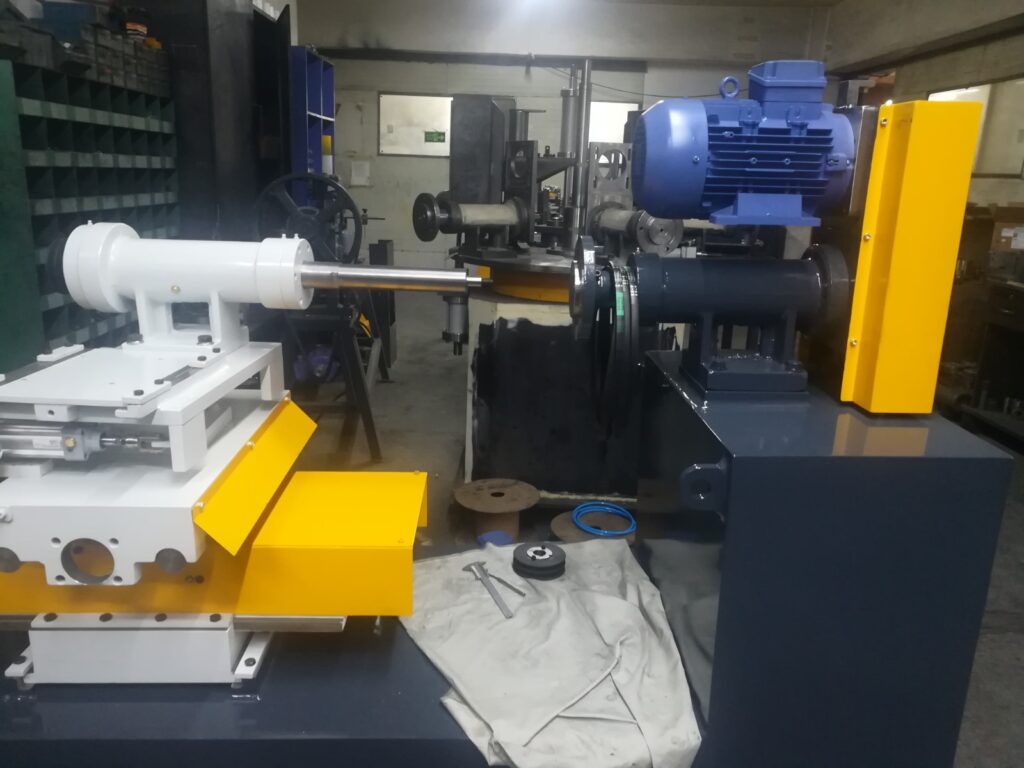
Categories
Machinery

Compression molding press for Kevlar body armour manufacturing

Compression molding press for Kevlar body armour manufacturing

Compression molding press for Kevlar body armour manufacturing: Body armor and helmets are crucial protective gear used in various fields such as military, law enforcement, and high-risk professions. Their manufacturing involves advanced materials and engineering processes to provide maximum protection against ballistic threats, blunt force, and other hazards.

Body Armor Manufacturing

  1. Materials Used:
    • Aramid Fibers (e.g., Kevlar): These synthetic fibers are woven into sheets and layered to create a flexible, lightweight armor that can stop bullets.
    • UHMWPE (Ultra-High-Molecular-Weight Polyethylene): A lightweight alternative to aramid fibers, often used in soft and hard armor.
    • Steel or Ceramic Plates: Hard armor plates made of steel or ceramic are used to stop high-velocity rounds and provide additional protection in “hard” body armor vests.
    • Graphene: Emerging in research for its potential to improve the strength-to-weight ratio of body armor.
  2. Manufacturing Process:
    • Weaving or Layering: For soft armor, the aramid or UHMWPE fibers are woven or layered together to form a flexible, strong sheet.
    • Molding or Pressing: Hard armor plates (such as ceramic or steel) are molded or pressed into shape.
    • Laminating: In some cases, several layers of woven fibers or materials are laminated together to enhance protection.
    • Cutting and Shaping: Once the material is prepared, it is cut to the appropriate shape for vests, plates, or inserts.
  3. Testing:
    • Body armor undergoes rigorous testing, including ballistic testing (shooting projectiles at the material) and physical durability tests (e.g., puncture resistance and wear).
  4. Customization: Armor can be tailored to specific needs, such as for different threat levels (e.g., handgun vs. rifle threats) or to fit the user’s body shape and size.

Helmet Manufacturing

  1. Materials Used:
    • Fiberglass: Offers a lightweight and cost-effective solution for helmets.
    • Kevlar and Aramid Fibers: These materials are woven into the shell or used in combination with other materials to form a strong and lightweight helmet.
    • Carbon Fiber: Known for its high strength-to-weight ratio, carbon fiber is used in advanced helmets for maximum protection without added weight.
    • Polycarbonate or ABS: These thermoplastics are commonly used in riot helmets or lower-cost tactical helmets.
  2. Manufacturing Process:
    • Molding: The outer shell of the helmet is typically molded using a plastic or composite material, followed by curing in an oven to solidify the shape.
    • Liner Installation: Helmets have an inner foam or energy-absorbing liner (such as expanded polystyrene) to reduce the impact on the wearer’s head.
    • Suspension Systems: Helmets often include suspension systems (e.g., chin straps, padding) for comfort and stability. These systems also help absorb shock in case of impact.
  3. Testing:
    • Ballistic Testing: Helmets undergo ballistic tests to ensure they meet safety standards against various types of projectiles (e.g., small arms fire).
    • Impact and Penetration Testing: Helmets are subjected to blunt force trauma testing, simulating impacts from blunt objects and sharp objects.
    • Environmental Durability: Helmets are also tested for durability in extreme conditions, such as high and low temperatures, moisture, and saltwater exposure.
  4. Customization:
    • Helmets can be customized for different environments (e.g., combat, riot control, or industrial applications) by adding accessories like visors, communication systems, or night-vision mounts.

Current Trends and Innovations:

  • Smart Armor: Some manufacturers are incorporating electronic sensors or integrated communication systems into body armor to monitor the wearer’s health and environmental conditions.
  • Lightweight Materials: Continuous research is focused on reducing the weight of armor while maintaining or improving its protective capabilities, often using materials like graphene or advanced composites.
  • Modular Armor: Systems that allow the user to adapt the armor configuration (e.g., adding or removing plates or inserts) depending on mission requirements.

Body armor and helmet manufacturing requires precision, rigorous testing, and the use of high-performance materials to ensure the protection and safety of the user.

Body armor and helmet manufacturing is a highly specialized field, involving advanced materials and engineering to create protective gear for military, law enforcement, and other high-risk professions. The process starts with selecting materials that balance strength, weight, and flexibility. For body armor, materials like Kevlar, UHMWPE, and ceramic or steel plates are commonly used. These materials are woven, layered, or molded to form soft or hard armor, which is then tested for its ability to withstand ballistic threats, blunt force, and wear and tear. The manufacturing process also involves cutting and shaping the materials to fit specific body shapes or armor configurations.

In helmet manufacturing, materials like fiberglass, carbon fiber, and polycarbonate are molded into shells that are paired with foam liners to absorb impacts. Suspension systems inside helmets help ensure a snug, comfortable fit while also aiding in shock absorption. Helmets undergo extensive testing to meet safety standards, including ballistic testing and impact resistance. The integration of smart technologies into both body armor and helmets is an emerging trend, with sensors and communication systems being added for monitoring the wearer’s health and environment. Innovations continue to focus on reducing the weight of the gear without compromising protection, as well as improving overall comfort and adaptability. The manufacturing of both body armor and helmets requires a combination of material science, engineering, and rigorous testing to ensure they provide the highest level of protection in a variety of hazardous environments.

The evolution of body armor and helmets has been driven by the constant need to adapt to new threats, emerging technologies, and environmental challenges. As military and law enforcement needs become more specialized, manufacturers are developing more advanced and customizable solutions to meet those demands.

For example, body armor is increasingly becoming modular, with systems that allow the wearer to add or remove plates or inserts depending on the situation. This adaptability is crucial for personnel who may face varying threats, such as handgun rounds in one scenario and rifle fire in another. With modular systems, body armor can be tailored not only to threat levels but also to comfort and mobility, which is critical for soldiers or police officers who need to remain agile.

In helmets, advancements have focused on improving the helmet’s ability to absorb and disperse impact forces. The incorporation of energy-dispersing materials, like advanced foams and composites, allows for helmets that provide better protection against blunt force trauma while remaining lightweight. Additionally, helmets are now designed with additional features like integrated communication systems, night vision mounts, and face shields, offering more versatility in combat or tactical operations.

A major challenge in both body armor and helmet design is maintaining a balance between weight and protection. While stronger materials provide better protection, they often come at the cost of increased weight, which can hinder the wearer’s mobility. To combat this, manufacturers are constantly exploring new materials, such as graphene, which offer superior strength-to-weight ratios. Graphene is particularly attractive because it is incredibly strong yet light, making it a potential game-changer for the future of personal protective equipment.

Research and development are also shifting towards “smart armor,” which can integrate sensors to monitor the wearer’s physical condition, such as heart rate, body temperature, or the impact forces they experience. This data could be sent to a central system for real-time analysis, providing vital information that could improve the effectiveness of operations or lead to timely medical interventions in case of injury.

The future of body armor and helmets will likely see more integrated systems that not only protect physically but also enhance situational awareness and communication. As these technologies continue to develop, the primary goal remains to provide the wearer with the best possible protection without compromising on comfort, weight, or mobility.

Injection molding plays a significant role in the manufacturing of both body armor and helmets, especially for producing hard armor plates, helmet shells, and some of the inner components of protective gear. It is an efficient, precise, and scalable manufacturing technique that allows for the production of complex shapes and components with high consistency and minimal waste. Here’s how injection molding is used in the process:

Injection Molding in Body Armor Manufacturing

While most body armor is made from woven or layered fibers (like Kevlar or UHMWPE), injection molding is primarily used for producing hard armor plates or inserts. These hard plates are typically used in high-threat environments to protect against rifle rounds or armor-piercing ammunition.

  1. Material Selection:
    • Polycarbonate, Nylon, or ABS Plastics: For certain types of hard armor, injection molding is used with high-strength thermoplastics like polycarbonate or nylon. These materials are chosen for their ability to absorb impact energy and their durability.
    • Composite Materials: More advanced body armor might use composite materials, such as a blend of thermoplastic resins reinforced with fibers (like carbon fiber or aramid fibers) that can be injected into molds to create armor plates that are both strong and lightweight.
  2. Molding Process:
    • Heating and Injection: The material is heated to a molten state and then injected into a mold under high pressure. The mold shape is pre-designed to match the required body armor plate form, ensuring a precise fit and a consistent thickness of material.
    • Cooling and Solidifying: Once the material is injected into the mold, it is rapidly cooled and solidified to form the final armor plate shape. The cooling process needs to be controlled carefully to avoid warping or weakening the structure of the plate.
    • Finishing: After removal from the mold, the plates may undergo additional finishing processes such as trimming, polishing, or coating to improve their surface durability and effectiveness.
  3. Benefits for Body Armor:
    • Cost-Effectiveness: Injection molding allows for mass production, making it a cost-effective option for producing a large volume of hard armor components.
    • Consistency and Precision: The high-pressure molding process ensures uniformity in shape and size, which is critical for ensuring proper fit and protection.
    • Complex Geometries: Injection molding can create plates or inserts with complex geometries, like curved or multi-layered designs, which are crucial for optimizing coverage and comfort.

Injection Molding in Helmet Manufacturing

Helmets, particularly tactical and military helmets, also utilize injection molding for various components, including the helmet shell and inner components like liners and suspension systems.

  1. Helmet Shells:
    • Material Selection: Materials such as fiberglass, polycarbonate, and ABS are commonly used in helmet shells. In some advanced applications, carbon fiber composites or high-performance thermoplastic resins are used for greater strength and reduced weight.
    • Molding Process: The injection molding process starts with the creation of the shell using the chosen thermoplastic material. The material is injected into a mold that defines the helmet’s outer shape. For composite helmets, layers of resin and reinforcing fibers may be added before the molding process.
    • Surface Finish: Once the molding is completed, the shell can be further treated with coatings for impact resistance, aesthetics, or camouflage. Additional layers of impact-absorbing foam may also be inserted into the shell for added protection.
  2. Liners and Suspension Systems:
    • Foam Liners: Many helmets feature a foam liner that is also manufactured using injection molding techniques. These liners help absorb the energy of impacts and distribute forces across the head to reduce injury. The foam is molded into a specific shape to fit the contours of the helmet shell and the wearer’s head.
    • Suspension Systems: The inner suspension systems, which hold the helmet in place and help with comfort, are often made with thermoplastic materials using injection molding. These systems may include adjustable straps, padding, and comfort foam to ensure a snug, secure fit.
  3. Customization and Integration:
    • Add-ons: Injection molding allows for the easy integration of add-ons such as face shields, visors, or mounts for communication devices and night-vision equipment. These components can be molded to exact specifications and fitted into the helmet design.
    • Increased Comfort: Since the molding process allows for complex internal geometries, helmets can be designed with optimized comfort features, like ventilation channels or customized padding patterns, which improve wearability during extended use.
  4. Benefits for Helmet Manufacturing:
    • Durability and Strength: The molded helmet shell provides excellent durability, and injection molding allows the production of helmets that are both tough and lightweight, critical for tactical situations where every ounce counts.
    • Scalability: Like body armor, helmet production benefits from the scalability of injection molding, allowing manufacturers to produce large quantities at consistent quality and performance.
    • Cost Efficiency: The high efficiency of injection molding makes it a cost-effective process, especially when mass-producing helmet shells and components.

Challenges and Considerations

While injection molding offers many benefits, there are some challenges to consider:

  • Material Limitations: The process is often limited to certain thermoplastics and composites. Materials that need to be highly impact-resistant or lightweight (such as ceramic plates for armor) may require additional post-processing or other manufacturing methods.
  • Complexity of Design: Injection molds are expensive to create, so for highly specialized or low-volume products, it may not always be the most economical choice.
  • Material Performance: For body armor, especially, material performance must be carefully tested to ensure that injection-molded parts meet the necessary safety standards, particularly for ballistic resistance.

Injection molding is an essential technology in the production of body armor and helmets, especially when mass production, consistency, and complex design features are required. While it may not be suitable for every part of the gear, its application in hard armor plates, helmet shells, and certain internal components continues to make it a key manufacturing process in the industry.

Injection molding is increasingly used in the manufacturing of body armor and helmets due to its ability to produce high volumes of precise, durable components. In body armor, it’s particularly effective for creating hard armor plates and inserts, which are designed to stop high-velocity rounds. The process involves injecting molten material, such as polycarbonate, nylon, or composite resins, into molds under high pressure. This method ensures uniformity in thickness, shape, and size, which is critical for ensuring the protective gear fits correctly and performs consistently. For helmets, injection molding is utilized to create the outer shell from materials like polycarbonate, fiberglass, or ABS plastic. The mold forms the helmet shell, which is then combined with foam liners that absorb impact and provide comfort. The molding process also enables the integration of complex features like ventilation channels, suspension systems, and mounts for additional equipment. Injection molding is beneficial for these products because it offers cost efficiency, scalability, and the ability to produce components with intricate shapes. However, challenges remain, particularly regarding the material choices and ensuring the final product meets the required standards for protection and durability.

As injection molding continues to evolve, its role in body armor and helmet manufacturing becomes increasingly integral, particularly in meeting the demands for both efficiency and performance. One of the significant advantages of injection molding is its ability to scale production quickly and with precision. For body armor, especially hard armor plates, this means manufacturers can produce large quantities of plates that are uniform in design and meet rigorous safety standards. The ability to mass-produce parts like this is vital in military and law enforcement settings, where large numbers of high-quality protective gear are required quickly. In helmet production, injection molding helps ensure the helmet shell is lightweight yet strong enough to withstand impacts. This is especially important for military and tactical helmets, where weight is a constant concern for users who need to maintain mobility without sacrificing safety.

Another advantage of injection molding in helmet manufacturing is the ease with which additional components can be integrated into the design. With molds, it is possible to create features like built-in communication system mounts, visors, and even modular attachment points for accessories. These integrated systems allow for a more streamlined design, where all necessary features are part of the initial mold, making assembly faster and more cost-effective.

Moreover, the process’s precision allows for better customization of helmets and body armor. For example, helmets can be designed with custom internal geometries for different head shapes and sizes, improving comfort and fit. The suspension systems and padding inside helmets, which are critical for comfort and shock absorption, can also be produced through injection molding, allowing for consistent and reliable comfort features that enhance the user experience.

Despite these advantages, there are still limitations. The choice of materials is a critical factor because some materials required for optimal protection—such as certain ceramics for hard armor plates—may not lend themselves well to injection molding. Additionally, the complexity of the molds can make them expensive to design and produce, especially for highly specialized components or low-volume production runs. However, for large-scale manufacturing where uniformity, durability, and cost-efficiency are priorities, injection molding remains an essential tool in the production of body armor and helmets.

Looking ahead, the future of injection molding in this field is likely to be influenced by new materials and technologies. For example, advancements in thermoplastics, composites, and even 3D printing techniques could allow for more lightweight, yet highly protective, materials to be injected into molds. The integration of smart technologies, such as sensors embedded in the armor or helmets, could also benefit from injection molding, enabling the seamless production of multifunctional gear that not only protects but also communicates real-time data about the wearer’s status.

Ultimately, the continuous advancements in injection molding will support the development of more efficient, durable, and versatile body armor and helmet designs, improving both the safety and comfort of those who rely on this protective gear.

Laminating machine for body armour and helmet manufacturing

Laminating machines are crucial in the manufacturing of both body armor and helmets, particularly for producing multi-layered protective materials that offer enhanced strength and flexibility. The lamination process involves bonding multiple layers of materials together to form a composite structure, which improves the overall performance of body armor and helmets in terms of impact resistance, durability, and comfort.

In the context of body armor and helmet manufacturing, laminating machines are used to combine materials such as aramid fibers (like Kevlar), UHMWPE, carbon fiber, or fiberglass with resins to create strong, lightweight, and flexible layers that can withstand impacts, ballistic threats, and other hazards. The laminating process typically involves applying heat, pressure, and sometimes vacuum, to bond these layers together while ensuring consistency and uniformity in the final product.

For body armor, laminating machines are essential in creating the soft armor layers. These layers are typically made from fibers such as Kevlar or UHMWPE, which are woven or braided to form sheets. These sheets are then layered with resin or adhesives and passed through a laminating machine, which consolidates the layers by applying controlled heat and pressure. The result is a rigid, flexible armor that provides protection without adding excessive weight. The laminated structure enhances the energy-absorbing properties of the armor, ensuring it can dissipate the force of a bullet or other projectile effectively.

In helmet manufacturing, laminating machines are used to bond the helmet’s composite materials, such as fiberglass or carbon fiber, with resin. The laminating process can create the outer shell of the helmet, which is strong yet lightweight, to protect against impacts. Additionally, helmet linings or internal padding materials, often made from foam or other shock-absorbing materials, can be laminated for enhanced comfort and to improve the helmet’s overall performance in absorbing and dissipating impact energy.

The laminating process can be done using several techniques, such as heat-pressing, vacuum-bagging, or autoclaving. Each method has its advantages and is chosen based on the type of materials used, the desired thickness of the laminated structure, and the overall design of the body armor or helmet. For example, autoclaving is a common method used in advanced helmet manufacturing, where the layers of composite materials are sealed in a vacuum bag and then subjected to high pressure and heat in an autoclave to form the helmet shell. This method ensures a strong bond between layers and reduces the chance of defects in the final product.

The use of laminating machines offers several advantages in the production of body armor and helmets. The process ensures consistent and uniform layer bonding, reducing material waste and improving the overall strength of the finished product. It also allows for the production of complex, multi-layered designs that can be tailored to specific threat levels and requirements. Additionally, laminating machines can be adjusted to accommodate various materials, enabling manufacturers to experiment with new composites or hybrid structures that can provide superior protection.

One of the challenges in using laminating machines is ensuring that the process is optimized for each material and layer combination. For example, if the heat and pressure are not carefully controlled, the layers may not bond properly, compromising the strength and effectiveness of the armor or helmet. Furthermore, the choice of adhesive or resin used in the laminating process must be carefully selected to ensure it provides the necessary bond strength while maintaining the flexibility and weight characteristics required for comfort and performance.

In conclusion, laminating machines are a critical tool in the production of body armor and helmets, enabling manufacturers to create high-performance, multi-layered protective materials. By applying controlled heat, pressure, and sometimes vacuum, these machines ensure that the various layers are bonded together to form a strong, durable, and lightweight product that offers superior protection against ballistic threats and impacts. With continued advancements in materials and lamination technologies, the role of laminating machines will remain essential in producing cutting-edge personal protective equipment.

Laminating machines are essential in creating the multi-layered composites used in body armor and helmet manufacturing, ensuring the performance of protective gear. These machines apply controlled heat and pressure to bond different layers of materials, such as aramid fibers, UHMWPE, fiberglass, or carbon fiber, with resins or adhesives. The laminating process enhances the strength, durability, and flexibility of the finished product, ensuring it can effectively absorb and dissipate impact forces from ballistic threats or blunt trauma.

For body armor, laminating machines enable the production of soft armor layers that combine fibers like Kevlar or UHMWPE with resins, creating a flexible yet tough material capable of stopping bullets and other projectiles. The layers are consolidated under heat and pressure to form a durable, lightweight composite that provides the necessary protection. In helmet manufacturing, the same process is applied to create composite shells made from fiberglass or carbon fiber, which are lightweight yet strong enough to resist impacts. These laminating machines can use various techniques, such as heat-pressing, vacuum-bagging, or autoclaving, depending on the materials used and the desired performance characteristics.

The main advantage of laminating machines is their ability to produce consistent, uniform layers that contribute to the overall strength and quality of the armor or helmet. They also allow for the customization of materials, enabling manufacturers to experiment with different composites or hybrid materials that offer superior protection. However, careful control of heat, pressure, and resin application is crucial in ensuring the integrity of the final product, as improper bonding could compromise its protective capabilities. With the continuous evolution of materials and lamination technologies, these machines will remain a fundamental part of manufacturing high-performance protective gear, ensuring that body armor and helmets offer the best possible protection while remaining lightweight and comfortable.

As laminating technology continues to improve, the precision and efficiency of laminating machines are increasingly pivotal in meeting the growing demands for high-performance protective gear. In the case of body armor, the evolution of materials and their integration into the lamination process is key. For instance, researchers are exploring more advanced composite materials, including high-strength, lightweight fibers and new resin formulations that offer enhanced resistance to heat, moisture, and chemical exposure, which could further improve the overall protection of body armor. These innovations in materials require laminating machines that can handle more advanced processing methods, allowing for tighter control over temperature and pressure during the bonding process.

Similarly, the use of laminating machines in helmet manufacturing is benefiting from advancements in materials like graphene and other nanomaterials. These materials offer exceptional strength-to-weight ratios, which could lead to helmets that are both more protective and lighter, without compromising comfort or mobility. As new materials are developed, the laminating process will have to evolve to accommodate these advanced composites, ensuring that the bond between layers remains consistent and secure.

Moreover, the introduction of automation and smart technology into the laminating process is streamlining production, improving both consistency and efficiency. Automated laminating machines can monitor factors such as temperature, pressure, and resin flow in real-time, ensuring that each layer is properly bonded for optimal performance. This integration of advanced sensors and control systems helps reduce the risk of human error and material defects, ultimately leading to higher-quality products with fewer variations.

One of the exciting prospects for the future of laminating machines in body armor and helmet manufacturing is the possibility of creating “smart” armor systems that combine traditional protective materials with embedded sensors. These sensors could monitor the condition of the wearer, providing real-time data on their health, such as heart rate, body temperature, and stress levels. With these smart features, laminating machines would play a crucial role in integrating both passive protective materials and active sensing technologies into a single, unified system.

As these technologies continue to advance, laminating machines will not only serve the purpose of ensuring the structural integrity of body armor and helmets but also help create more advanced, multi-functional gear. This could lead to protective equipment that is not just protective but also adaptive and responsive, offering wearers both physical safety and real-time data that can enhance situational awareness and safety.

Ultimately, the ongoing development of laminating technologies will allow manufacturers to keep up with the growing demands for more sophisticated protective gear. With each improvement, the process will become more efficient, more customizable, and better equipped to handle the diverse range of materials and design complexities required for next-generation body armor and helmets. This will ensure that personal protective equipment continues to evolve in line with the latest advancements in materials science, manufacturing techniques, and wearable technology.

Hydraulic press for body armour and helmet manufacturing

Parts to be produced by Composite Press for Ballistic Panels

Hydraulic presses are critical in the manufacturing of body armor and helmets, as they provide the force needed to shape, bond, and compress materials into the desired forms. These presses use hydraulic power to exert a consistent and controlled amount of pressure, which is essential for processes like molding, lamination, and compression, where precision and uniformity are key. In both body armor and helmet manufacturing, hydraulic presses ensure that materials are processed correctly to meet the necessary strength, durability, and protection standards.

In body armor manufacturing, hydraulic presses are often used to shape and compress composite materials like fiberglass, aramid fibers (such as Kevlar), and polyethylene into rigid, durable plates. These plates are the hard armor inserts that provide protection against high-velocity threats like bullets. The press applies even pressure across the composite layers, ensuring that they bond tightly together and that the resulting plate is uniform in thickness, shape, and structure. This uniformity is crucial, as any inconsistencies in the armor plate could reduce its ability to effectively stop a bullet or other projectile.

For helmets, hydraulic presses are used to mold the outer shell of the helmet from materials such as polycarbonate, fiberglass, or carbon fiber composites. In the case of composite helmets, the press applies the necessary pressure to bond layers of resin and reinforcing fibers, creating a strong yet lightweight shell. Additionally, hydraulic presses can be used to compress foam materials or other padding that form the inner liner of the helmet. The foam liners help absorb impacts and provide comfort to the wearer. The press ensures that these components are tightly compressed to maintain their structural integrity and protective properties.

The hydraulic press’s role is also crucial in the process of forming multi-layered structures, such as the combination of ballistic-resistant materials with foam or other shock-absorbing layers. These multi-layered designs are typical in both body armor and helmets, where different materials are combined to offer protection against various types of threats. For example, in helmet manufacturing, a high-strength composite outer shell may be combined with an inner foam layer for impact resistance, and the hydraulic press ensures that these layers bond together effectively, maintaining both the integrity of the shell and the cushioning properties of the foam.

One of the advantages of using hydraulic presses in these manufacturing processes is the ability to apply consistent and uniform pressure over large areas. This consistency ensures that every part produced is of the same high quality, which is essential in the production of personal protective equipment. Variations in pressure or molding can lead to weak points in the final product, which could compromise its effectiveness in real-world situations.

Hydraulic presses are also relatively adaptable. Different types of materials, such as thermoplastics, resins, and composites, can be processed effectively using these presses, making them versatile tools for producing a wide range of body armor and helmet components. For example, for helmets made from advanced materials like carbon fiber, the hydraulic press can help ensure the material is molded into the correct shape while maintaining its strength-to-weight ratio.

One of the ongoing challenges in the use of hydraulic presses in body armor and helmet manufacturing is the optimization of pressure and heat settings for different materials. Some materials require higher or lower pressure, and the process must be carefully controlled to ensure that the final product maintains its protective qualities without being overly rigid or brittle. The flexibility of the hydraulic press makes it easier to adjust settings for different materials, but close monitoring and precision are necessary to avoid damaging the materials or compromising their performance.

Another aspect of hydraulic press use is its role in the development of new materials and designs. As manufacturers continue to experiment with new composites and multi-material designs, the hydraulic press will be instrumental in shaping and compressing these innovative materials into final products that meet the required protective standards. The press’s ability to apply precise and consistent force makes it an indispensable tool in the development of next-generation body armor and helmets.

In summary, hydraulic presses are essential to the manufacturing of body armor and helmets, offering the ability to mold, shape, and compress materials into the required forms with high precision. The consistency, versatility, and adaptability of hydraulic presses make them indispensable for producing the high-quality, protective gear needed by military personnel, law enforcement, and other professionals who rely on body armor and helmets for their safety. As material science continues to advance, the role of hydraulic presses in producing cutting-edge protective gear will only grow, allowing manufacturers to create stronger, lighter, and more comfortable protective equipment.

Hydraulic presses play a pivotal role in the production of body armor and helmets by applying controlled pressure to mold, bond, and shape various materials into the final protective gear. In body armor, these presses are used to shape composite materials like Kevlar, UHMWPE, fiberglass, and carbon fiber into hard plates and inserts that are designed to withstand high-velocity impacts, such as bullets or shrapnel. The even, consistent pressure from the hydraulic press ensures that the materials are uniformly compacted, which is crucial for achieving the required strength and ballistic resistance. By molding these composite layers together, the press ensures that the final product is strong, lightweight, and capable of absorbing and dispersing the energy from incoming projectiles.

In helmet manufacturing, hydraulic presses are used in the production of the outer shell and the inner components. For the shell, materials like polycarbonate, fiberglass, or carbon fiber are shaped by the press to create a protective outer layer that is both tough and lightweight. The press also helps in molding foam or padding materials that are used for the inner lining of the helmet, which provides comfort and additional impact absorption. The press ensures that the foam is compacted correctly, maintaining its shock-absorbing properties while ensuring the helmet’s structure is sound and reliable.

The versatility of hydraulic presses is evident in their ability to handle a wide range of materials and processing requirements. Whether it’s forming thermoplastic materials, compressing resins into composites, or molding advanced fibers into protective layers, hydraulic presses provide the necessary force and precision for these complex tasks. However, careful control of pressure and temperature is essential. Too much pressure can lead to material deformation or loss of protective qualities, while too little pressure can result in weak bonds or improperly formed products.

As new materials and designs continue to emerge in the field of body armor and helmets, hydraulic presses will remain integral to their production. Their ability to handle complex, multi-layered composite structures is especially important as manufacturers work to combine new lightweight materials with high-performance resins or adhesives. The hydraulic press will continue to be a vital tool in creating protective gear that balances strength, weight, and comfort for those who rely on body armor and helmets for their safety in high-risk environments.

The continuous advancement of hydraulic press technology is enabling even more precise control over the forming and bonding processes, which is particularly important as manufacturers push the limits of material performance in both body armor and helmet applications. Modern hydraulic presses often feature programmable control systems that allow for exact adjustments in pressure, temperature, dwell time, and speed, all of which are critical in ensuring the integrity of the final product. These controls help avoid inconsistencies and ensure repeatability across large production runs, which is vital for ensuring that every piece of armor or helmet meets the stringent performance standards required for life-saving equipment.

In the case of advanced composite materials, such as those used in military-grade armor or combat helmets, the pressing process may involve multiple stages. For example, a series of layers—each with specific orientations or materials—may be laid up manually or via automation, and then transferred into a mold where the hydraulic press applies heat and pressure. This staged process can help optimize fiber alignment and resin distribution, which directly impacts the strength and ballistic resistance of the finished product. In some systems, presses are combined with vacuum or autoclave environments to further enhance resin flow and eliminate air pockets, ensuring the composite structure is fully consolidated and free from internal weaknesses.

Another key area where hydraulic presses are becoming increasingly relevant is in the production of ergonomic or contoured designs. Unlike flat armor plates or standard helmet shapes, newer designs often include curvature to better fit the human body or improve aerodynamics and comfort. Forming these shapes reliably and efficiently requires presses with specialized dies and molds that maintain uniform pressure distribution even across complex geometries. This capacity is particularly valuable in producing customized armor panels for female personnel or mission-specific helmet shapes for airborne or mechanized forces.

Furthermore, the integration of advanced monitoring systems into hydraulic presses is enhancing quality assurance. Sensors embedded within the press can detect fluctuations in temperature, pressure, or material flow, allowing for real-time adjustments and reducing the risk of defective parts. These systems also enable comprehensive data logging for traceability, which is increasingly important in defense and law enforcement procurement where rigorous certification and quality records are mandatory.

As sustainability becomes a more pressing concern, hydraulic presses are also being adapted to support greener manufacturing practices. This includes the ability to process bio-based or recyclable composites, as well as more energy-efficient press systems that minimize waste heat and use hydraulic fluids with lower environmental impact. In addition, by allowing for more accurate material forming and bonding, hydraulic presses reduce the amount of scrap material generated, contributing to more sustainable production cycles.

In short, the hydraulic press is not just a shaping tool but a cornerstone of modern body armor and helmet production. Its ability to adapt to new materials, complex shapes, and high-volume production while maintaining precision and repeatability makes it indispensable. As protective gear continues to evolve toward lighter, smarter, and more ergonomic designs, hydraulic presses will remain central to turning advanced material science into real-world, field-ready protection.

Helmet shell forming for body armour and helmet manufacturing

Fiber-reinforced Materials used by the Composite Presses

Helmet shell forming is a critical stage in the manufacturing process of protective helmets used by military, law enforcement, and security personnel, and it directly determines the structural integrity, impact resistance, and overall effectiveness of the helmet. This process involves shaping high-performance materials—typically advanced composites like aramid fibers (e.g., Kevlar), ultra-high-molecular-weight polyethylene (UHMWPE), carbon fiber, or fiberglass—into a hardened outer shell that can absorb and deflect kinetic energy from ballistic threats, blunt impacts, and fragmentation.

The shell forming process typically begins with material preparation, where sheets or fabrics impregnated with resin are cut into specific patterns. These are then carefully laid into a mold that corresponds to the helmet’s design—often using a multi-layer stacking method to ensure optimal fiber orientation and maximum strength. Once the layup is complete, the mold is closed and subjected to heat and pressure through processes such as compression molding, vacuum-assisted resin transfer molding (VARTM), or autoclaving. These forming techniques ensure that the resin flows uniformly through the layers and that the composite material conforms precisely to the helmet’s shape while eliminating voids or air pockets that could compromise protection.

Compression molding, which uses a hydraulic press, is one of the most common methods for helmet shell forming. In this process, the material layup is placed into a heated mold, and a matching upper mold applies pressure. The heat softens the resin, and the pressure causes it to flow, impregnating all fiber layers while curing the shell into its final hardened form. This results in a smooth, consistent, and high-strength shell that forms the core of the protective helmet.

In high-end applications, autoclave curing may be used. This involves placing the mold and helmet layup into a sealed chamber where heat and pressure are uniformly applied under vacuum conditions. This method allows for extremely tight control of resin content and distribution, often resulting in superior mechanical properties and a high-quality finish, but it is more time- and cost-intensive.

After the shell is cured and removed from the mold, it undergoes trimming to remove excess material and to create openings for accessories such as visors, straps, communication systems, or ventilation ports. The shell may also be post-cured in an oven to ensure complete resin hardening, improving thermal stability and durability. The outer surface is then often sanded, coated, or painted for UV protection, camouflage, and durability.

Helmet shell forming must also consider ergonomic and anatomical factors. The shell must fit comfortably while accommodating the padding, harness system, and additional attachments. Therefore, molds are designed with careful attention to anthropometric data to provide optimal coverage, balance, and wearer comfort without compromising mobility or field of view.

Ongoing developments in materials and forming techniques are pushing the boundaries of helmet performance. Hybrid constructions using layered combinations of carbon fiber and aramid, for example, are becoming more common to achieve a balance between lightweight construction and ballistic protection. New shell designs incorporating modular or reconfigurable components are also being explored, especially for integrated systems that include electronics, night vision mounts, and communications.

In conclusion, helmet shell forming is a sophisticated, precision-driven process that transforms flat composite fabrics into contoured, high-strength protective shells. It requires careful material selection, expertly engineered molds, and controlled thermal and pressure environments to ensure the final product meets stringent performance standards. As combat and operational requirements evolve, the technology behind helmet shell forming continues to advance, delivering helmets that are lighter, stronger, more comfortable, and better integrated with modern battlefield systems.

The precision required in helmet shell forming extends to the smallest details of the process, as even minor defects in the shell can compromise its protective capabilities. Factors such as fiber alignment, resin-to-fiber ratio, curing temperature, and pressure all play a significant role in the final mechanical properties of the helmet. Any inconsistency in these parameters can lead to weak spots or delamination within the composite structure, which would reduce the helmet’s ability to absorb impact or withstand ballistic threats. This is why modern helmet manufacturing often includes rigorous quality control measures during and after shell forming, including non-destructive testing methods like ultrasonic inspection or X-ray analysis to detect internal flaws without damaging the product.

In addition to the structural performance, the forming process is also critical in achieving uniform thickness and proper contouring, especially around high-stress areas like the crown, side edges, and rim of the helmet. These areas are subject to greater forces during impact and need precise reinforcement to maintain consistent protection. Advanced forming techniques allow for variable thickness across the shell, increasing material where it is most needed while reducing unnecessary weight elsewhere. This optimization helps to improve balance and comfort, which are essential in long-duration operational scenarios.

Another important consideration is compatibility with other components, as today’s helmets are not just standalone protection devices but are often part of integrated soldier systems. Helmet shells must accommodate rails, mounts, and ports for communication devices, night vision systems, face shields, and ballistic visors. Therefore, the forming process must ensure that the shell not only provides ballistic integrity but also maintains dimensional accuracy to align with these modular systems. In some cases, embedded reinforcements or inserts are added during shell forming to provide additional structural support at mounting points, further enhancing the helmet’s durability and utility.

As innovations in materials continue to emerge, the shell forming process must adapt to accommodate the properties of newer high-performance fibers and resins. For example, the use of thermoplastic composites, which can be reheated and reshaped, introduces possibilities for repairable and recyclable helmets, offering sustainability benefits alongside functional performance. These materials require different forming protocols, including lower temperature ranges and potentially faster cycle times, which can improve throughput in mass production without compromising quality.

The push for lighter and more adaptive helmets has also driven interest in hybrid material systems and complex shell geometries. Multi-axial fiber reinforcements, gradient material layouts, and embedded sensor technologies are now being explored within the shell structure itself, adding layers of functionality while maintaining core protective roles. These advancements rely on precise forming conditions, which further underscore the importance of continually evolving helmet shell forming equipment and methods.

Ultimately, helmet shell forming represents a convergence of materials science, mechanical engineering, and ergonomic design. It is the foundational process that defines the helmet’s strength, weight, comfort, and ability to integrate with other technologies. As threats become more diverse and operational demands increase, the development of more sophisticated shell forming techniques will continue to be essential in delivering next-generation protective helmets that enhance survivability and performance across military, law enforcement, and specialized civilian applications.

As helmet shell forming continues to evolve, manufacturers are increasingly exploring automation and digital technologies to improve efficiency, precision, and consistency. Automated systems and robotic arms are being integrated into the production process to handle repetitive tasks such as material placement, mold handling, and shell trimming. These systems help reduce human error and increase throughput, allowing for higher production volumes without sacrificing the quality of the finished product. Automation also supports the scalability of production, making it easier to meet large demands while maintaining tight tolerances and uniformity across multiple units.

Another area of innovation in helmet shell forming is the use of 3D printing technologies, which are being explored for creating complex internal structures or customized helmet components. While 3D printing of entire helmet shells is still in its infancy due to material limitations, it holds potential for producing intricate inner frameworks that can be integrated with traditional helmet shells. These structures could enhance the helmet’s impact resistance, ventilation, or energy absorption by optimizing the internal geometry, while the outer shell retains its ballistic integrity. This could lead to helmets that are not only lighter but also more efficient in terms of impact energy management.

The integration of smart technologies within the helmet, such as sensors for monitoring vital signs, environmental conditions, or the wearer’s position, is also influencing the shell forming process. These technologies require specialized slots, connectors, or even built-in wiring channels within the helmet’s structure, which must be seamlessly incorporated into the shell without weakening its protective capabilities. Forming processes are becoming more advanced to allow for these embedded technologies, with precise mold designs and additional reinforcement at critical points to support integrated electronics.

Additionally, the demand for helmets that can withstand a broader range of threats—such as fragmentation, blunt force trauma, and chemical exposure—is prompting manufacturers to rethink the design of the shell and the materials used in forming. Some helmets are now being designed to provide multi-threat protection, which involves creating shells with multiple layers of different materials, each optimized for a specific type of threat. For example, a helmet might have a base layer of high-strength aramid fibers for ballistic protection, followed by a layer of shock-absorbing foam to protect against blunt force trauma, and an outer layer of polycarbonate or composite for added durability and resistance to abrasions. Each of these materials must be formed with the appropriate pressure, temperature, and curing times to ensure that they perform as intended when combined.

The continued development of advanced coatings is another area that complements the helmet shell forming process. Protective coatings that add resistance to environmental factors like heat, cold, moisture, or chemicals are increasingly applied during or after shell forming. These coatings can be integral to the helmet’s performance in extreme conditions, ensuring it doesn’t degrade over time or become vulnerable to external threats like acids or salts. Some coatings also provide anti-glare or anti-reflective properties, enhancing the helmet’s effectiveness in tactical environments where stealth and visibility are critical.

As global standards for protective equipment continue to evolve, helmet shell forming processes must also adapt to meet more stringent regulations and certification requirements. These standards ensure that helmets provide reliable protection against a range of hazards, including high-velocity projectiles, blunt trauma, and environmental factors. As a result, manufacturers must stay ahead of regulatory changes and continually refine their forming processes to maintain compliance with these evolving requirements.

The overall trend in helmet manufacturing is toward producing lighter, stronger, and more multifunctional helmets that are not only protective but also adaptable to a range of operational needs. Whether it’s for military personnel in combat, law enforcement officers in tactical situations, or first responders in hazardous environments, helmets are being designed to integrate more seamlessly with other gear, enhance wearer comfort, and provide advanced protection from a wider array of threats.

Ultimately, the helmet shell forming process is at the heart of this innovation. By continuously refining materials, improving manufacturing techniques, and incorporating new technologies, manufacturers can create helmets that not only meet but exceed the performance expectations of modern protective gear. As demands for advanced protection, comfort, and adaptability continue to grow, the process of helmet shell forming will remain a critical area of focus for the next generation of protective headgear.

Kevlar preform molding machine for helmet manufacturing

Kevlar preform molding machines are specialized equipment used in the production of helmet shells, particularly in the manufacturing of ballistic helmets. These machines are designed to shape Kevlar fibers, which are known for their high tensile strength, durability, and resistance to impact, into preforms or molded shells that serve as the foundational protective structure of the helmet. The preform molding process is key to creating the helmet’s outer shell, which is the first line of defense against ballistic and blunt-force impacts.

The process of using a Kevlar preform molding machine typically starts with the preparation of Kevlar fabric or fiber, which is cut into specific patterns or layers that will be stacked to form the helmet shell. The Kevlar fibers are impregnated with resin to provide the material with rigidity and to enhance its ballistic properties. Once the fibers are prepared, they are loaded into the preform molding machine.

The preform molding machine utilizes high heat and pressure to mold the Kevlar layers into a desired shape, typically the outer shell of a helmet. The machine applies even pressure across the entire mold, ensuring that the fibers are uniformly compressed and bonded together. This pressure helps the resin to cure, forming a solid, durable structure. The heat is essential for activating the resin and ensuring it fully bonds the fibers together, while the pressure ensures that the fibers are properly aligned and compacted, creating a consistent thickness and strength across the entire shell.

One of the advantages of using Kevlar preform molding machines is the precision with which the machine can control the molding process. By adjusting temperature, pressure, and curing time, manufacturers can optimize the material’s performance, ensuring the helmet meets the required ballistic standards and is lightweight yet strong. Kevlar is a material known for its high strength-to-weight ratio, which is particularly important in helmet manufacturing, as it provides optimal protection without adding unnecessary weight that would hinder mobility or comfort.

These machines also help in creating more intricate and complex helmet shapes, accommodating different designs and customizations that may be required for specific end users, such as military personnel or law enforcement officers. This level of customization is possible due to the flexibility of the preform molding process, which allows for the incorporation of different layers, reinforcements, or even hybrid materials within the helmet design.

Moreover, the Kevlar preform molding machine can be adapted for use with other composite materials. As the demand for advanced helmets increases, manufacturers are exploring the use of hybrid materials, such as a combination of Kevlar and carbon fiber or aramid blends, to create even stronger, lighter, and more flexible helmet shells. In such cases, the preform molding machine must be able to handle the unique requirements of each material, ensuring that all layers are properly integrated during the molding process.

In addition to its role in molding the outer shell, the Kevlar preform molding machine can be used to mold inner components of the helmet, such as padding or impact-resistant liners. These components contribute to the helmet’s overall ability to protect the wearer from blunt-force trauma, and the molding machine ensures that each component is shaped to fit precisely within the shell.

While the use of Kevlar preform molding machines provides significant advantages in terms of efficiency, precision, and material optimization, they also come with a set of challenges. For example, the cost of the machinery and the specialized skills required to operate it can be significant. Additionally, ensuring that each molded helmet meets strict safety and quality standards requires continuous monitoring and testing, both during and after the molding process.

As the helmet manufacturing industry evolves, the integration of automation and digital technologies in Kevlar preform molding machines is becoming more common. Automated systems can help streamline the production process, reduce human error, and ensure consistency in the final product. These advancements may include real-time monitoring systems that track temperature, pressure, and curing time, as well as advanced robotic arms for handling the molded helmets and adding additional components, such as visors or chin straps.

In conclusion, Kevlar preform molding machines are a vital component in the production of high-performance helmets, providing the precision and consistency necessary to create helmets that meet rigorous safety standards. By optimizing the molding process for Kevlar, manufacturers can produce helmets that offer excellent ballistic protection while remaining lightweight and comfortable for the wearer. As technology continues to advance, these machines will likely evolve to accommodate new materials, designs, and manufacturing techniques, ensuring that protective headgear keeps pace with the ever-changing demands of safety and performance.

Kevlar preform molding machines are integral to the production of modern ballistic helmets because they offer a combination of speed, precision, and efficiency. These machines ensure that Kevlar’s exceptional properties—such as its high tensile strength, durability, and resistance to abrasion—are fully realized in the final helmet shell. By applying a controlled amount of pressure and heat to the pre-impregnated Kevlar material, these machines mold the fiber into the precise shape required for the helmet. This process not only ensures uniformity in the finished product but also enhances the overall structural integrity of the helmet.

With the increasing demand for lightweight and high-performance helmets, manufacturers have focused on improving the molding techniques. Advanced systems are now capable of adjusting various parameters, such as molding time, temperature, and pressure, during the production process to optimize the material properties of the Kevlar preform. This allows manufacturers to tailor the helmet’s mechanical characteristics, such as its resistance to penetration, impact absorption, and deflection, to meet specific safety standards. Fine-tuning these parameters also helps in achieving the best balance between strength and weight, which is critical for helmets that need to provide protection without being overly burdensome for the wearer.

The ability of Kevlar preform molding machines to handle complex geometries is particularly beneficial in meeting the growing demand for ergonomic designs. Helmet shells are no longer just flat or simple shapes; modern helmets are designed to fit a wide range of head sizes and shapes while providing optimal protection and comfort. The molding machines are capable of creating custom contours that align with the human head’s natural curvature, providing a better fit and reducing pressure points. This is vital, especially for long-term wear, where comfort plays a crucial role in ensuring that the helmet remains effective in real-world scenarios.

Beyond standard ballistic helmets, Kevlar preform molding machines can be adapted for the production of specialized headgear, such as riot helmets, combat helmets, or even helmets used for space exploration. These machines can be customized to handle varying material combinations, such as adding carbon fiber or other high-strength materials to the Kevlar layers to further enhance impact resistance or reduce weight. Hybrid helmets, which combine different materials, are becoming increasingly popular because they allow for tailoring of the helmet’s properties to meet the exact needs of the wearer. For example, helmets designed for specific military units may incorporate additional features like mounts for communication systems, night vision devices, or ballistic visors, all of which require careful molding to ensure the helmet shell can accommodate these additions without compromising its protective capabilities.

In addition to improving the molding process itself, innovations in quality control and testing are also helping to ensure the helmets meet stringent performance standards. Automated inspection systems are now being integrated into the production line to detect any inconsistencies or defects in the molded helmets. These systems use advanced sensors and imaging technologies to check for issues such as surface imperfections, dimensional inaccuracies, or structural flaws. Real-time data analytics can track the entire production process, ensuring that the molding parameters are within acceptable ranges and that each helmet is produced to specification.

Another factor driving innovation in Kevlar preform molding machines is the push for sustainability. As environmental concerns grow, there is increasing interest in producing helmets from recyclable materials or making helmets that are easier to recycle after their useful life. Some manufacturers are investigating the use of bio-based resins and fibers in the molding process, as well as exploring ways to reduce waste material during production. These advancements could lead to more sustainable helmet production processes, reducing the environmental impact of manufacturing while maintaining high standards of protection.

With the ongoing advancements in materials science and manufacturing technology, Kevlar preform molding machines will continue to evolve. The future of helmet production may see even greater integration of automation, artificial intelligence, and smart technology to improve manufacturing processes, reduce lead times, and enhance the overall quality of the product. These technologies will also likely enable greater customization, allowing helmets to be made to measure for specific individuals or use cases. As threats become more diverse and protective gear requirements become more complex, the ability to quickly and efficiently mold helmets with superior protective qualities will remain a cornerstone of the industry, ensuring that the helmets of tomorrow provide the necessary defense against a wide range of dangers.

As technology advances, the future of Kevlar preform molding machines in helmet manufacturing may also embrace innovations in automation, material science, and smart manufacturing techniques. The development of AI-driven systems capable of optimizing the molding process in real time is already in progress. These systems can use data from sensors embedded in the machinery to monitor pressure, temperature, and curing times, adjusting the process dynamically to ensure the optimal molding of each helmet shell. By continuously learning from previous production cycles, AI systems could significantly reduce the risk of defects, improve consistency, and allow manufacturers to adapt quickly to new material formulations or design changes.

In addition to machine intelligence, digital twin technology—where a virtual replica of the manufacturing process is created and monitored in real-time—holds potential for the future of helmet manufacturing. By creating a digital model of the production process, manufacturers can simulate different scenarios and predict the outcomes of various changes to parameters like pressure, temperature, and resin formulations. This could enable faster innovation, reduced prototyping costs, and more efficient quality control by catching potential issues before they arise in physical production.

The trend toward lightweight yet robust protective gear will continue to drive the development of new composite materials. In addition to traditional Kevlar, materials like graphene, carbon nanotubes, and ultra-high-molecular-weight polyethylene (UHMWPE) are being explored for their exceptional strength-to-weight ratios. Integrating these materials with Kevlar in the preform molding process could create helmets that are even lighter and more resistant to high-velocity impacts while maintaining or enhancing the level of protection against blunt force trauma and fragmentation. These new materials might require further adjustments in molding machines, such as modified temperature settings or more sophisticated pressure systems to accommodate the different characteristics of the composites.

Another area of interest is the exploration of helmets with adaptive features, such as smart helmets that integrate sensors for monitoring the wearer’s physical condition or environmental conditions in real time. In this context, Kevlar preform molding machines could be adapted to create specialized cavities or channels for the seamless integration of such electronics, ensuring that the helmet maintains its structural integrity while providing additional functionality. For instance, sensors embedded within the helmet could monitor impact forces during a blast or collision, alerting medics to potential injuries, or track the wearer’s biometric data to ensure they are operating within safe physical limits.

Moreover, as defense and law enforcement requirements become more specialized, there will likely be an increasing demand for customized helmets. The rise in individualized equipment design could lead to helmets that are tailored not only for specific mission profiles (e.g., airborne units, special forces, or riot police) but also to individual anatomical needs. A helmet designed with a custom-fit preform molding process could provide better protection, improved comfort, and reduced fatigue over long periods of use. The preform molding machine’s ability to adjust its pressure and molding cycle could allow for more personalized features, such as additional padding or reinforcement in specific areas of the shell where protection is most needed.

The focus on sustainability will further shape the evolution of Kevlar preform molding machines. Manufacturers are already exploring the possibility of using recycled materials, including Kevlar waste from the production process itself, or incorporating bio-based resins that are less harmful to the environment. In this context, molding machines could become more energy-efficient, with improved heat management and reduced cycle times, which would not only lower operational costs but also reduce the environmental footprint of helmet manufacturing. This trend toward sustainability is also pushing the development of recycling programs that could allow end-users to return old helmets for repurposing, reducing waste in the long term.

Global standards and certifications for protective headgear continue to evolve as new threats emerge and technologies develop. This ensures that helmets are not just effective against traditional dangers, such as ballistic impacts and blunt trauma, but also against new and increasingly sophisticated threats like cyber-attacks (via helmet-integrated electronics) or environmental hazards (such as extreme heat or chemical exposure). The need to meet these standards may prompt further innovations in the molding process, leading to helmets that can provide multi-threat protection while maintaining the comfort, mobility, and adaptability needed for modern operations.

Finally, Kevlar preform molding machines are likely to play a central role in the continued evolution of body armor systems. As the boundaries between helmets, body armor, and other personal protective equipment (PPE) continue to blur, manufacturers may look to integrate helmet shells into larger protective suits. These integrated systems could offer uniform protection from head to toe, with Kevlar preform molding machines enabling the molding of interconnected layers that work together seamlessly, providing a higher level of protection against multiple types of threats.

In conclusion, as the demand for advanced, lightweight, and multifunctional protective gear continues to grow, the role of Kevlar preform molding machines in helmet manufacturing will only become more crucial. The continued refinement of these machines, driven by innovations in automation, smart manufacturing, and materials science, will ensure that future helmets meet increasingly sophisticated safety standards while being lighter, more comfortable, and more adaptable. Whether for military, law enforcement, or industrial use, Kevlar helmet shells will remain at the forefront of personal protective equipment, providing a vital line of defense for wearers across a wide range of high-risk environments.

Compression molding press for Kevlar body armour manufacturing

Compression molding presses are essential pieces of equipment in the manufacturing of Kevlar-based body armor. This molding technique involves placing pre-impregnated Kevlar fabric or composite materials into a heated mold, where heat and pressure are applied to form the desired shape. Compression molding is widely used in the production of advanced body armor, including ballistic vests and plates, because it offers several advantages, such as uniform material distribution, controlled thickness, and the ability to produce complex shapes with high precision.

The process begins with the preparation of Kevlar fibers, which are typically woven into fabric and then pre-impregnated with a resin or polymer matrix. This pre-impregnated material, often referred to as prepreg, is crucial for ensuring that the resin is evenly distributed throughout the Kevlar fibers, ensuring that the final product will have consistent strength and durability. The pre-impregnated Kevlar is cut to the appropriate size and placed into the mold cavity of the compression molding press.

Once the material is in place, the mold is closed, and the press applies heat and pressure to the material. The heat activates the resin, allowing it to bond the Kevlar fibers together, while the pressure ensures that the fibers are compacted and aligned in the desired orientation. This combination of heat and pressure results in a dense, strong, and uniform structure that retains the high-impact resistance and ballistic protection that Kevlar is known for.

Compression molding presses are particularly well-suited for body armor manufacturing because they allow for precise control over the molding parameters, including temperature, pressure, and cycle time. The ability to fine-tune these parameters is crucial in achieving the correct material properties for ballistic protection. For example, increasing the pressure may enhance the density of the Kevlar layers, making the body armor stronger and more resistant to penetration. Adjusting the temperature can affect the curing process of the resin, ensuring that the bonding of the fibers occurs uniformly and fully.

The molding press also allows for the production of complex, multi-layered body armor. Multiple layers of Kevlar can be stacked in the mold, and the press will apply pressure to bond them together in a uniform manner. This multi-layered structure is critical for increasing the armor’s protective capabilities, as each layer absorbs and disperses impact energy, significantly enhancing the overall strength of the body armor. The layering process also provides flexibility, as manufacturers can incorporate different types of materials or composites into each layer to optimize the performance of the body armor in specific threat scenarios.

One of the key advantages of compression molding presses is their ability to produce body armor with consistent thickness and high-quality surface finishes. The even distribution of pressure ensures that the material is uniformly compacted across the entire mold, which is critical for ensuring that the body armor performs reliably. In addition, the use of precision molds allows manufacturers to produce body armor components with complex shapes and contours, ensuring that they fit comfortably and securely on the wearer’s body.

These presses can also be equipped with automated systems to further improve the efficiency of the manufacturing process. For example, automated loading and unloading systems can reduce cycle times and human intervention, allowing for faster production rates. Temperature and pressure sensors can be incorporated into the molding press to provide real-time feedback, ensuring that each cycle is consistent and that the final product meets quality standards. In some cases, robotic arms or conveyor systems may be used to handle the finished body armor pieces, streamlining the overall production process and reducing the risk of damage to the materials.

The development of compression molding presses for Kevlar body armor manufacturing has been accompanied by the emergence of advanced materials and new molding technologies. For example, hybrid composites that combine Kevlar with materials like carbon fiber or UHMWPE (Ultra-High Molecular Weight Polyethylene) are being explored to enhance the protective properties of body armor. Compression molding presses must be adaptable to handle these new material combinations, ensuring that they can deliver the same level of high-quality results.

As the need for more advanced, lighter, and stronger body armor continues to grow, manufacturers are increasingly turning to compression molding presses that integrate the latest in smart technology. These presses are becoming more automated and integrated with digital systems for real-time monitoring and adjustments. This allows manufacturers to optimize the molding process for different designs, materials, and production volumes, ensuring that the final product meets the ever-evolving requirements of modern body armor.

In summary, compression molding presses play a crucial role in the production of high-performance Kevlar body armor by providing precise control over the molding process and enabling the creation of multi-layered, complex designs that offer superior ballistic protection. With continued advancements in materials and manufacturing technology, compression molding presses are poised to remain a cornerstone of body armor production, enabling manufacturers to meet the increasing demand for lighter, stronger, and more protective armor solutions.

Compression molding presses continue to evolve with the increasing demand for high-performance body armor. These presses provide a critical advantage by ensuring that each layer of Kevlar or composite material is consistently molded to meet the specific performance requirements, whether it’s for military, law enforcement, or civilian protective gear. As armor technology progresses, these presses are being refined to accommodate newer materials, improving not only strength but also flexibility, comfort, and weight reduction. The precision of the molding process, with its ability to control temperature, pressure, and cycle time, ensures that each piece of body armor provides reliable protection against various threats such as ballistic impacts, stab wounds, and blunt-force trauma.

With advancements in automation, the molding process is becoming more efficient, with reduced human intervention leading to increased production speeds and decreased likelihood of errors. These automated systems are designed to monitor and adjust parameters in real time, guaranteeing that the desired material properties are achieved consistently throughout the production batch. This automation reduces cycle times and enhances the ability to produce body armor in larger quantities without sacrificing quality. Additionally, automation improves the ergonomics of the manufacturing process, reducing the physical strain on workers and increasing safety in the production environment.

The integration of artificial intelligence and machine learning into compression molding presses is also improving the manufacturing process. AI systems can analyze data collected from sensors embedded in the presses, such as temperature, pressure, and curing time, to identify patterns and predict the best adjustments needed for optimal results. Over time, these systems learn from previous production cycles, optimizing each subsequent run and making the process more efficient and accurate. By fine-tuning the molding process, manufacturers can ensure that the final body armor pieces meet or exceed stringent safety standards, providing wearers with maximum protection.

Sustainability is another factor that is influencing the development of compression molding presses for body armor production. As the focus on reducing environmental impact increases, manufacturers are seeking ways to incorporate recycled or eco-friendly materials into the production process. Compression molding presses are adapting to handle these new materials, which may include recycled Kevlar fibers or bio-based resins. This shift toward more sustainable materials is helping the industry reduce its carbon footprint while still maintaining the high standards of performance that are required for protective gear.

Another innovation in the field of compression molding for body armor is the move toward multi-functional armor designs. Manufacturers are working on integrating additional features into the armor, such as plates for additional ballistic protection or internal padding for comfort and shock absorption. Compression molding presses are capable of molding complex, multi-layered structures that combine Kevlar with other materials such as ceramics or metals to create hybrid armor systems. These systems offer superior protection by leveraging the unique properties of each material, creating armor that is stronger, lighter, and more effective at stopping a wider range of threats.

As the demand for more personalized protective gear grows, there is a push for the customization of body armor to fit individual needs. Compression molding presses can be adapted to create custom-fit body armor, taking into account factors like body shape and specific mission requirements. This customization could involve molding plates that contour to the wearer’s body or integrating specific features for comfort, such as moisture-wicking linings or adjustable straps. The flexibility of the compression molding process allows manufacturers to offer products that not only meet standardized protective requirements but also provide a higher level of comfort and effectiveness for the wearer.

In the future, we may also see further advances in the integration of smart technologies into body armor. Compression molding presses will likely play a role in incorporating sensors, communication devices, or health-monitoring systems into body armor. For example, integrating sensors into the armor that track the wearer’s physical condition or detect environmental threats could enhance the safety and performance of the gear. These sensors might be integrated during the molding process, ensuring that the helmet or vest retains its structural integrity while offering additional capabilities like real-time monitoring of vital signs or impact detection.

The continuous improvement of compression molding presses for Kevlar body armor manufacturing will ensure that these protective gear systems continue to evolve to meet the increasingly complex needs of modern-day users. The ability to adapt to new materials, integrate advanced technologies, and streamline the production process will be key to ensuring that body armor remains effective, efficient, and comfortable. With the continued integration of automation, sustainability, and customization, compression molding presses will remain at the forefront of body armor manufacturing, playing a crucial role in the protection of individuals in

A Kevlar lamination machine plays a crucial role in the production of body armor, particularly in the creation of multi-layered ballistic vests, helmets, and other protective gear. The lamination process involves bonding multiple layers of Kevlar fabric, typically pre-impregnated with a resin or adhesive, to create a dense, durable structure capable of absorbing and dispersing ballistic energy. The Kevlar lamination machine is designed to ensure that these layers are bonded with uniform pressure, heat, and time, creating a solid, protective material.

The basic process starts with the preparation of Kevlar fabric, which is woven into sheets and then pre-impregnated with resin or other bonding agents. These prepregs are laid out in layers that will form the final body armor product. The laminated Kevlar is then placed into the lamination machine, where heat and pressure are applied to bond the layers together. The process ensures that the resin cures evenly throughout the fabric, resulting in a solid, cohesive material that retains the high strength-to-weight ratio that Kevlar is known for.

Lamination machines are specifically designed to apply controlled heat and pressure to the material. The pressure ensures that the layers of Kevlar are tightly compacted, enhancing the ballistic properties by improving the fiber alignment and reducing voids between the layers. The heat activates the resin, allowing it to bond the fibers together, ensuring the durability and flexibility of the final laminated material. The temperature, pressure, and cycle time can all be adjusted to meet the specific requirements for different types of body armor. The combination of these factors plays a crucial role in achieving the desired characteristics of the finished product, such as strength, flexibility, and impact resistance.

One of the key benefits of using a Kevlar lamination machine is the ability to produce multi-layered armor that provides superior protection. By stacking several layers of Kevlar, each layer absorbs a portion of the impact energy from a ballistic threat, improving the overall performance of the body armor. Each layer of Kevlar is designed to work together, creating a synergistic effect that enhances the armor’s ability to stop or slow down projectiles, reducing the risk of injury to the wearer. The lamination process also allows for the integration of additional materials, such as ceramic or metal plates, within the layers to further improve ballistic performance.

The lamination machine also helps ensure the uniformity of the final product. By controlling the lamination process, manufacturers can ensure that each piece of armor is consistent in terms of thickness, bonding strength, and structural integrity. This uniformity is critical to meeting safety standards and ensuring that the armor will perform reliably in real-world scenarios. Advanced lamination machines are often equipped with sensors and automated systems that monitor the process, adjusting the temperature, pressure, and cycle time as needed to maintain optimal results.

Another advantage of the Kevlar lamination process is that it allows for flexibility in terms of design and customization. Armor manufacturers can vary the number of layers, thickness, and material types used in the lamination process to meet specific protection requirements. For instance, tactical vests designed for military use may feature more layers and heavier-duty materials than civilian body armor, while law enforcement officers may require a combination of flexibility and enhanced protection. The lamination machine can accommodate these variations, enabling manufacturers to produce body armor tailored to the needs of different users.

Kevlar lamination machines can also be used to produce other protective gear, such as helmets and shields, by molding Kevlar layers into specific shapes. This ability to create complex forms while maintaining the strength and integrity of the material makes lamination machines highly versatile. As the demand for specialized armor grows, manufacturers can modify lamination machines to handle a wider range of materials, including hybrid composites, which combine Kevlar with other advanced fibers such as carbon fiber or UHMWPE. These hybrid materials can offer superior protection while remaining lightweight, and the lamination process can ensure that these materials are properly bonded and shaped.

The continued advancement of lamination technology also includes the integration of automation and digital monitoring. Many modern Kevlar lamination machines are now automated, which allows for faster and more consistent production of body armor. These machines can incorporate sensors that track key variables such as temperature, pressure, and curing time, providing real-time feedback to optimize the process. This automation also reduces human error and increases the efficiency of production, allowing manufacturers to meet high demand without sacrificing quality.

Sustainability is an increasing consideration in the manufacturing of body armor, and Kevlar lamination machines are adapting to this trend. Manufacturers are exploring the use of recyclable materials, such as recycled Kevlar fibers, and eco-friendly resins that are less harmful to the environment. The lamination machine can be adjusted to work with these alternative materials, ensuring that body armor remains durable and protective while reducing the environmental footprint of its production.

In conclusion, Kevlar lamination machines are essential for producing high-performance body armor, offering manufacturers the ability to create strong, flexible, and multi-layered protective gear. By applying controlled heat and pressure to bond Kevlar fibers, lamination machines ensure that the final product has the necessary ballistic properties to protect the wearer. As body armor technology continues to evolve, lamination machines will remain central to the production of advanced protective gear, supporting the integration of new materials, customization options, and sustainable practices.

The ongoing development of Kevlar lamination machines will likely see an increasing emphasis on efficiency, precision, and adaptability. One key area of advancement is the integration of more sophisticated automation and AI-driven systems to further optimize the lamination process. These machines will be able to analyze real-time data from embedded sensors to monitor and adjust parameters such as temperature, pressure, and resin flow dynamically. Such capabilities will ensure that the lamination process is not only faster but also more precise, resulting in consistent, high-quality body armor with minimal waste. Automation could also extend to the entire production line, reducing human intervention and increasing throughput without compromising the quality of the final product.

Another significant trend in Kevlar lamination machines is the continued evolution towards multi-material composites. As manufacturers explore the combination of Kevlar with other advanced fibers like carbon fiber, UHMWPE (Ultra High Molecular Weight Polyethylene), and graphene, lamination machines must be able to handle these new materials effectively. These hybrid composites offer enhanced protection characteristics, such as superior strength, durability, and lighter weight, while still maintaining the core benefits of Kevlar. The versatility of modern lamination machines, which can accommodate different materials and adjust molding parameters accordingly, is becoming increasingly important as body armor needs grow more specialized and diverse.

In addition to handling new materials, the future of Kevlar lamination machines may involve the ability to incorporate smart technologies into body armor. This could include the integration of sensors or communication devices directly into the layers during the lamination process, allowing the finished armor to serve multiple functions beyond physical protection. For example, embedded sensors could monitor the wearer’s vital signs, detect impacts, or even provide real-time feedback on the status of the armor’s integrity. Incorporating these technologies into the lamination process would require advanced machine designs that ensure the electronic components do not compromise the ballistic performance of the armor while maintaining the comfort and wearability of the gear.

Sustainability will continue to be a major driver for innovation in Kevlar lamination machines. The growing focus on environmentally responsible manufacturing practices will likely lead to the use of recycled Kevlar fibers and more eco-friendly resins or adhesives. Lamination machines of the future will need to be capable of working with these materials without sacrificing the protective capabilities of the finished armor. The pressure is also on to reduce energy consumption in the molding process. Manufacturers will need to refine the lamination cycle times and heating processes to minimize energy use while still achieving the required performance levels.

As body armor systems become more specialized to meet the needs of different users—such as military, law enforcement, or civilian applications—there will be a growing need for customization. Kevlar lamination machines will play a central role in enabling tailored armor designs, whether by adjusting the number of layers, material combinations, or specific shapes. Custom-fit body armor could become more common, where each piece is made to match the individual anatomy of the wearer, offering improved comfort, mobility, and overall effectiveness. The lamination process would need to accommodate these variations without introducing complexity or reducing production speed, pushing manufacturers to develop more flexible and versatile machines.

Moreover, as the demand for body armor with multi-threat capabilities increases, lamination machines will be expected to produce armor that provides protection from a wider range of hazards, such as ballistic impacts, stab wounds, fragmentation, and even chemical or environmental threats. This will require the integration of additional protective layers, possibly using ceramic, metal, or advanced composite materials, into the lamination process. The challenge for lamination machines will be to handle these complex structures while ensuring uniform bonding and maintaining the armor’s integrity.

Looking ahead, Kevlar lamination machines will likely become a cornerstone of the broader trend toward lightweight, high-performance protective gear that offers greater mobility and comfort without sacrificing safety. With continued advancements in material science and manufacturing technology, the lamination process will allow manufacturers to produce armor that is not only stronger and more effective but also lighter, more flexible, and adaptable to a wider variety of environments and scenarios. As this technology evolves, we can expect body armor to continue advancing, offering better protection, more versatility, and greater comfort for those who rely on it in high-risk situations.

Ballistic panel press for Kevlar body armour manufacturing

A ballistic panel press is a specialized machine used in the manufacturing of Kevlar body armor, specifically for the production of ballistic panels. These panels are critical components in body armor systems, as they provide the primary protection against ballistic threats. The press is designed to apply the necessary pressure and heat to layers of Kevlar fabric, resin, and other composite materials, fusing them together to form a dense, high-strength panel that can effectively stop or slow down projectiles.

The process begins by layering multiple sheets of Kevlar fabric, which may be pre-impregnated with resin or coated with an adhesive material. These layers are then placed into the ballistic panel press, which typically consists of a large, hydraulically operated platen that can apply consistent and uniform pressure across the entire panel. The pressure is crucial for compacting the Kevlar fibers and ensuring a uniform bond between the layers. In addition to pressure, heat is often applied to activate the resin and bond the materials together, creating a solid, cohesive structure.

The ballistic panel press is designed to ensure that the layers of Kevlar are properly aligned and uniformly pressed to maximize the material’s ballistic protection properties. By applying consistent pressure, the press ensures that there are no air gaps or inconsistencies between the layers, which could compromise the armor’s performance. This uniformity is essential because any weak spots in the panel could allow a projectile to penetrate the armor, putting the wearer at risk. The application of heat also ensures that the resin cures evenly, creating a strong bond that enhances the overall strength and durability of the panel.

In many ballistic panel presses, the process is controlled by automated systems that monitor and adjust variables such as pressure, temperature, and time to ensure optimal results. These systems allow manufacturers to fine-tune the press to achieve specific material properties, such as increased stiffness, flexibility, or resistance to specific types of ballistic threats. For example, increasing the pressure can improve the density and overall impact resistance of the Kevlar panel, while adjusting the temperature can influence the curing of the resin, ensuring a stronger bond between the layers.

One of the primary advantages of using a ballistic panel press is the ability to create uniform, high-quality panels with consistent thickness and strength. This uniformity is critical for meeting stringent safety standards and ensuring that the body armor provides reliable protection. By using a press, manufacturers can produce panels that meet precise thickness tolerances, which is important for both the performance of the body armor and its fit on the wearer. The consistency of the panels also ensures that the armor is able to stop or slow down projectiles in a predictable manner, increasing the effectiveness of the protective gear.

Ballistic panel presses can also be designed to handle complex shapes and sizes, allowing manufacturers to create panels that fit various types of armor, including vests, plates, and shields. The ability to customize the shape of the panels ensures that body armor can be tailored to the specific needs of the wearer. For example, plates can be molded to fit the chest, back, or sides, and ballistic shields can be created in different shapes for law enforcement or military applications.

The lamination process in the ballistic panel press also allows for the integration of other materials to enhance the performance of the armor. For instance, additional layers of ceramic or steel plates can be inserted into the press along with the Kevlar layers to provide additional protection against armor-piercing rounds or high-velocity projectiles. The ceramic plates, for example, are designed to shatter upon impact, absorbing and dispersing the energy of the projectile, while the Kevlar layers provide additional energy dissipation and prevent penetration. Hybrid armor systems that combine multiple materials can be produced efficiently using a ballistic panel press, providing multi-threat protection in a single piece of body armor.

The use of a ballistic panel press is also crucial in ensuring that the finished panels are durable and resistant to wear and tear. The high pressures applied during the molding process help to eliminate any voids or air pockets, which could weaken the structure of the armor. Additionally, the uniformity of the panels helps to maintain their integrity over time, ensuring that the body armor remains effective throughout its service life.

Another advantage of the ballistic panel press is its ability to streamline the production process. By automating the pressing, heating, and curing stages, manufacturers can produce large quantities of high-quality ballistic panels with minimal manual labor. This efficiency is particularly important in high-demand industries such as law enforcement and military, where rapid production times are often required. Automation also reduces the risk of human error, ensuring that the final product consistently meets safety and quality standards.

The continued advancement of ballistic panel presses is also focused on increasing the versatility and flexibility of these machines. For example, newer models of ballistic panel presses may incorporate smart technologies, such as sensors and AI-driven control systems, to monitor the pressing process and make real-time adjustments. These technologies help to optimize the pressing conditions for different materials and panel designs, improving the overall performance of the body armor.

Additionally, the growing emphasis on sustainability in manufacturing has led to innovations in the materials used in ballistic panel presses. Manufacturers are increasingly exploring the use of recycled Kevlar fibers or alternative eco-friendly resins in the lamination process. Ballistic panel presses that can handle these sustainable materials while maintaining the necessary performance standards will play a key role in reducing the environmental impact of body armor production.

In summary, ballistic panel presses are a critical component in the manufacturing of Kevlar body armor, providing the necessary pressure and heat to create strong, uniform, and reliable protective panels. These machines ensure that the final body armor product meets stringent safety standards, offering consistent protection against ballistic threats. As technology continues to advance, ballistic panel presses will become even more efficient, customizable, and capable of handling a wider range of materials, further enhancing the effectiveness and versatility of modern body armor.

Ballistic panel presses continue to evolve with advancements in materials science, manufacturing technology, and automation. As the demand for lighter, more flexible, and stronger body armor grows, ballistic panel presses are becoming increasingly sophisticated. The ability to create multi-layered, high-performance armor systems with varying materials such as advanced polymers, carbon fiber, and hybrid composites is now possible through specialized presses designed to handle these complex layers and bonding processes. This ensures that the body armor is not only effective at stopping projectiles but also offers added benefits such as increased comfort, reduced weight, and improved mobility for the wearer.

The integration of smart manufacturing techniques into ballistic panel presses is another area of significant growth. Using real-time data from sensors embedded in the press, manufacturers can now monitor the curing process, pressure distribution, and even the material properties of the composite armor panels. Artificial intelligence (AI) systems can optimize these parameters automatically, making adjustments to temperature, pressure, or cycle time to ensure that the final panel achieves the desired properties. This real-time optimization process reduces human error, improves production efficiency, and allows for more precise control over the quality of each panel.

Additionally, the introduction of additive manufacturing or 3D printing into the production process could further enhance the versatility of ballistic panel presses. By combining 3D printing with traditional lamination techniques, manufacturers can create more intricate and customized armor solutions, such as designs that better fit the body contours of individual users. This combination would provide both tailored protection and comfort while maintaining the necessary strength and ballistic resistance.

As the world shifts towards greater environmental sustainability, ballistic panel presses are adapting to include eco-friendly practices. This includes the incorporation of recycled materials, such as repurposed Kevlar fibers, into the production process. By developing presses that can efficiently handle recycled or biodegradable composites without compromising the protective qualities of the finished armor, manufacturers can reduce the environmental footprint of body armor production. Innovations in the use of bio-based resins or adhesives that are less harmful to the environment are also being integrated into the process, ensuring that the final product is both sustainable and effective.

The continued focus on safety and performance is pushing manufacturers to design armor that can withstand a broader range of threats, including high-velocity projectiles, explosives, and even environmental hazards like heat or chemical exposure. As a result, ballistic panel presses are becoming more adaptable, capable of molding a wider range of materials that can provide multi-threat protection in different combat or tactical environments. For example, some presses now allow the integration of ceramic or metal plates within the Kevlar laminate to provide added protection against armor-piercing ammunition.

Furthermore, the push for lighter and more ergonomic body armor has led to the development of panels that offer the same level of protection but are thinner and lighter. Ballistic panel presses must, therefore, be capable of compacting the materials without compromising their effectiveness. Manufacturers are constantly refining the press technology to ensure that the layers of Kevlar and other composite materials are compressed to the optimal density, providing the necessary protection while reducing the overall weight of the armor.

Customization in body armor manufacturing is becoming increasingly important, with users seeking armor tailored to their specific needs. For example, military personnel may need more robust protection for specific types of threats, while law enforcement officers may require lighter, more flexible armor that allows for easier movement and comfort during long shifts. Ballistic panel presses are increasingly being designed to handle custom orders, enabling manufacturers to produce armor tailored to the individual user’s body shape, preferred level of protection, and operational requirements. This trend is expected to grow as the demand for personalized protective gear continues to rise.

Finally, the integration of wearable technology and sensors into body armor systems is another key area where ballistic panel presses will play a role in the future. With the increasing use of smart textiles and embedded sensors that can monitor the wearer’s health, detect impacts, or even provide communication capabilities, ballistic panel presses will need to accommodate the molding of these technologies into the armor. This requires precision and careful control over the pressing process to ensure that the embedded components do not affect the armor’s protective capabilities while still allowing for the integration of advanced features.

The future of ballistic panel presses will likely see a continued focus on automation, sustainability, and customization, with the goal of producing stronger, lighter, and more adaptable body armor. As the technology improves, so too will the performance and versatility of the body armor, offering enhanced protection for users in a wide variety of settings. Whether for military, law enforcement, or civilian applications, ballistic panel presses will remain a cornerstone of the body armor manufacturing process, ensuring that the protective gear continues to evolve to meet the ever-changing demands of modern-day threats.

Helmet shell forming press for Kevlar helmet manufacturing

Fiber-reinforced Materials used by the Composite Presses

A helmet shell forming press is an essential piece of equipment in the manufacturing of Kevlar helmets. This machine is designed to shape and mold the Kevlar composite material into the desired shell form, which serves as the outer protective layer of the helmet. The forming process requires precise control of temperature, pressure, and molding time to ensure that the helmet shell achieves the necessary strength, durability, and ballistic resistance.

The process typically begins with the preparation of Kevlar fabric, which is often combined with resin to create a composite material that has both strength and flexibility. The fabric is usually pre-impregnated with resin, or it can be combined with a hardening agent that allows it to cure when heat and pressure are applied. This composite material is then placed into the mold of the helmet shell forming press. The mold is typically designed to match the shape of the helmet, and it can be customized depending on the specific requirements for the end-use, such as military, law enforcement, or sporting applications.

The helmet shell forming press works by applying both heat and pressure to the composite material. The heat activates the resin or adhesive, causing it to bond and cure, while the pressure helps to shape the material into the desired form. The press must apply uniform pressure across the entire mold to ensure that the helmet shell is formed evenly and has no weak spots or air pockets, which could compromise its protective properties. The pressure and temperature are carefully controlled to optimize the curing process, ensuring that the resin hardens evenly and the Kevlar fibers are tightly bonded, resulting in a strong and durable helmet shell.

In many cases, the forming press will feature a hydraulic or pneumatic system that provides the necessary force to shape the material. The machine typically consists of upper and lower platens that close around the mold, with the upper platen applying pressure to the material and the lower platen supporting the mold. These presses can be equipped with temperature control systems, such as heating elements or heated platens, to ensure the material reaches the optimal temperature for curing. The heating process is carefully monitored, as it must be precise to avoid over-heating, which could damage the material, or under-heating, which might result in incomplete curing.

The forming press is often equipped with automated controls that monitor the temperature, pressure, and cycle time during the molding process. These systems ensure that each helmet shell is produced consistently, with minimal variation in thickness, strength, and other key characteristics. Automation helps to improve production efficiency, allowing manufacturers to produce large volumes of helmet shells with high consistency and quality.

The use of a helmet shell forming press offers several key advantages. One of the most important benefits is the ability to create lightweight helmets that still provide superior ballistic protection. The uniform pressure applied by the press ensures that the Kevlar composite material is compacted to the optimal density, offering both strength and flexibility while keeping the helmet lightweight. This is crucial in ensuring that the helmet provides effective protection without causing unnecessary strain or discomfort for the wearer.

Another advantage of using a helmet shell forming press is the ability to produce helmets with complex shapes or designs. The press can be adapted to create different styles of helmets, whether they are full-coverage military helmets, tactical law enforcement helmets, or more specialized designs. Some advanced forming presses also allow for the integration of additional materials, such as carbon fiber, ceramic plates, or impact-absorbing foam, into the shell during the molding process. These additional materials can further enhance the helmet’s protective capabilities, providing greater resistance to ballistic impacts, blunt force trauma, and even environmental hazards like heat or chemical exposure.

Customization is another area where the helmet shell forming press excels. Manufacturers can adjust the pressure, temperature, and cycle times to meet specific requirements for different types of helmets. For example, military helmets may require thicker shells and additional layers of material for enhanced ballistic protection, while law enforcement helmets might need a balance of strength and mobility. The forming press allows for these variations, enabling manufacturers to produce helmets that are tailored to the specific needs of different users.

The shell forming press also helps to ensure that the final product meets stringent safety and performance standards. Because the press allows for precise control over the molding process, manufacturers can produce helmet shells that consistently meet regulatory requirements for ballistic performance, impact resistance, and other safety criteria. The uniformity of the helmet shells produced by the press is critical for ensuring that the helmets provide reliable protection in real-world scenarios.

In addition to producing the helmet shell itself, the forming press may also play a role in the integration of various components that contribute to the overall functionality of the helmet. For example, attachment points for visors, communication systems, and other accessories can be incorporated into the molding process, allowing the helmet shell to be manufactured in a single step without the need for additional assembly.

As the demand for advanced helmet designs grows, the helmet shell forming press is also evolving. Manufacturers are now incorporating more advanced technologies, such as automated molding systems and smart sensors, into the press to improve both the quality and efficiency of the process. These technologies can provide real-time feedback on the molding process, allowing for more precise control over the helmet’s physical properties and ensuring that the helmets are manufactured to the highest standards.

Sustainability is also a growing concern in the manufacturing of body armor, including helmets. The production of Kevlar helmets can involve the use of resins and adhesives that may have an environmental impact. As a result, manufacturers are exploring more eco-friendly materials and production methods, such as using recycled fibers or bio-based resins. Helmet shell forming presses will need to adapt to accommodate these new materials, ensuring that the helmets remain protective while minimizing their environmental footprint.

In conclusion, the helmet shell forming press is a crucial piece of equipment in the production of Kevlar helmets. By applying heat and pressure to the composite material, the press shapes the Kevlar into a durable, high-performance helmet shell capable of providing superior protection. With advancements in automation, customization, and material science, the helmet shell forming press will continue to play a central role in the development of modern, effective, and lightweight body armor. As helmet technology evolves, the press will remain an indispensable tool for ensuring that the helmets produced offer optimal safety, comfort, and performance for users in a variety of environments.

As the demand for more advanced and customized protective helmets increases, the future of helmet shell forming presses will likely include even more automation and precision control. The trend towards smart manufacturing will further enhance the capabilities of these presses, enabling them to make real-time adjustments based on data such as the thickness of the layers, the density of the material, and the overall structural integrity of the helmet. By using sensors and AI-powered systems, manufacturers will be able to monitor the entire molding process, ensuring that the conditions remain optimal and that every helmet shell produced meets the desired performance criteria.

Advancements in material science will also play a significant role in the evolution of helmet shell forming presses. While Kevlar is currently one of the primary materials used for ballistic helmets, there is a growing interest in integrating other advanced fibers and composites, such as carbon fiber, aramid, UHMWPE (Ultra High Molecular Weight Polyethylene), and even graphene. These materials can offer improved strength-to-weight ratios, providing even more lightweight yet highly protective helmets. Helmet shell forming presses will need to be adaptable to handle these new materials while still providing the required molding pressure and heat to ensure the material bonds correctly and retains its ballistic protection properties.

As helmet designs become more sophisticated and demand for multi-functional helmets grows, the forming press will also be tasked with creating helmets that incorporate additional features such as integrated communication systems, visors, or environmental sensors. These helmets could include functionalities like heads-up displays, augmented reality, or real-time biometric monitoring, which would require specialized moldings to house these components without compromising the helmet’s overall protective qualities. The ability to mold complex shapes with precision and to integrate multiple materials and components will be key to future helmet manufacturing processes.

Furthermore, as environmental concerns become more pressing, sustainability will continue to drive innovation in helmet shell manufacturing. The need to reduce the environmental impact of body armor production will encourage the use of recycled materials and the development of biodegradable composites. Manufacturers will be looking for ways to minimize waste during the molding process, which could lead to improvements in the efficiency of material usage and reductions in energy consumption. This could involve innovations in the molding press itself, making it possible to use materials like recycled Kevlar fibers or more environmentally friendly resins without compromising the helmet’s protective performance.

Another area of improvement will likely be the versatility of the helmet shell forming presses, enabling them to produce different helmet types more quickly and with greater customization options. As special forces, law enforcement, and industrial workers increasingly demand personalized helmets to meet specific protective needs, presses will need to handle custom designs with ease. This could involve more flexible mold configurations, allowing for different shell shapes or thicknesses depending on the requirements of the helmet, whether it’s designed for combat, tactical missions, or industrial applications where additional head protection is necessary.

The growing focus on comfort and ergonomics will also influence the design of helmet shell forming presses. Future helmet designs may incorporate features like adjustable padding, integrated ventilation systems, or customizable inner linings, which will require precision molding techniques to ensure that these features work seamlessly with the outer shell. The press will need to accommodate not just the core shell but also these ergonomic and functional enhancements, ensuring that the helmet remains lightweight and comfortable, while still providing full ballistic protection.

In addition to traditional molding processes, there may be increasing use of hybrid manufacturing techniques, such as 3D printing or additive manufacturing, in helmet shell production. These techniques could offer greater flexibility in terms of design, allowing for the creation of intricate internal structures that optimize strength and impact resistance. Hybrid systems that combine both additive and traditional molding processes could be integrated with the helmet shell forming press to improve the overall manufacturing efficiency and expand the design possibilities for helmets.

The future of helmet shell forming presses will be shaped by advancements in both materials and manufacturing technology. The demand for stronger, lighter, and more comfortable helmets will drive innovation in molding techniques and press designs. By incorporating smart manufacturing systems, adapting to new materials, and integrating customizable features, helmet shell forming presses will continue to evolve to meet the needs of military, law enforcement, and industrial users who rely on high-performance head protection. As these presses become more advanced, they will play an even more crucial role in ensuring that helmets not only provide superior protection but also enhance the wearer’s comfort, functionality, and overall safety.

Autoclave curing system for Kevlar helmet manufacturing

An autoclave curing system is a critical component in the manufacturing process of Kevlar helmets, especially when it comes to ensuring that the Kevlar composite material reaches its full ballistic and structural potential. This system uses controlled heat and pressure within a sealed environment to cure the Kevlar layers, resin, and other composite materials used in the helmet shell. The curing process inside the autoclave is necessary to bond the layers of Kevlar and resin together, transforming the raw materials into a strong, durable, and impact-resistant helmet that can withstand ballistic threats.

The process begins by placing the pre-impregnated Kevlar fabric or Kevlar-resin laminate layers inside a mold, which is then loaded into the autoclave. The mold holds the materials in place while they undergo curing. The autoclave is a high-pressure vessel that operates under controlled conditions of both temperature and pressure. Once the materials are loaded into the autoclave, the system is sealed, and the curing cycle begins. The temperature inside the autoclave typically ranges between 120°C (248°F) to 180°C (356°F), depending on the type of resin being used. The pressure is usually maintained at around 1.5 to 3 bar (15 to 30 psi) to help the materials consolidate and form a strong bond.

As the temperature increases, the resin inside the composite materials begins to flow and bond the layers of Kevlar fibers together. The pressure ensures that the composite layers are compacted tightly, eliminating any air gaps or inconsistencies between the materials, which could weaken the final helmet. The uniform application of heat and pressure in the autoclave is key to achieving the desired structural integrity and ballistic performance of the helmet shell. The cure cycle is carefully timed to allow the resin to fully cure and bond with the Kevlar fibers, turning the laminate material into a solid, high-performance helmet shell.

The autoclave curing process is essential for creating a uniform, high-strength helmet shell. By applying both heat and pressure in a controlled environment, the autoclave helps to create a helmet that has superior ballistic protection. It also ensures that the helmet is both lightweight and rigid, which is important for comfort and mobility without sacrificing safety. The heat causes the resin to crosslink and harden, giving the helmet its final form while maintaining the inherent strength and flexibility of the Kevlar fibers.

One of the advantages of using an autoclave curing system is the consistency and quality it offers. The ability to control temperature, pressure, and cycle time ensures that every helmet shell is produced to the same high standard, with uniform material properties across all units. This consistency is vital for meeting stringent military, law enforcement, and industrial standards for ballistic protection. Moreover, the process can be carefully monitored with advanced sensors and automated control systems that track the curing cycle in real-time, making adjustments as needed to ensure the best possible outcome.

The autoclave system also provides the flexibility to integrate various materials into the helmet shell during the curing process. For example, ceramic inserts or carbon fiber layers can be added for additional protection against specific ballistic threats. These materials can be placed in the mold alongside the Kevlar layers before the autoclave process begins, allowing them to bond and cure together during the curing cycle. This results in a helmet that offers multi-threat protection, such as improved resistance against armor-piercing rounds, high-velocity projectiles, or blunt force trauma.

Another benefit of using an autoclave curing system in Kevlar helmet manufacturing is the ability to produce helmets with complex shapes and designs. The high-pressure environment inside the autoclave helps to mold the composite materials into intricate forms that may be required for specific helmet types or functions. Whether it’s a full-coverage helmet for military use or a more tactical, lightweight design for law enforcement, the autoclave ensures that the helmet shell maintains its strength and protective qualities while conforming to the desired shape.

The use of an autoclave also helps in the reduction of production defects. The high-pressure environment ensures that there are no air pockets, voids, or weak spots within the helmet material. Such imperfections can significantly reduce the ballistic performance of the helmet and are not acceptable in critical protective gear. By using an autoclave, manufacturers can achieve the highest level of quality control and ensure that each helmet shell meets the required safety standards.

The integration of advanced control systems in modern autoclaves allows manufacturers to automate much of the curing process. Automated monitoring and control of temperature, pressure, and cycle time ensure that the process remains consistent and that human error is minimized. Real-time data from the autoclave can be used to track each batch of helmets through the curing process, providing manufacturers with detailed feedback on the quality and performance of each unit. This allows for faster identification and resolution of potential issues, improving the overall efficiency of the production line.

Sustainability is also becoming an important factor in the production of Kevlar helmets. As environmental concerns continue to grow, manufacturers are seeking ways to reduce the environmental impact of the production process. Autoclave systems are being adapted to accommodate more eco-friendly materials, such as bio-based resins and recycled fibers, without compromising the protective performance of the helmets. Energy-efficient autoclaves, which use less energy and generate fewer emissions, are also being developed to further minimize the environmental footprint of helmet manufacturing.

In conclusion, an autoclave curing system is a crucial part of the Kevlar helmet manufacturing process, ensuring that the helmet shells are durable, strong, and capable of providing the required ballistic protection. By applying controlled heat and pressure, the autoclave helps to create a solid bond between the layers of Kevlar and resin, producing a helmet that is both lightweight and protective. The use of an autoclave ensures consistency, quality, and precision in the manufacturing process, while allowing for customization with additional materials and design features. As helmet technology advances, the autoclave system will continue to play a vital role in ensuring the production of high-performance, reliable, and safe helmets for military, law enforcement, and industrial applications.

As the demand for more advanced and specialized helmets increases, the role of autoclave curing systems will continue to evolve, with several key trends shaping their future. One of the most significant developments is the ongoing improvement in material technologies. Advanced composites, hybrid materials, and nanomaterials are gradually making their way into helmet designs, and the autoclave system must be able to accommodate these new materials. For instance, ultra-high-performance fibers like carbon nanotubes, graphene, or advanced aramids may offer even better strength-to-weight ratios and improved ballistic protection. These materials require precise temperature and pressure management to ensure they bond correctly and provide the desired protective qualities. As such, the ability of autoclaves to handle such complex, high-performance materials will be crucial for future helmet manufacturing.

Another trend is the increasing integration of automation and digital technologies in the curing process. The incorporation of artificial intelligence (AI), machine learning, and IoT (Internet of Things) sensors into autoclave systems will allow manufacturers to fine-tune the curing process in real-time. These technologies can monitor various parameters, such as temperature gradients, pressure fluctuations, and material consistency, providing instant feedback to optimize the curing cycle. With automated systems in place, manufacturers can ensure more precise control over the curing process, reducing the likelihood of defects and enhancing overall product quality. Furthermore, data collected throughout the manufacturing process can be used for predictive maintenance, identifying potential issues before they become critical and ensuring that autoclaves run at optimal efficiency.

In addition to improving automation and materials handling, autoclave systems are becoming more energy-efficient. With sustainability being a growing concern in the manufacturing sector, there is an increased focus on reducing energy consumption during the curing process. Energy-efficient autoclaves utilize advanced insulation, heat recovery systems, and optimized cycle times to minimize energy usage while maintaining the necessary temperature and pressure for effective curing. These improvements not only reduce the environmental impact of helmet production but also help manufacturers reduce operational costs, making the process more sustainable and cost-effective.

Moreover, customization will play a more significant role in the future of autoclave curing systems for Kevlar helmets. As end-users demand more personalized and specialized helmets, manufacturers will need to accommodate custom mold designs, different thicknesses, and variations in layering materials. Autoclave systems must evolve to handle these custom configurations, allowing for a greater range of helmet types, from tactical military helmets with enhanced protection to law enforcement helmets that prioritize comfort and mobility. The flexibility of modern autoclaves will be key to producing helmets that meet these varied requirements without compromising on performance or quality.

Additionally, manufacturers are increasingly adopting sustainable materials and eco-friendly practices throughout the entire production process. The autoclave system plays a pivotal role in ensuring that these new, environmentally friendly materials cure correctly and provide the necessary protective qualities. Biodegradable resins, recycled Kevlar fibers, and other eco-conscious materials are being incorporated into helmet production to reduce waste and the environmental footprint. Autoclave manufacturers are working to make their systems compatible with these new materials, ensuring that they maintain their effectiveness without compromising the helmet’s safety standards.

The future of autoclave curing systems will also see increased collaboration between material scientists, helmet manufacturers, and equipment suppliers. As helmet designs become more advanced, incorporating features like integrated communication systems, heads-up displays, or smart sensors, the autoclave curing system will need to evolve to support the inclusion of these technologies into the helmet. Whether it’s curing materials that house electronic components or ensuring that the cured shell has the necessary structural integrity to support added functionalities, autoclave systems will play a crucial role in ensuring that helmets are not only protective but also incorporate these additional features seamlessly.

Finally, the scalability of autoclave curing systems will become more important as demand for helmets increases worldwide. As military, law enforcement, and industrial sectors grow in size and diversity, manufacturers will need to be able to produce helmets in larger volumes while maintaining high-quality standards. Autoclave systems will continue to be developed with this scalability in mind, enabling manufacturers to produce helmets in batches or even shift to high-throughput, continuous manufacturing processes without sacrificing the precision required for optimal ballistic protection.

In summary, the future of autoclave curing systems for Kevlar helmet manufacturing will be defined by improvements in automation, energy efficiency, material compatibility, and customization. These advancements will not only help manufacturers produce stronger, lighter, and more comfortable helmets but also ensure that helmets meet the increasing demand for specialized protection in diverse environments. As technology continues to evolve, autoclave curing systems will remain an integral part of the production process, enabling the creation of helmets that offer superior protection while meeting the unique needs of the users.

Resin infusion for body armour and helmet manufacturing

Resin infusion is a widely used process in the manufacturing of body armor and helmets, particularly for creating high-performance composite materials such as those used in Kevlar or other advanced fibers. The process involves the infusion of resin into dry reinforcement fabrics (like Kevlar, carbon fiber, or fiberglass) to form a solid, rigid composite structure that offers superior strength, durability, and ballistic protection. Resin infusion is preferred in many cases because it allows for the efficient, high-quality production of complex shapes and the ability to control the final properties of the material.

In resin infusion, dry reinforcement fabrics are arranged into the desired shape of the body armor or helmet. These fabrics can be made from various materials depending on the required protection, such as Kevlar for ballistic resistance or carbon fiber for strength and lightweight properties. Once the reinforcement layers are in place, the next step is to introduce the resin, which will bond the fabric layers together and provide the necessary rigidity to the final composite.

The resin infusion process is typically carried out in a vacuum bagging environment. A vacuum bag is placed over the layup of dry fabric layers, and the system is then sealed. A vacuum pump is used to remove the air from the bag, creating a low-pressure environment. This vacuum helps to pull the resin into the fibers of the reinforcement fabric, ensuring that the resin completely saturates the fibers, filling all the voids and ensuring an even distribution throughout the composite material. This vacuum-assisted method eliminates the risk of air pockets or voids in the final material, which could weaken the structure and compromise the ballistic protection.

Once the vacuum is applied, the resin is introduced through one or more ports in the vacuum bag, and it is drawn into the reinforcement fabric by the vacuum pressure. This ensures that the resin penetrates deeply into the fabric, creating a well-bonded composite material. The type of resin used in the infusion process can vary, but epoxy resins are commonly used for their excellent mechanical properties and compatibility with high-performance fibers. The resin not only bonds the fibers together but also cures and hardens over time to form a solid structure capable of withstanding ballistic impacts and other stresses.

After the resin has been fully infused into the fabric, the entire assembly is typically placed into an oven or autoclave for curing. Curing is a critical step that ensures the resin fully hardens and bonds with the fabric. The curing process involves applying heat to the material, which accelerates the chemical reaction that causes the resin to cure and harden. The temperature and time required for curing will depend on the specific resin used, as well as the material configuration and thickness of the composite. The autoclave or oven creates a controlled environment that ensures consistent heating, allowing the composite material to achieve the desired mechanical properties.

The resin infusion process offers several advantages for body armor and helmet manufacturing. One key benefit is the ability to create lightweight yet strong composite materials. The resin bonds tightly with the fibers, creating a rigid structure that provides excellent ballistic protection without significantly adding weight to the final product. This is particularly important for helmets and body armor, where weight reduction is critical for comfort and mobility. Resin infusion also allows for the production of complex shapes with uniform material properties, making it ideal for creating custom helmet designs or multi-layered body armor panels.

Additionally, resin infusion is an efficient and scalable process, allowing manufacturers to produce large quantities of high-quality composite materials. The vacuum-assisted nature of the process ensures that the resin is evenly distributed, which helps to reduce material waste and ensures that the final product meets the required performance standards. This method also allows for precise control over the amount of resin used, which can be adjusted depending on the specific needs of the application, such as the desired level of ballistic protection or impact resistance.

Another benefit of resin infusion is the ability to incorporate multiple layers of reinforcement fabric, which can improve the performance characteristics of the final product. For example, combining layers of Kevlar with carbon fiber or ceramic materials can enhance the ballistic protection of a helmet or body armor panel, providing multi-threat protection against a range of projectiles and blunt force impacts. The resin infusion process enables manufacturers to create these multi-layered composites, each layer contributing to the overall protective properties of the armor.

Furthermore, the resin infusion method is more environmentally friendly than some other manufacturing processes, such as traditional molding or resin transfer molding (RTM). Because it uses a vacuum system to draw resin into the fabric, there is less excess resin waste generated, and the materials are more fully utilized. This efficiency reduces the environmental footprint of the manufacturing process, which is becoming increasingly important in industries focused on sustainability.

Despite these advantages, there are some challenges associated with resin infusion. The process requires precise control of the resin infusion and curing stages to ensure that the final product achieves the desired quality. Variations in temperature, pressure, or resin distribution can lead to defects such as voids, uneven thickness, or weak spots, which could compromise the protective capabilities of the body armor or helmet. To mitigate these risks, manufacturers must carefully monitor and control every stage of the resin infusion process, often using advanced sensors and automated systems to ensure that all parameters are within the desired specifications.

Additionally, while resin infusion is an efficient method for producing high-performance composites, it can be time-consuming. The process requires careful preparation, including arranging the reinforcement fabrics, applying the vacuum, and waiting for the resin to fully infuse. The curing process also takes time, particularly when using autoclaves or ovens to achieve the required resin hardness. As a result, production timelines may be longer than those of simpler manufacturing methods, which can be a consideration for manufacturers looking to scale production quickly.

In summary, resin infusion is a powerful and effective method for manufacturing high-performance composite materials used in body armor and helmet manufacturing. By infusing resin into reinforcement fabrics such as Kevlar, carbon fiber, or fiberglass, manufacturers can create lightweight, strong, and durable materials capable of providing excellent ballistic protection. The process offers advantages in terms of material efficiency, customization, and scalability, making it ideal for producing advanced armor systems. However, careful control of the infusion and curing process is essential to ensure consistent quality and performance. As technology continues to evolve, resin infusion may play an increasingly important role in the development of next-generation body armor and helmet designs.

As the field of body armor and helmet manufacturing continues to advance, resin infusion techniques are expected to evolve and become even more refined. One key area of development is the integration of new, advanced composite materials. Researchers are exploring innovative fibers, resins, and additives that could significantly improve the performance of body armor and helmets. For instance, the use of thermoplastic resins and hybrid composites could lead to lighter, more flexible armor while still providing the same, or even improved, level of ballistic protection. Resin infusion could be adapted to handle these new materials, ensuring that the infusion process is optimized for their unique properties. The ability to infuse resins into intricate fabric structures will allow for the development of even more complex, multi-layered systems that provide advanced protection against a wide range of threats, from high-velocity projectiles to blunt force trauma.

Additionally, advancements in automation and smart manufacturing are expected to transform resin infusion processes. The use of automated resin infusion systems, which incorporate robotics, AI-driven sensors, and real-time monitoring, will make the process more precise and efficient. For example, automated systems could be employed to lay out the reinforcement fabrics with exact precision, ensuring that each layer of material is correctly oriented for maximum strength. Real-time sensors could monitor the infusion of resin to ensure that it is evenly distributed and thoroughly absorbed by the fabric, preventing the formation of air pockets or weak spots. These smart systems could also track the curing process, adjusting temperatures and pressure in real-time to ensure optimal results. As a result, the manufacturing process would become more consistent, with fewer defects and faster production cycles, enabling manufacturers to meet the growing demand for protective gear.

Another area of potential growth is in the customization of body armor and helmet designs. With increasing demand for personalized protective gear, especially from military, law enforcement, and industrial sectors, resin infusion allows for greater flexibility in tailoring body armor and helmets to specific needs. For example, customization could include producing different shapes or thicknesses of armor for various types of missions or environmental conditions. Resin infusion’s ability to create complex geometries and layers could allow for the creation of body armor or helmets that are specifically designed to integrate with other technologies, such as communication systems, heads-up displays, or wearable sensors. This would not only enhance the functionality of the protective gear but also provide a more comfortable and versatile experience for the wearer.

As sustainability becomes an increasingly important consideration in manufacturing, resin infusion is poised to benefit from the rise of eco-friendly materials and processes. Manufacturers are exploring bio-based resins, recycled fibers, and sustainable production methods that reduce waste and environmental impact. Bio-based resins, for example, are derived from renewable resources such as plant-based materials and can offer similar performance characteristics to traditional petroleum-based resins. Incorporating these sustainable materials into resin infusion processes could significantly reduce the carbon footprint of body armor and helmet manufacturing. Additionally, innovations in recycling techniques could allow for the reuse of composite materials, further reducing waste in the production cycle.

The role of resin infusion in creating lightweight, high-strength body armor and helmets will become even more critical as the demand for comfort and mobility grows. Lighter armor systems provide enhanced mobility for soldiers, police officers, and industrial workers, which can be critical in high-stress environments. Resin infusion allows manufacturers to carefully control the density and thickness of the composite material, ensuring that the final product is as light as possible without sacrificing protection. This balance of weight and protection is particularly important for helmets, where the user needs to retain full range of motion and comfort while still being adequately protected. The ability to create lightweight armor that performs at a high level without compromising on comfort is likely to drive further innovation in resin infusion technologies.

Furthermore, the development of new curing methods, such as faster curing resins or lower-temperature curing cycles, could make the resin infusion process even more efficient. Speeding up the curing process without sacrificing the integrity of the composite material would allow manufacturers to produce protective gear more quickly, which is particularly beneficial for meeting urgent demand in the military and law enforcement sectors. Additionally, reducing the temperature required for curing could open the door to new materials that are sensitive to heat, such as advanced electronics or certain polymers. This could lead to the development of smart helmets and body armor that incorporate electronic components for communication, monitoring, or augmented reality without compromising the protective capabilities of the material.

In conclusion, resin infusion is poised to play a central role in the future of body armor and helmet manufacturing. As technology continues to improve, so will the versatility, efficiency, and performance of resin infusion systems. The ability to use advanced materials, customize designs, and reduce production time while maintaining high-quality standards will be key to meeting the evolving demands for protective gear. As sustainability becomes an increasingly important consideration, the development of eco-friendly resins and manufacturing techniques will also be a critical factor in shaping the future of resin infusion in body armor and helmet production. With these advancements, resin infusion will continue to be a key process in the creation of lightweight, durable, and high-performance protective gear for a wide range of applications.

As resin infusion technology continues to evolve, another crucial development will be the integration of advanced monitoring and quality control systems within the manufacturing process. Smart sensors embedded within the resin infusion equipment can continuously monitor critical parameters such as resin viscosity, fiber saturation, temperature, and pressure during infusion and curing. This real-time data can be used not only to ensure optimal process conditions but also to detect any anomalies or inconsistencies early in the production cycle. If any issue is detected, adjustments can be made immediately to correct the problem before it affects the final product. This level of control is crucial for ensuring the high-performance standards required for body armor and helmet manufacturing, particularly when the protective gear is meant to withstand severe impact or ballistic threats.

Moreover, this data-driven approach can be tied into digital twins or predictive maintenance systems. Digital twins are virtual replicas of the resin infusion equipment and the final composite product, which can be continuously updated with real-time data to simulate and predict the behavior of the system or product under various conditions. This approach allows manufacturers to perform virtual testing of body armor or helmet designs before they are physically produced, significantly reducing the time and cost involved in product development. Predictive maintenance, on the other hand, can help extend the lifespan of manufacturing equipment by forecasting potential breakdowns or inefficiencies before they occur, preventing costly downtime and ensuring continuous production.

In parallel with these advancements, there is likely to be a greater emphasis on research and development for novel resins and composites that can further enhance the performance of body armor and helmets. For instance, self-healing materials are an area of growing interest, where the resin-infused composites could be designed to repair minor cracks or damages automatically when exposed to environmental stimuli. This innovation could lead to the production of body armor and helmets with extended lifespans, providing ongoing protection even after sustained impact. Additionally, integrating materials with enhanced resistance to extreme temperatures or chemical agents could open up new applications for protective gear in hazardous environments.

Another exciting possibility is the integration of additive manufacturing, or 3D printing, with resin infusion processes. 3D printing allows for the creation of highly customized or complex structures that traditional molding processes may struggle to achieve. By combining 3D printing with resin infusion, manufacturers could potentially create body armor or helmet layers that are both lightweight and optimized for specific areas of the wearer’s body, offering a more personalized fit and targeted protection. For example, parts of the body armor could be reinforced with 3D-printed lattice structures that provide additional support in high-risk areas without adding unnecessary weight. This would also make it easier to incorporate varying thicknesses or different types of composite materials into a single piece of protective gear.

The future of resin infusion also holds the potential for advanced multi-functional armor systems. For example, helmets and body armor could be developed to integrate not just ballistic protection but also capabilities like impact monitoring, communication, or environmental sensing. Incorporating electronics into the resin infusion process would require careful control of the materials and curing process to ensure that the final composite maintains its protective qualities while also allowing for the embedding of sensors or wiring. Smart helmets could potentially have built-in communication systems, heads-up displays, or sensors that monitor the wearer’s vital signs, providing real-time data to command centers or medical personnel. This integration of multiple technologies within a single piece of protective gear could redefine the future of body armor and helmets, offering a new level of functionality and protection.

Further improvements in resin infusion technology could also lead to cost reductions for manufacturers. While the process is already efficient and scalable, innovations in automation, process control, and material selection could make it even more affordable for manufacturers to produce high-performance body armor and helmets at scale. Lower production costs would make advanced protective gear more accessible, especially for industries outside of traditional military and law enforcement, such as private security, industrial workers, and emergency responders.

In summary, the future of resin infusion in body armor and helmet manufacturing is incredibly promising. The combination of advanced materials, automation, real-time monitoring, and digital technologies will create more efficient, customizable, and high-performance protective gear. Innovations like self-healing materials, 3D-printed structures, and smart capabilities will likely transform the industry, allowing manufacturers to produce gear that is not only protective but also highly functional and adaptable to the evolving needs of wearers. As these technologies continue to mature, resin infusion will play a central role in shaping the next generation of body armor and helmets, offering enhanced protection, comfort, and functionality for a wide range of applications.

Composite layering for body armour and helmet manufacturing

Composite layering is a critical technique in the manufacturing of body armor and helmets, where multiple layers of different materials are combined to create a final product that offers superior protection, durability, and performance. This technique is widely used to enhance the protective properties of the armor while maintaining its weight and comfort, which are essential for the wearer’s mobility and usability.

In the context of body armor and helmet manufacturing, composite layering typically involves the strategic arrangement of various materials, such as aramid fibers (e.g., Kevlar), high-strength fibers like carbon fiber, ceramic tiles, fiberglass, or ultra-high-molecular-weight polyethylene (UHMWPE). These materials are selected for their unique properties, such as impact resistance, ballistic performance, and the ability to absorb or disperse energy. The layering process is carefully designed to optimize the performance of each material in relation to the threats the armor is designed to protect against.

The basic concept of composite layering is to create a multi-layered structure where each layer contributes to the overall protective capacity. The outer layers are usually designed to absorb or deflect incoming projectiles, while the inner layers work to absorb and dissipate the energy from the impact, reducing the risk of injury to the wearer.

  1. Outer Layer:
    The outer layer of the composite is typically made from high-tensile-strength fibers like Kevlar, UHMWPE, or carbon fiber. These materials are chosen for their ability to resist penetration and to distribute the energy of the incoming projectile over a larger surface area. The outer layer serves as the first line of defense against ballistic threats, providing the initial resistance to impacts and preventing the armor from being punctured.
    • Kevlar is commonly used because of its high tensile strength and ability to absorb the energy of impacts, particularly from bullets and shrapnel. It also offers good flexibility, allowing for more comfortable and wearable armor.
    • UHMWPE is used in applications requiring very light weight and high ballistic protection. This material has a low weight-to-strength ratio, making it suitable for producing lighter armor while maintaining high protective performance.
    • Carbon Fiber is often used for lightweight applications where high strength and stiffness are needed, such as in helmets or composite armor.
  2. Intermediate Layers:
    Intermediate layers can be added between the outer and inner layers to provide additional impact resistance, energy absorption, and enhanced durability. These layers may consist of woven fibers, fabric laminates, or specialized materials like aramid fibers, which are known for their ability to absorb energy and prevent penetration.
    • Aramid Fiber Layers (such as those made from Nomex or Kevlar) can be woven or layered to absorb the force of the impact, helping to slow down or stop the projectile. These layers are crucial in preventing penetration and distributing the force across the surface of the armor.
    • Fiberglass is sometimes incorporated in intermediate layers for its toughness, resistance to abrasion, and additional energy absorption.
  3. Inner Layer:
    The inner layer is typically made from softer, more flexible materials designed to help distribute the impact energy across the body and prevent blunt force trauma. This layer is often constructed from materials that offer cushioning and comfort, such as foam padding or softer layers of aramid fibers. These materials help reduce the risk of injury from the kinetic energy that passes through the outer layers, minimizing the effect of blunt force trauma.
    • Foam or Gel Padding can be included as an inner layer to help absorb impact energy and improve comfort. In some designs, materials like memory foam or polymer gels are used for additional cushioning, which can be particularly important for helmets where comfort is a critical consideration.
    • Ballistic Nylon is another material sometimes used for the inner layers, providing additional energy absorption while being flexible enough to maintain comfort.
  4. Ceramic or Composite Plates (for hard armor):
    In hard armor systems, such as plate carriers, additional layers of materials like ceramic tiles or composite plates are used to increase the armor’s ability to withstand high-velocity impacts, such as those from armor-piercing rounds. These plates are often used in conjunction with soft armor layers to provide enhanced protection against higher-threat scenarios.
    • Ceramic Plates are often used in conjunction with softer materials like aramid fibers or UHMWPE. When a projectile strikes the ceramic plate, the ceramic cracks and shatters, absorbing a significant amount of the projectile’s energy and preventing it from penetrating deeper into the armor. The remaining energy is absorbed by the underlying layers.
    • Polymer Composites are also used in hard armor systems. These composites are designed to be lightweight and strong, providing protection against high-impact rounds while reducing overall weight.
  5. Multi-layered Structure for Helmets:
    In helmet manufacturing, a multi-layered structure typically involves the use of hard outer shells combined with soft inner layers. The outer shell is designed to resist direct impacts and penetration, while the inner layers distribute the impact energy and absorb the shock to protect the wearer’s head.
    • The outer shell of a helmet is usually made from composite materials like fiberglasscarbon fiber, or Kevlar, depending on the required level of protection and weight.
    • Beneath the outer shell, additional layers like foam padding or polymer shock absorbers are used to cushion the impact and prevent injury to the wearer’s skull.

Advantages of Composite Layering:

  • Enhanced Ballistic Protection: Each layer plays a specific role in absorbing and dispersing energy, improving the overall protective performance against a range of ballistic threats, including bullets, shrapnel, and other projectiles.
  • Lightweight: By combining multiple materials with different properties, composite layering allows manufacturers to create armor that offers strong protection while maintaining a relatively low weight, making it more comfortable and wearable for the user.
  • Increased Durability: The multi-layer approach helps improve the durability of the armor. If one layer is compromised, the other layers can still provide protection, ensuring that the armor remains functional even after taking a hit.
  • Customizability: Composite layering allows for customization based on specific needs. For example, manufacturers can vary the number and type of layers depending on the level of protection required, such as lighter armor for law enforcement or heavier armor for military applications.

Challenges of Composite Layering:

  • Cost: The use of multiple high-performance materials in composite layering can be expensive, especially when advanced fibers like carbon fiber or UHMWPE are incorporated. The complexity of the layering process also adds to the cost.
  • Manufacturing Complexity: The production of multi-layered body armor and helmets can be complex and time-consuming, requiring precise control over the materials, layering process, and curing stages. Any inconsistencies in the layering or bonding process could compromise the protective performance of the final product.
  • Weight vs. Protection: Achieving the right balance between weight and protection is always a challenge. While adding more layers can increase protection, it also adds weight, which may compromise comfort and mobility for the wearer. Manufacturers must carefully design each layer to optimize both strength and weight.

In conclusion, composite layering is a vital technique in the production of body armor and helmets, enabling the creation of protective gear that is both strong and lightweight. By strategically combining different materials with specific properties, manufacturers can produce armor that offers effective protection against a wide range of threats. As material technologies continue to evolve, composite layering techniques will likely become even more advanced, providing even better performance while keeping weight and manufacturing costs under control.

The continuous evolution of composite layering in body armor and helmet manufacturing focuses on optimizing performance through new materials, design innovations, and production techniques. As new technologies emerge, the potential for even more sophisticated multi-material combinations increases. One of the ongoing developments is the use of nanomaterials, such as carbon nanotubes or graphene, which are being explored for their extraordinary strength-to-weight ratios. These materials could be integrated into the composite layering to offer even better ballistic protection while maintaining lightness. Graphene, for instance, has shown promise as a reinforcement material due to its impressive mechanical properties and its ability to enhance the impact resistance of traditional composite materials.

Additionally, the integration of advanced polymers, such as thermoplastic elastomers or self-healing resins, could lead to the development of armor that not only provides superior protection but also has the ability to repair itself after minor impacts or damage. This would extend the service life of the armor, reducing the need for frequent replacements and offering continued protection throughout its lifecycle. Self-healing materials are especially valuable in situations where body armor or helmets might sustain multiple impacts during combat or high-risk operations, ensuring that the protective capabilities remain intact even after repeated use.

Another key area of innovation is the use of 3D printing in conjunction with composite layering. While traditional methods of layering involve manual lamination or molding, 3D printing enables the creation of highly complex, optimized geometries for armor plates and helmet shells. This allows for customized, lightweight structures that enhance protection by selectively reinforcing areas that are more vulnerable to impacts. In helmets, for example, 3D printing could enable the design of internal lattice structures that provide added strength and energy absorption while reducing weight. The ability to print materials with specific mechanical properties in different areas of a single piece of armor could lead to new levels of customization, where the armor is tailored to specific threats or user requirements.

At the same time, computational modeling and simulation play an increasingly important role in the design and optimization of composite layering. Engineers can now use advanced software to simulate the behavior of various composite materials under different impact scenarios, allowing them to test and refine armor designs virtually before any physical prototypes are made. This reduces the time and cost associated with trial and error in the development process. By predicting how each layer of the composite will interact with incoming projectiles or forces, manufacturers can create more effective, highly efficient protective gear without having to go through extensive physical testing.

The rise of smart materials is another exciting development in composite layering for body armor and helmets. Smart materials are designed to change their properties in response to environmental stimuli, such as pressure, temperature, or electrical signals. These materials could be used in the inner layers of armor to enhance energy absorption or to activate specific protective mechanisms when a certain threshold is reached. For example, a smart material might stiffen upon impact to increase protection and then return to a more flexible state afterward to improve comfort. This level of adaptability could make body armor and helmets more dynamic, responding to the type of threat faced and ensuring optimal protection in real-time.

Sustainability is also a growing concern in the development of composite materials for armor. With increasing environmental awareness, there is pressure to create body armor and helmets that are not only effective but also environmentally friendly. The development of biodegradable composites, the use of recycled fibers, or even the use of plant-based resins is being explored as part of a broader push for sustainability in manufacturing. These eco-friendly materials would reduce the carbon footprint of the production process while maintaining the protective qualities necessary for armor applications. Furthermore, the growing emphasis on recycling within the defense and law enforcement sectors means that there could be efforts to repurpose used body armor and helmets, giving them a second life through the recovery and reprocessing of the materials.

Another future direction for composite layering involves the potential for multi-functional systems. Body armor and helmets might evolve from simple protective devices to more integrated systems that provide additional features, such as communication, monitoring, or situational awareness. This could include embedding electronic systems into the armor itself, such as sensors to monitor the wearer’s health metrics, GPS for location tracking, or augmented reality (AR) displays. The challenge will be ensuring that these added functionalities do not compromise the protective performance of the armor while still providing significant added value for the wearer.

Finally, as the defense and protective gear industries continue to push for greater performance, there may be a trend toward modular designs in composite body armor and helmets. Instead of producing rigid, single-piece designs, manufacturers could focus on creating modular systems that allow for easy replacement or upgrading of individual components. For example, a helmet could have interchangeable layers or plates that are tailored to different types of threats, such as ballistic rounds, blunt force impacts, or environmental hazards. This would offer flexibility to the wearer, allowing them to adapt their protective gear based on specific operational needs.

In conclusion, the future of composite layering in body armor and helmet manufacturing is filled with exciting possibilities. Advances in materials science, smart technologies, sustainability, and customization will continue to shape the development of protective gear. The ability to combine multiple materials with unique properties into a single, high-performance structure will drive the evolution of armor that is not only stronger and lighter but also more adaptive, sustainable, and functional. As new technologies emerge, composite layering will remain at the heart of innovation in protective gear, ensuring that soldiers, law enforcement, and other users are equipped with the best possible protection against a wide range of threats.

Laminating machine for body armour and helmet manufacturing

A laminating machine used in body armour and helmet manufacturing is a crucial piece of equipment designed to bond multiple layers of composite materials—such as aramid fibers (Kevlar), ultra-high-molecular-weight polyethylene (UHMWPE), fiberglass, or other ballistic fabrics—into a unified, high-strength laminate. These laminates are the foundational elements of protective gear, forming the flexible or rigid panels used in bullet-resistant vests, ballistic helmets, and insert plates. The lamination process not only ensures mechanical integrity but also enhances the ballistic performance, durability, and flexibility of the final product.

In operation, a laminating machine typically applies controlled heat and pressure to layers of fabric that are pre-impregnated with resin or combined with adhesive films. This can be done through roll laminators, platen presses, or continuous belt systems, depending on the scale and type of armor being produced. Precise control of temperature, pressure, and time is critical during this process, as any deviation can result in delamination, weak bonding, or defects that could compromise protection. For ballistic applications, the goal is to achieve strong adhesion between layers while maintaining the inherent energy-dissipating properties of the fibers.

Advanced laminating machines may incorporate vacuum or autoclave-assisted systems to eliminate trapped air bubbles and ensure uniform resin distribution. Some systems are equipped with programmable logic controllers (PLCs) and digital interfaces, allowing operators to tailor lamination parameters to specific material types or performance requirements. This level of control is vital for repeatability and quality assurance, especially in large-scale production.

In helmet manufacturing, laminating machines are used to produce curved, pre-formed laminates that will later be molded into the helmet’s shell shape. This often involves placing plies of aramid or UHMWPE fabric into a mold, where they are laminated in a layered, overlapping pattern to ensure full coverage and strength. The pre-laminated structures are then subjected to forming or compression molding processes to achieve the final helmet geometry.

The use of laminating machines in body armor manufacturing also facilitates the development of multi-threat panels, which combine ballistic protection with stab or spike resistance. These composite panels often require the integration of different material types—each with unique mechanical behaviors—into a single laminated unit. A laminating machine ensures that these materials are bonded seamlessly, preventing shifting or misalignment that could compromise protective performance.

Ultimately, the laminating machine is an indispensable asset in the production line of modern protective gear, enabling manufacturers to create consistent, high-performance laminates that meet the demanding standards of military, law enforcement, and civilian security applications. As advancements in composite materials continue, laminating machines are evolving to handle newer, thinner, and more thermally sensitive fabrics, supporting the production of lighter, more comfortable, and equally protective body armor and helmets.

The continuous use of laminating machines in body armour and helmet manufacturing represents a pivotal phase in ensuring the structural reliability and ballistic integrity of protective composites. As demand increases for lighter, more ergonomic body armour and advanced helmet systems, the lamination process must be executed with increasingly tighter tolerances and improved consistency. In high-end production environments, laminating machines are integrated into automated lines that include robotic armatures for material handling, laser-guided alignment systems, and closed-loop feedback systems that monitor pressure, temperature, and resin flow in real time. These integrations significantly reduce the possibility of human error, improve throughput, and maintain strict adherence to ballistic protection standards such as NIJ (National Institute of Justice) or STANAG (NATO standards).

In practice, the laminating machine’s role is more than just adhesion—it plays a critical role in defining the mechanical and ballistic characteristics of the final product. The pressure applied during lamination compresses the fiber layers to eliminate micro-gaps, enhancing energy dispersion across the laminate when impacted by a projectile. The heat, on the other hand, activates resin systems, curing them into a rigid or semi-rigid matrix that locks the fibers in place, preserving their orientation and maximizing their tensile strength. For materials like aramids and UHMWPE, where directional fiber alignment determines the energy absorption capability, this uniformity directly correlates to field performance. Improper lamination can lead to weak points where delamination or fiber pull-out might occur upon impact, which in high-risk situations could mean the difference between life and death.

Further advancements in laminating technology include the use of thermoplastic prepregs, which require precise thermal cycling to bond without degrading the base materials. These prepregs are particularly popular in next-generation helmet production, where weight savings are critical. Thermoplastic matrices also allow for post-forming, enabling manufacturers to mold pre-laminated sheets into complex helmet shapes without compromising structural cohesion. Laminating machines adapted for these materials often include zoned heating elements, differential pressure chambers, and cooling stages that solidify the composite’s shape immediately after curing. The result is a laminate that is structurally sound, highly consistent, and tailored for downstream processes like trimming, edge sealing, and assembly.

In the realm of modular armor systems, laminating machines are increasingly used to produce scalable panels that can be cut into various sizes and inserted into soft armor vests or rigid armor carriers. These modular panels are laminated in large sheets and then die-cut or waterjet-cut into precise shapes. Here, the lamination quality is especially important because any bonding failure at the edges or corners can lead to fiber fraying, delamination, or failure under stress. In some cases, post-lamination treatments such as edge taping or polyurethane overcoats are applied, but the base lamination must remain structurally intact and reliable.

In helmet manufacturing, lamination is often carried out in stages, beginning with flat or slightly curved panels that are laminated and partially cured, then trimmed and assembled into the helmet mold where they undergo final shaping and compression. The ability of the laminating machine to create preforms that retain their flexibility while being structurally sound is essential for this staged process. Furthermore, as modern helmet systems incorporate additional features like mounting rails, visors, communications headsets, and shock liners, the underlying shell produced via lamination must maintain not only ballistic protection but also structural compatibility with accessory mounting and impact resistance.

Quality assurance is a vital component of lamination in protective gear manufacturing. Laminating machines used in this sector are typically outfitted with in-line inspection systems that use ultrasonic scanning, thermal imaging, or X-ray technology to detect voids, resin inconsistencies, and delamination. These non-destructive testing methods ensure that every batch meets rigorous safety specifications before further processing. Moreover, as regulations evolve and standards become more stringent, manufacturers must continuously calibrate and upgrade their laminating equipment to comply with the latest compliance requirements.

The development of eco-friendly resin systems and recyclable composites is also influencing the evolution of laminating machines. Manufacturers are experimenting with bio-based epoxy resins, thermoplastic matrices derived from renewable sources, and fabrics made from recycled aramid fibers. These environmentally conscious materials often behave differently under heat and pressure, requiring new lamination profiles and equipment modifications. Future laminating machines may feature adaptive intelligence systems capable of self-adjusting parameters based on real-time data from sensors embedded within the material, further enhancing efficiency and material compatibility.

Overall, the laminating machine is not just a tool for gluing materials together—it is a precision instrument that determines the performance, safety, and longevity of the armor or helmet. Its role in defining the strength and uniformity of ballistic laminates makes it a cornerstone of modern protective gear production. As the industry continues to evolve toward lighter, stronger, and more adaptive armor systems, the laminating process—and the machines that carry it out—will remain central to innovation and mission-critical reliability in protective solutions for military, law enforcement, and civilian security markets.

Fiber braiding for body armour and helmet manufacturing

Fiber braiding in body armour and helmet manufacturing is a specialized technique used to create complex, multidirectional reinforcement structures that enhance the mechanical performance and ballistic resistance of composite components. Unlike traditional woven or unidirectional fabrics, braided fibers are interlaced in a continuous helical pattern around a core or mold, resulting in tubular or near-net-shape preforms that conform to three-dimensional geometries. This makes braiding especially valuable in helmet shell production and in the fabrication of contoured armor components where uniform coverage, structural integrity, and seamless strength are critical.

The braiding process involves the use of a braiding machine, where multiple spools of high-performance fibers—typically aramid (like Kevlar), UHMWPE, carbon fiber, or hybrid blends—are wound through a set of interlacing carriers that move in opposing circular paths. The fibers cross over one another at predetermined angles, creating an architecture that distributes loads efficiently across multiple axes. This multidirectional reinforcement is particularly advantageous in ballistic applications because it provides enhanced energy dissipation upon impact, reducing the likelihood of penetration or localized failure.

In helmet manufacturing, fiber braiding enables the creation of seamless shell preforms with controlled thickness and fiber orientation. The braided preform is often placed into a mold and impregnated with resin via vacuum-assisted resin transfer molding (VARTM) or resin infusion techniques, then cured under pressure and heat to form the final composite structure. The result is a helmet shell that offers superior impact resistance, high stiffness-to-weight ratio, and consistent ballistic performance across the entire surface. The braided structure also eliminates weak points associated with seams or overlaps, which can be present in traditionally laid-up composites.

For body armour applications, fiber braiding can be used to create contoured inserts, edge-reinforced plates, or modular protective elements with customized geometries. While flat armor panels are typically manufactured using layered fabric laminates, braided inserts can be designed to reinforce areas of high stress or potential impact concentration, such as side panels, shoulder regions, or pelvic protection modules. Braided structures can also serve as integral reinforcement within soft armor carriers, helping to maintain the shape of the vest and improve energy dispersion during blunt force impacts.

Another significant advantage of fiber braiding is its compatibility with automated, repeatable production. Once the braiding pattern is programmed, machines can produce identical preforms with minimal material waste and high dimensional accuracy. This scalability is crucial for large-scale defense contracts or law enforcement procurement programs where consistent quality and cost efficiency are vital. Additionally, computer-controlled braiding systems allow for precise control over braid angle, layer thickness, and hybridization—enabling the integration of multiple fiber types within a single structure to fine-tune properties like flexibility, weight, and ballistic performance.

Hybrid fiber braiding is a growing area of interest, where different materials—such as Kevlar for toughness, carbon fiber for rigidity, and glass fiber for cost-effectiveness—are combined in strategic configurations. This approach allows engineers to tailor the armor’s performance based on threat level, operational environment, or user mobility requirements. For instance, a helmet might use an inner layer of braided carbon for stiffness and outer layers of braided Kevlar to absorb impact energy and resist penetration.

Moreover, braided fiber structures are well-suited for integration with advanced composite systems, such as those using shape-memory polymers or embedded sensors. These features can be incorporated into the braiding process, enabling the development of smart helmets and armor with embedded communication, environmental monitoring, or damage detection capabilities. The uniformity and customizability of braiding make it an ideal platform for these advanced functionalities.

In summary, fiber braiding offers a high-performance, adaptable manufacturing method for body armour and helmets, producing components with superior strength, flexibility, and impact resistance. As materials science and braiding technologies continue to advance, this method is expected to play an increasingly important role in the production of next-generation protective gear, delivering lightweight, high-performance solutions for military, law enforcement, and civilian applications.

Fiber braiding in body armour and helmet manufacturing represents a sophisticated method for producing highly durable and structurally optimized protective components. This technique involves interlacing high-performance fibers such as aramid (Kevlar), UHMWPE, or carbon fiber in complex helical or biaxial patterns using precision-controlled braiding machines. The advantage of braiding over traditional woven or unidirectional laminates lies in its ability to produce seamless, near-net-shape preforms that offer excellent conformability, multidirectional strength, and minimal material waste. In helmet manufacturing, for example, braiding allows for the continuous reinforcement of the entire shell without overlaps or discontinuities, which improves the uniformity of ballistic protection and eliminates potential weak spots caused by seams. The braided structure distributes impact forces more evenly across the helmet’s surface, helping to reduce blunt trauma and improve penetration resistance under high-velocity impact.

These braided preforms can be impregnated with resin through vacuum-assisted resin transfer molding or resin infusion and then cured in molds that define the final shape. The fiber orientation and density can be precisely controlled during the braiding process, allowing manufacturers to reinforce specific areas of the helmet or armor component based on anticipated stress concentrations. In body armour applications, braided inserts or reinforcements can be integrated into soft or hard armor systems to provide enhanced protection in areas prone to higher impact, such as the sides, shoulders, or lower torso. Additionally, braiding supports the inclusion of hybrid fiber configurations, where different fiber types are woven together to balance stiffness, toughness, and weight. For instance, combining carbon fiber with Kevlar in a single braided layer can offer high rigidity along with excellent energy absorption.

This adaptability makes braided composites ideal for multi-threat protection where both ballistic and blunt force threats must be mitigated. Braiding also lends itself well to automated, repeatable production, which is essential for maintaining consistency and quality at scale. Computerized braiding machines can be programmed to produce preforms with specific braid angles, layer counts, and dimensions, reducing manual intervention and error. This automation is especially valuable in defense production, where standardized performance and compliance with protection standards are mandatory. Moreover, braided components are increasingly being used as a base for integrating advanced features such as embedded sensors for structural health monitoring, communication systems, or temperature and impact tracking.

In future-forward manufacturing, the use of smart materials in combination with fiber braiding could lead to adaptive armor systems that respond dynamically to impact or environmental changes. Lightweight braided structures may also support exoskeleton interfaces or modular armor kits that can be configured by end users based on mission requirements. As the industry evolves, fiber braiding stands out as a core technology for creating durable, lightweight, and intelligent protective gear that meets the complex demands of modern security forces and combat scenarios. Its ability to provide superior mechanical performance while supporting design freedom and functional integration ensures that it will remain a central process in the advancement of body armour and helmet technologies.

As fiber braiding continues to evolve in body armor and helmet manufacturing, it opens up new possibilities for the next generation of protective gear. One of the key benefits of braiding is its ability to create three-dimensional structures with superior mechanical properties that are not easily achievable with traditional textile manufacturing techniques. The continuous, interlocking fibers in braided preforms result in a high level of tensile strength, which is essential for withstanding the high-energy impacts experienced in ballistic scenarios. Moreover, the braided configuration allows for greater flexibility, which is important for comfort and mobility in protective gear. This makes braided composites particularly well-suited for applications where both protection and ease of movement are essential, such as in military, law enforcement, and tactical operations.

Another significant advantage is the reduction of manufacturing waste. Unlike traditional methods that may require cutting or shaping fabric to fit specific molds, the braiding process produces near-net-shape components directly, minimizing material wastage and reducing the need for additional trimming or processing. This not only improves the overall efficiency of the production process but also supports sustainability initiatives within the defense industry, where reducing environmental impact is becoming a growing concern.

As demand increases for lighter, more effective body armor, fiber braiding provides a pathway to reducing the overall weight of protective gear without compromising performance. By carefully optimizing the fiber angle and layer structure during the braiding process, manufacturers can produce armor components that are both lightweight and highly protective. In helmets, this could mean reducing the overall weight while still maintaining the ability to absorb and dissipate the energy from ballistic impacts or blunt force trauma. Lighter helmets and vests directly enhance comfort and reduce fatigue for wearers, leading to improved operational effectiveness in the field.

Moreover, the versatility of fiber braiding allows manufacturers to create hybrid structures that combine multiple materials to achieve a balance of properties. For example, a helmet could be braided with a combination of aramid fibers for high energy absorption, carbon fiber for structural integrity, and UHMWPE for resistance to abrasion and penetration. This hybrid approach allows for tailored designs that meet specific threat profiles, whether it’s stopping bullets, deflecting shrapnel, or absorbing impacts from blunt force. Additionally, the use of advanced materials like graphene or carbon nanotubes in braided fibers could further enhance the performance of body armor and helmets, providing even higher strength-to-weight ratios and better energy absorption characteristics.

The integration of smart technologies within braided structures is another avenue for innovation. By incorporating sensors, such as strain gauges or temperature sensors, directly into the braided fibers, manufacturers could create helmets and armor that are capable of real-time monitoring of the wearer’s condition. This could include tracking the impact force, detecting damage to the armor, or even monitoring vital signs such as heart rate and body temperature. These smart systems could provide valuable feedback to the wearer or their command center, allowing for immediate assessments of armor integrity and wearer status in high-risk situations.

Furthermore, the use of braiding in armor production could also lead to more modular and customizable systems. Modular armor components—such as interchangeable plates or adjustable vests—could be produced using braided preforms that fit into different configurations based on mission-specific needs. This approach allows for rapid adaptation to changing threat environments, where different types of armor may be needed for different types of threats (e.g., ballistic, edged weapons, or blast effects). The modular nature of braided systems also ensures that worn or damaged sections can be easily replaced, extending the overall lifespan of the protective gear.

As fiber braiding technology advances, the development of fully integrated, multi-functional armor systems may also become more feasible. These could include helmets with built-in communication systems, energy harvesting technologies, or even augmented reality (AR) displays. Such innovations would not only enhance the wearer’s safety but also improve their situational awareness, making them more effective in complex operational environments. The combination of high-performance materials, smart technologies, and adaptable design will undoubtedly shape the future of body armor and helmet manufacturing.

In conclusion, fiber braiding is a powerful and versatile technology that holds significant promise for the continued advancement of body armor and helmet systems. By enabling the production of complex, multidirectional reinforcement structures, fiber braiding enhances ballistic performance, impact resistance, and overall durability while supporting lighter, more flexible, and comfortable designs. As manufacturers explore new materials, smart technologies, and hybrid fiber combinations, fiber braiding will remain a key enabler in the development of next-generation protective gear that meets the ever-evolving needs of defense, law enforcement, and civilian protection.

Hydraulic press for body armour and helmet manufacturing

A hydraulic press in body armor and helmet manufacturing is a critical piece of equipment used to apply controlled pressure to composite materials, helping shape, mold, and cure the components that make up the final protective gear. This press operates by using hydraulic force to compress materials, ensuring consistent molding, compaction, and consolidation of layered fibers or composite matrices under high pressure. This process is crucial in producing the final shape of components like ballistic plates, helmets, and other armor elements that require uniformity, strength, and durability.

In the context of body armor, hydraulic presses are used to form composite materials such as aramid (Kevlar), UHMWPE (ultra-high-molecular-weight polyethylene), fiberglass, or carbon fiber into rigid or semi-rigid panels. These panels are designed to absorb and dissipate the energy from ballistic threats, such as bullets, shrapnel, or blunt force trauma. The hydraulic press applies pressure to these layers, ensuring they bond together without air pockets, voids, or misalignments that could compromise their protective qualities.

In helmet manufacturing, hydraulic presses are used in the molding process, where composite materials—often including Kevlar or UHMWPE—are layered into a mold and subjected to high pressure. The press forces the material to take the precise shape of the helmet shell while simultaneously compacting the fibers to eliminate any gaps and ensuring a strong, uniform bond. This molding process is essential for creating helmets with a smooth, continuous surface, which is critical for both ballistic performance and comfort. The result is a helmet shell that is lightweight yet highly resistant to impact, capable of absorbing and distributing the force from projectiles, blunt impacts, and other hazards.

Additionally, hydraulic presses are often used in combination with heat during the molding process. This heat, applied via a heating element or integrated into the press, activates thermoset resins or cures thermoplastic materials within the composite layers, turning the flexible or malleable materials into solid, durable structures. The application of heat and pressure together ensures that the material reaches its optimal state of strength, stiffness, and durability. Once the components are molded and cured, they are removed from the press and allowed to cool before undergoing further finishing processes, such as trimming, sanding, or coating.

The use of hydraulic presses is particularly valuable for achieving the precise dimensions and consistent thicknesses required for high-performance armor systems. As these presses are capable of exerting a significant amount of force, they can effectively shape even high-density composite materials that are difficult to manipulate by hand or through less controlled processes. The ability to apply uniform pressure ensures that the final armor panels and helmets meet strict safety standards and have the structural integrity necessary to withstand various threats.

In large-scale manufacturing operations, hydraulic presses can be automated for higher throughput and more consistent production. Automated presses can be equipped with programmable logic controllers (PLCs) to monitor and control factors like pressure, temperature, and mold timing, ensuring that each press cycle produces components that adhere to the required specifications. Furthermore, the incorporation of advanced sensors and real-time feedback mechanisms allows manufacturers to fine-tune the press settings for different materials or product configurations, optimizing both performance and material usage.

In conclusion, the hydraulic press is a fundamental tool in the manufacturing of body armor and helmets, playing a crucial role in shaping and consolidating composite materials under controlled conditions. Its ability to apply consistent pressure ensures that the final products—whether they are rigid ballistic plates or flexible helmet shells—achieve the necessary strength, durability, and performance required to protect the wearer from a variety of threats. With the continued advancement of composite materials and manufacturing technologies, hydraulic presses will remain integral to producing high-quality, reliable protective gear.

The hydraulic press is essential in ensuring the precision and strength of body armor and helmets during their manufacturing processes. By applying consistent and controlled pressure to the composite materials, the press helps consolidate layers of fibers or resins into a cohesive, strong structure. The application of pressure ensures that the materials are molded into the correct shape and that air pockets or voids are eliminated, which could otherwise compromise the structural integrity of the finished product. This is particularly important in creating the dense, high-performance layers needed for ballistic protection. In helmets, the press not only shapes the material into a smooth, consistent shell but also aids in creating a dense matrix that enhances impact resistance and protects against penetration by high-velocity projectiles.

The versatility of hydraulic presses extends beyond shaping and consolidation—they can also be used in combination with heat to activate resins in thermoset composites or cure thermoplastics, ensuring that the materials bond and harden into a durable and rigid form. This combined pressure and heat application is what turns flexible materials into fully functional protective gear, providing both structural rigidity and energy absorption properties. By maintaining precise control over the temperature and pressure applied, manufacturers can ensure that each layer or component of the armor is fully optimized for performance.

In large-scale production, hydraulic presses can be automated to increase manufacturing efficiency and reduce human error. Automated presses equipped with advanced controls can adjust pressure, time, and temperature for different materials or designs, ensuring that each batch of armor components meets exacting standards. Automated systems are also capable of repeating the same process consistently, which is crucial for maintaining uniform quality across large production runs. This automation not only speeds up the manufacturing process but also reduces the potential for defects, leading to fewer rejected components and higher yields.

In helmet production, the hydraulic press is key to achieving a smooth, uniform finish for the helmet shell. As the press molds the composite materials, it forces them into the contours of the mold, ensuring that the helmet has the proper shape for comfort and protection. This process ensures that the helmet will fit securely on the wearer’s head while providing maximum protection against ballistic threats. Additionally, the press compacts the layers of material to the optimal thickness, ensuring that the helmet’s structure is strong enough to absorb and distribute the force of an impact. This allows for the creation of lightweight, durable helmets that are both protective and comfortable for the wearer.

Hydraulic presses also play a significant role in the final stages of manufacturing, where components are removed from the mold, cooled, and then finished. Once the material has been shaped and cured, the components undergo additional processes like trimming, sanding, or coating. The use of hydraulic presses during the initial molding and curing stages ensures that the base material is already close to its final form, reducing the need for extensive post-processing. This leads to a more efficient production process and a product that meets stringent performance and safety standards.

In high-performance armor manufacturing, the consistent application of pressure from hydraulic presses ensures that each layer of material is properly fused together, creating a solid structure capable of withstanding extreme forces. This is especially important in modern, high-tech armor systems that combine multiple layers of materials, each with different properties—such as lightweight composites for flexibility, hard ceramics for penetration resistance, and soft materials for impact absorption. Hydraulic presses are capable of handling these complex, multi-material systems, ensuring that each layer is properly consolidated and bonded for maximum effectiveness.

In addition to their role in shaping and curing, hydraulic presses also contribute to the development of more advanced armor systems. For instance, the integration of new materials like graphene, which is known for its remarkable strength and lightness, may require adjustments to the hydraulic press process to optimize performance. With the continued evolution of armor technology, hydraulic presses will remain a vital tool in producing the next generation of protective gear that combines cutting-edge materials with precision manufacturing techniques.

Ultimately, the hydraulic press is a cornerstone of modern body armor and helmet manufacturing. Its ability to apply controlled pressure, combined with heat, ensures that the final product is strong, durable, and reliable. Whether forming the rigid plates used in ballistic vests or the intricate, lightweight shells of helmets, the hydraulic press plays a vital role in shaping the materials that provide protection in the most dangerous environments. With ongoing advances in material science and manufacturing automation, the hydraulic press will continue to be an essential component in producing high-performance protective gear for military, law enforcement, and civilian use.

Vacuum forming for body armour and helmet manufacturing

Vacuum forming in body armour and helmet manufacturing is a thermoplastic shaping process used to create lightweight, contoured components by heating a plastic sheet until pliable and then drawing it over a mold using vacuum pressure. In the context of protective gear, vacuum forming is typically used for producing outer shells, support structures, or carriers rather than ballistic components themselves. However, it plays a vital role in shaping parts that contribute to the overall functionality, ergonomics, and aesthetics of body armour and helmet systems.

In helmet manufacturing, vacuum forming is particularly useful for producing the outer shell or non-ballistic layers of a helmet. Thermoplastic sheets such as ABS, polycarbonate, or high-density polyethylene (HDPE) are heated until they become flexible, then formed over a helmet-shaped mold. The vacuum removes air between the mold and the sheet, ensuring a tight, precise fit. Once cooled, the shaped plastic retains the mold’s contours, resulting in a lightweight, rigid outer shell. This shell can serve as a cover for the ballistic core or as a structural base for padding, harness systems, and external attachments like visors, mounts, or communication devices.

In body armour, vacuum forming is used to shape carriers, trauma plates, and inserts that conform to the human torso. For example, thermoplastic layers may be vacuum formed over curved molds to produce trauma plates that fit snugly under or over soft armor panels. These shaped components enhance wearer comfort, ensure uniform protection across curved surfaces, and help distribute the impact energy from a ballistic strike more effectively. Vacuum-formed components can also act as rigid housings or enclosures for hybrid armor systems where electronics or modular components are embedded.

The vacuum forming process supports high repeatability and rapid prototyping, which is advantageous in developing custom-fitted armor for specialized applications or for adapting existing systems to different body shapes and operational requirements. This makes it particularly useful in law enforcement, special forces, or tactical gear applications where weight, mobility, and fit are critical. Compared to other molding methods, vacuum forming is faster and more cost-effective for medium- to high-volume production, especially for large or lightweight parts that do not require extreme mechanical strength.

Modern vacuum forming systems often include CNC trimming machines that precisely cut the formed parts to specification after molding. This automation ensures clean edges, consistent dimensions, and proper integration with other components. The formed shells or panels can then be laminated, padded, or coated with additional layers such as anti-abrasion films, camouflage finishes, or chemical-resistant coatings depending on operational needs.

While vacuum forming does not create the ballistic core of protective gear, it enables the integration and housing of ballistic components into complete, wearable systems. It also contributes to the reduction of total system weight and increases modularity, allowing for customizable, field-adaptable armor configurations. The precision and speed of vacuum forming support high-volume production without sacrificing quality, making it an indispensable technique in the broader process of body armour and helmet manufacturing.

Vacuum forming continues to play a pivotal role in refining the ergonomic and structural design of modern body armour and helmets. By leveraging its ability to create custom-contoured shapes quickly and efficiently, manufacturers can tailor armor systems to better fit the human form, enhancing comfort without compromising protection. This is particularly important for achieving a low profile and reducing bulk in tactical scenarios where agility and freedom of movement are critical. Vacuum-formed components can closely match anatomical curves, allowing for better distribution of weight across the wearer’s body and reducing pressure points that might otherwise cause fatigue or discomfort during prolonged use.

Moreover, the speed and cost-effectiveness of vacuum forming make it highly suitable for producing prototypes and testing new designs. Manufacturers can easily alter mold geometries and quickly produce new samples for fit testing or field trials, accelerating the product development cycle. This adaptability is especially useful when integrating new technologies into body armour systems, such as embedded sensors, active cooling units, or quick-release mechanisms, which require precise housing and mechanical protection within the armor structure. Vacuum forming provides a method to encapsulate or enclose such systems securely without adding excessive weight or complexity.

In helmet manufacturing, vacuum forming enables the production of outer shells that not only provide structural support for ballistic cores but also serve as the platform for mounting accessories such as night vision systems, communication headsets, and face shields. These shells can be produced with consistent wall thicknesses and surface finishes, ensuring uniform appearance and mechanical properties. Additionally, they offer an ideal base for post-processing treatments such as painting, hydrographic printing, or applying anti-scratch and UV-resistant coatings, which enhance the helmet’s durability and operational longevity in diverse environmental conditions.

Another advantage of vacuum forming is its compatibility with a wide range of thermoplastic materials, allowing manufacturers to choose from materials that best match the intended application. Polycarbonate and ABS offer high impact resistance and rigidity, while HDPE and polypropylene provide excellent chemical resistance and flexibility. Multi-layer thermoplastic sheets can also be vacuum formed to produce parts with enhanced functional properties, such as integrated energy absorption, improved thermal insulation, or flame retardancy. This material flexibility supports the development of gear suited for specific threats, environmental challenges, or mission profiles.

Vacuum forming can also be integrated with other processes such as foam lamination, textile covering, or component embedding to produce hybrid armor parts. For instance, a vacuum-formed panel may be backed with energy-absorbing foam and wrapped in ballistic fabric to create a complete trauma panel assembly. Similarly, vacuum-formed helmet shells may be lined with impact-damping foams or textile liners before final assembly. These integrated components improve the overall performance of the armor system while maintaining streamlined production workflows.

As wearable technology becomes increasingly important in defense and law enforcement, vacuum forming also offers a solution for incorporating electronics and smart components into protective gear. Lightweight, vacuum-formed housings can securely hold battery packs, GPS modules, or communication systems without compromising the armor’s structural integrity. These components can be embedded directly into armor plates or helmet shells during production, enabling the development of smart armor systems that provide real-time data on wearer status, environmental conditions, or threat detection.

In high-volume manufacturing environments, modern vacuum forming machines can be fully automated, with robotic sheet loading, infrared heating systems, and computerized mold movement ensuring consistent cycle times and quality. Precision control over forming parameters such as temperature, vacuum level, and forming speed allows for tight tolerances and reduced scrap rates. As a result, vacuum forming is not only cost-effective for prototyping but also scalable for mass production, making it ideal for both government contracts and commercial protective equipment markets.

Ultimately, vacuum forming supports the evolution of body armour and helmet manufacturing by enabling lightweight, ergonomic, and modular solutions that enhance wearer performance and protection. Its ability to produce complex shapes with speed and consistency, coupled with material versatility and integration potential, ensures it remains a critical manufacturing technique in the development of next-generation protective gear.

Vacuum forming’s contribution extends beyond structural shaping into the realm of system integration and product aesthetics. In tactical and defense applications, the visual and functional consistency of body armor and helmets is essential not only for professionalism and identification but also for psychological deterrence. The smooth, clean finish achievable with vacuum-formed components allows for seamless application of paints, decals, unit markings, or camouflage patterns, which can be important in both military and law enforcement environments. Additionally, the ability to form complex surface textures or raised features directly into the part during molding means branding, surface grip, or mounting interfaces can be included without the need for additional machining or assembly.

In terms of wearability, vacuum-formed parts contribute to enhanced modularity and user customization. For instance, body armor systems often use vacuum-formed carriers or panels with built-in channels or recesses that allow for the attachment of MOLLE webbing, pouches, or holsters. These structured, semi-rigid components provide support without adding unnecessary weight, improving load distribution and allowing the user to reconfigure their gear based on mission requirements. Similarly, helmet shells may feature integrated ridges or brackets formed during vacuum processing that serve as bases for rails, clips, or straps, avoiding the need to drill or modify ballistic surfaces after production.

The environmental benefits of vacuum forming also make it an attractive option. Many thermoplastic materials used in this process are recyclable, and the minimal waste generated during forming and trimming can often be reused or reprocessed. In addition, the energy required to heat and form thin plastic sheets is relatively low compared to more intensive molding methods, helping reduce the overall carbon footprint of the manufacturing process. This is increasingly important as governments and organizations seek sustainable practices in their procurement and production systems.

Vacuum forming is also adaptable to rapid tooling techniques, such as using 3D-printed or CNC-machined molds for short production runs. This allows manufacturers to create small batches of customized equipment or respond quickly to urgent demands without the delays associated with traditional mold fabrication. It’s particularly useful in situations where armor must be tailored to fit unusual body shapes, accommodate medical devices, or integrate nonstandard equipment.

Because vacuum forming exerts less mechanical stress on the material compared to methods like compression molding, it also reduces the likelihood of introducing defects such as warping, cracking, or fiber delamination in composite-backed thermoplastics. This process gentleness makes it suitable for forming over pre-assembled inserts or embedded components that might be sensitive to high force or pressure.

As body armor and helmet designs continue to evolve toward lighter, smarter, and more adaptable systems, the manufacturing techniques used must offer the same flexibility and performance. Vacuum forming meets these demands by providing a reliable, scalable, and economical method of producing components that meet strict functional and aesthetic standards. Whether used alone or in conjunction with other processes such as lamination, resin infusion, or CNC trimming, vacuum forming remains a core capability within the advanced manufacturing toolbox for protective gear.

In addition to its functional and manufacturing advantages, vacuum forming supports the growing trend of modular and upgradable protective systems. Modern battlefield and tactical scenarios demand equipment that can be quickly reconfigured based on mission needs, terrain, and threat level. Vacuum-formed parts can be designed with built-in modular features such as slots, grooves, and recessed mounts that accept add-ons like ballistic plates, communication units, or hydration systems. This allows end-users to customize their gear in the field without tools, supporting rapid transitions between roles or environments.

The lightweight nature of vacuum-formed components also reduces overall equipment burden, which directly translates to improved soldier endurance and mobility. In helmet systems, lighter external shells made via vacuum forming reduce neck strain and allow for the comfortable addition of night vision goggles, lights, or other head-mounted devices. The consistent shape and weight distribution of these shells also improve helmet balance, which is critical during extended operations. For body armor, vacuum-formed supports and carriers distribute the weight of heavy ballistic plates more evenly, minimizing localized pressure on the shoulders or lower back and improving wearer performance over time.

As protective equipment moves toward increased integration of electronics, vacuum forming continues to prove its value as a protective and structural housing method. Whether used to encapsulate sensors, route internal wiring, or form rigid compartments for batteries and processors, vacuum-formed housings offer a non-intrusive way to incorporate technology into armor systems. This is especially important in the development of smart armor platforms, where power management, communication, and data collection must coexist with traditional ballistic protection in a single, streamlined unit.

In terms of material science, vacuum forming remains a highly compatible method as newer thermoplastic composites are developed for armor applications. Thermoplastic laminates with embedded aramid or glass fibers can now be vacuum formed into semi-structural components, offering both shape and added strength. This expands the design possibilities for creating hybrid armor systems that combine hard and soft protection layers with minimal bulk. As nanocomposites and advanced fiber-reinforced sheets become more accessible, vacuum forming will likely play a key role in forming and shaping these materials without compromising their integrity.

Looking ahead, innovations in mold-making, such as metal additive manufacturing and high-speed CNC machining, are making vacuum forming even more responsive to design changes. Molds with integrated cooling channels or variable surface textures allow for better control over part shrinkage, finish, and consistency. This level of precision is crucial for meeting tight tolerances required in personal protective equipment, especially when ensuring compatibility between multiple parts or systems assembled together.

In training and simulation environments, vacuum forming is also used to produce non-ballistic replica gear that mirrors the weight, form, and feel of actual armor without the cost or safety constraints of ballistic materials. This equipment can be used in drills, mock combat, or physical conditioning programs to safely prepare personnel for real-world conditions. The low cost and rapid production capabilities of vacuum forming make it ideal for producing such gear in volume without sacrificing realism.

Finally, vacuum forming aligns well with the demand for scalable and decentralized production. Its relatively simple setup and low capital investment allow smaller manufacturing operations or regional suppliers to produce high-quality components without requiring massive infrastructure. This decentralization supports agile supply chains, ensures equipment availability during crises or surges in demand, and allows for localized adaptation of armor systems to specific user needs.

Overall, vacuum forming is not just a legacy technique for shaping plastics—it is an evolving, adaptable manufacturing solution that continues to meet the growing technical, ergonomic, and operational requirements of modern body armor and helmet manufacturing.

Hot press for body armour and helmet manufacturing

Hot pressing is a critical process in the manufacturing of body armour and helmets, particularly for components made of thermosetting and thermoplastic composite materials like aramid fibers (Kevlar), ultra-high-molecular-weight polyethylene (UHMWPE), and other ballistic fabrics impregnated with resin systems. In this method, heat and pressure are simultaneously applied to composite layers placed within a mold. The application of heat activates the resin system, while the pressure consolidates and shapes the material into a dense, uniform structure. This combination ensures excellent bonding between layers, minimal voids, and optimal mechanical properties for ballistic protection.

In body armour production, hot pressing is commonly used to produce rigid ballistic plates and trauma inserts. Multiple layers of aramid or polyethylene fabric—pre-impregnated with resin or dry layered with a separately added resin system—are stacked in a specific orientation, placed into a heated press mold, and subjected to high pressure and controlled temperature for a set duration. This process cures the resin, consolidates the layers into a single, monolithic structure, and molds the plate into ergonomic shapes that contour to the human torso. These contoured plates provide enhanced wearer comfort and coverage, while the pressure ensures the laminate’s integrity and consistent performance against ballistic threats.

In helmet manufacturing, hot pressing plays a similar role during the preform molding or final shaping of the helmet shell. Layers of Kevlar or other ballistic fabrics are arranged into a preform that roughly matches the final helmet geometry. This preform is then placed into a matched-die mold within a hot press, where heat and pressure transform the layered structure into a hardened, three-dimensional shell. This press-molding step is essential for achieving the curved, compound shapes typical of ballistic helmets while ensuring the consolidation of all material layers into a strong and resilient protective structure. The result is a lightweight, impact-resistant shell with high energy dissipation capacity.

Hot presses offer precise control over processing parameters such as temperature ramp rate, dwell time, pressure level, and cooling cycle. This control is vital for optimizing resin flow, fiber wet-out, and the elimination of air voids—factors that directly influence the ballistic and mechanical performance of the final product. Uniformity in pressure and temperature across the mold surface ensures consistent quality from part to part, which is especially important in high-volume production or when manufacturing armor to rigorous military specifications.

Advanced hot pressing systems often incorporate programmable logic controllers (PLCs) and automation for improved repeatability, data logging, and quality assurance. This enables real-time monitoring and adjustment of process parameters, reduces operator dependency, and increases throughput. In modern facilities, hot pressing can be seamlessly integrated with preforming stations, trimming equipment, and inspection systems to create a streamlined manufacturing cell capable of producing complex armor components efficiently.

Beyond forming and curing, hot pressing is also used in hybrid laminate manufacturing where different materials—such as ceramics and composites—are bonded together. For example, in some hard armor plates, a ceramic strike face may be bonded to a composite backing using a hot press, allowing the two layers to act in synergy: the ceramic shatters and blunts the projectile, while the composite absorbs and distributes the remaining energy. The heat and pressure ensure a reliable bond between dissimilar materials without the need for mechanical fasteners or thick adhesive layers, preserving the plate’s slim profile and weight efficiency.

Overall, hot pressing remains one of the most effective and widely used techniques in the production of high-performance body armour and helmets. It enables precise control over material properties, shape, and consistency, making it indispensable in the creation of protective gear that meets the highest standards of safety, durability, and ergonomic performance.

Hot pressing continues to be a foundational process in the manufacturing workflow of ballistic protection systems due to its ability to produce structurally sound and dimensionally accurate components. The simultaneous application of heat and pressure not only cures resin systems effectively but also enhances the fiber-resin interface, which is critical for ballistic resistance. A strong bond between the fibers and matrix ensures that the impact energy from projectiles is efficiently distributed and dissipated across the surface area, reducing localized failure and increasing the likelihood of stopping high-velocity threats.

The molds used in hot pressing are typically machined from steel or aluminum alloys and are designed with precision to match the complex contours required in ergonomic armor and helmet designs. These molds are often coated with non-stick or release-agent treatments to allow for easy removal of cured parts and to prevent surface defects. In high-end operations, multi-zone heating elements embedded in the molds help maintain uniform temperature distribution, which is particularly important for large or compound-curved components to prevent warping, uneven curing, or internal stresses.

One of the advantages of hot pressing over other methods like cold pressing or vacuum bagging is the superior compaction it provides. The pressure, often in the range of several hundred psi, compresses the laminate layers, driving out air pockets and excess resin. This results in a denser, thinner composite with higher fiber volume fraction—translating directly into better mechanical performance, impact resistance, and reduced weight. These factors are crucial for body armour and helmets, where every gram saved without sacrificing protection contributes to improved soldier agility and reduced fatigue.

In helmet manufacturing, hot pressing can be used for both intermediate forming stages and final curing. After the initial preforming of fabric layers into a rough dome shape, the material is placed into a heated matched-die mold for final shaping. The heat softens the thermosetting resin, while the pressure ensures the layers conform exactly to the mold’s contours. Once cured, the helmet shell emerges as a stiff, lightweight structure with consistent thickness and shape. These shells can then be trimmed, drilled, and finished with mounting hardware or padding systems.

The scalability of hot pressing is another significant benefit. In industrial settings, multiple molds can be processed in large multi-platen presses simultaneously, enabling high-volume production of armor plates or helmets with identical performance characteristics. Automated loading and unloading systems reduce cycle times and improve consistency, making the process suitable for fulfilling large defense or law enforcement contracts. Additionally, tooling and press settings can be adjusted for different armor designs or custom configurations without major retooling, supporting flexible production requirements.

Hot pressing also complements hybrid manufacturing approaches. For example, in layered armor systems where multiple types of fibers (like aramid, UHMWPE, or glass fiber) are used in combination, hot pressing ensures even consolidation across different material types, which may otherwise cure or deform at different rates. This versatility enables the production of armor tailored to specific threat levels, environmental conditions, or mission profiles. In some cases, metal components such as stiffeners, connectors, or inserts are also embedded into the laminate during the hot press cycle, creating integrated structures without compromising the protective function.

Advancements in thermoplastic matrix systems are expanding the use of hot pressing even further. Unlike thermosets, thermoplastics can be reheated and reformed, offering greater recyclability and post-processing options. With the proper hot press setup, these materials can be formed quickly, cooled rapidly, and shaped into highly durable protective gear. Thermoplastic helmets and plates are particularly advantageous in environments where resistance to moisture, chemicals, or UV exposure is critical.

From a quality control standpoint, the repeatability and precision of hot pressing make it easier to maintain strict tolerance and certification standards. With embedded sensors and data acquisition systems, each press cycle can be monitored and logged for traceability, ensuring that every armor plate or helmet meets the exact specifications required for battlefield or tactical use. This traceability is essential for certification by military agencies or compliance with international ballistic standards.

Ultimately, the role of hot pressing in body armour and helmet manufacturing remains central not just for shaping but for engineering the protective performance into the final product. Its ability to precisely manipulate materials under controlled conditions makes it a cornerstone process in the production of lightweight, high-strength, and mission-ready ballistic protection systems.

Autoclave curing for body armour and helmet manufacturing

Autoclave curing plays a vital role in the production of advanced body armour and helmet systems, especially when high-performance composite materials such as aramid fibers (e.g., Kevlar), carbon fibers, or ultra-high-molecular-weight polyethylene (UHMWPE) are combined with resin matrices in complex shapes. This process involves placing preformed composite layups—often pre-impregnated with resin (prepregs)—into a sealed mold, which is then loaded into an autoclave. The autoclave applies controlled heat, pressure, and vacuum uniformly across the part, curing the resin and consolidating the laminate into a single, dense structure. This high-fidelity method ensures exceptional material uniformity, minimal void content, and superior mechanical performance.

Autoclave curing is especially valued for its ability to produce parts with high fiber volume fractions and excellent surface quality. In helmet manufacturing, this precision is critical, as the curved geometry of the helmet shell must meet strict tolerances to provide full coverage without warping or delamination. The autoclave process allows for the gradual and even heating of the entire component, ensuring that the resin flows correctly into all layers and bonds uniformly without the risk of hot spots, dry zones, or fiber shifting. The controlled pressure, often ranging from 85 to 200 psi, ensures intimate contact between layers and the mold, reducing microvoids that could compromise ballistic performance.

In body armour plate production, autoclave curing is employed when manufacturing multi-layer composite panels designed for high-threat protection. The ability to apply both heat and vacuum simultaneously allows for precise degassing and resin consolidation, which is particularly important when incorporating complex hybrid material layups or embedding ceramic strike faces into the laminate. This results in thin, high-strength armor plates capable of stopping multiple projectiles while maintaining a manageable weight profile.

Autoclave-cured composites also exhibit excellent interlaminar shear strength and impact resistance, properties that are vital in absorbing and distributing kinetic energy from high-velocity rounds or blunt trauma. Furthermore, the dimensional accuracy and superior finish of autoclaved parts reduce the need for post-processing steps such as trimming, sanding, or reworking, which helps maintain the structural integrity of the ballistic component.

The autoclave process is programmable and repeatable, supporting rigorous quality control and certification requirements. Parameters such as ramp rates, hold temperatures, dwell times, and vacuum levels are digitally monitored and recorded throughout the cycle. This allows manufacturers to maintain detailed records for traceability and compliance with defense or law enforcement standards, including those set by NIJ, STANAG, or ISO specifications. Autoclaves also accommodate a wide variety of mold types, from high-temperature steel tools for thermoset resins to reusable silicone or composite molds for prototyping or low-rate production.

While autoclave curing is more resource-intensive than other methods like compression or vacuum bag molding, it is often the method of choice for mission-critical protective components where reliability, consistency, and performance cannot be compromised. The high-pressure environment enables the use of toughened resin systems that might not cure effectively under standard atmospheric conditions, expanding the range of possible composite formulations and performance characteristics.

In modern armour development, autoclave systems are often integrated into automated production lines with robotic layup, computer-aided mold design, and advanced non-destructive inspection tools such as ultrasonic scanning or thermography. This integration supports scalable and consistent manufacturing of high-specification protective gear with optimized material usage and minimal waste. Autoclaves with large working chambers can cure multiple helmet shells or body plates simultaneously, increasing throughput while maintaining strict quality standards.

Ultimately, autoclave curing offers unmatched control over the final material properties of composite-based armour and helmets, ensuring that every component delivers consistent ballistic protection, structural integrity, and ergonomic fit. As protective gear continues to evolve in response to emerging threats and mission requirements, the autoclave remains a critical asset in the manufacturing arsenal, enabling the next generation of lightweight, high-performance protective systems.

Beyond structural and ballistic performance, autoclave curing supports the growing demand for ergonomic and mission-specific customization in body armour and helmet systems. By enabling precise molding of complex geometries, autoclave-cured components can be tailored to fit the unique contours of the human body or to integrate seamlessly with accessory systems like communications headsets, night vision mounts, or modular load-bearing vests. This level of fit and integration is only achievable when materials are consolidated under uniform pressure and temperature, ensuring that every curve and detail in the mold is accurately transferred to the final part without deformation or compromise in structural integrity.

The process also allows for the inclusion of advanced features directly within the molded part. For example, embedded mounting points, channels for wiring, or reinforcement zones can be strategically placed within the laminate during layup and preserved during curing due to the controlled, distortion-free consolidation environment the autoclave provides. This allows manufacturers to build smarter, multi-functional armour systems without the need for additional fasteners, adhesives, or secondary operations that could introduce weak points or increase overall weight.

Autoclave curing also aligns well with the industry’s move toward sustainable and high-reliability production methods. By reducing the likelihood of voids, delaminations, or incomplete cures, the process minimizes part rejection rates and ensures more consistent ballistic performance from unit to unit. Moreover, the ability to process both thermoset and thermoplastic composite systems expands the range of recyclable or reworkable components, which is becoming increasingly relevant in environmentally conscious defense procurement and end-of-life material management strategies.

The surface finish quality of autoclave-cured components is another notable advantage, especially for outer helmet shells and exposed armour panels where a clean, uniform appearance is important for both functional coating applications and visual conformity to standards. This reduces the need for extensive sanding or priming prior to the application of paints, IR camouflage, hydrophobic coatings, or anti-abrasion finishes. The clean surface also aids in achieving strong adhesion between the composite base and external layers or edge trims.

For cutting-edge military and aerospace-grade applications, autoclave systems may incorporate inert gas purging or pressure cycling to further fine-tune the curing environment. These advanced capabilities help prevent oxidation of sensitive resins or fibers during high-temperature cycles, which is particularly relevant for carbon fiber-reinforced composites. As materials evolve to include graphene-enhanced fabrics or nano-fiber-reinforced prepregs, the need for highly controllable, contaminant-free curing processes becomes even more critical—an area where autoclaves excel.

Autoclave curing also supports layered assembly strategies, where multiple pre-cured and co-cured components are joined in a single consolidation cycle. This technique enables the integration of stiffeners, inserts, and even curved ceramic plates within the composite body of the armour or helmet. It also allows for the creation of gradient material systems, where layers transition from rigid to semi-flexible to achieve optimal trauma reduction, deflection, and user comfort in a single monolithic form.

Despite its high upfront equipment and operating costs, the long-term reliability, performance consistency, and design freedom offered by autoclave curing make it indispensable for premium and high-threat-level protective systems. In elite military, special forces, and aerospace-linked defense programs, the assurance of zero-defect tolerances and maximum mechanical performance justifies the investment in autoclave technology. As digital manufacturing, real-time process control, and materials science continue to advance, autoclave curing will remain at the forefront of high-performance armour and helmet production, ensuring that the next generation of protective gear is lighter, stronger, and more adaptive than ever before.

The scalability and integration of autoclave curing into modern production ecosystems further reinforce its central role in body armour and helmet manufacturing. In high-throughput environments, manufacturers leverage large-format autoclaves that accommodate multiple molds simultaneously, optimizing batch cycles and maintaining uniformity across components. This batch consistency is especially critical when producing armour systems for large deployments, where interchangeability and uniform protection levels must be guaranteed across hundreds or thousands of units. Coupled with digital process logging, each cured part can be traced back to its precise curing conditions, providing a comprehensive quality assurance trail that meets military and law enforcement procurement standards.

Automation within the autoclave process is also expanding through the use of computer-controlled recipe management systems. These systems automate the ramp-up and ramp-down of temperature and pressure, reducing human error and ensuring that each cycle follows the exact parameters required for the resin system in use. This is especially useful in composite designs that involve hybrid materials or dual-cure systems, where even minor deviations in the cure cycle could affect bond strength or long-term durability. Autoclave control systems may also include redundancy features and fail-safes to ensure uninterrupted curing in mission-critical applications, where part failure is unacceptable.

Integration with upstream processes like robotic tape laying or automated fiber placement (AFP) enhances the throughput and repeatability of the entire composite manufacturing workflow. Once layups are completed by robots with micron-level accuracy, they are transferred to the autoclave, where the consolidation process locks in the designed fiber orientation and geometry. This seamless transition from digital design to final product minimizes variability and supports the production of structurally optimized, lightweight components that can outperform traditional hand-laid composites in ballistic impact testing.

As helmet and body armour designs increasingly demand multifunctionality, autoclave-cured composites offer the versatility needed to integrate disparate capabilities into a unified form. This includes embedding sensors for impact or positional tracking, incorporating antenna structures for communication systems, or building in conductive layers for electromagnetic shielding—all without compromising the mechanical or ballistic integrity of the part. The autoclave environment ensures that such embedded systems are encapsulated securely and cured in a defect-free matrix, enhancing durability under extreme operating conditions.

From a research and development standpoint, autoclave curing provides a controlled platform for testing new material formulations, including next-generation resin systems with improved toughness, flame resistance, or reduced cure times. Researchers can use programmable autoclave settings to explore how minor variations in process parameters affect the final performance of experimental laminates. This accelerates material qualification for future combat equipment and supports faster iteration cycles in design optimization for both protective function and wearer comfort.

As the demand for lighter and more agile protective gear continues to rise, especially for mobile infantry and special operations units, the autoclave process will remain critical in enabling thin-profile, high-strength solutions that meet the most stringent weight-to-performance ratios. Its unparalleled control over curing dynamics, laminate integrity, and material interface bonding ensures that components meet their design intent precisely—whether for stopping high-velocity projectiles, dissipating blunt impact, or integrating advanced wearable technologies.

In summary, autoclave curing is not merely a manufacturing step—it is a performance enabler that defines the structural integrity, functional reliability, and design sophistication of modern body armour and helmet systems. As protective technologies evolve to meet asymmetric threats and integrate with broader battlefield systems, autoclave processes will continue to provide the backbone for producing the next generation of intelligent, lightweight, and mission-adaptable personal protective equipment.

Compression molding is a core manufacturing method for producing high-performance body armour and helmets, particularly those made from composite materials like aramid fibers (e.g., Kevlar), UHMWPE, or hybrid fiber-resin systems. This process involves placing dry fabrics or resin-impregnated fiber layups (known as prepregs) into a matched metal mold. The mold is then closed and subjected to high pressure and elevated temperature, which together compress and cure the material into its final shape. The result is a dense, uniform composite with excellent mechanical and ballistic properties.

In body armour production, compression molding is used extensively to manufacture rigid ballistic panels and plates. The mold design ensures the correct curvature, thickness profile, and edge finish necessary for ergonomic fit and coverage. Layers of high-strength fiber material are carefully arranged in the mold in a specific sequence and orientation that optimizes ballistic performance. When the mold is closed and heated, the resin softens and flows into the fiber network, and the applied pressure ensures complete compaction and bonding. This eliminates voids and air pockets, which are critical to avoid because even minor defects can cause failure under ballistic impact.

Helmet manufacturing uses compression molding in a similar way but typically involves more complex, dome-shaped molds that match the anatomical profile of the head. The fabric preform is laid into the lower mold half, sometimes assisted by vacuum or mechanical preforming tools to shape it. The upper mold then closes with substantial force, and heat is applied. This pressure not only consolidates the fibers and resin into a high-strength shell but also ensures that the curved geometry is preserved precisely. The process results in a monolithic helmet shell that exhibits consistent thickness, curvature, and resistance to deformation under stress.

Compression molding offers several advantages over other manufacturing methods. It enables faster cycle times than autoclaving and does not require the high-pressure vacuum systems of resin infusion or prepreg layup. Additionally, once a mold is designed and fabricated, the process becomes highly repeatable, making it well-suited for high-volume production. The combination of heat and pressure provides excellent fiber wet-out and allows for control over the final fiber-resin ratio, a key factor in determining ballistic effectiveness and impact absorption.

Materials used in compression molding for armour and helmets are often engineered for specific threat levels. These may include unidirectional tapes, woven fabrics, or non-woven mats impregnated with toughened epoxy or thermoplastic resins. The process allows for the inclusion of impact-absorbing layers, ceramic strike faces (in the case of hard armour plates), or embedded structural features without disrupting the laminate integrity. Furthermore, the ability to control temperature profiles across the mold enables tailored curing for hybrid materials or multi-layer structures.

Another important feature of compression molding is its ability to integrate finishing steps within the molding cycle. For example, edge shaping, mounting points, and surface textures can be molded directly into the part, reducing the need for post-processing. This not only saves time but also minimizes the risk of damaging the part during trimming or machining. In helmet manufacturing, the shell may exit the mold nearly ready for assembly, requiring only minor finishing before liner installation and hardware attachment.

Modern compression molding presses are digitally controlled and offer real-time monitoring of temperature, pressure, and cycle time. This ensures consistent output quality and allows for precise adaptation to different material systems or component designs. For defense manufacturers, this level of process control is crucial in meeting certification standards for ballistic protection and mechanical durability.

Compression molding is also compatible with emerging thermoplastic composite systems, which are gaining popularity due to their recyclability, damage tolerance, and fast processing characteristics. These materials can be reshaped under heat, offering repairability and potential reuse—a growing consideration in sustainable manufacturing of protective gear.

Ultimately, compression molding remains one of the most efficient and reliable methods for producing high-strength, lightweight, and precision-molded body armour and helmet components. Its balance of performance, production speed, and scalability make it a foundational process in both military and law enforcement protective equipment manufacturing.

The versatility of compression molding also allows for the incorporation of multi-functional elements into the protective gear, such as integrated communication systems, mounts for additional gear, or internal channels for air circulation. In helmets, this may include the integration of ventilation pathways or helmet pads, all molded directly into the structure to avoid any weak points or additional components that could compromise the integrity of the protection. Additionally, as the material is compressed, it undergoes an almost perfect consolidation, which maximizes the effectiveness of the armor and ensures a seamless bond between fibers and resin, resulting in better ballistic performance.

The process is also well-suited to the growing demand for hybrid armor systems, where different materials or layers are combined to offer a balance of high-energy impact resistance, comfort, and reduced weight. For example, hard armor plates may feature a ceramic strike face layer bonded to a backing made of aramid or UHMWPE fibers, all encapsulated through compression molding to form a composite system capable of withstanding high-velocity rounds. The compression molding process allows these components to bond firmly, eliminating the need for additional adhesives or bonding agents that might reduce the overall strength of the system. The result is armor with improved multi-hit capabilities and superior trauma resistance.

Furthermore, compression molding plays a significant role in controlling the weight of body armor and helmets, a key consideration for soldiers and law enforcement officers who rely on agility and comfort. Through careful design and material selection, the process can produce armor that meets stringent protection standards while keeping the weight as low as possible. Lightweight composite materials, such as carbon fiber or glass fiber, can be effectively processed using compression molding to produce robust yet lightweight protective systems.

From a sustainability standpoint, compression molding is advantageous as it generates minimal waste compared to other manufacturing techniques like hand-laying composites. Excess resin can be recycled and reused in future production cycles, contributing to a more environmentally friendly manufacturing process. Moreover, as demand for more sustainable practices in defense procurement grows, compression molding’s efficiency and recyclability align well with industry trends toward reducing carbon footprints and improving the lifecycle management of protective gear.

Additionally, the ability to produce complex, high-performance parts quickly and consistently makes compression molding particularly attractive in environments where rapid response times and large-volume production are critical. Manufacturers can scale up production to meet large orders for military or police forces without sacrificing the quality or ballistic performance of the protective gear. As the demand for personalized or mission-specific protective equipment grows, the flexibility of compression molding makes it a valuable tool for custom armor solutions that still meet strict quality assurance and certification requirements.

While it has its limitations, such as the potential for larger parts to be more difficult to mold accurately without advanced tools or high-pressure systems, compression molding remains a cornerstone of modern body armor and helmet manufacturing due to its speed, cost-efficiency, and the high-quality results it produces. It stands alongside other advanced manufacturing techniques, such as autoclave curing or resin infusion, providing a reliable option for creating durable and lightweight personal protection solutions across a variety of applications, from military defense to law enforcement and private security. As technology evolves, compression molding will continue to adapt, enabling manufacturers to produce increasingly sophisticated and versatile protective systems.

As the technology behind compression molding continues to evolve, manufacturers are pushing the boundaries of material innovation to create more advanced and specialized armor systems. Newer, high-performance resins, such as thermoplastics, offer advantages in terms of faster curing times, improved toughness, and potential recyclability, which aligns with the growing emphasis on sustainability in defense manufacturing. These resins, when combined with advanced fiber reinforcements, can be molded into complex shapes that offer both lightweight protection and durability, particularly useful in military helmets where both ballistic resistance and comfort are paramount.

Another area of development is the integration of advanced impact-absorbing materials within the compression molding process. For instance, energy-dissipating foams or viscoelastic polymers could be layered or integrated into the armor during molding, enhancing the multi-hit resistance and reducing the blunt force trauma experienced by the wearer. By molding such materials directly into the composite structure, the need for additional layers or padding is eliminated, resulting in a more streamlined and efficient design. This also improves overall performance by minimizing any potential gaps or inconsistencies between different layers of material.

One of the most significant advancements in compression molding is the ability to design and manufacture armor systems that offer more specialized protection. For example, anti-ballistic plates used in body armor may be optimized for specific threats, such as armor-piercing rounds or fragmentation, by fine-tuning the molding process to include different layers of material in specific orientations. Compression molding allows for precise control over the fiber alignment and resin distribution, ensuring that each layer of the composite is optimized for the type of threat it is intended to counter. This precision is vital for maintaining the balance between protection, weight, and flexibility.

In helmet manufacturing, the ability to customize the mold shape and integrate additional components within the same compression molding cycle enhances the level of functionality. As helmets evolve to incorporate more electronic systems, including communication devices, head-mounted displays, or even sensors that monitor the user’s vital signs, compression molding provides an efficient way to integrate these components without sacrificing the helmet’s primary function of protection. The growing trend towards integrated “smart” helmets, which combine protective and technological features, relies heavily on compression molding’s ability to produce uniform, high-quality structures that can house these advanced systems.

Moreover, the use of advanced simulation tools and digital design techniques is improving the overall efficiency of the compression molding process. Finite element analysis (FEA) and computational fluid dynamics (CFD) allow engineers to predict the behavior of materials under pressure and heat before physical production begins. These tools enable optimization of mold design, ensuring that each part produced meets the required performance standards while minimizing material waste and production costs. The integration of digital twin technologies further allows manufacturers to monitor and adjust the compression molding process in real time, ensuring that each cycle remains within the specified parameters for optimal part quality.

As the demand for more specialized body armor and helmets grows, so too does the need for flexibility in the manufacturing process. Compression molding excels in this area, as it allows for quick adjustments to mold designs and material formulations. Small design changes, such as altering the number of layers, the type of reinforcement, or the inclusion of additional protective elements, can be made without significant disruption to the production line. This flexibility is especially valuable in markets where the threat landscape is constantly changing, and rapid innovation is required to stay ahead of evolving risks.

On the manufacturing side, advancements in automation are improving the efficiency of the compression molding process. Automated systems can precisely place fiber reinforcements into molds, reducing labor costs and minimizing the risk of human error. Automated quality control systems, such as in-line ultrasonic testing or visual inspection systems, help ensure that each part produced meets stringent standards. These systems can detect any flaws or inconsistencies, such as voids or uneven curing, that could compromise the part’s ballistic performance.

Furthermore, as manufacturers look to optimize the production process and reduce costs, some are exploring hybrid molding techniques that combine compression molding with other manufacturing methods. For example, compression molding could be used in conjunction with injection molding to produce components that require both high-strength, fiber-reinforced layers and more intricate, detailed features such as mounting points, fastening systems, or helmet liners. This hybrid approach offers the potential to combine the strengths of multiple manufacturing techniques while minimizing the trade-offs typically associated with relying on a single method.

In conclusion, compression molding continues to be a pivotal technology in the manufacturing of body armour and helmets. Its ability to deliver high-quality, repeatable results in a cost-effective and efficient manner makes it ideal for producing protective gear that meets the ever-growing demands of modern defense applications. With ongoing advancements in materials, process automation, and design optimization, compression molding will remain at the forefront of manufacturing technologies, enabling the production of lightweight, durable, and highly protective systems for military, law enforcement, and civilian use.

Ballistic pressing for body armour and helmet manufacturing

Ballistic pressing is a critical manufacturing process used in the production of body armour and helmets, particularly in the creation of high-performance ballistic panels and rigid components designed to withstand the impact of projectiles. This method is often employed to create the hard outer shell or strike face of armor plates, as well as composite layers that provide resistance to high-velocity impacts. Ballistic pressing typically involves the application of high pressure and temperature to layers of composite materials, which are then molded into the desired shape.

In body armour manufacturing, ballistic pressing is essential for creating the hard armour plates often used in plate carriers. These plates need to stop a wide range of threats, including high-velocity projectiles like armor-piercing rounds. To achieve this, the composite materials—such as ceramic tiles, aramid fibers, UHMWPE (Ultra High Molecular Weight Polyethylene), or a combination of these—are pressed together under controlled conditions to achieve maximum density and uniformity. The pressure ensures that the layers are tightly compacted, reducing voids or weak spots that could cause the armor to fail under ballistic impact.

The process typically involves stacking various materials, such as ceramic discs, aramid or UHMWPE layers, and backing materials like foam or fiberglass, depending on the type of armour being produced. The materials are then placed into a mold and subjected to high-pressure hydraulic pressing. The combination of heat and pressure cures the resin or binds the composite materials, ensuring that the layers fuse together effectively. This allows the armor to maintain its integrity when subjected to ballistic forces, providing enhanced protection.

In helmet manufacturing, ballistic pressing plays a key role in forming the outer shell of the helmet. The shell must be able to withstand impacts from various projectiles while maintaining the necessary structural integrity to protect the wearer’s head. The process often involves the use of advanced composite materials like Kevlar, carbon fiber, or fiberglass. These materials are laid in layers within a mold, and pressure is applied to form the helmet shape. The press ensures that the fibers are tightly compacted and fully bonded with the resin, resulting in a strong, lightweight shell that offers both impact resistance and ballistic protection.

One of the key advantages of ballistic pressing is its ability to produce components with exceptional uniformity and consistency. Because the pressure and heat are carefully controlled, manufacturers can produce large batches of body armour or helmet components that meet strict performance standards for ballistic protection. This repeatability is crucial in military and law enforcement applications, where uniform protection is essential for ensuring the safety of all personnel.

Additionally, ballistic pressing is an efficient and cost-effective method, particularly when compared to more labor-intensive processes like hand-laying or autoclave curing. The high-pressure molds used in ballistic pressing allow for faster cycle times, making it possible to produce large quantities of armor or helmet components in a shorter time frame. This is especially important in military and law enforcement applications, where the demand for protective gear can be high, and turnaround times need to be as fast as possible.

Moreover, ballistic pressing can be combined with other manufacturing techniques to enhance the performance of the final product. For example, armor plates can be combined with softer, energy-absorbing layers like foam or soft ballistic fabrics, which are also pressed in a separate cycle. This combination creates a multi-layered protective system that maximizes both ballistic resistance and comfort for the wearer. In helmets, additional components such as impact-absorbing liners or communication system mounts can be integrated into the final press cycle, reducing the need for additional assembly steps.

Ballistic pressing also allows for greater customization and design flexibility. As the materials are molded under high pressure, they can take on complex shapes and curves, allowing for the production of ergonomically shaped armor plates or helmets that fit the wearer’s body more comfortably. This customization enhances both the overall protection and comfort of the user, as well as improving the mobility and effectiveness of the gear in the field.

In conclusion, ballistic pressing is a highly effective process for producing body armour and helmet components that offer superior protection against ballistic threats. The application of heat and pressure ensures that composite materials are compacted into dense, strong, and uniform layers, providing the necessary ballistic resistance. Whether for armor plates or helmet shells, ballistic pressing delivers cost-effective, high-quality results that meet the rigorous standards required by military, law enforcement, and civilian protective equipment manufacturers. The ability to efficiently produce uniform and customizable components makes ballistic pressing a cornerstone technique in the manufacture of advanced protective gear.

Ballistic pressing also provides an edge in terms of scalability and consistency across production runs. In high-volume manufacturing environments, this method allows for the quick turnaround of large orders, ensuring that the components meet strict quality assurance standards while remaining cost-effective. It’s particularly valuable for large-scale defense contracts or military needs, where hundreds or thousands of units must be produced on time without compromising quality. The consistent output and repeatable process inherent in ballistic pressing enable manufacturers to meet the exact specifications required for various ballistic threats, from handguns to high-powered rifles, ensuring that the protective equipment performs as expected in real-world scenarios.

The versatility of ballistic pressing makes it suitable for both hard and soft armor applications. While hard armor plates typically use a mix of materials like ceramics and composites to provide resistance against high-velocity projectiles, ballistic pressing can also be employed for soft body armor, which relies on layers of flexible, high-strength fabrics like aramid fibers or UHMWPE. In soft armor production, pressing can ensure that the layers are bonded tightly together and aligned for maximum protection, providing lightweight, flexible armor solutions that are comfortable and effective for everyday use in law enforcement and military settings.

Moreover, as materials science continues to evolve, ballistic pressing will likely see even more innovations in material combinations and designs. For instance, researchers are continually exploring hybrid materials that combine the strength of ceramics with the flexibility and energy-absorbing properties of modern fibers. These hybrid solutions offer the potential for armor that can stop a broader range of projectiles while being lighter and more comfortable than traditional armor. Ballistic pressing, with its ability to apply consistent pressure and heat, allows for these advanced material combinations to be fused together effectively, producing armor components that are both strong and adaptable.

As the threat landscape shifts, manufacturers are also developing armor that can withstand new types of threats, such as explosive devices or small arms fire from a variety of angles. Ballistic pressing’s flexibility enables armor components to be optimized for these varied threats. It allows for the production of curved or angular plates that maximize coverage while reducing weight, providing better protection without sacrificing mobility. In helmet manufacturing, this also means helmets can be designed to offer more specialized protection for specific areas of the head, such as the face shield or neck guard, while still maintaining the ballistic integrity of the entire structure.

In the future, advancements in automation and process control will further enhance the efficiency and precision of ballistic pressing. Automation can optimize the placement of materials, ensuring that every layer is perfectly aligned for maximum protection. Real-time monitoring systems can track temperature, pressure, and mold integrity, providing immediate feedback and making adjustments as necessary. This continuous feedback loop ensures that every part produced meets the required specifications and eliminates potential defects that could undermine the protective capabilities of the armor or helmet.

Additionally, the growing demand for multi-functional protective gear is pushing ballistic pressing to innovate further. Helmet designs, for example, are increasingly incorporating electronic components, such as communications systems, sensors for impact detection, and other specialized systems. Ballistic pressing allows these components to be integrated into the helmet’s structure seamlessly, ensuring that the final product is both protective and functional. This trend towards “smart” armor, which combines physical protection with digital capabilities, relies on manufacturing methods like ballistic pressing to produce the robust yet lightweight components needed to support modern technologies.

In conclusion, ballistic pressing plays a vital role in the manufacturing of body armor and helmets, providing high performance, repeatability, and efficiency for producing protective gear that meets the rigorous demands of modern defense and law enforcement applications. The process continues to evolve, driven by advancements in materials science, automation, and design, offering increased protection, customization, and functionality for users in the field. As threats become more diverse and specialized, ballistic pressing will remain a cornerstone technology for producing armor systems that ensure the safety, mobility, and effectiveness of personnel.

Thermoforming for body armour and helmet manufacturing

Thermoforming is a versatile manufacturing technique used in the production of body armour and helmets, particularly in creating components that require specific shapes, surface finishes, or lightweight, durable properties. The process involves heating a thermoplastic material to a pliable state and then molding it into a specific shape by applying pressure or vacuum to form the material over a mold. This method is widely employed in helmet manufacturing and the production of certain body armor components, particularly for creating outer shells and structural elements that need to be strong yet lightweight.

In helmet manufacturing, thermoforming is often used to create the outer shell, which must be both rigid enough to provide ballistic protection and lightweight enough for comfort during prolonged use. Typically, high-performance thermoplastic materials like polycarbonate, ABS (Acrylonitrile Butadiene Styrene), or fiberglass-reinforced plastics are used for thermoforming. These materials offer excellent impact resistance and durability, making them ideal for protecting the wearer from ballistic and blunt force impacts. After the material is heated to the right temperature, it is placed over a mold that defines the helmet’s shape. A vacuum or pressure is applied to ensure that the thermoplastic forms tightly around the mold, ensuring a precise fit and uniform thickness.

The thermoforming process allows manufacturers to create helmet shells that have the necessary ballistic resistance while maintaining a lightweight and ergonomic profile. The ability to heat the material evenly and shape it precisely reduces the risk of defects or weak spots, ensuring consistent quality across production runs. Additionally, thermoforming can accommodate complex geometries, allowing for the production of helmet shells with intricate designs or additional features, such as ventilation channels, ear protection, or mounts for communication systems.

For body armor, thermoforming is used to create lightweight, rigid components such as outer protective shells, which are typically part of hard armor systems. The hard outer shell is often made from a combination of thermoplastic materials and composite fibers, such as fiberglass or carbon fiber. These materials are heated to their forming temperature and then molded into the desired shape using a vacuum or pressure press. This process ensures that the outer shell is uniform in thickness and has the structural integrity required to protect the wearer from high-velocity projectiles. In combination with softer, flexible inner layers—often made from aramid fibers like Kevlar or UHMWPE—the thermoformed outer shell provides a critical layer of protection while remaining lightweight and durable.

One of the key advantages of thermoforming is the ability to produce large quantities of components quickly and efficiently. The process is highly repeatable, ensuring that each part produced meets strict standards for performance and quality. Thermoforming also allows for the integration of additional features, such as padding or shock-absorbing layers, within the final product. This capability makes it easier to design body armor that is not only protective but also comfortable to wear over extended periods.

Another important benefit of thermoforming is its cost-effectiveness. Because it is a relatively simple and fast process, manufacturers can produce high-quality components at a lower cost compared to other methods, such as compression molding or autoclaving, which may require more complex equipment or longer production times. Additionally, because thermoforming uses thermoplastics, which can be reheated and reshaped, it offers the potential for recycling and reusing materials, making it a more sustainable option in comparison to other composite-based manufacturing techniques.

Thermoforming can also be used in combination with other processes, such as vacuum forming, to create multi-layered protective systems. For example, a helmet or armor shell may be thermoformed with specific reinforcements, such as fiber or foam layers, to enhance its impact resistance and comfort. This layering process provides the necessary balance between strength and flexibility, ensuring that the finished product is both protective and comfortable.

In the future, advances in material science are likely to further improve the performance of thermoforming in body armor and helmet manufacturing. The development of new thermoplastics with enhanced ballistic properties, along with improvements in thermoforming technology, will continue to drive innovation in protective gear. The ability to integrate smart technologies—such as sensors for impact detection, health monitoring, or communication systems—into the molded structure is another area of growth. These innovations are particularly important for the military, law enforcement, and emergency response sectors, where high-performance, multi-functional protective gear is increasingly in demand.

In conclusion, thermoforming is a valuable and efficient technique in the manufacturing of body armor and helmets, offering a balance of performance, cost-effectiveness, and versatility. Its ability to produce complex, high-quality components quickly and efficiently makes it ideal for producing lightweight, durable, and protective gear that meets the evolving needs of defense and law enforcement professionals. As materials and technology continue to advance, thermoforming will remain a key process for creating advanced body armor and helmet systems that provide both superior protection and comfort.

Thermoforming also offers great flexibility in terms of customization and design. Manufacturers can easily adjust the mold design to accommodate specific user needs, such as creating helmets or body armor with tailored fits, unique surface finishes, or integrated features. For example, helmets can be designed with specific channels for ventilation or mounts for communication devices. Similarly, body armor components can be customized to better fit different body shapes and sizes, providing a higher level of comfort and mobility. The ability to adjust these design elements during the thermoforming process is a significant advantage, particularly in situations where personalized or mission-specific armor is required.

The process is particularly advantageous for producing smaller, intricate components that may not be suitable for other, more complex methods of manufacturing. For example, helmets with advanced communication systems, light mounts, or visors can be thermoformed as a single piece, integrating all necessary components seamlessly. This reduces the need for additional assembly steps, saving both time and labor costs. It also ensures that the final product maintains a high level of structural integrity, as there are fewer joints or seams that could become points of failure under stress.

In addition to military and law enforcement applications, thermoforming can be highly effective for producing protective gear for sports, such as football or motocross helmets. These applications benefit from the lightweight, high-strength materials used in the process, as well as the ability to mold complex shapes and contours for comfort and impact protection. While the performance requirements may differ from those in ballistic armor, the principles of thermoforming remain largely the same, providing an efficient and effective way to produce protective headgear.

The process also offers some environmental benefits. Since thermoplastics can be reheated and reshaped, any material waste generated during production can potentially be recycled and reused. This ability to reuse material reduces overall material costs and minimizes waste, aligning with the growing push for sustainability in manufacturing. In the context of body armor and helmet production, this becomes particularly important as manufacturers look for ways to make their processes more eco-friendly while still delivering high-performance products.

As the demand for multifunctional armor grows, manufacturers are exploring ways to integrate additional protective and technological features directly into the molded shell. For instance, helmets and body armor may include integrated impact sensors that detect and measure the severity of a hit or deploy protective layers automatically in response to certain impacts. Thermoforming is an ideal process for embedding such features, as it can accommodate electronic components or sensors while maintaining the structural integrity needed for ballistic or blunt-force protection.

In the future, innovations in smart materials and polymers will likely enhance the capabilities of thermoforming. Researchers are currently exploring materials that respond dynamically to external forces, such as impact-sensitive polymers that become more rigid upon impact. These materials, combined with thermoforming, could lead to even more advanced armor solutions that are both lighter and more protective. Additionally, as additive manufacturing (3D printing) continues to advance, it is possible that thermoforming and 3D printing will be combined to create even more sophisticated and customized armor systems, particularly for specific body regions or high-risk environments.

In summary, thermoforming remains an essential technique in the production of body armor and helmets, offering high versatility, efficiency, and the ability to create protective gear that is both durable and lightweight. With its capacity for rapid production, customization, and integration of advanced features, thermoforming is well-suited to meet the evolving needs of defense, law enforcement, and other industries requiring protective equipment. As the technology behind both materials and manufacturing processes continues to advance, thermoforming will play an even more critical role in shaping the future of protective armor systems.

Composite layering for body armour and helmet manufacturing

Composite layering is a fundamental technique in the manufacture of body armour and helmets, playing a crucial role in enhancing the protective capabilities of these products. This process involves layering different materials, often combining fibers, resins, and other materials to create a multi-layered structure that offers superior protection against a range of threats, including ballistic projectiles, blunt force trauma, and environmental factors.

In body armour manufacturing, composite layering is especially important in creating flexible yet strong materials capable of stopping bullets and other high-velocity projectiles. The most common fibers used in this process are aramid fibers such as Kevlar, UHMWPE (Ultra High Molecular Weight Polyethylene), and Twaron. These fibers are woven into layers and combined with a resin matrix, often epoxy or polyurethane, which binds the fibers together and enhances the overall strength and durability of the material. The combination of these fibers with resin creates a composite that is both lightweight and extremely resistant to impact.

The layering process begins with preparing the fibers, which are often cut into specific shapes and sizes to match the intended armor design. These fibers are then laid in layers, often at different orientations to maximize their strength and provide multi-directional protection. For example, the fibers may be aligned at 0°, 45°, and 90° angles relative to each other to ensure that the armor can resist impacts from different angles and directions. Each layer of fibers is impregnated with resin and then pressed or vacuum-bagged to remove any air pockets, ensuring a compact and uniform structure. After curing, the resulting material forms a strong, flexible panel that is capable of absorbing and dissipating the energy from a ballistic impact.

In helmet manufacturing, composite layering plays a similarly important role in creating protective shells that offer both impact resistance and comfort. A typical modern ballistic helmet may consist of several layers of composite materials, such as carbon fiber, aramid fibers, or fiberglass. These materials are combined to create a strong, yet lightweight outer shell that can absorb and disperse the energy of an incoming projectile or blunt force. The layering of different materials allows the helmet to provide optimal protection while maintaining a comfortable weight for the wearer.

The process starts with the preparation of the composite layers, where fibers are cut, aligned, and then placed in the mold that defines the shape of the helmet. Each layer is impregnated with resin and pressed into the mold, either by hand or using automated machines, ensuring that the fibers bond properly and form a seamless, solid structure. The resin is then cured, either by heat or through chemical hardening, which solidifies the material into a rigid, durable helmet shell. The layering of different materials at precise angles also helps to ensure that the helmet is resistant to a variety of ballistic threats, from small-caliber rounds to larger projectiles.

The key advantage of composite layering is its ability to combine different materials, each with specific properties, to create a balanced solution that offers maximum protection while keeping weight to a minimum. For example, aramid fibers such as Kevlar are well-known for their ability to absorb energy and resist penetration, making them ideal for stopping bullets and shrapnel. However, they can be less effective at withstanding blunt force or crushing impacts. By combining aramid fibers with materials like carbon fiber or fiberglass, which offer excellent rigidity and resistance to crushing forces, manufacturers can create a composite material that provides a broader range of protection.

Another significant advantage of composite layering is its ability to be tailored to the specific needs of the user. For example, body armor plates can be designed with varying thicknesses or densities in different regions to provide additional protection where it is most needed, such as the chest, back, or sides. This customization is achieved by adjusting the number of layers, the orientation of the fibers, and the type of materials used. Similarly, helmets can be designed with different layering configurations depending on the type of threat they are intended to protect against, as well as factors like comfort and mobility. For example, the outer layer of a helmet may focus on ballistic protection, while the inner layers are designed to absorb shock and reduce the risk of concussive injuries.

Composite layering also allows for greater flexibility in design and manufacturing. Layers can be added or removed depending on the specific threat level required, allowing manufacturers to create armor that is tailored for different levels of protection. This ability to fine-tune the number and type of layers provides an efficient way to produce armor and helmets that meet the needs of both military and law enforcement personnel, as well as civilians who require personal protective equipment. For example, lightweight body armor designed for law enforcement may have fewer layers or thinner materials compared to heavy-duty military armor designed to withstand high-powered rifle rounds.

Furthermore, composite layering can be used in combination with other manufacturing techniques to further enhance the performance of body armor and helmets. For example, thermoplastic composites can be used in combination with fiber layering to create a hard outer shell that provides additional protection from impact and projectile penetration. Similarly, armor components can be designed with additional layers of energy-absorbing materials, such as foam or elastomers, to enhance comfort and reduce blunt force trauma. The combination of composite layering with these other materials creates multi-functional, high-performance protective gear that offers a more comprehensive level of protection.

As materials science continues to advance, the potential for new composite materials and layering techniques continues to grow. Researchers are exploring the use of new fiber materials, such as graphene or carbon nanotubes, which offer exceptional strength-to-weight ratios and could revolutionize the way armor is designed. These innovations in composite materials will continue to drive improvements in the effectiveness, comfort, and overall performance of body armor and helmets.

In conclusion, composite layering is a critical technique in the manufacturing of body armor and helmets, offering a combination of lightweight protection, durability, and flexibility. The ability to layer different materials with specific properties allows manufacturers to create products that can withstand a wide range of ballistic and blunt force threats. As material technology continues to evolve, composite layering will remain a cornerstone technique in the development of advanced protective gear, helping to keep users safe while offering enhanced comfort and performance.

Composite layering in body armor and helmet manufacturing also contributes to the overall durability and longevity of the products. The layered design helps distribute the force of impacts over a larger surface area, reducing the likelihood of localized damage that could compromise the integrity of the armor or helmet. This ability to spread out the force from a projectile or impact is particularly important in helmets, which need to protect critical areas of the head while maintaining structural integrity under high stress. Similarly, in body armor, this force distribution increases the likelihood of preventing penetration, allowing the layers to absorb and disperse the energy more effectively across the material.

Another key advantage of composite layering is its resistance to wear and environmental factors. Materials such as aramid fibers and carbon fibers are known for their resistance to corrosion, moisture, and extreme temperatures. This is critical for military and law enforcement personnel who may operate in harsh environments, such as desert conditions, rain, or high humidity, where armor and helmets are exposed to stressors that could degrade their protective qualities. By using composite layering techniques, manufacturers can ensure that the final products retain their performance over time, even under tough operational conditions. The outermost layers of body armor or helmets can be treated with coatings that provide additional resistance to abrasions, UV radiation, and chemicals, enhancing the longevity and performance of the product.

Another factor that makes composite layering so effective is its ability to optimize the balance between weight and protection. Traditional materials used in armor, such as steel or aluminum, often sacrifice comfort and mobility for strength, leading to heavier and bulkier designs. However, composite materials, particularly advanced fibers like Kevlar, allow manufacturers to create lighter products that provide comparable or superior protection. This results in armor and helmets that offer enhanced comfort for the wearer, reducing fatigue during prolonged use. Lighter armor also means that users are less restricted in their movements, which is particularly important for military personnel or law enforcement officers who need to remain agile and mobile in the field.

The customization potential of composite layering also contributes to its popularity in armor and helmet production. Different layers can be added to address specific threats, such as sharp objects, fragmentation, or different types of ammunition. For example, a helmet may feature an outer layer of hard carbon fiber or fiberglass to stop ballistic threats, followed by a layer of energy-absorbing foam that helps reduce the severity of blunt force impacts, and an inner layer of comfort padding to ensure proper fit and minimize the risk of injury from prolonged pressure points. Similarly, body armor can be designed with varying levels of hardness and flexibility, allowing for custom solutions that meet specific threat levels or operational needs.

Manufacturers are also beginning to explore the integration of advanced technologies into composite layering. For example, embedding sensors into armor or helmets during the layering process can enable the creation of “smart” protective gear. These sensors could monitor vital signs, detect impacts, or assess the extent of damage to the armor, providing valuable information to the wearer or their command center. Such innovations will continue to drive the evolution of personal protective equipment, ensuring that the gear is not only physically protective but also provides real-time data for decision-making in high-stakes situations.

In addition to its high level of protection and customization, composite layering is also highly adaptable to different forms of manufacturing. Techniques such as vacuum bagging, compression molding, and autoclaving can all be used in combination with composite layering to enhance the bonding and curing processes. These manufacturing techniques ensure that the layers are evenly distributed, properly cured, and bonded together to create a uniform, high-performance product. This adaptability makes composite layering an excellent option for creating a wide range of protective gear, from ballistic plates and vests to helmets and shields.

In the future, we can expect further advancements in composite layering materials, with an increasing focus on reducing environmental impact and improving the sustainability of production methods. Bio-based composites and recyclable fibers are areas of research that could make body armor and helmets more eco-friendly, as they would reduce reliance on petrochemical-based materials and promote circularity in manufacturing. These developments, combined with innovations in materials science and production techniques, will likely lead to even more efficient and sustainable manufacturing processes, further improving the performance and accessibility of protective gear.

In conclusion, composite layering is an indispensable technique in the manufacture of body armor and helmets, offering an effective way to combine multiple materials with specific properties to enhance protection, durability, comfort, and overall performance. By leveraging the strength, flexibility, and versatility of composite materials, manufacturers can create armor and helmets that are tailored to meet a wide range of threat levels and user needs. As technology and materials science continue to evolve, the potential for composite layering to drive the next generation of personal protective equipment remains immense, ensuring that those who rely on such gear will continue to benefit from enhanced protection and performance.

Ballistic pressing for body armour and helmet manufacturing

Ballistic pressing is a specialized manufacturing process used in the production of body armor and helmets to create high-performance materials capable of resisting ballistic threats. This technique involves applying controlled pressure and heat to composite materials, typically layered fiber-reinforced fabrics, to compact them into dense, strong panels or shells that provide the necessary protection against bullets, shrapnel, and other projectiles. The goal of ballistic pressing is to create a uniform, durable material that can absorb and dissipate the energy from high-velocity impacts while maintaining its structural integrity under stress.

In body armor manufacturing, ballistic pressing is often used to form the composite panels that make up the armor plates. The process typically begins with the preparation of high-performance fibers, such as aramid (e.g., Kevlar) or ultra-high-molecular-weight polyethylene (UHMWPE), which are woven into fabric layers. These layers are then impregnated with a resin matrix, which binds the fibers together and enhances the overall mechanical properties of the material. The resin matrix is carefully selected to ensure it provides both impact resistance and flexibility.

Once the fibers are arranged and impregnated with resin, the material is placed into a press. The ballistic press uses a combination of heat and pressure to mold the fibers into a compact, solid form, ensuring that the layers are tightly bound together. This step is crucial because it reduces the porosity of the material and increases its density, which is essential for improving ballistic resistance. The heat helps to cure the resin, while the pressure ensures the material is uniformly compressed, eliminating any air pockets or inconsistencies that could weaken the final product.

Ballistic pressing also allows manufacturers to control the thickness and density of the final material, tailoring it to meet specific protection levels. For instance, a body armor plate may have several layers of fiber, with each layer pressed to varying degrees to balance flexibility and protection. The outermost layers of the armor plate may be pressed to a higher density for improved resistance to penetration, while the inner layers may be pressed to a lower density to allow for better energy absorption and flexibility. This layered approach provides optimal protection against both kinetic and blunt force impacts.

In helmet manufacturing, ballistic pressing is similarly used to create the protective outer shell. Helmets require a balance of rigidity to withstand ballistic impacts and lightweight properties for comfort and mobility. The shell is typically made from composite materials, such as a combination of Kevlar, carbon fiber, fiberglass, or other high-strength fibers. By using ballistic pressing, manufacturers can ensure that these materials are properly bonded and compacted into a uniform shell that offers the necessary ballistic resistance while maintaining a manageable weight. The press applies heat and pressure to the layered fibers, molding the shell into the required shape and curing the resin to create a strong, impact-resistant outer layer.

One of the primary benefits of ballistic pressing is the ability to produce highly consistent and repeatable results. Because the pressure and temperature are precisely controlled, manufacturers can produce large quantities of body armor and helmet components with minimal variation in quality. This is particularly important in industries like defense and law enforcement, where protective gear must meet strict performance standards. The repeatability of ballistic pressing ensures that each piece of armor or helmet provides the same level of protection and durability, even across large production runs.

Additionally, ballistic pressing can be combined with other techniques, such as vacuum bagging or autoclaving, to further enhance the performance of the material. For example, vacuum bagging can help remove air pockets from the composite material before it is pressed, ensuring a denser, more consistent product. Autoclaving, which involves using high-pressure steam to cure the resin, can further improve the strength and rigidity of the final material, making it even more effective at stopping ballistic threats.

The process is also highly adaptable. Manufacturers can use ballistic pressing to create different types of armor, including soft armor (e.g., vests and inserts), hard armor (e.g., plates and shields), and helmets. By adjusting the materials used, the number of layers, and the pressure applied, manufacturers can create products that meet specific protection levels and requirements. For example, a soft armor vest may require less pressure during pressing to maintain flexibility, while a hard armor plate may need higher pressure to achieve the necessary rigidity and resistance to high-velocity projectiles.

As with any advanced manufacturing process, there are also environmental considerations. Ballistic pressing often requires specialized equipment and energy-intensive processes, particularly when heat is applied during the press. However, there is ongoing research into improving the efficiency of these systems, reducing energy consumption, and exploring more sustainable materials. For instance, bio-based resins and fibers are being investigated as potential alternatives to traditional petrochemical-based materials, with the aim of reducing the environmental impact of the manufacturing process.

In the future, advancements in material science may further improve the performance of ballistic pressing in body armor and helmet manufacturing. Researchers are exploring new composite materials, such as carbon nanotubes or graphene, which offer exceptional strength-to-weight ratios and could enhance the ballistic protection capabilities of armor and helmets. As these materials are developed, they may be integrated into ballistic pressing processes, leading to even lighter, more effective protective gear. Furthermore, innovations in smart materials and sensors may allow for the creation of “intelligent” armor that can respond to specific threats in real time, providing enhanced protection and adaptability.

In conclusion, ballistic pressing is a key technique in the manufacturing of body armor and helmets, providing a method for creating high-performance materials that offer superior ballistic resistance and durability. The combination of heat and pressure ensures that composite materials are tightly bonded, dense, and uniformly distributed, resulting in armor and helmets that can effectively protect against a variety of threats. As material science and manufacturing technology continue to evolve, ballistic pressing will remain an essential process for producing advanced, high-quality protective gear.

Ballistic pressing is particularly important because it allows for the production of armor and helmets with consistent and reliable performance. Each layer of material is carefully pressed to ensure uniformity, which is essential for ensuring that the final product offers predictable protection. The uniformity achieved through ballistic pressing also plays a significant role in improving comfort and functionality, as the armor or helmet will maintain its intended shape, form, and effectiveness throughout its service life. This consistency means that soldiers, law enforcement officers, and others who rely on such protective gear can trust that their equipment will perform as expected under critical conditions.

Another key benefit of ballistic pressing is its efficiency in scaling up production. Once the press is calibrated, manufacturers can produce large quantities of armor or helmet components without sacrificing quality. This makes the process ideal for meeting the high demand in military and law enforcement sectors, where both speed and performance are crucial. Additionally, the process can be automated to a large extent, further reducing labor costs and human error. Automated systems can ensure that each piece is processed in the same way, maintaining high standards across production runs.

Ballistic pressing can also contribute to the overall cost-effectiveness of armor and helmet manufacturing. By optimizing the use of materials and minimizing waste, manufacturers can reduce the costs associated with raw materials. Since the pressure applied during the pressing process compacts the material, there is less need for excess layers or thicknesses, making the armor or helmet lighter without compromising protection. This reduction in material usage can lead to significant cost savings, especially when producing large quantities of protective gear. It also makes the final products more affordable for end users while still maintaining high standards of protection.

In addition to traditional military and law enforcement applications, ballistic pressing can also be adapted for use in other industries that require impact resistance and protection. For example, civilian applications such as protective gear for sports or industrial workers can benefit from the same principles of ballistic pressing. In sports, for instance, helmets designed for contact sports like American football or motorsports may undergo ballistic pressing to ensure they meet safety standards while providing lightweight comfort. In industrial settings, workers who are exposed to heavy machinery, sharp objects, or other physical risks can wear body armor made through ballistic pressing to safeguard against injury.

As technology advances, it’s likely that new methods and improvements will be made in ballistic pressing, making it more energy-efficient and sustainable. For example, the development of more advanced composite materials could lead to stronger, lighter, and more cost-effective armor and helmets. The integration of nanotechnology and advanced fibers could enhance the impact resistance of body armor and helmets, providing even better protection with less material. Additionally, the combination of ballistic pressing with other manufacturing techniques, like 3D printing or injection molding, could allow for even more precise and tailored designs, further improving the fit and effectiveness of protective gear.

Furthermore, research into smart materials may also influence the development of ballistic pressing. These materials can respond to environmental factors, such as changes in temperature or impact, by becoming more rigid when subjected to a certain force. The application of such materials in conjunction with ballistic pressing could result in even more adaptive and intelligent protective gear that offers dynamic protection based on the severity of the threat. This would represent a significant leap forward in personal protective equipment, providing a level of customization and response that is currently not possible with traditional materials.

Ultimately, ballistic pressing plays a crucial role in the production of body armor and helmets, providing an efficient and effective method for creating strong, reliable, and lightweight protective gear. By continuing to refine this process and integrating new materials and technologies, manufacturers can continue to improve the safety and performance of armor and helmets. As the demand for advanced personal protection grows, the continued evolution of ballistic pressing will ensure that protective gear remains at the forefront of defense and safety.

Helmet shell forming press for Kevlar helmet manufacturing

Helmet shell forming is a critical process in the manufacturing of Kevlar helmets, which are designed to provide ballistic protection while being lightweight and durable. The helmet shell serves as the outermost layer of protection, absorbing and deflecting impacts from projectiles, blunt forces, and shrapnel. The use of a helmet shell forming press is essential in shaping the Kevlar composite into the proper helmet structure while ensuring optimal strength, impact resistance, and comfort.

The process begins with the preparation of Kevlar fibers, which are typically woven into sheets or fabric. Kevlar is known for its exceptional strength-to-weight ratio and resistance to impact, making it an ideal material for ballistic helmets. These fiber sheets are then impregnated with resin, which bonds the fibers together and helps to enhance the material’s structural integrity. The resin is carefully selected to ensure that it maintains the desired flexibility and toughness, allowing the helmet to withstand impacts while offering comfort for long-term wear.

Once the fibers are prepared and impregnated with resin, the helmet shell forming press is used to shape the material into the desired form. The press works by applying both heat and pressure to the Kevlar composite, molding it into the helmet’s outer shell. The press typically consists of a heated mold, which is designed to match the shape of the helmet, and hydraulic mechanisms that apply consistent, controlled pressure to ensure the material is properly compacted and shaped. The heat activates the resin, causing it to cure and harden, while the pressure ensures that the Kevlar layers are tightly bound together and form a solid, uniform structure.

The shell forming press must be carefully calibrated to ensure that the pressure and temperature are applied uniformly across the entire surface of the helmet. This uniformity is essential for ensuring that the helmet provides consistent protection and meets strict quality standards. If the pressure or temperature is uneven, it could lead to weak spots in the helmet, which could compromise its ability to resist impacts. Additionally, the mold must be precise to ensure that the helmet shell has the correct shape and size, providing a comfortable fit for the wearer while also offering optimal protection for the head.

One of the key advantages of using a helmet shell forming press is the ability to produce helmets in large quantities with consistent quality. The process is highly repeatable, which is particularly important for military and law enforcement agencies that require a large number of helmets for their personnel. The use of advanced hydraulic and heating technologies in the press ensures that each helmet is produced to the same high standards, minimizing the risk of defects and ensuring that every unit offers the same level of protection.

The press can be adjusted to produce helmets of different sizes and configurations, depending on the specific requirements of the user. For example, the helmet’s thickness can be adjusted to provide more protection in certain areas, such as the crown or sides, while maintaining a lightweight design overall. The press can also accommodate variations in the materials used, such as combining Kevlar with other fibers like carbon fiber or fiberglass to achieve specific properties, such as increased rigidity or enhanced impact resistance.

Once the helmet shell is formed, it undergoes additional curing processes to ensure that the resin is fully hardened and the helmet reaches its maximum strength. This may involve further heat treatment or the use of an autoclave, which applies both heat and pressure to fully cure the resin and further compress the material. The result is a helmet shell that is both strong and lightweight, capable of withstanding ballistic threats, blunt force impacts, and other hazards.

After the shell is fully formed and cured, the next step involves trimming and finishing the helmet to ensure it fits properly and meets quality standards. The edges of the helmet shell are trimmed to remove any excess material, and any imperfections in the surface are smoothed out. The interior of the helmet is then lined with padding or other comfort materials, which help absorb shock and reduce the risk of injury from blunt force impacts. These comfort layers also ensure that the helmet fits securely on the wearer’s head, enhancing both protection and comfort.

One of the key benefits of using a helmet shell forming press in the production of Kevlar helmets is its ability to create helmets with superior ballistic resistance. The press ensures that the Kevlar fibers are compacted to the optimal density, enhancing their ability to absorb and dissipate the energy from high-velocity impacts. By applying consistent pressure and heat, the press ensures that the fibers are properly aligned and bonded, creating a strong, uniform structure that is capable of stopping bullets, shrapnel, and other threats.

The use of advanced technology in helmet shell forming presses has also allowed for the development of helmets that are not only protective but also lightweight and comfortable. The ability to fine-tune the pressure and temperature during the molding process allows manufacturers to create helmets that provide maximum protection without sacrificing comfort or mobility. The lightweight nature of Kevlar ensures that the helmet can be worn for extended periods without causing fatigue, making it ideal for military, law enforcement, and other high-performance applications.

In the future, the helmet shell forming process may continue to evolve as new materials and technologies are developed. For example, the integration of carbon nanotubes or graphene into the Kevlar composite could result in even stronger, lighter helmets with improved ballistic properties. The use of 3D printing or other advanced manufacturing techniques may also allow for even more precise control over the helmet’s design, enabling the creation of helmets with customized features to meet specific user needs.

In conclusion, the helmet shell forming press plays a vital role in the production of high-quality Kevlar helmets by shaping and bonding the composite materials into a durable, protective shell. The use of heat and pressure in this process ensures that the helmet maintains its strength and impact resistance while remaining lightweight and comfortable for the wearer. As technology continues to advance, the helmet shell forming process will likely continue to improve, resulting in even more effective and efficient protective gear for military, law enforcement, and civilian applications.

The helmet shell forming process for Kevlar helmet manufacturing is crucial for ensuring that the helmet meets the required safety standards while offering maximum protection without compromising comfort. The ability to precisely control the temperature and pressure during the forming process allows manufacturers to create helmets that are both lightweight and strong, making them suitable for various high-risk environments, such as military combat zones or law enforcement operations. The controlled heat activates the resin, binding the Kevlar fibers together and allowing the material to form a rigid, durable shell capable of withstanding significant impacts. The press ensures that the layers of Kevlar are tightly compacted and aligned in a way that optimizes the helmet’s ability to disperse and absorb energy from ballistic threats, whether from bullets, shrapnel, or other projectiles. Additionally, the consistency achieved through the helmet shell forming press contributes to the uniform quality of each helmet produced, ensuring that each one provides the same level of protection, regardless of when or where it is manufactured.

The efficiency of this process also contributes to the scalability of production. Because the forming press is highly automated, manufacturers can produce large quantities of helmets while maintaining high levels of quality control. This is particularly important when supplying large organizations like the military, police forces, or security agencies that require a significant number of helmets. Automated presses reduce labor costs, speed up the manufacturing process, and help minimize human error, ensuring that each helmet meets strict safety standards. Furthermore, the precision of the helmet shell forming press ensures that the helmet fits the wearer perfectly, which is essential for comfort and optimal performance. Ill-fitting helmets can lead to discomfort or even safety risks, as they may not provide adequate protection in critical areas.

In addition to producing high-quality protective gear, the shell forming process also allows for customization. Helmet designs can be adjusted for different shapes, sizes, and specific protective needs. For example, some helmets might require extra protection on the sides, while others may have additional reinforcement at the crown or face. The helmet shell forming press offers the flexibility to accommodate these design variations, ensuring that helmets meet diverse requirements. This customization capability also extends to integrating additional layers of protection, such as blast attenuation or enhanced impact absorption, by incorporating specialized composite materials during the manufacturing process. These layers can be fine-tuned during the molding process to achieve the desired balance of weight, protection, and comfort.

The forming press also plays a role in ensuring the helmet’s structural integrity over its lifespan. Kevlar, by nature, is a durable and resilient material, but the shell forming process enhances its performance, allowing it to maintain its protective properties even after prolonged exposure to extreme conditions such as heat, moisture, or impacts. This durability is vital in military or law enforcement applications, where helmets are exposed to harsh environments and need to maintain their ballistic resistance over time.

As helmet manufacturing continues to advance, future innovations may further enhance the helmet shell forming process. One possibility is the integration of smart materials that respond dynamically to threats. These materials could alter their structure or rigidity in response to an incoming projectile, offering real-time adaptive protection. Additionally, further developments in nanotechnology and advanced composites could lead to helmets that are even lighter, more impact-resistant, and more comfortable to wear. The combination of traditional materials like Kevlar with cutting-edge technologies could result in helmets that offer unmatched protection while being more comfortable and versatile for the wearer.

Moreover, environmental sustainability could become an increasingly important factor in helmet manufacturing. The use of more eco-friendly resins, recycled fibers, and energy-efficient processes could reduce the environmental impact of helmet production. Manufacturers are also exploring ways to create helmets that are not only high-performance but also sustainable, reducing waste and promoting a circular economy in which materials can be reused or recycled at the end of their lifecycle.

In conclusion, the helmet shell forming press plays a fundamental role in the production of Kevlar helmets by ensuring consistent, high-quality helmets that offer superior ballistic protection, lightweight design, and optimal comfort. Through advanced molding technology, manufacturers can produce helmets in large quantities while maintaining precise standards for protection and performance. As materials and technologies continue to evolve, the helmet shell forming process will likely see even more improvements, allowing for the production of helmets that offer even greater protection and functionality, making them essential tools for personal safety in high-risk situations.

The Kevlar preform molding machine is a specialized piece of equipment used in the manufacturing of ballistic helmets. This machine plays a crucial role in shaping and consolidating Kevlar fibers into preforms, which are later used to create the helmet’s structure. Preform molding is a highly effective process because it allows for the creation of complex, uniform, and lightweight shapes while maintaining the exceptional strength and impact resistance that Kevlar provides.

The process begins with the preparation of Kevlar fibers. These fibers are typically woven into a fabric or mat, which is then cut into preform shapes. The preforms are designed to fit the mold of the helmet shell and are placed into the molding machine. In some cases, the preforms are layered and coated with a resin to help bond the fibers together, forming a composite structure that is both lightweight and incredibly strong. The resin also plays a crucial role in enhancing the ballistic properties of the helmet, ensuring that it is capable of withstanding impacts from projectiles or shrapnel.

Once the preforms are placed inside the mold, the Kevlar preform molding machine uses heat and pressure to shape the material into the desired form. The pressure is applied evenly across the surface of the preform to ensure that the fibers are compressed and that any air pockets are eliminated. The heat activates the resin, causing it to cure and harden, which helps bind the fibers together into a solid and uniform structure. This process allows the Kevlar to maintain its strength and flexibility while achieving the exact shape needed for the helmet.

One of the key advantages of using a preform molding machine is that it offers a high degree of control over the final shape and thickness of the helmet shell. The machine can be adjusted to apply different levels of pressure and heat, allowing manufacturers to create helmets with varying levels of rigidity and flexibility. The ability to adjust these parameters is essential for tailoring the helmet to specific ballistic protection requirements while maintaining comfort for the wearer.

The preform molding process also ensures that the Kevlar fibers are aligned and compacted in a way that optimizes the helmet’s impact resistance. By carefully controlling the alignment and compaction of the fibers, the molding machine helps to create a helmet shell that can efficiently absorb and dissipate the energy from high-velocity impacts. This is critical for providing the wearer with the highest level of protection.

After the molding process is complete, the helmet shell is removed from the mold and undergoes further processing. Additional steps may include trimming the helmet to remove any excess material, as well as curing the helmet further in an autoclave to ensure that the resin has fully hardened. The final result is a helmet shell that is both strong and lightweight, offering superior ballistic protection without being cumbersome or uncomfortable for the wearer.

The Kevlar preform molding machine offers several other advantages in helmet manufacturing. It allows for consistent, repeatable production, which is critical in industries such as defense and law enforcement where the quality and reliability of protective gear are paramount. The precision of the molding process ensures that every helmet meets the same high standards, providing uniform protection for all users. Moreover, the molding machine reduces material waste by ensuring that only the required amount of Kevlar and resin is used to form the helmet shell, making the process more efficient and cost-effective.

As helmet manufacturing continues to advance, future improvements in Kevlar preform molding technology may further enhance the performance and versatility of the helmets produced. For example, the integration of advanced composites or hybrid materials could improve the helmet’s resistance to different types of threats, such as fragmentation or blunt force trauma. Additionally, innovations in molding machinery, such as the incorporation of automated processes or more precise heat and pressure control systems, could streamline production and reduce manufacturing costs while maintaining or improving product quality.

In conclusion, the Kevlar preform molding machine is an essential tool in the production of ballistic helmets. It ensures the creation of high-quality, durable, and protective helmet shells by precisely shaping and consolidating Kevlar fibers. By offering control over the molding process and enabling consistent production, the machine helps manufacturers produce helmets that meet stringent safety standards while providing comfort and mobility for the wearer. As technology evolves, the continued refinement of preform molding techniques will likely lead to even more advanced helmet designs, offering better protection and greater functionality for a range of high-risk applications.

The Kevlar preform molding machine is a pivotal part of the process in manufacturing helmets that need to provide optimal protection while maintaining lightweight characteristics. The machine is designed to ensure that the Kevlar fibers are precisely molded and consolidated to form a shell that offers superior ballistic resistance. This method significantly enhances the structural integrity of the helmet, ensuring it can absorb and dissipate the energy from impacts such as bullets, shrapnel, and blunt force trauma. The molding process itself is highly controlled, applying heat and pressure to create the necessary uniformity and strength in the final product. As the resin cures under heat, it effectively binds the Kevlar fibers, ensuring that the composite material is both strong and lightweight, meeting the rigorous standards required for ballistic protection.

One of the key advantages of the preform molding machine is its ability to produce helmets with consistent quality. By controlling the amount of pressure and heat, manufacturers can ensure that each helmet is shaped precisely to fit its intended design. This repeatability is crucial in defense and law enforcement applications, where uniform protection is vital for ensuring the safety of personnel. The molding machine not only produces the necessary shape but also ensures that there are no inconsistencies or weak points in the helmet structure, providing reliable performance under pressure.

The use of this machinery also significantly reduces material waste. Since the machine molds the Kevlar precisely, it only uses the necessary amount of material, making the process more efficient and cost-effective. This is a critical factor in large-scale manufacturing, where the cost of raw materials can be significant. The precise molding of Kevlar ensures that the resulting helmet shells are both strong and lightweight, contributing to comfort and effectiveness for the wearer. It also helps optimize material usage, which ultimately lowers production costs and can lead to more affordable helmets without compromising their performance.

The machine’s ability to mold helmets with varying thicknesses and shapes also allows for customization based on specific needs. For example, certain parts of the helmet may require thicker layers for added protection in areas more likely to be impacted, while other areas can be made thinner to reduce weight and improve comfort. This customization is particularly useful in situations where different types of ballistic threats are anticipated, such as in military or law enforcement applications, where personnel may encounter various forms of danger.

Once the helmet shell is molded, it undergoes additional steps, such as trimming, finishing, and possibly further curing, to ensure that it is fully prepared for use. The finishing process may involve smoothing out rough edges, removing any excess material, and ensuring that the helmet is the correct size and shape for its intended user. After these steps, the helmet is ready to be outfitted with inner padding and other comfort features, such as chin straps and ventilation systems, that ensure a secure fit and enhance the overall user experience.

In terms of innovation, future advancements in the Kevlar preform molding machine could lead to even more precise and efficient manufacturing processes. Improvements in automation, material science, and molding technology could make the process even faster and more reliable. As new materials are developed, manufacturers may be able to integrate composites that offer improved ballistic properties, further enhancing the protection provided by the helmets. Additionally, advancements in mold design could allow for the creation of helmets with even more advanced features, such as integrated communication systems or enhanced comfort technologies, without sacrificing the essential protective qualities.

In the future, there may also be an increasing focus on sustainability in the production of Kevlar helmets. Manufacturers are exploring the use of more eco-friendly resins and renewable resources, which could reduce the environmental impact of helmet production. Recycling and reusing materials in the process could help create a more sustainable production cycle while still maintaining the high standards required for protective gear.

Ultimately, the Kevlar preform molding machine plays a crucial role in the creation of helmets that provide exceptional protection and comfort. By allowing for the precise shaping of Kevlar fibers, this machine ensures the durability and ballistic resistance necessary for high-risk applications. As technology continues to advance, the machines and processes used to create these helmets will likely evolve, offering even greater protection, comfort, and customization for the users who rely on this life-saving gear.

Ballistic panel press for Kevlar body armour manufacturing

The ballistic panel press is a critical piece of machinery in the manufacturing process of Kevlar body armor, playing a pivotal role in ensuring the production of high-performance protective panels. These panels, once formed, are used in ballistic vests, plates, and other armor configurations designed to protect individuals from a wide range of threats, including bullets, shrapnel, and blunt force trauma. The primary function of the ballistic panel press is to compress and consolidate multiple layers of Kevlar fabric and resin, creating a strong, lightweight, and flexible panel that can effectively absorb and disperse the energy from impacts.

The process starts with preparing the Kevlar fabric, which is typically woven into sheets or mats. Kevlar is chosen for its exceptional strength-to-weight ratio, which is essential in body armor manufacturing. The fabric is usually layered, with each layer contributing to the overall strength of the panel. In some cases, other materials, such as carbon fiber or polyethylene, may be combined with Kevlar to enhance performance. These layers are then coated with resin, which serves to bond the fibers together, providing additional rigidity and impact resistance once the panel is formed.

The prepared layers of Kevlar and resin are placed inside the ballistic panel press, which consists of a hydraulic or mechanical system capable of applying both heat and pressure. The press works by exerting even, consistent pressure across the panel’s surface, while also heating the material to activate the resin. This combination of heat and pressure forces the fibers to bond together tightly, eliminating air pockets and creating a uniform, solid structure. The curing process, in which the resin hardens, ensures that the Kevlar fibers remain firmly in place and enhances the overall impact resistance of the panel.

The amount of pressure applied during the molding process is critical for ensuring the panel’s strength and integrity. Too much pressure can lead to the fibers being over-compressed, while too little can result in weak spots or an inconsistent panel structure. The temperature control during the curing process is equally important, as it ensures the resin hardens properly without compromising the flexibility or strength of the Kevlar fibers. The press is often calibrated to handle specific materials and panel thicknesses, making it highly customizable for different armor designs and protection levels.

Once the molding process is complete, the ballistic panel is removed from the press and typically undergoes additional quality checks to ensure it meets the necessary safety and performance standards. These checks may involve testing the panel’s resistance to ballistic threats, including live-fire tests, to ensure that it meets the required specifications for stopping projectiles. Panels are also tested for flexibility, as body armor must be comfortable to wear for extended periods without hindering mobility.

The ballistic panel press offers several benefits in the manufacturing of body armor. First, it provides a consistent, repeatable process, which is essential for producing large quantities of armor with uniform quality. This consistency is particularly important for military, law enforcement, and other organizations where reliability and protection are critical. The ability to adjust the pressure, temperature, and cycle time in the press also allows manufacturers to tailor the panels to meet specific protection levels, whether it is for soft armor (such as vests) or hard armor plates designed to stop high-velocity projectiles.

Additionally, the press allows manufacturers to create panels with varying thicknesses and layer configurations. For example, a panel might need more layers of Kevlar in specific areas, such as the chest or back, where vital organs are located. The ballistic panel press enables precise control over the number of layers and the alignment of the fibers, ensuring that the final panel has the appropriate strength and flexibility in different regions.

Another advantage of the ballistic panel press is its efficiency in terms of production speed and material usage. The machine minimizes waste by accurately molding the Kevlar and resin into the desired shape and size. In large-scale production environments, this efficiency is crucial for keeping costs down and ensuring that the manufacturing process remains economically viable while still maintaining high standards of safety and quality.

Moreover, the press can be used in combination with other processes, such as vacuum bagging or autoclave curing, to further enhance the performance of the ballistic panels. In vacuum bagging, the panels are sealed in a vacuum bag that removes any remaining air and ensures that the fibers are evenly compressed. Autoclave curing, on the other hand, involves subjecting the panels to both heat and pressure in an autoclave chamber, which can further enhance the bonding of the Kevlar fibers and resin, improving the panel’s ballistic properties.

The technology used in the ballistic panel press continues to evolve, with advancements focused on improving the precision of the press, increasing its efficiency, and expanding its capabilities. For example, the integration of automation into the process can reduce labor costs and improve consistency by minimizing human error. Additionally, the development of new composite materials, such as lightweight ceramic plates or advanced polymers, may be incorporated into the panel press to create even more protective and lightweight body armor options.

In the future, ballistic panel presses may also become more environmentally friendly, incorporating eco-conscious technologies such as sustainable materials or energy-efficient heating systems. Manufacturers are increasingly aware of the environmental impact of their production processes and may seek to implement more sustainable practices in the future.

Overall, the ballistic panel press is an essential piece of equipment in the production of Kevlar body armor, ensuring the creation of protective panels that meet the highest standards of durability, performance, and comfort. Through precise molding and curing, the press enables the efficient production of armor that provides reliable protection against a wide range of threats. As technology advances, the ballistic panel press will likely continue to improve, enabling manufacturers to create even more effective and lightweight body armor for military, law enforcement, and civilian applications.

The ballistic panel press is essential for producing highly effective body armor, and its precision ensures that every panel meets stringent safety and performance requirements. After the Kevlar fabric is layered and resin-coated, the press uses controlled heat and pressure to shape the panel into a durable and consistent form, critical for effective protection. The combination of heat and pressure activates the resin, which hardens to bind the fibers together, creating a solid, impact-resistant structure that absorbs and disperses energy from projectiles. The uniformity of the press ensures that the ballistic panels maintain the required strength, whether used in soft armor like vests or hard plates for more intense protection. Once the panels are pressed and cured, they undergo rigorous testing to verify their ballistic capabilities, ensuring that they can withstand real-world threats like bullets, shrapnel, and other high-velocity impacts.

The process also offers significant advantages in terms of production efficiency. By precisely controlling the amount of pressure and heat applied, the press reduces material waste, ensuring that the Kevlar and resin are used optimally for each panel. This makes the process more cost-effective while maintaining high-quality standards. Additionally, the press ensures that the panels produced are consistent in quality, which is crucial when manufacturing large quantities of armor. This consistency provides confidence that each piece of armor will offer the same level of protection, regardless of when or where it is produced.

Customization is also a significant benefit of the ballistic panel press. It allows manufacturers to create panels with varying thicknesses and configurations, tailoring them to the specific needs of different applications. Some areas of the body, like the chest or back, may require thicker or more reinforced panels for added protection, and the press can adjust to these varying requirements. This flexibility in design ensures that the final body armor is not only protective but also comfortable, allowing for mobility while providing high levels of protection in critical areas.

Another advantage is the ability to integrate additional technologies and materials into the process. For example, advanced materials like ceramic plates or polyethylene may be used alongside Kevlar to enhance protection, especially in high-risk environments where armor needs to withstand armor-piercing rounds. By combining these materials within the press, manufacturers can create multilayered armor systems that offer superior protection without sacrificing comfort or flexibility.

The continued evolution of ballistic panel presses is expected to lead to even more advanced production capabilities. Automation and robotics could play a larger role in increasing production speed and reducing human error, ultimately making the process faster and more cost-efficient. Innovations in molding technology and materials science will likely lead to even stronger and lighter armor solutions, incorporating new composites that offer enhanced ballistic performance while maintaining comfort and ease of use.

As the industry moves forward, manufacturers will also increasingly focus on sustainability. Efforts to reduce the environmental impact of production are becoming more common, and manufacturers are exploring ways to use eco-friendly materials, reduce energy consumption, and recycle excess materials from the molding process. These sustainable practices can help make the production of body armor more environmentally responsible, contributing to a more sustainable manufacturing cycle.

In conclusion, the ballistic panel press is a fundamental piece of equipment in the creation of Kevlar body armor, providing essential functions like shaping, consolidating, and curing the armor panels. Its ability to precisely control pressure and heat ensures that the final product is both strong and lightweight, offering high levels of protection. The process is highly efficient, cost-effective, and consistent, making it an ideal method for producing high-quality armor in large quantities. With continuous advancements in technology, the ballistic panel press will play a crucial role in shaping the future of body armor, contributing to the development of even more effective, lightweight, and sustainable protective solutions.

Hydraulic press for body armour and helmet manufacturing

The hydraulic press is a crucial piece of equipment in the manufacturing of body armor and helmets, particularly when using materials like Kevlar, carbon fiber, or other advanced composites. This press is designed to apply immense pressure to mold, shape, and consolidate materials into the desired form, creating strong, durable, and protective armor components.

The process typically begins with layering the protective material, such as Kevlar fabric, along with resins or other binding agents, to create the layers necessary for ballistic protection. These layers are then placed in a mold that is inserted into the hydraulic press. The press works by exerting uniform pressure across the material, compacting the fibers and resin, and ensuring that the layers bond together under controlled conditions.

The hydraulic press uses high-pressure systems to compress the materials at various stages of the manufacturing process. The force applied by the press ensures that the composite materials are tightly packed and fully consolidated, which is essential for achieving the required ballistic properties. It also helps remove any air pockets that could weaken the structure of the material, ensuring the final product is free from defects that could compromise its integrity.

One of the primary advantages of the hydraulic press in body armor and helmet manufacturing is its ability to apply consistent and uniform pressure. This ensures that each piece of armor or helmet shell is formed with the same level of strength, providing reliable protection for the wearer. The press can be calibrated to adjust the pressure, temperature, and curing time, giving manufacturers full control over the final characteristics of the material. This level of precision is essential, as the thickness and density of the material must be carefully managed to balance protection, comfort, and weight.

In helmet manufacturing, the hydraulic press is used to form the shell of the helmet from composite materials, including the layering of Kevlar or fiberglass. The high pressure helps to shape the material into the desired form while maintaining its strength and impact resistance. For body armor, the press is used to consolidate the ballistic panels, compressing the materials to ensure they meet specific protection standards. By consolidating the layers of protective material, the hydraulic press ensures that the armor will be effective against threats such as bullets, shrapnel, and blunt force.

The hydraulic press also plays a key role in the manufacturing of hard armor plates, which are typically made of materials like ceramic or metal combined with composites. In these applications, the press helps shape and form the ceramic tiles or other hard materials, ensuring that they bond effectively with the underlying layers to create a rigid, durable protective plate. The combination of the hydraulic press and other specialized equipment like autoclaves or vacuum bagging systems allows for the creation of multilayered armor systems that offer superior protection while remaining lightweight.

In terms of customization, the hydraulic press offers manufacturers the ability to produce armor and helmets with varying thicknesses and densities to meet specific protection requirements. For example, a military helmet might require a thicker shell for enhanced protection, while a law enforcement helmet might prioritize lighter weight for comfort and maneuverability. The hydraulic press can accommodate these differences by adjusting the molding parameters to create custom protection solutions based on the intended use.

The versatility of the hydraulic press extends to the production of other body armor components, such as shoulder or groin protectors, ballistic shields, and inserts. It is also widely used in the creation of composite armor for vehicles, such as armored cars or military tanks, where it helps to form the composite panels that provide structural integrity and protection against explosive devices and projectiles.

Moreover, the hydraulic press offers high throughput capabilities, which is essential for large-scale production. The ability to produce multiple armor pieces simultaneously and efficiently reduces manufacturing time and costs, making the process more viable for mass production. This efficiency is critical for industries like defense and law enforcement, where large quantities of protective gear are needed to ensure the safety of personnel.

In the future, advancements in hydraulic press technology may allow for even greater precision and automation in the body armor and helmet manufacturing processes. For example, the integration of digital controls and sensors could further enhance the ability to monitor and adjust the pressure, temperature, and curing time in real-time, ensuring that each piece of armor or helmet is produced to the exact specifications required. Additionally, the introduction of more advanced materials, such as nanocomposites or bio-inspired fibers, may necessitate the development of hydraulic presses capable of handling these new materials and processes.

Overall, the hydraulic press is an indispensable tool in the production of body armor and helmets, offering the ability to create high-quality, protective gear with consistent performance and reliability. Through its precise application of pressure, the hydraulic press ensures that the materials used in body armor and helmets achieve the necessary strength and impact resistance to protect individuals from a wide range of threats. With ongoing advancements in material science and manufacturing technology, the role of the hydraulic press in the production of protective gear will likely continue to evolve, improving both the performance and efficiency of body armor and helmet manufacturing.

The hydraulic press is an indispensable tool in body armor and helmet manufacturing, offering precise control over the molding and shaping of protective materials. By applying controlled pressure and heat, the press ensures that layers of Kevlar, carbon fiber, or other composites are fused together, creating strong, durable panels or shells. The process not only compacts the fibers but also activates the resin or bonding agents used, creating a uniform and solid structure essential for effective ballistic protection. This controlled compression eliminates air pockets and ensures a consistent, high-quality product that can withstand impact from bullets, shrapnel, or blunt force trauma.

The versatility of the hydraulic press allows manufacturers to adjust parameters such as pressure, temperature, and molding time to meet specific requirements, whether producing lightweight body armor or heavier, more rigid protective plates for high-risk environments. In helmet manufacturing, for example, the press helps form the shell while maintaining the necessary strength to absorb and dissipate energy from impacts. Similarly, in body armor production, it consolidates layers of material into a solid, reliable panel, ensuring each piece of armor meets the required protection standards. This precision makes the hydraulic press an essential tool for manufacturers looking to deliver consistent and reliable safety equipment.

Additionally, the press offers efficiency in mass production. It enables manufacturers to create multiple armor pieces simultaneously, which reduces manufacturing time and costs, making large-scale production more feasible. This is particularly important in industries where high volumes of protective gear are required, such as military, law enforcement, and security sectors. The hydraulic press can also accommodate custom designs, allowing manufacturers to create armor with varying thicknesses or specific shapes based on the user’s needs. For example, different areas of the body, such as the chest, back, or sides, may require varying levels of protection, and the press allows for these adjustments.

In advanced applications, the hydraulic press is used in the production of hard armor plates, such as ceramic or composite-based inserts that offer enhanced protection. The press shapes these materials, bonding them effectively with other layers to form a complete, rigid protective plate. The integration of advanced technologies like autoclaves or vacuum bagging systems with the hydraulic press can further optimize the production process by ensuring even pressure distribution and eliminating air pockets, which enhances the overall performance of the final product.

The continued development of hydraulic press technology will likely lead to further advancements in manufacturing body armor and helmets. Automation, digital controls, and enhanced sensors will allow for even more precise control over the process, improving both consistency and efficiency. Future innovations may also include the use of cutting-edge materials, such as nanomaterials or bio-inspired composites, which will require further refinement in press technology to accommodate these new substances. With the evolving demands of the industry, hydraulic presses will continue to play a central role in ensuring that protective gear is both highly effective and cost-efficient, meeting the ever-increasing standards of safety and performance required in military, law enforcement, and personal protection.

Helmet shell forming for body armour and helmet manufacturing

Helmet shell forming is a vital process in the manufacturing of protective helmets used in body armor applications, such as military, law enforcement, and industrial safety gear. The process involves shaping the outer shell of the helmet, which is designed to protect the wearer from impacts, shrapnel, and other threats. The shell is typically made from materials like Kevlar, fiberglass, carbon fiber, or thermoplastic composites, which provide a balance of strength, durability, and lightweight performance.

The forming process begins with preparing the raw materials. For helmets made from composite materials like Kevlar or carbon fiber, layers of fabric are often used. These fabrics are carefully layered and impregnated with resin to provide the necessary structural integrity. In some cases, pre-impregnated or pre-cured fabrics (known as prepreg) are used to simplify the process and improve consistency. The composite materials are then placed in a mold that is designed to give the helmet its final shape.

A variety of forming techniques are used depending on the materials and the desired properties of the helmet. One common method is vacuum forming, where the composite layers are placed into a heated mold. A vacuum is applied to remove any air pockets, ensuring a tight, uniform fit of the material against the mold surface. The heat activates the resin, allowing it to cure and bond the fibers together while maintaining the shape of the shell. This process is particularly effective for producing helmets with intricate shapes or those made from lightweight thermoplastic composites.

In another method, compression molding is used to form the helmet shell. This technique involves placing the composite material between two heated mold halves and then applying pressure. The pressure forces the material to conform to the mold, compacting it into a solid structure. Compression molding is often used for thermoplastic helmets, where the material is heated to a soft, pliable state and then molded into its final shape under pressure. This method provides precise control over the thickness and density of the shell, ensuring it meets the required protection standards.

Another forming method commonly used is the hot press process. This involves placing the composite material in a mold and applying both heat and pressure to shape the helmet shell. The heat activates the resin, while the pressure ensures the material conforms to the mold and solidifies into the desired shape. Hot pressing is particularly effective for creating helmets with a smooth surface finish and high strength-to-weight ratios, making it a preferred method for military and law enforcement helmet manufacturing.

For helmets made of thermoplastics like polycarbonate, injection molding can be used to produce the shell. In this process, the thermoplastic material is heated until it becomes molten and is then injected into a mold cavity under high pressure. Once the material cools and solidifies, the helmet shell is ejected from the mold. Injection molding offers high efficiency and is suitable for large production runs, but the material choice is often limited to specific thermoplastics that provide sufficient impact resistance.

The choice of forming method depends on several factors, including the type of material being used, the complexity of the helmet design, and the required level of ballistic or impact protection. Each technique has its advantages, and manufacturers may use a combination of these methods in different stages of production to achieve the desired performance characteristics for the final product.

Once the helmet shell is formed, additional steps are typically required to complete the manufacturing process. These include trimming the excess material from the shell, adding internal padding or lining for comfort, and attaching other components such as visors, straps, and ear protection. The helmet shell may also undergo additional testing, such as impact resistance testing, to ensure that it meets industry standards for safety and performance.

In high-performance helmet manufacturing, such as military or tactical helmets, the shell may be reinforced with additional materials like aramid fibers, ceramic inserts, or specialized coatings to increase its ability to resist ballistic threats. This can involve layering different materials in the mold or applying coatings after the shell has been formed, further enhancing the helmet’s protective properties.

The helmet shell forming process plays a critical role in ensuring the structural integrity and performance of the final product. By utilizing advanced materials and forming technologies, manufacturers can create helmets that provide superior protection while remaining lightweight and comfortable for the wearer. As technology advances, new materials and manufacturing techniques may emerge, allowing for even more effective and efficient helmet shell forming processes in the future.

Helmet shell forming is a critical aspect of helmet manufacturing, as it directly influences the protection and comfort offered by the final product. The process requires a careful balance of material properties, mold design, and precision in shaping to ensure the helmet can withstand various types of impacts while remaining lightweight and ergonomic for the user. One of the main objectives during helmet shell forming is to ensure that the materials used have optimal impact resistance and the capacity to absorb and dissipate the force of an impact. The shell must also be shaped to fit the head comfortably while providing proper coverage and protection from potential threats.

Advanced composite materials, like Kevlar and carbon fiber, are frequently used in helmet shell forming due to their superior strength-to-weight ratios. These materials are often layered and bonded with resins or other polymers to provide the necessary structural integrity and durability. The molding process, whether it involves vacuum forming, compression molding, or hot pressing, plays a crucial role in ensuring that the material bonds effectively and is uniformly distributed throughout the shell. This ensures that no weak spots are present, which could potentially compromise the helmet’s protective capabilities.

The molding process itself can vary based on the material used. For example, in vacuum forming, the material is heated to a pliable state and placed in a vacuum-formed mold, which ensures that it takes the shape of the mold while removing any trapped air that might cause inconsistencies. This process is particularly useful for creating helmets with complex shapes or designs, such as those needed in tactical or military applications. On the other hand, compression molding and hot pressing apply heat and pressure to the material in a more controlled manner, ensuring that the helmet shell achieves the right density and consistency needed for impact resistance. These methods also ensure the uniformity of the material, minimizing any variations that could affect the helmet’s performance.

Once the shell is formed, it may undergo additional processes to improve its performance, such as incorporating impact-resistant liners or foam padding on the inside. These inner layers help absorb the shock from impacts, further increasing the overall effectiveness of the helmet. Some helmets also feature additional reinforcements, such as ceramic or steel inserts, that enhance protection against ballistic threats. In military or law enforcement applications, the helmet’s outer surface may be coated with specialized finishes or materials designed to offer additional resistance to abrasions, extreme temperatures, or other environmental factors.

The shell forming process also involves stringent quality control measures to ensure that every helmet produced meets the required standards. This can include various tests to assess the helmet’s impact resistance, such as drop tests, penetration tests, and ballistic tests. Ensuring that the helmet can withstand different types of impact, including blunt force trauma, gunshots, or shrapnel, is essential to its performance in real-world conditions. Manufacturers often adhere to international safety standards, such as those set by organizations like the National Institute of Justice (NIJ) or the European Union (EU), to ensure that the helmets provide a consistent level of protection.

The future of helmet shell forming is likely to see advancements in both material science and manufacturing technologies. New composite materials, such as ultra-lightweight yet highly impact-resistant polymers or nanomaterials, may offer even greater protection with less weight. Additionally, the integration of 3D printing or additive manufacturing could open up new possibilities for creating helmet shells with even more precise shapes, reducing waste in production, and allowing for more customized solutions tailored to specific needs. As these technologies evolve, they will likely lead to helmets that offer even better protection, more comfort, and greater versatility, making them more suitable for a wider range of applications, from military and law enforcement to sports and industrial safety.

Ballistic panel press for Kevlar body armour manufacturing

A ballistic panel press is an essential piece of equipment used in the manufacturing of Kevlar body armor. The primary function of the ballistic panel press is to consolidate and shape layers of Kevlar fabric (or other similar materials) into solid, durable panels that provide effective ballistic protection. These panels are used in various forms of body armor, including vests, plates, and shields, offering protection against bullets, shrapnel, and other high-velocity projectiles.

The process begins with the preparation of Kevlar fabric, which is typically woven into sheets and layered for additional strength. The number of layers can vary depending on the required level of protection; more layers typically result in higher protection levels. These layers are then coated with a resin or bonding agent to enhance their structural integrity and ensure that they bond together securely during the pressing process.

The panels are placed into the press, which uses heat and pressure to compress the layers into a dense, cohesive structure. The pressure applied by the ballistic panel press ensures that the Kevlar fibers are tightly packed together, filling any air gaps and creating a solid, compact matrix that can effectively absorb and disperse the energy of incoming projectiles. The heat activates the resin, causing it to cure and harden, bonding the layers of Kevlar into a solid, impact-resistant panel.

One of the key advantages of the ballistic panel press is its ability to produce uniform, high-quality panels with consistent thickness and density, which is crucial for ensuring the reliability and performance of body armor. The press can be calibrated to apply precise amounts of pressure and heat, ensuring that each panel meets the required ballistic protection standards, such as those set by the National Institute of Justice (NIJ) or other international bodies. This consistency is essential for mass production, where every panel must offer the same level of protection and quality.

The press also plays a significant role in optimizing the material usage during production. By applying precise pressure, the press ensures that the Kevlar and resin are used efficiently, minimizing material waste and maximizing the yield from each batch. This is particularly important for maintaining cost-effectiveness in large-scale body armor production.

In some cases, the ballistic panel press may also be used in combination with other processes, such as vacuum bagging or autoclaving, to further enhance the consolidation and curing of the panels. These processes help to ensure that the panels are free from air pockets, bubbles, or inconsistencies, which could compromise their protective capabilities. The combination of heat, pressure, and additional processes ensures that the final product is strong, durable, and capable of withstanding the intense forces generated by ballistic threats.

Customization is another advantage of the ballistic panel press. Different types of body armor may require panels with varying levels of thickness or rigidity, depending on their intended use. For example, soft body armor may require thinner, more flexible panels, while hard armor plates might need thicker, more rigid panels for enhanced protection. The press allows for these variations by adjusting the pressure and temperature to meet the specific requirements of each design.

Once the panels are formed, they undergo rigorous testing to verify their ballistic performance. This can include a range of tests, such as firing live rounds at the panels to assess their ability to stop or deflect bullets, as well as penetration testing to ensure the panels can resist shrapnel or other projectiles. Panels that pass these tests are then used in the final construction of body armor products, ensuring that the wearer receives reliable protection.

The ballistic panel press is a crucial part of the armor manufacturing process, as it ensures the strength, consistency, and durability of the finished panels. As technology advances, improvements in press design, material science, and automation may lead to even more efficient, cost-effective, and precise manufacturing processes. This will continue to enhance the production of high-quality, lightweight body armor that provides superior protection against a wide range of threats.

The ballistic panel press is a pivotal element in the production of Kevlar body armor, ensuring that the protective panels are both durable and effective in stopping high-velocity projectiles. By compressing multiple layers of Kevlar fabric under controlled heat and pressure, the press ensures that the fibers are tightly bonded together, eliminating any gaps that could compromise the panel’s ballistic resistance. This precise control over the manufacturing process is critical for maintaining the uniformity and strength of the armor panels, ensuring that each one can offer reliable protection. The application of heat helps activate the resin that bonds the fibers together, creating a solid and cohesive structure that can resist deformation under impact.

The press also plays a key role in the efficiency of the production process. By utilizing consistent pressure and temperature, manufacturers can produce large quantities of ballistic panels with minimal waste. The even distribution of pressure across the material ensures that all areas of the panel are uniformly compacted, reducing the risk of weak points that could fail under stress. This consistency is crucial in mass production, where large volumes of body armor need to meet strict performance standards.

As the technology behind the ballistic panel press advances, manufacturers are able to produce lighter, stronger, and more flexible panels that offer enhanced protection without sacrificing comfort. Innovations in materials, such as hybrid composites that combine Kevlar with other fibers or coatings, allow for panels that are more resistant to multiple types of threats, including both blunt force trauma and high-velocity projectiles. The press itself continues to evolve, incorporating automation and advanced sensors to monitor and adjust the pressing process in real-time, further improving consistency and quality control.

The end result is a ballistic panel that can withstand the forces of bullets, shrapnel, and other hazards, while maintaining a balance between strength and weight. This is essential not only for the effectiveness of the armor but also for ensuring that the wearer can remain mobile and comfortable in high-risk situations. As new challenges emerge in the field of personal protection, the ballistic panel press will continue to play a crucial role in adapting the manufacturing process to meet these evolving needs, ensuring that body armor remains an essential tool for safety and security in a variety of industries.

EMS Metalworking Machines

We design, manufacture and assembly metalworking machinery such as:

  • Hydraulic transfer press
  • Glass mosaic press
  • Hydraulic deep drawing press
  • Casting press
  • Hydraulic cold forming press
  • Hydroforming press
  • Composite press
  • Silicone rubber moulding press
  • Brake pad press
  • Melamine press
  • SMC & BMC Press
  • Labrotaroy press
  • Edge cutting trimming machine
  • Edge curling machine
  • Trimming beading machine
  • Trimming joggling machine
  • Cookware production line
  • Pipe bending machine
  • Profile bending machine
  • Bandsaw for metal
  • Cylindrical welding machine
  • Horizontal pres and cookware
  • Kitchenware, hotelware
  • Bakeware and cuttlery production machinery

as a complete line as well as an individual machine such as:

  • Edge cutting trimming beading machines
  • Polishing and grinding machines for pot and pans
  • Hydraulic drawing presses
  • Circle blanking machines
  • Riveting machine
  • Hole punching machines
  • Press feeding machine

You can check our machinery at work at: EMS Metalworking Machinery – YouTube

Applications:

Flange-punching

Beading and ribbing

Flanging

Trimming

Curling

Lock-seaming

Ribbing

Categories
Machinery

Helmet shell forming for body armour and helmet manufacturing

Helmet shell forming for body armour and helmet manufacturing

Helmet shell forming for body armour and helmet manufacturing: Body armor and helmets are crucial protective gear used in various fields such as military, law enforcement, and high-risk professions. Their manufacturing involves advanced materials and engineering processes to provide maximum protection against ballistic threats, blunt force, and other hazards.

Body Armor Manufacturing

  1. Materials Used:
    • Aramid Fibers (e.g., Kevlar): These synthetic fibers are woven into sheets and layered to create a flexible, lightweight armor that can stop bullets.
    • UHMWPE (Ultra-High-Molecular-Weight Polyethylene): A lightweight alternative to aramid fibers, often used in soft and hard armor.
    • Steel or Ceramic Plates: Hard armor plates made of steel or ceramic are used to stop high-velocity rounds and provide additional protection in “hard” body armor vests.
    • Graphene: Emerging in research for its potential to improve the strength-to-weight ratio of body armor.
  2. Manufacturing Process:
    • Weaving or Layering: For soft armor, the aramid or UHMWPE fibers are woven or layered together to form a flexible, strong sheet.
    • Molding or Pressing: Hard armor plates (such as ceramic or steel) are molded or pressed into shape.
    • Laminating: In some cases, several layers of woven fibers or materials are laminated together to enhance protection.
    • Cutting and Shaping: Once the material is prepared, it is cut to the appropriate shape for vests, plates, or inserts.
  3. Testing:
    • Body armor undergoes rigorous testing, including ballistic testing (shooting projectiles at the material) and physical durability tests (e.g., puncture resistance and wear).
  4. Customization: Armor can be tailored to specific needs, such as for different threat levels (e.g., handgun vs. rifle threats) or to fit the user’s body shape and size.

Helmet Manufacturing

  1. Materials Used:
    • Fiberglass: Offers a lightweight and cost-effective solution for helmets.
    • Kevlar and Aramid Fibers: These materials are woven into the shell or used in combination with other materials to form a strong and lightweight helmet.
    • Carbon Fiber: Known for its high strength-to-weight ratio, carbon fiber is used in advanced helmets for maximum protection without added weight.
    • Polycarbonate or ABS: These thermoplastics are commonly used in riot helmets or lower-cost tactical helmets.
  2. Manufacturing Process:
    • Molding: The outer shell of the helmet is typically molded using a plastic or composite material, followed by curing in an oven to solidify the shape.
    • Liner Installation: Helmets have an inner foam or energy-absorbing liner (such as expanded polystyrene) to reduce the impact on the wearer’s head.
    • Suspension Systems: Helmets often include suspension systems (e.g., chin straps, padding) for comfort and stability. These systems also help absorb shock in case of impact.
  3. Testing:
    • Ballistic Testing: Helmets undergo ballistic tests to ensure they meet safety standards against various types of projectiles (e.g., small arms fire).
    • Impact and Penetration Testing: Helmets are subjected to blunt force trauma testing, simulating impacts from blunt objects and sharp objects.
    • Environmental Durability: Helmets are also tested for durability in extreme conditions, such as high and low temperatures, moisture, and saltwater exposure.
  4. Customization:
    • Helmets can be customized for different environments (e.g., combat, riot control, or industrial applications) by adding accessories like visors, communication systems, or night-vision mounts.

Current Trends and Innovations:

  • Smart Armor: Some manufacturers are incorporating electronic sensors or integrated communication systems into body armor to monitor the wearer’s health and environmental conditions.
  • Lightweight Materials: Continuous research is focused on reducing the weight of armor while maintaining or improving its protective capabilities, often using materials like graphene or advanced composites.
  • Modular Armor: Systems that allow the user to adapt the armor configuration (e.g., adding or removing plates or inserts) depending on mission requirements.

Body armor and helmet manufacturing requires precision, rigorous testing, and the use of high-performance materials to ensure the protection and safety of the user.

Body armor and helmet manufacturing is a highly specialized field, involving advanced materials and engineering to create protective gear for military, law enforcement, and other high-risk professions. The process starts with selecting materials that balance strength, weight, and flexibility. For body armor, materials like Kevlar, UHMWPE, and ceramic or steel plates are commonly used. These materials are woven, layered, or molded to form soft or hard armor, which is then tested for its ability to withstand ballistic threats, blunt force, and wear and tear. The manufacturing process also involves cutting and shaping the materials to fit specific body shapes or armor configurations.

In helmet manufacturing, materials like fiberglass, carbon fiber, and polycarbonate are molded into shells that are paired with foam liners to absorb impacts. Suspension systems inside helmets help ensure a snug, comfortable fit while also aiding in shock absorption. Helmets undergo extensive testing to meet safety standards, including ballistic testing and impact resistance. The integration of smart technologies into both body armor and helmets is an emerging trend, with sensors and communication systems being added for monitoring the wearer’s health and environment. Innovations continue to focus on reducing the weight of the gear without compromising protection, as well as improving overall comfort and adaptability. The manufacturing of both body armor and helmets requires a combination of material science, engineering, and rigorous testing to ensure they provide the highest level of protection in a variety of hazardous environments.

The evolution of body armor and helmets has been driven by the constant need to adapt to new threats, emerging technologies, and environmental challenges. As military and law enforcement needs become more specialized, manufacturers are developing more advanced and customizable solutions to meet those demands.

For example, body armor is increasingly becoming modular, with systems that allow the wearer to add or remove plates or inserts depending on the situation. This adaptability is crucial for personnel who may face varying threats, such as handgun rounds in one scenario and rifle fire in another. With modular systems, body armor can be tailored not only to threat levels but also to comfort and mobility, which is critical for soldiers or police officers who need to remain agile.

In helmets, advancements have focused on improving the helmet’s ability to absorb and disperse impact forces. The incorporation of energy-dispersing materials, like advanced foams and composites, allows for helmets that provide better protection against blunt force trauma while remaining lightweight. Additionally, helmets are now designed with additional features like integrated communication systems, night vision mounts, and face shields, offering more versatility in combat or tactical operations.

A major challenge in both body armor and helmet design is maintaining a balance between weight and protection. While stronger materials provide better protection, they often come at the cost of increased weight, which can hinder the wearer’s mobility. To combat this, manufacturers are constantly exploring new materials, such as graphene, which offer superior strength-to-weight ratios. Graphene is particularly attractive because it is incredibly strong yet light, making it a potential game-changer for the future of personal protective equipment.

Research and development are also shifting towards “smart armor,” which can integrate sensors to monitor the wearer’s physical condition, such as heart rate, body temperature, or the impact forces they experience. This data could be sent to a central system for real-time analysis, providing vital information that could improve the effectiveness of operations or lead to timely medical interventions in case of injury.

The future of body armor and helmets will likely see more integrated systems that not only protect physically but also enhance situational awareness and communication. As these technologies continue to develop, the primary goal remains to provide the wearer with the best possible protection without compromising on comfort, weight, or mobility.

Injection molding plays a significant role in the manufacturing of both body armor and helmets, especially for producing hard armor plates, helmet shells, and some of the inner components of protective gear. It is an efficient, precise, and scalable manufacturing technique that allows for the production of complex shapes and components with high consistency and minimal waste. Here’s how injection molding is used in the process:

Injection Molding in Body Armor Manufacturing

While most body armor is made from woven or layered fibers (like Kevlar or UHMWPE), injection molding is primarily used for producing hard armor plates or inserts. These hard plates are typically used in high-threat environments to protect against rifle rounds or armor-piercing ammunition.

  1. Material Selection:
    • Polycarbonate, Nylon, or ABS Plastics: For certain types of hard armor, injection molding is used with high-strength thermoplastics like polycarbonate or nylon. These materials are chosen for their ability to absorb impact energy and their durability.
    • Composite Materials: More advanced body armor might use composite materials, such as a blend of thermoplastic resins reinforced with fibers (like carbon fiber or aramid fibers) that can be injected into molds to create armor plates that are both strong and lightweight.
  2. Molding Process:
    • Heating and Injection: The material is heated to a molten state and then injected into a mold under high pressure. The mold shape is pre-designed to match the required body armor plate form, ensuring a precise fit and a consistent thickness of material.
    • Cooling and Solidifying: Once the material is injected into the mold, it is rapidly cooled and solidified to form the final armor plate shape. The cooling process needs to be controlled carefully to avoid warping or weakening the structure of the plate.
    • Finishing: After removal from the mold, the plates may undergo additional finishing processes such as trimming, polishing, or coating to improve their surface durability and effectiveness.
  3. Benefits for Body Armor:
    • Cost-Effectiveness: Injection molding allows for mass production, making it a cost-effective option for producing a large volume of hard armor components.
    • Consistency and Precision: The high-pressure molding process ensures uniformity in shape and size, which is critical for ensuring proper fit and protection.
    • Complex Geometries: Injection molding can create plates or inserts with complex geometries, like curved or multi-layered designs, which are crucial for optimizing coverage and comfort.

Injection Molding in Helmet Manufacturing

Helmets, particularly tactical and military helmets, also utilize injection molding for various components, including the helmet shell and inner components like liners and suspension systems.

  1. Helmet Shells:
    • Material Selection: Materials such as fiberglass, polycarbonate, and ABS are commonly used in helmet shells. In some advanced applications, carbon fiber composites or high-performance thermoplastic resins are used for greater strength and reduced weight.
    • Molding Process: The injection molding process starts with the creation of the shell using the chosen thermoplastic material. The material is injected into a mold that defines the helmet’s outer shape. For composite helmets, layers of resin and reinforcing fibers may be added before the molding process.
    • Surface Finish: Once the molding is completed, the shell can be further treated with coatings for impact resistance, aesthetics, or camouflage. Additional layers of impact-absorbing foam may also be inserted into the shell for added protection.
  2. Liners and Suspension Systems:
    • Foam Liners: Many helmets feature a foam liner that is also manufactured using injection molding techniques. These liners help absorb the energy of impacts and distribute forces across the head to reduce injury. The foam is molded into a specific shape to fit the contours of the helmet shell and the wearer’s head.
    • Suspension Systems: The inner suspension systems, which hold the helmet in place and help with comfort, are often made with thermoplastic materials using injection molding. These systems may include adjustable straps, padding, and comfort foam to ensure a snug, secure fit.
  3. Customization and Integration:
    • Add-ons: Injection molding allows for the easy integration of add-ons such as face shields, visors, or mounts for communication devices and night-vision equipment. These components can be molded to exact specifications and fitted into the helmet design.
    • Increased Comfort: Since the molding process allows for complex internal geometries, helmets can be designed with optimized comfort features, like ventilation channels or customized padding patterns, which improve wearability during extended use.
  4. Benefits for Helmet Manufacturing:
    • Durability and Strength: The molded helmet shell provides excellent durability, and injection molding allows the production of helmets that are both tough and lightweight, critical for tactical situations where every ounce counts.
    • Scalability: Like body armor, helmet production benefits from the scalability of injection molding, allowing manufacturers to produce large quantities at consistent quality and performance.
    • Cost Efficiency: The high efficiency of injection molding makes it a cost-effective process, especially when mass-producing helmet shells and components.

Challenges and Considerations

While injection molding offers many benefits, there are some challenges to consider:

  • Material Limitations: The process is often limited to certain thermoplastics and composites. Materials that need to be highly impact-resistant or lightweight (such as ceramic plates for armor) may require additional post-processing or other manufacturing methods.
  • Complexity of Design: Injection molds are expensive to create, so for highly specialized or low-volume products, it may not always be the most economical choice.
  • Material Performance: For body armor, especially, material performance must be carefully tested to ensure that injection-molded parts meet the necessary safety standards, particularly for ballistic resistance.

Injection molding is an essential technology in the production of body armor and helmets, especially when mass production, consistency, and complex design features are required. While it may not be suitable for every part of the gear, its application in hard armor plates, helmet shells, and certain internal components continues to make it a key manufacturing process in the industry.

Injection molding is increasingly used in the manufacturing of body armor and helmets due to its ability to produce high volumes of precise, durable components. In body armor, it’s particularly effective for creating hard armor plates and inserts, which are designed to stop high-velocity rounds. The process involves injecting molten material, such as polycarbonate, nylon, or composite resins, into molds under high pressure. This method ensures uniformity in thickness, shape, and size, which is critical for ensuring the protective gear fits correctly and performs consistently. For helmets, injection molding is utilized to create the outer shell from materials like polycarbonate, fiberglass, or ABS plastic. The mold forms the helmet shell, which is then combined with foam liners that absorb impact and provide comfort. The molding process also enables the integration of complex features like ventilation channels, suspension systems, and mounts for additional equipment. Injection molding is beneficial for these products because it offers cost efficiency, scalability, and the ability to produce components with intricate shapes. However, challenges remain, particularly regarding the material choices and ensuring the final product meets the required standards for protection and durability.

As injection molding continues to evolve, its role in body armor and helmet manufacturing becomes increasingly integral, particularly in meeting the demands for both efficiency and performance. One of the significant advantages of injection molding is its ability to scale production quickly and with precision. For body armor, especially hard armor plates, this means manufacturers can produce large quantities of plates that are uniform in design and meet rigorous safety standards. The ability to mass-produce parts like this is vital in military and law enforcement settings, where large numbers of high-quality protective gear are required quickly. In helmet production, injection molding helps ensure the helmet shell is lightweight yet strong enough to withstand impacts. This is especially important for military and tactical helmets, where weight is a constant concern for users who need to maintain mobility without sacrificing safety.

Another advantage of injection molding in helmet manufacturing is the ease with which additional components can be integrated into the design. With molds, it is possible to create features like built-in communication system mounts, visors, and even modular attachment points for accessories. These integrated systems allow for a more streamlined design, where all necessary features are part of the initial mold, making assembly faster and more cost-effective.

Moreover, the process’s precision allows for better customization of helmets and body armor. For example, helmets can be designed with custom internal geometries for different head shapes and sizes, improving comfort and fit. The suspension systems and padding inside helmets, which are critical for comfort and shock absorption, can also be produced through injection molding, allowing for consistent and reliable comfort features that enhance the user experience.

Despite these advantages, there are still limitations. The choice of materials is a critical factor because some materials required for optimal protection—such as certain ceramics for hard armor plates—may not lend themselves well to injection molding. Additionally, the complexity of the molds can make them expensive to design and produce, especially for highly specialized components or low-volume production runs. However, for large-scale manufacturing where uniformity, durability, and cost-efficiency are priorities, injection molding remains an essential tool in the production of body armor and helmets.

Looking ahead, the future of injection molding in this field is likely to be influenced by new materials and technologies. For example, advancements in thermoplastics, composites, and even 3D printing techniques could allow for more lightweight, yet highly protective, materials to be injected into molds. The integration of smart technologies, such as sensors embedded in the armor or helmets, could also benefit from injection molding, enabling the seamless production of multifunctional gear that not only protects but also communicates real-time data about the wearer’s status.

Ultimately, the continuous advancements in injection molding will support the development of more efficient, durable, and versatile body armor and helmet designs, improving both the safety and comfort of those who rely on this protective gear.

Laminating machine for body armour and helmet manufacturing

Laminating machines are crucial in the manufacturing of both body armor and helmets, particularly for producing multi-layered protective materials that offer enhanced strength and flexibility. The lamination process involves bonding multiple layers of materials together to form a composite structure, which improves the overall performance of body armor and helmets in terms of impact resistance, durability, and comfort.

In the context of body armor and helmet manufacturing, laminating machines are used to combine materials such as aramid fibers (like Kevlar), UHMWPE, carbon fiber, or fiberglass with resins to create strong, lightweight, and flexible layers that can withstand impacts, ballistic threats, and other hazards. The laminating process typically involves applying heat, pressure, and sometimes vacuum, to bond these layers together while ensuring consistency and uniformity in the final product.

For body armor, laminating machines are essential in creating the soft armor layers. These layers are typically made from fibers such as Kevlar or UHMWPE, which are woven or braided to form sheets. These sheets are then layered with resin or adhesives and passed through a laminating machine, which consolidates the layers by applying controlled heat and pressure. The result is a rigid, flexible armor that provides protection without adding excessive weight. The laminated structure enhances the energy-absorbing properties of the armor, ensuring it can dissipate the force of a bullet or other projectile effectively.

In helmet manufacturing, laminating machines are used to bond the helmet’s composite materials, such as fiberglass or carbon fiber, with resin. The laminating process can create the outer shell of the helmet, which is strong yet lightweight, to protect against impacts. Additionally, helmet linings or internal padding materials, often made from foam or other shock-absorbing materials, can be laminated for enhanced comfort and to improve the helmet’s overall performance in absorbing and dissipating impact energy.

The laminating process can be done using several techniques, such as heat-pressing, vacuum-bagging, or autoclaving. Each method has its advantages and is chosen based on the type of materials used, the desired thickness of the laminated structure, and the overall design of the body armor or helmet. For example, autoclaving is a common method used in advanced helmet manufacturing, where the layers of composite materials are sealed in a vacuum bag and then subjected to high pressure and heat in an autoclave to form the helmet shell. This method ensures a strong bond between layers and reduces the chance of defects in the final product.

The use of laminating machines offers several advantages in the production of body armor and helmets. The process ensures consistent and uniform layer bonding, reducing material waste and improving the overall strength of the finished product. It also allows for the production of complex, multi-layered designs that can be tailored to specific threat levels and requirements. Additionally, laminating machines can be adjusted to accommodate various materials, enabling manufacturers to experiment with new composites or hybrid structures that can provide superior protection.

One of the challenges in using laminating machines is ensuring that the process is optimized for each material and layer combination. For example, if the heat and pressure are not carefully controlled, the layers may not bond properly, compromising the strength and effectiveness of the armor or helmet. Furthermore, the choice of adhesive or resin used in the laminating process must be carefully selected to ensure it provides the necessary bond strength while maintaining the flexibility and weight characteristics required for comfort and performance.

In conclusion, laminating machines are a critical tool in the production of body armor and helmets, enabling manufacturers to create high-performance, multi-layered protective materials. By applying controlled heat, pressure, and sometimes vacuum, these machines ensure that the various layers are bonded together to form a strong, durable, and lightweight product that offers superior protection against ballistic threats and impacts. With continued advancements in materials and lamination technologies, the role of laminating machines will remain essential in producing cutting-edge personal protective equipment.

Laminating machines are essential in creating the multi-layered composites used in body armor and helmet manufacturing, ensuring the performance of protective gear. These machines apply controlled heat and pressure to bond different layers of materials, such as aramid fibers, UHMWPE, fiberglass, or carbon fiber, with resins or adhesives. The laminating process enhances the strength, durability, and flexibility of the finished product, ensuring it can effectively absorb and dissipate impact forces from ballistic threats or blunt trauma.

For body armor, laminating machines enable the production of soft armor layers that combine fibers like Kevlar or UHMWPE with resins, creating a flexible yet tough material capable of stopping bullets and other projectiles. The layers are consolidated under heat and pressure to form a durable, lightweight composite that provides the necessary protection. In helmet manufacturing, the same process is applied to create composite shells made from fiberglass or carbon fiber, which are lightweight yet strong enough to resist impacts. These laminating machines can use various techniques, such as heat-pressing, vacuum-bagging, or autoclaving, depending on the materials used and the desired performance characteristics.

The main advantage of laminating machines is their ability to produce consistent, uniform layers that contribute to the overall strength and quality of the armor or helmet. They also allow for the customization of materials, enabling manufacturers to experiment with different composites or hybrid materials that offer superior protection. However, careful control of heat, pressure, and resin application is crucial in ensuring the integrity of the final product, as improper bonding could compromise its protective capabilities. With the continuous evolution of materials and lamination technologies, these machines will remain a fundamental part of manufacturing high-performance protective gear, ensuring that body armor and helmets offer the best possible protection while remaining lightweight and comfortable.

As laminating technology continues to improve, the precision and efficiency of laminating machines are increasingly pivotal in meeting the growing demands for high-performance protective gear. In the case of body armor, the evolution of materials and their integration into the lamination process is key. For instance, researchers are exploring more advanced composite materials, including high-strength, lightweight fibers and new resin formulations that offer enhanced resistance to heat, moisture, and chemical exposure, which could further improve the overall protection of body armor. These innovations in materials require laminating machines that can handle more advanced processing methods, allowing for tighter control over temperature and pressure during the bonding process.

Similarly, the use of laminating machines in helmet manufacturing is benefiting from advancements in materials like graphene and other nanomaterials. These materials offer exceptional strength-to-weight ratios, which could lead to helmets that are both more protective and lighter, without compromising comfort or mobility. As new materials are developed, the laminating process will have to evolve to accommodate these advanced composites, ensuring that the bond between layers remains consistent and secure.

Moreover, the introduction of automation and smart technology into the laminating process is streamlining production, improving both consistency and efficiency. Automated laminating machines can monitor factors such as temperature, pressure, and resin flow in real-time, ensuring that each layer is properly bonded for optimal performance. This integration of advanced sensors and control systems helps reduce the risk of human error and material defects, ultimately leading to higher-quality products with fewer variations.

One of the exciting prospects for the future of laminating machines in body armor and helmet manufacturing is the possibility of creating “smart” armor systems that combine traditional protective materials with embedded sensors. These sensors could monitor the condition of the wearer, providing real-time data on their health, such as heart rate, body temperature, and stress levels. With these smart features, laminating machines would play a crucial role in integrating both passive protective materials and active sensing technologies into a single, unified system.

As these technologies continue to advance, laminating machines will not only serve the purpose of ensuring the structural integrity of body armor and helmets but also help create more advanced, multi-functional gear. This could lead to protective equipment that is not just protective but also adaptive and responsive, offering wearers both physical safety and real-time data that can enhance situational awareness and safety.

Ultimately, the ongoing development of laminating technologies will allow manufacturers to keep up with the growing demands for more sophisticated protective gear. With each improvement, the process will become more efficient, more customizable, and better equipped to handle the diverse range of materials and design complexities required for next-generation body armor and helmets. This will ensure that personal protective equipment continues to evolve in line with the latest advancements in materials science, manufacturing techniques, and wearable technology.

Hydraulic press for body armour and helmet manufacturing

Parts to be produced by Composite Press for Ballistic Panels

Hydraulic presses are critical in the manufacturing of body armor and helmets, as they provide the force needed to shape, bond, and compress materials into the desired forms. These presses use hydraulic power to exert a consistent and controlled amount of pressure, which is essential for processes like molding, lamination, and compression, where precision and uniformity are key. In both body armor and helmet manufacturing, hydraulic presses ensure that materials are processed correctly to meet the necessary strength, durability, and protection standards.

In body armor manufacturing, hydraulic presses are often used to shape and compress composite materials like fiberglass, aramid fibers (such as Kevlar), and polyethylene into rigid, durable plates. These plates are the hard armor inserts that provide protection against high-velocity threats like bullets. The press applies even pressure across the composite layers, ensuring that they bond tightly together and that the resulting plate is uniform in thickness, shape, and structure. This uniformity is crucial, as any inconsistencies in the armor plate could reduce its ability to effectively stop a bullet or other projectile.

For helmets, hydraulic presses are used to mold the outer shell of the helmet from materials such as polycarbonate, fiberglass, or carbon fiber composites. In the case of composite helmets, the press applies the necessary pressure to bond layers of resin and reinforcing fibers, creating a strong yet lightweight shell. Additionally, hydraulic presses can be used to compress foam materials or other padding that form the inner liner of the helmet. The foam liners help absorb impacts and provide comfort to the wearer. The press ensures that these components are tightly compressed to maintain their structural integrity and protective properties.

The hydraulic press’s role is also crucial in the process of forming multi-layered structures, such as the combination of ballistic-resistant materials with foam or other shock-absorbing layers. These multi-layered designs are typical in both body armor and helmets, where different materials are combined to offer protection against various types of threats. For example, in helmet manufacturing, a high-strength composite outer shell may be combined with an inner foam layer for impact resistance, and the hydraulic press ensures that these layers bond together effectively, maintaining both the integrity of the shell and the cushioning properties of the foam.

One of the advantages of using hydraulic presses in these manufacturing processes is the ability to apply consistent and uniform pressure over large areas. This consistency ensures that every part produced is of the same high quality, which is essential in the production of personal protective equipment. Variations in pressure or molding can lead to weak points in the final product, which could compromise its effectiveness in real-world situations.

Hydraulic presses are also relatively adaptable. Different types of materials, such as thermoplastics, resins, and composites, can be processed effectively using these presses, making them versatile tools for producing a wide range of body armor and helmet components. For example, for helmets made from advanced materials like carbon fiber, the hydraulic press can help ensure the material is molded into the correct shape while maintaining its strength-to-weight ratio.

One of the ongoing challenges in the use of hydraulic presses in body armor and helmet manufacturing is the optimization of pressure and heat settings for different materials. Some materials require higher or lower pressure, and the process must be carefully controlled to ensure that the final product maintains its protective qualities without being overly rigid or brittle. The flexibility of the hydraulic press makes it easier to adjust settings for different materials, but close monitoring and precision are necessary to avoid damaging the materials or compromising their performance.

Another aspect of hydraulic press use is its role in the development of new materials and designs. As manufacturers continue to experiment with new composites and multi-material designs, the hydraulic press will be instrumental in shaping and compressing these innovative materials into final products that meet the required protective standards. The press’s ability to apply precise and consistent force makes it an indispensable tool in the development of next-generation body armor and helmets.

In summary, hydraulic presses are essential to the manufacturing of body armor and helmets, offering the ability to mold, shape, and compress materials into the required forms with high precision. The consistency, versatility, and adaptability of hydraulic presses make them indispensable for producing the high-quality, protective gear needed by military personnel, law enforcement, and other professionals who rely on body armor and helmets for their safety. As material science continues to advance, the role of hydraulic presses in producing cutting-edge protective gear will only grow, allowing manufacturers to create stronger, lighter, and more comfortable protective equipment.

Hydraulic presses play a pivotal role in the production of body armor and helmets by applying controlled pressure to mold, bond, and shape various materials into the final protective gear. In body armor, these presses are used to shape composite materials like Kevlar, UHMWPE, fiberglass, and carbon fiber into hard plates and inserts that are designed to withstand high-velocity impacts, such as bullets or shrapnel. The even, consistent pressure from the hydraulic press ensures that the materials are uniformly compacted, which is crucial for achieving the required strength and ballistic resistance. By molding these composite layers together, the press ensures that the final product is strong, lightweight, and capable of absorbing and dispersing the energy from incoming projectiles.

In helmet manufacturing, hydraulic presses are used in the production of the outer shell and the inner components. For the shell, materials like polycarbonate, fiberglass, or carbon fiber are shaped by the press to create a protective outer layer that is both tough and lightweight. The press also helps in molding foam or padding materials that are used for the inner lining of the helmet, which provides comfort and additional impact absorption. The press ensures that the foam is compacted correctly, maintaining its shock-absorbing properties while ensuring the helmet’s structure is sound and reliable.

The versatility of hydraulic presses is evident in their ability to handle a wide range of materials and processing requirements. Whether it’s forming thermoplastic materials, compressing resins into composites, or molding advanced fibers into protective layers, hydraulic presses provide the necessary force and precision for these complex tasks. However, careful control of pressure and temperature is essential. Too much pressure can lead to material deformation or loss of protective qualities, while too little pressure can result in weak bonds or improperly formed products.

As new materials and designs continue to emerge in the field of body armor and helmets, hydraulic presses will remain integral to their production. Their ability to handle complex, multi-layered composite structures is especially important as manufacturers work to combine new lightweight materials with high-performance resins or adhesives. The hydraulic press will continue to be a vital tool in creating protective gear that balances strength, weight, and comfort for those who rely on body armor and helmets for their safety in high-risk environments.

The continuous advancement of hydraulic press technology is enabling even more precise control over the forming and bonding processes, which is particularly important as manufacturers push the limits of material performance in both body armor and helmet applications. Modern hydraulic presses often feature programmable control systems that allow for exact adjustments in pressure, temperature, dwell time, and speed, all of which are critical in ensuring the integrity of the final product. These controls help avoid inconsistencies and ensure repeatability across large production runs, which is vital for ensuring that every piece of armor or helmet meets the stringent performance standards required for life-saving equipment.

In the case of advanced composite materials, such as those used in military-grade armor or combat helmets, the pressing process may involve multiple stages. For example, a series of layers—each with specific orientations or materials—may be laid up manually or via automation, and then transferred into a mold where the hydraulic press applies heat and pressure. This staged process can help optimize fiber alignment and resin distribution, which directly impacts the strength and ballistic resistance of the finished product. In some systems, presses are combined with vacuum or autoclave environments to further enhance resin flow and eliminate air pockets, ensuring the composite structure is fully consolidated and free from internal weaknesses.

Another key area where hydraulic presses are becoming increasingly relevant is in the production of ergonomic or contoured designs. Unlike flat armor plates or standard helmet shapes, newer designs often include curvature to better fit the human body or improve aerodynamics and comfort. Forming these shapes reliably and efficiently requires presses with specialized dies and molds that maintain uniform pressure distribution even across complex geometries. This capacity is particularly valuable in producing customized armor panels for female personnel or mission-specific helmet shapes for airborne or mechanized forces.

Furthermore, the integration of advanced monitoring systems into hydraulic presses is enhancing quality assurance. Sensors embedded within the press can detect fluctuations in temperature, pressure, or material flow, allowing for real-time adjustments and reducing the risk of defective parts. These systems also enable comprehensive data logging for traceability, which is increasingly important in defense and law enforcement procurement where rigorous certification and quality records are mandatory.

As sustainability becomes a more pressing concern, hydraulic presses are also being adapted to support greener manufacturing practices. This includes the ability to process bio-based or recyclable composites, as well as more energy-efficient press systems that minimize waste heat and use hydraulic fluids with lower environmental impact. In addition, by allowing for more accurate material forming and bonding, hydraulic presses reduce the amount of scrap material generated, contributing to more sustainable production cycles.

In short, the hydraulic press is not just a shaping tool but a cornerstone of modern body armor and helmet production. Its ability to adapt to new materials, complex shapes, and high-volume production while maintaining precision and repeatability makes it indispensable. As protective gear continues to evolve toward lighter, smarter, and more ergonomic designs, hydraulic presses will remain central to turning advanced material science into real-world, field-ready protection.

Helmet shell forming for body armour and helmet manufacturing

Fiber-reinforced Materials used by the Composite Presses

Helmet shell forming is a critical stage in the manufacturing process of protective helmets used by military, law enforcement, and security personnel, and it directly determines the structural integrity, impact resistance, and overall effectiveness of the helmet. This process involves shaping high-performance materials—typically advanced composites like aramid fibers (e.g., Kevlar), ultra-high-molecular-weight polyethylene (UHMWPE), carbon fiber, or fiberglass—into a hardened outer shell that can absorb and deflect kinetic energy from ballistic threats, blunt impacts, and fragmentation.

The shell forming process typically begins with material preparation, where sheets or fabrics impregnated with resin are cut into specific patterns. These are then carefully laid into a mold that corresponds to the helmet’s design—often using a multi-layer stacking method to ensure optimal fiber orientation and maximum strength. Once the layup is complete, the mold is closed and subjected to heat and pressure through processes such as compression molding, vacuum-assisted resin transfer molding (VARTM), or autoclaving. These forming techniques ensure that the resin flows uniformly through the layers and that the composite material conforms precisely to the helmet’s shape while eliminating voids or air pockets that could compromise protection.

Compression molding, which uses a hydraulic press, is one of the most common methods for helmet shell forming. In this process, the material layup is placed into a heated mold, and a matching upper mold applies pressure. The heat softens the resin, and the pressure causes it to flow, impregnating all fiber layers while curing the shell into its final hardened form. This results in a smooth, consistent, and high-strength shell that forms the core of the protective helmet.

In high-end applications, autoclave curing may be used. This involves placing the mold and helmet layup into a sealed chamber where heat and pressure are uniformly applied under vacuum conditions. This method allows for extremely tight control of resin content and distribution, often resulting in superior mechanical properties and a high-quality finish, but it is more time- and cost-intensive.

After the shell is cured and removed from the mold, it undergoes trimming to remove excess material and to create openings for accessories such as visors, straps, communication systems, or ventilation ports. The shell may also be post-cured in an oven to ensure complete resin hardening, improving thermal stability and durability. The outer surface is then often sanded, coated, or painted for UV protection, camouflage, and durability.

Helmet shell forming must also consider ergonomic and anatomical factors. The shell must fit comfortably while accommodating the padding, harness system, and additional attachments. Therefore, molds are designed with careful attention to anthropometric data to provide optimal coverage, balance, and wearer comfort without compromising mobility or field of view.

Ongoing developments in materials and forming techniques are pushing the boundaries of helmet performance. Hybrid constructions using layered combinations of carbon fiber and aramid, for example, are becoming more common to achieve a balance between lightweight construction and ballistic protection. New shell designs incorporating modular or reconfigurable components are also being explored, especially for integrated systems that include electronics, night vision mounts, and communications.

In conclusion, helmet shell forming is a sophisticated, precision-driven process that transforms flat composite fabrics into contoured, high-strength protective shells. It requires careful material selection, expertly engineered molds, and controlled thermal and pressure environments to ensure the final product meets stringent performance standards. As combat and operational requirements evolve, the technology behind helmet shell forming continues to advance, delivering helmets that are lighter, stronger, more comfortable, and better integrated with modern battlefield systems.

The precision required in helmet shell forming extends to the smallest details of the process, as even minor defects in the shell can compromise its protective capabilities. Factors such as fiber alignment, resin-to-fiber ratio, curing temperature, and pressure all play a significant role in the final mechanical properties of the helmet. Any inconsistency in these parameters can lead to weak spots or delamination within the composite structure, which would reduce the helmet’s ability to absorb impact or withstand ballistic threats. This is why modern helmet manufacturing often includes rigorous quality control measures during and after shell forming, including non-destructive testing methods like ultrasonic inspection or X-ray analysis to detect internal flaws without damaging the product.

In addition to the structural performance, the forming process is also critical in achieving uniform thickness and proper contouring, especially around high-stress areas like the crown, side edges, and rim of the helmet. These areas are subject to greater forces during impact and need precise reinforcement to maintain consistent protection. Advanced forming techniques allow for variable thickness across the shell, increasing material where it is most needed while reducing unnecessary weight elsewhere. This optimization helps to improve balance and comfort, which are essential in long-duration operational scenarios.

Another important consideration is compatibility with other components, as today’s helmets are not just standalone protection devices but are often part of integrated soldier systems. Helmet shells must accommodate rails, mounts, and ports for communication devices, night vision systems, face shields, and ballistic visors. Therefore, the forming process must ensure that the shell not only provides ballistic integrity but also maintains dimensional accuracy to align with these modular systems. In some cases, embedded reinforcements or inserts are added during shell forming to provide additional structural support at mounting points, further enhancing the helmet’s durability and utility.

As innovations in materials continue to emerge, the shell forming process must adapt to accommodate the properties of newer high-performance fibers and resins. For example, the use of thermoplastic composites, which can be reheated and reshaped, introduces possibilities for repairable and recyclable helmets, offering sustainability benefits alongside functional performance. These materials require different forming protocols, including lower temperature ranges and potentially faster cycle times, which can improve throughput in mass production without compromising quality.

The push for lighter and more adaptive helmets has also driven interest in hybrid material systems and complex shell geometries. Multi-axial fiber reinforcements, gradient material layouts, and embedded sensor technologies are now being explored within the shell structure itself, adding layers of functionality while maintaining core protective roles. These advancements rely on precise forming conditions, which further underscore the importance of continually evolving helmet shell forming equipment and methods.

Ultimately, helmet shell forming represents a convergence of materials science, mechanical engineering, and ergonomic design. It is the foundational process that defines the helmet’s strength, weight, comfort, and ability to integrate with other technologies. As threats become more diverse and operational demands increase, the development of more sophisticated shell forming techniques will continue to be essential in delivering next-generation protective helmets that enhance survivability and performance across military, law enforcement, and specialized civilian applications.

As helmet shell forming continues to evolve, manufacturers are increasingly exploring automation and digital technologies to improve efficiency, precision, and consistency. Automated systems and robotic arms are being integrated into the production process to handle repetitive tasks such as material placement, mold handling, and shell trimming. These systems help reduce human error and increase throughput, allowing for higher production volumes without sacrificing the quality of the finished product. Automation also supports the scalability of production, making it easier to meet large demands while maintaining tight tolerances and uniformity across multiple units.

Another area of innovation in helmet shell forming is the use of 3D printing technologies, which are being explored for creating complex internal structures or customized helmet components. While 3D printing of entire helmet shells is still in its infancy due to material limitations, it holds potential for producing intricate inner frameworks that can be integrated with traditional helmet shells. These structures could enhance the helmet’s impact resistance, ventilation, or energy absorption by optimizing the internal geometry, while the outer shell retains its ballistic integrity. This could lead to helmets that are not only lighter but also more efficient in terms of impact energy management.

The integration of smart technologies within the helmet, such as sensors for monitoring vital signs, environmental conditions, or the wearer’s position, is also influencing the shell forming process. These technologies require specialized slots, connectors, or even built-in wiring channels within the helmet’s structure, which must be seamlessly incorporated into the shell without weakening its protective capabilities. Forming processes are becoming more advanced to allow for these embedded technologies, with precise mold designs and additional reinforcement at critical points to support integrated electronics.

Additionally, the demand for helmets that can withstand a broader range of threats—such as fragmentation, blunt force trauma, and chemical exposure—is prompting manufacturers to rethink the design of the shell and the materials used in forming. Some helmets are now being designed to provide multi-threat protection, which involves creating shells with multiple layers of different materials, each optimized for a specific type of threat. For example, a helmet might have a base layer of high-strength aramid fibers for ballistic protection, followed by a layer of shock-absorbing foam to protect against blunt force trauma, and an outer layer of polycarbonate or composite for added durability and resistance to abrasions. Each of these materials must be formed with the appropriate pressure, temperature, and curing times to ensure that they perform as intended when combined.

The continued development of advanced coatings is another area that complements the helmet shell forming process. Protective coatings that add resistance to environmental factors like heat, cold, moisture, or chemicals are increasingly applied during or after shell forming. These coatings can be integral to the helmet’s performance in extreme conditions, ensuring it doesn’t degrade over time or become vulnerable to external threats like acids or salts. Some coatings also provide anti-glare or anti-reflective properties, enhancing the helmet’s effectiveness in tactical environments where stealth and visibility are critical.

As global standards for protective equipment continue to evolve, helmet shell forming processes must also adapt to meet more stringent regulations and certification requirements. These standards ensure that helmets provide reliable protection against a range of hazards, including high-velocity projectiles, blunt trauma, and environmental factors. As a result, manufacturers must stay ahead of regulatory changes and continually refine their forming processes to maintain compliance with these evolving requirements.

The overall trend in helmet manufacturing is toward producing lighter, stronger, and more multifunctional helmets that are not only protective but also adaptable to a range of operational needs. Whether it’s for military personnel in combat, law enforcement officers in tactical situations, or first responders in hazardous environments, helmets are being designed to integrate more seamlessly with other gear, enhance wearer comfort, and provide advanced protection from a wider array of threats.

Ultimately, the helmet shell forming process is at the heart of this innovation. By continuously refining materials, improving manufacturing techniques, and incorporating new technologies, manufacturers can create helmets that not only meet but exceed the performance expectations of modern protective gear. As demands for advanced protection, comfort, and adaptability continue to grow, the process of helmet shell forming will remain a critical area of focus for the next generation of protective headgear.

Kevlar preform molding machine for helmet manufacturing

Kevlar preform molding machines are specialized equipment used in the production of helmet shells, particularly in the manufacturing of ballistic helmets. These machines are designed to shape Kevlar fibers, which are known for their high tensile strength, durability, and resistance to impact, into preforms or molded shells that serve as the foundational protective structure of the helmet. The preform molding process is key to creating the helmet’s outer shell, which is the first line of defense against ballistic and blunt-force impacts.

The process of using a Kevlar preform molding machine typically starts with the preparation of Kevlar fabric or fiber, which is cut into specific patterns or layers that will be stacked to form the helmet shell. The Kevlar fibers are impregnated with resin to provide the material with rigidity and to enhance its ballistic properties. Once the fibers are prepared, they are loaded into the preform molding machine.

The preform molding machine utilizes high heat and pressure to mold the Kevlar layers into a desired shape, typically the outer shell of a helmet. The machine applies even pressure across the entire mold, ensuring that the fibers are uniformly compressed and bonded together. This pressure helps the resin to cure, forming a solid, durable structure. The heat is essential for activating the resin and ensuring it fully bonds the fibers together, while the pressure ensures that the fibers are properly aligned and compacted, creating a consistent thickness and strength across the entire shell.

One of the advantages of using Kevlar preform molding machines is the precision with which the machine can control the molding process. By adjusting temperature, pressure, and curing time, manufacturers can optimize the material’s performance, ensuring the helmet meets the required ballistic standards and is lightweight yet strong. Kevlar is a material known for its high strength-to-weight ratio, which is particularly important in helmet manufacturing, as it provides optimal protection without adding unnecessary weight that would hinder mobility or comfort.

These machines also help in creating more intricate and complex helmet shapes, accommodating different designs and customizations that may be required for specific end users, such as military personnel or law enforcement officers. This level of customization is possible due to the flexibility of the preform molding process, which allows for the incorporation of different layers, reinforcements, or even hybrid materials within the helmet design.

Moreover, the Kevlar preform molding machine can be adapted for use with other composite materials. As the demand for advanced helmets increases, manufacturers are exploring the use of hybrid materials, such as a combination of Kevlar and carbon fiber or aramid blends, to create even stronger, lighter, and more flexible helmet shells. In such cases, the preform molding machine must be able to handle the unique requirements of each material, ensuring that all layers are properly integrated during the molding process.

In addition to its role in molding the outer shell, the Kevlar preform molding machine can be used to mold inner components of the helmet, such as padding or impact-resistant liners. These components contribute to the helmet’s overall ability to protect the wearer from blunt-force trauma, and the molding machine ensures that each component is shaped to fit precisely within the shell.

While the use of Kevlar preform molding machines provides significant advantages in terms of efficiency, precision, and material optimization, they also come with a set of challenges. For example, the cost of the machinery and the specialized skills required to operate it can be significant. Additionally, ensuring that each molded helmet meets strict safety and quality standards requires continuous monitoring and testing, both during and after the molding process.

As the helmet manufacturing industry evolves, the integration of automation and digital technologies in Kevlar preform molding machines is becoming more common. Automated systems can help streamline the production process, reduce human error, and ensure consistency in the final product. These advancements may include real-time monitoring systems that track temperature, pressure, and curing time, as well as advanced robotic arms for handling the molded helmets and adding additional components, such as visors or chin straps.

In conclusion, Kevlar preform molding machines are a vital component in the production of high-performance helmets, providing the precision and consistency necessary to create helmets that meet rigorous safety standards. By optimizing the molding process for Kevlar, manufacturers can produce helmets that offer excellent ballistic protection while remaining lightweight and comfortable for the wearer. As technology continues to advance, these machines will likely evolve to accommodate new materials, designs, and manufacturing techniques, ensuring that protective headgear keeps pace with the ever-changing demands of safety and performance.

Kevlar preform molding machines are integral to the production of modern ballistic helmets because they offer a combination of speed, precision, and efficiency. These machines ensure that Kevlar’s exceptional properties—such as its high tensile strength, durability, and resistance to abrasion—are fully realized in the final helmet shell. By applying a controlled amount of pressure and heat to the pre-impregnated Kevlar material, these machines mold the fiber into the precise shape required for the helmet. This process not only ensures uniformity in the finished product but also enhances the overall structural integrity of the helmet.

With the increasing demand for lightweight and high-performance helmets, manufacturers have focused on improving the molding techniques. Advanced systems are now capable of adjusting various parameters, such as molding time, temperature, and pressure, during the production process to optimize the material properties of the Kevlar preform. This allows manufacturers to tailor the helmet’s mechanical characteristics, such as its resistance to penetration, impact absorption, and deflection, to meet specific safety standards. Fine-tuning these parameters also helps in achieving the best balance between strength and weight, which is critical for helmets that need to provide protection without being overly burdensome for the wearer.

The ability of Kevlar preform molding machines to handle complex geometries is particularly beneficial in meeting the growing demand for ergonomic designs. Helmet shells are no longer just flat or simple shapes; modern helmets are designed to fit a wide range of head sizes and shapes while providing optimal protection and comfort. The molding machines are capable of creating custom contours that align with the human head’s natural curvature, providing a better fit and reducing pressure points. This is vital, especially for long-term wear, where comfort plays a crucial role in ensuring that the helmet remains effective in real-world scenarios.

Beyond standard ballistic helmets, Kevlar preform molding machines can be adapted for the production of specialized headgear, such as riot helmets, combat helmets, or even helmets used for space exploration. These machines can be customized to handle varying material combinations, such as adding carbon fiber or other high-strength materials to the Kevlar layers to further enhance impact resistance or reduce weight. Hybrid helmets, which combine different materials, are becoming increasingly popular because they allow for tailoring of the helmet’s properties to meet the exact needs of the wearer. For example, helmets designed for specific military units may incorporate additional features like mounts for communication systems, night vision devices, or ballistic visors, all of which require careful molding to ensure the helmet shell can accommodate these additions without compromising its protective capabilities.

In addition to improving the molding process itself, innovations in quality control and testing are also helping to ensure the helmets meet stringent performance standards. Automated inspection systems are now being integrated into the production line to detect any inconsistencies or defects in the molded helmets. These systems use advanced sensors and imaging technologies to check for issues such as surface imperfections, dimensional inaccuracies, or structural flaws. Real-time data analytics can track the entire production process, ensuring that the molding parameters are within acceptable ranges and that each helmet is produced to specification.

Another factor driving innovation in Kevlar preform molding machines is the push for sustainability. As environmental concerns grow, there is increasing interest in producing helmets from recyclable materials or making helmets that are easier to recycle after their useful life. Some manufacturers are investigating the use of bio-based resins and fibers in the molding process, as well as exploring ways to reduce waste material during production. These advancements could lead to more sustainable helmet production processes, reducing the environmental impact of manufacturing while maintaining high standards of protection.

With the ongoing advancements in materials science and manufacturing technology, Kevlar preform molding machines will continue to evolve. The future of helmet production may see even greater integration of automation, artificial intelligence, and smart technology to improve manufacturing processes, reduce lead times, and enhance the overall quality of the product. These technologies will also likely enable greater customization, allowing helmets to be made to measure for specific individuals or use cases. As threats become more diverse and protective gear requirements become more complex, the ability to quickly and efficiently mold helmets with superior protective qualities will remain a cornerstone of the industry, ensuring that the helmets of tomorrow provide the necessary defense against a wide range of dangers.

As technology advances, the future of Kevlar preform molding machines in helmet manufacturing may also embrace innovations in automation, material science, and smart manufacturing techniques. The development of AI-driven systems capable of optimizing the molding process in real time is already in progress. These systems can use data from sensors embedded in the machinery to monitor pressure, temperature, and curing times, adjusting the process dynamically to ensure the optimal molding of each helmet shell. By continuously learning from previous production cycles, AI systems could significantly reduce the risk of defects, improve consistency, and allow manufacturers to adapt quickly to new material formulations or design changes.

In addition to machine intelligence, digital twin technology—where a virtual replica of the manufacturing process is created and monitored in real-time—holds potential for the future of helmet manufacturing. By creating a digital model of the production process, manufacturers can simulate different scenarios and predict the outcomes of various changes to parameters like pressure, temperature, and resin formulations. This could enable faster innovation, reduced prototyping costs, and more efficient quality control by catching potential issues before they arise in physical production.

The trend toward lightweight yet robust protective gear will continue to drive the development of new composite materials. In addition to traditional Kevlar, materials like graphene, carbon nanotubes, and ultra-high-molecular-weight polyethylene (UHMWPE) are being explored for their exceptional strength-to-weight ratios. Integrating these materials with Kevlar in the preform molding process could create helmets that are even lighter and more resistant to high-velocity impacts while maintaining or enhancing the level of protection against blunt force trauma and fragmentation. These new materials might require further adjustments in molding machines, such as modified temperature settings or more sophisticated pressure systems to accommodate the different characteristics of the composites.

Another area of interest is the exploration of helmets with adaptive features, such as smart helmets that integrate sensors for monitoring the wearer’s physical condition or environmental conditions in real time. In this context, Kevlar preform molding machines could be adapted to create specialized cavities or channels for the seamless integration of such electronics, ensuring that the helmet maintains its structural integrity while providing additional functionality. For instance, sensors embedded within the helmet could monitor impact forces during a blast or collision, alerting medics to potential injuries, or track the wearer’s biometric data to ensure they are operating within safe physical limits.

Moreover, as defense and law enforcement requirements become more specialized, there will likely be an increasing demand for customized helmets. The rise in individualized equipment design could lead to helmets that are tailored not only for specific mission profiles (e.g., airborne units, special forces, or riot police) but also to individual anatomical needs. A helmet designed with a custom-fit preform molding process could provide better protection, improved comfort, and reduced fatigue over long periods of use. The preform molding machine’s ability to adjust its pressure and molding cycle could allow for more personalized features, such as additional padding or reinforcement in specific areas of the shell where protection is most needed.

The focus on sustainability will further shape the evolution of Kevlar preform molding machines. Manufacturers are already exploring the possibility of using recycled materials, including Kevlar waste from the production process itself, or incorporating bio-based resins that are less harmful to the environment. In this context, molding machines could become more energy-efficient, with improved heat management and reduced cycle times, which would not only lower operational costs but also reduce the environmental footprint of helmet manufacturing. This trend toward sustainability is also pushing the development of recycling programs that could allow end-users to return old helmets for repurposing, reducing waste in the long term.

Global standards and certifications for protective headgear continue to evolve as new threats emerge and technologies develop. This ensures that helmets are not just effective against traditional dangers, such as ballistic impacts and blunt trauma, but also against new and increasingly sophisticated threats like cyber-attacks (via helmet-integrated electronics) or environmental hazards (such as extreme heat or chemical exposure). The need to meet these standards may prompt further innovations in the molding process, leading to helmets that can provide multi-threat protection while maintaining the comfort, mobility, and adaptability needed for modern operations.

Finally, Kevlar preform molding machines are likely to play a central role in the continued evolution of body armor systems. As the boundaries between helmets, body armor, and other personal protective equipment (PPE) continue to blur, manufacturers may look to integrate helmet shells into larger protective suits. These integrated systems could offer uniform protection from head to toe, with Kevlar preform molding machines enabling the molding of interconnected layers that work together seamlessly, providing a higher level of protection against multiple types of threats.

In conclusion, as the demand for advanced, lightweight, and multifunctional protective gear continues to grow, the role of Kevlar preform molding machines in helmet manufacturing will only become more crucial. The continued refinement of these machines, driven by innovations in automation, smart manufacturing, and materials science, will ensure that future helmets meet increasingly sophisticated safety standards while being lighter, more comfortable, and more adaptable. Whether for military, law enforcement, or industrial use, Kevlar helmet shells will remain at the forefront of personal protective equipment, providing a vital line of defense for wearers across a wide range of high-risk environments.

Compression molding press for Kevlar body armour manufacturing

Compression molding presses are essential pieces of equipment in the manufacturing of Kevlar-based body armor. This molding technique involves placing pre-impregnated Kevlar fabric or composite materials into a heated mold, where heat and pressure are applied to form the desired shape. Compression molding is widely used in the production of advanced body armor, including ballistic vests and plates, because it offers several advantages, such as uniform material distribution, controlled thickness, and the ability to produce complex shapes with high precision.

The process begins with the preparation of Kevlar fibers, which are typically woven into fabric and then pre-impregnated with a resin or polymer matrix. This pre-impregnated material, often referred to as prepreg, is crucial for ensuring that the resin is evenly distributed throughout the Kevlar fibers, ensuring that the final product will have consistent strength and durability. The pre-impregnated Kevlar is cut to the appropriate size and placed into the mold cavity of the compression molding press.

Once the material is in place, the mold is closed, and the press applies heat and pressure to the material. The heat activates the resin, allowing it to bond the Kevlar fibers together, while the pressure ensures that the fibers are compacted and aligned in the desired orientation. This combination of heat and pressure results in a dense, strong, and uniform structure that retains the high-impact resistance and ballistic protection that Kevlar is known for.

Compression molding presses are particularly well-suited for body armor manufacturing because they allow for precise control over the molding parameters, including temperature, pressure, and cycle time. The ability to fine-tune these parameters is crucial in achieving the correct material properties for ballistic protection. For example, increasing the pressure may enhance the density of the Kevlar layers, making the body armor stronger and more resistant to penetration. Adjusting the temperature can affect the curing process of the resin, ensuring that the bonding of the fibers occurs uniformly and fully.

The molding press also allows for the production of complex, multi-layered body armor. Multiple layers of Kevlar can be stacked in the mold, and the press will apply pressure to bond them together in a uniform manner. This multi-layered structure is critical for increasing the armor’s protective capabilities, as each layer absorbs and disperses impact energy, significantly enhancing the overall strength of the body armor. The layering process also provides flexibility, as manufacturers can incorporate different types of materials or composites into each layer to optimize the performance of the body armor in specific threat scenarios.

One of the key advantages of compression molding presses is their ability to produce body armor with consistent thickness and high-quality surface finishes. The even distribution of pressure ensures that the material is uniformly compacted across the entire mold, which is critical for ensuring that the body armor performs reliably. In addition, the use of precision molds allows manufacturers to produce body armor components with complex shapes and contours, ensuring that they fit comfortably and securely on the wearer’s body.

These presses can also be equipped with automated systems to further improve the efficiency of the manufacturing process. For example, automated loading and unloading systems can reduce cycle times and human intervention, allowing for faster production rates. Temperature and pressure sensors can be incorporated into the molding press to provide real-time feedback, ensuring that each cycle is consistent and that the final product meets quality standards. In some cases, robotic arms or conveyor systems may be used to handle the finished body armor pieces, streamlining the overall production process and reducing the risk of damage to the materials.

The development of compression molding presses for Kevlar body armor manufacturing has been accompanied by the emergence of advanced materials and new molding technologies. For example, hybrid composites that combine Kevlar with materials like carbon fiber or UHMWPE (Ultra-High Molecular Weight Polyethylene) are being explored to enhance the protective properties of body armor. Compression molding presses must be adaptable to handle these new material combinations, ensuring that they can deliver the same level of high-quality results.

As the need for more advanced, lighter, and stronger body armor continues to grow, manufacturers are increasingly turning to compression molding presses that integrate the latest in smart technology. These presses are becoming more automated and integrated with digital systems for real-time monitoring and adjustments. This allows manufacturers to optimize the molding process for different designs, materials, and production volumes, ensuring that the final product meets the ever-evolving requirements of modern body armor.

In summary, compression molding presses play a crucial role in the production of high-performance Kevlar body armor by providing precise control over the molding process and enabling the creation of multi-layered, complex designs that offer superior ballistic protection. With continued advancements in materials and manufacturing technology, compression molding presses are poised to remain a cornerstone of body armor production, enabling manufacturers to meet the increasing demand for lighter, stronger, and more protective armor solutions.

Compression molding presses continue to evolve with the increasing demand for high-performance body armor. These presses provide a critical advantage by ensuring that each layer of Kevlar or composite material is consistently molded to meet the specific performance requirements, whether it’s for military, law enforcement, or civilian protective gear. As armor technology progresses, these presses are being refined to accommodate newer materials, improving not only strength but also flexibility, comfort, and weight reduction. The precision of the molding process, with its ability to control temperature, pressure, and cycle time, ensures that each piece of body armor provides reliable protection against various threats such as ballistic impacts, stab wounds, and blunt-force trauma.

With advancements in automation, the molding process is becoming more efficient, with reduced human intervention leading to increased production speeds and decreased likelihood of errors. These automated systems are designed to monitor and adjust parameters in real time, guaranteeing that the desired material properties are achieved consistently throughout the production batch. This automation reduces cycle times and enhances the ability to produce body armor in larger quantities without sacrificing quality. Additionally, automation improves the ergonomics of the manufacturing process, reducing the physical strain on workers and increasing safety in the production environment.

The integration of artificial intelligence and machine learning into compression molding presses is also improving the manufacturing process. AI systems can analyze data collected from sensors embedded in the presses, such as temperature, pressure, and curing time, to identify patterns and predict the best adjustments needed for optimal results. Over time, these systems learn from previous production cycles, optimizing each subsequent run and making the process more efficient and accurate. By fine-tuning the molding process, manufacturers can ensure that the final body armor pieces meet or exceed stringent safety standards, providing wearers with maximum protection.

Sustainability is another factor that is influencing the development of compression molding presses for body armor production. As the focus on reducing environmental impact increases, manufacturers are seeking ways to incorporate recycled or eco-friendly materials into the production process. Compression molding presses are adapting to handle these new materials, which may include recycled Kevlar fibers or bio-based resins. This shift toward more sustainable materials is helping the industry reduce its carbon footprint while still maintaining the high standards of performance that are required for protective gear.

Another innovation in the field of compression molding for body armor is the move toward multi-functional armor designs. Manufacturers are working on integrating additional features into the armor, such as plates for additional ballistic protection or internal padding for comfort and shock absorption. Compression molding presses are capable of molding complex, multi-layered structures that combine Kevlar with other materials such as ceramics or metals to create hybrid armor systems. These systems offer superior protection by leveraging the unique properties of each material, creating armor that is stronger, lighter, and more effective at stopping a wider range of threats.

As the demand for more personalized protective gear grows, there is a push for the customization of body armor to fit individual needs. Compression molding presses can be adapted to create custom-fit body armor, taking into account factors like body shape and specific mission requirements. This customization could involve molding plates that contour to the wearer’s body or integrating specific features for comfort, such as moisture-wicking linings or adjustable straps. The flexibility of the compression molding process allows manufacturers to offer products that not only meet standardized protective requirements but also provide a higher level of comfort and effectiveness for the wearer.

In the future, we may also see further advances in the integration of smart technologies into body armor. Compression molding presses will likely play a role in incorporating sensors, communication devices, or health-monitoring systems into body armor. For example, integrating sensors into the armor that track the wearer’s physical condition or detect environmental threats could enhance the safety and performance of the gear. These sensors might be integrated during the molding process, ensuring that the helmet or vest retains its structural integrity while offering additional capabilities like real-time monitoring of vital signs or impact detection.

The continuous improvement of compression molding presses for Kevlar body armor manufacturing will ensure that these protective gear systems continue to evolve to meet the increasingly complex needs of modern-day users. The ability to adapt to new materials, integrate advanced technologies, and streamline the production process will be key to ensuring that body armor remains effective, efficient, and comfortable. With the continued integration of automation, sustainability, and customization, compression molding presses will remain at the forefront of body armor manufacturing, playing a crucial role in the protection of individuals in

A Kevlar lamination machine plays a crucial role in the production of body armor, particularly in the creation of multi-layered ballistic vests, helmets, and other protective gear. The lamination process involves bonding multiple layers of Kevlar fabric, typically pre-impregnated with a resin or adhesive, to create a dense, durable structure capable of absorbing and dispersing ballistic energy. The Kevlar lamination machine is designed to ensure that these layers are bonded with uniform pressure, heat, and time, creating a solid, protective material.

The basic process starts with the preparation of Kevlar fabric, which is woven into sheets and then pre-impregnated with resin or other bonding agents. These prepregs are laid out in layers that will form the final body armor product. The laminated Kevlar is then placed into the lamination machine, where heat and pressure are applied to bond the layers together. The process ensures that the resin cures evenly throughout the fabric, resulting in a solid, cohesive material that retains the high strength-to-weight ratio that Kevlar is known for.

Lamination machines are specifically designed to apply controlled heat and pressure to the material. The pressure ensures that the layers of Kevlar are tightly compacted, enhancing the ballistic properties by improving the fiber alignment and reducing voids between the layers. The heat activates the resin, allowing it to bond the fibers together, ensuring the durability and flexibility of the final laminated material. The temperature, pressure, and cycle time can all be adjusted to meet the specific requirements for different types of body armor. The combination of these factors plays a crucial role in achieving the desired characteristics of the finished product, such as strength, flexibility, and impact resistance.

One of the key benefits of using a Kevlar lamination machine is the ability to produce multi-layered armor that provides superior protection. By stacking several layers of Kevlar, each layer absorbs a portion of the impact energy from a ballistic threat, improving the overall performance of the body armor. Each layer of Kevlar is designed to work together, creating a synergistic effect that enhances the armor’s ability to stop or slow down projectiles, reducing the risk of injury to the wearer. The lamination process also allows for the integration of additional materials, such as ceramic or metal plates, within the layers to further improve ballistic performance.

The lamination machine also helps ensure the uniformity of the final product. By controlling the lamination process, manufacturers can ensure that each piece of armor is consistent in terms of thickness, bonding strength, and structural integrity. This uniformity is critical to meeting safety standards and ensuring that the armor will perform reliably in real-world scenarios. Advanced lamination machines are often equipped with sensors and automated systems that monitor the process, adjusting the temperature, pressure, and cycle time as needed to maintain optimal results.

Another advantage of the Kevlar lamination process is that it allows for flexibility in terms of design and customization. Armor manufacturers can vary the number of layers, thickness, and material types used in the lamination process to meet specific protection requirements. For instance, tactical vests designed for military use may feature more layers and heavier-duty materials than civilian body armor, while law enforcement officers may require a combination of flexibility and enhanced protection. The lamination machine can accommodate these variations, enabling manufacturers to produce body armor tailored to the needs of different users.

Kevlar lamination machines can also be used to produce other protective gear, such as helmets and shields, by molding Kevlar layers into specific shapes. This ability to create complex forms while maintaining the strength and integrity of the material makes lamination machines highly versatile. As the demand for specialized armor grows, manufacturers can modify lamination machines to handle a wider range of materials, including hybrid composites, which combine Kevlar with other advanced fibers such as carbon fiber or UHMWPE. These hybrid materials can offer superior protection while remaining lightweight, and the lamination process can ensure that these materials are properly bonded and shaped.

The continued advancement of lamination technology also includes the integration of automation and digital monitoring. Many modern Kevlar lamination machines are now automated, which allows for faster and more consistent production of body armor. These machines can incorporate sensors that track key variables such as temperature, pressure, and curing time, providing real-time feedback to optimize the process. This automation also reduces human error and increases the efficiency of production, allowing manufacturers to meet high demand without sacrificing quality.

Sustainability is an increasing consideration in the manufacturing of body armor, and Kevlar lamination machines are adapting to this trend. Manufacturers are exploring the use of recyclable materials, such as recycled Kevlar fibers, and eco-friendly resins that are less harmful to the environment. The lamination machine can be adjusted to work with these alternative materials, ensuring that body armor remains durable and protective while reducing the environmental footprint of its production.

In conclusion, Kevlar lamination machines are essential for producing high-performance body armor, offering manufacturers the ability to create strong, flexible, and multi-layered protective gear. By applying controlled heat and pressure to bond Kevlar fibers, lamination machines ensure that the final product has the necessary ballistic properties to protect the wearer. As body armor technology continues to evolve, lamination machines will remain central to the production of advanced protective gear, supporting the integration of new materials, customization options, and sustainable practices.

The ongoing development of Kevlar lamination machines will likely see an increasing emphasis on efficiency, precision, and adaptability. One key area of advancement is the integration of more sophisticated automation and AI-driven systems to further optimize the lamination process. These machines will be able to analyze real-time data from embedded sensors to monitor and adjust parameters such as temperature, pressure, and resin flow dynamically. Such capabilities will ensure that the lamination process is not only faster but also more precise, resulting in consistent, high-quality body armor with minimal waste. Automation could also extend to the entire production line, reducing human intervention and increasing throughput without compromising the quality of the final product.

Another significant trend in Kevlar lamination machines is the continued evolution towards multi-material composites. As manufacturers explore the combination of Kevlar with other advanced fibers like carbon fiber, UHMWPE (Ultra High Molecular Weight Polyethylene), and graphene, lamination machines must be able to handle these new materials effectively. These hybrid composites offer enhanced protection characteristics, such as superior strength, durability, and lighter weight, while still maintaining the core benefits of Kevlar. The versatility of modern lamination machines, which can accommodate different materials and adjust molding parameters accordingly, is becoming increasingly important as body armor needs grow more specialized and diverse.

In addition to handling new materials, the future of Kevlar lamination machines may involve the ability to incorporate smart technologies into body armor. This could include the integration of sensors or communication devices directly into the layers during the lamination process, allowing the finished armor to serve multiple functions beyond physical protection. For example, embedded sensors could monitor the wearer’s vital signs, detect impacts, or even provide real-time feedback on the status of the armor’s integrity. Incorporating these technologies into the lamination process would require advanced machine designs that ensure the electronic components do not compromise the ballistic performance of the armor while maintaining the comfort and wearability of the gear.

Sustainability will continue to be a major driver for innovation in Kevlar lamination machines. The growing focus on environmentally responsible manufacturing practices will likely lead to the use of recycled Kevlar fibers and more eco-friendly resins or adhesives. Lamination machines of the future will need to be capable of working with these materials without sacrificing the protective capabilities of the finished armor. The pressure is also on to reduce energy consumption in the molding process. Manufacturers will need to refine the lamination cycle times and heating processes to minimize energy use while still achieving the required performance levels.

As body armor systems become more specialized to meet the needs of different users—such as military, law enforcement, or civilian applications—there will be a growing need for customization. Kevlar lamination machines will play a central role in enabling tailored armor designs, whether by adjusting the number of layers, material combinations, or specific shapes. Custom-fit body armor could become more common, where each piece is made to match the individual anatomy of the wearer, offering improved comfort, mobility, and overall effectiveness. The lamination process would need to accommodate these variations without introducing complexity or reducing production speed, pushing manufacturers to develop more flexible and versatile machines.

Moreover, as the demand for body armor with multi-threat capabilities increases, lamination machines will be expected to produce armor that provides protection from a wider range of hazards, such as ballistic impacts, stab wounds, fragmentation, and even chemical or environmental threats. This will require the integration of additional protective layers, possibly using ceramic, metal, or advanced composite materials, into the lamination process. The challenge for lamination machines will be to handle these complex structures while ensuring uniform bonding and maintaining the armor’s integrity.

Looking ahead, Kevlar lamination machines will likely become a cornerstone of the broader trend toward lightweight, high-performance protective gear that offers greater mobility and comfort without sacrificing safety. With continued advancements in material science and manufacturing technology, the lamination process will allow manufacturers to produce armor that is not only stronger and more effective but also lighter, more flexible, and adaptable to a wider variety of environments and scenarios. As this technology evolves, we can expect body armor to continue advancing, offering better protection, more versatility, and greater comfort for those who rely on it in high-risk situations.

Ballistic panel press for Kevlar body armour manufacturing

A ballistic panel press is a specialized machine used in the manufacturing of Kevlar body armor, specifically for the production of ballistic panels. These panels are critical components in body armor systems, as they provide the primary protection against ballistic threats. The press is designed to apply the necessary pressure and heat to layers of Kevlar fabric, resin, and other composite materials, fusing them together to form a dense, high-strength panel that can effectively stop or slow down projectiles.

The process begins by layering multiple sheets of Kevlar fabric, which may be pre-impregnated with resin or coated with an adhesive material. These layers are then placed into the ballistic panel press, which typically consists of a large, hydraulically operated platen that can apply consistent and uniform pressure across the entire panel. The pressure is crucial for compacting the Kevlar fibers and ensuring a uniform bond between the layers. In addition to pressure, heat is often applied to activate the resin and bond the materials together, creating a solid, cohesive structure.

The ballistic panel press is designed to ensure that the layers of Kevlar are properly aligned and uniformly pressed to maximize the material’s ballistic protection properties. By applying consistent pressure, the press ensures that there are no air gaps or inconsistencies between the layers, which could compromise the armor’s performance. This uniformity is essential because any weak spots in the panel could allow a projectile to penetrate the armor, putting the wearer at risk. The application of heat also ensures that the resin cures evenly, creating a strong bond that enhances the overall strength and durability of the panel.

In many ballistic panel presses, the process is controlled by automated systems that monitor and adjust variables such as pressure, temperature, and time to ensure optimal results. These systems allow manufacturers to fine-tune the press to achieve specific material properties, such as increased stiffness, flexibility, or resistance to specific types of ballistic threats. For example, increasing the pressure can improve the density and overall impact resistance of the Kevlar panel, while adjusting the temperature can influence the curing of the resin, ensuring a stronger bond between the layers.

One of the primary advantages of using a ballistic panel press is the ability to create uniform, high-quality panels with consistent thickness and strength. This uniformity is critical for meeting stringent safety standards and ensuring that the body armor provides reliable protection. By using a press, manufacturers can produce panels that meet precise thickness tolerances, which is important for both the performance of the body armor and its fit on the wearer. The consistency of the panels also ensures that the armor is able to stop or slow down projectiles in a predictable manner, increasing the effectiveness of the protective gear.

Ballistic panel presses can also be designed to handle complex shapes and sizes, allowing manufacturers to create panels that fit various types of armor, including vests, plates, and shields. The ability to customize the shape of the panels ensures that body armor can be tailored to the specific needs of the wearer. For example, plates can be molded to fit the chest, back, or sides, and ballistic shields can be created in different shapes for law enforcement or military applications.

The lamination process in the ballistic panel press also allows for the integration of other materials to enhance the performance of the armor. For instance, additional layers of ceramic or steel plates can be inserted into the press along with the Kevlar layers to provide additional protection against armor-piercing rounds or high-velocity projectiles. The ceramic plates, for example, are designed to shatter upon impact, absorbing and dispersing the energy of the projectile, while the Kevlar layers provide additional energy dissipation and prevent penetration. Hybrid armor systems that combine multiple materials can be produced efficiently using a ballistic panel press, providing multi-threat protection in a single piece of body armor.

The use of a ballistic panel press is also crucial in ensuring that the finished panels are durable and resistant to wear and tear. The high pressures applied during the molding process help to eliminate any voids or air pockets, which could weaken the structure of the armor. Additionally, the uniformity of the panels helps to maintain their integrity over time, ensuring that the body armor remains effective throughout its service life.

Another advantage of the ballistic panel press is its ability to streamline the production process. By automating the pressing, heating, and curing stages, manufacturers can produce large quantities of high-quality ballistic panels with minimal manual labor. This efficiency is particularly important in high-demand industries such as law enforcement and military, where rapid production times are often required. Automation also reduces the risk of human error, ensuring that the final product consistently meets safety and quality standards.

The continued advancement of ballistic panel presses is also focused on increasing the versatility and flexibility of these machines. For example, newer models of ballistic panel presses may incorporate smart technologies, such as sensors and AI-driven control systems, to monitor the pressing process and make real-time adjustments. These technologies help to optimize the pressing conditions for different materials and panel designs, improving the overall performance of the body armor.

Additionally, the growing emphasis on sustainability in manufacturing has led to innovations in the materials used in ballistic panel presses. Manufacturers are increasingly exploring the use of recycled Kevlar fibers or alternative eco-friendly resins in the lamination process. Ballistic panel presses that can handle these sustainable materials while maintaining the necessary performance standards will play a key role in reducing the environmental impact of body armor production.

In summary, ballistic panel presses are a critical component in the manufacturing of Kevlar body armor, providing the necessary pressure and heat to create strong, uniform, and reliable protective panels. These machines ensure that the final body armor product meets stringent safety standards, offering consistent protection against ballistic threats. As technology continues to advance, ballistic panel presses will become even more efficient, customizable, and capable of handling a wider range of materials, further enhancing the effectiveness and versatility of modern body armor.

Ballistic panel presses continue to evolve with advancements in materials science, manufacturing technology, and automation. As the demand for lighter, more flexible, and stronger body armor grows, ballistic panel presses are becoming increasingly sophisticated. The ability to create multi-layered, high-performance armor systems with varying materials such as advanced polymers, carbon fiber, and hybrid composites is now possible through specialized presses designed to handle these complex layers and bonding processes. This ensures that the body armor is not only effective at stopping projectiles but also offers added benefits such as increased comfort, reduced weight, and improved mobility for the wearer.

The integration of smart manufacturing techniques into ballistic panel presses is another area of significant growth. Using real-time data from sensors embedded in the press, manufacturers can now monitor the curing process, pressure distribution, and even the material properties of the composite armor panels. Artificial intelligence (AI) systems can optimize these parameters automatically, making adjustments to temperature, pressure, or cycle time to ensure that the final panel achieves the desired properties. This real-time optimization process reduces human error, improves production efficiency, and allows for more precise control over the quality of each panel.

Additionally, the introduction of additive manufacturing or 3D printing into the production process could further enhance the versatility of ballistic panel presses. By combining 3D printing with traditional lamination techniques, manufacturers can create more intricate and customized armor solutions, such as designs that better fit the body contours of individual users. This combination would provide both tailored protection and comfort while maintaining the necessary strength and ballistic resistance.

As the world shifts towards greater environmental sustainability, ballistic panel presses are adapting to include eco-friendly practices. This includes the incorporation of recycled materials, such as repurposed Kevlar fibers, into the production process. By developing presses that can efficiently handle recycled or biodegradable composites without compromising the protective qualities of the finished armor, manufacturers can reduce the environmental footprint of body armor production. Innovations in the use of bio-based resins or adhesives that are less harmful to the environment are also being integrated into the process, ensuring that the final product is both sustainable and effective.

The continued focus on safety and performance is pushing manufacturers to design armor that can withstand a broader range of threats, including high-velocity projectiles, explosives, and even environmental hazards like heat or chemical exposure. As a result, ballistic panel presses are becoming more adaptable, capable of molding a wider range of materials that can provide multi-threat protection in different combat or tactical environments. For example, some presses now allow the integration of ceramic or metal plates within the Kevlar laminate to provide added protection against armor-piercing ammunition.

Furthermore, the push for lighter and more ergonomic body armor has led to the development of panels that offer the same level of protection but are thinner and lighter. Ballistic panel presses must, therefore, be capable of compacting the materials without compromising their effectiveness. Manufacturers are constantly refining the press technology to ensure that the layers of Kevlar and other composite materials are compressed to the optimal density, providing the necessary protection while reducing the overall weight of the armor.

Customization in body armor manufacturing is becoming increasingly important, with users seeking armor tailored to their specific needs. For example, military personnel may need more robust protection for specific types of threats, while law enforcement officers may require lighter, more flexible armor that allows for easier movement and comfort during long shifts. Ballistic panel presses are increasingly being designed to handle custom orders, enabling manufacturers to produce armor tailored to the individual user’s body shape, preferred level of protection, and operational requirements. This trend is expected to grow as the demand for personalized protective gear continues to rise.

Finally, the integration of wearable technology and sensors into body armor systems is another key area where ballistic panel presses will play a role in the future. With the increasing use of smart textiles and embedded sensors that can monitor the wearer’s health, detect impacts, or even provide communication capabilities, ballistic panel presses will need to accommodate the molding of these technologies into the armor. This requires precision and careful control over the pressing process to ensure that the embedded components do not affect the armor’s protective capabilities while still allowing for the integration of advanced features.

The future of ballistic panel presses will likely see a continued focus on automation, sustainability, and customization, with the goal of producing stronger, lighter, and more adaptable body armor. As the technology improves, so too will the performance and versatility of the body armor, offering enhanced protection for users in a wide variety of settings. Whether for military, law enforcement, or civilian applications, ballistic panel presses will remain a cornerstone of the body armor manufacturing process, ensuring that the protective gear continues to evolve to meet the ever-changing demands of modern-day threats.

Helmet shell forming press for Kevlar helmet manufacturing

Fiber-reinforced Materials used by the Composite Presses

A helmet shell forming press is an essential piece of equipment in the manufacturing of Kevlar helmets. This machine is designed to shape and mold the Kevlar composite material into the desired shell form, which serves as the outer protective layer of the helmet. The forming process requires precise control of temperature, pressure, and molding time to ensure that the helmet shell achieves the necessary strength, durability, and ballistic resistance.

The process typically begins with the preparation of Kevlar fabric, which is often combined with resin to create a composite material that has both strength and flexibility. The fabric is usually pre-impregnated with resin, or it can be combined with a hardening agent that allows it to cure when heat and pressure are applied. This composite material is then placed into the mold of the helmet shell forming press. The mold is typically designed to match the shape of the helmet, and it can be customized depending on the specific requirements for the end-use, such as military, law enforcement, or sporting applications.

The helmet shell forming press works by applying both heat and pressure to the composite material. The heat activates the resin or adhesive, causing it to bond and cure, while the pressure helps to shape the material into the desired form. The press must apply uniform pressure across the entire mold to ensure that the helmet shell is formed evenly and has no weak spots or air pockets, which could compromise its protective properties. The pressure and temperature are carefully controlled to optimize the curing process, ensuring that the resin hardens evenly and the Kevlar fibers are tightly bonded, resulting in a strong and durable helmet shell.

In many cases, the forming press will feature a hydraulic or pneumatic system that provides the necessary force to shape the material. The machine typically consists of upper and lower platens that close around the mold, with the upper platen applying pressure to the material and the lower platen supporting the mold. These presses can be equipped with temperature control systems, such as heating elements or heated platens, to ensure the material reaches the optimal temperature for curing. The heating process is carefully monitored, as it must be precise to avoid over-heating, which could damage the material, or under-heating, which might result in incomplete curing.

The forming press is often equipped with automated controls that monitor the temperature, pressure, and cycle time during the molding process. These systems ensure that each helmet shell is produced consistently, with minimal variation in thickness, strength, and other key characteristics. Automation helps to improve production efficiency, allowing manufacturers to produce large volumes of helmet shells with high consistency and quality.

The use of a helmet shell forming press offers several key advantages. One of the most important benefits is the ability to create lightweight helmets that still provide superior ballistic protection. The uniform pressure applied by the press ensures that the Kevlar composite material is compacted to the optimal density, offering both strength and flexibility while keeping the helmet lightweight. This is crucial in ensuring that the helmet provides effective protection without causing unnecessary strain or discomfort for the wearer.

Another advantage of using a helmet shell forming press is the ability to produce helmets with complex shapes or designs. The press can be adapted to create different styles of helmets, whether they are full-coverage military helmets, tactical law enforcement helmets, or more specialized designs. Some advanced forming presses also allow for the integration of additional materials, such as carbon fiber, ceramic plates, or impact-absorbing foam, into the shell during the molding process. These additional materials can further enhance the helmet’s protective capabilities, providing greater resistance to ballistic impacts, blunt force trauma, and even environmental hazards like heat or chemical exposure.

Customization is another area where the helmet shell forming press excels. Manufacturers can adjust the pressure, temperature, and cycle times to meet specific requirements for different types of helmets. For example, military helmets may require thicker shells and additional layers of material for enhanced ballistic protection, while law enforcement helmets might need a balance of strength and mobility. The forming press allows for these variations, enabling manufacturers to produce helmets that are tailored to the specific needs of different users.

The shell forming press also helps to ensure that the final product meets stringent safety and performance standards. Because the press allows for precise control over the molding process, manufacturers can produce helmet shells that consistently meet regulatory requirements for ballistic performance, impact resistance, and other safety criteria. The uniformity of the helmet shells produced by the press is critical for ensuring that the helmets provide reliable protection in real-world scenarios.

In addition to producing the helmet shell itself, the forming press may also play a role in the integration of various components that contribute to the overall functionality of the helmet. For example, attachment points for visors, communication systems, and other accessories can be incorporated into the molding process, allowing the helmet shell to be manufactured in a single step without the need for additional assembly.

As the demand for advanced helmet designs grows, the helmet shell forming press is also evolving. Manufacturers are now incorporating more advanced technologies, such as automated molding systems and smart sensors, into the press to improve both the quality and efficiency of the process. These technologies can provide real-time feedback on the molding process, allowing for more precise control over the helmet’s physical properties and ensuring that the helmets are manufactured to the highest standards.

Sustainability is also a growing concern in the manufacturing of body armor, including helmets. The production of Kevlar helmets can involve the use of resins and adhesives that may have an environmental impact. As a result, manufacturers are exploring more eco-friendly materials and production methods, such as using recycled fibers or bio-based resins. Helmet shell forming presses will need to adapt to accommodate these new materials, ensuring that the helmets remain protective while minimizing their environmental footprint.

In conclusion, the helmet shell forming press is a crucial piece of equipment in the production of Kevlar helmets. By applying heat and pressure to the composite material, the press shapes the Kevlar into a durable, high-performance helmet shell capable of providing superior protection. With advancements in automation, customization, and material science, the helmet shell forming press will continue to play a central role in the development of modern, effective, and lightweight body armor. As helmet technology evolves, the press will remain an indispensable tool for ensuring that the helmets produced offer optimal safety, comfort, and performance for users in a variety of environments.

As the demand for more advanced and customized protective helmets increases, the future of helmet shell forming presses will likely include even more automation and precision control. The trend towards smart manufacturing will further enhance the capabilities of these presses, enabling them to make real-time adjustments based on data such as the thickness of the layers, the density of the material, and the overall structural integrity of the helmet. By using sensors and AI-powered systems, manufacturers will be able to monitor the entire molding process, ensuring that the conditions remain optimal and that every helmet shell produced meets the desired performance criteria.

Advancements in material science will also play a significant role in the evolution of helmet shell forming presses. While Kevlar is currently one of the primary materials used for ballistic helmets, there is a growing interest in integrating other advanced fibers and composites, such as carbon fiber, aramid, UHMWPE (Ultra High Molecular Weight Polyethylene), and even graphene. These materials can offer improved strength-to-weight ratios, providing even more lightweight yet highly protective helmets. Helmet shell forming presses will need to be adaptable to handle these new materials while still providing the required molding pressure and heat to ensure the material bonds correctly and retains its ballistic protection properties.

As helmet designs become more sophisticated and demand for multi-functional helmets grows, the forming press will also be tasked with creating helmets that incorporate additional features such as integrated communication systems, visors, or environmental sensors. These helmets could include functionalities like heads-up displays, augmented reality, or real-time biometric monitoring, which would require specialized moldings to house these components without compromising the helmet’s overall protective qualities. The ability to mold complex shapes with precision and to integrate multiple materials and components will be key to future helmet manufacturing processes.

Furthermore, as environmental concerns become more pressing, sustainability will continue to drive innovation in helmet shell manufacturing. The need to reduce the environmental impact of body armor production will encourage the use of recycled materials and the development of biodegradable composites. Manufacturers will be looking for ways to minimize waste during the molding process, which could lead to improvements in the efficiency of material usage and reductions in energy consumption. This could involve innovations in the molding press itself, making it possible to use materials like recycled Kevlar fibers or more environmentally friendly resins without compromising the helmet’s protective performance.

Another area of improvement will likely be the versatility of the helmet shell forming presses, enabling them to produce different helmet types more quickly and with greater customization options. As special forces, law enforcement, and industrial workers increasingly demand personalized helmets to meet specific protective needs, presses will need to handle custom designs with ease. This could involve more flexible mold configurations, allowing for different shell shapes or thicknesses depending on the requirements of the helmet, whether it’s designed for combat, tactical missions, or industrial applications where additional head protection is necessary.

The growing focus on comfort and ergonomics will also influence the design of helmet shell forming presses. Future helmet designs may incorporate features like adjustable padding, integrated ventilation systems, or customizable inner linings, which will require precision molding techniques to ensure that these features work seamlessly with the outer shell. The press will need to accommodate not just the core shell but also these ergonomic and functional enhancements, ensuring that the helmet remains lightweight and comfortable, while still providing full ballistic protection.

In addition to traditional molding processes, there may be increasing use of hybrid manufacturing techniques, such as 3D printing or additive manufacturing, in helmet shell production. These techniques could offer greater flexibility in terms of design, allowing for the creation of intricate internal structures that optimize strength and impact resistance. Hybrid systems that combine both additive and traditional molding processes could be integrated with the helmet shell forming press to improve the overall manufacturing efficiency and expand the design possibilities for helmets.

The future of helmet shell forming presses will be shaped by advancements in both materials and manufacturing technology. The demand for stronger, lighter, and more comfortable helmets will drive innovation in molding techniques and press designs. By incorporating smart manufacturing systems, adapting to new materials, and integrating customizable features, helmet shell forming presses will continue to evolve to meet the needs of military, law enforcement, and industrial users who rely on high-performance head protection. As these presses become more advanced, they will play an even more crucial role in ensuring that helmets not only provide superior protection but also enhance the wearer’s comfort, functionality, and overall safety.

Autoclave curing system for Kevlar helmet manufacturing

An autoclave curing system is a critical component in the manufacturing process of Kevlar helmets, especially when it comes to ensuring that the Kevlar composite material reaches its full ballistic and structural potential. This system uses controlled heat and pressure within a sealed environment to cure the Kevlar layers, resin, and other composite materials used in the helmet shell. The curing process inside the autoclave is necessary to bond the layers of Kevlar and resin together, transforming the raw materials into a strong, durable, and impact-resistant helmet that can withstand ballistic threats.

The process begins by placing the pre-impregnated Kevlar fabric or Kevlar-resin laminate layers inside a mold, which is then loaded into the autoclave. The mold holds the materials in place while they undergo curing. The autoclave is a high-pressure vessel that operates under controlled conditions of both temperature and pressure. Once the materials are loaded into the autoclave, the system is sealed, and the curing cycle begins. The temperature inside the autoclave typically ranges between 120°C (248°F) to 180°C (356°F), depending on the type of resin being used. The pressure is usually maintained at around 1.5 to 3 bar (15 to 30 psi) to help the materials consolidate and form a strong bond.

As the temperature increases, the resin inside the composite materials begins to flow and bond the layers of Kevlar fibers together. The pressure ensures that the composite layers are compacted tightly, eliminating any air gaps or inconsistencies between the materials, which could weaken the final helmet. The uniform application of heat and pressure in the autoclave is key to achieving the desired structural integrity and ballistic performance of the helmet shell. The cure cycle is carefully timed to allow the resin to fully cure and bond with the Kevlar fibers, turning the laminate material into a solid, high-performance helmet shell.

The autoclave curing process is essential for creating a uniform, high-strength helmet shell. By applying both heat and pressure in a controlled environment, the autoclave helps to create a helmet that has superior ballistic protection. It also ensures that the helmet is both lightweight and rigid, which is important for comfort and mobility without sacrificing safety. The heat causes the resin to crosslink and harden, giving the helmet its final form while maintaining the inherent strength and flexibility of the Kevlar fibers.

One of the advantages of using an autoclave curing system is the consistency and quality it offers. The ability to control temperature, pressure, and cycle time ensures that every helmet shell is produced to the same high standard, with uniform material properties across all units. This consistency is vital for meeting stringent military, law enforcement, and industrial standards for ballistic protection. Moreover, the process can be carefully monitored with advanced sensors and automated control systems that track the curing cycle in real-time, making adjustments as needed to ensure the best possible outcome.

The autoclave system also provides the flexibility to integrate various materials into the helmet shell during the curing process. For example, ceramic inserts or carbon fiber layers can be added for additional protection against specific ballistic threats. These materials can be placed in the mold alongside the Kevlar layers before the autoclave process begins, allowing them to bond and cure together during the curing cycle. This results in a helmet that offers multi-threat protection, such as improved resistance against armor-piercing rounds, high-velocity projectiles, or blunt force trauma.

Another benefit of using an autoclave curing system in Kevlar helmet manufacturing is the ability to produce helmets with complex shapes and designs. The high-pressure environment inside the autoclave helps to mold the composite materials into intricate forms that may be required for specific helmet types or functions. Whether it’s a full-coverage helmet for military use or a more tactical, lightweight design for law enforcement, the autoclave ensures that the helmet shell maintains its strength and protective qualities while conforming to the desired shape.

The use of an autoclave also helps in the reduction of production defects. The high-pressure environment ensures that there are no air pockets, voids, or weak spots within the helmet material. Such imperfections can significantly reduce the ballistic performance of the helmet and are not acceptable in critical protective gear. By using an autoclave, manufacturers can achieve the highest level of quality control and ensure that each helmet shell meets the required safety standards.

The integration of advanced control systems in modern autoclaves allows manufacturers to automate much of the curing process. Automated monitoring and control of temperature, pressure, and cycle time ensure that the process remains consistent and that human error is minimized. Real-time data from the autoclave can be used to track each batch of helmets through the curing process, providing manufacturers with detailed feedback on the quality and performance of each unit. This allows for faster identification and resolution of potential issues, improving the overall efficiency of the production line.

Sustainability is also becoming an important factor in the production of Kevlar helmets. As environmental concerns continue to grow, manufacturers are seeking ways to reduce the environmental impact of the production process. Autoclave systems are being adapted to accommodate more eco-friendly materials, such as bio-based resins and recycled fibers, without compromising the protective performance of the helmets. Energy-efficient autoclaves, which use less energy and generate fewer emissions, are also being developed to further minimize the environmental footprint of helmet manufacturing.

In conclusion, an autoclave curing system is a crucial part of the Kevlar helmet manufacturing process, ensuring that the helmet shells are durable, strong, and capable of providing the required ballistic protection. By applying controlled heat and pressure, the autoclave helps to create a solid bond between the layers of Kevlar and resin, producing a helmet that is both lightweight and protective. The use of an autoclave ensures consistency, quality, and precision in the manufacturing process, while allowing for customization with additional materials and design features. As helmet technology advances, the autoclave system will continue to play a vital role in ensuring the production of high-performance, reliable, and safe helmets for military, law enforcement, and industrial applications.

As the demand for more advanced and specialized helmets increases, the role of autoclave curing systems will continue to evolve, with several key trends shaping their future. One of the most significant developments is the ongoing improvement in material technologies. Advanced composites, hybrid materials, and nanomaterials are gradually making their way into helmet designs, and the autoclave system must be able to accommodate these new materials. For instance, ultra-high-performance fibers like carbon nanotubes, graphene, or advanced aramids may offer even better strength-to-weight ratios and improved ballistic protection. These materials require precise temperature and pressure management to ensure they bond correctly and provide the desired protective qualities. As such, the ability of autoclaves to handle such complex, high-performance materials will be crucial for future helmet manufacturing.

Another trend is the increasing integration of automation and digital technologies in the curing process. The incorporation of artificial intelligence (AI), machine learning, and IoT (Internet of Things) sensors into autoclave systems will allow manufacturers to fine-tune the curing process in real-time. These technologies can monitor various parameters, such as temperature gradients, pressure fluctuations, and material consistency, providing instant feedback to optimize the curing cycle. With automated systems in place, manufacturers can ensure more precise control over the curing process, reducing the likelihood of defects and enhancing overall product quality. Furthermore, data collected throughout the manufacturing process can be used for predictive maintenance, identifying potential issues before they become critical and ensuring that autoclaves run at optimal efficiency.

In addition to improving automation and materials handling, autoclave systems are becoming more energy-efficient. With sustainability being a growing concern in the manufacturing sector, there is an increased focus on reducing energy consumption during the curing process. Energy-efficient autoclaves utilize advanced insulation, heat recovery systems, and optimized cycle times to minimize energy usage while maintaining the necessary temperature and pressure for effective curing. These improvements not only reduce the environmental impact of helmet production but also help manufacturers reduce operational costs, making the process more sustainable and cost-effective.

Moreover, customization will play a more significant role in the future of autoclave curing systems for Kevlar helmets. As end-users demand more personalized and specialized helmets, manufacturers will need to accommodate custom mold designs, different thicknesses, and variations in layering materials. Autoclave systems must evolve to handle these custom configurations, allowing for a greater range of helmet types, from tactical military helmets with enhanced protection to law enforcement helmets that prioritize comfort and mobility. The flexibility of modern autoclaves will be key to producing helmets that meet these varied requirements without compromising on performance or quality.

Additionally, manufacturers are increasingly adopting sustainable materials and eco-friendly practices throughout the entire production process. The autoclave system plays a pivotal role in ensuring that these new, environmentally friendly materials cure correctly and provide the necessary protective qualities. Biodegradable resins, recycled Kevlar fibers, and other eco-conscious materials are being incorporated into helmet production to reduce waste and the environmental footprint. Autoclave manufacturers are working to make their systems compatible with these new materials, ensuring that they maintain their effectiveness without compromising the helmet’s safety standards.

The future of autoclave curing systems will also see increased collaboration between material scientists, helmet manufacturers, and equipment suppliers. As helmet designs become more advanced, incorporating features like integrated communication systems, heads-up displays, or smart sensors, the autoclave curing system will need to evolve to support the inclusion of these technologies into the helmet. Whether it’s curing materials that house electronic components or ensuring that the cured shell has the necessary structural integrity to support added functionalities, autoclave systems will play a crucial role in ensuring that helmets are not only protective but also incorporate these additional features seamlessly.

Finally, the scalability of autoclave curing systems will become more important as demand for helmets increases worldwide. As military, law enforcement, and industrial sectors grow in size and diversity, manufacturers will need to be able to produce helmets in larger volumes while maintaining high-quality standards. Autoclave systems will continue to be developed with this scalability in mind, enabling manufacturers to produce helmets in batches or even shift to high-throughput, continuous manufacturing processes without sacrificing the precision required for optimal ballistic protection.

In summary, the future of autoclave curing systems for Kevlar helmet manufacturing will be defined by improvements in automation, energy efficiency, material compatibility, and customization. These advancements will not only help manufacturers produce stronger, lighter, and more comfortable helmets but also ensure that helmets meet the increasing demand for specialized protection in diverse environments. As technology continues to evolve, autoclave curing systems will remain an integral part of the production process, enabling the creation of helmets that offer superior protection while meeting the unique needs of the users.

Resin infusion for body armour and helmet manufacturing

Resin infusion is a widely used process in the manufacturing of body armor and helmets, particularly for creating high-performance composite materials such as those used in Kevlar or other advanced fibers. The process involves the infusion of resin into dry reinforcement fabrics (like Kevlar, carbon fiber, or fiberglass) to form a solid, rigid composite structure that offers superior strength, durability, and ballistic protection. Resin infusion is preferred in many cases because it allows for the efficient, high-quality production of complex shapes and the ability to control the final properties of the material.

In resin infusion, dry reinforcement fabrics are arranged into the desired shape of the body armor or helmet. These fabrics can be made from various materials depending on the required protection, such as Kevlar for ballistic resistance or carbon fiber for strength and lightweight properties. Once the reinforcement layers are in place, the next step is to introduce the resin, which will bond the fabric layers together and provide the necessary rigidity to the final composite.

The resin infusion process is typically carried out in a vacuum bagging environment. A vacuum bag is placed over the layup of dry fabric layers, and the system is then sealed. A vacuum pump is used to remove the air from the bag, creating a low-pressure environment. This vacuum helps to pull the resin into the fibers of the reinforcement fabric, ensuring that the resin completely saturates the fibers, filling all the voids and ensuring an even distribution throughout the composite material. This vacuum-assisted method eliminates the risk of air pockets or voids in the final material, which could weaken the structure and compromise the ballistic protection.

Once the vacuum is applied, the resin is introduced through one or more ports in the vacuum bag, and it is drawn into the reinforcement fabric by the vacuum pressure. This ensures that the resin penetrates deeply into the fabric, creating a well-bonded composite material. The type of resin used in the infusion process can vary, but epoxy resins are commonly used for their excellent mechanical properties and compatibility with high-performance fibers. The resin not only bonds the fibers together but also cures and hardens over time to form a solid structure capable of withstanding ballistic impacts and other stresses.

After the resin has been fully infused into the fabric, the entire assembly is typically placed into an oven or autoclave for curing. Curing is a critical step that ensures the resin fully hardens and bonds with the fabric. The curing process involves applying heat to the material, which accelerates the chemical reaction that causes the resin to cure and harden. The temperature and time required for curing will depend on the specific resin used, as well as the material configuration and thickness of the composite. The autoclave or oven creates a controlled environment that ensures consistent heating, allowing the composite material to achieve the desired mechanical properties.

The resin infusion process offers several advantages for body armor and helmet manufacturing. One key benefit is the ability to create lightweight yet strong composite materials. The resin bonds tightly with the fibers, creating a rigid structure that provides excellent ballistic protection without significantly adding weight to the final product. This is particularly important for helmets and body armor, where weight reduction is critical for comfort and mobility. Resin infusion also allows for the production of complex shapes with uniform material properties, making it ideal for creating custom helmet designs or multi-layered body armor panels.

Additionally, resin infusion is an efficient and scalable process, allowing manufacturers to produce large quantities of high-quality composite materials. The vacuum-assisted nature of the process ensures that the resin is evenly distributed, which helps to reduce material waste and ensures that the final product meets the required performance standards. This method also allows for precise control over the amount of resin used, which can be adjusted depending on the specific needs of the application, such as the desired level of ballistic protection or impact resistance.

Another benefit of resin infusion is the ability to incorporate multiple layers of reinforcement fabric, which can improve the performance characteristics of the final product. For example, combining layers of Kevlar with carbon fiber or ceramic materials can enhance the ballistic protection of a helmet or body armor panel, providing multi-threat protection against a range of projectiles and blunt force impacts. The resin infusion process enables manufacturers to create these multi-layered composites, each layer contributing to the overall protective properties of the armor.

Furthermore, the resin infusion method is more environmentally friendly than some other manufacturing processes, such as traditional molding or resin transfer molding (RTM). Because it uses a vacuum system to draw resin into the fabric, there is less excess resin waste generated, and the materials are more fully utilized. This efficiency reduces the environmental footprint of the manufacturing process, which is becoming increasingly important in industries focused on sustainability.

Despite these advantages, there are some challenges associated with resin infusion. The process requires precise control of the resin infusion and curing stages to ensure that the final product achieves the desired quality. Variations in temperature, pressure, or resin distribution can lead to defects such as voids, uneven thickness, or weak spots, which could compromise the protective capabilities of the body armor or helmet. To mitigate these risks, manufacturers must carefully monitor and control every stage of the resin infusion process, often using advanced sensors and automated systems to ensure that all parameters are within the desired specifications.

Additionally, while resin infusion is an efficient method for producing high-performance composites, it can be time-consuming. The process requires careful preparation, including arranging the reinforcement fabrics, applying the vacuum, and waiting for the resin to fully infuse. The curing process also takes time, particularly when using autoclaves or ovens to achieve the required resin hardness. As a result, production timelines may be longer than those of simpler manufacturing methods, which can be a consideration for manufacturers looking to scale production quickly.

In summary, resin infusion is a powerful and effective method for manufacturing high-performance composite materials used in body armor and helmet manufacturing. By infusing resin into reinforcement fabrics such as Kevlar, carbon fiber, or fiberglass, manufacturers can create lightweight, strong, and durable materials capable of providing excellent ballistic protection. The process offers advantages in terms of material efficiency, customization, and scalability, making it ideal for producing advanced armor systems. However, careful control of the infusion and curing process is essential to ensure consistent quality and performance. As technology continues to evolve, resin infusion may play an increasingly important role in the development of next-generation body armor and helmet designs.

As the field of body armor and helmet manufacturing continues to advance, resin infusion techniques are expected to evolve and become even more refined. One key area of development is the integration of new, advanced composite materials. Researchers are exploring innovative fibers, resins, and additives that could significantly improve the performance of body armor and helmets. For instance, the use of thermoplastic resins and hybrid composites could lead to lighter, more flexible armor while still providing the same, or even improved, level of ballistic protection. Resin infusion could be adapted to handle these new materials, ensuring that the infusion process is optimized for their unique properties. The ability to infuse resins into intricate fabric structures will allow for the development of even more complex, multi-layered systems that provide advanced protection against a wide range of threats, from high-velocity projectiles to blunt force trauma.

Additionally, advancements in automation and smart manufacturing are expected to transform resin infusion processes. The use of automated resin infusion systems, which incorporate robotics, AI-driven sensors, and real-time monitoring, will make the process more precise and efficient. For example, automated systems could be employed to lay out the reinforcement fabrics with exact precision, ensuring that each layer of material is correctly oriented for maximum strength. Real-time sensors could monitor the infusion of resin to ensure that it is evenly distributed and thoroughly absorbed by the fabric, preventing the formation of air pockets or weak spots. These smart systems could also track the curing process, adjusting temperatures and pressure in real-time to ensure optimal results. As a result, the manufacturing process would become more consistent, with fewer defects and faster production cycles, enabling manufacturers to meet the growing demand for protective gear.

Another area of potential growth is in the customization of body armor and helmet designs. With increasing demand for personalized protective gear, especially from military, law enforcement, and industrial sectors, resin infusion allows for greater flexibility in tailoring body armor and helmets to specific needs. For example, customization could include producing different shapes or thicknesses of armor for various types of missions or environmental conditions. Resin infusion’s ability to create complex geometries and layers could allow for the creation of body armor or helmets that are specifically designed to integrate with other technologies, such as communication systems, heads-up displays, or wearable sensors. This would not only enhance the functionality of the protective gear but also provide a more comfortable and versatile experience for the wearer.

As sustainability becomes an increasingly important consideration in manufacturing, resin infusion is poised to benefit from the rise of eco-friendly materials and processes. Manufacturers are exploring bio-based resins, recycled fibers, and sustainable production methods that reduce waste and environmental impact. Bio-based resins, for example, are derived from renewable resources such as plant-based materials and can offer similar performance characteristics to traditional petroleum-based resins. Incorporating these sustainable materials into resin infusion processes could significantly reduce the carbon footprint of body armor and helmet manufacturing. Additionally, innovations in recycling techniques could allow for the reuse of composite materials, further reducing waste in the production cycle.

The role of resin infusion in creating lightweight, high-strength body armor and helmets will become even more critical as the demand for comfort and mobility grows. Lighter armor systems provide enhanced mobility for soldiers, police officers, and industrial workers, which can be critical in high-stress environments. Resin infusion allows manufacturers to carefully control the density and thickness of the composite material, ensuring that the final product is as light as possible without sacrificing protection. This balance of weight and protection is particularly important for helmets, where the user needs to retain full range of motion and comfort while still being adequately protected. The ability to create lightweight armor that performs at a high level without compromising on comfort is likely to drive further innovation in resin infusion technologies.

Furthermore, the development of new curing methods, such as faster curing resins or lower-temperature curing cycles, could make the resin infusion process even more efficient. Speeding up the curing process without sacrificing the integrity of the composite material would allow manufacturers to produce protective gear more quickly, which is particularly beneficial for meeting urgent demand in the military and law enforcement sectors. Additionally, reducing the temperature required for curing could open the door to new materials that are sensitive to heat, such as advanced electronics or certain polymers. This could lead to the development of smart helmets and body armor that incorporate electronic components for communication, monitoring, or augmented reality without compromising the protective capabilities of the material.

In conclusion, resin infusion is poised to play a central role in the future of body armor and helmet manufacturing. As technology continues to improve, so will the versatility, efficiency, and performance of resin infusion systems. The ability to use advanced materials, customize designs, and reduce production time while maintaining high-quality standards will be key to meeting the evolving demands for protective gear. As sustainability becomes an increasingly important consideration, the development of eco-friendly resins and manufacturing techniques will also be a critical factor in shaping the future of resin infusion in body armor and helmet production. With these advancements, resin infusion will continue to be a key process in the creation of lightweight, durable, and high-performance protective gear for a wide range of applications.

As resin infusion technology continues to evolve, another crucial development will be the integration of advanced monitoring and quality control systems within the manufacturing process. Smart sensors embedded within the resin infusion equipment can continuously monitor critical parameters such as resin viscosity, fiber saturation, temperature, and pressure during infusion and curing. This real-time data can be used not only to ensure optimal process conditions but also to detect any anomalies or inconsistencies early in the production cycle. If any issue is detected, adjustments can be made immediately to correct the problem before it affects the final product. This level of control is crucial for ensuring the high-performance standards required for body armor and helmet manufacturing, particularly when the protective gear is meant to withstand severe impact or ballistic threats.

Moreover, this data-driven approach can be tied into digital twins or predictive maintenance systems. Digital twins are virtual replicas of the resin infusion equipment and the final composite product, which can be continuously updated with real-time data to simulate and predict the behavior of the system or product under various conditions. This approach allows manufacturers to perform virtual testing of body armor or helmet designs before they are physically produced, significantly reducing the time and cost involved in product development. Predictive maintenance, on the other hand, can help extend the lifespan of manufacturing equipment by forecasting potential breakdowns or inefficiencies before they occur, preventing costly downtime and ensuring continuous production.

In parallel with these advancements, there is likely to be a greater emphasis on research and development for novel resins and composites that can further enhance the performance of body armor and helmets. For instance, self-healing materials are an area of growing interest, where the resin-infused composites could be designed to repair minor cracks or damages automatically when exposed to environmental stimuli. This innovation could lead to the production of body armor and helmets with extended lifespans, providing ongoing protection even after sustained impact. Additionally, integrating materials with enhanced resistance to extreme temperatures or chemical agents could open up new applications for protective gear in hazardous environments.

Another exciting possibility is the integration of additive manufacturing, or 3D printing, with resin infusion processes. 3D printing allows for the creation of highly customized or complex structures that traditional molding processes may struggle to achieve. By combining 3D printing with resin infusion, manufacturers could potentially create body armor or helmet layers that are both lightweight and optimized for specific areas of the wearer’s body, offering a more personalized fit and targeted protection. For example, parts of the body armor could be reinforced with 3D-printed lattice structures that provide additional support in high-risk areas without adding unnecessary weight. This would also make it easier to incorporate varying thicknesses or different types of composite materials into a single piece of protective gear.

The future of resin infusion also holds the potential for advanced multi-functional armor systems. For example, helmets and body armor could be developed to integrate not just ballistic protection but also capabilities like impact monitoring, communication, or environmental sensing. Incorporating electronics into the resin infusion process would require careful control of the materials and curing process to ensure that the final composite maintains its protective qualities while also allowing for the embedding of sensors or wiring. Smart helmets could potentially have built-in communication systems, heads-up displays, or sensors that monitor the wearer’s vital signs, providing real-time data to command centers or medical personnel. This integration of multiple technologies within a single piece of protective gear could redefine the future of body armor and helmets, offering a new level of functionality and protection.

Further improvements in resin infusion technology could also lead to cost reductions for manufacturers. While the process is already efficient and scalable, innovations in automation, process control, and material selection could make it even more affordable for manufacturers to produce high-performance body armor and helmets at scale. Lower production costs would make advanced protective gear more accessible, especially for industries outside of traditional military and law enforcement, such as private security, industrial workers, and emergency responders.

In summary, the future of resin infusion in body armor and helmet manufacturing is incredibly promising. The combination of advanced materials, automation, real-time monitoring, and digital technologies will create more efficient, customizable, and high-performance protective gear. Innovations like self-healing materials, 3D-printed structures, and smart capabilities will likely transform the industry, allowing manufacturers to produce gear that is not only protective but also highly functional and adaptable to the evolving needs of wearers. As these technologies continue to mature, resin infusion will play a central role in shaping the next generation of body armor and helmets, offering enhanced protection, comfort, and functionality for a wide range of applications.

Composite layering for body armour and helmet manufacturing

Composite layering is a critical technique in the manufacturing of body armor and helmets, where multiple layers of different materials are combined to create a final product that offers superior protection, durability, and performance. This technique is widely used to enhance the protective properties of the armor while maintaining its weight and comfort, which are essential for the wearer’s mobility and usability.

In the context of body armor and helmet manufacturing, composite layering typically involves the strategic arrangement of various materials, such as aramid fibers (e.g., Kevlar), high-strength fibers like carbon fiber, ceramic tiles, fiberglass, or ultra-high-molecular-weight polyethylene (UHMWPE). These materials are selected for their unique properties, such as impact resistance, ballistic performance, and the ability to absorb or disperse energy. The layering process is carefully designed to optimize the performance of each material in relation to the threats the armor is designed to protect against.

The basic concept of composite layering is to create a multi-layered structure where each layer contributes to the overall protective capacity. The outer layers are usually designed to absorb or deflect incoming projectiles, while the inner layers work to absorb and dissipate the energy from the impact, reducing the risk of injury to the wearer.

  1. Outer Layer:
    The outer layer of the composite is typically made from high-tensile-strength fibers like Kevlar, UHMWPE, or carbon fiber. These materials are chosen for their ability to resist penetration and to distribute the energy of the incoming projectile over a larger surface area. The outer layer serves as the first line of defense against ballistic threats, providing the initial resistance to impacts and preventing the armor from being punctured.
    • Kevlar is commonly used because of its high tensile strength and ability to absorb the energy of impacts, particularly from bullets and shrapnel. It also offers good flexibility, allowing for more comfortable and wearable armor.
    • UHMWPE is used in applications requiring very light weight and high ballistic protection. This material has a low weight-to-strength ratio, making it suitable for producing lighter armor while maintaining high protective performance.
    • Carbon Fiber is often used for lightweight applications where high strength and stiffness are needed, such as in helmets or composite armor.
  2. Intermediate Layers:
    Intermediate layers can be added between the outer and inner layers to provide additional impact resistance, energy absorption, and enhanced durability. These layers may consist of woven fibers, fabric laminates, or specialized materials like aramid fibers, which are known for their ability to absorb energy and prevent penetration.
    • Aramid Fiber Layers (such as those made from Nomex or Kevlar) can be woven or layered to absorb the force of the impact, helping to slow down or stop the projectile. These layers are crucial in preventing penetration and distributing the force across the surface of the armor.
    • Fiberglass is sometimes incorporated in intermediate layers for its toughness, resistance to abrasion, and additional energy absorption.
  3. Inner Layer:
    The inner layer is typically made from softer, more flexible materials designed to help distribute the impact energy across the body and prevent blunt force trauma. This layer is often constructed from materials that offer cushioning and comfort, such as foam padding or softer layers of aramid fibers. These materials help reduce the risk of injury from the kinetic energy that passes through the outer layers, minimizing the effect of blunt force trauma.
    • Foam or Gel Padding can be included as an inner layer to help absorb impact energy and improve comfort. In some designs, materials like memory foam or polymer gels are used for additional cushioning, which can be particularly important for helmets where comfort is a critical consideration.
    • Ballistic Nylon is another material sometimes used for the inner layers, providing additional energy absorption while being flexible enough to maintain comfort.
  4. Ceramic or Composite Plates (for hard armor):
    In hard armor systems, such as plate carriers, additional layers of materials like ceramic tiles or composite plates are used to increase the armor’s ability to withstand high-velocity impacts, such as those from armor-piercing rounds. These plates are often used in conjunction with soft armor layers to provide enhanced protection against higher-threat scenarios.
    • Ceramic Plates are often used in conjunction with softer materials like aramid fibers or UHMWPE. When a projectile strikes the ceramic plate, the ceramic cracks and shatters, absorbing a significant amount of the projectile’s energy and preventing it from penetrating deeper into the armor. The remaining energy is absorbed by the underlying layers.
    • Polymer Composites are also used in hard armor systems. These composites are designed to be lightweight and strong, providing protection against high-impact rounds while reducing overall weight.
  5. Multi-layered Structure for Helmets:
    In helmet manufacturing, a multi-layered structure typically involves the use of hard outer shells combined with soft inner layers. The outer shell is designed to resist direct impacts and penetration, while the inner layers distribute the impact energy and absorb the shock to protect the wearer’s head.
    • The outer shell of a helmet is usually made from composite materials like fiberglasscarbon fiber, or Kevlar, depending on the required level of protection and weight.
    • Beneath the outer shell, additional layers like foam padding or polymer shock absorbers are used to cushion the impact and prevent injury to the wearer’s skull.

Advantages of Composite Layering:

  • Enhanced Ballistic Protection: Each layer plays a specific role in absorbing and dispersing energy, improving the overall protective performance against a range of ballistic threats, including bullets, shrapnel, and other projectiles.
  • Lightweight: By combining multiple materials with different properties, composite layering allows manufacturers to create armor that offers strong protection while maintaining a relatively low weight, making it more comfortable and wearable for the user.
  • Increased Durability: The multi-layer approach helps improve the durability of the armor. If one layer is compromised, the other layers can still provide protection, ensuring that the armor remains functional even after taking a hit.
  • Customizability: Composite layering allows for customization based on specific needs. For example, manufacturers can vary the number and type of layers depending on the level of protection required, such as lighter armor for law enforcement or heavier armor for military applications.

Challenges of Composite Layering:

  • Cost: The use of multiple high-performance materials in composite layering can be expensive, especially when advanced fibers like carbon fiber or UHMWPE are incorporated. The complexity of the layering process also adds to the cost.
  • Manufacturing Complexity: The production of multi-layered body armor and helmets can be complex and time-consuming, requiring precise control over the materials, layering process, and curing stages. Any inconsistencies in the layering or bonding process could compromise the protective performance of the final product.
  • Weight vs. Protection: Achieving the right balance between weight and protection is always a challenge. While adding more layers can increase protection, it also adds weight, which may compromise comfort and mobility for the wearer. Manufacturers must carefully design each layer to optimize both strength and weight.

In conclusion, composite layering is a vital technique in the production of body armor and helmets, enabling the creation of protective gear that is both strong and lightweight. By strategically combining different materials with specific properties, manufacturers can produce armor that offers effective protection against a wide range of threats. As material technologies continue to evolve, composite layering techniques will likely become even more advanced, providing even better performance while keeping weight and manufacturing costs under control.

The continuous evolution of composite layering in body armor and helmet manufacturing focuses on optimizing performance through new materials, design innovations, and production techniques. As new technologies emerge, the potential for even more sophisticated multi-material combinations increases. One of the ongoing developments is the use of nanomaterials, such as carbon nanotubes or graphene, which are being explored for their extraordinary strength-to-weight ratios. These materials could be integrated into the composite layering to offer even better ballistic protection while maintaining lightness. Graphene, for instance, has shown promise as a reinforcement material due to its impressive mechanical properties and its ability to enhance the impact resistance of traditional composite materials.

Additionally, the integration of advanced polymers, such as thermoplastic elastomers or self-healing resins, could lead to the development of armor that not only provides superior protection but also has the ability to repair itself after minor impacts or damage. This would extend the service life of the armor, reducing the need for frequent replacements and offering continued protection throughout its lifecycle. Self-healing materials are especially valuable in situations where body armor or helmets might sustain multiple impacts during combat or high-risk operations, ensuring that the protective capabilities remain intact even after repeated use.

Another key area of innovation is the use of 3D printing in conjunction with composite layering. While traditional methods of layering involve manual lamination or molding, 3D printing enables the creation of highly complex, optimized geometries for armor plates and helmet shells. This allows for customized, lightweight structures that enhance protection by selectively reinforcing areas that are more vulnerable to impacts. In helmets, for example, 3D printing could enable the design of internal lattice structures that provide added strength and energy absorption while reducing weight. The ability to print materials with specific mechanical properties in different areas of a single piece of armor could lead to new levels of customization, where the armor is tailored to specific threats or user requirements.

At the same time, computational modeling and simulation play an increasingly important role in the design and optimization of composite layering. Engineers can now use advanced software to simulate the behavior of various composite materials under different impact scenarios, allowing them to test and refine armor designs virtually before any physical prototypes are made. This reduces the time and cost associated with trial and error in the development process. By predicting how each layer of the composite will interact with incoming projectiles or forces, manufacturers can create more effective, highly efficient protective gear without having to go through extensive physical testing.

The rise of smart materials is another exciting development in composite layering for body armor and helmets. Smart materials are designed to change their properties in response to environmental stimuli, such as pressure, temperature, or electrical signals. These materials could be used in the inner layers of armor to enhance energy absorption or to activate specific protective mechanisms when a certain threshold is reached. For example, a smart material might stiffen upon impact to increase protection and then return to a more flexible state afterward to improve comfort. This level of adaptability could make body armor and helmets more dynamic, responding to the type of threat faced and ensuring optimal protection in real-time.

Sustainability is also a growing concern in the development of composite materials for armor. With increasing environmental awareness, there is pressure to create body armor and helmets that are not only effective but also environmentally friendly. The development of biodegradable composites, the use of recycled fibers, or even the use of plant-based resins is being explored as part of a broader push for sustainability in manufacturing. These eco-friendly materials would reduce the carbon footprint of the production process while maintaining the protective qualities necessary for armor applications. Furthermore, the growing emphasis on recycling within the defense and law enforcement sectors means that there could be efforts to repurpose used body armor and helmets, giving them a second life through the recovery and reprocessing of the materials.

Another future direction for composite layering involves the potential for multi-functional systems. Body armor and helmets might evolve from simple protective devices to more integrated systems that provide additional features, such as communication, monitoring, or situational awareness. This could include embedding electronic systems into the armor itself, such as sensors to monitor the wearer’s health metrics, GPS for location tracking, or augmented reality (AR) displays. The challenge will be ensuring that these added functionalities do not compromise the protective performance of the armor while still providing significant added value for the wearer.

Finally, as the defense and protective gear industries continue to push for greater performance, there may be a trend toward modular designs in composite body armor and helmets. Instead of producing rigid, single-piece designs, manufacturers could focus on creating modular systems that allow for easy replacement or upgrading of individual components. For example, a helmet could have interchangeable layers or plates that are tailored to different types of threats, such as ballistic rounds, blunt force impacts, or environmental hazards. This would offer flexibility to the wearer, allowing them to adapt their protective gear based on specific operational needs.

In conclusion, the future of composite layering in body armor and helmet manufacturing is filled with exciting possibilities. Advances in materials science, smart technologies, sustainability, and customization will continue to shape the development of protective gear. The ability to combine multiple materials with unique properties into a single, high-performance structure will drive the evolution of armor that is not only stronger and lighter but also more adaptive, sustainable, and functional. As new technologies emerge, composite layering will remain at the heart of innovation in protective gear, ensuring that soldiers, law enforcement, and other users are equipped with the best possible protection against a wide range of threats.

Laminating machine for body armour and helmet manufacturing

A laminating machine used in body armour and helmet manufacturing is a crucial piece of equipment designed to bond multiple layers of composite materials—such as aramid fibers (Kevlar), ultra-high-molecular-weight polyethylene (UHMWPE), fiberglass, or other ballistic fabrics—into a unified, high-strength laminate. These laminates are the foundational elements of protective gear, forming the flexible or rigid panels used in bullet-resistant vests, ballistic helmets, and insert plates. The lamination process not only ensures mechanical integrity but also enhances the ballistic performance, durability, and flexibility of the final product.

In operation, a laminating machine typically applies controlled heat and pressure to layers of fabric that are pre-impregnated with resin or combined with adhesive films. This can be done through roll laminators, platen presses, or continuous belt systems, depending on the scale and type of armor being produced. Precise control of temperature, pressure, and time is critical during this process, as any deviation can result in delamination, weak bonding, or defects that could compromise protection. For ballistic applications, the goal is to achieve strong adhesion between layers while maintaining the inherent energy-dissipating properties of the fibers.

Advanced laminating machines may incorporate vacuum or autoclave-assisted systems to eliminate trapped air bubbles and ensure uniform resin distribution. Some systems are equipped with programmable logic controllers (PLCs) and digital interfaces, allowing operators to tailor lamination parameters to specific material types or performance requirements. This level of control is vital for repeatability and quality assurance, especially in large-scale production.

In helmet manufacturing, laminating machines are used to produce curved, pre-formed laminates that will later be molded into the helmet’s shell shape. This often involves placing plies of aramid or UHMWPE fabric into a mold, where they are laminated in a layered, overlapping pattern to ensure full coverage and strength. The pre-laminated structures are then subjected to forming or compression molding processes to achieve the final helmet geometry.

The use of laminating machines in body armor manufacturing also facilitates the development of multi-threat panels, which combine ballistic protection with stab or spike resistance. These composite panels often require the integration of different material types—each with unique mechanical behaviors—into a single laminated unit. A laminating machine ensures that these materials are bonded seamlessly, preventing shifting or misalignment that could compromise protective performance.

Ultimately, the laminating machine is an indispensable asset in the production line of modern protective gear, enabling manufacturers to create consistent, high-performance laminates that meet the demanding standards of military, law enforcement, and civilian security applications. As advancements in composite materials continue, laminating machines are evolving to handle newer, thinner, and more thermally sensitive fabrics, supporting the production of lighter, more comfortable, and equally protective body armor and helmets.

The continuous use of laminating machines in body armour and helmet manufacturing represents a pivotal phase in ensuring the structural reliability and ballistic integrity of protective composites. As demand increases for lighter, more ergonomic body armour and advanced helmet systems, the lamination process must be executed with increasingly tighter tolerances and improved consistency. In high-end production environments, laminating machines are integrated into automated lines that include robotic armatures for material handling, laser-guided alignment systems, and closed-loop feedback systems that monitor pressure, temperature, and resin flow in real time. These integrations significantly reduce the possibility of human error, improve throughput, and maintain strict adherence to ballistic protection standards such as NIJ (National Institute of Justice) or STANAG (NATO standards).

In practice, the laminating machine’s role is more than just adhesion—it plays a critical role in defining the mechanical and ballistic characteristics of the final product. The pressure applied during lamination compresses the fiber layers to eliminate micro-gaps, enhancing energy dispersion across the laminate when impacted by a projectile. The heat, on the other hand, activates resin systems, curing them into a rigid or semi-rigid matrix that locks the fibers in place, preserving their orientation and maximizing their tensile strength. For materials like aramids and UHMWPE, where directional fiber alignment determines the energy absorption capability, this uniformity directly correlates to field performance. Improper lamination can lead to weak points where delamination or fiber pull-out might occur upon impact, which in high-risk situations could mean the difference between life and death.

Further advancements in laminating technology include the use of thermoplastic prepregs, which require precise thermal cycling to bond without degrading the base materials. These prepregs are particularly popular in next-generation helmet production, where weight savings are critical. Thermoplastic matrices also allow for post-forming, enabling manufacturers to mold pre-laminated sheets into complex helmet shapes without compromising structural cohesion. Laminating machines adapted for these materials often include zoned heating elements, differential pressure chambers, and cooling stages that solidify the composite’s shape immediately after curing. The result is a laminate that is structurally sound, highly consistent, and tailored for downstream processes like trimming, edge sealing, and assembly.

In the realm of modular armor systems, laminating machines are increasingly used to produce scalable panels that can be cut into various sizes and inserted into soft armor vests or rigid armor carriers. These modular panels are laminated in large sheets and then die-cut or waterjet-cut into precise shapes. Here, the lamination quality is especially important because any bonding failure at the edges or corners can lead to fiber fraying, delamination, or failure under stress. In some cases, post-lamination treatments such as edge taping or polyurethane overcoats are applied, but the base lamination must remain structurally intact and reliable.

In helmet manufacturing, lamination is often carried out in stages, beginning with flat or slightly curved panels that are laminated and partially cured, then trimmed and assembled into the helmet mold where they undergo final shaping and compression. The ability of the laminating machine to create preforms that retain their flexibility while being structurally sound is essential for this staged process. Furthermore, as modern helmet systems incorporate additional features like mounting rails, visors, communications headsets, and shock liners, the underlying shell produced via lamination must maintain not only ballistic protection but also structural compatibility with accessory mounting and impact resistance.

Quality assurance is a vital component of lamination in protective gear manufacturing. Laminating machines used in this sector are typically outfitted with in-line inspection systems that use ultrasonic scanning, thermal imaging, or X-ray technology to detect voids, resin inconsistencies, and delamination. These non-destructive testing methods ensure that every batch meets rigorous safety specifications before further processing. Moreover, as regulations evolve and standards become more stringent, manufacturers must continuously calibrate and upgrade their laminating equipment to comply with the latest compliance requirements.

The development of eco-friendly resin systems and recyclable composites is also influencing the evolution of laminating machines. Manufacturers are experimenting with bio-based epoxy resins, thermoplastic matrices derived from renewable sources, and fabrics made from recycled aramid fibers. These environmentally conscious materials often behave differently under heat and pressure, requiring new lamination profiles and equipment modifications. Future laminating machines may feature adaptive intelligence systems capable of self-adjusting parameters based on real-time data from sensors embedded within the material, further enhancing efficiency and material compatibility.

Overall, the laminating machine is not just a tool for gluing materials together—it is a precision instrument that determines the performance, safety, and longevity of the armor or helmet. Its role in defining the strength and uniformity of ballistic laminates makes it a cornerstone of modern protective gear production. As the industry continues to evolve toward lighter, stronger, and more adaptive armor systems, the laminating process—and the machines that carry it out—will remain central to innovation and mission-critical reliability in protective solutions for military, law enforcement, and civilian security markets.

Fiber braiding for body armour and helmet manufacturing

Fiber braiding in body armour and helmet manufacturing is a specialized technique used to create complex, multidirectional reinforcement structures that enhance the mechanical performance and ballistic resistance of composite components. Unlike traditional woven or unidirectional fabrics, braided fibers are interlaced in a continuous helical pattern around a core or mold, resulting in tubular or near-net-shape preforms that conform to three-dimensional geometries. This makes braiding especially valuable in helmet shell production and in the fabrication of contoured armor components where uniform coverage, structural integrity, and seamless strength are critical.

The braiding process involves the use of a braiding machine, where multiple spools of high-performance fibers—typically aramid (like Kevlar), UHMWPE, carbon fiber, or hybrid blends—are wound through a set of interlacing carriers that move in opposing circular paths. The fibers cross over one another at predetermined angles, creating an architecture that distributes loads efficiently across multiple axes. This multidirectional reinforcement is particularly advantageous in ballistic applications because it provides enhanced energy dissipation upon impact, reducing the likelihood of penetration or localized failure.

In helmet manufacturing, fiber braiding enables the creation of seamless shell preforms with controlled thickness and fiber orientation. The braided preform is often placed into a mold and impregnated with resin via vacuum-assisted resin transfer molding (VARTM) or resin infusion techniques, then cured under pressure and heat to form the final composite structure. The result is a helmet shell that offers superior impact resistance, high stiffness-to-weight ratio, and consistent ballistic performance across the entire surface. The braided structure also eliminates weak points associated with seams or overlaps, which can be present in traditionally laid-up composites.

For body armour applications, fiber braiding can be used to create contoured inserts, edge-reinforced plates, or modular protective elements with customized geometries. While flat armor panels are typically manufactured using layered fabric laminates, braided inserts can be designed to reinforce areas of high stress or potential impact concentration, such as side panels, shoulder regions, or pelvic protection modules. Braided structures can also serve as integral reinforcement within soft armor carriers, helping to maintain the shape of the vest and improve energy dispersion during blunt force impacts.

Another significant advantage of fiber braiding is its compatibility with automated, repeatable production. Once the braiding pattern is programmed, machines can produce identical preforms with minimal material waste and high dimensional accuracy. This scalability is crucial for large-scale defense contracts or law enforcement procurement programs where consistent quality and cost efficiency are vital. Additionally, computer-controlled braiding systems allow for precise control over braid angle, layer thickness, and hybridization—enabling the integration of multiple fiber types within a single structure to fine-tune properties like flexibility, weight, and ballistic performance.

Hybrid fiber braiding is a growing area of interest, where different materials—such as Kevlar for toughness, carbon fiber for rigidity, and glass fiber for cost-effectiveness—are combined in strategic configurations. This approach allows engineers to tailor the armor’s performance based on threat level, operational environment, or user mobility requirements. For instance, a helmet might use an inner layer of braided carbon for stiffness and outer layers of braided Kevlar to absorb impact energy and resist penetration.

Moreover, braided fiber structures are well-suited for integration with advanced composite systems, such as those using shape-memory polymers or embedded sensors. These features can be incorporated into the braiding process, enabling the development of smart helmets and armor with embedded communication, environmental monitoring, or damage detection capabilities. The uniformity and customizability of braiding make it an ideal platform for these advanced functionalities.

In summary, fiber braiding offers a high-performance, adaptable manufacturing method for body armour and helmets, producing components with superior strength, flexibility, and impact resistance. As materials science and braiding technologies continue to advance, this method is expected to play an increasingly important role in the production of next-generation protective gear, delivering lightweight, high-performance solutions for military, law enforcement, and civilian applications.

Fiber braiding in body armour and helmet manufacturing represents a sophisticated method for producing highly durable and structurally optimized protective components. This technique involves interlacing high-performance fibers such as aramid (Kevlar), UHMWPE, or carbon fiber in complex helical or biaxial patterns using precision-controlled braiding machines. The advantage of braiding over traditional woven or unidirectional laminates lies in its ability to produce seamless, near-net-shape preforms that offer excellent conformability, multidirectional strength, and minimal material waste. In helmet manufacturing, for example, braiding allows for the continuous reinforcement of the entire shell without overlaps or discontinuities, which improves the uniformity of ballistic protection and eliminates potential weak spots caused by seams. The braided structure distributes impact forces more evenly across the helmet’s surface, helping to reduce blunt trauma and improve penetration resistance under high-velocity impact.

These braided preforms can be impregnated with resin through vacuum-assisted resin transfer molding or resin infusion and then cured in molds that define the final shape. The fiber orientation and density can be precisely controlled during the braiding process, allowing manufacturers to reinforce specific areas of the helmet or armor component based on anticipated stress concentrations. In body armour applications, braided inserts or reinforcements can be integrated into soft or hard armor systems to provide enhanced protection in areas prone to higher impact, such as the sides, shoulders, or lower torso. Additionally, braiding supports the inclusion of hybrid fiber configurations, where different fiber types are woven together to balance stiffness, toughness, and weight. For instance, combining carbon fiber with Kevlar in a single braided layer can offer high rigidity along with excellent energy absorption.

This adaptability makes braided composites ideal for multi-threat protection where both ballistic and blunt force threats must be mitigated. Braiding also lends itself well to automated, repeatable production, which is essential for maintaining consistency and quality at scale. Computerized braiding machines can be programmed to produce preforms with specific braid angles, layer counts, and dimensions, reducing manual intervention and error. This automation is especially valuable in defense production, where standardized performance and compliance with protection standards are mandatory. Moreover, braided components are increasingly being used as a base for integrating advanced features such as embedded sensors for structural health monitoring, communication systems, or temperature and impact tracking.

In future-forward manufacturing, the use of smart materials in combination with fiber braiding could lead to adaptive armor systems that respond dynamically to impact or environmental changes. Lightweight braided structures may also support exoskeleton interfaces or modular armor kits that can be configured by end users based on mission requirements. As the industry evolves, fiber braiding stands out as a core technology for creating durable, lightweight, and intelligent protective gear that meets the complex demands of modern security forces and combat scenarios. Its ability to provide superior mechanical performance while supporting design freedom and functional integration ensures that it will remain a central process in the advancement of body armour and helmet technologies.

As fiber braiding continues to evolve in body armor and helmet manufacturing, it opens up new possibilities for the next generation of protective gear. One of the key benefits of braiding is its ability to create three-dimensional structures with superior mechanical properties that are not easily achievable with traditional textile manufacturing techniques. The continuous, interlocking fibers in braided preforms result in a high level of tensile strength, which is essential for withstanding the high-energy impacts experienced in ballistic scenarios. Moreover, the braided configuration allows for greater flexibility, which is important for comfort and mobility in protective gear. This makes braided composites particularly well-suited for applications where both protection and ease of movement are essential, such as in military, law enforcement, and tactical operations.

Another significant advantage is the reduction of manufacturing waste. Unlike traditional methods that may require cutting or shaping fabric to fit specific molds, the braiding process produces near-net-shape components directly, minimizing material wastage and reducing the need for additional trimming or processing. This not only improves the overall efficiency of the production process but also supports sustainability initiatives within the defense industry, where reducing environmental impact is becoming a growing concern.

As demand increases for lighter, more effective body armor, fiber braiding provides a pathway to reducing the overall weight of protective gear without compromising performance. By carefully optimizing the fiber angle and layer structure during the braiding process, manufacturers can produce armor components that are both lightweight and highly protective. In helmets, this could mean reducing the overall weight while still maintaining the ability to absorb and dissipate the energy from ballistic impacts or blunt force trauma. Lighter helmets and vests directly enhance comfort and reduce fatigue for wearers, leading to improved operational effectiveness in the field.

Moreover, the versatility of fiber braiding allows manufacturers to create hybrid structures that combine multiple materials to achieve a balance of properties. For example, a helmet could be braided with a combination of aramid fibers for high energy absorption, carbon fiber for structural integrity, and UHMWPE for resistance to abrasion and penetration. This hybrid approach allows for tailored designs that meet specific threat profiles, whether it’s stopping bullets, deflecting shrapnel, or absorbing impacts from blunt force. Additionally, the use of advanced materials like graphene or carbon nanotubes in braided fibers could further enhance the performance of body armor and helmets, providing even higher strength-to-weight ratios and better energy absorption characteristics.

The integration of smart technologies within braided structures is another avenue for innovation. By incorporating sensors, such as strain gauges or temperature sensors, directly into the braided fibers, manufacturers could create helmets and armor that are capable of real-time monitoring of the wearer’s condition. This could include tracking the impact force, detecting damage to the armor, or even monitoring vital signs such as heart rate and body temperature. These smart systems could provide valuable feedback to the wearer or their command center, allowing for immediate assessments of armor integrity and wearer status in high-risk situations.

Furthermore, the use of braiding in armor production could also lead to more modular and customizable systems. Modular armor components—such as interchangeable plates or adjustable vests—could be produced using braided preforms that fit into different configurations based on mission-specific needs. This approach allows for rapid adaptation to changing threat environments, where different types of armor may be needed for different types of threats (e.g., ballistic, edged weapons, or blast effects). The modular nature of braided systems also ensures that worn or damaged sections can be easily replaced, extending the overall lifespan of the protective gear.

As fiber braiding technology advances, the development of fully integrated, multi-functional armor systems may also become more feasible. These could include helmets with built-in communication systems, energy harvesting technologies, or even augmented reality (AR) displays. Such innovations would not only enhance the wearer’s safety but also improve their situational awareness, making them more effective in complex operational environments. The combination of high-performance materials, smart technologies, and adaptable design will undoubtedly shape the future of body armor and helmet manufacturing.

In conclusion, fiber braiding is a powerful and versatile technology that holds significant promise for the continued advancement of body armor and helmet systems. By enabling the production of complex, multidirectional reinforcement structures, fiber braiding enhances ballistic performance, impact resistance, and overall durability while supporting lighter, more flexible, and comfortable designs. As manufacturers explore new materials, smart technologies, and hybrid fiber combinations, fiber braiding will remain a key enabler in the development of next-generation protective gear that meets the ever-evolving needs of defense, law enforcement, and civilian protection.

Hydraulic press for body armour and helmet manufacturing

A hydraulic press in body armor and helmet manufacturing is a critical piece of equipment used to apply controlled pressure to composite materials, helping shape, mold, and cure the components that make up the final protective gear. This press operates by using hydraulic force to compress materials, ensuring consistent molding, compaction, and consolidation of layered fibers or composite matrices under high pressure. This process is crucial in producing the final shape of components like ballistic plates, helmets, and other armor elements that require uniformity, strength, and durability.

In the context of body armor, hydraulic presses are used to form composite materials such as aramid (Kevlar), UHMWPE (ultra-high-molecular-weight polyethylene), fiberglass, or carbon fiber into rigid or semi-rigid panels. These panels are designed to absorb and dissipate the energy from ballistic threats, such as bullets, shrapnel, or blunt force trauma. The hydraulic press applies pressure to these layers, ensuring they bond together without air pockets, voids, or misalignments that could compromise their protective qualities.

In helmet manufacturing, hydraulic presses are used in the molding process, where composite materials—often including Kevlar or UHMWPE—are layered into a mold and subjected to high pressure. The press forces the material to take the precise shape of the helmet shell while simultaneously compacting the fibers to eliminate any gaps and ensuring a strong, uniform bond. This molding process is essential for creating helmets with a smooth, continuous surface, which is critical for both ballistic performance and comfort. The result is a helmet shell that is lightweight yet highly resistant to impact, capable of absorbing and distributing the force from projectiles, blunt impacts, and other hazards.

Additionally, hydraulic presses are often used in combination with heat during the molding process. This heat, applied via a heating element or integrated into the press, activates thermoset resins or cures thermoplastic materials within the composite layers, turning the flexible or malleable materials into solid, durable structures. The application of heat and pressure together ensures that the material reaches its optimal state of strength, stiffness, and durability. Once the components are molded and cured, they are removed from the press and allowed to cool before undergoing further finishing processes, such as trimming, sanding, or coating.

The use of hydraulic presses is particularly valuable for achieving the precise dimensions and consistent thicknesses required for high-performance armor systems. As these presses are capable of exerting a significant amount of force, they can effectively shape even high-density composite materials that are difficult to manipulate by hand or through less controlled processes. The ability to apply uniform pressure ensures that the final armor panels and helmets meet strict safety standards and have the structural integrity necessary to withstand various threats.

In large-scale manufacturing operations, hydraulic presses can be automated for higher throughput and more consistent production. Automated presses can be equipped with programmable logic controllers (PLCs) to monitor and control factors like pressure, temperature, and mold timing, ensuring that each press cycle produces components that adhere to the required specifications. Furthermore, the incorporation of advanced sensors and real-time feedback mechanisms allows manufacturers to fine-tune the press settings for different materials or product configurations, optimizing both performance and material usage.

In conclusion, the hydraulic press is a fundamental tool in the manufacturing of body armor and helmets, playing a crucial role in shaping and consolidating composite materials under controlled conditions. Its ability to apply consistent pressure ensures that the final products—whether they are rigid ballistic plates or flexible helmet shells—achieve the necessary strength, durability, and performance required to protect the wearer from a variety of threats. With the continued advancement of composite materials and manufacturing technologies, hydraulic presses will remain integral to producing high-quality, reliable protective gear.

The hydraulic press is essential in ensuring the precision and strength of body armor and helmets during their manufacturing processes. By applying consistent and controlled pressure to the composite materials, the press helps consolidate layers of fibers or resins into a cohesive, strong structure. The application of pressure ensures that the materials are molded into the correct shape and that air pockets or voids are eliminated, which could otherwise compromise the structural integrity of the finished product. This is particularly important in creating the dense, high-performance layers needed for ballistic protection. In helmets, the press not only shapes the material into a smooth, consistent shell but also aids in creating a dense matrix that enhances impact resistance and protects against penetration by high-velocity projectiles.

The versatility of hydraulic presses extends beyond shaping and consolidation—they can also be used in combination with heat to activate resins in thermoset composites or cure thermoplastics, ensuring that the materials bond and harden into a durable and rigid form. This combined pressure and heat application is what turns flexible materials into fully functional protective gear, providing both structural rigidity and energy absorption properties. By maintaining precise control over the temperature and pressure applied, manufacturers can ensure that each layer or component of the armor is fully optimized for performance.

In large-scale production, hydraulic presses can be automated to increase manufacturing efficiency and reduce human error. Automated presses equipped with advanced controls can adjust pressure, time, and temperature for different materials or designs, ensuring that each batch of armor components meets exacting standards. Automated systems are also capable of repeating the same process consistently, which is crucial for maintaining uniform quality across large production runs. This automation not only speeds up the manufacturing process but also reduces the potential for defects, leading to fewer rejected components and higher yields.

In helmet production, the hydraulic press is key to achieving a smooth, uniform finish for the helmet shell. As the press molds the composite materials, it forces them into the contours of the mold, ensuring that the helmet has the proper shape for comfort and protection. This process ensures that the helmet will fit securely on the wearer’s head while providing maximum protection against ballistic threats. Additionally, the press compacts the layers of material to the optimal thickness, ensuring that the helmet’s structure is strong enough to absorb and distribute the force of an impact. This allows for the creation of lightweight, durable helmets that are both protective and comfortable for the wearer.

Hydraulic presses also play a significant role in the final stages of manufacturing, where components are removed from the mold, cooled, and then finished. Once the material has been shaped and cured, the components undergo additional processes like trimming, sanding, or coating. The use of hydraulic presses during the initial molding and curing stages ensures that the base material is already close to its final form, reducing the need for extensive post-processing. This leads to a more efficient production process and a product that meets stringent performance and safety standards.

In high-performance armor manufacturing, the consistent application of pressure from hydraulic presses ensures that each layer of material is properly fused together, creating a solid structure capable of withstanding extreme forces. This is especially important in modern, high-tech armor systems that combine multiple layers of materials, each with different properties—such as lightweight composites for flexibility, hard ceramics for penetration resistance, and soft materials for impact absorption. Hydraulic presses are capable of handling these complex, multi-material systems, ensuring that each layer is properly consolidated and bonded for maximum effectiveness.

In addition to their role in shaping and curing, hydraulic presses also contribute to the development of more advanced armor systems. For instance, the integration of new materials like graphene, which is known for its remarkable strength and lightness, may require adjustments to the hydraulic press process to optimize performance. With the continued evolution of armor technology, hydraulic presses will remain a vital tool in producing the next generation of protective gear that combines cutting-edge materials with precision manufacturing techniques.

Ultimately, the hydraulic press is a cornerstone of modern body armor and helmet manufacturing. Its ability to apply controlled pressure, combined with heat, ensures that the final product is strong, durable, and reliable. Whether forming the rigid plates used in ballistic vests or the intricate, lightweight shells of helmets, the hydraulic press plays a vital role in shaping the materials that provide protection in the most dangerous environments. With ongoing advances in material science and manufacturing automation, the hydraulic press will continue to be an essential component in producing high-performance protective gear for military, law enforcement, and civilian use.

Vacuum forming for body armour and helmet manufacturing

Vacuum forming in body armour and helmet manufacturing is a thermoplastic shaping process used to create lightweight, contoured components by heating a plastic sheet until pliable and then drawing it over a mold using vacuum pressure. In the context of protective gear, vacuum forming is typically used for producing outer shells, support structures, or carriers rather than ballistic components themselves. However, it plays a vital role in shaping parts that contribute to the overall functionality, ergonomics, and aesthetics of body armour and helmet systems.

In helmet manufacturing, vacuum forming is particularly useful for producing the outer shell or non-ballistic layers of a helmet. Thermoplastic sheets such as ABS, polycarbonate, or high-density polyethylene (HDPE) are heated until they become flexible, then formed over a helmet-shaped mold. The vacuum removes air between the mold and the sheet, ensuring a tight, precise fit. Once cooled, the shaped plastic retains the mold’s contours, resulting in a lightweight, rigid outer shell. This shell can serve as a cover for the ballistic core or as a structural base for padding, harness systems, and external attachments like visors, mounts, or communication devices.

In body armour, vacuum forming is used to shape carriers, trauma plates, and inserts that conform to the human torso. For example, thermoplastic layers may be vacuum formed over curved molds to produce trauma plates that fit snugly under or over soft armor panels. These shaped components enhance wearer comfort, ensure uniform protection across curved surfaces, and help distribute the impact energy from a ballistic strike more effectively. Vacuum-formed components can also act as rigid housings or enclosures for hybrid armor systems where electronics or modular components are embedded.

The vacuum forming process supports high repeatability and rapid prototyping, which is advantageous in developing custom-fitted armor for specialized applications or for adapting existing systems to different body shapes and operational requirements. This makes it particularly useful in law enforcement, special forces, or tactical gear applications where weight, mobility, and fit are critical. Compared to other molding methods, vacuum forming is faster and more cost-effective for medium- to high-volume production, especially for large or lightweight parts that do not require extreme mechanical strength.

Modern vacuum forming systems often include CNC trimming machines that precisely cut the formed parts to specification after molding. This automation ensures clean edges, consistent dimensions, and proper integration with other components. The formed shells or panels can then be laminated, padded, or coated with additional layers such as anti-abrasion films, camouflage finishes, or chemical-resistant coatings depending on operational needs.

While vacuum forming does not create the ballistic core of protective gear, it enables the integration and housing of ballistic components into complete, wearable systems. It also contributes to the reduction of total system weight and increases modularity, allowing for customizable, field-adaptable armor configurations. The precision and speed of vacuum forming support high-volume production without sacrificing quality, making it an indispensable technique in the broader process of body armour and helmet manufacturing.

Vacuum forming continues to play a pivotal role in refining the ergonomic and structural design of modern body armour and helmets. By leveraging its ability to create custom-contoured shapes quickly and efficiently, manufacturers can tailor armor systems to better fit the human form, enhancing comfort without compromising protection. This is particularly important for achieving a low profile and reducing bulk in tactical scenarios where agility and freedom of movement are critical. Vacuum-formed components can closely match anatomical curves, allowing for better distribution of weight across the wearer’s body and reducing pressure points that might otherwise cause fatigue or discomfort during prolonged use.

Moreover, the speed and cost-effectiveness of vacuum forming make it highly suitable for producing prototypes and testing new designs. Manufacturers can easily alter mold geometries and quickly produce new samples for fit testing or field trials, accelerating the product development cycle. This adaptability is especially useful when integrating new technologies into body armour systems, such as embedded sensors, active cooling units, or quick-release mechanisms, which require precise housing and mechanical protection within the armor structure. Vacuum forming provides a method to encapsulate or enclose such systems securely without adding excessive weight or complexity.

In helmet manufacturing, vacuum forming enables the production of outer shells that not only provide structural support for ballistic cores but also serve as the platform for mounting accessories such as night vision systems, communication headsets, and face shields. These shells can be produced with consistent wall thicknesses and surface finishes, ensuring uniform appearance and mechanical properties. Additionally, they offer an ideal base for post-processing treatments such as painting, hydrographic printing, or applying anti-scratch and UV-resistant coatings, which enhance the helmet’s durability and operational longevity in diverse environmental conditions.

Another advantage of vacuum forming is its compatibility with a wide range of thermoplastic materials, allowing manufacturers to choose from materials that best match the intended application. Polycarbonate and ABS offer high impact resistance and rigidity, while HDPE and polypropylene provide excellent chemical resistance and flexibility. Multi-layer thermoplastic sheets can also be vacuum formed to produce parts with enhanced functional properties, such as integrated energy absorption, improved thermal insulation, or flame retardancy. This material flexibility supports the development of gear suited for specific threats, environmental challenges, or mission profiles.

Vacuum forming can also be integrated with other processes such as foam lamination, textile covering, or component embedding to produce hybrid armor parts. For instance, a vacuum-formed panel may be backed with energy-absorbing foam and wrapped in ballistic fabric to create a complete trauma panel assembly. Similarly, vacuum-formed helmet shells may be lined with impact-damping foams or textile liners before final assembly. These integrated components improve the overall performance of the armor system while maintaining streamlined production workflows.

As wearable technology becomes increasingly important in defense and law enforcement, vacuum forming also offers a solution for incorporating electronics and smart components into protective gear. Lightweight, vacuum-formed housings can securely hold battery packs, GPS modules, or communication systems without compromising the armor’s structural integrity. These components can be embedded directly into armor plates or helmet shells during production, enabling the development of smart armor systems that provide real-time data on wearer status, environmental conditions, or threat detection.

In high-volume manufacturing environments, modern vacuum forming machines can be fully automated, with robotic sheet loading, infrared heating systems, and computerized mold movement ensuring consistent cycle times and quality. Precision control over forming parameters such as temperature, vacuum level, and forming speed allows for tight tolerances and reduced scrap rates. As a result, vacuum forming is not only cost-effective for prototyping but also scalable for mass production, making it ideal for both government contracts and commercial protective equipment markets.

Ultimately, vacuum forming supports the evolution of body armour and helmet manufacturing by enabling lightweight, ergonomic, and modular solutions that enhance wearer performance and protection. Its ability to produce complex shapes with speed and consistency, coupled with material versatility and integration potential, ensures it remains a critical manufacturing technique in the development of next-generation protective gear.

Vacuum forming’s contribution extends beyond structural shaping into the realm of system integration and product aesthetics. In tactical and defense applications, the visual and functional consistency of body armor and helmets is essential not only for professionalism and identification but also for psychological deterrence. The smooth, clean finish achievable with vacuum-formed components allows for seamless application of paints, decals, unit markings, or camouflage patterns, which can be important in both military and law enforcement environments. Additionally, the ability to form complex surface textures or raised features directly into the part during molding means branding, surface grip, or mounting interfaces can be included without the need for additional machining or assembly.

In terms of wearability, vacuum-formed parts contribute to enhanced modularity and user customization. For instance, body armor systems often use vacuum-formed carriers or panels with built-in channels or recesses that allow for the attachment of MOLLE webbing, pouches, or holsters. These structured, semi-rigid components provide support without adding unnecessary weight, improving load distribution and allowing the user to reconfigure their gear based on mission requirements. Similarly, helmet shells may feature integrated ridges or brackets formed during vacuum processing that serve as bases for rails, clips, or straps, avoiding the need to drill or modify ballistic surfaces after production.

The environmental benefits of vacuum forming also make it an attractive option. Many thermoplastic materials used in this process are recyclable, and the minimal waste generated during forming and trimming can often be reused or reprocessed. In addition, the energy required to heat and form thin plastic sheets is relatively low compared to more intensive molding methods, helping reduce the overall carbon footprint of the manufacturing process. This is increasingly important as governments and organizations seek sustainable practices in their procurement and production systems.

Vacuum forming is also adaptable to rapid tooling techniques, such as using 3D-printed or CNC-machined molds for short production runs. This allows manufacturers to create small batches of customized equipment or respond quickly to urgent demands without the delays associated with traditional mold fabrication. It’s particularly useful in situations where armor must be tailored to fit unusual body shapes, accommodate medical devices, or integrate nonstandard equipment.

Because vacuum forming exerts less mechanical stress on the material compared to methods like compression molding, it also reduces the likelihood of introducing defects such as warping, cracking, or fiber delamination in composite-backed thermoplastics. This process gentleness makes it suitable for forming over pre-assembled inserts or embedded components that might be sensitive to high force or pressure.

As body armor and helmet designs continue to evolve toward lighter, smarter, and more adaptable systems, the manufacturing techniques used must offer the same flexibility and performance. Vacuum forming meets these demands by providing a reliable, scalable, and economical method of producing components that meet strict functional and aesthetic standards. Whether used alone or in conjunction with other processes such as lamination, resin infusion, or CNC trimming, vacuum forming remains a core capability within the advanced manufacturing toolbox for protective gear.

In addition to its functional and manufacturing advantages, vacuum forming supports the growing trend of modular and upgradable protective systems. Modern battlefield and tactical scenarios demand equipment that can be quickly reconfigured based on mission needs, terrain, and threat level. Vacuum-formed parts can be designed with built-in modular features such as slots, grooves, and recessed mounts that accept add-ons like ballistic plates, communication units, or hydration systems. This allows end-users to customize their gear in the field without tools, supporting rapid transitions between roles or environments.

The lightweight nature of vacuum-formed components also reduces overall equipment burden, which directly translates to improved soldier endurance and mobility. In helmet systems, lighter external shells made via vacuum forming reduce neck strain and allow for the comfortable addition of night vision goggles, lights, or other head-mounted devices. The consistent shape and weight distribution of these shells also improve helmet balance, which is critical during extended operations. For body armor, vacuum-formed supports and carriers distribute the weight of heavy ballistic plates more evenly, minimizing localized pressure on the shoulders or lower back and improving wearer performance over time.

As protective equipment moves toward increased integration of electronics, vacuum forming continues to prove its value as a protective and structural housing method. Whether used to encapsulate sensors, route internal wiring, or form rigid compartments for batteries and processors, vacuum-formed housings offer a non-intrusive way to incorporate technology into armor systems. This is especially important in the development of smart armor platforms, where power management, communication, and data collection must coexist with traditional ballistic protection in a single, streamlined unit.

In terms of material science, vacuum forming remains a highly compatible method as newer thermoplastic composites are developed for armor applications. Thermoplastic laminates with embedded aramid or glass fibers can now be vacuum formed into semi-structural components, offering both shape and added strength. This expands the design possibilities for creating hybrid armor systems that combine hard and soft protection layers with minimal bulk. As nanocomposites and advanced fiber-reinforced sheets become more accessible, vacuum forming will likely play a key role in forming and shaping these materials without compromising their integrity.

Looking ahead, innovations in mold-making, such as metal additive manufacturing and high-speed CNC machining, are making vacuum forming even more responsive to design changes. Molds with integrated cooling channels or variable surface textures allow for better control over part shrinkage, finish, and consistency. This level of precision is crucial for meeting tight tolerances required in personal protective equipment, especially when ensuring compatibility between multiple parts or systems assembled together.

In training and simulation environments, vacuum forming is also used to produce non-ballistic replica gear that mirrors the weight, form, and feel of actual armor without the cost or safety constraints of ballistic materials. This equipment can be used in drills, mock combat, or physical conditioning programs to safely prepare personnel for real-world conditions. The low cost and rapid production capabilities of vacuum forming make it ideal for producing such gear in volume without sacrificing realism.

Finally, vacuum forming aligns well with the demand for scalable and decentralized production. Its relatively simple setup and low capital investment allow smaller manufacturing operations or regional suppliers to produce high-quality components without requiring massive infrastructure. This decentralization supports agile supply chains, ensures equipment availability during crises or surges in demand, and allows for localized adaptation of armor systems to specific user needs.

Overall, vacuum forming is not just a legacy technique for shaping plastics—it is an evolving, adaptable manufacturing solution that continues to meet the growing technical, ergonomic, and operational requirements of modern body armor and helmet manufacturing.

Hot press for body armour and helmet manufacturing

Hot pressing is a critical process in the manufacturing of body armour and helmets, particularly for components made of thermosetting and thermoplastic composite materials like aramid fibers (Kevlar), ultra-high-molecular-weight polyethylene (UHMWPE), and other ballistic fabrics impregnated with resin systems. In this method, heat and pressure are simultaneously applied to composite layers placed within a mold. The application of heat activates the resin system, while the pressure consolidates and shapes the material into a dense, uniform structure. This combination ensures excellent bonding between layers, minimal voids, and optimal mechanical properties for ballistic protection.

In body armour production, hot pressing is commonly used to produce rigid ballistic plates and trauma inserts. Multiple layers of aramid or polyethylene fabric—pre-impregnated with resin or dry layered with a separately added resin system—are stacked in a specific orientation, placed into a heated press mold, and subjected to high pressure and controlled temperature for a set duration. This process cures the resin, consolidates the layers into a single, monolithic structure, and molds the plate into ergonomic shapes that contour to the human torso. These contoured plates provide enhanced wearer comfort and coverage, while the pressure ensures the laminate’s integrity and consistent performance against ballistic threats.

In helmet manufacturing, hot pressing plays a similar role during the preform molding or final shaping of the helmet shell. Layers of Kevlar or other ballistic fabrics are arranged into a preform that roughly matches the final helmet geometry. This preform is then placed into a matched-die mold within a hot press, where heat and pressure transform the layered structure into a hardened, three-dimensional shell. This press-molding step is essential for achieving the curved, compound shapes typical of ballistic helmets while ensuring the consolidation of all material layers into a strong and resilient protective structure. The result is a lightweight, impact-resistant shell with high energy dissipation capacity.

Hot presses offer precise control over processing parameters such as temperature ramp rate, dwell time, pressure level, and cooling cycle. This control is vital for optimizing resin flow, fiber wet-out, and the elimination of air voids—factors that directly influence the ballistic and mechanical performance of the final product. Uniformity in pressure and temperature across the mold surface ensures consistent quality from part to part, which is especially important in high-volume production or when manufacturing armor to rigorous military specifications.

Advanced hot pressing systems often incorporate programmable logic controllers (PLCs) and automation for improved repeatability, data logging, and quality assurance. This enables real-time monitoring and adjustment of process parameters, reduces operator dependency, and increases throughput. In modern facilities, hot pressing can be seamlessly integrated with preforming stations, trimming equipment, and inspection systems to create a streamlined manufacturing cell capable of producing complex armor components efficiently.

Beyond forming and curing, hot pressing is also used in hybrid laminate manufacturing where different materials—such as ceramics and composites—are bonded together. For example, in some hard armor plates, a ceramic strike face may be bonded to a composite backing using a hot press, allowing the two layers to act in synergy: the ceramic shatters and blunts the projectile, while the composite absorbs and distributes the remaining energy. The heat and pressure ensure a reliable bond between dissimilar materials without the need for mechanical fasteners or thick adhesive layers, preserving the plate’s slim profile and weight efficiency.

Overall, hot pressing remains one of the most effective and widely used techniques in the production of high-performance body armour and helmets. It enables precise control over material properties, shape, and consistency, making it indispensable in the creation of protective gear that meets the highest standards of safety, durability, and ergonomic performance.

Hot pressing continues to be a foundational process in the manufacturing workflow of ballistic protection systems due to its ability to produce structurally sound and dimensionally accurate components. The simultaneous application of heat and pressure not only cures resin systems effectively but also enhances the fiber-resin interface, which is critical for ballistic resistance. A strong bond between the fibers and matrix ensures that the impact energy from projectiles is efficiently distributed and dissipated across the surface area, reducing localized failure and increasing the likelihood of stopping high-velocity threats.

The molds used in hot pressing are typically machined from steel or aluminum alloys and are designed with precision to match the complex contours required in ergonomic armor and helmet designs. These molds are often coated with non-stick or release-agent treatments to allow for easy removal of cured parts and to prevent surface defects. In high-end operations, multi-zone heating elements embedded in the molds help maintain uniform temperature distribution, which is particularly important for large or compound-curved components to prevent warping, uneven curing, or internal stresses.

One of the advantages of hot pressing over other methods like cold pressing or vacuum bagging is the superior compaction it provides. The pressure, often in the range of several hundred psi, compresses the laminate layers, driving out air pockets and excess resin. This results in a denser, thinner composite with higher fiber volume fraction—translating directly into better mechanical performance, impact resistance, and reduced weight. These factors are crucial for body armour and helmets, where every gram saved without sacrificing protection contributes to improved soldier agility and reduced fatigue.

In helmet manufacturing, hot pressing can be used for both intermediate forming stages and final curing. After the initial preforming of fabric layers into a rough dome shape, the material is placed into a heated matched-die mold for final shaping. The heat softens the thermosetting resin, while the pressure ensures the layers conform exactly to the mold’s contours. Once cured, the helmet shell emerges as a stiff, lightweight structure with consistent thickness and shape. These shells can then be trimmed, drilled, and finished with mounting hardware or padding systems.

The scalability of hot pressing is another significant benefit. In industrial settings, multiple molds can be processed in large multi-platen presses simultaneously, enabling high-volume production of armor plates or helmets with identical performance characteristics. Automated loading and unloading systems reduce cycle times and improve consistency, making the process suitable for fulfilling large defense or law enforcement contracts. Additionally, tooling and press settings can be adjusted for different armor designs or custom configurations without major retooling, supporting flexible production requirements.

Hot pressing also complements hybrid manufacturing approaches. For example, in layered armor systems where multiple types of fibers (like aramid, UHMWPE, or glass fiber) are used in combination, hot pressing ensures even consolidation across different material types, which may otherwise cure or deform at different rates. This versatility enables the production of armor tailored to specific threat levels, environmental conditions, or mission profiles. In some cases, metal components such as stiffeners, connectors, or inserts are also embedded into the laminate during the hot press cycle, creating integrated structures without compromising the protective function.

Advancements in thermoplastic matrix systems are expanding the use of hot pressing even further. Unlike thermosets, thermoplastics can be reheated and reformed, offering greater recyclability and post-processing options. With the proper hot press setup, these materials can be formed quickly, cooled rapidly, and shaped into highly durable protective gear. Thermoplastic helmets and plates are particularly advantageous in environments where resistance to moisture, chemicals, or UV exposure is critical.

From a quality control standpoint, the repeatability and precision of hot pressing make it easier to maintain strict tolerance and certification standards. With embedded sensors and data acquisition systems, each press cycle can be monitored and logged for traceability, ensuring that every armor plate or helmet meets the exact specifications required for battlefield or tactical use. This traceability is essential for certification by military agencies or compliance with international ballistic standards.

Ultimately, the role of hot pressing in body armour and helmet manufacturing remains central not just for shaping but for engineering the protective performance into the final product. Its ability to precisely manipulate materials under controlled conditions makes it a cornerstone process in the production of lightweight, high-strength, and mission-ready ballistic protection systems.

Autoclave curing for body armour and helmet manufacturing

Autoclave curing plays a vital role in the production of advanced body armour and helmet systems, especially when high-performance composite materials such as aramid fibers (e.g., Kevlar), carbon fibers, or ultra-high-molecular-weight polyethylene (UHMWPE) are combined with resin matrices in complex shapes. This process involves placing preformed composite layups—often pre-impregnated with resin (prepregs)—into a sealed mold, which is then loaded into an autoclave. The autoclave applies controlled heat, pressure, and vacuum uniformly across the part, curing the resin and consolidating the laminate into a single, dense structure. This high-fidelity method ensures exceptional material uniformity, minimal void content, and superior mechanical performance.

Autoclave curing is especially valued for its ability to produce parts with high fiber volume fractions and excellent surface quality. In helmet manufacturing, this precision is critical, as the curved geometry of the helmet shell must meet strict tolerances to provide full coverage without warping or delamination. The autoclave process allows for the gradual and even heating of the entire component, ensuring that the resin flows correctly into all layers and bonds uniformly without the risk of hot spots, dry zones, or fiber shifting. The controlled pressure, often ranging from 85 to 200 psi, ensures intimate contact between layers and the mold, reducing microvoids that could compromise ballistic performance.

In body armour plate production, autoclave curing is employed when manufacturing multi-layer composite panels designed for high-threat protection. The ability to apply both heat and vacuum simultaneously allows for precise degassing and resin consolidation, which is particularly important when incorporating complex hybrid material layups or embedding ceramic strike faces into the laminate. This results in thin, high-strength armor plates capable of stopping multiple projectiles while maintaining a manageable weight profile.

Autoclave-cured composites also exhibit excellent interlaminar shear strength and impact resistance, properties that are vital in absorbing and distributing kinetic energy from high-velocity rounds or blunt trauma. Furthermore, the dimensional accuracy and superior finish of autoclaved parts reduce the need for post-processing steps such as trimming, sanding, or reworking, which helps maintain the structural integrity of the ballistic component.

The autoclave process is programmable and repeatable, supporting rigorous quality control and certification requirements. Parameters such as ramp rates, hold temperatures, dwell times, and vacuum levels are digitally monitored and recorded throughout the cycle. This allows manufacturers to maintain detailed records for traceability and compliance with defense or law enforcement standards, including those set by NIJ, STANAG, or ISO specifications. Autoclaves also accommodate a wide variety of mold types, from high-temperature steel tools for thermoset resins to reusable silicone or composite molds for prototyping or low-rate production.

While autoclave curing is more resource-intensive than other methods like compression or vacuum bag molding, it is often the method of choice for mission-critical protective components where reliability, consistency, and performance cannot be compromised. The high-pressure environment enables the use of toughened resin systems that might not cure effectively under standard atmospheric conditions, expanding the range of possible composite formulations and performance characteristics.

In modern armour development, autoclave systems are often integrated into automated production lines with robotic layup, computer-aided mold design, and advanced non-destructive inspection tools such as ultrasonic scanning or thermography. This integration supports scalable and consistent manufacturing of high-specification protective gear with optimized material usage and minimal waste. Autoclaves with large working chambers can cure multiple helmet shells or body plates simultaneously, increasing throughput while maintaining strict quality standards.

Ultimately, autoclave curing offers unmatched control over the final material properties of composite-based armour and helmets, ensuring that every component delivers consistent ballistic protection, structural integrity, and ergonomic fit. As protective gear continues to evolve in response to emerging threats and mission requirements, the autoclave remains a critical asset in the manufacturing arsenal, enabling the next generation of lightweight, high-performance protective systems.

Beyond structural and ballistic performance, autoclave curing supports the growing demand for ergonomic and mission-specific customization in body armour and helmet systems. By enabling precise molding of complex geometries, autoclave-cured components can be tailored to fit the unique contours of the human body or to integrate seamlessly with accessory systems like communications headsets, night vision mounts, or modular load-bearing vests. This level of fit and integration is only achievable when materials are consolidated under uniform pressure and temperature, ensuring that every curve and detail in the mold is accurately transferred to the final part without deformation or compromise in structural integrity.

The process also allows for the inclusion of advanced features directly within the molded part. For example, embedded mounting points, channels for wiring, or reinforcement zones can be strategically placed within the laminate during layup and preserved during curing due to the controlled, distortion-free consolidation environment the autoclave provides. This allows manufacturers to build smarter, multi-functional armour systems without the need for additional fasteners, adhesives, or secondary operations that could introduce weak points or increase overall weight.

Autoclave curing also aligns well with the industry’s move toward sustainable and high-reliability production methods. By reducing the likelihood of voids, delaminations, or incomplete cures, the process minimizes part rejection rates and ensures more consistent ballistic performance from unit to unit. Moreover, the ability to process both thermoset and thermoplastic composite systems expands the range of recyclable or reworkable components, which is becoming increasingly relevant in environmentally conscious defense procurement and end-of-life material management strategies.

The surface finish quality of autoclave-cured components is another notable advantage, especially for outer helmet shells and exposed armour panels where a clean, uniform appearance is important for both functional coating applications and visual conformity to standards. This reduces the need for extensive sanding or priming prior to the application of paints, IR camouflage, hydrophobic coatings, or anti-abrasion finishes. The clean surface also aids in achieving strong adhesion between the composite base and external layers or edge trims.

For cutting-edge military and aerospace-grade applications, autoclave systems may incorporate inert gas purging or pressure cycling to further fine-tune the curing environment. These advanced capabilities help prevent oxidation of sensitive resins or fibers during high-temperature cycles, which is particularly relevant for carbon fiber-reinforced composites. As materials evolve to include graphene-enhanced fabrics or nano-fiber-reinforced prepregs, the need for highly controllable, contaminant-free curing processes becomes even more critical—an area where autoclaves excel.

Autoclave curing also supports layered assembly strategies, where multiple pre-cured and co-cured components are joined in a single consolidation cycle. This technique enables the integration of stiffeners, inserts, and even curved ceramic plates within the composite body of the armour or helmet. It also allows for the creation of gradient material systems, where layers transition from rigid to semi-flexible to achieve optimal trauma reduction, deflection, and user comfort in a single monolithic form.

Despite its high upfront equipment and operating costs, the long-term reliability, performance consistency, and design freedom offered by autoclave curing make it indispensable for premium and high-threat-level protective systems. In elite military, special forces, and aerospace-linked defense programs, the assurance of zero-defect tolerances and maximum mechanical performance justifies the investment in autoclave technology. As digital manufacturing, real-time process control, and materials science continue to advance, autoclave curing will remain at the forefront of high-performance armour and helmet production, ensuring that the next generation of protective gear is lighter, stronger, and more adaptive than ever before.

The scalability and integration of autoclave curing into modern production ecosystems further reinforce its central role in body armour and helmet manufacturing. In high-throughput environments, manufacturers leverage large-format autoclaves that accommodate multiple molds simultaneously, optimizing batch cycles and maintaining uniformity across components. This batch consistency is especially critical when producing armour systems for large deployments, where interchangeability and uniform protection levels must be guaranteed across hundreds or thousands of units. Coupled with digital process logging, each cured part can be traced back to its precise curing conditions, providing a comprehensive quality assurance trail that meets military and law enforcement procurement standards.

Automation within the autoclave process is also expanding through the use of computer-controlled recipe management systems. These systems automate the ramp-up and ramp-down of temperature and pressure, reducing human error and ensuring that each cycle follows the exact parameters required for the resin system in use. This is especially useful in composite designs that involve hybrid materials or dual-cure systems, where even minor deviations in the cure cycle could affect bond strength or long-term durability. Autoclave control systems may also include redundancy features and fail-safes to ensure uninterrupted curing in mission-critical applications, where part failure is unacceptable.

Integration with upstream processes like robotic tape laying or automated fiber placement (AFP) enhances the throughput and repeatability of the entire composite manufacturing workflow. Once layups are completed by robots with micron-level accuracy, they are transferred to the autoclave, where the consolidation process locks in the designed fiber orientation and geometry. This seamless transition from digital design to final product minimizes variability and supports the production of structurally optimized, lightweight components that can outperform traditional hand-laid composites in ballistic impact testing.

As helmet and body armour designs increasingly demand multifunctionality, autoclave-cured composites offer the versatility needed to integrate disparate capabilities into a unified form. This includes embedding sensors for impact or positional tracking, incorporating antenna structures for communication systems, or building in conductive layers for electromagnetic shielding—all without compromising the mechanical or ballistic integrity of the part. The autoclave environment ensures that such embedded systems are encapsulated securely and cured in a defect-free matrix, enhancing durability under extreme operating conditions.

From a research and development standpoint, autoclave curing provides a controlled platform for testing new material formulations, including next-generation resin systems with improved toughness, flame resistance, or reduced cure times. Researchers can use programmable autoclave settings to explore how minor variations in process parameters affect the final performance of experimental laminates. This accelerates material qualification for future combat equipment and supports faster iteration cycles in design optimization for both protective function and wearer comfort.

As the demand for lighter and more agile protective gear continues to rise, especially for mobile infantry and special operations units, the autoclave process will remain critical in enabling thin-profile, high-strength solutions that meet the most stringent weight-to-performance ratios. Its unparalleled control over curing dynamics, laminate integrity, and material interface bonding ensures that components meet their design intent precisely—whether for stopping high-velocity projectiles, dissipating blunt impact, or integrating advanced wearable technologies.

In summary, autoclave curing is not merely a manufacturing step—it is a performance enabler that defines the structural integrity, functional reliability, and design sophistication of modern body armour and helmet systems. As protective technologies evolve to meet asymmetric threats and integrate with broader battlefield systems, autoclave processes will continue to provide the backbone for producing the next generation of intelligent, lightweight, and mission-adaptable personal protective equipment.

Compression molding is a core manufacturing method for producing high-performance body armour and helmets, particularly those made from composite materials like aramid fibers (e.g., Kevlar), UHMWPE, or hybrid fiber-resin systems. This process involves placing dry fabrics or resin-impregnated fiber layups (known as prepregs) into a matched metal mold. The mold is then closed and subjected to high pressure and elevated temperature, which together compress and cure the material into its final shape. The result is a dense, uniform composite with excellent mechanical and ballistic properties.

In body armour production, compression molding is used extensively to manufacture rigid ballistic panels and plates. The mold design ensures the correct curvature, thickness profile, and edge finish necessary for ergonomic fit and coverage. Layers of high-strength fiber material are carefully arranged in the mold in a specific sequence and orientation that optimizes ballistic performance. When the mold is closed and heated, the resin softens and flows into the fiber network, and the applied pressure ensures complete compaction and bonding. This eliminates voids and air pockets, which are critical to avoid because even minor defects can cause failure under ballistic impact.

Helmet manufacturing uses compression molding in a similar way but typically involves more complex, dome-shaped molds that match the anatomical profile of the head. The fabric preform is laid into the lower mold half, sometimes assisted by vacuum or mechanical preforming tools to shape it. The upper mold then closes with substantial force, and heat is applied. This pressure not only consolidates the fibers and resin into a high-strength shell but also ensures that the curved geometry is preserved precisely. The process results in a monolithic helmet shell that exhibits consistent thickness, curvature, and resistance to deformation under stress.

Compression molding offers several advantages over other manufacturing methods. It enables faster cycle times than autoclaving and does not require the high-pressure vacuum systems of resin infusion or prepreg layup. Additionally, once a mold is designed and fabricated, the process becomes highly repeatable, making it well-suited for high-volume production. The combination of heat and pressure provides excellent fiber wet-out and allows for control over the final fiber-resin ratio, a key factor in determining ballistic effectiveness and impact absorption.

Materials used in compression molding for armour and helmets are often engineered for specific threat levels. These may include unidirectional tapes, woven fabrics, or non-woven mats impregnated with toughened epoxy or thermoplastic resins. The process allows for the inclusion of impact-absorbing layers, ceramic strike faces (in the case of hard armour plates), or embedded structural features without disrupting the laminate integrity. Furthermore, the ability to control temperature profiles across the mold enables tailored curing for hybrid materials or multi-layer structures.

Another important feature of compression molding is its ability to integrate finishing steps within the molding cycle. For example, edge shaping, mounting points, and surface textures can be molded directly into the part, reducing the need for post-processing. This not only saves time but also minimizes the risk of damaging the part during trimming or machining. In helmet manufacturing, the shell may exit the mold nearly ready for assembly, requiring only minor finishing before liner installation and hardware attachment.

Modern compression molding presses are digitally controlled and offer real-time monitoring of temperature, pressure, and cycle time. This ensures consistent output quality and allows for precise adaptation to different material systems or component designs. For defense manufacturers, this level of process control is crucial in meeting certification standards for ballistic protection and mechanical durability.

Compression molding is also compatible with emerging thermoplastic composite systems, which are gaining popularity due to their recyclability, damage tolerance, and fast processing characteristics. These materials can be reshaped under heat, offering repairability and potential reuse—a growing consideration in sustainable manufacturing of protective gear.

Ultimately, compression molding remains one of the most efficient and reliable methods for producing high-strength, lightweight, and precision-molded body armour and helmet components. Its balance of performance, production speed, and scalability make it a foundational process in both military and law enforcement protective equipment manufacturing.

The versatility of compression molding also allows for the incorporation of multi-functional elements into the protective gear, such as integrated communication systems, mounts for additional gear, or internal channels for air circulation. In helmets, this may include the integration of ventilation pathways or helmet pads, all molded directly into the structure to avoid any weak points or additional components that could compromise the integrity of the protection. Additionally, as the material is compressed, it undergoes an almost perfect consolidation, which maximizes the effectiveness of the armor and ensures a seamless bond between fibers and resin, resulting in better ballistic performance.

The process is also well-suited to the growing demand for hybrid armor systems, where different materials or layers are combined to offer a balance of high-energy impact resistance, comfort, and reduced weight. For example, hard armor plates may feature a ceramic strike face layer bonded to a backing made of aramid or UHMWPE fibers, all encapsulated through compression molding to form a composite system capable of withstanding high-velocity rounds. The compression molding process allows these components to bond firmly, eliminating the need for additional adhesives or bonding agents that might reduce the overall strength of the system. The result is armor with improved multi-hit capabilities and superior trauma resistance.

Furthermore, compression molding plays a significant role in controlling the weight of body armor and helmets, a key consideration for soldiers and law enforcement officers who rely on agility and comfort. Through careful design and material selection, the process can produce armor that meets stringent protection standards while keeping the weight as low as possible. Lightweight composite materials, such as carbon fiber or glass fiber, can be effectively processed using compression molding to produce robust yet lightweight protective systems.

From a sustainability standpoint, compression molding is advantageous as it generates minimal waste compared to other manufacturing techniques like hand-laying composites. Excess resin can be recycled and reused in future production cycles, contributing to a more environmentally friendly manufacturing process. Moreover, as demand for more sustainable practices in defense procurement grows, compression molding’s efficiency and recyclability align well with industry trends toward reducing carbon footprints and improving the lifecycle management of protective gear.

Additionally, the ability to produce complex, high-performance parts quickly and consistently makes compression molding particularly attractive in environments where rapid response times and large-volume production are critical. Manufacturers can scale up production to meet large orders for military or police forces without sacrificing the quality or ballistic performance of the protective gear. As the demand for personalized or mission-specific protective equipment grows, the flexibility of compression molding makes it a valuable tool for custom armor solutions that still meet strict quality assurance and certification requirements.

While it has its limitations, such as the potential for larger parts to be more difficult to mold accurately without advanced tools or high-pressure systems, compression molding remains a cornerstone of modern body armor and helmet manufacturing due to its speed, cost-efficiency, and the high-quality results it produces. It stands alongside other advanced manufacturing techniques, such as autoclave curing or resin infusion, providing a reliable option for creating durable and lightweight personal protection solutions across a variety of applications, from military defense to law enforcement and private security. As technology evolves, compression molding will continue to adapt, enabling manufacturers to produce increasingly sophisticated and versatile protective systems.

As the technology behind compression molding continues to evolve, manufacturers are pushing the boundaries of material innovation to create more advanced and specialized armor systems. Newer, high-performance resins, such as thermoplastics, offer advantages in terms of faster curing times, improved toughness, and potential recyclability, which aligns with the growing emphasis on sustainability in defense manufacturing. These resins, when combined with advanced fiber reinforcements, can be molded into complex shapes that offer both lightweight protection and durability, particularly useful in military helmets where both ballistic resistance and comfort are paramount.

Another area of development is the integration of advanced impact-absorbing materials within the compression molding process. For instance, energy-dissipating foams or viscoelastic polymers could be layered or integrated into the armor during molding, enhancing the multi-hit resistance and reducing the blunt force trauma experienced by the wearer. By molding such materials directly into the composite structure, the need for additional layers or padding is eliminated, resulting in a more streamlined and efficient design. This also improves overall performance by minimizing any potential gaps or inconsistencies between different layers of material.

One of the most significant advancements in compression molding is the ability to design and manufacture armor systems that offer more specialized protection. For example, anti-ballistic plates used in body armor may be optimized for specific threats, such as armor-piercing rounds or fragmentation, by fine-tuning the molding process to include different layers of material in specific orientations. Compression molding allows for precise control over the fiber alignment and resin distribution, ensuring that each layer of the composite is optimized for the type of threat it is intended to counter. This precision is vital for maintaining the balance between protection, weight, and flexibility.

In helmet manufacturing, the ability to customize the mold shape and integrate additional components within the same compression molding cycle enhances the level of functionality. As helmets evolve to incorporate more electronic systems, including communication devices, head-mounted displays, or even sensors that monitor the user’s vital signs, compression molding provides an efficient way to integrate these components without sacrificing the helmet’s primary function of protection. The growing trend towards integrated “smart” helmets, which combine protective and technological features, relies heavily on compression molding’s ability to produce uniform, high-quality structures that can house these advanced systems.

Moreover, the use of advanced simulation tools and digital design techniques is improving the overall efficiency of the compression molding process. Finite element analysis (FEA) and computational fluid dynamics (CFD) allow engineers to predict the behavior of materials under pressure and heat before physical production begins. These tools enable optimization of mold design, ensuring that each part produced meets the required performance standards while minimizing material waste and production costs. The integration of digital twin technologies further allows manufacturers to monitor and adjust the compression molding process in real time, ensuring that each cycle remains within the specified parameters for optimal part quality.

As the demand for more specialized body armor and helmets grows, so too does the need for flexibility in the manufacturing process. Compression molding excels in this area, as it allows for quick adjustments to mold designs and material formulations. Small design changes, such as altering the number of layers, the type of reinforcement, or the inclusion of additional protective elements, can be made without significant disruption to the production line. This flexibility is especially valuable in markets where the threat landscape is constantly changing, and rapid innovation is required to stay ahead of evolving risks.

On the manufacturing side, advancements in automation are improving the efficiency of the compression molding process. Automated systems can precisely place fiber reinforcements into molds, reducing labor costs and minimizing the risk of human error. Automated quality control systems, such as in-line ultrasonic testing or visual inspection systems, help ensure that each part produced meets stringent standards. These systems can detect any flaws or inconsistencies, such as voids or uneven curing, that could compromise the part’s ballistic performance.

Furthermore, as manufacturers look to optimize the production process and reduce costs, some are exploring hybrid molding techniques that combine compression molding with other manufacturing methods. For example, compression molding could be used in conjunction with injection molding to produce components that require both high-strength, fiber-reinforced layers and more intricate, detailed features such as mounting points, fastening systems, or helmet liners. This hybrid approach offers the potential to combine the strengths of multiple manufacturing techniques while minimizing the trade-offs typically associated with relying on a single method.

In conclusion, compression molding continues to be a pivotal technology in the manufacturing of body armour and helmets. Its ability to deliver high-quality, repeatable results in a cost-effective and efficient manner makes it ideal for producing protective gear that meets the ever-growing demands of modern defense applications. With ongoing advancements in materials, process automation, and design optimization, compression molding will remain at the forefront of manufacturing technologies, enabling the production of lightweight, durable, and highly protective systems for military, law enforcement, and civilian use.

Ballistic pressing for body armour and helmet manufacturing

Ballistic pressing is a critical manufacturing process used in the production of body armour and helmets, particularly in the creation of high-performance ballistic panels and rigid components designed to withstand the impact of projectiles. This method is often employed to create the hard outer shell or strike face of armor plates, as well as composite layers that provide resistance to high-velocity impacts. Ballistic pressing typically involves the application of high pressure and temperature to layers of composite materials, which are then molded into the desired shape.

In body armour manufacturing, ballistic pressing is essential for creating the hard armour plates often used in plate carriers. These plates need to stop a wide range of threats, including high-velocity projectiles like armor-piercing rounds. To achieve this, the composite materials—such as ceramic tiles, aramid fibers, UHMWPE (Ultra High Molecular Weight Polyethylene), or a combination of these—are pressed together under controlled conditions to achieve maximum density and uniformity. The pressure ensures that the layers are tightly compacted, reducing voids or weak spots that could cause the armor to fail under ballistic impact.

The process typically involves stacking various materials, such as ceramic discs, aramid or UHMWPE layers, and backing materials like foam or fiberglass, depending on the type of armour being produced. The materials are then placed into a mold and subjected to high-pressure hydraulic pressing. The combination of heat and pressure cures the resin or binds the composite materials, ensuring that the layers fuse together effectively. This allows the armor to maintain its integrity when subjected to ballistic forces, providing enhanced protection.

In helmet manufacturing, ballistic pressing plays a key role in forming the outer shell of the helmet. The shell must be able to withstand impacts from various projectiles while maintaining the necessary structural integrity to protect the wearer’s head. The process often involves the use of advanced composite materials like Kevlar, carbon fiber, or fiberglass. These materials are laid in layers within a mold, and pressure is applied to form the helmet shape. The press ensures that the fibers are tightly compacted and fully bonded with the resin, resulting in a strong, lightweight shell that offers both impact resistance and ballistic protection.

One of the key advantages of ballistic pressing is its ability to produce components with exceptional uniformity and consistency. Because the pressure and heat are carefully controlled, manufacturers can produce large batches of body armour or helmet components that meet strict performance standards for ballistic protection. This repeatability is crucial in military and law enforcement applications, where uniform protection is essential for ensuring the safety of all personnel.

Additionally, ballistic pressing is an efficient and cost-effective method, particularly when compared to more labor-intensive processes like hand-laying or autoclave curing. The high-pressure molds used in ballistic pressing allow for faster cycle times, making it possible to produce large quantities of armor or helmet components in a shorter time frame. This is especially important in military and law enforcement applications, where the demand for protective gear can be high, and turnaround times need to be as fast as possible.

Moreover, ballistic pressing can be combined with other manufacturing techniques to enhance the performance of the final product. For example, armor plates can be combined with softer, energy-absorbing layers like foam or soft ballistic fabrics, which are also pressed in a separate cycle. This combination creates a multi-layered protective system that maximizes both ballistic resistance and comfort for the wearer. In helmets, additional components such as impact-absorbing liners or communication system mounts can be integrated into the final press cycle, reducing the need for additional assembly steps.

Ballistic pressing also allows for greater customization and design flexibility. As the materials are molded under high pressure, they can take on complex shapes and curves, allowing for the production of ergonomically shaped armor plates or helmets that fit the wearer’s body more comfortably. This customization enhances both the overall protection and comfort of the user, as well as improving the mobility and effectiveness of the gear in the field.

In conclusion, ballistic pressing is a highly effective process for producing body armour and helmet components that offer superior protection against ballistic threats. The application of heat and pressure ensures that composite materials are compacted into dense, strong, and uniform layers, providing the necessary ballistic resistance. Whether for armor plates or helmet shells, ballistic pressing delivers cost-effective, high-quality results that meet the rigorous standards required by military, law enforcement, and civilian protective equipment manufacturers. The ability to efficiently produce uniform and customizable components makes ballistic pressing a cornerstone technique in the manufacture of advanced protective gear.

Ballistic pressing also provides an edge in terms of scalability and consistency across production runs. In high-volume manufacturing environments, this method allows for the quick turnaround of large orders, ensuring that the components meet strict quality assurance standards while remaining cost-effective. It’s particularly valuable for large-scale defense contracts or military needs, where hundreds or thousands of units must be produced on time without compromising quality. The consistent output and repeatable process inherent in ballistic pressing enable manufacturers to meet the exact specifications required for various ballistic threats, from handguns to high-powered rifles, ensuring that the protective equipment performs as expected in real-world scenarios.

The versatility of ballistic pressing makes it suitable for both hard and soft armor applications. While hard armor plates typically use a mix of materials like ceramics and composites to provide resistance against high-velocity projectiles, ballistic pressing can also be employed for soft body armor, which relies on layers of flexible, high-strength fabrics like aramid fibers or UHMWPE. In soft armor production, pressing can ensure that the layers are bonded tightly together and aligned for maximum protection, providing lightweight, flexible armor solutions that are comfortable and effective for everyday use in law enforcement and military settings.

Moreover, as materials science continues to evolve, ballistic pressing will likely see even more innovations in material combinations and designs. For instance, researchers are continually exploring hybrid materials that combine the strength of ceramics with the flexibility and energy-absorbing properties of modern fibers. These hybrid solutions offer the potential for armor that can stop a broader range of projectiles while being lighter and more comfortable than traditional armor. Ballistic pressing, with its ability to apply consistent pressure and heat, allows for these advanced material combinations to be fused together effectively, producing armor components that are both strong and adaptable.

As the threat landscape shifts, manufacturers are also developing armor that can withstand new types of threats, such as explosive devices or small arms fire from a variety of angles. Ballistic pressing’s flexibility enables armor components to be optimized for these varied threats. It allows for the production of curved or angular plates that maximize coverage while reducing weight, providing better protection without sacrificing mobility. In helmet manufacturing, this also means helmets can be designed to offer more specialized protection for specific areas of the head, such as the face shield or neck guard, while still maintaining the ballistic integrity of the entire structure.

In the future, advancements in automation and process control will further enhance the efficiency and precision of ballistic pressing. Automation can optimize the placement of materials, ensuring that every layer is perfectly aligned for maximum protection. Real-time monitoring systems can track temperature, pressure, and mold integrity, providing immediate feedback and making adjustments as necessary. This continuous feedback loop ensures that every part produced meets the required specifications and eliminates potential defects that could undermine the protective capabilities of the armor or helmet.

Additionally, the growing demand for multi-functional protective gear is pushing ballistic pressing to innovate further. Helmet designs, for example, are increasingly incorporating electronic components, such as communications systems, sensors for impact detection, and other specialized systems. Ballistic pressing allows these components to be integrated into the helmet’s structure seamlessly, ensuring that the final product is both protective and functional. This trend towards “smart” armor, which combines physical protection with digital capabilities, relies on manufacturing methods like ballistic pressing to produce the robust yet lightweight components needed to support modern technologies.

In conclusion, ballistic pressing plays a vital role in the manufacturing of body armor and helmets, providing high performance, repeatability, and efficiency for producing protective gear that meets the rigorous demands of modern defense and law enforcement applications. The process continues to evolve, driven by advancements in materials science, automation, and design, offering increased protection, customization, and functionality for users in the field. As threats become more diverse and specialized, ballistic pressing will remain a cornerstone technology for producing armor systems that ensure the safety, mobility, and effectiveness of personnel.

Thermoforming for body armour and helmet manufacturing

Thermoforming is a versatile manufacturing technique used in the production of body armour and helmets, particularly in creating components that require specific shapes, surface finishes, or lightweight, durable properties. The process involves heating a thermoplastic material to a pliable state and then molding it into a specific shape by applying pressure or vacuum to form the material over a mold. This method is widely employed in helmet manufacturing and the production of certain body armor components, particularly for creating outer shells and structural elements that need to be strong yet lightweight.

In helmet manufacturing, thermoforming is often used to create the outer shell, which must be both rigid enough to provide ballistic protection and lightweight enough for comfort during prolonged use. Typically, high-performance thermoplastic materials like polycarbonate, ABS (Acrylonitrile Butadiene Styrene), or fiberglass-reinforced plastics are used for thermoforming. These materials offer excellent impact resistance and durability, making them ideal for protecting the wearer from ballistic and blunt force impacts. After the material is heated to the right temperature, it is placed over a mold that defines the helmet’s shape. A vacuum or pressure is applied to ensure that the thermoplastic forms tightly around the mold, ensuring a precise fit and uniform thickness.

The thermoforming process allows manufacturers to create helmet shells that have the necessary ballistic resistance while maintaining a lightweight and ergonomic profile. The ability to heat the material evenly and shape it precisely reduces the risk of defects or weak spots, ensuring consistent quality across production runs. Additionally, thermoforming can accommodate complex geometries, allowing for the production of helmet shells with intricate designs or additional features, such as ventilation channels, ear protection, or mounts for communication systems.

For body armor, thermoforming is used to create lightweight, rigid components such as outer protective shells, which are typically part of hard armor systems. The hard outer shell is often made from a combination of thermoplastic materials and composite fibers, such as fiberglass or carbon fiber. These materials are heated to their forming temperature and then molded into the desired shape using a vacuum or pressure press. This process ensures that the outer shell is uniform in thickness and has the structural integrity required to protect the wearer from high-velocity projectiles. In combination with softer, flexible inner layers—often made from aramid fibers like Kevlar or UHMWPE—the thermoformed outer shell provides a critical layer of protection while remaining lightweight and durable.

One of the key advantages of thermoforming is the ability to produce large quantities of components quickly and efficiently. The process is highly repeatable, ensuring that each part produced meets strict standards for performance and quality. Thermoforming also allows for the integration of additional features, such as padding or shock-absorbing layers, within the final product. This capability makes it easier to design body armor that is not only protective but also comfortable to wear over extended periods.

Another important benefit of thermoforming is its cost-effectiveness. Because it is a relatively simple and fast process, manufacturers can produce high-quality components at a lower cost compared to other methods, such as compression molding or autoclaving, which may require more complex equipment or longer production times. Additionally, because thermoforming uses thermoplastics, which can be reheated and reshaped, it offers the potential for recycling and reusing materials, making it a more sustainable option in comparison to other composite-based manufacturing techniques.

Thermoforming can also be used in combination with other processes, such as vacuum forming, to create multi-layered protective systems. For example, a helmet or armor shell may be thermoformed with specific reinforcements, such as fiber or foam layers, to enhance its impact resistance and comfort. This layering process provides the necessary balance between strength and flexibility, ensuring that the finished product is both protective and comfortable.

In the future, advances in material science are likely to further improve the performance of thermoforming in body armor and helmet manufacturing. The development of new thermoplastics with enhanced ballistic properties, along with improvements in thermoforming technology, will continue to drive innovation in protective gear. The ability to integrate smart technologies—such as sensors for impact detection, health monitoring, or communication systems—into the molded structure is another area of growth. These innovations are particularly important for the military, law enforcement, and emergency response sectors, where high-performance, multi-functional protective gear is increasingly in demand.

In conclusion, thermoforming is a valuable and efficient technique in the manufacturing of body armor and helmets, offering a balance of performance, cost-effectiveness, and versatility. Its ability to produce complex, high-quality components quickly and efficiently makes it ideal for producing lightweight, durable, and protective gear that meets the evolving needs of defense and law enforcement professionals. As materials and technology continue to advance, thermoforming will remain a key process for creating advanced body armor and helmet systems that provide both superior protection and comfort.

Thermoforming also offers great flexibility in terms of customization and design. Manufacturers can easily adjust the mold design to accommodate specific user needs, such as creating helmets or body armor with tailored fits, unique surface finishes, or integrated features. For example, helmets can be designed with specific channels for ventilation or mounts for communication devices. Similarly, body armor components can be customized to better fit different body shapes and sizes, providing a higher level of comfort and mobility. The ability to adjust these design elements during the thermoforming process is a significant advantage, particularly in situations where personalized or mission-specific armor is required.

The process is particularly advantageous for producing smaller, intricate components that may not be suitable for other, more complex methods of manufacturing. For example, helmets with advanced communication systems, light mounts, or visors can be thermoformed as a single piece, integrating all necessary components seamlessly. This reduces the need for additional assembly steps, saving both time and labor costs. It also ensures that the final product maintains a high level of structural integrity, as there are fewer joints or seams that could become points of failure under stress.

In addition to military and law enforcement applications, thermoforming can be highly effective for producing protective gear for sports, such as football or motocross helmets. These applications benefit from the lightweight, high-strength materials used in the process, as well as the ability to mold complex shapes and contours for comfort and impact protection. While the performance requirements may differ from those in ballistic armor, the principles of thermoforming remain largely the same, providing an efficient and effective way to produce protective headgear.

The process also offers some environmental benefits. Since thermoplastics can be reheated and reshaped, any material waste generated during production can potentially be recycled and reused. This ability to reuse material reduces overall material costs and minimizes waste, aligning with the growing push for sustainability in manufacturing. In the context of body armor and helmet production, this becomes particularly important as manufacturers look for ways to make their processes more eco-friendly while still delivering high-performance products.

As the demand for multifunctional armor grows, manufacturers are exploring ways to integrate additional protective and technological features directly into the molded shell. For instance, helmets and body armor may include integrated impact sensors that detect and measure the severity of a hit or deploy protective layers automatically in response to certain impacts. Thermoforming is an ideal process for embedding such features, as it can accommodate electronic components or sensors while maintaining the structural integrity needed for ballistic or blunt-force protection.

In the future, innovations in smart materials and polymers will likely enhance the capabilities of thermoforming. Researchers are currently exploring materials that respond dynamically to external forces, such as impact-sensitive polymers that become more rigid upon impact. These materials, combined with thermoforming, could lead to even more advanced armor solutions that are both lighter and more protective. Additionally, as additive manufacturing (3D printing) continues to advance, it is possible that thermoforming and 3D printing will be combined to create even more sophisticated and customized armor systems, particularly for specific body regions or high-risk environments.

In summary, thermoforming remains an essential technique in the production of body armor and helmets, offering high versatility, efficiency, and the ability to create protective gear that is both durable and lightweight. With its capacity for rapid production, customization, and integration of advanced features, thermoforming is well-suited to meet the evolving needs of defense, law enforcement, and other industries requiring protective equipment. As the technology behind both materials and manufacturing processes continues to advance, thermoforming will play an even more critical role in shaping the future of protective armor systems.

Composite layering for body armour and helmet manufacturing

Composite layering is a fundamental technique in the manufacture of body armour and helmets, playing a crucial role in enhancing the protective capabilities of these products. This process involves layering different materials, often combining fibers, resins, and other materials to create a multi-layered structure that offers superior protection against a range of threats, including ballistic projectiles, blunt force trauma, and environmental factors.

In body armour manufacturing, composite layering is especially important in creating flexible yet strong materials capable of stopping bullets and other high-velocity projectiles. The most common fibers used in this process are aramid fibers such as Kevlar, UHMWPE (Ultra High Molecular Weight Polyethylene), and Twaron. These fibers are woven into layers and combined with a resin matrix, often epoxy or polyurethane, which binds the fibers together and enhances the overall strength and durability of the material. The combination of these fibers with resin creates a composite that is both lightweight and extremely resistant to impact.

The layering process begins with preparing the fibers, which are often cut into specific shapes and sizes to match the intended armor design. These fibers are then laid in layers, often at different orientations to maximize their strength and provide multi-directional protection. For example, the fibers may be aligned at 0°, 45°, and 90° angles relative to each other to ensure that the armor can resist impacts from different angles and directions. Each layer of fibers is impregnated with resin and then pressed or vacuum-bagged to remove any air pockets, ensuring a compact and uniform structure. After curing, the resulting material forms a strong, flexible panel that is capable of absorbing and dissipating the energy from a ballistic impact.

In helmet manufacturing, composite layering plays a similarly important role in creating protective shells that offer both impact resistance and comfort. A typical modern ballistic helmet may consist of several layers of composite materials, such as carbon fiber, aramid fibers, or fiberglass. These materials are combined to create a strong, yet lightweight outer shell that can absorb and disperse the energy of an incoming projectile or blunt force. The layering of different materials allows the helmet to provide optimal protection while maintaining a comfortable weight for the wearer.

The process starts with the preparation of the composite layers, where fibers are cut, aligned, and then placed in the mold that defines the shape of the helmet. Each layer is impregnated with resin and pressed into the mold, either by hand or using automated machines, ensuring that the fibers bond properly and form a seamless, solid structure. The resin is then cured, either by heat or through chemical hardening, which solidifies the material into a rigid, durable helmet shell. The layering of different materials at precise angles also helps to ensure that the helmet is resistant to a variety of ballistic threats, from small-caliber rounds to larger projectiles.

The key advantage of composite layering is its ability to combine different materials, each with specific properties, to create a balanced solution that offers maximum protection while keeping weight to a minimum. For example, aramid fibers such as Kevlar are well-known for their ability to absorb energy and resist penetration, making them ideal for stopping bullets and shrapnel. However, they can be less effective at withstanding blunt force or crushing impacts. By combining aramid fibers with materials like carbon fiber or fiberglass, which offer excellent rigidity and resistance to crushing forces, manufacturers can create a composite material that provides a broader range of protection.

Another significant advantage of composite layering is its ability to be tailored to the specific needs of the user. For example, body armor plates can be designed with varying thicknesses or densities in different regions to provide additional protection where it is most needed, such as the chest, back, or sides. This customization is achieved by adjusting the number of layers, the orientation of the fibers, and the type of materials used. Similarly, helmets can be designed with different layering configurations depending on the type of threat they are intended to protect against, as well as factors like comfort and mobility. For example, the outer layer of a helmet may focus on ballistic protection, while the inner layers are designed to absorb shock and reduce the risk of concussive injuries.

Composite layering also allows for greater flexibility in design and manufacturing. Layers can be added or removed depending on the specific threat level required, allowing manufacturers to create armor that is tailored for different levels of protection. This ability to fine-tune the number and type of layers provides an efficient way to produce armor and helmets that meet the needs of both military and law enforcement personnel, as well as civilians who require personal protective equipment. For example, lightweight body armor designed for law enforcement may have fewer layers or thinner materials compared to heavy-duty military armor designed to withstand high-powered rifle rounds.

Furthermore, composite layering can be used in combination with other manufacturing techniques to further enhance the performance of body armor and helmets. For example, thermoplastic composites can be used in combination with fiber layering to create a hard outer shell that provides additional protection from impact and projectile penetration. Similarly, armor components can be designed with additional layers of energy-absorbing materials, such as foam or elastomers, to enhance comfort and reduce blunt force trauma. The combination of composite layering with these other materials creates multi-functional, high-performance protective gear that offers a more comprehensive level of protection.

As materials science continues to advance, the potential for new composite materials and layering techniques continues to grow. Researchers are exploring the use of new fiber materials, such as graphene or carbon nanotubes, which offer exceptional strength-to-weight ratios and could revolutionize the way armor is designed. These innovations in composite materials will continue to drive improvements in the effectiveness, comfort, and overall performance of body armor and helmets.

In conclusion, composite layering is a critical technique in the manufacturing of body armor and helmets, offering a combination of lightweight protection, durability, and flexibility. The ability to layer different materials with specific properties allows manufacturers to create products that can withstand a wide range of ballistic and blunt force threats. As material technology continues to evolve, composite layering will remain a cornerstone technique in the development of advanced protective gear, helping to keep users safe while offering enhanced comfort and performance.

Composite layering in body armor and helmet manufacturing also contributes to the overall durability and longevity of the products. The layered design helps distribute the force of impacts over a larger surface area, reducing the likelihood of localized damage that could compromise the integrity of the armor or helmet. This ability to spread out the force from a projectile or impact is particularly important in helmets, which need to protect critical areas of the head while maintaining structural integrity under high stress. Similarly, in body armor, this force distribution increases the likelihood of preventing penetration, allowing the layers to absorb and disperse the energy more effectively across the material.

Another key advantage of composite layering is its resistance to wear and environmental factors. Materials such as aramid fibers and carbon fibers are known for their resistance to corrosion, moisture, and extreme temperatures. This is critical for military and law enforcement personnel who may operate in harsh environments, such as desert conditions, rain, or high humidity, where armor and helmets are exposed to stressors that could degrade their protective qualities. By using composite layering techniques, manufacturers can ensure that the final products retain their performance over time, even under tough operational conditions. The outermost layers of body armor or helmets can be treated with coatings that provide additional resistance to abrasions, UV radiation, and chemicals, enhancing the longevity and performance of the product.

Another factor that makes composite layering so effective is its ability to optimize the balance between weight and protection. Traditional materials used in armor, such as steel or aluminum, often sacrifice comfort and mobility for strength, leading to heavier and bulkier designs. However, composite materials, particularly advanced fibers like Kevlar, allow manufacturers to create lighter products that provide comparable or superior protection. This results in armor and helmets that offer enhanced comfort for the wearer, reducing fatigue during prolonged use. Lighter armor also means that users are less restricted in their movements, which is particularly important for military personnel or law enforcement officers who need to remain agile and mobile in the field.

The customization potential of composite layering also contributes to its popularity in armor and helmet production. Different layers can be added to address specific threats, such as sharp objects, fragmentation, or different types of ammunition. For example, a helmet may feature an outer layer of hard carbon fiber or fiberglass to stop ballistic threats, followed by a layer of energy-absorbing foam that helps reduce the severity of blunt force impacts, and an inner layer of comfort padding to ensure proper fit and minimize the risk of injury from prolonged pressure points. Similarly, body armor can be designed with varying levels of hardness and flexibility, allowing for custom solutions that meet specific threat levels or operational needs.

Manufacturers are also beginning to explore the integration of advanced technologies into composite layering. For example, embedding sensors into armor or helmets during the layering process can enable the creation of “smart” protective gear. These sensors could monitor vital signs, detect impacts, or assess the extent of damage to the armor, providing valuable information to the wearer or their command center. Such innovations will continue to drive the evolution of personal protective equipment, ensuring that the gear is not only physically protective but also provides real-time data for decision-making in high-stakes situations.

In addition to its high level of protection and customization, composite layering is also highly adaptable to different forms of manufacturing. Techniques such as vacuum bagging, compression molding, and autoclaving can all be used in combination with composite layering to enhance the bonding and curing processes. These manufacturing techniques ensure that the layers are evenly distributed, properly cured, and bonded together to create a uniform, high-performance product. This adaptability makes composite layering an excellent option for creating a wide range of protective gear, from ballistic plates and vests to helmets and shields.

In the future, we can expect further advancements in composite layering materials, with an increasing focus on reducing environmental impact and improving the sustainability of production methods. Bio-based composites and recyclable fibers are areas of research that could make body armor and helmets more eco-friendly, as they would reduce reliance on petrochemical-based materials and promote circularity in manufacturing. These developments, combined with innovations in materials science and production techniques, will likely lead to even more efficient and sustainable manufacturing processes, further improving the performance and accessibility of protective gear.

In conclusion, composite layering is an indispensable technique in the manufacture of body armor and helmets, offering an effective way to combine multiple materials with specific properties to enhance protection, durability, comfort, and overall performance. By leveraging the strength, flexibility, and versatility of composite materials, manufacturers can create armor and helmets that are tailored to meet a wide range of threat levels and user needs. As technology and materials science continue to evolve, the potential for composite layering to drive the next generation of personal protective equipment remains immense, ensuring that those who rely on such gear will continue to benefit from enhanced protection and performance.

Ballistic pressing for body armour and helmet manufacturing

Ballistic pressing is a specialized manufacturing process used in the production of body armor and helmets to create high-performance materials capable of resisting ballistic threats. This technique involves applying controlled pressure and heat to composite materials, typically layered fiber-reinforced fabrics, to compact them into dense, strong panels or shells that provide the necessary protection against bullets, shrapnel, and other projectiles. The goal of ballistic pressing is to create a uniform, durable material that can absorb and dissipate the energy from high-velocity impacts while maintaining its structural integrity under stress.

In body armor manufacturing, ballistic pressing is often used to form the composite panels that make up the armor plates. The process typically begins with the preparation of high-performance fibers, such as aramid (e.g., Kevlar) or ultra-high-molecular-weight polyethylene (UHMWPE), which are woven into fabric layers. These layers are then impregnated with a resin matrix, which binds the fibers together and enhances the overall mechanical properties of the material. The resin matrix is carefully selected to ensure it provides both impact resistance and flexibility.

Once the fibers are arranged and impregnated with resin, the material is placed into a press. The ballistic press uses a combination of heat and pressure to mold the fibers into a compact, solid form, ensuring that the layers are tightly bound together. This step is crucial because it reduces the porosity of the material and increases its density, which is essential for improving ballistic resistance. The heat helps to cure the resin, while the pressure ensures the material is uniformly compressed, eliminating any air pockets or inconsistencies that could weaken the final product.

Ballistic pressing also allows manufacturers to control the thickness and density of the final material, tailoring it to meet specific protection levels. For instance, a body armor plate may have several layers of fiber, with each layer pressed to varying degrees to balance flexibility and protection. The outermost layers of the armor plate may be pressed to a higher density for improved resistance to penetration, while the inner layers may be pressed to a lower density to allow for better energy absorption and flexibility. This layered approach provides optimal protection against both kinetic and blunt force impacts.

In helmet manufacturing, ballistic pressing is similarly used to create the protective outer shell. Helmets require a balance of rigidity to withstand ballistic impacts and lightweight properties for comfort and mobility. The shell is typically made from composite materials, such as a combination of Kevlar, carbon fiber, fiberglass, or other high-strength fibers. By using ballistic pressing, manufacturers can ensure that these materials are properly bonded and compacted into a uniform shell that offers the necessary ballistic resistance while maintaining a manageable weight. The press applies heat and pressure to the layered fibers, molding the shell into the required shape and curing the resin to create a strong, impact-resistant outer layer.

One of the primary benefits of ballistic pressing is the ability to produce highly consistent and repeatable results. Because the pressure and temperature are precisely controlled, manufacturers can produce large quantities of body armor and helmet components with minimal variation in quality. This is particularly important in industries like defense and law enforcement, where protective gear must meet strict performance standards. The repeatability of ballistic pressing ensures that each piece of armor or helmet provides the same level of protection and durability, even across large production runs.

Additionally, ballistic pressing can be combined with other techniques, such as vacuum bagging or autoclaving, to further enhance the performance of the material. For example, vacuum bagging can help remove air pockets from the composite material before it is pressed, ensuring a denser, more consistent product. Autoclaving, which involves using high-pressure steam to cure the resin, can further improve the strength and rigidity of the final material, making it even more effective at stopping ballistic threats.

The process is also highly adaptable. Manufacturers can use ballistic pressing to create different types of armor, including soft armor (e.g., vests and inserts), hard armor (e.g., plates and shields), and helmets. By adjusting the materials used, the number of layers, and the pressure applied, manufacturers can create products that meet specific protection levels and requirements. For example, a soft armor vest may require less pressure during pressing to maintain flexibility, while a hard armor plate may need higher pressure to achieve the necessary rigidity and resistance to high-velocity projectiles.

As with any advanced manufacturing process, there are also environmental considerations. Ballistic pressing often requires specialized equipment and energy-intensive processes, particularly when heat is applied during the press. However, there is ongoing research into improving the efficiency of these systems, reducing energy consumption, and exploring more sustainable materials. For instance, bio-based resins and fibers are being investigated as potential alternatives to traditional petrochemical-based materials, with the aim of reducing the environmental impact of the manufacturing process.

In the future, advancements in material science may further improve the performance of ballistic pressing in body armor and helmet manufacturing. Researchers are exploring new composite materials, such as carbon nanotubes or graphene, which offer exceptional strength-to-weight ratios and could enhance the ballistic protection capabilities of armor and helmets. As these materials are developed, they may be integrated into ballistic pressing processes, leading to even lighter, more effective protective gear. Furthermore, innovations in smart materials and sensors may allow for the creation of “intelligent” armor that can respond to specific threats in real time, providing enhanced protection and adaptability.

In conclusion, ballistic pressing is a key technique in the manufacturing of body armor and helmets, providing a method for creating high-performance materials that offer superior ballistic resistance and durability. The combination of heat and pressure ensures that composite materials are tightly bonded, dense, and uniformly distributed, resulting in armor and helmets that can effectively protect against a variety of threats. As material science and manufacturing technology continue to evolve, ballistic pressing will remain an essential process for producing advanced, high-quality protective gear.

Ballistic pressing is particularly important because it allows for the production of armor and helmets with consistent and reliable performance. Each layer of material is carefully pressed to ensure uniformity, which is essential for ensuring that the final product offers predictable protection. The uniformity achieved through ballistic pressing also plays a significant role in improving comfort and functionality, as the armor or helmet will maintain its intended shape, form, and effectiveness throughout its service life. This consistency means that soldiers, law enforcement officers, and others who rely on such protective gear can trust that their equipment will perform as expected under critical conditions.

Another key benefit of ballistic pressing is its efficiency in scaling up production. Once the press is calibrated, manufacturers can produce large quantities of armor or helmet components without sacrificing quality. This makes the process ideal for meeting the high demand in military and law enforcement sectors, where both speed and performance are crucial. Additionally, the process can be automated to a large extent, further reducing labor costs and human error. Automated systems can ensure that each piece is processed in the same way, maintaining high standards across production runs.

Ballistic pressing can also contribute to the overall cost-effectiveness of armor and helmet manufacturing. By optimizing the use of materials and minimizing waste, manufacturers can reduce the costs associated with raw materials. Since the pressure applied during the pressing process compacts the material, there is less need for excess layers or thicknesses, making the armor or helmet lighter without compromising protection. This reduction in material usage can lead to significant cost savings, especially when producing large quantities of protective gear. It also makes the final products more affordable for end users while still maintaining high standards of protection.

In addition to traditional military and law enforcement applications, ballistic pressing can also be adapted for use in other industries that require impact resistance and protection. For example, civilian applications such as protective gear for sports or industrial workers can benefit from the same principles of ballistic pressing. In sports, for instance, helmets designed for contact sports like American football or motorsports may undergo ballistic pressing to ensure they meet safety standards while providing lightweight comfort. In industrial settings, workers who are exposed to heavy machinery, sharp objects, or other physical risks can wear body armor made through ballistic pressing to safeguard against injury.

As technology advances, it’s likely that new methods and improvements will be made in ballistic pressing, making it more energy-efficient and sustainable. For example, the development of more advanced composite materials could lead to stronger, lighter, and more cost-effective armor and helmets. The integration of nanotechnology and advanced fibers could enhance the impact resistance of body armor and helmets, providing even better protection with less material. Additionally, the combination of ballistic pressing with other manufacturing techniques, like 3D printing or injection molding, could allow for even more precise and tailored designs, further improving the fit and effectiveness of protective gear.

Furthermore, research into smart materials may also influence the development of ballistic pressing. These materials can respond to environmental factors, such as changes in temperature or impact, by becoming more rigid when subjected to a certain force. The application of such materials in conjunction with ballistic pressing could result in even more adaptive and intelligent protective gear that offers dynamic protection based on the severity of the threat. This would represent a significant leap forward in personal protective equipment, providing a level of customization and response that is currently not possible with traditional materials.

Ultimately, ballistic pressing plays a crucial role in the production of body armor and helmets, providing an efficient and effective method for creating strong, reliable, and lightweight protective gear. By continuing to refine this process and integrating new materials and technologies, manufacturers can continue to improve the safety and performance of armor and helmets. As the demand for advanced personal protection grows, the continued evolution of ballistic pressing will ensure that protective gear remains at the forefront of defense and safety.

Helmet shell forming press for Kevlar helmet manufacturing

Helmet shell forming is a critical process in the manufacturing of Kevlar helmets, which are designed to provide ballistic protection while being lightweight and durable. The helmet shell serves as the outermost layer of protection, absorbing and deflecting impacts from projectiles, blunt forces, and shrapnel. The use of a helmet shell forming press is essential in shaping the Kevlar composite into the proper helmet structure while ensuring optimal strength, impact resistance, and comfort.

The process begins with the preparation of Kevlar fibers, which are typically woven into sheets or fabric. Kevlar is known for its exceptional strength-to-weight ratio and resistance to impact, making it an ideal material for ballistic helmets. These fiber sheets are then impregnated with resin, which bonds the fibers together and helps to enhance the material’s structural integrity. The resin is carefully selected to ensure that it maintains the desired flexibility and toughness, allowing the helmet to withstand impacts while offering comfort for long-term wear.

Once the fibers are prepared and impregnated with resin, the helmet shell forming press is used to shape the material into the desired form. The press works by applying both heat and pressure to the Kevlar composite, molding it into the helmet’s outer shell. The press typically consists of a heated mold, which is designed to match the shape of the helmet, and hydraulic mechanisms that apply consistent, controlled pressure to ensure the material is properly compacted and shaped. The heat activates the resin, causing it to cure and harden, while the pressure ensures that the Kevlar layers are tightly bound together and form a solid, uniform structure.

The shell forming press must be carefully calibrated to ensure that the pressure and temperature are applied uniformly across the entire surface of the helmet. This uniformity is essential for ensuring that the helmet provides consistent protection and meets strict quality standards. If the pressure or temperature is uneven, it could lead to weak spots in the helmet, which could compromise its ability to resist impacts. Additionally, the mold must be precise to ensure that the helmet shell has the correct shape and size, providing a comfortable fit for the wearer while also offering optimal protection for the head.

One of the key advantages of using a helmet shell forming press is the ability to produce helmets in large quantities with consistent quality. The process is highly repeatable, which is particularly important for military and law enforcement agencies that require a large number of helmets for their personnel. The use of advanced hydraulic and heating technologies in the press ensures that each helmet is produced to the same high standards, minimizing the risk of defects and ensuring that every unit offers the same level of protection.

The press can be adjusted to produce helmets of different sizes and configurations, depending on the specific requirements of the user. For example, the helmet’s thickness can be adjusted to provide more protection in certain areas, such as the crown or sides, while maintaining a lightweight design overall. The press can also accommodate variations in the materials used, such as combining Kevlar with other fibers like carbon fiber or fiberglass to achieve specific properties, such as increased rigidity or enhanced impact resistance.

Once the helmet shell is formed, it undergoes additional curing processes to ensure that the resin is fully hardened and the helmet reaches its maximum strength. This may involve further heat treatment or the use of an autoclave, which applies both heat and pressure to fully cure the resin and further compress the material. The result is a helmet shell that is both strong and lightweight, capable of withstanding ballistic threats, blunt force impacts, and other hazards.

After the shell is fully formed and cured, the next step involves trimming and finishing the helmet to ensure it fits properly and meets quality standards. The edges of the helmet shell are trimmed to remove any excess material, and any imperfections in the surface are smoothed out. The interior of the helmet is then lined with padding or other comfort materials, which help absorb shock and reduce the risk of injury from blunt force impacts. These comfort layers also ensure that the helmet fits securely on the wearer’s head, enhancing both protection and comfort.

One of the key benefits of using a helmet shell forming press in the production of Kevlar helmets is its ability to create helmets with superior ballistic resistance. The press ensures that the Kevlar fibers are compacted to the optimal density, enhancing their ability to absorb and dissipate the energy from high-velocity impacts. By applying consistent pressure and heat, the press ensures that the fibers are properly aligned and bonded, creating a strong, uniform structure that is capable of stopping bullets, shrapnel, and other threats.

The use of advanced technology in helmet shell forming presses has also allowed for the development of helmets that are not only protective but also lightweight and comfortable. The ability to fine-tune the pressure and temperature during the molding process allows manufacturers to create helmets that provide maximum protection without sacrificing comfort or mobility. The lightweight nature of Kevlar ensures that the helmet can be worn for extended periods without causing fatigue, making it ideal for military, law enforcement, and other high-performance applications.

In the future, the helmet shell forming process may continue to evolve as new materials and technologies are developed. For example, the integration of carbon nanotubes or graphene into the Kevlar composite could result in even stronger, lighter helmets with improved ballistic properties. The use of 3D printing or other advanced manufacturing techniques may also allow for even more precise control over the helmet’s design, enabling the creation of helmets with customized features to meet specific user needs.

In conclusion, the helmet shell forming press plays a vital role in the production of high-quality Kevlar helmets by shaping and bonding the composite materials into a durable, protective shell. The use of heat and pressure in this process ensures that the helmet maintains its strength and impact resistance while remaining lightweight and comfortable for the wearer. As technology continues to advance, the helmet shell forming process will likely continue to improve, resulting in even more effective and efficient protective gear for military, law enforcement, and civilian applications.

The helmet shell forming process for Kevlar helmet manufacturing is crucial for ensuring that the helmet meets the required safety standards while offering maximum protection without compromising comfort. The ability to precisely control the temperature and pressure during the forming process allows manufacturers to create helmets that are both lightweight and strong, making them suitable for various high-risk environments, such as military combat zones or law enforcement operations. The controlled heat activates the resin, binding the Kevlar fibers together and allowing the material to form a rigid, durable shell capable of withstanding significant impacts. The press ensures that the layers of Kevlar are tightly compacted and aligned in a way that optimizes the helmet’s ability to disperse and absorb energy from ballistic threats, whether from bullets, shrapnel, or other projectiles. Additionally, the consistency achieved through the helmet shell forming press contributes to the uniform quality of each helmet produced, ensuring that each one provides the same level of protection, regardless of when or where it is manufactured.

The efficiency of this process also contributes to the scalability of production. Because the forming press is highly automated, manufacturers can produce large quantities of helmets while maintaining high levels of quality control. This is particularly important when supplying large organizations like the military, police forces, or security agencies that require a significant number of helmets. Automated presses reduce labor costs, speed up the manufacturing process, and help minimize human error, ensuring that each helmet meets strict safety standards. Furthermore, the precision of the helmet shell forming press ensures that the helmet fits the wearer perfectly, which is essential for comfort and optimal performance. Ill-fitting helmets can lead to discomfort or even safety risks, as they may not provide adequate protection in critical areas.

In addition to producing high-quality protective gear, the shell forming process also allows for customization. Helmet designs can be adjusted for different shapes, sizes, and specific protective needs. For example, some helmets might require extra protection on the sides, while others may have additional reinforcement at the crown or face. The helmet shell forming press offers the flexibility to accommodate these design variations, ensuring that helmets meet diverse requirements. This customization capability also extends to integrating additional layers of protection, such as blast attenuation or enhanced impact absorption, by incorporating specialized composite materials during the manufacturing process. These layers can be fine-tuned during the molding process to achieve the desired balance of weight, protection, and comfort.

The forming press also plays a role in ensuring the helmet’s structural integrity over its lifespan. Kevlar, by nature, is a durable and resilient material, but the shell forming process enhances its performance, allowing it to maintain its protective properties even after prolonged exposure to extreme conditions such as heat, moisture, or impacts. This durability is vital in military or law enforcement applications, where helmets are exposed to harsh environments and need to maintain their ballistic resistance over time.

As helmet manufacturing continues to advance, future innovations may further enhance the helmet shell forming process. One possibility is the integration of smart materials that respond dynamically to threats. These materials could alter their structure or rigidity in response to an incoming projectile, offering real-time adaptive protection. Additionally, further developments in nanotechnology and advanced composites could lead to helmets that are even lighter, more impact-resistant, and more comfortable to wear. The combination of traditional materials like Kevlar with cutting-edge technologies could result in helmets that offer unmatched protection while being more comfortable and versatile for the wearer.

Moreover, environmental sustainability could become an increasingly important factor in helmet manufacturing. The use of more eco-friendly resins, recycled fibers, and energy-efficient processes could reduce the environmental impact of helmet production. Manufacturers are also exploring ways to create helmets that are not only high-performance but also sustainable, reducing waste and promoting a circular economy in which materials can be reused or recycled at the end of their lifecycle.

In conclusion, the helmet shell forming press plays a fundamental role in the production of Kevlar helmets by ensuring consistent, high-quality helmets that offer superior ballistic protection, lightweight design, and optimal comfort. Through advanced molding technology, manufacturers can produce helmets in large quantities while maintaining precise standards for protection and performance. As materials and technologies continue to evolve, the helmet shell forming process will likely see even more improvements, allowing for the production of helmets that offer even greater protection and functionality, making them essential tools for personal safety in high-risk situations.

The Kevlar preform molding machine is a specialized piece of equipment used in the manufacturing of ballistic helmets. This machine plays a crucial role in shaping and consolidating Kevlar fibers into preforms, which are later used to create the helmet’s structure. Preform molding is a highly effective process because it allows for the creation of complex, uniform, and lightweight shapes while maintaining the exceptional strength and impact resistance that Kevlar provides.

The process begins with the preparation of Kevlar fibers. These fibers are typically woven into a fabric or mat, which is then cut into preform shapes. The preforms are designed to fit the mold of the helmet shell and are placed into the molding machine. In some cases, the preforms are layered and coated with a resin to help bond the fibers together, forming a composite structure that is both lightweight and incredibly strong. The resin also plays a crucial role in enhancing the ballistic properties of the helmet, ensuring that it is capable of withstanding impacts from projectiles or shrapnel.

Once the preforms are placed inside the mold, the Kevlar preform molding machine uses heat and pressure to shape the material into the desired form. The pressure is applied evenly across the surface of the preform to ensure that the fibers are compressed and that any air pockets are eliminated. The heat activates the resin, causing it to cure and harden, which helps bind the fibers together into a solid and uniform structure. This process allows the Kevlar to maintain its strength and flexibility while achieving the exact shape needed for the helmet.

One of the key advantages of using a preform molding machine is that it offers a high degree of control over the final shape and thickness of the helmet shell. The machine can be adjusted to apply different levels of pressure and heat, allowing manufacturers to create helmets with varying levels of rigidity and flexibility. The ability to adjust these parameters is essential for tailoring the helmet to specific ballistic protection requirements while maintaining comfort for the wearer.

The preform molding process also ensures that the Kevlar fibers are aligned and compacted in a way that optimizes the helmet’s impact resistance. By carefully controlling the alignment and compaction of the fibers, the molding machine helps to create a helmet shell that can efficiently absorb and dissipate the energy from high-velocity impacts. This is critical for providing the wearer with the highest level of protection.

After the molding process is complete, the helmet shell is removed from the mold and undergoes further processing. Additional steps may include trimming the helmet to remove any excess material, as well as curing the helmet further in an autoclave to ensure that the resin has fully hardened. The final result is a helmet shell that is both strong and lightweight, offering superior ballistic protection without being cumbersome or uncomfortable for the wearer.

The Kevlar preform molding machine offers several other advantages in helmet manufacturing. It allows for consistent, repeatable production, which is critical in industries such as defense and law enforcement where the quality and reliability of protective gear are paramount. The precision of the molding process ensures that every helmet meets the same high standards, providing uniform protection for all users. Moreover, the molding machine reduces material waste by ensuring that only the required amount of Kevlar and resin is used to form the helmet shell, making the process more efficient and cost-effective.

As helmet manufacturing continues to advance, future improvements in Kevlar preform molding technology may further enhance the performance and versatility of the helmets produced. For example, the integration of advanced composites or hybrid materials could improve the helmet’s resistance to different types of threats, such as fragmentation or blunt force trauma. Additionally, innovations in molding machinery, such as the incorporation of automated processes or more precise heat and pressure control systems, could streamline production and reduce manufacturing costs while maintaining or improving product quality.

In conclusion, the Kevlar preform molding machine is an essential tool in the production of ballistic helmets. It ensures the creation of high-quality, durable, and protective helmet shells by precisely shaping and consolidating Kevlar fibers. By offering control over the molding process and enabling consistent production, the machine helps manufacturers produce helmets that meet stringent safety standards while providing comfort and mobility for the wearer. As technology evolves, the continued refinement of preform molding techniques will likely lead to even more advanced helmet designs, offering better protection and greater functionality for a range of high-risk applications.

The Kevlar preform molding machine is a pivotal part of the process in manufacturing helmets that need to provide optimal protection while maintaining lightweight characteristics. The machine is designed to ensure that the Kevlar fibers are precisely molded and consolidated to form a shell that offers superior ballistic resistance. This method significantly enhances the structural integrity of the helmet, ensuring it can absorb and dissipate the energy from impacts such as bullets, shrapnel, and blunt force trauma. The molding process itself is highly controlled, applying heat and pressure to create the necessary uniformity and strength in the final product. As the resin cures under heat, it effectively binds the Kevlar fibers, ensuring that the composite material is both strong and lightweight, meeting the rigorous standards required for ballistic protection.

One of the key advantages of the preform molding machine is its ability to produce helmets with consistent quality. By controlling the amount of pressure and heat, manufacturers can ensure that each helmet is shaped precisely to fit its intended design. This repeatability is crucial in defense and law enforcement applications, where uniform protection is vital for ensuring the safety of personnel. The molding machine not only produces the necessary shape but also ensures that there are no inconsistencies or weak points in the helmet structure, providing reliable performance under pressure.

The use of this machinery also significantly reduces material waste. Since the machine molds the Kevlar precisely, it only uses the necessary amount of material, making the process more efficient and cost-effective. This is a critical factor in large-scale manufacturing, where the cost of raw materials can be significant. The precise molding of Kevlar ensures that the resulting helmet shells are both strong and lightweight, contributing to comfort and effectiveness for the wearer. It also helps optimize material usage, which ultimately lowers production costs and can lead to more affordable helmets without compromising their performance.

The machine’s ability to mold helmets with varying thicknesses and shapes also allows for customization based on specific needs. For example, certain parts of the helmet may require thicker layers for added protection in areas more likely to be impacted, while other areas can be made thinner to reduce weight and improve comfort. This customization is particularly useful in situations where different types of ballistic threats are anticipated, such as in military or law enforcement applications, where personnel may encounter various forms of danger.

Once the helmet shell is molded, it undergoes additional steps, such as trimming, finishing, and possibly further curing, to ensure that it is fully prepared for use. The finishing process may involve smoothing out rough edges, removing any excess material, and ensuring that the helmet is the correct size and shape for its intended user. After these steps, the helmet is ready to be outfitted with inner padding and other comfort features, such as chin straps and ventilation systems, that ensure a secure fit and enhance the overall user experience.

In terms of innovation, future advancements in the Kevlar preform molding machine could lead to even more precise and efficient manufacturing processes. Improvements in automation, material science, and molding technology could make the process even faster and more reliable. As new materials are developed, manufacturers may be able to integrate composites that offer improved ballistic properties, further enhancing the protection provided by the helmets. Additionally, advancements in mold design could allow for the creation of helmets with even more advanced features, such as integrated communication systems or enhanced comfort technologies, without sacrificing the essential protective qualities.

In the future, there may also be an increasing focus on sustainability in the production of Kevlar helmets. Manufacturers are exploring the use of more eco-friendly resins and renewable resources, which could reduce the environmental impact of helmet production. Recycling and reusing materials in the process could help create a more sustainable production cycle while still maintaining the high standards required for protective gear.

Ultimately, the Kevlar preform molding machine plays a crucial role in the creation of helmets that provide exceptional protection and comfort. By allowing for the precise shaping of Kevlar fibers, this machine ensures the durability and ballistic resistance necessary for high-risk applications. As technology continues to advance, the machines and processes used to create these helmets will likely evolve, offering even greater protection, comfort, and customization for the users who rely on this life-saving gear.

Ballistic panel press for Kevlar body armour manufacturing

The ballistic panel press is a critical piece of machinery in the manufacturing process of Kevlar body armor, playing a pivotal role in ensuring the production of high-performance protective panels. These panels, once formed, are used in ballistic vests, plates, and other armor configurations designed to protect individuals from a wide range of threats, including bullets, shrapnel, and blunt force trauma. The primary function of the ballistic panel press is to compress and consolidate multiple layers of Kevlar fabric and resin, creating a strong, lightweight, and flexible panel that can effectively absorb and disperse the energy from impacts.

The process starts with preparing the Kevlar fabric, which is typically woven into sheets or mats. Kevlar is chosen for its exceptional strength-to-weight ratio, which is essential in body armor manufacturing. The fabric is usually layered, with each layer contributing to the overall strength of the panel. In some cases, other materials, such as carbon fiber or polyethylene, may be combined with Kevlar to enhance performance. These layers are then coated with resin, which serves to bond the fibers together, providing additional rigidity and impact resistance once the panel is formed.

The prepared layers of Kevlar and resin are placed inside the ballistic panel press, which consists of a hydraulic or mechanical system capable of applying both heat and pressure. The press works by exerting even, consistent pressure across the panel’s surface, while also heating the material to activate the resin. This combination of heat and pressure forces the fibers to bond together tightly, eliminating air pockets and creating a uniform, solid structure. The curing process, in which the resin hardens, ensures that the Kevlar fibers remain firmly in place and enhances the overall impact resistance of the panel.

The amount of pressure applied during the molding process is critical for ensuring the panel’s strength and integrity. Too much pressure can lead to the fibers being over-compressed, while too little can result in weak spots or an inconsistent panel structure. The temperature control during the curing process is equally important, as it ensures the resin hardens properly without compromising the flexibility or strength of the Kevlar fibers. The press is often calibrated to handle specific materials and panel thicknesses, making it highly customizable for different armor designs and protection levels.

Once the molding process is complete, the ballistic panel is removed from the press and typically undergoes additional quality checks to ensure it meets the necessary safety and performance standards. These checks may involve testing the panel’s resistance to ballistic threats, including live-fire tests, to ensure that it meets the required specifications for stopping projectiles. Panels are also tested for flexibility, as body armor must be comfortable to wear for extended periods without hindering mobility.

The ballistic panel press offers several benefits in the manufacturing of body armor. First, it provides a consistent, repeatable process, which is essential for producing large quantities of armor with uniform quality. This consistency is particularly important for military, law enforcement, and other organizations where reliability and protection are critical. The ability to adjust the pressure, temperature, and cycle time in the press also allows manufacturers to tailor the panels to meet specific protection levels, whether it is for soft armor (such as vests) or hard armor plates designed to stop high-velocity projectiles.

Additionally, the press allows manufacturers to create panels with varying thicknesses and layer configurations. For example, a panel might need more layers of Kevlar in specific areas, such as the chest or back, where vital organs are located. The ballistic panel press enables precise control over the number of layers and the alignment of the fibers, ensuring that the final panel has the appropriate strength and flexibility in different regions.

Another advantage of the ballistic panel press is its efficiency in terms of production speed and material usage. The machine minimizes waste by accurately molding the Kevlar and resin into the desired shape and size. In large-scale production environments, this efficiency is crucial for keeping costs down and ensuring that the manufacturing process remains economically viable while still maintaining high standards of safety and quality.

Moreover, the press can be used in combination with other processes, such as vacuum bagging or autoclave curing, to further enhance the performance of the ballistic panels. In vacuum bagging, the panels are sealed in a vacuum bag that removes any remaining air and ensures that the fibers are evenly compressed. Autoclave curing, on the other hand, involves subjecting the panels to both heat and pressure in an autoclave chamber, which can further enhance the bonding of the Kevlar fibers and resin, improving the panel’s ballistic properties.

The technology used in the ballistic panel press continues to evolve, with advancements focused on improving the precision of the press, increasing its efficiency, and expanding its capabilities. For example, the integration of automation into the process can reduce labor costs and improve consistency by minimizing human error. Additionally, the development of new composite materials, such as lightweight ceramic plates or advanced polymers, may be incorporated into the panel press to create even more protective and lightweight body armor options.

In the future, ballistic panel presses may also become more environmentally friendly, incorporating eco-conscious technologies such as sustainable materials or energy-efficient heating systems. Manufacturers are increasingly aware of the environmental impact of their production processes and may seek to implement more sustainable practices in the future.

Overall, the ballistic panel press is an essential piece of equipment in the production of Kevlar body armor, ensuring the creation of protective panels that meet the highest standards of durability, performance, and comfort. Through precise molding and curing, the press enables the efficient production of armor that provides reliable protection against a wide range of threats. As technology advances, the ballistic panel press will likely continue to improve, enabling manufacturers to create even more effective and lightweight body armor for military, law enforcement, and civilian applications.

The ballistic panel press is essential for producing highly effective body armor, and its precision ensures that every panel meets stringent safety and performance requirements. After the Kevlar fabric is layered and resin-coated, the press uses controlled heat and pressure to shape the panel into a durable and consistent form, critical for effective protection. The combination of heat and pressure activates the resin, which hardens to bind the fibers together, creating a solid, impact-resistant structure that absorbs and disperses energy from projectiles. The uniformity of the press ensures that the ballistic panels maintain the required strength, whether used in soft armor like vests or hard plates for more intense protection. Once the panels are pressed and cured, they undergo rigorous testing to verify their ballistic capabilities, ensuring that they can withstand real-world threats like bullets, shrapnel, and other high-velocity impacts.

The process also offers significant advantages in terms of production efficiency. By precisely controlling the amount of pressure and heat applied, the press reduces material waste, ensuring that the Kevlar and resin are used optimally for each panel. This makes the process more cost-effective while maintaining high-quality standards. Additionally, the press ensures that the panels produced are consistent in quality, which is crucial when manufacturing large quantities of armor. This consistency provides confidence that each piece of armor will offer the same level of protection, regardless of when or where it is produced.

Customization is also a significant benefit of the ballistic panel press. It allows manufacturers to create panels with varying thicknesses and configurations, tailoring them to the specific needs of different applications. Some areas of the body, like the chest or back, may require thicker or more reinforced panels for added protection, and the press can adjust to these varying requirements. This flexibility in design ensures that the final body armor is not only protective but also comfortable, allowing for mobility while providing high levels of protection in critical areas.

Another advantage is the ability to integrate additional technologies and materials into the process. For example, advanced materials like ceramic plates or polyethylene may be used alongside Kevlar to enhance protection, especially in high-risk environments where armor needs to withstand armor-piercing rounds. By combining these materials within the press, manufacturers can create multilayered armor systems that offer superior protection without sacrificing comfort or flexibility.

The continued evolution of ballistic panel presses is expected to lead to even more advanced production capabilities. Automation and robotics could play a larger role in increasing production speed and reducing human error, ultimately making the process faster and more cost-efficient. Innovations in molding technology and materials science will likely lead to even stronger and lighter armor solutions, incorporating new composites that offer enhanced ballistic performance while maintaining comfort and ease of use.

As the industry moves forward, manufacturers will also increasingly focus on sustainability. Efforts to reduce the environmental impact of production are becoming more common, and manufacturers are exploring ways to use eco-friendly materials, reduce energy consumption, and recycle excess materials from the molding process. These sustainable practices can help make the production of body armor more environmentally responsible, contributing to a more sustainable manufacturing cycle.

In conclusion, the ballistic panel press is a fundamental piece of equipment in the creation of Kevlar body armor, providing essential functions like shaping, consolidating, and curing the armor panels. Its ability to precisely control pressure and heat ensures that the final product is both strong and lightweight, offering high levels of protection. The process is highly efficient, cost-effective, and consistent, making it an ideal method for producing high-quality armor in large quantities. With continuous advancements in technology, the ballistic panel press will play a crucial role in shaping the future of body armor, contributing to the development of even more effective, lightweight, and sustainable protective solutions.

Hydraulic press for body armour and helmet manufacturing

The hydraulic press is a crucial piece of equipment in the manufacturing of body armor and helmets, particularly when using materials like Kevlar, carbon fiber, or other advanced composites. This press is designed to apply immense pressure to mold, shape, and consolidate materials into the desired form, creating strong, durable, and protective armor components.

The process typically begins with layering the protective material, such as Kevlar fabric, along with resins or other binding agents, to create the layers necessary for ballistic protection. These layers are then placed in a mold that is inserted into the hydraulic press. The press works by exerting uniform pressure across the material, compacting the fibers and resin, and ensuring that the layers bond together under controlled conditions.

The hydraulic press uses high-pressure systems to compress the materials at various stages of the manufacturing process. The force applied by the press ensures that the composite materials are tightly packed and fully consolidated, which is essential for achieving the required ballistic properties. It also helps remove any air pockets that could weaken the structure of the material, ensuring the final product is free from defects that could compromise its integrity.

One of the primary advantages of the hydraulic press in body armor and helmet manufacturing is its ability to apply consistent and uniform pressure. This ensures that each piece of armor or helmet shell is formed with the same level of strength, providing reliable protection for the wearer. The press can be calibrated to adjust the pressure, temperature, and curing time, giving manufacturers full control over the final characteristics of the material. This level of precision is essential, as the thickness and density of the material must be carefully managed to balance protection, comfort, and weight.

In helmet manufacturing, the hydraulic press is used to form the shell of the helmet from composite materials, including the layering of Kevlar or fiberglass. The high pressure helps to shape the material into the desired form while maintaining its strength and impact resistance. For body armor, the press is used to consolidate the ballistic panels, compressing the materials to ensure they meet specific protection standards. By consolidating the layers of protective material, the hydraulic press ensures that the armor will be effective against threats such as bullets, shrapnel, and blunt force.

The hydraulic press also plays a key role in the manufacturing of hard armor plates, which are typically made of materials like ceramic or metal combined with composites. In these applications, the press helps shape and form the ceramic tiles or other hard materials, ensuring that they bond effectively with the underlying layers to create a rigid, durable protective plate. The combination of the hydraulic press and other specialized equipment like autoclaves or vacuum bagging systems allows for the creation of multilayered armor systems that offer superior protection while remaining lightweight.

In terms of customization, the hydraulic press offers manufacturers the ability to produce armor and helmets with varying thicknesses and densities to meet specific protection requirements. For example, a military helmet might require a thicker shell for enhanced protection, while a law enforcement helmet might prioritize lighter weight for comfort and maneuverability. The hydraulic press can accommodate these differences by adjusting the molding parameters to create custom protection solutions based on the intended use.

The versatility of the hydraulic press extends to the production of other body armor components, such as shoulder or groin protectors, ballistic shields, and inserts. It is also widely used in the creation of composite armor for vehicles, such as armored cars or military tanks, where it helps to form the composite panels that provide structural integrity and protection against explosive devices and projectiles.

Moreover, the hydraulic press offers high throughput capabilities, which is essential for large-scale production. The ability to produce multiple armor pieces simultaneously and efficiently reduces manufacturing time and costs, making the process more viable for mass production. This efficiency is critical for industries like defense and law enforcement, where large quantities of protective gear are needed to ensure the safety of personnel.

In the future, advancements in hydraulic press technology may allow for even greater precision and automation in the body armor and helmet manufacturing processes. For example, the integration of digital controls and sensors could further enhance the ability to monitor and adjust the pressure, temperature, and curing time in real-time, ensuring that each piece of armor or helmet is produced to the exact specifications required. Additionally, the introduction of more advanced materials, such as nanocomposites or bio-inspired fibers, may necessitate the development of hydraulic presses capable of handling these new materials and processes.

Overall, the hydraulic press is an indispensable tool in the production of body armor and helmets, offering the ability to create high-quality, protective gear with consistent performance and reliability. Through its precise application of pressure, the hydraulic press ensures that the materials used in body armor and helmets achieve the necessary strength and impact resistance to protect individuals from a wide range of threats. With ongoing advancements in material science and manufacturing technology, the role of the hydraulic press in the production of protective gear will likely continue to evolve, improving both the performance and efficiency of body armor and helmet manufacturing.

The hydraulic press is an indispensable tool in body armor and helmet manufacturing, offering precise control over the molding and shaping of protective materials. By applying controlled pressure and heat, the press ensures that layers of Kevlar, carbon fiber, or other composites are fused together, creating strong, durable panels or shells. The process not only compacts the fibers but also activates the resin or bonding agents used, creating a uniform and solid structure essential for effective ballistic protection. This controlled compression eliminates air pockets and ensures a consistent, high-quality product that can withstand impact from bullets, shrapnel, or blunt force trauma.

The versatility of the hydraulic press allows manufacturers to adjust parameters such as pressure, temperature, and molding time to meet specific requirements, whether producing lightweight body armor or heavier, more rigid protective plates for high-risk environments. In helmet manufacturing, for example, the press helps form the shell while maintaining the necessary strength to absorb and dissipate energy from impacts. Similarly, in body armor production, it consolidates layers of material into a solid, reliable panel, ensuring each piece of armor meets the required protection standards. This precision makes the hydraulic press an essential tool for manufacturers looking to deliver consistent and reliable safety equipment.

Additionally, the press offers efficiency in mass production. It enables manufacturers to create multiple armor pieces simultaneously, which reduces manufacturing time and costs, making large-scale production more feasible. This is particularly important in industries where high volumes of protective gear are required, such as military, law enforcement, and security sectors. The hydraulic press can also accommodate custom designs, allowing manufacturers to create armor with varying thicknesses or specific shapes based on the user’s needs. For example, different areas of the body, such as the chest, back, or sides, may require varying levels of protection, and the press allows for these adjustments.

In advanced applications, the hydraulic press is used in the production of hard armor plates, such as ceramic or composite-based inserts that offer enhanced protection. The press shapes these materials, bonding them effectively with other layers to form a complete, rigid protective plate. The integration of advanced technologies like autoclaves or vacuum bagging systems with the hydraulic press can further optimize the production process by ensuring even pressure distribution and eliminating air pockets, which enhances the overall performance of the final product.

The continued development of hydraulic press technology will likely lead to further advancements in manufacturing body armor and helmets. Automation, digital controls, and enhanced sensors will allow for even more precise control over the process, improving both consistency and efficiency. Future innovations may also include the use of cutting-edge materials, such as nanomaterials or bio-inspired composites, which will require further refinement in press technology to accommodate these new substances. With the evolving demands of the industry, hydraulic presses will continue to play a central role in ensuring that protective gear is both highly effective and cost-efficient, meeting the ever-increasing standards of safety and performance required in military, law enforcement, and personal protection.

Helmet shell forming for body armour and helmet manufacturing

Helmet shell forming is a vital process in the manufacturing of protective helmets used in body armor applications, such as military, law enforcement, and industrial safety gear. The process involves shaping the outer shell of the helmet, which is designed to protect the wearer from impacts, shrapnel, and other threats. The shell is typically made from materials like Kevlar, fiberglass, carbon fiber, or thermoplastic composites, which provide a balance of strength, durability, and lightweight performance.

The forming process begins with preparing the raw materials. For helmets made from composite materials like Kevlar or carbon fiber, layers of fabric are often used. These fabrics are carefully layered and impregnated with resin to provide the necessary structural integrity. In some cases, pre-impregnated or pre-cured fabrics (known as prepreg) are used to simplify the process and improve consistency. The composite materials are then placed in a mold that is designed to give the helmet its final shape.

A variety of forming techniques are used depending on the materials and the desired properties of the helmet. One common method is vacuum forming, where the composite layers are placed into a heated mold. A vacuum is applied to remove any air pockets, ensuring a tight, uniform fit of the material against the mold surface. The heat activates the resin, allowing it to cure and bond the fibers together while maintaining the shape of the shell. This process is particularly effective for producing helmets with intricate shapes or those made from lightweight thermoplastic composites.

In another method, compression molding is used to form the helmet shell. This technique involves placing the composite material between two heated mold halves and then applying pressure. The pressure forces the material to conform to the mold, compacting it into a solid structure. Compression molding is often used for thermoplastic helmets, where the material is heated to a soft, pliable state and then molded into its final shape under pressure. This method provides precise control over the thickness and density of the shell, ensuring it meets the required protection standards.

Another forming method commonly used is the hot press process. This involves placing the composite material in a mold and applying both heat and pressure to shape the helmet shell. The heat activates the resin, while the pressure ensures the material conforms to the mold and solidifies into the desired shape. Hot pressing is particularly effective for creating helmets with a smooth surface finish and high strength-to-weight ratios, making it a preferred method for military and law enforcement helmet manufacturing.

For helmets made of thermoplastics like polycarbonate, injection molding can be used to produce the shell. In this process, the thermoplastic material is heated until it becomes molten and is then injected into a mold cavity under high pressure. Once the material cools and solidifies, the helmet shell is ejected from the mold. Injection molding offers high efficiency and is suitable for large production runs, but the material choice is often limited to specific thermoplastics that provide sufficient impact resistance.

The choice of forming method depends on several factors, including the type of material being used, the complexity of the helmet design, and the required level of ballistic or impact protection. Each technique has its advantages, and manufacturers may use a combination of these methods in different stages of production to achieve the desired performance characteristics for the final product.

Once the helmet shell is formed, additional steps are typically required to complete the manufacturing process. These include trimming the excess material from the shell, adding internal padding or lining for comfort, and attaching other components such as visors, straps, and ear protection. The helmet shell may also undergo additional testing, such as impact resistance testing, to ensure that it meets industry standards for safety and performance.

In high-performance helmet manufacturing, such as military or tactical helmets, the shell may be reinforced with additional materials like aramid fibers, ceramic inserts, or specialized coatings to increase its ability to resist ballistic threats. This can involve layering different materials in the mold or applying coatings after the shell has been formed, further enhancing the helmet’s protective properties.

The helmet shell forming process plays a critical role in ensuring the structural integrity and performance of the final product. By utilizing advanced materials and forming technologies, manufacturers can create helmets that provide superior protection while remaining lightweight and comfortable for the wearer. As technology advances, new materials and manufacturing techniques may emerge, allowing for even more effective and efficient helmet shell forming processes in the future.

Helmet shell forming is a critical aspect of helmet manufacturing, as it directly influences the protection and comfort offered by the final product. The process requires a careful balance of material properties, mold design, and precision in shaping to ensure the helmet can withstand various types of impacts while remaining lightweight and ergonomic for the user. One of the main objectives during helmet shell forming is to ensure that the materials used have optimal impact resistance and the capacity to absorb and dissipate the force of an impact. The shell must also be shaped to fit the head comfortably while providing proper coverage and protection from potential threats.

Advanced composite materials, like Kevlar and carbon fiber, are frequently used in helmet shell forming due to their superior strength-to-weight ratios. These materials are often layered and bonded with resins or other polymers to provide the necessary structural integrity and durability. The molding process, whether it involves vacuum forming, compression molding, or hot pressing, plays a crucial role in ensuring that the material bonds effectively and is uniformly distributed throughout the shell. This ensures that no weak spots are present, which could potentially compromise the helmet’s protective capabilities.

The molding process itself can vary based on the material used. For example, in vacuum forming, the material is heated to a pliable state and placed in a vacuum-formed mold, which ensures that it takes the shape of the mold while removing any trapped air that might cause inconsistencies. This process is particularly useful for creating helmets with complex shapes or designs, such as those needed in tactical or military applications. On the other hand, compression molding and hot pressing apply heat and pressure to the material in a more controlled manner, ensuring that the helmet shell achieves the right density and consistency needed for impact resistance. These methods also ensure the uniformity of the material, minimizing any variations that could affect the helmet’s performance.

Once the shell is formed, it may undergo additional processes to improve its performance, such as incorporating impact-resistant liners or foam padding on the inside. These inner layers help absorb the shock from impacts, further increasing the overall effectiveness of the helmet. Some helmets also feature additional reinforcements, such as ceramic or steel inserts, that enhance protection against ballistic threats. In military or law enforcement applications, the helmet’s outer surface may be coated with specialized finishes or materials designed to offer additional resistance to abrasions, extreme temperatures, or other environmental factors.

The shell forming process also involves stringent quality control measures to ensure that every helmet produced meets the required standards. This can include various tests to assess the helmet’s impact resistance, such as drop tests, penetration tests, and ballistic tests. Ensuring that the helmet can withstand different types of impact, including blunt force trauma, gunshots, or shrapnel, is essential to its performance in real-world conditions. Manufacturers often adhere to international safety standards, such as those set by organizations like the National Institute of Justice (NIJ) or the European Union (EU), to ensure that the helmets provide a consistent level of protection.

The future of helmet shell forming is likely to see advancements in both material science and manufacturing technologies. New composite materials, such as ultra-lightweight yet highly impact-resistant polymers or nanomaterials, may offer even greater protection with less weight. Additionally, the integration of 3D printing or additive manufacturing could open up new possibilities for creating helmet shells with even more precise shapes, reducing waste in production, and allowing for more customized solutions tailored to specific needs. As these technologies evolve, they will likely lead to helmets that offer even better protection, more comfort, and greater versatility, making them more suitable for a wider range of applications, from military and law enforcement to sports and industrial safety.

Ballistic panel press for Kevlar body armour manufacturing

A ballistic panel press is an essential piece of equipment used in the manufacturing of Kevlar body armor. The primary function of the ballistic panel press is to consolidate and shape layers of Kevlar fabric (or other similar materials) into solid, durable panels that provide effective ballistic protection. These panels are used in various forms of body armor, including vests, plates, and shields, offering protection against bullets, shrapnel, and other high-velocity projectiles.

The process begins with the preparation of Kevlar fabric, which is typically woven into sheets and layered for additional strength. The number of layers can vary depending on the required level of protection; more layers typically result in higher protection levels. These layers are then coated with a resin or bonding agent to enhance their structural integrity and ensure that they bond together securely during the pressing process.

The panels are placed into the press, which uses heat and pressure to compress the layers into a dense, cohesive structure. The pressure applied by the ballistic panel press ensures that the Kevlar fibers are tightly packed together, filling any air gaps and creating a solid, compact matrix that can effectively absorb and disperse the energy of incoming projectiles. The heat activates the resin, causing it to cure and harden, bonding the layers of Kevlar into a solid, impact-resistant panel.

One of the key advantages of the ballistic panel press is its ability to produce uniform, high-quality panels with consistent thickness and density, which is crucial for ensuring the reliability and performance of body armor. The press can be calibrated to apply precise amounts of pressure and heat, ensuring that each panel meets the required ballistic protection standards, such as those set by the National Institute of Justice (NIJ) or other international bodies. This consistency is essential for mass production, where every panel must offer the same level of protection and quality.

The press also plays a significant role in optimizing the material usage during production. By applying precise pressure, the press ensures that the Kevlar and resin are used efficiently, minimizing material waste and maximizing the yield from each batch. This is particularly important for maintaining cost-effectiveness in large-scale body armor production.

In some cases, the ballistic panel press may also be used in combination with other processes, such as vacuum bagging or autoclaving, to further enhance the consolidation and curing of the panels. These processes help to ensure that the panels are free from air pockets, bubbles, or inconsistencies, which could compromise their protective capabilities. The combination of heat, pressure, and additional processes ensures that the final product is strong, durable, and capable of withstanding the intense forces generated by ballistic threats.

Customization is another advantage of the ballistic panel press. Different types of body armor may require panels with varying levels of thickness or rigidity, depending on their intended use. For example, soft body armor may require thinner, more flexible panels, while hard armor plates might need thicker, more rigid panels for enhanced protection. The press allows for these variations by adjusting the pressure and temperature to meet the specific requirements of each design.

Once the panels are formed, they undergo rigorous testing to verify their ballistic performance. This can include a range of tests, such as firing live rounds at the panels to assess their ability to stop or deflect bullets, as well as penetration testing to ensure the panels can resist shrapnel or other projectiles. Panels that pass these tests are then used in the final construction of body armor products, ensuring that the wearer receives reliable protection.

The ballistic panel press is a crucial part of the armor manufacturing process, as it ensures the strength, consistency, and durability of the finished panels. As technology advances, improvements in press design, material science, and automation may lead to even more efficient, cost-effective, and precise manufacturing processes. This will continue to enhance the production of high-quality, lightweight body armor that provides superior protection against a wide range of threats.

The ballistic panel press is a pivotal element in the production of Kevlar body armor, ensuring that the protective panels are both durable and effective in stopping high-velocity projectiles. By compressing multiple layers of Kevlar fabric under controlled heat and pressure, the press ensures that the fibers are tightly bonded together, eliminating any gaps that could compromise the panel’s ballistic resistance. This precise control over the manufacturing process is critical for maintaining the uniformity and strength of the armor panels, ensuring that each one can offer reliable protection. The application of heat helps activate the resin that bonds the fibers together, creating a solid and cohesive structure that can resist deformation under impact.

The press also plays a key role in the efficiency of the production process. By utilizing consistent pressure and temperature, manufacturers can produce large quantities of ballistic panels with minimal waste. The even distribution of pressure across the material ensures that all areas of the panel are uniformly compacted, reducing the risk of weak points that could fail under stress. This consistency is crucial in mass production, where large volumes of body armor need to meet strict performance standards.

As the technology behind the ballistic panel press advances, manufacturers are able to produce lighter, stronger, and more flexible panels that offer enhanced protection without sacrificing comfort. Innovations in materials, such as hybrid composites that combine Kevlar with other fibers or coatings, allow for panels that are more resistant to multiple types of threats, including both blunt force trauma and high-velocity projectiles. The press itself continues to evolve, incorporating automation and advanced sensors to monitor and adjust the pressing process in real-time, further improving consistency and quality control.

The end result is a ballistic panel that can withstand the forces of bullets, shrapnel, and other hazards, while maintaining a balance between strength and weight. This is essential not only for the effectiveness of the armor but also for ensuring that the wearer can remain mobile and comfortable in high-risk situations. As new challenges emerge in the field of personal protection, the ballistic panel press will continue to play a crucial role in adapting the manufacturing process to meet these evolving needs, ensuring that body armor remains an essential tool for safety and security in a variety of industries.

EMS Metalworking Machines

We design, manufacture and assembly metalworking machinery such as:

  • Hydraulic transfer press
  • Glass mosaic press
  • Hydraulic deep drawing press
  • Casting press
  • Hydraulic cold forming press
  • Hydroforming press
  • Composite press
  • Silicone rubber moulding press
  • Brake pad press
  • Melamine press
  • SMC & BMC Press
  • Labrotaroy press
  • Edge cutting trimming machine
  • Edge curling machine
  • Trimming beading machine
  • Trimming joggling machine
  • Cookware production line
  • Pipe bending machine
  • Profile bending machine
  • Bandsaw for metal
  • Cylindrical welding machine
  • Horizontal pres and cookware
  • Kitchenware, hotelware
  • Bakeware and cuttlery production machinery

as a complete line as well as an individual machine such as:

  • Edge cutting trimming beading machines
  • Polishing and grinding machines for pot and pans
  • Hydraulic drawing presses
  • Circle blanking machines
  • Riveting machine
  • Hole punching machines
  • Press feeding machine

You can check our machinery at work at: EMS Metalworking Machinery – YouTube

Applications:

Flange-punching

Beading and ribbing

Flanging

Trimming

Curling

Lock-seaming

Ribbing

Categories
Machinery

Hydraulic press for body armour and helmet manufacturing

Hydraulic press for body armour and helmet manufacturing

Hydraulic press for body armour and helmet manufacturing: Body armor and helmets are crucial protective gear used in various fields such as military, law enforcement, and high-risk professions. Their manufacturing involves advanced materials and engineering processes to provide maximum protection against ballistic threats, blunt force, and other hazards.

Body Armor Manufacturing

  1. Materials Used:
    • Aramid Fibers (e.g., Kevlar): These synthetic fibers are woven into sheets and layered to create a flexible, lightweight armor that can stop bullets.
    • UHMWPE (Ultra-High-Molecular-Weight Polyethylene): A lightweight alternative to aramid fibers, often used in soft and hard armor.
    • Steel or Ceramic Plates: Hard armor plates made of steel or ceramic are used to stop high-velocity rounds and provide additional protection in “hard” body armor vests.
    • Graphene: Emerging in research for its potential to improve the strength-to-weight ratio of body armor.
  2. Manufacturing Process:
    • Weaving or Layering: For soft armor, the aramid or UHMWPE fibers are woven or layered together to form a flexible, strong sheet.
    • Molding or Pressing: Hard armor plates (such as ceramic or steel) are molded or pressed into shape.
    • Laminating: In some cases, several layers of woven fibers or materials are laminated together to enhance protection.
    • Cutting and Shaping: Once the material is prepared, it is cut to the appropriate shape for vests, plates, or inserts.
  3. Testing:
    • Body armor undergoes rigorous testing, including ballistic testing (shooting projectiles at the material) and physical durability tests (e.g., puncture resistance and wear).
  4. Customization: Armor can be tailored to specific needs, such as for different threat levels (e.g., handgun vs. rifle threats) or to fit the user’s body shape and size.

Helmet Manufacturing

  1. Materials Used:
    • Fiberglass: Offers a lightweight and cost-effective solution for helmets.
    • Kevlar and Aramid Fibers: These materials are woven into the shell or used in combination with other materials to form a strong and lightweight helmet.
    • Carbon Fiber: Known for its high strength-to-weight ratio, carbon fiber is used in advanced helmets for maximum protection without added weight.
    • Polycarbonate or ABS: These thermoplastics are commonly used in riot helmets or lower-cost tactical helmets.
  2. Manufacturing Process:
    • Molding: The outer shell of the helmet is typically molded using a plastic or composite material, followed by curing in an oven to solidify the shape.
    • Liner Installation: Helmets have an inner foam or energy-absorbing liner (such as expanded polystyrene) to reduce the impact on the wearer’s head.
    • Suspension Systems: Helmets often include suspension systems (e.g., chin straps, padding) for comfort and stability. These systems also help absorb shock in case of impact.
  3. Testing:
    • Ballistic Testing: Helmets undergo ballistic tests to ensure they meet safety standards against various types of projectiles (e.g., small arms fire).
    • Impact and Penetration Testing: Helmets are subjected to blunt force trauma testing, simulating impacts from blunt objects and sharp objects.
    • Environmental Durability: Helmets are also tested for durability in extreme conditions, such as high and low temperatures, moisture, and saltwater exposure.
  4. Customization:
    • Helmets can be customized for different environments (e.g., combat, riot control, or industrial applications) by adding accessories like visors, communication systems, or night-vision mounts.

Current Trends and Innovations:

  • Smart Armor: Some manufacturers are incorporating electronic sensors or integrated communication systems into body armor to monitor the wearer’s health and environmental conditions.
  • Lightweight Materials: Continuous research is focused on reducing the weight of armor while maintaining or improving its protective capabilities, often using materials like graphene or advanced composites.
  • Modular Armor: Systems that allow the user to adapt the armor configuration (e.g., adding or removing plates or inserts) depending on mission requirements.

Body armor and helmet manufacturing requires precision, rigorous testing, and the use of high-performance materials to ensure the protection and safety of the user.

Body armor and helmet manufacturing is a highly specialized field, involving advanced materials and engineering to create protective gear for military, law enforcement, and other high-risk professions. The process starts with selecting materials that balance strength, weight, and flexibility. For body armor, materials like Kevlar, UHMWPE, and ceramic or steel plates are commonly used. These materials are woven, layered, or molded to form soft or hard armor, which is then tested for its ability to withstand ballistic threats, blunt force, and wear and tear. The manufacturing process also involves cutting and shaping the materials to fit specific body shapes or armor configurations.

In helmet manufacturing, materials like fiberglass, carbon fiber, and polycarbonate are molded into shells that are paired with foam liners to absorb impacts. Suspension systems inside helmets help ensure a snug, comfortable fit while also aiding in shock absorption. Helmets undergo extensive testing to meet safety standards, including ballistic testing and impact resistance. The integration of smart technologies into both body armor and helmets is an emerging trend, with sensors and communication systems being added for monitoring the wearer’s health and environment. Innovations continue to focus on reducing the weight of the gear without compromising protection, as well as improving overall comfort and adaptability. The manufacturing of both body armor and helmets requires a combination of material science, engineering, and rigorous testing to ensure they provide the highest level of protection in a variety of hazardous environments.

The evolution of body armor and helmets has been driven by the constant need to adapt to new threats, emerging technologies, and environmental challenges. As military and law enforcement needs become more specialized, manufacturers are developing more advanced and customizable solutions to meet those demands.

For example, body armor is increasingly becoming modular, with systems that allow the wearer to add or remove plates or inserts depending on the situation. This adaptability is crucial for personnel who may face varying threats, such as handgun rounds in one scenario and rifle fire in another. With modular systems, body armor can be tailored not only to threat levels but also to comfort and mobility, which is critical for soldiers or police officers who need to remain agile.

In helmets, advancements have focused on improving the helmet’s ability to absorb and disperse impact forces. The incorporation of energy-dispersing materials, like advanced foams and composites, allows for helmets that provide better protection against blunt force trauma while remaining lightweight. Additionally, helmets are now designed with additional features like integrated communication systems, night vision mounts, and face shields, offering more versatility in combat or tactical operations.

A major challenge in both body armor and helmet design is maintaining a balance between weight and protection. While stronger materials provide better protection, they often come at the cost of increased weight, which can hinder the wearer’s mobility. To combat this, manufacturers are constantly exploring new materials, such as graphene, which offer superior strength-to-weight ratios. Graphene is particularly attractive because it is incredibly strong yet light, making it a potential game-changer for the future of personal protective equipment.

Research and development are also shifting towards “smart armor,” which can integrate sensors to monitor the wearer’s physical condition, such as heart rate, body temperature, or the impact forces they experience. This data could be sent to a central system for real-time analysis, providing vital information that could improve the effectiveness of operations or lead to timely medical interventions in case of injury.

The future of body armor and helmets will likely see more integrated systems that not only protect physically but also enhance situational awareness and communication. As these technologies continue to develop, the primary goal remains to provide the wearer with the best possible protection without compromising on comfort, weight, or mobility.

Injection molding plays a significant role in the manufacturing of both body armor and helmets, especially for producing hard armor plates, helmet shells, and some of the inner components of protective gear. It is an efficient, precise, and scalable manufacturing technique that allows for the production of complex shapes and components with high consistency and minimal waste. Here’s how injection molding is used in the process:

Injection Molding in Body Armor Manufacturing

While most body armor is made from woven or layered fibers (like Kevlar or UHMWPE), injection molding is primarily used for producing hard armor plates or inserts. These hard plates are typically used in high-threat environments to protect against rifle rounds or armor-piercing ammunition.

  1. Material Selection:
    • Polycarbonate, Nylon, or ABS Plastics: For certain types of hard armor, injection molding is used with high-strength thermoplastics like polycarbonate or nylon. These materials are chosen for their ability to absorb impact energy and their durability.
    • Composite Materials: More advanced body armor might use composite materials, such as a blend of thermoplastic resins reinforced with fibers (like carbon fiber or aramid fibers) that can be injected into molds to create armor plates that are both strong and lightweight.
  2. Molding Process:
    • Heating and Injection: The material is heated to a molten state and then injected into a mold under high pressure. The mold shape is pre-designed to match the required body armor plate form, ensuring a precise fit and a consistent thickness of material.
    • Cooling and Solidifying: Once the material is injected into the mold, it is rapidly cooled and solidified to form the final armor plate shape. The cooling process needs to be controlled carefully to avoid warping or weakening the structure of the plate.
    • Finishing: After removal from the mold, the plates may undergo additional finishing processes such as trimming, polishing, or coating to improve their surface durability and effectiveness.
  3. Benefits for Body Armor:
    • Cost-Effectiveness: Injection molding allows for mass production, making it a cost-effective option for producing a large volume of hard armor components.
    • Consistency and Precision: The high-pressure molding process ensures uniformity in shape and size, which is critical for ensuring proper fit and protection.
    • Complex Geometries: Injection molding can create plates or inserts with complex geometries, like curved or multi-layered designs, which are crucial for optimizing coverage and comfort.

Injection Molding in Helmet Manufacturing

Helmets, particularly tactical and military helmets, also utilize injection molding for various components, including the helmet shell and inner components like liners and suspension systems.

  1. Helmet Shells:
    • Material Selection: Materials such as fiberglass, polycarbonate, and ABS are commonly used in helmet shells. In some advanced applications, carbon fiber composites or high-performance thermoplastic resins are used for greater strength and reduced weight.
    • Molding Process: The injection molding process starts with the creation of the shell using the chosen thermoplastic material. The material is injected into a mold that defines the helmet’s outer shape. For composite helmets, layers of resin and reinforcing fibers may be added before the molding process.
    • Surface Finish: Once the molding is completed, the shell can be further treated with coatings for impact resistance, aesthetics, or camouflage. Additional layers of impact-absorbing foam may also be inserted into the shell for added protection.
  2. Liners and Suspension Systems:
    • Foam Liners: Many helmets feature a foam liner that is also manufactured using injection molding techniques. These liners help absorb the energy of impacts and distribute forces across the head to reduce injury. The foam is molded into a specific shape to fit the contours of the helmet shell and the wearer’s head.
    • Suspension Systems: The inner suspension systems, which hold the helmet in place and help with comfort, are often made with thermoplastic materials using injection molding. These systems may include adjustable straps, padding, and comfort foam to ensure a snug, secure fit.
  3. Customization and Integration:
    • Add-ons: Injection molding allows for the easy integration of add-ons such as face shields, visors, or mounts for communication devices and night-vision equipment. These components can be molded to exact specifications and fitted into the helmet design.
    • Increased Comfort: Since the molding process allows for complex internal geometries, helmets can be designed with optimized comfort features, like ventilation channels or customized padding patterns, which improve wearability during extended use.
  4. Benefits for Helmet Manufacturing:
    • Durability and Strength: The molded helmet shell provides excellent durability, and injection molding allows the production of helmets that are both tough and lightweight, critical for tactical situations where every ounce counts.
    • Scalability: Like body armor, helmet production benefits from the scalability of injection molding, allowing manufacturers to produce large quantities at consistent quality and performance.
    • Cost Efficiency: The high efficiency of injection molding makes it a cost-effective process, especially when mass-producing helmet shells and components.

Challenges and Considerations

While injection molding offers many benefits, there are some challenges to consider:

  • Material Limitations: The process is often limited to certain thermoplastics and composites. Materials that need to be highly impact-resistant or lightweight (such as ceramic plates for armor) may require additional post-processing or other manufacturing methods.
  • Complexity of Design: Injection molds are expensive to create, so for highly specialized or low-volume products, it may not always be the most economical choice.
  • Material Performance: For body armor, especially, material performance must be carefully tested to ensure that injection-molded parts meet the necessary safety standards, particularly for ballistic resistance.

Injection molding is an essential technology in the production of body armor and helmets, especially when mass production, consistency, and complex design features are required. While it may not be suitable for every part of the gear, its application in hard armor plates, helmet shells, and certain internal components continues to make it a key manufacturing process in the industry.

Injection molding is increasingly used in the manufacturing of body armor and helmets due to its ability to produce high volumes of precise, durable components. In body armor, it’s particularly effective for creating hard armor plates and inserts, which are designed to stop high-velocity rounds. The process involves injecting molten material, such as polycarbonate, nylon, or composite resins, into molds under high pressure. This method ensures uniformity in thickness, shape, and size, which is critical for ensuring the protective gear fits correctly and performs consistently. For helmets, injection molding is utilized to create the outer shell from materials like polycarbonate, fiberglass, or ABS plastic. The mold forms the helmet shell, which is then combined with foam liners that absorb impact and provide comfort. The molding process also enables the integration of complex features like ventilation channels, suspension systems, and mounts for additional equipment. Injection molding is beneficial for these products because it offers cost efficiency, scalability, and the ability to produce components with intricate shapes. However, challenges remain, particularly regarding the material choices and ensuring the final product meets the required standards for protection and durability.

As injection molding continues to evolve, its role in body armor and helmet manufacturing becomes increasingly integral, particularly in meeting the demands for both efficiency and performance. One of the significant advantages of injection molding is its ability to scale production quickly and with precision. For body armor, especially hard armor plates, this means manufacturers can produce large quantities of plates that are uniform in design and meet rigorous safety standards. The ability to mass-produce parts like this is vital in military and law enforcement settings, where large numbers of high-quality protective gear are required quickly. In helmet production, injection molding helps ensure the helmet shell is lightweight yet strong enough to withstand impacts. This is especially important for military and tactical helmets, where weight is a constant concern for users who need to maintain mobility without sacrificing safety.

Another advantage of injection molding in helmet manufacturing is the ease with which additional components can be integrated into the design. With molds, it is possible to create features like built-in communication system mounts, visors, and even modular attachment points for accessories. These integrated systems allow for a more streamlined design, where all necessary features are part of the initial mold, making assembly faster and more cost-effective.

Moreover, the process’s precision allows for better customization of helmets and body armor. For example, helmets can be designed with custom internal geometries for different head shapes and sizes, improving comfort and fit. The suspension systems and padding inside helmets, which are critical for comfort and shock absorption, can also be produced through injection molding, allowing for consistent and reliable comfort features that enhance the user experience.

Despite these advantages, there are still limitations. The choice of materials is a critical factor because some materials required for optimal protection—such as certain ceramics for hard armor plates—may not lend themselves well to injection molding. Additionally, the complexity of the molds can make them expensive to design and produce, especially for highly specialized components or low-volume production runs. However, for large-scale manufacturing where uniformity, durability, and cost-efficiency are priorities, injection molding remains an essential tool in the production of body armor and helmets.

Looking ahead, the future of injection molding in this field is likely to be influenced by new materials and technologies. For example, advancements in thermoplastics, composites, and even 3D printing techniques could allow for more lightweight, yet highly protective, materials to be injected into molds. The integration of smart technologies, such as sensors embedded in the armor or helmets, could also benefit from injection molding, enabling the seamless production of multifunctional gear that not only protects but also communicates real-time data about the wearer’s status.

Ultimately, the continuous advancements in injection molding will support the development of more efficient, durable, and versatile body armor and helmet designs, improving both the safety and comfort of those who rely on this protective gear.

Laminating machine for body armour and helmet manufacturing

Laminating machines are crucial in the manufacturing of both body armor and helmets, particularly for producing multi-layered protective materials that offer enhanced strength and flexibility. The lamination process involves bonding multiple layers of materials together to form a composite structure, which improves the overall performance of body armor and helmets in terms of impact resistance, durability, and comfort.

In the context of body armor and helmet manufacturing, laminating machines are used to combine materials such as aramid fibers (like Kevlar), UHMWPE, carbon fiber, or fiberglass with resins to create strong, lightweight, and flexible layers that can withstand impacts, ballistic threats, and other hazards. The laminating process typically involves applying heat, pressure, and sometimes vacuum, to bond these layers together while ensuring consistency and uniformity in the final product.

For body armor, laminating machines are essential in creating the soft armor layers. These layers are typically made from fibers such as Kevlar or UHMWPE, which are woven or braided to form sheets. These sheets are then layered with resin or adhesives and passed through a laminating machine, which consolidates the layers by applying controlled heat and pressure. The result is a rigid, flexible armor that provides protection without adding excessive weight. The laminated structure enhances the energy-absorbing properties of the armor, ensuring it can dissipate the force of a bullet or other projectile effectively.

In helmet manufacturing, laminating machines are used to bond the helmet’s composite materials, such as fiberglass or carbon fiber, with resin. The laminating process can create the outer shell of the helmet, which is strong yet lightweight, to protect against impacts. Additionally, helmet linings or internal padding materials, often made from foam or other shock-absorbing materials, can be laminated for enhanced comfort and to improve the helmet’s overall performance in absorbing and dissipating impact energy.

The laminating process can be done using several techniques, such as heat-pressing, vacuum-bagging, or autoclaving. Each method has its advantages and is chosen based on the type of materials used, the desired thickness of the laminated structure, and the overall design of the body armor or helmet. For example, autoclaving is a common method used in advanced helmet manufacturing, where the layers of composite materials are sealed in a vacuum bag and then subjected to high pressure and heat in an autoclave to form the helmet shell. This method ensures a strong bond between layers and reduces the chance of defects in the final product.

The use of laminating machines offers several advantages in the production of body armor and helmets. The process ensures consistent and uniform layer bonding, reducing material waste and improving the overall strength of the finished product. It also allows for the production of complex, multi-layered designs that can be tailored to specific threat levels and requirements. Additionally, laminating machines can be adjusted to accommodate various materials, enabling manufacturers to experiment with new composites or hybrid structures that can provide superior protection.

One of the challenges in using laminating machines is ensuring that the process is optimized for each material and layer combination. For example, if the heat and pressure are not carefully controlled, the layers may not bond properly, compromising the strength and effectiveness of the armor or helmet. Furthermore, the choice of adhesive or resin used in the laminating process must be carefully selected to ensure it provides the necessary bond strength while maintaining the flexibility and weight characteristics required for comfort and performance.

In conclusion, laminating machines are a critical tool in the production of body armor and helmets, enabling manufacturers to create high-performance, multi-layered protective materials. By applying controlled heat, pressure, and sometimes vacuum, these machines ensure that the various layers are bonded together to form a strong, durable, and lightweight product that offers superior protection against ballistic threats and impacts. With continued advancements in materials and lamination technologies, the role of laminating machines will remain essential in producing cutting-edge personal protective equipment.

Laminating machines are essential in creating the multi-layered composites used in body armor and helmet manufacturing, ensuring the performance of protective gear. These machines apply controlled heat and pressure to bond different layers of materials, such as aramid fibers, UHMWPE, fiberglass, or carbon fiber, with resins or adhesives. The laminating process enhances the strength, durability, and flexibility of the finished product, ensuring it can effectively absorb and dissipate impact forces from ballistic threats or blunt trauma.

For body armor, laminating machines enable the production of soft armor layers that combine fibers like Kevlar or UHMWPE with resins, creating a flexible yet tough material capable of stopping bullets and other projectiles. The layers are consolidated under heat and pressure to form a durable, lightweight composite that provides the necessary protection. In helmet manufacturing, the same process is applied to create composite shells made from fiberglass or carbon fiber, which are lightweight yet strong enough to resist impacts. These laminating machines can use various techniques, such as heat-pressing, vacuum-bagging, or autoclaving, depending on the materials used and the desired performance characteristics.

The main advantage of laminating machines is their ability to produce consistent, uniform layers that contribute to the overall strength and quality of the armor or helmet. They also allow for the customization of materials, enabling manufacturers to experiment with different composites or hybrid materials that offer superior protection. However, careful control of heat, pressure, and resin application is crucial in ensuring the integrity of the final product, as improper bonding could compromise its protective capabilities. With the continuous evolution of materials and lamination technologies, these machines will remain a fundamental part of manufacturing high-performance protective gear, ensuring that body armor and helmets offer the best possible protection while remaining lightweight and comfortable.

As laminating technology continues to improve, the precision and efficiency of laminating machines are increasingly pivotal in meeting the growing demands for high-performance protective gear. In the case of body armor, the evolution of materials and their integration into the lamination process is key. For instance, researchers are exploring more advanced composite materials, including high-strength, lightweight fibers and new resin formulations that offer enhanced resistance to heat, moisture, and chemical exposure, which could further improve the overall protection of body armor. These innovations in materials require laminating machines that can handle more advanced processing methods, allowing for tighter control over temperature and pressure during the bonding process.

Similarly, the use of laminating machines in helmet manufacturing is benefiting from advancements in materials like graphene and other nanomaterials. These materials offer exceptional strength-to-weight ratios, which could lead to helmets that are both more protective and lighter, without compromising comfort or mobility. As new materials are developed, the laminating process will have to evolve to accommodate these advanced composites, ensuring that the bond between layers remains consistent and secure.

Moreover, the introduction of automation and smart technology into the laminating process is streamlining production, improving both consistency and efficiency. Automated laminating machines can monitor factors such as temperature, pressure, and resin flow in real-time, ensuring that each layer is properly bonded for optimal performance. This integration of advanced sensors and control systems helps reduce the risk of human error and material defects, ultimately leading to higher-quality products with fewer variations.

One of the exciting prospects for the future of laminating machines in body armor and helmet manufacturing is the possibility of creating “smart” armor systems that combine traditional protective materials with embedded sensors. These sensors could monitor the condition of the wearer, providing real-time data on their health, such as heart rate, body temperature, and stress levels. With these smart features, laminating machines would play a crucial role in integrating both passive protective materials and active sensing technologies into a single, unified system.

As these technologies continue to advance, laminating machines will not only serve the purpose of ensuring the structural integrity of body armor and helmets but also help create more advanced, multi-functional gear. This could lead to protective equipment that is not just protective but also adaptive and responsive, offering wearers both physical safety and real-time data that can enhance situational awareness and safety.

Ultimately, the ongoing development of laminating technologies will allow manufacturers to keep up with the growing demands for more sophisticated protective gear. With each improvement, the process will become more efficient, more customizable, and better equipped to handle the diverse range of materials and design complexities required for next-generation body armor and helmets. This will ensure that personal protective equipment continues to evolve in line with the latest advancements in materials science, manufacturing techniques, and wearable technology.

Hydraulic press for body armour and helmet manufacturing

Parts to be produced by Composite Press for Ballistic Panels

Hydraulic presses are critical in the manufacturing of body armor and helmets, as they provide the force needed to shape, bond, and compress materials into the desired forms. These presses use hydraulic power to exert a consistent and controlled amount of pressure, which is essential for processes like molding, lamination, and compression, where precision and uniformity are key. In both body armor and helmet manufacturing, hydraulic presses ensure that materials are processed correctly to meet the necessary strength, durability, and protection standards.

In body armor manufacturing, hydraulic presses are often used to shape and compress composite materials like fiberglass, aramid fibers (such as Kevlar), and polyethylene into rigid, durable plates. These plates are the hard armor inserts that provide protection against high-velocity threats like bullets. The press applies even pressure across the composite layers, ensuring that they bond tightly together and that the resulting plate is uniform in thickness, shape, and structure. This uniformity is crucial, as any inconsistencies in the armor plate could reduce its ability to effectively stop a bullet or other projectile.

For helmets, hydraulic presses are used to mold the outer shell of the helmet from materials such as polycarbonate, fiberglass, or carbon fiber composites. In the case of composite helmets, the press applies the necessary pressure to bond layers of resin and reinforcing fibers, creating a strong yet lightweight shell. Additionally, hydraulic presses can be used to compress foam materials or other padding that form the inner liner of the helmet. The foam liners help absorb impacts and provide comfort to the wearer. The press ensures that these components are tightly compressed to maintain their structural integrity and protective properties.

The hydraulic press’s role is also crucial in the process of forming multi-layered structures, such as the combination of ballistic-resistant materials with foam or other shock-absorbing layers. These multi-layered designs are typical in both body armor and helmets, where different materials are combined to offer protection against various types of threats. For example, in helmet manufacturing, a high-strength composite outer shell may be combined with an inner foam layer for impact resistance, and the hydraulic press ensures that these layers bond together effectively, maintaining both the integrity of the shell and the cushioning properties of the foam.

One of the advantages of using hydraulic presses in these manufacturing processes is the ability to apply consistent and uniform pressure over large areas. This consistency ensures that every part produced is of the same high quality, which is essential in the production of personal protective equipment. Variations in pressure or molding can lead to weak points in the final product, which could compromise its effectiveness in real-world situations.

Hydraulic presses are also relatively adaptable. Different types of materials, such as thermoplastics, resins, and composites, can be processed effectively using these presses, making them versatile tools for producing a wide range of body armor and helmet components. For example, for helmets made from advanced materials like carbon fiber, the hydraulic press can help ensure the material is molded into the correct shape while maintaining its strength-to-weight ratio.

One of the ongoing challenges in the use of hydraulic presses in body armor and helmet manufacturing is the optimization of pressure and heat settings for different materials. Some materials require higher or lower pressure, and the process must be carefully controlled to ensure that the final product maintains its protective qualities without being overly rigid or brittle. The flexibility of the hydraulic press makes it easier to adjust settings for different materials, but close monitoring and precision are necessary to avoid damaging the materials or compromising their performance.

Another aspect of hydraulic press use is its role in the development of new materials and designs. As manufacturers continue to experiment with new composites and multi-material designs, the hydraulic press will be instrumental in shaping and compressing these innovative materials into final products that meet the required protective standards. The press’s ability to apply precise and consistent force makes it an indispensable tool in the development of next-generation body armor and helmets.

In summary, hydraulic presses are essential to the manufacturing of body armor and helmets, offering the ability to mold, shape, and compress materials into the required forms with high precision. The consistency, versatility, and adaptability of hydraulic presses make them indispensable for producing the high-quality, protective gear needed by military personnel, law enforcement, and other professionals who rely on body armor and helmets for their safety. As material science continues to advance, the role of hydraulic presses in producing cutting-edge protective gear will only grow, allowing manufacturers to create stronger, lighter, and more comfortable protective equipment.

Hydraulic presses play a pivotal role in the production of body armor and helmets by applying controlled pressure to mold, bond, and shape various materials into the final protective gear. In body armor, these presses are used to shape composite materials like Kevlar, UHMWPE, fiberglass, and carbon fiber into hard plates and inserts that are designed to withstand high-velocity impacts, such as bullets or shrapnel. The even, consistent pressure from the hydraulic press ensures that the materials are uniformly compacted, which is crucial for achieving the required strength and ballistic resistance. By molding these composite layers together, the press ensures that the final product is strong, lightweight, and capable of absorbing and dispersing the energy from incoming projectiles.

In helmet manufacturing, hydraulic presses are used in the production of the outer shell and the inner components. For the shell, materials like polycarbonate, fiberglass, or carbon fiber are shaped by the press to create a protective outer layer that is both tough and lightweight. The press also helps in molding foam or padding materials that are used for the inner lining of the helmet, which provides comfort and additional impact absorption. The press ensures that the foam is compacted correctly, maintaining its shock-absorbing properties while ensuring the helmet’s structure is sound and reliable.

The versatility of hydraulic presses is evident in their ability to handle a wide range of materials and processing requirements. Whether it’s forming thermoplastic materials, compressing resins into composites, or molding advanced fibers into protective layers, hydraulic presses provide the necessary force and precision for these complex tasks. However, careful control of pressure and temperature is essential. Too much pressure can lead to material deformation or loss of protective qualities, while too little pressure can result in weak bonds or improperly formed products.

As new materials and designs continue to emerge in the field of body armor and helmets, hydraulic presses will remain integral to their production. Their ability to handle complex, multi-layered composite structures is especially important as manufacturers work to combine new lightweight materials with high-performance resins or adhesives. The hydraulic press will continue to be a vital tool in creating protective gear that balances strength, weight, and comfort for those who rely on body armor and helmets for their safety in high-risk environments.

The continuous advancement of hydraulic press technology is enabling even more precise control over the forming and bonding processes, which is particularly important as manufacturers push the limits of material performance in both body armor and helmet applications. Modern hydraulic presses often feature programmable control systems that allow for exact adjustments in pressure, temperature, dwell time, and speed, all of which are critical in ensuring the integrity of the final product. These controls help avoid inconsistencies and ensure repeatability across large production runs, which is vital for ensuring that every piece of armor or helmet meets the stringent performance standards required for life-saving equipment.

In the case of advanced composite materials, such as those used in military-grade armor or combat helmets, the pressing process may involve multiple stages. For example, a series of layers—each with specific orientations or materials—may be laid up manually or via automation, and then transferred into a mold where the hydraulic press applies heat and pressure. This staged process can help optimize fiber alignment and resin distribution, which directly impacts the strength and ballistic resistance of the finished product. In some systems, presses are combined with vacuum or autoclave environments to further enhance resin flow and eliminate air pockets, ensuring the composite structure is fully consolidated and free from internal weaknesses.

Another key area where hydraulic presses are becoming increasingly relevant is in the production of ergonomic or contoured designs. Unlike flat armor plates or standard helmet shapes, newer designs often include curvature to better fit the human body or improve aerodynamics and comfort. Forming these shapes reliably and efficiently requires presses with specialized dies and molds that maintain uniform pressure distribution even across complex geometries. This capacity is particularly valuable in producing customized armor panels for female personnel or mission-specific helmet shapes for airborne or mechanized forces.

Furthermore, the integration of advanced monitoring systems into hydraulic presses is enhancing quality assurance. Sensors embedded within the press can detect fluctuations in temperature, pressure, or material flow, allowing for real-time adjustments and reducing the risk of defective parts. These systems also enable comprehensive data logging for traceability, which is increasingly important in defense and law enforcement procurement where rigorous certification and quality records are mandatory.

As sustainability becomes a more pressing concern, hydraulic presses are also being adapted to support greener manufacturing practices. This includes the ability to process bio-based or recyclable composites, as well as more energy-efficient press systems that minimize waste heat and use hydraulic fluids with lower environmental impact. In addition, by allowing for more accurate material forming and bonding, hydraulic presses reduce the amount of scrap material generated, contributing to more sustainable production cycles.

In short, the hydraulic press is not just a shaping tool but a cornerstone of modern body armor and helmet production. Its ability to adapt to new materials, complex shapes, and high-volume production while maintaining precision and repeatability makes it indispensable. As protective gear continues to evolve toward lighter, smarter, and more ergonomic designs, hydraulic presses will remain central to turning advanced material science into real-world, field-ready protection.

Helmet shell forming for body armour and helmet manufacturing

Fiber-reinforced Materials used by the Composite Presses

Helmet shell forming is a critical stage in the manufacturing process of protective helmets used by military, law enforcement, and security personnel, and it directly determines the structural integrity, impact resistance, and overall effectiveness of the helmet. This process involves shaping high-performance materials—typically advanced composites like aramid fibers (e.g., Kevlar), ultra-high-molecular-weight polyethylene (UHMWPE), carbon fiber, or fiberglass—into a hardened outer shell that can absorb and deflect kinetic energy from ballistic threats, blunt impacts, and fragmentation.

The shell forming process typically begins with material preparation, where sheets or fabrics impregnated with resin are cut into specific patterns. These are then carefully laid into a mold that corresponds to the helmet’s design—often using a multi-layer stacking method to ensure optimal fiber orientation and maximum strength. Once the layup is complete, the mold is closed and subjected to heat and pressure through processes such as compression molding, vacuum-assisted resin transfer molding (VARTM), or autoclaving. These forming techniques ensure that the resin flows uniformly through the layers and that the composite material conforms precisely to the helmet’s shape while eliminating voids or air pockets that could compromise protection.

Compression molding, which uses a hydraulic press, is one of the most common methods for helmet shell forming. In this process, the material layup is placed into a heated mold, and a matching upper mold applies pressure. The heat softens the resin, and the pressure causes it to flow, impregnating all fiber layers while curing the shell into its final hardened form. This results in a smooth, consistent, and high-strength shell that forms the core of the protective helmet.

In high-end applications, autoclave curing may be used. This involves placing the mold and helmet layup into a sealed chamber where heat and pressure are uniformly applied under vacuum conditions. This method allows for extremely tight control of resin content and distribution, often resulting in superior mechanical properties and a high-quality finish, but it is more time- and cost-intensive.

After the shell is cured and removed from the mold, it undergoes trimming to remove excess material and to create openings for accessories such as visors, straps, communication systems, or ventilation ports. The shell may also be post-cured in an oven to ensure complete resin hardening, improving thermal stability and durability. The outer surface is then often sanded, coated, or painted for UV protection, camouflage, and durability.

Helmet shell forming must also consider ergonomic and anatomical factors. The shell must fit comfortably while accommodating the padding, harness system, and additional attachments. Therefore, molds are designed with careful attention to anthropometric data to provide optimal coverage, balance, and wearer comfort without compromising mobility or field of view.

Ongoing developments in materials and forming techniques are pushing the boundaries of helmet performance. Hybrid constructions using layered combinations of carbon fiber and aramid, for example, are becoming more common to achieve a balance between lightweight construction and ballistic protection. New shell designs incorporating modular or reconfigurable components are also being explored, especially for integrated systems that include electronics, night vision mounts, and communications.

In conclusion, helmet shell forming is a sophisticated, precision-driven process that transforms flat composite fabrics into contoured, high-strength protective shells. It requires careful material selection, expertly engineered molds, and controlled thermal and pressure environments to ensure the final product meets stringent performance standards. As combat and operational requirements evolve, the technology behind helmet shell forming continues to advance, delivering helmets that are lighter, stronger, more comfortable, and better integrated with modern battlefield systems.

The precision required in helmet shell forming extends to the smallest details of the process, as even minor defects in the shell can compromise its protective capabilities. Factors such as fiber alignment, resin-to-fiber ratio, curing temperature, and pressure all play a significant role in the final mechanical properties of the helmet. Any inconsistency in these parameters can lead to weak spots or delamination within the composite structure, which would reduce the helmet’s ability to absorb impact or withstand ballistic threats. This is why modern helmet manufacturing often includes rigorous quality control measures during and after shell forming, including non-destructive testing methods like ultrasonic inspection or X-ray analysis to detect internal flaws without damaging the product.

In addition to the structural performance, the forming process is also critical in achieving uniform thickness and proper contouring, especially around high-stress areas like the crown, side edges, and rim of the helmet. These areas are subject to greater forces during impact and need precise reinforcement to maintain consistent protection. Advanced forming techniques allow for variable thickness across the shell, increasing material where it is most needed while reducing unnecessary weight elsewhere. This optimization helps to improve balance and comfort, which are essential in long-duration operational scenarios.

Another important consideration is compatibility with other components, as today’s helmets are not just standalone protection devices but are often part of integrated soldier systems. Helmet shells must accommodate rails, mounts, and ports for communication devices, night vision systems, face shields, and ballistic visors. Therefore, the forming process must ensure that the shell not only provides ballistic integrity but also maintains dimensional accuracy to align with these modular systems. In some cases, embedded reinforcements or inserts are added during shell forming to provide additional structural support at mounting points, further enhancing the helmet’s durability and utility.

As innovations in materials continue to emerge, the shell forming process must adapt to accommodate the properties of newer high-performance fibers and resins. For example, the use of thermoplastic composites, which can be reheated and reshaped, introduces possibilities for repairable and recyclable helmets, offering sustainability benefits alongside functional performance. These materials require different forming protocols, including lower temperature ranges and potentially faster cycle times, which can improve throughput in mass production without compromising quality.

The push for lighter and more adaptive helmets has also driven interest in hybrid material systems and complex shell geometries. Multi-axial fiber reinforcements, gradient material layouts, and embedded sensor technologies are now being explored within the shell structure itself, adding layers of functionality while maintaining core protective roles. These advancements rely on precise forming conditions, which further underscore the importance of continually evolving helmet shell forming equipment and methods.

Ultimately, helmet shell forming represents a convergence of materials science, mechanical engineering, and ergonomic design. It is the foundational process that defines the helmet’s strength, weight, comfort, and ability to integrate with other technologies. As threats become more diverse and operational demands increase, the development of more sophisticated shell forming techniques will continue to be essential in delivering next-generation protective helmets that enhance survivability and performance across military, law enforcement, and specialized civilian applications.

As helmet shell forming continues to evolve, manufacturers are increasingly exploring automation and digital technologies to improve efficiency, precision, and consistency. Automated systems and robotic arms are being integrated into the production process to handle repetitive tasks such as material placement, mold handling, and shell trimming. These systems help reduce human error and increase throughput, allowing for higher production volumes without sacrificing the quality of the finished product. Automation also supports the scalability of production, making it easier to meet large demands while maintaining tight tolerances and uniformity across multiple units.

Another area of innovation in helmet shell forming is the use of 3D printing technologies, which are being explored for creating complex internal structures or customized helmet components. While 3D printing of entire helmet shells is still in its infancy due to material limitations, it holds potential for producing intricate inner frameworks that can be integrated with traditional helmet shells. These structures could enhance the helmet’s impact resistance, ventilation, or energy absorption by optimizing the internal geometry, while the outer shell retains its ballistic integrity. This could lead to helmets that are not only lighter but also more efficient in terms of impact energy management.

The integration of smart technologies within the helmet, such as sensors for monitoring vital signs, environmental conditions, or the wearer’s position, is also influencing the shell forming process. These technologies require specialized slots, connectors, or even built-in wiring channels within the helmet’s structure, which must be seamlessly incorporated into the shell without weakening its protective capabilities. Forming processes are becoming more advanced to allow for these embedded technologies, with precise mold designs and additional reinforcement at critical points to support integrated electronics.

Additionally, the demand for helmets that can withstand a broader range of threats—such as fragmentation, blunt force trauma, and chemical exposure—is prompting manufacturers to rethink the design of the shell and the materials used in forming. Some helmets are now being designed to provide multi-threat protection, which involves creating shells with multiple layers of different materials, each optimized for a specific type of threat. For example, a helmet might have a base layer of high-strength aramid fibers for ballistic protection, followed by a layer of shock-absorbing foam to protect against blunt force trauma, and an outer layer of polycarbonate or composite for added durability and resistance to abrasions. Each of these materials must be formed with the appropriate pressure, temperature, and curing times to ensure that they perform as intended when combined.

The continued development of advanced coatings is another area that complements the helmet shell forming process. Protective coatings that add resistance to environmental factors like heat, cold, moisture, or chemicals are increasingly applied during or after shell forming. These coatings can be integral to the helmet’s performance in extreme conditions, ensuring it doesn’t degrade over time or become vulnerable to external threats like acids or salts. Some coatings also provide anti-glare or anti-reflective properties, enhancing the helmet’s effectiveness in tactical environments where stealth and visibility are critical.

As global standards for protective equipment continue to evolve, helmet shell forming processes must also adapt to meet more stringent regulations and certification requirements. These standards ensure that helmets provide reliable protection against a range of hazards, including high-velocity projectiles, blunt trauma, and environmental factors. As a result, manufacturers must stay ahead of regulatory changes and continually refine their forming processes to maintain compliance with these evolving requirements.

The overall trend in helmet manufacturing is toward producing lighter, stronger, and more multifunctional helmets that are not only protective but also adaptable to a range of operational needs. Whether it’s for military personnel in combat, law enforcement officers in tactical situations, or first responders in hazardous environments, helmets are being designed to integrate more seamlessly with other gear, enhance wearer comfort, and provide advanced protection from a wider array of threats.

Ultimately, the helmet shell forming process is at the heart of this innovation. By continuously refining materials, improving manufacturing techniques, and incorporating new technologies, manufacturers can create helmets that not only meet but exceed the performance expectations of modern protective gear. As demands for advanced protection, comfort, and adaptability continue to grow, the process of helmet shell forming will remain a critical area of focus for the next generation of protective headgear.

Kevlar preform molding machine for helmet manufacturing

Kevlar preform molding machines are specialized equipment used in the production of helmet shells, particularly in the manufacturing of ballistic helmets. These machines are designed to shape Kevlar fibers, which are known for their high tensile strength, durability, and resistance to impact, into preforms or molded shells that serve as the foundational protective structure of the helmet. The preform molding process is key to creating the helmet’s outer shell, which is the first line of defense against ballistic and blunt-force impacts.

The process of using a Kevlar preform molding machine typically starts with the preparation of Kevlar fabric or fiber, which is cut into specific patterns or layers that will be stacked to form the helmet shell. The Kevlar fibers are impregnated with resin to provide the material with rigidity and to enhance its ballistic properties. Once the fibers are prepared, they are loaded into the preform molding machine.

The preform molding machine utilizes high heat and pressure to mold the Kevlar layers into a desired shape, typically the outer shell of a helmet. The machine applies even pressure across the entire mold, ensuring that the fibers are uniformly compressed and bonded together. This pressure helps the resin to cure, forming a solid, durable structure. The heat is essential for activating the resin and ensuring it fully bonds the fibers together, while the pressure ensures that the fibers are properly aligned and compacted, creating a consistent thickness and strength across the entire shell.

One of the advantages of using Kevlar preform molding machines is the precision with which the machine can control the molding process. By adjusting temperature, pressure, and curing time, manufacturers can optimize the material’s performance, ensuring the helmet meets the required ballistic standards and is lightweight yet strong. Kevlar is a material known for its high strength-to-weight ratio, which is particularly important in helmet manufacturing, as it provides optimal protection without adding unnecessary weight that would hinder mobility or comfort.

These machines also help in creating more intricate and complex helmet shapes, accommodating different designs and customizations that may be required for specific end users, such as military personnel or law enforcement officers. This level of customization is possible due to the flexibility of the preform molding process, which allows for the incorporation of different layers, reinforcements, or even hybrid materials within the helmet design.

Moreover, the Kevlar preform molding machine can be adapted for use with other composite materials. As the demand for advanced helmets increases, manufacturers are exploring the use of hybrid materials, such as a combination of Kevlar and carbon fiber or aramid blends, to create even stronger, lighter, and more flexible helmet shells. In such cases, the preform molding machine must be able to handle the unique requirements of each material, ensuring that all layers are properly integrated during the molding process.

In addition to its role in molding the outer shell, the Kevlar preform molding machine can be used to mold inner components of the helmet, such as padding or impact-resistant liners. These components contribute to the helmet’s overall ability to protect the wearer from blunt-force trauma, and the molding machine ensures that each component is shaped to fit precisely within the shell.

While the use of Kevlar preform molding machines provides significant advantages in terms of efficiency, precision, and material optimization, they also come with a set of challenges. For example, the cost of the machinery and the specialized skills required to operate it can be significant. Additionally, ensuring that each molded helmet meets strict safety and quality standards requires continuous monitoring and testing, both during and after the molding process.

As the helmet manufacturing industry evolves, the integration of automation and digital technologies in Kevlar preform molding machines is becoming more common. Automated systems can help streamline the production process, reduce human error, and ensure consistency in the final product. These advancements may include real-time monitoring systems that track temperature, pressure, and curing time, as well as advanced robotic arms for handling the molded helmets and adding additional components, such as visors or chin straps.

In conclusion, Kevlar preform molding machines are a vital component in the production of high-performance helmets, providing the precision and consistency necessary to create helmets that meet rigorous safety standards. By optimizing the molding process for Kevlar, manufacturers can produce helmets that offer excellent ballistic protection while remaining lightweight and comfortable for the wearer. As technology continues to advance, these machines will likely evolve to accommodate new materials, designs, and manufacturing techniques, ensuring that protective headgear keeps pace with the ever-changing demands of safety and performance.

Kevlar preform molding machines are integral to the production of modern ballistic helmets because they offer a combination of speed, precision, and efficiency. These machines ensure that Kevlar’s exceptional properties—such as its high tensile strength, durability, and resistance to abrasion—are fully realized in the final helmet shell. By applying a controlled amount of pressure and heat to the pre-impregnated Kevlar material, these machines mold the fiber into the precise shape required for the helmet. This process not only ensures uniformity in the finished product but also enhances the overall structural integrity of the helmet.

With the increasing demand for lightweight and high-performance helmets, manufacturers have focused on improving the molding techniques. Advanced systems are now capable of adjusting various parameters, such as molding time, temperature, and pressure, during the production process to optimize the material properties of the Kevlar preform. This allows manufacturers to tailor the helmet’s mechanical characteristics, such as its resistance to penetration, impact absorption, and deflection, to meet specific safety standards. Fine-tuning these parameters also helps in achieving the best balance between strength and weight, which is critical for helmets that need to provide protection without being overly burdensome for the wearer.

The ability of Kevlar preform molding machines to handle complex geometries is particularly beneficial in meeting the growing demand for ergonomic designs. Helmet shells are no longer just flat or simple shapes; modern helmets are designed to fit a wide range of head sizes and shapes while providing optimal protection and comfort. The molding machines are capable of creating custom contours that align with the human head’s natural curvature, providing a better fit and reducing pressure points. This is vital, especially for long-term wear, where comfort plays a crucial role in ensuring that the helmet remains effective in real-world scenarios.

Beyond standard ballistic helmets, Kevlar preform molding machines can be adapted for the production of specialized headgear, such as riot helmets, combat helmets, or even helmets used for space exploration. These machines can be customized to handle varying material combinations, such as adding carbon fiber or other high-strength materials to the Kevlar layers to further enhance impact resistance or reduce weight. Hybrid helmets, which combine different materials, are becoming increasingly popular because they allow for tailoring of the helmet’s properties to meet the exact needs of the wearer. For example, helmets designed for specific military units may incorporate additional features like mounts for communication systems, night vision devices, or ballistic visors, all of which require careful molding to ensure the helmet shell can accommodate these additions without compromising its protective capabilities.

In addition to improving the molding process itself, innovations in quality control and testing are also helping to ensure the helmets meet stringent performance standards. Automated inspection systems are now being integrated into the production line to detect any inconsistencies or defects in the molded helmets. These systems use advanced sensors and imaging technologies to check for issues such as surface imperfections, dimensional inaccuracies, or structural flaws. Real-time data analytics can track the entire production process, ensuring that the molding parameters are within acceptable ranges and that each helmet is produced to specification.

Another factor driving innovation in Kevlar preform molding machines is the push for sustainability. As environmental concerns grow, there is increasing interest in producing helmets from recyclable materials or making helmets that are easier to recycle after their useful life. Some manufacturers are investigating the use of bio-based resins and fibers in the molding process, as well as exploring ways to reduce waste material during production. These advancements could lead to more sustainable helmet production processes, reducing the environmental impact of manufacturing while maintaining high standards of protection.

With the ongoing advancements in materials science and manufacturing technology, Kevlar preform molding machines will continue to evolve. The future of helmet production may see even greater integration of automation, artificial intelligence, and smart technology to improve manufacturing processes, reduce lead times, and enhance the overall quality of the product. These technologies will also likely enable greater customization, allowing helmets to be made to measure for specific individuals or use cases. As threats become more diverse and protective gear requirements become more complex, the ability to quickly and efficiently mold helmets with superior protective qualities will remain a cornerstone of the industry, ensuring that the helmets of tomorrow provide the necessary defense against a wide range of dangers.

As technology advances, the future of Kevlar preform molding machines in helmet manufacturing may also embrace innovations in automation, material science, and smart manufacturing techniques. The development of AI-driven systems capable of optimizing the molding process in real time is already in progress. These systems can use data from sensors embedded in the machinery to monitor pressure, temperature, and curing times, adjusting the process dynamically to ensure the optimal molding of each helmet shell. By continuously learning from previous production cycles, AI systems could significantly reduce the risk of defects, improve consistency, and allow manufacturers to adapt quickly to new material formulations or design changes.

In addition to machine intelligence, digital twin technology—where a virtual replica of the manufacturing process is created and monitored in real-time—holds potential for the future of helmet manufacturing. By creating a digital model of the production process, manufacturers can simulate different scenarios and predict the outcomes of various changes to parameters like pressure, temperature, and resin formulations. This could enable faster innovation, reduced prototyping costs, and more efficient quality control by catching potential issues before they arise in physical production.

The trend toward lightweight yet robust protective gear will continue to drive the development of new composite materials. In addition to traditional Kevlar, materials like graphene, carbon nanotubes, and ultra-high-molecular-weight polyethylene (UHMWPE) are being explored for their exceptional strength-to-weight ratios. Integrating these materials with Kevlar in the preform molding process could create helmets that are even lighter and more resistant to high-velocity impacts while maintaining or enhancing the level of protection against blunt force trauma and fragmentation. These new materials might require further adjustments in molding machines, such as modified temperature settings or more sophisticated pressure systems to accommodate the different characteristics of the composites.

Another area of interest is the exploration of helmets with adaptive features, such as smart helmets that integrate sensors for monitoring the wearer’s physical condition or environmental conditions in real time. In this context, Kevlar preform molding machines could be adapted to create specialized cavities or channels for the seamless integration of such electronics, ensuring that the helmet maintains its structural integrity while providing additional functionality. For instance, sensors embedded within the helmet could monitor impact forces during a blast or collision, alerting medics to potential injuries, or track the wearer’s biometric data to ensure they are operating within safe physical limits.

Moreover, as defense and law enforcement requirements become more specialized, there will likely be an increasing demand for customized helmets. The rise in individualized equipment design could lead to helmets that are tailored not only for specific mission profiles (e.g., airborne units, special forces, or riot police) but also to individual anatomical needs. A helmet designed with a custom-fit preform molding process could provide better protection, improved comfort, and reduced fatigue over long periods of use. The preform molding machine’s ability to adjust its pressure and molding cycle could allow for more personalized features, such as additional padding or reinforcement in specific areas of the shell where protection is most needed.

The focus on sustainability will further shape the evolution of Kevlar preform molding machines. Manufacturers are already exploring the possibility of using recycled materials, including Kevlar waste from the production process itself, or incorporating bio-based resins that are less harmful to the environment. In this context, molding machines could become more energy-efficient, with improved heat management and reduced cycle times, which would not only lower operational costs but also reduce the environmental footprint of helmet manufacturing. This trend toward sustainability is also pushing the development of recycling programs that could allow end-users to return old helmets for repurposing, reducing waste in the long term.

Global standards and certifications for protective headgear continue to evolve as new threats emerge and technologies develop. This ensures that helmets are not just effective against traditional dangers, such as ballistic impacts and blunt trauma, but also against new and increasingly sophisticated threats like cyber-attacks (via helmet-integrated electronics) or environmental hazards (such as extreme heat or chemical exposure). The need to meet these standards may prompt further innovations in the molding process, leading to helmets that can provide multi-threat protection while maintaining the comfort, mobility, and adaptability needed for modern operations.

Finally, Kevlar preform molding machines are likely to play a central role in the continued evolution of body armor systems. As the boundaries between helmets, body armor, and other personal protective equipment (PPE) continue to blur, manufacturers may look to integrate helmet shells into larger protective suits. These integrated systems could offer uniform protection from head to toe, with Kevlar preform molding machines enabling the molding of interconnected layers that work together seamlessly, providing a higher level of protection against multiple types of threats.

In conclusion, as the demand for advanced, lightweight, and multifunctional protective gear continues to grow, the role of Kevlar preform molding machines in helmet manufacturing will only become more crucial. The continued refinement of these machines, driven by innovations in automation, smart manufacturing, and materials science, will ensure that future helmets meet increasingly sophisticated safety standards while being lighter, more comfortable, and more adaptable. Whether for military, law enforcement, or industrial use, Kevlar helmet shells will remain at the forefront of personal protective equipment, providing a vital line of defense for wearers across a wide range of high-risk environments.

Compression molding press for Kevlar body armour manufacturing

Compression molding presses are essential pieces of equipment in the manufacturing of Kevlar-based body armor. This molding technique involves placing pre-impregnated Kevlar fabric or composite materials into a heated mold, where heat and pressure are applied to form the desired shape. Compression molding is widely used in the production of advanced body armor, including ballistic vests and plates, because it offers several advantages, such as uniform material distribution, controlled thickness, and the ability to produce complex shapes with high precision.

The process begins with the preparation of Kevlar fibers, which are typically woven into fabric and then pre-impregnated with a resin or polymer matrix. This pre-impregnated material, often referred to as prepreg, is crucial for ensuring that the resin is evenly distributed throughout the Kevlar fibers, ensuring that the final product will have consistent strength and durability. The pre-impregnated Kevlar is cut to the appropriate size and placed into the mold cavity of the compression molding press.

Once the material is in place, the mold is closed, and the press applies heat and pressure to the material. The heat activates the resin, allowing it to bond the Kevlar fibers together, while the pressure ensures that the fibers are compacted and aligned in the desired orientation. This combination of heat and pressure results in a dense, strong, and uniform structure that retains the high-impact resistance and ballistic protection that Kevlar is known for.

Compression molding presses are particularly well-suited for body armor manufacturing because they allow for precise control over the molding parameters, including temperature, pressure, and cycle time. The ability to fine-tune these parameters is crucial in achieving the correct material properties for ballistic protection. For example, increasing the pressure may enhance the density of the Kevlar layers, making the body armor stronger and more resistant to penetration. Adjusting the temperature can affect the curing process of the resin, ensuring that the bonding of the fibers occurs uniformly and fully.

The molding press also allows for the production of complex, multi-layered body armor. Multiple layers of Kevlar can be stacked in the mold, and the press will apply pressure to bond them together in a uniform manner. This multi-layered structure is critical for increasing the armor’s protective capabilities, as each layer absorbs and disperses impact energy, significantly enhancing the overall strength of the body armor. The layering process also provides flexibility, as manufacturers can incorporate different types of materials or composites into each layer to optimize the performance of the body armor in specific threat scenarios.

One of the key advantages of compression molding presses is their ability to produce body armor with consistent thickness and high-quality surface finishes. The even distribution of pressure ensures that the material is uniformly compacted across the entire mold, which is critical for ensuring that the body armor performs reliably. In addition, the use of precision molds allows manufacturers to produce body armor components with complex shapes and contours, ensuring that they fit comfortably and securely on the wearer’s body.

These presses can also be equipped with automated systems to further improve the efficiency of the manufacturing process. For example, automated loading and unloading systems can reduce cycle times and human intervention, allowing for faster production rates. Temperature and pressure sensors can be incorporated into the molding press to provide real-time feedback, ensuring that each cycle is consistent and that the final product meets quality standards. In some cases, robotic arms or conveyor systems may be used to handle the finished body armor pieces, streamlining the overall production process and reducing the risk of damage to the materials.

The development of compression molding presses for Kevlar body armor manufacturing has been accompanied by the emergence of advanced materials and new molding technologies. For example, hybrid composites that combine Kevlar with materials like carbon fiber or UHMWPE (Ultra-High Molecular Weight Polyethylene) are being explored to enhance the protective properties of body armor. Compression molding presses must be adaptable to handle these new material combinations, ensuring that they can deliver the same level of high-quality results.

As the need for more advanced, lighter, and stronger body armor continues to grow, manufacturers are increasingly turning to compression molding presses that integrate the latest in smart technology. These presses are becoming more automated and integrated with digital systems for real-time monitoring and adjustments. This allows manufacturers to optimize the molding process for different designs, materials, and production volumes, ensuring that the final product meets the ever-evolving requirements of modern body armor.

In summary, compression molding presses play a crucial role in the production of high-performance Kevlar body armor by providing precise control over the molding process and enabling the creation of multi-layered, complex designs that offer superior ballistic protection. With continued advancements in materials and manufacturing technology, compression molding presses are poised to remain a cornerstone of body armor production, enabling manufacturers to meet the increasing demand for lighter, stronger, and more protective armor solutions.

Compression molding presses continue to evolve with the increasing demand for high-performance body armor. These presses provide a critical advantage by ensuring that each layer of Kevlar or composite material is consistently molded to meet the specific performance requirements, whether it’s for military, law enforcement, or civilian protective gear. As armor technology progresses, these presses are being refined to accommodate newer materials, improving not only strength but also flexibility, comfort, and weight reduction. The precision of the molding process, with its ability to control temperature, pressure, and cycle time, ensures that each piece of body armor provides reliable protection against various threats such as ballistic impacts, stab wounds, and blunt-force trauma.

With advancements in automation, the molding process is becoming more efficient, with reduced human intervention leading to increased production speeds and decreased likelihood of errors. These automated systems are designed to monitor and adjust parameters in real time, guaranteeing that the desired material properties are achieved consistently throughout the production batch. This automation reduces cycle times and enhances the ability to produce body armor in larger quantities without sacrificing quality. Additionally, automation improves the ergonomics of the manufacturing process, reducing the physical strain on workers and increasing safety in the production environment.

The integration of artificial intelligence and machine learning into compression molding presses is also improving the manufacturing process. AI systems can analyze data collected from sensors embedded in the presses, such as temperature, pressure, and curing time, to identify patterns and predict the best adjustments needed for optimal results. Over time, these systems learn from previous production cycles, optimizing each subsequent run and making the process more efficient and accurate. By fine-tuning the molding process, manufacturers can ensure that the final body armor pieces meet or exceed stringent safety standards, providing wearers with maximum protection.

Sustainability is another factor that is influencing the development of compression molding presses for body armor production. As the focus on reducing environmental impact increases, manufacturers are seeking ways to incorporate recycled or eco-friendly materials into the production process. Compression molding presses are adapting to handle these new materials, which may include recycled Kevlar fibers or bio-based resins. This shift toward more sustainable materials is helping the industry reduce its carbon footprint while still maintaining the high standards of performance that are required for protective gear.

Another innovation in the field of compression molding for body armor is the move toward multi-functional armor designs. Manufacturers are working on integrating additional features into the armor, such as plates for additional ballistic protection or internal padding for comfort and shock absorption. Compression molding presses are capable of molding complex, multi-layered structures that combine Kevlar with other materials such as ceramics or metals to create hybrid armor systems. These systems offer superior protection by leveraging the unique properties of each material, creating armor that is stronger, lighter, and more effective at stopping a wider range of threats.

As the demand for more personalized protective gear grows, there is a push for the customization of body armor to fit individual needs. Compression molding presses can be adapted to create custom-fit body armor, taking into account factors like body shape and specific mission requirements. This customization could involve molding plates that contour to the wearer’s body or integrating specific features for comfort, such as moisture-wicking linings or adjustable straps. The flexibility of the compression molding process allows manufacturers to offer products that not only meet standardized protective requirements but also provide a higher level of comfort and effectiveness for the wearer.

In the future, we may also see further advances in the integration of smart technologies into body armor. Compression molding presses will likely play a role in incorporating sensors, communication devices, or health-monitoring systems into body armor. For example, integrating sensors into the armor that track the wearer’s physical condition or detect environmental threats could enhance the safety and performance of the gear. These sensors might be integrated during the molding process, ensuring that the helmet or vest retains its structural integrity while offering additional capabilities like real-time monitoring of vital signs or impact detection.

The continuous improvement of compression molding presses for Kevlar body armor manufacturing will ensure that these protective gear systems continue to evolve to meet the increasingly complex needs of modern-day users. The ability to adapt to new materials, integrate advanced technologies, and streamline the production process will be key to ensuring that body armor remains effective, efficient, and comfortable. With the continued integration of automation, sustainability, and customization, compression molding presses will remain at the forefront of body armor manufacturing, playing a crucial role in the protection of individuals in

A Kevlar lamination machine plays a crucial role in the production of body armor, particularly in the creation of multi-layered ballistic vests, helmets, and other protective gear. The lamination process involves bonding multiple layers of Kevlar fabric, typically pre-impregnated with a resin or adhesive, to create a dense, durable structure capable of absorbing and dispersing ballistic energy. The Kevlar lamination machine is designed to ensure that these layers are bonded with uniform pressure, heat, and time, creating a solid, protective material.

The basic process starts with the preparation of Kevlar fabric, which is woven into sheets and then pre-impregnated with resin or other bonding agents. These prepregs are laid out in layers that will form the final body armor product. The laminated Kevlar is then placed into the lamination machine, where heat and pressure are applied to bond the layers together. The process ensures that the resin cures evenly throughout the fabric, resulting in a solid, cohesive material that retains the high strength-to-weight ratio that Kevlar is known for.

Lamination machines are specifically designed to apply controlled heat and pressure to the material. The pressure ensures that the layers of Kevlar are tightly compacted, enhancing the ballistic properties by improving the fiber alignment and reducing voids between the layers. The heat activates the resin, allowing it to bond the fibers together, ensuring the durability and flexibility of the final laminated material. The temperature, pressure, and cycle time can all be adjusted to meet the specific requirements for different types of body armor. The combination of these factors plays a crucial role in achieving the desired characteristics of the finished product, such as strength, flexibility, and impact resistance.

One of the key benefits of using a Kevlar lamination machine is the ability to produce multi-layered armor that provides superior protection. By stacking several layers of Kevlar, each layer absorbs a portion of the impact energy from a ballistic threat, improving the overall performance of the body armor. Each layer of Kevlar is designed to work together, creating a synergistic effect that enhances the armor’s ability to stop or slow down projectiles, reducing the risk of injury to the wearer. The lamination process also allows for the integration of additional materials, such as ceramic or metal plates, within the layers to further improve ballistic performance.

The lamination machine also helps ensure the uniformity of the final product. By controlling the lamination process, manufacturers can ensure that each piece of armor is consistent in terms of thickness, bonding strength, and structural integrity. This uniformity is critical to meeting safety standards and ensuring that the armor will perform reliably in real-world scenarios. Advanced lamination machines are often equipped with sensors and automated systems that monitor the process, adjusting the temperature, pressure, and cycle time as needed to maintain optimal results.

Another advantage of the Kevlar lamination process is that it allows for flexibility in terms of design and customization. Armor manufacturers can vary the number of layers, thickness, and material types used in the lamination process to meet specific protection requirements. For instance, tactical vests designed for military use may feature more layers and heavier-duty materials than civilian body armor, while law enforcement officers may require a combination of flexibility and enhanced protection. The lamination machine can accommodate these variations, enabling manufacturers to produce body armor tailored to the needs of different users.

Kevlar lamination machines can also be used to produce other protective gear, such as helmets and shields, by molding Kevlar layers into specific shapes. This ability to create complex forms while maintaining the strength and integrity of the material makes lamination machines highly versatile. As the demand for specialized armor grows, manufacturers can modify lamination machines to handle a wider range of materials, including hybrid composites, which combine Kevlar with other advanced fibers such as carbon fiber or UHMWPE. These hybrid materials can offer superior protection while remaining lightweight, and the lamination process can ensure that these materials are properly bonded and shaped.

The continued advancement of lamination technology also includes the integration of automation and digital monitoring. Many modern Kevlar lamination machines are now automated, which allows for faster and more consistent production of body armor. These machines can incorporate sensors that track key variables such as temperature, pressure, and curing time, providing real-time feedback to optimize the process. This automation also reduces human error and increases the efficiency of production, allowing manufacturers to meet high demand without sacrificing quality.

Sustainability is an increasing consideration in the manufacturing of body armor, and Kevlar lamination machines are adapting to this trend. Manufacturers are exploring the use of recyclable materials, such as recycled Kevlar fibers, and eco-friendly resins that are less harmful to the environment. The lamination machine can be adjusted to work with these alternative materials, ensuring that body armor remains durable and protective while reducing the environmental footprint of its production.

In conclusion, Kevlar lamination machines are essential for producing high-performance body armor, offering manufacturers the ability to create strong, flexible, and multi-layered protective gear. By applying controlled heat and pressure to bond Kevlar fibers, lamination machines ensure that the final product has the necessary ballistic properties to protect the wearer. As body armor technology continues to evolve, lamination machines will remain central to the production of advanced protective gear, supporting the integration of new materials, customization options, and sustainable practices.

The ongoing development of Kevlar lamination machines will likely see an increasing emphasis on efficiency, precision, and adaptability. One key area of advancement is the integration of more sophisticated automation and AI-driven systems to further optimize the lamination process. These machines will be able to analyze real-time data from embedded sensors to monitor and adjust parameters such as temperature, pressure, and resin flow dynamically. Such capabilities will ensure that the lamination process is not only faster but also more precise, resulting in consistent, high-quality body armor with minimal waste. Automation could also extend to the entire production line, reducing human intervention and increasing throughput without compromising the quality of the final product.

Another significant trend in Kevlar lamination machines is the continued evolution towards multi-material composites. As manufacturers explore the combination of Kevlar with other advanced fibers like carbon fiber, UHMWPE (Ultra High Molecular Weight Polyethylene), and graphene, lamination machines must be able to handle these new materials effectively. These hybrid composites offer enhanced protection characteristics, such as superior strength, durability, and lighter weight, while still maintaining the core benefits of Kevlar. The versatility of modern lamination machines, which can accommodate different materials and adjust molding parameters accordingly, is becoming increasingly important as body armor needs grow more specialized and diverse.

In addition to handling new materials, the future of Kevlar lamination machines may involve the ability to incorporate smart technologies into body armor. This could include the integration of sensors or communication devices directly into the layers during the lamination process, allowing the finished armor to serve multiple functions beyond physical protection. For example, embedded sensors could monitor the wearer’s vital signs, detect impacts, or even provide real-time feedback on the status of the armor’s integrity. Incorporating these technologies into the lamination process would require advanced machine designs that ensure the electronic components do not compromise the ballistic performance of the armor while maintaining the comfort and wearability of the gear.

Sustainability will continue to be a major driver for innovation in Kevlar lamination machines. The growing focus on environmentally responsible manufacturing practices will likely lead to the use of recycled Kevlar fibers and more eco-friendly resins or adhesives. Lamination machines of the future will need to be capable of working with these materials without sacrificing the protective capabilities of the finished armor. The pressure is also on to reduce energy consumption in the molding process. Manufacturers will need to refine the lamination cycle times and heating processes to minimize energy use while still achieving the required performance levels.

As body armor systems become more specialized to meet the needs of different users—such as military, law enforcement, or civilian applications—there will be a growing need for customization. Kevlar lamination machines will play a central role in enabling tailored armor designs, whether by adjusting the number of layers, material combinations, or specific shapes. Custom-fit body armor could become more common, where each piece is made to match the individual anatomy of the wearer, offering improved comfort, mobility, and overall effectiveness. The lamination process would need to accommodate these variations without introducing complexity or reducing production speed, pushing manufacturers to develop more flexible and versatile machines.

Moreover, as the demand for body armor with multi-threat capabilities increases, lamination machines will be expected to produce armor that provides protection from a wider range of hazards, such as ballistic impacts, stab wounds, fragmentation, and even chemical or environmental threats. This will require the integration of additional protective layers, possibly using ceramic, metal, or advanced composite materials, into the lamination process. The challenge for lamination machines will be to handle these complex structures while ensuring uniform bonding and maintaining the armor’s integrity.

Looking ahead, Kevlar lamination machines will likely become a cornerstone of the broader trend toward lightweight, high-performance protective gear that offers greater mobility and comfort without sacrificing safety. With continued advancements in material science and manufacturing technology, the lamination process will allow manufacturers to produce armor that is not only stronger and more effective but also lighter, more flexible, and adaptable to a wider variety of environments and scenarios. As this technology evolves, we can expect body armor to continue advancing, offering better protection, more versatility, and greater comfort for those who rely on it in high-risk situations.

Ballistic panel press for Kevlar body armour manufacturing

A ballistic panel press is a specialized machine used in the manufacturing of Kevlar body armor, specifically for the production of ballistic panels. These panels are critical components in body armor systems, as they provide the primary protection against ballistic threats. The press is designed to apply the necessary pressure and heat to layers of Kevlar fabric, resin, and other composite materials, fusing them together to form a dense, high-strength panel that can effectively stop or slow down projectiles.

The process begins by layering multiple sheets of Kevlar fabric, which may be pre-impregnated with resin or coated with an adhesive material. These layers are then placed into the ballistic panel press, which typically consists of a large, hydraulically operated platen that can apply consistent and uniform pressure across the entire panel. The pressure is crucial for compacting the Kevlar fibers and ensuring a uniform bond between the layers. In addition to pressure, heat is often applied to activate the resin and bond the materials together, creating a solid, cohesive structure.

The ballistic panel press is designed to ensure that the layers of Kevlar are properly aligned and uniformly pressed to maximize the material’s ballistic protection properties. By applying consistent pressure, the press ensures that there are no air gaps or inconsistencies between the layers, which could compromise the armor’s performance. This uniformity is essential because any weak spots in the panel could allow a projectile to penetrate the armor, putting the wearer at risk. The application of heat also ensures that the resin cures evenly, creating a strong bond that enhances the overall strength and durability of the panel.

In many ballistic panel presses, the process is controlled by automated systems that monitor and adjust variables such as pressure, temperature, and time to ensure optimal results. These systems allow manufacturers to fine-tune the press to achieve specific material properties, such as increased stiffness, flexibility, or resistance to specific types of ballistic threats. For example, increasing the pressure can improve the density and overall impact resistance of the Kevlar panel, while adjusting the temperature can influence the curing of the resin, ensuring a stronger bond between the layers.

One of the primary advantages of using a ballistic panel press is the ability to create uniform, high-quality panels with consistent thickness and strength. This uniformity is critical for meeting stringent safety standards and ensuring that the body armor provides reliable protection. By using a press, manufacturers can produce panels that meet precise thickness tolerances, which is important for both the performance of the body armor and its fit on the wearer. The consistency of the panels also ensures that the armor is able to stop or slow down projectiles in a predictable manner, increasing the effectiveness of the protective gear.

Ballistic panel presses can also be designed to handle complex shapes and sizes, allowing manufacturers to create panels that fit various types of armor, including vests, plates, and shields. The ability to customize the shape of the panels ensures that body armor can be tailored to the specific needs of the wearer. For example, plates can be molded to fit the chest, back, or sides, and ballistic shields can be created in different shapes for law enforcement or military applications.

The lamination process in the ballistic panel press also allows for the integration of other materials to enhance the performance of the armor. For instance, additional layers of ceramic or steel plates can be inserted into the press along with the Kevlar layers to provide additional protection against armor-piercing rounds or high-velocity projectiles. The ceramic plates, for example, are designed to shatter upon impact, absorbing and dispersing the energy of the projectile, while the Kevlar layers provide additional energy dissipation and prevent penetration. Hybrid armor systems that combine multiple materials can be produced efficiently using a ballistic panel press, providing multi-threat protection in a single piece of body armor.

The use of a ballistic panel press is also crucial in ensuring that the finished panels are durable and resistant to wear and tear. The high pressures applied during the molding process help to eliminate any voids or air pockets, which could weaken the structure of the armor. Additionally, the uniformity of the panels helps to maintain their integrity over time, ensuring that the body armor remains effective throughout its service life.

Another advantage of the ballistic panel press is its ability to streamline the production process. By automating the pressing, heating, and curing stages, manufacturers can produce large quantities of high-quality ballistic panels with minimal manual labor. This efficiency is particularly important in high-demand industries such as law enforcement and military, where rapid production times are often required. Automation also reduces the risk of human error, ensuring that the final product consistently meets safety and quality standards.

The continued advancement of ballistic panel presses is also focused on increasing the versatility and flexibility of these machines. For example, newer models of ballistic panel presses may incorporate smart technologies, such as sensors and AI-driven control systems, to monitor the pressing process and make real-time adjustments. These technologies help to optimize the pressing conditions for different materials and panel designs, improving the overall performance of the body armor.

Additionally, the growing emphasis on sustainability in manufacturing has led to innovations in the materials used in ballistic panel presses. Manufacturers are increasingly exploring the use of recycled Kevlar fibers or alternative eco-friendly resins in the lamination process. Ballistic panel presses that can handle these sustainable materials while maintaining the necessary performance standards will play a key role in reducing the environmental impact of body armor production.

In summary, ballistic panel presses are a critical component in the manufacturing of Kevlar body armor, providing the necessary pressure and heat to create strong, uniform, and reliable protective panels. These machines ensure that the final body armor product meets stringent safety standards, offering consistent protection against ballistic threats. As technology continues to advance, ballistic panel presses will become even more efficient, customizable, and capable of handling a wider range of materials, further enhancing the effectiveness and versatility of modern body armor.

Ballistic panel presses continue to evolve with advancements in materials science, manufacturing technology, and automation. As the demand for lighter, more flexible, and stronger body armor grows, ballistic panel presses are becoming increasingly sophisticated. The ability to create multi-layered, high-performance armor systems with varying materials such as advanced polymers, carbon fiber, and hybrid composites is now possible through specialized presses designed to handle these complex layers and bonding processes. This ensures that the body armor is not only effective at stopping projectiles but also offers added benefits such as increased comfort, reduced weight, and improved mobility for the wearer.

The integration of smart manufacturing techniques into ballistic panel presses is another area of significant growth. Using real-time data from sensors embedded in the press, manufacturers can now monitor the curing process, pressure distribution, and even the material properties of the composite armor panels. Artificial intelligence (AI) systems can optimize these parameters automatically, making adjustments to temperature, pressure, or cycle time to ensure that the final panel achieves the desired properties. This real-time optimization process reduces human error, improves production efficiency, and allows for more precise control over the quality of each panel.

Additionally, the introduction of additive manufacturing or 3D printing into the production process could further enhance the versatility of ballistic panel presses. By combining 3D printing with traditional lamination techniques, manufacturers can create more intricate and customized armor solutions, such as designs that better fit the body contours of individual users. This combination would provide both tailored protection and comfort while maintaining the necessary strength and ballistic resistance.

As the world shifts towards greater environmental sustainability, ballistic panel presses are adapting to include eco-friendly practices. This includes the incorporation of recycled materials, such as repurposed Kevlar fibers, into the production process. By developing presses that can efficiently handle recycled or biodegradable composites without compromising the protective qualities of the finished armor, manufacturers can reduce the environmental footprint of body armor production. Innovations in the use of bio-based resins or adhesives that are less harmful to the environment are also being integrated into the process, ensuring that the final product is both sustainable and effective.

The continued focus on safety and performance is pushing manufacturers to design armor that can withstand a broader range of threats, including high-velocity projectiles, explosives, and even environmental hazards like heat or chemical exposure. As a result, ballistic panel presses are becoming more adaptable, capable of molding a wider range of materials that can provide multi-threat protection in different combat or tactical environments. For example, some presses now allow the integration of ceramic or metal plates within the Kevlar laminate to provide added protection against armor-piercing ammunition.

Furthermore, the push for lighter and more ergonomic body armor has led to the development of panels that offer the same level of protection but are thinner and lighter. Ballistic panel presses must, therefore, be capable of compacting the materials without compromising their effectiveness. Manufacturers are constantly refining the press technology to ensure that the layers of Kevlar and other composite materials are compressed to the optimal density, providing the necessary protection while reducing the overall weight of the armor.

Customization in body armor manufacturing is becoming increasingly important, with users seeking armor tailored to their specific needs. For example, military personnel may need more robust protection for specific types of threats, while law enforcement officers may require lighter, more flexible armor that allows for easier movement and comfort during long shifts. Ballistic panel presses are increasingly being designed to handle custom orders, enabling manufacturers to produce armor tailored to the individual user’s body shape, preferred level of protection, and operational requirements. This trend is expected to grow as the demand for personalized protective gear continues to rise.

Finally, the integration of wearable technology and sensors into body armor systems is another key area where ballistic panel presses will play a role in the future. With the increasing use of smart textiles and embedded sensors that can monitor the wearer’s health, detect impacts, or even provide communication capabilities, ballistic panel presses will need to accommodate the molding of these technologies into the armor. This requires precision and careful control over the pressing process to ensure that the embedded components do not affect the armor’s protective capabilities while still allowing for the integration of advanced features.

The future of ballistic panel presses will likely see a continued focus on automation, sustainability, and customization, with the goal of producing stronger, lighter, and more adaptable body armor. As the technology improves, so too will the performance and versatility of the body armor, offering enhanced protection for users in a wide variety of settings. Whether for military, law enforcement, or civilian applications, ballistic panel presses will remain a cornerstone of the body armor manufacturing process, ensuring that the protective gear continues to evolve to meet the ever-changing demands of modern-day threats.

Helmet shell forming press for Kevlar helmet manufacturing

Fiber-reinforced Materials used by the Composite Presses

A helmet shell forming press is an essential piece of equipment in the manufacturing of Kevlar helmets. This machine is designed to shape and mold the Kevlar composite material into the desired shell form, which serves as the outer protective layer of the helmet. The forming process requires precise control of temperature, pressure, and molding time to ensure that the helmet shell achieves the necessary strength, durability, and ballistic resistance.

The process typically begins with the preparation of Kevlar fabric, which is often combined with resin to create a composite material that has both strength and flexibility. The fabric is usually pre-impregnated with resin, or it can be combined with a hardening agent that allows it to cure when heat and pressure are applied. This composite material is then placed into the mold of the helmet shell forming press. The mold is typically designed to match the shape of the helmet, and it can be customized depending on the specific requirements for the end-use, such as military, law enforcement, or sporting applications.

The helmet shell forming press works by applying both heat and pressure to the composite material. The heat activates the resin or adhesive, causing it to bond and cure, while the pressure helps to shape the material into the desired form. The press must apply uniform pressure across the entire mold to ensure that the helmet shell is formed evenly and has no weak spots or air pockets, which could compromise its protective properties. The pressure and temperature are carefully controlled to optimize the curing process, ensuring that the resin hardens evenly and the Kevlar fibers are tightly bonded, resulting in a strong and durable helmet shell.

In many cases, the forming press will feature a hydraulic or pneumatic system that provides the necessary force to shape the material. The machine typically consists of upper and lower platens that close around the mold, with the upper platen applying pressure to the material and the lower platen supporting the mold. These presses can be equipped with temperature control systems, such as heating elements or heated platens, to ensure the material reaches the optimal temperature for curing. The heating process is carefully monitored, as it must be precise to avoid over-heating, which could damage the material, or under-heating, which might result in incomplete curing.

The forming press is often equipped with automated controls that monitor the temperature, pressure, and cycle time during the molding process. These systems ensure that each helmet shell is produced consistently, with minimal variation in thickness, strength, and other key characteristics. Automation helps to improve production efficiency, allowing manufacturers to produce large volumes of helmet shells with high consistency and quality.

The use of a helmet shell forming press offers several key advantages. One of the most important benefits is the ability to create lightweight helmets that still provide superior ballistic protection. The uniform pressure applied by the press ensures that the Kevlar composite material is compacted to the optimal density, offering both strength and flexibility while keeping the helmet lightweight. This is crucial in ensuring that the helmet provides effective protection without causing unnecessary strain or discomfort for the wearer.

Another advantage of using a helmet shell forming press is the ability to produce helmets with complex shapes or designs. The press can be adapted to create different styles of helmets, whether they are full-coverage military helmets, tactical law enforcement helmets, or more specialized designs. Some advanced forming presses also allow for the integration of additional materials, such as carbon fiber, ceramic plates, or impact-absorbing foam, into the shell during the molding process. These additional materials can further enhance the helmet’s protective capabilities, providing greater resistance to ballistic impacts, blunt force trauma, and even environmental hazards like heat or chemical exposure.

Customization is another area where the helmet shell forming press excels. Manufacturers can adjust the pressure, temperature, and cycle times to meet specific requirements for different types of helmets. For example, military helmets may require thicker shells and additional layers of material for enhanced ballistic protection, while law enforcement helmets might need a balance of strength and mobility. The forming press allows for these variations, enabling manufacturers to produce helmets that are tailored to the specific needs of different users.

The shell forming press also helps to ensure that the final product meets stringent safety and performance standards. Because the press allows for precise control over the molding process, manufacturers can produce helmet shells that consistently meet regulatory requirements for ballistic performance, impact resistance, and other safety criteria. The uniformity of the helmet shells produced by the press is critical for ensuring that the helmets provide reliable protection in real-world scenarios.

In addition to producing the helmet shell itself, the forming press may also play a role in the integration of various components that contribute to the overall functionality of the helmet. For example, attachment points for visors, communication systems, and other accessories can be incorporated into the molding process, allowing the helmet shell to be manufactured in a single step without the need for additional assembly.

As the demand for advanced helmet designs grows, the helmet shell forming press is also evolving. Manufacturers are now incorporating more advanced technologies, such as automated molding systems and smart sensors, into the press to improve both the quality and efficiency of the process. These technologies can provide real-time feedback on the molding process, allowing for more precise control over the helmet’s physical properties and ensuring that the helmets are manufactured to the highest standards.

Sustainability is also a growing concern in the manufacturing of body armor, including helmets. The production of Kevlar helmets can involve the use of resins and adhesives that may have an environmental impact. As a result, manufacturers are exploring more eco-friendly materials and production methods, such as using recycled fibers or bio-based resins. Helmet shell forming presses will need to adapt to accommodate these new materials, ensuring that the helmets remain protective while minimizing their environmental footprint.

In conclusion, the helmet shell forming press is a crucial piece of equipment in the production of Kevlar helmets. By applying heat and pressure to the composite material, the press shapes the Kevlar into a durable, high-performance helmet shell capable of providing superior protection. With advancements in automation, customization, and material science, the helmet shell forming press will continue to play a central role in the development of modern, effective, and lightweight body armor. As helmet technology evolves, the press will remain an indispensable tool for ensuring that the helmets produced offer optimal safety, comfort, and performance for users in a variety of environments.

As the demand for more advanced and customized protective helmets increases, the future of helmet shell forming presses will likely include even more automation and precision control. The trend towards smart manufacturing will further enhance the capabilities of these presses, enabling them to make real-time adjustments based on data such as the thickness of the layers, the density of the material, and the overall structural integrity of the helmet. By using sensors and AI-powered systems, manufacturers will be able to monitor the entire molding process, ensuring that the conditions remain optimal and that every helmet shell produced meets the desired performance criteria.

Advancements in material science will also play a significant role in the evolution of helmet shell forming presses. While Kevlar is currently one of the primary materials used for ballistic helmets, there is a growing interest in integrating other advanced fibers and composites, such as carbon fiber, aramid, UHMWPE (Ultra High Molecular Weight Polyethylene), and even graphene. These materials can offer improved strength-to-weight ratios, providing even more lightweight yet highly protective helmets. Helmet shell forming presses will need to be adaptable to handle these new materials while still providing the required molding pressure and heat to ensure the material bonds correctly and retains its ballistic protection properties.

As helmet designs become more sophisticated and demand for multi-functional helmets grows, the forming press will also be tasked with creating helmets that incorporate additional features such as integrated communication systems, visors, or environmental sensors. These helmets could include functionalities like heads-up displays, augmented reality, or real-time biometric monitoring, which would require specialized moldings to house these components without compromising the helmet’s overall protective qualities. The ability to mold complex shapes with precision and to integrate multiple materials and components will be key to future helmet manufacturing processes.

Furthermore, as environmental concerns become more pressing, sustainability will continue to drive innovation in helmet shell manufacturing. The need to reduce the environmental impact of body armor production will encourage the use of recycled materials and the development of biodegradable composites. Manufacturers will be looking for ways to minimize waste during the molding process, which could lead to improvements in the efficiency of material usage and reductions in energy consumption. This could involve innovations in the molding press itself, making it possible to use materials like recycled Kevlar fibers or more environmentally friendly resins without compromising the helmet’s protective performance.

Another area of improvement will likely be the versatility of the helmet shell forming presses, enabling them to produce different helmet types more quickly and with greater customization options. As special forces, law enforcement, and industrial workers increasingly demand personalized helmets to meet specific protective needs, presses will need to handle custom designs with ease. This could involve more flexible mold configurations, allowing for different shell shapes or thicknesses depending on the requirements of the helmet, whether it’s designed for combat, tactical missions, or industrial applications where additional head protection is necessary.

The growing focus on comfort and ergonomics will also influence the design of helmet shell forming presses. Future helmet designs may incorporate features like adjustable padding, integrated ventilation systems, or customizable inner linings, which will require precision molding techniques to ensure that these features work seamlessly with the outer shell. The press will need to accommodate not just the core shell but also these ergonomic and functional enhancements, ensuring that the helmet remains lightweight and comfortable, while still providing full ballistic protection.

In addition to traditional molding processes, there may be increasing use of hybrid manufacturing techniques, such as 3D printing or additive manufacturing, in helmet shell production. These techniques could offer greater flexibility in terms of design, allowing for the creation of intricate internal structures that optimize strength and impact resistance. Hybrid systems that combine both additive and traditional molding processes could be integrated with the helmet shell forming press to improve the overall manufacturing efficiency and expand the design possibilities for helmets.

The future of helmet shell forming presses will be shaped by advancements in both materials and manufacturing technology. The demand for stronger, lighter, and more comfortable helmets will drive innovation in molding techniques and press designs. By incorporating smart manufacturing systems, adapting to new materials, and integrating customizable features, helmet shell forming presses will continue to evolve to meet the needs of military, law enforcement, and industrial users who rely on high-performance head protection. As these presses become more advanced, they will play an even more crucial role in ensuring that helmets not only provide superior protection but also enhance the wearer’s comfort, functionality, and overall safety.

Autoclave curing system for Kevlar helmet manufacturing

An autoclave curing system is a critical component in the manufacturing process of Kevlar helmets, especially when it comes to ensuring that the Kevlar composite material reaches its full ballistic and structural potential. This system uses controlled heat and pressure within a sealed environment to cure the Kevlar layers, resin, and other composite materials used in the helmet shell. The curing process inside the autoclave is necessary to bond the layers of Kevlar and resin together, transforming the raw materials into a strong, durable, and impact-resistant helmet that can withstand ballistic threats.

The process begins by placing the pre-impregnated Kevlar fabric or Kevlar-resin laminate layers inside a mold, which is then loaded into the autoclave. The mold holds the materials in place while they undergo curing. The autoclave is a high-pressure vessel that operates under controlled conditions of both temperature and pressure. Once the materials are loaded into the autoclave, the system is sealed, and the curing cycle begins. The temperature inside the autoclave typically ranges between 120°C (248°F) to 180°C (356°F), depending on the type of resin being used. The pressure is usually maintained at around 1.5 to 3 bar (15 to 30 psi) to help the materials consolidate and form a strong bond.

As the temperature increases, the resin inside the composite materials begins to flow and bond the layers of Kevlar fibers together. The pressure ensures that the composite layers are compacted tightly, eliminating any air gaps or inconsistencies between the materials, which could weaken the final helmet. The uniform application of heat and pressure in the autoclave is key to achieving the desired structural integrity and ballistic performance of the helmet shell. The cure cycle is carefully timed to allow the resin to fully cure and bond with the Kevlar fibers, turning the laminate material into a solid, high-performance helmet shell.

The autoclave curing process is essential for creating a uniform, high-strength helmet shell. By applying both heat and pressure in a controlled environment, the autoclave helps to create a helmet that has superior ballistic protection. It also ensures that the helmet is both lightweight and rigid, which is important for comfort and mobility without sacrificing safety. The heat causes the resin to crosslink and harden, giving the helmet its final form while maintaining the inherent strength and flexibility of the Kevlar fibers.

One of the advantages of using an autoclave curing system is the consistency and quality it offers. The ability to control temperature, pressure, and cycle time ensures that every helmet shell is produced to the same high standard, with uniform material properties across all units. This consistency is vital for meeting stringent military, law enforcement, and industrial standards for ballistic protection. Moreover, the process can be carefully monitored with advanced sensors and automated control systems that track the curing cycle in real-time, making adjustments as needed to ensure the best possible outcome.

The autoclave system also provides the flexibility to integrate various materials into the helmet shell during the curing process. For example, ceramic inserts or carbon fiber layers can be added for additional protection against specific ballistic threats. These materials can be placed in the mold alongside the Kevlar layers before the autoclave process begins, allowing them to bond and cure together during the curing cycle. This results in a helmet that offers multi-threat protection, such as improved resistance against armor-piercing rounds, high-velocity projectiles, or blunt force trauma.

Another benefit of using an autoclave curing system in Kevlar helmet manufacturing is the ability to produce helmets with complex shapes and designs. The high-pressure environment inside the autoclave helps to mold the composite materials into intricate forms that may be required for specific helmet types or functions. Whether it’s a full-coverage helmet for military use or a more tactical, lightweight design for law enforcement, the autoclave ensures that the helmet shell maintains its strength and protective qualities while conforming to the desired shape.

The use of an autoclave also helps in the reduction of production defects. The high-pressure environment ensures that there are no air pockets, voids, or weak spots within the helmet material. Such imperfections can significantly reduce the ballistic performance of the helmet and are not acceptable in critical protective gear. By using an autoclave, manufacturers can achieve the highest level of quality control and ensure that each helmet shell meets the required safety standards.

The integration of advanced control systems in modern autoclaves allows manufacturers to automate much of the curing process. Automated monitoring and control of temperature, pressure, and cycle time ensure that the process remains consistent and that human error is minimized. Real-time data from the autoclave can be used to track each batch of helmets through the curing process, providing manufacturers with detailed feedback on the quality and performance of each unit. This allows for faster identification and resolution of potential issues, improving the overall efficiency of the production line.

Sustainability is also becoming an important factor in the production of Kevlar helmets. As environmental concerns continue to grow, manufacturers are seeking ways to reduce the environmental impact of the production process. Autoclave systems are being adapted to accommodate more eco-friendly materials, such as bio-based resins and recycled fibers, without compromising the protective performance of the helmets. Energy-efficient autoclaves, which use less energy and generate fewer emissions, are also being developed to further minimize the environmental footprint of helmet manufacturing.

In conclusion, an autoclave curing system is a crucial part of the Kevlar helmet manufacturing process, ensuring that the helmet shells are durable, strong, and capable of providing the required ballistic protection. By applying controlled heat and pressure, the autoclave helps to create a solid bond between the layers of Kevlar and resin, producing a helmet that is both lightweight and protective. The use of an autoclave ensures consistency, quality, and precision in the manufacturing process, while allowing for customization with additional materials and design features. As helmet technology advances, the autoclave system will continue to play a vital role in ensuring the production of high-performance, reliable, and safe helmets for military, law enforcement, and industrial applications.

As the demand for more advanced and specialized helmets increases, the role of autoclave curing systems will continue to evolve, with several key trends shaping their future. One of the most significant developments is the ongoing improvement in material technologies. Advanced composites, hybrid materials, and nanomaterials are gradually making their way into helmet designs, and the autoclave system must be able to accommodate these new materials. For instance, ultra-high-performance fibers like carbon nanotubes, graphene, or advanced aramids may offer even better strength-to-weight ratios and improved ballistic protection. These materials require precise temperature and pressure management to ensure they bond correctly and provide the desired protective qualities. As such, the ability of autoclaves to handle such complex, high-performance materials will be crucial for future helmet manufacturing.

Another trend is the increasing integration of automation and digital technologies in the curing process. The incorporation of artificial intelligence (AI), machine learning, and IoT (Internet of Things) sensors into autoclave systems will allow manufacturers to fine-tune the curing process in real-time. These technologies can monitor various parameters, such as temperature gradients, pressure fluctuations, and material consistency, providing instant feedback to optimize the curing cycle. With automated systems in place, manufacturers can ensure more precise control over the curing process, reducing the likelihood of defects and enhancing overall product quality. Furthermore, data collected throughout the manufacturing process can be used for predictive maintenance, identifying potential issues before they become critical and ensuring that autoclaves run at optimal efficiency.

In addition to improving automation and materials handling, autoclave systems are becoming more energy-efficient. With sustainability being a growing concern in the manufacturing sector, there is an increased focus on reducing energy consumption during the curing process. Energy-efficient autoclaves utilize advanced insulation, heat recovery systems, and optimized cycle times to minimize energy usage while maintaining the necessary temperature and pressure for effective curing. These improvements not only reduce the environmental impact of helmet production but also help manufacturers reduce operational costs, making the process more sustainable and cost-effective.

Moreover, customization will play a more significant role in the future of autoclave curing systems for Kevlar helmets. As end-users demand more personalized and specialized helmets, manufacturers will need to accommodate custom mold designs, different thicknesses, and variations in layering materials. Autoclave systems must evolve to handle these custom configurations, allowing for a greater range of helmet types, from tactical military helmets with enhanced protection to law enforcement helmets that prioritize comfort and mobility. The flexibility of modern autoclaves will be key to producing helmets that meet these varied requirements without compromising on performance or quality.

Additionally, manufacturers are increasingly adopting sustainable materials and eco-friendly practices throughout the entire production process. The autoclave system plays a pivotal role in ensuring that these new, environmentally friendly materials cure correctly and provide the necessary protective qualities. Biodegradable resins, recycled Kevlar fibers, and other eco-conscious materials are being incorporated into helmet production to reduce waste and the environmental footprint. Autoclave manufacturers are working to make their systems compatible with these new materials, ensuring that they maintain their effectiveness without compromising the helmet’s safety standards.

The future of autoclave curing systems will also see increased collaboration between material scientists, helmet manufacturers, and equipment suppliers. As helmet designs become more advanced, incorporating features like integrated communication systems, heads-up displays, or smart sensors, the autoclave curing system will need to evolve to support the inclusion of these technologies into the helmet. Whether it’s curing materials that house electronic components or ensuring that the cured shell has the necessary structural integrity to support added functionalities, autoclave systems will play a crucial role in ensuring that helmets are not only protective but also incorporate these additional features seamlessly.

Finally, the scalability of autoclave curing systems will become more important as demand for helmets increases worldwide. As military, law enforcement, and industrial sectors grow in size and diversity, manufacturers will need to be able to produce helmets in larger volumes while maintaining high-quality standards. Autoclave systems will continue to be developed with this scalability in mind, enabling manufacturers to produce helmets in batches or even shift to high-throughput, continuous manufacturing processes without sacrificing the precision required for optimal ballistic protection.

In summary, the future of autoclave curing systems for Kevlar helmet manufacturing will be defined by improvements in automation, energy efficiency, material compatibility, and customization. These advancements will not only help manufacturers produce stronger, lighter, and more comfortable helmets but also ensure that helmets meet the increasing demand for specialized protection in diverse environments. As technology continues to evolve, autoclave curing systems will remain an integral part of the production process, enabling the creation of helmets that offer superior protection while meeting the unique needs of the users.

Resin infusion for body armour and helmet manufacturing

Resin infusion is a widely used process in the manufacturing of body armor and helmets, particularly for creating high-performance composite materials such as those used in Kevlar or other advanced fibers. The process involves the infusion of resin into dry reinforcement fabrics (like Kevlar, carbon fiber, or fiberglass) to form a solid, rigid composite structure that offers superior strength, durability, and ballistic protection. Resin infusion is preferred in many cases because it allows for the efficient, high-quality production of complex shapes and the ability to control the final properties of the material.

In resin infusion, dry reinforcement fabrics are arranged into the desired shape of the body armor or helmet. These fabrics can be made from various materials depending on the required protection, such as Kevlar for ballistic resistance or carbon fiber for strength and lightweight properties. Once the reinforcement layers are in place, the next step is to introduce the resin, which will bond the fabric layers together and provide the necessary rigidity to the final composite.

The resin infusion process is typically carried out in a vacuum bagging environment. A vacuum bag is placed over the layup of dry fabric layers, and the system is then sealed. A vacuum pump is used to remove the air from the bag, creating a low-pressure environment. This vacuum helps to pull the resin into the fibers of the reinforcement fabric, ensuring that the resin completely saturates the fibers, filling all the voids and ensuring an even distribution throughout the composite material. This vacuum-assisted method eliminates the risk of air pockets or voids in the final material, which could weaken the structure and compromise the ballistic protection.

Once the vacuum is applied, the resin is introduced through one or more ports in the vacuum bag, and it is drawn into the reinforcement fabric by the vacuum pressure. This ensures that the resin penetrates deeply into the fabric, creating a well-bonded composite material. The type of resin used in the infusion process can vary, but epoxy resins are commonly used for their excellent mechanical properties and compatibility with high-performance fibers. The resin not only bonds the fibers together but also cures and hardens over time to form a solid structure capable of withstanding ballistic impacts and other stresses.

After the resin has been fully infused into the fabric, the entire assembly is typically placed into an oven or autoclave for curing. Curing is a critical step that ensures the resin fully hardens and bonds with the fabric. The curing process involves applying heat to the material, which accelerates the chemical reaction that causes the resin to cure and harden. The temperature and time required for curing will depend on the specific resin used, as well as the material configuration and thickness of the composite. The autoclave or oven creates a controlled environment that ensures consistent heating, allowing the composite material to achieve the desired mechanical properties.

The resin infusion process offers several advantages for body armor and helmet manufacturing. One key benefit is the ability to create lightweight yet strong composite materials. The resin bonds tightly with the fibers, creating a rigid structure that provides excellent ballistic protection without significantly adding weight to the final product. This is particularly important for helmets and body armor, where weight reduction is critical for comfort and mobility. Resin infusion also allows for the production of complex shapes with uniform material properties, making it ideal for creating custom helmet designs or multi-layered body armor panels.

Additionally, resin infusion is an efficient and scalable process, allowing manufacturers to produce large quantities of high-quality composite materials. The vacuum-assisted nature of the process ensures that the resin is evenly distributed, which helps to reduce material waste and ensures that the final product meets the required performance standards. This method also allows for precise control over the amount of resin used, which can be adjusted depending on the specific needs of the application, such as the desired level of ballistic protection or impact resistance.

Another benefit of resin infusion is the ability to incorporate multiple layers of reinforcement fabric, which can improve the performance characteristics of the final product. For example, combining layers of Kevlar with carbon fiber or ceramic materials can enhance the ballistic protection of a helmet or body armor panel, providing multi-threat protection against a range of projectiles and blunt force impacts. The resin infusion process enables manufacturers to create these multi-layered composites, each layer contributing to the overall protective properties of the armor.

Furthermore, the resin infusion method is more environmentally friendly than some other manufacturing processes, such as traditional molding or resin transfer molding (RTM). Because it uses a vacuum system to draw resin into the fabric, there is less excess resin waste generated, and the materials are more fully utilized. This efficiency reduces the environmental footprint of the manufacturing process, which is becoming increasingly important in industries focused on sustainability.

Despite these advantages, there are some challenges associated with resin infusion. The process requires precise control of the resin infusion and curing stages to ensure that the final product achieves the desired quality. Variations in temperature, pressure, or resin distribution can lead to defects such as voids, uneven thickness, or weak spots, which could compromise the protective capabilities of the body armor or helmet. To mitigate these risks, manufacturers must carefully monitor and control every stage of the resin infusion process, often using advanced sensors and automated systems to ensure that all parameters are within the desired specifications.

Additionally, while resin infusion is an efficient method for producing high-performance composites, it can be time-consuming. The process requires careful preparation, including arranging the reinforcement fabrics, applying the vacuum, and waiting for the resin to fully infuse. The curing process also takes time, particularly when using autoclaves or ovens to achieve the required resin hardness. As a result, production timelines may be longer than those of simpler manufacturing methods, which can be a consideration for manufacturers looking to scale production quickly.

In summary, resin infusion is a powerful and effective method for manufacturing high-performance composite materials used in body armor and helmet manufacturing. By infusing resin into reinforcement fabrics such as Kevlar, carbon fiber, or fiberglass, manufacturers can create lightweight, strong, and durable materials capable of providing excellent ballistic protection. The process offers advantages in terms of material efficiency, customization, and scalability, making it ideal for producing advanced armor systems. However, careful control of the infusion and curing process is essential to ensure consistent quality and performance. As technology continues to evolve, resin infusion may play an increasingly important role in the development of next-generation body armor and helmet designs.

As the field of body armor and helmet manufacturing continues to advance, resin infusion techniques are expected to evolve and become even more refined. One key area of development is the integration of new, advanced composite materials. Researchers are exploring innovative fibers, resins, and additives that could significantly improve the performance of body armor and helmets. For instance, the use of thermoplastic resins and hybrid composites could lead to lighter, more flexible armor while still providing the same, or even improved, level of ballistic protection. Resin infusion could be adapted to handle these new materials, ensuring that the infusion process is optimized for their unique properties. The ability to infuse resins into intricate fabric structures will allow for the development of even more complex, multi-layered systems that provide advanced protection against a wide range of threats, from high-velocity projectiles to blunt force trauma.

Additionally, advancements in automation and smart manufacturing are expected to transform resin infusion processes. The use of automated resin infusion systems, which incorporate robotics, AI-driven sensors, and real-time monitoring, will make the process more precise and efficient. For example, automated systems could be employed to lay out the reinforcement fabrics with exact precision, ensuring that each layer of material is correctly oriented for maximum strength. Real-time sensors could monitor the infusion of resin to ensure that it is evenly distributed and thoroughly absorbed by the fabric, preventing the formation of air pockets or weak spots. These smart systems could also track the curing process, adjusting temperatures and pressure in real-time to ensure optimal results. As a result, the manufacturing process would become more consistent, with fewer defects and faster production cycles, enabling manufacturers to meet the growing demand for protective gear.

Another area of potential growth is in the customization of body armor and helmet designs. With increasing demand for personalized protective gear, especially from military, law enforcement, and industrial sectors, resin infusion allows for greater flexibility in tailoring body armor and helmets to specific needs. For example, customization could include producing different shapes or thicknesses of armor for various types of missions or environmental conditions. Resin infusion’s ability to create complex geometries and layers could allow for the creation of body armor or helmets that are specifically designed to integrate with other technologies, such as communication systems, heads-up displays, or wearable sensors. This would not only enhance the functionality of the protective gear but also provide a more comfortable and versatile experience for the wearer.

As sustainability becomes an increasingly important consideration in manufacturing, resin infusion is poised to benefit from the rise of eco-friendly materials and processes. Manufacturers are exploring bio-based resins, recycled fibers, and sustainable production methods that reduce waste and environmental impact. Bio-based resins, for example, are derived from renewable resources such as plant-based materials and can offer similar performance characteristics to traditional petroleum-based resins. Incorporating these sustainable materials into resin infusion processes could significantly reduce the carbon footprint of body armor and helmet manufacturing. Additionally, innovations in recycling techniques could allow for the reuse of composite materials, further reducing waste in the production cycle.

The role of resin infusion in creating lightweight, high-strength body armor and helmets will become even more critical as the demand for comfort and mobility grows. Lighter armor systems provide enhanced mobility for soldiers, police officers, and industrial workers, which can be critical in high-stress environments. Resin infusion allows manufacturers to carefully control the density and thickness of the composite material, ensuring that the final product is as light as possible without sacrificing protection. This balance of weight and protection is particularly important for helmets, where the user needs to retain full range of motion and comfort while still being adequately protected. The ability to create lightweight armor that performs at a high level without compromising on comfort is likely to drive further innovation in resin infusion technologies.

Furthermore, the development of new curing methods, such as faster curing resins or lower-temperature curing cycles, could make the resin infusion process even more efficient. Speeding up the curing process without sacrificing the integrity of the composite material would allow manufacturers to produce protective gear more quickly, which is particularly beneficial for meeting urgent demand in the military and law enforcement sectors. Additionally, reducing the temperature required for curing could open the door to new materials that are sensitive to heat, such as advanced electronics or certain polymers. This could lead to the development of smart helmets and body armor that incorporate electronic components for communication, monitoring, or augmented reality without compromising the protective capabilities of the material.

In conclusion, resin infusion is poised to play a central role in the future of body armor and helmet manufacturing. As technology continues to improve, so will the versatility, efficiency, and performance of resin infusion systems. The ability to use advanced materials, customize designs, and reduce production time while maintaining high-quality standards will be key to meeting the evolving demands for protective gear. As sustainability becomes an increasingly important consideration, the development of eco-friendly resins and manufacturing techniques will also be a critical factor in shaping the future of resin infusion in body armor and helmet production. With these advancements, resin infusion will continue to be a key process in the creation of lightweight, durable, and high-performance protective gear for a wide range of applications.

As resin infusion technology continues to evolve, another crucial development will be the integration of advanced monitoring and quality control systems within the manufacturing process. Smart sensors embedded within the resin infusion equipment can continuously monitor critical parameters such as resin viscosity, fiber saturation, temperature, and pressure during infusion and curing. This real-time data can be used not only to ensure optimal process conditions but also to detect any anomalies or inconsistencies early in the production cycle. If any issue is detected, adjustments can be made immediately to correct the problem before it affects the final product. This level of control is crucial for ensuring the high-performance standards required for body armor and helmet manufacturing, particularly when the protective gear is meant to withstand severe impact or ballistic threats.

Moreover, this data-driven approach can be tied into digital twins or predictive maintenance systems. Digital twins are virtual replicas of the resin infusion equipment and the final composite product, which can be continuously updated with real-time data to simulate and predict the behavior of the system or product under various conditions. This approach allows manufacturers to perform virtual testing of body armor or helmet designs before they are physically produced, significantly reducing the time and cost involved in product development. Predictive maintenance, on the other hand, can help extend the lifespan of manufacturing equipment by forecasting potential breakdowns or inefficiencies before they occur, preventing costly downtime and ensuring continuous production.

In parallel with these advancements, there is likely to be a greater emphasis on research and development for novel resins and composites that can further enhance the performance of body armor and helmets. For instance, self-healing materials are an area of growing interest, where the resin-infused composites could be designed to repair minor cracks or damages automatically when exposed to environmental stimuli. This innovation could lead to the production of body armor and helmets with extended lifespans, providing ongoing protection even after sustained impact. Additionally, integrating materials with enhanced resistance to extreme temperatures or chemical agents could open up new applications for protective gear in hazardous environments.

Another exciting possibility is the integration of additive manufacturing, or 3D printing, with resin infusion processes. 3D printing allows for the creation of highly customized or complex structures that traditional molding processes may struggle to achieve. By combining 3D printing with resin infusion, manufacturers could potentially create body armor or helmet layers that are both lightweight and optimized for specific areas of the wearer’s body, offering a more personalized fit and targeted protection. For example, parts of the body armor could be reinforced with 3D-printed lattice structures that provide additional support in high-risk areas without adding unnecessary weight. This would also make it easier to incorporate varying thicknesses or different types of composite materials into a single piece of protective gear.

The future of resin infusion also holds the potential for advanced multi-functional armor systems. For example, helmets and body armor could be developed to integrate not just ballistic protection but also capabilities like impact monitoring, communication, or environmental sensing. Incorporating electronics into the resin infusion process would require careful control of the materials and curing process to ensure that the final composite maintains its protective qualities while also allowing for the embedding of sensors or wiring. Smart helmets could potentially have built-in communication systems, heads-up displays, or sensors that monitor the wearer’s vital signs, providing real-time data to command centers or medical personnel. This integration of multiple technologies within a single piece of protective gear could redefine the future of body armor and helmets, offering a new level of functionality and protection.

Further improvements in resin infusion technology could also lead to cost reductions for manufacturers. While the process is already efficient and scalable, innovations in automation, process control, and material selection could make it even more affordable for manufacturers to produce high-performance body armor and helmets at scale. Lower production costs would make advanced protective gear more accessible, especially for industries outside of traditional military and law enforcement, such as private security, industrial workers, and emergency responders.

In summary, the future of resin infusion in body armor and helmet manufacturing is incredibly promising. The combination of advanced materials, automation, real-time monitoring, and digital technologies will create more efficient, customizable, and high-performance protective gear. Innovations like self-healing materials, 3D-printed structures, and smart capabilities will likely transform the industry, allowing manufacturers to produce gear that is not only protective but also highly functional and adaptable to the evolving needs of wearers. As these technologies continue to mature, resin infusion will play a central role in shaping the next generation of body armor and helmets, offering enhanced protection, comfort, and functionality for a wide range of applications.

Composite layering for body armour and helmet manufacturing

Composite layering is a critical technique in the manufacturing of body armor and helmets, where multiple layers of different materials are combined to create a final product that offers superior protection, durability, and performance. This technique is widely used to enhance the protective properties of the armor while maintaining its weight and comfort, which are essential for the wearer’s mobility and usability.

In the context of body armor and helmet manufacturing, composite layering typically involves the strategic arrangement of various materials, such as aramid fibers (e.g., Kevlar), high-strength fibers like carbon fiber, ceramic tiles, fiberglass, or ultra-high-molecular-weight polyethylene (UHMWPE). These materials are selected for their unique properties, such as impact resistance, ballistic performance, and the ability to absorb or disperse energy. The layering process is carefully designed to optimize the performance of each material in relation to the threats the armor is designed to protect against.

The basic concept of composite layering is to create a multi-layered structure where each layer contributes to the overall protective capacity. The outer layers are usually designed to absorb or deflect incoming projectiles, while the inner layers work to absorb and dissipate the energy from the impact, reducing the risk of injury to the wearer.

  1. Outer Layer:
    The outer layer of the composite is typically made from high-tensile-strength fibers like Kevlar, UHMWPE, or carbon fiber. These materials are chosen for their ability to resist penetration and to distribute the energy of the incoming projectile over a larger surface area. The outer layer serves as the first line of defense against ballistic threats, providing the initial resistance to impacts and preventing the armor from being punctured.
    • Kevlar is commonly used because of its high tensile strength and ability to absorb the energy of impacts, particularly from bullets and shrapnel. It also offers good flexibility, allowing for more comfortable and wearable armor.
    • UHMWPE is used in applications requiring very light weight and high ballistic protection. This material has a low weight-to-strength ratio, making it suitable for producing lighter armor while maintaining high protective performance.
    • Carbon Fiber is often used for lightweight applications where high strength and stiffness are needed, such as in helmets or composite armor.
  2. Intermediate Layers:
    Intermediate layers can be added between the outer and inner layers to provide additional impact resistance, energy absorption, and enhanced durability. These layers may consist of woven fibers, fabric laminates, or specialized materials like aramid fibers, which are known for their ability to absorb energy and prevent penetration.
    • Aramid Fiber Layers (such as those made from Nomex or Kevlar) can be woven or layered to absorb the force of the impact, helping to slow down or stop the projectile. These layers are crucial in preventing penetration and distributing the force across the surface of the armor.
    • Fiberglass is sometimes incorporated in intermediate layers for its toughness, resistance to abrasion, and additional energy absorption.
  3. Inner Layer:
    The inner layer is typically made from softer, more flexible materials designed to help distribute the impact energy across the body and prevent blunt force trauma. This layer is often constructed from materials that offer cushioning and comfort, such as foam padding or softer layers of aramid fibers. These materials help reduce the risk of injury from the kinetic energy that passes through the outer layers, minimizing the effect of blunt force trauma.
    • Foam or Gel Padding can be included as an inner layer to help absorb impact energy and improve comfort. In some designs, materials like memory foam or polymer gels are used for additional cushioning, which can be particularly important for helmets where comfort is a critical consideration.
    • Ballistic Nylon is another material sometimes used for the inner layers, providing additional energy absorption while being flexible enough to maintain comfort.
  4. Ceramic or Composite Plates (for hard armor):
    In hard armor systems, such as plate carriers, additional layers of materials like ceramic tiles or composite plates are used to increase the armor’s ability to withstand high-velocity impacts, such as those from armor-piercing rounds. These plates are often used in conjunction with soft armor layers to provide enhanced protection against higher-threat scenarios.
    • Ceramic Plates are often used in conjunction with softer materials like aramid fibers or UHMWPE. When a projectile strikes the ceramic plate, the ceramic cracks and shatters, absorbing a significant amount of the projectile’s energy and preventing it from penetrating deeper into the armor. The remaining energy is absorbed by the underlying layers.
    • Polymer Composites are also used in hard armor systems. These composites are designed to be lightweight and strong, providing protection against high-impact rounds while reducing overall weight.
  5. Multi-layered Structure for Helmets:
    In helmet manufacturing, a multi-layered structure typically involves the use of hard outer shells combined with soft inner layers. The outer shell is designed to resist direct impacts and penetration, while the inner layers distribute the impact energy and absorb the shock to protect the wearer’s head.
    • The outer shell of a helmet is usually made from composite materials like fiberglasscarbon fiber, or Kevlar, depending on the required level of protection and weight.
    • Beneath the outer shell, additional layers like foam padding or polymer shock absorbers are used to cushion the impact and prevent injury to the wearer’s skull.

Advantages of Composite Layering:

  • Enhanced Ballistic Protection: Each layer plays a specific role in absorbing and dispersing energy, improving the overall protective performance against a range of ballistic threats, including bullets, shrapnel, and other projectiles.
  • Lightweight: By combining multiple materials with different properties, composite layering allows manufacturers to create armor that offers strong protection while maintaining a relatively low weight, making it more comfortable and wearable for the user.
  • Increased Durability: The multi-layer approach helps improve the durability of the armor. If one layer is compromised, the other layers can still provide protection, ensuring that the armor remains functional even after taking a hit.
  • Customizability: Composite layering allows for customization based on specific needs. For example, manufacturers can vary the number and type of layers depending on the level of protection required, such as lighter armor for law enforcement or heavier armor for military applications.

Challenges of Composite Layering:

  • Cost: The use of multiple high-performance materials in composite layering can be expensive, especially when advanced fibers like carbon fiber or UHMWPE are incorporated. The complexity of the layering process also adds to the cost.
  • Manufacturing Complexity: The production of multi-layered body armor and helmets can be complex and time-consuming, requiring precise control over the materials, layering process, and curing stages. Any inconsistencies in the layering or bonding process could compromise the protective performance of the final product.
  • Weight vs. Protection: Achieving the right balance between weight and protection is always a challenge. While adding more layers can increase protection, it also adds weight, which may compromise comfort and mobility for the wearer. Manufacturers must carefully design each layer to optimize both strength and weight.

In conclusion, composite layering is a vital technique in the production of body armor and helmets, enabling the creation of protective gear that is both strong and lightweight. By strategically combining different materials with specific properties, manufacturers can produce armor that offers effective protection against a wide range of threats. As material technologies continue to evolve, composite layering techniques will likely become even more advanced, providing even better performance while keeping weight and manufacturing costs under control.

The continuous evolution of composite layering in body armor and helmet manufacturing focuses on optimizing performance through new materials, design innovations, and production techniques. As new technologies emerge, the potential for even more sophisticated multi-material combinations increases. One of the ongoing developments is the use of nanomaterials, such as carbon nanotubes or graphene, which are being explored for their extraordinary strength-to-weight ratios. These materials could be integrated into the composite layering to offer even better ballistic protection while maintaining lightness. Graphene, for instance, has shown promise as a reinforcement material due to its impressive mechanical properties and its ability to enhance the impact resistance of traditional composite materials.

Additionally, the integration of advanced polymers, such as thermoplastic elastomers or self-healing resins, could lead to the development of armor that not only provides superior protection but also has the ability to repair itself after minor impacts or damage. This would extend the service life of the armor, reducing the need for frequent replacements and offering continued protection throughout its lifecycle. Self-healing materials are especially valuable in situations where body armor or helmets might sustain multiple impacts during combat or high-risk operations, ensuring that the protective capabilities remain intact even after repeated use.

Another key area of innovation is the use of 3D printing in conjunction with composite layering. While traditional methods of layering involve manual lamination or molding, 3D printing enables the creation of highly complex, optimized geometries for armor plates and helmet shells. This allows for customized, lightweight structures that enhance protection by selectively reinforcing areas that are more vulnerable to impacts. In helmets, for example, 3D printing could enable the design of internal lattice structures that provide added strength and energy absorption while reducing weight. The ability to print materials with specific mechanical properties in different areas of a single piece of armor could lead to new levels of customization, where the armor is tailored to specific threats or user requirements.

At the same time, computational modeling and simulation play an increasingly important role in the design and optimization of composite layering. Engineers can now use advanced software to simulate the behavior of various composite materials under different impact scenarios, allowing them to test and refine armor designs virtually before any physical prototypes are made. This reduces the time and cost associated with trial and error in the development process. By predicting how each layer of the composite will interact with incoming projectiles or forces, manufacturers can create more effective, highly efficient protective gear without having to go through extensive physical testing.

The rise of smart materials is another exciting development in composite layering for body armor and helmets. Smart materials are designed to change their properties in response to environmental stimuli, such as pressure, temperature, or electrical signals. These materials could be used in the inner layers of armor to enhance energy absorption or to activate specific protective mechanisms when a certain threshold is reached. For example, a smart material might stiffen upon impact to increase protection and then return to a more flexible state afterward to improve comfort. This level of adaptability could make body armor and helmets more dynamic, responding to the type of threat faced and ensuring optimal protection in real-time.

Sustainability is also a growing concern in the development of composite materials for armor. With increasing environmental awareness, there is pressure to create body armor and helmets that are not only effective but also environmentally friendly. The development of biodegradable composites, the use of recycled fibers, or even the use of plant-based resins is being explored as part of a broader push for sustainability in manufacturing. These eco-friendly materials would reduce the carbon footprint of the production process while maintaining the protective qualities necessary for armor applications. Furthermore, the growing emphasis on recycling within the defense and law enforcement sectors means that there could be efforts to repurpose used body armor and helmets, giving them a second life through the recovery and reprocessing of the materials.

Another future direction for composite layering involves the potential for multi-functional systems. Body armor and helmets might evolve from simple protective devices to more integrated systems that provide additional features, such as communication, monitoring, or situational awareness. This could include embedding electronic systems into the armor itself, such as sensors to monitor the wearer’s health metrics, GPS for location tracking, or augmented reality (AR) displays. The challenge will be ensuring that these added functionalities do not compromise the protective performance of the armor while still providing significant added value for the wearer.

Finally, as the defense and protective gear industries continue to push for greater performance, there may be a trend toward modular designs in composite body armor and helmets. Instead of producing rigid, single-piece designs, manufacturers could focus on creating modular systems that allow for easy replacement or upgrading of individual components. For example, a helmet could have interchangeable layers or plates that are tailored to different types of threats, such as ballistic rounds, blunt force impacts, or environmental hazards. This would offer flexibility to the wearer, allowing them to adapt their protective gear based on specific operational needs.

In conclusion, the future of composite layering in body armor and helmet manufacturing is filled with exciting possibilities. Advances in materials science, smart technologies, sustainability, and customization will continue to shape the development of protective gear. The ability to combine multiple materials with unique properties into a single, high-performance structure will drive the evolution of armor that is not only stronger and lighter but also more adaptive, sustainable, and functional. As new technologies emerge, composite layering will remain at the heart of innovation in protective gear, ensuring that soldiers, law enforcement, and other users are equipped with the best possible protection against a wide range of threats.

Laminating machine for body armour and helmet manufacturing

A laminating machine used in body armour and helmet manufacturing is a crucial piece of equipment designed to bond multiple layers of composite materials—such as aramid fibers (Kevlar), ultra-high-molecular-weight polyethylene (UHMWPE), fiberglass, or other ballistic fabrics—into a unified, high-strength laminate. These laminates are the foundational elements of protective gear, forming the flexible or rigid panels used in bullet-resistant vests, ballistic helmets, and insert plates. The lamination process not only ensures mechanical integrity but also enhances the ballistic performance, durability, and flexibility of the final product.

In operation, a laminating machine typically applies controlled heat and pressure to layers of fabric that are pre-impregnated with resin or combined with adhesive films. This can be done through roll laminators, platen presses, or continuous belt systems, depending on the scale and type of armor being produced. Precise control of temperature, pressure, and time is critical during this process, as any deviation can result in delamination, weak bonding, or defects that could compromise protection. For ballistic applications, the goal is to achieve strong adhesion between layers while maintaining the inherent energy-dissipating properties of the fibers.

Advanced laminating machines may incorporate vacuum or autoclave-assisted systems to eliminate trapped air bubbles and ensure uniform resin distribution. Some systems are equipped with programmable logic controllers (PLCs) and digital interfaces, allowing operators to tailor lamination parameters to specific material types or performance requirements. This level of control is vital for repeatability and quality assurance, especially in large-scale production.

In helmet manufacturing, laminating machines are used to produce curved, pre-formed laminates that will later be molded into the helmet’s shell shape. This often involves placing plies of aramid or UHMWPE fabric into a mold, where they are laminated in a layered, overlapping pattern to ensure full coverage and strength. The pre-laminated structures are then subjected to forming or compression molding processes to achieve the final helmet geometry.

The use of laminating machines in body armor manufacturing also facilitates the development of multi-threat panels, which combine ballistic protection with stab or spike resistance. These composite panels often require the integration of different material types—each with unique mechanical behaviors—into a single laminated unit. A laminating machine ensures that these materials are bonded seamlessly, preventing shifting or misalignment that could compromise protective performance.

Ultimately, the laminating machine is an indispensable asset in the production line of modern protective gear, enabling manufacturers to create consistent, high-performance laminates that meet the demanding standards of military, law enforcement, and civilian security applications. As advancements in composite materials continue, laminating machines are evolving to handle newer, thinner, and more thermally sensitive fabrics, supporting the production of lighter, more comfortable, and equally protective body armor and helmets.

The continuous use of laminating machines in body armour and helmet manufacturing represents a pivotal phase in ensuring the structural reliability and ballistic integrity of protective composites. As demand increases for lighter, more ergonomic body armour and advanced helmet systems, the lamination process must be executed with increasingly tighter tolerances and improved consistency. In high-end production environments, laminating machines are integrated into automated lines that include robotic armatures for material handling, laser-guided alignment systems, and closed-loop feedback systems that monitor pressure, temperature, and resin flow in real time. These integrations significantly reduce the possibility of human error, improve throughput, and maintain strict adherence to ballistic protection standards such as NIJ (National Institute of Justice) or STANAG (NATO standards).

In practice, the laminating machine’s role is more than just adhesion—it plays a critical role in defining the mechanical and ballistic characteristics of the final product. The pressure applied during lamination compresses the fiber layers to eliminate micro-gaps, enhancing energy dispersion across the laminate when impacted by a projectile. The heat, on the other hand, activates resin systems, curing them into a rigid or semi-rigid matrix that locks the fibers in place, preserving their orientation and maximizing their tensile strength. For materials like aramids and UHMWPE, where directional fiber alignment determines the energy absorption capability, this uniformity directly correlates to field performance. Improper lamination can lead to weak points where delamination or fiber pull-out might occur upon impact, which in high-risk situations could mean the difference between life and death.

Further advancements in laminating technology include the use of thermoplastic prepregs, which require precise thermal cycling to bond without degrading the base materials. These prepregs are particularly popular in next-generation helmet production, where weight savings are critical. Thermoplastic matrices also allow for post-forming, enabling manufacturers to mold pre-laminated sheets into complex helmet shapes without compromising structural cohesion. Laminating machines adapted for these materials often include zoned heating elements, differential pressure chambers, and cooling stages that solidify the composite’s shape immediately after curing. The result is a laminate that is structurally sound, highly consistent, and tailored for downstream processes like trimming, edge sealing, and assembly.

In the realm of modular armor systems, laminating machines are increasingly used to produce scalable panels that can be cut into various sizes and inserted into soft armor vests or rigid armor carriers. These modular panels are laminated in large sheets and then die-cut or waterjet-cut into precise shapes. Here, the lamination quality is especially important because any bonding failure at the edges or corners can lead to fiber fraying, delamination, or failure under stress. In some cases, post-lamination treatments such as edge taping or polyurethane overcoats are applied, but the base lamination must remain structurally intact and reliable.

In helmet manufacturing, lamination is often carried out in stages, beginning with flat or slightly curved panels that are laminated and partially cured, then trimmed and assembled into the helmet mold where they undergo final shaping and compression. The ability of the laminating machine to create preforms that retain their flexibility while being structurally sound is essential for this staged process. Furthermore, as modern helmet systems incorporate additional features like mounting rails, visors, communications headsets, and shock liners, the underlying shell produced via lamination must maintain not only ballistic protection but also structural compatibility with accessory mounting and impact resistance.

Quality assurance is a vital component of lamination in protective gear manufacturing. Laminating machines used in this sector are typically outfitted with in-line inspection systems that use ultrasonic scanning, thermal imaging, or X-ray technology to detect voids, resin inconsistencies, and delamination. These non-destructive testing methods ensure that every batch meets rigorous safety specifications before further processing. Moreover, as regulations evolve and standards become more stringent, manufacturers must continuously calibrate and upgrade their laminating equipment to comply with the latest compliance requirements.

The development of eco-friendly resin systems and recyclable composites is also influencing the evolution of laminating machines. Manufacturers are experimenting with bio-based epoxy resins, thermoplastic matrices derived from renewable sources, and fabrics made from recycled aramid fibers. These environmentally conscious materials often behave differently under heat and pressure, requiring new lamination profiles and equipment modifications. Future laminating machines may feature adaptive intelligence systems capable of self-adjusting parameters based on real-time data from sensors embedded within the material, further enhancing efficiency and material compatibility.

Overall, the laminating machine is not just a tool for gluing materials together—it is a precision instrument that determines the performance, safety, and longevity of the armor or helmet. Its role in defining the strength and uniformity of ballistic laminates makes it a cornerstone of modern protective gear production. As the industry continues to evolve toward lighter, stronger, and more adaptive armor systems, the laminating process—and the machines that carry it out—will remain central to innovation and mission-critical reliability in protective solutions for military, law enforcement, and civilian security markets.

Fiber braiding for body armour and helmet manufacturing

Fiber braiding in body armour and helmet manufacturing is a specialized technique used to create complex, multidirectional reinforcement structures that enhance the mechanical performance and ballistic resistance of composite components. Unlike traditional woven or unidirectional fabrics, braided fibers are interlaced in a continuous helical pattern around a core or mold, resulting in tubular or near-net-shape preforms that conform to three-dimensional geometries. This makes braiding especially valuable in helmet shell production and in the fabrication of contoured armor components where uniform coverage, structural integrity, and seamless strength are critical.

The braiding process involves the use of a braiding machine, where multiple spools of high-performance fibers—typically aramid (like Kevlar), UHMWPE, carbon fiber, or hybrid blends—are wound through a set of interlacing carriers that move in opposing circular paths. The fibers cross over one another at predetermined angles, creating an architecture that distributes loads efficiently across multiple axes. This multidirectional reinforcement is particularly advantageous in ballistic applications because it provides enhanced energy dissipation upon impact, reducing the likelihood of penetration or localized failure.

In helmet manufacturing, fiber braiding enables the creation of seamless shell preforms with controlled thickness and fiber orientation. The braided preform is often placed into a mold and impregnated with resin via vacuum-assisted resin transfer molding (VARTM) or resin infusion techniques, then cured under pressure and heat to form the final composite structure. The result is a helmet shell that offers superior impact resistance, high stiffness-to-weight ratio, and consistent ballistic performance across the entire surface. The braided structure also eliminates weak points associated with seams or overlaps, which can be present in traditionally laid-up composites.

For body armour applications, fiber braiding can be used to create contoured inserts, edge-reinforced plates, or modular protective elements with customized geometries. While flat armor panels are typically manufactured using layered fabric laminates, braided inserts can be designed to reinforce areas of high stress or potential impact concentration, such as side panels, shoulder regions, or pelvic protection modules. Braided structures can also serve as integral reinforcement within soft armor carriers, helping to maintain the shape of the vest and improve energy dispersion during blunt force impacts.

Another significant advantage of fiber braiding is its compatibility with automated, repeatable production. Once the braiding pattern is programmed, machines can produce identical preforms with minimal material waste and high dimensional accuracy. This scalability is crucial for large-scale defense contracts or law enforcement procurement programs where consistent quality and cost efficiency are vital. Additionally, computer-controlled braiding systems allow for precise control over braid angle, layer thickness, and hybridization—enabling the integration of multiple fiber types within a single structure to fine-tune properties like flexibility, weight, and ballistic performance.

Hybrid fiber braiding is a growing area of interest, where different materials—such as Kevlar for toughness, carbon fiber for rigidity, and glass fiber for cost-effectiveness—are combined in strategic configurations. This approach allows engineers to tailor the armor’s performance based on threat level, operational environment, or user mobility requirements. For instance, a helmet might use an inner layer of braided carbon for stiffness and outer layers of braided Kevlar to absorb impact energy and resist penetration.

Moreover, braided fiber structures are well-suited for integration with advanced composite systems, such as those using shape-memory polymers or embedded sensors. These features can be incorporated into the braiding process, enabling the development of smart helmets and armor with embedded communication, environmental monitoring, or damage detection capabilities. The uniformity and customizability of braiding make it an ideal platform for these advanced functionalities.

In summary, fiber braiding offers a high-performance, adaptable manufacturing method for body armour and helmets, producing components with superior strength, flexibility, and impact resistance. As materials science and braiding technologies continue to advance, this method is expected to play an increasingly important role in the production of next-generation protective gear, delivering lightweight, high-performance solutions for military, law enforcement, and civilian applications.

Fiber braiding in body armour and helmet manufacturing represents a sophisticated method for producing highly durable and structurally optimized protective components. This technique involves interlacing high-performance fibers such as aramid (Kevlar), UHMWPE, or carbon fiber in complex helical or biaxial patterns using precision-controlled braiding machines. The advantage of braiding over traditional woven or unidirectional laminates lies in its ability to produce seamless, near-net-shape preforms that offer excellent conformability, multidirectional strength, and minimal material waste. In helmet manufacturing, for example, braiding allows for the continuous reinforcement of the entire shell without overlaps or discontinuities, which improves the uniformity of ballistic protection and eliminates potential weak spots caused by seams. The braided structure distributes impact forces more evenly across the helmet’s surface, helping to reduce blunt trauma and improve penetration resistance under high-velocity impact.

These braided preforms can be impregnated with resin through vacuum-assisted resin transfer molding or resin infusion and then cured in molds that define the final shape. The fiber orientation and density can be precisely controlled during the braiding process, allowing manufacturers to reinforce specific areas of the helmet or armor component based on anticipated stress concentrations. In body armour applications, braided inserts or reinforcements can be integrated into soft or hard armor systems to provide enhanced protection in areas prone to higher impact, such as the sides, shoulders, or lower torso. Additionally, braiding supports the inclusion of hybrid fiber configurations, where different fiber types are woven together to balance stiffness, toughness, and weight. For instance, combining carbon fiber with Kevlar in a single braided layer can offer high rigidity along with excellent energy absorption.

This adaptability makes braided composites ideal for multi-threat protection where both ballistic and blunt force threats must be mitigated. Braiding also lends itself well to automated, repeatable production, which is essential for maintaining consistency and quality at scale. Computerized braiding machines can be programmed to produce preforms with specific braid angles, layer counts, and dimensions, reducing manual intervention and error. This automation is especially valuable in defense production, where standardized performance and compliance with protection standards are mandatory. Moreover, braided components are increasingly being used as a base for integrating advanced features such as embedded sensors for structural health monitoring, communication systems, or temperature and impact tracking.

In future-forward manufacturing, the use of smart materials in combination with fiber braiding could lead to adaptive armor systems that respond dynamically to impact or environmental changes. Lightweight braided structures may also support exoskeleton interfaces or modular armor kits that can be configured by end users based on mission requirements. As the industry evolves, fiber braiding stands out as a core technology for creating durable, lightweight, and intelligent protective gear that meets the complex demands of modern security forces and combat scenarios. Its ability to provide superior mechanical performance while supporting design freedom and functional integration ensures that it will remain a central process in the advancement of body armour and helmet technologies.

As fiber braiding continues to evolve in body armor and helmet manufacturing, it opens up new possibilities for the next generation of protective gear. One of the key benefits of braiding is its ability to create three-dimensional structures with superior mechanical properties that are not easily achievable with traditional textile manufacturing techniques. The continuous, interlocking fibers in braided preforms result in a high level of tensile strength, which is essential for withstanding the high-energy impacts experienced in ballistic scenarios. Moreover, the braided configuration allows for greater flexibility, which is important for comfort and mobility in protective gear. This makes braided composites particularly well-suited for applications where both protection and ease of movement are essential, such as in military, law enforcement, and tactical operations.

Another significant advantage is the reduction of manufacturing waste. Unlike traditional methods that may require cutting or shaping fabric to fit specific molds, the braiding process produces near-net-shape components directly, minimizing material wastage and reducing the need for additional trimming or processing. This not only improves the overall efficiency of the production process but also supports sustainability initiatives within the defense industry, where reducing environmental impact is becoming a growing concern.

As demand increases for lighter, more effective body armor, fiber braiding provides a pathway to reducing the overall weight of protective gear without compromising performance. By carefully optimizing the fiber angle and layer structure during the braiding process, manufacturers can produce armor components that are both lightweight and highly protective. In helmets, this could mean reducing the overall weight while still maintaining the ability to absorb and dissipate the energy from ballistic impacts or blunt force trauma. Lighter helmets and vests directly enhance comfort and reduce fatigue for wearers, leading to improved operational effectiveness in the field.

Moreover, the versatility of fiber braiding allows manufacturers to create hybrid structures that combine multiple materials to achieve a balance of properties. For example, a helmet could be braided with a combination of aramid fibers for high energy absorption, carbon fiber for structural integrity, and UHMWPE for resistance to abrasion and penetration. This hybrid approach allows for tailored designs that meet specific threat profiles, whether it’s stopping bullets, deflecting shrapnel, or absorbing impacts from blunt force. Additionally, the use of advanced materials like graphene or carbon nanotubes in braided fibers could further enhance the performance of body armor and helmets, providing even higher strength-to-weight ratios and better energy absorption characteristics.

The integration of smart technologies within braided structures is another avenue for innovation. By incorporating sensors, such as strain gauges or temperature sensors, directly into the braided fibers, manufacturers could create helmets and armor that are capable of real-time monitoring of the wearer’s condition. This could include tracking the impact force, detecting damage to the armor, or even monitoring vital signs such as heart rate and body temperature. These smart systems could provide valuable feedback to the wearer or their command center, allowing for immediate assessments of armor integrity and wearer status in high-risk situations.

Furthermore, the use of braiding in armor production could also lead to more modular and customizable systems. Modular armor components—such as interchangeable plates or adjustable vests—could be produced using braided preforms that fit into different configurations based on mission-specific needs. This approach allows for rapid adaptation to changing threat environments, where different types of armor may be needed for different types of threats (e.g., ballistic, edged weapons, or blast effects). The modular nature of braided systems also ensures that worn or damaged sections can be easily replaced, extending the overall lifespan of the protective gear.

As fiber braiding technology advances, the development of fully integrated, multi-functional armor systems may also become more feasible. These could include helmets with built-in communication systems, energy harvesting technologies, or even augmented reality (AR) displays. Such innovations would not only enhance the wearer’s safety but also improve their situational awareness, making them more effective in complex operational environments. The combination of high-performance materials, smart technologies, and adaptable design will undoubtedly shape the future of body armor and helmet manufacturing.

In conclusion, fiber braiding is a powerful and versatile technology that holds significant promise for the continued advancement of body armor and helmet systems. By enabling the production of complex, multidirectional reinforcement structures, fiber braiding enhances ballistic performance, impact resistance, and overall durability while supporting lighter, more flexible, and comfortable designs. As manufacturers explore new materials, smart technologies, and hybrid fiber combinations, fiber braiding will remain a key enabler in the development of next-generation protective gear that meets the ever-evolving needs of defense, law enforcement, and civilian protection.

Hydraulic press for body armour and helmet manufacturing

A hydraulic press in body armor and helmet manufacturing is a critical piece of equipment used to apply controlled pressure to composite materials, helping shape, mold, and cure the components that make up the final protective gear. This press operates by using hydraulic force to compress materials, ensuring consistent molding, compaction, and consolidation of layered fibers or composite matrices under high pressure. This process is crucial in producing the final shape of components like ballistic plates, helmets, and other armor elements that require uniformity, strength, and durability.

In the context of body armor, hydraulic presses are used to form composite materials such as aramid (Kevlar), UHMWPE (ultra-high-molecular-weight polyethylene), fiberglass, or carbon fiber into rigid or semi-rigid panels. These panels are designed to absorb and dissipate the energy from ballistic threats, such as bullets, shrapnel, or blunt force trauma. The hydraulic press applies pressure to these layers, ensuring they bond together without air pockets, voids, or misalignments that could compromise their protective qualities.

In helmet manufacturing, hydraulic presses are used in the molding process, where composite materials—often including Kevlar or UHMWPE—are layered into a mold and subjected to high pressure. The press forces the material to take the precise shape of the helmet shell while simultaneously compacting the fibers to eliminate any gaps and ensuring a strong, uniform bond. This molding process is essential for creating helmets with a smooth, continuous surface, which is critical for both ballistic performance and comfort. The result is a helmet shell that is lightweight yet highly resistant to impact, capable of absorbing and distributing the force from projectiles, blunt impacts, and other hazards.

Additionally, hydraulic presses are often used in combination with heat during the molding process. This heat, applied via a heating element or integrated into the press, activates thermoset resins or cures thermoplastic materials within the composite layers, turning the flexible or malleable materials into solid, durable structures. The application of heat and pressure together ensures that the material reaches its optimal state of strength, stiffness, and durability. Once the components are molded and cured, they are removed from the press and allowed to cool before undergoing further finishing processes, such as trimming, sanding, or coating.

The use of hydraulic presses is particularly valuable for achieving the precise dimensions and consistent thicknesses required for high-performance armor systems. As these presses are capable of exerting a significant amount of force, they can effectively shape even high-density composite materials that are difficult to manipulate by hand or through less controlled processes. The ability to apply uniform pressure ensures that the final armor panels and helmets meet strict safety standards and have the structural integrity necessary to withstand various threats.

In large-scale manufacturing operations, hydraulic presses can be automated for higher throughput and more consistent production. Automated presses can be equipped with programmable logic controllers (PLCs) to monitor and control factors like pressure, temperature, and mold timing, ensuring that each press cycle produces components that adhere to the required specifications. Furthermore, the incorporation of advanced sensors and real-time feedback mechanisms allows manufacturers to fine-tune the press settings for different materials or product configurations, optimizing both performance and material usage.

In conclusion, the hydraulic press is a fundamental tool in the manufacturing of body armor and helmets, playing a crucial role in shaping and consolidating composite materials under controlled conditions. Its ability to apply consistent pressure ensures that the final products—whether they are rigid ballistic plates or flexible helmet shells—achieve the necessary strength, durability, and performance required to protect the wearer from a variety of threats. With the continued advancement of composite materials and manufacturing technologies, hydraulic presses will remain integral to producing high-quality, reliable protective gear.

The hydraulic press is essential in ensuring the precision and strength of body armor and helmets during their manufacturing processes. By applying consistent and controlled pressure to the composite materials, the press helps consolidate layers of fibers or resins into a cohesive, strong structure. The application of pressure ensures that the materials are molded into the correct shape and that air pockets or voids are eliminated, which could otherwise compromise the structural integrity of the finished product. This is particularly important in creating the dense, high-performance layers needed for ballistic protection. In helmets, the press not only shapes the material into a smooth, consistent shell but also aids in creating a dense matrix that enhances impact resistance and protects against penetration by high-velocity projectiles.

The versatility of hydraulic presses extends beyond shaping and consolidation—they can also be used in combination with heat to activate resins in thermoset composites or cure thermoplastics, ensuring that the materials bond and harden into a durable and rigid form. This combined pressure and heat application is what turns flexible materials into fully functional protective gear, providing both structural rigidity and energy absorption properties. By maintaining precise control over the temperature and pressure applied, manufacturers can ensure that each layer or component of the armor is fully optimized for performance.

In large-scale production, hydraulic presses can be automated to increase manufacturing efficiency and reduce human error. Automated presses equipped with advanced controls can adjust pressure, time, and temperature for different materials or designs, ensuring that each batch of armor components meets exacting standards. Automated systems are also capable of repeating the same process consistently, which is crucial for maintaining uniform quality across large production runs. This automation not only speeds up the manufacturing process but also reduces the potential for defects, leading to fewer rejected components and higher yields.

In helmet production, the hydraulic press is key to achieving a smooth, uniform finish for the helmet shell. As the press molds the composite materials, it forces them into the contours of the mold, ensuring that the helmet has the proper shape for comfort and protection. This process ensures that the helmet will fit securely on the wearer’s head while providing maximum protection against ballistic threats. Additionally, the press compacts the layers of material to the optimal thickness, ensuring that the helmet’s structure is strong enough to absorb and distribute the force of an impact. This allows for the creation of lightweight, durable helmets that are both protective and comfortable for the wearer.

Hydraulic presses also play a significant role in the final stages of manufacturing, where components are removed from the mold, cooled, and then finished. Once the material has been shaped and cured, the components undergo additional processes like trimming, sanding, or coating. The use of hydraulic presses during the initial molding and curing stages ensures that the base material is already close to its final form, reducing the need for extensive post-processing. This leads to a more efficient production process and a product that meets stringent performance and safety standards.

In high-performance armor manufacturing, the consistent application of pressure from hydraulic presses ensures that each layer of material is properly fused together, creating a solid structure capable of withstanding extreme forces. This is especially important in modern, high-tech armor systems that combine multiple layers of materials, each with different properties—such as lightweight composites for flexibility, hard ceramics for penetration resistance, and soft materials for impact absorption. Hydraulic presses are capable of handling these complex, multi-material systems, ensuring that each layer is properly consolidated and bonded for maximum effectiveness.

In addition to their role in shaping and curing, hydraulic presses also contribute to the development of more advanced armor systems. For instance, the integration of new materials like graphene, which is known for its remarkable strength and lightness, may require adjustments to the hydraulic press process to optimize performance. With the continued evolution of armor technology, hydraulic presses will remain a vital tool in producing the next generation of protective gear that combines cutting-edge materials with precision manufacturing techniques.

Ultimately, the hydraulic press is a cornerstone of modern body armor and helmet manufacturing. Its ability to apply controlled pressure, combined with heat, ensures that the final product is strong, durable, and reliable. Whether forming the rigid plates used in ballistic vests or the intricate, lightweight shells of helmets, the hydraulic press plays a vital role in shaping the materials that provide protection in the most dangerous environments. With ongoing advances in material science and manufacturing automation, the hydraulic press will continue to be an essential component in producing high-performance protective gear for military, law enforcement, and civilian use.

Vacuum forming for body armour and helmet manufacturing

Vacuum forming in body armour and helmet manufacturing is a thermoplastic shaping process used to create lightweight, contoured components by heating a plastic sheet until pliable and then drawing it over a mold using vacuum pressure. In the context of protective gear, vacuum forming is typically used for producing outer shells, support structures, or carriers rather than ballistic components themselves. However, it plays a vital role in shaping parts that contribute to the overall functionality, ergonomics, and aesthetics of body armour and helmet systems.

In helmet manufacturing, vacuum forming is particularly useful for producing the outer shell or non-ballistic layers of a helmet. Thermoplastic sheets such as ABS, polycarbonate, or high-density polyethylene (HDPE) are heated until they become flexible, then formed over a helmet-shaped mold. The vacuum removes air between the mold and the sheet, ensuring a tight, precise fit. Once cooled, the shaped plastic retains the mold’s contours, resulting in a lightweight, rigid outer shell. This shell can serve as a cover for the ballistic core or as a structural base for padding, harness systems, and external attachments like visors, mounts, or communication devices.

In body armour, vacuum forming is used to shape carriers, trauma plates, and inserts that conform to the human torso. For example, thermoplastic layers may be vacuum formed over curved molds to produce trauma plates that fit snugly under or over soft armor panels. These shaped components enhance wearer comfort, ensure uniform protection across curved surfaces, and help distribute the impact energy from a ballistic strike more effectively. Vacuum-formed components can also act as rigid housings or enclosures for hybrid armor systems where electronics or modular components are embedded.

The vacuum forming process supports high repeatability and rapid prototyping, which is advantageous in developing custom-fitted armor for specialized applications or for adapting existing systems to different body shapes and operational requirements. This makes it particularly useful in law enforcement, special forces, or tactical gear applications where weight, mobility, and fit are critical. Compared to other molding methods, vacuum forming is faster and more cost-effective for medium- to high-volume production, especially for large or lightweight parts that do not require extreme mechanical strength.

Modern vacuum forming systems often include CNC trimming machines that precisely cut the formed parts to specification after molding. This automation ensures clean edges, consistent dimensions, and proper integration with other components. The formed shells or panels can then be laminated, padded, or coated with additional layers such as anti-abrasion films, camouflage finishes, or chemical-resistant coatings depending on operational needs.

While vacuum forming does not create the ballistic core of protective gear, it enables the integration and housing of ballistic components into complete, wearable systems. It also contributes to the reduction of total system weight and increases modularity, allowing for customizable, field-adaptable armor configurations. The precision and speed of vacuum forming support high-volume production without sacrificing quality, making it an indispensable technique in the broader process of body armour and helmet manufacturing.

Vacuum forming continues to play a pivotal role in refining the ergonomic and structural design of modern body armour and helmets. By leveraging its ability to create custom-contoured shapes quickly and efficiently, manufacturers can tailor armor systems to better fit the human form, enhancing comfort without compromising protection. This is particularly important for achieving a low profile and reducing bulk in tactical scenarios where agility and freedom of movement are critical. Vacuum-formed components can closely match anatomical curves, allowing for better distribution of weight across the wearer’s body and reducing pressure points that might otherwise cause fatigue or discomfort during prolonged use.

Moreover, the speed and cost-effectiveness of vacuum forming make it highly suitable for producing prototypes and testing new designs. Manufacturers can easily alter mold geometries and quickly produce new samples for fit testing or field trials, accelerating the product development cycle. This adaptability is especially useful when integrating new technologies into body armour systems, such as embedded sensors, active cooling units, or quick-release mechanisms, which require precise housing and mechanical protection within the armor structure. Vacuum forming provides a method to encapsulate or enclose such systems securely without adding excessive weight or complexity.

In helmet manufacturing, vacuum forming enables the production of outer shells that not only provide structural support for ballistic cores but also serve as the platform for mounting accessories such as night vision systems, communication headsets, and face shields. These shells can be produced with consistent wall thicknesses and surface finishes, ensuring uniform appearance and mechanical properties. Additionally, they offer an ideal base for post-processing treatments such as painting, hydrographic printing, or applying anti-scratch and UV-resistant coatings, which enhance the helmet’s durability and operational longevity in diverse environmental conditions.

Another advantage of vacuum forming is its compatibility with a wide range of thermoplastic materials, allowing manufacturers to choose from materials that best match the intended application. Polycarbonate and ABS offer high impact resistance and rigidity, while HDPE and polypropylene provide excellent chemical resistance and flexibility. Multi-layer thermoplastic sheets can also be vacuum formed to produce parts with enhanced functional properties, such as integrated energy absorption, improved thermal insulation, or flame retardancy. This material flexibility supports the development of gear suited for specific threats, environmental challenges, or mission profiles.

Vacuum forming can also be integrated with other processes such as foam lamination, textile covering, or component embedding to produce hybrid armor parts. For instance, a vacuum-formed panel may be backed with energy-absorbing foam and wrapped in ballistic fabric to create a complete trauma panel assembly. Similarly, vacuum-formed helmet shells may be lined with impact-damping foams or textile liners before final assembly. These integrated components improve the overall performance of the armor system while maintaining streamlined production workflows.

As wearable technology becomes increasingly important in defense and law enforcement, vacuum forming also offers a solution for incorporating electronics and smart components into protective gear. Lightweight, vacuum-formed housings can securely hold battery packs, GPS modules, or communication systems without compromising the armor’s structural integrity. These components can be embedded directly into armor plates or helmet shells during production, enabling the development of smart armor systems that provide real-time data on wearer status, environmental conditions, or threat detection.

In high-volume manufacturing environments, modern vacuum forming machines can be fully automated, with robotic sheet loading, infrared heating systems, and computerized mold movement ensuring consistent cycle times and quality. Precision control over forming parameters such as temperature, vacuum level, and forming speed allows for tight tolerances and reduced scrap rates. As a result, vacuum forming is not only cost-effective for prototyping but also scalable for mass production, making it ideal for both government contracts and commercial protective equipment markets.

Ultimately, vacuum forming supports the evolution of body armour and helmet manufacturing by enabling lightweight, ergonomic, and modular solutions that enhance wearer performance and protection. Its ability to produce complex shapes with speed and consistency, coupled with material versatility and integration potential, ensures it remains a critical manufacturing technique in the development of next-generation protective gear.

Vacuum forming’s contribution extends beyond structural shaping into the realm of system integration and product aesthetics. In tactical and defense applications, the visual and functional consistency of body armor and helmets is essential not only for professionalism and identification but also for psychological deterrence. The smooth, clean finish achievable with vacuum-formed components allows for seamless application of paints, decals, unit markings, or camouflage patterns, which can be important in both military and law enforcement environments. Additionally, the ability to form complex surface textures or raised features directly into the part during molding means branding, surface grip, or mounting interfaces can be included without the need for additional machining or assembly.

In terms of wearability, vacuum-formed parts contribute to enhanced modularity and user customization. For instance, body armor systems often use vacuum-formed carriers or panels with built-in channels or recesses that allow for the attachment of MOLLE webbing, pouches, or holsters. These structured, semi-rigid components provide support without adding unnecessary weight, improving load distribution and allowing the user to reconfigure their gear based on mission requirements. Similarly, helmet shells may feature integrated ridges or brackets formed during vacuum processing that serve as bases for rails, clips, or straps, avoiding the need to drill or modify ballistic surfaces after production.

The environmental benefits of vacuum forming also make it an attractive option. Many thermoplastic materials used in this process are recyclable, and the minimal waste generated during forming and trimming can often be reused or reprocessed. In addition, the energy required to heat and form thin plastic sheets is relatively low compared to more intensive molding methods, helping reduce the overall carbon footprint of the manufacturing process. This is increasingly important as governments and organizations seek sustainable practices in their procurement and production systems.

Vacuum forming is also adaptable to rapid tooling techniques, such as using 3D-printed or CNC-machined molds for short production runs. This allows manufacturers to create small batches of customized equipment or respond quickly to urgent demands without the delays associated with traditional mold fabrication. It’s particularly useful in situations where armor must be tailored to fit unusual body shapes, accommodate medical devices, or integrate nonstandard equipment.

Because vacuum forming exerts less mechanical stress on the material compared to methods like compression molding, it also reduces the likelihood of introducing defects such as warping, cracking, or fiber delamination in composite-backed thermoplastics. This process gentleness makes it suitable for forming over pre-assembled inserts or embedded components that might be sensitive to high force or pressure.

As body armor and helmet designs continue to evolve toward lighter, smarter, and more adaptable systems, the manufacturing techniques used must offer the same flexibility and performance. Vacuum forming meets these demands by providing a reliable, scalable, and economical method of producing components that meet strict functional and aesthetic standards. Whether used alone or in conjunction with other processes such as lamination, resin infusion, or CNC trimming, vacuum forming remains a core capability within the advanced manufacturing toolbox for protective gear.

In addition to its functional and manufacturing advantages, vacuum forming supports the growing trend of modular and upgradable protective systems. Modern battlefield and tactical scenarios demand equipment that can be quickly reconfigured based on mission needs, terrain, and threat level. Vacuum-formed parts can be designed with built-in modular features such as slots, grooves, and recessed mounts that accept add-ons like ballistic plates, communication units, or hydration systems. This allows end-users to customize their gear in the field without tools, supporting rapid transitions between roles or environments.

The lightweight nature of vacuum-formed components also reduces overall equipment burden, which directly translates to improved soldier endurance and mobility. In helmet systems, lighter external shells made via vacuum forming reduce neck strain and allow for the comfortable addition of night vision goggles, lights, or other head-mounted devices. The consistent shape and weight distribution of these shells also improve helmet balance, which is critical during extended operations. For body armor, vacuum-formed supports and carriers distribute the weight of heavy ballistic plates more evenly, minimizing localized pressure on the shoulders or lower back and improving wearer performance over time.

As protective equipment moves toward increased integration of electronics, vacuum forming continues to prove its value as a protective and structural housing method. Whether used to encapsulate sensors, route internal wiring, or form rigid compartments for batteries and processors, vacuum-formed housings offer a non-intrusive way to incorporate technology into armor systems. This is especially important in the development of smart armor platforms, where power management, communication, and data collection must coexist with traditional ballistic protection in a single, streamlined unit.

In terms of material science, vacuum forming remains a highly compatible method as newer thermoplastic composites are developed for armor applications. Thermoplastic laminates with embedded aramid or glass fibers can now be vacuum formed into semi-structural components, offering both shape and added strength. This expands the design possibilities for creating hybrid armor systems that combine hard and soft protection layers with minimal bulk. As nanocomposites and advanced fiber-reinforced sheets become more accessible, vacuum forming will likely play a key role in forming and shaping these materials without compromising their integrity.

Looking ahead, innovations in mold-making, such as metal additive manufacturing and high-speed CNC machining, are making vacuum forming even more responsive to design changes. Molds with integrated cooling channels or variable surface textures allow for better control over part shrinkage, finish, and consistency. This level of precision is crucial for meeting tight tolerances required in personal protective equipment, especially when ensuring compatibility between multiple parts or systems assembled together.

In training and simulation environments, vacuum forming is also used to produce non-ballistic replica gear that mirrors the weight, form, and feel of actual armor without the cost or safety constraints of ballistic materials. This equipment can be used in drills, mock combat, or physical conditioning programs to safely prepare personnel for real-world conditions. The low cost and rapid production capabilities of vacuum forming make it ideal for producing such gear in volume without sacrificing realism.

Finally, vacuum forming aligns well with the demand for scalable and decentralized production. Its relatively simple setup and low capital investment allow smaller manufacturing operations or regional suppliers to produce high-quality components without requiring massive infrastructure. This decentralization supports agile supply chains, ensures equipment availability during crises or surges in demand, and allows for localized adaptation of armor systems to specific user needs.

Overall, vacuum forming is not just a legacy technique for shaping plastics—it is an evolving, adaptable manufacturing solution that continues to meet the growing technical, ergonomic, and operational requirements of modern body armor and helmet manufacturing.

Hot press for body armour and helmet manufacturing

Hot pressing is a critical process in the manufacturing of body armour and helmets, particularly for components made of thermosetting and thermoplastic composite materials like aramid fibers (Kevlar), ultra-high-molecular-weight polyethylene (UHMWPE), and other ballistic fabrics impregnated with resin systems. In this method, heat and pressure are simultaneously applied to composite layers placed within a mold. The application of heat activates the resin system, while the pressure consolidates and shapes the material into a dense, uniform structure. This combination ensures excellent bonding between layers, minimal voids, and optimal mechanical properties for ballistic protection.

In body armour production, hot pressing is commonly used to produce rigid ballistic plates and trauma inserts. Multiple layers of aramid or polyethylene fabric—pre-impregnated with resin or dry layered with a separately added resin system—are stacked in a specific orientation, placed into a heated press mold, and subjected to high pressure and controlled temperature for a set duration. This process cures the resin, consolidates the layers into a single, monolithic structure, and molds the plate into ergonomic shapes that contour to the human torso. These contoured plates provide enhanced wearer comfort and coverage, while the pressure ensures the laminate’s integrity and consistent performance against ballistic threats.

In helmet manufacturing, hot pressing plays a similar role during the preform molding or final shaping of the helmet shell. Layers of Kevlar or other ballistic fabrics are arranged into a preform that roughly matches the final helmet geometry. This preform is then placed into a matched-die mold within a hot press, where heat and pressure transform the layered structure into a hardened, three-dimensional shell. This press-molding step is essential for achieving the curved, compound shapes typical of ballistic helmets while ensuring the consolidation of all material layers into a strong and resilient protective structure. The result is a lightweight, impact-resistant shell with high energy dissipation capacity.

Hot presses offer precise control over processing parameters such as temperature ramp rate, dwell time, pressure level, and cooling cycle. This control is vital for optimizing resin flow, fiber wet-out, and the elimination of air voids—factors that directly influence the ballistic and mechanical performance of the final product. Uniformity in pressure and temperature across the mold surface ensures consistent quality from part to part, which is especially important in high-volume production or when manufacturing armor to rigorous military specifications.

Advanced hot pressing systems often incorporate programmable logic controllers (PLCs) and automation for improved repeatability, data logging, and quality assurance. This enables real-time monitoring and adjustment of process parameters, reduces operator dependency, and increases throughput. In modern facilities, hot pressing can be seamlessly integrated with preforming stations, trimming equipment, and inspection systems to create a streamlined manufacturing cell capable of producing complex armor components efficiently.

Beyond forming and curing, hot pressing is also used in hybrid laminate manufacturing where different materials—such as ceramics and composites—are bonded together. For example, in some hard armor plates, a ceramic strike face may be bonded to a composite backing using a hot press, allowing the two layers to act in synergy: the ceramic shatters and blunts the projectile, while the composite absorbs and distributes the remaining energy. The heat and pressure ensure a reliable bond between dissimilar materials without the need for mechanical fasteners or thick adhesive layers, preserving the plate’s slim profile and weight efficiency.

Overall, hot pressing remains one of the most effective and widely used techniques in the production of high-performance body armour and helmets. It enables precise control over material properties, shape, and consistency, making it indispensable in the creation of protective gear that meets the highest standards of safety, durability, and ergonomic performance.

Hot pressing continues to be a foundational process in the manufacturing workflow of ballistic protection systems due to its ability to produce structurally sound and dimensionally accurate components. The simultaneous application of heat and pressure not only cures resin systems effectively but also enhances the fiber-resin interface, which is critical for ballistic resistance. A strong bond between the fibers and matrix ensures that the impact energy from projectiles is efficiently distributed and dissipated across the surface area, reducing localized failure and increasing the likelihood of stopping high-velocity threats.

The molds used in hot pressing are typically machined from steel or aluminum alloys and are designed with precision to match the complex contours required in ergonomic armor and helmet designs. These molds are often coated with non-stick or release-agent treatments to allow for easy removal of cured parts and to prevent surface defects. In high-end operations, multi-zone heating elements embedded in the molds help maintain uniform temperature distribution, which is particularly important for large or compound-curved components to prevent warping, uneven curing, or internal stresses.

One of the advantages of hot pressing over other methods like cold pressing or vacuum bagging is the superior compaction it provides. The pressure, often in the range of several hundred psi, compresses the laminate layers, driving out air pockets and excess resin. This results in a denser, thinner composite with higher fiber volume fraction—translating directly into better mechanical performance, impact resistance, and reduced weight. These factors are crucial for body armour and helmets, where every gram saved without sacrificing protection contributes to improved soldier agility and reduced fatigue.

In helmet manufacturing, hot pressing can be used for both intermediate forming stages and final curing. After the initial preforming of fabric layers into a rough dome shape, the material is placed into a heated matched-die mold for final shaping. The heat softens the thermosetting resin, while the pressure ensures the layers conform exactly to the mold’s contours. Once cured, the helmet shell emerges as a stiff, lightweight structure with consistent thickness and shape. These shells can then be trimmed, drilled, and finished with mounting hardware or padding systems.

The scalability of hot pressing is another significant benefit. In industrial settings, multiple molds can be processed in large multi-platen presses simultaneously, enabling high-volume production of armor plates or helmets with identical performance characteristics. Automated loading and unloading systems reduce cycle times and improve consistency, making the process suitable for fulfilling large defense or law enforcement contracts. Additionally, tooling and press settings can be adjusted for different armor designs or custom configurations without major retooling, supporting flexible production requirements.

Hot pressing also complements hybrid manufacturing approaches. For example, in layered armor systems where multiple types of fibers (like aramid, UHMWPE, or glass fiber) are used in combination, hot pressing ensures even consolidation across different material types, which may otherwise cure or deform at different rates. This versatility enables the production of armor tailored to specific threat levels, environmental conditions, or mission profiles. In some cases, metal components such as stiffeners, connectors, or inserts are also embedded into the laminate during the hot press cycle, creating integrated structures without compromising the protective function.

Advancements in thermoplastic matrix systems are expanding the use of hot pressing even further. Unlike thermosets, thermoplastics can be reheated and reformed, offering greater recyclability and post-processing options. With the proper hot press setup, these materials can be formed quickly, cooled rapidly, and shaped into highly durable protective gear. Thermoplastic helmets and plates are particularly advantageous in environments where resistance to moisture, chemicals, or UV exposure is critical.

From a quality control standpoint, the repeatability and precision of hot pressing make it easier to maintain strict tolerance and certification standards. With embedded sensors and data acquisition systems, each press cycle can be monitored and logged for traceability, ensuring that every armor plate or helmet meets the exact specifications required for battlefield or tactical use. This traceability is essential for certification by military agencies or compliance with international ballistic standards.

Ultimately, the role of hot pressing in body armour and helmet manufacturing remains central not just for shaping but for engineering the protective performance into the final product. Its ability to precisely manipulate materials under controlled conditions makes it a cornerstone process in the production of lightweight, high-strength, and mission-ready ballistic protection systems.

Autoclave curing for body armour and helmet manufacturing

Autoclave curing plays a vital role in the production of advanced body armour and helmet systems, especially when high-performance composite materials such as aramid fibers (e.g., Kevlar), carbon fibers, or ultra-high-molecular-weight polyethylene (UHMWPE) are combined with resin matrices in complex shapes. This process involves placing preformed composite layups—often pre-impregnated with resin (prepregs)—into a sealed mold, which is then loaded into an autoclave. The autoclave applies controlled heat, pressure, and vacuum uniformly across the part, curing the resin and consolidating the laminate into a single, dense structure. This high-fidelity method ensures exceptional material uniformity, minimal void content, and superior mechanical performance.

Autoclave curing is especially valued for its ability to produce parts with high fiber volume fractions and excellent surface quality. In helmet manufacturing, this precision is critical, as the curved geometry of the helmet shell must meet strict tolerances to provide full coverage without warping or delamination. The autoclave process allows for the gradual and even heating of the entire component, ensuring that the resin flows correctly into all layers and bonds uniformly without the risk of hot spots, dry zones, or fiber shifting. The controlled pressure, often ranging from 85 to 200 psi, ensures intimate contact between layers and the mold, reducing microvoids that could compromise ballistic performance.

In body armour plate production, autoclave curing is employed when manufacturing multi-layer composite panels designed for high-threat protection. The ability to apply both heat and vacuum simultaneously allows for precise degassing and resin consolidation, which is particularly important when incorporating complex hybrid material layups or embedding ceramic strike faces into the laminate. This results in thin, high-strength armor plates capable of stopping multiple projectiles while maintaining a manageable weight profile.

Autoclave-cured composites also exhibit excellent interlaminar shear strength and impact resistance, properties that are vital in absorbing and distributing kinetic energy from high-velocity rounds or blunt trauma. Furthermore, the dimensional accuracy and superior finish of autoclaved parts reduce the need for post-processing steps such as trimming, sanding, or reworking, which helps maintain the structural integrity of the ballistic component.

The autoclave process is programmable and repeatable, supporting rigorous quality control and certification requirements. Parameters such as ramp rates, hold temperatures, dwell times, and vacuum levels are digitally monitored and recorded throughout the cycle. This allows manufacturers to maintain detailed records for traceability and compliance with defense or law enforcement standards, including those set by NIJ, STANAG, or ISO specifications. Autoclaves also accommodate a wide variety of mold types, from high-temperature steel tools for thermoset resins to reusable silicone or composite molds for prototyping or low-rate production.

While autoclave curing is more resource-intensive than other methods like compression or vacuum bag molding, it is often the method of choice for mission-critical protective components where reliability, consistency, and performance cannot be compromised. The high-pressure environment enables the use of toughened resin systems that might not cure effectively under standard atmospheric conditions, expanding the range of possible composite formulations and performance characteristics.

In modern armour development, autoclave systems are often integrated into automated production lines with robotic layup, computer-aided mold design, and advanced non-destructive inspection tools such as ultrasonic scanning or thermography. This integration supports scalable and consistent manufacturing of high-specification protective gear with optimized material usage and minimal waste. Autoclaves with large working chambers can cure multiple helmet shells or body plates simultaneously, increasing throughput while maintaining strict quality standards.

Ultimately, autoclave curing offers unmatched control over the final material properties of composite-based armour and helmets, ensuring that every component delivers consistent ballistic protection, structural integrity, and ergonomic fit. As protective gear continues to evolve in response to emerging threats and mission requirements, the autoclave remains a critical asset in the manufacturing arsenal, enabling the next generation of lightweight, high-performance protective systems.

Beyond structural and ballistic performance, autoclave curing supports the growing demand for ergonomic and mission-specific customization in body armour and helmet systems. By enabling precise molding of complex geometries, autoclave-cured components can be tailored to fit the unique contours of the human body or to integrate seamlessly with accessory systems like communications headsets, night vision mounts, or modular load-bearing vests. This level of fit and integration is only achievable when materials are consolidated under uniform pressure and temperature, ensuring that every curve and detail in the mold is accurately transferred to the final part without deformation or compromise in structural integrity.

The process also allows for the inclusion of advanced features directly within the molded part. For example, embedded mounting points, channels for wiring, or reinforcement zones can be strategically placed within the laminate during layup and preserved during curing due to the controlled, distortion-free consolidation environment the autoclave provides. This allows manufacturers to build smarter, multi-functional armour systems without the need for additional fasteners, adhesives, or secondary operations that could introduce weak points or increase overall weight.

Autoclave curing also aligns well with the industry’s move toward sustainable and high-reliability production methods. By reducing the likelihood of voids, delaminations, or incomplete cures, the process minimizes part rejection rates and ensures more consistent ballistic performance from unit to unit. Moreover, the ability to process both thermoset and thermoplastic composite systems expands the range of recyclable or reworkable components, which is becoming increasingly relevant in environmentally conscious defense procurement and end-of-life material management strategies.

The surface finish quality of autoclave-cured components is another notable advantage, especially for outer helmet shells and exposed armour panels where a clean, uniform appearance is important for both functional coating applications and visual conformity to standards. This reduces the need for extensive sanding or priming prior to the application of paints, IR camouflage, hydrophobic coatings, or anti-abrasion finishes. The clean surface also aids in achieving strong adhesion between the composite base and external layers or edge trims.

For cutting-edge military and aerospace-grade applications, autoclave systems may incorporate inert gas purging or pressure cycling to further fine-tune the curing environment. These advanced capabilities help prevent oxidation of sensitive resins or fibers during high-temperature cycles, which is particularly relevant for carbon fiber-reinforced composites. As materials evolve to include graphene-enhanced fabrics or nano-fiber-reinforced prepregs, the need for highly controllable, contaminant-free curing processes becomes even more critical—an area where autoclaves excel.

Autoclave curing also supports layered assembly strategies, where multiple pre-cured and co-cured components are joined in a single consolidation cycle. This technique enables the integration of stiffeners, inserts, and even curved ceramic plates within the composite body of the armour or helmet. It also allows for the creation of gradient material systems, where layers transition from rigid to semi-flexible to achieve optimal trauma reduction, deflection, and user comfort in a single monolithic form.

Despite its high upfront equipment and operating costs, the long-term reliability, performance consistency, and design freedom offered by autoclave curing make it indispensable for premium and high-threat-level protective systems. In elite military, special forces, and aerospace-linked defense programs, the assurance of zero-defect tolerances and maximum mechanical performance justifies the investment in autoclave technology. As digital manufacturing, real-time process control, and materials science continue to advance, autoclave curing will remain at the forefront of high-performance armour and helmet production, ensuring that the next generation of protective gear is lighter, stronger, and more adaptive than ever before.

The scalability and integration of autoclave curing into modern production ecosystems further reinforce its central role in body armour and helmet manufacturing. In high-throughput environments, manufacturers leverage large-format autoclaves that accommodate multiple molds simultaneously, optimizing batch cycles and maintaining uniformity across components. This batch consistency is especially critical when producing armour systems for large deployments, where interchangeability and uniform protection levels must be guaranteed across hundreds or thousands of units. Coupled with digital process logging, each cured part can be traced back to its precise curing conditions, providing a comprehensive quality assurance trail that meets military and law enforcement procurement standards.

Automation within the autoclave process is also expanding through the use of computer-controlled recipe management systems. These systems automate the ramp-up and ramp-down of temperature and pressure, reducing human error and ensuring that each cycle follows the exact parameters required for the resin system in use. This is especially useful in composite designs that involve hybrid materials or dual-cure systems, where even minor deviations in the cure cycle could affect bond strength or long-term durability. Autoclave control systems may also include redundancy features and fail-safes to ensure uninterrupted curing in mission-critical applications, where part failure is unacceptable.

Integration with upstream processes like robotic tape laying or automated fiber placement (AFP) enhances the throughput and repeatability of the entire composite manufacturing workflow. Once layups are completed by robots with micron-level accuracy, they are transferred to the autoclave, where the consolidation process locks in the designed fiber orientation and geometry. This seamless transition from digital design to final product minimizes variability and supports the production of structurally optimized, lightweight components that can outperform traditional hand-laid composites in ballistic impact testing.

As helmet and body armour designs increasingly demand multifunctionality, autoclave-cured composites offer the versatility needed to integrate disparate capabilities into a unified form. This includes embedding sensors for impact or positional tracking, incorporating antenna structures for communication systems, or building in conductive layers for electromagnetic shielding—all without compromising the mechanical or ballistic integrity of the part. The autoclave environment ensures that such embedded systems are encapsulated securely and cured in a defect-free matrix, enhancing durability under extreme operating conditions.

From a research and development standpoint, autoclave curing provides a controlled platform for testing new material formulations, including next-generation resin systems with improved toughness, flame resistance, or reduced cure times. Researchers can use programmable autoclave settings to explore how minor variations in process parameters affect the final performance of experimental laminates. This accelerates material qualification for future combat equipment and supports faster iteration cycles in design optimization for both protective function and wearer comfort.

As the demand for lighter and more agile protective gear continues to rise, especially for mobile infantry and special operations units, the autoclave process will remain critical in enabling thin-profile, high-strength solutions that meet the most stringent weight-to-performance ratios. Its unparalleled control over curing dynamics, laminate integrity, and material interface bonding ensures that components meet their design intent precisely—whether for stopping high-velocity projectiles, dissipating blunt impact, or integrating advanced wearable technologies.

In summary, autoclave curing is not merely a manufacturing step—it is a performance enabler that defines the structural integrity, functional reliability, and design sophistication of modern body armour and helmet systems. As protective technologies evolve to meet asymmetric threats and integrate with broader battlefield systems, autoclave processes will continue to provide the backbone for producing the next generation of intelligent, lightweight, and mission-adaptable personal protective equipment.

Compression molding is a core manufacturing method for producing high-performance body armour and helmets, particularly those made from composite materials like aramid fibers (e.g., Kevlar), UHMWPE, or hybrid fiber-resin systems. This process involves placing dry fabrics or resin-impregnated fiber layups (known as prepregs) into a matched metal mold. The mold is then closed and subjected to high pressure and elevated temperature, which together compress and cure the material into its final shape. The result is a dense, uniform composite with excellent mechanical and ballistic properties.

In body armour production, compression molding is used extensively to manufacture rigid ballistic panels and plates. The mold design ensures the correct curvature, thickness profile, and edge finish necessary for ergonomic fit and coverage. Layers of high-strength fiber material are carefully arranged in the mold in a specific sequence and orientation that optimizes ballistic performance. When the mold is closed and heated, the resin softens and flows into the fiber network, and the applied pressure ensures complete compaction and bonding. This eliminates voids and air pockets, which are critical to avoid because even minor defects can cause failure under ballistic impact.

Helmet manufacturing uses compression molding in a similar way but typically involves more complex, dome-shaped molds that match the anatomical profile of the head. The fabric preform is laid into the lower mold half, sometimes assisted by vacuum or mechanical preforming tools to shape it. The upper mold then closes with substantial force, and heat is applied. This pressure not only consolidates the fibers and resin into a high-strength shell but also ensures that the curved geometry is preserved precisely. The process results in a monolithic helmet shell that exhibits consistent thickness, curvature, and resistance to deformation under stress.

Compression molding offers several advantages over other manufacturing methods. It enables faster cycle times than autoclaving and does not require the high-pressure vacuum systems of resin infusion or prepreg layup. Additionally, once a mold is designed and fabricated, the process becomes highly repeatable, making it well-suited for high-volume production. The combination of heat and pressure provides excellent fiber wet-out and allows for control over the final fiber-resin ratio, a key factor in determining ballistic effectiveness and impact absorption.

Materials used in compression molding for armour and helmets are often engineered for specific threat levels. These may include unidirectional tapes, woven fabrics, or non-woven mats impregnated with toughened epoxy or thermoplastic resins. The process allows for the inclusion of impact-absorbing layers, ceramic strike faces (in the case of hard armour plates), or embedded structural features without disrupting the laminate integrity. Furthermore, the ability to control temperature profiles across the mold enables tailored curing for hybrid materials or multi-layer structures.

Another important feature of compression molding is its ability to integrate finishing steps within the molding cycle. For example, edge shaping, mounting points, and surface textures can be molded directly into the part, reducing the need for post-processing. This not only saves time but also minimizes the risk of damaging the part during trimming or machining. In helmet manufacturing, the shell may exit the mold nearly ready for assembly, requiring only minor finishing before liner installation and hardware attachment.

Modern compression molding presses are digitally controlled and offer real-time monitoring of temperature, pressure, and cycle time. This ensures consistent output quality and allows for precise adaptation to different material systems or component designs. For defense manufacturers, this level of process control is crucial in meeting certification standards for ballistic protection and mechanical durability.

Compression molding is also compatible with emerging thermoplastic composite systems, which are gaining popularity due to their recyclability, damage tolerance, and fast processing characteristics. These materials can be reshaped under heat, offering repairability and potential reuse—a growing consideration in sustainable manufacturing of protective gear.

Ultimately, compression molding remains one of the most efficient and reliable methods for producing high-strength, lightweight, and precision-molded body armour and helmet components. Its balance of performance, production speed, and scalability make it a foundational process in both military and law enforcement protective equipment manufacturing.

The versatility of compression molding also allows for the incorporation of multi-functional elements into the protective gear, such as integrated communication systems, mounts for additional gear, or internal channels for air circulation. In helmets, this may include the integration of ventilation pathways or helmet pads, all molded directly into the structure to avoid any weak points or additional components that could compromise the integrity of the protection. Additionally, as the material is compressed, it undergoes an almost perfect consolidation, which maximizes the effectiveness of the armor and ensures a seamless bond between fibers and resin, resulting in better ballistic performance.

The process is also well-suited to the growing demand for hybrid armor systems, where different materials or layers are combined to offer a balance of high-energy impact resistance, comfort, and reduced weight. For example, hard armor plates may feature a ceramic strike face layer bonded to a backing made of aramid or UHMWPE fibers, all encapsulated through compression molding to form a composite system capable of withstanding high-velocity rounds. The compression molding process allows these components to bond firmly, eliminating the need for additional adhesives or bonding agents that might reduce the overall strength of the system. The result is armor with improved multi-hit capabilities and superior trauma resistance.

Furthermore, compression molding plays a significant role in controlling the weight of body armor and helmets, a key consideration for soldiers and law enforcement officers who rely on agility and comfort. Through careful design and material selection, the process can produce armor that meets stringent protection standards while keeping the weight as low as possible. Lightweight composite materials, such as carbon fiber or glass fiber, can be effectively processed using compression molding to produce robust yet lightweight protective systems.

From a sustainability standpoint, compression molding is advantageous as it generates minimal waste compared to other manufacturing techniques like hand-laying composites. Excess resin can be recycled and reused in future production cycles, contributing to a more environmentally friendly manufacturing process. Moreover, as demand for more sustainable practices in defense procurement grows, compression molding’s efficiency and recyclability align well with industry trends toward reducing carbon footprints and improving the lifecycle management of protective gear.

Additionally, the ability to produce complex, high-performance parts quickly and consistently makes compression molding particularly attractive in environments where rapid response times and large-volume production are critical. Manufacturers can scale up production to meet large orders for military or police forces without sacrificing the quality or ballistic performance of the protective gear. As the demand for personalized or mission-specific protective equipment grows, the flexibility of compression molding makes it a valuable tool for custom armor solutions that still meet strict quality assurance and certification requirements.

While it has its limitations, such as the potential for larger parts to be more difficult to mold accurately without advanced tools or high-pressure systems, compression molding remains a cornerstone of modern body armor and helmet manufacturing due to its speed, cost-efficiency, and the high-quality results it produces. It stands alongside other advanced manufacturing techniques, such as autoclave curing or resin infusion, providing a reliable option for creating durable and lightweight personal protection solutions across a variety of applications, from military defense to law enforcement and private security. As technology evolves, compression molding will continue to adapt, enabling manufacturers to produce increasingly sophisticated and versatile protective systems.

As the technology behind compression molding continues to evolve, manufacturers are pushing the boundaries of material innovation to create more advanced and specialized armor systems. Newer, high-performance resins, such as thermoplastics, offer advantages in terms of faster curing times, improved toughness, and potential recyclability, which aligns with the growing emphasis on sustainability in defense manufacturing. These resins, when combined with advanced fiber reinforcements, can be molded into complex shapes that offer both lightweight protection and durability, particularly useful in military helmets where both ballistic resistance and comfort are paramount.

Another area of development is the integration of advanced impact-absorbing materials within the compression molding process. For instance, energy-dissipating foams or viscoelastic polymers could be layered or integrated into the armor during molding, enhancing the multi-hit resistance and reducing the blunt force trauma experienced by the wearer. By molding such materials directly into the composite structure, the need for additional layers or padding is eliminated, resulting in a more streamlined and efficient design. This also improves overall performance by minimizing any potential gaps or inconsistencies between different layers of material.

One of the most significant advancements in compression molding is the ability to design and manufacture armor systems that offer more specialized protection. For example, anti-ballistic plates used in body armor may be optimized for specific threats, such as armor-piercing rounds or fragmentation, by fine-tuning the molding process to include different layers of material in specific orientations. Compression molding allows for precise control over the fiber alignment and resin distribution, ensuring that each layer of the composite is optimized for the type of threat it is intended to counter. This precision is vital for maintaining the balance between protection, weight, and flexibility.

In helmet manufacturing, the ability to customize the mold shape and integrate additional components within the same compression molding cycle enhances the level of functionality. As helmets evolve to incorporate more electronic systems, including communication devices, head-mounted displays, or even sensors that monitor the user’s vital signs, compression molding provides an efficient way to integrate these components without sacrificing the helmet’s primary function of protection. The growing trend towards integrated “smart” helmets, which combine protective and technological features, relies heavily on compression molding’s ability to produce uniform, high-quality structures that can house these advanced systems.

Moreover, the use of advanced simulation tools and digital design techniques is improving the overall efficiency of the compression molding process. Finite element analysis (FEA) and computational fluid dynamics (CFD) allow engineers to predict the behavior of materials under pressure and heat before physical production begins. These tools enable optimization of mold design, ensuring that each part produced meets the required performance standards while minimizing material waste and production costs. The integration of digital twin technologies further allows manufacturers to monitor and adjust the compression molding process in real time, ensuring that each cycle remains within the specified parameters for optimal part quality.

As the demand for more specialized body armor and helmets grows, so too does the need for flexibility in the manufacturing process. Compression molding excels in this area, as it allows for quick adjustments to mold designs and material formulations. Small design changes, such as altering the number of layers, the type of reinforcement, or the inclusion of additional protective elements, can be made without significant disruption to the production line. This flexibility is especially valuable in markets where the threat landscape is constantly changing, and rapid innovation is required to stay ahead of evolving risks.

On the manufacturing side, advancements in automation are improving the efficiency of the compression molding process. Automated systems can precisely place fiber reinforcements into molds, reducing labor costs and minimizing the risk of human error. Automated quality control systems, such as in-line ultrasonic testing or visual inspection systems, help ensure that each part produced meets stringent standards. These systems can detect any flaws or inconsistencies, such as voids or uneven curing, that could compromise the part’s ballistic performance.

Furthermore, as manufacturers look to optimize the production process and reduce costs, some are exploring hybrid molding techniques that combine compression molding with other manufacturing methods. For example, compression molding could be used in conjunction with injection molding to produce components that require both high-strength, fiber-reinforced layers and more intricate, detailed features such as mounting points, fastening systems, or helmet liners. This hybrid approach offers the potential to combine the strengths of multiple manufacturing techniques while minimizing the trade-offs typically associated with relying on a single method.

In conclusion, compression molding continues to be a pivotal technology in the manufacturing of body armour and helmets. Its ability to deliver high-quality, repeatable results in a cost-effective and efficient manner makes it ideal for producing protective gear that meets the ever-growing demands of modern defense applications. With ongoing advancements in materials, process automation, and design optimization, compression molding will remain at the forefront of manufacturing technologies, enabling the production of lightweight, durable, and highly protective systems for military, law enforcement, and civilian use.

Ballistic pressing for body armour and helmet manufacturing

Ballistic pressing is a critical manufacturing process used in the production of body armour and helmets, particularly in the creation of high-performance ballistic panels and rigid components designed to withstand the impact of projectiles. This method is often employed to create the hard outer shell or strike face of armor plates, as well as composite layers that provide resistance to high-velocity impacts. Ballistic pressing typically involves the application of high pressure and temperature to layers of composite materials, which are then molded into the desired shape.

In body armour manufacturing, ballistic pressing is essential for creating the hard armour plates often used in plate carriers. These plates need to stop a wide range of threats, including high-velocity projectiles like armor-piercing rounds. To achieve this, the composite materials—such as ceramic tiles, aramid fibers, UHMWPE (Ultra High Molecular Weight Polyethylene), or a combination of these—are pressed together under controlled conditions to achieve maximum density and uniformity. The pressure ensures that the layers are tightly compacted, reducing voids or weak spots that could cause the armor to fail under ballistic impact.

The process typically involves stacking various materials, such as ceramic discs, aramid or UHMWPE layers, and backing materials like foam or fiberglass, depending on the type of armour being produced. The materials are then placed into a mold and subjected to high-pressure hydraulic pressing. The combination of heat and pressure cures the resin or binds the composite materials, ensuring that the layers fuse together effectively. This allows the armor to maintain its integrity when subjected to ballistic forces, providing enhanced protection.

In helmet manufacturing, ballistic pressing plays a key role in forming the outer shell of the helmet. The shell must be able to withstand impacts from various projectiles while maintaining the necessary structural integrity to protect the wearer’s head. The process often involves the use of advanced composite materials like Kevlar, carbon fiber, or fiberglass. These materials are laid in layers within a mold, and pressure is applied to form the helmet shape. The press ensures that the fibers are tightly compacted and fully bonded with the resin, resulting in a strong, lightweight shell that offers both impact resistance and ballistic protection.

One of the key advantages of ballistic pressing is its ability to produce components with exceptional uniformity and consistency. Because the pressure and heat are carefully controlled, manufacturers can produce large batches of body armour or helmet components that meet strict performance standards for ballistic protection. This repeatability is crucial in military and law enforcement applications, where uniform protection is essential for ensuring the safety of all personnel.

Additionally, ballistic pressing is an efficient and cost-effective method, particularly when compared to more labor-intensive processes like hand-laying or autoclave curing. The high-pressure molds used in ballistic pressing allow for faster cycle times, making it possible to produce large quantities of armor or helmet components in a shorter time frame. This is especially important in military and law enforcement applications, where the demand for protective gear can be high, and turnaround times need to be as fast as possible.

Moreover, ballistic pressing can be combined with other manufacturing techniques to enhance the performance of the final product. For example, armor plates can be combined with softer, energy-absorbing layers like foam or soft ballistic fabrics, which are also pressed in a separate cycle. This combination creates a multi-layered protective system that maximizes both ballistic resistance and comfort for the wearer. In helmets, additional components such as impact-absorbing liners or communication system mounts can be integrated into the final press cycle, reducing the need for additional assembly steps.

Ballistic pressing also allows for greater customization and design flexibility. As the materials are molded under high pressure, they can take on complex shapes and curves, allowing for the production of ergonomically shaped armor plates or helmets that fit the wearer’s body more comfortably. This customization enhances both the overall protection and comfort of the user, as well as improving the mobility and effectiveness of the gear in the field.

In conclusion, ballistic pressing is a highly effective process for producing body armour and helmet components that offer superior protection against ballistic threats. The application of heat and pressure ensures that composite materials are compacted into dense, strong, and uniform layers, providing the necessary ballistic resistance. Whether for armor plates or helmet shells, ballistic pressing delivers cost-effective, high-quality results that meet the rigorous standards required by military, law enforcement, and civilian protective equipment manufacturers. The ability to efficiently produce uniform and customizable components makes ballistic pressing a cornerstone technique in the manufacture of advanced protective gear.

Ballistic pressing also provides an edge in terms of scalability and consistency across production runs. In high-volume manufacturing environments, this method allows for the quick turnaround of large orders, ensuring that the components meet strict quality assurance standards while remaining cost-effective. It’s particularly valuable for large-scale defense contracts or military needs, where hundreds or thousands of units must be produced on time without compromising quality. The consistent output and repeatable process inherent in ballistic pressing enable manufacturers to meet the exact specifications required for various ballistic threats, from handguns to high-powered rifles, ensuring that the protective equipment performs as expected in real-world scenarios.

The versatility of ballistic pressing makes it suitable for both hard and soft armor applications. While hard armor plates typically use a mix of materials like ceramics and composites to provide resistance against high-velocity projectiles, ballistic pressing can also be employed for soft body armor, which relies on layers of flexible, high-strength fabrics like aramid fibers or UHMWPE. In soft armor production, pressing can ensure that the layers are bonded tightly together and aligned for maximum protection, providing lightweight, flexible armor solutions that are comfortable and effective for everyday use in law enforcement and military settings.

Moreover, as materials science continues to evolve, ballistic pressing will likely see even more innovations in material combinations and designs. For instance, researchers are continually exploring hybrid materials that combine the strength of ceramics with the flexibility and energy-absorbing properties of modern fibers. These hybrid solutions offer the potential for armor that can stop a broader range of projectiles while being lighter and more comfortable than traditional armor. Ballistic pressing, with its ability to apply consistent pressure and heat, allows for these advanced material combinations to be fused together effectively, producing armor components that are both strong and adaptable.

As the threat landscape shifts, manufacturers are also developing armor that can withstand new types of threats, such as explosive devices or small arms fire from a variety of angles. Ballistic pressing’s flexibility enables armor components to be optimized for these varied threats. It allows for the production of curved or angular plates that maximize coverage while reducing weight, providing better protection without sacrificing mobility. In helmet manufacturing, this also means helmets can be designed to offer more specialized protection for specific areas of the head, such as the face shield or neck guard, while still maintaining the ballistic integrity of the entire structure.

In the future, advancements in automation and process control will further enhance the efficiency and precision of ballistic pressing. Automation can optimize the placement of materials, ensuring that every layer is perfectly aligned for maximum protection. Real-time monitoring systems can track temperature, pressure, and mold integrity, providing immediate feedback and making adjustments as necessary. This continuous feedback loop ensures that every part produced meets the required specifications and eliminates potential defects that could undermine the protective capabilities of the armor or helmet.

Additionally, the growing demand for multi-functional protective gear is pushing ballistic pressing to innovate further. Helmet designs, for example, are increasingly incorporating electronic components, such as communications systems, sensors for impact detection, and other specialized systems. Ballistic pressing allows these components to be integrated into the helmet’s structure seamlessly, ensuring that the final product is both protective and functional. This trend towards “smart” armor, which combines physical protection with digital capabilities, relies on manufacturing methods like ballistic pressing to produce the robust yet lightweight components needed to support modern technologies.

In conclusion, ballistic pressing plays a vital role in the manufacturing of body armor and helmets, providing high performance, repeatability, and efficiency for producing protective gear that meets the rigorous demands of modern defense and law enforcement applications. The process continues to evolve, driven by advancements in materials science, automation, and design, offering increased protection, customization, and functionality for users in the field. As threats become more diverse and specialized, ballistic pressing will remain a cornerstone technology for producing armor systems that ensure the safety, mobility, and effectiveness of personnel.

Thermoforming for body armour and helmet manufacturing

Thermoforming is a versatile manufacturing technique used in the production of body armour and helmets, particularly in creating components that require specific shapes, surface finishes, or lightweight, durable properties. The process involves heating a thermoplastic material to a pliable state and then molding it into a specific shape by applying pressure or vacuum to form the material over a mold. This method is widely employed in helmet manufacturing and the production of certain body armor components, particularly for creating outer shells and structural elements that need to be strong yet lightweight.

In helmet manufacturing, thermoforming is often used to create the outer shell, which must be both rigid enough to provide ballistic protection and lightweight enough for comfort during prolonged use. Typically, high-performance thermoplastic materials like polycarbonate, ABS (Acrylonitrile Butadiene Styrene), or fiberglass-reinforced plastics are used for thermoforming. These materials offer excellent impact resistance and durability, making them ideal for protecting the wearer from ballistic and blunt force impacts. After the material is heated to the right temperature, it is placed over a mold that defines the helmet’s shape. A vacuum or pressure is applied to ensure that the thermoplastic forms tightly around the mold, ensuring a precise fit and uniform thickness.

The thermoforming process allows manufacturers to create helmet shells that have the necessary ballistic resistance while maintaining a lightweight and ergonomic profile. The ability to heat the material evenly and shape it precisely reduces the risk of defects or weak spots, ensuring consistent quality across production runs. Additionally, thermoforming can accommodate complex geometries, allowing for the production of helmet shells with intricate designs or additional features, such as ventilation channels, ear protection, or mounts for communication systems.

For body armor, thermoforming is used to create lightweight, rigid components such as outer protective shells, which are typically part of hard armor systems. The hard outer shell is often made from a combination of thermoplastic materials and composite fibers, such as fiberglass or carbon fiber. These materials are heated to their forming temperature and then molded into the desired shape using a vacuum or pressure press. This process ensures that the outer shell is uniform in thickness and has the structural integrity required to protect the wearer from high-velocity projectiles. In combination with softer, flexible inner layers—often made from aramid fibers like Kevlar or UHMWPE—the thermoformed outer shell provides a critical layer of protection while remaining lightweight and durable.

One of the key advantages of thermoforming is the ability to produce large quantities of components quickly and efficiently. The process is highly repeatable, ensuring that each part produced meets strict standards for performance and quality. Thermoforming also allows for the integration of additional features, such as padding or shock-absorbing layers, within the final product. This capability makes it easier to design body armor that is not only protective but also comfortable to wear over extended periods.

Another important benefit of thermoforming is its cost-effectiveness. Because it is a relatively simple and fast process, manufacturers can produce high-quality components at a lower cost compared to other methods, such as compression molding or autoclaving, which may require more complex equipment or longer production times. Additionally, because thermoforming uses thermoplastics, which can be reheated and reshaped, it offers the potential for recycling and reusing materials, making it a more sustainable option in comparison to other composite-based manufacturing techniques.

Thermoforming can also be used in combination with other processes, such as vacuum forming, to create multi-layered protective systems. For example, a helmet or armor shell may be thermoformed with specific reinforcements, such as fiber or foam layers, to enhance its impact resistance and comfort. This layering process provides the necessary balance between strength and flexibility, ensuring that the finished product is both protective and comfortable.

In the future, advances in material science are likely to further improve the performance of thermoforming in body armor and helmet manufacturing. The development of new thermoplastics with enhanced ballistic properties, along with improvements in thermoforming technology, will continue to drive innovation in protective gear. The ability to integrate smart technologies—such as sensors for impact detection, health monitoring, or communication systems—into the molded structure is another area of growth. These innovations are particularly important for the military, law enforcement, and emergency response sectors, where high-performance, multi-functional protective gear is increasingly in demand.

In conclusion, thermoforming is a valuable and efficient technique in the manufacturing of body armor and helmets, offering a balance of performance, cost-effectiveness, and versatility. Its ability to produce complex, high-quality components quickly and efficiently makes it ideal for producing lightweight, durable, and protective gear that meets the evolving needs of defense and law enforcement professionals. As materials and technology continue to advance, thermoforming will remain a key process for creating advanced body armor and helmet systems that provide both superior protection and comfort.

Thermoforming also offers great flexibility in terms of customization and design. Manufacturers can easily adjust the mold design to accommodate specific user needs, such as creating helmets or body armor with tailored fits, unique surface finishes, or integrated features. For example, helmets can be designed with specific channels for ventilation or mounts for communication devices. Similarly, body armor components can be customized to better fit different body shapes and sizes, providing a higher level of comfort and mobility. The ability to adjust these design elements during the thermoforming process is a significant advantage, particularly in situations where personalized or mission-specific armor is required.

The process is particularly advantageous for producing smaller, intricate components that may not be suitable for other, more complex methods of manufacturing. For example, helmets with advanced communication systems, light mounts, or visors can be thermoformed as a single piece, integrating all necessary components seamlessly. This reduces the need for additional assembly steps, saving both time and labor costs. It also ensures that the final product maintains a high level of structural integrity, as there are fewer joints or seams that could become points of failure under stress.

In addition to military and law enforcement applications, thermoforming can be highly effective for producing protective gear for sports, such as football or motocross helmets. These applications benefit from the lightweight, high-strength materials used in the process, as well as the ability to mold complex shapes and contours for comfort and impact protection. While the performance requirements may differ from those in ballistic armor, the principles of thermoforming remain largely the same, providing an efficient and effective way to produce protective headgear.

The process also offers some environmental benefits. Since thermoplastics can be reheated and reshaped, any material waste generated during production can potentially be recycled and reused. This ability to reuse material reduces overall material costs and minimizes waste, aligning with the growing push for sustainability in manufacturing. In the context of body armor and helmet production, this becomes particularly important as manufacturers look for ways to make their processes more eco-friendly while still delivering high-performance products.

As the demand for multifunctional armor grows, manufacturers are exploring ways to integrate additional protective and technological features directly into the molded shell. For instance, helmets and body armor may include integrated impact sensors that detect and measure the severity of a hit or deploy protective layers automatically in response to certain impacts. Thermoforming is an ideal process for embedding such features, as it can accommodate electronic components or sensors while maintaining the structural integrity needed for ballistic or blunt-force protection.

In the future, innovations in smart materials and polymers will likely enhance the capabilities of thermoforming. Researchers are currently exploring materials that respond dynamically to external forces, such as impact-sensitive polymers that become more rigid upon impact. These materials, combined with thermoforming, could lead to even more advanced armor solutions that are both lighter and more protective. Additionally, as additive manufacturing (3D printing) continues to advance, it is possible that thermoforming and 3D printing will be combined to create even more sophisticated and customized armor systems, particularly for specific body regions or high-risk environments.

In summary, thermoforming remains an essential technique in the production of body armor and helmets, offering high versatility, efficiency, and the ability to create protective gear that is both durable and lightweight. With its capacity for rapid production, customization, and integration of advanced features, thermoforming is well-suited to meet the evolving needs of defense, law enforcement, and other industries requiring protective equipment. As the technology behind both materials and manufacturing processes continues to advance, thermoforming will play an even more critical role in shaping the future of protective armor systems.

Composite layering for body armour and helmet manufacturing

Composite layering is a fundamental technique in the manufacture of body armour and helmets, playing a crucial role in enhancing the protective capabilities of these products. This process involves layering different materials, often combining fibers, resins, and other materials to create a multi-layered structure that offers superior protection against a range of threats, including ballistic projectiles, blunt force trauma, and environmental factors.

In body armour manufacturing, composite layering is especially important in creating flexible yet strong materials capable of stopping bullets and other high-velocity projectiles. The most common fibers used in this process are aramid fibers such as Kevlar, UHMWPE (Ultra High Molecular Weight Polyethylene), and Twaron. These fibers are woven into layers and combined with a resin matrix, often epoxy or polyurethane, which binds the fibers together and enhances the overall strength and durability of the material. The combination of these fibers with resin creates a composite that is both lightweight and extremely resistant to impact.

The layering process begins with preparing the fibers, which are often cut into specific shapes and sizes to match the intended armor design. These fibers are then laid in layers, often at different orientations to maximize their strength and provide multi-directional protection. For example, the fibers may be aligned at 0°, 45°, and 90° angles relative to each other to ensure that the armor can resist impacts from different angles and directions. Each layer of fibers is impregnated with resin and then pressed or vacuum-bagged to remove any air pockets, ensuring a compact and uniform structure. After curing, the resulting material forms a strong, flexible panel that is capable of absorbing and dissipating the energy from a ballistic impact.

In helmet manufacturing, composite layering plays a similarly important role in creating protective shells that offer both impact resistance and comfort. A typical modern ballistic helmet may consist of several layers of composite materials, such as carbon fiber, aramid fibers, or fiberglass. These materials are combined to create a strong, yet lightweight outer shell that can absorb and disperse the energy of an incoming projectile or blunt force. The layering of different materials allows the helmet to provide optimal protection while maintaining a comfortable weight for the wearer.

The process starts with the preparation of the composite layers, where fibers are cut, aligned, and then placed in the mold that defines the shape of the helmet. Each layer is impregnated with resin and pressed into the mold, either by hand or using automated machines, ensuring that the fibers bond properly and form a seamless, solid structure. The resin is then cured, either by heat or through chemical hardening, which solidifies the material into a rigid, durable helmet shell. The layering of different materials at precise angles also helps to ensure that the helmet is resistant to a variety of ballistic threats, from small-caliber rounds to larger projectiles.

The key advantage of composite layering is its ability to combine different materials, each with specific properties, to create a balanced solution that offers maximum protection while keeping weight to a minimum. For example, aramid fibers such as Kevlar are well-known for their ability to absorb energy and resist penetration, making them ideal for stopping bullets and shrapnel. However, they can be less effective at withstanding blunt force or crushing impacts. By combining aramid fibers with materials like carbon fiber or fiberglass, which offer excellent rigidity and resistance to crushing forces, manufacturers can create a composite material that provides a broader range of protection.

Another significant advantage of composite layering is its ability to be tailored to the specific needs of the user. For example, body armor plates can be designed with varying thicknesses or densities in different regions to provide additional protection where it is most needed, such as the chest, back, or sides. This customization is achieved by adjusting the number of layers, the orientation of the fibers, and the type of materials used. Similarly, helmets can be designed with different layering configurations depending on the type of threat they are intended to protect against, as well as factors like comfort and mobility. For example, the outer layer of a helmet may focus on ballistic protection, while the inner layers are designed to absorb shock and reduce the risk of concussive injuries.

Composite layering also allows for greater flexibility in design and manufacturing. Layers can be added or removed depending on the specific threat level required, allowing manufacturers to create armor that is tailored for different levels of protection. This ability to fine-tune the number and type of layers provides an efficient way to produce armor and helmets that meet the needs of both military and law enforcement personnel, as well as civilians who require personal protective equipment. For example, lightweight body armor designed for law enforcement may have fewer layers or thinner materials compared to heavy-duty military armor designed to withstand high-powered rifle rounds.

Furthermore, composite layering can be used in combination with other manufacturing techniques to further enhance the performance of body armor and helmets. For example, thermoplastic composites can be used in combination with fiber layering to create a hard outer shell that provides additional protection from impact and projectile penetration. Similarly, armor components can be designed with additional layers of energy-absorbing materials, such as foam or elastomers, to enhance comfort and reduce blunt force trauma. The combination of composite layering with these other materials creates multi-functional, high-performance protective gear that offers a more comprehensive level of protection.

As materials science continues to advance, the potential for new composite materials and layering techniques continues to grow. Researchers are exploring the use of new fiber materials, such as graphene or carbon nanotubes, which offer exceptional strength-to-weight ratios and could revolutionize the way armor is designed. These innovations in composite materials will continue to drive improvements in the effectiveness, comfort, and overall performance of body armor and helmets.

In conclusion, composite layering is a critical technique in the manufacturing of body armor and helmets, offering a combination of lightweight protection, durability, and flexibility. The ability to layer different materials with specific properties allows manufacturers to create products that can withstand a wide range of ballistic and blunt force threats. As material technology continues to evolve, composite layering will remain a cornerstone technique in the development of advanced protective gear, helping to keep users safe while offering enhanced comfort and performance.

Composite layering in body armor and helmet manufacturing also contributes to the overall durability and longevity of the products. The layered design helps distribute the force of impacts over a larger surface area, reducing the likelihood of localized damage that could compromise the integrity of the armor or helmet. This ability to spread out the force from a projectile or impact is particularly important in helmets, which need to protect critical areas of the head while maintaining structural integrity under high stress. Similarly, in body armor, this force distribution increases the likelihood of preventing penetration, allowing the layers to absorb and disperse the energy more effectively across the material.

Another key advantage of composite layering is its resistance to wear and environmental factors. Materials such as aramid fibers and carbon fibers are known for their resistance to corrosion, moisture, and extreme temperatures. This is critical for military and law enforcement personnel who may operate in harsh environments, such as desert conditions, rain, or high humidity, where armor and helmets are exposed to stressors that could degrade their protective qualities. By using composite layering techniques, manufacturers can ensure that the final products retain their performance over time, even under tough operational conditions. The outermost layers of body armor or helmets can be treated with coatings that provide additional resistance to abrasions, UV radiation, and chemicals, enhancing the longevity and performance of the product.

Another factor that makes composite layering so effective is its ability to optimize the balance between weight and protection. Traditional materials used in armor, such as steel or aluminum, often sacrifice comfort and mobility for strength, leading to heavier and bulkier designs. However, composite materials, particularly advanced fibers like Kevlar, allow manufacturers to create lighter products that provide comparable or superior protection. This results in armor and helmets that offer enhanced comfort for the wearer, reducing fatigue during prolonged use. Lighter armor also means that users are less restricted in their movements, which is particularly important for military personnel or law enforcement officers who need to remain agile and mobile in the field.

The customization potential of composite layering also contributes to its popularity in armor and helmet production. Different layers can be added to address specific threats, such as sharp objects, fragmentation, or different types of ammunition. For example, a helmet may feature an outer layer of hard carbon fiber or fiberglass to stop ballistic threats, followed by a layer of energy-absorbing foam that helps reduce the severity of blunt force impacts, and an inner layer of comfort padding to ensure proper fit and minimize the risk of injury from prolonged pressure points. Similarly, body armor can be designed with varying levels of hardness and flexibility, allowing for custom solutions that meet specific threat levels or operational needs.

Manufacturers are also beginning to explore the integration of advanced technologies into composite layering. For example, embedding sensors into armor or helmets during the layering process can enable the creation of “smart” protective gear. These sensors could monitor vital signs, detect impacts, or assess the extent of damage to the armor, providing valuable information to the wearer or their command center. Such innovations will continue to drive the evolution of personal protective equipment, ensuring that the gear is not only physically protective but also provides real-time data for decision-making in high-stakes situations.

In addition to its high level of protection and customization, composite layering is also highly adaptable to different forms of manufacturing. Techniques such as vacuum bagging, compression molding, and autoclaving can all be used in combination with composite layering to enhance the bonding and curing processes. These manufacturing techniques ensure that the layers are evenly distributed, properly cured, and bonded together to create a uniform, high-performance product. This adaptability makes composite layering an excellent option for creating a wide range of protective gear, from ballistic plates and vests to helmets and shields.

In the future, we can expect further advancements in composite layering materials, with an increasing focus on reducing environmental impact and improving the sustainability of production methods. Bio-based composites and recyclable fibers are areas of research that could make body armor and helmets more eco-friendly, as they would reduce reliance on petrochemical-based materials and promote circularity in manufacturing. These developments, combined with innovations in materials science and production techniques, will likely lead to even more efficient and sustainable manufacturing processes, further improving the performance and accessibility of protective gear.

In conclusion, composite layering is an indispensable technique in the manufacture of body armor and helmets, offering an effective way to combine multiple materials with specific properties to enhance protection, durability, comfort, and overall performance. By leveraging the strength, flexibility, and versatility of composite materials, manufacturers can create armor and helmets that are tailored to meet a wide range of threat levels and user needs. As technology and materials science continue to evolve, the potential for composite layering to drive the next generation of personal protective equipment remains immense, ensuring that those who rely on such gear will continue to benefit from enhanced protection and performance.

Ballistic pressing for body armour and helmet manufacturing

Ballistic pressing is a specialized manufacturing process used in the production of body armor and helmets to create high-performance materials capable of resisting ballistic threats. This technique involves applying controlled pressure and heat to composite materials, typically layered fiber-reinforced fabrics, to compact them into dense, strong panels or shells that provide the necessary protection against bullets, shrapnel, and other projectiles. The goal of ballistic pressing is to create a uniform, durable material that can absorb and dissipate the energy from high-velocity impacts while maintaining its structural integrity under stress.

In body armor manufacturing, ballistic pressing is often used to form the composite panels that make up the armor plates. The process typically begins with the preparation of high-performance fibers, such as aramid (e.g., Kevlar) or ultra-high-molecular-weight polyethylene (UHMWPE), which are woven into fabric layers. These layers are then impregnated with a resin matrix, which binds the fibers together and enhances the overall mechanical properties of the material. The resin matrix is carefully selected to ensure it provides both impact resistance and flexibility.

Once the fibers are arranged and impregnated with resin, the material is placed into a press. The ballistic press uses a combination of heat and pressure to mold the fibers into a compact, solid form, ensuring that the layers are tightly bound together. This step is crucial because it reduces the porosity of the material and increases its density, which is essential for improving ballistic resistance. The heat helps to cure the resin, while the pressure ensures the material is uniformly compressed, eliminating any air pockets or inconsistencies that could weaken the final product.

Ballistic pressing also allows manufacturers to control the thickness and density of the final material, tailoring it to meet specific protection levels. For instance, a body armor plate may have several layers of fiber, with each layer pressed to varying degrees to balance flexibility and protection. The outermost layers of the armor plate may be pressed to a higher density for improved resistance to penetration, while the inner layers may be pressed to a lower density to allow for better energy absorption and flexibility. This layered approach provides optimal protection against both kinetic and blunt force impacts.

In helmet manufacturing, ballistic pressing is similarly used to create the protective outer shell. Helmets require a balance of rigidity to withstand ballistic impacts and lightweight properties for comfort and mobility. The shell is typically made from composite materials, such as a combination of Kevlar, carbon fiber, fiberglass, or other high-strength fibers. By using ballistic pressing, manufacturers can ensure that these materials are properly bonded and compacted into a uniform shell that offers the necessary ballistic resistance while maintaining a manageable weight. The press applies heat and pressure to the layered fibers, molding the shell into the required shape and curing the resin to create a strong, impact-resistant outer layer.

One of the primary benefits of ballistic pressing is the ability to produce highly consistent and repeatable results. Because the pressure and temperature are precisely controlled, manufacturers can produce large quantities of body armor and helmet components with minimal variation in quality. This is particularly important in industries like defense and law enforcement, where protective gear must meet strict performance standards. The repeatability of ballistic pressing ensures that each piece of armor or helmet provides the same level of protection and durability, even across large production runs.

Additionally, ballistic pressing can be combined with other techniques, such as vacuum bagging or autoclaving, to further enhance the performance of the material. For example, vacuum bagging can help remove air pockets from the composite material before it is pressed, ensuring a denser, more consistent product. Autoclaving, which involves using high-pressure steam to cure the resin, can further improve the strength and rigidity of the final material, making it even more effective at stopping ballistic threats.

The process is also highly adaptable. Manufacturers can use ballistic pressing to create different types of armor, including soft armor (e.g., vests and inserts), hard armor (e.g., plates and shields), and helmets. By adjusting the materials used, the number of layers, and the pressure applied, manufacturers can create products that meet specific protection levels and requirements. For example, a soft armor vest may require less pressure during pressing to maintain flexibility, while a hard armor plate may need higher pressure to achieve the necessary rigidity and resistance to high-velocity projectiles.

As with any advanced manufacturing process, there are also environmental considerations. Ballistic pressing often requires specialized equipment and energy-intensive processes, particularly when heat is applied during the press. However, there is ongoing research into improving the efficiency of these systems, reducing energy consumption, and exploring more sustainable materials. For instance, bio-based resins and fibers are being investigated as potential alternatives to traditional petrochemical-based materials, with the aim of reducing the environmental impact of the manufacturing process.

In the future, advancements in material science may further improve the performance of ballistic pressing in body armor and helmet manufacturing. Researchers are exploring new composite materials, such as carbon nanotubes or graphene, which offer exceptional strength-to-weight ratios and could enhance the ballistic protection capabilities of armor and helmets. As these materials are developed, they may be integrated into ballistic pressing processes, leading to even lighter, more effective protective gear. Furthermore, innovations in smart materials and sensors may allow for the creation of “intelligent” armor that can respond to specific threats in real time, providing enhanced protection and adaptability.

In conclusion, ballistic pressing is a key technique in the manufacturing of body armor and helmets, providing a method for creating high-performance materials that offer superior ballistic resistance and durability. The combination of heat and pressure ensures that composite materials are tightly bonded, dense, and uniformly distributed, resulting in armor and helmets that can effectively protect against a variety of threats. As material science and manufacturing technology continue to evolve, ballistic pressing will remain an essential process for producing advanced, high-quality protective gear.

Ballistic pressing is particularly important because it allows for the production of armor and helmets with consistent and reliable performance. Each layer of material is carefully pressed to ensure uniformity, which is essential for ensuring that the final product offers predictable protection. The uniformity achieved through ballistic pressing also plays a significant role in improving comfort and functionality, as the armor or helmet will maintain its intended shape, form, and effectiveness throughout its service life. This consistency means that soldiers, law enforcement officers, and others who rely on such protective gear can trust that their equipment will perform as expected under critical conditions.

Another key benefit of ballistic pressing is its efficiency in scaling up production. Once the press is calibrated, manufacturers can produce large quantities of armor or helmet components without sacrificing quality. This makes the process ideal for meeting the high demand in military and law enforcement sectors, where both speed and performance are crucial. Additionally, the process can be automated to a large extent, further reducing labor costs and human error. Automated systems can ensure that each piece is processed in the same way, maintaining high standards across production runs.

Ballistic pressing can also contribute to the overall cost-effectiveness of armor and helmet manufacturing. By optimizing the use of materials and minimizing waste, manufacturers can reduce the costs associated with raw materials. Since the pressure applied during the pressing process compacts the material, there is less need for excess layers or thicknesses, making the armor or helmet lighter without compromising protection. This reduction in material usage can lead to significant cost savings, especially when producing large quantities of protective gear. It also makes the final products more affordable for end users while still maintaining high standards of protection.

In addition to traditional military and law enforcement applications, ballistic pressing can also be adapted for use in other industries that require impact resistance and protection. For example, civilian applications such as protective gear for sports or industrial workers can benefit from the same principles of ballistic pressing. In sports, for instance, helmets designed for contact sports like American football or motorsports may undergo ballistic pressing to ensure they meet safety standards while providing lightweight comfort. In industrial settings, workers who are exposed to heavy machinery, sharp objects, or other physical risks can wear body armor made through ballistic pressing to safeguard against injury.

As technology advances, it’s likely that new methods and improvements will be made in ballistic pressing, making it more energy-efficient and sustainable. For example, the development of more advanced composite materials could lead to stronger, lighter, and more cost-effective armor and helmets. The integration of nanotechnology and advanced fibers could enhance the impact resistance of body armor and helmets, providing even better protection with less material. Additionally, the combination of ballistic pressing with other manufacturing techniques, like 3D printing or injection molding, could allow for even more precise and tailored designs, further improving the fit and effectiveness of protective gear.

Furthermore, research into smart materials may also influence the development of ballistic pressing. These materials can respond to environmental factors, such as changes in temperature or impact, by becoming more rigid when subjected to a certain force. The application of such materials in conjunction with ballistic pressing could result in even more adaptive and intelligent protective gear that offers dynamic protection based on the severity of the threat. This would represent a significant leap forward in personal protective equipment, providing a level of customization and response that is currently not possible with traditional materials.

Ultimately, ballistic pressing plays a crucial role in the production of body armor and helmets, providing an efficient and effective method for creating strong, reliable, and lightweight protective gear. By continuing to refine this process and integrating new materials and technologies, manufacturers can continue to improve the safety and performance of armor and helmets. As the demand for advanced personal protection grows, the continued evolution of ballistic pressing will ensure that protective gear remains at the forefront of defense and safety.

Helmet shell forming press for Kevlar helmet manufacturing

Helmet shell forming is a critical process in the manufacturing of Kevlar helmets, which are designed to provide ballistic protection while being lightweight and durable. The helmet shell serves as the outermost layer of protection, absorbing and deflecting impacts from projectiles, blunt forces, and shrapnel. The use of a helmet shell forming press is essential in shaping the Kevlar composite into the proper helmet structure while ensuring optimal strength, impact resistance, and comfort.

The process begins with the preparation of Kevlar fibers, which are typically woven into sheets or fabric. Kevlar is known for its exceptional strength-to-weight ratio and resistance to impact, making it an ideal material for ballistic helmets. These fiber sheets are then impregnated with resin, which bonds the fibers together and helps to enhance the material’s structural integrity. The resin is carefully selected to ensure that it maintains the desired flexibility and toughness, allowing the helmet to withstand impacts while offering comfort for long-term wear.

Once the fibers are prepared and impregnated with resin, the helmet shell forming press is used to shape the material into the desired form. The press works by applying both heat and pressure to the Kevlar composite, molding it into the helmet’s outer shell. The press typically consists of a heated mold, which is designed to match the shape of the helmet, and hydraulic mechanisms that apply consistent, controlled pressure to ensure the material is properly compacted and shaped. The heat activates the resin, causing it to cure and harden, while the pressure ensures that the Kevlar layers are tightly bound together and form a solid, uniform structure.

The shell forming press must be carefully calibrated to ensure that the pressure and temperature are applied uniformly across the entire surface of the helmet. This uniformity is essential for ensuring that the helmet provides consistent protection and meets strict quality standards. If the pressure or temperature is uneven, it could lead to weak spots in the helmet, which could compromise its ability to resist impacts. Additionally, the mold must be precise to ensure that the helmet shell has the correct shape and size, providing a comfortable fit for the wearer while also offering optimal protection for the head.

One of the key advantages of using a helmet shell forming press is the ability to produce helmets in large quantities with consistent quality. The process is highly repeatable, which is particularly important for military and law enforcement agencies that require a large number of helmets for their personnel. The use of advanced hydraulic and heating technologies in the press ensures that each helmet is produced to the same high standards, minimizing the risk of defects and ensuring that every unit offers the same level of protection.

The press can be adjusted to produce helmets of different sizes and configurations, depending on the specific requirements of the user. For example, the helmet’s thickness can be adjusted to provide more protection in certain areas, such as the crown or sides, while maintaining a lightweight design overall. The press can also accommodate variations in the materials used, such as combining Kevlar with other fibers like carbon fiber or fiberglass to achieve specific properties, such as increased rigidity or enhanced impact resistance.

Once the helmet shell is formed, it undergoes additional curing processes to ensure that the resin is fully hardened and the helmet reaches its maximum strength. This may involve further heat treatment or the use of an autoclave, which applies both heat and pressure to fully cure the resin and further compress the material. The result is a helmet shell that is both strong and lightweight, capable of withstanding ballistic threats, blunt force impacts, and other hazards.

After the shell is fully formed and cured, the next step involves trimming and finishing the helmet to ensure it fits properly and meets quality standards. The edges of the helmet shell are trimmed to remove any excess material, and any imperfections in the surface are smoothed out. The interior of the helmet is then lined with padding or other comfort materials, which help absorb shock and reduce the risk of injury from blunt force impacts. These comfort layers also ensure that the helmet fits securely on the wearer’s head, enhancing both protection and comfort.

One of the key benefits of using a helmet shell forming press in the production of Kevlar helmets is its ability to create helmets with superior ballistic resistance. The press ensures that the Kevlar fibers are compacted to the optimal density, enhancing their ability to absorb and dissipate the energy from high-velocity impacts. By applying consistent pressure and heat, the press ensures that the fibers are properly aligned and bonded, creating a strong, uniform structure that is capable of stopping bullets, shrapnel, and other threats.

The use of advanced technology in helmet shell forming presses has also allowed for the development of helmets that are not only protective but also lightweight and comfortable. The ability to fine-tune the pressure and temperature during the molding process allows manufacturers to create helmets that provide maximum protection without sacrificing comfort or mobility. The lightweight nature of Kevlar ensures that the helmet can be worn for extended periods without causing fatigue, making it ideal for military, law enforcement, and other high-performance applications.

In the future, the helmet shell forming process may continue to evolve as new materials and technologies are developed. For example, the integration of carbon nanotubes or graphene into the Kevlar composite could result in even stronger, lighter helmets with improved ballistic properties. The use of 3D printing or other advanced manufacturing techniques may also allow for even more precise control over the helmet’s design, enabling the creation of helmets with customized features to meet specific user needs.

In conclusion, the helmet shell forming press plays a vital role in the production of high-quality Kevlar helmets by shaping and bonding the composite materials into a durable, protective shell. The use of heat and pressure in this process ensures that the helmet maintains its strength and impact resistance while remaining lightweight and comfortable for the wearer. As technology continues to advance, the helmet shell forming process will likely continue to improve, resulting in even more effective and efficient protective gear for military, law enforcement, and civilian applications.

The helmet shell forming process for Kevlar helmet manufacturing is crucial for ensuring that the helmet meets the required safety standards while offering maximum protection without compromising comfort. The ability to precisely control the temperature and pressure during the forming process allows manufacturers to create helmets that are both lightweight and strong, making them suitable for various high-risk environments, such as military combat zones or law enforcement operations. The controlled heat activates the resin, binding the Kevlar fibers together and allowing the material to form a rigid, durable shell capable of withstanding significant impacts. The press ensures that the layers of Kevlar are tightly compacted and aligned in a way that optimizes the helmet’s ability to disperse and absorb energy from ballistic threats, whether from bullets, shrapnel, or other projectiles. Additionally, the consistency achieved through the helmet shell forming press contributes to the uniform quality of each helmet produced, ensuring that each one provides the same level of protection, regardless of when or where it is manufactured.

The efficiency of this process also contributes to the scalability of production. Because the forming press is highly automated, manufacturers can produce large quantities of helmets while maintaining high levels of quality control. This is particularly important when supplying large organizations like the military, police forces, or security agencies that require a significant number of helmets. Automated presses reduce labor costs, speed up the manufacturing process, and help minimize human error, ensuring that each helmet meets strict safety standards. Furthermore, the precision of the helmet shell forming press ensures that the helmet fits the wearer perfectly, which is essential for comfort and optimal performance. Ill-fitting helmets can lead to discomfort or even safety risks, as they may not provide adequate protection in critical areas.

In addition to producing high-quality protective gear, the shell forming process also allows for customization. Helmet designs can be adjusted for different shapes, sizes, and specific protective needs. For example, some helmets might require extra protection on the sides, while others may have additional reinforcement at the crown or face. The helmet shell forming press offers the flexibility to accommodate these design variations, ensuring that helmets meet diverse requirements. This customization capability also extends to integrating additional layers of protection, such as blast attenuation or enhanced impact absorption, by incorporating specialized composite materials during the manufacturing process. These layers can be fine-tuned during the molding process to achieve the desired balance of weight, protection, and comfort.

The forming press also plays a role in ensuring the helmet’s structural integrity over its lifespan. Kevlar, by nature, is a durable and resilient material, but the shell forming process enhances its performance, allowing it to maintain its protective properties even after prolonged exposure to extreme conditions such as heat, moisture, or impacts. This durability is vital in military or law enforcement applications, where helmets are exposed to harsh environments and need to maintain their ballistic resistance over time.

As helmet manufacturing continues to advance, future innovations may further enhance the helmet shell forming process. One possibility is the integration of smart materials that respond dynamically to threats. These materials could alter their structure or rigidity in response to an incoming projectile, offering real-time adaptive protection. Additionally, further developments in nanotechnology and advanced composites could lead to helmets that are even lighter, more impact-resistant, and more comfortable to wear. The combination of traditional materials like Kevlar with cutting-edge technologies could result in helmets that offer unmatched protection while being more comfortable and versatile for the wearer.

Moreover, environmental sustainability could become an increasingly important factor in helmet manufacturing. The use of more eco-friendly resins, recycled fibers, and energy-efficient processes could reduce the environmental impact of helmet production. Manufacturers are also exploring ways to create helmets that are not only high-performance but also sustainable, reducing waste and promoting a circular economy in which materials can be reused or recycled at the end of their lifecycle.

In conclusion, the helmet shell forming press plays a fundamental role in the production of Kevlar helmets by ensuring consistent, high-quality helmets that offer superior ballistic protection, lightweight design, and optimal comfort. Through advanced molding technology, manufacturers can produce helmets in large quantities while maintaining precise standards for protection and performance. As materials and technologies continue to evolve, the helmet shell forming process will likely see even more improvements, allowing for the production of helmets that offer even greater protection and functionality, making them essential tools for personal safety in high-risk situations.

The Kevlar preform molding machine is a specialized piece of equipment used in the manufacturing of ballistic helmets. This machine plays a crucial role in shaping and consolidating Kevlar fibers into preforms, which are later used to create the helmet’s structure. Preform molding is a highly effective process because it allows for the creation of complex, uniform, and lightweight shapes while maintaining the exceptional strength and impact resistance that Kevlar provides.

The process begins with the preparation of Kevlar fibers. These fibers are typically woven into a fabric or mat, which is then cut into preform shapes. The preforms are designed to fit the mold of the helmet shell and are placed into the molding machine. In some cases, the preforms are layered and coated with a resin to help bond the fibers together, forming a composite structure that is both lightweight and incredibly strong. The resin also plays a crucial role in enhancing the ballistic properties of the helmet, ensuring that it is capable of withstanding impacts from projectiles or shrapnel.

Once the preforms are placed inside the mold, the Kevlar preform molding machine uses heat and pressure to shape the material into the desired form. The pressure is applied evenly across the surface of the preform to ensure that the fibers are compressed and that any air pockets are eliminated. The heat activates the resin, causing it to cure and harden, which helps bind the fibers together into a solid and uniform structure. This process allows the Kevlar to maintain its strength and flexibility while achieving the exact shape needed for the helmet.

One of the key advantages of using a preform molding machine is that it offers a high degree of control over the final shape and thickness of the helmet shell. The machine can be adjusted to apply different levels of pressure and heat, allowing manufacturers to create helmets with varying levels of rigidity and flexibility. The ability to adjust these parameters is essential for tailoring the helmet to specific ballistic protection requirements while maintaining comfort for the wearer.

The preform molding process also ensures that the Kevlar fibers are aligned and compacted in a way that optimizes the helmet’s impact resistance. By carefully controlling the alignment and compaction of the fibers, the molding machine helps to create a helmet shell that can efficiently absorb and dissipate the energy from high-velocity impacts. This is critical for providing the wearer with the highest level of protection.

After the molding process is complete, the helmet shell is removed from the mold and undergoes further processing. Additional steps may include trimming the helmet to remove any excess material, as well as curing the helmet further in an autoclave to ensure that the resin has fully hardened. The final result is a helmet shell that is both strong and lightweight, offering superior ballistic protection without being cumbersome or uncomfortable for the wearer.

The Kevlar preform molding machine offers several other advantages in helmet manufacturing. It allows for consistent, repeatable production, which is critical in industries such as defense and law enforcement where the quality and reliability of protective gear are paramount. The precision of the molding process ensures that every helmet meets the same high standards, providing uniform protection for all users. Moreover, the molding machine reduces material waste by ensuring that only the required amount of Kevlar and resin is used to form the helmet shell, making the process more efficient and cost-effective.

As helmet manufacturing continues to advance, future improvements in Kevlar preform molding technology may further enhance the performance and versatility of the helmets produced. For example, the integration of advanced composites or hybrid materials could improve the helmet’s resistance to different types of threats, such as fragmentation or blunt force trauma. Additionally, innovations in molding machinery, such as the incorporation of automated processes or more precise heat and pressure control systems, could streamline production and reduce manufacturing costs while maintaining or improving product quality.

In conclusion, the Kevlar preform molding machine is an essential tool in the production of ballistic helmets. It ensures the creation of high-quality, durable, and protective helmet shells by precisely shaping and consolidating Kevlar fibers. By offering control over the molding process and enabling consistent production, the machine helps manufacturers produce helmets that meet stringent safety standards while providing comfort and mobility for the wearer. As technology evolves, the continued refinement of preform molding techniques will likely lead to even more advanced helmet designs, offering better protection and greater functionality for a range of high-risk applications.

The Kevlar preform molding machine is a pivotal part of the process in manufacturing helmets that need to provide optimal protection while maintaining lightweight characteristics. The machine is designed to ensure that the Kevlar fibers are precisely molded and consolidated to form a shell that offers superior ballistic resistance. This method significantly enhances the structural integrity of the helmet, ensuring it can absorb and dissipate the energy from impacts such as bullets, shrapnel, and blunt force trauma. The molding process itself is highly controlled, applying heat and pressure to create the necessary uniformity and strength in the final product. As the resin cures under heat, it effectively binds the Kevlar fibers, ensuring that the composite material is both strong and lightweight, meeting the rigorous standards required for ballistic protection.

One of the key advantages of the preform molding machine is its ability to produce helmets with consistent quality. By controlling the amount of pressure and heat, manufacturers can ensure that each helmet is shaped precisely to fit its intended design. This repeatability is crucial in defense and law enforcement applications, where uniform protection is vital for ensuring the safety of personnel. The molding machine not only produces the necessary shape but also ensures that there are no inconsistencies or weak points in the helmet structure, providing reliable performance under pressure.

The use of this machinery also significantly reduces material waste. Since the machine molds the Kevlar precisely, it only uses the necessary amount of material, making the process more efficient and cost-effective. This is a critical factor in large-scale manufacturing, where the cost of raw materials can be significant. The precise molding of Kevlar ensures that the resulting helmet shells are both strong and lightweight, contributing to comfort and effectiveness for the wearer. It also helps optimize material usage, which ultimately lowers production costs and can lead to more affordable helmets without compromising their performance.

The machine’s ability to mold helmets with varying thicknesses and shapes also allows for customization based on specific needs. For example, certain parts of the helmet may require thicker layers for added protection in areas more likely to be impacted, while other areas can be made thinner to reduce weight and improve comfort. This customization is particularly useful in situations where different types of ballistic threats are anticipated, such as in military or law enforcement applications, where personnel may encounter various forms of danger.

Once the helmet shell is molded, it undergoes additional steps, such as trimming, finishing, and possibly further curing, to ensure that it is fully prepared for use. The finishing process may involve smoothing out rough edges, removing any excess material, and ensuring that the helmet is the correct size and shape for its intended user. After these steps, the helmet is ready to be outfitted with inner padding and other comfort features, such as chin straps and ventilation systems, that ensure a secure fit and enhance the overall user experience.

In terms of innovation, future advancements in the Kevlar preform molding machine could lead to even more precise and efficient manufacturing processes. Improvements in automation, material science, and molding technology could make the process even faster and more reliable. As new materials are developed, manufacturers may be able to integrate composites that offer improved ballistic properties, further enhancing the protection provided by the helmets. Additionally, advancements in mold design could allow for the creation of helmets with even more advanced features, such as integrated communication systems or enhanced comfort technologies, without sacrificing the essential protective qualities.

In the future, there may also be an increasing focus on sustainability in the production of Kevlar helmets. Manufacturers are exploring the use of more eco-friendly resins and renewable resources, which could reduce the environmental impact of helmet production. Recycling and reusing materials in the process could help create a more sustainable production cycle while still maintaining the high standards required for protective gear.

Ultimately, the Kevlar preform molding machine plays a crucial role in the creation of helmets that provide exceptional protection and comfort. By allowing for the precise shaping of Kevlar fibers, this machine ensures the durability and ballistic resistance necessary for high-risk applications. As technology continues to advance, the machines and processes used to create these helmets will likely evolve, offering even greater protection, comfort, and customization for the users who rely on this life-saving gear.

Ballistic panel press for Kevlar body armour manufacturing

The ballistic panel press is a critical piece of machinery in the manufacturing process of Kevlar body armor, playing a pivotal role in ensuring the production of high-performance protective panels. These panels, once formed, are used in ballistic vests, plates, and other armor configurations designed to protect individuals from a wide range of threats, including bullets, shrapnel, and blunt force trauma. The primary function of the ballistic panel press is to compress and consolidate multiple layers of Kevlar fabric and resin, creating a strong, lightweight, and flexible panel that can effectively absorb and disperse the energy from impacts.

The process starts with preparing the Kevlar fabric, which is typically woven into sheets or mats. Kevlar is chosen for its exceptional strength-to-weight ratio, which is essential in body armor manufacturing. The fabric is usually layered, with each layer contributing to the overall strength of the panel. In some cases, other materials, such as carbon fiber or polyethylene, may be combined with Kevlar to enhance performance. These layers are then coated with resin, which serves to bond the fibers together, providing additional rigidity and impact resistance once the panel is formed.

The prepared layers of Kevlar and resin are placed inside the ballistic panel press, which consists of a hydraulic or mechanical system capable of applying both heat and pressure. The press works by exerting even, consistent pressure across the panel’s surface, while also heating the material to activate the resin. This combination of heat and pressure forces the fibers to bond together tightly, eliminating air pockets and creating a uniform, solid structure. The curing process, in which the resin hardens, ensures that the Kevlar fibers remain firmly in place and enhances the overall impact resistance of the panel.

The amount of pressure applied during the molding process is critical for ensuring the panel’s strength and integrity. Too much pressure can lead to the fibers being over-compressed, while too little can result in weak spots or an inconsistent panel structure. The temperature control during the curing process is equally important, as it ensures the resin hardens properly without compromising the flexibility or strength of the Kevlar fibers. The press is often calibrated to handle specific materials and panel thicknesses, making it highly customizable for different armor designs and protection levels.

Once the molding process is complete, the ballistic panel is removed from the press and typically undergoes additional quality checks to ensure it meets the necessary safety and performance standards. These checks may involve testing the panel’s resistance to ballistic threats, including live-fire tests, to ensure that it meets the required specifications for stopping projectiles. Panels are also tested for flexibility, as body armor must be comfortable to wear for extended periods without hindering mobility.

The ballistic panel press offers several benefits in the manufacturing of body armor. First, it provides a consistent, repeatable process, which is essential for producing large quantities of armor with uniform quality. This consistency is particularly important for military, law enforcement, and other organizations where reliability and protection are critical. The ability to adjust the pressure, temperature, and cycle time in the press also allows manufacturers to tailor the panels to meet specific protection levels, whether it is for soft armor (such as vests) or hard armor plates designed to stop high-velocity projectiles.

Additionally, the press allows manufacturers to create panels with varying thicknesses and layer configurations. For example, a panel might need more layers of Kevlar in specific areas, such as the chest or back, where vital organs are located. The ballistic panel press enables precise control over the number of layers and the alignment of the fibers, ensuring that the final panel has the appropriate strength and flexibility in different regions.

Another advantage of the ballistic panel press is its efficiency in terms of production speed and material usage. The machine minimizes waste by accurately molding the Kevlar and resin into the desired shape and size. In large-scale production environments, this efficiency is crucial for keeping costs down and ensuring that the manufacturing process remains economically viable while still maintaining high standards of safety and quality.

Moreover, the press can be used in combination with other processes, such as vacuum bagging or autoclave curing, to further enhance the performance of the ballistic panels. In vacuum bagging, the panels are sealed in a vacuum bag that removes any remaining air and ensures that the fibers are evenly compressed. Autoclave curing, on the other hand, involves subjecting the panels to both heat and pressure in an autoclave chamber, which can further enhance the bonding of the Kevlar fibers and resin, improving the panel’s ballistic properties.

The technology used in the ballistic panel press continues to evolve, with advancements focused on improving the precision of the press, increasing its efficiency, and expanding its capabilities. For example, the integration of automation into the process can reduce labor costs and improve consistency by minimizing human error. Additionally, the development of new composite materials, such as lightweight ceramic plates or advanced polymers, may be incorporated into the panel press to create even more protective and lightweight body armor options.

In the future, ballistic panel presses may also become more environmentally friendly, incorporating eco-conscious technologies such as sustainable materials or energy-efficient heating systems. Manufacturers are increasingly aware of the environmental impact of their production processes and may seek to implement more sustainable practices in the future.

Overall, the ballistic panel press is an essential piece of equipment in the production of Kevlar body armor, ensuring the creation of protective panels that meet the highest standards of durability, performance, and comfort. Through precise molding and curing, the press enables the efficient production of armor that provides reliable protection against a wide range of threats. As technology advances, the ballistic panel press will likely continue to improve, enabling manufacturers to create even more effective and lightweight body armor for military, law enforcement, and civilian applications.

The ballistic panel press is essential for producing highly effective body armor, and its precision ensures that every panel meets stringent safety and performance requirements. After the Kevlar fabric is layered and resin-coated, the press uses controlled heat and pressure to shape the panel into a durable and consistent form, critical for effective protection. The combination of heat and pressure activates the resin, which hardens to bind the fibers together, creating a solid, impact-resistant structure that absorbs and disperses energy from projectiles. The uniformity of the press ensures that the ballistic panels maintain the required strength, whether used in soft armor like vests or hard plates for more intense protection. Once the panels are pressed and cured, they undergo rigorous testing to verify their ballistic capabilities, ensuring that they can withstand real-world threats like bullets, shrapnel, and other high-velocity impacts.

The process also offers significant advantages in terms of production efficiency. By precisely controlling the amount of pressure and heat applied, the press reduces material waste, ensuring that the Kevlar and resin are used optimally for each panel. This makes the process more cost-effective while maintaining high-quality standards. Additionally, the press ensures that the panels produced are consistent in quality, which is crucial when manufacturing large quantities of armor. This consistency provides confidence that each piece of armor will offer the same level of protection, regardless of when or where it is produced.

Customization is also a significant benefit of the ballistic panel press. It allows manufacturers to create panels with varying thicknesses and configurations, tailoring them to the specific needs of different applications. Some areas of the body, like the chest or back, may require thicker or more reinforced panels for added protection, and the press can adjust to these varying requirements. This flexibility in design ensures that the final body armor is not only protective but also comfortable, allowing for mobility while providing high levels of protection in critical areas.

Another advantage is the ability to integrate additional technologies and materials into the process. For example, advanced materials like ceramic plates or polyethylene may be used alongside Kevlar to enhance protection, especially in high-risk environments where armor needs to withstand armor-piercing rounds. By combining these materials within the press, manufacturers can create multilayered armor systems that offer superior protection without sacrificing comfort or flexibility.

The continued evolution of ballistic panel presses is expected to lead to even more advanced production capabilities. Automation and robotics could play a larger role in increasing production speed and reducing human error, ultimately making the process faster and more cost-efficient. Innovations in molding technology and materials science will likely lead to even stronger and lighter armor solutions, incorporating new composites that offer enhanced ballistic performance while maintaining comfort and ease of use.

As the industry moves forward, manufacturers will also increasingly focus on sustainability. Efforts to reduce the environmental impact of production are becoming more common, and manufacturers are exploring ways to use eco-friendly materials, reduce energy consumption, and recycle excess materials from the molding process. These sustainable practices can help make the production of body armor more environmentally responsible, contributing to a more sustainable manufacturing cycle.

In conclusion, the ballistic panel press is a fundamental piece of equipment in the creation of Kevlar body armor, providing essential functions like shaping, consolidating, and curing the armor panels. Its ability to precisely control pressure and heat ensures that the final product is both strong and lightweight, offering high levels of protection. The process is highly efficient, cost-effective, and consistent, making it an ideal method for producing high-quality armor in large quantities. With continuous advancements in technology, the ballistic panel press will play a crucial role in shaping the future of body armor, contributing to the development of even more effective, lightweight, and sustainable protective solutions.

Hydraulic press for body armour and helmet manufacturing

The hydraulic press is a crucial piece of equipment in the manufacturing of body armor and helmets, particularly when using materials like Kevlar, carbon fiber, or other advanced composites. This press is designed to apply immense pressure to mold, shape, and consolidate materials into the desired form, creating strong, durable, and protective armor components.

The process typically begins with layering the protective material, such as Kevlar fabric, along with resins or other binding agents, to create the layers necessary for ballistic protection. These layers are then placed in a mold that is inserted into the hydraulic press. The press works by exerting uniform pressure across the material, compacting the fibers and resin, and ensuring that the layers bond together under controlled conditions.

The hydraulic press uses high-pressure systems to compress the materials at various stages of the manufacturing process. The force applied by the press ensures that the composite materials are tightly packed and fully consolidated, which is essential for achieving the required ballistic properties. It also helps remove any air pockets that could weaken the structure of the material, ensuring the final product is free from defects that could compromise its integrity.

One of the primary advantages of the hydraulic press in body armor and helmet manufacturing is its ability to apply consistent and uniform pressure. This ensures that each piece of armor or helmet shell is formed with the same level of strength, providing reliable protection for the wearer. The press can be calibrated to adjust the pressure, temperature, and curing time, giving manufacturers full control over the final characteristics of the material. This level of precision is essential, as the thickness and density of the material must be carefully managed to balance protection, comfort, and weight.

In helmet manufacturing, the hydraulic press is used to form the shell of the helmet from composite materials, including the layering of Kevlar or fiberglass. The high pressure helps to shape the material into the desired form while maintaining its strength and impact resistance. For body armor, the press is used to consolidate the ballistic panels, compressing the materials to ensure they meet specific protection standards. By consolidating the layers of protective material, the hydraulic press ensures that the armor will be effective against threats such as bullets, shrapnel, and blunt force.

The hydraulic press also plays a key role in the manufacturing of hard armor plates, which are typically made of materials like ceramic or metal combined with composites. In these applications, the press helps shape and form the ceramic tiles or other hard materials, ensuring that they bond effectively with the underlying layers to create a rigid, durable protective plate. The combination of the hydraulic press and other specialized equipment like autoclaves or vacuum bagging systems allows for the creation of multilayered armor systems that offer superior protection while remaining lightweight.

In terms of customization, the hydraulic press offers manufacturers the ability to produce armor and helmets with varying thicknesses and densities to meet specific protection requirements. For example, a military helmet might require a thicker shell for enhanced protection, while a law enforcement helmet might prioritize lighter weight for comfort and maneuverability. The hydraulic press can accommodate these differences by adjusting the molding parameters to create custom protection solutions based on the intended use.

The versatility of the hydraulic press extends to the production of other body armor components, such as shoulder or groin protectors, ballistic shields, and inserts. It is also widely used in the creation of composite armor for vehicles, such as armored cars or military tanks, where it helps to form the composite panels that provide structural integrity and protection against explosive devices and projectiles.

Moreover, the hydraulic press offers high throughput capabilities, which is essential for large-scale production. The ability to produce multiple armor pieces simultaneously and efficiently reduces manufacturing time and costs, making the process more viable for mass production. This efficiency is critical for industries like defense and law enforcement, where large quantities of protective gear are needed to ensure the safety of personnel.

In the future, advancements in hydraulic press technology may allow for even greater precision and automation in the body armor and helmet manufacturing processes. For example, the integration of digital controls and sensors could further enhance the ability to monitor and adjust the pressure, temperature, and curing time in real-time, ensuring that each piece of armor or helmet is produced to the exact specifications required. Additionally, the introduction of more advanced materials, such as nanocomposites or bio-inspired fibers, may necessitate the development of hydraulic presses capable of handling these new materials and processes.

Overall, the hydraulic press is an indispensable tool in the production of body armor and helmets, offering the ability to create high-quality, protective gear with consistent performance and reliability. Through its precise application of pressure, the hydraulic press ensures that the materials used in body armor and helmets achieve the necessary strength and impact resistance to protect individuals from a wide range of threats. With ongoing advancements in material science and manufacturing technology, the role of the hydraulic press in the production of protective gear will likely continue to evolve, improving both the performance and efficiency of body armor and helmet manufacturing.

The hydraulic press is an indispensable tool in body armor and helmet manufacturing, offering precise control over the molding and shaping of protective materials. By applying controlled pressure and heat, the press ensures that layers of Kevlar, carbon fiber, or other composites are fused together, creating strong, durable panels or shells. The process not only compacts the fibers but also activates the resin or bonding agents used, creating a uniform and solid structure essential for effective ballistic protection. This controlled compression eliminates air pockets and ensures a consistent, high-quality product that can withstand impact from bullets, shrapnel, or blunt force trauma.

The versatility of the hydraulic press allows manufacturers to adjust parameters such as pressure, temperature, and molding time to meet specific requirements, whether producing lightweight body armor or heavier, more rigid protective plates for high-risk environments. In helmet manufacturing, for example, the press helps form the shell while maintaining the necessary strength to absorb and dissipate energy from impacts. Similarly, in body armor production, it consolidates layers of material into a solid, reliable panel, ensuring each piece of armor meets the required protection standards. This precision makes the hydraulic press an essential tool for manufacturers looking to deliver consistent and reliable safety equipment.

Additionally, the press offers efficiency in mass production. It enables manufacturers to create multiple armor pieces simultaneously, which reduces manufacturing time and costs, making large-scale production more feasible. This is particularly important in industries where high volumes of protective gear are required, such as military, law enforcement, and security sectors. The hydraulic press can also accommodate custom designs, allowing manufacturers to create armor with varying thicknesses or specific shapes based on the user’s needs. For example, different areas of the body, such as the chest, back, or sides, may require varying levels of protection, and the press allows for these adjustments.

In advanced applications, the hydraulic press is used in the production of hard armor plates, such as ceramic or composite-based inserts that offer enhanced protection. The press shapes these materials, bonding them effectively with other layers to form a complete, rigid protective plate. The integration of advanced technologies like autoclaves or vacuum bagging systems with the hydraulic press can further optimize the production process by ensuring even pressure distribution and eliminating air pockets, which enhances the overall performance of the final product.

The continued development of hydraulic press technology will likely lead to further advancements in manufacturing body armor and helmets. Automation, digital controls, and enhanced sensors will allow for even more precise control over the process, improving both consistency and efficiency. Future innovations may also include the use of cutting-edge materials, such as nanomaterials or bio-inspired composites, which will require further refinement in press technology to accommodate these new substances. With the evolving demands of the industry, hydraulic presses will continue to play a central role in ensuring that protective gear is both highly effective and cost-efficient, meeting the ever-increasing standards of safety and performance required in military, law enforcement, and personal protection.

Helmet shell forming for body armour and helmet manufacturing

Helmet shell forming is a vital process in the manufacturing of protective helmets used in body armor applications, such as military, law enforcement, and industrial safety gear. The process involves shaping the outer shell of the helmet, which is designed to protect the wearer from impacts, shrapnel, and other threats. The shell is typically made from materials like Kevlar, fiberglass, carbon fiber, or thermoplastic composites, which provide a balance of strength, durability, and lightweight performance.

The forming process begins with preparing the raw materials. For helmets made from composite materials like Kevlar or carbon fiber, layers of fabric are often used. These fabrics are carefully layered and impregnated with resin to provide the necessary structural integrity. In some cases, pre-impregnated or pre-cured fabrics (known as prepreg) are used to simplify the process and improve consistency. The composite materials are then placed in a mold that is designed to give the helmet its final shape.

A variety of forming techniques are used depending on the materials and the desired properties of the helmet. One common method is vacuum forming, where the composite layers are placed into a heated mold. A vacuum is applied to remove any air pockets, ensuring a tight, uniform fit of the material against the mold surface. The heat activates the resin, allowing it to cure and bond the fibers together while maintaining the shape of the shell. This process is particularly effective for producing helmets with intricate shapes or those made from lightweight thermoplastic composites.

In another method, compression molding is used to form the helmet shell. This technique involves placing the composite material between two heated mold halves and then applying pressure. The pressure forces the material to conform to the mold, compacting it into a solid structure. Compression molding is often used for thermoplastic helmets, where the material is heated to a soft, pliable state and then molded into its final shape under pressure. This method provides precise control over the thickness and density of the shell, ensuring it meets the required protection standards.

Another forming method commonly used is the hot press process. This involves placing the composite material in a mold and applying both heat and pressure to shape the helmet shell. The heat activates the resin, while the pressure ensures the material conforms to the mold and solidifies into the desired shape. Hot pressing is particularly effective for creating helmets with a smooth surface finish and high strength-to-weight ratios, making it a preferred method for military and law enforcement helmet manufacturing.

For helmets made of thermoplastics like polycarbonate, injection molding can be used to produce the shell. In this process, the thermoplastic material is heated until it becomes molten and is then injected into a mold cavity under high pressure. Once the material cools and solidifies, the helmet shell is ejected from the mold. Injection molding offers high efficiency and is suitable for large production runs, but the material choice is often limited to specific thermoplastics that provide sufficient impact resistance.

The choice of forming method depends on several factors, including the type of material being used, the complexity of the helmet design, and the required level of ballistic or impact protection. Each technique has its advantages, and manufacturers may use a combination of these methods in different stages of production to achieve the desired performance characteristics for the final product.

Once the helmet shell is formed, additional steps are typically required to complete the manufacturing process. These include trimming the excess material from the shell, adding internal padding or lining for comfort, and attaching other components such as visors, straps, and ear protection. The helmet shell may also undergo additional testing, such as impact resistance testing, to ensure that it meets industry standards for safety and performance.

In high-performance helmet manufacturing, such as military or tactical helmets, the shell may be reinforced with additional materials like aramid fibers, ceramic inserts, or specialized coatings to increase its ability to resist ballistic threats. This can involve layering different materials in the mold or applying coatings after the shell has been formed, further enhancing the helmet’s protective properties.

The helmet shell forming process plays a critical role in ensuring the structural integrity and performance of the final product. By utilizing advanced materials and forming technologies, manufacturers can create helmets that provide superior protection while remaining lightweight and comfortable for the wearer. As technology advances, new materials and manufacturing techniques may emerge, allowing for even more effective and efficient helmet shell forming processes in the future.

Helmet shell forming is a critical aspect of helmet manufacturing, as it directly influences the protection and comfort offered by the final product. The process requires a careful balance of material properties, mold design, and precision in shaping to ensure the helmet can withstand various types of impacts while remaining lightweight and ergonomic for the user. One of the main objectives during helmet shell forming is to ensure that the materials used have optimal impact resistance and the capacity to absorb and dissipate the force of an impact. The shell must also be shaped to fit the head comfortably while providing proper coverage and protection from potential threats.

Advanced composite materials, like Kevlar and carbon fiber, are frequently used in helmet shell forming due to their superior strength-to-weight ratios. These materials are often layered and bonded with resins or other polymers to provide the necessary structural integrity and durability. The molding process, whether it involves vacuum forming, compression molding, or hot pressing, plays a crucial role in ensuring that the material bonds effectively and is uniformly distributed throughout the shell. This ensures that no weak spots are present, which could potentially compromise the helmet’s protective capabilities.

The molding process itself can vary based on the material used. For example, in vacuum forming, the material is heated to a pliable state and placed in a vacuum-formed mold, which ensures that it takes the shape of the mold while removing any trapped air that might cause inconsistencies. This process is particularly useful for creating helmets with complex shapes or designs, such as those needed in tactical or military applications. On the other hand, compression molding and hot pressing apply heat and pressure to the material in a more controlled manner, ensuring that the helmet shell achieves the right density and consistency needed for impact resistance. These methods also ensure the uniformity of the material, minimizing any variations that could affect the helmet’s performance.

Once the shell is formed, it may undergo additional processes to improve its performance, such as incorporating impact-resistant liners or foam padding on the inside. These inner layers help absorb the shock from impacts, further increasing the overall effectiveness of the helmet. Some helmets also feature additional reinforcements, such as ceramic or steel inserts, that enhance protection against ballistic threats. In military or law enforcement applications, the helmet’s outer surface may be coated with specialized finishes or materials designed to offer additional resistance to abrasions, extreme temperatures, or other environmental factors.

The shell forming process also involves stringent quality control measures to ensure that every helmet produced meets the required standards. This can include various tests to assess the helmet’s impact resistance, such as drop tests, penetration tests, and ballistic tests. Ensuring that the helmet can withstand different types of impact, including blunt force trauma, gunshots, or shrapnel, is essential to its performance in real-world conditions. Manufacturers often adhere to international safety standards, such as those set by organizations like the National Institute of Justice (NIJ) or the European Union (EU), to ensure that the helmets provide a consistent level of protection.

The future of helmet shell forming is likely to see advancements in both material science and manufacturing technologies. New composite materials, such as ultra-lightweight yet highly impact-resistant polymers or nanomaterials, may offer even greater protection with less weight. Additionally, the integration of 3D printing or additive manufacturing could open up new possibilities for creating helmet shells with even more precise shapes, reducing waste in production, and allowing for more customized solutions tailored to specific needs. As these technologies evolve, they will likely lead to helmets that offer even better protection, more comfort, and greater versatility, making them more suitable for a wider range of applications, from military and law enforcement to sports and industrial safety.

Ballistic panel press for Kevlar body armour manufacturing

A ballistic panel press is an essential piece of equipment used in the manufacturing of Kevlar body armor. The primary function of the ballistic panel press is to consolidate and shape layers of Kevlar fabric (or other similar materials) into solid, durable panels that provide effective ballistic protection. These panels are used in various forms of body armor, including vests, plates, and shields, offering protection against bullets, shrapnel, and other high-velocity projectiles.

The process begins with the preparation of Kevlar fabric, which is typically woven into sheets and layered for additional strength. The number of layers can vary depending on the required level of protection; more layers typically result in higher protection levels. These layers are then coated with a resin or bonding agent to enhance their structural integrity and ensure that they bond together securely during the pressing process.

The panels are placed into the press, which uses heat and pressure to compress the layers into a dense, cohesive structure. The pressure applied by the ballistic panel press ensures that the Kevlar fibers are tightly packed together, filling any air gaps and creating a solid, compact matrix that can effectively absorb and disperse the energy of incoming projectiles. The heat activates the resin, causing it to cure and harden, bonding the layers of Kevlar into a solid, impact-resistant panel.

One of the key advantages of the ballistic panel press is its ability to produce uniform, high-quality panels with consistent thickness and density, which is crucial for ensuring the reliability and performance of body armor. The press can be calibrated to apply precise amounts of pressure and heat, ensuring that each panel meets the required ballistic protection standards, such as those set by the National Institute of Justice (NIJ) or other international bodies. This consistency is essential for mass production, where every panel must offer the same level of protection and quality.

The press also plays a significant role in optimizing the material usage during production. By applying precise pressure, the press ensures that the Kevlar and resin are used efficiently, minimizing material waste and maximizing the yield from each batch. This is particularly important for maintaining cost-effectiveness in large-scale body armor production.

In some cases, the ballistic panel press may also be used in combination with other processes, such as vacuum bagging or autoclaving, to further enhance the consolidation and curing of the panels. These processes help to ensure that the panels are free from air pockets, bubbles, or inconsistencies, which could compromise their protective capabilities. The combination of heat, pressure, and additional processes ensures that the final product is strong, durable, and capable of withstanding the intense forces generated by ballistic threats.

Customization is another advantage of the ballistic panel press. Different types of body armor may require panels with varying levels of thickness or rigidity, depending on their intended use. For example, soft body armor may require thinner, more flexible panels, while hard armor plates might need thicker, more rigid panels for enhanced protection. The press allows for these variations by adjusting the pressure and temperature to meet the specific requirements of each design.

Once the panels are formed, they undergo rigorous testing to verify their ballistic performance. This can include a range of tests, such as firing live rounds at the panels to assess their ability to stop or deflect bullets, as well as penetration testing to ensure the panels can resist shrapnel or other projectiles. Panels that pass these tests are then used in the final construction of body armor products, ensuring that the wearer receives reliable protection.

The ballistic panel press is a crucial part of the armor manufacturing process, as it ensures the strength, consistency, and durability of the finished panels. As technology advances, improvements in press design, material science, and automation may lead to even more efficient, cost-effective, and precise manufacturing processes. This will continue to enhance the production of high-quality, lightweight body armor that provides superior protection against a wide range of threats.

The ballistic panel press is a pivotal element in the production of Kevlar body armor, ensuring that the protective panels are both durable and effective in stopping high-velocity projectiles. By compressing multiple layers of Kevlar fabric under controlled heat and pressure, the press ensures that the fibers are tightly bonded together, eliminating any gaps that could compromise the panel’s ballistic resistance. This precise control over the manufacturing process is critical for maintaining the uniformity and strength of the armor panels, ensuring that each one can offer reliable protection. The application of heat helps activate the resin that bonds the fibers together, creating a solid and cohesive structure that can resist deformation under impact.

The press also plays a key role in the efficiency of the production process. By utilizing consistent pressure and temperature, manufacturers can produce large quantities of ballistic panels with minimal waste. The even distribution of pressure across the material ensures that all areas of the panel are uniformly compacted, reducing the risk of weak points that could fail under stress. This consistency is crucial in mass production, where large volumes of body armor need to meet strict performance standards.

As the technology behind the ballistic panel press advances, manufacturers are able to produce lighter, stronger, and more flexible panels that offer enhanced protection without sacrificing comfort. Innovations in materials, such as hybrid composites that combine Kevlar with other fibers or coatings, allow for panels that are more resistant to multiple types of threats, including both blunt force trauma and high-velocity projectiles. The press itself continues to evolve, incorporating automation and advanced sensors to monitor and adjust the pressing process in real-time, further improving consistency and quality control.

The end result is a ballistic panel that can withstand the forces of bullets, shrapnel, and other hazards, while maintaining a balance between strength and weight. This is essential not only for the effectiveness of the armor but also for ensuring that the wearer can remain mobile and comfortable in high-risk situations. As new challenges emerge in the field of personal protection, the ballistic panel press will continue to play a crucial role in adapting the manufacturing process to meet these evolving needs, ensuring that body armor remains an essential tool for safety and security in a variety of industries.

EMS Metalworking Machines

We design, manufacture and assembly metalworking machinery such as:

  • Hydraulic transfer press
  • Glass mosaic press
  • Hydraulic deep drawing press
  • Casting press
  • Hydraulic cold forming press
  • Hydroforming press
  • Composite press
  • Silicone rubber moulding press
  • Brake pad press
  • Melamine press
  • SMC & BMC Press
  • Labrotaroy press
  • Edge cutting trimming machine
  • Edge curling machine
  • Trimming beading machine
  • Trimming joggling machine
  • Cookware production line
  • Pipe bending machine
  • Profile bending machine
  • Bandsaw for metal
  • Cylindrical welding machine
  • Horizontal pres and cookware
  • Kitchenware, hotelware
  • Bakeware and cuttlery production machinery

as a complete line as well as an individual machine such as:

  • Edge cutting trimming beading machines
  • Polishing and grinding machines for pot and pans
  • Hydraulic drawing presses
  • Circle blanking machines
  • Riveting machine
  • Hole punching machines
  • Press feeding machine

You can check our machinery at work at: EMS Metalworking Machinery – YouTube

Applications:

Flange-punching

Beading and ribbing

Flanging

Trimming

Curling

Lock-seaming

Ribbing

Categories
Machinery

Laminating machine for body armour and helmet manufacturing

Laminating machine for body armour and helmet manufacturing

Laminating machine for body armour and helmet manufacturing: Body armor and helmets are crucial protective gear used in various fields such as military, law enforcement, and high-risk professions. Their manufacturing involves advanced materials and engineering processes to provide maximum protection against ballistic threats, blunt force, and other hazards.

Body Armor Manufacturing

  1. Materials Used:
    • Aramid Fibers (e.g., Kevlar): These synthetic fibers are woven into sheets and layered to create a flexible, lightweight armor that can stop bullets.
    • UHMWPE (Ultra-High-Molecular-Weight Polyethylene): A lightweight alternative to aramid fibers, often used in soft and hard armor.
    • Steel or Ceramic Plates: Hard armor plates made of steel or ceramic are used to stop high-velocity rounds and provide additional protection in “hard” body armor vests.
    • Graphene: Emerging in research for its potential to improve the strength-to-weight ratio of body armor.
  2. Manufacturing Process:
    • Weaving or Layering: For soft armor, the aramid or UHMWPE fibers are woven or layered together to form a flexible, strong sheet.
    • Molding or Pressing: Hard armor plates (such as ceramic or steel) are molded or pressed into shape.
    • Laminating: In some cases, several layers of woven fibers or materials are laminated together to enhance protection.
    • Cutting and Shaping: Once the material is prepared, it is cut to the appropriate shape for vests, plates, or inserts.
  3. Testing:
    • Body armor undergoes rigorous testing, including ballistic testing (shooting projectiles at the material) and physical durability tests (e.g., puncture resistance and wear).
  4. Customization: Armor can be tailored to specific needs, such as for different threat levels (e.g., handgun vs. rifle threats) or to fit the user’s body shape and size.

Helmet Manufacturing

  1. Materials Used:
    • Fiberglass: Offers a lightweight and cost-effective solution for helmets.
    • Kevlar and Aramid Fibers: These materials are woven into the shell or used in combination with other materials to form a strong and lightweight helmet.
    • Carbon Fiber: Known for its high strength-to-weight ratio, carbon fiber is used in advanced helmets for maximum protection without added weight.
    • Polycarbonate or ABS: These thermoplastics are commonly used in riot helmets or lower-cost tactical helmets.
  2. Manufacturing Process:
    • Molding: The outer shell of the helmet is typically molded using a plastic or composite material, followed by curing in an oven to solidify the shape.
    • Liner Installation: Helmets have an inner foam or energy-absorbing liner (such as expanded polystyrene) to reduce the impact on the wearer’s head.
    • Suspension Systems: Helmets often include suspension systems (e.g., chin straps, padding) for comfort and stability. These systems also help absorb shock in case of impact.
  3. Testing:
    • Ballistic Testing: Helmets undergo ballistic tests to ensure they meet safety standards against various types of projectiles (e.g., small arms fire).
    • Impact and Penetration Testing: Helmets are subjected to blunt force trauma testing, simulating impacts from blunt objects and sharp objects.
    • Environmental Durability: Helmets are also tested for durability in extreme conditions, such as high and low temperatures, moisture, and saltwater exposure.
  4. Customization:
    • Helmets can be customized for different environments (e.g., combat, riot control, or industrial applications) by adding accessories like visors, communication systems, or night-vision mounts.

Current Trends and Innovations:

  • Smart Armor: Some manufacturers are incorporating electronic sensors or integrated communication systems into body armor to monitor the wearer’s health and environmental conditions.
  • Lightweight Materials: Continuous research is focused on reducing the weight of armor while maintaining or improving its protective capabilities, often using materials like graphene or advanced composites.
  • Modular Armor: Systems that allow the user to adapt the armor configuration (e.g., adding or removing plates or inserts) depending on mission requirements.

Body armor and helmet manufacturing requires precision, rigorous testing, and the use of high-performance materials to ensure the protection and safety of the user.

Body armor and helmet manufacturing is a highly specialized field, involving advanced materials and engineering to create protective gear for military, law enforcement, and other high-risk professions. The process starts with selecting materials that balance strength, weight, and flexibility. For body armor, materials like Kevlar, UHMWPE, and ceramic or steel plates are commonly used. These materials are woven, layered, or molded to form soft or hard armor, which is then tested for its ability to withstand ballistic threats, blunt force, and wear and tear. The manufacturing process also involves cutting and shaping the materials to fit specific body shapes or armor configurations.

In helmet manufacturing, materials like fiberglass, carbon fiber, and polycarbonate are molded into shells that are paired with foam liners to absorb impacts. Suspension systems inside helmets help ensure a snug, comfortable fit while also aiding in shock absorption. Helmets undergo extensive testing to meet safety standards, including ballistic testing and impact resistance. The integration of smart technologies into both body armor and helmets is an emerging trend, with sensors and communication systems being added for monitoring the wearer’s health and environment. Innovations continue to focus on reducing the weight of the gear without compromising protection, as well as improving overall comfort and adaptability. The manufacturing of both body armor and helmets requires a combination of material science, engineering, and rigorous testing to ensure they provide the highest level of protection in a variety of hazardous environments.

The evolution of body armor and helmets has been driven by the constant need to adapt to new threats, emerging technologies, and environmental challenges. As military and law enforcement needs become more specialized, manufacturers are developing more advanced and customizable solutions to meet those demands.

For example, body armor is increasingly becoming modular, with systems that allow the wearer to add or remove plates or inserts depending on the situation. This adaptability is crucial for personnel who may face varying threats, such as handgun rounds in one scenario and rifle fire in another. With modular systems, body armor can be tailored not only to threat levels but also to comfort and mobility, which is critical for soldiers or police officers who need to remain agile.

In helmets, advancements have focused on improving the helmet’s ability to absorb and disperse impact forces. The incorporation of energy-dispersing materials, like advanced foams and composites, allows for helmets that provide better protection against blunt force trauma while remaining lightweight. Additionally, helmets are now designed with additional features like integrated communication systems, night vision mounts, and face shields, offering more versatility in combat or tactical operations.

A major challenge in both body armor and helmet design is maintaining a balance between weight and protection. While stronger materials provide better protection, they often come at the cost of increased weight, which can hinder the wearer’s mobility. To combat this, manufacturers are constantly exploring new materials, such as graphene, which offer superior strength-to-weight ratios. Graphene is particularly attractive because it is incredibly strong yet light, making it a potential game-changer for the future of personal protective equipment.

Research and development are also shifting towards “smart armor,” which can integrate sensors to monitor the wearer’s physical condition, such as heart rate, body temperature, or the impact forces they experience. This data could be sent to a central system for real-time analysis, providing vital information that could improve the effectiveness of operations or lead to timely medical interventions in case of injury.

The future of body armor and helmets will likely see more integrated systems that not only protect physically but also enhance situational awareness and communication. As these technologies continue to develop, the primary goal remains to provide the wearer with the best possible protection without compromising on comfort, weight, or mobility.

Injection molding plays a significant role in the manufacturing of both body armor and helmets, especially for producing hard armor plates, helmet shells, and some of the inner components of protective gear. It is an efficient, precise, and scalable manufacturing technique that allows for the production of complex shapes and components with high consistency and minimal waste. Here’s how injection molding is used in the process:

Injection Molding in Body Armor Manufacturing

While most body armor is made from woven or layered fibers (like Kevlar or UHMWPE), injection molding is primarily used for producing hard armor plates or inserts. These hard plates are typically used in high-threat environments to protect against rifle rounds or armor-piercing ammunition.

  1. Material Selection:
    • Polycarbonate, Nylon, or ABS Plastics: For certain types of hard armor, injection molding is used with high-strength thermoplastics like polycarbonate or nylon. These materials are chosen for their ability to absorb impact energy and their durability.
    • Composite Materials: More advanced body armor might use composite materials, such as a blend of thermoplastic resins reinforced with fibers (like carbon fiber or aramid fibers) that can be injected into molds to create armor plates that are both strong and lightweight.
  2. Molding Process:
    • Heating and Injection: The material is heated to a molten state and then injected into a mold under high pressure. The mold shape is pre-designed to match the required body armor plate form, ensuring a precise fit and a consistent thickness of material.
    • Cooling and Solidifying: Once the material is injected into the mold, it is rapidly cooled and solidified to form the final armor plate shape. The cooling process needs to be controlled carefully to avoid warping or weakening the structure of the plate.
    • Finishing: After removal from the mold, the plates may undergo additional finishing processes such as trimming, polishing, or coating to improve their surface durability and effectiveness.
  3. Benefits for Body Armor:
    • Cost-Effectiveness: Injection molding allows for mass production, making it a cost-effective option for producing a large volume of hard armor components.
    • Consistency and Precision: The high-pressure molding process ensures uniformity in shape and size, which is critical for ensuring proper fit and protection.
    • Complex Geometries: Injection molding can create plates or inserts with complex geometries, like curved or multi-layered designs, which are crucial for optimizing coverage and comfort.

Injection Molding in Helmet Manufacturing

Helmets, particularly tactical and military helmets, also utilize injection molding for various components, including the helmet shell and inner components like liners and suspension systems.

  1. Helmet Shells:
    • Material Selection: Materials such as fiberglass, polycarbonate, and ABS are commonly used in helmet shells. In some advanced applications, carbon fiber composites or high-performance thermoplastic resins are used for greater strength and reduced weight.
    • Molding Process: The injection molding process starts with the creation of the shell using the chosen thermoplastic material. The material is injected into a mold that defines the helmet’s outer shape. For composite helmets, layers of resin and reinforcing fibers may be added before the molding process.
    • Surface Finish: Once the molding is completed, the shell can be further treated with coatings for impact resistance, aesthetics, or camouflage. Additional layers of impact-absorbing foam may also be inserted into the shell for added protection.
  2. Liners and Suspension Systems:
    • Foam Liners: Many helmets feature a foam liner that is also manufactured using injection molding techniques. These liners help absorb the energy of impacts and distribute forces across the head to reduce injury. The foam is molded into a specific shape to fit the contours of the helmet shell and the wearer’s head.
    • Suspension Systems: The inner suspension systems, which hold the helmet in place and help with comfort, are often made with thermoplastic materials using injection molding. These systems may include adjustable straps, padding, and comfort foam to ensure a snug, secure fit.
  3. Customization and Integration:
    • Add-ons: Injection molding allows for the easy integration of add-ons such as face shields, visors, or mounts for communication devices and night-vision equipment. These components can be molded to exact specifications and fitted into the helmet design.
    • Increased Comfort: Since the molding process allows for complex internal geometries, helmets can be designed with optimized comfort features, like ventilation channels or customized padding patterns, which improve wearability during extended use.
  4. Benefits for Helmet Manufacturing:
    • Durability and Strength: The molded helmet shell provides excellent durability, and injection molding allows the production of helmets that are both tough and lightweight, critical for tactical situations where every ounce counts.
    • Scalability: Like body armor, helmet production benefits from the scalability of injection molding, allowing manufacturers to produce large quantities at consistent quality and performance.
    • Cost Efficiency: The high efficiency of injection molding makes it a cost-effective process, especially when mass-producing helmet shells and components.

Challenges and Considerations

While injection molding offers many benefits, there are some challenges to consider:

  • Material Limitations: The process is often limited to certain thermoplastics and composites. Materials that need to be highly impact-resistant or lightweight (such as ceramic plates for armor) may require additional post-processing or other manufacturing methods.
  • Complexity of Design: Injection molds are expensive to create, so for highly specialized or low-volume products, it may not always be the most economical choice.
  • Material Performance: For body armor, especially, material performance must be carefully tested to ensure that injection-molded parts meet the necessary safety standards, particularly for ballistic resistance.

Injection molding is an essential technology in the production of body armor and helmets, especially when mass production, consistency, and complex design features are required. While it may not be suitable for every part of the gear, its application in hard armor plates, helmet shells, and certain internal components continues to make it a key manufacturing process in the industry.

Injection molding is increasingly used in the manufacturing of body armor and helmets due to its ability to produce high volumes of precise, durable components. In body armor, it’s particularly effective for creating hard armor plates and inserts, which are designed to stop high-velocity rounds. The process involves injecting molten material, such as polycarbonate, nylon, or composite resins, into molds under high pressure. This method ensures uniformity in thickness, shape, and size, which is critical for ensuring the protective gear fits correctly and performs consistently. For helmets, injection molding is utilized to create the outer shell from materials like polycarbonate, fiberglass, or ABS plastic. The mold forms the helmet shell, which is then combined with foam liners that absorb impact and provide comfort. The molding process also enables the integration of complex features like ventilation channels, suspension systems, and mounts for additional equipment. Injection molding is beneficial for these products because it offers cost efficiency, scalability, and the ability to produce components with intricate shapes. However, challenges remain, particularly regarding the material choices and ensuring the final product meets the required standards for protection and durability.

As injection molding continues to evolve, its role in body armor and helmet manufacturing becomes increasingly integral, particularly in meeting the demands for both efficiency and performance. One of the significant advantages of injection molding is its ability to scale production quickly and with precision. For body armor, especially hard armor plates, this means manufacturers can produce large quantities of plates that are uniform in design and meet rigorous safety standards. The ability to mass-produce parts like this is vital in military and law enforcement settings, where large numbers of high-quality protective gear are required quickly. In helmet production, injection molding helps ensure the helmet shell is lightweight yet strong enough to withstand impacts. This is especially important for military and tactical helmets, where weight is a constant concern for users who need to maintain mobility without sacrificing safety.

Another advantage of injection molding in helmet manufacturing is the ease with which additional components can be integrated into the design. With molds, it is possible to create features like built-in communication system mounts, visors, and even modular attachment points for accessories. These integrated systems allow for a more streamlined design, where all necessary features are part of the initial mold, making assembly faster and more cost-effective.

Moreover, the process’s precision allows for better customization of helmets and body armor. For example, helmets can be designed with custom internal geometries for different head shapes and sizes, improving comfort and fit. The suspension systems and padding inside helmets, which are critical for comfort and shock absorption, can also be produced through injection molding, allowing for consistent and reliable comfort features that enhance the user experience.

Despite these advantages, there are still limitations. The choice of materials is a critical factor because some materials required for optimal protection—such as certain ceramics for hard armor plates—may not lend themselves well to injection molding. Additionally, the complexity of the molds can make them expensive to design and produce, especially for highly specialized components or low-volume production runs. However, for large-scale manufacturing where uniformity, durability, and cost-efficiency are priorities, injection molding remains an essential tool in the production of body armor and helmets.

Looking ahead, the future of injection molding in this field is likely to be influenced by new materials and technologies. For example, advancements in thermoplastics, composites, and even 3D printing techniques could allow for more lightweight, yet highly protective, materials to be injected into molds. The integration of smart technologies, such as sensors embedded in the armor or helmets, could also benefit from injection molding, enabling the seamless production of multifunctional gear that not only protects but also communicates real-time data about the wearer’s status.

Ultimately, the continuous advancements in injection molding will support the development of more efficient, durable, and versatile body armor and helmet designs, improving both the safety and comfort of those who rely on this protective gear.

Laminating machine for body armour and helmet manufacturing

Laminating machines are crucial in the manufacturing of both body armor and helmets, particularly for producing multi-layered protective materials that offer enhanced strength and flexibility. The lamination process involves bonding multiple layers of materials together to form a composite structure, which improves the overall performance of body armor and helmets in terms of impact resistance, durability, and comfort.

In the context of body armor and helmet manufacturing, laminating machines are used to combine materials such as aramid fibers (like Kevlar), UHMWPE, carbon fiber, or fiberglass with resins to create strong, lightweight, and flexible layers that can withstand impacts, ballistic threats, and other hazards. The laminating process typically involves applying heat, pressure, and sometimes vacuum, to bond these layers together while ensuring consistency and uniformity in the final product.

For body armor, laminating machines are essential in creating the soft armor layers. These layers are typically made from fibers such as Kevlar or UHMWPE, which are woven or braided to form sheets. These sheets are then layered with resin or adhesives and passed through a laminating machine, which consolidates the layers by applying controlled heat and pressure. The result is a rigid, flexible armor that provides protection without adding excessive weight. The laminated structure enhances the energy-absorbing properties of the armor, ensuring it can dissipate the force of a bullet or other projectile effectively.

In helmet manufacturing, laminating machines are used to bond the helmet’s composite materials, such as fiberglass or carbon fiber, with resin. The laminating process can create the outer shell of the helmet, which is strong yet lightweight, to protect against impacts. Additionally, helmet linings or internal padding materials, often made from foam or other shock-absorbing materials, can be laminated for enhanced comfort and to improve the helmet’s overall performance in absorbing and dissipating impact energy.

The laminating process can be done using several techniques, such as heat-pressing, vacuum-bagging, or autoclaving. Each method has its advantages and is chosen based on the type of materials used, the desired thickness of the laminated structure, and the overall design of the body armor or helmet. For example, autoclaving is a common method used in advanced helmet manufacturing, where the layers of composite materials are sealed in a vacuum bag and then subjected to high pressure and heat in an autoclave to form the helmet shell. This method ensures a strong bond between layers and reduces the chance of defects in the final product.

The use of laminating machines offers several advantages in the production of body armor and helmets. The process ensures consistent and uniform layer bonding, reducing material waste and improving the overall strength of the finished product. It also allows for the production of complex, multi-layered designs that can be tailored to specific threat levels and requirements. Additionally, laminating machines can be adjusted to accommodate various materials, enabling manufacturers to experiment with new composites or hybrid structures that can provide superior protection.

One of the challenges in using laminating machines is ensuring that the process is optimized for each material and layer combination. For example, if the heat and pressure are not carefully controlled, the layers may not bond properly, compromising the strength and effectiveness of the armor or helmet. Furthermore, the choice of adhesive or resin used in the laminating process must be carefully selected to ensure it provides the necessary bond strength while maintaining the flexibility and weight characteristics required for comfort and performance.

In conclusion, laminating machines are a critical tool in the production of body armor and helmets, enabling manufacturers to create high-performance, multi-layered protective materials. By applying controlled heat, pressure, and sometimes vacuum, these machines ensure that the various layers are bonded together to form a strong, durable, and lightweight product that offers superior protection against ballistic threats and impacts. With continued advancements in materials and lamination technologies, the role of laminating machines will remain essential in producing cutting-edge personal protective equipment.

Laminating machines are essential in creating the multi-layered composites used in body armor and helmet manufacturing, ensuring the performance of protective gear. These machines apply controlled heat and pressure to bond different layers of materials, such as aramid fibers, UHMWPE, fiberglass, or carbon fiber, with resins or adhesives. The laminating process enhances the strength, durability, and flexibility of the finished product, ensuring it can effectively absorb and dissipate impact forces from ballistic threats or blunt trauma.

For body armor, laminating machines enable the production of soft armor layers that combine fibers like Kevlar or UHMWPE with resins, creating a flexible yet tough material capable of stopping bullets and other projectiles. The layers are consolidated under heat and pressure to form a durable, lightweight composite that provides the necessary protection. In helmet manufacturing, the same process is applied to create composite shells made from fiberglass or carbon fiber, which are lightweight yet strong enough to resist impacts. These laminating machines can use various techniques, such as heat-pressing, vacuum-bagging, or autoclaving, depending on the materials used and the desired performance characteristics.

The main advantage of laminating machines is their ability to produce consistent, uniform layers that contribute to the overall strength and quality of the armor or helmet. They also allow for the customization of materials, enabling manufacturers to experiment with different composites or hybrid materials that offer superior protection. However, careful control of heat, pressure, and resin application is crucial in ensuring the integrity of the final product, as improper bonding could compromise its protective capabilities. With the continuous evolution of materials and lamination technologies, these machines will remain a fundamental part of manufacturing high-performance protective gear, ensuring that body armor and helmets offer the best possible protection while remaining lightweight and comfortable.

As laminating technology continues to improve, the precision and efficiency of laminating machines are increasingly pivotal in meeting the growing demands for high-performance protective gear. In the case of body armor, the evolution of materials and their integration into the lamination process is key. For instance, researchers are exploring more advanced composite materials, including high-strength, lightweight fibers and new resin formulations that offer enhanced resistance to heat, moisture, and chemical exposure, which could further improve the overall protection of body armor. These innovations in materials require laminating machines that can handle more advanced processing methods, allowing for tighter control over temperature and pressure during the bonding process.

Similarly, the use of laminating machines in helmet manufacturing is benefiting from advancements in materials like graphene and other nanomaterials. These materials offer exceptional strength-to-weight ratios, which could lead to helmets that are both more protective and lighter, without compromising comfort or mobility. As new materials are developed, the laminating process will have to evolve to accommodate these advanced composites, ensuring that the bond between layers remains consistent and secure.

Moreover, the introduction of automation and smart technology into the laminating process is streamlining production, improving both consistency and efficiency. Automated laminating machines can monitor factors such as temperature, pressure, and resin flow in real-time, ensuring that each layer is properly bonded for optimal performance. This integration of advanced sensors and control systems helps reduce the risk of human error and material defects, ultimately leading to higher-quality products with fewer variations.

One of the exciting prospects for the future of laminating machines in body armor and helmet manufacturing is the possibility of creating “smart” armor systems that combine traditional protective materials with embedded sensors. These sensors could monitor the condition of the wearer, providing real-time data on their health, such as heart rate, body temperature, and stress levels. With these smart features, laminating machines would play a crucial role in integrating both passive protective materials and active sensing technologies into a single, unified system.

As these technologies continue to advance, laminating machines will not only serve the purpose of ensuring the structural integrity of body armor and helmets but also help create more advanced, multi-functional gear. This could lead to protective equipment that is not just protective but also adaptive and responsive, offering wearers both physical safety and real-time data that can enhance situational awareness and safety.

Ultimately, the ongoing development of laminating technologies will allow manufacturers to keep up with the growing demands for more sophisticated protective gear. With each improvement, the process will become more efficient, more customizable, and better equipped to handle the diverse range of materials and design complexities required for next-generation body armor and helmets. This will ensure that personal protective equipment continues to evolve in line with the latest advancements in materials science, manufacturing techniques, and wearable technology.

Hydraulic press for body armour and helmet manufacturing

Parts to be produced by Composite Press for Ballistic Panels

Hydraulic presses are critical in the manufacturing of body armor and helmets, as they provide the force needed to shape, bond, and compress materials into the desired forms. These presses use hydraulic power to exert a consistent and controlled amount of pressure, which is essential for processes like molding, lamination, and compression, where precision and uniformity are key. In both body armor and helmet manufacturing, hydraulic presses ensure that materials are processed correctly to meet the necessary strength, durability, and protection standards.

In body armor manufacturing, hydraulic presses are often used to shape and compress composite materials like fiberglass, aramid fibers (such as Kevlar), and polyethylene into rigid, durable plates. These plates are the hard armor inserts that provide protection against high-velocity threats like bullets. The press applies even pressure across the composite layers, ensuring that they bond tightly together and that the resulting plate is uniform in thickness, shape, and structure. This uniformity is crucial, as any inconsistencies in the armor plate could reduce its ability to effectively stop a bullet or other projectile.

For helmets, hydraulic presses are used to mold the outer shell of the helmet from materials such as polycarbonate, fiberglass, or carbon fiber composites. In the case of composite helmets, the press applies the necessary pressure to bond layers of resin and reinforcing fibers, creating a strong yet lightweight shell. Additionally, hydraulic presses can be used to compress foam materials or other padding that form the inner liner of the helmet. The foam liners help absorb impacts and provide comfort to the wearer. The press ensures that these components are tightly compressed to maintain their structural integrity and protective properties.

The hydraulic press’s role is also crucial in the process of forming multi-layered structures, such as the combination of ballistic-resistant materials with foam or other shock-absorbing layers. These multi-layered designs are typical in both body armor and helmets, where different materials are combined to offer protection against various types of threats. For example, in helmet manufacturing, a high-strength composite outer shell may be combined with an inner foam layer for impact resistance, and the hydraulic press ensures that these layers bond together effectively, maintaining both the integrity of the shell and the cushioning properties of the foam.

One of the advantages of using hydraulic presses in these manufacturing processes is the ability to apply consistent and uniform pressure over large areas. This consistency ensures that every part produced is of the same high quality, which is essential in the production of personal protective equipment. Variations in pressure or molding can lead to weak points in the final product, which could compromise its effectiveness in real-world situations.

Hydraulic presses are also relatively adaptable. Different types of materials, such as thermoplastics, resins, and composites, can be processed effectively using these presses, making them versatile tools for producing a wide range of body armor and helmet components. For example, for helmets made from advanced materials like carbon fiber, the hydraulic press can help ensure the material is molded into the correct shape while maintaining its strength-to-weight ratio.

One of the ongoing challenges in the use of hydraulic presses in body armor and helmet manufacturing is the optimization of pressure and heat settings for different materials. Some materials require higher or lower pressure, and the process must be carefully controlled to ensure that the final product maintains its protective qualities without being overly rigid or brittle. The flexibility of the hydraulic press makes it easier to adjust settings for different materials, but close monitoring and precision are necessary to avoid damaging the materials or compromising their performance.

Another aspect of hydraulic press use is its role in the development of new materials and designs. As manufacturers continue to experiment with new composites and multi-material designs, the hydraulic press will be instrumental in shaping and compressing these innovative materials into final products that meet the required protective standards. The press’s ability to apply precise and consistent force makes it an indispensable tool in the development of next-generation body armor and helmets.

In summary, hydraulic presses are essential to the manufacturing of body armor and helmets, offering the ability to mold, shape, and compress materials into the required forms with high precision. The consistency, versatility, and adaptability of hydraulic presses make them indispensable for producing the high-quality, protective gear needed by military personnel, law enforcement, and other professionals who rely on body armor and helmets for their safety. As material science continues to advance, the role of hydraulic presses in producing cutting-edge protective gear will only grow, allowing manufacturers to create stronger, lighter, and more comfortable protective equipment.

Hydraulic presses play a pivotal role in the production of body armor and helmets by applying controlled pressure to mold, bond, and shape various materials into the final protective gear. In body armor, these presses are used to shape composite materials like Kevlar, UHMWPE, fiberglass, and carbon fiber into hard plates and inserts that are designed to withstand high-velocity impacts, such as bullets or shrapnel. The even, consistent pressure from the hydraulic press ensures that the materials are uniformly compacted, which is crucial for achieving the required strength and ballistic resistance. By molding these composite layers together, the press ensures that the final product is strong, lightweight, and capable of absorbing and dispersing the energy from incoming projectiles.

In helmet manufacturing, hydraulic presses are used in the production of the outer shell and the inner components. For the shell, materials like polycarbonate, fiberglass, or carbon fiber are shaped by the press to create a protective outer layer that is both tough and lightweight. The press also helps in molding foam or padding materials that are used for the inner lining of the helmet, which provides comfort and additional impact absorption. The press ensures that the foam is compacted correctly, maintaining its shock-absorbing properties while ensuring the helmet’s structure is sound and reliable.

The versatility of hydraulic presses is evident in their ability to handle a wide range of materials and processing requirements. Whether it’s forming thermoplastic materials, compressing resins into composites, or molding advanced fibers into protective layers, hydraulic presses provide the necessary force and precision for these complex tasks. However, careful control of pressure and temperature is essential. Too much pressure can lead to material deformation or loss of protective qualities, while too little pressure can result in weak bonds or improperly formed products.

As new materials and designs continue to emerge in the field of body armor and helmets, hydraulic presses will remain integral to their production. Their ability to handle complex, multi-layered composite structures is especially important as manufacturers work to combine new lightweight materials with high-performance resins or adhesives. The hydraulic press will continue to be a vital tool in creating protective gear that balances strength, weight, and comfort for those who rely on body armor and helmets for their safety in high-risk environments.

The continuous advancement of hydraulic press technology is enabling even more precise control over the forming and bonding processes, which is particularly important as manufacturers push the limits of material performance in both body armor and helmet applications. Modern hydraulic presses often feature programmable control systems that allow for exact adjustments in pressure, temperature, dwell time, and speed, all of which are critical in ensuring the integrity of the final product. These controls help avoid inconsistencies and ensure repeatability across large production runs, which is vital for ensuring that every piece of armor or helmet meets the stringent performance standards required for life-saving equipment.

In the case of advanced composite materials, such as those used in military-grade armor or combat helmets, the pressing process may involve multiple stages. For example, a series of layers—each with specific orientations or materials—may be laid up manually or via automation, and then transferred into a mold where the hydraulic press applies heat and pressure. This staged process can help optimize fiber alignment and resin distribution, which directly impacts the strength and ballistic resistance of the finished product. In some systems, presses are combined with vacuum or autoclave environments to further enhance resin flow and eliminate air pockets, ensuring the composite structure is fully consolidated and free from internal weaknesses.

Another key area where hydraulic presses are becoming increasingly relevant is in the production of ergonomic or contoured designs. Unlike flat armor plates or standard helmet shapes, newer designs often include curvature to better fit the human body or improve aerodynamics and comfort. Forming these shapes reliably and efficiently requires presses with specialized dies and molds that maintain uniform pressure distribution even across complex geometries. This capacity is particularly valuable in producing customized armor panels for female personnel or mission-specific helmet shapes for airborne or mechanized forces.

Furthermore, the integration of advanced monitoring systems into hydraulic presses is enhancing quality assurance. Sensors embedded within the press can detect fluctuations in temperature, pressure, or material flow, allowing for real-time adjustments and reducing the risk of defective parts. These systems also enable comprehensive data logging for traceability, which is increasingly important in defense and law enforcement procurement where rigorous certification and quality records are mandatory.

As sustainability becomes a more pressing concern, hydraulic presses are also being adapted to support greener manufacturing practices. This includes the ability to process bio-based or recyclable composites, as well as more energy-efficient press systems that minimize waste heat and use hydraulic fluids with lower environmental impact. In addition, by allowing for more accurate material forming and bonding, hydraulic presses reduce the amount of scrap material generated, contributing to more sustainable production cycles.

In short, the hydraulic press is not just a shaping tool but a cornerstone of modern body armor and helmet production. Its ability to adapt to new materials, complex shapes, and high-volume production while maintaining precision and repeatability makes it indispensable. As protective gear continues to evolve toward lighter, smarter, and more ergonomic designs, hydraulic presses will remain central to turning advanced material science into real-world, field-ready protection.

Helmet shell forming for body armour and helmet manufacturing

Fiber-reinforced Materials used by the Composite Presses

Helmet shell forming is a critical stage in the manufacturing process of protective helmets used by military, law enforcement, and security personnel, and it directly determines the structural integrity, impact resistance, and overall effectiveness of the helmet. This process involves shaping high-performance materials—typically advanced composites like aramid fibers (e.g., Kevlar), ultra-high-molecular-weight polyethylene (UHMWPE), carbon fiber, or fiberglass—into a hardened outer shell that can absorb and deflect kinetic energy from ballistic threats, blunt impacts, and fragmentation.

The shell forming process typically begins with material preparation, where sheets or fabrics impregnated with resin are cut into specific patterns. These are then carefully laid into a mold that corresponds to the helmet’s design—often using a multi-layer stacking method to ensure optimal fiber orientation and maximum strength. Once the layup is complete, the mold is closed and subjected to heat and pressure through processes such as compression molding, vacuum-assisted resin transfer molding (VARTM), or autoclaving. These forming techniques ensure that the resin flows uniformly through the layers and that the composite material conforms precisely to the helmet’s shape while eliminating voids or air pockets that could compromise protection.

Compression molding, which uses a hydraulic press, is one of the most common methods for helmet shell forming. In this process, the material layup is placed into a heated mold, and a matching upper mold applies pressure. The heat softens the resin, and the pressure causes it to flow, impregnating all fiber layers while curing the shell into its final hardened form. This results in a smooth, consistent, and high-strength shell that forms the core of the protective helmet.

In high-end applications, autoclave curing may be used. This involves placing the mold and helmet layup into a sealed chamber where heat and pressure are uniformly applied under vacuum conditions. This method allows for extremely tight control of resin content and distribution, often resulting in superior mechanical properties and a high-quality finish, but it is more time- and cost-intensive.

After the shell is cured and removed from the mold, it undergoes trimming to remove excess material and to create openings for accessories such as visors, straps, communication systems, or ventilation ports. The shell may also be post-cured in an oven to ensure complete resin hardening, improving thermal stability and durability. The outer surface is then often sanded, coated, or painted for UV protection, camouflage, and durability.

Helmet shell forming must also consider ergonomic and anatomical factors. The shell must fit comfortably while accommodating the padding, harness system, and additional attachments. Therefore, molds are designed with careful attention to anthropometric data to provide optimal coverage, balance, and wearer comfort without compromising mobility or field of view.

Ongoing developments in materials and forming techniques are pushing the boundaries of helmet performance. Hybrid constructions using layered combinations of carbon fiber and aramid, for example, are becoming more common to achieve a balance between lightweight construction and ballistic protection. New shell designs incorporating modular or reconfigurable components are also being explored, especially for integrated systems that include electronics, night vision mounts, and communications.

In conclusion, helmet shell forming is a sophisticated, precision-driven process that transforms flat composite fabrics into contoured, high-strength protective shells. It requires careful material selection, expertly engineered molds, and controlled thermal and pressure environments to ensure the final product meets stringent performance standards. As combat and operational requirements evolve, the technology behind helmet shell forming continues to advance, delivering helmets that are lighter, stronger, more comfortable, and better integrated with modern battlefield systems.

The precision required in helmet shell forming extends to the smallest details of the process, as even minor defects in the shell can compromise its protective capabilities. Factors such as fiber alignment, resin-to-fiber ratio, curing temperature, and pressure all play a significant role in the final mechanical properties of the helmet. Any inconsistency in these parameters can lead to weak spots or delamination within the composite structure, which would reduce the helmet’s ability to absorb impact or withstand ballistic threats. This is why modern helmet manufacturing often includes rigorous quality control measures during and after shell forming, including non-destructive testing methods like ultrasonic inspection or X-ray analysis to detect internal flaws without damaging the product.

In addition to the structural performance, the forming process is also critical in achieving uniform thickness and proper contouring, especially around high-stress areas like the crown, side edges, and rim of the helmet. These areas are subject to greater forces during impact and need precise reinforcement to maintain consistent protection. Advanced forming techniques allow for variable thickness across the shell, increasing material where it is most needed while reducing unnecessary weight elsewhere. This optimization helps to improve balance and comfort, which are essential in long-duration operational scenarios.

Another important consideration is compatibility with other components, as today’s helmets are not just standalone protection devices but are often part of integrated soldier systems. Helmet shells must accommodate rails, mounts, and ports for communication devices, night vision systems, face shields, and ballistic visors. Therefore, the forming process must ensure that the shell not only provides ballistic integrity but also maintains dimensional accuracy to align with these modular systems. In some cases, embedded reinforcements or inserts are added during shell forming to provide additional structural support at mounting points, further enhancing the helmet’s durability and utility.

As innovations in materials continue to emerge, the shell forming process must adapt to accommodate the properties of newer high-performance fibers and resins. For example, the use of thermoplastic composites, which can be reheated and reshaped, introduces possibilities for repairable and recyclable helmets, offering sustainability benefits alongside functional performance. These materials require different forming protocols, including lower temperature ranges and potentially faster cycle times, which can improve throughput in mass production without compromising quality.

The push for lighter and more adaptive helmets has also driven interest in hybrid material systems and complex shell geometries. Multi-axial fiber reinforcements, gradient material layouts, and embedded sensor technologies are now being explored within the shell structure itself, adding layers of functionality while maintaining core protective roles. These advancements rely on precise forming conditions, which further underscore the importance of continually evolving helmet shell forming equipment and methods.

Ultimately, helmet shell forming represents a convergence of materials science, mechanical engineering, and ergonomic design. It is the foundational process that defines the helmet’s strength, weight, comfort, and ability to integrate with other technologies. As threats become more diverse and operational demands increase, the development of more sophisticated shell forming techniques will continue to be essential in delivering next-generation protective helmets that enhance survivability and performance across military, law enforcement, and specialized civilian applications.

As helmet shell forming continues to evolve, manufacturers are increasingly exploring automation and digital technologies to improve efficiency, precision, and consistency. Automated systems and robotic arms are being integrated into the production process to handle repetitive tasks such as material placement, mold handling, and shell trimming. These systems help reduce human error and increase throughput, allowing for higher production volumes without sacrificing the quality of the finished product. Automation also supports the scalability of production, making it easier to meet large demands while maintaining tight tolerances and uniformity across multiple units.

Another area of innovation in helmet shell forming is the use of 3D printing technologies, which are being explored for creating complex internal structures or customized helmet components. While 3D printing of entire helmet shells is still in its infancy due to material limitations, it holds potential for producing intricate inner frameworks that can be integrated with traditional helmet shells. These structures could enhance the helmet’s impact resistance, ventilation, or energy absorption by optimizing the internal geometry, while the outer shell retains its ballistic integrity. This could lead to helmets that are not only lighter but also more efficient in terms of impact energy management.

The integration of smart technologies within the helmet, such as sensors for monitoring vital signs, environmental conditions, or the wearer’s position, is also influencing the shell forming process. These technologies require specialized slots, connectors, or even built-in wiring channels within the helmet’s structure, which must be seamlessly incorporated into the shell without weakening its protective capabilities. Forming processes are becoming more advanced to allow for these embedded technologies, with precise mold designs and additional reinforcement at critical points to support integrated electronics.

Additionally, the demand for helmets that can withstand a broader range of threats—such as fragmentation, blunt force trauma, and chemical exposure—is prompting manufacturers to rethink the design of the shell and the materials used in forming. Some helmets are now being designed to provide multi-threat protection, which involves creating shells with multiple layers of different materials, each optimized for a specific type of threat. For example, a helmet might have a base layer of high-strength aramid fibers for ballistic protection, followed by a layer of shock-absorbing foam to protect against blunt force trauma, and an outer layer of polycarbonate or composite for added durability and resistance to abrasions. Each of these materials must be formed with the appropriate pressure, temperature, and curing times to ensure that they perform as intended when combined.

The continued development of advanced coatings is another area that complements the helmet shell forming process. Protective coatings that add resistance to environmental factors like heat, cold, moisture, or chemicals are increasingly applied during or after shell forming. These coatings can be integral to the helmet’s performance in extreme conditions, ensuring it doesn’t degrade over time or become vulnerable to external threats like acids or salts. Some coatings also provide anti-glare or anti-reflective properties, enhancing the helmet’s effectiveness in tactical environments where stealth and visibility are critical.

As global standards for protective equipment continue to evolve, helmet shell forming processes must also adapt to meet more stringent regulations and certification requirements. These standards ensure that helmets provide reliable protection against a range of hazards, including high-velocity projectiles, blunt trauma, and environmental factors. As a result, manufacturers must stay ahead of regulatory changes and continually refine their forming processes to maintain compliance with these evolving requirements.

The overall trend in helmet manufacturing is toward producing lighter, stronger, and more multifunctional helmets that are not only protective but also adaptable to a range of operational needs. Whether it’s for military personnel in combat, law enforcement officers in tactical situations, or first responders in hazardous environments, helmets are being designed to integrate more seamlessly with other gear, enhance wearer comfort, and provide advanced protection from a wider array of threats.

Ultimately, the helmet shell forming process is at the heart of this innovation. By continuously refining materials, improving manufacturing techniques, and incorporating new technologies, manufacturers can create helmets that not only meet but exceed the performance expectations of modern protective gear. As demands for advanced protection, comfort, and adaptability continue to grow, the process of helmet shell forming will remain a critical area of focus for the next generation of protective headgear.

Kevlar preform molding machine for helmet manufacturing

Kevlar preform molding machines are specialized equipment used in the production of helmet shells, particularly in the manufacturing of ballistic helmets. These machines are designed to shape Kevlar fibers, which are known for their high tensile strength, durability, and resistance to impact, into preforms or molded shells that serve as the foundational protective structure of the helmet. The preform molding process is key to creating the helmet’s outer shell, which is the first line of defense against ballistic and blunt-force impacts.

The process of using a Kevlar preform molding machine typically starts with the preparation of Kevlar fabric or fiber, which is cut into specific patterns or layers that will be stacked to form the helmet shell. The Kevlar fibers are impregnated with resin to provide the material with rigidity and to enhance its ballistic properties. Once the fibers are prepared, they are loaded into the preform molding machine.

The preform molding machine utilizes high heat and pressure to mold the Kevlar layers into a desired shape, typically the outer shell of a helmet. The machine applies even pressure across the entire mold, ensuring that the fibers are uniformly compressed and bonded together. This pressure helps the resin to cure, forming a solid, durable structure. The heat is essential for activating the resin and ensuring it fully bonds the fibers together, while the pressure ensures that the fibers are properly aligned and compacted, creating a consistent thickness and strength across the entire shell.

One of the advantages of using Kevlar preform molding machines is the precision with which the machine can control the molding process. By adjusting temperature, pressure, and curing time, manufacturers can optimize the material’s performance, ensuring the helmet meets the required ballistic standards and is lightweight yet strong. Kevlar is a material known for its high strength-to-weight ratio, which is particularly important in helmet manufacturing, as it provides optimal protection without adding unnecessary weight that would hinder mobility or comfort.

These machines also help in creating more intricate and complex helmet shapes, accommodating different designs and customizations that may be required for specific end users, such as military personnel or law enforcement officers. This level of customization is possible due to the flexibility of the preform molding process, which allows for the incorporation of different layers, reinforcements, or even hybrid materials within the helmet design.

Moreover, the Kevlar preform molding machine can be adapted for use with other composite materials. As the demand for advanced helmets increases, manufacturers are exploring the use of hybrid materials, such as a combination of Kevlar and carbon fiber or aramid blends, to create even stronger, lighter, and more flexible helmet shells. In such cases, the preform molding machine must be able to handle the unique requirements of each material, ensuring that all layers are properly integrated during the molding process.

In addition to its role in molding the outer shell, the Kevlar preform molding machine can be used to mold inner components of the helmet, such as padding or impact-resistant liners. These components contribute to the helmet’s overall ability to protect the wearer from blunt-force trauma, and the molding machine ensures that each component is shaped to fit precisely within the shell.

While the use of Kevlar preform molding machines provides significant advantages in terms of efficiency, precision, and material optimization, they also come with a set of challenges. For example, the cost of the machinery and the specialized skills required to operate it can be significant. Additionally, ensuring that each molded helmet meets strict safety and quality standards requires continuous monitoring and testing, both during and after the molding process.

As the helmet manufacturing industry evolves, the integration of automation and digital technologies in Kevlar preform molding machines is becoming more common. Automated systems can help streamline the production process, reduce human error, and ensure consistency in the final product. These advancements may include real-time monitoring systems that track temperature, pressure, and curing time, as well as advanced robotic arms for handling the molded helmets and adding additional components, such as visors or chin straps.

In conclusion, Kevlar preform molding machines are a vital component in the production of high-performance helmets, providing the precision and consistency necessary to create helmets that meet rigorous safety standards. By optimizing the molding process for Kevlar, manufacturers can produce helmets that offer excellent ballistic protection while remaining lightweight and comfortable for the wearer. As technology continues to advance, these machines will likely evolve to accommodate new materials, designs, and manufacturing techniques, ensuring that protective headgear keeps pace with the ever-changing demands of safety and performance.

Kevlar preform molding machines are integral to the production of modern ballistic helmets because they offer a combination of speed, precision, and efficiency. These machines ensure that Kevlar’s exceptional properties—such as its high tensile strength, durability, and resistance to abrasion—are fully realized in the final helmet shell. By applying a controlled amount of pressure and heat to the pre-impregnated Kevlar material, these machines mold the fiber into the precise shape required for the helmet. This process not only ensures uniformity in the finished product but also enhances the overall structural integrity of the helmet.

With the increasing demand for lightweight and high-performance helmets, manufacturers have focused on improving the molding techniques. Advanced systems are now capable of adjusting various parameters, such as molding time, temperature, and pressure, during the production process to optimize the material properties of the Kevlar preform. This allows manufacturers to tailor the helmet’s mechanical characteristics, such as its resistance to penetration, impact absorption, and deflection, to meet specific safety standards. Fine-tuning these parameters also helps in achieving the best balance between strength and weight, which is critical for helmets that need to provide protection without being overly burdensome for the wearer.

The ability of Kevlar preform molding machines to handle complex geometries is particularly beneficial in meeting the growing demand for ergonomic designs. Helmet shells are no longer just flat or simple shapes; modern helmets are designed to fit a wide range of head sizes and shapes while providing optimal protection and comfort. The molding machines are capable of creating custom contours that align with the human head’s natural curvature, providing a better fit and reducing pressure points. This is vital, especially for long-term wear, where comfort plays a crucial role in ensuring that the helmet remains effective in real-world scenarios.

Beyond standard ballistic helmets, Kevlar preform molding machines can be adapted for the production of specialized headgear, such as riot helmets, combat helmets, or even helmets used for space exploration. These machines can be customized to handle varying material combinations, such as adding carbon fiber or other high-strength materials to the Kevlar layers to further enhance impact resistance or reduce weight. Hybrid helmets, which combine different materials, are becoming increasingly popular because they allow for tailoring of the helmet’s properties to meet the exact needs of the wearer. For example, helmets designed for specific military units may incorporate additional features like mounts for communication systems, night vision devices, or ballistic visors, all of which require careful molding to ensure the helmet shell can accommodate these additions without compromising its protective capabilities.

In addition to improving the molding process itself, innovations in quality control and testing are also helping to ensure the helmets meet stringent performance standards. Automated inspection systems are now being integrated into the production line to detect any inconsistencies or defects in the molded helmets. These systems use advanced sensors and imaging technologies to check for issues such as surface imperfections, dimensional inaccuracies, or structural flaws. Real-time data analytics can track the entire production process, ensuring that the molding parameters are within acceptable ranges and that each helmet is produced to specification.

Another factor driving innovation in Kevlar preform molding machines is the push for sustainability. As environmental concerns grow, there is increasing interest in producing helmets from recyclable materials or making helmets that are easier to recycle after their useful life. Some manufacturers are investigating the use of bio-based resins and fibers in the molding process, as well as exploring ways to reduce waste material during production. These advancements could lead to more sustainable helmet production processes, reducing the environmental impact of manufacturing while maintaining high standards of protection.

With the ongoing advancements in materials science and manufacturing technology, Kevlar preform molding machines will continue to evolve. The future of helmet production may see even greater integration of automation, artificial intelligence, and smart technology to improve manufacturing processes, reduce lead times, and enhance the overall quality of the product. These technologies will also likely enable greater customization, allowing helmets to be made to measure for specific individuals or use cases. As threats become more diverse and protective gear requirements become more complex, the ability to quickly and efficiently mold helmets with superior protective qualities will remain a cornerstone of the industry, ensuring that the helmets of tomorrow provide the necessary defense against a wide range of dangers.

As technology advances, the future of Kevlar preform molding machines in helmet manufacturing may also embrace innovations in automation, material science, and smart manufacturing techniques. The development of AI-driven systems capable of optimizing the molding process in real time is already in progress. These systems can use data from sensors embedded in the machinery to monitor pressure, temperature, and curing times, adjusting the process dynamically to ensure the optimal molding of each helmet shell. By continuously learning from previous production cycles, AI systems could significantly reduce the risk of defects, improve consistency, and allow manufacturers to adapt quickly to new material formulations or design changes.

In addition to machine intelligence, digital twin technology—where a virtual replica of the manufacturing process is created and monitored in real-time—holds potential for the future of helmet manufacturing. By creating a digital model of the production process, manufacturers can simulate different scenarios and predict the outcomes of various changes to parameters like pressure, temperature, and resin formulations. This could enable faster innovation, reduced prototyping costs, and more efficient quality control by catching potential issues before they arise in physical production.

The trend toward lightweight yet robust protective gear will continue to drive the development of new composite materials. In addition to traditional Kevlar, materials like graphene, carbon nanotubes, and ultra-high-molecular-weight polyethylene (UHMWPE) are being explored for their exceptional strength-to-weight ratios. Integrating these materials with Kevlar in the preform molding process could create helmets that are even lighter and more resistant to high-velocity impacts while maintaining or enhancing the level of protection against blunt force trauma and fragmentation. These new materials might require further adjustments in molding machines, such as modified temperature settings or more sophisticated pressure systems to accommodate the different characteristics of the composites.

Another area of interest is the exploration of helmets with adaptive features, such as smart helmets that integrate sensors for monitoring the wearer’s physical condition or environmental conditions in real time. In this context, Kevlar preform molding machines could be adapted to create specialized cavities or channels for the seamless integration of such electronics, ensuring that the helmet maintains its structural integrity while providing additional functionality. For instance, sensors embedded within the helmet could monitor impact forces during a blast or collision, alerting medics to potential injuries, or track the wearer’s biometric data to ensure they are operating within safe physical limits.

Moreover, as defense and law enforcement requirements become more specialized, there will likely be an increasing demand for customized helmets. The rise in individualized equipment design could lead to helmets that are tailored not only for specific mission profiles (e.g., airborne units, special forces, or riot police) but also to individual anatomical needs. A helmet designed with a custom-fit preform molding process could provide better protection, improved comfort, and reduced fatigue over long periods of use. The preform molding machine’s ability to adjust its pressure and molding cycle could allow for more personalized features, such as additional padding or reinforcement in specific areas of the shell where protection is most needed.

The focus on sustainability will further shape the evolution of Kevlar preform molding machines. Manufacturers are already exploring the possibility of using recycled materials, including Kevlar waste from the production process itself, or incorporating bio-based resins that are less harmful to the environment. In this context, molding machines could become more energy-efficient, with improved heat management and reduced cycle times, which would not only lower operational costs but also reduce the environmental footprint of helmet manufacturing. This trend toward sustainability is also pushing the development of recycling programs that could allow end-users to return old helmets for repurposing, reducing waste in the long term.

Global standards and certifications for protective headgear continue to evolve as new threats emerge and technologies develop. This ensures that helmets are not just effective against traditional dangers, such as ballistic impacts and blunt trauma, but also against new and increasingly sophisticated threats like cyber-attacks (via helmet-integrated electronics) or environmental hazards (such as extreme heat or chemical exposure). The need to meet these standards may prompt further innovations in the molding process, leading to helmets that can provide multi-threat protection while maintaining the comfort, mobility, and adaptability needed for modern operations.

Finally, Kevlar preform molding machines are likely to play a central role in the continued evolution of body armor systems. As the boundaries between helmets, body armor, and other personal protective equipment (PPE) continue to blur, manufacturers may look to integrate helmet shells into larger protective suits. These integrated systems could offer uniform protection from head to toe, with Kevlar preform molding machines enabling the molding of interconnected layers that work together seamlessly, providing a higher level of protection against multiple types of threats.

In conclusion, as the demand for advanced, lightweight, and multifunctional protective gear continues to grow, the role of Kevlar preform molding machines in helmet manufacturing will only become more crucial. The continued refinement of these machines, driven by innovations in automation, smart manufacturing, and materials science, will ensure that future helmets meet increasingly sophisticated safety standards while being lighter, more comfortable, and more adaptable. Whether for military, law enforcement, or industrial use, Kevlar helmet shells will remain at the forefront of personal protective equipment, providing a vital line of defense for wearers across a wide range of high-risk environments.

Compression molding press for Kevlar body armour manufacturing

Compression molding presses are essential pieces of equipment in the manufacturing of Kevlar-based body armor. This molding technique involves placing pre-impregnated Kevlar fabric or composite materials into a heated mold, where heat and pressure are applied to form the desired shape. Compression molding is widely used in the production of advanced body armor, including ballistic vests and plates, because it offers several advantages, such as uniform material distribution, controlled thickness, and the ability to produce complex shapes with high precision.

The process begins with the preparation of Kevlar fibers, which are typically woven into fabric and then pre-impregnated with a resin or polymer matrix. This pre-impregnated material, often referred to as prepreg, is crucial for ensuring that the resin is evenly distributed throughout the Kevlar fibers, ensuring that the final product will have consistent strength and durability. The pre-impregnated Kevlar is cut to the appropriate size and placed into the mold cavity of the compression molding press.

Once the material is in place, the mold is closed, and the press applies heat and pressure to the material. The heat activates the resin, allowing it to bond the Kevlar fibers together, while the pressure ensures that the fibers are compacted and aligned in the desired orientation. This combination of heat and pressure results in a dense, strong, and uniform structure that retains the high-impact resistance and ballistic protection that Kevlar is known for.

Compression molding presses are particularly well-suited for body armor manufacturing because they allow for precise control over the molding parameters, including temperature, pressure, and cycle time. The ability to fine-tune these parameters is crucial in achieving the correct material properties for ballistic protection. For example, increasing the pressure may enhance the density of the Kevlar layers, making the body armor stronger and more resistant to penetration. Adjusting the temperature can affect the curing process of the resin, ensuring that the bonding of the fibers occurs uniformly and fully.

The molding press also allows for the production of complex, multi-layered body armor. Multiple layers of Kevlar can be stacked in the mold, and the press will apply pressure to bond them together in a uniform manner. This multi-layered structure is critical for increasing the armor’s protective capabilities, as each layer absorbs and disperses impact energy, significantly enhancing the overall strength of the body armor. The layering process also provides flexibility, as manufacturers can incorporate different types of materials or composites into each layer to optimize the performance of the body armor in specific threat scenarios.

One of the key advantages of compression molding presses is their ability to produce body armor with consistent thickness and high-quality surface finishes. The even distribution of pressure ensures that the material is uniformly compacted across the entire mold, which is critical for ensuring that the body armor performs reliably. In addition, the use of precision molds allows manufacturers to produce body armor components with complex shapes and contours, ensuring that they fit comfortably and securely on the wearer’s body.

These presses can also be equipped with automated systems to further improve the efficiency of the manufacturing process. For example, automated loading and unloading systems can reduce cycle times and human intervention, allowing for faster production rates. Temperature and pressure sensors can be incorporated into the molding press to provide real-time feedback, ensuring that each cycle is consistent and that the final product meets quality standards. In some cases, robotic arms or conveyor systems may be used to handle the finished body armor pieces, streamlining the overall production process and reducing the risk of damage to the materials.

The development of compression molding presses for Kevlar body armor manufacturing has been accompanied by the emergence of advanced materials and new molding technologies. For example, hybrid composites that combine Kevlar with materials like carbon fiber or UHMWPE (Ultra-High Molecular Weight Polyethylene) are being explored to enhance the protective properties of body armor. Compression molding presses must be adaptable to handle these new material combinations, ensuring that they can deliver the same level of high-quality results.

As the need for more advanced, lighter, and stronger body armor continues to grow, manufacturers are increasingly turning to compression molding presses that integrate the latest in smart technology. These presses are becoming more automated and integrated with digital systems for real-time monitoring and adjustments. This allows manufacturers to optimize the molding process for different designs, materials, and production volumes, ensuring that the final product meets the ever-evolving requirements of modern body armor.

In summary, compression molding presses play a crucial role in the production of high-performance Kevlar body armor by providing precise control over the molding process and enabling the creation of multi-layered, complex designs that offer superior ballistic protection. With continued advancements in materials and manufacturing technology, compression molding presses are poised to remain a cornerstone of body armor production, enabling manufacturers to meet the increasing demand for lighter, stronger, and more protective armor solutions.

Compression molding presses continue to evolve with the increasing demand for high-performance body armor. These presses provide a critical advantage by ensuring that each layer of Kevlar or composite material is consistently molded to meet the specific performance requirements, whether it’s for military, law enforcement, or civilian protective gear. As armor technology progresses, these presses are being refined to accommodate newer materials, improving not only strength but also flexibility, comfort, and weight reduction. The precision of the molding process, with its ability to control temperature, pressure, and cycle time, ensures that each piece of body armor provides reliable protection against various threats such as ballistic impacts, stab wounds, and blunt-force trauma.

With advancements in automation, the molding process is becoming more efficient, with reduced human intervention leading to increased production speeds and decreased likelihood of errors. These automated systems are designed to monitor and adjust parameters in real time, guaranteeing that the desired material properties are achieved consistently throughout the production batch. This automation reduces cycle times and enhances the ability to produce body armor in larger quantities without sacrificing quality. Additionally, automation improves the ergonomics of the manufacturing process, reducing the physical strain on workers and increasing safety in the production environment.

The integration of artificial intelligence and machine learning into compression molding presses is also improving the manufacturing process. AI systems can analyze data collected from sensors embedded in the presses, such as temperature, pressure, and curing time, to identify patterns and predict the best adjustments needed for optimal results. Over time, these systems learn from previous production cycles, optimizing each subsequent run and making the process more efficient and accurate. By fine-tuning the molding process, manufacturers can ensure that the final body armor pieces meet or exceed stringent safety standards, providing wearers with maximum protection.

Sustainability is another factor that is influencing the development of compression molding presses for body armor production. As the focus on reducing environmental impact increases, manufacturers are seeking ways to incorporate recycled or eco-friendly materials into the production process. Compression molding presses are adapting to handle these new materials, which may include recycled Kevlar fibers or bio-based resins. This shift toward more sustainable materials is helping the industry reduce its carbon footprint while still maintaining the high standards of performance that are required for protective gear.

Another innovation in the field of compression molding for body armor is the move toward multi-functional armor designs. Manufacturers are working on integrating additional features into the armor, such as plates for additional ballistic protection or internal padding for comfort and shock absorption. Compression molding presses are capable of molding complex, multi-layered structures that combine Kevlar with other materials such as ceramics or metals to create hybrid armor systems. These systems offer superior protection by leveraging the unique properties of each material, creating armor that is stronger, lighter, and more effective at stopping a wider range of threats.

As the demand for more personalized protective gear grows, there is a push for the customization of body armor to fit individual needs. Compression molding presses can be adapted to create custom-fit body armor, taking into account factors like body shape and specific mission requirements. This customization could involve molding plates that contour to the wearer’s body or integrating specific features for comfort, such as moisture-wicking linings or adjustable straps. The flexibility of the compression molding process allows manufacturers to offer products that not only meet standardized protective requirements but also provide a higher level of comfort and effectiveness for the wearer.

In the future, we may also see further advances in the integration of smart technologies into body armor. Compression molding presses will likely play a role in incorporating sensors, communication devices, or health-monitoring systems into body armor. For example, integrating sensors into the armor that track the wearer’s physical condition or detect environmental threats could enhance the safety and performance of the gear. These sensors might be integrated during the molding process, ensuring that the helmet or vest retains its structural integrity while offering additional capabilities like real-time monitoring of vital signs or impact detection.

The continuous improvement of compression molding presses for Kevlar body armor manufacturing will ensure that these protective gear systems continue to evolve to meet the increasingly complex needs of modern-day users. The ability to adapt to new materials, integrate advanced technologies, and streamline the production process will be key to ensuring that body armor remains effective, efficient, and comfortable. With the continued integration of automation, sustainability, and customization, compression molding presses will remain at the forefront of body armor manufacturing, playing a crucial role in the protection of individuals in

A Kevlar lamination machine plays a crucial role in the production of body armor, particularly in the creation of multi-layered ballistic vests, helmets, and other protective gear. The lamination process involves bonding multiple layers of Kevlar fabric, typically pre-impregnated with a resin or adhesive, to create a dense, durable structure capable of absorbing and dispersing ballistic energy. The Kevlar lamination machine is designed to ensure that these layers are bonded with uniform pressure, heat, and time, creating a solid, protective material.

The basic process starts with the preparation of Kevlar fabric, which is woven into sheets and then pre-impregnated with resin or other bonding agents. These prepregs are laid out in layers that will form the final body armor product. The laminated Kevlar is then placed into the lamination machine, where heat and pressure are applied to bond the layers together. The process ensures that the resin cures evenly throughout the fabric, resulting in a solid, cohesive material that retains the high strength-to-weight ratio that Kevlar is known for.

Lamination machines are specifically designed to apply controlled heat and pressure to the material. The pressure ensures that the layers of Kevlar are tightly compacted, enhancing the ballistic properties by improving the fiber alignment and reducing voids between the layers. The heat activates the resin, allowing it to bond the fibers together, ensuring the durability and flexibility of the final laminated material. The temperature, pressure, and cycle time can all be adjusted to meet the specific requirements for different types of body armor. The combination of these factors plays a crucial role in achieving the desired characteristics of the finished product, such as strength, flexibility, and impact resistance.

One of the key benefits of using a Kevlar lamination machine is the ability to produce multi-layered armor that provides superior protection. By stacking several layers of Kevlar, each layer absorbs a portion of the impact energy from a ballistic threat, improving the overall performance of the body armor. Each layer of Kevlar is designed to work together, creating a synergistic effect that enhances the armor’s ability to stop or slow down projectiles, reducing the risk of injury to the wearer. The lamination process also allows for the integration of additional materials, such as ceramic or metal plates, within the layers to further improve ballistic performance.

The lamination machine also helps ensure the uniformity of the final product. By controlling the lamination process, manufacturers can ensure that each piece of armor is consistent in terms of thickness, bonding strength, and structural integrity. This uniformity is critical to meeting safety standards and ensuring that the armor will perform reliably in real-world scenarios. Advanced lamination machines are often equipped with sensors and automated systems that monitor the process, adjusting the temperature, pressure, and cycle time as needed to maintain optimal results.

Another advantage of the Kevlar lamination process is that it allows for flexibility in terms of design and customization. Armor manufacturers can vary the number of layers, thickness, and material types used in the lamination process to meet specific protection requirements. For instance, tactical vests designed for military use may feature more layers and heavier-duty materials than civilian body armor, while law enforcement officers may require a combination of flexibility and enhanced protection. The lamination machine can accommodate these variations, enabling manufacturers to produce body armor tailored to the needs of different users.

Kevlar lamination machines can also be used to produce other protective gear, such as helmets and shields, by molding Kevlar layers into specific shapes. This ability to create complex forms while maintaining the strength and integrity of the material makes lamination machines highly versatile. As the demand for specialized armor grows, manufacturers can modify lamination machines to handle a wider range of materials, including hybrid composites, which combine Kevlar with other advanced fibers such as carbon fiber or UHMWPE. These hybrid materials can offer superior protection while remaining lightweight, and the lamination process can ensure that these materials are properly bonded and shaped.

The continued advancement of lamination technology also includes the integration of automation and digital monitoring. Many modern Kevlar lamination machines are now automated, which allows for faster and more consistent production of body armor. These machines can incorporate sensors that track key variables such as temperature, pressure, and curing time, providing real-time feedback to optimize the process. This automation also reduces human error and increases the efficiency of production, allowing manufacturers to meet high demand without sacrificing quality.

Sustainability is an increasing consideration in the manufacturing of body armor, and Kevlar lamination machines are adapting to this trend. Manufacturers are exploring the use of recyclable materials, such as recycled Kevlar fibers, and eco-friendly resins that are less harmful to the environment. The lamination machine can be adjusted to work with these alternative materials, ensuring that body armor remains durable and protective while reducing the environmental footprint of its production.

In conclusion, Kevlar lamination machines are essential for producing high-performance body armor, offering manufacturers the ability to create strong, flexible, and multi-layered protective gear. By applying controlled heat and pressure to bond Kevlar fibers, lamination machines ensure that the final product has the necessary ballistic properties to protect the wearer. As body armor technology continues to evolve, lamination machines will remain central to the production of advanced protective gear, supporting the integration of new materials, customization options, and sustainable practices.

The ongoing development of Kevlar lamination machines will likely see an increasing emphasis on efficiency, precision, and adaptability. One key area of advancement is the integration of more sophisticated automation and AI-driven systems to further optimize the lamination process. These machines will be able to analyze real-time data from embedded sensors to monitor and adjust parameters such as temperature, pressure, and resin flow dynamically. Such capabilities will ensure that the lamination process is not only faster but also more precise, resulting in consistent, high-quality body armor with minimal waste. Automation could also extend to the entire production line, reducing human intervention and increasing throughput without compromising the quality of the final product.

Another significant trend in Kevlar lamination machines is the continued evolution towards multi-material composites. As manufacturers explore the combination of Kevlar with other advanced fibers like carbon fiber, UHMWPE (Ultra High Molecular Weight Polyethylene), and graphene, lamination machines must be able to handle these new materials effectively. These hybrid composites offer enhanced protection characteristics, such as superior strength, durability, and lighter weight, while still maintaining the core benefits of Kevlar. The versatility of modern lamination machines, which can accommodate different materials and adjust molding parameters accordingly, is becoming increasingly important as body armor needs grow more specialized and diverse.

In addition to handling new materials, the future of Kevlar lamination machines may involve the ability to incorporate smart technologies into body armor. This could include the integration of sensors or communication devices directly into the layers during the lamination process, allowing the finished armor to serve multiple functions beyond physical protection. For example, embedded sensors could monitor the wearer’s vital signs, detect impacts, or even provide real-time feedback on the status of the armor’s integrity. Incorporating these technologies into the lamination process would require advanced machine designs that ensure the electronic components do not compromise the ballistic performance of the armor while maintaining the comfort and wearability of the gear.

Sustainability will continue to be a major driver for innovation in Kevlar lamination machines. The growing focus on environmentally responsible manufacturing practices will likely lead to the use of recycled Kevlar fibers and more eco-friendly resins or adhesives. Lamination machines of the future will need to be capable of working with these materials without sacrificing the protective capabilities of the finished armor. The pressure is also on to reduce energy consumption in the molding process. Manufacturers will need to refine the lamination cycle times and heating processes to minimize energy use while still achieving the required performance levels.

As body armor systems become more specialized to meet the needs of different users—such as military, law enforcement, or civilian applications—there will be a growing need for customization. Kevlar lamination machines will play a central role in enabling tailored armor designs, whether by adjusting the number of layers, material combinations, or specific shapes. Custom-fit body armor could become more common, where each piece is made to match the individual anatomy of the wearer, offering improved comfort, mobility, and overall effectiveness. The lamination process would need to accommodate these variations without introducing complexity or reducing production speed, pushing manufacturers to develop more flexible and versatile machines.

Moreover, as the demand for body armor with multi-threat capabilities increases, lamination machines will be expected to produce armor that provides protection from a wider range of hazards, such as ballistic impacts, stab wounds, fragmentation, and even chemical or environmental threats. This will require the integration of additional protective layers, possibly using ceramic, metal, or advanced composite materials, into the lamination process. The challenge for lamination machines will be to handle these complex structures while ensuring uniform bonding and maintaining the armor’s integrity.

Looking ahead, Kevlar lamination machines will likely become a cornerstone of the broader trend toward lightweight, high-performance protective gear that offers greater mobility and comfort without sacrificing safety. With continued advancements in material science and manufacturing technology, the lamination process will allow manufacturers to produce armor that is not only stronger and more effective but also lighter, more flexible, and adaptable to a wider variety of environments and scenarios. As this technology evolves, we can expect body armor to continue advancing, offering better protection, more versatility, and greater comfort for those who rely on it in high-risk situations.

Ballistic panel press for Kevlar body armour manufacturing

A ballistic panel press is a specialized machine used in the manufacturing of Kevlar body armor, specifically for the production of ballistic panels. These panels are critical components in body armor systems, as they provide the primary protection against ballistic threats. The press is designed to apply the necessary pressure and heat to layers of Kevlar fabric, resin, and other composite materials, fusing them together to form a dense, high-strength panel that can effectively stop or slow down projectiles.

The process begins by layering multiple sheets of Kevlar fabric, which may be pre-impregnated with resin or coated with an adhesive material. These layers are then placed into the ballistic panel press, which typically consists of a large, hydraulically operated platen that can apply consistent and uniform pressure across the entire panel. The pressure is crucial for compacting the Kevlar fibers and ensuring a uniform bond between the layers. In addition to pressure, heat is often applied to activate the resin and bond the materials together, creating a solid, cohesive structure.

The ballistic panel press is designed to ensure that the layers of Kevlar are properly aligned and uniformly pressed to maximize the material’s ballistic protection properties. By applying consistent pressure, the press ensures that there are no air gaps or inconsistencies between the layers, which could compromise the armor’s performance. This uniformity is essential because any weak spots in the panel could allow a projectile to penetrate the armor, putting the wearer at risk. The application of heat also ensures that the resin cures evenly, creating a strong bond that enhances the overall strength and durability of the panel.

In many ballistic panel presses, the process is controlled by automated systems that monitor and adjust variables such as pressure, temperature, and time to ensure optimal results. These systems allow manufacturers to fine-tune the press to achieve specific material properties, such as increased stiffness, flexibility, or resistance to specific types of ballistic threats. For example, increasing the pressure can improve the density and overall impact resistance of the Kevlar panel, while adjusting the temperature can influence the curing of the resin, ensuring a stronger bond between the layers.

One of the primary advantages of using a ballistic panel press is the ability to create uniform, high-quality panels with consistent thickness and strength. This uniformity is critical for meeting stringent safety standards and ensuring that the body armor provides reliable protection. By using a press, manufacturers can produce panels that meet precise thickness tolerances, which is important for both the performance of the body armor and its fit on the wearer. The consistency of the panels also ensures that the armor is able to stop or slow down projectiles in a predictable manner, increasing the effectiveness of the protective gear.

Ballistic panel presses can also be designed to handle complex shapes and sizes, allowing manufacturers to create panels that fit various types of armor, including vests, plates, and shields. The ability to customize the shape of the panels ensures that body armor can be tailored to the specific needs of the wearer. For example, plates can be molded to fit the chest, back, or sides, and ballistic shields can be created in different shapes for law enforcement or military applications.

The lamination process in the ballistic panel press also allows for the integration of other materials to enhance the performance of the armor. For instance, additional layers of ceramic or steel plates can be inserted into the press along with the Kevlar layers to provide additional protection against armor-piercing rounds or high-velocity projectiles. The ceramic plates, for example, are designed to shatter upon impact, absorbing and dispersing the energy of the projectile, while the Kevlar layers provide additional energy dissipation and prevent penetration. Hybrid armor systems that combine multiple materials can be produced efficiently using a ballistic panel press, providing multi-threat protection in a single piece of body armor.

The use of a ballistic panel press is also crucial in ensuring that the finished panels are durable and resistant to wear and tear. The high pressures applied during the molding process help to eliminate any voids or air pockets, which could weaken the structure of the armor. Additionally, the uniformity of the panels helps to maintain their integrity over time, ensuring that the body armor remains effective throughout its service life.

Another advantage of the ballistic panel press is its ability to streamline the production process. By automating the pressing, heating, and curing stages, manufacturers can produce large quantities of high-quality ballistic panels with minimal manual labor. This efficiency is particularly important in high-demand industries such as law enforcement and military, where rapid production times are often required. Automation also reduces the risk of human error, ensuring that the final product consistently meets safety and quality standards.

The continued advancement of ballistic panel presses is also focused on increasing the versatility and flexibility of these machines. For example, newer models of ballistic panel presses may incorporate smart technologies, such as sensors and AI-driven control systems, to monitor the pressing process and make real-time adjustments. These technologies help to optimize the pressing conditions for different materials and panel designs, improving the overall performance of the body armor.

Additionally, the growing emphasis on sustainability in manufacturing has led to innovations in the materials used in ballistic panel presses. Manufacturers are increasingly exploring the use of recycled Kevlar fibers or alternative eco-friendly resins in the lamination process. Ballistic panel presses that can handle these sustainable materials while maintaining the necessary performance standards will play a key role in reducing the environmental impact of body armor production.

In summary, ballistic panel presses are a critical component in the manufacturing of Kevlar body armor, providing the necessary pressure and heat to create strong, uniform, and reliable protective panels. These machines ensure that the final body armor product meets stringent safety standards, offering consistent protection against ballistic threats. As technology continues to advance, ballistic panel presses will become even more efficient, customizable, and capable of handling a wider range of materials, further enhancing the effectiveness and versatility of modern body armor.

Ballistic panel presses continue to evolve with advancements in materials science, manufacturing technology, and automation. As the demand for lighter, more flexible, and stronger body armor grows, ballistic panel presses are becoming increasingly sophisticated. The ability to create multi-layered, high-performance armor systems with varying materials such as advanced polymers, carbon fiber, and hybrid composites is now possible through specialized presses designed to handle these complex layers and bonding processes. This ensures that the body armor is not only effective at stopping projectiles but also offers added benefits such as increased comfort, reduced weight, and improved mobility for the wearer.

The integration of smart manufacturing techniques into ballistic panel presses is another area of significant growth. Using real-time data from sensors embedded in the press, manufacturers can now monitor the curing process, pressure distribution, and even the material properties of the composite armor panels. Artificial intelligence (AI) systems can optimize these parameters automatically, making adjustments to temperature, pressure, or cycle time to ensure that the final panel achieves the desired properties. This real-time optimization process reduces human error, improves production efficiency, and allows for more precise control over the quality of each panel.

Additionally, the introduction of additive manufacturing or 3D printing into the production process could further enhance the versatility of ballistic panel presses. By combining 3D printing with traditional lamination techniques, manufacturers can create more intricate and customized armor solutions, such as designs that better fit the body contours of individual users. This combination would provide both tailored protection and comfort while maintaining the necessary strength and ballistic resistance.

As the world shifts towards greater environmental sustainability, ballistic panel presses are adapting to include eco-friendly practices. This includes the incorporation of recycled materials, such as repurposed Kevlar fibers, into the production process. By developing presses that can efficiently handle recycled or biodegradable composites without compromising the protective qualities of the finished armor, manufacturers can reduce the environmental footprint of body armor production. Innovations in the use of bio-based resins or adhesives that are less harmful to the environment are also being integrated into the process, ensuring that the final product is both sustainable and effective.

The continued focus on safety and performance is pushing manufacturers to design armor that can withstand a broader range of threats, including high-velocity projectiles, explosives, and even environmental hazards like heat or chemical exposure. As a result, ballistic panel presses are becoming more adaptable, capable of molding a wider range of materials that can provide multi-threat protection in different combat or tactical environments. For example, some presses now allow the integration of ceramic or metal plates within the Kevlar laminate to provide added protection against armor-piercing ammunition.

Furthermore, the push for lighter and more ergonomic body armor has led to the development of panels that offer the same level of protection but are thinner and lighter. Ballistic panel presses must, therefore, be capable of compacting the materials without compromising their effectiveness. Manufacturers are constantly refining the press technology to ensure that the layers of Kevlar and other composite materials are compressed to the optimal density, providing the necessary protection while reducing the overall weight of the armor.

Customization in body armor manufacturing is becoming increasingly important, with users seeking armor tailored to their specific needs. For example, military personnel may need more robust protection for specific types of threats, while law enforcement officers may require lighter, more flexible armor that allows for easier movement and comfort during long shifts. Ballistic panel presses are increasingly being designed to handle custom orders, enabling manufacturers to produce armor tailored to the individual user’s body shape, preferred level of protection, and operational requirements. This trend is expected to grow as the demand for personalized protective gear continues to rise.

Finally, the integration of wearable technology and sensors into body armor systems is another key area where ballistic panel presses will play a role in the future. With the increasing use of smart textiles and embedded sensors that can monitor the wearer’s health, detect impacts, or even provide communication capabilities, ballistic panel presses will need to accommodate the molding of these technologies into the armor. This requires precision and careful control over the pressing process to ensure that the embedded components do not affect the armor’s protective capabilities while still allowing for the integration of advanced features.

The future of ballistic panel presses will likely see a continued focus on automation, sustainability, and customization, with the goal of producing stronger, lighter, and more adaptable body armor. As the technology improves, so too will the performance and versatility of the body armor, offering enhanced protection for users in a wide variety of settings. Whether for military, law enforcement, or civilian applications, ballistic panel presses will remain a cornerstone of the body armor manufacturing process, ensuring that the protective gear continues to evolve to meet the ever-changing demands of modern-day threats.

Helmet shell forming press for Kevlar helmet manufacturing

Fiber-reinforced Materials used by the Composite Presses

A helmet shell forming press is an essential piece of equipment in the manufacturing of Kevlar helmets. This machine is designed to shape and mold the Kevlar composite material into the desired shell form, which serves as the outer protective layer of the helmet. The forming process requires precise control of temperature, pressure, and molding time to ensure that the helmet shell achieves the necessary strength, durability, and ballistic resistance.

The process typically begins with the preparation of Kevlar fabric, which is often combined with resin to create a composite material that has both strength and flexibility. The fabric is usually pre-impregnated with resin, or it can be combined with a hardening agent that allows it to cure when heat and pressure are applied. This composite material is then placed into the mold of the helmet shell forming press. The mold is typically designed to match the shape of the helmet, and it can be customized depending on the specific requirements for the end-use, such as military, law enforcement, or sporting applications.

The helmet shell forming press works by applying both heat and pressure to the composite material. The heat activates the resin or adhesive, causing it to bond and cure, while the pressure helps to shape the material into the desired form. The press must apply uniform pressure across the entire mold to ensure that the helmet shell is formed evenly and has no weak spots or air pockets, which could compromise its protective properties. The pressure and temperature are carefully controlled to optimize the curing process, ensuring that the resin hardens evenly and the Kevlar fibers are tightly bonded, resulting in a strong and durable helmet shell.

In many cases, the forming press will feature a hydraulic or pneumatic system that provides the necessary force to shape the material. The machine typically consists of upper and lower platens that close around the mold, with the upper platen applying pressure to the material and the lower platen supporting the mold. These presses can be equipped with temperature control systems, such as heating elements or heated platens, to ensure the material reaches the optimal temperature for curing. The heating process is carefully monitored, as it must be precise to avoid over-heating, which could damage the material, or under-heating, which might result in incomplete curing.

The forming press is often equipped with automated controls that monitor the temperature, pressure, and cycle time during the molding process. These systems ensure that each helmet shell is produced consistently, with minimal variation in thickness, strength, and other key characteristics. Automation helps to improve production efficiency, allowing manufacturers to produce large volumes of helmet shells with high consistency and quality.

The use of a helmet shell forming press offers several key advantages. One of the most important benefits is the ability to create lightweight helmets that still provide superior ballistic protection. The uniform pressure applied by the press ensures that the Kevlar composite material is compacted to the optimal density, offering both strength and flexibility while keeping the helmet lightweight. This is crucial in ensuring that the helmet provides effective protection without causing unnecessary strain or discomfort for the wearer.

Another advantage of using a helmet shell forming press is the ability to produce helmets with complex shapes or designs. The press can be adapted to create different styles of helmets, whether they are full-coverage military helmets, tactical law enforcement helmets, or more specialized designs. Some advanced forming presses also allow for the integration of additional materials, such as carbon fiber, ceramic plates, or impact-absorbing foam, into the shell during the molding process. These additional materials can further enhance the helmet’s protective capabilities, providing greater resistance to ballistic impacts, blunt force trauma, and even environmental hazards like heat or chemical exposure.

Customization is another area where the helmet shell forming press excels. Manufacturers can adjust the pressure, temperature, and cycle times to meet specific requirements for different types of helmets. For example, military helmets may require thicker shells and additional layers of material for enhanced ballistic protection, while law enforcement helmets might need a balance of strength and mobility. The forming press allows for these variations, enabling manufacturers to produce helmets that are tailored to the specific needs of different users.

The shell forming press also helps to ensure that the final product meets stringent safety and performance standards. Because the press allows for precise control over the molding process, manufacturers can produce helmet shells that consistently meet regulatory requirements for ballistic performance, impact resistance, and other safety criteria. The uniformity of the helmet shells produced by the press is critical for ensuring that the helmets provide reliable protection in real-world scenarios.

In addition to producing the helmet shell itself, the forming press may also play a role in the integration of various components that contribute to the overall functionality of the helmet. For example, attachment points for visors, communication systems, and other accessories can be incorporated into the molding process, allowing the helmet shell to be manufactured in a single step without the need for additional assembly.

As the demand for advanced helmet designs grows, the helmet shell forming press is also evolving. Manufacturers are now incorporating more advanced technologies, such as automated molding systems and smart sensors, into the press to improve both the quality and efficiency of the process. These technologies can provide real-time feedback on the molding process, allowing for more precise control over the helmet’s physical properties and ensuring that the helmets are manufactured to the highest standards.

Sustainability is also a growing concern in the manufacturing of body armor, including helmets. The production of Kevlar helmets can involve the use of resins and adhesives that may have an environmental impact. As a result, manufacturers are exploring more eco-friendly materials and production methods, such as using recycled fibers or bio-based resins. Helmet shell forming presses will need to adapt to accommodate these new materials, ensuring that the helmets remain protective while minimizing their environmental footprint.

In conclusion, the helmet shell forming press is a crucial piece of equipment in the production of Kevlar helmets. By applying heat and pressure to the composite material, the press shapes the Kevlar into a durable, high-performance helmet shell capable of providing superior protection. With advancements in automation, customization, and material science, the helmet shell forming press will continue to play a central role in the development of modern, effective, and lightweight body armor. As helmet technology evolves, the press will remain an indispensable tool for ensuring that the helmets produced offer optimal safety, comfort, and performance for users in a variety of environments.

As the demand for more advanced and customized protective helmets increases, the future of helmet shell forming presses will likely include even more automation and precision control. The trend towards smart manufacturing will further enhance the capabilities of these presses, enabling them to make real-time adjustments based on data such as the thickness of the layers, the density of the material, and the overall structural integrity of the helmet. By using sensors and AI-powered systems, manufacturers will be able to monitor the entire molding process, ensuring that the conditions remain optimal and that every helmet shell produced meets the desired performance criteria.

Advancements in material science will also play a significant role in the evolution of helmet shell forming presses. While Kevlar is currently one of the primary materials used for ballistic helmets, there is a growing interest in integrating other advanced fibers and composites, such as carbon fiber, aramid, UHMWPE (Ultra High Molecular Weight Polyethylene), and even graphene. These materials can offer improved strength-to-weight ratios, providing even more lightweight yet highly protective helmets. Helmet shell forming presses will need to be adaptable to handle these new materials while still providing the required molding pressure and heat to ensure the material bonds correctly and retains its ballistic protection properties.

As helmet designs become more sophisticated and demand for multi-functional helmets grows, the forming press will also be tasked with creating helmets that incorporate additional features such as integrated communication systems, visors, or environmental sensors. These helmets could include functionalities like heads-up displays, augmented reality, or real-time biometric monitoring, which would require specialized moldings to house these components without compromising the helmet’s overall protective qualities. The ability to mold complex shapes with precision and to integrate multiple materials and components will be key to future helmet manufacturing processes.

Furthermore, as environmental concerns become more pressing, sustainability will continue to drive innovation in helmet shell manufacturing. The need to reduce the environmental impact of body armor production will encourage the use of recycled materials and the development of biodegradable composites. Manufacturers will be looking for ways to minimize waste during the molding process, which could lead to improvements in the efficiency of material usage and reductions in energy consumption. This could involve innovations in the molding press itself, making it possible to use materials like recycled Kevlar fibers or more environmentally friendly resins without compromising the helmet’s protective performance.

Another area of improvement will likely be the versatility of the helmet shell forming presses, enabling them to produce different helmet types more quickly and with greater customization options. As special forces, law enforcement, and industrial workers increasingly demand personalized helmets to meet specific protective needs, presses will need to handle custom designs with ease. This could involve more flexible mold configurations, allowing for different shell shapes or thicknesses depending on the requirements of the helmet, whether it’s designed for combat, tactical missions, or industrial applications where additional head protection is necessary.

The growing focus on comfort and ergonomics will also influence the design of helmet shell forming presses. Future helmet designs may incorporate features like adjustable padding, integrated ventilation systems, or customizable inner linings, which will require precision molding techniques to ensure that these features work seamlessly with the outer shell. The press will need to accommodate not just the core shell but also these ergonomic and functional enhancements, ensuring that the helmet remains lightweight and comfortable, while still providing full ballistic protection.

In addition to traditional molding processes, there may be increasing use of hybrid manufacturing techniques, such as 3D printing or additive manufacturing, in helmet shell production. These techniques could offer greater flexibility in terms of design, allowing for the creation of intricate internal structures that optimize strength and impact resistance. Hybrid systems that combine both additive and traditional molding processes could be integrated with the helmet shell forming press to improve the overall manufacturing efficiency and expand the design possibilities for helmets.

The future of helmet shell forming presses will be shaped by advancements in both materials and manufacturing technology. The demand for stronger, lighter, and more comfortable helmets will drive innovation in molding techniques and press designs. By incorporating smart manufacturing systems, adapting to new materials, and integrating customizable features, helmet shell forming presses will continue to evolve to meet the needs of military, law enforcement, and industrial users who rely on high-performance head protection. As these presses become more advanced, they will play an even more crucial role in ensuring that helmets not only provide superior protection but also enhance the wearer’s comfort, functionality, and overall safety.

Autoclave curing system for Kevlar helmet manufacturing

An autoclave curing system is a critical component in the manufacturing process of Kevlar helmets, especially when it comes to ensuring that the Kevlar composite material reaches its full ballistic and structural potential. This system uses controlled heat and pressure within a sealed environment to cure the Kevlar layers, resin, and other composite materials used in the helmet shell. The curing process inside the autoclave is necessary to bond the layers of Kevlar and resin together, transforming the raw materials into a strong, durable, and impact-resistant helmet that can withstand ballistic threats.

The process begins by placing the pre-impregnated Kevlar fabric or Kevlar-resin laminate layers inside a mold, which is then loaded into the autoclave. The mold holds the materials in place while they undergo curing. The autoclave is a high-pressure vessel that operates under controlled conditions of both temperature and pressure. Once the materials are loaded into the autoclave, the system is sealed, and the curing cycle begins. The temperature inside the autoclave typically ranges between 120°C (248°F) to 180°C (356°F), depending on the type of resin being used. The pressure is usually maintained at around 1.5 to 3 bar (15 to 30 psi) to help the materials consolidate and form a strong bond.

As the temperature increases, the resin inside the composite materials begins to flow and bond the layers of Kevlar fibers together. The pressure ensures that the composite layers are compacted tightly, eliminating any air gaps or inconsistencies between the materials, which could weaken the final helmet. The uniform application of heat and pressure in the autoclave is key to achieving the desired structural integrity and ballistic performance of the helmet shell. The cure cycle is carefully timed to allow the resin to fully cure and bond with the Kevlar fibers, turning the laminate material into a solid, high-performance helmet shell.

The autoclave curing process is essential for creating a uniform, high-strength helmet shell. By applying both heat and pressure in a controlled environment, the autoclave helps to create a helmet that has superior ballistic protection. It also ensures that the helmet is both lightweight and rigid, which is important for comfort and mobility without sacrificing safety. The heat causes the resin to crosslink and harden, giving the helmet its final form while maintaining the inherent strength and flexibility of the Kevlar fibers.

One of the advantages of using an autoclave curing system is the consistency and quality it offers. The ability to control temperature, pressure, and cycle time ensures that every helmet shell is produced to the same high standard, with uniform material properties across all units. This consistency is vital for meeting stringent military, law enforcement, and industrial standards for ballistic protection. Moreover, the process can be carefully monitored with advanced sensors and automated control systems that track the curing cycle in real-time, making adjustments as needed to ensure the best possible outcome.

The autoclave system also provides the flexibility to integrate various materials into the helmet shell during the curing process. For example, ceramic inserts or carbon fiber layers can be added for additional protection against specific ballistic threats. These materials can be placed in the mold alongside the Kevlar layers before the autoclave process begins, allowing them to bond and cure together during the curing cycle. This results in a helmet that offers multi-threat protection, such as improved resistance against armor-piercing rounds, high-velocity projectiles, or blunt force trauma.

Another benefit of using an autoclave curing system in Kevlar helmet manufacturing is the ability to produce helmets with complex shapes and designs. The high-pressure environment inside the autoclave helps to mold the composite materials into intricate forms that may be required for specific helmet types or functions. Whether it’s a full-coverage helmet for military use or a more tactical, lightweight design for law enforcement, the autoclave ensures that the helmet shell maintains its strength and protective qualities while conforming to the desired shape.

The use of an autoclave also helps in the reduction of production defects. The high-pressure environment ensures that there are no air pockets, voids, or weak spots within the helmet material. Such imperfections can significantly reduce the ballistic performance of the helmet and are not acceptable in critical protective gear. By using an autoclave, manufacturers can achieve the highest level of quality control and ensure that each helmet shell meets the required safety standards.

The integration of advanced control systems in modern autoclaves allows manufacturers to automate much of the curing process. Automated monitoring and control of temperature, pressure, and cycle time ensure that the process remains consistent and that human error is minimized. Real-time data from the autoclave can be used to track each batch of helmets through the curing process, providing manufacturers with detailed feedback on the quality and performance of each unit. This allows for faster identification and resolution of potential issues, improving the overall efficiency of the production line.

Sustainability is also becoming an important factor in the production of Kevlar helmets. As environmental concerns continue to grow, manufacturers are seeking ways to reduce the environmental impact of the production process. Autoclave systems are being adapted to accommodate more eco-friendly materials, such as bio-based resins and recycled fibers, without compromising the protective performance of the helmets. Energy-efficient autoclaves, which use less energy and generate fewer emissions, are also being developed to further minimize the environmental footprint of helmet manufacturing.

In conclusion, an autoclave curing system is a crucial part of the Kevlar helmet manufacturing process, ensuring that the helmet shells are durable, strong, and capable of providing the required ballistic protection. By applying controlled heat and pressure, the autoclave helps to create a solid bond between the layers of Kevlar and resin, producing a helmet that is both lightweight and protective. The use of an autoclave ensures consistency, quality, and precision in the manufacturing process, while allowing for customization with additional materials and design features. As helmet technology advances, the autoclave system will continue to play a vital role in ensuring the production of high-performance, reliable, and safe helmets for military, law enforcement, and industrial applications.

As the demand for more advanced and specialized helmets increases, the role of autoclave curing systems will continue to evolve, with several key trends shaping their future. One of the most significant developments is the ongoing improvement in material technologies. Advanced composites, hybrid materials, and nanomaterials are gradually making their way into helmet designs, and the autoclave system must be able to accommodate these new materials. For instance, ultra-high-performance fibers like carbon nanotubes, graphene, or advanced aramids may offer even better strength-to-weight ratios and improved ballistic protection. These materials require precise temperature and pressure management to ensure they bond correctly and provide the desired protective qualities. As such, the ability of autoclaves to handle such complex, high-performance materials will be crucial for future helmet manufacturing.

Another trend is the increasing integration of automation and digital technologies in the curing process. The incorporation of artificial intelligence (AI), machine learning, and IoT (Internet of Things) sensors into autoclave systems will allow manufacturers to fine-tune the curing process in real-time. These technologies can monitor various parameters, such as temperature gradients, pressure fluctuations, and material consistency, providing instant feedback to optimize the curing cycle. With automated systems in place, manufacturers can ensure more precise control over the curing process, reducing the likelihood of defects and enhancing overall product quality. Furthermore, data collected throughout the manufacturing process can be used for predictive maintenance, identifying potential issues before they become critical and ensuring that autoclaves run at optimal efficiency.

In addition to improving automation and materials handling, autoclave systems are becoming more energy-efficient. With sustainability being a growing concern in the manufacturing sector, there is an increased focus on reducing energy consumption during the curing process. Energy-efficient autoclaves utilize advanced insulation, heat recovery systems, and optimized cycle times to minimize energy usage while maintaining the necessary temperature and pressure for effective curing. These improvements not only reduce the environmental impact of helmet production but also help manufacturers reduce operational costs, making the process more sustainable and cost-effective.

Moreover, customization will play a more significant role in the future of autoclave curing systems for Kevlar helmets. As end-users demand more personalized and specialized helmets, manufacturers will need to accommodate custom mold designs, different thicknesses, and variations in layering materials. Autoclave systems must evolve to handle these custom configurations, allowing for a greater range of helmet types, from tactical military helmets with enhanced protection to law enforcement helmets that prioritize comfort and mobility. The flexibility of modern autoclaves will be key to producing helmets that meet these varied requirements without compromising on performance or quality.

Additionally, manufacturers are increasingly adopting sustainable materials and eco-friendly practices throughout the entire production process. The autoclave system plays a pivotal role in ensuring that these new, environmentally friendly materials cure correctly and provide the necessary protective qualities. Biodegradable resins, recycled Kevlar fibers, and other eco-conscious materials are being incorporated into helmet production to reduce waste and the environmental footprint. Autoclave manufacturers are working to make their systems compatible with these new materials, ensuring that they maintain their effectiveness without compromising the helmet’s safety standards.

The future of autoclave curing systems will also see increased collaboration between material scientists, helmet manufacturers, and equipment suppliers. As helmet designs become more advanced, incorporating features like integrated communication systems, heads-up displays, or smart sensors, the autoclave curing system will need to evolve to support the inclusion of these technologies into the helmet. Whether it’s curing materials that house electronic components or ensuring that the cured shell has the necessary structural integrity to support added functionalities, autoclave systems will play a crucial role in ensuring that helmets are not only protective but also incorporate these additional features seamlessly.

Finally, the scalability of autoclave curing systems will become more important as demand for helmets increases worldwide. As military, law enforcement, and industrial sectors grow in size and diversity, manufacturers will need to be able to produce helmets in larger volumes while maintaining high-quality standards. Autoclave systems will continue to be developed with this scalability in mind, enabling manufacturers to produce helmets in batches or even shift to high-throughput, continuous manufacturing processes without sacrificing the precision required for optimal ballistic protection.

In summary, the future of autoclave curing systems for Kevlar helmet manufacturing will be defined by improvements in automation, energy efficiency, material compatibility, and customization. These advancements will not only help manufacturers produce stronger, lighter, and more comfortable helmets but also ensure that helmets meet the increasing demand for specialized protection in diverse environments. As technology continues to evolve, autoclave curing systems will remain an integral part of the production process, enabling the creation of helmets that offer superior protection while meeting the unique needs of the users.

Resin infusion for body armour and helmet manufacturing

Resin infusion is a widely used process in the manufacturing of body armor and helmets, particularly for creating high-performance composite materials such as those used in Kevlar or other advanced fibers. The process involves the infusion of resin into dry reinforcement fabrics (like Kevlar, carbon fiber, or fiberglass) to form a solid, rigid composite structure that offers superior strength, durability, and ballistic protection. Resin infusion is preferred in many cases because it allows for the efficient, high-quality production of complex shapes and the ability to control the final properties of the material.

In resin infusion, dry reinforcement fabrics are arranged into the desired shape of the body armor or helmet. These fabrics can be made from various materials depending on the required protection, such as Kevlar for ballistic resistance or carbon fiber for strength and lightweight properties. Once the reinforcement layers are in place, the next step is to introduce the resin, which will bond the fabric layers together and provide the necessary rigidity to the final composite.

The resin infusion process is typically carried out in a vacuum bagging environment. A vacuum bag is placed over the layup of dry fabric layers, and the system is then sealed. A vacuum pump is used to remove the air from the bag, creating a low-pressure environment. This vacuum helps to pull the resin into the fibers of the reinforcement fabric, ensuring that the resin completely saturates the fibers, filling all the voids and ensuring an even distribution throughout the composite material. This vacuum-assisted method eliminates the risk of air pockets or voids in the final material, which could weaken the structure and compromise the ballistic protection.

Once the vacuum is applied, the resin is introduced through one or more ports in the vacuum bag, and it is drawn into the reinforcement fabric by the vacuum pressure. This ensures that the resin penetrates deeply into the fabric, creating a well-bonded composite material. The type of resin used in the infusion process can vary, but epoxy resins are commonly used for their excellent mechanical properties and compatibility with high-performance fibers. The resin not only bonds the fibers together but also cures and hardens over time to form a solid structure capable of withstanding ballistic impacts and other stresses.

After the resin has been fully infused into the fabric, the entire assembly is typically placed into an oven or autoclave for curing. Curing is a critical step that ensures the resin fully hardens and bonds with the fabric. The curing process involves applying heat to the material, which accelerates the chemical reaction that causes the resin to cure and harden. The temperature and time required for curing will depend on the specific resin used, as well as the material configuration and thickness of the composite. The autoclave or oven creates a controlled environment that ensures consistent heating, allowing the composite material to achieve the desired mechanical properties.

The resin infusion process offers several advantages for body armor and helmet manufacturing. One key benefit is the ability to create lightweight yet strong composite materials. The resin bonds tightly with the fibers, creating a rigid structure that provides excellent ballistic protection without significantly adding weight to the final product. This is particularly important for helmets and body armor, where weight reduction is critical for comfort and mobility. Resin infusion also allows for the production of complex shapes with uniform material properties, making it ideal for creating custom helmet designs or multi-layered body armor panels.

Additionally, resin infusion is an efficient and scalable process, allowing manufacturers to produce large quantities of high-quality composite materials. The vacuum-assisted nature of the process ensures that the resin is evenly distributed, which helps to reduce material waste and ensures that the final product meets the required performance standards. This method also allows for precise control over the amount of resin used, which can be adjusted depending on the specific needs of the application, such as the desired level of ballistic protection or impact resistance.

Another benefit of resin infusion is the ability to incorporate multiple layers of reinforcement fabric, which can improve the performance characteristics of the final product. For example, combining layers of Kevlar with carbon fiber or ceramic materials can enhance the ballistic protection of a helmet or body armor panel, providing multi-threat protection against a range of projectiles and blunt force impacts. The resin infusion process enables manufacturers to create these multi-layered composites, each layer contributing to the overall protective properties of the armor.

Furthermore, the resin infusion method is more environmentally friendly than some other manufacturing processes, such as traditional molding or resin transfer molding (RTM). Because it uses a vacuum system to draw resin into the fabric, there is less excess resin waste generated, and the materials are more fully utilized. This efficiency reduces the environmental footprint of the manufacturing process, which is becoming increasingly important in industries focused on sustainability.

Despite these advantages, there are some challenges associated with resin infusion. The process requires precise control of the resin infusion and curing stages to ensure that the final product achieves the desired quality. Variations in temperature, pressure, or resin distribution can lead to defects such as voids, uneven thickness, or weak spots, which could compromise the protective capabilities of the body armor or helmet. To mitigate these risks, manufacturers must carefully monitor and control every stage of the resin infusion process, often using advanced sensors and automated systems to ensure that all parameters are within the desired specifications.

Additionally, while resin infusion is an efficient method for producing high-performance composites, it can be time-consuming. The process requires careful preparation, including arranging the reinforcement fabrics, applying the vacuum, and waiting for the resin to fully infuse. The curing process also takes time, particularly when using autoclaves or ovens to achieve the required resin hardness. As a result, production timelines may be longer than those of simpler manufacturing methods, which can be a consideration for manufacturers looking to scale production quickly.

In summary, resin infusion is a powerful and effective method for manufacturing high-performance composite materials used in body armor and helmet manufacturing. By infusing resin into reinforcement fabrics such as Kevlar, carbon fiber, or fiberglass, manufacturers can create lightweight, strong, and durable materials capable of providing excellent ballistic protection. The process offers advantages in terms of material efficiency, customization, and scalability, making it ideal for producing advanced armor systems. However, careful control of the infusion and curing process is essential to ensure consistent quality and performance. As technology continues to evolve, resin infusion may play an increasingly important role in the development of next-generation body armor and helmet designs.

As the field of body armor and helmet manufacturing continues to advance, resin infusion techniques are expected to evolve and become even more refined. One key area of development is the integration of new, advanced composite materials. Researchers are exploring innovative fibers, resins, and additives that could significantly improve the performance of body armor and helmets. For instance, the use of thermoplastic resins and hybrid composites could lead to lighter, more flexible armor while still providing the same, or even improved, level of ballistic protection. Resin infusion could be adapted to handle these new materials, ensuring that the infusion process is optimized for their unique properties. The ability to infuse resins into intricate fabric structures will allow for the development of even more complex, multi-layered systems that provide advanced protection against a wide range of threats, from high-velocity projectiles to blunt force trauma.

Additionally, advancements in automation and smart manufacturing are expected to transform resin infusion processes. The use of automated resin infusion systems, which incorporate robotics, AI-driven sensors, and real-time monitoring, will make the process more precise and efficient. For example, automated systems could be employed to lay out the reinforcement fabrics with exact precision, ensuring that each layer of material is correctly oriented for maximum strength. Real-time sensors could monitor the infusion of resin to ensure that it is evenly distributed and thoroughly absorbed by the fabric, preventing the formation of air pockets or weak spots. These smart systems could also track the curing process, adjusting temperatures and pressure in real-time to ensure optimal results. As a result, the manufacturing process would become more consistent, with fewer defects and faster production cycles, enabling manufacturers to meet the growing demand for protective gear.

Another area of potential growth is in the customization of body armor and helmet designs. With increasing demand for personalized protective gear, especially from military, law enforcement, and industrial sectors, resin infusion allows for greater flexibility in tailoring body armor and helmets to specific needs. For example, customization could include producing different shapes or thicknesses of armor for various types of missions or environmental conditions. Resin infusion’s ability to create complex geometries and layers could allow for the creation of body armor or helmets that are specifically designed to integrate with other technologies, such as communication systems, heads-up displays, or wearable sensors. This would not only enhance the functionality of the protective gear but also provide a more comfortable and versatile experience for the wearer.

As sustainability becomes an increasingly important consideration in manufacturing, resin infusion is poised to benefit from the rise of eco-friendly materials and processes. Manufacturers are exploring bio-based resins, recycled fibers, and sustainable production methods that reduce waste and environmental impact. Bio-based resins, for example, are derived from renewable resources such as plant-based materials and can offer similar performance characteristics to traditional petroleum-based resins. Incorporating these sustainable materials into resin infusion processes could significantly reduce the carbon footprint of body armor and helmet manufacturing. Additionally, innovations in recycling techniques could allow for the reuse of composite materials, further reducing waste in the production cycle.

The role of resin infusion in creating lightweight, high-strength body armor and helmets will become even more critical as the demand for comfort and mobility grows. Lighter armor systems provide enhanced mobility for soldiers, police officers, and industrial workers, which can be critical in high-stress environments. Resin infusion allows manufacturers to carefully control the density and thickness of the composite material, ensuring that the final product is as light as possible without sacrificing protection. This balance of weight and protection is particularly important for helmets, where the user needs to retain full range of motion and comfort while still being adequately protected. The ability to create lightweight armor that performs at a high level without compromising on comfort is likely to drive further innovation in resin infusion technologies.

Furthermore, the development of new curing methods, such as faster curing resins or lower-temperature curing cycles, could make the resin infusion process even more efficient. Speeding up the curing process without sacrificing the integrity of the composite material would allow manufacturers to produce protective gear more quickly, which is particularly beneficial for meeting urgent demand in the military and law enforcement sectors. Additionally, reducing the temperature required for curing could open the door to new materials that are sensitive to heat, such as advanced electronics or certain polymers. This could lead to the development of smart helmets and body armor that incorporate electronic components for communication, monitoring, or augmented reality without compromising the protective capabilities of the material.

In conclusion, resin infusion is poised to play a central role in the future of body armor and helmet manufacturing. As technology continues to improve, so will the versatility, efficiency, and performance of resin infusion systems. The ability to use advanced materials, customize designs, and reduce production time while maintaining high-quality standards will be key to meeting the evolving demands for protective gear. As sustainability becomes an increasingly important consideration, the development of eco-friendly resins and manufacturing techniques will also be a critical factor in shaping the future of resin infusion in body armor and helmet production. With these advancements, resin infusion will continue to be a key process in the creation of lightweight, durable, and high-performance protective gear for a wide range of applications.

As resin infusion technology continues to evolve, another crucial development will be the integration of advanced monitoring and quality control systems within the manufacturing process. Smart sensors embedded within the resin infusion equipment can continuously monitor critical parameters such as resin viscosity, fiber saturation, temperature, and pressure during infusion and curing. This real-time data can be used not only to ensure optimal process conditions but also to detect any anomalies or inconsistencies early in the production cycle. If any issue is detected, adjustments can be made immediately to correct the problem before it affects the final product. This level of control is crucial for ensuring the high-performance standards required for body armor and helmet manufacturing, particularly when the protective gear is meant to withstand severe impact or ballistic threats.

Moreover, this data-driven approach can be tied into digital twins or predictive maintenance systems. Digital twins are virtual replicas of the resin infusion equipment and the final composite product, which can be continuously updated with real-time data to simulate and predict the behavior of the system or product under various conditions. This approach allows manufacturers to perform virtual testing of body armor or helmet designs before they are physically produced, significantly reducing the time and cost involved in product development. Predictive maintenance, on the other hand, can help extend the lifespan of manufacturing equipment by forecasting potential breakdowns or inefficiencies before they occur, preventing costly downtime and ensuring continuous production.

In parallel with these advancements, there is likely to be a greater emphasis on research and development for novel resins and composites that can further enhance the performance of body armor and helmets. For instance, self-healing materials are an area of growing interest, where the resin-infused composites could be designed to repair minor cracks or damages automatically when exposed to environmental stimuli. This innovation could lead to the production of body armor and helmets with extended lifespans, providing ongoing protection even after sustained impact. Additionally, integrating materials with enhanced resistance to extreme temperatures or chemical agents could open up new applications for protective gear in hazardous environments.

Another exciting possibility is the integration of additive manufacturing, or 3D printing, with resin infusion processes. 3D printing allows for the creation of highly customized or complex structures that traditional molding processes may struggle to achieve. By combining 3D printing with resin infusion, manufacturers could potentially create body armor or helmet layers that are both lightweight and optimized for specific areas of the wearer’s body, offering a more personalized fit and targeted protection. For example, parts of the body armor could be reinforced with 3D-printed lattice structures that provide additional support in high-risk areas without adding unnecessary weight. This would also make it easier to incorporate varying thicknesses or different types of composite materials into a single piece of protective gear.

The future of resin infusion also holds the potential for advanced multi-functional armor systems. For example, helmets and body armor could be developed to integrate not just ballistic protection but also capabilities like impact monitoring, communication, or environmental sensing. Incorporating electronics into the resin infusion process would require careful control of the materials and curing process to ensure that the final composite maintains its protective qualities while also allowing for the embedding of sensors or wiring. Smart helmets could potentially have built-in communication systems, heads-up displays, or sensors that monitor the wearer’s vital signs, providing real-time data to command centers or medical personnel. This integration of multiple technologies within a single piece of protective gear could redefine the future of body armor and helmets, offering a new level of functionality and protection.

Further improvements in resin infusion technology could also lead to cost reductions for manufacturers. While the process is already efficient and scalable, innovations in automation, process control, and material selection could make it even more affordable for manufacturers to produce high-performance body armor and helmets at scale. Lower production costs would make advanced protective gear more accessible, especially for industries outside of traditional military and law enforcement, such as private security, industrial workers, and emergency responders.

In summary, the future of resin infusion in body armor and helmet manufacturing is incredibly promising. The combination of advanced materials, automation, real-time monitoring, and digital technologies will create more efficient, customizable, and high-performance protective gear. Innovations like self-healing materials, 3D-printed structures, and smart capabilities will likely transform the industry, allowing manufacturers to produce gear that is not only protective but also highly functional and adaptable to the evolving needs of wearers. As these technologies continue to mature, resin infusion will play a central role in shaping the next generation of body armor and helmets, offering enhanced protection, comfort, and functionality for a wide range of applications.

Composite layering for body armour and helmet manufacturing

Composite layering is a critical technique in the manufacturing of body armor and helmets, where multiple layers of different materials are combined to create a final product that offers superior protection, durability, and performance. This technique is widely used to enhance the protective properties of the armor while maintaining its weight and comfort, which are essential for the wearer’s mobility and usability.

In the context of body armor and helmet manufacturing, composite layering typically involves the strategic arrangement of various materials, such as aramid fibers (e.g., Kevlar), high-strength fibers like carbon fiber, ceramic tiles, fiberglass, or ultra-high-molecular-weight polyethylene (UHMWPE). These materials are selected for their unique properties, such as impact resistance, ballistic performance, and the ability to absorb or disperse energy. The layering process is carefully designed to optimize the performance of each material in relation to the threats the armor is designed to protect against.

The basic concept of composite layering is to create a multi-layered structure where each layer contributes to the overall protective capacity. The outer layers are usually designed to absorb or deflect incoming projectiles, while the inner layers work to absorb and dissipate the energy from the impact, reducing the risk of injury to the wearer.

  1. Outer Layer:
    The outer layer of the composite is typically made from high-tensile-strength fibers like Kevlar, UHMWPE, or carbon fiber. These materials are chosen for their ability to resist penetration and to distribute the energy of the incoming projectile over a larger surface area. The outer layer serves as the first line of defense against ballistic threats, providing the initial resistance to impacts and preventing the armor from being punctured.
    • Kevlar is commonly used because of its high tensile strength and ability to absorb the energy of impacts, particularly from bullets and shrapnel. It also offers good flexibility, allowing for more comfortable and wearable armor.
    • UHMWPE is used in applications requiring very light weight and high ballistic protection. This material has a low weight-to-strength ratio, making it suitable for producing lighter armor while maintaining high protective performance.
    • Carbon Fiber is often used for lightweight applications where high strength and stiffness are needed, such as in helmets or composite armor.
  2. Intermediate Layers:
    Intermediate layers can be added between the outer and inner layers to provide additional impact resistance, energy absorption, and enhanced durability. These layers may consist of woven fibers, fabric laminates, or specialized materials like aramid fibers, which are known for their ability to absorb energy and prevent penetration.
    • Aramid Fiber Layers (such as those made from Nomex or Kevlar) can be woven or layered to absorb the force of the impact, helping to slow down or stop the projectile. These layers are crucial in preventing penetration and distributing the force across the surface of the armor.
    • Fiberglass is sometimes incorporated in intermediate layers for its toughness, resistance to abrasion, and additional energy absorption.
  3. Inner Layer:
    The inner layer is typically made from softer, more flexible materials designed to help distribute the impact energy across the body and prevent blunt force trauma. This layer is often constructed from materials that offer cushioning and comfort, such as foam padding or softer layers of aramid fibers. These materials help reduce the risk of injury from the kinetic energy that passes through the outer layers, minimizing the effect of blunt force trauma.
    • Foam or Gel Padding can be included as an inner layer to help absorb impact energy and improve comfort. In some designs, materials like memory foam or polymer gels are used for additional cushioning, which can be particularly important for helmets where comfort is a critical consideration.
    • Ballistic Nylon is another material sometimes used for the inner layers, providing additional energy absorption while being flexible enough to maintain comfort.
  4. Ceramic or Composite Plates (for hard armor):
    In hard armor systems, such as plate carriers, additional layers of materials like ceramic tiles or composite plates are used to increase the armor’s ability to withstand high-velocity impacts, such as those from armor-piercing rounds. These plates are often used in conjunction with soft armor layers to provide enhanced protection against higher-threat scenarios.
    • Ceramic Plates are often used in conjunction with softer materials like aramid fibers or UHMWPE. When a projectile strikes the ceramic plate, the ceramic cracks and shatters, absorbing a significant amount of the projectile’s energy and preventing it from penetrating deeper into the armor. The remaining energy is absorbed by the underlying layers.
    • Polymer Composites are also used in hard armor systems. These composites are designed to be lightweight and strong, providing protection against high-impact rounds while reducing overall weight.
  5. Multi-layered Structure for Helmets:
    In helmet manufacturing, a multi-layered structure typically involves the use of hard outer shells combined with soft inner layers. The outer shell is designed to resist direct impacts and penetration, while the inner layers distribute the impact energy and absorb the shock to protect the wearer’s head.
    • The outer shell of a helmet is usually made from composite materials like fiberglasscarbon fiber, or Kevlar, depending on the required level of protection and weight.
    • Beneath the outer shell, additional layers like foam padding or polymer shock absorbers are used to cushion the impact and prevent injury to the wearer’s skull.

Advantages of Composite Layering:

  • Enhanced Ballistic Protection: Each layer plays a specific role in absorbing and dispersing energy, improving the overall protective performance against a range of ballistic threats, including bullets, shrapnel, and other projectiles.
  • Lightweight: By combining multiple materials with different properties, composite layering allows manufacturers to create armor that offers strong protection while maintaining a relatively low weight, making it more comfortable and wearable for the user.
  • Increased Durability: The multi-layer approach helps improve the durability of the armor. If one layer is compromised, the other layers can still provide protection, ensuring that the armor remains functional even after taking a hit.
  • Customizability: Composite layering allows for customization based on specific needs. For example, manufacturers can vary the number and type of layers depending on the level of protection required, such as lighter armor for law enforcement or heavier armor for military applications.

Challenges of Composite Layering:

  • Cost: The use of multiple high-performance materials in composite layering can be expensive, especially when advanced fibers like carbon fiber or UHMWPE are incorporated. The complexity of the layering process also adds to the cost.
  • Manufacturing Complexity: The production of multi-layered body armor and helmets can be complex and time-consuming, requiring precise control over the materials, layering process, and curing stages. Any inconsistencies in the layering or bonding process could compromise the protective performance of the final product.
  • Weight vs. Protection: Achieving the right balance between weight and protection is always a challenge. While adding more layers can increase protection, it also adds weight, which may compromise comfort and mobility for the wearer. Manufacturers must carefully design each layer to optimize both strength and weight.

In conclusion, composite layering is a vital technique in the production of body armor and helmets, enabling the creation of protective gear that is both strong and lightweight. By strategically combining different materials with specific properties, manufacturers can produce armor that offers effective protection against a wide range of threats. As material technologies continue to evolve, composite layering techniques will likely become even more advanced, providing even better performance while keeping weight and manufacturing costs under control.

The continuous evolution of composite layering in body armor and helmet manufacturing focuses on optimizing performance through new materials, design innovations, and production techniques. As new technologies emerge, the potential for even more sophisticated multi-material combinations increases. One of the ongoing developments is the use of nanomaterials, such as carbon nanotubes or graphene, which are being explored for their extraordinary strength-to-weight ratios. These materials could be integrated into the composite layering to offer even better ballistic protection while maintaining lightness. Graphene, for instance, has shown promise as a reinforcement material due to its impressive mechanical properties and its ability to enhance the impact resistance of traditional composite materials.

Additionally, the integration of advanced polymers, such as thermoplastic elastomers or self-healing resins, could lead to the development of armor that not only provides superior protection but also has the ability to repair itself after minor impacts or damage. This would extend the service life of the armor, reducing the need for frequent replacements and offering continued protection throughout its lifecycle. Self-healing materials are especially valuable in situations where body armor or helmets might sustain multiple impacts during combat or high-risk operations, ensuring that the protective capabilities remain intact even after repeated use.

Another key area of innovation is the use of 3D printing in conjunction with composite layering. While traditional methods of layering involve manual lamination or molding, 3D printing enables the creation of highly complex, optimized geometries for armor plates and helmet shells. This allows for customized, lightweight structures that enhance protection by selectively reinforcing areas that are more vulnerable to impacts. In helmets, for example, 3D printing could enable the design of internal lattice structures that provide added strength and energy absorption while reducing weight. The ability to print materials with specific mechanical properties in different areas of a single piece of armor could lead to new levels of customization, where the armor is tailored to specific threats or user requirements.

At the same time, computational modeling and simulation play an increasingly important role in the design and optimization of composite layering. Engineers can now use advanced software to simulate the behavior of various composite materials under different impact scenarios, allowing them to test and refine armor designs virtually before any physical prototypes are made. This reduces the time and cost associated with trial and error in the development process. By predicting how each layer of the composite will interact with incoming projectiles or forces, manufacturers can create more effective, highly efficient protective gear without having to go through extensive physical testing.

The rise of smart materials is another exciting development in composite layering for body armor and helmets. Smart materials are designed to change their properties in response to environmental stimuli, such as pressure, temperature, or electrical signals. These materials could be used in the inner layers of armor to enhance energy absorption or to activate specific protective mechanisms when a certain threshold is reached. For example, a smart material might stiffen upon impact to increase protection and then return to a more flexible state afterward to improve comfort. This level of adaptability could make body armor and helmets more dynamic, responding to the type of threat faced and ensuring optimal protection in real-time.

Sustainability is also a growing concern in the development of composite materials for armor. With increasing environmental awareness, there is pressure to create body armor and helmets that are not only effective but also environmentally friendly. The development of biodegradable composites, the use of recycled fibers, or even the use of plant-based resins is being explored as part of a broader push for sustainability in manufacturing. These eco-friendly materials would reduce the carbon footprint of the production process while maintaining the protective qualities necessary for armor applications. Furthermore, the growing emphasis on recycling within the defense and law enforcement sectors means that there could be efforts to repurpose used body armor and helmets, giving them a second life through the recovery and reprocessing of the materials.

Another future direction for composite layering involves the potential for multi-functional systems. Body armor and helmets might evolve from simple protective devices to more integrated systems that provide additional features, such as communication, monitoring, or situational awareness. This could include embedding electronic systems into the armor itself, such as sensors to monitor the wearer’s health metrics, GPS for location tracking, or augmented reality (AR) displays. The challenge will be ensuring that these added functionalities do not compromise the protective performance of the armor while still providing significant added value for the wearer.

Finally, as the defense and protective gear industries continue to push for greater performance, there may be a trend toward modular designs in composite body armor and helmets. Instead of producing rigid, single-piece designs, manufacturers could focus on creating modular systems that allow for easy replacement or upgrading of individual components. For example, a helmet could have interchangeable layers or plates that are tailored to different types of threats, such as ballistic rounds, blunt force impacts, or environmental hazards. This would offer flexibility to the wearer, allowing them to adapt their protective gear based on specific operational needs.

In conclusion, the future of composite layering in body armor and helmet manufacturing is filled with exciting possibilities. Advances in materials science, smart technologies, sustainability, and customization will continue to shape the development of protective gear. The ability to combine multiple materials with unique properties into a single, high-performance structure will drive the evolution of armor that is not only stronger and lighter but also more adaptive, sustainable, and functional. As new technologies emerge, composite layering will remain at the heart of innovation in protective gear, ensuring that soldiers, law enforcement, and other users are equipped with the best possible protection against a wide range of threats.

Laminating machine for body armour and helmet manufacturing

A laminating machine used in body armour and helmet manufacturing is a crucial piece of equipment designed to bond multiple layers of composite materials—such as aramid fibers (Kevlar), ultra-high-molecular-weight polyethylene (UHMWPE), fiberglass, or other ballistic fabrics—into a unified, high-strength laminate. These laminates are the foundational elements of protective gear, forming the flexible or rigid panels used in bullet-resistant vests, ballistic helmets, and insert plates. The lamination process not only ensures mechanical integrity but also enhances the ballistic performance, durability, and flexibility of the final product.

In operation, a laminating machine typically applies controlled heat and pressure to layers of fabric that are pre-impregnated with resin or combined with adhesive films. This can be done through roll laminators, platen presses, or continuous belt systems, depending on the scale and type of armor being produced. Precise control of temperature, pressure, and time is critical during this process, as any deviation can result in delamination, weak bonding, or defects that could compromise protection. For ballistic applications, the goal is to achieve strong adhesion between layers while maintaining the inherent energy-dissipating properties of the fibers.

Advanced laminating machines may incorporate vacuum or autoclave-assisted systems to eliminate trapped air bubbles and ensure uniform resin distribution. Some systems are equipped with programmable logic controllers (PLCs) and digital interfaces, allowing operators to tailor lamination parameters to specific material types or performance requirements. This level of control is vital for repeatability and quality assurance, especially in large-scale production.

In helmet manufacturing, laminating machines are used to produce curved, pre-formed laminates that will later be molded into the helmet’s shell shape. This often involves placing plies of aramid or UHMWPE fabric into a mold, where they are laminated in a layered, overlapping pattern to ensure full coverage and strength. The pre-laminated structures are then subjected to forming or compression molding processes to achieve the final helmet geometry.

The use of laminating machines in body armor manufacturing also facilitates the development of multi-threat panels, which combine ballistic protection with stab or spike resistance. These composite panels often require the integration of different material types—each with unique mechanical behaviors—into a single laminated unit. A laminating machine ensures that these materials are bonded seamlessly, preventing shifting or misalignment that could compromise protective performance.

Ultimately, the laminating machine is an indispensable asset in the production line of modern protective gear, enabling manufacturers to create consistent, high-performance laminates that meet the demanding standards of military, law enforcement, and civilian security applications. As advancements in composite materials continue, laminating machines are evolving to handle newer, thinner, and more thermally sensitive fabrics, supporting the production of lighter, more comfortable, and equally protective body armor and helmets.

The continuous use of laminating machines in body armour and helmet manufacturing represents a pivotal phase in ensuring the structural reliability and ballistic integrity of protective composites. As demand increases for lighter, more ergonomic body armour and advanced helmet systems, the lamination process must be executed with increasingly tighter tolerances and improved consistency. In high-end production environments, laminating machines are integrated into automated lines that include robotic armatures for material handling, laser-guided alignment systems, and closed-loop feedback systems that monitor pressure, temperature, and resin flow in real time. These integrations significantly reduce the possibility of human error, improve throughput, and maintain strict adherence to ballistic protection standards such as NIJ (National Institute of Justice) or STANAG (NATO standards).

In practice, the laminating machine’s role is more than just adhesion—it plays a critical role in defining the mechanical and ballistic characteristics of the final product. The pressure applied during lamination compresses the fiber layers to eliminate micro-gaps, enhancing energy dispersion across the laminate when impacted by a projectile. The heat, on the other hand, activates resin systems, curing them into a rigid or semi-rigid matrix that locks the fibers in place, preserving their orientation and maximizing their tensile strength. For materials like aramids and UHMWPE, where directional fiber alignment determines the energy absorption capability, this uniformity directly correlates to field performance. Improper lamination can lead to weak points where delamination or fiber pull-out might occur upon impact, which in high-risk situations could mean the difference between life and death.

Further advancements in laminating technology include the use of thermoplastic prepregs, which require precise thermal cycling to bond without degrading the base materials. These prepregs are particularly popular in next-generation helmet production, where weight savings are critical. Thermoplastic matrices also allow for post-forming, enabling manufacturers to mold pre-laminated sheets into complex helmet shapes without compromising structural cohesion. Laminating machines adapted for these materials often include zoned heating elements, differential pressure chambers, and cooling stages that solidify the composite’s shape immediately after curing. The result is a laminate that is structurally sound, highly consistent, and tailored for downstream processes like trimming, edge sealing, and assembly.

In the realm of modular armor systems, laminating machines are increasingly used to produce scalable panels that can be cut into various sizes and inserted into soft armor vests or rigid armor carriers. These modular panels are laminated in large sheets and then die-cut or waterjet-cut into precise shapes. Here, the lamination quality is especially important because any bonding failure at the edges or corners can lead to fiber fraying, delamination, or failure under stress. In some cases, post-lamination treatments such as edge taping or polyurethane overcoats are applied, but the base lamination must remain structurally intact and reliable.

In helmet manufacturing, lamination is often carried out in stages, beginning with flat or slightly curved panels that are laminated and partially cured, then trimmed and assembled into the helmet mold where they undergo final shaping and compression. The ability of the laminating machine to create preforms that retain their flexibility while being structurally sound is essential for this staged process. Furthermore, as modern helmet systems incorporate additional features like mounting rails, visors, communications headsets, and shock liners, the underlying shell produced via lamination must maintain not only ballistic protection but also structural compatibility with accessory mounting and impact resistance.

Quality assurance is a vital component of lamination in protective gear manufacturing. Laminating machines used in this sector are typically outfitted with in-line inspection systems that use ultrasonic scanning, thermal imaging, or X-ray technology to detect voids, resin inconsistencies, and delamination. These non-destructive testing methods ensure that every batch meets rigorous safety specifications before further processing. Moreover, as regulations evolve and standards become more stringent, manufacturers must continuously calibrate and upgrade their laminating equipment to comply with the latest compliance requirements.

The development of eco-friendly resin systems and recyclable composites is also influencing the evolution of laminating machines. Manufacturers are experimenting with bio-based epoxy resins, thermoplastic matrices derived from renewable sources, and fabrics made from recycled aramid fibers. These environmentally conscious materials often behave differently under heat and pressure, requiring new lamination profiles and equipment modifications. Future laminating machines may feature adaptive intelligence systems capable of self-adjusting parameters based on real-time data from sensors embedded within the material, further enhancing efficiency and material compatibility.

Overall, the laminating machine is not just a tool for gluing materials together—it is a precision instrument that determines the performance, safety, and longevity of the armor or helmet. Its role in defining the strength and uniformity of ballistic laminates makes it a cornerstone of modern protective gear production. As the industry continues to evolve toward lighter, stronger, and more adaptive armor systems, the laminating process—and the machines that carry it out—will remain central to innovation and mission-critical reliability in protective solutions for military, law enforcement, and civilian security markets.

Fiber braiding for body armour and helmet manufacturing

Fiber braiding in body armour and helmet manufacturing is a specialized technique used to create complex, multidirectional reinforcement structures that enhance the mechanical performance and ballistic resistance of composite components. Unlike traditional woven or unidirectional fabrics, braided fibers are interlaced in a continuous helical pattern around a core or mold, resulting in tubular or near-net-shape preforms that conform to three-dimensional geometries. This makes braiding especially valuable in helmet shell production and in the fabrication of contoured armor components where uniform coverage, structural integrity, and seamless strength are critical.

The braiding process involves the use of a braiding machine, where multiple spools of high-performance fibers—typically aramid (like Kevlar), UHMWPE, carbon fiber, or hybrid blends—are wound through a set of interlacing carriers that move in opposing circular paths. The fibers cross over one another at predetermined angles, creating an architecture that distributes loads efficiently across multiple axes. This multidirectional reinforcement is particularly advantageous in ballistic applications because it provides enhanced energy dissipation upon impact, reducing the likelihood of penetration or localized failure.

In helmet manufacturing, fiber braiding enables the creation of seamless shell preforms with controlled thickness and fiber orientation. The braided preform is often placed into a mold and impregnated with resin via vacuum-assisted resin transfer molding (VARTM) or resin infusion techniques, then cured under pressure and heat to form the final composite structure. The result is a helmet shell that offers superior impact resistance, high stiffness-to-weight ratio, and consistent ballistic performance across the entire surface. The braided structure also eliminates weak points associated with seams or overlaps, which can be present in traditionally laid-up composites.

For body armour applications, fiber braiding can be used to create contoured inserts, edge-reinforced plates, or modular protective elements with customized geometries. While flat armor panels are typically manufactured using layered fabric laminates, braided inserts can be designed to reinforce areas of high stress or potential impact concentration, such as side panels, shoulder regions, or pelvic protection modules. Braided structures can also serve as integral reinforcement within soft armor carriers, helping to maintain the shape of the vest and improve energy dispersion during blunt force impacts.

Another significant advantage of fiber braiding is its compatibility with automated, repeatable production. Once the braiding pattern is programmed, machines can produce identical preforms with minimal material waste and high dimensional accuracy. This scalability is crucial for large-scale defense contracts or law enforcement procurement programs where consistent quality and cost efficiency are vital. Additionally, computer-controlled braiding systems allow for precise control over braid angle, layer thickness, and hybridization—enabling the integration of multiple fiber types within a single structure to fine-tune properties like flexibility, weight, and ballistic performance.

Hybrid fiber braiding is a growing area of interest, where different materials—such as Kevlar for toughness, carbon fiber for rigidity, and glass fiber for cost-effectiveness—are combined in strategic configurations. This approach allows engineers to tailor the armor’s performance based on threat level, operational environment, or user mobility requirements. For instance, a helmet might use an inner layer of braided carbon for stiffness and outer layers of braided Kevlar to absorb impact energy and resist penetration.

Moreover, braided fiber structures are well-suited for integration with advanced composite systems, such as those using shape-memory polymers or embedded sensors. These features can be incorporated into the braiding process, enabling the development of smart helmets and armor with embedded communication, environmental monitoring, or damage detection capabilities. The uniformity and customizability of braiding make it an ideal platform for these advanced functionalities.

In summary, fiber braiding offers a high-performance, adaptable manufacturing method for body armour and helmets, producing components with superior strength, flexibility, and impact resistance. As materials science and braiding technologies continue to advance, this method is expected to play an increasingly important role in the production of next-generation protective gear, delivering lightweight, high-performance solutions for military, law enforcement, and civilian applications.

Fiber braiding in body armour and helmet manufacturing represents a sophisticated method for producing highly durable and structurally optimized protective components. This technique involves interlacing high-performance fibers such as aramid (Kevlar), UHMWPE, or carbon fiber in complex helical or biaxial patterns using precision-controlled braiding machines. The advantage of braiding over traditional woven or unidirectional laminates lies in its ability to produce seamless, near-net-shape preforms that offer excellent conformability, multidirectional strength, and minimal material waste. In helmet manufacturing, for example, braiding allows for the continuous reinforcement of the entire shell without overlaps or discontinuities, which improves the uniformity of ballistic protection and eliminates potential weak spots caused by seams. The braided structure distributes impact forces more evenly across the helmet’s surface, helping to reduce blunt trauma and improve penetration resistance under high-velocity impact.

These braided preforms can be impregnated with resin through vacuum-assisted resin transfer molding or resin infusion and then cured in molds that define the final shape. The fiber orientation and density can be precisely controlled during the braiding process, allowing manufacturers to reinforce specific areas of the helmet or armor component based on anticipated stress concentrations. In body armour applications, braided inserts or reinforcements can be integrated into soft or hard armor systems to provide enhanced protection in areas prone to higher impact, such as the sides, shoulders, or lower torso. Additionally, braiding supports the inclusion of hybrid fiber configurations, where different fiber types are woven together to balance stiffness, toughness, and weight. For instance, combining carbon fiber with Kevlar in a single braided layer can offer high rigidity along with excellent energy absorption.

This adaptability makes braided composites ideal for multi-threat protection where both ballistic and blunt force threats must be mitigated. Braiding also lends itself well to automated, repeatable production, which is essential for maintaining consistency and quality at scale. Computerized braiding machines can be programmed to produce preforms with specific braid angles, layer counts, and dimensions, reducing manual intervention and error. This automation is especially valuable in defense production, where standardized performance and compliance with protection standards are mandatory. Moreover, braided components are increasingly being used as a base for integrating advanced features such as embedded sensors for structural health monitoring, communication systems, or temperature and impact tracking.

In future-forward manufacturing, the use of smart materials in combination with fiber braiding could lead to adaptive armor systems that respond dynamically to impact or environmental changes. Lightweight braided structures may also support exoskeleton interfaces or modular armor kits that can be configured by end users based on mission requirements. As the industry evolves, fiber braiding stands out as a core technology for creating durable, lightweight, and intelligent protective gear that meets the complex demands of modern security forces and combat scenarios. Its ability to provide superior mechanical performance while supporting design freedom and functional integration ensures that it will remain a central process in the advancement of body armour and helmet technologies.

As fiber braiding continues to evolve in body armor and helmet manufacturing, it opens up new possibilities for the next generation of protective gear. One of the key benefits of braiding is its ability to create three-dimensional structures with superior mechanical properties that are not easily achievable with traditional textile manufacturing techniques. The continuous, interlocking fibers in braided preforms result in a high level of tensile strength, which is essential for withstanding the high-energy impacts experienced in ballistic scenarios. Moreover, the braided configuration allows for greater flexibility, which is important for comfort and mobility in protective gear. This makes braided composites particularly well-suited for applications where both protection and ease of movement are essential, such as in military, law enforcement, and tactical operations.

Another significant advantage is the reduction of manufacturing waste. Unlike traditional methods that may require cutting or shaping fabric to fit specific molds, the braiding process produces near-net-shape components directly, minimizing material wastage and reducing the need for additional trimming or processing. This not only improves the overall efficiency of the production process but also supports sustainability initiatives within the defense industry, where reducing environmental impact is becoming a growing concern.

As demand increases for lighter, more effective body armor, fiber braiding provides a pathway to reducing the overall weight of protective gear without compromising performance. By carefully optimizing the fiber angle and layer structure during the braiding process, manufacturers can produce armor components that are both lightweight and highly protective. In helmets, this could mean reducing the overall weight while still maintaining the ability to absorb and dissipate the energy from ballistic impacts or blunt force trauma. Lighter helmets and vests directly enhance comfort and reduce fatigue for wearers, leading to improved operational effectiveness in the field.

Moreover, the versatility of fiber braiding allows manufacturers to create hybrid structures that combine multiple materials to achieve a balance of properties. For example, a helmet could be braided with a combination of aramid fibers for high energy absorption, carbon fiber for structural integrity, and UHMWPE for resistance to abrasion and penetration. This hybrid approach allows for tailored designs that meet specific threat profiles, whether it’s stopping bullets, deflecting shrapnel, or absorbing impacts from blunt force. Additionally, the use of advanced materials like graphene or carbon nanotubes in braided fibers could further enhance the performance of body armor and helmets, providing even higher strength-to-weight ratios and better energy absorption characteristics.

The integration of smart technologies within braided structures is another avenue for innovation. By incorporating sensors, such as strain gauges or temperature sensors, directly into the braided fibers, manufacturers could create helmets and armor that are capable of real-time monitoring of the wearer’s condition. This could include tracking the impact force, detecting damage to the armor, or even monitoring vital signs such as heart rate and body temperature. These smart systems could provide valuable feedback to the wearer or their command center, allowing for immediate assessments of armor integrity and wearer status in high-risk situations.

Furthermore, the use of braiding in armor production could also lead to more modular and customizable systems. Modular armor components—such as interchangeable plates or adjustable vests—could be produced using braided preforms that fit into different configurations based on mission-specific needs. This approach allows for rapid adaptation to changing threat environments, where different types of armor may be needed for different types of threats (e.g., ballistic, edged weapons, or blast effects). The modular nature of braided systems also ensures that worn or damaged sections can be easily replaced, extending the overall lifespan of the protective gear.

As fiber braiding technology advances, the development of fully integrated, multi-functional armor systems may also become more feasible. These could include helmets with built-in communication systems, energy harvesting technologies, or even augmented reality (AR) displays. Such innovations would not only enhance the wearer’s safety but also improve their situational awareness, making them more effective in complex operational environments. The combination of high-performance materials, smart technologies, and adaptable design will undoubtedly shape the future of body armor and helmet manufacturing.

In conclusion, fiber braiding is a powerful and versatile technology that holds significant promise for the continued advancement of body armor and helmet systems. By enabling the production of complex, multidirectional reinforcement structures, fiber braiding enhances ballistic performance, impact resistance, and overall durability while supporting lighter, more flexible, and comfortable designs. As manufacturers explore new materials, smart technologies, and hybrid fiber combinations, fiber braiding will remain a key enabler in the development of next-generation protective gear that meets the ever-evolving needs of defense, law enforcement, and civilian protection.

Hydraulic press for body armour and helmet manufacturing

A hydraulic press in body armor and helmet manufacturing is a critical piece of equipment used to apply controlled pressure to composite materials, helping shape, mold, and cure the components that make up the final protective gear. This press operates by using hydraulic force to compress materials, ensuring consistent molding, compaction, and consolidation of layered fibers or composite matrices under high pressure. This process is crucial in producing the final shape of components like ballistic plates, helmets, and other armor elements that require uniformity, strength, and durability.

In the context of body armor, hydraulic presses are used to form composite materials such as aramid (Kevlar), UHMWPE (ultra-high-molecular-weight polyethylene), fiberglass, or carbon fiber into rigid or semi-rigid panels. These panels are designed to absorb and dissipate the energy from ballistic threats, such as bullets, shrapnel, or blunt force trauma. The hydraulic press applies pressure to these layers, ensuring they bond together without air pockets, voids, or misalignments that could compromise their protective qualities.

In helmet manufacturing, hydraulic presses are used in the molding process, where composite materials—often including Kevlar or UHMWPE—are layered into a mold and subjected to high pressure. The press forces the material to take the precise shape of the helmet shell while simultaneously compacting the fibers to eliminate any gaps and ensuring a strong, uniform bond. This molding process is essential for creating helmets with a smooth, continuous surface, which is critical for both ballistic performance and comfort. The result is a helmet shell that is lightweight yet highly resistant to impact, capable of absorbing and distributing the force from projectiles, blunt impacts, and other hazards.

Additionally, hydraulic presses are often used in combination with heat during the molding process. This heat, applied via a heating element or integrated into the press, activates thermoset resins or cures thermoplastic materials within the composite layers, turning the flexible or malleable materials into solid, durable structures. The application of heat and pressure together ensures that the material reaches its optimal state of strength, stiffness, and durability. Once the components are molded and cured, they are removed from the press and allowed to cool before undergoing further finishing processes, such as trimming, sanding, or coating.

The use of hydraulic presses is particularly valuable for achieving the precise dimensions and consistent thicknesses required for high-performance armor systems. As these presses are capable of exerting a significant amount of force, they can effectively shape even high-density composite materials that are difficult to manipulate by hand or through less controlled processes. The ability to apply uniform pressure ensures that the final armor panels and helmets meet strict safety standards and have the structural integrity necessary to withstand various threats.

In large-scale manufacturing operations, hydraulic presses can be automated for higher throughput and more consistent production. Automated presses can be equipped with programmable logic controllers (PLCs) to monitor and control factors like pressure, temperature, and mold timing, ensuring that each press cycle produces components that adhere to the required specifications. Furthermore, the incorporation of advanced sensors and real-time feedback mechanisms allows manufacturers to fine-tune the press settings for different materials or product configurations, optimizing both performance and material usage.

In conclusion, the hydraulic press is a fundamental tool in the manufacturing of body armor and helmets, playing a crucial role in shaping and consolidating composite materials under controlled conditions. Its ability to apply consistent pressure ensures that the final products—whether they are rigid ballistic plates or flexible helmet shells—achieve the necessary strength, durability, and performance required to protect the wearer from a variety of threats. With the continued advancement of composite materials and manufacturing technologies, hydraulic presses will remain integral to producing high-quality, reliable protective gear.

The hydraulic press is essential in ensuring the precision and strength of body armor and helmets during their manufacturing processes. By applying consistent and controlled pressure to the composite materials, the press helps consolidate layers of fibers or resins into a cohesive, strong structure. The application of pressure ensures that the materials are molded into the correct shape and that air pockets or voids are eliminated, which could otherwise compromise the structural integrity of the finished product. This is particularly important in creating the dense, high-performance layers needed for ballistic protection. In helmets, the press not only shapes the material into a smooth, consistent shell but also aids in creating a dense matrix that enhances impact resistance and protects against penetration by high-velocity projectiles.

The versatility of hydraulic presses extends beyond shaping and consolidation—they can also be used in combination with heat to activate resins in thermoset composites or cure thermoplastics, ensuring that the materials bond and harden into a durable and rigid form. This combined pressure and heat application is what turns flexible materials into fully functional protective gear, providing both structural rigidity and energy absorption properties. By maintaining precise control over the temperature and pressure applied, manufacturers can ensure that each layer or component of the armor is fully optimized for performance.

In large-scale production, hydraulic presses can be automated to increase manufacturing efficiency and reduce human error. Automated presses equipped with advanced controls can adjust pressure, time, and temperature for different materials or designs, ensuring that each batch of armor components meets exacting standards. Automated systems are also capable of repeating the same process consistently, which is crucial for maintaining uniform quality across large production runs. This automation not only speeds up the manufacturing process but also reduces the potential for defects, leading to fewer rejected components and higher yields.

In helmet production, the hydraulic press is key to achieving a smooth, uniform finish for the helmet shell. As the press molds the composite materials, it forces them into the contours of the mold, ensuring that the helmet has the proper shape for comfort and protection. This process ensures that the helmet will fit securely on the wearer’s head while providing maximum protection against ballistic threats. Additionally, the press compacts the layers of material to the optimal thickness, ensuring that the helmet’s structure is strong enough to absorb and distribute the force of an impact. This allows for the creation of lightweight, durable helmets that are both protective and comfortable for the wearer.

Hydraulic presses also play a significant role in the final stages of manufacturing, where components are removed from the mold, cooled, and then finished. Once the material has been shaped and cured, the components undergo additional processes like trimming, sanding, or coating. The use of hydraulic presses during the initial molding and curing stages ensures that the base material is already close to its final form, reducing the need for extensive post-processing. This leads to a more efficient production process and a product that meets stringent performance and safety standards.

In high-performance armor manufacturing, the consistent application of pressure from hydraulic presses ensures that each layer of material is properly fused together, creating a solid structure capable of withstanding extreme forces. This is especially important in modern, high-tech armor systems that combine multiple layers of materials, each with different properties—such as lightweight composites for flexibility, hard ceramics for penetration resistance, and soft materials for impact absorption. Hydraulic presses are capable of handling these complex, multi-material systems, ensuring that each layer is properly consolidated and bonded for maximum effectiveness.

In addition to their role in shaping and curing, hydraulic presses also contribute to the development of more advanced armor systems. For instance, the integration of new materials like graphene, which is known for its remarkable strength and lightness, may require adjustments to the hydraulic press process to optimize performance. With the continued evolution of armor technology, hydraulic presses will remain a vital tool in producing the next generation of protective gear that combines cutting-edge materials with precision manufacturing techniques.

Ultimately, the hydraulic press is a cornerstone of modern body armor and helmet manufacturing. Its ability to apply controlled pressure, combined with heat, ensures that the final product is strong, durable, and reliable. Whether forming the rigid plates used in ballistic vests or the intricate, lightweight shells of helmets, the hydraulic press plays a vital role in shaping the materials that provide protection in the most dangerous environments. With ongoing advances in material science and manufacturing automation, the hydraulic press will continue to be an essential component in producing high-performance protective gear for military, law enforcement, and civilian use.

Vacuum forming for body armour and helmet manufacturing

Vacuum forming in body armour and helmet manufacturing is a thermoplastic shaping process used to create lightweight, contoured components by heating a plastic sheet until pliable and then drawing it over a mold using vacuum pressure. In the context of protective gear, vacuum forming is typically used for producing outer shells, support structures, or carriers rather than ballistic components themselves. However, it plays a vital role in shaping parts that contribute to the overall functionality, ergonomics, and aesthetics of body armour and helmet systems.

In helmet manufacturing, vacuum forming is particularly useful for producing the outer shell or non-ballistic layers of a helmet. Thermoplastic sheets such as ABS, polycarbonate, or high-density polyethylene (HDPE) are heated until they become flexible, then formed over a helmet-shaped mold. The vacuum removes air between the mold and the sheet, ensuring a tight, precise fit. Once cooled, the shaped plastic retains the mold’s contours, resulting in a lightweight, rigid outer shell. This shell can serve as a cover for the ballistic core or as a structural base for padding, harness systems, and external attachments like visors, mounts, or communication devices.

In body armour, vacuum forming is used to shape carriers, trauma plates, and inserts that conform to the human torso. For example, thermoplastic layers may be vacuum formed over curved molds to produce trauma plates that fit snugly under or over soft armor panels. These shaped components enhance wearer comfort, ensure uniform protection across curved surfaces, and help distribute the impact energy from a ballistic strike more effectively. Vacuum-formed components can also act as rigid housings or enclosures for hybrid armor systems where electronics or modular components are embedded.

The vacuum forming process supports high repeatability and rapid prototyping, which is advantageous in developing custom-fitted armor for specialized applications or for adapting existing systems to different body shapes and operational requirements. This makes it particularly useful in law enforcement, special forces, or tactical gear applications where weight, mobility, and fit are critical. Compared to other molding methods, vacuum forming is faster and more cost-effective for medium- to high-volume production, especially for large or lightweight parts that do not require extreme mechanical strength.

Modern vacuum forming systems often include CNC trimming machines that precisely cut the formed parts to specification after molding. This automation ensures clean edges, consistent dimensions, and proper integration with other components. The formed shells or panels can then be laminated, padded, or coated with additional layers such as anti-abrasion films, camouflage finishes, or chemical-resistant coatings depending on operational needs.

While vacuum forming does not create the ballistic core of protective gear, it enables the integration and housing of ballistic components into complete, wearable systems. It also contributes to the reduction of total system weight and increases modularity, allowing for customizable, field-adaptable armor configurations. The precision and speed of vacuum forming support high-volume production without sacrificing quality, making it an indispensable technique in the broader process of body armour and helmet manufacturing.

Vacuum forming continues to play a pivotal role in refining the ergonomic and structural design of modern body armour and helmets. By leveraging its ability to create custom-contoured shapes quickly and efficiently, manufacturers can tailor armor systems to better fit the human form, enhancing comfort without compromising protection. This is particularly important for achieving a low profile and reducing bulk in tactical scenarios where agility and freedom of movement are critical. Vacuum-formed components can closely match anatomical curves, allowing for better distribution of weight across the wearer’s body and reducing pressure points that might otherwise cause fatigue or discomfort during prolonged use.

Moreover, the speed and cost-effectiveness of vacuum forming make it highly suitable for producing prototypes and testing new designs. Manufacturers can easily alter mold geometries and quickly produce new samples for fit testing or field trials, accelerating the product development cycle. This adaptability is especially useful when integrating new technologies into body armour systems, such as embedded sensors, active cooling units, or quick-release mechanisms, which require precise housing and mechanical protection within the armor structure. Vacuum forming provides a method to encapsulate or enclose such systems securely without adding excessive weight or complexity.

In helmet manufacturing, vacuum forming enables the production of outer shells that not only provide structural support for ballistic cores but also serve as the platform for mounting accessories such as night vision systems, communication headsets, and face shields. These shells can be produced with consistent wall thicknesses and surface finishes, ensuring uniform appearance and mechanical properties. Additionally, they offer an ideal base for post-processing treatments such as painting, hydrographic printing, or applying anti-scratch and UV-resistant coatings, which enhance the helmet’s durability and operational longevity in diverse environmental conditions.

Another advantage of vacuum forming is its compatibility with a wide range of thermoplastic materials, allowing manufacturers to choose from materials that best match the intended application. Polycarbonate and ABS offer high impact resistance and rigidity, while HDPE and polypropylene provide excellent chemical resistance and flexibility. Multi-layer thermoplastic sheets can also be vacuum formed to produce parts with enhanced functional properties, such as integrated energy absorption, improved thermal insulation, or flame retardancy. This material flexibility supports the development of gear suited for specific threats, environmental challenges, or mission profiles.

Vacuum forming can also be integrated with other processes such as foam lamination, textile covering, or component embedding to produce hybrid armor parts. For instance, a vacuum-formed panel may be backed with energy-absorbing foam and wrapped in ballistic fabric to create a complete trauma panel assembly. Similarly, vacuum-formed helmet shells may be lined with impact-damping foams or textile liners before final assembly. These integrated components improve the overall performance of the armor system while maintaining streamlined production workflows.

As wearable technology becomes increasingly important in defense and law enforcement, vacuum forming also offers a solution for incorporating electronics and smart components into protective gear. Lightweight, vacuum-formed housings can securely hold battery packs, GPS modules, or communication systems without compromising the armor’s structural integrity. These components can be embedded directly into armor plates or helmet shells during production, enabling the development of smart armor systems that provide real-time data on wearer status, environmental conditions, or threat detection.

In high-volume manufacturing environments, modern vacuum forming machines can be fully automated, with robotic sheet loading, infrared heating systems, and computerized mold movement ensuring consistent cycle times and quality. Precision control over forming parameters such as temperature, vacuum level, and forming speed allows for tight tolerances and reduced scrap rates. As a result, vacuum forming is not only cost-effective for prototyping but also scalable for mass production, making it ideal for both government contracts and commercial protective equipment markets.

Ultimately, vacuum forming supports the evolution of body armour and helmet manufacturing by enabling lightweight, ergonomic, and modular solutions that enhance wearer performance and protection. Its ability to produce complex shapes with speed and consistency, coupled with material versatility and integration potential, ensures it remains a critical manufacturing technique in the development of next-generation protective gear.

Vacuum forming’s contribution extends beyond structural shaping into the realm of system integration and product aesthetics. In tactical and defense applications, the visual and functional consistency of body armor and helmets is essential not only for professionalism and identification but also for psychological deterrence. The smooth, clean finish achievable with vacuum-formed components allows for seamless application of paints, decals, unit markings, or camouflage patterns, which can be important in both military and law enforcement environments. Additionally, the ability to form complex surface textures or raised features directly into the part during molding means branding, surface grip, or mounting interfaces can be included without the need for additional machining or assembly.

In terms of wearability, vacuum-formed parts contribute to enhanced modularity and user customization. For instance, body armor systems often use vacuum-formed carriers or panels with built-in channels or recesses that allow for the attachment of MOLLE webbing, pouches, or holsters. These structured, semi-rigid components provide support without adding unnecessary weight, improving load distribution and allowing the user to reconfigure their gear based on mission requirements. Similarly, helmet shells may feature integrated ridges or brackets formed during vacuum processing that serve as bases for rails, clips, or straps, avoiding the need to drill or modify ballistic surfaces after production.

The environmental benefits of vacuum forming also make it an attractive option. Many thermoplastic materials used in this process are recyclable, and the minimal waste generated during forming and trimming can often be reused or reprocessed. In addition, the energy required to heat and form thin plastic sheets is relatively low compared to more intensive molding methods, helping reduce the overall carbon footprint of the manufacturing process. This is increasingly important as governments and organizations seek sustainable practices in their procurement and production systems.

Vacuum forming is also adaptable to rapid tooling techniques, such as using 3D-printed or CNC-machined molds for short production runs. This allows manufacturers to create small batches of customized equipment or respond quickly to urgent demands without the delays associated with traditional mold fabrication. It’s particularly useful in situations where armor must be tailored to fit unusual body shapes, accommodate medical devices, or integrate nonstandard equipment.

Because vacuum forming exerts less mechanical stress on the material compared to methods like compression molding, it also reduces the likelihood of introducing defects such as warping, cracking, or fiber delamination in composite-backed thermoplastics. This process gentleness makes it suitable for forming over pre-assembled inserts or embedded components that might be sensitive to high force or pressure.

As body armor and helmet designs continue to evolve toward lighter, smarter, and more adaptable systems, the manufacturing techniques used must offer the same flexibility and performance. Vacuum forming meets these demands by providing a reliable, scalable, and economical method of producing components that meet strict functional and aesthetic standards. Whether used alone or in conjunction with other processes such as lamination, resin infusion, or CNC trimming, vacuum forming remains a core capability within the advanced manufacturing toolbox for protective gear.

In addition to its functional and manufacturing advantages, vacuum forming supports the growing trend of modular and upgradable protective systems. Modern battlefield and tactical scenarios demand equipment that can be quickly reconfigured based on mission needs, terrain, and threat level. Vacuum-formed parts can be designed with built-in modular features such as slots, grooves, and recessed mounts that accept add-ons like ballistic plates, communication units, or hydration systems. This allows end-users to customize their gear in the field without tools, supporting rapid transitions between roles or environments.

The lightweight nature of vacuum-formed components also reduces overall equipment burden, which directly translates to improved soldier endurance and mobility. In helmet systems, lighter external shells made via vacuum forming reduce neck strain and allow for the comfortable addition of night vision goggles, lights, or other head-mounted devices. The consistent shape and weight distribution of these shells also improve helmet balance, which is critical during extended operations. For body armor, vacuum-formed supports and carriers distribute the weight of heavy ballistic plates more evenly, minimizing localized pressure on the shoulders or lower back and improving wearer performance over time.

As protective equipment moves toward increased integration of electronics, vacuum forming continues to prove its value as a protective and structural housing method. Whether used to encapsulate sensors, route internal wiring, or form rigid compartments for batteries and processors, vacuum-formed housings offer a non-intrusive way to incorporate technology into armor systems. This is especially important in the development of smart armor platforms, where power management, communication, and data collection must coexist with traditional ballistic protection in a single, streamlined unit.

In terms of material science, vacuum forming remains a highly compatible method as newer thermoplastic composites are developed for armor applications. Thermoplastic laminates with embedded aramid or glass fibers can now be vacuum formed into semi-structural components, offering both shape and added strength. This expands the design possibilities for creating hybrid armor systems that combine hard and soft protection layers with minimal bulk. As nanocomposites and advanced fiber-reinforced sheets become more accessible, vacuum forming will likely play a key role in forming and shaping these materials without compromising their integrity.

Looking ahead, innovations in mold-making, such as metal additive manufacturing and high-speed CNC machining, are making vacuum forming even more responsive to design changes. Molds with integrated cooling channels or variable surface textures allow for better control over part shrinkage, finish, and consistency. This level of precision is crucial for meeting tight tolerances required in personal protective equipment, especially when ensuring compatibility between multiple parts or systems assembled together.

In training and simulation environments, vacuum forming is also used to produce non-ballistic replica gear that mirrors the weight, form, and feel of actual armor without the cost or safety constraints of ballistic materials. This equipment can be used in drills, mock combat, or physical conditioning programs to safely prepare personnel for real-world conditions. The low cost and rapid production capabilities of vacuum forming make it ideal for producing such gear in volume without sacrificing realism.

Finally, vacuum forming aligns well with the demand for scalable and decentralized production. Its relatively simple setup and low capital investment allow smaller manufacturing operations or regional suppliers to produce high-quality components without requiring massive infrastructure. This decentralization supports agile supply chains, ensures equipment availability during crises or surges in demand, and allows for localized adaptation of armor systems to specific user needs.

Overall, vacuum forming is not just a legacy technique for shaping plastics—it is an evolving, adaptable manufacturing solution that continues to meet the growing technical, ergonomic, and operational requirements of modern body armor and helmet manufacturing.

Hot press for body armour and helmet manufacturing

Hot pressing is a critical process in the manufacturing of body armour and helmets, particularly for components made of thermosetting and thermoplastic composite materials like aramid fibers (Kevlar), ultra-high-molecular-weight polyethylene (UHMWPE), and other ballistic fabrics impregnated with resin systems. In this method, heat and pressure are simultaneously applied to composite layers placed within a mold. The application of heat activates the resin system, while the pressure consolidates and shapes the material into a dense, uniform structure. This combination ensures excellent bonding between layers, minimal voids, and optimal mechanical properties for ballistic protection.

In body armour production, hot pressing is commonly used to produce rigid ballistic plates and trauma inserts. Multiple layers of aramid or polyethylene fabric—pre-impregnated with resin or dry layered with a separately added resin system—are stacked in a specific orientation, placed into a heated press mold, and subjected to high pressure and controlled temperature for a set duration. This process cures the resin, consolidates the layers into a single, monolithic structure, and molds the plate into ergonomic shapes that contour to the human torso. These contoured plates provide enhanced wearer comfort and coverage, while the pressure ensures the laminate’s integrity and consistent performance against ballistic threats.

In helmet manufacturing, hot pressing plays a similar role during the preform molding or final shaping of the helmet shell. Layers of Kevlar or other ballistic fabrics are arranged into a preform that roughly matches the final helmet geometry. This preform is then placed into a matched-die mold within a hot press, where heat and pressure transform the layered structure into a hardened, three-dimensional shell. This press-molding step is essential for achieving the curved, compound shapes typical of ballistic helmets while ensuring the consolidation of all material layers into a strong and resilient protective structure. The result is a lightweight, impact-resistant shell with high energy dissipation capacity.

Hot presses offer precise control over processing parameters such as temperature ramp rate, dwell time, pressure level, and cooling cycle. This control is vital for optimizing resin flow, fiber wet-out, and the elimination of air voids—factors that directly influence the ballistic and mechanical performance of the final product. Uniformity in pressure and temperature across the mold surface ensures consistent quality from part to part, which is especially important in high-volume production or when manufacturing armor to rigorous military specifications.

Advanced hot pressing systems often incorporate programmable logic controllers (PLCs) and automation for improved repeatability, data logging, and quality assurance. This enables real-time monitoring and adjustment of process parameters, reduces operator dependency, and increases throughput. In modern facilities, hot pressing can be seamlessly integrated with preforming stations, trimming equipment, and inspection systems to create a streamlined manufacturing cell capable of producing complex armor components efficiently.

Beyond forming and curing, hot pressing is also used in hybrid laminate manufacturing where different materials—such as ceramics and composites—are bonded together. For example, in some hard armor plates, a ceramic strike face may be bonded to a composite backing using a hot press, allowing the two layers to act in synergy: the ceramic shatters and blunts the projectile, while the composite absorbs and distributes the remaining energy. The heat and pressure ensure a reliable bond between dissimilar materials without the need for mechanical fasteners or thick adhesive layers, preserving the plate’s slim profile and weight efficiency.

Overall, hot pressing remains one of the most effective and widely used techniques in the production of high-performance body armour and helmets. It enables precise control over material properties, shape, and consistency, making it indispensable in the creation of protective gear that meets the highest standards of safety, durability, and ergonomic performance.

Hot pressing continues to be a foundational process in the manufacturing workflow of ballistic protection systems due to its ability to produce structurally sound and dimensionally accurate components. The simultaneous application of heat and pressure not only cures resin systems effectively but also enhances the fiber-resin interface, which is critical for ballistic resistance. A strong bond between the fibers and matrix ensures that the impact energy from projectiles is efficiently distributed and dissipated across the surface area, reducing localized failure and increasing the likelihood of stopping high-velocity threats.

The molds used in hot pressing are typically machined from steel or aluminum alloys and are designed with precision to match the complex contours required in ergonomic armor and helmet designs. These molds are often coated with non-stick or release-agent treatments to allow for easy removal of cured parts and to prevent surface defects. In high-end operations, multi-zone heating elements embedded in the molds help maintain uniform temperature distribution, which is particularly important for large or compound-curved components to prevent warping, uneven curing, or internal stresses.

One of the advantages of hot pressing over other methods like cold pressing or vacuum bagging is the superior compaction it provides. The pressure, often in the range of several hundred psi, compresses the laminate layers, driving out air pockets and excess resin. This results in a denser, thinner composite with higher fiber volume fraction—translating directly into better mechanical performance, impact resistance, and reduced weight. These factors are crucial for body armour and helmets, where every gram saved without sacrificing protection contributes to improved soldier agility and reduced fatigue.

In helmet manufacturing, hot pressing can be used for both intermediate forming stages and final curing. After the initial preforming of fabric layers into a rough dome shape, the material is placed into a heated matched-die mold for final shaping. The heat softens the thermosetting resin, while the pressure ensures the layers conform exactly to the mold’s contours. Once cured, the helmet shell emerges as a stiff, lightweight structure with consistent thickness and shape. These shells can then be trimmed, drilled, and finished with mounting hardware or padding systems.

The scalability of hot pressing is another significant benefit. In industrial settings, multiple molds can be processed in large multi-platen presses simultaneously, enabling high-volume production of armor plates or helmets with identical performance characteristics. Automated loading and unloading systems reduce cycle times and improve consistency, making the process suitable for fulfilling large defense or law enforcement contracts. Additionally, tooling and press settings can be adjusted for different armor designs or custom configurations without major retooling, supporting flexible production requirements.

Hot pressing also complements hybrid manufacturing approaches. For example, in layered armor systems where multiple types of fibers (like aramid, UHMWPE, or glass fiber) are used in combination, hot pressing ensures even consolidation across different material types, which may otherwise cure or deform at different rates. This versatility enables the production of armor tailored to specific threat levels, environmental conditions, or mission profiles. In some cases, metal components such as stiffeners, connectors, or inserts are also embedded into the laminate during the hot press cycle, creating integrated structures without compromising the protective function.

Advancements in thermoplastic matrix systems are expanding the use of hot pressing even further. Unlike thermosets, thermoplastics can be reheated and reformed, offering greater recyclability and post-processing options. With the proper hot press setup, these materials can be formed quickly, cooled rapidly, and shaped into highly durable protective gear. Thermoplastic helmets and plates are particularly advantageous in environments where resistance to moisture, chemicals, or UV exposure is critical.

From a quality control standpoint, the repeatability and precision of hot pressing make it easier to maintain strict tolerance and certification standards. With embedded sensors and data acquisition systems, each press cycle can be monitored and logged for traceability, ensuring that every armor plate or helmet meets the exact specifications required for battlefield or tactical use. This traceability is essential for certification by military agencies or compliance with international ballistic standards.

Ultimately, the role of hot pressing in body armour and helmet manufacturing remains central not just for shaping but for engineering the protective performance into the final product. Its ability to precisely manipulate materials under controlled conditions makes it a cornerstone process in the production of lightweight, high-strength, and mission-ready ballistic protection systems.

Autoclave curing for body armour and helmet manufacturing

Autoclave curing plays a vital role in the production of advanced body armour and helmet systems, especially when high-performance composite materials such as aramid fibers (e.g., Kevlar), carbon fibers, or ultra-high-molecular-weight polyethylene (UHMWPE) are combined with resin matrices in complex shapes. This process involves placing preformed composite layups—often pre-impregnated with resin (prepregs)—into a sealed mold, which is then loaded into an autoclave. The autoclave applies controlled heat, pressure, and vacuum uniformly across the part, curing the resin and consolidating the laminate into a single, dense structure. This high-fidelity method ensures exceptional material uniformity, minimal void content, and superior mechanical performance.

Autoclave curing is especially valued for its ability to produce parts with high fiber volume fractions and excellent surface quality. In helmet manufacturing, this precision is critical, as the curved geometry of the helmet shell must meet strict tolerances to provide full coverage without warping or delamination. The autoclave process allows for the gradual and even heating of the entire component, ensuring that the resin flows correctly into all layers and bonds uniformly without the risk of hot spots, dry zones, or fiber shifting. The controlled pressure, often ranging from 85 to 200 psi, ensures intimate contact between layers and the mold, reducing microvoids that could compromise ballistic performance.

In body armour plate production, autoclave curing is employed when manufacturing multi-layer composite panels designed for high-threat protection. The ability to apply both heat and vacuum simultaneously allows for precise degassing and resin consolidation, which is particularly important when incorporating complex hybrid material layups or embedding ceramic strike faces into the laminate. This results in thin, high-strength armor plates capable of stopping multiple projectiles while maintaining a manageable weight profile.

Autoclave-cured composites also exhibit excellent interlaminar shear strength and impact resistance, properties that are vital in absorbing and distributing kinetic energy from high-velocity rounds or blunt trauma. Furthermore, the dimensional accuracy and superior finish of autoclaved parts reduce the need for post-processing steps such as trimming, sanding, or reworking, which helps maintain the structural integrity of the ballistic component.

The autoclave process is programmable and repeatable, supporting rigorous quality control and certification requirements. Parameters such as ramp rates, hold temperatures, dwell times, and vacuum levels are digitally monitored and recorded throughout the cycle. This allows manufacturers to maintain detailed records for traceability and compliance with defense or law enforcement standards, including those set by NIJ, STANAG, or ISO specifications. Autoclaves also accommodate a wide variety of mold types, from high-temperature steel tools for thermoset resins to reusable silicone or composite molds for prototyping or low-rate production.

While autoclave curing is more resource-intensive than other methods like compression or vacuum bag molding, it is often the method of choice for mission-critical protective components where reliability, consistency, and performance cannot be compromised. The high-pressure environment enables the use of toughened resin systems that might not cure effectively under standard atmospheric conditions, expanding the range of possible composite formulations and performance characteristics.

In modern armour development, autoclave systems are often integrated into automated production lines with robotic layup, computer-aided mold design, and advanced non-destructive inspection tools such as ultrasonic scanning or thermography. This integration supports scalable and consistent manufacturing of high-specification protective gear with optimized material usage and minimal waste. Autoclaves with large working chambers can cure multiple helmet shells or body plates simultaneously, increasing throughput while maintaining strict quality standards.

Ultimately, autoclave curing offers unmatched control over the final material properties of composite-based armour and helmets, ensuring that every component delivers consistent ballistic protection, structural integrity, and ergonomic fit. As protective gear continues to evolve in response to emerging threats and mission requirements, the autoclave remains a critical asset in the manufacturing arsenal, enabling the next generation of lightweight, high-performance protective systems.

Beyond structural and ballistic performance, autoclave curing supports the growing demand for ergonomic and mission-specific customization in body armour and helmet systems. By enabling precise molding of complex geometries, autoclave-cured components can be tailored to fit the unique contours of the human body or to integrate seamlessly with accessory systems like communications headsets, night vision mounts, or modular load-bearing vests. This level of fit and integration is only achievable when materials are consolidated under uniform pressure and temperature, ensuring that every curve and detail in the mold is accurately transferred to the final part without deformation or compromise in structural integrity.

The process also allows for the inclusion of advanced features directly within the molded part. For example, embedded mounting points, channels for wiring, or reinforcement zones can be strategically placed within the laminate during layup and preserved during curing due to the controlled, distortion-free consolidation environment the autoclave provides. This allows manufacturers to build smarter, multi-functional armour systems without the need for additional fasteners, adhesives, or secondary operations that could introduce weak points or increase overall weight.

Autoclave curing also aligns well with the industry’s move toward sustainable and high-reliability production methods. By reducing the likelihood of voids, delaminations, or incomplete cures, the process minimizes part rejection rates and ensures more consistent ballistic performance from unit to unit. Moreover, the ability to process both thermoset and thermoplastic composite systems expands the range of recyclable or reworkable components, which is becoming increasingly relevant in environmentally conscious defense procurement and end-of-life material management strategies.

The surface finish quality of autoclave-cured components is another notable advantage, especially for outer helmet shells and exposed armour panels where a clean, uniform appearance is important for both functional coating applications and visual conformity to standards. This reduces the need for extensive sanding or priming prior to the application of paints, IR camouflage, hydrophobic coatings, or anti-abrasion finishes. The clean surface also aids in achieving strong adhesion between the composite base and external layers or edge trims.

For cutting-edge military and aerospace-grade applications, autoclave systems may incorporate inert gas purging or pressure cycling to further fine-tune the curing environment. These advanced capabilities help prevent oxidation of sensitive resins or fibers during high-temperature cycles, which is particularly relevant for carbon fiber-reinforced composites. As materials evolve to include graphene-enhanced fabrics or nano-fiber-reinforced prepregs, the need for highly controllable, contaminant-free curing processes becomes even more critical—an area where autoclaves excel.

Autoclave curing also supports layered assembly strategies, where multiple pre-cured and co-cured components are joined in a single consolidation cycle. This technique enables the integration of stiffeners, inserts, and even curved ceramic plates within the composite body of the armour or helmet. It also allows for the creation of gradient material systems, where layers transition from rigid to semi-flexible to achieve optimal trauma reduction, deflection, and user comfort in a single monolithic form.

Despite its high upfront equipment and operating costs, the long-term reliability, performance consistency, and design freedom offered by autoclave curing make it indispensable for premium and high-threat-level protective systems. In elite military, special forces, and aerospace-linked defense programs, the assurance of zero-defect tolerances and maximum mechanical performance justifies the investment in autoclave technology. As digital manufacturing, real-time process control, and materials science continue to advance, autoclave curing will remain at the forefront of high-performance armour and helmet production, ensuring that the next generation of protective gear is lighter, stronger, and more adaptive than ever before.

The scalability and integration of autoclave curing into modern production ecosystems further reinforce its central role in body armour and helmet manufacturing. In high-throughput environments, manufacturers leverage large-format autoclaves that accommodate multiple molds simultaneously, optimizing batch cycles and maintaining uniformity across components. This batch consistency is especially critical when producing armour systems for large deployments, where interchangeability and uniform protection levels must be guaranteed across hundreds or thousands of units. Coupled with digital process logging, each cured part can be traced back to its precise curing conditions, providing a comprehensive quality assurance trail that meets military and law enforcement procurement standards.

Automation within the autoclave process is also expanding through the use of computer-controlled recipe management systems. These systems automate the ramp-up and ramp-down of temperature and pressure, reducing human error and ensuring that each cycle follows the exact parameters required for the resin system in use. This is especially useful in composite designs that involve hybrid materials or dual-cure systems, where even minor deviations in the cure cycle could affect bond strength or long-term durability. Autoclave control systems may also include redundancy features and fail-safes to ensure uninterrupted curing in mission-critical applications, where part failure is unacceptable.

Integration with upstream processes like robotic tape laying or automated fiber placement (AFP) enhances the throughput and repeatability of the entire composite manufacturing workflow. Once layups are completed by robots with micron-level accuracy, they are transferred to the autoclave, where the consolidation process locks in the designed fiber orientation and geometry. This seamless transition from digital design to final product minimizes variability and supports the production of structurally optimized, lightweight components that can outperform traditional hand-laid composites in ballistic impact testing.

As helmet and body armour designs increasingly demand multifunctionality, autoclave-cured composites offer the versatility needed to integrate disparate capabilities into a unified form. This includes embedding sensors for impact or positional tracking, incorporating antenna structures for communication systems, or building in conductive layers for electromagnetic shielding—all without compromising the mechanical or ballistic integrity of the part. The autoclave environment ensures that such embedded systems are encapsulated securely and cured in a defect-free matrix, enhancing durability under extreme operating conditions.

From a research and development standpoint, autoclave curing provides a controlled platform for testing new material formulations, including next-generation resin systems with improved toughness, flame resistance, or reduced cure times. Researchers can use programmable autoclave settings to explore how minor variations in process parameters affect the final performance of experimental laminates. This accelerates material qualification for future combat equipment and supports faster iteration cycles in design optimization for both protective function and wearer comfort.

As the demand for lighter and more agile protective gear continues to rise, especially for mobile infantry and special operations units, the autoclave process will remain critical in enabling thin-profile, high-strength solutions that meet the most stringent weight-to-performance ratios. Its unparalleled control over curing dynamics, laminate integrity, and material interface bonding ensures that components meet their design intent precisely—whether for stopping high-velocity projectiles, dissipating blunt impact, or integrating advanced wearable technologies.

In summary, autoclave curing is not merely a manufacturing step—it is a performance enabler that defines the structural integrity, functional reliability, and design sophistication of modern body armour and helmet systems. As protective technologies evolve to meet asymmetric threats and integrate with broader battlefield systems, autoclave processes will continue to provide the backbone for producing the next generation of intelligent, lightweight, and mission-adaptable personal protective equipment.

Compression molding is a core manufacturing method for producing high-performance body armour and helmets, particularly those made from composite materials like aramid fibers (e.g., Kevlar), UHMWPE, or hybrid fiber-resin systems. This process involves placing dry fabrics or resin-impregnated fiber layups (known as prepregs) into a matched metal mold. The mold is then closed and subjected to high pressure and elevated temperature, which together compress and cure the material into its final shape. The result is a dense, uniform composite with excellent mechanical and ballistic properties.

In body armour production, compression molding is used extensively to manufacture rigid ballistic panels and plates. The mold design ensures the correct curvature, thickness profile, and edge finish necessary for ergonomic fit and coverage. Layers of high-strength fiber material are carefully arranged in the mold in a specific sequence and orientation that optimizes ballistic performance. When the mold is closed and heated, the resin softens and flows into the fiber network, and the applied pressure ensures complete compaction and bonding. This eliminates voids and air pockets, which are critical to avoid because even minor defects can cause failure under ballistic impact.

Helmet manufacturing uses compression molding in a similar way but typically involves more complex, dome-shaped molds that match the anatomical profile of the head. The fabric preform is laid into the lower mold half, sometimes assisted by vacuum or mechanical preforming tools to shape it. The upper mold then closes with substantial force, and heat is applied. This pressure not only consolidates the fibers and resin into a high-strength shell but also ensures that the curved geometry is preserved precisely. The process results in a monolithic helmet shell that exhibits consistent thickness, curvature, and resistance to deformation under stress.

Compression molding offers several advantages over other manufacturing methods. It enables faster cycle times than autoclaving and does not require the high-pressure vacuum systems of resin infusion or prepreg layup. Additionally, once a mold is designed and fabricated, the process becomes highly repeatable, making it well-suited for high-volume production. The combination of heat and pressure provides excellent fiber wet-out and allows for control over the final fiber-resin ratio, a key factor in determining ballistic effectiveness and impact absorption.

Materials used in compression molding for armour and helmets are often engineered for specific threat levels. These may include unidirectional tapes, woven fabrics, or non-woven mats impregnated with toughened epoxy or thermoplastic resins. The process allows for the inclusion of impact-absorbing layers, ceramic strike faces (in the case of hard armour plates), or embedded structural features without disrupting the laminate integrity. Furthermore, the ability to control temperature profiles across the mold enables tailored curing for hybrid materials or multi-layer structures.

Another important feature of compression molding is its ability to integrate finishing steps within the molding cycle. For example, edge shaping, mounting points, and surface textures can be molded directly into the part, reducing the need for post-processing. This not only saves time but also minimizes the risk of damaging the part during trimming or machining. In helmet manufacturing, the shell may exit the mold nearly ready for assembly, requiring only minor finishing before liner installation and hardware attachment.

Modern compression molding presses are digitally controlled and offer real-time monitoring of temperature, pressure, and cycle time. This ensures consistent output quality and allows for precise adaptation to different material systems or component designs. For defense manufacturers, this level of process control is crucial in meeting certification standards for ballistic protection and mechanical durability.

Compression molding is also compatible with emerging thermoplastic composite systems, which are gaining popularity due to their recyclability, damage tolerance, and fast processing characteristics. These materials can be reshaped under heat, offering repairability and potential reuse—a growing consideration in sustainable manufacturing of protective gear.

Ultimately, compression molding remains one of the most efficient and reliable methods for producing high-strength, lightweight, and precision-molded body armour and helmet components. Its balance of performance, production speed, and scalability make it a foundational process in both military and law enforcement protective equipment manufacturing.

The versatility of compression molding also allows for the incorporation of multi-functional elements into the protective gear, such as integrated communication systems, mounts for additional gear, or internal channels for air circulation. In helmets, this may include the integration of ventilation pathways or helmet pads, all molded directly into the structure to avoid any weak points or additional components that could compromise the integrity of the protection. Additionally, as the material is compressed, it undergoes an almost perfect consolidation, which maximizes the effectiveness of the armor and ensures a seamless bond between fibers and resin, resulting in better ballistic performance.

The process is also well-suited to the growing demand for hybrid armor systems, where different materials or layers are combined to offer a balance of high-energy impact resistance, comfort, and reduced weight. For example, hard armor plates may feature a ceramic strike face layer bonded to a backing made of aramid or UHMWPE fibers, all encapsulated through compression molding to form a composite system capable of withstanding high-velocity rounds. The compression molding process allows these components to bond firmly, eliminating the need for additional adhesives or bonding agents that might reduce the overall strength of the system. The result is armor with improved multi-hit capabilities and superior trauma resistance.

Furthermore, compression molding plays a significant role in controlling the weight of body armor and helmets, a key consideration for soldiers and law enforcement officers who rely on agility and comfort. Through careful design and material selection, the process can produce armor that meets stringent protection standards while keeping the weight as low as possible. Lightweight composite materials, such as carbon fiber or glass fiber, can be effectively processed using compression molding to produce robust yet lightweight protective systems.

From a sustainability standpoint, compression molding is advantageous as it generates minimal waste compared to other manufacturing techniques like hand-laying composites. Excess resin can be recycled and reused in future production cycles, contributing to a more environmentally friendly manufacturing process. Moreover, as demand for more sustainable practices in defense procurement grows, compression molding’s efficiency and recyclability align well with industry trends toward reducing carbon footprints and improving the lifecycle management of protective gear.

Additionally, the ability to produce complex, high-performance parts quickly and consistently makes compression molding particularly attractive in environments where rapid response times and large-volume production are critical. Manufacturers can scale up production to meet large orders for military or police forces without sacrificing the quality or ballistic performance of the protective gear. As the demand for personalized or mission-specific protective equipment grows, the flexibility of compression molding makes it a valuable tool for custom armor solutions that still meet strict quality assurance and certification requirements.

While it has its limitations, such as the potential for larger parts to be more difficult to mold accurately without advanced tools or high-pressure systems, compression molding remains a cornerstone of modern body armor and helmet manufacturing due to its speed, cost-efficiency, and the high-quality results it produces. It stands alongside other advanced manufacturing techniques, such as autoclave curing or resin infusion, providing a reliable option for creating durable and lightweight personal protection solutions across a variety of applications, from military defense to law enforcement and private security. As technology evolves, compression molding will continue to adapt, enabling manufacturers to produce increasingly sophisticated and versatile protective systems.

As the technology behind compression molding continues to evolve, manufacturers are pushing the boundaries of material innovation to create more advanced and specialized armor systems. Newer, high-performance resins, such as thermoplastics, offer advantages in terms of faster curing times, improved toughness, and potential recyclability, which aligns with the growing emphasis on sustainability in defense manufacturing. These resins, when combined with advanced fiber reinforcements, can be molded into complex shapes that offer both lightweight protection and durability, particularly useful in military helmets where both ballistic resistance and comfort are paramount.

Another area of development is the integration of advanced impact-absorbing materials within the compression molding process. For instance, energy-dissipating foams or viscoelastic polymers could be layered or integrated into the armor during molding, enhancing the multi-hit resistance and reducing the blunt force trauma experienced by the wearer. By molding such materials directly into the composite structure, the need for additional layers or padding is eliminated, resulting in a more streamlined and efficient design. This also improves overall performance by minimizing any potential gaps or inconsistencies between different layers of material.

One of the most significant advancements in compression molding is the ability to design and manufacture armor systems that offer more specialized protection. For example, anti-ballistic plates used in body armor may be optimized for specific threats, such as armor-piercing rounds or fragmentation, by fine-tuning the molding process to include different layers of material in specific orientations. Compression molding allows for precise control over the fiber alignment and resin distribution, ensuring that each layer of the composite is optimized for the type of threat it is intended to counter. This precision is vital for maintaining the balance between protection, weight, and flexibility.

In helmet manufacturing, the ability to customize the mold shape and integrate additional components within the same compression molding cycle enhances the level of functionality. As helmets evolve to incorporate more electronic systems, including communication devices, head-mounted displays, or even sensors that monitor the user’s vital signs, compression molding provides an efficient way to integrate these components without sacrificing the helmet’s primary function of protection. The growing trend towards integrated “smart” helmets, which combine protective and technological features, relies heavily on compression molding’s ability to produce uniform, high-quality structures that can house these advanced systems.

Moreover, the use of advanced simulation tools and digital design techniques is improving the overall efficiency of the compression molding process. Finite element analysis (FEA) and computational fluid dynamics (CFD) allow engineers to predict the behavior of materials under pressure and heat before physical production begins. These tools enable optimization of mold design, ensuring that each part produced meets the required performance standards while minimizing material waste and production costs. The integration of digital twin technologies further allows manufacturers to monitor and adjust the compression molding process in real time, ensuring that each cycle remains within the specified parameters for optimal part quality.

As the demand for more specialized body armor and helmets grows, so too does the need for flexibility in the manufacturing process. Compression molding excels in this area, as it allows for quick adjustments to mold designs and material formulations. Small design changes, such as altering the number of layers, the type of reinforcement, or the inclusion of additional protective elements, can be made without significant disruption to the production line. This flexibility is especially valuable in markets where the threat landscape is constantly changing, and rapid innovation is required to stay ahead of evolving risks.

On the manufacturing side, advancements in automation are improving the efficiency of the compression molding process. Automated systems can precisely place fiber reinforcements into molds, reducing labor costs and minimizing the risk of human error. Automated quality control systems, such as in-line ultrasonic testing or visual inspection systems, help ensure that each part produced meets stringent standards. These systems can detect any flaws or inconsistencies, such as voids or uneven curing, that could compromise the part’s ballistic performance.

Furthermore, as manufacturers look to optimize the production process and reduce costs, some are exploring hybrid molding techniques that combine compression molding with other manufacturing methods. For example, compression molding could be used in conjunction with injection molding to produce components that require both high-strength, fiber-reinforced layers and more intricate, detailed features such as mounting points, fastening systems, or helmet liners. This hybrid approach offers the potential to combine the strengths of multiple manufacturing techniques while minimizing the trade-offs typically associated with relying on a single method.

In conclusion, compression molding continues to be a pivotal technology in the manufacturing of body armour and helmets. Its ability to deliver high-quality, repeatable results in a cost-effective and efficient manner makes it ideal for producing protective gear that meets the ever-growing demands of modern defense applications. With ongoing advancements in materials, process automation, and design optimization, compression molding will remain at the forefront of manufacturing technologies, enabling the production of lightweight, durable, and highly protective systems for military, law enforcement, and civilian use.

Ballistic pressing for body armour and helmet manufacturing

Ballistic pressing is a critical manufacturing process used in the production of body armour and helmets, particularly in the creation of high-performance ballistic panels and rigid components designed to withstand the impact of projectiles. This method is often employed to create the hard outer shell or strike face of armor plates, as well as composite layers that provide resistance to high-velocity impacts. Ballistic pressing typically involves the application of high pressure and temperature to layers of composite materials, which are then molded into the desired shape.

In body armour manufacturing, ballistic pressing is essential for creating the hard armour plates often used in plate carriers. These plates need to stop a wide range of threats, including high-velocity projectiles like armor-piercing rounds. To achieve this, the composite materials—such as ceramic tiles, aramid fibers, UHMWPE (Ultra High Molecular Weight Polyethylene), or a combination of these—are pressed together under controlled conditions to achieve maximum density and uniformity. The pressure ensures that the layers are tightly compacted, reducing voids or weak spots that could cause the armor to fail under ballistic impact.

The process typically involves stacking various materials, such as ceramic discs, aramid or UHMWPE layers, and backing materials like foam or fiberglass, depending on the type of armour being produced. The materials are then placed into a mold and subjected to high-pressure hydraulic pressing. The combination of heat and pressure cures the resin or binds the composite materials, ensuring that the layers fuse together effectively. This allows the armor to maintain its integrity when subjected to ballistic forces, providing enhanced protection.

In helmet manufacturing, ballistic pressing plays a key role in forming the outer shell of the helmet. The shell must be able to withstand impacts from various projectiles while maintaining the necessary structural integrity to protect the wearer’s head. The process often involves the use of advanced composite materials like Kevlar, carbon fiber, or fiberglass. These materials are laid in layers within a mold, and pressure is applied to form the helmet shape. The press ensures that the fibers are tightly compacted and fully bonded with the resin, resulting in a strong, lightweight shell that offers both impact resistance and ballistic protection.

One of the key advantages of ballistic pressing is its ability to produce components with exceptional uniformity and consistency. Because the pressure and heat are carefully controlled, manufacturers can produce large batches of body armour or helmet components that meet strict performance standards for ballistic protection. This repeatability is crucial in military and law enforcement applications, where uniform protection is essential for ensuring the safety of all personnel.

Additionally, ballistic pressing is an efficient and cost-effective method, particularly when compared to more labor-intensive processes like hand-laying or autoclave curing. The high-pressure molds used in ballistic pressing allow for faster cycle times, making it possible to produce large quantities of armor or helmet components in a shorter time frame. This is especially important in military and law enforcement applications, where the demand for protective gear can be high, and turnaround times need to be as fast as possible.

Moreover, ballistic pressing can be combined with other manufacturing techniques to enhance the performance of the final product. For example, armor plates can be combined with softer, energy-absorbing layers like foam or soft ballistic fabrics, which are also pressed in a separate cycle. This combination creates a multi-layered protective system that maximizes both ballistic resistance and comfort for the wearer. In helmets, additional components such as impact-absorbing liners or communication system mounts can be integrated into the final press cycle, reducing the need for additional assembly steps.

Ballistic pressing also allows for greater customization and design flexibility. As the materials are molded under high pressure, they can take on complex shapes and curves, allowing for the production of ergonomically shaped armor plates or helmets that fit the wearer’s body more comfortably. This customization enhances both the overall protection and comfort of the user, as well as improving the mobility and effectiveness of the gear in the field.

In conclusion, ballistic pressing is a highly effective process for producing body armour and helmet components that offer superior protection against ballistic threats. The application of heat and pressure ensures that composite materials are compacted into dense, strong, and uniform layers, providing the necessary ballistic resistance. Whether for armor plates or helmet shells, ballistic pressing delivers cost-effective, high-quality results that meet the rigorous standards required by military, law enforcement, and civilian protective equipment manufacturers. The ability to efficiently produce uniform and customizable components makes ballistic pressing a cornerstone technique in the manufacture of advanced protective gear.

Ballistic pressing also provides an edge in terms of scalability and consistency across production runs. In high-volume manufacturing environments, this method allows for the quick turnaround of large orders, ensuring that the components meet strict quality assurance standards while remaining cost-effective. It’s particularly valuable for large-scale defense contracts or military needs, where hundreds or thousands of units must be produced on time without compromising quality. The consistent output and repeatable process inherent in ballistic pressing enable manufacturers to meet the exact specifications required for various ballistic threats, from handguns to high-powered rifles, ensuring that the protective equipment performs as expected in real-world scenarios.

The versatility of ballistic pressing makes it suitable for both hard and soft armor applications. While hard armor plates typically use a mix of materials like ceramics and composites to provide resistance against high-velocity projectiles, ballistic pressing can also be employed for soft body armor, which relies on layers of flexible, high-strength fabrics like aramid fibers or UHMWPE. In soft armor production, pressing can ensure that the layers are bonded tightly together and aligned for maximum protection, providing lightweight, flexible armor solutions that are comfortable and effective for everyday use in law enforcement and military settings.

Moreover, as materials science continues to evolve, ballistic pressing will likely see even more innovations in material combinations and designs. For instance, researchers are continually exploring hybrid materials that combine the strength of ceramics with the flexibility and energy-absorbing properties of modern fibers. These hybrid solutions offer the potential for armor that can stop a broader range of projectiles while being lighter and more comfortable than traditional armor. Ballistic pressing, with its ability to apply consistent pressure and heat, allows for these advanced material combinations to be fused together effectively, producing armor components that are both strong and adaptable.

As the threat landscape shifts, manufacturers are also developing armor that can withstand new types of threats, such as explosive devices or small arms fire from a variety of angles. Ballistic pressing’s flexibility enables armor components to be optimized for these varied threats. It allows for the production of curved or angular plates that maximize coverage while reducing weight, providing better protection without sacrificing mobility. In helmet manufacturing, this also means helmets can be designed to offer more specialized protection for specific areas of the head, such as the face shield or neck guard, while still maintaining the ballistic integrity of the entire structure.

In the future, advancements in automation and process control will further enhance the efficiency and precision of ballistic pressing. Automation can optimize the placement of materials, ensuring that every layer is perfectly aligned for maximum protection. Real-time monitoring systems can track temperature, pressure, and mold integrity, providing immediate feedback and making adjustments as necessary. This continuous feedback loop ensures that every part produced meets the required specifications and eliminates potential defects that could undermine the protective capabilities of the armor or helmet.

Additionally, the growing demand for multi-functional protective gear is pushing ballistic pressing to innovate further. Helmet designs, for example, are increasingly incorporating electronic components, such as communications systems, sensors for impact detection, and other specialized systems. Ballistic pressing allows these components to be integrated into the helmet’s structure seamlessly, ensuring that the final product is both protective and functional. This trend towards “smart” armor, which combines physical protection with digital capabilities, relies on manufacturing methods like ballistic pressing to produce the robust yet lightweight components needed to support modern technologies.

In conclusion, ballistic pressing plays a vital role in the manufacturing of body armor and helmets, providing high performance, repeatability, and efficiency for producing protective gear that meets the rigorous demands of modern defense and law enforcement applications. The process continues to evolve, driven by advancements in materials science, automation, and design, offering increased protection, customization, and functionality for users in the field. As threats become more diverse and specialized, ballistic pressing will remain a cornerstone technology for producing armor systems that ensure the safety, mobility, and effectiveness of personnel.

Thermoforming for body armour and helmet manufacturing

Thermoforming is a versatile manufacturing technique used in the production of body armour and helmets, particularly in creating components that require specific shapes, surface finishes, or lightweight, durable properties. The process involves heating a thermoplastic material to a pliable state and then molding it into a specific shape by applying pressure or vacuum to form the material over a mold. This method is widely employed in helmet manufacturing and the production of certain body armor components, particularly for creating outer shells and structural elements that need to be strong yet lightweight.

In helmet manufacturing, thermoforming is often used to create the outer shell, which must be both rigid enough to provide ballistic protection and lightweight enough for comfort during prolonged use. Typically, high-performance thermoplastic materials like polycarbonate, ABS (Acrylonitrile Butadiene Styrene), or fiberglass-reinforced plastics are used for thermoforming. These materials offer excellent impact resistance and durability, making them ideal for protecting the wearer from ballistic and blunt force impacts. After the material is heated to the right temperature, it is placed over a mold that defines the helmet’s shape. A vacuum or pressure is applied to ensure that the thermoplastic forms tightly around the mold, ensuring a precise fit and uniform thickness.

The thermoforming process allows manufacturers to create helmet shells that have the necessary ballistic resistance while maintaining a lightweight and ergonomic profile. The ability to heat the material evenly and shape it precisely reduces the risk of defects or weak spots, ensuring consistent quality across production runs. Additionally, thermoforming can accommodate complex geometries, allowing for the production of helmet shells with intricate designs or additional features, such as ventilation channels, ear protection, or mounts for communication systems.

For body armor, thermoforming is used to create lightweight, rigid components such as outer protective shells, which are typically part of hard armor systems. The hard outer shell is often made from a combination of thermoplastic materials and composite fibers, such as fiberglass or carbon fiber. These materials are heated to their forming temperature and then molded into the desired shape using a vacuum or pressure press. This process ensures that the outer shell is uniform in thickness and has the structural integrity required to protect the wearer from high-velocity projectiles. In combination with softer, flexible inner layers—often made from aramid fibers like Kevlar or UHMWPE—the thermoformed outer shell provides a critical layer of protection while remaining lightweight and durable.

One of the key advantages of thermoforming is the ability to produce large quantities of components quickly and efficiently. The process is highly repeatable, ensuring that each part produced meets strict standards for performance and quality. Thermoforming also allows for the integration of additional features, such as padding or shock-absorbing layers, within the final product. This capability makes it easier to design body armor that is not only protective but also comfortable to wear over extended periods.

Another important benefit of thermoforming is its cost-effectiveness. Because it is a relatively simple and fast process, manufacturers can produce high-quality components at a lower cost compared to other methods, such as compression molding or autoclaving, which may require more complex equipment or longer production times. Additionally, because thermoforming uses thermoplastics, which can be reheated and reshaped, it offers the potential for recycling and reusing materials, making it a more sustainable option in comparison to other composite-based manufacturing techniques.

Thermoforming can also be used in combination with other processes, such as vacuum forming, to create multi-layered protective systems. For example, a helmet or armor shell may be thermoformed with specific reinforcements, such as fiber or foam layers, to enhance its impact resistance and comfort. This layering process provides the necessary balance between strength and flexibility, ensuring that the finished product is both protective and comfortable.

In the future, advances in material science are likely to further improve the performance of thermoforming in body armor and helmet manufacturing. The development of new thermoplastics with enhanced ballistic properties, along with improvements in thermoforming technology, will continue to drive innovation in protective gear. The ability to integrate smart technologies—such as sensors for impact detection, health monitoring, or communication systems—into the molded structure is another area of growth. These innovations are particularly important for the military, law enforcement, and emergency response sectors, where high-performance, multi-functional protective gear is increasingly in demand.

In conclusion, thermoforming is a valuable and efficient technique in the manufacturing of body armor and helmets, offering a balance of performance, cost-effectiveness, and versatility. Its ability to produce complex, high-quality components quickly and efficiently makes it ideal for producing lightweight, durable, and protective gear that meets the evolving needs of defense and law enforcement professionals. As materials and technology continue to advance, thermoforming will remain a key process for creating advanced body armor and helmet systems that provide both superior protection and comfort.

Thermoforming also offers great flexibility in terms of customization and design. Manufacturers can easily adjust the mold design to accommodate specific user needs, such as creating helmets or body armor with tailored fits, unique surface finishes, or integrated features. For example, helmets can be designed with specific channels for ventilation or mounts for communication devices. Similarly, body armor components can be customized to better fit different body shapes and sizes, providing a higher level of comfort and mobility. The ability to adjust these design elements during the thermoforming process is a significant advantage, particularly in situations where personalized or mission-specific armor is required.

The process is particularly advantageous for producing smaller, intricate components that may not be suitable for other, more complex methods of manufacturing. For example, helmets with advanced communication systems, light mounts, or visors can be thermoformed as a single piece, integrating all necessary components seamlessly. This reduces the need for additional assembly steps, saving both time and labor costs. It also ensures that the final product maintains a high level of structural integrity, as there are fewer joints or seams that could become points of failure under stress.

In addition to military and law enforcement applications, thermoforming can be highly effective for producing protective gear for sports, such as football or motocross helmets. These applications benefit from the lightweight, high-strength materials used in the process, as well as the ability to mold complex shapes and contours for comfort and impact protection. While the performance requirements may differ from those in ballistic armor, the principles of thermoforming remain largely the same, providing an efficient and effective way to produce protective headgear.

The process also offers some environmental benefits. Since thermoplastics can be reheated and reshaped, any material waste generated during production can potentially be recycled and reused. This ability to reuse material reduces overall material costs and minimizes waste, aligning with the growing push for sustainability in manufacturing. In the context of body armor and helmet production, this becomes particularly important as manufacturers look for ways to make their processes more eco-friendly while still delivering high-performance products.

As the demand for multifunctional armor grows, manufacturers are exploring ways to integrate additional protective and technological features directly into the molded shell. For instance, helmets and body armor may include integrated impact sensors that detect and measure the severity of a hit or deploy protective layers automatically in response to certain impacts. Thermoforming is an ideal process for embedding such features, as it can accommodate electronic components or sensors while maintaining the structural integrity needed for ballistic or blunt-force protection.

In the future, innovations in smart materials and polymers will likely enhance the capabilities of thermoforming. Researchers are currently exploring materials that respond dynamically to external forces, such as impact-sensitive polymers that become more rigid upon impact. These materials, combined with thermoforming, could lead to even more advanced armor solutions that are both lighter and more protective. Additionally, as additive manufacturing (3D printing) continues to advance, it is possible that thermoforming and 3D printing will be combined to create even more sophisticated and customized armor systems, particularly for specific body regions or high-risk environments.

In summary, thermoforming remains an essential technique in the production of body armor and helmets, offering high versatility, efficiency, and the ability to create protective gear that is both durable and lightweight. With its capacity for rapid production, customization, and integration of advanced features, thermoforming is well-suited to meet the evolving needs of defense, law enforcement, and other industries requiring protective equipment. As the technology behind both materials and manufacturing processes continues to advance, thermoforming will play an even more critical role in shaping the future of protective armor systems.

Composite layering for body armour and helmet manufacturing

Composite layering is a fundamental technique in the manufacture of body armour and helmets, playing a crucial role in enhancing the protective capabilities of these products. This process involves layering different materials, often combining fibers, resins, and other materials to create a multi-layered structure that offers superior protection against a range of threats, including ballistic projectiles, blunt force trauma, and environmental factors.

In body armour manufacturing, composite layering is especially important in creating flexible yet strong materials capable of stopping bullets and other high-velocity projectiles. The most common fibers used in this process are aramid fibers such as Kevlar, UHMWPE (Ultra High Molecular Weight Polyethylene), and Twaron. These fibers are woven into layers and combined with a resin matrix, often epoxy or polyurethane, which binds the fibers together and enhances the overall strength and durability of the material. The combination of these fibers with resin creates a composite that is both lightweight and extremely resistant to impact.

The layering process begins with preparing the fibers, which are often cut into specific shapes and sizes to match the intended armor design. These fibers are then laid in layers, often at different orientations to maximize their strength and provide multi-directional protection. For example, the fibers may be aligned at 0°, 45°, and 90° angles relative to each other to ensure that the armor can resist impacts from different angles and directions. Each layer of fibers is impregnated with resin and then pressed or vacuum-bagged to remove any air pockets, ensuring a compact and uniform structure. After curing, the resulting material forms a strong, flexible panel that is capable of absorbing and dissipating the energy from a ballistic impact.

In helmet manufacturing, composite layering plays a similarly important role in creating protective shells that offer both impact resistance and comfort. A typical modern ballistic helmet may consist of several layers of composite materials, such as carbon fiber, aramid fibers, or fiberglass. These materials are combined to create a strong, yet lightweight outer shell that can absorb and disperse the energy of an incoming projectile or blunt force. The layering of different materials allows the helmet to provide optimal protection while maintaining a comfortable weight for the wearer.

The process starts with the preparation of the composite layers, where fibers are cut, aligned, and then placed in the mold that defines the shape of the helmet. Each layer is impregnated with resin and pressed into the mold, either by hand or using automated machines, ensuring that the fibers bond properly and form a seamless, solid structure. The resin is then cured, either by heat or through chemical hardening, which solidifies the material into a rigid, durable helmet shell. The layering of different materials at precise angles also helps to ensure that the helmet is resistant to a variety of ballistic threats, from small-caliber rounds to larger projectiles.

The key advantage of composite layering is its ability to combine different materials, each with specific properties, to create a balanced solution that offers maximum protection while keeping weight to a minimum. For example, aramid fibers such as Kevlar are well-known for their ability to absorb energy and resist penetration, making them ideal for stopping bullets and shrapnel. However, they can be less effective at withstanding blunt force or crushing impacts. By combining aramid fibers with materials like carbon fiber or fiberglass, which offer excellent rigidity and resistance to crushing forces, manufacturers can create a composite material that provides a broader range of protection.

Another significant advantage of composite layering is its ability to be tailored to the specific needs of the user. For example, body armor plates can be designed with varying thicknesses or densities in different regions to provide additional protection where it is most needed, such as the chest, back, or sides. This customization is achieved by adjusting the number of layers, the orientation of the fibers, and the type of materials used. Similarly, helmets can be designed with different layering configurations depending on the type of threat they are intended to protect against, as well as factors like comfort and mobility. For example, the outer layer of a helmet may focus on ballistic protection, while the inner layers are designed to absorb shock and reduce the risk of concussive injuries.

Composite layering also allows for greater flexibility in design and manufacturing. Layers can be added or removed depending on the specific threat level required, allowing manufacturers to create armor that is tailored for different levels of protection. This ability to fine-tune the number and type of layers provides an efficient way to produce armor and helmets that meet the needs of both military and law enforcement personnel, as well as civilians who require personal protective equipment. For example, lightweight body armor designed for law enforcement may have fewer layers or thinner materials compared to heavy-duty military armor designed to withstand high-powered rifle rounds.

Furthermore, composite layering can be used in combination with other manufacturing techniques to further enhance the performance of body armor and helmets. For example, thermoplastic composites can be used in combination with fiber layering to create a hard outer shell that provides additional protection from impact and projectile penetration. Similarly, armor components can be designed with additional layers of energy-absorbing materials, such as foam or elastomers, to enhance comfort and reduce blunt force trauma. The combination of composite layering with these other materials creates multi-functional, high-performance protective gear that offers a more comprehensive level of protection.

As materials science continues to advance, the potential for new composite materials and layering techniques continues to grow. Researchers are exploring the use of new fiber materials, such as graphene or carbon nanotubes, which offer exceptional strength-to-weight ratios and could revolutionize the way armor is designed. These innovations in composite materials will continue to drive improvements in the effectiveness, comfort, and overall performance of body armor and helmets.

In conclusion, composite layering is a critical technique in the manufacturing of body armor and helmets, offering a combination of lightweight protection, durability, and flexibility. The ability to layer different materials with specific properties allows manufacturers to create products that can withstand a wide range of ballistic and blunt force threats. As material technology continues to evolve, composite layering will remain a cornerstone technique in the development of advanced protective gear, helping to keep users safe while offering enhanced comfort and performance.

Composite layering in body armor and helmet manufacturing also contributes to the overall durability and longevity of the products. The layered design helps distribute the force of impacts over a larger surface area, reducing the likelihood of localized damage that could compromise the integrity of the armor or helmet. This ability to spread out the force from a projectile or impact is particularly important in helmets, which need to protect critical areas of the head while maintaining structural integrity under high stress. Similarly, in body armor, this force distribution increases the likelihood of preventing penetration, allowing the layers to absorb and disperse the energy more effectively across the material.

Another key advantage of composite layering is its resistance to wear and environmental factors. Materials such as aramid fibers and carbon fibers are known for their resistance to corrosion, moisture, and extreme temperatures. This is critical for military and law enforcement personnel who may operate in harsh environments, such as desert conditions, rain, or high humidity, where armor and helmets are exposed to stressors that could degrade their protective qualities. By using composite layering techniques, manufacturers can ensure that the final products retain their performance over time, even under tough operational conditions. The outermost layers of body armor or helmets can be treated with coatings that provide additional resistance to abrasions, UV radiation, and chemicals, enhancing the longevity and performance of the product.

Another factor that makes composite layering so effective is its ability to optimize the balance between weight and protection. Traditional materials used in armor, such as steel or aluminum, often sacrifice comfort and mobility for strength, leading to heavier and bulkier designs. However, composite materials, particularly advanced fibers like Kevlar, allow manufacturers to create lighter products that provide comparable or superior protection. This results in armor and helmets that offer enhanced comfort for the wearer, reducing fatigue during prolonged use. Lighter armor also means that users are less restricted in their movements, which is particularly important for military personnel or law enforcement officers who need to remain agile and mobile in the field.

The customization potential of composite layering also contributes to its popularity in armor and helmet production. Different layers can be added to address specific threats, such as sharp objects, fragmentation, or different types of ammunition. For example, a helmet may feature an outer layer of hard carbon fiber or fiberglass to stop ballistic threats, followed by a layer of energy-absorbing foam that helps reduce the severity of blunt force impacts, and an inner layer of comfort padding to ensure proper fit and minimize the risk of injury from prolonged pressure points. Similarly, body armor can be designed with varying levels of hardness and flexibility, allowing for custom solutions that meet specific threat levels or operational needs.

Manufacturers are also beginning to explore the integration of advanced technologies into composite layering. For example, embedding sensors into armor or helmets during the layering process can enable the creation of “smart” protective gear. These sensors could monitor vital signs, detect impacts, or assess the extent of damage to the armor, providing valuable information to the wearer or their command center. Such innovations will continue to drive the evolution of personal protective equipment, ensuring that the gear is not only physically protective but also provides real-time data for decision-making in high-stakes situations.

In addition to its high level of protection and customization, composite layering is also highly adaptable to different forms of manufacturing. Techniques such as vacuum bagging, compression molding, and autoclaving can all be used in combination with composite layering to enhance the bonding and curing processes. These manufacturing techniques ensure that the layers are evenly distributed, properly cured, and bonded together to create a uniform, high-performance product. This adaptability makes composite layering an excellent option for creating a wide range of protective gear, from ballistic plates and vests to helmets and shields.

In the future, we can expect further advancements in composite layering materials, with an increasing focus on reducing environmental impact and improving the sustainability of production methods. Bio-based composites and recyclable fibers are areas of research that could make body armor and helmets more eco-friendly, as they would reduce reliance on petrochemical-based materials and promote circularity in manufacturing. These developments, combined with innovations in materials science and production techniques, will likely lead to even more efficient and sustainable manufacturing processes, further improving the performance and accessibility of protective gear.

In conclusion, composite layering is an indispensable technique in the manufacture of body armor and helmets, offering an effective way to combine multiple materials with specific properties to enhance protection, durability, comfort, and overall performance. By leveraging the strength, flexibility, and versatility of composite materials, manufacturers can create armor and helmets that are tailored to meet a wide range of threat levels and user needs. As technology and materials science continue to evolve, the potential for composite layering to drive the next generation of personal protective equipment remains immense, ensuring that those who rely on such gear will continue to benefit from enhanced protection and performance.

Ballistic pressing for body armour and helmet manufacturing

Ballistic pressing is a specialized manufacturing process used in the production of body armor and helmets to create high-performance materials capable of resisting ballistic threats. This technique involves applying controlled pressure and heat to composite materials, typically layered fiber-reinforced fabrics, to compact them into dense, strong panels or shells that provide the necessary protection against bullets, shrapnel, and other projectiles. The goal of ballistic pressing is to create a uniform, durable material that can absorb and dissipate the energy from high-velocity impacts while maintaining its structural integrity under stress.

In body armor manufacturing, ballistic pressing is often used to form the composite panels that make up the armor plates. The process typically begins with the preparation of high-performance fibers, such as aramid (e.g., Kevlar) or ultra-high-molecular-weight polyethylene (UHMWPE), which are woven into fabric layers. These layers are then impregnated with a resin matrix, which binds the fibers together and enhances the overall mechanical properties of the material. The resin matrix is carefully selected to ensure it provides both impact resistance and flexibility.

Once the fibers are arranged and impregnated with resin, the material is placed into a press. The ballistic press uses a combination of heat and pressure to mold the fibers into a compact, solid form, ensuring that the layers are tightly bound together. This step is crucial because it reduces the porosity of the material and increases its density, which is essential for improving ballistic resistance. The heat helps to cure the resin, while the pressure ensures the material is uniformly compressed, eliminating any air pockets or inconsistencies that could weaken the final product.

Ballistic pressing also allows manufacturers to control the thickness and density of the final material, tailoring it to meet specific protection levels. For instance, a body armor plate may have several layers of fiber, with each layer pressed to varying degrees to balance flexibility and protection. The outermost layers of the armor plate may be pressed to a higher density for improved resistance to penetration, while the inner layers may be pressed to a lower density to allow for better energy absorption and flexibility. This layered approach provides optimal protection against both kinetic and blunt force impacts.

In helmet manufacturing, ballistic pressing is similarly used to create the protective outer shell. Helmets require a balance of rigidity to withstand ballistic impacts and lightweight properties for comfort and mobility. The shell is typically made from composite materials, such as a combination of Kevlar, carbon fiber, fiberglass, or other high-strength fibers. By using ballistic pressing, manufacturers can ensure that these materials are properly bonded and compacted into a uniform shell that offers the necessary ballistic resistance while maintaining a manageable weight. The press applies heat and pressure to the layered fibers, molding the shell into the required shape and curing the resin to create a strong, impact-resistant outer layer.

One of the primary benefits of ballistic pressing is the ability to produce highly consistent and repeatable results. Because the pressure and temperature are precisely controlled, manufacturers can produce large quantities of body armor and helmet components with minimal variation in quality. This is particularly important in industries like defense and law enforcement, where protective gear must meet strict performance standards. The repeatability of ballistic pressing ensures that each piece of armor or helmet provides the same level of protection and durability, even across large production runs.

Additionally, ballistic pressing can be combined with other techniques, such as vacuum bagging or autoclaving, to further enhance the performance of the material. For example, vacuum bagging can help remove air pockets from the composite material before it is pressed, ensuring a denser, more consistent product. Autoclaving, which involves using high-pressure steam to cure the resin, can further improve the strength and rigidity of the final material, making it even more effective at stopping ballistic threats.

The process is also highly adaptable. Manufacturers can use ballistic pressing to create different types of armor, including soft armor (e.g., vests and inserts), hard armor (e.g., plates and shields), and helmets. By adjusting the materials used, the number of layers, and the pressure applied, manufacturers can create products that meet specific protection levels and requirements. For example, a soft armor vest may require less pressure during pressing to maintain flexibility, while a hard armor plate may need higher pressure to achieve the necessary rigidity and resistance to high-velocity projectiles.

As with any advanced manufacturing process, there are also environmental considerations. Ballistic pressing often requires specialized equipment and energy-intensive processes, particularly when heat is applied during the press. However, there is ongoing research into improving the efficiency of these systems, reducing energy consumption, and exploring more sustainable materials. For instance, bio-based resins and fibers are being investigated as potential alternatives to traditional petrochemical-based materials, with the aim of reducing the environmental impact of the manufacturing process.

In the future, advancements in material science may further improve the performance of ballistic pressing in body armor and helmet manufacturing. Researchers are exploring new composite materials, such as carbon nanotubes or graphene, which offer exceptional strength-to-weight ratios and could enhance the ballistic protection capabilities of armor and helmets. As these materials are developed, they may be integrated into ballistic pressing processes, leading to even lighter, more effective protective gear. Furthermore, innovations in smart materials and sensors may allow for the creation of “intelligent” armor that can respond to specific threats in real time, providing enhanced protection and adaptability.

In conclusion, ballistic pressing is a key technique in the manufacturing of body armor and helmets, providing a method for creating high-performance materials that offer superior ballistic resistance and durability. The combination of heat and pressure ensures that composite materials are tightly bonded, dense, and uniformly distributed, resulting in armor and helmets that can effectively protect against a variety of threats. As material science and manufacturing technology continue to evolve, ballistic pressing will remain an essential process for producing advanced, high-quality protective gear.

Ballistic pressing is particularly important because it allows for the production of armor and helmets with consistent and reliable performance. Each layer of material is carefully pressed to ensure uniformity, which is essential for ensuring that the final product offers predictable protection. The uniformity achieved through ballistic pressing also plays a significant role in improving comfort and functionality, as the armor or helmet will maintain its intended shape, form, and effectiveness throughout its service life. This consistency means that soldiers, law enforcement officers, and others who rely on such protective gear can trust that their equipment will perform as expected under critical conditions.

Another key benefit of ballistic pressing is its efficiency in scaling up production. Once the press is calibrated, manufacturers can produce large quantities of armor or helmet components without sacrificing quality. This makes the process ideal for meeting the high demand in military and law enforcement sectors, where both speed and performance are crucial. Additionally, the process can be automated to a large extent, further reducing labor costs and human error. Automated systems can ensure that each piece is processed in the same way, maintaining high standards across production runs.

Ballistic pressing can also contribute to the overall cost-effectiveness of armor and helmet manufacturing. By optimizing the use of materials and minimizing waste, manufacturers can reduce the costs associated with raw materials. Since the pressure applied during the pressing process compacts the material, there is less need for excess layers or thicknesses, making the armor or helmet lighter without compromising protection. This reduction in material usage can lead to significant cost savings, especially when producing large quantities of protective gear. It also makes the final products more affordable for end users while still maintaining high standards of protection.

In addition to traditional military and law enforcement applications, ballistic pressing can also be adapted for use in other industries that require impact resistance and protection. For example, civilian applications such as protective gear for sports or industrial workers can benefit from the same principles of ballistic pressing. In sports, for instance, helmets designed for contact sports like American football or motorsports may undergo ballistic pressing to ensure they meet safety standards while providing lightweight comfort. In industrial settings, workers who are exposed to heavy machinery, sharp objects, or other physical risks can wear body armor made through ballistic pressing to safeguard against injury.

As technology advances, it’s likely that new methods and improvements will be made in ballistic pressing, making it more energy-efficient and sustainable. For example, the development of more advanced composite materials could lead to stronger, lighter, and more cost-effective armor and helmets. The integration of nanotechnology and advanced fibers could enhance the impact resistance of body armor and helmets, providing even better protection with less material. Additionally, the combination of ballistic pressing with other manufacturing techniques, like 3D printing or injection molding, could allow for even more precise and tailored designs, further improving the fit and effectiveness of protective gear.

Furthermore, research into smart materials may also influence the development of ballistic pressing. These materials can respond to environmental factors, such as changes in temperature or impact, by becoming more rigid when subjected to a certain force. The application of such materials in conjunction with ballistic pressing could result in even more adaptive and intelligent protective gear that offers dynamic protection based on the severity of the threat. This would represent a significant leap forward in personal protective equipment, providing a level of customization and response that is currently not possible with traditional materials.

Ultimately, ballistic pressing plays a crucial role in the production of body armor and helmets, providing an efficient and effective method for creating strong, reliable, and lightweight protective gear. By continuing to refine this process and integrating new materials and technologies, manufacturers can continue to improve the safety and performance of armor and helmets. As the demand for advanced personal protection grows, the continued evolution of ballistic pressing will ensure that protective gear remains at the forefront of defense and safety.

Helmet shell forming press for Kevlar helmet manufacturing

Helmet shell forming is a critical process in the manufacturing of Kevlar helmets, which are designed to provide ballistic protection while being lightweight and durable. The helmet shell serves as the outermost layer of protection, absorbing and deflecting impacts from projectiles, blunt forces, and shrapnel. The use of a helmet shell forming press is essential in shaping the Kevlar composite into the proper helmet structure while ensuring optimal strength, impact resistance, and comfort.

The process begins with the preparation of Kevlar fibers, which are typically woven into sheets or fabric. Kevlar is known for its exceptional strength-to-weight ratio and resistance to impact, making it an ideal material for ballistic helmets. These fiber sheets are then impregnated with resin, which bonds the fibers together and helps to enhance the material’s structural integrity. The resin is carefully selected to ensure that it maintains the desired flexibility and toughness, allowing the helmet to withstand impacts while offering comfort for long-term wear.

Once the fibers are prepared and impregnated with resin, the helmet shell forming press is used to shape the material into the desired form. The press works by applying both heat and pressure to the Kevlar composite, molding it into the helmet’s outer shell. The press typically consists of a heated mold, which is designed to match the shape of the helmet, and hydraulic mechanisms that apply consistent, controlled pressure to ensure the material is properly compacted and shaped. The heat activates the resin, causing it to cure and harden, while the pressure ensures that the Kevlar layers are tightly bound together and form a solid, uniform structure.

The shell forming press must be carefully calibrated to ensure that the pressure and temperature are applied uniformly across the entire surface of the helmet. This uniformity is essential for ensuring that the helmet provides consistent protection and meets strict quality standards. If the pressure or temperature is uneven, it could lead to weak spots in the helmet, which could compromise its ability to resist impacts. Additionally, the mold must be precise to ensure that the helmet shell has the correct shape and size, providing a comfortable fit for the wearer while also offering optimal protection for the head.

One of the key advantages of using a helmet shell forming press is the ability to produce helmets in large quantities with consistent quality. The process is highly repeatable, which is particularly important for military and law enforcement agencies that require a large number of helmets for their personnel. The use of advanced hydraulic and heating technologies in the press ensures that each helmet is produced to the same high standards, minimizing the risk of defects and ensuring that every unit offers the same level of protection.

The press can be adjusted to produce helmets of different sizes and configurations, depending on the specific requirements of the user. For example, the helmet’s thickness can be adjusted to provide more protection in certain areas, such as the crown or sides, while maintaining a lightweight design overall. The press can also accommodate variations in the materials used, such as combining Kevlar with other fibers like carbon fiber or fiberglass to achieve specific properties, such as increased rigidity or enhanced impact resistance.

Once the helmet shell is formed, it undergoes additional curing processes to ensure that the resin is fully hardened and the helmet reaches its maximum strength. This may involve further heat treatment or the use of an autoclave, which applies both heat and pressure to fully cure the resin and further compress the material. The result is a helmet shell that is both strong and lightweight, capable of withstanding ballistic threats, blunt force impacts, and other hazards.

After the shell is fully formed and cured, the next step involves trimming and finishing the helmet to ensure it fits properly and meets quality standards. The edges of the helmet shell are trimmed to remove any excess material, and any imperfections in the surface are smoothed out. The interior of the helmet is then lined with padding or other comfort materials, which help absorb shock and reduce the risk of injury from blunt force impacts. These comfort layers also ensure that the helmet fits securely on the wearer’s head, enhancing both protection and comfort.

One of the key benefits of using a helmet shell forming press in the production of Kevlar helmets is its ability to create helmets with superior ballistic resistance. The press ensures that the Kevlar fibers are compacted to the optimal density, enhancing their ability to absorb and dissipate the energy from high-velocity impacts. By applying consistent pressure and heat, the press ensures that the fibers are properly aligned and bonded, creating a strong, uniform structure that is capable of stopping bullets, shrapnel, and other threats.

The use of advanced technology in helmet shell forming presses has also allowed for the development of helmets that are not only protective but also lightweight and comfortable. The ability to fine-tune the pressure and temperature during the molding process allows manufacturers to create helmets that provide maximum protection without sacrificing comfort or mobility. The lightweight nature of Kevlar ensures that the helmet can be worn for extended periods without causing fatigue, making it ideal for military, law enforcement, and other high-performance applications.

In the future, the helmet shell forming process may continue to evolve as new materials and technologies are developed. For example, the integration of carbon nanotubes or graphene into the Kevlar composite could result in even stronger, lighter helmets with improved ballistic properties. The use of 3D printing or other advanced manufacturing techniques may also allow for even more precise control over the helmet’s design, enabling the creation of helmets with customized features to meet specific user needs.

In conclusion, the helmet shell forming press plays a vital role in the production of high-quality Kevlar helmets by shaping and bonding the composite materials into a durable, protective shell. The use of heat and pressure in this process ensures that the helmet maintains its strength and impact resistance while remaining lightweight and comfortable for the wearer. As technology continues to advance, the helmet shell forming process will likely continue to improve, resulting in even more effective and efficient protective gear for military, law enforcement, and civilian applications.

The helmet shell forming process for Kevlar helmet manufacturing is crucial for ensuring that the helmet meets the required safety standards while offering maximum protection without compromising comfort. The ability to precisely control the temperature and pressure during the forming process allows manufacturers to create helmets that are both lightweight and strong, making them suitable for various high-risk environments, such as military combat zones or law enforcement operations. The controlled heat activates the resin, binding the Kevlar fibers together and allowing the material to form a rigid, durable shell capable of withstanding significant impacts. The press ensures that the layers of Kevlar are tightly compacted and aligned in a way that optimizes the helmet’s ability to disperse and absorb energy from ballistic threats, whether from bullets, shrapnel, or other projectiles. Additionally, the consistency achieved through the helmet shell forming press contributes to the uniform quality of each helmet produced, ensuring that each one provides the same level of protection, regardless of when or where it is manufactured.

The efficiency of this process also contributes to the scalability of production. Because the forming press is highly automated, manufacturers can produce large quantities of helmets while maintaining high levels of quality control. This is particularly important when supplying large organizations like the military, police forces, or security agencies that require a significant number of helmets. Automated presses reduce labor costs, speed up the manufacturing process, and help minimize human error, ensuring that each helmet meets strict safety standards. Furthermore, the precision of the helmet shell forming press ensures that the helmet fits the wearer perfectly, which is essential for comfort and optimal performance. Ill-fitting helmets can lead to discomfort or even safety risks, as they may not provide adequate protection in critical areas.

In addition to producing high-quality protective gear, the shell forming process also allows for customization. Helmet designs can be adjusted for different shapes, sizes, and specific protective needs. For example, some helmets might require extra protection on the sides, while others may have additional reinforcement at the crown or face. The helmet shell forming press offers the flexibility to accommodate these design variations, ensuring that helmets meet diverse requirements. This customization capability also extends to integrating additional layers of protection, such as blast attenuation or enhanced impact absorption, by incorporating specialized composite materials during the manufacturing process. These layers can be fine-tuned during the molding process to achieve the desired balance of weight, protection, and comfort.

The forming press also plays a role in ensuring the helmet’s structural integrity over its lifespan. Kevlar, by nature, is a durable and resilient material, but the shell forming process enhances its performance, allowing it to maintain its protective properties even after prolonged exposure to extreme conditions such as heat, moisture, or impacts. This durability is vital in military or law enforcement applications, where helmets are exposed to harsh environments and need to maintain their ballistic resistance over time.

As helmet manufacturing continues to advance, future innovations may further enhance the helmet shell forming process. One possibility is the integration of smart materials that respond dynamically to threats. These materials could alter their structure or rigidity in response to an incoming projectile, offering real-time adaptive protection. Additionally, further developments in nanotechnology and advanced composites could lead to helmets that are even lighter, more impact-resistant, and more comfortable to wear. The combination of traditional materials like Kevlar with cutting-edge technologies could result in helmets that offer unmatched protection while being more comfortable and versatile for the wearer.

Moreover, environmental sustainability could become an increasingly important factor in helmet manufacturing. The use of more eco-friendly resins, recycled fibers, and energy-efficient processes could reduce the environmental impact of helmet production. Manufacturers are also exploring ways to create helmets that are not only high-performance but also sustainable, reducing waste and promoting a circular economy in which materials can be reused or recycled at the end of their lifecycle.

In conclusion, the helmet shell forming press plays a fundamental role in the production of Kevlar helmets by ensuring consistent, high-quality helmets that offer superior ballistic protection, lightweight design, and optimal comfort. Through advanced molding technology, manufacturers can produce helmets in large quantities while maintaining precise standards for protection and performance. As materials and technologies continue to evolve, the helmet shell forming process will likely see even more improvements, allowing for the production of helmets that offer even greater protection and functionality, making them essential tools for personal safety in high-risk situations.

The Kevlar preform molding machine is a specialized piece of equipment used in the manufacturing of ballistic helmets. This machine plays a crucial role in shaping and consolidating Kevlar fibers into preforms, which are later used to create the helmet’s structure. Preform molding is a highly effective process because it allows for the creation of complex, uniform, and lightweight shapes while maintaining the exceptional strength and impact resistance that Kevlar provides.

The process begins with the preparation of Kevlar fibers. These fibers are typically woven into a fabric or mat, which is then cut into preform shapes. The preforms are designed to fit the mold of the helmet shell and are placed into the molding machine. In some cases, the preforms are layered and coated with a resin to help bond the fibers together, forming a composite structure that is both lightweight and incredibly strong. The resin also plays a crucial role in enhancing the ballistic properties of the helmet, ensuring that it is capable of withstanding impacts from projectiles or shrapnel.

Once the preforms are placed inside the mold, the Kevlar preform molding machine uses heat and pressure to shape the material into the desired form. The pressure is applied evenly across the surface of the preform to ensure that the fibers are compressed and that any air pockets are eliminated. The heat activates the resin, causing it to cure and harden, which helps bind the fibers together into a solid and uniform structure. This process allows the Kevlar to maintain its strength and flexibility while achieving the exact shape needed for the helmet.

One of the key advantages of using a preform molding machine is that it offers a high degree of control over the final shape and thickness of the helmet shell. The machine can be adjusted to apply different levels of pressure and heat, allowing manufacturers to create helmets with varying levels of rigidity and flexibility. The ability to adjust these parameters is essential for tailoring the helmet to specific ballistic protection requirements while maintaining comfort for the wearer.

The preform molding process also ensures that the Kevlar fibers are aligned and compacted in a way that optimizes the helmet’s impact resistance. By carefully controlling the alignment and compaction of the fibers, the molding machine helps to create a helmet shell that can efficiently absorb and dissipate the energy from high-velocity impacts. This is critical for providing the wearer with the highest level of protection.

After the molding process is complete, the helmet shell is removed from the mold and undergoes further processing. Additional steps may include trimming the helmet to remove any excess material, as well as curing the helmet further in an autoclave to ensure that the resin has fully hardened. The final result is a helmet shell that is both strong and lightweight, offering superior ballistic protection without being cumbersome or uncomfortable for the wearer.

The Kevlar preform molding machine offers several other advantages in helmet manufacturing. It allows for consistent, repeatable production, which is critical in industries such as defense and law enforcement where the quality and reliability of protective gear are paramount. The precision of the molding process ensures that every helmet meets the same high standards, providing uniform protection for all users. Moreover, the molding machine reduces material waste by ensuring that only the required amount of Kevlar and resin is used to form the helmet shell, making the process more efficient and cost-effective.

As helmet manufacturing continues to advance, future improvements in Kevlar preform molding technology may further enhance the performance and versatility of the helmets produced. For example, the integration of advanced composites or hybrid materials could improve the helmet’s resistance to different types of threats, such as fragmentation or blunt force trauma. Additionally, innovations in molding machinery, such as the incorporation of automated processes or more precise heat and pressure control systems, could streamline production and reduce manufacturing costs while maintaining or improving product quality.

In conclusion, the Kevlar preform molding machine is an essential tool in the production of ballistic helmets. It ensures the creation of high-quality, durable, and protective helmet shells by precisely shaping and consolidating Kevlar fibers. By offering control over the molding process and enabling consistent production, the machine helps manufacturers produce helmets that meet stringent safety standards while providing comfort and mobility for the wearer. As technology evolves, the continued refinement of preform molding techniques will likely lead to even more advanced helmet designs, offering better protection and greater functionality for a range of high-risk applications.

The Kevlar preform molding machine is a pivotal part of the process in manufacturing helmets that need to provide optimal protection while maintaining lightweight characteristics. The machine is designed to ensure that the Kevlar fibers are precisely molded and consolidated to form a shell that offers superior ballistic resistance. This method significantly enhances the structural integrity of the helmet, ensuring it can absorb and dissipate the energy from impacts such as bullets, shrapnel, and blunt force trauma. The molding process itself is highly controlled, applying heat and pressure to create the necessary uniformity and strength in the final product. As the resin cures under heat, it effectively binds the Kevlar fibers, ensuring that the composite material is both strong and lightweight, meeting the rigorous standards required for ballistic protection.

One of the key advantages of the preform molding machine is its ability to produce helmets with consistent quality. By controlling the amount of pressure and heat, manufacturers can ensure that each helmet is shaped precisely to fit its intended design. This repeatability is crucial in defense and law enforcement applications, where uniform protection is vital for ensuring the safety of personnel. The molding machine not only produces the necessary shape but also ensures that there are no inconsistencies or weak points in the helmet structure, providing reliable performance under pressure.

The use of this machinery also significantly reduces material waste. Since the machine molds the Kevlar precisely, it only uses the necessary amount of material, making the process more efficient and cost-effective. This is a critical factor in large-scale manufacturing, where the cost of raw materials can be significant. The precise molding of Kevlar ensures that the resulting helmet shells are both strong and lightweight, contributing to comfort and effectiveness for the wearer. It also helps optimize material usage, which ultimately lowers production costs and can lead to more affordable helmets without compromising their performance.

The machine’s ability to mold helmets with varying thicknesses and shapes also allows for customization based on specific needs. For example, certain parts of the helmet may require thicker layers for added protection in areas more likely to be impacted, while other areas can be made thinner to reduce weight and improve comfort. This customization is particularly useful in situations where different types of ballistic threats are anticipated, such as in military or law enforcement applications, where personnel may encounter various forms of danger.

Once the helmet shell is molded, it undergoes additional steps, such as trimming, finishing, and possibly further curing, to ensure that it is fully prepared for use. The finishing process may involve smoothing out rough edges, removing any excess material, and ensuring that the helmet is the correct size and shape for its intended user. After these steps, the helmet is ready to be outfitted with inner padding and other comfort features, such as chin straps and ventilation systems, that ensure a secure fit and enhance the overall user experience.

In terms of innovation, future advancements in the Kevlar preform molding machine could lead to even more precise and efficient manufacturing processes. Improvements in automation, material science, and molding technology could make the process even faster and more reliable. As new materials are developed, manufacturers may be able to integrate composites that offer improved ballistic properties, further enhancing the protection provided by the helmets. Additionally, advancements in mold design could allow for the creation of helmets with even more advanced features, such as integrated communication systems or enhanced comfort technologies, without sacrificing the essential protective qualities.

In the future, there may also be an increasing focus on sustainability in the production of Kevlar helmets. Manufacturers are exploring the use of more eco-friendly resins and renewable resources, which could reduce the environmental impact of helmet production. Recycling and reusing materials in the process could help create a more sustainable production cycle while still maintaining the high standards required for protective gear.

Ultimately, the Kevlar preform molding machine plays a crucial role in the creation of helmets that provide exceptional protection and comfort. By allowing for the precise shaping of Kevlar fibers, this machine ensures the durability and ballistic resistance necessary for high-risk applications. As technology continues to advance, the machines and processes used to create these helmets will likely evolve, offering even greater protection, comfort, and customization for the users who rely on this life-saving gear.

Ballistic panel press for Kevlar body armour manufacturing

The ballistic panel press is a critical piece of machinery in the manufacturing process of Kevlar body armor, playing a pivotal role in ensuring the production of high-performance protective panels. These panels, once formed, are used in ballistic vests, plates, and other armor configurations designed to protect individuals from a wide range of threats, including bullets, shrapnel, and blunt force trauma. The primary function of the ballistic panel press is to compress and consolidate multiple layers of Kevlar fabric and resin, creating a strong, lightweight, and flexible panel that can effectively absorb and disperse the energy from impacts.

The process starts with preparing the Kevlar fabric, which is typically woven into sheets or mats. Kevlar is chosen for its exceptional strength-to-weight ratio, which is essential in body armor manufacturing. The fabric is usually layered, with each layer contributing to the overall strength of the panel. In some cases, other materials, such as carbon fiber or polyethylene, may be combined with Kevlar to enhance performance. These layers are then coated with resin, which serves to bond the fibers together, providing additional rigidity and impact resistance once the panel is formed.

The prepared layers of Kevlar and resin are placed inside the ballistic panel press, which consists of a hydraulic or mechanical system capable of applying both heat and pressure. The press works by exerting even, consistent pressure across the panel’s surface, while also heating the material to activate the resin. This combination of heat and pressure forces the fibers to bond together tightly, eliminating air pockets and creating a uniform, solid structure. The curing process, in which the resin hardens, ensures that the Kevlar fibers remain firmly in place and enhances the overall impact resistance of the panel.

The amount of pressure applied during the molding process is critical for ensuring the panel’s strength and integrity. Too much pressure can lead to the fibers being over-compressed, while too little can result in weak spots or an inconsistent panel structure. The temperature control during the curing process is equally important, as it ensures the resin hardens properly without compromising the flexibility or strength of the Kevlar fibers. The press is often calibrated to handle specific materials and panel thicknesses, making it highly customizable for different armor designs and protection levels.

Once the molding process is complete, the ballistic panel is removed from the press and typically undergoes additional quality checks to ensure it meets the necessary safety and performance standards. These checks may involve testing the panel’s resistance to ballistic threats, including live-fire tests, to ensure that it meets the required specifications for stopping projectiles. Panels are also tested for flexibility, as body armor must be comfortable to wear for extended periods without hindering mobility.

The ballistic panel press offers several benefits in the manufacturing of body armor. First, it provides a consistent, repeatable process, which is essential for producing large quantities of armor with uniform quality. This consistency is particularly important for military, law enforcement, and other organizations where reliability and protection are critical. The ability to adjust the pressure, temperature, and cycle time in the press also allows manufacturers to tailor the panels to meet specific protection levels, whether it is for soft armor (such as vests) or hard armor plates designed to stop high-velocity projectiles.

Additionally, the press allows manufacturers to create panels with varying thicknesses and layer configurations. For example, a panel might need more layers of Kevlar in specific areas, such as the chest or back, where vital organs are located. The ballistic panel press enables precise control over the number of layers and the alignment of the fibers, ensuring that the final panel has the appropriate strength and flexibility in different regions.

Another advantage of the ballistic panel press is its efficiency in terms of production speed and material usage. The machine minimizes waste by accurately molding the Kevlar and resin into the desired shape and size. In large-scale production environments, this efficiency is crucial for keeping costs down and ensuring that the manufacturing process remains economically viable while still maintaining high standards of safety and quality.

Moreover, the press can be used in combination with other processes, such as vacuum bagging or autoclave curing, to further enhance the performance of the ballistic panels. In vacuum bagging, the panels are sealed in a vacuum bag that removes any remaining air and ensures that the fibers are evenly compressed. Autoclave curing, on the other hand, involves subjecting the panels to both heat and pressure in an autoclave chamber, which can further enhance the bonding of the Kevlar fibers and resin, improving the panel’s ballistic properties.

The technology used in the ballistic panel press continues to evolve, with advancements focused on improving the precision of the press, increasing its efficiency, and expanding its capabilities. For example, the integration of automation into the process can reduce labor costs and improve consistency by minimizing human error. Additionally, the development of new composite materials, such as lightweight ceramic plates or advanced polymers, may be incorporated into the panel press to create even more protective and lightweight body armor options.

In the future, ballistic panel presses may also become more environmentally friendly, incorporating eco-conscious technologies such as sustainable materials or energy-efficient heating systems. Manufacturers are increasingly aware of the environmental impact of their production processes and may seek to implement more sustainable practices in the future.

Overall, the ballistic panel press is an essential piece of equipment in the production of Kevlar body armor, ensuring the creation of protective panels that meet the highest standards of durability, performance, and comfort. Through precise molding and curing, the press enables the efficient production of armor that provides reliable protection against a wide range of threats. As technology advances, the ballistic panel press will likely continue to improve, enabling manufacturers to create even more effective and lightweight body armor for military, law enforcement, and civilian applications.

The ballistic panel press is essential for producing highly effective body armor, and its precision ensures that every panel meets stringent safety and performance requirements. After the Kevlar fabric is layered and resin-coated, the press uses controlled heat and pressure to shape the panel into a durable and consistent form, critical for effective protection. The combination of heat and pressure activates the resin, which hardens to bind the fibers together, creating a solid, impact-resistant structure that absorbs and disperses energy from projectiles. The uniformity of the press ensures that the ballistic panels maintain the required strength, whether used in soft armor like vests or hard plates for more intense protection. Once the panels are pressed and cured, they undergo rigorous testing to verify their ballistic capabilities, ensuring that they can withstand real-world threats like bullets, shrapnel, and other high-velocity impacts.

The process also offers significant advantages in terms of production efficiency. By precisely controlling the amount of pressure and heat applied, the press reduces material waste, ensuring that the Kevlar and resin are used optimally for each panel. This makes the process more cost-effective while maintaining high-quality standards. Additionally, the press ensures that the panels produced are consistent in quality, which is crucial when manufacturing large quantities of armor. This consistency provides confidence that each piece of armor will offer the same level of protection, regardless of when or where it is produced.

Customization is also a significant benefit of the ballistic panel press. It allows manufacturers to create panels with varying thicknesses and configurations, tailoring them to the specific needs of different applications. Some areas of the body, like the chest or back, may require thicker or more reinforced panels for added protection, and the press can adjust to these varying requirements. This flexibility in design ensures that the final body armor is not only protective but also comfortable, allowing for mobility while providing high levels of protection in critical areas.

Another advantage is the ability to integrate additional technologies and materials into the process. For example, advanced materials like ceramic plates or polyethylene may be used alongside Kevlar to enhance protection, especially in high-risk environments where armor needs to withstand armor-piercing rounds. By combining these materials within the press, manufacturers can create multilayered armor systems that offer superior protection without sacrificing comfort or flexibility.

The continued evolution of ballistic panel presses is expected to lead to even more advanced production capabilities. Automation and robotics could play a larger role in increasing production speed and reducing human error, ultimately making the process faster and more cost-efficient. Innovations in molding technology and materials science will likely lead to even stronger and lighter armor solutions, incorporating new composites that offer enhanced ballistic performance while maintaining comfort and ease of use.

As the industry moves forward, manufacturers will also increasingly focus on sustainability. Efforts to reduce the environmental impact of production are becoming more common, and manufacturers are exploring ways to use eco-friendly materials, reduce energy consumption, and recycle excess materials from the molding process. These sustainable practices can help make the production of body armor more environmentally responsible, contributing to a more sustainable manufacturing cycle.

In conclusion, the ballistic panel press is a fundamental piece of equipment in the creation of Kevlar body armor, providing essential functions like shaping, consolidating, and curing the armor panels. Its ability to precisely control pressure and heat ensures that the final product is both strong and lightweight, offering high levels of protection. The process is highly efficient, cost-effective, and consistent, making it an ideal method for producing high-quality armor in large quantities. With continuous advancements in technology, the ballistic panel press will play a crucial role in shaping the future of body armor, contributing to the development of even more effective, lightweight, and sustainable protective solutions.

Hydraulic press for body armour and helmet manufacturing

The hydraulic press is a crucial piece of equipment in the manufacturing of body armor and helmets, particularly when using materials like Kevlar, carbon fiber, or other advanced composites. This press is designed to apply immense pressure to mold, shape, and consolidate materials into the desired form, creating strong, durable, and protective armor components.

The process typically begins with layering the protective material, such as Kevlar fabric, along with resins or other binding agents, to create the layers necessary for ballistic protection. These layers are then placed in a mold that is inserted into the hydraulic press. The press works by exerting uniform pressure across the material, compacting the fibers and resin, and ensuring that the layers bond together under controlled conditions.

The hydraulic press uses high-pressure systems to compress the materials at various stages of the manufacturing process. The force applied by the press ensures that the composite materials are tightly packed and fully consolidated, which is essential for achieving the required ballistic properties. It also helps remove any air pockets that could weaken the structure of the material, ensuring the final product is free from defects that could compromise its integrity.

One of the primary advantages of the hydraulic press in body armor and helmet manufacturing is its ability to apply consistent and uniform pressure. This ensures that each piece of armor or helmet shell is formed with the same level of strength, providing reliable protection for the wearer. The press can be calibrated to adjust the pressure, temperature, and curing time, giving manufacturers full control over the final characteristics of the material. This level of precision is essential, as the thickness and density of the material must be carefully managed to balance protection, comfort, and weight.

In helmet manufacturing, the hydraulic press is used to form the shell of the helmet from composite materials, including the layering of Kevlar or fiberglass. The high pressure helps to shape the material into the desired form while maintaining its strength and impact resistance. For body armor, the press is used to consolidate the ballistic panels, compressing the materials to ensure they meet specific protection standards. By consolidating the layers of protective material, the hydraulic press ensures that the armor will be effective against threats such as bullets, shrapnel, and blunt force.

The hydraulic press also plays a key role in the manufacturing of hard armor plates, which are typically made of materials like ceramic or metal combined with composites. In these applications, the press helps shape and form the ceramic tiles or other hard materials, ensuring that they bond effectively with the underlying layers to create a rigid, durable protective plate. The combination of the hydraulic press and other specialized equipment like autoclaves or vacuum bagging systems allows for the creation of multilayered armor systems that offer superior protection while remaining lightweight.

In terms of customization, the hydraulic press offers manufacturers the ability to produce armor and helmets with varying thicknesses and densities to meet specific protection requirements. For example, a military helmet might require a thicker shell for enhanced protection, while a law enforcement helmet might prioritize lighter weight for comfort and maneuverability. The hydraulic press can accommodate these differences by adjusting the molding parameters to create custom protection solutions based on the intended use.

The versatility of the hydraulic press extends to the production of other body armor components, such as shoulder or groin protectors, ballistic shields, and inserts. It is also widely used in the creation of composite armor for vehicles, such as armored cars or military tanks, where it helps to form the composite panels that provide structural integrity and protection against explosive devices and projectiles.

Moreover, the hydraulic press offers high throughput capabilities, which is essential for large-scale production. The ability to produce multiple armor pieces simultaneously and efficiently reduces manufacturing time and costs, making the process more viable for mass production. This efficiency is critical for industries like defense and law enforcement, where large quantities of protective gear are needed to ensure the safety of personnel.

In the future, advancements in hydraulic press technology may allow for even greater precision and automation in the body armor and helmet manufacturing processes. For example, the integration of digital controls and sensors could further enhance the ability to monitor and adjust the pressure, temperature, and curing time in real-time, ensuring that each piece of armor or helmet is produced to the exact specifications required. Additionally, the introduction of more advanced materials, such as nanocomposites or bio-inspired fibers, may necessitate the development of hydraulic presses capable of handling these new materials and processes.

Overall, the hydraulic press is an indispensable tool in the production of body armor and helmets, offering the ability to create high-quality, protective gear with consistent performance and reliability. Through its precise application of pressure, the hydraulic press ensures that the materials used in body armor and helmets achieve the necessary strength and impact resistance to protect individuals from a wide range of threats. With ongoing advancements in material science and manufacturing technology, the role of the hydraulic press in the production of protective gear will likely continue to evolve, improving both the performance and efficiency of body armor and helmet manufacturing.

The hydraulic press is an indispensable tool in body armor and helmet manufacturing, offering precise control over the molding and shaping of protective materials. By applying controlled pressure and heat, the press ensures that layers of Kevlar, carbon fiber, or other composites are fused together, creating strong, durable panels or shells. The process not only compacts the fibers but also activates the resin or bonding agents used, creating a uniform and solid structure essential for effective ballistic protection. This controlled compression eliminates air pockets and ensures a consistent, high-quality product that can withstand impact from bullets, shrapnel, or blunt force trauma.

The versatility of the hydraulic press allows manufacturers to adjust parameters such as pressure, temperature, and molding time to meet specific requirements, whether producing lightweight body armor or heavier, more rigid protective plates for high-risk environments. In helmet manufacturing, for example, the press helps form the shell while maintaining the necessary strength to absorb and dissipate energy from impacts. Similarly, in body armor production, it consolidates layers of material into a solid, reliable panel, ensuring each piece of armor meets the required protection standards. This precision makes the hydraulic press an essential tool for manufacturers looking to deliver consistent and reliable safety equipment.

Additionally, the press offers efficiency in mass production. It enables manufacturers to create multiple armor pieces simultaneously, which reduces manufacturing time and costs, making large-scale production more feasible. This is particularly important in industries where high volumes of protective gear are required, such as military, law enforcement, and security sectors. The hydraulic press can also accommodate custom designs, allowing manufacturers to create armor with varying thicknesses or specific shapes based on the user’s needs. For example, different areas of the body, such as the chest, back, or sides, may require varying levels of protection, and the press allows for these adjustments.

In advanced applications, the hydraulic press is used in the production of hard armor plates, such as ceramic or composite-based inserts that offer enhanced protection. The press shapes these materials, bonding them effectively with other layers to form a complete, rigid protective plate. The integration of advanced technologies like autoclaves or vacuum bagging systems with the hydraulic press can further optimize the production process by ensuring even pressure distribution and eliminating air pockets, which enhances the overall performance of the final product.

The continued development of hydraulic press technology will likely lead to further advancements in manufacturing body armor and helmets. Automation, digital controls, and enhanced sensors will allow for even more precise control over the process, improving both consistency and efficiency. Future innovations may also include the use of cutting-edge materials, such as nanomaterials or bio-inspired composites, which will require further refinement in press technology to accommodate these new substances. With the evolving demands of the industry, hydraulic presses will continue to play a central role in ensuring that protective gear is both highly effective and cost-efficient, meeting the ever-increasing standards of safety and performance required in military, law enforcement, and personal protection.

Helmet shell forming for body armour and helmet manufacturing

Helmet shell forming is a vital process in the manufacturing of protective helmets used in body armor applications, such as military, law enforcement, and industrial safety gear. The process involves shaping the outer shell of the helmet, which is designed to protect the wearer from impacts, shrapnel, and other threats. The shell is typically made from materials like Kevlar, fiberglass, carbon fiber, or thermoplastic composites, which provide a balance of strength, durability, and lightweight performance.

The forming process begins with preparing the raw materials. For helmets made from composite materials like Kevlar or carbon fiber, layers of fabric are often used. These fabrics are carefully layered and impregnated with resin to provide the necessary structural integrity. In some cases, pre-impregnated or pre-cured fabrics (known as prepreg) are used to simplify the process and improve consistency. The composite materials are then placed in a mold that is designed to give the helmet its final shape.

A variety of forming techniques are used depending on the materials and the desired properties of the helmet. One common method is vacuum forming, where the composite layers are placed into a heated mold. A vacuum is applied to remove any air pockets, ensuring a tight, uniform fit of the material against the mold surface. The heat activates the resin, allowing it to cure and bond the fibers together while maintaining the shape of the shell. This process is particularly effective for producing helmets with intricate shapes or those made from lightweight thermoplastic composites.

In another method, compression molding is used to form the helmet shell. This technique involves placing the composite material between two heated mold halves and then applying pressure. The pressure forces the material to conform to the mold, compacting it into a solid structure. Compression molding is often used for thermoplastic helmets, where the material is heated to a soft, pliable state and then molded into its final shape under pressure. This method provides precise control over the thickness and density of the shell, ensuring it meets the required protection standards.

Another forming method commonly used is the hot press process. This involves placing the composite material in a mold and applying both heat and pressure to shape the helmet shell. The heat activates the resin, while the pressure ensures the material conforms to the mold and solidifies into the desired shape. Hot pressing is particularly effective for creating helmets with a smooth surface finish and high strength-to-weight ratios, making it a preferred method for military and law enforcement helmet manufacturing.

For helmets made of thermoplastics like polycarbonate, injection molding can be used to produce the shell. In this process, the thermoplastic material is heated until it becomes molten and is then injected into a mold cavity under high pressure. Once the material cools and solidifies, the helmet shell is ejected from the mold. Injection molding offers high efficiency and is suitable for large production runs, but the material choice is often limited to specific thermoplastics that provide sufficient impact resistance.

The choice of forming method depends on several factors, including the type of material being used, the complexity of the helmet design, and the required level of ballistic or impact protection. Each technique has its advantages, and manufacturers may use a combination of these methods in different stages of production to achieve the desired performance characteristics for the final product.

Once the helmet shell is formed, additional steps are typically required to complete the manufacturing process. These include trimming the excess material from the shell, adding internal padding or lining for comfort, and attaching other components such as visors, straps, and ear protection. The helmet shell may also undergo additional testing, such as impact resistance testing, to ensure that it meets industry standards for safety and performance.

In high-performance helmet manufacturing, such as military or tactical helmets, the shell may be reinforced with additional materials like aramid fibers, ceramic inserts, or specialized coatings to increase its ability to resist ballistic threats. This can involve layering different materials in the mold or applying coatings after the shell has been formed, further enhancing the helmet’s protective properties.

The helmet shell forming process plays a critical role in ensuring the structural integrity and performance of the final product. By utilizing advanced materials and forming technologies, manufacturers can create helmets that provide superior protection while remaining lightweight and comfortable for the wearer. As technology advances, new materials and manufacturing techniques may emerge, allowing for even more effective and efficient helmet shell forming processes in the future.

Helmet shell forming is a critical aspect of helmet manufacturing, as it directly influences the protection and comfort offered by the final product. The process requires a careful balance of material properties, mold design, and precision in shaping to ensure the helmet can withstand various types of impacts while remaining lightweight and ergonomic for the user. One of the main objectives during helmet shell forming is to ensure that the materials used have optimal impact resistance and the capacity to absorb and dissipate the force of an impact. The shell must also be shaped to fit the head comfortably while providing proper coverage and protection from potential threats.

Advanced composite materials, like Kevlar and carbon fiber, are frequently used in helmet shell forming due to their superior strength-to-weight ratios. These materials are often layered and bonded with resins or other polymers to provide the necessary structural integrity and durability. The molding process, whether it involves vacuum forming, compression molding, or hot pressing, plays a crucial role in ensuring that the material bonds effectively and is uniformly distributed throughout the shell. This ensures that no weak spots are present, which could potentially compromise the helmet’s protective capabilities.

The molding process itself can vary based on the material used. For example, in vacuum forming, the material is heated to a pliable state and placed in a vacuum-formed mold, which ensures that it takes the shape of the mold while removing any trapped air that might cause inconsistencies. This process is particularly useful for creating helmets with complex shapes or designs, such as those needed in tactical or military applications. On the other hand, compression molding and hot pressing apply heat and pressure to the material in a more controlled manner, ensuring that the helmet shell achieves the right density and consistency needed for impact resistance. These methods also ensure the uniformity of the material, minimizing any variations that could affect the helmet’s performance.

Once the shell is formed, it may undergo additional processes to improve its performance, such as incorporating impact-resistant liners or foam padding on the inside. These inner layers help absorb the shock from impacts, further increasing the overall effectiveness of the helmet. Some helmets also feature additional reinforcements, such as ceramic or steel inserts, that enhance protection against ballistic threats. In military or law enforcement applications, the helmet’s outer surface may be coated with specialized finishes or materials designed to offer additional resistance to abrasions, extreme temperatures, or other environmental factors.

The shell forming process also involves stringent quality control measures to ensure that every helmet produced meets the required standards. This can include various tests to assess the helmet’s impact resistance, such as drop tests, penetration tests, and ballistic tests. Ensuring that the helmet can withstand different types of impact, including blunt force trauma, gunshots, or shrapnel, is essential to its performance in real-world conditions. Manufacturers often adhere to international safety standards, such as those set by organizations like the National Institute of Justice (NIJ) or the European Union (EU), to ensure that the helmets provide a consistent level of protection.

The future of helmet shell forming is likely to see advancements in both material science and manufacturing technologies. New composite materials, such as ultra-lightweight yet highly impact-resistant polymers or nanomaterials, may offer even greater protection with less weight. Additionally, the integration of 3D printing or additive manufacturing could open up new possibilities for creating helmet shells with even more precise shapes, reducing waste in production, and allowing for more customized solutions tailored to specific needs. As these technologies evolve, they will likely lead to helmets that offer even better protection, more comfort, and greater versatility, making them more suitable for a wider range of applications, from military and law enforcement to sports and industrial safety.

Ballistic panel press for Kevlar body armour manufacturing

A ballistic panel press is an essential piece of equipment used in the manufacturing of Kevlar body armor. The primary function of the ballistic panel press is to consolidate and shape layers of Kevlar fabric (or other similar materials) into solid, durable panels that provide effective ballistic protection. These panels are used in various forms of body armor, including vests, plates, and shields, offering protection against bullets, shrapnel, and other high-velocity projectiles.

The process begins with the preparation of Kevlar fabric, which is typically woven into sheets and layered for additional strength. The number of layers can vary depending on the required level of protection; more layers typically result in higher protection levels. These layers are then coated with a resin or bonding agent to enhance their structural integrity and ensure that they bond together securely during the pressing process.

The panels are placed into the press, which uses heat and pressure to compress the layers into a dense, cohesive structure. The pressure applied by the ballistic panel press ensures that the Kevlar fibers are tightly packed together, filling any air gaps and creating a solid, compact matrix that can effectively absorb and disperse the energy of incoming projectiles. The heat activates the resin, causing it to cure and harden, bonding the layers of Kevlar into a solid, impact-resistant panel.

One of the key advantages of the ballistic panel press is its ability to produce uniform, high-quality panels with consistent thickness and density, which is crucial for ensuring the reliability and performance of body armor. The press can be calibrated to apply precise amounts of pressure and heat, ensuring that each panel meets the required ballistic protection standards, such as those set by the National Institute of Justice (NIJ) or other international bodies. This consistency is essential for mass production, where every panel must offer the same level of protection and quality.

The press also plays a significant role in optimizing the material usage during production. By applying precise pressure, the press ensures that the Kevlar and resin are used efficiently, minimizing material waste and maximizing the yield from each batch. This is particularly important for maintaining cost-effectiveness in large-scale body armor production.

In some cases, the ballistic panel press may also be used in combination with other processes, such as vacuum bagging or autoclaving, to further enhance the consolidation and curing of the panels. These processes help to ensure that the panels are free from air pockets, bubbles, or inconsistencies, which could compromise their protective capabilities. The combination of heat, pressure, and additional processes ensures that the final product is strong, durable, and capable of withstanding the intense forces generated by ballistic threats.

Customization is another advantage of the ballistic panel press. Different types of body armor may require panels with varying levels of thickness or rigidity, depending on their intended use. For example, soft body armor may require thinner, more flexible panels, while hard armor plates might need thicker, more rigid panels for enhanced protection. The press allows for these variations by adjusting the pressure and temperature to meet the specific requirements of each design.

Once the panels are formed, they undergo rigorous testing to verify their ballistic performance. This can include a range of tests, such as firing live rounds at the panels to assess their ability to stop or deflect bullets, as well as penetration testing to ensure the panels can resist shrapnel or other projectiles. Panels that pass these tests are then used in the final construction of body armor products, ensuring that the wearer receives reliable protection.

The ballistic panel press is a crucial part of the armor manufacturing process, as it ensures the strength, consistency, and durability of the finished panels. As technology advances, improvements in press design, material science, and automation may lead to even more efficient, cost-effective, and precise manufacturing processes. This will continue to enhance the production of high-quality, lightweight body armor that provides superior protection against a wide range of threats.

The ballistic panel press is a pivotal element in the production of Kevlar body armor, ensuring that the protective panels are both durable and effective in stopping high-velocity projectiles. By compressing multiple layers of Kevlar fabric under controlled heat and pressure, the press ensures that the fibers are tightly bonded together, eliminating any gaps that could compromise the panel’s ballistic resistance. This precise control over the manufacturing process is critical for maintaining the uniformity and strength of the armor panels, ensuring that each one can offer reliable protection. The application of heat helps activate the resin that bonds the fibers together, creating a solid and cohesive structure that can resist deformation under impact.

The press also plays a key role in the efficiency of the production process. By utilizing consistent pressure and temperature, manufacturers can produce large quantities of ballistic panels with minimal waste. The even distribution of pressure across the material ensures that all areas of the panel are uniformly compacted, reducing the risk of weak points that could fail under stress. This consistency is crucial in mass production, where large volumes of body armor need to meet strict performance standards.

As the technology behind the ballistic panel press advances, manufacturers are able to produce lighter, stronger, and more flexible panels that offer enhanced protection without sacrificing comfort. Innovations in materials, such as hybrid composites that combine Kevlar with other fibers or coatings, allow for panels that are more resistant to multiple types of threats, including both blunt force trauma and high-velocity projectiles. The press itself continues to evolve, incorporating automation and advanced sensors to monitor and adjust the pressing process in real-time, further improving consistency and quality control.

The end result is a ballistic panel that can withstand the forces of bullets, shrapnel, and other hazards, while maintaining a balance between strength and weight. This is essential not only for the effectiveness of the armor but also for ensuring that the wearer can remain mobile and comfortable in high-risk situations. As new challenges emerge in the field of personal protection, the ballistic panel press will continue to play a crucial role in adapting the manufacturing process to meet these evolving needs, ensuring that body armor remains an essential tool for safety and security in a variety of industries.

EMS Metalworking Machines

We design, manufacture and assembly metalworking machinery such as:

  • Hydraulic transfer press
  • Glass mosaic press
  • Hydraulic deep drawing press
  • Casting press
  • Hydraulic cold forming press
  • Hydroforming press
  • Composite press
  • Silicone rubber moulding press
  • Brake pad press
  • Melamine press
  • SMC & BMC Press
  • Labrotaroy press
  • Edge cutting trimming machine
  • Edge curling machine
  • Trimming beading machine
  • Trimming joggling machine
  • Cookware production line
  • Pipe bending machine
  • Profile bending machine
  • Bandsaw for metal
  • Cylindrical welding machine
  • Horizontal pres and cookware
  • Kitchenware, hotelware
  • Bakeware and cuttlery production machinery

as a complete line as well as an individual machine such as:

  • Edge cutting trimming beading machines
  • Polishing and grinding machines for pot and pans
  • Hydraulic drawing presses
  • Circle blanking machines
  • Riveting machine
  • Hole punching machines
  • Press feeding machine

You can check our machinery at work at: EMS Metalworking Machinery – YouTube

Applications:

Flange-punching

Beading and ribbing

Flanging

Trimming

Curling

Lock-seaming

Ribbing

Categories
Machinery

Injection molding for body armour and helmet manufacturing

Injection molding for body armour and helmet manufacturing

Injection molding for body armour and helmet manufacturing: Body armor and helmets are crucial protective gear used in various fields such as military, law enforcement, and high-risk professions. Their manufacturing involves advanced materials and engineering processes to provide maximum protection against ballistic threats, blunt force, and other hazards.

Body Armor Manufacturing

  1. Materials Used:
    • Aramid Fibers (e.g., Kevlar): These synthetic fibers are woven into sheets and layered to create a flexible, lightweight armor that can stop bullets.
    • UHMWPE (Ultra-High-Molecular-Weight Polyethylene): A lightweight alternative to aramid fibers, often used in soft and hard armor.
    • Steel or Ceramic Plates: Hard armor plates made of steel or ceramic are used to stop high-velocity rounds and provide additional protection in “hard” body armor vests.
    • Graphene: Emerging in research for its potential to improve the strength-to-weight ratio of body armor.
  2. Manufacturing Process:
    • Weaving or Layering: For soft armor, the aramid or UHMWPE fibers are woven or layered together to form a flexible, strong sheet.
    • Molding or Pressing: Hard armor plates (such as ceramic or steel) are molded or pressed into shape.
    • Laminating: In some cases, several layers of woven fibers or materials are laminated together to enhance protection.
    • Cutting and Shaping: Once the material is prepared, it is cut to the appropriate shape for vests, plates, or inserts.
  3. Testing:
    • Body armor undergoes rigorous testing, including ballistic testing (shooting projectiles at the material) and physical durability tests (e.g., puncture resistance and wear).
  4. Customization: Armor can be tailored to specific needs, such as for different threat levels (e.g., handgun vs. rifle threats) or to fit the user’s body shape and size.

Helmet Manufacturing

  1. Materials Used:
    • Fiberglass: Offers a lightweight and cost-effective solution for helmets.
    • Kevlar and Aramid Fibers: These materials are woven into the shell or used in combination with other materials to form a strong and lightweight helmet.
    • Carbon Fiber: Known for its high strength-to-weight ratio, carbon fiber is used in advanced helmets for maximum protection without added weight.
    • Polycarbonate or ABS: These thermoplastics are commonly used in riot helmets or lower-cost tactical helmets.
  2. Manufacturing Process:
    • Molding: The outer shell of the helmet is typically molded using a plastic or composite material, followed by curing in an oven to solidify the shape.
    • Liner Installation: Helmets have an inner foam or energy-absorbing liner (such as expanded polystyrene) to reduce the impact on the wearer’s head.
    • Suspension Systems: Helmets often include suspension systems (e.g., chin straps, padding) for comfort and stability. These systems also help absorb shock in case of impact.
  3. Testing:
    • Ballistic Testing: Helmets undergo ballistic tests to ensure they meet safety standards against various types of projectiles (e.g., small arms fire).
    • Impact and Penetration Testing: Helmets are subjected to blunt force trauma testing, simulating impacts from blunt objects and sharp objects.
    • Environmental Durability: Helmets are also tested for durability in extreme conditions, such as high and low temperatures, moisture, and saltwater exposure.
  4. Customization:
    • Helmets can be customized for different environments (e.g., combat, riot control, or industrial applications) by adding accessories like visors, communication systems, or night-vision mounts.

Current Trends and Innovations:

  • Smart Armor: Some manufacturers are incorporating electronic sensors or integrated communication systems into body armor to monitor the wearer’s health and environmental conditions.
  • Lightweight Materials: Continuous research is focused on reducing the weight of armor while maintaining or improving its protective capabilities, often using materials like graphene or advanced composites.
  • Modular Armor: Systems that allow the user to adapt the armor configuration (e.g., adding or removing plates or inserts) depending on mission requirements.

Body armor and helmet manufacturing requires precision, rigorous testing, and the use of high-performance materials to ensure the protection and safety of the user.

Body armor and helmet manufacturing is a highly specialized field, involving advanced materials and engineering to create protective gear for military, law enforcement, and other high-risk professions. The process starts with selecting materials that balance strength, weight, and flexibility. For body armor, materials like Kevlar, UHMWPE, and ceramic or steel plates are commonly used. These materials are woven, layered, or molded to form soft or hard armor, which is then tested for its ability to withstand ballistic threats, blunt force, and wear and tear. The manufacturing process also involves cutting and shaping the materials to fit specific body shapes or armor configurations.

In helmet manufacturing, materials like fiberglass, carbon fiber, and polycarbonate are molded into shells that are paired with foam liners to absorb impacts. Suspension systems inside helmets help ensure a snug, comfortable fit while also aiding in shock absorption. Helmets undergo extensive testing to meet safety standards, including ballistic testing and impact resistance. The integration of smart technologies into both body armor and helmets is an emerging trend, with sensors and communication systems being added for monitoring the wearer’s health and environment. Innovations continue to focus on reducing the weight of the gear without compromising protection, as well as improving overall comfort and adaptability. The manufacturing of both body armor and helmets requires a combination of material science, engineering, and rigorous testing to ensure they provide the highest level of protection in a variety of hazardous environments.

The evolution of body armor and helmets has been driven by the constant need to adapt to new threats, emerging technologies, and environmental challenges. As military and law enforcement needs become more specialized, manufacturers are developing more advanced and customizable solutions to meet those demands.

For example, body armor is increasingly becoming modular, with systems that allow the wearer to add or remove plates or inserts depending on the situation. This adaptability is crucial for personnel who may face varying threats, such as handgun rounds in one scenario and rifle fire in another. With modular systems, body armor can be tailored not only to threat levels but also to comfort and mobility, which is critical for soldiers or police officers who need to remain agile.

In helmets, advancements have focused on improving the helmet’s ability to absorb and disperse impact forces. The incorporation of energy-dispersing materials, like advanced foams and composites, allows for helmets that provide better protection against blunt force trauma while remaining lightweight. Additionally, helmets are now designed with additional features like integrated communication systems, night vision mounts, and face shields, offering more versatility in combat or tactical operations.

A major challenge in both body armor and helmet design is maintaining a balance between weight and protection. While stronger materials provide better protection, they often come at the cost of increased weight, which can hinder the wearer’s mobility. To combat this, manufacturers are constantly exploring new materials, such as graphene, which offer superior strength-to-weight ratios. Graphene is particularly attractive because it is incredibly strong yet light, making it a potential game-changer for the future of personal protective equipment.

Research and development are also shifting towards “smart armor,” which can integrate sensors to monitor the wearer’s physical condition, such as heart rate, body temperature, or the impact forces they experience. This data could be sent to a central system for real-time analysis, providing vital information that could improve the effectiveness of operations or lead to timely medical interventions in case of injury.

The future of body armor and helmets will likely see more integrated systems that not only protect physically but also enhance situational awareness and communication. As these technologies continue to develop, the primary goal remains to provide the wearer with the best possible protection without compromising on comfort, weight, or mobility.

Injection molding plays a significant role in the manufacturing of both body armor and helmets, especially for producing hard armor plates, helmet shells, and some of the inner components of protective gear. It is an efficient, precise, and scalable manufacturing technique that allows for the production of complex shapes and components with high consistency and minimal waste. Here’s how injection molding is used in the process:

Injection Molding in Body Armor Manufacturing

While most body armor is made from woven or layered fibers (like Kevlar or UHMWPE), injection molding is primarily used for producing hard armor plates or inserts. These hard plates are typically used in high-threat environments to protect against rifle rounds or armor-piercing ammunition.

  1. Material Selection:
    • Polycarbonate, Nylon, or ABS Plastics: For certain types of hard armor, injection molding is used with high-strength thermoplastics like polycarbonate or nylon. These materials are chosen for their ability to absorb impact energy and their durability.
    • Composite Materials: More advanced body armor might use composite materials, such as a blend of thermoplastic resins reinforced with fibers (like carbon fiber or aramid fibers) that can be injected into molds to create armor plates that are both strong and lightweight.
  2. Molding Process:
    • Heating and Injection: The material is heated to a molten state and then injected into a mold under high pressure. The mold shape is pre-designed to match the required body armor plate form, ensuring a precise fit and a consistent thickness of material.
    • Cooling and Solidifying: Once the material is injected into the mold, it is rapidly cooled and solidified to form the final armor plate shape. The cooling process needs to be controlled carefully to avoid warping or weakening the structure of the plate.
    • Finishing: After removal from the mold, the plates may undergo additional finishing processes such as trimming, polishing, or coating to improve their surface durability and effectiveness.
  3. Benefits for Body Armor:
    • Cost-Effectiveness: Injection molding allows for mass production, making it a cost-effective option for producing a large volume of hard armor components.
    • Consistency and Precision: The high-pressure molding process ensures uniformity in shape and size, which is critical for ensuring proper fit and protection.
    • Complex Geometries: Injection molding can create plates or inserts with complex geometries, like curved or multi-layered designs, which are crucial for optimizing coverage and comfort.

Injection Molding in Helmet Manufacturing

Helmets, particularly tactical and military helmets, also utilize injection molding for various components, including the helmet shell and inner components like liners and suspension systems.

  1. Helmet Shells:
    • Material Selection: Materials such as fiberglass, polycarbonate, and ABS are commonly used in helmet shells. In some advanced applications, carbon fiber composites or high-performance thermoplastic resins are used for greater strength and reduced weight.
    • Molding Process: The injection molding process starts with the creation of the shell using the chosen thermoplastic material. The material is injected into a mold that defines the helmet’s outer shape. For composite helmets, layers of resin and reinforcing fibers may be added before the molding process.
    • Surface Finish: Once the molding is completed, the shell can be further treated with coatings for impact resistance, aesthetics, or camouflage. Additional layers of impact-absorbing foam may also be inserted into the shell for added protection.
  2. Liners and Suspension Systems:
    • Foam Liners: Many helmets feature a foam liner that is also manufactured using injection molding techniques. These liners help absorb the energy of impacts and distribute forces across the head to reduce injury. The foam is molded into a specific shape to fit the contours of the helmet shell and the wearer’s head.
    • Suspension Systems: The inner suspension systems, which hold the helmet in place and help with comfort, are often made with thermoplastic materials using injection molding. These systems may include adjustable straps, padding, and comfort foam to ensure a snug, secure fit.
  3. Customization and Integration:
    • Add-ons: Injection molding allows for the easy integration of add-ons such as face shields, visors, or mounts for communication devices and night-vision equipment. These components can be molded to exact specifications and fitted into the helmet design.
    • Increased Comfort: Since the molding process allows for complex internal geometries, helmets can be designed with optimized comfort features, like ventilation channels or customized padding patterns, which improve wearability during extended use.
  4. Benefits for Helmet Manufacturing:
    • Durability and Strength: The molded helmet shell provides excellent durability, and injection molding allows the production of helmets that are both tough and lightweight, critical for tactical situations where every ounce counts.
    • Scalability: Like body armor, helmet production benefits from the scalability of injection molding, allowing manufacturers to produce large quantities at consistent quality and performance.
    • Cost Efficiency: The high efficiency of injection molding makes it a cost-effective process, especially when mass-producing helmet shells and components.

Challenges and Considerations

While injection molding offers many benefits, there are some challenges to consider:

  • Material Limitations: The process is often limited to certain thermoplastics and composites. Materials that need to be highly impact-resistant or lightweight (such as ceramic plates for armor) may require additional post-processing or other manufacturing methods.
  • Complexity of Design: Injection molds are expensive to create, so for highly specialized or low-volume products, it may not always be the most economical choice.
  • Material Performance: For body armor, especially, material performance must be carefully tested to ensure that injection-molded parts meet the necessary safety standards, particularly for ballistic resistance.

Injection molding is an essential technology in the production of body armor and helmets, especially when mass production, consistency, and complex design features are required. While it may not be suitable for every part of the gear, its application in hard armor plates, helmet shells, and certain internal components continues to make it a key manufacturing process in the industry.

Injection molding is increasingly used in the manufacturing of body armor and helmets due to its ability to produce high volumes of precise, durable components. In body armor, it’s particularly effective for creating hard armor plates and inserts, which are designed to stop high-velocity rounds. The process involves injecting molten material, such as polycarbonate, nylon, or composite resins, into molds under high pressure. This method ensures uniformity in thickness, shape, and size, which is critical for ensuring the protective gear fits correctly and performs consistently. For helmets, injection molding is utilized to create the outer shell from materials like polycarbonate, fiberglass, or ABS plastic. The mold forms the helmet shell, which is then combined with foam liners that absorb impact and provide comfort. The molding process also enables the integration of complex features like ventilation channels, suspension systems, and mounts for additional equipment. Injection molding is beneficial for these products because it offers cost efficiency, scalability, and the ability to produce components with intricate shapes. However, challenges remain, particularly regarding the material choices and ensuring the final product meets the required standards for protection and durability.

As injection molding continues to evolve, its role in body armor and helmet manufacturing becomes increasingly integral, particularly in meeting the demands for both efficiency and performance. One of the significant advantages of injection molding is its ability to scale production quickly and with precision. For body armor, especially hard armor plates, this means manufacturers can produce large quantities of plates that are uniform in design and meet rigorous safety standards. The ability to mass-produce parts like this is vital in military and law enforcement settings, where large numbers of high-quality protective gear are required quickly. In helmet production, injection molding helps ensure the helmet shell is lightweight yet strong enough to withstand impacts. This is especially important for military and tactical helmets, where weight is a constant concern for users who need to maintain mobility without sacrificing safety.

Another advantage of injection molding in helmet manufacturing is the ease with which additional components can be integrated into the design. With molds, it is possible to create features like built-in communication system mounts, visors, and even modular attachment points for accessories. These integrated systems allow for a more streamlined design, where all necessary features are part of the initial mold, making assembly faster and more cost-effective.

Moreover, the process’s precision allows for better customization of helmets and body armor. For example, helmets can be designed with custom internal geometries for different head shapes and sizes, improving comfort and fit. The suspension systems and padding inside helmets, which are critical for comfort and shock absorption, can also be produced through injection molding, allowing for consistent and reliable comfort features that enhance the user experience.

Despite these advantages, there are still limitations. The choice of materials is a critical factor because some materials required for optimal protection—such as certain ceramics for hard armor plates—may not lend themselves well to injection molding. Additionally, the complexity of the molds can make them expensive to design and produce, especially for highly specialized components or low-volume production runs. However, for large-scale manufacturing where uniformity, durability, and cost-efficiency are priorities, injection molding remains an essential tool in the production of body armor and helmets.

Looking ahead, the future of injection molding in this field is likely to be influenced by new materials and technologies. For example, advancements in thermoplastics, composites, and even 3D printing techniques could allow for more lightweight, yet highly protective, materials to be injected into molds. The integration of smart technologies, such as sensors embedded in the armor or helmets, could also benefit from injection molding, enabling the seamless production of multifunctional gear that not only protects but also communicates real-time data about the wearer’s status.

Ultimately, the continuous advancements in injection molding will support the development of more efficient, durable, and versatile body armor and helmet designs, improving both the safety and comfort of those who rely on this protective gear.

Laminating machine for body armour and helmet manufacturing

Laminating machines are crucial in the manufacturing of both body armor and helmets, particularly for producing multi-layered protective materials that offer enhanced strength and flexibility. The lamination process involves bonding multiple layers of materials together to form a composite structure, which improves the overall performance of body armor and helmets in terms of impact resistance, durability, and comfort.

In the context of body armor and helmet manufacturing, laminating machines are used to combine materials such as aramid fibers (like Kevlar), UHMWPE, carbon fiber, or fiberglass with resins to create strong, lightweight, and flexible layers that can withstand impacts, ballistic threats, and other hazards. The laminating process typically involves applying heat, pressure, and sometimes vacuum, to bond these layers together while ensuring consistency and uniformity in the final product.

For body armor, laminating machines are essential in creating the soft armor layers. These layers are typically made from fibers such as Kevlar or UHMWPE, which are woven or braided to form sheets. These sheets are then layered with resin or adhesives and passed through a laminating machine, which consolidates the layers by applying controlled heat and pressure. The result is a rigid, flexible armor that provides protection without adding excessive weight. The laminated structure enhances the energy-absorbing properties of the armor, ensuring it can dissipate the force of a bullet or other projectile effectively.

In helmet manufacturing, laminating machines are used to bond the helmet’s composite materials, such as fiberglass or carbon fiber, with resin. The laminating process can create the outer shell of the helmet, which is strong yet lightweight, to protect against impacts. Additionally, helmet linings or internal padding materials, often made from foam or other shock-absorbing materials, can be laminated for enhanced comfort and to improve the helmet’s overall performance in absorbing and dissipating impact energy.

The laminating process can be done using several techniques, such as heat-pressing, vacuum-bagging, or autoclaving. Each method has its advantages and is chosen based on the type of materials used, the desired thickness of the laminated structure, and the overall design of the body armor or helmet. For example, autoclaving is a common method used in advanced helmet manufacturing, where the layers of composite materials are sealed in a vacuum bag and then subjected to high pressure and heat in an autoclave to form the helmet shell. This method ensures a strong bond between layers and reduces the chance of defects in the final product.

The use of laminating machines offers several advantages in the production of body armor and helmets. The process ensures consistent and uniform layer bonding, reducing material waste and improving the overall strength of the finished product. It also allows for the production of complex, multi-layered designs that can be tailored to specific threat levels and requirements. Additionally, laminating machines can be adjusted to accommodate various materials, enabling manufacturers to experiment with new composites or hybrid structures that can provide superior protection.

One of the challenges in using laminating machines is ensuring that the process is optimized for each material and layer combination. For example, if the heat and pressure are not carefully controlled, the layers may not bond properly, compromising the strength and effectiveness of the armor or helmet. Furthermore, the choice of adhesive or resin used in the laminating process must be carefully selected to ensure it provides the necessary bond strength while maintaining the flexibility and weight characteristics required for comfort and performance.

In conclusion, laminating machines are a critical tool in the production of body armor and helmets, enabling manufacturers to create high-performance, multi-layered protective materials. By applying controlled heat, pressure, and sometimes vacuum, these machines ensure that the various layers are bonded together to form a strong, durable, and lightweight product that offers superior protection against ballistic threats and impacts. With continued advancements in materials and lamination technologies, the role of laminating machines will remain essential in producing cutting-edge personal protective equipment.

Laminating machines are essential in creating the multi-layered composites used in body armor and helmet manufacturing, ensuring the performance of protective gear. These machines apply controlled heat and pressure to bond different layers of materials, such as aramid fibers, UHMWPE, fiberglass, or carbon fiber, with resins or adhesives. The laminating process enhances the strength, durability, and flexibility of the finished product, ensuring it can effectively absorb and dissipate impact forces from ballistic threats or blunt trauma.

For body armor, laminating machines enable the production of soft armor layers that combine fibers like Kevlar or UHMWPE with resins, creating a flexible yet tough material capable of stopping bullets and other projectiles. The layers are consolidated under heat and pressure to form a durable, lightweight composite that provides the necessary protection. In helmet manufacturing, the same process is applied to create composite shells made from fiberglass or carbon fiber, which are lightweight yet strong enough to resist impacts. These laminating machines can use various techniques, such as heat-pressing, vacuum-bagging, or autoclaving, depending on the materials used and the desired performance characteristics.

The main advantage of laminating machines is their ability to produce consistent, uniform layers that contribute to the overall strength and quality of the armor or helmet. They also allow for the customization of materials, enabling manufacturers to experiment with different composites or hybrid materials that offer superior protection. However, careful control of heat, pressure, and resin application is crucial in ensuring the integrity of the final product, as improper bonding could compromise its protective capabilities. With the continuous evolution of materials and lamination technologies, these machines will remain a fundamental part of manufacturing high-performance protective gear, ensuring that body armor and helmets offer the best possible protection while remaining lightweight and comfortable.

As laminating technology continues to improve, the precision and efficiency of laminating machines are increasingly pivotal in meeting the growing demands for high-performance protective gear. In the case of body armor, the evolution of materials and their integration into the lamination process is key. For instance, researchers are exploring more advanced composite materials, including high-strength, lightweight fibers and new resin formulations that offer enhanced resistance to heat, moisture, and chemical exposure, which could further improve the overall protection of body armor. These innovations in materials require laminating machines that can handle more advanced processing methods, allowing for tighter control over temperature and pressure during the bonding process.

Similarly, the use of laminating machines in helmet manufacturing is benefiting from advancements in materials like graphene and other nanomaterials. These materials offer exceptional strength-to-weight ratios, which could lead to helmets that are both more protective and lighter, without compromising comfort or mobility. As new materials are developed, the laminating process will have to evolve to accommodate these advanced composites, ensuring that the bond between layers remains consistent and secure.

Moreover, the introduction of automation and smart technology into the laminating process is streamlining production, improving both consistency and efficiency. Automated laminating machines can monitor factors such as temperature, pressure, and resin flow in real-time, ensuring that each layer is properly bonded for optimal performance. This integration of advanced sensors and control systems helps reduce the risk of human error and material defects, ultimately leading to higher-quality products with fewer variations.

One of the exciting prospects for the future of laminating machines in body armor and helmet manufacturing is the possibility of creating “smart” armor systems that combine traditional protective materials with embedded sensors. These sensors could monitor the condition of the wearer, providing real-time data on their health, such as heart rate, body temperature, and stress levels. With these smart features, laminating machines would play a crucial role in integrating both passive protective materials and active sensing technologies into a single, unified system.

As these technologies continue to advance, laminating machines will not only serve the purpose of ensuring the structural integrity of body armor and helmets but also help create more advanced, multi-functional gear. This could lead to protective equipment that is not just protective but also adaptive and responsive, offering wearers both physical safety and real-time data that can enhance situational awareness and safety.

Ultimately, the ongoing development of laminating technologies will allow manufacturers to keep up with the growing demands for more sophisticated protective gear. With each improvement, the process will become more efficient, more customizable, and better equipped to handle the diverse range of materials and design complexities required for next-generation body armor and helmets. This will ensure that personal protective equipment continues to evolve in line with the latest advancements in materials science, manufacturing techniques, and wearable technology.

Hydraulic press for body armour and helmet manufacturing

Parts to be produced by Composite Press for Ballistic Panels

Hydraulic presses are critical in the manufacturing of body armor and helmets, as they provide the force needed to shape, bond, and compress materials into the desired forms. These presses use hydraulic power to exert a consistent and controlled amount of pressure, which is essential for processes like molding, lamination, and compression, where precision and uniformity are key. In both body armor and helmet manufacturing, hydraulic presses ensure that materials are processed correctly to meet the necessary strength, durability, and protection standards.

In body armor manufacturing, hydraulic presses are often used to shape and compress composite materials like fiberglass, aramid fibers (such as Kevlar), and polyethylene into rigid, durable plates. These plates are the hard armor inserts that provide protection against high-velocity threats like bullets. The press applies even pressure across the composite layers, ensuring that they bond tightly together and that the resulting plate is uniform in thickness, shape, and structure. This uniformity is crucial, as any inconsistencies in the armor plate could reduce its ability to effectively stop a bullet or other projectile.

For helmets, hydraulic presses are used to mold the outer shell of the helmet from materials such as polycarbonate, fiberglass, or carbon fiber composites. In the case of composite helmets, the press applies the necessary pressure to bond layers of resin and reinforcing fibers, creating a strong yet lightweight shell. Additionally, hydraulic presses can be used to compress foam materials or other padding that form the inner liner of the helmet. The foam liners help absorb impacts and provide comfort to the wearer. The press ensures that these components are tightly compressed to maintain their structural integrity and protective properties.

The hydraulic press’s role is also crucial in the process of forming multi-layered structures, such as the combination of ballistic-resistant materials with foam or other shock-absorbing layers. These multi-layered designs are typical in both body armor and helmets, where different materials are combined to offer protection against various types of threats. For example, in helmet manufacturing, a high-strength composite outer shell may be combined with an inner foam layer for impact resistance, and the hydraulic press ensures that these layers bond together effectively, maintaining both the integrity of the shell and the cushioning properties of the foam.

One of the advantages of using hydraulic presses in these manufacturing processes is the ability to apply consistent and uniform pressure over large areas. This consistency ensures that every part produced is of the same high quality, which is essential in the production of personal protective equipment. Variations in pressure or molding can lead to weak points in the final product, which could compromise its effectiveness in real-world situations.

Hydraulic presses are also relatively adaptable. Different types of materials, such as thermoplastics, resins, and composites, can be processed effectively using these presses, making them versatile tools for producing a wide range of body armor and helmet components. For example, for helmets made from advanced materials like carbon fiber, the hydraulic press can help ensure the material is molded into the correct shape while maintaining its strength-to-weight ratio.

One of the ongoing challenges in the use of hydraulic presses in body armor and helmet manufacturing is the optimization of pressure and heat settings for different materials. Some materials require higher or lower pressure, and the process must be carefully controlled to ensure that the final product maintains its protective qualities without being overly rigid or brittle. The flexibility of the hydraulic press makes it easier to adjust settings for different materials, but close monitoring and precision are necessary to avoid damaging the materials or compromising their performance.

Another aspect of hydraulic press use is its role in the development of new materials and designs. As manufacturers continue to experiment with new composites and multi-material designs, the hydraulic press will be instrumental in shaping and compressing these innovative materials into final products that meet the required protective standards. The press’s ability to apply precise and consistent force makes it an indispensable tool in the development of next-generation body armor and helmets.

In summary, hydraulic presses are essential to the manufacturing of body armor and helmets, offering the ability to mold, shape, and compress materials into the required forms with high precision. The consistency, versatility, and adaptability of hydraulic presses make them indispensable for producing the high-quality, protective gear needed by military personnel, law enforcement, and other professionals who rely on body armor and helmets for their safety. As material science continues to advance, the role of hydraulic presses in producing cutting-edge protective gear will only grow, allowing manufacturers to create stronger, lighter, and more comfortable protective equipment.

Hydraulic presses play a pivotal role in the production of body armor and helmets by applying controlled pressure to mold, bond, and shape various materials into the final protective gear. In body armor, these presses are used to shape composite materials like Kevlar, UHMWPE, fiberglass, and carbon fiber into hard plates and inserts that are designed to withstand high-velocity impacts, such as bullets or shrapnel. The even, consistent pressure from the hydraulic press ensures that the materials are uniformly compacted, which is crucial for achieving the required strength and ballistic resistance. By molding these composite layers together, the press ensures that the final product is strong, lightweight, and capable of absorbing and dispersing the energy from incoming projectiles.

In helmet manufacturing, hydraulic presses are used in the production of the outer shell and the inner components. For the shell, materials like polycarbonate, fiberglass, or carbon fiber are shaped by the press to create a protective outer layer that is both tough and lightweight. The press also helps in molding foam or padding materials that are used for the inner lining of the helmet, which provides comfort and additional impact absorption. The press ensures that the foam is compacted correctly, maintaining its shock-absorbing properties while ensuring the helmet’s structure is sound and reliable.

The versatility of hydraulic presses is evident in their ability to handle a wide range of materials and processing requirements. Whether it’s forming thermoplastic materials, compressing resins into composites, or molding advanced fibers into protective layers, hydraulic presses provide the necessary force and precision for these complex tasks. However, careful control of pressure and temperature is essential. Too much pressure can lead to material deformation or loss of protective qualities, while too little pressure can result in weak bonds or improperly formed products.

As new materials and designs continue to emerge in the field of body armor and helmets, hydraulic presses will remain integral to their production. Their ability to handle complex, multi-layered composite structures is especially important as manufacturers work to combine new lightweight materials with high-performance resins or adhesives. The hydraulic press will continue to be a vital tool in creating protective gear that balances strength, weight, and comfort for those who rely on body armor and helmets for their safety in high-risk environments.

The continuous advancement of hydraulic press technology is enabling even more precise control over the forming and bonding processes, which is particularly important as manufacturers push the limits of material performance in both body armor and helmet applications. Modern hydraulic presses often feature programmable control systems that allow for exact adjustments in pressure, temperature, dwell time, and speed, all of which are critical in ensuring the integrity of the final product. These controls help avoid inconsistencies and ensure repeatability across large production runs, which is vital for ensuring that every piece of armor or helmet meets the stringent performance standards required for life-saving equipment.

In the case of advanced composite materials, such as those used in military-grade armor or combat helmets, the pressing process may involve multiple stages. For example, a series of layers—each with specific orientations or materials—may be laid up manually or via automation, and then transferred into a mold where the hydraulic press applies heat and pressure. This staged process can help optimize fiber alignment and resin distribution, which directly impacts the strength and ballistic resistance of the finished product. In some systems, presses are combined with vacuum or autoclave environments to further enhance resin flow and eliminate air pockets, ensuring the composite structure is fully consolidated and free from internal weaknesses.

Another key area where hydraulic presses are becoming increasingly relevant is in the production of ergonomic or contoured designs. Unlike flat armor plates or standard helmet shapes, newer designs often include curvature to better fit the human body or improve aerodynamics and comfort. Forming these shapes reliably and efficiently requires presses with specialized dies and molds that maintain uniform pressure distribution even across complex geometries. This capacity is particularly valuable in producing customized armor panels for female personnel or mission-specific helmet shapes for airborne or mechanized forces.

Furthermore, the integration of advanced monitoring systems into hydraulic presses is enhancing quality assurance. Sensors embedded within the press can detect fluctuations in temperature, pressure, or material flow, allowing for real-time adjustments and reducing the risk of defective parts. These systems also enable comprehensive data logging for traceability, which is increasingly important in defense and law enforcement procurement where rigorous certification and quality records are mandatory.

As sustainability becomes a more pressing concern, hydraulic presses are also being adapted to support greener manufacturing practices. This includes the ability to process bio-based or recyclable composites, as well as more energy-efficient press systems that minimize waste heat and use hydraulic fluids with lower environmental impact. In addition, by allowing for more accurate material forming and bonding, hydraulic presses reduce the amount of scrap material generated, contributing to more sustainable production cycles.

In short, the hydraulic press is not just a shaping tool but a cornerstone of modern body armor and helmet production. Its ability to adapt to new materials, complex shapes, and high-volume production while maintaining precision and repeatability makes it indispensable. As protective gear continues to evolve toward lighter, smarter, and more ergonomic designs, hydraulic presses will remain central to turning advanced material science into real-world, field-ready protection.

Helmet shell forming for body armour and helmet manufacturing

Fiber-reinforced Materials used by the Composite Presses

Helmet shell forming is a critical stage in the manufacturing process of protective helmets used by military, law enforcement, and security personnel, and it directly determines the structural integrity, impact resistance, and overall effectiveness of the helmet. This process involves shaping high-performance materials—typically advanced composites like aramid fibers (e.g., Kevlar), ultra-high-molecular-weight polyethylene (UHMWPE), carbon fiber, or fiberglass—into a hardened outer shell that can absorb and deflect kinetic energy from ballistic threats, blunt impacts, and fragmentation.

The shell forming process typically begins with material preparation, where sheets or fabrics impregnated with resin are cut into specific patterns. These are then carefully laid into a mold that corresponds to the helmet’s design—often using a multi-layer stacking method to ensure optimal fiber orientation and maximum strength. Once the layup is complete, the mold is closed and subjected to heat and pressure through processes such as compression molding, vacuum-assisted resin transfer molding (VARTM), or autoclaving. These forming techniques ensure that the resin flows uniformly through the layers and that the composite material conforms precisely to the helmet’s shape while eliminating voids or air pockets that could compromise protection.

Compression molding, which uses a hydraulic press, is one of the most common methods for helmet shell forming. In this process, the material layup is placed into a heated mold, and a matching upper mold applies pressure. The heat softens the resin, and the pressure causes it to flow, impregnating all fiber layers while curing the shell into its final hardened form. This results in a smooth, consistent, and high-strength shell that forms the core of the protective helmet.

In high-end applications, autoclave curing may be used. This involves placing the mold and helmet layup into a sealed chamber where heat and pressure are uniformly applied under vacuum conditions. This method allows for extremely tight control of resin content and distribution, often resulting in superior mechanical properties and a high-quality finish, but it is more time- and cost-intensive.

After the shell is cured and removed from the mold, it undergoes trimming to remove excess material and to create openings for accessories such as visors, straps, communication systems, or ventilation ports. The shell may also be post-cured in an oven to ensure complete resin hardening, improving thermal stability and durability. The outer surface is then often sanded, coated, or painted for UV protection, camouflage, and durability.

Helmet shell forming must also consider ergonomic and anatomical factors. The shell must fit comfortably while accommodating the padding, harness system, and additional attachments. Therefore, molds are designed with careful attention to anthropometric data to provide optimal coverage, balance, and wearer comfort without compromising mobility or field of view.

Ongoing developments in materials and forming techniques are pushing the boundaries of helmet performance. Hybrid constructions using layered combinations of carbon fiber and aramid, for example, are becoming more common to achieve a balance between lightweight construction and ballistic protection. New shell designs incorporating modular or reconfigurable components are also being explored, especially for integrated systems that include electronics, night vision mounts, and communications.

In conclusion, helmet shell forming is a sophisticated, precision-driven process that transforms flat composite fabrics into contoured, high-strength protective shells. It requires careful material selection, expertly engineered molds, and controlled thermal and pressure environments to ensure the final product meets stringent performance standards. As combat and operational requirements evolve, the technology behind helmet shell forming continues to advance, delivering helmets that are lighter, stronger, more comfortable, and better integrated with modern battlefield systems.

The precision required in helmet shell forming extends to the smallest details of the process, as even minor defects in the shell can compromise its protective capabilities. Factors such as fiber alignment, resin-to-fiber ratio, curing temperature, and pressure all play a significant role in the final mechanical properties of the helmet. Any inconsistency in these parameters can lead to weak spots or delamination within the composite structure, which would reduce the helmet’s ability to absorb impact or withstand ballistic threats. This is why modern helmet manufacturing often includes rigorous quality control measures during and after shell forming, including non-destructive testing methods like ultrasonic inspection or X-ray analysis to detect internal flaws without damaging the product.

In addition to the structural performance, the forming process is also critical in achieving uniform thickness and proper contouring, especially around high-stress areas like the crown, side edges, and rim of the helmet. These areas are subject to greater forces during impact and need precise reinforcement to maintain consistent protection. Advanced forming techniques allow for variable thickness across the shell, increasing material where it is most needed while reducing unnecessary weight elsewhere. This optimization helps to improve balance and comfort, which are essential in long-duration operational scenarios.

Another important consideration is compatibility with other components, as today’s helmets are not just standalone protection devices but are often part of integrated soldier systems. Helmet shells must accommodate rails, mounts, and ports for communication devices, night vision systems, face shields, and ballistic visors. Therefore, the forming process must ensure that the shell not only provides ballistic integrity but also maintains dimensional accuracy to align with these modular systems. In some cases, embedded reinforcements or inserts are added during shell forming to provide additional structural support at mounting points, further enhancing the helmet’s durability and utility.

As innovations in materials continue to emerge, the shell forming process must adapt to accommodate the properties of newer high-performance fibers and resins. For example, the use of thermoplastic composites, which can be reheated and reshaped, introduces possibilities for repairable and recyclable helmets, offering sustainability benefits alongside functional performance. These materials require different forming protocols, including lower temperature ranges and potentially faster cycle times, which can improve throughput in mass production without compromising quality.

The push for lighter and more adaptive helmets has also driven interest in hybrid material systems and complex shell geometries. Multi-axial fiber reinforcements, gradient material layouts, and embedded sensor technologies are now being explored within the shell structure itself, adding layers of functionality while maintaining core protective roles. These advancements rely on precise forming conditions, which further underscore the importance of continually evolving helmet shell forming equipment and methods.

Ultimately, helmet shell forming represents a convergence of materials science, mechanical engineering, and ergonomic design. It is the foundational process that defines the helmet’s strength, weight, comfort, and ability to integrate with other technologies. As threats become more diverse and operational demands increase, the development of more sophisticated shell forming techniques will continue to be essential in delivering next-generation protective helmets that enhance survivability and performance across military, law enforcement, and specialized civilian applications.

As helmet shell forming continues to evolve, manufacturers are increasingly exploring automation and digital technologies to improve efficiency, precision, and consistency. Automated systems and robotic arms are being integrated into the production process to handle repetitive tasks such as material placement, mold handling, and shell trimming. These systems help reduce human error and increase throughput, allowing for higher production volumes without sacrificing the quality of the finished product. Automation also supports the scalability of production, making it easier to meet large demands while maintaining tight tolerances and uniformity across multiple units.

Another area of innovation in helmet shell forming is the use of 3D printing technologies, which are being explored for creating complex internal structures or customized helmet components. While 3D printing of entire helmet shells is still in its infancy due to material limitations, it holds potential for producing intricate inner frameworks that can be integrated with traditional helmet shells. These structures could enhance the helmet’s impact resistance, ventilation, or energy absorption by optimizing the internal geometry, while the outer shell retains its ballistic integrity. This could lead to helmets that are not only lighter but also more efficient in terms of impact energy management.

The integration of smart technologies within the helmet, such as sensors for monitoring vital signs, environmental conditions, or the wearer’s position, is also influencing the shell forming process. These technologies require specialized slots, connectors, or even built-in wiring channels within the helmet’s structure, which must be seamlessly incorporated into the shell without weakening its protective capabilities. Forming processes are becoming more advanced to allow for these embedded technologies, with precise mold designs and additional reinforcement at critical points to support integrated electronics.

Additionally, the demand for helmets that can withstand a broader range of threats—such as fragmentation, blunt force trauma, and chemical exposure—is prompting manufacturers to rethink the design of the shell and the materials used in forming. Some helmets are now being designed to provide multi-threat protection, which involves creating shells with multiple layers of different materials, each optimized for a specific type of threat. For example, a helmet might have a base layer of high-strength aramid fibers for ballistic protection, followed by a layer of shock-absorbing foam to protect against blunt force trauma, and an outer layer of polycarbonate or composite for added durability and resistance to abrasions. Each of these materials must be formed with the appropriate pressure, temperature, and curing times to ensure that they perform as intended when combined.

The continued development of advanced coatings is another area that complements the helmet shell forming process. Protective coatings that add resistance to environmental factors like heat, cold, moisture, or chemicals are increasingly applied during or after shell forming. These coatings can be integral to the helmet’s performance in extreme conditions, ensuring it doesn’t degrade over time or become vulnerable to external threats like acids or salts. Some coatings also provide anti-glare or anti-reflective properties, enhancing the helmet’s effectiveness in tactical environments where stealth and visibility are critical.

As global standards for protective equipment continue to evolve, helmet shell forming processes must also adapt to meet more stringent regulations and certification requirements. These standards ensure that helmets provide reliable protection against a range of hazards, including high-velocity projectiles, blunt trauma, and environmental factors. As a result, manufacturers must stay ahead of regulatory changes and continually refine their forming processes to maintain compliance with these evolving requirements.

The overall trend in helmet manufacturing is toward producing lighter, stronger, and more multifunctional helmets that are not only protective but also adaptable to a range of operational needs. Whether it’s for military personnel in combat, law enforcement officers in tactical situations, or first responders in hazardous environments, helmets are being designed to integrate more seamlessly with other gear, enhance wearer comfort, and provide advanced protection from a wider array of threats.

Ultimately, the helmet shell forming process is at the heart of this innovation. By continuously refining materials, improving manufacturing techniques, and incorporating new technologies, manufacturers can create helmets that not only meet but exceed the performance expectations of modern protective gear. As demands for advanced protection, comfort, and adaptability continue to grow, the process of helmet shell forming will remain a critical area of focus for the next generation of protective headgear.

Kevlar preform molding machine for helmet manufacturing

Kevlar preform molding machines are specialized equipment used in the production of helmet shells, particularly in the manufacturing of ballistic helmets. These machines are designed to shape Kevlar fibers, which are known for their high tensile strength, durability, and resistance to impact, into preforms or molded shells that serve as the foundational protective structure of the helmet. The preform molding process is key to creating the helmet’s outer shell, which is the first line of defense against ballistic and blunt-force impacts.

The process of using a Kevlar preform molding machine typically starts with the preparation of Kevlar fabric or fiber, which is cut into specific patterns or layers that will be stacked to form the helmet shell. The Kevlar fibers are impregnated with resin to provide the material with rigidity and to enhance its ballistic properties. Once the fibers are prepared, they are loaded into the preform molding machine.

The preform molding machine utilizes high heat and pressure to mold the Kevlar layers into a desired shape, typically the outer shell of a helmet. The machine applies even pressure across the entire mold, ensuring that the fibers are uniformly compressed and bonded together. This pressure helps the resin to cure, forming a solid, durable structure. The heat is essential for activating the resin and ensuring it fully bonds the fibers together, while the pressure ensures that the fibers are properly aligned and compacted, creating a consistent thickness and strength across the entire shell.

One of the advantages of using Kevlar preform molding machines is the precision with which the machine can control the molding process. By adjusting temperature, pressure, and curing time, manufacturers can optimize the material’s performance, ensuring the helmet meets the required ballistic standards and is lightweight yet strong. Kevlar is a material known for its high strength-to-weight ratio, which is particularly important in helmet manufacturing, as it provides optimal protection without adding unnecessary weight that would hinder mobility or comfort.

These machines also help in creating more intricate and complex helmet shapes, accommodating different designs and customizations that may be required for specific end users, such as military personnel or law enforcement officers. This level of customization is possible due to the flexibility of the preform molding process, which allows for the incorporation of different layers, reinforcements, or even hybrid materials within the helmet design.

Moreover, the Kevlar preform molding machine can be adapted for use with other composite materials. As the demand for advanced helmets increases, manufacturers are exploring the use of hybrid materials, such as a combination of Kevlar and carbon fiber or aramid blends, to create even stronger, lighter, and more flexible helmet shells. In such cases, the preform molding machine must be able to handle the unique requirements of each material, ensuring that all layers are properly integrated during the molding process.

In addition to its role in molding the outer shell, the Kevlar preform molding machine can be used to mold inner components of the helmet, such as padding or impact-resistant liners. These components contribute to the helmet’s overall ability to protect the wearer from blunt-force trauma, and the molding machine ensures that each component is shaped to fit precisely within the shell.

While the use of Kevlar preform molding machines provides significant advantages in terms of efficiency, precision, and material optimization, they also come with a set of challenges. For example, the cost of the machinery and the specialized skills required to operate it can be significant. Additionally, ensuring that each molded helmet meets strict safety and quality standards requires continuous monitoring and testing, both during and after the molding process.

As the helmet manufacturing industry evolves, the integration of automation and digital technologies in Kevlar preform molding machines is becoming more common. Automated systems can help streamline the production process, reduce human error, and ensure consistency in the final product. These advancements may include real-time monitoring systems that track temperature, pressure, and curing time, as well as advanced robotic arms for handling the molded helmets and adding additional components, such as visors or chin straps.

In conclusion, Kevlar preform molding machines are a vital component in the production of high-performance helmets, providing the precision and consistency necessary to create helmets that meet rigorous safety standards. By optimizing the molding process for Kevlar, manufacturers can produce helmets that offer excellent ballistic protection while remaining lightweight and comfortable for the wearer. As technology continues to advance, these machines will likely evolve to accommodate new materials, designs, and manufacturing techniques, ensuring that protective headgear keeps pace with the ever-changing demands of safety and performance.

Kevlar preform molding machines are integral to the production of modern ballistic helmets because they offer a combination of speed, precision, and efficiency. These machines ensure that Kevlar’s exceptional properties—such as its high tensile strength, durability, and resistance to abrasion—are fully realized in the final helmet shell. By applying a controlled amount of pressure and heat to the pre-impregnated Kevlar material, these machines mold the fiber into the precise shape required for the helmet. This process not only ensures uniformity in the finished product but also enhances the overall structural integrity of the helmet.

With the increasing demand for lightweight and high-performance helmets, manufacturers have focused on improving the molding techniques. Advanced systems are now capable of adjusting various parameters, such as molding time, temperature, and pressure, during the production process to optimize the material properties of the Kevlar preform. This allows manufacturers to tailor the helmet’s mechanical characteristics, such as its resistance to penetration, impact absorption, and deflection, to meet specific safety standards. Fine-tuning these parameters also helps in achieving the best balance between strength and weight, which is critical for helmets that need to provide protection without being overly burdensome for the wearer.

The ability of Kevlar preform molding machines to handle complex geometries is particularly beneficial in meeting the growing demand for ergonomic designs. Helmet shells are no longer just flat or simple shapes; modern helmets are designed to fit a wide range of head sizes and shapes while providing optimal protection and comfort. The molding machines are capable of creating custom contours that align with the human head’s natural curvature, providing a better fit and reducing pressure points. This is vital, especially for long-term wear, where comfort plays a crucial role in ensuring that the helmet remains effective in real-world scenarios.

Beyond standard ballistic helmets, Kevlar preform molding machines can be adapted for the production of specialized headgear, such as riot helmets, combat helmets, or even helmets used for space exploration. These machines can be customized to handle varying material combinations, such as adding carbon fiber or other high-strength materials to the Kevlar layers to further enhance impact resistance or reduce weight. Hybrid helmets, which combine different materials, are becoming increasingly popular because they allow for tailoring of the helmet’s properties to meet the exact needs of the wearer. For example, helmets designed for specific military units may incorporate additional features like mounts for communication systems, night vision devices, or ballistic visors, all of which require careful molding to ensure the helmet shell can accommodate these additions without compromising its protective capabilities.

In addition to improving the molding process itself, innovations in quality control and testing are also helping to ensure the helmets meet stringent performance standards. Automated inspection systems are now being integrated into the production line to detect any inconsistencies or defects in the molded helmets. These systems use advanced sensors and imaging technologies to check for issues such as surface imperfections, dimensional inaccuracies, or structural flaws. Real-time data analytics can track the entire production process, ensuring that the molding parameters are within acceptable ranges and that each helmet is produced to specification.

Another factor driving innovation in Kevlar preform molding machines is the push for sustainability. As environmental concerns grow, there is increasing interest in producing helmets from recyclable materials or making helmets that are easier to recycle after their useful life. Some manufacturers are investigating the use of bio-based resins and fibers in the molding process, as well as exploring ways to reduce waste material during production. These advancements could lead to more sustainable helmet production processes, reducing the environmental impact of manufacturing while maintaining high standards of protection.

With the ongoing advancements in materials science and manufacturing technology, Kevlar preform molding machines will continue to evolve. The future of helmet production may see even greater integration of automation, artificial intelligence, and smart technology to improve manufacturing processes, reduce lead times, and enhance the overall quality of the product. These technologies will also likely enable greater customization, allowing helmets to be made to measure for specific individuals or use cases. As threats become more diverse and protective gear requirements become more complex, the ability to quickly and efficiently mold helmets with superior protective qualities will remain a cornerstone of the industry, ensuring that the helmets of tomorrow provide the necessary defense against a wide range of dangers.

As technology advances, the future of Kevlar preform molding machines in helmet manufacturing may also embrace innovations in automation, material science, and smart manufacturing techniques. The development of AI-driven systems capable of optimizing the molding process in real time is already in progress. These systems can use data from sensors embedded in the machinery to monitor pressure, temperature, and curing times, adjusting the process dynamically to ensure the optimal molding of each helmet shell. By continuously learning from previous production cycles, AI systems could significantly reduce the risk of defects, improve consistency, and allow manufacturers to adapt quickly to new material formulations or design changes.

In addition to machine intelligence, digital twin technology—where a virtual replica of the manufacturing process is created and monitored in real-time—holds potential for the future of helmet manufacturing. By creating a digital model of the production process, manufacturers can simulate different scenarios and predict the outcomes of various changes to parameters like pressure, temperature, and resin formulations. This could enable faster innovation, reduced prototyping costs, and more efficient quality control by catching potential issues before they arise in physical production.

The trend toward lightweight yet robust protective gear will continue to drive the development of new composite materials. In addition to traditional Kevlar, materials like graphene, carbon nanotubes, and ultra-high-molecular-weight polyethylene (UHMWPE) are being explored for their exceptional strength-to-weight ratios. Integrating these materials with Kevlar in the preform molding process could create helmets that are even lighter and more resistant to high-velocity impacts while maintaining or enhancing the level of protection against blunt force trauma and fragmentation. These new materials might require further adjustments in molding machines, such as modified temperature settings or more sophisticated pressure systems to accommodate the different characteristics of the composites.

Another area of interest is the exploration of helmets with adaptive features, such as smart helmets that integrate sensors for monitoring the wearer’s physical condition or environmental conditions in real time. In this context, Kevlar preform molding machines could be adapted to create specialized cavities or channels for the seamless integration of such electronics, ensuring that the helmet maintains its structural integrity while providing additional functionality. For instance, sensors embedded within the helmet could monitor impact forces during a blast or collision, alerting medics to potential injuries, or track the wearer’s biometric data to ensure they are operating within safe physical limits.

Moreover, as defense and law enforcement requirements become more specialized, there will likely be an increasing demand for customized helmets. The rise in individualized equipment design could lead to helmets that are tailored not only for specific mission profiles (e.g., airborne units, special forces, or riot police) but also to individual anatomical needs. A helmet designed with a custom-fit preform molding process could provide better protection, improved comfort, and reduced fatigue over long periods of use. The preform molding machine’s ability to adjust its pressure and molding cycle could allow for more personalized features, such as additional padding or reinforcement in specific areas of the shell where protection is most needed.

The focus on sustainability will further shape the evolution of Kevlar preform molding machines. Manufacturers are already exploring the possibility of using recycled materials, including Kevlar waste from the production process itself, or incorporating bio-based resins that are less harmful to the environment. In this context, molding machines could become more energy-efficient, with improved heat management and reduced cycle times, which would not only lower operational costs but also reduce the environmental footprint of helmet manufacturing. This trend toward sustainability is also pushing the development of recycling programs that could allow end-users to return old helmets for repurposing, reducing waste in the long term.

Global standards and certifications for protective headgear continue to evolve as new threats emerge and technologies develop. This ensures that helmets are not just effective against traditional dangers, such as ballistic impacts and blunt trauma, but also against new and increasingly sophisticated threats like cyber-attacks (via helmet-integrated electronics) or environmental hazards (such as extreme heat or chemical exposure). The need to meet these standards may prompt further innovations in the molding process, leading to helmets that can provide multi-threat protection while maintaining the comfort, mobility, and adaptability needed for modern operations.

Finally, Kevlar preform molding machines are likely to play a central role in the continued evolution of body armor systems. As the boundaries between helmets, body armor, and other personal protective equipment (PPE) continue to blur, manufacturers may look to integrate helmet shells into larger protective suits. These integrated systems could offer uniform protection from head to toe, with Kevlar preform molding machines enabling the molding of interconnected layers that work together seamlessly, providing a higher level of protection against multiple types of threats.

In conclusion, as the demand for advanced, lightweight, and multifunctional protective gear continues to grow, the role of Kevlar preform molding machines in helmet manufacturing will only become more crucial. The continued refinement of these machines, driven by innovations in automation, smart manufacturing, and materials science, will ensure that future helmets meet increasingly sophisticated safety standards while being lighter, more comfortable, and more adaptable. Whether for military, law enforcement, or industrial use, Kevlar helmet shells will remain at the forefront of personal protective equipment, providing a vital line of defense for wearers across a wide range of high-risk environments.

Compression molding press for Kevlar body armour manufacturing

Compression molding presses are essential pieces of equipment in the manufacturing of Kevlar-based body armor. This molding technique involves placing pre-impregnated Kevlar fabric or composite materials into a heated mold, where heat and pressure are applied to form the desired shape. Compression molding is widely used in the production of advanced body armor, including ballistic vests and plates, because it offers several advantages, such as uniform material distribution, controlled thickness, and the ability to produce complex shapes with high precision.

The process begins with the preparation of Kevlar fibers, which are typically woven into fabric and then pre-impregnated with a resin or polymer matrix. This pre-impregnated material, often referred to as prepreg, is crucial for ensuring that the resin is evenly distributed throughout the Kevlar fibers, ensuring that the final product will have consistent strength and durability. The pre-impregnated Kevlar is cut to the appropriate size and placed into the mold cavity of the compression molding press.

Once the material is in place, the mold is closed, and the press applies heat and pressure to the material. The heat activates the resin, allowing it to bond the Kevlar fibers together, while the pressure ensures that the fibers are compacted and aligned in the desired orientation. This combination of heat and pressure results in a dense, strong, and uniform structure that retains the high-impact resistance and ballistic protection that Kevlar is known for.

Compression molding presses are particularly well-suited for body armor manufacturing because they allow for precise control over the molding parameters, including temperature, pressure, and cycle time. The ability to fine-tune these parameters is crucial in achieving the correct material properties for ballistic protection. For example, increasing the pressure may enhance the density of the Kevlar layers, making the body armor stronger and more resistant to penetration. Adjusting the temperature can affect the curing process of the resin, ensuring that the bonding of the fibers occurs uniformly and fully.

The molding press also allows for the production of complex, multi-layered body armor. Multiple layers of Kevlar can be stacked in the mold, and the press will apply pressure to bond them together in a uniform manner. This multi-layered structure is critical for increasing the armor’s protective capabilities, as each layer absorbs and disperses impact energy, significantly enhancing the overall strength of the body armor. The layering process also provides flexibility, as manufacturers can incorporate different types of materials or composites into each layer to optimize the performance of the body armor in specific threat scenarios.

One of the key advantages of compression molding presses is their ability to produce body armor with consistent thickness and high-quality surface finishes. The even distribution of pressure ensures that the material is uniformly compacted across the entire mold, which is critical for ensuring that the body armor performs reliably. In addition, the use of precision molds allows manufacturers to produce body armor components with complex shapes and contours, ensuring that they fit comfortably and securely on the wearer’s body.

These presses can also be equipped with automated systems to further improve the efficiency of the manufacturing process. For example, automated loading and unloading systems can reduce cycle times and human intervention, allowing for faster production rates. Temperature and pressure sensors can be incorporated into the molding press to provide real-time feedback, ensuring that each cycle is consistent and that the final product meets quality standards. In some cases, robotic arms or conveyor systems may be used to handle the finished body armor pieces, streamlining the overall production process and reducing the risk of damage to the materials.

The development of compression molding presses for Kevlar body armor manufacturing has been accompanied by the emergence of advanced materials and new molding technologies. For example, hybrid composites that combine Kevlar with materials like carbon fiber or UHMWPE (Ultra-High Molecular Weight Polyethylene) are being explored to enhance the protective properties of body armor. Compression molding presses must be adaptable to handle these new material combinations, ensuring that they can deliver the same level of high-quality results.

As the need for more advanced, lighter, and stronger body armor continues to grow, manufacturers are increasingly turning to compression molding presses that integrate the latest in smart technology. These presses are becoming more automated and integrated with digital systems for real-time monitoring and adjustments. This allows manufacturers to optimize the molding process for different designs, materials, and production volumes, ensuring that the final product meets the ever-evolving requirements of modern body armor.

In summary, compression molding presses play a crucial role in the production of high-performance Kevlar body armor by providing precise control over the molding process and enabling the creation of multi-layered, complex designs that offer superior ballistic protection. With continued advancements in materials and manufacturing technology, compression molding presses are poised to remain a cornerstone of body armor production, enabling manufacturers to meet the increasing demand for lighter, stronger, and more protective armor solutions.

Compression molding presses continue to evolve with the increasing demand for high-performance body armor. These presses provide a critical advantage by ensuring that each layer of Kevlar or composite material is consistently molded to meet the specific performance requirements, whether it’s for military, law enforcement, or civilian protective gear. As armor technology progresses, these presses are being refined to accommodate newer materials, improving not only strength but also flexibility, comfort, and weight reduction. The precision of the molding process, with its ability to control temperature, pressure, and cycle time, ensures that each piece of body armor provides reliable protection against various threats such as ballistic impacts, stab wounds, and blunt-force trauma.

With advancements in automation, the molding process is becoming more efficient, with reduced human intervention leading to increased production speeds and decreased likelihood of errors. These automated systems are designed to monitor and adjust parameters in real time, guaranteeing that the desired material properties are achieved consistently throughout the production batch. This automation reduces cycle times and enhances the ability to produce body armor in larger quantities without sacrificing quality. Additionally, automation improves the ergonomics of the manufacturing process, reducing the physical strain on workers and increasing safety in the production environment.

The integration of artificial intelligence and machine learning into compression molding presses is also improving the manufacturing process. AI systems can analyze data collected from sensors embedded in the presses, such as temperature, pressure, and curing time, to identify patterns and predict the best adjustments needed for optimal results. Over time, these systems learn from previous production cycles, optimizing each subsequent run and making the process more efficient and accurate. By fine-tuning the molding process, manufacturers can ensure that the final body armor pieces meet or exceed stringent safety standards, providing wearers with maximum protection.

Sustainability is another factor that is influencing the development of compression molding presses for body armor production. As the focus on reducing environmental impact increases, manufacturers are seeking ways to incorporate recycled or eco-friendly materials into the production process. Compression molding presses are adapting to handle these new materials, which may include recycled Kevlar fibers or bio-based resins. This shift toward more sustainable materials is helping the industry reduce its carbon footprint while still maintaining the high standards of performance that are required for protective gear.

Another innovation in the field of compression molding for body armor is the move toward multi-functional armor designs. Manufacturers are working on integrating additional features into the armor, such as plates for additional ballistic protection or internal padding for comfort and shock absorption. Compression molding presses are capable of molding complex, multi-layered structures that combine Kevlar with other materials such as ceramics or metals to create hybrid armor systems. These systems offer superior protection by leveraging the unique properties of each material, creating armor that is stronger, lighter, and more effective at stopping a wider range of threats.

As the demand for more personalized protective gear grows, there is a push for the customization of body armor to fit individual needs. Compression molding presses can be adapted to create custom-fit body armor, taking into account factors like body shape and specific mission requirements. This customization could involve molding plates that contour to the wearer’s body or integrating specific features for comfort, such as moisture-wicking linings or adjustable straps. The flexibility of the compression molding process allows manufacturers to offer products that not only meet standardized protective requirements but also provide a higher level of comfort and effectiveness for the wearer.

In the future, we may also see further advances in the integration of smart technologies into body armor. Compression molding presses will likely play a role in incorporating sensors, communication devices, or health-monitoring systems into body armor. For example, integrating sensors into the armor that track the wearer’s physical condition or detect environmental threats could enhance the safety and performance of the gear. These sensors might be integrated during the molding process, ensuring that the helmet or vest retains its structural integrity while offering additional capabilities like real-time monitoring of vital signs or impact detection.

The continuous improvement of compression molding presses for Kevlar body armor manufacturing will ensure that these protective gear systems continue to evolve to meet the increasingly complex needs of modern-day users. The ability to adapt to new materials, integrate advanced technologies, and streamline the production process will be key to ensuring that body armor remains effective, efficient, and comfortable. With the continued integration of automation, sustainability, and customization, compression molding presses will remain at the forefront of body armor manufacturing, playing a crucial role in the protection of individuals in

A Kevlar lamination machine plays a crucial role in the production of body armor, particularly in the creation of multi-layered ballistic vests, helmets, and other protective gear. The lamination process involves bonding multiple layers of Kevlar fabric, typically pre-impregnated with a resin or adhesive, to create a dense, durable structure capable of absorbing and dispersing ballistic energy. The Kevlar lamination machine is designed to ensure that these layers are bonded with uniform pressure, heat, and time, creating a solid, protective material.

The basic process starts with the preparation of Kevlar fabric, which is woven into sheets and then pre-impregnated with resin or other bonding agents. These prepregs are laid out in layers that will form the final body armor product. The laminated Kevlar is then placed into the lamination machine, where heat and pressure are applied to bond the layers together. The process ensures that the resin cures evenly throughout the fabric, resulting in a solid, cohesive material that retains the high strength-to-weight ratio that Kevlar is known for.

Lamination machines are specifically designed to apply controlled heat and pressure to the material. The pressure ensures that the layers of Kevlar are tightly compacted, enhancing the ballistic properties by improving the fiber alignment and reducing voids between the layers. The heat activates the resin, allowing it to bond the fibers together, ensuring the durability and flexibility of the final laminated material. The temperature, pressure, and cycle time can all be adjusted to meet the specific requirements for different types of body armor. The combination of these factors plays a crucial role in achieving the desired characteristics of the finished product, such as strength, flexibility, and impact resistance.

One of the key benefits of using a Kevlar lamination machine is the ability to produce multi-layered armor that provides superior protection. By stacking several layers of Kevlar, each layer absorbs a portion of the impact energy from a ballistic threat, improving the overall performance of the body armor. Each layer of Kevlar is designed to work together, creating a synergistic effect that enhances the armor’s ability to stop or slow down projectiles, reducing the risk of injury to the wearer. The lamination process also allows for the integration of additional materials, such as ceramic or metal plates, within the layers to further improve ballistic performance.

The lamination machine also helps ensure the uniformity of the final product. By controlling the lamination process, manufacturers can ensure that each piece of armor is consistent in terms of thickness, bonding strength, and structural integrity. This uniformity is critical to meeting safety standards and ensuring that the armor will perform reliably in real-world scenarios. Advanced lamination machines are often equipped with sensors and automated systems that monitor the process, adjusting the temperature, pressure, and cycle time as needed to maintain optimal results.

Another advantage of the Kevlar lamination process is that it allows for flexibility in terms of design and customization. Armor manufacturers can vary the number of layers, thickness, and material types used in the lamination process to meet specific protection requirements. For instance, tactical vests designed for military use may feature more layers and heavier-duty materials than civilian body armor, while law enforcement officers may require a combination of flexibility and enhanced protection. The lamination machine can accommodate these variations, enabling manufacturers to produce body armor tailored to the needs of different users.

Kevlar lamination machines can also be used to produce other protective gear, such as helmets and shields, by molding Kevlar layers into specific shapes. This ability to create complex forms while maintaining the strength and integrity of the material makes lamination machines highly versatile. As the demand for specialized armor grows, manufacturers can modify lamination machines to handle a wider range of materials, including hybrid composites, which combine Kevlar with other advanced fibers such as carbon fiber or UHMWPE. These hybrid materials can offer superior protection while remaining lightweight, and the lamination process can ensure that these materials are properly bonded and shaped.

The continued advancement of lamination technology also includes the integration of automation and digital monitoring. Many modern Kevlar lamination machines are now automated, which allows for faster and more consistent production of body armor. These machines can incorporate sensors that track key variables such as temperature, pressure, and curing time, providing real-time feedback to optimize the process. This automation also reduces human error and increases the efficiency of production, allowing manufacturers to meet high demand without sacrificing quality.

Sustainability is an increasing consideration in the manufacturing of body armor, and Kevlar lamination machines are adapting to this trend. Manufacturers are exploring the use of recyclable materials, such as recycled Kevlar fibers, and eco-friendly resins that are less harmful to the environment. The lamination machine can be adjusted to work with these alternative materials, ensuring that body armor remains durable and protective while reducing the environmental footprint of its production.

In conclusion, Kevlar lamination machines are essential for producing high-performance body armor, offering manufacturers the ability to create strong, flexible, and multi-layered protective gear. By applying controlled heat and pressure to bond Kevlar fibers, lamination machines ensure that the final product has the necessary ballistic properties to protect the wearer. As body armor technology continues to evolve, lamination machines will remain central to the production of advanced protective gear, supporting the integration of new materials, customization options, and sustainable practices.

The ongoing development of Kevlar lamination machines will likely see an increasing emphasis on efficiency, precision, and adaptability. One key area of advancement is the integration of more sophisticated automation and AI-driven systems to further optimize the lamination process. These machines will be able to analyze real-time data from embedded sensors to monitor and adjust parameters such as temperature, pressure, and resin flow dynamically. Such capabilities will ensure that the lamination process is not only faster but also more precise, resulting in consistent, high-quality body armor with minimal waste. Automation could also extend to the entire production line, reducing human intervention and increasing throughput without compromising the quality of the final product.

Another significant trend in Kevlar lamination machines is the continued evolution towards multi-material composites. As manufacturers explore the combination of Kevlar with other advanced fibers like carbon fiber, UHMWPE (Ultra High Molecular Weight Polyethylene), and graphene, lamination machines must be able to handle these new materials effectively. These hybrid composites offer enhanced protection characteristics, such as superior strength, durability, and lighter weight, while still maintaining the core benefits of Kevlar. The versatility of modern lamination machines, which can accommodate different materials and adjust molding parameters accordingly, is becoming increasingly important as body armor needs grow more specialized and diverse.

In addition to handling new materials, the future of Kevlar lamination machines may involve the ability to incorporate smart technologies into body armor. This could include the integration of sensors or communication devices directly into the layers during the lamination process, allowing the finished armor to serve multiple functions beyond physical protection. For example, embedded sensors could monitor the wearer’s vital signs, detect impacts, or even provide real-time feedback on the status of the armor’s integrity. Incorporating these technologies into the lamination process would require advanced machine designs that ensure the electronic components do not compromise the ballistic performance of the armor while maintaining the comfort and wearability of the gear.

Sustainability will continue to be a major driver for innovation in Kevlar lamination machines. The growing focus on environmentally responsible manufacturing practices will likely lead to the use of recycled Kevlar fibers and more eco-friendly resins or adhesives. Lamination machines of the future will need to be capable of working with these materials without sacrificing the protective capabilities of the finished armor. The pressure is also on to reduce energy consumption in the molding process. Manufacturers will need to refine the lamination cycle times and heating processes to minimize energy use while still achieving the required performance levels.

As body armor systems become more specialized to meet the needs of different users—such as military, law enforcement, or civilian applications—there will be a growing need for customization. Kevlar lamination machines will play a central role in enabling tailored armor designs, whether by adjusting the number of layers, material combinations, or specific shapes. Custom-fit body armor could become more common, where each piece is made to match the individual anatomy of the wearer, offering improved comfort, mobility, and overall effectiveness. The lamination process would need to accommodate these variations without introducing complexity or reducing production speed, pushing manufacturers to develop more flexible and versatile machines.

Moreover, as the demand for body armor with multi-threat capabilities increases, lamination machines will be expected to produce armor that provides protection from a wider range of hazards, such as ballistic impacts, stab wounds, fragmentation, and even chemical or environmental threats. This will require the integration of additional protective layers, possibly using ceramic, metal, or advanced composite materials, into the lamination process. The challenge for lamination machines will be to handle these complex structures while ensuring uniform bonding and maintaining the armor’s integrity.

Looking ahead, Kevlar lamination machines will likely become a cornerstone of the broader trend toward lightweight, high-performance protective gear that offers greater mobility and comfort without sacrificing safety. With continued advancements in material science and manufacturing technology, the lamination process will allow manufacturers to produce armor that is not only stronger and more effective but also lighter, more flexible, and adaptable to a wider variety of environments and scenarios. As this technology evolves, we can expect body armor to continue advancing, offering better protection, more versatility, and greater comfort for those who rely on it in high-risk situations.

Ballistic panel press for Kevlar body armour manufacturing

A ballistic panel press is a specialized machine used in the manufacturing of Kevlar body armor, specifically for the production of ballistic panels. These panels are critical components in body armor systems, as they provide the primary protection against ballistic threats. The press is designed to apply the necessary pressure and heat to layers of Kevlar fabric, resin, and other composite materials, fusing them together to form a dense, high-strength panel that can effectively stop or slow down projectiles.

The process begins by layering multiple sheets of Kevlar fabric, which may be pre-impregnated with resin or coated with an adhesive material. These layers are then placed into the ballistic panel press, which typically consists of a large, hydraulically operated platen that can apply consistent and uniform pressure across the entire panel. The pressure is crucial for compacting the Kevlar fibers and ensuring a uniform bond between the layers. In addition to pressure, heat is often applied to activate the resin and bond the materials together, creating a solid, cohesive structure.

The ballistic panel press is designed to ensure that the layers of Kevlar are properly aligned and uniformly pressed to maximize the material’s ballistic protection properties. By applying consistent pressure, the press ensures that there are no air gaps or inconsistencies between the layers, which could compromise the armor’s performance. This uniformity is essential because any weak spots in the panel could allow a projectile to penetrate the armor, putting the wearer at risk. The application of heat also ensures that the resin cures evenly, creating a strong bond that enhances the overall strength and durability of the panel.

In many ballistic panel presses, the process is controlled by automated systems that monitor and adjust variables such as pressure, temperature, and time to ensure optimal results. These systems allow manufacturers to fine-tune the press to achieve specific material properties, such as increased stiffness, flexibility, or resistance to specific types of ballistic threats. For example, increasing the pressure can improve the density and overall impact resistance of the Kevlar panel, while adjusting the temperature can influence the curing of the resin, ensuring a stronger bond between the layers.

One of the primary advantages of using a ballistic panel press is the ability to create uniform, high-quality panels with consistent thickness and strength. This uniformity is critical for meeting stringent safety standards and ensuring that the body armor provides reliable protection. By using a press, manufacturers can produce panels that meet precise thickness tolerances, which is important for both the performance of the body armor and its fit on the wearer. The consistency of the panels also ensures that the armor is able to stop or slow down projectiles in a predictable manner, increasing the effectiveness of the protective gear.

Ballistic panel presses can also be designed to handle complex shapes and sizes, allowing manufacturers to create panels that fit various types of armor, including vests, plates, and shields. The ability to customize the shape of the panels ensures that body armor can be tailored to the specific needs of the wearer. For example, plates can be molded to fit the chest, back, or sides, and ballistic shields can be created in different shapes for law enforcement or military applications.

The lamination process in the ballistic panel press also allows for the integration of other materials to enhance the performance of the armor. For instance, additional layers of ceramic or steel plates can be inserted into the press along with the Kevlar layers to provide additional protection against armor-piercing rounds or high-velocity projectiles. The ceramic plates, for example, are designed to shatter upon impact, absorbing and dispersing the energy of the projectile, while the Kevlar layers provide additional energy dissipation and prevent penetration. Hybrid armor systems that combine multiple materials can be produced efficiently using a ballistic panel press, providing multi-threat protection in a single piece of body armor.

The use of a ballistic panel press is also crucial in ensuring that the finished panels are durable and resistant to wear and tear. The high pressures applied during the molding process help to eliminate any voids or air pockets, which could weaken the structure of the armor. Additionally, the uniformity of the panels helps to maintain their integrity over time, ensuring that the body armor remains effective throughout its service life.

Another advantage of the ballistic panel press is its ability to streamline the production process. By automating the pressing, heating, and curing stages, manufacturers can produce large quantities of high-quality ballistic panels with minimal manual labor. This efficiency is particularly important in high-demand industries such as law enforcement and military, where rapid production times are often required. Automation also reduces the risk of human error, ensuring that the final product consistently meets safety and quality standards.

The continued advancement of ballistic panel presses is also focused on increasing the versatility and flexibility of these machines. For example, newer models of ballistic panel presses may incorporate smart technologies, such as sensors and AI-driven control systems, to monitor the pressing process and make real-time adjustments. These technologies help to optimize the pressing conditions for different materials and panel designs, improving the overall performance of the body armor.

Additionally, the growing emphasis on sustainability in manufacturing has led to innovations in the materials used in ballistic panel presses. Manufacturers are increasingly exploring the use of recycled Kevlar fibers or alternative eco-friendly resins in the lamination process. Ballistic panel presses that can handle these sustainable materials while maintaining the necessary performance standards will play a key role in reducing the environmental impact of body armor production.

In summary, ballistic panel presses are a critical component in the manufacturing of Kevlar body armor, providing the necessary pressure and heat to create strong, uniform, and reliable protective panels. These machines ensure that the final body armor product meets stringent safety standards, offering consistent protection against ballistic threats. As technology continues to advance, ballistic panel presses will become even more efficient, customizable, and capable of handling a wider range of materials, further enhancing the effectiveness and versatility of modern body armor.

Ballistic panel presses continue to evolve with advancements in materials science, manufacturing technology, and automation. As the demand for lighter, more flexible, and stronger body armor grows, ballistic panel presses are becoming increasingly sophisticated. The ability to create multi-layered, high-performance armor systems with varying materials such as advanced polymers, carbon fiber, and hybrid composites is now possible through specialized presses designed to handle these complex layers and bonding processes. This ensures that the body armor is not only effective at stopping projectiles but also offers added benefits such as increased comfort, reduced weight, and improved mobility for the wearer.

The integration of smart manufacturing techniques into ballistic panel presses is another area of significant growth. Using real-time data from sensors embedded in the press, manufacturers can now monitor the curing process, pressure distribution, and even the material properties of the composite armor panels. Artificial intelligence (AI) systems can optimize these parameters automatically, making adjustments to temperature, pressure, or cycle time to ensure that the final panel achieves the desired properties. This real-time optimization process reduces human error, improves production efficiency, and allows for more precise control over the quality of each panel.

Additionally, the introduction of additive manufacturing or 3D printing into the production process could further enhance the versatility of ballistic panel presses. By combining 3D printing with traditional lamination techniques, manufacturers can create more intricate and customized armor solutions, such as designs that better fit the body contours of individual users. This combination would provide both tailored protection and comfort while maintaining the necessary strength and ballistic resistance.

As the world shifts towards greater environmental sustainability, ballistic panel presses are adapting to include eco-friendly practices. This includes the incorporation of recycled materials, such as repurposed Kevlar fibers, into the production process. By developing presses that can efficiently handle recycled or biodegradable composites without compromising the protective qualities of the finished armor, manufacturers can reduce the environmental footprint of body armor production. Innovations in the use of bio-based resins or adhesives that are less harmful to the environment are also being integrated into the process, ensuring that the final product is both sustainable and effective.

The continued focus on safety and performance is pushing manufacturers to design armor that can withstand a broader range of threats, including high-velocity projectiles, explosives, and even environmental hazards like heat or chemical exposure. As a result, ballistic panel presses are becoming more adaptable, capable of molding a wider range of materials that can provide multi-threat protection in different combat or tactical environments. For example, some presses now allow the integration of ceramic or metal plates within the Kevlar laminate to provide added protection against armor-piercing ammunition.

Furthermore, the push for lighter and more ergonomic body armor has led to the development of panels that offer the same level of protection but are thinner and lighter. Ballistic panel presses must, therefore, be capable of compacting the materials without compromising their effectiveness. Manufacturers are constantly refining the press technology to ensure that the layers of Kevlar and other composite materials are compressed to the optimal density, providing the necessary protection while reducing the overall weight of the armor.

Customization in body armor manufacturing is becoming increasingly important, with users seeking armor tailored to their specific needs. For example, military personnel may need more robust protection for specific types of threats, while law enforcement officers may require lighter, more flexible armor that allows for easier movement and comfort during long shifts. Ballistic panel presses are increasingly being designed to handle custom orders, enabling manufacturers to produce armor tailored to the individual user’s body shape, preferred level of protection, and operational requirements. This trend is expected to grow as the demand for personalized protective gear continues to rise.

Finally, the integration of wearable technology and sensors into body armor systems is another key area where ballistic panel presses will play a role in the future. With the increasing use of smart textiles and embedded sensors that can monitor the wearer’s health, detect impacts, or even provide communication capabilities, ballistic panel presses will need to accommodate the molding of these technologies into the armor. This requires precision and careful control over the pressing process to ensure that the embedded components do not affect the armor’s protective capabilities while still allowing for the integration of advanced features.

The future of ballistic panel presses will likely see a continued focus on automation, sustainability, and customization, with the goal of producing stronger, lighter, and more adaptable body armor. As the technology improves, so too will the performance and versatility of the body armor, offering enhanced protection for users in a wide variety of settings. Whether for military, law enforcement, or civilian applications, ballistic panel presses will remain a cornerstone of the body armor manufacturing process, ensuring that the protective gear continues to evolve to meet the ever-changing demands of modern-day threats.

Helmet shell forming press for Kevlar helmet manufacturing

Fiber-reinforced Materials used by the Composite Presses

A helmet shell forming press is an essential piece of equipment in the manufacturing of Kevlar helmets. This machine is designed to shape and mold the Kevlar composite material into the desired shell form, which serves as the outer protective layer of the helmet. The forming process requires precise control of temperature, pressure, and molding time to ensure that the helmet shell achieves the necessary strength, durability, and ballistic resistance.

The process typically begins with the preparation of Kevlar fabric, which is often combined with resin to create a composite material that has both strength and flexibility. The fabric is usually pre-impregnated with resin, or it can be combined with a hardening agent that allows it to cure when heat and pressure are applied. This composite material is then placed into the mold of the helmet shell forming press. The mold is typically designed to match the shape of the helmet, and it can be customized depending on the specific requirements for the end-use, such as military, law enforcement, or sporting applications.

The helmet shell forming press works by applying both heat and pressure to the composite material. The heat activates the resin or adhesive, causing it to bond and cure, while the pressure helps to shape the material into the desired form. The press must apply uniform pressure across the entire mold to ensure that the helmet shell is formed evenly and has no weak spots or air pockets, which could compromise its protective properties. The pressure and temperature are carefully controlled to optimize the curing process, ensuring that the resin hardens evenly and the Kevlar fibers are tightly bonded, resulting in a strong and durable helmet shell.

In many cases, the forming press will feature a hydraulic or pneumatic system that provides the necessary force to shape the material. The machine typically consists of upper and lower platens that close around the mold, with the upper platen applying pressure to the material and the lower platen supporting the mold. These presses can be equipped with temperature control systems, such as heating elements or heated platens, to ensure the material reaches the optimal temperature for curing. The heating process is carefully monitored, as it must be precise to avoid over-heating, which could damage the material, or under-heating, which might result in incomplete curing.

The forming press is often equipped with automated controls that monitor the temperature, pressure, and cycle time during the molding process. These systems ensure that each helmet shell is produced consistently, with minimal variation in thickness, strength, and other key characteristics. Automation helps to improve production efficiency, allowing manufacturers to produce large volumes of helmet shells with high consistency and quality.

The use of a helmet shell forming press offers several key advantages. One of the most important benefits is the ability to create lightweight helmets that still provide superior ballistic protection. The uniform pressure applied by the press ensures that the Kevlar composite material is compacted to the optimal density, offering both strength and flexibility while keeping the helmet lightweight. This is crucial in ensuring that the helmet provides effective protection without causing unnecessary strain or discomfort for the wearer.

Another advantage of using a helmet shell forming press is the ability to produce helmets with complex shapes or designs. The press can be adapted to create different styles of helmets, whether they are full-coverage military helmets, tactical law enforcement helmets, or more specialized designs. Some advanced forming presses also allow for the integration of additional materials, such as carbon fiber, ceramic plates, or impact-absorbing foam, into the shell during the molding process. These additional materials can further enhance the helmet’s protective capabilities, providing greater resistance to ballistic impacts, blunt force trauma, and even environmental hazards like heat or chemical exposure.

Customization is another area where the helmet shell forming press excels. Manufacturers can adjust the pressure, temperature, and cycle times to meet specific requirements for different types of helmets. For example, military helmets may require thicker shells and additional layers of material for enhanced ballistic protection, while law enforcement helmets might need a balance of strength and mobility. The forming press allows for these variations, enabling manufacturers to produce helmets that are tailored to the specific needs of different users.

The shell forming press also helps to ensure that the final product meets stringent safety and performance standards. Because the press allows for precise control over the molding process, manufacturers can produce helmet shells that consistently meet regulatory requirements for ballistic performance, impact resistance, and other safety criteria. The uniformity of the helmet shells produced by the press is critical for ensuring that the helmets provide reliable protection in real-world scenarios.

In addition to producing the helmet shell itself, the forming press may also play a role in the integration of various components that contribute to the overall functionality of the helmet. For example, attachment points for visors, communication systems, and other accessories can be incorporated into the molding process, allowing the helmet shell to be manufactured in a single step without the need for additional assembly.

As the demand for advanced helmet designs grows, the helmet shell forming press is also evolving. Manufacturers are now incorporating more advanced technologies, such as automated molding systems and smart sensors, into the press to improve both the quality and efficiency of the process. These technologies can provide real-time feedback on the molding process, allowing for more precise control over the helmet’s physical properties and ensuring that the helmets are manufactured to the highest standards.

Sustainability is also a growing concern in the manufacturing of body armor, including helmets. The production of Kevlar helmets can involve the use of resins and adhesives that may have an environmental impact. As a result, manufacturers are exploring more eco-friendly materials and production methods, such as using recycled fibers or bio-based resins. Helmet shell forming presses will need to adapt to accommodate these new materials, ensuring that the helmets remain protective while minimizing their environmental footprint.

In conclusion, the helmet shell forming press is a crucial piece of equipment in the production of Kevlar helmets. By applying heat and pressure to the composite material, the press shapes the Kevlar into a durable, high-performance helmet shell capable of providing superior protection. With advancements in automation, customization, and material science, the helmet shell forming press will continue to play a central role in the development of modern, effective, and lightweight body armor. As helmet technology evolves, the press will remain an indispensable tool for ensuring that the helmets produced offer optimal safety, comfort, and performance for users in a variety of environments.

As the demand for more advanced and customized protective helmets increases, the future of helmet shell forming presses will likely include even more automation and precision control. The trend towards smart manufacturing will further enhance the capabilities of these presses, enabling them to make real-time adjustments based on data such as the thickness of the layers, the density of the material, and the overall structural integrity of the helmet. By using sensors and AI-powered systems, manufacturers will be able to monitor the entire molding process, ensuring that the conditions remain optimal and that every helmet shell produced meets the desired performance criteria.

Advancements in material science will also play a significant role in the evolution of helmet shell forming presses. While Kevlar is currently one of the primary materials used for ballistic helmets, there is a growing interest in integrating other advanced fibers and composites, such as carbon fiber, aramid, UHMWPE (Ultra High Molecular Weight Polyethylene), and even graphene. These materials can offer improved strength-to-weight ratios, providing even more lightweight yet highly protective helmets. Helmet shell forming presses will need to be adaptable to handle these new materials while still providing the required molding pressure and heat to ensure the material bonds correctly and retains its ballistic protection properties.

As helmet designs become more sophisticated and demand for multi-functional helmets grows, the forming press will also be tasked with creating helmets that incorporate additional features such as integrated communication systems, visors, or environmental sensors. These helmets could include functionalities like heads-up displays, augmented reality, or real-time biometric monitoring, which would require specialized moldings to house these components without compromising the helmet’s overall protective qualities. The ability to mold complex shapes with precision and to integrate multiple materials and components will be key to future helmet manufacturing processes.

Furthermore, as environmental concerns become more pressing, sustainability will continue to drive innovation in helmet shell manufacturing. The need to reduce the environmental impact of body armor production will encourage the use of recycled materials and the development of biodegradable composites. Manufacturers will be looking for ways to minimize waste during the molding process, which could lead to improvements in the efficiency of material usage and reductions in energy consumption. This could involve innovations in the molding press itself, making it possible to use materials like recycled Kevlar fibers or more environmentally friendly resins without compromising the helmet’s protective performance.

Another area of improvement will likely be the versatility of the helmet shell forming presses, enabling them to produce different helmet types more quickly and with greater customization options. As special forces, law enforcement, and industrial workers increasingly demand personalized helmets to meet specific protective needs, presses will need to handle custom designs with ease. This could involve more flexible mold configurations, allowing for different shell shapes or thicknesses depending on the requirements of the helmet, whether it’s designed for combat, tactical missions, or industrial applications where additional head protection is necessary.

The growing focus on comfort and ergonomics will also influence the design of helmet shell forming presses. Future helmet designs may incorporate features like adjustable padding, integrated ventilation systems, or customizable inner linings, which will require precision molding techniques to ensure that these features work seamlessly with the outer shell. The press will need to accommodate not just the core shell but also these ergonomic and functional enhancements, ensuring that the helmet remains lightweight and comfortable, while still providing full ballistic protection.

In addition to traditional molding processes, there may be increasing use of hybrid manufacturing techniques, such as 3D printing or additive manufacturing, in helmet shell production. These techniques could offer greater flexibility in terms of design, allowing for the creation of intricate internal structures that optimize strength and impact resistance. Hybrid systems that combine both additive and traditional molding processes could be integrated with the helmet shell forming press to improve the overall manufacturing efficiency and expand the design possibilities for helmets.

The future of helmet shell forming presses will be shaped by advancements in both materials and manufacturing technology. The demand for stronger, lighter, and more comfortable helmets will drive innovation in molding techniques and press designs. By incorporating smart manufacturing systems, adapting to new materials, and integrating customizable features, helmet shell forming presses will continue to evolve to meet the needs of military, law enforcement, and industrial users who rely on high-performance head protection. As these presses become more advanced, they will play an even more crucial role in ensuring that helmets not only provide superior protection but also enhance the wearer’s comfort, functionality, and overall safety.

Autoclave curing system for Kevlar helmet manufacturing

An autoclave curing system is a critical component in the manufacturing process of Kevlar helmets, especially when it comes to ensuring that the Kevlar composite material reaches its full ballistic and structural potential. This system uses controlled heat and pressure within a sealed environment to cure the Kevlar layers, resin, and other composite materials used in the helmet shell. The curing process inside the autoclave is necessary to bond the layers of Kevlar and resin together, transforming the raw materials into a strong, durable, and impact-resistant helmet that can withstand ballistic threats.

The process begins by placing the pre-impregnated Kevlar fabric or Kevlar-resin laminate layers inside a mold, which is then loaded into the autoclave. The mold holds the materials in place while they undergo curing. The autoclave is a high-pressure vessel that operates under controlled conditions of both temperature and pressure. Once the materials are loaded into the autoclave, the system is sealed, and the curing cycle begins. The temperature inside the autoclave typically ranges between 120°C (248°F) to 180°C (356°F), depending on the type of resin being used. The pressure is usually maintained at around 1.5 to 3 bar (15 to 30 psi) to help the materials consolidate and form a strong bond.

As the temperature increases, the resin inside the composite materials begins to flow and bond the layers of Kevlar fibers together. The pressure ensures that the composite layers are compacted tightly, eliminating any air gaps or inconsistencies between the materials, which could weaken the final helmet. The uniform application of heat and pressure in the autoclave is key to achieving the desired structural integrity and ballistic performance of the helmet shell. The cure cycle is carefully timed to allow the resin to fully cure and bond with the Kevlar fibers, turning the laminate material into a solid, high-performance helmet shell.

The autoclave curing process is essential for creating a uniform, high-strength helmet shell. By applying both heat and pressure in a controlled environment, the autoclave helps to create a helmet that has superior ballistic protection. It also ensures that the helmet is both lightweight and rigid, which is important for comfort and mobility without sacrificing safety. The heat causes the resin to crosslink and harden, giving the helmet its final form while maintaining the inherent strength and flexibility of the Kevlar fibers.

One of the advantages of using an autoclave curing system is the consistency and quality it offers. The ability to control temperature, pressure, and cycle time ensures that every helmet shell is produced to the same high standard, with uniform material properties across all units. This consistency is vital for meeting stringent military, law enforcement, and industrial standards for ballistic protection. Moreover, the process can be carefully monitored with advanced sensors and automated control systems that track the curing cycle in real-time, making adjustments as needed to ensure the best possible outcome.

The autoclave system also provides the flexibility to integrate various materials into the helmet shell during the curing process. For example, ceramic inserts or carbon fiber layers can be added for additional protection against specific ballistic threats. These materials can be placed in the mold alongside the Kevlar layers before the autoclave process begins, allowing them to bond and cure together during the curing cycle. This results in a helmet that offers multi-threat protection, such as improved resistance against armor-piercing rounds, high-velocity projectiles, or blunt force trauma.

Another benefit of using an autoclave curing system in Kevlar helmet manufacturing is the ability to produce helmets with complex shapes and designs. The high-pressure environment inside the autoclave helps to mold the composite materials into intricate forms that may be required for specific helmet types or functions. Whether it’s a full-coverage helmet for military use or a more tactical, lightweight design for law enforcement, the autoclave ensures that the helmet shell maintains its strength and protective qualities while conforming to the desired shape.

The use of an autoclave also helps in the reduction of production defects. The high-pressure environment ensures that there are no air pockets, voids, or weak spots within the helmet material. Such imperfections can significantly reduce the ballistic performance of the helmet and are not acceptable in critical protective gear. By using an autoclave, manufacturers can achieve the highest level of quality control and ensure that each helmet shell meets the required safety standards.

The integration of advanced control systems in modern autoclaves allows manufacturers to automate much of the curing process. Automated monitoring and control of temperature, pressure, and cycle time ensure that the process remains consistent and that human error is minimized. Real-time data from the autoclave can be used to track each batch of helmets through the curing process, providing manufacturers with detailed feedback on the quality and performance of each unit. This allows for faster identification and resolution of potential issues, improving the overall efficiency of the production line.

Sustainability is also becoming an important factor in the production of Kevlar helmets. As environmental concerns continue to grow, manufacturers are seeking ways to reduce the environmental impact of the production process. Autoclave systems are being adapted to accommodate more eco-friendly materials, such as bio-based resins and recycled fibers, without compromising the protective performance of the helmets. Energy-efficient autoclaves, which use less energy and generate fewer emissions, are also being developed to further minimize the environmental footprint of helmet manufacturing.

In conclusion, an autoclave curing system is a crucial part of the Kevlar helmet manufacturing process, ensuring that the helmet shells are durable, strong, and capable of providing the required ballistic protection. By applying controlled heat and pressure, the autoclave helps to create a solid bond between the layers of Kevlar and resin, producing a helmet that is both lightweight and protective. The use of an autoclave ensures consistency, quality, and precision in the manufacturing process, while allowing for customization with additional materials and design features. As helmet technology advances, the autoclave system will continue to play a vital role in ensuring the production of high-performance, reliable, and safe helmets for military, law enforcement, and industrial applications.

As the demand for more advanced and specialized helmets increases, the role of autoclave curing systems will continue to evolve, with several key trends shaping their future. One of the most significant developments is the ongoing improvement in material technologies. Advanced composites, hybrid materials, and nanomaterials are gradually making their way into helmet designs, and the autoclave system must be able to accommodate these new materials. For instance, ultra-high-performance fibers like carbon nanotubes, graphene, or advanced aramids may offer even better strength-to-weight ratios and improved ballistic protection. These materials require precise temperature and pressure management to ensure they bond correctly and provide the desired protective qualities. As such, the ability of autoclaves to handle such complex, high-performance materials will be crucial for future helmet manufacturing.

Another trend is the increasing integration of automation and digital technologies in the curing process. The incorporation of artificial intelligence (AI), machine learning, and IoT (Internet of Things) sensors into autoclave systems will allow manufacturers to fine-tune the curing process in real-time. These technologies can monitor various parameters, such as temperature gradients, pressure fluctuations, and material consistency, providing instant feedback to optimize the curing cycle. With automated systems in place, manufacturers can ensure more precise control over the curing process, reducing the likelihood of defects and enhancing overall product quality. Furthermore, data collected throughout the manufacturing process can be used for predictive maintenance, identifying potential issues before they become critical and ensuring that autoclaves run at optimal efficiency.

In addition to improving automation and materials handling, autoclave systems are becoming more energy-efficient. With sustainability being a growing concern in the manufacturing sector, there is an increased focus on reducing energy consumption during the curing process. Energy-efficient autoclaves utilize advanced insulation, heat recovery systems, and optimized cycle times to minimize energy usage while maintaining the necessary temperature and pressure for effective curing. These improvements not only reduce the environmental impact of helmet production but also help manufacturers reduce operational costs, making the process more sustainable and cost-effective.

Moreover, customization will play a more significant role in the future of autoclave curing systems for Kevlar helmets. As end-users demand more personalized and specialized helmets, manufacturers will need to accommodate custom mold designs, different thicknesses, and variations in layering materials. Autoclave systems must evolve to handle these custom configurations, allowing for a greater range of helmet types, from tactical military helmets with enhanced protection to law enforcement helmets that prioritize comfort and mobility. The flexibility of modern autoclaves will be key to producing helmets that meet these varied requirements without compromising on performance or quality.

Additionally, manufacturers are increasingly adopting sustainable materials and eco-friendly practices throughout the entire production process. The autoclave system plays a pivotal role in ensuring that these new, environmentally friendly materials cure correctly and provide the necessary protective qualities. Biodegradable resins, recycled Kevlar fibers, and other eco-conscious materials are being incorporated into helmet production to reduce waste and the environmental footprint. Autoclave manufacturers are working to make their systems compatible with these new materials, ensuring that they maintain their effectiveness without compromising the helmet’s safety standards.

The future of autoclave curing systems will also see increased collaboration between material scientists, helmet manufacturers, and equipment suppliers. As helmet designs become more advanced, incorporating features like integrated communication systems, heads-up displays, or smart sensors, the autoclave curing system will need to evolve to support the inclusion of these technologies into the helmet. Whether it’s curing materials that house electronic components or ensuring that the cured shell has the necessary structural integrity to support added functionalities, autoclave systems will play a crucial role in ensuring that helmets are not only protective but also incorporate these additional features seamlessly.

Finally, the scalability of autoclave curing systems will become more important as demand for helmets increases worldwide. As military, law enforcement, and industrial sectors grow in size and diversity, manufacturers will need to be able to produce helmets in larger volumes while maintaining high-quality standards. Autoclave systems will continue to be developed with this scalability in mind, enabling manufacturers to produce helmets in batches or even shift to high-throughput, continuous manufacturing processes without sacrificing the precision required for optimal ballistic protection.

In summary, the future of autoclave curing systems for Kevlar helmet manufacturing will be defined by improvements in automation, energy efficiency, material compatibility, and customization. These advancements will not only help manufacturers produce stronger, lighter, and more comfortable helmets but also ensure that helmets meet the increasing demand for specialized protection in diverse environments. As technology continues to evolve, autoclave curing systems will remain an integral part of the production process, enabling the creation of helmets that offer superior protection while meeting the unique needs of the users.

Resin infusion for body armour and helmet manufacturing

Resin infusion is a widely used process in the manufacturing of body armor and helmets, particularly for creating high-performance composite materials such as those used in Kevlar or other advanced fibers. The process involves the infusion of resin into dry reinforcement fabrics (like Kevlar, carbon fiber, or fiberglass) to form a solid, rigid composite structure that offers superior strength, durability, and ballistic protection. Resin infusion is preferred in many cases because it allows for the efficient, high-quality production of complex shapes and the ability to control the final properties of the material.

In resin infusion, dry reinforcement fabrics are arranged into the desired shape of the body armor or helmet. These fabrics can be made from various materials depending on the required protection, such as Kevlar for ballistic resistance or carbon fiber for strength and lightweight properties. Once the reinforcement layers are in place, the next step is to introduce the resin, which will bond the fabric layers together and provide the necessary rigidity to the final composite.

The resin infusion process is typically carried out in a vacuum bagging environment. A vacuum bag is placed over the layup of dry fabric layers, and the system is then sealed. A vacuum pump is used to remove the air from the bag, creating a low-pressure environment. This vacuum helps to pull the resin into the fibers of the reinforcement fabric, ensuring that the resin completely saturates the fibers, filling all the voids and ensuring an even distribution throughout the composite material. This vacuum-assisted method eliminates the risk of air pockets or voids in the final material, which could weaken the structure and compromise the ballistic protection.

Once the vacuum is applied, the resin is introduced through one or more ports in the vacuum bag, and it is drawn into the reinforcement fabric by the vacuum pressure. This ensures that the resin penetrates deeply into the fabric, creating a well-bonded composite material. The type of resin used in the infusion process can vary, but epoxy resins are commonly used for their excellent mechanical properties and compatibility with high-performance fibers. The resin not only bonds the fibers together but also cures and hardens over time to form a solid structure capable of withstanding ballistic impacts and other stresses.

After the resin has been fully infused into the fabric, the entire assembly is typically placed into an oven or autoclave for curing. Curing is a critical step that ensures the resin fully hardens and bonds with the fabric. The curing process involves applying heat to the material, which accelerates the chemical reaction that causes the resin to cure and harden. The temperature and time required for curing will depend on the specific resin used, as well as the material configuration and thickness of the composite. The autoclave or oven creates a controlled environment that ensures consistent heating, allowing the composite material to achieve the desired mechanical properties.

The resin infusion process offers several advantages for body armor and helmet manufacturing. One key benefit is the ability to create lightweight yet strong composite materials. The resin bonds tightly with the fibers, creating a rigid structure that provides excellent ballistic protection without significantly adding weight to the final product. This is particularly important for helmets and body armor, where weight reduction is critical for comfort and mobility. Resin infusion also allows for the production of complex shapes with uniform material properties, making it ideal for creating custom helmet designs or multi-layered body armor panels.

Additionally, resin infusion is an efficient and scalable process, allowing manufacturers to produce large quantities of high-quality composite materials. The vacuum-assisted nature of the process ensures that the resin is evenly distributed, which helps to reduce material waste and ensures that the final product meets the required performance standards. This method also allows for precise control over the amount of resin used, which can be adjusted depending on the specific needs of the application, such as the desired level of ballistic protection or impact resistance.

Another benefit of resin infusion is the ability to incorporate multiple layers of reinforcement fabric, which can improve the performance characteristics of the final product. For example, combining layers of Kevlar with carbon fiber or ceramic materials can enhance the ballistic protection of a helmet or body armor panel, providing multi-threat protection against a range of projectiles and blunt force impacts. The resin infusion process enables manufacturers to create these multi-layered composites, each layer contributing to the overall protective properties of the armor.

Furthermore, the resin infusion method is more environmentally friendly than some other manufacturing processes, such as traditional molding or resin transfer molding (RTM). Because it uses a vacuum system to draw resin into the fabric, there is less excess resin waste generated, and the materials are more fully utilized. This efficiency reduces the environmental footprint of the manufacturing process, which is becoming increasingly important in industries focused on sustainability.

Despite these advantages, there are some challenges associated with resin infusion. The process requires precise control of the resin infusion and curing stages to ensure that the final product achieves the desired quality. Variations in temperature, pressure, or resin distribution can lead to defects such as voids, uneven thickness, or weak spots, which could compromise the protective capabilities of the body armor or helmet. To mitigate these risks, manufacturers must carefully monitor and control every stage of the resin infusion process, often using advanced sensors and automated systems to ensure that all parameters are within the desired specifications.

Additionally, while resin infusion is an efficient method for producing high-performance composites, it can be time-consuming. The process requires careful preparation, including arranging the reinforcement fabrics, applying the vacuum, and waiting for the resin to fully infuse. The curing process also takes time, particularly when using autoclaves or ovens to achieve the required resin hardness. As a result, production timelines may be longer than those of simpler manufacturing methods, which can be a consideration for manufacturers looking to scale production quickly.

In summary, resin infusion is a powerful and effective method for manufacturing high-performance composite materials used in body armor and helmet manufacturing. By infusing resin into reinforcement fabrics such as Kevlar, carbon fiber, or fiberglass, manufacturers can create lightweight, strong, and durable materials capable of providing excellent ballistic protection. The process offers advantages in terms of material efficiency, customization, and scalability, making it ideal for producing advanced armor systems. However, careful control of the infusion and curing process is essential to ensure consistent quality and performance. As technology continues to evolve, resin infusion may play an increasingly important role in the development of next-generation body armor and helmet designs.

As the field of body armor and helmet manufacturing continues to advance, resin infusion techniques are expected to evolve and become even more refined. One key area of development is the integration of new, advanced composite materials. Researchers are exploring innovative fibers, resins, and additives that could significantly improve the performance of body armor and helmets. For instance, the use of thermoplastic resins and hybrid composites could lead to lighter, more flexible armor while still providing the same, or even improved, level of ballistic protection. Resin infusion could be adapted to handle these new materials, ensuring that the infusion process is optimized for their unique properties. The ability to infuse resins into intricate fabric structures will allow for the development of even more complex, multi-layered systems that provide advanced protection against a wide range of threats, from high-velocity projectiles to blunt force trauma.

Additionally, advancements in automation and smart manufacturing are expected to transform resin infusion processes. The use of automated resin infusion systems, which incorporate robotics, AI-driven sensors, and real-time monitoring, will make the process more precise and efficient. For example, automated systems could be employed to lay out the reinforcement fabrics with exact precision, ensuring that each layer of material is correctly oriented for maximum strength. Real-time sensors could monitor the infusion of resin to ensure that it is evenly distributed and thoroughly absorbed by the fabric, preventing the formation of air pockets or weak spots. These smart systems could also track the curing process, adjusting temperatures and pressure in real-time to ensure optimal results. As a result, the manufacturing process would become more consistent, with fewer defects and faster production cycles, enabling manufacturers to meet the growing demand for protective gear.

Another area of potential growth is in the customization of body armor and helmet designs. With increasing demand for personalized protective gear, especially from military, law enforcement, and industrial sectors, resin infusion allows for greater flexibility in tailoring body armor and helmets to specific needs. For example, customization could include producing different shapes or thicknesses of armor for various types of missions or environmental conditions. Resin infusion’s ability to create complex geometries and layers could allow for the creation of body armor or helmets that are specifically designed to integrate with other technologies, such as communication systems, heads-up displays, or wearable sensors. This would not only enhance the functionality of the protective gear but also provide a more comfortable and versatile experience for the wearer.

As sustainability becomes an increasingly important consideration in manufacturing, resin infusion is poised to benefit from the rise of eco-friendly materials and processes. Manufacturers are exploring bio-based resins, recycled fibers, and sustainable production methods that reduce waste and environmental impact. Bio-based resins, for example, are derived from renewable resources such as plant-based materials and can offer similar performance characteristics to traditional petroleum-based resins. Incorporating these sustainable materials into resin infusion processes could significantly reduce the carbon footprint of body armor and helmet manufacturing. Additionally, innovations in recycling techniques could allow for the reuse of composite materials, further reducing waste in the production cycle.

The role of resin infusion in creating lightweight, high-strength body armor and helmets will become even more critical as the demand for comfort and mobility grows. Lighter armor systems provide enhanced mobility for soldiers, police officers, and industrial workers, which can be critical in high-stress environments. Resin infusion allows manufacturers to carefully control the density and thickness of the composite material, ensuring that the final product is as light as possible without sacrificing protection. This balance of weight and protection is particularly important for helmets, where the user needs to retain full range of motion and comfort while still being adequately protected. The ability to create lightweight armor that performs at a high level without compromising on comfort is likely to drive further innovation in resin infusion technologies.

Furthermore, the development of new curing methods, such as faster curing resins or lower-temperature curing cycles, could make the resin infusion process even more efficient. Speeding up the curing process without sacrificing the integrity of the composite material would allow manufacturers to produce protective gear more quickly, which is particularly beneficial for meeting urgent demand in the military and law enforcement sectors. Additionally, reducing the temperature required for curing could open the door to new materials that are sensitive to heat, such as advanced electronics or certain polymers. This could lead to the development of smart helmets and body armor that incorporate electronic components for communication, monitoring, or augmented reality without compromising the protective capabilities of the material.

In conclusion, resin infusion is poised to play a central role in the future of body armor and helmet manufacturing. As technology continues to improve, so will the versatility, efficiency, and performance of resin infusion systems. The ability to use advanced materials, customize designs, and reduce production time while maintaining high-quality standards will be key to meeting the evolving demands for protective gear. As sustainability becomes an increasingly important consideration, the development of eco-friendly resins and manufacturing techniques will also be a critical factor in shaping the future of resin infusion in body armor and helmet production. With these advancements, resin infusion will continue to be a key process in the creation of lightweight, durable, and high-performance protective gear for a wide range of applications.

As resin infusion technology continues to evolve, another crucial development will be the integration of advanced monitoring and quality control systems within the manufacturing process. Smart sensors embedded within the resin infusion equipment can continuously monitor critical parameters such as resin viscosity, fiber saturation, temperature, and pressure during infusion and curing. This real-time data can be used not only to ensure optimal process conditions but also to detect any anomalies or inconsistencies early in the production cycle. If any issue is detected, adjustments can be made immediately to correct the problem before it affects the final product. This level of control is crucial for ensuring the high-performance standards required for body armor and helmet manufacturing, particularly when the protective gear is meant to withstand severe impact or ballistic threats.

Moreover, this data-driven approach can be tied into digital twins or predictive maintenance systems. Digital twins are virtual replicas of the resin infusion equipment and the final composite product, which can be continuously updated with real-time data to simulate and predict the behavior of the system or product under various conditions. This approach allows manufacturers to perform virtual testing of body armor or helmet designs before they are physically produced, significantly reducing the time and cost involved in product development. Predictive maintenance, on the other hand, can help extend the lifespan of manufacturing equipment by forecasting potential breakdowns or inefficiencies before they occur, preventing costly downtime and ensuring continuous production.

In parallel with these advancements, there is likely to be a greater emphasis on research and development for novel resins and composites that can further enhance the performance of body armor and helmets. For instance, self-healing materials are an area of growing interest, where the resin-infused composites could be designed to repair minor cracks or damages automatically when exposed to environmental stimuli. This innovation could lead to the production of body armor and helmets with extended lifespans, providing ongoing protection even after sustained impact. Additionally, integrating materials with enhanced resistance to extreme temperatures or chemical agents could open up new applications for protective gear in hazardous environments.

Another exciting possibility is the integration of additive manufacturing, or 3D printing, with resin infusion processes. 3D printing allows for the creation of highly customized or complex structures that traditional molding processes may struggle to achieve. By combining 3D printing with resin infusion, manufacturers could potentially create body armor or helmet layers that are both lightweight and optimized for specific areas of the wearer’s body, offering a more personalized fit and targeted protection. For example, parts of the body armor could be reinforced with 3D-printed lattice structures that provide additional support in high-risk areas without adding unnecessary weight. This would also make it easier to incorporate varying thicknesses or different types of composite materials into a single piece of protective gear.

The future of resin infusion also holds the potential for advanced multi-functional armor systems. For example, helmets and body armor could be developed to integrate not just ballistic protection but also capabilities like impact monitoring, communication, or environmental sensing. Incorporating electronics into the resin infusion process would require careful control of the materials and curing process to ensure that the final composite maintains its protective qualities while also allowing for the embedding of sensors or wiring. Smart helmets could potentially have built-in communication systems, heads-up displays, or sensors that monitor the wearer’s vital signs, providing real-time data to command centers or medical personnel. This integration of multiple technologies within a single piece of protective gear could redefine the future of body armor and helmets, offering a new level of functionality and protection.

Further improvements in resin infusion technology could also lead to cost reductions for manufacturers. While the process is already efficient and scalable, innovations in automation, process control, and material selection could make it even more affordable for manufacturers to produce high-performance body armor and helmets at scale. Lower production costs would make advanced protective gear more accessible, especially for industries outside of traditional military and law enforcement, such as private security, industrial workers, and emergency responders.

In summary, the future of resin infusion in body armor and helmet manufacturing is incredibly promising. The combination of advanced materials, automation, real-time monitoring, and digital technologies will create more efficient, customizable, and high-performance protective gear. Innovations like self-healing materials, 3D-printed structures, and smart capabilities will likely transform the industry, allowing manufacturers to produce gear that is not only protective but also highly functional and adaptable to the evolving needs of wearers. As these technologies continue to mature, resin infusion will play a central role in shaping the next generation of body armor and helmets, offering enhanced protection, comfort, and functionality for a wide range of applications.

Composite layering for body armour and helmet manufacturing

Composite layering is a critical technique in the manufacturing of body armor and helmets, where multiple layers of different materials are combined to create a final product that offers superior protection, durability, and performance. This technique is widely used to enhance the protective properties of the armor while maintaining its weight and comfort, which are essential for the wearer’s mobility and usability.

In the context of body armor and helmet manufacturing, composite layering typically involves the strategic arrangement of various materials, such as aramid fibers (e.g., Kevlar), high-strength fibers like carbon fiber, ceramic tiles, fiberglass, or ultra-high-molecular-weight polyethylene (UHMWPE). These materials are selected for their unique properties, such as impact resistance, ballistic performance, and the ability to absorb or disperse energy. The layering process is carefully designed to optimize the performance of each material in relation to the threats the armor is designed to protect against.

The basic concept of composite layering is to create a multi-layered structure where each layer contributes to the overall protective capacity. The outer layers are usually designed to absorb or deflect incoming projectiles, while the inner layers work to absorb and dissipate the energy from the impact, reducing the risk of injury to the wearer.

  1. Outer Layer:
    The outer layer of the composite is typically made from high-tensile-strength fibers like Kevlar, UHMWPE, or carbon fiber. These materials are chosen for their ability to resist penetration and to distribute the energy of the incoming projectile over a larger surface area. The outer layer serves as the first line of defense against ballistic threats, providing the initial resistance to impacts and preventing the armor from being punctured.
    • Kevlar is commonly used because of its high tensile strength and ability to absorb the energy of impacts, particularly from bullets and shrapnel. It also offers good flexibility, allowing for more comfortable and wearable armor.
    • UHMWPE is used in applications requiring very light weight and high ballistic protection. This material has a low weight-to-strength ratio, making it suitable for producing lighter armor while maintaining high protective performance.
    • Carbon Fiber is often used for lightweight applications where high strength and stiffness are needed, such as in helmets or composite armor.
  2. Intermediate Layers:
    Intermediate layers can be added between the outer and inner layers to provide additional impact resistance, energy absorption, and enhanced durability. These layers may consist of woven fibers, fabric laminates, or specialized materials like aramid fibers, which are known for their ability to absorb energy and prevent penetration.
    • Aramid Fiber Layers (such as those made from Nomex or Kevlar) can be woven or layered to absorb the force of the impact, helping to slow down or stop the projectile. These layers are crucial in preventing penetration and distributing the force across the surface of the armor.
    • Fiberglass is sometimes incorporated in intermediate layers for its toughness, resistance to abrasion, and additional energy absorption.
  3. Inner Layer:
    The inner layer is typically made from softer, more flexible materials designed to help distribute the impact energy across the body and prevent blunt force trauma. This layer is often constructed from materials that offer cushioning and comfort, such as foam padding or softer layers of aramid fibers. These materials help reduce the risk of injury from the kinetic energy that passes through the outer layers, minimizing the effect of blunt force trauma.
    • Foam or Gel Padding can be included as an inner layer to help absorb impact energy and improve comfort. In some designs, materials like memory foam or polymer gels are used for additional cushioning, which can be particularly important for helmets where comfort is a critical consideration.
    • Ballistic Nylon is another material sometimes used for the inner layers, providing additional energy absorption while being flexible enough to maintain comfort.
  4. Ceramic or Composite Plates (for hard armor):
    In hard armor systems, such as plate carriers, additional layers of materials like ceramic tiles or composite plates are used to increase the armor’s ability to withstand high-velocity impacts, such as those from armor-piercing rounds. These plates are often used in conjunction with soft armor layers to provide enhanced protection against higher-threat scenarios.
    • Ceramic Plates are often used in conjunction with softer materials like aramid fibers or UHMWPE. When a projectile strikes the ceramic plate, the ceramic cracks and shatters, absorbing a significant amount of the projectile’s energy and preventing it from penetrating deeper into the armor. The remaining energy is absorbed by the underlying layers.
    • Polymer Composites are also used in hard armor systems. These composites are designed to be lightweight and strong, providing protection against high-impact rounds while reducing overall weight.
  5. Multi-layered Structure for Helmets:
    In helmet manufacturing, a multi-layered structure typically involves the use of hard outer shells combined with soft inner layers. The outer shell is designed to resist direct impacts and penetration, while the inner layers distribute the impact energy and absorb the shock to protect the wearer’s head.
    • The outer shell of a helmet is usually made from composite materials like fiberglass, carbon fiber, or Kevlar, depending on the required level of protection and weight.
    • Beneath the outer shell, additional layers like foam padding or polymer shock absorbers are used to cushion the impact and prevent injury to the wearer’s skull.

Advantages of Composite Layering:

  • Enhanced Ballistic Protection: Each layer plays a specific role in absorbing and dispersing energy, improving the overall protective performance against a range of ballistic threats, including bullets, shrapnel, and other projectiles.
  • Lightweight: By combining multiple materials with different properties, composite layering allows manufacturers to create armor that offers strong protection while maintaining a relatively low weight, making it more comfortable and wearable for the user.
  • Increased Durability: The multi-layer approach helps improve the durability of the armor. If one layer is compromised, the other layers can still provide protection, ensuring that the armor remains functional even after taking a hit.
  • Customizability: Composite layering allows for customization based on specific needs. For example, manufacturers can vary the number and type of layers depending on the level of protection required, such as lighter armor for law enforcement or heavier armor for military applications.

Challenges of Composite Layering:

  • Cost: The use of multiple high-performance materials in composite layering can be expensive, especially when advanced fibers like carbon fiber or UHMWPE are incorporated. The complexity of the layering process also adds to the cost.
  • Manufacturing Complexity: The production of multi-layered body armor and helmets can be complex and time-consuming, requiring precise control over the materials, layering process, and curing stages. Any inconsistencies in the layering or bonding process could compromise the protective performance of the final product.
  • Weight vs. Protection: Achieving the right balance between weight and protection is always a challenge. While adding more layers can increase protection, it also adds weight, which may compromise comfort and mobility for the wearer. Manufacturers must carefully design each layer to optimize both strength and weight.

In conclusion, composite layering is a vital technique in the production of body armor and helmets, enabling the creation of protective gear that is both strong and lightweight. By strategically combining different materials with specific properties, manufacturers can produce armor that offers effective protection against a wide range of threats. As material technologies continue to evolve, composite layering techniques will likely become even more advanced, providing even better performance while keeping weight and manufacturing costs under control.

The continuous evolution of composite layering in body armor and helmet manufacturing focuses on optimizing performance through new materials, design innovations, and production techniques. As new technologies emerge, the potential for even more sophisticated multi-material combinations increases. One of the ongoing developments is the use of nanomaterials, such as carbon nanotubes or graphene, which are being explored for their extraordinary strength-to-weight ratios. These materials could be integrated into the composite layering to offer even better ballistic protection while maintaining lightness. Graphene, for instance, has shown promise as a reinforcement material due to its impressive mechanical properties and its ability to enhance the impact resistance of traditional composite materials.

Additionally, the integration of advanced polymers, such as thermoplastic elastomers or self-healing resins, could lead to the development of armor that not only provides superior protection but also has the ability to repair itself after minor impacts or damage. This would extend the service life of the armor, reducing the need for frequent replacements and offering continued protection throughout its lifecycle. Self-healing materials are especially valuable in situations where body armor or helmets might sustain multiple impacts during combat or high-risk operations, ensuring that the protective capabilities remain intact even after repeated use.

Another key area of innovation is the use of 3D printing in conjunction with composite layering. While traditional methods of layering involve manual lamination or molding, 3D printing enables the creation of highly complex, optimized geometries for armor plates and helmet shells. This allows for customized, lightweight structures that enhance protection by selectively reinforcing areas that are more vulnerable to impacts. In helmets, for example, 3D printing could enable the design of internal lattice structures that provide added strength and energy absorption while reducing weight. The ability to print materials with specific mechanical properties in different areas of a single piece of armor could lead to new levels of customization, where the armor is tailored to specific threats or user requirements.

At the same time, computational modeling and simulation play an increasingly important role in the design and optimization of composite layering. Engineers can now use advanced software to simulate the behavior of various composite materials under different impact scenarios, allowing them to test and refine armor designs virtually before any physical prototypes are made. This reduces the time and cost associated with trial and error in the development process. By predicting how each layer of the composite will interact with incoming projectiles or forces, manufacturers can create more effective, highly efficient protective gear without having to go through extensive physical testing.

The rise of smart materials is another exciting development in composite layering for body armor and helmets. Smart materials are designed to change their properties in response to environmental stimuli, such as pressure, temperature, or electrical signals. These materials could be used in the inner layers of armor to enhance energy absorption or to activate specific protective mechanisms when a certain threshold is reached. For example, a smart material might stiffen upon impact to increase protection and then return to a more flexible state afterward to improve comfort. This level of adaptability could make body armor and helmets more dynamic, responding to the type of threat faced and ensuring optimal protection in real-time.

Sustainability is also a growing concern in the development of composite materials for armor. With increasing environmental awareness, there is pressure to create body armor and helmets that are not only effective but also environmentally friendly. The development of biodegradable composites, the use of recycled fibers, or even the use of plant-based resins is being explored as part of a broader push for sustainability in manufacturing. These eco-friendly materials would reduce the carbon footprint of the production process while maintaining the protective qualities necessary for armor applications. Furthermore, the growing emphasis on recycling within the defense and law enforcement sectors means that there could be efforts to repurpose used body armor and helmets, giving them a second life through the recovery and reprocessing of the materials.

Another future direction for composite layering involves the potential for multi-functional systems. Body armor and helmets might evolve from simple protective devices to more integrated systems that provide additional features, such as communication, monitoring, or situational awareness. This could include embedding electronic systems into the armor itself, such as sensors to monitor the wearer’s health metrics, GPS for location tracking, or augmented reality (AR) displays. The challenge will be ensuring that these added functionalities do not compromise the protective performance of the armor while still providing significant added value for the wearer.

Finally, as the defense and protective gear industries continue to push for greater performance, there may be a trend toward modular designs in composite body armor and helmets. Instead of producing rigid, single-piece designs, manufacturers could focus on creating modular systems that allow for easy replacement or upgrading of individual components. For example, a helmet could have interchangeable layers or plates that are tailored to different types of threats, such as ballistic rounds, blunt force impacts, or environmental hazards. This would offer flexibility to the wearer, allowing them to adapt their protective gear based on specific operational needs.

In conclusion, the future of composite layering in body armor and helmet manufacturing is filled with exciting possibilities. Advances in materials science, smart technologies, sustainability, and customization will continue to shape the development of protective gear. The ability to combine multiple materials with unique properties into a single, high-performance structure will drive the evolution of armor that is not only stronger and lighter but also more adaptive, sustainable, and functional. As new technologies emerge, composite layering will remain at the heart of innovation in protective gear, ensuring that soldiers, law enforcement, and other users are equipped with the best possible protection against a wide range of threats.

Laminating machine for body armour and helmet manufacturing

A laminating machine used in body armour and helmet manufacturing is a crucial piece of equipment designed to bond multiple layers of composite materials—such as aramid fibers (Kevlar), ultra-high-molecular-weight polyethylene (UHMWPE), fiberglass, or other ballistic fabrics—into a unified, high-strength laminate. These laminates are the foundational elements of protective gear, forming the flexible or rigid panels used in bullet-resistant vests, ballistic helmets, and insert plates. The lamination process not only ensures mechanical integrity but also enhances the ballistic performance, durability, and flexibility of the final product.

In operation, a laminating machine typically applies controlled heat and pressure to layers of fabric that are pre-impregnated with resin or combined with adhesive films. This can be done through roll laminators, platen presses, or continuous belt systems, depending on the scale and type of armor being produced. Precise control of temperature, pressure, and time is critical during this process, as any deviation can result in delamination, weak bonding, or defects that could compromise protection. For ballistic applications, the goal is to achieve strong adhesion between layers while maintaining the inherent energy-dissipating properties of the fibers.

Advanced laminating machines may incorporate vacuum or autoclave-assisted systems to eliminate trapped air bubbles and ensure uniform resin distribution. Some systems are equipped with programmable logic controllers (PLCs) and digital interfaces, allowing operators to tailor lamination parameters to specific material types or performance requirements. This level of control is vital for repeatability and quality assurance, especially in large-scale production.

In helmet manufacturing, laminating machines are used to produce curved, pre-formed laminates that will later be molded into the helmet’s shell shape. This often involves placing plies of aramid or UHMWPE fabric into a mold, where they are laminated in a layered, overlapping pattern to ensure full coverage and strength. The pre-laminated structures are then subjected to forming or compression molding processes to achieve the final helmet geometry.

The use of laminating machines in body armor manufacturing also facilitates the development of multi-threat panels, which combine ballistic protection with stab or spike resistance. These composite panels often require the integration of different material types—each with unique mechanical behaviors—into a single laminated unit. A laminating machine ensures that these materials are bonded seamlessly, preventing shifting or misalignment that could compromise protective performance.

Ultimately, the laminating machine is an indispensable asset in the production line of modern protective gear, enabling manufacturers to create consistent, high-performance laminates that meet the demanding standards of military, law enforcement, and civilian security applications. As advancements in composite materials continue, laminating machines are evolving to handle newer, thinner, and more thermally sensitive fabrics, supporting the production of lighter, more comfortable, and equally protective body armor and helmets.

The continuous use of laminating machines in body armour and helmet manufacturing represents a pivotal phase in ensuring the structural reliability and ballistic integrity of protective composites. As demand increases for lighter, more ergonomic body armour and advanced helmet systems, the lamination process must be executed with increasingly tighter tolerances and improved consistency. In high-end production environments, laminating machines are integrated into automated lines that include robotic armatures for material handling, laser-guided alignment systems, and closed-loop feedback systems that monitor pressure, temperature, and resin flow in real time. These integrations significantly reduce the possibility of human error, improve throughput, and maintain strict adherence to ballistic protection standards such as NIJ (National Institute of Justice) or STANAG (NATO standards).

In practice, the laminating machine’s role is more than just adhesion—it plays a critical role in defining the mechanical and ballistic characteristics of the final product. The pressure applied during lamination compresses the fiber layers to eliminate micro-gaps, enhancing energy dispersion across the laminate when impacted by a projectile. The heat, on the other hand, activates resin systems, curing them into a rigid or semi-rigid matrix that locks the fibers in place, preserving their orientation and maximizing their tensile strength. For materials like aramids and UHMWPE, where directional fiber alignment determines the energy absorption capability, this uniformity directly correlates to field performance. Improper lamination can lead to weak points where delamination or fiber pull-out might occur upon impact, which in high-risk situations could mean the difference between life and death.

Further advancements in laminating technology include the use of thermoplastic prepregs, which require precise thermal cycling to bond without degrading the base materials. These prepregs are particularly popular in next-generation helmet production, where weight savings are critical. Thermoplastic matrices also allow for post-forming, enabling manufacturers to mold pre-laminated sheets into complex helmet shapes without compromising structural cohesion. Laminating machines adapted for these materials often include zoned heating elements, differential pressure chambers, and cooling stages that solidify the composite’s shape immediately after curing. The result is a laminate that is structurally sound, highly consistent, and tailored for downstream processes like trimming, edge sealing, and assembly.

In the realm of modular armor systems, laminating machines are increasingly used to produce scalable panels that can be cut into various sizes and inserted into soft armor vests or rigid armor carriers. These modular panels are laminated in large sheets and then die-cut or waterjet-cut into precise shapes. Here, the lamination quality is especially important because any bonding failure at the edges or corners can lead to fiber fraying, delamination, or failure under stress. In some cases, post-lamination treatments such as edge taping or polyurethane overcoats are applied, but the base lamination must remain structurally intact and reliable.

In helmet manufacturing, lamination is often carried out in stages, beginning with flat or slightly curved panels that are laminated and partially cured, then trimmed and assembled into the helmet mold where they undergo final shaping and compression. The ability of the laminating machine to create preforms that retain their flexibility while being structurally sound is essential for this staged process. Furthermore, as modern helmet systems incorporate additional features like mounting rails, visors, communications headsets, and shock liners, the underlying shell produced via lamination must maintain not only ballistic protection but also structural compatibility with accessory mounting and impact resistance.

Quality assurance is a vital component of lamination in protective gear manufacturing. Laminating machines used in this sector are typically outfitted with in-line inspection systems that use ultrasonic scanning, thermal imaging, or X-ray technology to detect voids, resin inconsistencies, and delamination. These non-destructive testing methods ensure that every batch meets rigorous safety specifications before further processing. Moreover, as regulations evolve and standards become more stringent, manufacturers must continuously calibrate and upgrade their laminating equipment to comply with the latest compliance requirements.

The development of eco-friendly resin systems and recyclable composites is also influencing the evolution of laminating machines. Manufacturers are experimenting with bio-based epoxy resins, thermoplastic matrices derived from renewable sources, and fabrics made from recycled aramid fibers. These environmentally conscious materials often behave differently under heat and pressure, requiring new lamination profiles and equipment modifications. Future laminating machines may feature adaptive intelligence systems capable of self-adjusting parameters based on real-time data from sensors embedded within the material, further enhancing efficiency and material compatibility.

Overall, the laminating machine is not just a tool for gluing materials together—it is a precision instrument that determines the performance, safety, and longevity of the armor or helmet. Its role in defining the strength and uniformity of ballistic laminates makes it a cornerstone of modern protective gear production. As the industry continues to evolve toward lighter, stronger, and more adaptive armor systems, the laminating process—and the machines that carry it out—will remain central to innovation and mission-critical reliability in protective solutions for military, law enforcement, and civilian security markets.

Fiber braiding for body armour and helmet manufacturing

Fiber braiding in body armour and helmet manufacturing is a specialized technique used to create complex, multidirectional reinforcement structures that enhance the mechanical performance and ballistic resistance of composite components. Unlike traditional woven or unidirectional fabrics, braided fibers are interlaced in a continuous helical pattern around a core or mold, resulting in tubular or near-net-shape preforms that conform to three-dimensional geometries. This makes braiding especially valuable in helmet shell production and in the fabrication of contoured armor components where uniform coverage, structural integrity, and seamless strength are critical.

The braiding process involves the use of a braiding machine, where multiple spools of high-performance fibers—typically aramid (like Kevlar), UHMWPE, carbon fiber, or hybrid blends—are wound through a set of interlacing carriers that move in opposing circular paths. The fibers cross over one another at predetermined angles, creating an architecture that distributes loads efficiently across multiple axes. This multidirectional reinforcement is particularly advantageous in ballistic applications because it provides enhanced energy dissipation upon impact, reducing the likelihood of penetration or localized failure.

In helmet manufacturing, fiber braiding enables the creation of seamless shell preforms with controlled thickness and fiber orientation. The braided preform is often placed into a mold and impregnated with resin via vacuum-assisted resin transfer molding (VARTM) or resin infusion techniques, then cured under pressure and heat to form the final composite structure. The result is a helmet shell that offers superior impact resistance, high stiffness-to-weight ratio, and consistent ballistic performance across the entire surface. The braided structure also eliminates weak points associated with seams or overlaps, which can be present in traditionally laid-up composites.

For body armour applications, fiber braiding can be used to create contoured inserts, edge-reinforced plates, or modular protective elements with customized geometries. While flat armor panels are typically manufactured using layered fabric laminates, braided inserts can be designed to reinforce areas of high stress or potential impact concentration, such as side panels, shoulder regions, or pelvic protection modules. Braided structures can also serve as integral reinforcement within soft armor carriers, helping to maintain the shape of the vest and improve energy dispersion during blunt force impacts.

Another significant advantage of fiber braiding is its compatibility with automated, repeatable production. Once the braiding pattern is programmed, machines can produce identical preforms with minimal material waste and high dimensional accuracy. This scalability is crucial for large-scale defense contracts or law enforcement procurement programs where consistent quality and cost efficiency are vital. Additionally, computer-controlled braiding systems allow for precise control over braid angle, layer thickness, and hybridization—enabling the integration of multiple fiber types within a single structure to fine-tune properties like flexibility, weight, and ballistic performance.

Hybrid fiber braiding is a growing area of interest, where different materials—such as Kevlar for toughness, carbon fiber for rigidity, and glass fiber for cost-effectiveness—are combined in strategic configurations. This approach allows engineers to tailor the armor’s performance based on threat level, operational environment, or user mobility requirements. For instance, a helmet might use an inner layer of braided carbon for stiffness and outer layers of braided Kevlar to absorb impact energy and resist penetration.

Moreover, braided fiber structures are well-suited for integration with advanced composite systems, such as those using shape-memory polymers or embedded sensors. These features can be incorporated into the braiding process, enabling the development of smart helmets and armor with embedded communication, environmental monitoring, or damage detection capabilities. The uniformity and customizability of braiding make it an ideal platform for these advanced functionalities.

In summary, fiber braiding offers a high-performance, adaptable manufacturing method for body armour and helmets, producing components with superior strength, flexibility, and impact resistance. As materials science and braiding technologies continue to advance, this method is expected to play an increasingly important role in the production of next-generation protective gear, delivering lightweight, high-performance solutions for military, law enforcement, and civilian applications.

Fiber braiding in body armour and helmet manufacturing represents a sophisticated method for producing highly durable and structurally optimized protective components. This technique involves interlacing high-performance fibers such as aramid (Kevlar), UHMWPE, or carbon fiber in complex helical or biaxial patterns using precision-controlled braiding machines. The advantage of braiding over traditional woven or unidirectional laminates lies in its ability to produce seamless, near-net-shape preforms that offer excellent conformability, multidirectional strength, and minimal material waste. In helmet manufacturing, for example, braiding allows for the continuous reinforcement of the entire shell without overlaps or discontinuities, which improves the uniformity of ballistic protection and eliminates potential weak spots caused by seams. The braided structure distributes impact forces more evenly across the helmet’s surface, helping to reduce blunt trauma and improve penetration resistance under high-velocity impact.

These braided preforms can be impregnated with resin through vacuum-assisted resin transfer molding or resin infusion and then cured in molds that define the final shape. The fiber orientation and density can be precisely controlled during the braiding process, allowing manufacturers to reinforce specific areas of the helmet or armor component based on anticipated stress concentrations. In body armour applications, braided inserts or reinforcements can be integrated into soft or hard armor systems to provide enhanced protection in areas prone to higher impact, such as the sides, shoulders, or lower torso. Additionally, braiding supports the inclusion of hybrid fiber configurations, where different fiber types are woven together to balance stiffness, toughness, and weight. For instance, combining carbon fiber with Kevlar in a single braided layer can offer high rigidity along with excellent energy absorption.

This adaptability makes braided composites ideal for multi-threat protection where both ballistic and blunt force threats must be mitigated. Braiding also lends itself well to automated, repeatable production, which is essential for maintaining consistency and quality at scale. Computerized braiding machines can be programmed to produce preforms with specific braid angles, layer counts, and dimensions, reducing manual intervention and error. This automation is especially valuable in defense production, where standardized performance and compliance with protection standards are mandatory. Moreover, braided components are increasingly being used as a base for integrating advanced features such as embedded sensors for structural health monitoring, communication systems, or temperature and impact tracking.

In future-forward manufacturing, the use of smart materials in combination with fiber braiding could lead to adaptive armor systems that respond dynamically to impact or environmental changes. Lightweight braided structures may also support exoskeleton interfaces or modular armor kits that can be configured by end users based on mission requirements. As the industry evolves, fiber braiding stands out as a core technology for creating durable, lightweight, and intelligent protective gear that meets the complex demands of modern security forces and combat scenarios. Its ability to provide superior mechanical performance while supporting design freedom and functional integration ensures that it will remain a central process in the advancement of body armour and helmet technologies.

As fiber braiding continues to evolve in body armor and helmet manufacturing, it opens up new possibilities for the next generation of protective gear. One of the key benefits of braiding is its ability to create three-dimensional structures with superior mechanical properties that are not easily achievable with traditional textile manufacturing techniques. The continuous, interlocking fibers in braided preforms result in a high level of tensile strength, which is essential for withstanding the high-energy impacts experienced in ballistic scenarios. Moreover, the braided configuration allows for greater flexibility, which is important for comfort and mobility in protective gear. This makes braided composites particularly well-suited for applications where both protection and ease of movement are essential, such as in military, law enforcement, and tactical operations.

Another significant advantage is the reduction of manufacturing waste. Unlike traditional methods that may require cutting or shaping fabric to fit specific molds, the braiding process produces near-net-shape components directly, minimizing material wastage and reducing the need for additional trimming or processing. This not only improves the overall efficiency of the production process but also supports sustainability initiatives within the defense industry, where reducing environmental impact is becoming a growing concern.

As demand increases for lighter, more effective body armor, fiber braiding provides a pathway to reducing the overall weight of protective gear without compromising performance. By carefully optimizing the fiber angle and layer structure during the braiding process, manufacturers can produce armor components that are both lightweight and highly protective. In helmets, this could mean reducing the overall weight while still maintaining the ability to absorb and dissipate the energy from ballistic impacts or blunt force trauma. Lighter helmets and vests directly enhance comfort and reduce fatigue for wearers, leading to improved operational effectiveness in the field.

Moreover, the versatility of fiber braiding allows manufacturers to create hybrid structures that combine multiple materials to achieve a balance of properties. For example, a helmet could be braided with a combination of aramid fibers for high energy absorption, carbon fiber for structural integrity, and UHMWPE for resistance to abrasion and penetration. This hybrid approach allows for tailored designs that meet specific threat profiles, whether it’s stopping bullets, deflecting shrapnel, or absorbing impacts from blunt force. Additionally, the use of advanced materials like graphene or carbon nanotubes in braided fibers could further enhance the performance of body armor and helmets, providing even higher strength-to-weight ratios and better energy absorption characteristics.

The integration of smart technologies within braided structures is another avenue for innovation. By incorporating sensors, such as strain gauges or temperature sensors, directly into the braided fibers, manufacturers could create helmets and armor that are capable of real-time monitoring of the wearer’s condition. This could include tracking the impact force, detecting damage to the armor, or even monitoring vital signs such as heart rate and body temperature. These smart systems could provide valuable feedback to the wearer or their command center, allowing for immediate assessments of armor integrity and wearer status in high-risk situations.

Furthermore, the use of braiding in armor production could also lead to more modular and customizable systems. Modular armor components—such as interchangeable plates or adjustable vests—could be produced using braided preforms that fit into different configurations based on mission-specific needs. This approach allows for rapid adaptation to changing threat environments, where different types of armor may be needed for different types of threats (e.g., ballistic, edged weapons, or blast effects). The modular nature of braided systems also ensures that worn or damaged sections can be easily replaced, extending the overall lifespan of the protective gear.

As fiber braiding technology advances, the development of fully integrated, multi-functional armor systems may also become more feasible. These could include helmets with built-in communication systems, energy harvesting technologies, or even augmented reality (AR) displays. Such innovations would not only enhance the wearer’s safety but also improve their situational awareness, making them more effective in complex operational environments. The combination of high-performance materials, smart technologies, and adaptable design will undoubtedly shape the future of body armor and helmet manufacturing.

In conclusion, fiber braiding is a powerful and versatile technology that holds significant promise for the continued advancement of body armor and helmet systems. By enabling the production of complex, multidirectional reinforcement structures, fiber braiding enhances ballistic performance, impact resistance, and overall durability while supporting lighter, more flexible, and comfortable designs. As manufacturers explore new materials, smart technologies, and hybrid fiber combinations, fiber braiding will remain a key enabler in the development of next-generation protective gear that meets the ever-evolving needs of defense, law enforcement, and civilian protection.

Hydraulic press for body armour and helmet manufacturing

A hydraulic press in body armor and helmet manufacturing is a critical piece of equipment used to apply controlled pressure to composite materials, helping shape, mold, and cure the components that make up the final protective gear. This press operates by using hydraulic force to compress materials, ensuring consistent molding, compaction, and consolidation of layered fibers or composite matrices under high pressure. This process is crucial in producing the final shape of components like ballistic plates, helmets, and other armor elements that require uniformity, strength, and durability.

In the context of body armor, hydraulic presses are used to form composite materials such as aramid (Kevlar), UHMWPE (ultra-high-molecular-weight polyethylene), fiberglass, or carbon fiber into rigid or semi-rigid panels. These panels are designed to absorb and dissipate the energy from ballistic threats, such as bullets, shrapnel, or blunt force trauma. The hydraulic press applies pressure to these layers, ensuring they bond together without air pockets, voids, or misalignments that could compromise their protective qualities.

In helmet manufacturing, hydraulic presses are used in the molding process, where composite materials—often including Kevlar or UHMWPE—are layered into a mold and subjected to high pressure. The press forces the material to take the precise shape of the helmet shell while simultaneously compacting the fibers to eliminate any gaps and ensuring a strong, uniform bond. This molding process is essential for creating helmets with a smooth, continuous surface, which is critical for both ballistic performance and comfort. The result is a helmet shell that is lightweight yet highly resistant to impact, capable of absorbing and distributing the force from projectiles, blunt impacts, and other hazards.

Additionally, hydraulic presses are often used in combination with heat during the molding process. This heat, applied via a heating element or integrated into the press, activates thermoset resins or cures thermoplastic materials within the composite layers, turning the flexible or malleable materials into solid, durable structures. The application of heat and pressure together ensures that the material reaches its optimal state of strength, stiffness, and durability. Once the components are molded and cured, they are removed from the press and allowed to cool before undergoing further finishing processes, such as trimming, sanding, or coating.

The use of hydraulic presses is particularly valuable for achieving the precise dimensions and consistent thicknesses required for high-performance armor systems. As these presses are capable of exerting a significant amount of force, they can effectively shape even high-density composite materials that are difficult to manipulate by hand or through less controlled processes. The ability to apply uniform pressure ensures that the final armor panels and helmets meet strict safety standards and have the structural integrity necessary to withstand various threats.

In large-scale manufacturing operations, hydraulic presses can be automated for higher throughput and more consistent production. Automated presses can be equipped with programmable logic controllers (PLCs) to monitor and control factors like pressure, temperature, and mold timing, ensuring that each press cycle produces components that adhere to the required specifications. Furthermore, the incorporation of advanced sensors and real-time feedback mechanisms allows manufacturers to fine-tune the press settings for different materials or product configurations, optimizing both performance and material usage.

In conclusion, the hydraulic press is a fundamental tool in the manufacturing of body armor and helmets, playing a crucial role in shaping and consolidating composite materials under controlled conditions. Its ability to apply consistent pressure ensures that the final products—whether they are rigid ballistic plates or flexible helmet shells—achieve the necessary strength, durability, and performance required to protect the wearer from a variety of threats. With the continued advancement of composite materials and manufacturing technologies, hydraulic presses will remain integral to producing high-quality, reliable protective gear.

The hydraulic press is essential in ensuring the precision and strength of body armor and helmets during their manufacturing processes. By applying consistent and controlled pressure to the composite materials, the press helps consolidate layers of fibers or resins into a cohesive, strong structure. The application of pressure ensures that the materials are molded into the correct shape and that air pockets or voids are eliminated, which could otherwise compromise the structural integrity of the finished product. This is particularly important in creating the dense, high-performance layers needed for ballistic protection. In helmets, the press not only shapes the material into a smooth, consistent shell but also aids in creating a dense matrix that enhances impact resistance and protects against penetration by high-velocity projectiles.

The versatility of hydraulic presses extends beyond shaping and consolidation—they can also be used in combination with heat to activate resins in thermoset composites or cure thermoplastics, ensuring that the materials bond and harden into a durable and rigid form. This combined pressure and heat application is what turns flexible materials into fully functional protective gear, providing both structural rigidity and energy absorption properties. By maintaining precise control over the temperature and pressure applied, manufacturers can ensure that each layer or component of the armor is fully optimized for performance.

In large-scale production, hydraulic presses can be automated to increase manufacturing efficiency and reduce human error. Automated presses equipped with advanced controls can adjust pressure, time, and temperature for different materials or designs, ensuring that each batch of armor components meets exacting standards. Automated systems are also capable of repeating the same process consistently, which is crucial for maintaining uniform quality across large production runs. This automation not only speeds up the manufacturing process but also reduces the potential for defects, leading to fewer rejected components and higher yields.

In helmet production, the hydraulic press is key to achieving a smooth, uniform finish for the helmet shell. As the press molds the composite materials, it forces them into the contours of the mold, ensuring that the helmet has the proper shape for comfort and protection. This process ensures that the helmet will fit securely on the wearer’s head while providing maximum protection against ballistic threats. Additionally, the press compacts the layers of material to the optimal thickness, ensuring that the helmet’s structure is strong enough to absorb and distribute the force of an impact. This allows for the creation of lightweight, durable helmets that are both protective and comfortable for the wearer.

Hydraulic presses also play a significant role in the final stages of manufacturing, where components are removed from the mold, cooled, and then finished. Once the material has been shaped and cured, the components undergo additional processes like trimming, sanding, or coating. The use of hydraulic presses during the initial molding and curing stages ensures that the base material is already close to its final form, reducing the need for extensive post-processing. This leads to a more efficient production process and a product that meets stringent performance and safety standards.

In high-performance armor manufacturing, the consistent application of pressure from hydraulic presses ensures that each layer of material is properly fused together, creating a solid structure capable of withstanding extreme forces. This is especially important in modern, high-tech armor systems that combine multiple layers of materials, each with different properties—such as lightweight composites for flexibility, hard ceramics for penetration resistance, and soft materials for impact absorption. Hydraulic presses are capable of handling these complex, multi-material systems, ensuring that each layer is properly consolidated and bonded for maximum effectiveness.

In addition to their role in shaping and curing, hydraulic presses also contribute to the development of more advanced armor systems. For instance, the integration of new materials like graphene, which is known for its remarkable strength and lightness, may require adjustments to the hydraulic press process to optimize performance. With the continued evolution of armor technology, hydraulic presses will remain a vital tool in producing the next generation of protective gear that combines cutting-edge materials with precision manufacturing techniques.

Ultimately, the hydraulic press is a cornerstone of modern body armor and helmet manufacturing. Its ability to apply controlled pressure, combined with heat, ensures that the final product is strong, durable, and reliable. Whether forming the rigid plates used in ballistic vests or the intricate, lightweight shells of helmets, the hydraulic press plays a vital role in shaping the materials that provide protection in the most dangerous environments. With ongoing advances in material science and manufacturing automation, the hydraulic press will continue to be an essential component in producing high-performance protective gear for military, law enforcement, and civilian use.

Vacuum forming for body armour and helmet manufacturing

Vacuum forming in body armour and helmet manufacturing is a thermoplastic shaping process used to create lightweight, contoured components by heating a plastic sheet until pliable and then drawing it over a mold using vacuum pressure. In the context of protective gear, vacuum forming is typically used for producing outer shells, support structures, or carriers rather than ballistic components themselves. However, it plays a vital role in shaping parts that contribute to the overall functionality, ergonomics, and aesthetics of body armour and helmet systems.

In helmet manufacturing, vacuum forming is particularly useful for producing the outer shell or non-ballistic layers of a helmet. Thermoplastic sheets such as ABS, polycarbonate, or high-density polyethylene (HDPE) are heated until they become flexible, then formed over a helmet-shaped mold. The vacuum removes air between the mold and the sheet, ensuring a tight, precise fit. Once cooled, the shaped plastic retains the mold’s contours, resulting in a lightweight, rigid outer shell. This shell can serve as a cover for the ballistic core or as a structural base for padding, harness systems, and external attachments like visors, mounts, or communication devices.

In body armour, vacuum forming is used to shape carriers, trauma plates, and inserts that conform to the human torso. For example, thermoplastic layers may be vacuum formed over curved molds to produce trauma plates that fit snugly under or over soft armor panels. These shaped components enhance wearer comfort, ensure uniform protection across curved surfaces, and help distribute the impact energy from a ballistic strike more effectively. Vacuum-formed components can also act as rigid housings or enclosures for hybrid armor systems where electronics or modular components are embedded.

The vacuum forming process supports high repeatability and rapid prototyping, which is advantageous in developing custom-fitted armor for specialized applications or for adapting existing systems to different body shapes and operational requirements. This makes it particularly useful in law enforcement, special forces, or tactical gear applications where weight, mobility, and fit are critical. Compared to other molding methods, vacuum forming is faster and more cost-effective for medium- to high-volume production, especially for large or lightweight parts that do not require extreme mechanical strength.

Modern vacuum forming systems often include CNC trimming machines that precisely cut the formed parts to specification after molding. This automation ensures clean edges, consistent dimensions, and proper integration with other components. The formed shells or panels can then be laminated, padded, or coated with additional layers such as anti-abrasion films, camouflage finishes, or chemical-resistant coatings depending on operational needs.

While vacuum forming does not create the ballistic core of protective gear, it enables the integration and housing of ballistic components into complete, wearable systems. It also contributes to the reduction of total system weight and increases modularity, allowing for customizable, field-adaptable armor configurations. The precision and speed of vacuum forming support high-volume production without sacrificing quality, making it an indispensable technique in the broader process of body armour and helmet manufacturing.

Vacuum forming continues to play a pivotal role in refining the ergonomic and structural design of modern body armour and helmets. By leveraging its ability to create custom-contoured shapes quickly and efficiently, manufacturers can tailor armor systems to better fit the human form, enhancing comfort without compromising protection. This is particularly important for achieving a low profile and reducing bulk in tactical scenarios where agility and freedom of movement are critical. Vacuum-formed components can closely match anatomical curves, allowing for better distribution of weight across the wearer’s body and reducing pressure points that might otherwise cause fatigue or discomfort during prolonged use.

Moreover, the speed and cost-effectiveness of vacuum forming make it highly suitable for producing prototypes and testing new designs. Manufacturers can easily alter mold geometries and quickly produce new samples for fit testing or field trials, accelerating the product development cycle. This adaptability is especially useful when integrating new technologies into body armour systems, such as embedded sensors, active cooling units, or quick-release mechanisms, which require precise housing and mechanical protection within the armor structure. Vacuum forming provides a method to encapsulate or enclose such systems securely without adding excessive weight or complexity.

In helmet manufacturing, vacuum forming enables the production of outer shells that not only provide structural support for ballistic cores but also serve as the platform for mounting accessories such as night vision systems, communication headsets, and face shields. These shells can be produced with consistent wall thicknesses and surface finishes, ensuring uniform appearance and mechanical properties. Additionally, they offer an ideal base for post-processing treatments such as painting, hydrographic printing, or applying anti-scratch and UV-resistant coatings, which enhance the helmet’s durability and operational longevity in diverse environmental conditions.

Another advantage of vacuum forming is its compatibility with a wide range of thermoplastic materials, allowing manufacturers to choose from materials that best match the intended application. Polycarbonate and ABS offer high impact resistance and rigidity, while HDPE and polypropylene provide excellent chemical resistance and flexibility. Multi-layer thermoplastic sheets can also be vacuum formed to produce parts with enhanced functional properties, such as integrated energy absorption, improved thermal insulation, or flame retardancy. This material flexibility supports the development of gear suited for specific threats, environmental challenges, or mission profiles.

Vacuum forming can also be integrated with other processes such as foam lamination, textile covering, or component embedding to produce hybrid armor parts. For instance, a vacuum-formed panel may be backed with energy-absorbing foam and wrapped in ballistic fabric to create a complete trauma panel assembly. Similarly, vacuum-formed helmet shells may be lined with impact-damping foams or textile liners before final assembly. These integrated components improve the overall performance of the armor system while maintaining streamlined production workflows.

As wearable technology becomes increasingly important in defense and law enforcement, vacuum forming also offers a solution for incorporating electronics and smart components into protective gear. Lightweight, vacuum-formed housings can securely hold battery packs, GPS modules, or communication systems without compromising the armor’s structural integrity. These components can be embedded directly into armor plates or helmet shells during production, enabling the development of smart armor systems that provide real-time data on wearer status, environmental conditions, or threat detection.

In high-volume manufacturing environments, modern vacuum forming machines can be fully automated, with robotic sheet loading, infrared heating systems, and computerized mold movement ensuring consistent cycle times and quality. Precision control over forming parameters such as temperature, vacuum level, and forming speed allows for tight tolerances and reduced scrap rates. As a result, vacuum forming is not only cost-effective for prototyping but also scalable for mass production, making it ideal for both government contracts and commercial protective equipment markets.

Ultimately, vacuum forming supports the evolution of body armour and helmet manufacturing by enabling lightweight, ergonomic, and modular solutions that enhance wearer performance and protection. Its ability to produce complex shapes with speed and consistency, coupled with material versatility and integration potential, ensures it remains a critical manufacturing technique in the development of next-generation protective gear.

Vacuum forming’s contribution extends beyond structural shaping into the realm of system integration and product aesthetics. In tactical and defense applications, the visual and functional consistency of body armor and helmets is essential not only for professionalism and identification but also for psychological deterrence. The smooth, clean finish achievable with vacuum-formed components allows for seamless application of paints, decals, unit markings, or camouflage patterns, which can be important in both military and law enforcement environments. Additionally, the ability to form complex surface textures or raised features directly into the part during molding means branding, surface grip, or mounting interfaces can be included without the need for additional machining or assembly.

In terms of wearability, vacuum-formed parts contribute to enhanced modularity and user customization. For instance, body armor systems often use vacuum-formed carriers or panels with built-in channels or recesses that allow for the attachment of MOLLE webbing, pouches, or holsters. These structured, semi-rigid components provide support without adding unnecessary weight, improving load distribution and allowing the user to reconfigure their gear based on mission requirements. Similarly, helmet shells may feature integrated ridges or brackets formed during vacuum processing that serve as bases for rails, clips, or straps, avoiding the need to drill or modify ballistic surfaces after production.

The environmental benefits of vacuum forming also make it an attractive option. Many thermoplastic materials used in this process are recyclable, and the minimal waste generated during forming and trimming can often be reused or reprocessed. In addition, the energy required to heat and form thin plastic sheets is relatively low compared to more intensive molding methods, helping reduce the overall carbon footprint of the manufacturing process. This is increasingly important as governments and organizations seek sustainable practices in their procurement and production systems.

Vacuum forming is also adaptable to rapid tooling techniques, such as using 3D-printed or CNC-machined molds for short production runs. This allows manufacturers to create small batches of customized equipment or respond quickly to urgent demands without the delays associated with traditional mold fabrication. It’s particularly useful in situations where armor must be tailored to fit unusual body shapes, accommodate medical devices, or integrate nonstandard equipment.

Because vacuum forming exerts less mechanical stress on the material compared to methods like compression molding, it also reduces the likelihood of introducing defects such as warping, cracking, or fiber delamination in composite-backed thermoplastics. This process gentleness makes it suitable for forming over pre-assembled inserts or embedded components that might be sensitive to high force or pressure.

As body armor and helmet designs continue to evolve toward lighter, smarter, and more adaptable systems, the manufacturing techniques used must offer the same flexibility and performance. Vacuum forming meets these demands by providing a reliable, scalable, and economical method of producing components that meet strict functional and aesthetic standards. Whether used alone or in conjunction with other processes such as lamination, resin infusion, or CNC trimming, vacuum forming remains a core capability within the advanced manufacturing toolbox for protective gear.

In addition to its functional and manufacturing advantages, vacuum forming supports the growing trend of modular and upgradable protective systems. Modern battlefield and tactical scenarios demand equipment that can be quickly reconfigured based on mission needs, terrain, and threat level. Vacuum-formed parts can be designed with built-in modular features such as slots, grooves, and recessed mounts that accept add-ons like ballistic plates, communication units, or hydration systems. This allows end-users to customize their gear in the field without tools, supporting rapid transitions between roles or environments.

The lightweight nature of vacuum-formed components also reduces overall equipment burden, which directly translates to improved soldier endurance and mobility. In helmet systems, lighter external shells made via vacuum forming reduce neck strain and allow for the comfortable addition of night vision goggles, lights, or other head-mounted devices. The consistent shape and weight distribution of these shells also improve helmet balance, which is critical during extended operations. For body armor, vacuum-formed supports and carriers distribute the weight of heavy ballistic plates more evenly, minimizing localized pressure on the shoulders or lower back and improving wearer performance over time.

As protective equipment moves toward increased integration of electronics, vacuum forming continues to prove its value as a protective and structural housing method. Whether used to encapsulate sensors, route internal wiring, or form rigid compartments for batteries and processors, vacuum-formed housings offer a non-intrusive way to incorporate technology into armor systems. This is especially important in the development of smart armor platforms, where power management, communication, and data collection must coexist with traditional ballistic protection in a single, streamlined unit.

In terms of material science, vacuum forming remains a highly compatible method as newer thermoplastic composites are developed for armor applications. Thermoplastic laminates with embedded aramid or glass fibers can now be vacuum formed into semi-structural components, offering both shape and added strength. This expands the design possibilities for creating hybrid armor systems that combine hard and soft protection layers with minimal bulk. As nanocomposites and advanced fiber-reinforced sheets become more accessible, vacuum forming will likely play a key role in forming and shaping these materials without compromising their integrity.

Looking ahead, innovations in mold-making, such as metal additive manufacturing and high-speed CNC machining, are making vacuum forming even more responsive to design changes. Molds with integrated cooling channels or variable surface textures allow for better control over part shrinkage, finish, and consistency. This level of precision is crucial for meeting tight tolerances required in personal protective equipment, especially when ensuring compatibility between multiple parts or systems assembled together.

In training and simulation environments, vacuum forming is also used to produce non-ballistic replica gear that mirrors the weight, form, and feel of actual armor without the cost or safety constraints of ballistic materials. This equipment can be used in drills, mock combat, or physical conditioning programs to safely prepare personnel for real-world conditions. The low cost and rapid production capabilities of vacuum forming make it ideal for producing such gear in volume without sacrificing realism.

Finally, vacuum forming aligns well with the demand for scalable and decentralized production. Its relatively simple setup and low capital investment allow smaller manufacturing operations or regional suppliers to produce high-quality components without requiring massive infrastructure. This decentralization supports agile supply chains, ensures equipment availability during crises or surges in demand, and allows for localized adaptation of armor systems to specific user needs.

Overall, vacuum forming is not just a legacy technique for shaping plastics—it is an evolving, adaptable manufacturing solution that continues to meet the growing technical, ergonomic, and operational requirements of modern body armor and helmet manufacturing.

Hot press for body armour and helmet manufacturing

Hot pressing is a critical process in the manufacturing of body armour and helmets, particularly for components made of thermosetting and thermoplastic composite materials like aramid fibers (Kevlar), ultra-high-molecular-weight polyethylene (UHMWPE), and other ballistic fabrics impregnated with resin systems. In this method, heat and pressure are simultaneously applied to composite layers placed within a mold. The application of heat activates the resin system, while the pressure consolidates and shapes the material into a dense, uniform structure. This combination ensures excellent bonding between layers, minimal voids, and optimal mechanical properties for ballistic protection.

In body armour production, hot pressing is commonly used to produce rigid ballistic plates and trauma inserts. Multiple layers of aramid or polyethylene fabric—pre-impregnated with resin or dry layered with a separately added resin system—are stacked in a specific orientation, placed into a heated press mold, and subjected to high pressure and controlled temperature for a set duration. This process cures the resin, consolidates the layers into a single, monolithic structure, and molds the plate into ergonomic shapes that contour to the human torso. These contoured plates provide enhanced wearer comfort and coverage, while the pressure ensures the laminate’s integrity and consistent performance against ballistic threats.

In helmet manufacturing, hot pressing plays a similar role during the preform molding or final shaping of the helmet shell. Layers of Kevlar or other ballistic fabrics are arranged into a preform that roughly matches the final helmet geometry. This preform is then placed into a matched-die mold within a hot press, where heat and pressure transform the layered structure into a hardened, three-dimensional shell. This press-molding step is essential for achieving the curved, compound shapes typical of ballistic helmets while ensuring the consolidation of all material layers into a strong and resilient protective structure. The result is a lightweight, impact-resistant shell with high energy dissipation capacity.

Hot presses offer precise control over processing parameters such as temperature ramp rate, dwell time, pressure level, and cooling cycle. This control is vital for optimizing resin flow, fiber wet-out, and the elimination of air voids—factors that directly influence the ballistic and mechanical performance of the final product. Uniformity in pressure and temperature across the mold surface ensures consistent quality from part to part, which is especially important in high-volume production or when manufacturing armor to rigorous military specifications.

Advanced hot pressing systems often incorporate programmable logic controllers (PLCs) and automation for improved repeatability, data logging, and quality assurance. This enables real-time monitoring and adjustment of process parameters, reduces operator dependency, and increases throughput. In modern facilities, hot pressing can be seamlessly integrated with preforming stations, trimming equipment, and inspection systems to create a streamlined manufacturing cell capable of producing complex armor components efficiently.

Beyond forming and curing, hot pressing is also used in hybrid laminate manufacturing where different materials—such as ceramics and composites—are bonded together. For example, in some hard armor plates, a ceramic strike face may be bonded to a composite backing using a hot press, allowing the two layers to act in synergy: the ceramic shatters and blunts the projectile, while the composite absorbs and distributes the remaining energy. The heat and pressure ensure a reliable bond between dissimilar materials without the need for mechanical fasteners or thick adhesive layers, preserving the plate’s slim profile and weight efficiency.

Overall, hot pressing remains one of the most effective and widely used techniques in the production of high-performance body armour and helmets. It enables precise control over material properties, shape, and consistency, making it indispensable in the creation of protective gear that meets the highest standards of safety, durability, and ergonomic performance.

Hot pressing continues to be a foundational process in the manufacturing workflow of ballistic protection systems due to its ability to produce structurally sound and dimensionally accurate components. The simultaneous application of heat and pressure not only cures resin systems effectively but also enhances the fiber-resin interface, which is critical for ballistic resistance. A strong bond between the fibers and matrix ensures that the impact energy from projectiles is efficiently distributed and dissipated across the surface area, reducing localized failure and increasing the likelihood of stopping high-velocity threats.

The molds used in hot pressing are typically machined from steel or aluminum alloys and are designed with precision to match the complex contours required in ergonomic armor and helmet designs. These molds are often coated with non-stick or release-agent treatments to allow for easy removal of cured parts and to prevent surface defects. In high-end operations, multi-zone heating elements embedded in the molds help maintain uniform temperature distribution, which is particularly important for large or compound-curved components to prevent warping, uneven curing, or internal stresses.

One of the advantages of hot pressing over other methods like cold pressing or vacuum bagging is the superior compaction it provides. The pressure, often in the range of several hundred psi, compresses the laminate layers, driving out air pockets and excess resin. This results in a denser, thinner composite with higher fiber volume fraction—translating directly into better mechanical performance, impact resistance, and reduced weight. These factors are crucial for body armour and helmets, where every gram saved without sacrificing protection contributes to improved soldier agility and reduced fatigue.

In helmet manufacturing, hot pressing can be used for both intermediate forming stages and final curing. After the initial preforming of fabric layers into a rough dome shape, the material is placed into a heated matched-die mold for final shaping. The heat softens the thermosetting resin, while the pressure ensures the layers conform exactly to the mold’s contours. Once cured, the helmet shell emerges as a stiff, lightweight structure with consistent thickness and shape. These shells can then be trimmed, drilled, and finished with mounting hardware or padding systems.

The scalability of hot pressing is another significant benefit. In industrial settings, multiple molds can be processed in large multi-platen presses simultaneously, enabling high-volume production of armor plates or helmets with identical performance characteristics. Automated loading and unloading systems reduce cycle times and improve consistency, making the process suitable for fulfilling large defense or law enforcement contracts. Additionally, tooling and press settings can be adjusted for different armor designs or custom configurations without major retooling, supporting flexible production requirements.

Hot pressing also complements hybrid manufacturing approaches. For example, in layered armor systems where multiple types of fibers (like aramid, UHMWPE, or glass fiber) are used in combination, hot pressing ensures even consolidation across different material types, which may otherwise cure or deform at different rates. This versatility enables the production of armor tailored to specific threat levels, environmental conditions, or mission profiles. In some cases, metal components such as stiffeners, connectors, or inserts are also embedded into the laminate during the hot press cycle, creating integrated structures without compromising the protective function.

Advancements in thermoplastic matrix systems are expanding the use of hot pressing even further. Unlike thermosets, thermoplastics can be reheated and reformed, offering greater recyclability and post-processing options. With the proper hot press setup, these materials can be formed quickly, cooled rapidly, and shaped into highly durable protective gear. Thermoplastic helmets and plates are particularly advantageous in environments where resistance to moisture, chemicals, or UV exposure is critical.

From a quality control standpoint, the repeatability and precision of hot pressing make it easier to maintain strict tolerance and certification standards. With embedded sensors and data acquisition systems, each press cycle can be monitored and logged for traceability, ensuring that every armor plate or helmet meets the exact specifications required for battlefield or tactical use. This traceability is essential for certification by military agencies or compliance with international ballistic standards.

Ultimately, the role of hot pressing in body armour and helmet manufacturing remains central not just for shaping but for engineering the protective performance into the final product. Its ability to precisely manipulate materials under controlled conditions makes it a cornerstone process in the production of lightweight, high-strength, and mission-ready ballistic protection systems.

Autoclave curing for body armour and helmet manufacturing

Autoclave curing plays a vital role in the production of advanced body armour and helmet systems, especially when high-performance composite materials such as aramid fibers (e.g., Kevlar), carbon fibers, or ultra-high-molecular-weight polyethylene (UHMWPE) are combined with resin matrices in complex shapes. This process involves placing preformed composite layups—often pre-impregnated with resin (prepregs)—into a sealed mold, which is then loaded into an autoclave. The autoclave applies controlled heat, pressure, and vacuum uniformly across the part, curing the resin and consolidating the laminate into a single, dense structure. This high-fidelity method ensures exceptional material uniformity, minimal void content, and superior mechanical performance.

Autoclave curing is especially valued for its ability to produce parts with high fiber volume fractions and excellent surface quality. In helmet manufacturing, this precision is critical, as the curved geometry of the helmet shell must meet strict tolerances to provide full coverage without warping or delamination. The autoclave process allows for the gradual and even heating of the entire component, ensuring that the resin flows correctly into all layers and bonds uniformly without the risk of hot spots, dry zones, or fiber shifting. The controlled pressure, often ranging from 85 to 200 psi, ensures intimate contact between layers and the mold, reducing microvoids that could compromise ballistic performance.

In body armour plate production, autoclave curing is employed when manufacturing multi-layer composite panels designed for high-threat protection. The ability to apply both heat and vacuum simultaneously allows for precise degassing and resin consolidation, which is particularly important when incorporating complex hybrid material layups or embedding ceramic strike faces into the laminate. This results in thin, high-strength armor plates capable of stopping multiple projectiles while maintaining a manageable weight profile.

Autoclave-cured composites also exhibit excellent interlaminar shear strength and impact resistance, properties that are vital in absorbing and distributing kinetic energy from high-velocity rounds or blunt trauma. Furthermore, the dimensional accuracy and superior finish of autoclaved parts reduce the need for post-processing steps such as trimming, sanding, or reworking, which helps maintain the structural integrity of the ballistic component.

The autoclave process is programmable and repeatable, supporting rigorous quality control and certification requirements. Parameters such as ramp rates, hold temperatures, dwell times, and vacuum levels are digitally monitored and recorded throughout the cycle. This allows manufacturers to maintain detailed records for traceability and compliance with defense or law enforcement standards, including those set by NIJ, STANAG, or ISO specifications. Autoclaves also accommodate a wide variety of mold types, from high-temperature steel tools for thermoset resins to reusable silicone or composite molds for prototyping or low-rate production.

While autoclave curing is more resource-intensive than other methods like compression or vacuum bag molding, it is often the method of choice for mission-critical protective components where reliability, consistency, and performance cannot be compromised. The high-pressure environment enables the use of toughened resin systems that might not cure effectively under standard atmospheric conditions, expanding the range of possible composite formulations and performance characteristics.

In modern armour development, autoclave systems are often integrated into automated production lines with robotic layup, computer-aided mold design, and advanced non-destructive inspection tools such as ultrasonic scanning or thermography. This integration supports scalable and consistent manufacturing of high-specification protective gear with optimized material usage and minimal waste. Autoclaves with large working chambers can cure multiple helmet shells or body plates simultaneously, increasing throughput while maintaining strict quality standards.

Ultimately, autoclave curing offers unmatched control over the final material properties of composite-based armour and helmets, ensuring that every component delivers consistent ballistic protection, structural integrity, and ergonomic fit. As protective gear continues to evolve in response to emerging threats and mission requirements, the autoclave remains a critical asset in the manufacturing arsenal, enabling the next generation of lightweight, high-performance protective systems.

Beyond structural and ballistic performance, autoclave curing supports the growing demand for ergonomic and mission-specific customization in body armour and helmet systems. By enabling precise molding of complex geometries, autoclave-cured components can be tailored to fit the unique contours of the human body or to integrate seamlessly with accessory systems like communications headsets, night vision mounts, or modular load-bearing vests. This level of fit and integration is only achievable when materials are consolidated under uniform pressure and temperature, ensuring that every curve and detail in the mold is accurately transferred to the final part without deformation or compromise in structural integrity.

The process also allows for the inclusion of advanced features directly within the molded part. For example, embedded mounting points, channels for wiring, or reinforcement zones can be strategically placed within the laminate during layup and preserved during curing due to the controlled, distortion-free consolidation environment the autoclave provides. This allows manufacturers to build smarter, multi-functional armour systems without the need for additional fasteners, adhesives, or secondary operations that could introduce weak points or increase overall weight.

Autoclave curing also aligns well with the industry’s move toward sustainable and high-reliability production methods. By reducing the likelihood of voids, delaminations, or incomplete cures, the process minimizes part rejection rates and ensures more consistent ballistic performance from unit to unit. Moreover, the ability to process both thermoset and thermoplastic composite systems expands the range of recyclable or reworkable components, which is becoming increasingly relevant in environmentally conscious defense procurement and end-of-life material management strategies.

The surface finish quality of autoclave-cured components is another notable advantage, especially for outer helmet shells and exposed armour panels where a clean, uniform appearance is important for both functional coating applications and visual conformity to standards. This reduces the need for extensive sanding or priming prior to the application of paints, IR camouflage, hydrophobic coatings, or anti-abrasion finishes. The clean surface also aids in achieving strong adhesion between the composite base and external layers or edge trims.

For cutting-edge military and aerospace-grade applications, autoclave systems may incorporate inert gas purging or pressure cycling to further fine-tune the curing environment. These advanced capabilities help prevent oxidation of sensitive resins or fibers during high-temperature cycles, which is particularly relevant for carbon fiber-reinforced composites. As materials evolve to include graphene-enhanced fabrics or nano-fiber-reinforced prepregs, the need for highly controllable, contaminant-free curing processes becomes even more critical—an area where autoclaves excel.

Autoclave curing also supports layered assembly strategies, where multiple pre-cured and co-cured components are joined in a single consolidation cycle. This technique enables the integration of stiffeners, inserts, and even curved ceramic plates within the composite body of the armour or helmet. It also allows for the creation of gradient material systems, where layers transition from rigid to semi-flexible to achieve optimal trauma reduction, deflection, and user comfort in a single monolithic form.

Despite its high upfront equipment and operating costs, the long-term reliability, performance consistency, and design freedom offered by autoclave curing make it indispensable for premium and high-threat-level protective systems. In elite military, special forces, and aerospace-linked defense programs, the assurance of zero-defect tolerances and maximum mechanical performance justifies the investment in autoclave technology. As digital manufacturing, real-time process control, and materials science continue to advance, autoclave curing will remain at the forefront of high-performance armour and helmet production, ensuring that the next generation of protective gear is lighter, stronger, and more adaptive than ever before.

The scalability and integration of autoclave curing into modern production ecosystems further reinforce its central role in body armour and helmet manufacturing. In high-throughput environments, manufacturers leverage large-format autoclaves that accommodate multiple molds simultaneously, optimizing batch cycles and maintaining uniformity across components. This batch consistency is especially critical when producing armour systems for large deployments, where interchangeability and uniform protection levels must be guaranteed across hundreds or thousands of units. Coupled with digital process logging, each cured part can be traced back to its precise curing conditions, providing a comprehensive quality assurance trail that meets military and law enforcement procurement standards.

Automation within the autoclave process is also expanding through the use of computer-controlled recipe management systems. These systems automate the ramp-up and ramp-down of temperature and pressure, reducing human error and ensuring that each cycle follows the exact parameters required for the resin system in use. This is especially useful in composite designs that involve hybrid materials or dual-cure systems, where even minor deviations in the cure cycle could affect bond strength or long-term durability. Autoclave control systems may also include redundancy features and fail-safes to ensure uninterrupted curing in mission-critical applications, where part failure is unacceptable.

Integration with upstream processes like robotic tape laying or automated fiber placement (AFP) enhances the throughput and repeatability of the entire composite manufacturing workflow. Once layups are completed by robots with micron-level accuracy, they are transferred to the autoclave, where the consolidation process locks in the designed fiber orientation and geometry. This seamless transition from digital design to final product minimizes variability and supports the production of structurally optimized, lightweight components that can outperform traditional hand-laid composites in ballistic impact testing.

As helmet and body armour designs increasingly demand multifunctionality, autoclave-cured composites offer the versatility needed to integrate disparate capabilities into a unified form. This includes embedding sensors for impact or positional tracking, incorporating antenna structures for communication systems, or building in conductive layers for electromagnetic shielding—all without compromising the mechanical or ballistic integrity of the part. The autoclave environment ensures that such embedded systems are encapsulated securely and cured in a defect-free matrix, enhancing durability under extreme operating conditions.

From a research and development standpoint, autoclave curing provides a controlled platform for testing new material formulations, including next-generation resin systems with improved toughness, flame resistance, or reduced cure times. Researchers can use programmable autoclave settings to explore how minor variations in process parameters affect the final performance of experimental laminates. This accelerates material qualification for future combat equipment and supports faster iteration cycles in design optimization for both protective function and wearer comfort.

As the demand for lighter and more agile protective gear continues to rise, especially for mobile infantry and special operations units, the autoclave process will remain critical in enabling thin-profile, high-strength solutions that meet the most stringent weight-to-performance ratios. Its unparalleled control over curing dynamics, laminate integrity, and material interface bonding ensures that components meet their design intent precisely—whether for stopping high-velocity projectiles, dissipating blunt impact, or integrating advanced wearable technologies.

In summary, autoclave curing is not merely a manufacturing step—it is a performance enabler that defines the structural integrity, functional reliability, and design sophistication of modern body armour and helmet systems. As protective technologies evolve to meet asymmetric threats and integrate with broader battlefield systems, autoclave processes will continue to provide the backbone for producing the next generation of intelligent, lightweight, and mission-adaptable personal protective equipment.

Compression molding is a core manufacturing method for producing high-performance body armour and helmets, particularly those made from composite materials like aramid fibers (e.g., Kevlar), UHMWPE, or hybrid fiber-resin systems. This process involves placing dry fabrics or resin-impregnated fiber layups (known as prepregs) into a matched metal mold. The mold is then closed and subjected to high pressure and elevated temperature, which together compress and cure the material into its final shape. The result is a dense, uniform composite with excellent mechanical and ballistic properties.

In body armour production, compression molding is used extensively to manufacture rigid ballistic panels and plates. The mold design ensures the correct curvature, thickness profile, and edge finish necessary for ergonomic fit and coverage. Layers of high-strength fiber material are carefully arranged in the mold in a specific sequence and orientation that optimizes ballistic performance. When the mold is closed and heated, the resin softens and flows into the fiber network, and the applied pressure ensures complete compaction and bonding. This eliminates voids and air pockets, which are critical to avoid because even minor defects can cause failure under ballistic impact.

Helmet manufacturing uses compression molding in a similar way but typically involves more complex, dome-shaped molds that match the anatomical profile of the head. The fabric preform is laid into the lower mold half, sometimes assisted by vacuum or mechanical preforming tools to shape it. The upper mold then closes with substantial force, and heat is applied. This pressure not only consolidates the fibers and resin into a high-strength shell but also ensures that the curved geometry is preserved precisely. The process results in a monolithic helmet shell that exhibits consistent thickness, curvature, and resistance to deformation under stress.

Compression molding offers several advantages over other manufacturing methods. It enables faster cycle times than autoclaving and does not require the high-pressure vacuum systems of resin infusion or prepreg layup. Additionally, once a mold is designed and fabricated, the process becomes highly repeatable, making it well-suited for high-volume production. The combination of heat and pressure provides excellent fiber wet-out and allows for control over the final fiber-resin ratio, a key factor in determining ballistic effectiveness and impact absorption.

Materials used in compression molding for armour and helmets are often engineered for specific threat levels. These may include unidirectional tapes, woven fabrics, or non-woven mats impregnated with toughened epoxy or thermoplastic resins. The process allows for the inclusion of impact-absorbing layers, ceramic strike faces (in the case of hard armour plates), or embedded structural features without disrupting the laminate integrity. Furthermore, the ability to control temperature profiles across the mold enables tailored curing for hybrid materials or multi-layer structures.

Another important feature of compression molding is its ability to integrate finishing steps within the molding cycle. For example, edge shaping, mounting points, and surface textures can be molded directly into the part, reducing the need for post-processing. This not only saves time but also minimizes the risk of damaging the part during trimming or machining. In helmet manufacturing, the shell may exit the mold nearly ready for assembly, requiring only minor finishing before liner installation and hardware attachment.

Modern compression molding presses are digitally controlled and offer real-time monitoring of temperature, pressure, and cycle time. This ensures consistent output quality and allows for precise adaptation to different material systems or component designs. For defense manufacturers, this level of process control is crucial in meeting certification standards for ballistic protection and mechanical durability.

Compression molding is also compatible with emerging thermoplastic composite systems, which are gaining popularity due to their recyclability, damage tolerance, and fast processing characteristics. These materials can be reshaped under heat, offering repairability and potential reuse—a growing consideration in sustainable manufacturing of protective gear.

Ultimately, compression molding remains one of the most efficient and reliable methods for producing high-strength, lightweight, and precision-molded body armour and helmet components. Its balance of performance, production speed, and scalability make it a foundational process in both military and law enforcement protective equipment manufacturing.

The versatility of compression molding also allows for the incorporation of multi-functional elements into the protective gear, such as integrated communication systems, mounts for additional gear, or internal channels for air circulation. In helmets, this may include the integration of ventilation pathways or helmet pads, all molded directly into the structure to avoid any weak points or additional components that could compromise the integrity of the protection. Additionally, as the material is compressed, it undergoes an almost perfect consolidation, which maximizes the effectiveness of the armor and ensures a seamless bond between fibers and resin, resulting in better ballistic performance.

The process is also well-suited to the growing demand for hybrid armor systems, where different materials or layers are combined to offer a balance of high-energy impact resistance, comfort, and reduced weight. For example, hard armor plates may feature a ceramic strike face layer bonded to a backing made of aramid or UHMWPE fibers, all encapsulated through compression molding to form a composite system capable of withstanding high-velocity rounds. The compression molding process allows these components to bond firmly, eliminating the need for additional adhesives or bonding agents that might reduce the overall strength of the system. The result is armor with improved multi-hit capabilities and superior trauma resistance.

Furthermore, compression molding plays a significant role in controlling the weight of body armor and helmets, a key consideration for soldiers and law enforcement officers who rely on agility and comfort. Through careful design and material selection, the process can produce armor that meets stringent protection standards while keeping the weight as low as possible. Lightweight composite materials, such as carbon fiber or glass fiber, can be effectively processed using compression molding to produce robust yet lightweight protective systems.

From a sustainability standpoint, compression molding is advantageous as it generates minimal waste compared to other manufacturing techniques like hand-laying composites. Excess resin can be recycled and reused in future production cycles, contributing to a more environmentally friendly manufacturing process. Moreover, as demand for more sustainable practices in defense procurement grows, compression molding’s efficiency and recyclability align well with industry trends toward reducing carbon footprints and improving the lifecycle management of protective gear.

Additionally, the ability to produce complex, high-performance parts quickly and consistently makes compression molding particularly attractive in environments where rapid response times and large-volume production are critical. Manufacturers can scale up production to meet large orders for military or police forces without sacrificing the quality or ballistic performance of the protective gear. As the demand for personalized or mission-specific protective equipment grows, the flexibility of compression molding makes it a valuable tool for custom armor solutions that still meet strict quality assurance and certification requirements.

While it has its limitations, such as the potential for larger parts to be more difficult to mold accurately without advanced tools or high-pressure systems, compression molding remains a cornerstone of modern body armor and helmet manufacturing due to its speed, cost-efficiency, and the high-quality results it produces. It stands alongside other advanced manufacturing techniques, such as autoclave curing or resin infusion, providing a reliable option for creating durable and lightweight personal protection solutions across a variety of applications, from military defense to law enforcement and private security. As technology evolves, compression molding will continue to adapt, enabling manufacturers to produce increasingly sophisticated and versatile protective systems.

As the technology behind compression molding continues to evolve, manufacturers are pushing the boundaries of material innovation to create more advanced and specialized armor systems. Newer, high-performance resins, such as thermoplastics, offer advantages in terms of faster curing times, improved toughness, and potential recyclability, which aligns with the growing emphasis on sustainability in defense manufacturing. These resins, when combined with advanced fiber reinforcements, can be molded into complex shapes that offer both lightweight protection and durability, particularly useful in military helmets where both ballistic resistance and comfort are paramount.

Another area of development is the integration of advanced impact-absorbing materials within the compression molding process. For instance, energy-dissipating foams or viscoelastic polymers could be layered or integrated into the armor during molding, enhancing the multi-hit resistance and reducing the blunt force trauma experienced by the wearer. By molding such materials directly into the composite structure, the need for additional layers or padding is eliminated, resulting in a more streamlined and efficient design. This also improves overall performance by minimizing any potential gaps or inconsistencies between different layers of material.

One of the most significant advancements in compression molding is the ability to design and manufacture armor systems that offer more specialized protection. For example, anti-ballistic plates used in body armor may be optimized for specific threats, such as armor-piercing rounds or fragmentation, by fine-tuning the molding process to include different layers of material in specific orientations. Compression molding allows for precise control over the fiber alignment and resin distribution, ensuring that each layer of the composite is optimized for the type of threat it is intended to counter. This precision is vital for maintaining the balance between protection, weight, and flexibility.

In helmet manufacturing, the ability to customize the mold shape and integrate additional components within the same compression molding cycle enhances the level of functionality. As helmets evolve to incorporate more electronic systems, including communication devices, head-mounted displays, or even sensors that monitor the user’s vital signs, compression molding provides an efficient way to integrate these components without sacrificing the helmet’s primary function of protection. The growing trend towards integrated “smart” helmets, which combine protective and technological features, relies heavily on compression molding’s ability to produce uniform, high-quality structures that can house these advanced systems.

Moreover, the use of advanced simulation tools and digital design techniques is improving the overall efficiency of the compression molding process. Finite element analysis (FEA) and computational fluid dynamics (CFD) allow engineers to predict the behavior of materials under pressure and heat before physical production begins. These tools enable optimization of mold design, ensuring that each part produced meets the required performance standards while minimizing material waste and production costs. The integration of digital twin technologies further allows manufacturers to monitor and adjust the compression molding process in real time, ensuring that each cycle remains within the specified parameters for optimal part quality.

As the demand for more specialized body armor and helmets grows, so too does the need for flexibility in the manufacturing process. Compression molding excels in this area, as it allows for quick adjustments to mold designs and material formulations. Small design changes, such as altering the number of layers, the type of reinforcement, or the inclusion of additional protective elements, can be made without significant disruption to the production line. This flexibility is especially valuable in markets where the threat landscape is constantly changing, and rapid innovation is required to stay ahead of evolving risks.

On the manufacturing side, advancements in automation are improving the efficiency of the compression molding process. Automated systems can precisely place fiber reinforcements into molds, reducing labor costs and minimizing the risk of human error. Automated quality control systems, such as in-line ultrasonic testing or visual inspection systems, help ensure that each part produced meets stringent standards. These systems can detect any flaws or inconsistencies, such as voids or uneven curing, that could compromise the part’s ballistic performance.

Furthermore, as manufacturers look to optimize the production process and reduce costs, some are exploring hybrid molding techniques that combine compression molding with other manufacturing methods. For example, compression molding could be used in conjunction with injection molding to produce components that require both high-strength, fiber-reinforced layers and more intricate, detailed features such as mounting points, fastening systems, or helmet liners. This hybrid approach offers the potential to combine the strengths of multiple manufacturing techniques while minimizing the trade-offs typically associated with relying on a single method.

In conclusion, compression molding continues to be a pivotal technology in the manufacturing of body armour and helmets. Its ability to deliver high-quality, repeatable results in a cost-effective and efficient manner makes it ideal for producing protective gear that meets the ever-growing demands of modern defense applications. With ongoing advancements in materials, process automation, and design optimization, compression molding will remain at the forefront of manufacturing technologies, enabling the production of lightweight, durable, and highly protective systems for military, law enforcement, and civilian use.

Ballistic pressing for body armour and helmet manufacturing

Ballistic pressing is a critical manufacturing process used in the production of body armour and helmets, particularly in the creation of high-performance ballistic panels and rigid components designed to withstand the impact of projectiles. This method is often employed to create the hard outer shell or strike face of armor plates, as well as composite layers that provide resistance to high-velocity impacts. Ballistic pressing typically involves the application of high pressure and temperature to layers of composite materials, which are then molded into the desired shape.

In body armour manufacturing, ballistic pressing is essential for creating the hard armour plates often used in plate carriers. These plates need to stop a wide range of threats, including high-velocity projectiles like armor-piercing rounds. To achieve this, the composite materials—such as ceramic tiles, aramid fibers, UHMWPE (Ultra High Molecular Weight Polyethylene), or a combination of these—are pressed together under controlled conditions to achieve maximum density and uniformity. The pressure ensures that the layers are tightly compacted, reducing voids or weak spots that could cause the armor to fail under ballistic impact.

The process typically involves stacking various materials, such as ceramic discs, aramid or UHMWPE layers, and backing materials like foam or fiberglass, depending on the type of armour being produced. The materials are then placed into a mold and subjected to high-pressure hydraulic pressing. The combination of heat and pressure cures the resin or binds the composite materials, ensuring that the layers fuse together effectively. This allows the armor to maintain its integrity when subjected to ballistic forces, providing enhanced protection.

In helmet manufacturing, ballistic pressing plays a key role in forming the outer shell of the helmet. The shell must be able to withstand impacts from various projectiles while maintaining the necessary structural integrity to protect the wearer’s head. The process often involves the use of advanced composite materials like Kevlar, carbon fiber, or fiberglass. These materials are laid in layers within a mold, and pressure is applied to form the helmet shape. The press ensures that the fibers are tightly compacted and fully bonded with the resin, resulting in a strong, lightweight shell that offers both impact resistance and ballistic protection.

One of the key advantages of ballistic pressing is its ability to produce components with exceptional uniformity and consistency. Because the pressure and heat are carefully controlled, manufacturers can produce large batches of body armour or helmet components that meet strict performance standards for ballistic protection. This repeatability is crucial in military and law enforcement applications, where uniform protection is essential for ensuring the safety of all personnel.

Additionally, ballistic pressing is an efficient and cost-effective method, particularly when compared to more labor-intensive processes like hand-laying or autoclave curing. The high-pressure molds used in ballistic pressing allow for faster cycle times, making it possible to produce large quantities of armor or helmet components in a shorter time frame. This is especially important in military and law enforcement applications, where the demand for protective gear can be high, and turnaround times need to be as fast as possible.

Moreover, ballistic pressing can be combined with other manufacturing techniques to enhance the performance of the final product. For example, armor plates can be combined with softer, energy-absorbing layers like foam or soft ballistic fabrics, which are also pressed in a separate cycle. This combination creates a multi-layered protective system that maximizes both ballistic resistance and comfort for the wearer. In helmets, additional components such as impact-absorbing liners or communication system mounts can be integrated into the final press cycle, reducing the need for additional assembly steps.

Ballistic pressing also allows for greater customization and design flexibility. As the materials are molded under high pressure, they can take on complex shapes and curves, allowing for the production of ergonomically shaped armor plates or helmets that fit the wearer’s body more comfortably. This customization enhances both the overall protection and comfort of the user, as well as improving the mobility and effectiveness of the gear in the field.

In conclusion, ballistic pressing is a highly effective process for producing body armour and helmet components that offer superior protection against ballistic threats. The application of heat and pressure ensures that composite materials are compacted into dense, strong, and uniform layers, providing the necessary ballistic resistance. Whether for armor plates or helmet shells, ballistic pressing delivers cost-effective, high-quality results that meet the rigorous standards required by military, law enforcement, and civilian protective equipment manufacturers. The ability to efficiently produce uniform and customizable components makes ballistic pressing a cornerstone technique in the manufacture of advanced protective gear.

Ballistic pressing also provides an edge in terms of scalability and consistency across production runs. In high-volume manufacturing environments, this method allows for the quick turnaround of large orders, ensuring that the components meet strict quality assurance standards while remaining cost-effective. It’s particularly valuable for large-scale defense contracts or military needs, where hundreds or thousands of units must be produced on time without compromising quality. The consistent output and repeatable process inherent in ballistic pressing enable manufacturers to meet the exact specifications required for various ballistic threats, from handguns to high-powered rifles, ensuring that the protective equipment performs as expected in real-world scenarios.

The versatility of ballistic pressing makes it suitable for both hard and soft armor applications. While hard armor plates typically use a mix of materials like ceramics and composites to provide resistance against high-velocity projectiles, ballistic pressing can also be employed for soft body armor, which relies on layers of flexible, high-strength fabrics like aramid fibers or UHMWPE. In soft armor production, pressing can ensure that the layers are bonded tightly together and aligned for maximum protection, providing lightweight, flexible armor solutions that are comfortable and effective for everyday use in law enforcement and military settings.

Moreover, as materials science continues to evolve, ballistic pressing will likely see even more innovations in material combinations and designs. For instance, researchers are continually exploring hybrid materials that combine the strength of ceramics with the flexibility and energy-absorbing properties of modern fibers. These hybrid solutions offer the potential for armor that can stop a broader range of projectiles while being lighter and more comfortable than traditional armor. Ballistic pressing, with its ability to apply consistent pressure and heat, allows for these advanced material combinations to be fused together effectively, producing armor components that are both strong and adaptable.

As the threat landscape shifts, manufacturers are also developing armor that can withstand new types of threats, such as explosive devices or small arms fire from a variety of angles. Ballistic pressing’s flexibility enables armor components to be optimized for these varied threats. It allows for the production of curved or angular plates that maximize coverage while reducing weight, providing better protection without sacrificing mobility. In helmet manufacturing, this also means helmets can be designed to offer more specialized protection for specific areas of the head, such as the face shield or neck guard, while still maintaining the ballistic integrity of the entire structure.

In the future, advancements in automation and process control will further enhance the efficiency and precision of ballistic pressing. Automation can optimize the placement of materials, ensuring that every layer is perfectly aligned for maximum protection. Real-time monitoring systems can track temperature, pressure, and mold integrity, providing immediate feedback and making adjustments as necessary. This continuous feedback loop ensures that every part produced meets the required specifications and eliminates potential defects that could undermine the protective capabilities of the armor or helmet.

Additionally, the growing demand for multi-functional protective gear is pushing ballistic pressing to innovate further. Helmet designs, for example, are increasingly incorporating electronic components, such as communications systems, sensors for impact detection, and other specialized systems. Ballistic pressing allows these components to be integrated into the helmet’s structure seamlessly, ensuring that the final product is both protective and functional. This trend towards “smart” armor, which combines physical protection with digital capabilities, relies on manufacturing methods like ballistic pressing to produce the robust yet lightweight components needed to support modern technologies.

In conclusion, ballistic pressing plays a vital role in the manufacturing of body armor and helmets, providing high performance, repeatability, and efficiency for producing protective gear that meets the rigorous demands of modern defense and law enforcement applications. The process continues to evolve, driven by advancements in materials science, automation, and design, offering increased protection, customization, and functionality for users in the field. As threats become more diverse and specialized, ballistic pressing will remain a cornerstone technology for producing armor systems that ensure the safety, mobility, and effectiveness of personnel.

Thermoforming for body armour and helmet manufacturing

Thermoforming is a versatile manufacturing technique used in the production of body armour and helmets, particularly in creating components that require specific shapes, surface finishes, or lightweight, durable properties. The process involves heating a thermoplastic material to a pliable state and then molding it into a specific shape by applying pressure or vacuum to form the material over a mold. This method is widely employed in helmet manufacturing and the production of certain body armor components, particularly for creating outer shells and structural elements that need to be strong yet lightweight.

In helmet manufacturing, thermoforming is often used to create the outer shell, which must be both rigid enough to provide ballistic protection and lightweight enough for comfort during prolonged use. Typically, high-performance thermoplastic materials like polycarbonate, ABS (Acrylonitrile Butadiene Styrene), or fiberglass-reinforced plastics are used for thermoforming. These materials offer excellent impact resistance and durability, making them ideal for protecting the wearer from ballistic and blunt force impacts. After the material is heated to the right temperature, it is placed over a mold that defines the helmet’s shape. A vacuum or pressure is applied to ensure that the thermoplastic forms tightly around the mold, ensuring a precise fit and uniform thickness.

The thermoforming process allows manufacturers to create helmet shells that have the necessary ballistic resistance while maintaining a lightweight and ergonomic profile. The ability to heat the material evenly and shape it precisely reduces the risk of defects or weak spots, ensuring consistent quality across production runs. Additionally, thermoforming can accommodate complex geometries, allowing for the production of helmet shells with intricate designs or additional features, such as ventilation channels, ear protection, or mounts for communication systems.

For body armor, thermoforming is used to create lightweight, rigid components such as outer protective shells, which are typically part of hard armor systems. The hard outer shell is often made from a combination of thermoplastic materials and composite fibers, such as fiberglass or carbon fiber. These materials are heated to their forming temperature and then molded into the desired shape using a vacuum or pressure press. This process ensures that the outer shell is uniform in thickness and has the structural integrity required to protect the wearer from high-velocity projectiles. In combination with softer, flexible inner layers—often made from aramid fibers like Kevlar or UHMWPE—the thermoformed outer shell provides a critical layer of protection while remaining lightweight and durable.

One of the key advantages of thermoforming is the ability to produce large quantities of components quickly and efficiently. The process is highly repeatable, ensuring that each part produced meets strict standards for performance and quality. Thermoforming also allows for the integration of additional features, such as padding or shock-absorbing layers, within the final product. This capability makes it easier to design body armor that is not only protective but also comfortable to wear over extended periods.

Another important benefit of thermoforming is its cost-effectiveness. Because it is a relatively simple and fast process, manufacturers can produce high-quality components at a lower cost compared to other methods, such as compression molding or autoclaving, which may require more complex equipment or longer production times. Additionally, because thermoforming uses thermoplastics, which can be reheated and reshaped, it offers the potential for recycling and reusing materials, making it a more sustainable option in comparison to other composite-based manufacturing techniques.

Thermoforming can also be used in combination with other processes, such as vacuum forming, to create multi-layered protective systems. For example, a helmet or armor shell may be thermoformed with specific reinforcements, such as fiber or foam layers, to enhance its impact resistance and comfort. This layering process provides the necessary balance between strength and flexibility, ensuring that the finished product is both protective and comfortable.

In the future, advances in material science are likely to further improve the performance of thermoforming in body armor and helmet manufacturing. The development of new thermoplastics with enhanced ballistic properties, along with improvements in thermoforming technology, will continue to drive innovation in protective gear. The ability to integrate smart technologies—such as sensors for impact detection, health monitoring, or communication systems—into the molded structure is another area of growth. These innovations are particularly important for the military, law enforcement, and emergency response sectors, where high-performance, multi-functional protective gear is increasingly in demand.

In conclusion, thermoforming is a valuable and efficient technique in the manufacturing of body armor and helmets, offering a balance of performance, cost-effectiveness, and versatility. Its ability to produce complex, high-quality components quickly and efficiently makes it ideal for producing lightweight, durable, and protective gear that meets the evolving needs of defense and law enforcement professionals. As materials and technology continue to advance, thermoforming will remain a key process for creating advanced body armor and helmet systems that provide both superior protection and comfort.

Thermoforming also offers great flexibility in terms of customization and design. Manufacturers can easily adjust the mold design to accommodate specific user needs, such as creating helmets or body armor with tailored fits, unique surface finishes, or integrated features. For example, helmets can be designed with specific channels for ventilation or mounts for communication devices. Similarly, body armor components can be customized to better fit different body shapes and sizes, providing a higher level of comfort and mobility. The ability to adjust these design elements during the thermoforming process is a significant advantage, particularly in situations where personalized or mission-specific armor is required.

The process is particularly advantageous for producing smaller, intricate components that may not be suitable for other, more complex methods of manufacturing. For example, helmets with advanced communication systems, light mounts, or visors can be thermoformed as a single piece, integrating all necessary components seamlessly. This reduces the need for additional assembly steps, saving both time and labor costs. It also ensures that the final product maintains a high level of structural integrity, as there are fewer joints or seams that could become points of failure under stress.

In addition to military and law enforcement applications, thermoforming can be highly effective for producing protective gear for sports, such as football or motocross helmets. These applications benefit from the lightweight, high-strength materials used in the process, as well as the ability to mold complex shapes and contours for comfort and impact protection. While the performance requirements may differ from those in ballistic armor, the principles of thermoforming remain largely the same, providing an efficient and effective way to produce protective headgear.

The process also offers some environmental benefits. Since thermoplastics can be reheated and reshaped, any material waste generated during production can potentially be recycled and reused. This ability to reuse material reduces overall material costs and minimizes waste, aligning with the growing push for sustainability in manufacturing. In the context of body armor and helmet production, this becomes particularly important as manufacturers look for ways to make their processes more eco-friendly while still delivering high-performance products.

As the demand for multifunctional armor grows, manufacturers are exploring ways to integrate additional protective and technological features directly into the molded shell. For instance, helmets and body armor may include integrated impact sensors that detect and measure the severity of a hit or deploy protective layers automatically in response to certain impacts. Thermoforming is an ideal process for embedding such features, as it can accommodate electronic components or sensors while maintaining the structural integrity needed for ballistic or blunt-force protection.

In the future, innovations in smart materials and polymers will likely enhance the capabilities of thermoforming. Researchers are currently exploring materials that respond dynamically to external forces, such as impact-sensitive polymers that become more rigid upon impact. These materials, combined with thermoforming, could lead to even more advanced armor solutions that are both lighter and more protective. Additionally, as additive manufacturing (3D printing) continues to advance, it is possible that thermoforming and 3D printing will be combined to create even more sophisticated and customized armor systems, particularly for specific body regions or high-risk environments.

In summary, thermoforming remains an essential technique in the production of body armor and helmets, offering high versatility, efficiency, and the ability to create protective gear that is both durable and lightweight. With its capacity for rapid production, customization, and integration of advanced features, thermoforming is well-suited to meet the evolving needs of defense, law enforcement, and other industries requiring protective equipment. As the technology behind both materials and manufacturing processes continues to advance, thermoforming will play an even more critical role in shaping the future of protective armor systems.

Composite layering for body armour and helmet manufacturing

Composite layering is a fundamental technique in the manufacture of body armour and helmets, playing a crucial role in enhancing the protective capabilities of these products. This process involves layering different materials, often combining fibers, resins, and other materials to create a multi-layered structure that offers superior protection against a range of threats, including ballistic projectiles, blunt force trauma, and environmental factors.

In body armour manufacturing, composite layering is especially important in creating flexible yet strong materials capable of stopping bullets and other high-velocity projectiles. The most common fibers used in this process are aramid fibers such as Kevlar, UHMWPE (Ultra High Molecular Weight Polyethylene), and Twaron. These fibers are woven into layers and combined with a resin matrix, often epoxy or polyurethane, which binds the fibers together and enhances the overall strength and durability of the material. The combination of these fibers with resin creates a composite that is both lightweight and extremely resistant to impact.

The layering process begins with preparing the fibers, which are often cut into specific shapes and sizes to match the intended armor design. These fibers are then laid in layers, often at different orientations to maximize their strength and provide multi-directional protection. For example, the fibers may be aligned at 0°, 45°, and 90° angles relative to each other to ensure that the armor can resist impacts from different angles and directions. Each layer of fibers is impregnated with resin and then pressed or vacuum-bagged to remove any air pockets, ensuring a compact and uniform structure. After curing, the resulting material forms a strong, flexible panel that is capable of absorbing and dissipating the energy from a ballistic impact.

In helmet manufacturing, composite layering plays a similarly important role in creating protective shells that offer both impact resistance and comfort. A typical modern ballistic helmet may consist of several layers of composite materials, such as carbon fiber, aramid fibers, or fiberglass. These materials are combined to create a strong, yet lightweight outer shell that can absorb and disperse the energy of an incoming projectile or blunt force. The layering of different materials allows the helmet to provide optimal protection while maintaining a comfortable weight for the wearer.

The process starts with the preparation of the composite layers, where fibers are cut, aligned, and then placed in the mold that defines the shape of the helmet. Each layer is impregnated with resin and pressed into the mold, either by hand or using automated machines, ensuring that the fibers bond properly and form a seamless, solid structure. The resin is then cured, either by heat or through chemical hardening, which solidifies the material into a rigid, durable helmet shell. The layering of different materials at precise angles also helps to ensure that the helmet is resistant to a variety of ballistic threats, from small-caliber rounds to larger projectiles.

The key advantage of composite layering is its ability to combine different materials, each with specific properties, to create a balanced solution that offers maximum protection while keeping weight to a minimum. For example, aramid fibers such as Kevlar are well-known for their ability to absorb energy and resist penetration, making them ideal for stopping bullets and shrapnel. However, they can be less effective at withstanding blunt force or crushing impacts. By combining aramid fibers with materials like carbon fiber or fiberglass, which offer excellent rigidity and resistance to crushing forces, manufacturers can create a composite material that provides a broader range of protection.

Another significant advantage of composite layering is its ability to be tailored to the specific needs of the user. For example, body armor plates can be designed with varying thicknesses or densities in different regions to provide additional protection where it is most needed, such as the chest, back, or sides. This customization is achieved by adjusting the number of layers, the orientation of the fibers, and the type of materials used. Similarly, helmets can be designed with different layering configurations depending on the type of threat they are intended to protect against, as well as factors like comfort and mobility. For example, the outer layer of a helmet may focus on ballistic protection, while the inner layers are designed to absorb shock and reduce the risk of concussive injuries.

Composite layering also allows for greater flexibility in design and manufacturing. Layers can be added or removed depending on the specific threat level required, allowing manufacturers to create armor that is tailored for different levels of protection. This ability to fine-tune the number and type of layers provides an efficient way to produce armor and helmets that meet the needs of both military and law enforcement personnel, as well as civilians who require personal protective equipment. For example, lightweight body armor designed for law enforcement may have fewer layers or thinner materials compared to heavy-duty military armor designed to withstand high-powered rifle rounds.

Furthermore, composite layering can be used in combination with other manufacturing techniques to further enhance the performance of body armor and helmets. For example, thermoplastic composites can be used in combination with fiber layering to create a hard outer shell that provides additional protection from impact and projectile penetration. Similarly, armor components can be designed with additional layers of energy-absorbing materials, such as foam or elastomers, to enhance comfort and reduce blunt force trauma. The combination of composite layering with these other materials creates multi-functional, high-performance protective gear that offers a more comprehensive level of protection.

As materials science continues to advance, the potential for new composite materials and layering techniques continues to grow. Researchers are exploring the use of new fiber materials, such as graphene or carbon nanotubes, which offer exceptional strength-to-weight ratios and could revolutionize the way armor is designed. These innovations in composite materials will continue to drive improvements in the effectiveness, comfort, and overall performance of body armor and helmets.

In conclusion, composite layering is a critical technique in the manufacturing of body armor and helmets, offering a combination of lightweight protection, durability, and flexibility. The ability to layer different materials with specific properties allows manufacturers to create products that can withstand a wide range of ballistic and blunt force threats. As material technology continues to evolve, composite layering will remain a cornerstone technique in the development of advanced protective gear, helping to keep users safe while offering enhanced comfort and performance.

Composite layering in body armor and helmet manufacturing also contributes to the overall durability and longevity of the products. The layered design helps distribute the force of impacts over a larger surface area, reducing the likelihood of localized damage that could compromise the integrity of the armor or helmet. This ability to spread out the force from a projectile or impact is particularly important in helmets, which need to protect critical areas of the head while maintaining structural integrity under high stress. Similarly, in body armor, this force distribution increases the likelihood of preventing penetration, allowing the layers to absorb and disperse the energy more effectively across the material.

Another key advantage of composite layering is its resistance to wear and environmental factors. Materials such as aramid fibers and carbon fibers are known for their resistance to corrosion, moisture, and extreme temperatures. This is critical for military and law enforcement personnel who may operate in harsh environments, such as desert conditions, rain, or high humidity, where armor and helmets are exposed to stressors that could degrade their protective qualities. By using composite layering techniques, manufacturers can ensure that the final products retain their performance over time, even under tough operational conditions. The outermost layers of body armor or helmets can be treated with coatings that provide additional resistance to abrasions, UV radiation, and chemicals, enhancing the longevity and performance of the product.

Another factor that makes composite layering so effective is its ability to optimize the balance between weight and protection. Traditional materials used in armor, such as steel or aluminum, often sacrifice comfort and mobility for strength, leading to heavier and bulkier designs. However, composite materials, particularly advanced fibers like Kevlar, allow manufacturers to create lighter products that provide comparable or superior protection. This results in armor and helmets that offer enhanced comfort for the wearer, reducing fatigue during prolonged use. Lighter armor also means that users are less restricted in their movements, which is particularly important for military personnel or law enforcement officers who need to remain agile and mobile in the field.

The customization potential of composite layering also contributes to its popularity in armor and helmet production. Different layers can be added to address specific threats, such as sharp objects, fragmentation, or different types of ammunition. For example, a helmet may feature an outer layer of hard carbon fiber or fiberglass to stop ballistic threats, followed by a layer of energy-absorbing foam that helps reduce the severity of blunt force impacts, and an inner layer of comfort padding to ensure proper fit and minimize the risk of injury from prolonged pressure points. Similarly, body armor can be designed with varying levels of hardness and flexibility, allowing for custom solutions that meet specific threat levels or operational needs.

Manufacturers are also beginning to explore the integration of advanced technologies into composite layering. For example, embedding sensors into armor or helmets during the layering process can enable the creation of “smart” protective gear. These sensors could monitor vital signs, detect impacts, or assess the extent of damage to the armor, providing valuable information to the wearer or their command center. Such innovations will continue to drive the evolution of personal protective equipment, ensuring that the gear is not only physically protective but also provides real-time data for decision-making in high-stakes situations.

In addition to its high level of protection and customization, composite layering is also highly adaptable to different forms of manufacturing. Techniques such as vacuum bagging, compression molding, and autoclaving can all be used in combination with composite layering to enhance the bonding and curing processes. These manufacturing techniques ensure that the layers are evenly distributed, properly cured, and bonded together to create a uniform, high-performance product. This adaptability makes composite layering an excellent option for creating a wide range of protective gear, from ballistic plates and vests to helmets and shields.

In the future, we can expect further advancements in composite layering materials, with an increasing focus on reducing environmental impact and improving the sustainability of production methods. Bio-based composites and recyclable fibers are areas of research that could make body armor and helmets more eco-friendly, as they would reduce reliance on petrochemical-based materials and promote circularity in manufacturing. These developments, combined with innovations in materials science and production techniques, will likely lead to even more efficient and sustainable manufacturing processes, further improving the performance and accessibility of protective gear.

In conclusion, composite layering is an indispensable technique in the manufacture of body armor and helmets, offering an effective way to combine multiple materials with specific properties to enhance protection, durability, comfort, and overall performance. By leveraging the strength, flexibility, and versatility of composite materials, manufacturers can create armor and helmets that are tailored to meet a wide range of threat levels and user needs. As technology and materials science continue to evolve, the potential for composite layering to drive the next generation of personal protective equipment remains immense, ensuring that those who rely on such gear will continue to benefit from enhanced protection and performance.

Ballistic pressing for body armour and helmet manufacturing

Ballistic pressing is a specialized manufacturing process used in the production of body armor and helmets to create high-performance materials capable of resisting ballistic threats. This technique involves applying controlled pressure and heat to composite materials, typically layered fiber-reinforced fabrics, to compact them into dense, strong panels or shells that provide the necessary protection against bullets, shrapnel, and other projectiles. The goal of ballistic pressing is to create a uniform, durable material that can absorb and dissipate the energy from high-velocity impacts while maintaining its structural integrity under stress.

In body armor manufacturing, ballistic pressing is often used to form the composite panels that make up the armor plates. The process typically begins with the preparation of high-performance fibers, such as aramid (e.g., Kevlar) or ultra-high-molecular-weight polyethylene (UHMWPE), which are woven into fabric layers. These layers are then impregnated with a resin matrix, which binds the fibers together and enhances the overall mechanical properties of the material. The resin matrix is carefully selected to ensure it provides both impact resistance and flexibility.

Once the fibers are arranged and impregnated with resin, the material is placed into a press. The ballistic press uses a combination of heat and pressure to mold the fibers into a compact, solid form, ensuring that the layers are tightly bound together. This step is crucial because it reduces the porosity of the material and increases its density, which is essential for improving ballistic resistance. The heat helps to cure the resin, while the pressure ensures the material is uniformly compressed, eliminating any air pockets or inconsistencies that could weaken the final product.

Ballistic pressing also allows manufacturers to control the thickness and density of the final material, tailoring it to meet specific protection levels. For instance, a body armor plate may have several layers of fiber, with each layer pressed to varying degrees to balance flexibility and protection. The outermost layers of the armor plate may be pressed to a higher density for improved resistance to penetration, while the inner layers may be pressed to a lower density to allow for better energy absorption and flexibility. This layered approach provides optimal protection against both kinetic and blunt force impacts.

In helmet manufacturing, ballistic pressing is similarly used to create the protective outer shell. Helmets require a balance of rigidity to withstand ballistic impacts and lightweight properties for comfort and mobility. The shell is typically made from composite materials, such as a combination of Kevlar, carbon fiber, fiberglass, or other high-strength fibers. By using ballistic pressing, manufacturers can ensure that these materials are properly bonded and compacted into a uniform shell that offers the necessary ballistic resistance while maintaining a manageable weight. The press applies heat and pressure to the layered fibers, molding the shell into the required shape and curing the resin to create a strong, impact-resistant outer layer.

One of the primary benefits of ballistic pressing is the ability to produce highly consistent and repeatable results. Because the pressure and temperature are precisely controlled, manufacturers can produce large quantities of body armor and helmet components with minimal variation in quality. This is particularly important in industries like defense and law enforcement, where protective gear must meet strict performance standards. The repeatability of ballistic pressing ensures that each piece of armor or helmet provides the same level of protection and durability, even across large production runs.

Additionally, ballistic pressing can be combined with other techniques, such as vacuum bagging or autoclaving, to further enhance the performance of the material. For example, vacuum bagging can help remove air pockets from the composite material before it is pressed, ensuring a denser, more consistent product. Autoclaving, which involves using high-pressure steam to cure the resin, can further improve the strength and rigidity of the final material, making it even more effective at stopping ballistic threats.

The process is also highly adaptable. Manufacturers can use ballistic pressing to create different types of armor, including soft armor (e.g., vests and inserts), hard armor (e.g., plates and shields), and helmets. By adjusting the materials used, the number of layers, and the pressure applied, manufacturers can create products that meet specific protection levels and requirements. For example, a soft armor vest may require less pressure during pressing to maintain flexibility, while a hard armor plate may need higher pressure to achieve the necessary rigidity and resistance to high-velocity projectiles.

As with any advanced manufacturing process, there are also environmental considerations. Ballistic pressing often requires specialized equipment and energy-intensive processes, particularly when heat is applied during the press. However, there is ongoing research into improving the efficiency of these systems, reducing energy consumption, and exploring more sustainable materials. For instance, bio-based resins and fibers are being investigated as potential alternatives to traditional petrochemical-based materials, with the aim of reducing the environmental impact of the manufacturing process.

In the future, advancements in material science may further improve the performance of ballistic pressing in body armor and helmet manufacturing. Researchers are exploring new composite materials, such as carbon nanotubes or graphene, which offer exceptional strength-to-weight ratios and could enhance the ballistic protection capabilities of armor and helmets. As these materials are developed, they may be integrated into ballistic pressing processes, leading to even lighter, more effective protective gear. Furthermore, innovations in smart materials and sensors may allow for the creation of “intelligent” armor that can respond to specific threats in real time, providing enhanced protection and adaptability.

In conclusion, ballistic pressing is a key technique in the manufacturing of body armor and helmets, providing a method for creating high-performance materials that offer superior ballistic resistance and durability. The combination of heat and pressure ensures that composite materials are tightly bonded, dense, and uniformly distributed, resulting in armor and helmets that can effectively protect against a variety of threats. As material science and manufacturing technology continue to evolve, ballistic pressing will remain an essential process for producing advanced, high-quality protective gear.

Ballistic pressing is particularly important because it allows for the production of armor and helmets with consistent and reliable performance. Each layer of material is carefully pressed to ensure uniformity, which is essential for ensuring that the final product offers predictable protection. The uniformity achieved through ballistic pressing also plays a significant role in improving comfort and functionality, as the armor or helmet will maintain its intended shape, form, and effectiveness throughout its service life. This consistency means that soldiers, law enforcement officers, and others who rely on such protective gear can trust that their equipment will perform as expected under critical conditions.

Another key benefit of ballistic pressing is its efficiency in scaling up production. Once the press is calibrated, manufacturers can produce large quantities of armor or helmet components without sacrificing quality. This makes the process ideal for meeting the high demand in military and law enforcement sectors, where both speed and performance are crucial. Additionally, the process can be automated to a large extent, further reducing labor costs and human error. Automated systems can ensure that each piece is processed in the same way, maintaining high standards across production runs.

Ballistic pressing can also contribute to the overall cost-effectiveness of armor and helmet manufacturing. By optimizing the use of materials and minimizing waste, manufacturers can reduce the costs associated with raw materials. Since the pressure applied during the pressing process compacts the material, there is less need for excess layers or thicknesses, making the armor or helmet lighter without compromising protection. This reduction in material usage can lead to significant cost savings, especially when producing large quantities of protective gear. It also makes the final products more affordable for end users while still maintaining high standards of protection.

In addition to traditional military and law enforcement applications, ballistic pressing can also be adapted for use in other industries that require impact resistance and protection. For example, civilian applications such as protective gear for sports or industrial workers can benefit from the same principles of ballistic pressing. In sports, for instance, helmets designed for contact sports like American football or motorsports may undergo ballistic pressing to ensure they meet safety standards while providing lightweight comfort. In industrial settings, workers who are exposed to heavy machinery, sharp objects, or other physical risks can wear body armor made through ballistic pressing to safeguard against injury.

As technology advances, it’s likely that new methods and improvements will be made in ballistic pressing, making it more energy-efficient and sustainable. For example, the development of more advanced composite materials could lead to stronger, lighter, and more cost-effective armor and helmets. The integration of nanotechnology and advanced fibers could enhance the impact resistance of body armor and helmets, providing even better protection with less material. Additionally, the combination of ballistic pressing with other manufacturing techniques, like 3D printing or injection molding, could allow for even more precise and tailored designs, further improving the fit and effectiveness of protective gear.

Furthermore, research into smart materials may also influence the development of ballistic pressing. These materials can respond to environmental factors, such as changes in temperature or impact, by becoming more rigid when subjected to a certain force. The application of such materials in conjunction with ballistic pressing could result in even more adaptive and intelligent protective gear that offers dynamic protection based on the severity of the threat. This would represent a significant leap forward in personal protective equipment, providing a level of customization and response that is currently not possible with traditional materials.

Ultimately, ballistic pressing plays a crucial role in the production of body armor and helmets, providing an efficient and effective method for creating strong, reliable, and lightweight protective gear. By continuing to refine this process and integrating new materials and technologies, manufacturers can continue to improve the safety and performance of armor and helmets. As the demand for advanced personal protection grows, the continued evolution of ballistic pressing will ensure that protective gear remains at the forefront of defense and safety.

Helmet shell forming press for Kevlar helmet manufacturing

Helmet shell forming is a critical process in the manufacturing of Kevlar helmets, which are designed to provide ballistic protection while being lightweight and durable. The helmet shell serves as the outermost layer of protection, absorbing and deflecting impacts from projectiles, blunt forces, and shrapnel. The use of a helmet shell forming press is essential in shaping the Kevlar composite into the proper helmet structure while ensuring optimal strength, impact resistance, and comfort.

The process begins with the preparation of Kevlar fibers, which are typically woven into sheets or fabric. Kevlar is known for its exceptional strength-to-weight ratio and resistance to impact, making it an ideal material for ballistic helmets. These fiber sheets are then impregnated with resin, which bonds the fibers together and helps to enhance the material’s structural integrity. The resin is carefully selected to ensure that it maintains the desired flexibility and toughness, allowing the helmet to withstand impacts while offering comfort for long-term wear.

Once the fibers are prepared and impregnated with resin, the helmet shell forming press is used to shape the material into the desired form. The press works by applying both heat and pressure to the Kevlar composite, molding it into the helmet’s outer shell. The press typically consists of a heated mold, which is designed to match the shape of the helmet, and hydraulic mechanisms that apply consistent, controlled pressure to ensure the material is properly compacted and shaped. The heat activates the resin, causing it to cure and harden, while the pressure ensures that the Kevlar layers are tightly bound together and form a solid, uniform structure.

The shell forming press must be carefully calibrated to ensure that the pressure and temperature are applied uniformly across the entire surface of the helmet. This uniformity is essential for ensuring that the helmet provides consistent protection and meets strict quality standards. If the pressure or temperature is uneven, it could lead to weak spots in the helmet, which could compromise its ability to resist impacts. Additionally, the mold must be precise to ensure that the helmet shell has the correct shape and size, providing a comfortable fit for the wearer while also offering optimal protection for the head.

One of the key advantages of using a helmet shell forming press is the ability to produce helmets in large quantities with consistent quality. The process is highly repeatable, which is particularly important for military and law enforcement agencies that require a large number of helmets for their personnel. The use of advanced hydraulic and heating technologies in the press ensures that each helmet is produced to the same high standards, minimizing the risk of defects and ensuring that every unit offers the same level of protection.

The press can be adjusted to produce helmets of different sizes and configurations, depending on the specific requirements of the user. For example, the helmet’s thickness can be adjusted to provide more protection in certain areas, such as the crown or sides, while maintaining a lightweight design overall. The press can also accommodate variations in the materials used, such as combining Kevlar with other fibers like carbon fiber or fiberglass to achieve specific properties, such as increased rigidity or enhanced impact resistance.

Once the helmet shell is formed, it undergoes additional curing processes to ensure that the resin is fully hardened and the helmet reaches its maximum strength. This may involve further heat treatment or the use of an autoclave, which applies both heat and pressure to fully cure the resin and further compress the material. The result is a helmet shell that is both strong and lightweight, capable of withstanding ballistic threats, blunt force impacts, and other hazards.

After the shell is fully formed and cured, the next step involves trimming and finishing the helmet to ensure it fits properly and meets quality standards. The edges of the helmet shell are trimmed to remove any excess material, and any imperfections in the surface are smoothed out. The interior of the helmet is then lined with padding or other comfort materials, which help absorb shock and reduce the risk of injury from blunt force impacts. These comfort layers also ensure that the helmet fits securely on the wearer’s head, enhancing both protection and comfort.

One of the key benefits of using a helmet shell forming press in the production of Kevlar helmets is its ability to create helmets with superior ballistic resistance. The press ensures that the Kevlar fibers are compacted to the optimal density, enhancing their ability to absorb and dissipate the energy from high-velocity impacts. By applying consistent pressure and heat, the press ensures that the fibers are properly aligned and bonded, creating a strong, uniform structure that is capable of stopping bullets, shrapnel, and other threats.

The use of advanced technology in helmet shell forming presses has also allowed for the development of helmets that are not only protective but also lightweight and comfortable. The ability to fine-tune the pressure and temperature during the molding process allows manufacturers to create helmets that provide maximum protection without sacrificing comfort or mobility. The lightweight nature of Kevlar ensures that the helmet can be worn for extended periods without causing fatigue, making it ideal for military, law enforcement, and other high-performance applications.

In the future, the helmet shell forming process may continue to evolve as new materials and technologies are developed. For example, the integration of carbon nanotubes or graphene into the Kevlar composite could result in even stronger, lighter helmets with improved ballistic properties. The use of 3D printing or other advanced manufacturing techniques may also allow for even more precise control over the helmet’s design, enabling the creation of helmets with customized features to meet specific user needs.

In conclusion, the helmet shell forming press plays a vital role in the production of high-quality Kevlar helmets by shaping and bonding the composite materials into a durable, protective shell. The use of heat and pressure in this process ensures that the helmet maintains its strength and impact resistance while remaining lightweight and comfortable for the wearer. As technology continues to advance, the helmet shell forming process will likely continue to improve, resulting in even more effective and efficient protective gear for military, law enforcement, and civilian applications.

The helmet shell forming process for Kevlar helmet manufacturing is crucial for ensuring that the helmet meets the required safety standards while offering maximum protection without compromising comfort. The ability to precisely control the temperature and pressure during the forming process allows manufacturers to create helmets that are both lightweight and strong, making them suitable for various high-risk environments, such as military combat zones or law enforcement operations. The controlled heat activates the resin, binding the Kevlar fibers together and allowing the material to form a rigid, durable shell capable of withstanding significant impacts. The press ensures that the layers of Kevlar are tightly compacted and aligned in a way that optimizes the helmet’s ability to disperse and absorb energy from ballistic threats, whether from bullets, shrapnel, or other projectiles. Additionally, the consistency achieved through the helmet shell forming press contributes to the uniform quality of each helmet produced, ensuring that each one provides the same level of protection, regardless of when or where it is manufactured.

The efficiency of this process also contributes to the scalability of production. Because the forming press is highly automated, manufacturers can produce large quantities of helmets while maintaining high levels of quality control. This is particularly important when supplying large organizations like the military, police forces, or security agencies that require a significant number of helmets. Automated presses reduce labor costs, speed up the manufacturing process, and help minimize human error, ensuring that each helmet meets strict safety standards. Furthermore, the precision of the helmet shell forming press ensures that the helmet fits the wearer perfectly, which is essential for comfort and optimal performance. Ill-fitting helmets can lead to discomfort or even safety risks, as they may not provide adequate protection in critical areas.

In addition to producing high-quality protective gear, the shell forming process also allows for customization. Helmet designs can be adjusted for different shapes, sizes, and specific protective needs. For example, some helmets might require extra protection on the sides, while others may have additional reinforcement at the crown or face. The helmet shell forming press offers the flexibility to accommodate these design variations, ensuring that helmets meet diverse requirements. This customization capability also extends to integrating additional layers of protection, such as blast attenuation or enhanced impact absorption, by incorporating specialized composite materials during the manufacturing process. These layers can be fine-tuned during the molding process to achieve the desired balance of weight, protection, and comfort.

The forming press also plays a role in ensuring the helmet’s structural integrity over its lifespan. Kevlar, by nature, is a durable and resilient material, but the shell forming process enhances its performance, allowing it to maintain its protective properties even after prolonged exposure to extreme conditions such as heat, moisture, or impacts. This durability is vital in military or law enforcement applications, where helmets are exposed to harsh environments and need to maintain their ballistic resistance over time.

As helmet manufacturing continues to advance, future innovations may further enhance the helmet shell forming process. One possibility is the integration of smart materials that respond dynamically to threats. These materials could alter their structure or rigidity in response to an incoming projectile, offering real-time adaptive protection. Additionally, further developments in nanotechnology and advanced composites could lead to helmets that are even lighter, more impact-resistant, and more comfortable to wear. The combination of traditional materials like Kevlar with cutting-edge technologies could result in helmets that offer unmatched protection while being more comfortable and versatile for the wearer.

Moreover, environmental sustainability could become an increasingly important factor in helmet manufacturing. The use of more eco-friendly resins, recycled fibers, and energy-efficient processes could reduce the environmental impact of helmet production. Manufacturers are also exploring ways to create helmets that are not only high-performance but also sustainable, reducing waste and promoting a circular economy in which materials can be reused or recycled at the end of their lifecycle.

In conclusion, the helmet shell forming press plays a fundamental role in the production of Kevlar helmets by ensuring consistent, high-quality helmets that offer superior ballistic protection, lightweight design, and optimal comfort. Through advanced molding technology, manufacturers can produce helmets in large quantities while maintaining precise standards for protection and performance. As materials and technologies continue to evolve, the helmet shell forming process will likely see even more improvements, allowing for the production of helmets that offer even greater protection and functionality, making them essential tools for personal safety in high-risk situations.

The Kevlar preform molding machine is a specialized piece of equipment used in the manufacturing of ballistic helmets. This machine plays a crucial role in shaping and consolidating Kevlar fibers into preforms, which are later used to create the helmet’s structure. Preform molding is a highly effective process because it allows for the creation of complex, uniform, and lightweight shapes while maintaining the exceptional strength and impact resistance that Kevlar provides.

The process begins with the preparation of Kevlar fibers. These fibers are typically woven into a fabric or mat, which is then cut into preform shapes. The preforms are designed to fit the mold of the helmet shell and are placed into the molding machine. In some cases, the preforms are layered and coated with a resin to help bond the fibers together, forming a composite structure that is both lightweight and incredibly strong. The resin also plays a crucial role in enhancing the ballistic properties of the helmet, ensuring that it is capable of withstanding impacts from projectiles or shrapnel.

Once the preforms are placed inside the mold, the Kevlar preform molding machine uses heat and pressure to shape the material into the desired form. The pressure is applied evenly across the surface of the preform to ensure that the fibers are compressed and that any air pockets are eliminated. The heat activates the resin, causing it to cure and harden, which helps bind the fibers together into a solid and uniform structure. This process allows the Kevlar to maintain its strength and flexibility while achieving the exact shape needed for the helmet.

One of the key advantages of using a preform molding machine is that it offers a high degree of control over the final shape and thickness of the helmet shell. The machine can be adjusted to apply different levels of pressure and heat, allowing manufacturers to create helmets with varying levels of rigidity and flexibility. The ability to adjust these parameters is essential for tailoring the helmet to specific ballistic protection requirements while maintaining comfort for the wearer.

The preform molding process also ensures that the Kevlar fibers are aligned and compacted in a way that optimizes the helmet’s impact resistance. By carefully controlling the alignment and compaction of the fibers, the molding machine helps to create a helmet shell that can efficiently absorb and dissipate the energy from high-velocity impacts. This is critical for providing the wearer with the highest level of protection.

After the molding process is complete, the helmet shell is removed from the mold and undergoes further processing. Additional steps may include trimming the helmet to remove any excess material, as well as curing the helmet further in an autoclave to ensure that the resin has fully hardened. The final result is a helmet shell that is both strong and lightweight, offering superior ballistic protection without being cumbersome or uncomfortable for the wearer.

The Kevlar preform molding machine offers several other advantages in helmet manufacturing. It allows for consistent, repeatable production, which is critical in industries such as defense and law enforcement where the quality and reliability of protective gear are paramount. The precision of the molding process ensures that every helmet meets the same high standards, providing uniform protection for all users. Moreover, the molding machine reduces material waste by ensuring that only the required amount of Kevlar and resin is used to form the helmet shell, making the process more efficient and cost-effective.

As helmet manufacturing continues to advance, future improvements in Kevlar preform molding technology may further enhance the performance and versatility of the helmets produced. For example, the integration of advanced composites or hybrid materials could improve the helmet’s resistance to different types of threats, such as fragmentation or blunt force trauma. Additionally, innovations in molding machinery, such as the incorporation of automated processes or more precise heat and pressure control systems, could streamline production and reduce manufacturing costs while maintaining or improving product quality.

In conclusion, the Kevlar preform molding machine is an essential tool in the production of ballistic helmets. It ensures the creation of high-quality, durable, and protective helmet shells by precisely shaping and consolidating Kevlar fibers. By offering control over the molding process and enabling consistent production, the machine helps manufacturers produce helmets that meet stringent safety standards while providing comfort and mobility for the wearer. As technology evolves, the continued refinement of preform molding techniques will likely lead to even more advanced helmet designs, offering better protection and greater functionality for a range of high-risk applications.

The Kevlar preform molding machine is a pivotal part of the process in manufacturing helmets that need to provide optimal protection while maintaining lightweight characteristics. The machine is designed to ensure that the Kevlar fibers are precisely molded and consolidated to form a shell that offers superior ballistic resistance. This method significantly enhances the structural integrity of the helmet, ensuring it can absorb and dissipate the energy from impacts such as bullets, shrapnel, and blunt force trauma. The molding process itself is highly controlled, applying heat and pressure to create the necessary uniformity and strength in the final product. As the resin cures under heat, it effectively binds the Kevlar fibers, ensuring that the composite material is both strong and lightweight, meeting the rigorous standards required for ballistic protection.

One of the key advantages of the preform molding machine is its ability to produce helmets with consistent quality. By controlling the amount of pressure and heat, manufacturers can ensure that each helmet is shaped precisely to fit its intended design. This repeatability is crucial in defense and law enforcement applications, where uniform protection is vital for ensuring the safety of personnel. The molding machine not only produces the necessary shape but also ensures that there are no inconsistencies or weak points in the helmet structure, providing reliable performance under pressure.

The use of this machinery also significantly reduces material waste. Since the machine molds the Kevlar precisely, it only uses the necessary amount of material, making the process more efficient and cost-effective. This is a critical factor in large-scale manufacturing, where the cost of raw materials can be significant. The precise molding of Kevlar ensures that the resulting helmet shells are both strong and lightweight, contributing to comfort and effectiveness for the wearer. It also helps optimize material usage, which ultimately lowers production costs and can lead to more affordable helmets without compromising their performance.

The machine’s ability to mold helmets with varying thicknesses and shapes also allows for customization based on specific needs. For example, certain parts of the helmet may require thicker layers for added protection in areas more likely to be impacted, while other areas can be made thinner to reduce weight and improve comfort. This customization is particularly useful in situations where different types of ballistic threats are anticipated, such as in military or law enforcement applications, where personnel may encounter various forms of danger.

Once the helmet shell is molded, it undergoes additional steps, such as trimming, finishing, and possibly further curing, to ensure that it is fully prepared for use. The finishing process may involve smoothing out rough edges, removing any excess material, and ensuring that the helmet is the correct size and shape for its intended user. After these steps, the helmet is ready to be outfitted with inner padding and other comfort features, such as chin straps and ventilation systems, that ensure a secure fit and enhance the overall user experience.

In terms of innovation, future advancements in the Kevlar preform molding machine could lead to even more precise and efficient manufacturing processes. Improvements in automation, material science, and molding technology could make the process even faster and more reliable. As new materials are developed, manufacturers may be able to integrate composites that offer improved ballistic properties, further enhancing the protection provided by the helmets. Additionally, advancements in mold design could allow for the creation of helmets with even more advanced features, such as integrated communication systems or enhanced comfort technologies, without sacrificing the essential protective qualities.

In the future, there may also be an increasing focus on sustainability in the production of Kevlar helmets. Manufacturers are exploring the use of more eco-friendly resins and renewable resources, which could reduce the environmental impact of helmet production. Recycling and reusing materials in the process could help create a more sustainable production cycle while still maintaining the high standards required for protective gear.

Ultimately, the Kevlar preform molding machine plays a crucial role in the creation of helmets that provide exceptional protection and comfort. By allowing for the precise shaping of Kevlar fibers, this machine ensures the durability and ballistic resistance necessary for high-risk applications. As technology continues to advance, the machines and processes used to create these helmets will likely evolve, offering even greater protection, comfort, and customization for the users who rely on this life-saving gear.

Ballistic panel press for Kevlar body armour manufacturing

The ballistic panel press is a critical piece of machinery in the manufacturing process of Kevlar body armor, playing a pivotal role in ensuring the production of high-performance protective panels. These panels, once formed, are used in ballistic vests, plates, and other armor configurations designed to protect individuals from a wide range of threats, including bullets, shrapnel, and blunt force trauma. The primary function of the ballistic panel press is to compress and consolidate multiple layers of Kevlar fabric and resin, creating a strong, lightweight, and flexible panel that can effectively absorb and disperse the energy from impacts.

The process starts with preparing the Kevlar fabric, which is typically woven into sheets or mats. Kevlar is chosen for its exceptional strength-to-weight ratio, which is essential in body armor manufacturing. The fabric is usually layered, with each layer contributing to the overall strength of the panel. In some cases, other materials, such as carbon fiber or polyethylene, may be combined with Kevlar to enhance performance. These layers are then coated with resin, which serves to bond the fibers together, providing additional rigidity and impact resistance once the panel is formed.

The prepared layers of Kevlar and resin are placed inside the ballistic panel press, which consists of a hydraulic or mechanical system capable of applying both heat and pressure. The press works by exerting even, consistent pressure across the panel’s surface, while also heating the material to activate the resin. This combination of heat and pressure forces the fibers to bond together tightly, eliminating air pockets and creating a uniform, solid structure. The curing process, in which the resin hardens, ensures that the Kevlar fibers remain firmly in place and enhances the overall impact resistance of the panel.

The amount of pressure applied during the molding process is critical for ensuring the panel’s strength and integrity. Too much pressure can lead to the fibers being over-compressed, while too little can result in weak spots or an inconsistent panel structure. The temperature control during the curing process is equally important, as it ensures the resin hardens properly without compromising the flexibility or strength of the Kevlar fibers. The press is often calibrated to handle specific materials and panel thicknesses, making it highly customizable for different armor designs and protection levels.

Once the molding process is complete, the ballistic panel is removed from the press and typically undergoes additional quality checks to ensure it meets the necessary safety and performance standards. These checks may involve testing the panel’s resistance to ballistic threats, including live-fire tests, to ensure that it meets the required specifications for stopping projectiles. Panels are also tested for flexibility, as body armor must be comfortable to wear for extended periods without hindering mobility.

The ballistic panel press offers several benefits in the manufacturing of body armor. First, it provides a consistent, repeatable process, which is essential for producing large quantities of armor with uniform quality. This consistency is particularly important for military, law enforcement, and other organizations where reliability and protection are critical. The ability to adjust the pressure, temperature, and cycle time in the press also allows manufacturers to tailor the panels to meet specific protection levels, whether it is for soft armor (such as vests) or hard armor plates designed to stop high-velocity projectiles.

Additionally, the press allows manufacturers to create panels with varying thicknesses and layer configurations. For example, a panel might need more layers of Kevlar in specific areas, such as the chest or back, where vital organs are located. The ballistic panel press enables precise control over the number of layers and the alignment of the fibers, ensuring that the final panel has the appropriate strength and flexibility in different regions.

Another advantage of the ballistic panel press is its efficiency in terms of production speed and material usage. The machine minimizes waste by accurately molding the Kevlar and resin into the desired shape and size. In large-scale production environments, this efficiency is crucial for keeping costs down and ensuring that the manufacturing process remains economically viable while still maintaining high standards of safety and quality.

Moreover, the press can be used in combination with other processes, such as vacuum bagging or autoclave curing, to further enhance the performance of the ballistic panels. In vacuum bagging, the panels are sealed in a vacuum bag that removes any remaining air and ensures that the fibers are evenly compressed. Autoclave curing, on the other hand, involves subjecting the panels to both heat and pressure in an autoclave chamber, which can further enhance the bonding of the Kevlar fibers and resin, improving the panel’s ballistic properties.

The technology used in the ballistic panel press continues to evolve, with advancements focused on improving the precision of the press, increasing its efficiency, and expanding its capabilities. For example, the integration of automation into the process can reduce labor costs and improve consistency by minimizing human error. Additionally, the development of new composite materials, such as lightweight ceramic plates or advanced polymers, may be incorporated into the panel press to create even more protective and lightweight body armor options.

In the future, ballistic panel presses may also become more environmentally friendly, incorporating eco-conscious technologies such as sustainable materials or energy-efficient heating systems. Manufacturers are increasingly aware of the environmental impact of their production processes and may seek to implement more sustainable practices in the future.

Overall, the ballistic panel press is an essential piece of equipment in the production of Kevlar body armor, ensuring the creation of protective panels that meet the highest standards of durability, performance, and comfort. Through precise molding and curing, the press enables the efficient production of armor that provides reliable protection against a wide range of threats. As technology advances, the ballistic panel press will likely continue to improve, enabling manufacturers to create even more effective and lightweight body armor for military, law enforcement, and civilian applications.

The ballistic panel press is essential for producing highly effective body armor, and its precision ensures that every panel meets stringent safety and performance requirements. After the Kevlar fabric is layered and resin-coated, the press uses controlled heat and pressure to shape the panel into a durable and consistent form, critical for effective protection. The combination of heat and pressure activates the resin, which hardens to bind the fibers together, creating a solid, impact-resistant structure that absorbs and disperses energy from projectiles. The uniformity of the press ensures that the ballistic panels maintain the required strength, whether used in soft armor like vests or hard plates for more intense protection. Once the panels are pressed and cured, they undergo rigorous testing to verify their ballistic capabilities, ensuring that they can withstand real-world threats like bullets, shrapnel, and other high-velocity impacts.

The process also offers significant advantages in terms of production efficiency. By precisely controlling the amount of pressure and heat applied, the press reduces material waste, ensuring that the Kevlar and resin are used optimally for each panel. This makes the process more cost-effective while maintaining high-quality standards. Additionally, the press ensures that the panels produced are consistent in quality, which is crucial when manufacturing large quantities of armor. This consistency provides confidence that each piece of armor will offer the same level of protection, regardless of when or where it is produced.

Customization is also a significant benefit of the ballistic panel press. It allows manufacturers to create panels with varying thicknesses and configurations, tailoring them to the specific needs of different applications. Some areas of the body, like the chest or back, may require thicker or more reinforced panels for added protection, and the press can adjust to these varying requirements. This flexibility in design ensures that the final body armor is not only protective but also comfortable, allowing for mobility while providing high levels of protection in critical areas.

Another advantage is the ability to integrate additional technologies and materials into the process. For example, advanced materials like ceramic plates or polyethylene may be used alongside Kevlar to enhance protection, especially in high-risk environments where armor needs to withstand armor-piercing rounds. By combining these materials within the press, manufacturers can create multilayered armor systems that offer superior protection without sacrificing comfort or flexibility.

The continued evolution of ballistic panel presses is expected to lead to even more advanced production capabilities. Automation and robotics could play a larger role in increasing production speed and reducing human error, ultimately making the process faster and more cost-efficient. Innovations in molding technology and materials science will likely lead to even stronger and lighter armor solutions, incorporating new composites that offer enhanced ballistic performance while maintaining comfort and ease of use.

As the industry moves forward, manufacturers will also increasingly focus on sustainability. Efforts to reduce the environmental impact of production are becoming more common, and manufacturers are exploring ways to use eco-friendly materials, reduce energy consumption, and recycle excess materials from the molding process. These sustainable practices can help make the production of body armor more environmentally responsible, contributing to a more sustainable manufacturing cycle.

In conclusion, the ballistic panel press is a fundamental piece of equipment in the creation of Kevlar body armor, providing essential functions like shaping, consolidating, and curing the armor panels. Its ability to precisely control pressure and heat ensures that the final product is both strong and lightweight, offering high levels of protection. The process is highly efficient, cost-effective, and consistent, making it an ideal method for producing high-quality armor in large quantities. With continuous advancements in technology, the ballistic panel press will play a crucial role in shaping the future of body armor, contributing to the development of even more effective, lightweight, and sustainable protective solutions.

Hydraulic press for body armour and helmet manufacturing

The hydraulic press is a crucial piece of equipment in the manufacturing of body armor and helmets, particularly when using materials like Kevlar, carbon fiber, or other advanced composites. This press is designed to apply immense pressure to mold, shape, and consolidate materials into the desired form, creating strong, durable, and protective armor components.

The process typically begins with layering the protective material, such as Kevlar fabric, along with resins or other binding agents, to create the layers necessary for ballistic protection. These layers are then placed in a mold that is inserted into the hydraulic press. The press works by exerting uniform pressure across the material, compacting the fibers and resin, and ensuring that the layers bond together under controlled conditions.

The hydraulic press uses high-pressure systems to compress the materials at various stages of the manufacturing process. The force applied by the press ensures that the composite materials are tightly packed and fully consolidated, which is essential for achieving the required ballistic properties. It also helps remove any air pockets that could weaken the structure of the material, ensuring the final product is free from defects that could compromise its integrity.

One of the primary advantages of the hydraulic press in body armor and helmet manufacturing is its ability to apply consistent and uniform pressure. This ensures that each piece of armor or helmet shell is formed with the same level of strength, providing reliable protection for the wearer. The press can be calibrated to adjust the pressure, temperature, and curing time, giving manufacturers full control over the final characteristics of the material. This level of precision is essential, as the thickness and density of the material must be carefully managed to balance protection, comfort, and weight.

In helmet manufacturing, the hydraulic press is used to form the shell of the helmet from composite materials, including the layering of Kevlar or fiberglass. The high pressure helps to shape the material into the desired form while maintaining its strength and impact resistance. For body armor, the press is used to consolidate the ballistic panels, compressing the materials to ensure they meet specific protection standards. By consolidating the layers of protective material, the hydraulic press ensures that the armor will be effective against threats such as bullets, shrapnel, and blunt force.

The hydraulic press also plays a key role in the manufacturing of hard armor plates, which are typically made of materials like ceramic or metal combined with composites. In these applications, the press helps shape and form the ceramic tiles or other hard materials, ensuring that they bond effectively with the underlying layers to create a rigid, durable protective plate. The combination of the hydraulic press and other specialized equipment like autoclaves or vacuum bagging systems allows for the creation of multilayered armor systems that offer superior protection while remaining lightweight.

In terms of customization, the hydraulic press offers manufacturers the ability to produce armor and helmets with varying thicknesses and densities to meet specific protection requirements. For example, a military helmet might require a thicker shell for enhanced protection, while a law enforcement helmet might prioritize lighter weight for comfort and maneuverability. The hydraulic press can accommodate these differences by adjusting the molding parameters to create custom protection solutions based on the intended use.

The versatility of the hydraulic press extends to the production of other body armor components, such as shoulder or groin protectors, ballistic shields, and inserts. It is also widely used in the creation of composite armor for vehicles, such as armored cars or military tanks, where it helps to form the composite panels that provide structural integrity and protection against explosive devices and projectiles.

Moreover, the hydraulic press offers high throughput capabilities, which is essential for large-scale production. The ability to produce multiple armor pieces simultaneously and efficiently reduces manufacturing time and costs, making the process more viable for mass production. This efficiency is critical for industries like defense and law enforcement, where large quantities of protective gear are needed to ensure the safety of personnel.

In the future, advancements in hydraulic press technology may allow for even greater precision and automation in the body armor and helmet manufacturing processes. For example, the integration of digital controls and sensors could further enhance the ability to monitor and adjust the pressure, temperature, and curing time in real-time, ensuring that each piece of armor or helmet is produced to the exact specifications required. Additionally, the introduction of more advanced materials, such as nanocomposites or bio-inspired fibers, may necessitate the development of hydraulic presses capable of handling these new materials and processes.

Overall, the hydraulic press is an indispensable tool in the production of body armor and helmets, offering the ability to create high-quality, protective gear with consistent performance and reliability. Through its precise application of pressure, the hydraulic press ensures that the materials used in body armor and helmets achieve the necessary strength and impact resistance to protect individuals from a wide range of threats. With ongoing advancements in material science and manufacturing technology, the role of the hydraulic press in the production of protective gear will likely continue to evolve, improving both the performance and efficiency of body armor and helmet manufacturing.

The hydraulic press is an indispensable tool in body armor and helmet manufacturing, offering precise control over the molding and shaping of protective materials. By applying controlled pressure and heat, the press ensures that layers of Kevlar, carbon fiber, or other composites are fused together, creating strong, durable panels or shells. The process not only compacts the fibers but also activates the resin or bonding agents used, creating a uniform and solid structure essential for effective ballistic protection. This controlled compression eliminates air pockets and ensures a consistent, high-quality product that can withstand impact from bullets, shrapnel, or blunt force trauma.

The versatility of the hydraulic press allows manufacturers to adjust parameters such as pressure, temperature, and molding time to meet specific requirements, whether producing lightweight body armor or heavier, more rigid protective plates for high-risk environments. In helmet manufacturing, for example, the press helps form the shell while maintaining the necessary strength to absorb and dissipate energy from impacts. Similarly, in body armor production, it consolidates layers of material into a solid, reliable panel, ensuring each piece of armor meets the required protection standards. This precision makes the hydraulic press an essential tool for manufacturers looking to deliver consistent and reliable safety equipment.

Additionally, the press offers efficiency in mass production. It enables manufacturers to create multiple armor pieces simultaneously, which reduces manufacturing time and costs, making large-scale production more feasible. This is particularly important in industries where high volumes of protective gear are required, such as military, law enforcement, and security sectors. The hydraulic press can also accommodate custom designs, allowing manufacturers to create armor with varying thicknesses or specific shapes based on the user’s needs. For example, different areas of the body, such as the chest, back, or sides, may require varying levels of protection, and the press allows for these adjustments.

In advanced applications, the hydraulic press is used in the production of hard armor plates, such as ceramic or composite-based inserts that offer enhanced protection. The press shapes these materials, bonding them effectively with other layers to form a complete, rigid protective plate. The integration of advanced technologies like autoclaves or vacuum bagging systems with the hydraulic press can further optimize the production process by ensuring even pressure distribution and eliminating air pockets, which enhances the overall performance of the final product.

The continued development of hydraulic press technology will likely lead to further advancements in manufacturing body armor and helmets. Automation, digital controls, and enhanced sensors will allow for even more precise control over the process, improving both consistency and efficiency. Future innovations may also include the use of cutting-edge materials, such as nanomaterials or bio-inspired composites, which will require further refinement in press technology to accommodate these new substances. With the evolving demands of the industry, hydraulic presses will continue to play a central role in ensuring that protective gear is both highly effective and cost-efficient, meeting the ever-increasing standards of safety and performance required in military, law enforcement, and personal protection.

Helmet shell forming for body armour and helmet manufacturing

Helmet shell forming is a vital process in the manufacturing of protective helmets used in body armor applications, such as military, law enforcement, and industrial safety gear. The process involves shaping the outer shell of the helmet, which is designed to protect the wearer from impacts, shrapnel, and other threats. The shell is typically made from materials like Kevlar, fiberglass, carbon fiber, or thermoplastic composites, which provide a balance of strength, durability, and lightweight performance.

The forming process begins with preparing the raw materials. For helmets made from composite materials like Kevlar or carbon fiber, layers of fabric are often used. These fabrics are carefully layered and impregnated with resin to provide the necessary structural integrity. In some cases, pre-impregnated or pre-cured fabrics (known as prepreg) are used to simplify the process and improve consistency. The composite materials are then placed in a mold that is designed to give the helmet its final shape.

A variety of forming techniques are used depending on the materials and the desired properties of the helmet. One common method is vacuum forming, where the composite layers are placed into a heated mold. A vacuum is applied to remove any air pockets, ensuring a tight, uniform fit of the material against the mold surface. The heat activates the resin, allowing it to cure and bond the fibers together while maintaining the shape of the shell. This process is particularly effective for producing helmets with intricate shapes or those made from lightweight thermoplastic composites.

In another method, compression molding is used to form the helmet shell. This technique involves placing the composite material between two heated mold halves and then applying pressure. The pressure forces the material to conform to the mold, compacting it into a solid structure. Compression molding is often used for thermoplastic helmets, where the material is heated to a soft, pliable state and then molded into its final shape under pressure. This method provides precise control over the thickness and density of the shell, ensuring it meets the required protection standards.

Another forming method commonly used is the hot press process. This involves placing the composite material in a mold and applying both heat and pressure to shape the helmet shell. The heat activates the resin, while the pressure ensures the material conforms to the mold and solidifies into the desired shape. Hot pressing is particularly effective for creating helmets with a smooth surface finish and high strength-to-weight ratios, making it a preferred method for military and law enforcement helmet manufacturing.

For helmets made of thermoplastics like polycarbonate, injection molding can be used to produce the shell. In this process, the thermoplastic material is heated until it becomes molten and is then injected into a mold cavity under high pressure. Once the material cools and solidifies, the helmet shell is ejected from the mold. Injection molding offers high efficiency and is suitable for large production runs, but the material choice is often limited to specific thermoplastics that provide sufficient impact resistance.

The choice of forming method depends on several factors, including the type of material being used, the complexity of the helmet design, and the required level of ballistic or impact protection. Each technique has its advantages, and manufacturers may use a combination of these methods in different stages of production to achieve the desired performance characteristics for the final product.

Once the helmet shell is formed, additional steps are typically required to complete the manufacturing process. These include trimming the excess material from the shell, adding internal padding or lining for comfort, and attaching other components such as visors, straps, and ear protection. The helmet shell may also undergo additional testing, such as impact resistance testing, to ensure that it meets industry standards for safety and performance.

In high-performance helmet manufacturing, such as military or tactical helmets, the shell may be reinforced with additional materials like aramid fibers, ceramic inserts, or specialized coatings to increase its ability to resist ballistic threats. This can involve layering different materials in the mold or applying coatings after the shell has been formed, further enhancing the helmet’s protective properties.

The helmet shell forming process plays a critical role in ensuring the structural integrity and performance of the final product. By utilizing advanced materials and forming technologies, manufacturers can create helmets that provide superior protection while remaining lightweight and comfortable for the wearer. As technology advances, new materials and manufacturing techniques may emerge, allowing for even more effective and efficient helmet shell forming processes in the future.

Helmet shell forming is a critical aspect of helmet manufacturing, as it directly influences the protection and comfort offered by the final product. The process requires a careful balance of material properties, mold design, and precision in shaping to ensure the helmet can withstand various types of impacts while remaining lightweight and ergonomic for the user. One of the main objectives during helmet shell forming is to ensure that the materials used have optimal impact resistance and the capacity to absorb and dissipate the force of an impact. The shell must also be shaped to fit the head comfortably while providing proper coverage and protection from potential threats.

Advanced composite materials, like Kevlar and carbon fiber, are frequently used in helmet shell forming due to their superior strength-to-weight ratios. These materials are often layered and bonded with resins or other polymers to provide the necessary structural integrity and durability. The molding process, whether it involves vacuum forming, compression molding, or hot pressing, plays a crucial role in ensuring that the material bonds effectively and is uniformly distributed throughout the shell. This ensures that no weak spots are present, which could potentially compromise the helmet’s protective capabilities.

The molding process itself can vary based on the material used. For example, in vacuum forming, the material is heated to a pliable state and placed in a vacuum-formed mold, which ensures that it takes the shape of the mold while removing any trapped air that might cause inconsistencies. This process is particularly useful for creating helmets with complex shapes or designs, such as those needed in tactical or military applications. On the other hand, compression molding and hot pressing apply heat and pressure to the material in a more controlled manner, ensuring that the helmet shell achieves the right density and consistency needed for impact resistance. These methods also ensure the uniformity of the material, minimizing any variations that could affect the helmet’s performance.

Once the shell is formed, it may undergo additional processes to improve its performance, such as incorporating impact-resistant liners or foam padding on the inside. These inner layers help absorb the shock from impacts, further increasing the overall effectiveness of the helmet. Some helmets also feature additional reinforcements, such as ceramic or steel inserts, that enhance protection against ballistic threats. In military or law enforcement applications, the helmet’s outer surface may be coated with specialized finishes or materials designed to offer additional resistance to abrasions, extreme temperatures, or other environmental factors.

The shell forming process also involves stringent quality control measures to ensure that every helmet produced meets the required standards. This can include various tests to assess the helmet’s impact resistance, such as drop tests, penetration tests, and ballistic tests. Ensuring that the helmet can withstand different types of impact, including blunt force trauma, gunshots, or shrapnel, is essential to its performance in real-world conditions. Manufacturers often adhere to international safety standards, such as those set by organizations like the National Institute of Justice (NIJ) or the European Union (EU), to ensure that the helmets provide a consistent level of protection.

The future of helmet shell forming is likely to see advancements in both material science and manufacturing technologies. New composite materials, such as ultra-lightweight yet highly impact-resistant polymers or nanomaterials, may offer even greater protection with less weight. Additionally, the integration of 3D printing or additive manufacturing could open up new possibilities for creating helmet shells with even more precise shapes, reducing waste in production, and allowing for more customized solutions tailored to specific needs. As these technologies evolve, they will likely lead to helmets that offer even better protection, more comfort, and greater versatility, making them more suitable for a wider range of applications, from military and law enforcement to sports and industrial safety.

Ballistic panel press for Kevlar body armour manufacturing

A ballistic panel press is an essential piece of equipment used in the manufacturing of Kevlar body armor. The primary function of the ballistic panel press is to consolidate and shape layers of Kevlar fabric (or other similar materials) into solid, durable panels that provide effective ballistic protection. These panels are used in various forms of body armor, including vests, plates, and shields, offering protection against bullets, shrapnel, and other high-velocity projectiles.

The process begins with the preparation of Kevlar fabric, which is typically woven into sheets and layered for additional strength. The number of layers can vary depending on the required level of protection; more layers typically result in higher protection levels. These layers are then coated with a resin or bonding agent to enhance their structural integrity and ensure that they bond together securely during the pressing process.

The panels are placed into the press, which uses heat and pressure to compress the layers into a dense, cohesive structure. The pressure applied by the ballistic panel press ensures that the Kevlar fibers are tightly packed together, filling any air gaps and creating a solid, compact matrix that can effectively absorb and disperse the energy of incoming projectiles. The heat activates the resin, causing it to cure and harden, bonding the layers of Kevlar into a solid, impact-resistant panel.

One of the key advantages of the ballistic panel press is its ability to produce uniform, high-quality panels with consistent thickness and density, which is crucial for ensuring the reliability and performance of body armor. The press can be calibrated to apply precise amounts of pressure and heat, ensuring that each panel meets the required ballistic protection standards, such as those set by the National Institute of Justice (NIJ) or other international bodies. This consistency is essential for mass production, where every panel must offer the same level of protection and quality.

The press also plays a significant role in optimizing the material usage during production. By applying precise pressure, the press ensures that the Kevlar and resin are used efficiently, minimizing material waste and maximizing the yield from each batch. This is particularly important for maintaining cost-effectiveness in large-scale body armor production.

In some cases, the ballistic panel press may also be used in combination with other processes, such as vacuum bagging or autoclaving, to further enhance the consolidation and curing of the panels. These processes help to ensure that the panels are free from air pockets, bubbles, or inconsistencies, which could compromise their protective capabilities. The combination of heat, pressure, and additional processes ensures that the final product is strong, durable, and capable of withstanding the intense forces generated by ballistic threats.

Customization is another advantage of the ballistic panel press. Different types of body armor may require panels with varying levels of thickness or rigidity, depending on their intended use. For example, soft body armor may require thinner, more flexible panels, while hard armor plates might need thicker, more rigid panels for enhanced protection. The press allows for these variations by adjusting the pressure and temperature to meet the specific requirements of each design.

Once the panels are formed, they undergo rigorous testing to verify their ballistic performance. This can include a range of tests, such as firing live rounds at the panels to assess their ability to stop or deflect bullets, as well as penetration testing to ensure the panels can resist shrapnel or other projectiles. Panels that pass these tests are then used in the final construction of body armor products, ensuring that the wearer receives reliable protection.

The ballistic panel press is a crucial part of the armor manufacturing process, as it ensures the strength, consistency, and durability of the finished panels. As technology advances, improvements in press design, material science, and automation may lead to even more efficient, cost-effective, and precise manufacturing processes. This will continue to enhance the production of high-quality, lightweight body armor that provides superior protection against a wide range of threats.

The ballistic panel press is a pivotal element in the production of Kevlar body armor, ensuring that the protective panels are both durable and effective in stopping high-velocity projectiles. By compressing multiple layers of Kevlar fabric under controlled heat and pressure, the press ensures that the fibers are tightly bonded together, eliminating any gaps that could compromise the panel’s ballistic resistance. This precise control over the manufacturing process is critical for maintaining the uniformity and strength of the armor panels, ensuring that each one can offer reliable protection. The application of heat helps activate the resin that bonds the fibers together, creating a solid and cohesive structure that can resist deformation under impact.

The press also plays a key role in the efficiency of the production process. By utilizing consistent pressure and temperature, manufacturers can produce large quantities of ballistic panels with minimal waste. The even distribution of pressure across the material ensures that all areas of the panel are uniformly compacted, reducing the risk of weak points that could fail under stress. This consistency is crucial in mass production, where large volumes of body armor need to meet strict performance standards.

As the technology behind the ballistic panel press advances, manufacturers are able to produce lighter, stronger, and more flexible panels that offer enhanced protection without sacrificing comfort. Innovations in materials, such as hybrid composites that combine Kevlar with other fibers or coatings, allow for panels that are more resistant to multiple types of threats, including both blunt force trauma and high-velocity projectiles. The press itself continues to evolve, incorporating automation and advanced sensors to monitor and adjust the pressing process in real-time, further improving consistency and quality control.

The end result is a ballistic panel that can withstand the forces of bullets, shrapnel, and other hazards, while maintaining a balance between strength and weight. This is essential not only for the effectiveness of the armor but also for ensuring that the wearer can remain mobile and comfortable in high-risk situations. As new challenges emerge in the field of personal protection, the ballistic panel press will continue to play a crucial role in adapting the manufacturing process to meet these evolving needs, ensuring that body armor remains an essential tool for safety and security in a variety of industries.

EMS Metalworking Machines

We design, manufacture and assembly metalworking machinery such as:

  • Hydraulic transfer press
  • Glass mosaic press
  • Hydraulic deep drawing press
  • Casting press
  • Hydraulic cold forming press
  • Hydroforming press
  • Composite press
  • Silicone rubber moulding press
  • Brake pad press
  • Melamine press
  • SMC & BMC Press
  • Labrotaroy press
  • Edge cutting trimming machine
  • Edge curling machine
  • Trimming beading machine
  • Trimming joggling machine
  • Cookware production line
  • Pipe bending machine
  • Profile bending machine
  • Bandsaw for metal
  • Cylindrical welding machine
  • Horizontal pres and cookware
  • Kitchenware, hotelware
  • Bakeware and cuttlery production machinery

as a complete line as well as an individual machine such as:

  • Edge cutting trimming beading machines
  • Polishing and grinding machines for pot and pans
  • Hydraulic drawing presses
  • Circle blanking machines
  • Riveting machine
  • Hole punching machines
  • Press feeding machine

You can check our machinery at work at: EMS Metalworking Machinery – YouTube

Applications:

Flange-punching

Beading and ribbing

Flanging

Trimming

Curling

Lock-seaming

Ribbing

Categories
Machinery

Vertical Wheel Forming Machine

Vertical Wheel Forming Machine

Vertical Wheel Forming Machine: Metal forming and shearing machines are essential in manufacturing processes for shaping and cutting metal materials. Here’s an overview of these machines:

Metal Forming Machines

These machines are used to shape metal into desired forms through deformation, without removing material. The key metal forming processes include:

  • Rolling: The metal is passed through rollers to reduce its thickness and shape it into sheets, plates, or coils.
  • Forging: Metal is heated and then compressed between dies to shape it, often used for producing strong components like crankshafts.
  • Extrusion: Metal is forced through a die to create long objects with a uniform cross-section, like rods or pipes.
  • Stamping: A punch presses down on the metal sheet to form a specific shape, commonly used in car manufacturing.
  • Bending: Metal is bent using force to achieve a desired angle, often used in sheet metal fabrication.

Key Types of Forming Machines:

  • Presses: These use a die and a punch to apply force to the material, typically in stamping or forging.
  • Roll Formers: Machines that apply pressure to form long sheets into various profiles.
  • Extruders: Machines used for extrusion processes, especially in producing tubes, pipes, and profiles.

2. Metal Shearing Machines

Shearing machines are used to cut metal sheets or plates into specific sizes or shapes without removing material (as opposed to machining). This process involves applying a shear force to the metal, which shears the material along a straight line.

Types of Shearing Machines:

  • Mechanical Shears: Utilize a mechanical drive to move the blade and cut metal. Often used in high-speed operations.
  • Hydraulic Shears: These use hydraulic pressure to apply the shearing force and are more flexible in terms of the force they can apply.
  • Guillotine Shears: A popular type of shear with a straight blade that moves vertically, suitable for cutting thick metal sheets.

Applications of Metal Forming and Shearing:

  • Automotive Industry: Forming and shearing are used to create parts like body panels, frames, and structural components.
  • Construction: Metal sheets and plates are often formed and sheared to create elements like beams, columns, and supports.
  • Aerospace: Lightweight, strong parts made by forming and shearing are essential for aircraft manufacturing.

Metal forming and shearing machines are vital in the manufacturing process, particularly in industries that require precise shaping and cutting of metal materials. These machines enable the transformation of raw metal into usable forms such as sheets, tubes, or structural components. Metal forming involves the use of various techniques to alter the shape of the material without removing any of it, ensuring the preservation of material integrity and strength. Common methods include rolling, forging, extrusion, and stamping, each suited to different types of products, ranging from automotive parts to aerospace components.

On the other hand, shearing machines are used to cut metal sheets or plates into specific dimensions or shapes, using sharp blades that apply a shear force. These machines are designed to produce clean, straight cuts without the need for material removal. Shearing is commonly used for cutting thin to medium-thickness materials and is crucial for creating parts that require exact measurements and edges. Hydraulic shears, mechanical shears, and guillotine shears are some of the most common types, each offering unique advantages in terms of cutting capacity and precision.

Both forming and shearing technologies are critical in ensuring that metal products meet the required specifications for strength, durability, and precision, whether they’re used in construction, automotive, or industrial machinery.

The role of metal forming and shearing machines extends beyond just shaping and cutting; these processes are also central to optimizing production efficiency, material waste reduction, and overall cost-effectiveness in manufacturing. By using these machines, manufacturers can handle large volumes of materials with high consistency, ensuring that each component is made to specification and meets quality standards.

Metal forming techniques, especially when combined with automation and advanced control systems, allow for high-speed production of complex shapes and parts, minimizing human error and increasing throughput. For instance, in stamping or pressing operations, dies are used to create precise shapes in a single stroke, offering high productivity for mass production runs. This process is commonly used in industries where high volumes of parts are needed, such as automotive manufacturing, where everything from body panels to smaller components are stamped out with incredible speed and accuracy.

In the case of shearing, modern machines can handle different thicknesses and materials, from thin sheets to thicker plates. The efficiency and accuracy of shearing machines are crucial for industries like steel manufacturing, construction, and appliance production, where large quantities of metal sheets need to be cut into uniform sizes for further processing or assembly.

Furthermore, both metal forming and shearing contribute to material conservation. Instead of cutting away material to achieve a shape, forming processes manipulate the material into the desired form, often using less raw material and resulting in less waste. Shearing, while removing some material, can also be highly efficient in terms of waste minimization, especially when paired with technologies like nesting software that optimize the arrangement of parts on sheets to reduce scrap.

The development of CNC (computer numerical control) technology has also revolutionized these machines. With CNC, metal forming and shearing machines can operate with greater precision and flexibility, producing complex parts with minimal human intervention. This is especially beneficial for industries that require high levels of customization or production of parts with intricate designs.

Overall, these machines are essential to a wide range of industries, offering the capability to produce durable, high-quality metal components at scale. Whether through large-scale manufacturing, small-batch custom work, or continuous processing, metal forming and shearing are foundational technologies in modern industry, pushing the boundaries of what can be achieved in metalworking.

As industries continue to evolve and demand higher levels of precision, efficiency, and adaptability, metal forming and shearing machines are increasingly becoming more advanced. Technological innovations, such as robotics, AI-driven processes, and the integration of Industry 4.0 principles, are further enhancing their capabilities.

For example, robotic arms are now often integrated with metal forming machines for tasks like loading, unloading, and even fine-tuning the positioning of materials. This automation reduces human labor and increases the consistency of each part produced. In some cases, robots can work alongside human operators, taking on dangerous or repetitive tasks, thus improving workplace safety while maintaining high throughput.

In advanced forming technologies, such as hydroforming (where high-pressure hydraulic fluid is used to form metal into complex shapes), the machines are now becoming more adaptable to different types of materials and part designs. The ability to work with materials like aluminum, high-strength steels, and composites has opened up new possibilities in industries such as automotive and aerospace, where lightweight, high-strength components are crucial for fuel efficiency and performance.

In shearing machines, recent advances have focused on precision cutting, allowing for tighter tolerances and more intricate cuts. Machines with integrated laser cutting or plasma cutting technologies offer higher cutting speeds and improved accuracy, especially for complex shapes. These technologies enable shearing operations to achieve fine edges and tight tolerances without the need for additional finishing processes.

Another significant trend is the increasing emphasis on sustainability. In both metal forming and shearing, there is a growing push to reduce energy consumption, recycle scrap metal, and lower the environmental impact of production processes. Some newer machines are designed to be more energy-efficient, with electric drives replacing traditional hydraulic systems to reduce power consumption and improve control. Recycling metal scrap and optimizing cutting patterns to minimize waste are also becoming standard practices, contributing to a circular economy.

As digital technologies advance, smart manufacturing practices are being incorporated into metal forming and shearing. IoT (Internet of Things)-enabled machines can collect data in real-time, providing insights into machine performance, material flow, and product quality. This data can be used for predictive maintenance, helping to prevent downtime and extend the life of the equipment. Predictive algorithms can analyze data to forecast when parts will need maintenance or replacement, reducing unplanned outages and increasing overall productivity.

Additionally, 3D printing is beginning to complement traditional metal forming methods. While 3D printing in metals is still evolving, it’s being used to produce prototypes or low-volume, highly customized parts that would otherwise require expensive tooling. In the future, 3D printing may be combined with conventional forming techniques to create hybrid manufacturing processes that leverage the benefits of both.

The continual advancements in materials science are also shaping the future of metal forming and shearing. Advanced alloys and composite materials are increasingly being used in industries like aerospace, automotive, and electronics, demanding new forming and cutting technologies. For example, the automotive industry is moving toward more lightweight materials, which may require new methods to form or shear without compromising strength or durability.

In summary, the future of metal forming and shearing is marked by increased automation, precision, and sustainability. Innovations in robotics, AI, smart manufacturing, and material science are creating opportunities for manufacturers to produce higher-quality products more efficiently while minimizing waste and reducing their environmental impact. As these technologies continue to evolve, the possibilities for innovation in metalworking will only grow, helping to meet the demands of industries worldwide.

Rotary Circular Shearing Machine

Continuous Flow Forming Machine

Rotary Circular Shearing Machine is a specialized type of shearing machine used primarily for cutting materials into circular shapes or strips. Unlike traditional shearing machines that use linear cutting motions, rotary shearing involves circular blades that rotate continuously to perform the cutting action. These machines are often used in industries where high-speed, continuous cutting of materials like metal coils, sheets, or wires is required.

Key Features:

  1. Rotary Blade Mechanism: The cutting action in a rotary circular shearing machine is accomplished by rotating blades, which move in a circular motion. These blades are typically mounted on a rotating drum or spindle and engage with the material as it moves through the machine.
  2. High Cutting Speed: The rotary motion allows for faster cutting speeds, making these machines ideal for high-volume production environments, such as those in the steel, automotive, and wire industries.
  3. Precision: Rotary circular shearing machines are capable of producing precise cuts, especially when equipped with advanced control systems like CNC (Computer Numerical Control), which ensures accurate alignment and cutting tolerances.
  4. Continuous Operation: One of the significant advantages of rotary shearing is that it can operate continuously, cutting materials as they are fed through the machine without the need to stop and reset for each cut. This is particularly beneficial in applications like coil slitting, where long sheets or coils need to be cut into narrower strips.
  5. Material Types: These machines can typically handle a wide range of materials, including metals (such as steel, aluminum, and copper), plastics, and sometimes even certain types of rubber, depending on the design.
  6. Adaptability: Rotary shearing machines can be adapted to cut materials in various thicknesses, widths, and diameters. The machine may also be equipped with adjustable blade settings to accommodate different cutting requirements.

Common Applications:

  • Coil Slitting: Rotary circular shearing machines are often used to slit large coils of metal into narrower strips, which can then be processed further or used in manufacturing.
  • Wire Cutting: These machines are suitable for cutting wires into specific lengths or creating precise circular sections for further processing.
  • Sheet Cutting: For industries that require the cutting of metal sheets into circular or strip-shaped pieces, rotary circular shearing machines provide an efficient, high-speed solution.
  • Automotive and Aerospace Parts: When manufacturing parts that require precise circular cuts or continuous length cuts (such as gasket material or various metal components), these machines are ideal due to their precision and speed.

Advantages:

  • Speed and Efficiency: The continuous cutting process allows for fast production rates, which is critical in high-volume manufacturing environments.
  • Minimal Material Waste: The precision of rotary shearing can help minimize material waste, especially when paired with optimized cutting patterns.
  • Versatility: These machines can be adapted for different material types, thicknesses, and cutting requirements, making them versatile for various applications.

Limitations:

  • Initial Setup Costs: While these machines are highly efficient, they can have higher upfront costs, especially if they are automated or feature advanced control systems like CNC.
  • Maintenance: Like any machine with moving parts, rotary shearing machines require regular maintenance to ensure the blades are sharp and the system is running smoothly. Blade wear can reduce cutting efficiency, requiring periodic replacement or sharpening.
  • Limited to Certain Cuts: Rotary shearing is typically used for cutting in circular or straight lines. It may not be suitable for making more intricate or complex cuts that require precise angular or irregular shapes.

In summary, a Rotary Circular Shearing Machine is a highly efficient tool for high-speed, continuous cutting of materials into circular shapes or strips. With its ability to handle large volumes of material, produce precise cuts, and minimize waste, it’s an essential tool in industries like metal processing, automotive manufacturing, and wire production.

A Rotary Circular Shearing Machine is specifically designed to handle continuous cutting processes with high speed and precision. It operates by using rotating blades that cut through materials in a circular motion, making it highly efficient for tasks that involve slitting or cutting metal coils, sheets, or other materials into narrow strips or circular shapes. These machines are widely used in industries that require rapid processing of materials, such as in steel mills, automotive manufacturing, and wire production. The key benefit of this type of machine is its ability to perform high-volume cutting operations without the need for frequent stops, allowing for uninterrupted, continuous production runs.

The rotary action of the blades provides a clean, precise cut, and because the cutting is done in a continuous motion, material handling can also be more streamlined. This process is ideal for producing products with consistent widths and lengths, such as strips of metal for further processing or specific applications like automotive parts or industrial components. In addition to metals, these machines can often handle various materials like plastic or rubber, making them versatile across different industries.

One of the advantages of using rotary circular shearing machines is their efficiency in terms of speed. The continuous nature of the cutting process allows for faster production, which is crucial when dealing with high volumes of material. In addition, rotary shearing can reduce material waste. With proper setup and control, the cutting patterns can be optimized to make the best use of the raw material, further improving the efficiency of the process.

Although these machines offer high-speed performance, they do require regular maintenance, especially to keep the blades sharp. Blade wear is inevitable, and the cutting performance can deteriorate over time without proper upkeep. Another consideration is that rotary shearing is primarily suited for straight-line or circular cuts. While this is ideal for many applications, it may not be suitable for more complex or intricate cutting shapes that require flexibility in terms of angles or non-linear cuts.

Overall, rotary circular shearing machines are essential for industries that require quick, reliable, and precise cutting of materials. Whether it’s slitting coils of steel, cutting wire into lengths, or producing metal strips, these machines enable manufacturers to meet high production demands while maintaining precision and reducing waste.

As technology continues to advance, the design and functionality of rotary circular shearing machines are also evolving. One significant trend is the integration of automation and smart technology. Many modern machines now incorporate CNC (Computer Numerical Control) systems, which allow for precise adjustments to the cutting parameters, such as blade speed, pressure, and cutting depth. This enhances the overall accuracy and consistency of the cuts, ensuring that the final products meet stringent quality standards.

In addition, sensor technology is increasingly being used to monitor the cutting process in real-time. Sensors can detect issues such as blade misalignment or material inconsistencies, alerting operators to potential problems before they lead to costly defects or downtime. This level of monitoring not only improves the quality of the finished products but also extends the lifespan of the machine by ensuring that it operates within optimal parameters.

Another area of improvement is in the energy efficiency of rotary circular shearing machines. As industries become more environmentally conscious, manufacturers are striving to reduce energy consumption in their operations. Newer machines are being designed with more energy-efficient motors and hydraulic systems that reduce power usage without compromising performance. This is an essential factor, especially for companies aiming to reduce operational costs and meet sustainability goals.

The material handling aspects of rotary shearing machines have also seen improvements. Automated loading and unloading systems, often integrated with robotic arms, are streamlining the workflow. These systems can load coils or sheets of material into the machine, remove finished products, and even stack or pack them for shipment—all without manual intervention. This level of automation not only reduces labor costs but also minimizes human error, contributing to faster turnaround times and fewer quality control issues.

Moreover, advancements in cutting blades are contributing to improved performance. Modern blades are made from advanced materials, such as carbide-tipped or diamond-coated metals, which offer superior durability and longer service life compared to traditional steel blades. These materials can withstand the wear and tear of continuous cutting, reducing the frequency of blade replacements and minimizing downtime for maintenance.

With the increasing demand for customization in manufacturing, rotary circular shearing machines are also being designed to handle a wider variety of materials and thicknesses. Whether it’s cutting high-strength alloys used in aerospace or lightweight materials like aluminum for automotive applications, the versatility of these machines is essential for meeting the diverse needs of modern industries.

In conclusion, rotary circular shearing machines continue to be a cornerstone in many industrial processes, thanks to their speed, precision, and efficiency. As automation, sensor technology, and energy-efficient systems become more integrated into these machines, they are not only enhancing production capabilities but also helping companies stay competitive in a rapidly evolving marketplace. By offering high-volume, continuous, and precise cutting capabilities, these machines are shaping the future of manufacturing across various sectors.

Looking further into the future of rotary circular shearing machines, we can expect continued advancements that will push the boundaries of efficiency, precision, and adaptability. One of the key developments is the integration of artificial intelligence (AI) and machine learning (ML). These technologies can help optimize the cutting process in real-time by analyzing data from sensors and other sources. AI could be used to predict and adjust parameters like cutting speed, pressure, and blade angle, adapting to changes in the material being processed or in the wear of the blades. This dynamic adaptability can significantly reduce the need for manual intervention, ensuring a smooth and automated operation with minimal downtime.

Additionally, 3D modeling and simulation tools are becoming more common in the design and optimization of rotary shearing machines. By using these tools, manufacturers can simulate the entire cutting process before physical production, identifying potential issues such as material distortion or inefficiencies in cutting patterns. This can lead to better machine setups, fewer errors, and optimized cutting paths, which translates into faster production times and reduced material waste.

Another trend is the increasing focus on precision cutting at finer tolerances. Industries like aerospace, electronics, and medical devices often require parts that have incredibly tight tolerances, and rotary circular shearing machines are being developed to meet these exacting standards. The ability to consistently achieve micron-level accuracy in cutting without compromising speed or throughput will make these machines even more valuable in specialized fields that demand high-performance components.

As part of the broader trend toward sustainability, there will also be continued improvements in reducing the environmental impact of rotary shearing machines. These could include further enhancements to energy-efficient motors, the use of environmentally friendly lubricants, and better systems for recycling metal scrap generated during the cutting process. More manufacturers will adopt closed-loop systems where scrap is collected, processed, and reused within the same production cycle, minimizing waste and maximizing the use of raw materials.

Another important development will likely be advanced human-machine interfaces (HMIs). As machines become more sophisticated, operators will need more intuitive ways to interact with them. The future of rotary circular shearing machines might involve touchscreen displaysvoice-controlled systems, or augmented reality (AR) interfaces that allow operators to interact with the machine in more advanced ways. These interfaces could display real-time diagnostics, provide visual representations of the cutting process, and even guide operators through troubleshooting steps, making it easier to manage the machines and respond quickly to issues.

Finally, with the global trend toward Industry 4.0, rotary circular shearing machines will become even more integrated into the broader manufacturing ecosystem. This will include seamless communication with other machines on the shop floor, sharing data to ensure smooth workflows and optimized production scheduling. By syncing with ERP (Enterprise Resource Planning) and MES (Manufacturing Execution Systems), these machines can help create a more connected, transparent, and efficient production environment, allowing manufacturers to monitor performance across their entire operation in real time.

In essence, the future of rotary circular shearing machines is likely to be characterized by an even greater emphasis on automation, precision, sustainability, and interconnectedness. These advancements will allow manufacturers to meet the growing demands for speed, quality, and efficiency in industries ranging from automotive to aerospace and beyond, positioning rotary circular shearing machines as an essential tool in the future of manufacturing.

Automated Circular Shearing Machine

Spindle Flow Forming Machine

An Automated Circular Shearing Machine is a sophisticated, high-efficiency machine designed for cutting materials into circular or strip shapes using automated processes. These machines are an advanced version of traditional circular shearing systems, offering enhanced precision, speed, and consistency. The integration of automation allows for seamless, high-volume production with minimal human intervention, making them ideal for industries that require high throughput and precision.

The primary function of an automated circular shearing machine is to cut materials like metal coils, sheets, or wire into predetermined lengths, widths, or circular sections. By automating various aspects of the process, these machines not only boost productivity but also reduce operational costs, improve material handling, and minimize the risk of errors.

Key Features of Automated Circular Shearing Machines:

  • Automated Material Feeding: One of the key features of automated shearing machines is their ability to handle the material feeding process without human intervention. Rollers, conveyors, or robotic arms feed the material continuously into the machine, maintaining a consistent speed and pressure. This ensures that the cutting process is smooth and efficient.
  • Precision and Control: Automated machines are equipped with CNC (Computer Numerical Control) systems or PLC (Programmable Logic Controllers) that allow operators to precisely program the cutting parameters. This includes adjusting the speed, cutting angle, and length, ensuring the material is cut exactly to specifications every time.
  • High-Speed Cutting: The integration of automation enables these machines to work at high speeds, drastically improving production rates. The machine can operate continuously, producing large quantities of precisely cut material without requiring frequent stops for resetting or manual adjustments.
  • Reduced Human Intervention: Automation reduces the need for manual labor in operating the machine, loading materials, or removing finished parts. This minimizes human error, improves safety, and reduces labor costs. The automation system ensures that the machine operates without the need for constant monitoring, allowing operators to focus on other tasks.
  • Real-Time Monitoring and Diagnostics: Many automated machines are equipped with sensors and IoT (Internet of Things) technology to provide real-time data about the machine’s operation. This includes monitoring cutting speed, blade wear, material quality, and overall machine performance. Predictive analytics can be used to forecast when maintenance is needed, reducing unplanned downtime.
  • Flexible Setup and Adjustments: Automated circular shearing machines are highly flexible, allowing for easy adjustment of settings to accommodate different materials, thicknesses, or product specifications. This adaptability makes them useful in industries with varying production needs, such as automotive, aerospace, and metal fabrication.
  • Material Handling Systems: Advanced automated systems include material handling capabilities, such as automatic stacking, sorting, and packaging of finished products. This ensures that the parts are immediately ready for the next step in the production process or shipping, further improving overall efficiency.

Applications:

  • Automotive Manufacturing: Automated circular shearing machines are commonly used to cut metal sheets into specific shapes and sizes for automotive components. Parts such as body panels, chassis, and structural components can be produced with high precision.
  • Metal Coil Slitting: In industries that process large coils of metal, automated circular shearing machines are used to slit coils into narrower strips. These strips are then used in a variety of applications, including construction, appliance manufacturing, and more.
  • Aerospace: In the aerospace industry, precision cutting is essential for producing lightweight, high-strength components. Automated shearing ensures that parts such as brackets, frames, and other critical components meet tight tolerances and performance standards.
  • Construction and Structural Parts: Automated shearing machines are used to produce structural elements like beams, panels, and plates. These parts are often used in construction and heavy machinery manufacturing.
  • Wire and Cable Cutting: These machines can also be used to cut wire or cables into exact lengths, which is particularly useful for industries that manufacture electrical components, wiring systems, or automotive parts.

Advantages:

  • Increased Productivity: With automated systems, the machine operates continuously, significantly increasing output. The automation of material feeding, cutting, and part removal processes eliminates downtime, allowing for higher production rates.
  • Improved Accuracy: Automated circular shearing machines provide consistent cutting quality, reducing errors associated with manual adjustments or human handling. The ability to program precise cutting parameters ensures that parts meet exact specifications every time.
  • Cost-Effectiveness: By reducing labor costs, improving material utilization, and minimizing waste, automated systems help manufacturers achieve lower operational costs in the long run. Furthermore, the increased speed of operation means that more parts are produced in less time, improving the overall efficiency of the factory.
  • Enhanced Safety: Automation reduces human involvement in the cutting process, decreasing the likelihood of accidents. Machines with automated safety systems, such as sensors and emergency stop functions, further improve worker safety on the shop floor.

Limitations:

  • Initial Investment: While automated systems can provide significant cost savings in the long term, the initial investment required for purchasing and installing these machines can be high. The need for specialized training and setup also adds to the initial cost.
  • Maintenance and Downtime: Despite automation, these machines still require regular maintenance. The complexity of the system may sometimes require specialized technicians for repairs, and downtime for maintenance can disrupt production if not properly managed.
  • Flexibility: While automated systems are highly efficient, they may be less adaptable to highly customized production runs that require frequent changes in setup. For low-volume or highly customized products, non-automated systems might be more flexible.

Conclusion:

An Automated Circular Shearing Machine is a powerful tool for industries that need high-speed, high-precision cutting capabilities. By automating material feeding, cutting, and finishing operations, these machines provide improved productivity, precision, and safety while reducing labor costs and material waste. As automation technology continues to evolve, these machines are likely to become even more versatile and efficient, making them indispensable in industries such as automotive, aerospace, and metal processing.

Automated circular shearing machines continue to advance as industries seek ways to improve production efficiency and meet ever-tightening specifications. One of the biggest benefits of automation in shearing is the ability to integrate seamlessly into broader manufacturing systems. With advanced Industry 4.0 technologies, these machines can communicate with other machines and systems on the shop floor, contributing to a smarter, more interconnected production environment. For instance, a shearing machine might send data about its current operation—such as cutting speed, material type, or blade condition—directly to a central system that manages the entire production line. This allows manufacturers to keep track of the performance of each machine, make adjustments in real-time, and ensure that the entire operation is functioning at optimal efficiency.

Furthermore, AI and machine learning algorithms are being incorporated into automated circular shearing machines to further enhance their capabilities. These algorithms can analyze data from the machine’s sensors and predict when components might need maintenance or when performance might degrade. By detecting wear and tear on the blades or any irregularities in the material being cut, these systems can notify operators before issues lead to significant downtime, reducing unexpected maintenance costs. This predictive approach ensures that machines run for longer periods before needing repairs, improving the machine’s overall lifespan and reducing the chances of production delays.

The shift toward customization and flexibility in modern manufacturing also plays a role in the development of automated shearing machines. With consumers and industries alike demanding more personalized products and shorter production runs, machines need to be adaptable. Automated circular shearing machines are evolving to handle a wider range of material types, thicknesses, and sizes. This versatility is especially important for industries like aerospace, automotive, and medical device manufacturing, where precision is critical, and materials can vary widely depending on the specifications of each product.

While automation offers many advantages, such as reduced human error and increased efficiency, it also introduces challenges. For instance, the level of complexity in setting up and programming these machines can be a barrier for smaller manufacturers or those with less technical expertise. As machines become more automated and integrated, the learning curve can become steeper, requiring staff to be trained on advanced programming, troubleshooting, and machine maintenance. However, the investment in training often pays off by ensuring that operators can maximize the potential of these machines, leading to higher productivity and fewer errors in the long run.

Looking ahead, the role of sustainability in manufacturing will continue to drive the development of automated shearing machines. As industries are pressured to reduce their environmental impact, there will be a stronger emphasis on reducing material waste and energy consumption. Automated systems can play a crucial role in this effort by optimizing the cutting patterns and material flow to minimize waste during the shearing process. Moreover, as the demand for recycled materials increases, automated shearing machines that can process and cut scrap materials into usable shapes for reuse are likely to become more common. This closed-loop approach supports a more sustainable, circular economy where materials are continuously reused rather than discarded.

Automation in circular shearing also opens the door for increased integration with other manufacturing processes. For example, in industries where products need to undergo additional processing, such as welding, forming, or coating, automated shearing machines can be integrated into the production line to provide smooth transitions between stages. This reduces the need for manual intervention between processes and ensures that parts are cut with precision, ready for the next phase of production. The ability to automate these processes from start to finish reduces human error, improves part quality, and accelerates time to market.

As these machines become even more sophisticated, the future may also see the introduction of smart shearing systems that can learn and adapt over time based on real-world data. These systems could fine-tune themselves for different types of material, thickness, and desired outcomes without requiring manual intervention. As such, automated circular shearing machines will continue to be a core component of modern manufacturing, helping industries meet the growing demands for speed, precision, and sustainability while driving innovation and efficiency in production processes.

Looking further into the future of automated circular shearing machines, we can expect the evolution of more autonomous systems that minimize the need for human oversight. These machines may not only adjust cutting parameters dynamically based on real-time data but could also self-optimize by adjusting their performance based on wear patterns, material inconsistencies, or even the operating environment. For example, a machine could automatically detect when a blade is starting to dull and adjust the cutting speed or pressure to compensate, reducing the need for immediate blade replacement and ensuring consistent quality throughout production runs. This level of automation could be enhanced by advanced machine vision systems, which would allow the machine to “see” the material and detect any imperfections or variances before making a cut, ensuring that only perfect material enters the cutting process.

The trend of collaborative robotics (cobots) could also play a significant role in the next generation of automated circular shearing machines. Cobots, designed to work alongside humans, can assist in tasks that require high precision, flexibility, and dexterity, making them ideal for material handling and assembly tasks around shearing machines. These cobots would be programmed to load, unload, and sort materials quickly and efficiently, further reducing human involvement in repetitive or hazardous tasks. The integration of cobots could lead to highly flexible production environments where machines can easily switch between different product types or material configurations without the need for long setup times or manual intervention.

Additionally, cloud computing and data analytics are expected to become integral components of the future automated shearing machines. These machines could be connected to cloud platforms that provide comprehensive real-time monitoring, analysis, and reporting of machine performance across multiple sites or plants. Manufacturers could leverage cloud-based dashboards to monitor key performance indicators (KPIs), track productivity, and analyze trends across different production lines, enabling data-driven decisions to improve operational efficiency. These platforms could also facilitate remote diagnostics and troubleshooting, allowing technical support teams to fix issues without being physically present at the machine site, thus reducing downtime and increasing operational uptime.

The role of cybersecurity will also become more critical as automated circular shearing machines become more connected. With increased connectivity comes an increased risk of cyber threats, particularly in industries that rely heavily on automated systems and data-sharing networks. Manufacturers will need to invest in robust cybersecurity measures to protect both their machines and their sensitive production data from unauthorized access or attacks. This could include encrypted communication protocols, multi-factor authentication for system access, and real-time threat detection systems that monitor network traffic and alert operators to potential vulnerabilities.

Moreover, sustainable manufacturing practices will likely drive the development of even more eco-friendly automated circular shearing systems. Manufacturers are under increasing pressure to reduce their carbon footprints and energy usage, and automated shearing machines will evolve to meet these needs. Energy-efficient motors, advanced cooling systems, and improved waste management techniques are expected to become standard features. Additionally, some machines may incorporate zero-emission technologies, utilizing electric drives instead of traditional hydraulic or pneumatic systems, further contributing to the reduction of environmental impact.

The integration of additive manufacturing (3D printing) with shearing technology could also become more prominent. Although shearing machines primarily focus on subtractive processes (removing material), the synergy between additive and subtractive processes in certain industries could become more apparent. For instance, in the aerospace or automotive industries, components might first be printed using additive manufacturing and then finished or cut into specific shapes using an automated circular shearing machine. This hybrid approach could lead to innovations in material efficiency and faster prototyping, ultimately speeding up the time-to-market for new products.

In terms of material innovation, automated circular shearing machines will likely be adapted to handle cutting-edge materials such as composite materialshigh-strength alloys, and even smart materials that can change their properties based on external stimuli. As industries move toward lighter, stronger, and more complex materials, the cutting technology must evolve to accommodate these materials without compromising the speed or quality of the cuts. This might involve the use of laser-guided cuttingultrasonic waves, or abrasive water jets integrated into the shearing system to handle more difficult materials without damaging them.

Lastly, the future of automated circular shearing machines will likely see further advancements in human-centered design. The machines will be designed to be even more intuitive, with user-friendly interfaces that make it easier for operators to interact with the system. These interfaces might incorporate augmented reality (AR) or virtual reality (VR) elements that provide operators with an interactive view of the cutting process or maintenance procedures, enhancing the ease of use and accessibility of the machines. This will help operators with varying levels of expertise to manage the machine with confidence, improving overall productivity and reducing the risk of errors.

As the technology behind automated circular shearing machines continues to evolve, they will not only become more efficient but will also drive innovation in manufacturing processes across industries. By combining advanced automation, connectivity, sustainability, and adaptability, these machines will remain a vital tool in meeting the increasing demands for precision, speed, and customization in modern manufacturing.

The ongoing advancements in machine learning (ML) and artificial intelligence (AI) will continue to enhance the capabilities of automated circular shearing machines. One of the most promising applications of AI is in adaptive cutting strategies. AI could enable the shearing machine to analyze the material’s properties in real-time, such as its thickness, surface texture, or even underlying structural weaknesses. Based on this analysis, the machine could adjust its cutting parameters (speed, pressure, blade angle) dynamically to ensure optimal results for each specific material type. This could lead to even higher precision, especially when working with materials that have varying physical characteristics, such as steel alloys, composites, or specialty coatings.

Additionally, machine learning algorithms could be used to predict and optimize the cutting process. Over time, these algorithms would learn from the historical data generated by the machine, understanding patterns in material behavior, tool wear, and process performance. As a result, the system could continuously improve its cutting techniques to minimize waste, reduce energy consumption, and maximize throughput. These intelligent systems could even anticipate the need for blade replacement or adjustments, minimizing downtime and ensuring that the shearing machine operates at peak efficiency throughout its lifecycle.

In terms of maintenance, AI-powered predictive maintenance systems are becoming more widespread. These systems rely on continuous data collection from the shearing machine’s sensors to identify early signs of wear and tear, overheating, or component failure. For example, temperature sensors might detect rising temperatures in the motor or hydraulic system, which could indicate a problem. Using this data, the system can predict when parts need to be serviced or replaced, preventing unplanned downtime and extending the lifespan of the machine. This proactive maintenance model reduces the need for costly emergency repairs and helps manufacturers avoid extended production stoppages.

The introduction of robotics and automation integration is also transforming the way materials are handled in the shearing process. Collaborative robots (cobots) are being integrated with automated circular shearing machines to handle tasks such as loading and unloading materials, sorting, stacking, and packaging finished products. These cobots can work alongside human operators, handling repetitive or physically demanding tasks, and reducing the risk of injury while increasing operational efficiency. Moreover, the flexibility of cobots allows them to quickly adapt to different materials, part sizes, and production requirements, making them ideal for industries that require quick setup changes or low-volume, high-mix production runs.

Another important trend is the increasing use of robotic vision systems to assist in quality control. These systems use 3D cameras and machine vision algorithms to inspect the cuts in real-time, ensuring that each part meets strict quality standards. These systems can check for defects such as burrs, irregular edges, or dimensional inaccuracies, and can provide immediate feedback to the shearing machine or to operators for corrective actions. This is particularly useful in industries where even slight deviations in part quality can have significant consequences, such as aerospace, medical device manufacturing, or high-end automotive production.

To further improve sustainability, automated circular shearing machines will increasingly be designed with features that minimize energy consumption and reduce the environmental footprint. For example, machines may be equipped with energy recovery systems, such as regenerative braking in motors or heat exchangers that capture and reuse waste heat from the machine’s operations. Energy-efficient components, such as low-power sensors and drives, will further reduce the total power consumption. Moreover, the incorporation of eco-friendly materials in machine construction, such as recycled metals and biodegradable lubricants, will align with global efforts to create more sustainable manufacturing processes.

The drive toward circular manufacturing will also influence the design of automated shearing machines. These machines could be integrated into systems that recycle material scrap or by-products, transforming them back into useful raw materials for production. For example, scrap metal from the shearing process could be collected, processed, and reintroduced into the production cycle. The ability to recycle materials efficiently not only reduces waste but also lowers the cost of raw materials, making the entire production process more cost-effective and environmentally responsible.

As digital twins become more common, manufacturers will be able to create virtual replicas of their shearing machines and entire production lines. These digital models simulate real-world operations and allow for the testing of different production scenarios or configurations. By using a digital twin, manufacturers can predict how different changes in the production process—such as material type, cutting speed, or machine setup—will affect overall performance, without making any physical adjustments to the machine. This enables more informed decision-making, optimized machine configurations, and greater flexibility in production scheduling.

Augmented Reality (AR) and Virtual Reality (VR) are also poised to revolutionize how operators interact with automated shearing machines. AR could be used to overlay critical information about the shearing process directly onto the operator’s view of the machine, providing real-time data about cutting parameters, material status, or maintenance needs. VR training environments could allow operators to learn how to troubleshoot and repair machines in a simulated, risk-free environment before working on the actual equipment, reducing the chance of operator errors and speeding up the onboarding process for new employees.

Lastly, the push for global standardization in manufacturing processes will likely influence the design of automated circular shearing machines. International standards for machine performance, safety, and environmental impact are expected to become more widespread, ensuring that these machines operate reliably and safely across different industries and regions. Manufacturers will need to comply with these standards, which may also involve adapting their machines to meet different regulatory requirements for emissions, energy consumption, and worker safety.

In summary, the future of automated circular shearing machines is poised to be shaped by cutting-edge technologies like AI, machine learning, robotics, and sustainability-driven design principles. These advancements will make shearing machines more intelligent, efficient, and adaptable, allowing manufacturers to respond faster to market demands, reduce waste, and enhance the overall quality of their products. As industries continue to evolve and embrace these technologies, automated circular shearing machines will play an increasingly critical role in driving productivity, innovation, and sustainability in the global manufacturing landscape.

Custom CNC Metal Forming Machine

Customizable Flow Forming Machine

Custom CNC Metal Forming Machine is a highly specialized piece of equipment used in various industries to shape and manipulate metal materials with precision. Unlike standard metal forming machines, which are typically designed for mass production of standard parts, a custom CNC (Computer Numerical Control) metal forming machine is tailored to meet the specific requirements of individual projects, materials, and part geometries. The customization allows for flexibility in design, accuracy, and the ability to handle complex and unique parts that may not be feasible with standard machines.

These machines leverage CNC technology to automate and control the metal forming process with extreme precision. CNC systems use digital instructions or programming to control the machine’s movements, ensuring that each part is formed exactly to specification. The custom aspect of these machines often includes modifications or unique setups to accommodate specific customer needs, material types, and production volumes.

Key Features of a Custom CNC Metal Forming Machine:

  • Precision and Accuracy: CNC metal forming machines offer unparalleled precision, ensuring that each part meets tight tolerances. The system can control various parameters such as speed, pressure, and angles of movement, allowing for complex shapes to be formed accurately.
  • Custom Tooling: One of the primary features of a custom CNC metal forming machine is the ability to create or modify tooling to meet specific requirements. Custom tooling allows the machine to handle non-standard part geometries, different metal types, and complex forming processes like bending, punching, stamping, or extrusion.
  • Adaptability: These machines can be adapted to different production needs. Whether the requirement is for low-volume, high-mix production or a single custom prototype, the machine can be programmed and adjusted to suit the job. This makes it ideal for industries with ever-changing demands, such as aerospace, automotive, and medical device manufacturing.
  • Complex Geometries: Custom CNC metal forming machines are often used to create parts with complex geometries that would be difficult or impossible to produce with traditional forming methods. This includes components with intricate curves, non-linear surfaces, or tight radii that require precise control and adjustment throughout the forming process.
  • Versatility: These machines can be used for a wide variety of metal forming processes, such as:
    • Bending: Precision bending of sheet metal to create specific angles or radii.
    • Stamping: Forming parts by applying pressure to a metal sheet using dies to create desired shapes.
    • Punching: Making holes or shapes in metal sheets through a punching process.
    • Extrusion: Forcing metal through a die to create long parts of uniform cross-section, such as tubes or rods.
    • Rolling: Continuously feeding metal through rollers to form shapes like coils, sheets, or profiles.
  • Advanced Control Systems: The CNC system provides advanced control over the forming process, with features like real-time monitoring, automatic adjustments, and feedback loops to ensure high-quality results. These systems can also store and recall program settings, making it easier to repeat successful part production and scale up when needed.
  • Material Flexibility: Custom CNC metal forming machines can handle a wide range of materials, from soft metals like aluminum to harder alloys like titanium and stainless steel. This versatility is important for industries that work with different materials for specific applications, such as electronics, medical devices, or industrial components.
  • Integrated Quality Control: Many CNC metal forming machines come equipped with integrated quality control systems, such as vision inspection or laser measurement systems, to ensure that every part meets quality standards. This reduces the need for post-production inspection and minimizes the chance of defects.
  • Reduced Setup Time: The customization of the machine, combined with the flexibility of CNC programming, allows for quick changes between production runs. Whether it’s a change in part design or a different metal, the machine can be adjusted through software, reducing setup times and increasing efficiency.

Applications of Custom CNC Metal Forming Machines:

  • Aerospace Industry: The aerospace sector requires highly specialized parts made from materials like titanium and advanced composites. Custom CNC metal forming machines are used to create parts like turbine blades, brackets, housings, and structural components that must meet stringent standards for strength, weight, and precision.
  • Automotive Manufacturing: In the automotive industry, these machines are used to produce parts such as chassis components, brackets, and body panels. The ability to form complex geometries is crucial in creating lightweight, durable parts for modern vehicles.
  • Medical Device Manufacturing: Medical devices often require precision-forming of materials like stainless steel, titanium, and specialized alloys. Custom CNC metal forming machines are used to produce components like surgical instruments, implants, and casings for medical equipment, all of which must adhere to strict regulatory standards for safety and performance.
  • Electronics: For electronic devices, custom CNC metal forming machines can be used to create enclosures, connectors, and other metal components that require precise dimensions and high-quality finishes. These machines help ensure that the metal parts are free from defects that could affect the performance of the electronic device.
  • Custom Tooling and Dies: In industries that require frequent changes in part design, custom CNC metal forming machines are also used to create specialized dies, molds, and tooling that are used in stamping, injection molding, or extrusion processes.
  • Defense and Military: The defense sector requires metal components with high strength and durability. Custom CNC metal forming machines can be used to produce parts for military vehicles, weapons systems, and other defense-related technologies, where precision and performance are critical.

Advantages of Custom CNC Metal Forming Machines:

  • High Precision and Consistency: CNC technology ensures that every part is formed with high precision, which is crucial when dealing with tight tolerances and complex shapes. This consistency is especially important in industries where even slight deviations can lead to product failure.
  • Reduced Waste: The accuracy of CNC metal forming allows for better material utilization, reducing waste during production. By precisely controlling the forming process, these machines help maximize the yield of usable parts from raw materials, reducing overall production costs.
  • Flexibility for Prototyping and Low-Volume Production: Custom CNC metal forming machines excel in producing prototypes and low-volume runs. This flexibility is key for industries that frequently develop new products or require specialized parts that are not part of a standard production line.
  • Enhanced Efficiency: With advanced programming and automated adjustments, these machines reduce the need for manual intervention, leading to faster cycle times and reduced labor costs. Once the machine is programmed, it can produce parts automatically with minimal oversight.
  • Integration with Other Manufacturing Processes: Custom CNC metal forming machines can be integrated into larger manufacturing systems, enabling smoother transitions between different production processes, such as cutting, welding, or finishing. This integration can streamline workflows and reduce downtime between production stages.

Challenges and Limitations:

  • Initial Cost: Custom CNC metal forming machines tend to be more expensive than standard machines due to their advanced features and customization options. The initial investment can be high, especially for industries that require machines with complex tooling and precise configurations.
  • Complex Setup: While the customization of the machine provides flexibility, setting up a custom CNC metal forming machine for a new production run can be more complex and time-consuming compared to using a standard machine. Operators must program the machine with the correct parameters for each job, and specialized tooling may be required.
  • Skill Requirements: Operating and programming a custom CNC metal forming machine requires specialized knowledge. Highly skilled operators and technicians are needed to ensure the machine runs efficiently, especially when it comes to troubleshooting or adjusting machine settings for specific materials or designs.

In conclusion, a Custom CNC Metal Forming Machine offers advanced, highly flexible, and precise metal forming capabilities that cater to industries with demanding production requirements. The ability to tailor the machine’s setup, tooling, and control system to specific applications allows manufacturers to produce complex parts with high precision, improving the overall efficiency, quality, and versatility of their production processes.

Custom CNC metal forming machines continue to transform the way industries approach precision manufacturing. As technology evolves, these machines integrate increasingly advanced features that make them indispensable in sectors that demand high-quality and highly intricate parts. One of the most notable advancements is the integration of advanced sensors and real-time monitoring systems that allow operators to monitor the machine’s performance while it’s running. These sensors can detect anomalies, material inconsistencies, or even tool wear, enabling immediate adjustments to be made to ensure continuous precision. This proactive system helps reduce errors during production and keeps the machine running at peak performance without the need for manual intervention.

Furthermore, custom CNC metal forming machines are being designed with advanced human-machine interfaces (HMIs) that provide operators with a more intuitive and user-friendly experience. Through touchscreens, voice commands, or even augmented reality (AR) systems, operators can interact with the machine in ways that make it easier to set up, monitor, and troubleshoot. These HMIs can show real-time data, provide feedback, and alert operators to any issues before they cause a production delay, ensuring that both the setup process and ongoing production runs smoothly.

In addition to increased connectivity, these machines can now be linked to broader manufacturing systems through industrial Internet of Things (IoT) technology. This connectivity allows for continuous data collection and analysis, which can then be used to optimize the machine’s operations, track performance metrics across multiple machines, and integrate with enterprise-level systems like Enterprise Resource Planning (ERP) or Manufacturing Execution Systems (MES). This connectivity also allows for remote monitoring, meaning that engineers or technicians can troubleshoot and even make adjustments from a distance, reducing the need for on-site visits and minimizing machine downtime.

As the demand for customization in consumer products continues to grow, CNC metal forming machines are being adapted to handle increasingly complex designs. This adaptability allows manufacturers to respond quickly to market demands and produce unique parts in smaller batches or even on-demand. In industries like aerospace and automotive, where custom parts are often needed for prototypes or low-volume production, custom CNC machines offer the flexibility to handle varying part sizes, material types, and geometries. This versatility not only improves production efficiency but also allows companies to innovate more rapidly, experimenting with different materials and designs without needing to invest in entirely new machines for each new project.

Sustainability is another key factor driving the evolution of custom CNC metal forming machines. Manufacturers are under pressure to reduce their carbon footprint and minimize waste, and these machines are increasingly being designed with sustainability in mind. With the ability to optimize material usage, custom CNC machines can minimize scrap metal, ensuring that the maximum amount of material is used efficiently. Moreover, many of these machines now feature energy-saving modes, which reduce electricity consumption during idle times or when the machine is not performing high-energy tasks.

The adoption of machine learning and artificial intelligence is also transforming the future of custom CNC metal forming machines. By learning from previous production runs, AI systems can make smarter decisions, adjusting cutting, forming, or shaping parameters automatically based on the material, complexity of the part, or environmental factors. These systems can optimize processes like cutting speed, pressure, and tool paths to achieve the best possible result while maintaining high efficiency and minimizing waste.

Moreover, as materials technology continues to advance, custom CNC metal forming machines will be designed to handle new, often more complex materials that were previously difficult to form. The increasing use of composite materials in industries like aerospace, automotive, and construction requires machines that can form parts with high strength-to-weight ratios and resistance to heat or corrosion. To handle these innovative materials, custom CNC machines are being adapted with special tooling and processing capabilities to form parts that meet the strictest industry standards.

The integration of additive manufacturing or 3D printing technology into custom CNC machines is also becoming more prominent. This hybrid approach allows manufacturers to 3D print part components or even tooling that can then be used in the traditional forming process. The ability to print custom dies, molds, or fixtures opens up new possibilities for complex designs that might have been cost-prohibitive or technically impossible to create using traditional methods. This integration of additive and subtractive technologies improves the flexibility of production, allowing manufacturers to switch between techniques depending on the specific needs of the project.

In parallel, robotics is being increasingly incorporated into CNC metal forming systems. Robotic arms can handle material loading, unloading, and even inspection, working seamlessly alongside the machine to ensure high productivity and safety. These robotic systems can take over repetitive tasks, such as handling heavy or difficult-to-manipulate materials, which allows human operators to focus on more complex tasks that require problem-solving or technical expertise.

As industries continue to pursue high-mix, low-volume production, the ability to quickly switch between different part designs and processes is becoming essential. Custom CNC metal forming machines are being designed with flexible setups that allow for rapid changeover between different projects. This flexibility reduces lead times and improves a company’s ability to handle diverse orders while maintaining high levels of precision and quality. These machines are ideal for industries that require unique parts or prototypes, where flexibility and precision are paramount.

With the continuous push for digitization in manufacturing, the role of smart factories is becoming more prominent. Custom CNC metal forming machines will be integrated into these smart factories, where data from all machines and processes will be gathered and analyzed in real time. This will provide manufacturers with actionable insights into performance, material usage, and potential improvements, leading to intelligent decision-making and the ability to predict and optimize production processes more efficiently than ever before.

In conclusion, the future of custom CNC metal forming machines is bound to be defined by ongoing advancements in automation, connectivity, sustainability, and materials innovation. The ability to handle complex designs, reduce waste, and improve production efficiency is what will continue to make these machines essential to industries across the globe. With greater intelligence, flexibility, and adaptability, custom CNC metal forming machines will drive forward the next generation of manufacturing, allowing for faster prototyping, smaller batch production, and enhanced product quality. These capabilities are pivotal to meeting the growing demands of highly specialized, precision-driven industries while ensuring greater sustainability and efficiency in production.

As the future of custom CNC metal forming machines continues to evolve, there are a few key trends and technological advancements that will shape their development and application in the years to come.

One of the most significant changes will be the integration of edge computing. With more and more machines becoming connected to networks and generating large amounts of data, edge computing will allow data processing to occur directly at the machine level, rather than sending all data to a central cloud server. This will reduce latency and allow real-time processing of critical machine data, enabling faster decision-making and immediate adjustments to the forming process. The integration of edge computing will be particularly beneficial for industries where time-sensitive production processes require quick, on-the-fly adjustments.

Another important development will be the rise of digital twins for CNC metal forming machines. A digital twin is a virtual replica of the physical machine, which mirrors its real-time operations and can be used for simulations and predictive analysis. By using a digital twin, manufacturers can test different setups, process parameters, and configurations in a virtual environment before applying them to the actual machine. This minimizes the risk of errors and ensures that production runs are optimized for efficiency and quality before they even begin. The ability to create and test different digital scenarios also improves the design phase for custom tooling, reducing time-to-market for new products.

Advanced material science is another area that will influence the future of CNC metal forming. As manufacturers work with new, innovative materials such as superalloys, composites, and nanomaterials, the forming processes will need to adapt to handle these advanced materials, which often require different properties for effective processing. Custom CNC machines will be designed with specialized tooling, temperature control, and material handling systems to ensure that these new materials can be formed into precise parts without compromising on their unique properties.

The need for enhanced operator training will also increase as these machines become more sophisticated. While CNC technology has always required a skilled operator, the complexity of modern, custom machines will necessitate new training methodologies. The use of virtual reality (VR) or augmented reality (AR) for operator training will allow workers to interact with simulated versions of the machines, giving them hands-on experience with machine setups, maintenance procedures, and troubleshooting without the need to work on the actual machine. This not only helps reduce errors and increase the operator’s skill level but also minimizes the risk of accidents or damage to expensive machinery during the learning phase.

Moreover, advanced predictive analytics will play a more prominent role in maintaining and optimizing custom CNC metal forming machines. By using machine learning algorithms to analyze historical production data, manufacturers can predict machine wear and potential breakdowns before they happen. This data can also be used to optimize production schedules, tool change intervals, and material usage, resulting in improved uptime, reduced waste, and more cost-effective production processes. Predictive maintenance powered by AI can also extend the lifespan of the machine, as it allows for timely servicing based on actual usage and wear patterns, rather than a set maintenance schedule.

Collaboration between human operators and machines will also continue to evolve, with more manufacturers opting for collaborative robotics (cobots). These lightweight robots can work alongside human operators, assisting with tasks such as material loading, unloading, and quality inspection. Cobots can significantly improve efficiency by reducing the strain on human operators and allowing them to focus on tasks that require higher-level decision-making or more precision. As cobots become more advanced, they will be able to learn and adapt to different environments, further enhancing their ability to work seamlessly with operators on a range of tasks in custom CNC metal forming applications.

One area where we can expect significant improvements is in the integration of renewable energy and energy-efficient technologies. As the demand for more sustainable manufacturing practices increases, custom CNC metal forming machines will incorporate technologies such as solar power, energy recovery systems, and low-energy motors. Solar panels or other renewable energy sources can be used to offset the power demands of CNC systems, while energy recovery systems can capture waste energy from the forming process and return it to the system, reducing overall energy consumption. These sustainability measures not only lower operating costs but also help meet increasingly strict environmental regulations.

The future of custom CNC metal forming machines will also see continued developments in automation software. The evolution of AI-driven software tools will provide manufacturers with more intuitive interfaces for programming and controlling complex machines. These systems will not only make the process of programming CNC machines easier but will also allow for more advanced operations such as self-calibrationautomatic tool changeover, and real-time process optimization. With improved automation, CNC machines will be able to take on more tasks independently, increasing the level of autonomy in the manufacturing process and reducing the need for manual input.

Finally, advanced simulation software will continue to grow in importance for testing and optimizing the forming process. This software can model and simulate the entire forming operation—material behavior, tool interaction, and stress analysis—allowing manufacturers to predict how the material will behave under specific conditions. This reduces the number of physical prototypes required and ensures that the forming process is optimized for each unique material and part geometry.

In conclusion, custom CNC metal forming machines are poised to evolve rapidly, integrating the latest technologies such as artificial intelligence, edge computing, and augmented reality. The future of these machines will be defined by increased automation, greater material flexibility, sustainability initiatives, and the ability to work alongside humans in collaborative, adaptive environments. The next generation of custom CNC machines will provide manufacturers with even greater precision, speed, and efficiency, making them essential tools for industries that require high-quality, custom parts, all while reducing costs and increasing production flexibility. As industries continue to innovate, these machines will remain at the forefront of shaping the future of manufacturing.

As the future of custom CNC metal forming machines progresses, the next set of advancements will further enhance their capabilities, focusing on intelligent manufacturing ecosystemsgreater material versatility, and advanced automation. Here are some additional considerations for the ongoing evolution of custom CNC metal forming technology:

One of the key areas of development will be intelligent manufacturing ecosystems. As more machines become interconnected, the rise of the smart factory will allow custom CNC metal forming machines to operate within a fully automated, integrated environment. These smart factories will rely on real-time data flow from sensors, production machines, robots, and other equipment to optimize the entire manufacturing process. Machines equipped with machine learning algorithms will continuously analyze this data, enabling them to improve production methods, detect inefficiencies, and even make real-time process adjustments autonomously. This level of automation could eventually result in self-optimizing production systems, where CNC machines can adapt to changing requirements and conditions without human intervention.

Moreover, the growing emphasis on Industry 4.0 technologies—such as the Internet of Things (IoT), cloud computing, and big data analytics—will significantly enhance the functionality of custom CNC machines. IoT-enabled sensors can collect detailed performance data from each machine, which can be analyzed in real time to monitor the condition of components like tools, motors, and spindles. This continuous stream of data allows predictive maintenance and process optimization, helping prevent unexpected downtime and improve the longevity of the machines. For example, the system might alert operators when a tool needs to be replaced or if a machine part is showing signs of wear, allowing for just-in-time maintenance.

The integration of cloud computing will further enable remote monitoring and control of the CNC machines. Operators and engineers will be able to access machine data, production metrics, and diagnostic information from anywhere, ensuring that they can stay informed and make adjustments as needed. This remote connectivity can help companies respond faster to production demands, troubleshoot issues remotely, and even access machine performance analytics to optimize the forming process.

Along with these intelligent systems, artificial intelligence (AI) will continue to evolve and integrate into custom CNC metal forming machines, leading to autonomous decision-making within the production process. AI-powered systems could analyze complex data patterns to fine-tune operational parameters such as cutting speed, temperature, or pressure, based on real-time feedback from the forming process. These systems could also be used for quality control, automatically detecting imperfections in finished parts by comparing them against digital models or known quality standards. This closed-loop feedback system would further reduce human error and ensure consistently high-quality outputs.

In parallel, machine vision systems are becoming more sophisticated, allowing CNC machines to inspect and analyze parts during and after the forming process. These vision systems can use advanced imaging techniques, such as 3D scanning or laser triangulation, to identify potential defects or irregularities in parts, ensuring that only flawless products leave the production line. Integrated machine learning models can help the vision systems improve over time, learning to detect even the most subtle defects, which would be hard for human inspectors to catch.

Another important trend is the growing use of sustainable materials and green manufacturing practices in custom CNC metal forming. As environmental concerns increase and regulatory pressures grow, manufacturers are turning to more sustainable approaches. The choice of materials is a significant part of this shift. For instance, recycled metals and lightweight alloys are becoming more commonly used, reducing environmental impact while still providing the necessary strength and durability for high-performance parts. Custom CNC machines are being designed to handle a broader range of materials, including those that are more challenging to process, like bio-based composites or recyclable thermoplastics.

To ensure sustainability, energy-efficient machine designs are becoming a priority. Manufacturers are working on improving the energy consumption of CNC metal forming machines, looking for ways to lower electricity usage during production. This includes the use of regenerative braking systemsvariable speed drives, and more energy-efficient motors. Additionally, the industry is exploring ways to capture and repurpose waste heat from the forming process, further reducing the overall carbon footprint of manufacturing operations.

As material versatility continues to increase, the custom CNC metal forming machines of the future will need to handle even more challenging materials. These may include high-performance alloysexotic metals, or even graphene-infused composites. These materials require specialized handling and processing capabilities, such as precise temperature control, laser-assisted forming or electroforming. The machines must be adaptable to these new materials while maintaining precision and avoiding material degradation during the forming process. Custom CNC systems will need to be designed to accommodate these innovations, requiring more advanced sensors, better temperature control, and novel tooling technologies.

As industries increasingly demand faster turnaround times and customization at scale, custom CNC metal forming machines will be designed with faster setup times and the ability to perform multiple processes in one setup. This could mean integrating multi-axis capabilities or hybrid manufacturing processes, where parts can undergo both additive and subtractive operations in a single run. This could significantly reduce lead times for custom parts, allowing manufacturers to fulfill small-batch or on-demand orders more efficiently and economically.

Furthermore, as global supply chains continue to evolve and change, flexibility in custom CNC systems will become more important. These machines will need to be agile enough to quickly adapt to fluctuations in demand, shifts in material availability, or changes in customer requirements. Manufacturers will need machines that can be easily reconfigured or adjusted to handle new part designs or materials, with minimal downtime or cost. The rise of modular machine designs will allow manufacturers to add or remove capabilities, such as new tooling options, robotic arms, or automation systems, based on the specific needs of their projects.

Additionally, the human-robot collaboration (cobots) trend will see further integration within the custom CNC metal forming machines. Cobots are well-suited for tasks such as part handling, tool change, and quality inspection, all of which can significantly improve the efficiency of the overall production process. These collaborative robots can work directly alongside operators without the need for safety cages, allowing for a seamless integration of human and machine effort. In a future smart factory, cobots and CNC machines will work in tandem, sharing information and optimizing workflows in real-time to ensure maximum throughput and precision.

As the global manufacturing landscape becomes more competitive, there will be an increased emphasis on digital twins for process optimization and performance tracking. These virtual representations of physical CNC machines can be used to simulate different operating conditions, test new processes, and troubleshoot potential problems before they occur in the real world. This ability to conduct comprehensive simulations without physical prototyping will lead to faster development cycles and more efficient product testing.

The advent of blockchain technology may also influence the future of custom CNC metal forming machines, especially in terms of traceability and quality assurance. Blockchain can help verify the authenticity and quality of parts throughout the supply chain, providing detailed records of each part’s production process. This technology can ensure that the final product meets the highest standards and provides customers with confidence that their parts have been manufactured according to specific requirements.

In conclusion, the future of custom CNC metal forming machines will be shaped by continuous advancements in automationAIsustainability, and material science. These machines will become more integrated, smarter, and more flexible, capable of handling increasingly complex materials and production requirements. With enhanced precision, real-time monitoring, and automation, the next generation of custom CNC metal forming machines will empower manufacturers to create high-quality, customized parts with greater speed and efficiency than ever before, all while reducing waste and improving sustainability. The evolution of these machines will ultimately reshape the landscape of modern manufacturing, enabling industries to meet the growing demands of the 21st century.

Hydraulic Custom Metal Forming Machine

hydraulic custom metal forming machine is a specialized piece of industrial equipment used for shaping and forming metal components through the application of hydraulic force. These machines are widely employed in industries such as automotive, aerospace, heavy machinery, and construction, where high precision and large force applications are required. Hydraulic forming machines leverage the principles of fluid dynamics to apply consistent pressure, making them ideal for tasks that require forming large or complex shapes in metal sheets, tubes, and other forms of stock materials.

Key Components and Mechanism:

  1. Hydraulic System:
    • At the heart of a hydraulic custom metal forming machine is its hydraulic system. This includes the hydraulic pumpcylindersvalves, and hoses. The hydraulic pump generates the pressure needed to move the cylinders, which are responsible for applying force to the metal material. The hydraulic fluid (often oil) transmits the force through the system.
    • Hydraulic machines can exert much higher forces than mechanical presses, making them suitable for heavy-duty applications like bending, stamping, and deep drawing.
  2. Frame and Structure:
    • The frame of the machine is designed to support the heavy forces generated by the hydraulic cylinders. It must be robust and able to withstand the stresses imposed during the forming process. Frames are typically made of high-strength steel to provide durability and prevent distortion over time.
  3. Hydraulic Cylinders:
    • The hydraulic cylinders convert hydraulic energy into mechanical force. The size and number of cylinders determine the amount of force the machine can exert. Double-acting cylinders are often used to provide both upward and downward motion for the forming process.
  4. Tooling:
    • Custom metal forming machines often come with a set of customized dies and tools designed to perform specific operations. Dies can be adapted for various forming processes, including bending, punching, drawing, and cutting.
    • These tools are typically made from hardened steel to withstand the pressure and high temperatures associated with metal forming.
  5. Control System:
    • Modern hydraulic custom metal forming machines are equipped with sophisticated control systems that allow precise control over parameters such as pressurespeed, and stroke length. These systems may include programmable logic controllers (PLCs) and human-machine interfaces (HMIs), which allow operators to set up, monitor, and adjust machine operations.
    • Some machines also integrate advanced features like servo-hydraulic control, which offers more precise control of the hydraulic pressure and motion, making it easier to handle complex forms.

Types of Hydraulic Metal Forming Processes:

  1. Hydraulic Press Forming:
    • In this process, metal sheets or blanks are placed between a male and female die. The hydraulic press applies pressure to the material to shape it into the desired form. This process is used for creating parts like automotive body panels, appliance components, and aerospace parts.
    • It can be used for processes like deep drawingbending, and stretching.
  2. Hydraulic Punching and Shearing:
    • Hydraulic punching and shearing machines use hydraulic force to cut or punch holes in metal sheets or plates. These machines are essential for producing parts with precise holes or slots, like those required for electrical panelssheet metal enclosures, and aircraft components.
    • The shearing action is typically provided by a hydraulic ram that drives the punch through the material.
  3. Hydraulic Bending:
    • Hydraulic machines can be used to bend metal sheets and plates by applying pressure from a hydraulic cylinder to a V-shaped die. This is commonly used for creating angles or curved shapes in sheet metal. The force exerted by the hydraulic machine ensures that the bending operation is consistent and accurate.
  4. Hydroforming:
    • In hydroforming, high-pressure hydraulic fluid is used to form metal parts, especially in tube forming or deep drawing applications. The metal is placed inside a mold, and hydraulic pressure is used to form the metal into complex shapes. This is often used in industries like automotive for producing parts such as car chassis or engine components.

Advantages of Hydraulic Custom Metal Forming Machines:

  1. High Force Capability:
    • One of the biggest advantages of hydraulic custom metal forming machines is their ability to exert immense force. The hydraulic system can apply far greater pressures than traditional mechanical presses, making it ideal for shaping hard, thick, or complex materials.
  2. Precision and Control:
    • Hydraulic presses offer precise control over forming operations, allowing for the creation of highly accurate parts with consistent dimensions. The force can be adjusted during operation, which is crucial for handling delicate materials or complex geometries.
  3. Versatility:
    • Hydraulic custom metal forming machines can be used for a wide range of metal forming processes, including bending, punching, deep drawing, shearing, and more. The flexibility to perform multiple processes with one machine makes them highly versatile for manufacturers.
  4. Adaptability for Customization:
    • These machines can be customized with different tooling and die sets to produce a wide range of parts with different sizes, shapes, and features. This is particularly useful for industries that require custom parts in low to medium production volumes.
  5. Energy Efficiency:
    • Hydraulic systems can be more energy-efficient in certain applications compared to mechanical systems. This is particularly true for processes that require intermittent force application, as the hydraulic system can be optimized to use only the energy needed for each stroke.

Applications of Hydraulic Custom Metal Forming Machines:

  1. Automotive Industry:
    • Hydraulic custom metal forming machines are used extensively in the automotive sector to produce body panels, chassis components, and structural parts. Their ability to form large, complex shapes makes them ideal for creating parts with tight tolerances and high durability.
  2. Aerospace Industry:
    • The aerospace industry uses hydraulic metal forming machines to create lightweight, high-strength components such as aircraft fuselages, wings, and engine parts. These machines can handle the high precision and material specifications required for aerospace applications.
  3. Construction and Heavy Machinery:
    • For creating large metal parts used in construction machinery, hydraulic forming machines are used to shape components such as beams, frames, and structural supports. The high force capability allows for the forming of thick steel plates and other heavy materials.
  4. Consumer Goods Manufacturing:
    • Hydraulic machines are also used to produce parts for consumer goods, such as household appliances, electronic enclosures, and small automotive components. Their ability to produce small to medium volumes of custom parts with intricate designs makes them ideal for this sector.
  5. Shipbuilding and Marine:
    • In shipbuilding, hydraulic forming machines are used to create large metal components like hulls, propeller shafts, and engine parts. The large forming area and high-force capabilities allow for the production of oversized components that are essential in the marine industry.

Future Trends in Hydraulic Custom Metal Forming Machines:

  1. Increased Automation and AI Integration:
    • The future of hydraulic custom metal forming machines will see increased integration with automated systems and AI-based controls. These systems will improve the machine’s ability to optimize forming processes in real time, predict maintenance needs, and increase overall efficiency.
  2. Hybrid Systems:
    • The development of hybrid hydraulic machines, which combine servo-electric and hydraulic technologies, will allow for more precise control and energy efficiency while still maintaining the high force capabilities of hydraulic presses. These hybrid systems can provide more flexibility in production environments and reduce energy consumption.
  3. Eco-friendly Hydraulic Fluids:
    • The industry is moving towards using biodegradable and environmentally friendly hydraulic fluids that are less harmful to the environment. This trend will help reduce the ecological impact of hydraulic forming processes.
  4. Smart Machine Features:
    • The integration of smart sensors and cloud-based monitoring will allow operators to monitor the health of the hydraulic system and receive real-time updates on the status of production. This will enhance the efficiency of the machines, reduce downtime, and improve the overall manufacturing process.

In conclusion, hydraulic custom metal forming machines are essential tools for industries that require precise, high-force metal forming. Their versatility, ability to handle large components, and high control over the forming process make them invaluable in industries such as automotive, aerospace, construction, and more. As technology continues to evolve, these machines will become more energy-efficient, automated, and customizable to meet the ever-changing demands of modern manufacturing.

Hydraulic custom metal forming machines are expected to become even more advanced in the coming years as manufacturers continue to prioritize efficiency, sustainability, and automation. One of the significant trends is the integration of advanced data analytics and predictive maintenance systems. As machines become increasingly connected, real-time data from sensors embedded in the hydraulic systems will allow operators to monitor machine performance and detect issues before they lead to breakdowns. Predictive algorithms can analyze trends in the hydraulic fluid pressure, temperature, and system behavior to identify early signs of wear or failure, reducing costly downtime and improving overall machine reliability.

The development of servo-hydraulic systems is another key trend that will revolutionize the hydraulic forming machine landscape. Traditional hydraulic presses use a constant flow of hydraulic fluid to generate pressure, but servo-hydraulic machines employ electric motors to precisely control the fluid’s flow. This allows for more energy-efficient operation and greater control over the pressure and speed of the hydraulic cylinders. By optimizing energy usage, servo-hydraulic machines can significantly reduce operational costs while maintaining high levels of precision. These systems are particularly beneficial for applications that require dynamic adjustments during the forming process, such as complex forming or bending tasks.

There is also a growing interest in hybrid technologies that combine hydraulic power with other methods, such as electromechanical drives. These hybrid machines offer the best of both worlds—delivering the high-force capability of hydraulics with the precision and energy efficiency of electrical systems. Hybrid systems are designed to reduce energy consumption by using hydraulic power only when necessary, switching to electric power when lower force or more precision is required. This balance ensures that manufacturers can reduce their environmental footprint while maintaining optimal machine performance.

Another trend influencing hydraulic custom metal forming machines is the increasing emphasis on sustainability and green manufacturing practices. Hydraulic fluid, traditionally a petroleum-based product, is being replaced with biodegradable and more environmentally friendly alternatives. Additionally, the machines themselves are being designed with energy-saving features, such as variable-speed motors and regenerative braking systems, which recapture energy during the forming cycle and feed it back into the system. These advancements not only reduce energy consumption but also help manufacturers comply with increasingly strict environmental regulations and reduce the overall carbon footprint of their operations.

The future of hydraulic metal forming machines will also see further integration with Industry 4.0 technologies, particularly in the areas of automation and machine connectivity. As part of smart factories, these machines will be equipped with sensors and communication systems that allow them to exchange data with other machines, robots, and the central control system. This interconnected ecosystem will allow for real-time production monitoring, where operators can track each stage of the forming process remotely. By automating routine tasks and gathering data for analysis, manufacturers can optimize machine performance, reduce waste, and improve quality control across production lines.

In addition to automation, robotic integration will play a significant role in future hydraulic metal forming operations. Robots can be used to handle materials, load and unload parts, and even assist with post-forming processes such as inspection or assembly. The use of collaborative robots (cobots), which work alongside human operators, will enhance the flexibility and efficiency of hydraulic forming machines. These robots can be integrated with the forming machines to streamline workflows, allowing for faster changeovers and reducing human error during the production process.

As customization becomes more prevalent in industries like automotive and aerospace, hydraulic custom metal forming machines will evolve to offer greater flexibility in part design and production. Manufacturers will seek machines that can easily adapt to changing specifications, allowing for rapid prototyping and the ability to produce small batches of highly specialized parts. This is where modular design will come into play. Machines will be designed to accept a variety of modular tooling and dies, allowing operators to quickly change configurations to accommodate different part designs without the need for extensive downtime.

The growing demand for lightweight materials such as aluminum and composite metals will drive the development of hydraulic custom metal forming machines that can handle these materials without compromising on quality. For example, these materials may require different forming techniques or tooling that can handle high strength-to-weight ratios. Machines will be designed with advanced temperature control systems to ensure that the materials are properly heated or cooled during the forming process, preserving their properties and preventing deformation or damage.

Finally, digital twin technology will begin to be more widely used in hydraulic custom metal forming machines. A digital twin is a virtual model of the physical machine, which can simulate real-world behavior and processes. This allows for improved process optimizationremote diagnostics, and performance prediction. Operators and engineers can use the digital twin to test different configurations, identify potential issues before they occur, and optimize the forming process for better efficiency and product quality. By simulating various scenarios, manufacturers can make informed decisions and avoid costly mistakes on the production floor.

In conclusion, hydraulic custom metal forming machines are poised to become more intelligent, efficient, and sustainable in the near future. Through the integration of advanced technologies like servo-hydraulic systemsmachine learningrobotics, and predictive maintenance, these machines will become central to the manufacturing industry’s push for higher precision, lower energy consumption, and greater flexibility. As industries demand more specialized parts with shorter lead times and at lower costs, hydraulic forming machines will continue to evolve, enabling manufacturers to meet the challenges of a rapidly changing marketplace.

As hydraulic custom metal forming machines continue to evolve, there will also be an increasing focus on user-friendliness and ease of integration with existing production systems. The user interfaces of these machines are becoming more intuitive, with touchscreen controls and advanced diagnostics that provide operators with real-time feedback on machine performance. This not only improves ease of operation but also allows for quicker troubleshooting and resolution of issues, reducing downtime and enhancing the overall efficiency of the manufacturing process. The incorporation of augmented reality (AR) could also be a game-changer, allowing operators to visualize machine performance, inspect parts, and access maintenance guides directly through AR glasses or mobile devices.

The need for rapid prototyping and small batch production will lead to further development of hydraulic forming machines capable of producing highly customized and complex parts in shorter timeframes. These machines will likely include features like quick-change tooling and advanced programmable logic controllers (PLCs) that make it easier to reconfigure the machine for different tasks without extensive downtime. The demand for flexibility in manufacturing processes, driven by trends such as on-demand production and mass customization, will continue to push these machines toward greater adaptability, allowing manufacturers to meet the needs of diverse industries, from automotive to consumer electronics.

Moreover, precision engineering will become even more critical as manufacturing tolerances shrink across industries. Hydraulic custom metal forming machines will be equipped with high-precision control systems that can adjust minute variations in force and stroke length, ensuring that the final product meets the exact specifications required. Coupled with laser measurement systems and 3D scanning for real-time inspection, these advancements will enable manufacturers to maintain strict quality control while producing increasingly complex parts.

The shift towards additive manufacturing and hybrid manufacturing processes will also influence the design of hydraulic custom metal forming machines. Hybrid machines, which combine traditional subtractive forming methods (like hydraulic forming) with additive techniques (such as 3D printing), will allow manufacturers to create intricate parts with a mix of additive and subtractive processes in a single operation. For example, a part could be formed hydraulically to achieve its general shape, and then 3D printing could be used to add finer details or specialized features. This hybrid approach will enable manufacturers to offer highly customized parts with minimal material waste and quicker production cycles.

In terms of material science, the development of new, stronger, and lighter materials will require hydraulic custom metal forming machines to handle a wider range of materials with varying properties. For example, the increasing use of high-strength steelstitanium alloys, and composite materials in industries like aerospace, defense, and automotive will necessitate the creation of specialized dies and tooling that can handle these advanced materials without damaging them. This will involve not only better temperature control and force management but also innovations in the design of the hydraulic system itself, such as dual-stage cylinders or specialized multi-point forming to distribute pressure more evenly across the material.

Sustainability will continue to be a primary driver for innovation in hydraulic custom metal forming machines. As manufacturers face increasing pressure from governments, consumers, and stakeholders to reduce their environmental impact, we will see more hydraulic forming machines that incorporate energy-saving technologies, such as regenerative hydraulic systems that capture and reuse energy during forming cycles. Additionally, closed-loop systems will be developed to recapture and filter hydraulic fluids, ensuring their long-term reuse and minimizing waste. These eco-friendly innovations not only reduce the carbon footprint of the manufacturing process but also help companies comply with regulations surrounding environmental sustainability.

Furthermore, the use of advanced coatings and surface treatments will be an essential consideration for hydraulic custom metal forming machines in the future. As part geometries become more complex and materials become more specialized, these treatments will play a key role in ensuring parts maintain their functionality, durability, and aesthetic qualities. Hydraulic forming machines will need to incorporate technologies that ensure parts are consistently treated with the appropriate coatings or finishes, whether for corrosion resistancethermal protection, or wear resistance.

Global connectivity and the rise of global supply chains will also influence the design of hydraulic custom metal forming machines. As manufacturers strive to improve communication between different production facilities, machines will become more integrated with cloud-based platforms, enabling centralized control, monitoring, and data analysis across multiple locations. This integration will facilitate smoother coordination across supply chains, allowing for real-time tracking of materialsautomated inventory management, and advanced planning systems that can adjust production schedules based on real-time demand or supply chain disruptions.

In terms of maintenance and servicing, hydraulic custom metal forming machines will evolve to include remote diagnostics and predictive maintenance capabilities. By leveraging Internet of Things (IoT) technology, these machines will be able to send performance data to remote service centers, where technicians can monitor the machine’s health and recommend maintenance or adjustments based on real-time data. This will not only reduce the need for on-site inspections but also improve the accuracy of repairs, ultimately extending the lifespan of the equipment and reducing the overall cost of maintenance.

The ongoing trend of miniaturization and micro-manufacturing will lead to the development of smaller, more compact hydraulic custom metal forming machines. These smaller machines will still be able to handle high precision tasks, enabling manufacturers to produce micro-sized parts or intricate features required in industries such as medical deviceselectronics, and micro-mechanics. This trend will likely result in a new generation of compact hydraulic systems designed for micro-scale manufacturing processes.

Lastly, the growing emphasis on data-driven decision-making will drive the continued integration of artificial intelligence (AI) and machine learning algorithms into hydraulic custom metal forming machines. AI-powered systems will not only automate the control of hydraulic pressure and machine motion but also analyze production data to detect patterns, optimize process parameters, and predict the optimal settings for future jobs. By continuously learning from previous production runs, these AI systems will be able to improve the accuracy and quality of the forming process, making it even more efficient.

In summary, the future of hydraulic custom metal forming machines will be defined by a combination of greater precisionautomation, and sustainability. As industries demand more complex, customized, and high-performance parts, these machines will continue to evolve with advanced technologies that enable manufacturers to meet the challenges of modern production. With the integration of AI, predictive maintenance, hybrid manufacturing techniques, and sustainable practices, hydraulic custom metal forming machines will play an essential role in shaping the future of global manufacturing.

As hydraulic custom metal forming machines continue to advance, the focus will also be on improving user experience and simplifying operation and maintenance. This includes streamlining the setup and calibration process for operators. In the past, hydraulic machines often required lengthy and complex setups, especially when switching between different types of metal or part designs. However, future machines are likely to incorporate automatic calibration systems that adjust machine parameters in real-time based on the type of metal, thickness, and desired part specifications. This will reduce operator training time and minimize errors during machine setup.

Moreover, machine safety will be a central area of improvement. Modern hydraulic metal forming machines are already equipped with various safety features such as safety shieldsemergency stop buttons, and pressure relief valves. However, future innovations may include more advanced sensor-based safety systems that detect hazardous conditions in real-time, such as over-pressure scenariosabnormal vibrations, or tooling misalignments. These sensors will automatically trigger safety protocols, potentially stopping the machine or alerting operators to mitigate risks before they escalate.

The integration of virtual reality (VR) and augmented reality (AR) technologies for training and maintenance will become more common in hydraulic forming machines. These technologies can provide immersive environments where operators can simulate various scenarios, learn how to interact with the machine safely, and troubleshoot problems without interrupting actual production. For example, AR glasses can display real-time data and machine diagnostics, guiding operators through repairs or adjustments. VR can also be used for testing new machine setups or configurations in a virtual environment before applying them in the real world, reducing trial-and-error in the production process.

Another significant development will be the integration of adaptive forming technology. This allows hydraulic forming machines to adjust the forming parameters in real-time, based on the material’s behavior during the process. For instance, sensors embedded in the die or hydraulic system could continuously measure the material’s stress, strain, or temperature and adjust the pressure or stroke length accordingly to ensure optimal results. This would result in fewer defects, greater part quality, and reduced material waste, as the machine can automatically compensate for variations in the material properties.

As industries become more specialized and require high-precision, high-volume production, hydraulic custom metal forming machines will continue to evolve to meet the demands of emerging sectors. For example, the electronics industry increasingly requires small, intricate metal parts with very tight tolerances. These parts need to be formed with utmost precision, and hydraulic forming machines will need to incorporate ultra-fine control of force, speed, and stroke to produce such components. Additionally, parts for industries like medical devices and nanotechnology may require forming techniques that take into account the effects of microstructures and surface finishes, pushing the capabilities of hydraulic machines even further.

The globalization of manufacturing will also demand that hydraulic custom metal forming machines become more internationally standardized. As manufacturers expand their operations to different regions and supply chains become more complex, there will be an increasing need for machines that can operate across different standards, including electrical specifications, control systems, and maintenance protocols. This could lead to the development of more universal machine platforms that can be easily adapted to local requirements, regardless of where the machines are deployed.

There will also be a focus on improving machine longevity and cost-effectiveness. Hydraulic systems are inherently subject to wear and tear due to the constant pressure and fluid dynamics involved. Innovations in materials science and lubrication technologies could lead to longer-lasting components that require less frequent maintenance and fewer fluid replacements. Additionally, improvements in hydraulic fluid formulations could enhance performance while reducing environmental impact. Machines could be designed to reduce energy consumption during idle times or optimize energy use based on load, further reducing operational costs.

Another evolving trend is the increase in automation and integration with other automated systems. As factories evolve toward Industry 4.0, the integration of hydraulic forming machines with automated guided vehicles (AGVs)robotic arms, and automated material handling systems will become more common. These machines will be able to function in a fully automated environment, where parts are fed into the machine, formed, and then moved to the next stage of production without human intervention. This trend towards fully autonomous production lines will minimize labor costs, reduce human error, and speed up production cycles, ultimately leading to more efficient operations.

In terms of collaboration and customization, future hydraulic forming machines will likely offer cloud-based platforms for customers to design and program parts remotely. Customers could upload part drawings, choose the appropriate forming parameters, and have the machine automatically adjust to produce the required parts. This service-oriented model will provide a more flexible manufacturing environment, where customers have control over their production runs and can adjust their designs quickly without the need for extensive retooling.

In the field of advanced materials, the hydraulic forming machines will have to deal with an increasing range of composite materialsmulti-materials, and lightweight alloys. These materials often require specific conditions during forming, such as controlled temperature or pressure, and hydraulic machines will be equipped with more sophisticated material-specific programming to ensure that the appropriate forming techniques are used. As the demand for lightweight vehicleshigh-performance electronics, and sustainable products grows, hydraulic custom metal forming machines will need to adapt to accommodate these innovative materials.

Finally, data analytics will become an essential tool in optimizing machine performance. By collecting and analyzing data on every forming cycle, manufacturers will be able to identify inefficiencies, predict when parts are likely to fail, and optimize machine settings for different materials and parts. This data-driven approach will not only enhance productivity but also lead to better overall quality control, with real-time insights enabling operators to spot trends and make proactive adjustments.

To sum up, the future of hydraulic custom metal forming machines will be shaped by a combination of technological advancements that focus on automation, precision, sustainability, and adaptability. As industries demand increasingly complex, customized, and high-performance parts, these machines will become more intelligent, energy-efficient, and flexible, meeting the needs of diverse sectors. With continuous improvements in control systems, automation, and material processing, hydraulic custom metal forming machines will play an integral role in the future of advanced manufacturing, helping companies stay competitive in an ever-evolving global market.

Rotary Custom Metal Forming Machine

Metal Spinning Lathe for Sale

rotary custom metal forming machine is a type of advanced manufacturing equipment that utilizes rotational motion to shape, form, or process metal materials. This machine is designed to produce precise, high-quality parts and components for various industries, including automotive, aerospace, medical devices, and heavy machinery. Unlike traditional metal forming machines, which may use linear or static forces, rotary custom metal forming machines leverage the rotational force to achieve specific geometries and material properties.

Key Features and Functions of Rotary Custom Metal Forming Machines

  1. Rotational Motion:
    The core principle of a rotary metal forming machine is the use of rotational motion to deform or shape metal. This can involve rotating dies, rollers, or workpieces, and is ideal for processes like spinningforgingcoining, and shearing. The rotary action provides consistent and uniform pressure, allowing for high precision and repeatability.
  2. Precision Control:
    Rotary custom metal forming machines are equipped with advanced control systems that allow for precise adjustments of rotational speed, torque, and force. These adjustments are critical for ensuring that the metal is shaped with tight tolerances and without defects. The use of servo motors or AC motors allows for fine control, which is essential for high-precision applications such as creating thin-walled parts or intricate designs.
  3. Customization:
    As the name suggests, these machines are often highly customizable to meet the specific requirements of various industries and applications. The design of the dies, rollers, and tooling can be tailored to suit the exact geometry and material properties needed for different parts. Modular tooling systems enable manufacturers to quickly change tooling configurations, making these machines versatile and adaptable to a wide range of tasks.
  4. High-Speed Production:
    Rotary custom metal forming machines can operate at high speeds, allowing manufacturers to increase production throughput without sacrificing quality. This is particularly beneficial in industries where large volumes of parts need to be produced quickly, such as in the automotive sector for producing wheel rims or structural components.
  5. Material Versatility:
    These machines are capable of processing a variety of metals, including steelaluminumcoppertitanium, and specialized alloys. They can also be used for forming materials that require high temperatures or specific handling during the forming process, such as superalloys or composite metals.

Common Applications of Rotary Custom Metal Forming Machines

  1. Rotary Spinning:
    One of the most common applications for rotary custom metal forming machines is rotary spinning, where a flat sheet of metal is fed onto a rotating mandrel or die. The metal is then shaped by rollers or pressing tools that apply pressure along the rotating surface. This process is commonly used to form cylindrical parts, such as tubesbuckets, or housings in industries like aerospace and automotive.
  2. Rotary Forging:
    Rotary forging machines use rotating dies to deform metal billets into precise shapes, often with high strength properties. This process is used for producing gearsshafts, and other parts that require high load-bearing capacity. Rotary forging is highly efficient, reduces material waste, and can provide superior mechanical properties in the finished part.
  3. Ring Rolling:
    A rotary custom metal forming machine can also be used for ring rolling, where a metal ring is formed by applying rotational forces. This is commonly used to produce bearing ringsflanges, and turbine discs in industries like power generation and aerospace. The process allows for the creation of high-strength, lightweight rings that are essential for these applications.
  4. Tube and Pipe Forming:
    In rotary metal forming, tubes and pipes can be formed through a process that involves rotating a metal sheet or strip while feeding it into a set of rollers. The rollers gradually shape the metal into a tube, which can then be welded or finished as required. This technique is used for creating various tubing products, from industrial pipelines to medical devices.
  5. Coining and Embossing:
    Rotary machines can be used for coining or embossing, which involves pressing designs or logos into a metal surface. The rotary action allows for even pressure distribution and consistent results across large batches of parts. This is commonly seen in the production of coinsmedals, and decorative components.

Advantages of Rotary Custom Metal Forming Machines

  1. High Efficiency:
    The rotational motion helps distribute force evenly across the workpiece, which reduces material strain and increases the overall efficiency of the forming process. Machines can operate continuously, enabling faster production times and reduced cycle times.
  2. Improved Material Properties:
    Rotary forming processes, such as rotary forging, tend to improve the grain structure and mechanical properties of the material. The controlled deformation process can lead to stronger, more durable parts with better fatigue resistance.
  3. Lower Material Waste:
    Because of the precision involved in rotary forming, these machines often generate less scrap compared to other forming techniques. The metal is deformed in a way that minimizes the amount of material that is discarded, contributing to more sustainable production practices.
  4. Enhanced Precision and Tolerances:
    The ability to control rotational speed, pressure, and force in real-time allows manufacturers to achieve higher precision and tighter tolerances. This is particularly important for parts used in critical applications where high accuracy is essential, such as in medical devices or aerospace components.
  5. Cost-Effectiveness for High-Volume Production:
    While the initial investment in a rotary custom metal forming machine may be high, the long-term cost benefits are significant, especially in industries that require high-volume production. The ability to quickly switch tooling, automate the forming process, and reduce cycle times results in a lower cost per part produced.

Future Trends in Rotary Custom Metal Forming Machines

  1. Automation and Robotics:
    The future of rotary custom metal forming machines will see greater integration with automation systems and robotic arms. Automated material handling, part inspection, and tool changes will help reduce human labor, increase production speed, and improve consistency across production runs.
  2. Digitalization and Industry 4.0 Integration:
    As with other manufacturing technologies, rotary metal forming machines will become more connected through Industry 4.0 technologies. This will include the integration of sensorsIoT devices, and real-time data analytics to monitor machine performance, optimize processes, and predict maintenance needs before failures occur. These smart systems will enable manufacturers to track and optimize their production in ways that were previously impossible.
  3. Advanced Material Processing:
    With the growing demand for lightweight, high-strength materials in industries like aerospace and automotive, rotary custom metal forming machines will be further developed to process advanced materials, such as composite alloys and high-temperature materials. These machines will also need to adapt to new multi-material forming processes, where different materials are combined in a single forming operation.
  4. Hybrid Manufacturing:
    As hybrid manufacturing methods gain popularity, rotary custom metal forming machines will likely incorporate elements of additive manufacturing or 3D printing to offer more flexibility in part design and production. This could include combining traditional rotational forming with layered metal deposition to create complex geometries or add features like cooling channels to parts in a single operation.
  5. Sustainability:
    In response to environmental concerns, future rotary forming machines will incorporate more sustainable practices, such as using biodegradable lubricantsenergy recovery systems, and recyclable tooling. They will also focus on reducing the energy consumption of the forming process, ensuring that operations are more eco-friendly and compliant with environmental regulations.

In conclusion, rotary custom metal forming machines are essential tools in modern manufacturing that offer precision, efficiency, and versatility. They play a critical role in producing complex, high-quality parts for a wide range of industries. As technology continues to evolve, these machines will become even more advanced, integrating automation, data analytics, and sustainable practices to meet the growing demands of manufacturers around the world.

Rotary custom metal forming machines are likely to continue evolving as industries demand more intricate designs and high-performance materials. As the need for more advanced material processing increases, these machines will evolve to handle lightweight metalsalloys, and composite materials that are essential for industries like aerospace, defense, and automotive manufacturing. This will require improvements in the control systems, tool design, and material handling to ensure that the metal is processed without compromising strength, flexibility, or precision.

Additionally, the rise of smart manufacturing will likely drive the integration of machine learning and artificial intelligence in these systems. The machines will be able to monitor their own performance, identify inefficiencies, and make real-time adjustments to optimize the production process. For instance, AI could predict when certain parts of the machine are likely to wear out, triggering maintenance before a breakdown occurs, which will improve uptime and reduce the risk of expensive repairs. These advancements will be especially useful in industries with high-volume production, where any downtime can result in significant losses.

With the continued growth of Industry 4.0, rotary custom metal forming machines will become even more connected. These machines will communicate with other equipment and factory systems to share real-time data, such as operational conditions, inventory levels, and production progress. This integration will enable manufacturers to synchronize their operations more efficiently, improving overall workflow and reducing lead times. In addition, operators will be able to remotely monitor and control the machines through cloud-based platforms, making it easier to manage multiple production lines and facilities from anywhere in the world.

Sustainability will also be a driving factor in the development of rotary forming machines. Manufacturers will continue to seek ways to reduce their environmental footprint by designing machines that consume less energy, use renewable resources, and minimize waste. For example, machines may incorporate regenerative hydraulic systems that recycle energy during the forming process, reducing overall power consumption. Additionally, advances in materials technology could allow for the development of eco-friendly lubricants and biodegradable fluids, which will lower the environmental impact of the forming process.

Another key trend is the increasing emphasis on customization and small-batch production. As consumer demand for personalized and unique products grows, rotary custom metal forming machines will evolve to allow for faster switching between different part designs, reducing the downtime typically required for tool changes. With the integration of digital design platforms and real-time simulations, manufacturers will be able to design and produce one-of-a-kind parts quickly and efficiently. This trend will also drive the development of additive manufacturing techniques, such as 3D metal printing, which could be combined with rotary forming to create even more complex and tailored parts.

The focus on precision and quality control will continue to be a central consideration as rotary forming machines become more advanced. The ability to monitor material properties in real time, including stress, strain, and temperature, will allow manufacturers to ensure that every part meets the desired specifications. For example, sensors embedded in the tooling or die can detect changes in the material during the forming process, adjusting machine parameters automatically to maintain consistency and reduce defects. This will be particularly valuable in industries like medical devices and aerospace, where parts must meet strict regulatory standards.

As more industries shift towards automated and autonomous production lines, rotary custom metal forming machines will become key components in fully integrated manufacturing environments. This could include working in tandem with robotic systems that perform tasks like material handling, quality inspection, and packaging. These machines will need to be easily integrated into factory automation systems, with smart interfaces that allow seamless communication with other devices and systems in the factory.

Ultimately, rotary custom metal forming machines will continue to be at the forefront of modern manufacturing, offering significant benefits in terms of precision, efficiency, and customization. As industries demand more complex designs and higher performance from their parts, these machines will evolve to meet those needs, incorporating the latest advancements in automation, material processing, and data analytics.

As the demand for global collaboration increases, rotary custom metal forming machines will need to be adaptable to a variety of manufacturing environments and regulatory requirements across different regions. This might include the ability to work with different electrical standards, safety protocols, and localized language settings for control systems. The machines will likely feature universal interfaces and easy-to-implement configurations that make it easier to set up and maintain across multiple locations. Furthermore, cross-border manufacturing will drive the need for machines that can produce parts that meet a range of international certifications for industries like aerospace, medical, and automotive.

With the increasing complexity of parts being produced, rotary custom metal forming machines will need to focus even more on part traceability. The ability to track every component through every step of the manufacturing process will become essential. This includes knowing the precise material batchmachine settings, and production timeline for every part, which is crucial for industries where high reliability and safety are non-negotiable. Integrated barcode scanning or RFID technology will allow parts to be traced and monitored throughout the production process, enhancing accountability and ensuring quality control.

Additionally, rotary custom metal forming machines may become more flexible when it comes to multi-step operations. For instance, a single machine could integrate multiple forming processes like forgingspinning, and coining in one seamless operation. This could reduce the need for multiple machines and manual handling, streamlining workflows and lowering operational costs. As such, manufacturers may seek machines that are capable of completing complex, multi-step processes with minimal manual intervention and maximum efficiency.

With the continuing rise of additive manufacturing (AM) and hybrid manufacturing technologies, there may also be a shift towards combining rotary forming with 3D printing in certain applications. For example, rotary forming could be used to shape the primary structure of a part, while 3D printing might be employed to add intricate features or support structures in areas that would be difficult to achieve with traditional forming methods. Such hybrid machines could offer greater design freedom and reduce the need for multiple separate machines, thus further streamlining production workflows and reducing costs.

The digital twin technology could also play a significant role in the future of rotary custom metal forming machines. A digital twin refers to a virtual representation of the machine, which continuously updates based on real-time data from the physical system. Manufacturers can use digital twins to simulate how changes in parameters or materials might impact the end product, enabling them to optimize the production process before making actual changes on the machine. This real-time simulation will enhance predictive maintenance capabilities and reduce unexpected downtimes, as well as provide valuable insights into the overall efficiency of the manufacturing process.

Looking forward, rotary custom metal forming machines will continue to be central to industries requiring high-quality, high-precision metal parts. As new manufacturing trends emerge, these machines will evolve to incorporate cutting-edge technologies like artificial intelligence (AI)machine learning (ML), and advanced robotics, which will help them meet the demands of an increasingly competitive and globalized market. As a result, manufacturers will be able to produce more complex, customized parts with less material waste, lower costs, and shorter lead times. Additionally, advances in sustainability and eco-friendly practices will shape the future of these machines, driving the use of renewable materials, energy-efficient designs, and greener manufacturing techniques.

In sum, the future of rotary custom metal forming machines lies in continued innovation, particularly around the integration of smart technologies, the use of sustainable practices, and the increasing need for customization. By adapting to these changing needs, these machines will not only provide manufacturers with greater capabilities but will also pave the way for more efficient, high-quality, and environmentally responsible metal-forming processes. As technology continues to evolve, so too will the potential of rotary custom metal forming machines to meet the demands of industries and contribute to the future of manufacturing.

Custom Deep Drawing Metal Forming Machine

Shear Forming Machine

custom deep drawing metal forming machine is a specialized piece of equipment used for shaping sheet metal into complex, hollow parts through a process called deep drawing. This process involves pulling a flat sheet of metal into a die cavity to form a part with significant depth and a reduced diameter, such as automotive body panelscans, and kitchenware. Deep drawing is widely used in industries that require high-strength, lightweight components with a smooth surface finish and tight tolerances. The ability to customize these machines allows manufacturers to meet specific production requirements, including part complexity, material type, and desired output volumes.

Key Features of Custom Deep Drawing Metal Forming Machines

  1. Customizable Tooling:
    One of the most important features of custom deep drawing machines is their ability to be tailored to specific part requirements. The diespunches, and blank holders can be custom-designed to match the desired shape, material properties, and production volumes. Custom tooling is critical in industries that require specialized or highly complex parts, such as aerospace or medical device manufacturing.
  2. Precision Control Systems:
    Deep drawing involves the application of significant force to draw the metal sheet into a die, which can lead to high stress and potential defects like wrinklingtearing, or thinning of the material. Custom machines are equipped with advanced control systems that allow precise adjustment of parameters like drawing speeddie pressure, and blank holder force. These controls are essential to ensure high-quality parts are produced consistently and efficiently.
  3. Hydraulic Press Mechanism:
    Most custom deep drawing machines use a hydraulic press to apply the necessary force to the metal sheet. These presses are capable of exerting very high pressures, which is necessary for forming deep parts. The hydraulic system can be adjusted for different pressures depending on the material type and thickness, allowing for greater flexibility in part design and production speed.
  4. Variable Stroke and Speed:
    Deep drawing involves multiple stages, and the stroke length and speed need to be adjusted depending on the size and complexity of the part being formed. Custom deep drawing machines often feature variable stroke lengths and adjustable speeds, which allow for precise control of the forming process. This flexibility is essential for achieving high-quality results and minimizing the risk of defects during production.
  5. Die and Punch Design:
    The design of the die and punch plays a critical role in the deep drawing process. Custom deep drawing machines often feature dies and punches that are designed for specific materials, geometries, and product designs. Custom tooling ensures that the metal sheet is drawn evenly and without defects, allowing for the creation of complex shapes such as automotive body panelscans, or housing components. The tooling can be swapped out or adjusted to accommodate different product lines, enhancing the machine’s versatility.
  6. Material Handling System:
    Efficient handling of the metal sheets is key to the success of the deep drawing process. Custom machines are equipped with advanced material handling systems, which can include automated feeding systemscoil unwinderssheet feeders, and conveyor belts. These systems reduce manual labor, improve cycle times, and ensure that the material is consistently placed into the die for optimal results.
  7. Monitoring and Feedback Systems:
    Many modern custom deep drawing machines are equipped with real-time monitoring systems that track various parameters, such as material thicknessdie pressure, and forming speed. This data is continuously fed back into the machine’s control system, allowing for real-time adjustments to ensure consistent part quality. The use of sensors and vision systems can also help detect defects such as wrinkles, tearing, or misalignment, allowing operators to make immediate adjustments to prevent part failure.
  8. Energy Efficiency:
    With energy consumption being a significant operational cost, custom deep drawing machines are increasingly designed with energy efficiency in mind. Features such as regenerative braking on the hydraulic system, energy-efficient motors, and optimized press cycles help to reduce energy usage during production. These machines may also feature standby modes during non-productive cycles, helping to minimize electricity consumption.
  9. Automation and Integration:
    Many custom deep drawing machines are fully automated, with integrated systems for tool changingpart handling, and inspection. Automation can help reduce human error, increase throughput, and improve safety. Additionally, some machines are designed for Industry 4.0 integration, where sensors, IoT technology, and cloud-based monitoring allow operators to monitor machine performance remotely and analyze data for predictive maintenance and process optimization.

Applications of Custom Deep Drawing Metal Forming Machines

  1. Automotive Industry:
    Deep drawing is heavily used in the automotive industry for forming components such as body panelswheel rims, and fuel tanks. Custom machines are tailored to the precise needs of automotive manufacturers, allowing for the production of lightweight yet durable parts with complex shapes. As lightweight materials like aluminum and magnesium alloys become more common in automotive production, custom deep drawing machines are adapting to handle these new materials.
  2. Packaging Industry:
    The packaging industry also benefits from custom deep drawing machines, especially in the production of metal cansbottles, and containers. Deep drawing allows manufacturers to create precise, uniform shapes with minimal waste, making it an ideal process for mass production in packaging. Machines can be customized for different types of metal, such as aluminum or tinplate, depending on the packaging material.
  3. Consumer Goods:
    Products such as kitchenwareappliance housings, and industrial containers often require deep drawing for their metal components. Custom deep drawing machines can be designed to form parts with high precision, reducing the risk of defects while maintaining consistency in design.
  4. Aerospace and Defense:
    The aerospace industry uses deep drawing for high-performance parts such as aircraft componentsengine casings, and fuel tanks. These parts need to meet strict weight, strength, and durability specifications, and custom deep drawing machines allow for precise control over the forming process to meet these stringent requirements.
  5. Medical Devices:
    Medical device manufacturers often rely on deep drawing to produce metal housingscans, and containers for devices such as surgical instruments and implants. Custom machines can be designed to form small, intricate parts with high precision, ensuring that each part meets the necessary medical standards for safety and quality.

Advantages of Custom Deep Drawing Metal Forming Machines

  1. High Precision:
    The custom nature of these machines allows for precise control over the forming process, ensuring that parts are produced with tight tolerances. This is particularly important for industries like aerospace, automotive, and medical devices, where even small deviations can result in defects or performance issues.
  2. Versatility:
    Custom deep drawing machines can be designed to handle a wide range of materials, including stainless steelaluminumbrass, and copper, as well as coated metals or special alloys. The ability to change tooling and adjust machine settings makes them highly versatile for different applications and production runs.
  3. Material Efficiency:
    Deep drawing is a highly material-efficient process because it minimizes scrap and waste. The precision and ability to form parts directly from sheet metal also reduce the need for additional machining or post-processing, which saves both material and time.
  4. High-Volume Production:
    Once the tooling is set up, custom deep drawing machines are capable of running high-volume production cycles with minimal downtime. This makes them ideal for industries that require mass production, such as automotive or packaging.
  5. Enhanced Surface Finish:
    The deep drawing process produces parts with a smooth, consistent surface finish, which is especially important for aesthetic parts or those that require coatings. The process also reduces the need for post-processing, which can be time-consuming and costly.

Future Trends in Custom Deep Drawing Metal Forming Machines

The future of custom deep drawing metal forming machines will likely involve increased automationdigitalization, and sustainability. As manufacturers seek to further optimize production, these machines will incorporate AI-driven systems for predictive maintenance, real-time monitoring of forming parameters, and advanced sensors for defect detection. Additionally, energy-efficient technologies and eco-friendly materials will continue to shape the development of deep drawing machines, reducing the environmental impact of the manufacturing process.

The demand for customized, high-precision parts will drive the need for increasingly flexible machines that can handle small-batch production and complex geometries. This flexibility will be facilitated by modular tooling systemsadjustable press parameters, and integrated automation systems that allow manufacturers to quickly adapt to changing production requirements.

In summary, custom deep drawing metal forming machines are crucial for producing high-quality, precise parts in industries that demand reliability, durability, and consistency. With advances in automation, precision control, and energy efficiency, these machines will continue to play an integral role in shaping the future of metal manufacturing.

Custom deep drawing metal forming machines are essential for creating parts that require both high precision and structural integrity. These machines allow for the shaping of a wide variety of materials, such as stainless steel, aluminum, and copper, into complex, deep, and hollow shapes with minimal material waste. The deep drawing process itself is particularly valuable because it produces components with a smooth surface finish and high strength-to-weight ratio, making it ideal for industries like automotive, aerospace, packaging, and consumer goods. Manufacturers increasingly turn to custom machines to meet specific production requirements, allowing for greater versatility and efficiency.

These machines are continuously evolving to integrate the latest technological advancements. Automation plays a significant role, as it reduces human error and enhances throughput. Through the use of advanced sensorsrobotics, and real-time monitoring systems, custom deep drawing machines ensure consistent quality and optimal operation. These sensors can detect potential issues such as wrinklingtearing, or misalignment, allowing for immediate corrective actions to be taken. The result is not only a reduction in defects but also an improvement in overall production speed and efficiency. With the rise of smart manufacturing, these machines will increasingly be connected to central systems that provide data analytics and insights, enabling manufacturers to make informed decisions that optimize the production process.

The focus on sustainability will also shape the future of custom deep drawing machines. As industries strive to reduce their carbon footprint, deep drawing machines are being designed to consume less energy and produce less waste. Innovations such as regenerative hydraulic systems that recover energy during the forming process, and energy-efficient motors that minimize power consumption, will become more common. Additionally, the use of eco-friendly lubricants and biodegradable fluids will help reduce the environmental impact of the forming process.

Customization is another key factor driving the demand for advanced deep drawing machines. Manufacturers increasingly require equipment that can be adapted to produce a wide range of parts with varying complexities. As consumers demand more personalized and unique products, the ability to quickly and efficiently switch between different designs and production runs is becoming a significant advantage. Custom deep drawing machines allow for this flexibility through adjustable toolingpress force, and stroke length parameters. This versatility enables manufacturers to cater to both high-volume production and small-batch runs, meeting the needs of industries that require fast turnaround times and high levels of customization.

Furthermore, the integration of additive manufacturing (3D printing) with deep drawing techniques is beginning to emerge as a promising trend. Hybrid manufacturing systems that combine the strengths of both processes can create parts with intricate geometries that would be difficult or impossible to achieve with traditional methods. This innovation opens up new possibilities for creating more complex, customized, and high-performance parts, particularly in industries like aerospace and medical devices, where the ability to design and produce one-of-a-kind components is crucial.

The demand for precision and quality control continues to grow, especially as parts become smaller and more intricate. Modern custom deep drawing machines are equipped with feedback loops that continuously adjust forming parameters in response to real-time data. This ensures that parts are consistently manufactured to exact specifications, reducing the need for post-processing and enhancing the overall efficiency of the production process.

In summary, custom deep drawing metal forming machines are at the forefront of modern manufacturing, enabling the production of high-quality, precise components for a wide range of industries. As technology continues to evolve, these machines will become even more capable, offering greater flexibility, efficiency, and sustainability. With advances in automation, data integration, and material science, custom deep drawing machines will continue to play a critical role in shaping the future of manufacturing.

As custom deep drawing metal forming machines continue to evolve, the trend toward digitization and data integration will become increasingly pronounced. More machines will incorporate Internet of Things (IoT) technology, enabling them to communicate with other equipment, sensors, and central control systems in real-time. This connectivity allows for a fully integrated smart factory where machines are able to share data about their performance, energy consumption, and production metrics, providing manufacturers with a clearer understanding of their operations. These connected systems also facilitate the use of predictive analytics, where machine performance data is analyzed to predict maintenance needs, reducing unplanned downtime and extending the lifespan of the machines.

Another area where digitization is making a significant impact is in the design and simulation phase. Traditionally, designing custom tooling and optimizing the forming process required extensive trial and error. However, with the advancement of computer-aided design (CAD) and computer-aided engineering (CAE) tools, manufacturers can now simulate the deep drawing process in a virtual environment. This enables them to predict how the material will behave under various forming conditions and identify potential issues before production begins. Virtual testing and optimization reduce material waste and costly tooling adjustments while accelerating the overall design process.

The integration of artificial intelligence (AI) is also expected to revolutionize custom deep drawing machines. AI can be used to improve process control by automatically adjusting machine parameters, such as pressure, stroke length, and forming speed, based on real-time data from sensors. Over time, the machine learns from past performance, making it more adept at identifying patterns and improving the consistency and quality of the parts being produced. This AI-driven approach not only enhances part quality but also increases the efficiency of production, allowing manufacturers to optimize their processes without the need for constant manual oversight.

The push for lean manufacturing practices is further driving the need for custom deep drawing machines that can operate more efficiently with less waste. These machines will increasingly feature advanced material handling systems, such as automated feeding and robotic part extraction, to reduce cycle time and minimize human labor. Automated quality inspection systems, using machine vision or laser scanning, will also become more common, providing real-time feedback on part quality without the need for manual inspections.

The push for greater sustainability will continue to influence the development of custom deep drawing machines. Manufacturers are under pressure to reduce their environmental impact, and deep drawing is an efficient process in terms of material use and energy consumption. However, there are still opportunities for improvement, particularly in energy recovery and material efficiency. Future machines may feature closed-loop systems that recover energy used during forming and recycle it back into the system, further reducing overall energy consumption. Additionally, as recycled metals and alternative materials become more prevalent, custom deep drawing machines will be designed to work with a wider variety of materials, including lightweight alloyscomposites, and sustainable metals, to meet the growing demand for eco-friendly manufacturing.

The demand for highly specialized components across a broad range of industries will lead to the creation of more flexible and modular custom deep drawing machines. These machines will be able to handle a wide variety of part geometries and materials, allowing manufacturers to easily adapt to different customer needs and production schedules. Modular tooling systems that can be quickly changed or adjusted to accommodate different part designs will further enhance the machine’s flexibility. This adaptability is particularly important for industries that require low-volume, high-mix production, such as medical devices or aerospace components, where each part might have unique specifications.

In parallel with these advancements, there will be an increasing need for machines that can handle complex multi-stage forming processes. Custom deep drawing machines will likely incorporate additional forming techniques such as stretch formingroll forming, and hydroforming within a single machine setup, reducing the need for multiple machines and simplifying the overall production process. Hybrid systems that combine multiple forming techniques will allow for the creation of more complex parts in fewer steps, enhancing overall efficiency and reducing the cost per part.

As the market for custom deep drawing machines becomes more competitive, manufacturers will be looking for ways to further differentiate their products. This could include offering machines with enhanced precision control for extremely tight tolerances, the ability to handle a wider range of materials, or machines that can work at higher speeds with lower energy consumption. Additionally, customers will increasingly value after-sales support and maintenance services, making it critical for manufacturers of custom deep drawing machines to offer comprehensive service packages that ensure machines remain in optimal condition over their entire lifespan.

In conclusion, custom deep drawing metal forming machines are on the cusp of a significant transformation driven by advances in automationdigitizationartificial intelligence, and sustainability. These innovations will make the machines more flexibleefficient, and environmentally friendly, while also enabling manufacturers to produce increasingly complex and customized parts with minimal waste and downtime. As industries continue to push the boundaries of design and manufacturing capabilities, custom deep drawing machines will remain at the heart of producing high-precision, high-strength metal components for a wide range of applications.

Custom Tube Forming Machine

Automated Flow Forming Machine

custom tube forming machine is designed to fabricate tubes or cylindrical parts from various materials such as metals, plastics, or composites. These machines are tailored to specific production needs, including the ability to form complex tube geometries, bend, cut, and manipulate tube shapes while maintaining high precision and consistency. Custom tube forming machines are essential in industries like automotiveaerospaceenergyconstruction, and medical device manufacturing, where tubes are often used in applications ranging from structural supports to fluid transport systems.

Key Features of Custom Tube Forming Machines

  1. Adaptable Tube Geometry:
    One of the key benefits of custom tube forming machines is their ability to handle a wide range of tube shapes and sizes. Custom machines can be adjusted to form tubes with varying diameters, wall thicknesses, and material types. This flexibility is crucial in industries requiring a broad range of custom-made parts with precise specifications. Machines can accommodate tubes with round, square, or rectangular profiles, or more specialized shapes like ovalelliptical, or triangular.
  2. Advanced Bending and Forming Capabilities:
    Tube forming machines typically include bending capabilities, allowing tubes to be shaped without compromising material strength or integrity. Mandrel bendingcompression bendingrotary draw bending, and push bending are common techniques that may be incorporated into a custom tube forming machine, depending on the design and material properties. Custom machines can handle complex bends while maintaining tight radius limits, making them ideal for industries like automotive exhaust systemsaircraft tubing, and hydraulic piping.
  3. Cutting and Joining Functions:
    Some custom tube forming machines integrate cutting functions, enabling them to produce tubes of specific lengths with minimal waste. Laser cuttingsawing, and shearing are common methods used to cut tubes after they are formed. Additionally, these machines can include systems for weldingcrimping, or flanging to join tube sections or create specific tube end shapes. This reduces the need for multiple machines in the production process, increasing efficiency and reducing production time.
  4. Material Handling and Feeding Systems:
    Custom tube forming machines often include automated material handling systems to manage tube coils or sheet metal and feed them into the forming system. Automated feeding systems improve accuracy, reduce labor costs, and minimize the risk of material damage during handling. Coil unwinderstube feeders, and straightening mechanisms ensure that the material is precisely aligned and fed into the machine for consistent results.
  5. Precision Control Systems:
    Custom tube forming machines are equipped with advanced control systems that allow for fine adjustments of parameters such as forming speedbending radius, and cutting length. These control systems enable the machine to form parts with tight tolerances and consistent quality, essential for applications in critical industries like aerospace and medical device manufacturing.
  6. Automation and Integration:
    Increasingly, custom tube forming machines are designed for high levels of automation, reducing the need for manual intervention and increasing throughput. CNC (Computer Numerical Control) systems allow for precise programming of tube forming operations, enabling the machine to run continuously with minimal setup. Integration with robotic arms for tube handling, as well as vision systems for quality control, ensures faster cycle times, enhanced part consistency, and reduced labor costs.
  7. Real-Time Monitoring and Feedback:
    Modern custom tube forming machines often feature built-in monitoring systems that provide real-time feedback on key parameters such as temperaturepressure, and material deformation. This allows operators to make immediate adjustments if any deviations from the desired part specifications are detected, ensuring high-quality output throughout the production run.
  8. Customization Options:
    The most significant advantage of a custom tube forming machine is its ability to be specifically designed for unique applications. Manufacturers can choose the types of tooling, bending capabilities, and material handling features based on the requirements of the products they are producing. This makes custom machines particularly valuable for low-volume production runs or specialized parts that require unique geometries.
  9. Energy Efficiency:
    As industries place increasing emphasis on sustainability, custom tube forming machines are designed with energy efficiency in mind. Features such as energy-efficient motorsregenerative systems for recovering energy from hydraulic presses, and optimized control systems help reduce overall power consumption during operation. This is particularly important for industries that use tube forming machines in continuous production settings.

Applications of Custom Tube Forming Machines

  1. Automotive Industry:
    Custom tube forming machines are widely used in the automotive sector for producing exhaust systemsfuel linesbrake lines, and roll cages. These parts require high strength and precision, often with complex bends or specific geometries. Machines can be customized to handle the demands of these applications, ensuring high throughput and precise part formation.
  2. Aerospace Industry:
    In aerospace, tubes are used for critical systems such as fuel lineshydraulic systems, and aircraft structural components. The materials used in aerospace are often lightweight alloys or high-strength metals, and custom tube forming machines are designed to handle these materials while maintaining strict tolerances and ensuring the structural integrity of the final part.
  3. Energy Industry:
    The energy sector, including oil, gas, and renewable energy, relies on tube forming for producing pipes, tubes, and connections used in pressure systemsflowlines, and heat exchangers. Custom tube forming machines are essential for shaping and bending tubes used in high-pressure environments, where precision and strength are critical.
  4. Medical Device Manufacturing:
    Medical devices such as stentscatheters, and medical tubing require highly precise forming to ensure functionality and patient safety. Custom tube forming machines allow for the production of tubes with small diameters, thin walls, and complex shapes, all while adhering to strict regulatory standards.
  5. Construction and HVAC:
    Tubes are commonly used in plumbingHVAC (Heating, Ventilation, and Air Conditioning) systems, and structural supports. Custom tube forming machines can create tubes with specific dimensions and strength properties to meet the demands of these industries.
  6. Consumer Goods:
    In the production of products like furnitureappliances, and home decor, custom tube forming machines are used to create metal framessupports, and structural components. The ability to produce these parts with precise bends and cuts enhances the final product’s quality and functionality.

Advantages of Custom Tube Forming Machines

  1. Precision and Accuracy:
    Custom tube forming machines are designed to deliver high precision, ensuring that every part meets the required tolerances. This is especially important in industries where even minor deviations can compromise the functionality or safety of the final product.
  2. Flexibility:
    Custom tube forming machines can be tailored to produce a wide variety of shapes and sizes, making them highly versatile for manufacturers producing different types of tubes and components. The ability to switch between different part designs quickly increases production flexibility and reduces downtime.
  3. Increased Productivity:
    With features like automation, integrated material handling, and fast cycle times, custom tube forming machines enable manufacturers to increase productivity and meet demanding production schedules. The machines can run 24/7 with minimal supervision, improving overall efficiency and output.
  4. Material Efficiency:
    Custom tube forming machines are designed to minimize material waste by precisely cutting and shaping tube stock. This material efficiency reduces the cost of raw materials and helps manufacturers maintain more cost-effective production processes.
  5. Lower Operating Costs:
    The integration of automation and smart control systems helps reduce the need for manual labor, thereby lowering operating costs. Furthermore, energy-efficient designs help reduce the power consumption of the machine, leading to additional cost savings.
  6. Quality Control:
    Custom tube forming machines can be equipped with integrated inspection systems that ensure parts meet the highest quality standards. Vision systems or laser scanners can be used to check for dimensional accuracy, surface finish, and other criteria, ensuring that every part is free from defects.

Future Trends in Custom Tube Forming Machines

The future of custom tube forming machines will be shaped by advancements in automationdigitization, and material science. As industries move toward more customized production runs and the demand for complex tube geometries increases, tube forming machines will become more flexible and capable of handling a broader range of materials, including lightweight alloyscomposites, and sustainable materials.

AI-powered systems will further improve the performance of custom tube forming machines, enabling them to adjust automatically to changing production conditions and optimize the forming process. Additionally, the integration of real-time data analytics and predictive maintenance will enhance the efficiency of these machines by preventing downtime and optimizing machine performance.

Sustainability will also play a larger role, with more manufacturers seeking to reduce waste, improve energy efficiency, and incorporate eco-friendly materials into their products. Custom tube forming machines will need to adapt to these demands by becoming more energy-efficient and capable of handling recycled materials without compromising the quality or integrity of the formed tubes.

In conclusion, custom tube forming machines are an essential part of modern manufacturing, offering precision, versatility, and efficiency for a wide range of industries. As technology continues to advance, these machines will evolve to meet the growing demand for customized, high-performance parts with even greater flexibility and sustainability.

Custom tube forming machines are essential tools for the production of tubes and cylindrical parts, providing versatility and precision to meet specific industry needs. These machines are designed to handle a wide variety of materials, including metals, plastics, and composites, making them indispensable in sectors such as automotive, aerospace, energy, medical devices, and construction. The key advantage of custom machines is their ability to adapt to complex geometries, various tube sizes, and unique bending or cutting requirements. Manufacturers can produce tubes with different profiles, including round, square, rectangular, and even more specialized shapes, offering unparalleled flexibility.

These machines often incorporate advanced technologies such as CNC controlsautomated feeding systems, and robotic arms for material handling. This integration of automation improves cycle times, reduces manual labor, and increases throughput. Real-time monitoring and feedback mechanisms, often utilizing sensors and vision systems, further enhance the quality of production, ensuring that each part meets strict tolerances without the need for extensive manual checks.

The capabilities of custom tube forming machines extend to bendingcutting, and joining processes, all of which can be integrated into a single production unit. These machines often feature advanced bending techniques such as rotary draw bending and mandrel bending, allowing for sharp bends without compromising the structural integrity of the material. For cutting, options like laser cuttingsawing, and shearing are commonly employed, while processes like weldingcrimping, and flanging enable parts to be joined or finished according to specific requirements.

One of the standout features of custom tube forming machines is their adaptability. Manufacturers can design these machines to handle various materials, including high-strength alloyslightweight metals, or flexible plastics, each of which may require different settings or tooling. This adaptability is essential in industries such as aerospace or medical device manufacturing, where parts may be subject to rigorous performance standards.

In addition to the core forming processes, tube forming machines are also being designed with sustainability in mind. With the growing emphasis on reducing energy consumption and waste, many machines now incorporate features like energy recovery systems or eco-friendly lubricants. These machines are also increasingly capable of working with recycled materials, supporting the broader push toward circular manufacturing processes.

As the manufacturing landscape evolves, digitization plays an increasingly important role in the operation of custom tube forming machines. The integration of IoT (Internet of Things) technology, predictive analytics, and artificial intelligence enables the machines to make real-time adjustments, optimize operations, and perform predictive maintenance, ensuring both high performance and extended machine lifespans. The use of digital twins and simulation software allows for virtual testing and optimization, reducing the need for physical prototypes and streamlining the design process.

The demand for highly customized components continues to grow, particularly in industries where products are subject to specific, unique requirements. Custom tube forming machines meet this need by providing the ability to produce small batches or even one-off parts while maintaining consistency and quality. This flexibility is particularly valuable for low-volume production runs, where speed and accuracy are paramount.

Looking ahead, the future of custom tube forming machines will likely see even further integration of roboticssmart technologies, and energy-efficient designs. The combination of these innovations will enhance the versatility, precision, and sustainability of tube forming, ensuring that manufacturers can meet the ever-changing demands of various industries while improving their operational efficiencies. The ongoing development of these machines will continue to reshape manufacturing, allowing for the production of increasingly complex and specialized parts with reduced environmental impact.

As custom tube forming machines evolve, the integration of cutting-edge technologies will continue to enhance their capabilities, pushing the boundaries of what is possible in precision and efficiency. The application of machine learning and AI-driven optimizations will allow these machines to automatically learn from past production runs, improving their ability to predict and adjust for variations in materials, temperature, and pressure. Over time, this results in a more reliable production process that reduces human intervention and maximizes output.

Moreover, the growing trend of digitalization in manufacturing will lead to even more advanced control systems. These systems will not only allow manufacturers to remotely monitor the machine’s performance but also analyze historical production data to optimize future runs. Real-time feedback will empower operators to make instant adjustments, ensuring that the final product consistently meets the desired specifications without requiring additional inspection or adjustments.

The demand for multi-functional machines that can perform a range of operations—such as forming, bending, cutting, welding, and finishing—within a single process will likely increase. Manufacturers will continue to seek ways to streamline their production lines by reducing the number of machines and the need for complex part transfers between different stages of production. Custom tube forming machines that integrate multiple operations in one workflow will be key to achieving this efficiency. This approach will not only reduce the need for additional machinery but will also minimize the handling of materials, decreasing the likelihood of damage and improving overall process flow.

Sustainability will remain a top priority, as companies aim to meet stricter environmental regulations and reduce their carbon footprints. Custom tube forming machines will be designed to consume less energy and incorporate more sustainable materials in their construction. In particular, energy-efficient motorsrecyclable components, and closed-loop systems for water and oil recycling will become standard features. The future may also see the introduction of solar-powered or regenerative systems that capture energy during operation to power the machine, further contributing to energy savings.

In line with this focus on sustainability, there will likely be an increased demand for custom tube forming machines capable of working with recycled or alternative materials. Many industries are turning to composite materialsbiodegradable plastics, and lightweight alloys in an effort to reduce the environmental impact of their products. Custom tube forming machines will need to adapt to these new materials by incorporating specialized tooling and settings that maintain material integrity while achieving the desired forming results.

The flexibility of custom tube forming machines will also enable them to cater to industries that require increasingly complex tube shapes. As industries like aerospace, automotive, and medical devices continue to push the boundaries of design and functionality, the need for innovative geometries and tighter tolerances will increase. These machines will need to be capable of forming tubes with intricate bends, complex cross-sections, and even multi-material compositions, which will allow for the creation of parts with optimal performance characteristics and reduced weight.

Furthermore, the ability to produce customized, small-batch components with minimal lead times will become increasingly important. This will be especially relevant in industries where rapid prototyping and fast product iteration are essential, such as in medical devices and aerospace. The speed at which manufacturers can design, form, and test new tube designs will be a critical competitive advantage, and custom tube forming machines will play a crucial role in this process by enabling quick adjustments to tooling, parameters, and processes.

Another area that will continue to grow is the use of hybrid manufacturing. Custom tube forming machines may begin to incorporate additive manufacturing (3D printing) to complement traditional forming processes. For example, 3D printing could be used to produce complex part features or specialized tooling that would otherwise be difficult or expensive to create using traditional methods. The integration of these technologies will enable manufacturers to create more intricate, customized, and lightweight parts with fewer manufacturing steps, thus reducing production costs and material waste.

Collaboration between custom tube forming machine manufacturers and their customers will also become more critical. As industries continue to require highly specific and tailored parts, the role of engineering collaboration during the design phase will be crucial in ensuring that machines are built to meet the unique needs of individual production runs. Custom tube forming machine manufacturers will offer more consulting services to help clients optimize their production lines, and engineers will work closely with manufacturers to design machines that fit seamlessly into their operations.

As the demand for high-precision tubes in fields like medical devicesspace exploration, and nuclear energy increases, custom tube forming machines will become even more specialized to meet the exacting standards of these industries. This could involve the development of machines that can form tubes with extremely tight tolerances, ultra-thin walls, or the ability to incorporate additional features such as integrated sensors or electronic components within the tube structure.

Looking toward the future, the role of custom tube forming machines will be pivotal in enabling innovative manufacturing processes that deliver high-quality, durable, and sustainable products. As industries demand more flexibility, efficiency, and precision, these machines will continue to evolve, incorporating cutting-edge technology and materials to meet the challenges of tomorrow’s manufacturing environment.

Multiple Roller Flow Forming Center

CNC Sheet Metal Spinning Machine

Multiple Roller Flow Forming Center is an advanced manufacturing system used primarily for the production of high-strength, high-precision cylindrical and hollow components, especially in industries like aerospaceautomotiveenergy, and heavy machinery. Flow forming is a specialized process that involves the plastic deformation of a material—typically metal—through the use of rollers that apply controlled pressure to elongate and thin the material into the desired shape.

Key Features and Functions of a Multiple Roller Flow Forming Center

  1. Roller-Based Deformation Process:
    Flow forming is essentially a rotary forming process where the workpiece, usually in the form of a tube or disk, is rotated while a series of rollers gradually deform the material. The rollers apply incremental pressure, causing the material to flow and form the desired shape. The process works by gradually thinning and lengthening the material without the need for cutting, making it ideal for producing parts with thin-walledhigh-strength geometries.
  2. Multiple Rollers for Precision:
    A multiple roller flow forming center uses several rollers positioned around the workpiece, typically in a symmetrical configuration. Each roller applies a specific amount of pressure at a precise point on the material, ensuring uniform deformation. This method allows for the controlled formation of components with complex shapes and precise dimensions. The multiple rollers offer more uniform material distribution and reduced tooling wear, resulting in better consistency and product quality.
  3. High Precision and Strength:
    The primary advantage of multiple roller flow forming is the ability to produce components with high dimensional accuracysmooth surface finishes, and enhanced material properties. By selectively thinning and stretching the material, flow forming increases the strength of the part, particularly in areas that require higher mechanical properties. The process is ideal for parts like hollow shaftstubesconical sections, and gears, where the material needs to be reshaped without compromising strength or functionality.
  4. Material Efficiency:
    Flow forming is a highly efficient process in terms of material utilization. Because the process involves deforming rather than cutting the material, there is less waste produced compared to traditional machining techniques. The ability to use the material more effectively leads to reduced scrap rates and lower production costs. It is particularly advantageous for expensive alloys and materials like titanium or stainless steel, which are commonly used in aerospace and automotive manufacturing.
  5. Versatility in Material and Geometry:
    A multiple roller flow forming center can process a wide range of materials, including high-strength steeltitanium alloysaluminum, and composites. The process is flexible and capable of forming complex geometries, including tapered shapesflared ends, and parts with varying wall thicknesses. The ability to produce parts with such diverse and complex geometries makes this technology particularly valuable in industries that require custom or specialized components, such as aerospace or defense.
  6. Process Flexibility:
    Multiple roller flow forming centers offer significant flexibility in terms of production. Depending on the machine configuration, the rollers can apply different types of forces (radial, axial, or combined), and the machine can be adjusted to form components of varying sizes, lengths, and shapes. This adaptability allows manufacturers to produce both small-batch and high-volume runs without the need for significant retooling.
  7. Reduced Tooling Costs:
    Because the process involves rollers and not traditional cutting tools, tooling costs are lower. The rollers themselves are subject to wear, but they are designed for durability, and the wear rate can be controlled through process optimization. In addition, the no cutting nature of the flow forming process eliminates the need for expensive cutting tools or complex dies, making it more cost-effective than other forming methods.
  8. Energy Efficiency:
    Flow forming, especially when compared to traditional forging or machining, is a relatively energy-efficient process. The process does not require high energy inputs like those needed for melting or casting, making it an attractive option for manufacturers looking to reduce their energy consumption and environmental impact. The incremental deformation applied by the rollers requires relatively low force, further enhancing energy efficiency.

Applications of Multiple Roller Flow Forming Centers

  1. Aerospace Industry:
    In aerospace, components must often meet stringent requirements for strength, weight, and performance. Multiple roller flow forming is ideal for producing lightweight, high-strength parts such as fuel tankswing sparsexhaust systems, and turbine blades. The process allows manufacturers to create thin-walled parts with excellent material properties, such as high fatigue resistance and improved tensile strength, essential for the demanding conditions of aerospace applications.
  2. Automotive Industry:
    The automotive sector benefits from flow forming, especially for components such as wheelsbrake drums, and suspension parts. The process allows for the formation of lightweight but strong parts that can handle high stresses and dynamic loads. Additionally, flow forming can be used to produce high-strength hollow shafts or tubes for critical parts like chassis components and drive shafts.
  3. Energy Sector:
    Flow forming is widely used in the energy sector, especially for producing components in gas turbineswind turbine partspiping, and pressure vessels. Parts such as housingsflanged components, and valves require a combination of strength and resistance to extreme conditions, which flow forming provides. The ability to form thick-walled, high-pressure components with tight tolerances makes flow forming particularly useful in these high-stakes applications.
  4. Defense and Military:
    Military and defense applications often demand parts that must withstand extreme pressures, vibrations, and temperatures. Flow forming can be used to manufacture turret housingsmissile casingstank components, and radar domes. The ability to produce lightweight, high-strength parts with minimal material waste is invaluable in the defense industry, where performance and cost-effectiveness are both key considerations.
  5. Industrial Machinery:
    Flow forming is also employed in the production of industrial machinery parts, such as gearscylindrical shellsvalves, and pumps. These components require high precision, strength, and durability, all of which can be achieved with flow forming. The ability to produce parts with complex profiles, like tapered sections and conical shapes, is also a major advantage for these applications.
  6. Medical Devices:
    The medical device industry increasingly demands custom-madehigh-performance components for devices such as cathetersprosthetics, and surgical instruments. Flow forming can be used to produce hollow tubes with fine wall thicknesses and precise geometries, ensuring that components meet the stringent requirements of medical applications.

Advantages of Multiple Roller Flow Forming Centers

  1. High-Precision and Consistency:
    The multiple roller configuration allows for uniform deformation, ensuring high precision in the final product. This level of control results in parts with consistent dimensions and smooth surface finishes, reducing the need for additional finishing processes.
  2. Improved Material Properties:
    The incremental deformation process enhances the strength and ductility of the material, improving the mechanical properties of the formed part. The process is especially beneficial for materials that require precise manipulation to achieve optimal strength-to-weight ratios.
  3. Cost-Effectiveness:
    With lower material waste, reduced tooling costs, and the ability to produce complex parts in a single process, multiple roller flow forming centers offer significant cost advantages. The ability to produce high-quality parts with minimal scrap makes it a cost-effective alternative to traditional machining and forging.
  4. Flexibility in Production:
    The system can be adapted to produce both low-volume and high-volume parts, making it ideal for industries with fluctuating demand or those requiring custom components. The same machine can produce a wide variety of shapes and sizes, offering unmatched flexibility.
  5. Energy Efficiency:
    The process is energy-efficient, especially when compared to other methods like forging or casting, as it requires less power to deform the material. This makes it a more environmentally friendly option in industries that are focused on reducing their carbon footprint.
  6. Minimal Tooling Wear:
    The rollers are designed for long-lasting use, and because flow forming doesn’t involve cutting or excessive heat, there is less wear on the tooling, which leads to longer machine life and reduced downtime.

Future Trends in Multiple Roller Flow Forming Centers

  1. Automation and Smart Manufacturing:
    The future of multiple roller flow forming centers will likely involve greater integration of automation and smart technologies. This includes robotic material handlingCNC-controlled adjustments, and real-time monitoring to further enhance precision, productivity, and reliability. Smart sensors and predictive analytics will help anticipate maintenance needs, further reducing downtime and optimizing performance.
  2. Sustainability:
    As industries continue to prioritize environmental sustainability, future multiple roller flow forming systems will likely focus on reducing energy consumption, material waste, and emissions. Innovations in green manufacturing technologies may drive more eco-friendly machines and processes, including the use of recycled materials.
  3. Advanced Materials:
    As new materials continue to emerge, the multiple roller flow forming process will evolve to accommodate these changes. Compositeslightweight alloys, and advanced metals will increasingly be incorporated into flow forming systems, enabling the production of even more specialized parts for industries like aerospace and automotive.
  4. Customization:
    The growing demand for custom and highly specialized parts will drive further advancements in customizable flow forming machines. Manufacturers will require even more adaptable and versatile machines that can handle complex geometries and specific material requirements to meet the needs of various industries.

In conclusion, multiple roller flow forming centers are integral to the production of high-performance components in industries that require precision, strength, and material efficiency. As technology advances, the flexibility, sustainability, and capabilities of these machines will continue to evolve, meeting the demands of an increasingly complex and competitive manufacturing environment.

Multiple roller flow forming centers are becoming increasingly important in advanced manufacturing, offering unparalleled precision and efficiency for producing high-performance components. These systems allow manufacturers to shape materials, particularly metals, with minimal waste, using controlled deformation rather than traditional cutting. This results in products that maintain the integrity and strength of the material while achieving complex geometries and precise dimensions. The ability to process materials such as high-strength alloys, aluminum, titanium, and composites makes these machines indispensable in sectors like aerospace, automotive, medical devices, and energy.

The main appeal of multiple roller flow forming is its ability to produce thin-walled, high-strength parts, which are crucial in industries requiring components that need to withstand extreme conditions while being lightweight. The controlled deformation process allows for significant material savings, as there is little to no scrap compared to traditional machining methods. This makes flow forming not only more economical but also environmentally friendly, as it reduces the need for raw material and minimizes waste generation.

Moreover, the versatility of multiple roller systems enables them to produce a wide range of complex shapes and profiles. These machines can handle components with varying wall thicknesses, tapered sections, or even flanged edges, all of which are difficult to achieve through conventional forming or machining processes. The ability to produce both simple and intricate shapes with a high degree of accuracy ensures that these machines meet the diverse demands of various industries.

In aerospace, the precision offered by multiple roller flow forming centers is invaluable for producing lightweight, durable components such as turbine bladesfuel tanks, and structural parts. The flow forming process enhances the material’s mechanical properties, providing components that can endure the high stresses and temperatures found in aviation environments. Similarly, in the automotive industry, these systems allow manufacturers to produce gearssuspension components, and brake drums that combine high strength and low weight, crucial for enhancing vehicle performance and fuel efficiency.

The process also contributes to the growing demand for customized and small-batch production. With the increasing trend toward bespoke designs, particularly in industries like medical devices and defense, manufacturers require flexible systems capable of producing highly specialized parts. Multiple roller flow forming centers meet this need, offering quick changes between part designs without significant retooling, which improves lead times and reduces costs for low-volume runs. This flexibility is especially advantageous for applications that demand frequent design iterations or the rapid development of prototypes.

With advances in automationsensor technology, and machine learning, the future of multiple roller flow forming centers looks even more promising. These machines will become even smarter, with real-time monitoring systems that ensure consistent quality and precision throughout production. Automation will help minimize human intervention, reduce errors, and improve overall efficiency, leading to more reliable and cost-effective production. Predictive maintenance algorithms will further increase machine uptime and reduce operational disruptions, allowing manufacturers to maximize output.

The growing emphasis on sustainability will also influence the development of multiple roller flow forming centers. Innovations in energy efficiency, the reduction of material waste, and the ability to process recycled materials will ensure that these systems are in line with the global push toward greener manufacturing. The integration of closed-loop systems for energy recovery and the use of environmentally friendly lubricants will further enhance the environmental footprint of these machines.

As industries continue to evolve and demand more complex, high-performance parts, multiple roller flow forming centers will remain at the forefront of manufacturing technology. Their ability to produce stronglightweight, and precise components with minimal waste makes them a crucial tool in meeting the challenges of modern industrial production. The combination of high performance, material efficiency, and design flexibility will continue to drive their adoption across various high-tech sectors, ensuring their place in the future of advanced manufacturing.

As multiple roller flow forming centers continue to evolve, their integration with other cutting-edge technologies will further enhance their capabilities. The incorporation of additive manufacturing or 3D printing in combination with flow forming is a potential area of growth. For instance, 3D printing could be used to create intricate tooling or even customized features within the formed component itself. This hybrid approach can provide an even more efficient and flexible way to produce complex parts with optimal material properties.

The use of real-time data analytics will become more prevalent in flow forming centers, with sensors embedded throughout the machine to provide live feedback on material flow, temperature, pressure, and other variables. This data can be analyzed to adjust parameters on the fly, ensuring that each part is produced to the exact specifications. Manufacturers will have the ability to monitor machine health, track production performance, and predict potential failures before they occur, leading to reduced downtime and increased productivity.

In addition to real-time monitoringadvanced simulation software will play a key role in the future development of flow forming processes. Engineers will be able to simulate the entire forming process in a virtual environment, predicting how materials will behave under different conditions and optimizing the tooling and machine settings. This predictive modeling will allow manufacturers to experiment with new materials, geometries, and production techniques without the need for costly trial and error in the physical world.

The application of artificial intelligence (AI) in multiple roller flow forming centers will lead to the development of intelligent systems capable of making adjustments based on past production data. AI-driven systems will learn from previous runs and automatically make process optimizations, such as adjusting roller speeds or pressure levels, to maximize both efficiency and part quality. Over time, this will allow the system to become more autonomous, requiring less human intervention and improving overall consistency across production runs.

As materials continue to advance, the demand for high-performance alloys and composite materials will only increase. Flow forming centers will need to adapt to handle these new materials, which often have unique properties that require specialized tooling and process parameters. For example, advanced titanium alloyscarbon fiber composites, and lightweight magnesium alloys may need customized tooling or heat treatment stages to ensure that the material properties are not compromised during the forming process. The ability to process such materials will be a key driver for flow forming technology, especially as industries like aerospace, defense, and automotive push the limits of material performance.

In the realm of multi-material processing, multiple roller flow forming centers will likely evolve to process not just one material, but multiple materials within the same component. This could be particularly useful in applications such as medical devices or automotive parts, where different material properties are required in different sections of a component. For example, a medical implant might require a highly biocompatible surface layer with a strong internal structure, while an automotive component might require lightweight outer sections and strong, fatigue-resistant inner parts. The ability to integrate multiple materials into a single part could be achieved through advanced flow forming technologies, opening up new possibilities for custom designs.

Looking ahead, customization and on-demand production will become even more crucial. As industries increasingly demand parts tailored to specific applications, the flexibility of multiple roller flow forming systems will be critical. The ability to adjust machine parameters quickly, switch between different part designs, and accommodate small-batch runs will allow manufacturers to respond more quickly to market demands. This agility is especially important in industries where supply chains are more complex, and the ability to deliver just-in-time components is essential.

Moreover, globalization will continue to drive the demand for localized manufacturing, where companies look to produce components closer to their end markets to reduce lead times and shipping costs. Multiple roller flow forming centers, which offer modular design and flexible production capabilities, will allow manufacturers to establish production facilities in diverse regions, reducing the need for centralized manufacturing and creating more resilient supply chains.

As digital manufacturing advances, these flow forming centers will become more integrated into larger smart factories where machines communicate with each other, share data in real-time, and work in tandem to produce complex assemblies. This interconnected environment will increase the efficiency of production lines, allowing companies to take full advantage of automation, real-time monitoring, and predictive analytics to optimize every aspect of production.

Another key factor in the continued growth of multiple roller flow forming centers will be the rise of collaborative robotics or cobots. These robots can work alongside human operators to handle heavy or repetitive tasks, such as loading and unloading parts, while allowing the human operator to focus on more complex tasks that require critical thinking and problem-solving. The integration of cobots will enhance safety on the production floor and improve the ergonomics of operators’ work environments.

In terms of maintenance and supportpredictive maintenance technologies will become more refined. By monitoring the health of the rollers, motors, and other components in real-time, machine operators can be alerted to any potential issues before they lead to costly downtime. This system of continuous monitoring will allow manufacturers to schedule maintenance when it’s needed most, reducing the frequency of unscheduled repairs and increasing the lifespan of the equipment.

As industries continue to embrace Industry 4.0 principles, the use of cloud-based systems and remote diagnostics will become more common. Operators will be able to access real-time data, receive maintenance alerts, and even control the machine remotely from anywhere in the world. This level of connectivity will allow manufacturers to optimize their operations on a global scale and enable seamless collaboration between different production facilities.

With all these technological advancements, multiple roller flow forming centers will become smartermore adaptable, and more efficient, making them an indispensable part of the future manufacturing landscape. As the demands of various industries become more complex, the need for precision, efficiency, and material performance will drive further innovation in flow forming processes, ensuring that these machines continue to play a critical role in producing high-quality, customized components for years to come.

High Speed Precision Spinning Machine

Hydraulic Wheel Forming Machine

High-Speed Precision Spinning Machine is an advanced manufacturing system designed to produce precise and complex rotational components through the process of spinning. Spinning, also known as rotational forming, involves the deformation of a thin disc or cylindrical workpiece using a rotating mandrel and a set of tools (usually rollers or spinners) to shape the material into a desired form. This process is widely used in industries that require high-precision, thin-walled components with consistent geometries, such as aerospaceautomotivemedical devices, and industrial machinery.

Key Features and Benefits of High-Speed Precision Spinning Machines

  1. High-Speed Operation:
    High-speed precision spinning machines operate at significantly higher rotational speeds compared to traditional spinning machines. This increase in speed allows for faster processing times and higher throughput, making these machines ideal for high-volume production environments. The ability to form parts quickly and efficiently also reduces energy consumption and increases productivity, offering a cost-effective solution for manufacturers.
  2. Precision and Accuracy:
    One of the primary advantages of high-speed precision spinning is the exceptional dimensional accuracy it provides. The process allows manufacturers to create parts with tight tolerances and smooth surface finishes, which is especially important in industries such as aerospace and medical devices, where even the smallest defect can affect part performance. The precision offered by these machines makes them ideal for creating parts with intricate shapes, thin walls, and uniform thicknesses.
  3. Material Versatility:
    High-speed spinning machines can handle a wide variety of materials, including metals such as aluminumstainless steeltitanium, and copper. Additionally, they can be used to spin both ferrous and non-ferrous alloys as well as composite materials. This versatility allows manufacturers to create parts from a broad range of materials with different mechanical properties, making high-speed precision spinning suitable for diverse applications.
  4. Thin-Walled Components:
    High-speed precision spinning is particularly well-suited for the production of thin-walled components. The process works by gradually stretching and thinning the material to achieve the desired shape. This allows manufacturers to create components that are lightweight yet strong, which is crucial for industries such as aerospace, where weight reduction is a significant factor. Thin-walled parts produced by precision spinning can maintain high structural integrity, making them ideal for use in demanding applications.
  5. Improved Material Properties:
    The spinning process results in the work hardening of the material, which enhances its strength and fatigue resistance. This is particularly beneficial for parts that will be subjected to high levels of stress or cyclic loading. For example, in aerospace and automotive applications, parts like turbine bladesexhaust components, and brake discs benefit from the increased material strength achieved through spinning.
  6. Complex Geometries:
    High-speed precision spinning machines are capable of producing parts with complex geometries that would be difficult or impossible to achieve using traditional machining techniques. For example, the process can create conicalparabolic, or bell-shaped parts with high precision. The ability to produce these intricate shapes with minimal tooling makes high-speed spinning machines valuable for manufacturers who require custom, complex components.
  7. Cost-Effective Production:
    High-speed precision spinning is a cost-effective manufacturing process for producing high-quality parts, especially when compared to more traditional methods like castingforging, or machining. The spinning process generates less material waste, as it uses the existing material efficiently, without the need for heavy machining or extensive finishing processes. This reduction in waste and the ability to reuse materials makes the process economically advantageous, especially for high-volume production runs.
  8. Reduced Tooling Costs:
    The tooling used in high-speed precision spinning is generally simpler and less expensive than the tooling required for processes like casting or die forging. The use of rotary tools and mandrels in the spinning process often reduces the need for intricate molds, leading to lower setup and maintenance costs. This makes high-speed spinning a more affordable option for manufacturers looking to produce custom parts in both small and large quantities.
  9. Enhanced Surface Finish:
    One of the notable features of high-speed precision spinning is the smooth surface finish it imparts to the parts. The continuous deformation of the material while it is spun at high speeds results in a finely polished surface with minimal defects. This is particularly beneficial in applications where a smooth or mirror-like finish is required, such as in aerospaceoptics, and medical device manufacturing.
  10. Minimal Post-Processing:
    Because high-speed precision spinning produces parts with high accuracy and surface quality, there is often little to no need for additional post-processing or finishing. This reduces the overall manufacturing time and cost, as parts can often be used directly after spinning, particularly when precise geometries and surface finishes are required.

Applications of High-Speed Precision Spinning Machines

  1. Aerospace:
    In the aerospace industry, high-speed precision spinning is used to create components like turbine bladesengine housingsfuel tanks, and wing parts. These components must meet stringent requirements for weightstrength, and fatigue resistance, and spinning is ideal for producing lightweight, high-strength parts with complex geometries. The ability to produce thin-walled components with excellent material properties makes this technology indispensable in aerospace manufacturing.
  2. Automotive:
    The automotive industry relies on high-speed precision spinning to produce parts such as brake discswheelsdrivetrain components, and exhaust system components. The process is particularly beneficial for producing parts that need to withstand high stresses and temperatures while maintaining a lightweight profile. Spinning is also used to manufacture hydraulic cylinderssuspension components, and gear housings with complex shapes.
  3. Medical Devices:
    High-speed precision spinning is used to create medical components such as surgical instrumentsimplantsprosthetic components, and catheters. The precision and smooth surface finish provided by the spinning process are essential in the medical field, where part performance and biocompatibility are critical. Additionally, the ability to produce customizedsmall-batch parts makes spinning an ideal choice for the medical device industry.
  4. Energy:
    In the energy sector, high-speed precision spinning is used to produce components for gas turbineswind turbine parts, and nuclear reactors. These components often require the high strength-to-weight ratio and fatigue resistance that spinning provides. The ability to produce parts with thin-walled structures makes high-speed spinning ideal for creating energy-efficient components in power generation systems.
  5. Consumer Electronics:
    Precision spinning is also used in the production of casings and housing components for consumer electronics such as smartphoneslaptops, and televisions. The high precision and smooth finish offered by the spinning process are key to creating aesthetically pleasing, durable, and lightweight products that meet the demands of modern electronics manufacturing.
  6. Industrial Equipment:
    High-speed precision spinning is applied in the manufacture of pressure vesselstankspumpsvalves, and industrial housings. The ability to form these components with high precision and minimal material waste is essential in industries that require components capable of withstanding high pressure, temperature, and mechanical stress.
  7. Optics and Light Manufacturing:
    Precision spinning is widely used in the production of reflective surfaceslensesmirrors, and optical components. The smooth finish and high precision of the spinning process make it ideal for creating parts that require optical clarity and uniform thickness, which is critical in the manufacture of high-quality optics for instruments, cameras, and other optical devices.

Advantages of High-Speed Precision Spinning Machines

  1. Faster Production Cycles:
    The high-speed operation of these machines leads to faster production cycles, which is especially beneficial in industries with high-volume requirements. Faster processing times help manufacturers meet tight deadlines and improve overall productivity.
  2. Energy Efficiency:
    High-speed spinning is more energy-efficient than many traditional manufacturing processes, such as casting or machining. The controlled deformation process requires less energy, reducing both operating costs and the environmental impact of production.
  3. Improved Design Flexibility:
    The ability to produce complex shapes and custom designs with ease makes high-speed precision spinning a flexible solution for manufacturers. Parts can be customized for specific applications, whether in terms of material, shape, or size, making the process highly adaptable to varying customer requirements.
  4. Material Efficiency:
    Unlike traditional machining processes, which remove material from a larger workpiece, spinning uses the material efficiently by reshaping it. This reduction in material waste is both cost-effective and environmentally friendly, particularly when using expensive alloys or specialized materials.
  5. Reduced Tooling Costs:
    The tooling used in high-speed precision spinning machines is typically less expensive than that used for casting or forging, making the process more cost-effective for manufacturers. Moreover, the tooling is generally more durable, requiring fewer replacements over time.
  6. High-Quality Parts with Minimal Post-Processing:
    High-speed precision spinning often results in parts with high dimensional accuracy and smooth surfaces, minimizing the need for additional post-processing or finishing steps. This reduces the overall production time and cost, making it a highly efficient manufacturing process.

Conclusion

High-speed precision spinning machines represent a highly advanced and efficient solution for producing high-quality, precision components in a wide range of industries. Their ability to create complex geometries with thin walls, combined with fast production times and material efficiency, makes them a key tool in modern manufacturing. As industries continue to demand higher performance, lighter weight, and more precise components, high-speed precision spinning will continue to be a vital technology for meeting these needs. With the integration of smart technologiesautomation, and advanced materials, the potential of high-speed precision spinning will only continue to expand, offering exciting possibilities for the future of manufacturing.

High-Speed Precision Spinning Machines represent a transformative leap in manufacturing technologies, offering the ability to produce intricate, high-precision components rapidly and efficiently. As industries continue to push the boundaries of performance, the need for lightweight, high-strength, and complex components grows, making spinning machines more relevant than ever. Their capability to handle a wide range of materials—including metals, composites, and even certain plastics—gives manufacturers the flexibility to produce parts for a variety of demanding applications, all while maintaining material integrity and minimizing waste.

In industries such as aerospace, automotive, and medical devices, the importance of high-precision manufacturing cannot be overstated. Components often must meet stringent standards for weight, strength, and durability, and high-speed precision spinning delivers all of these in a highly efficient process. By enabling the creation of thin-walled parts with superior mechanical properties, spinning machines help reduce material consumption and energy costs, all while maintaining or even improving the performance of the final part.

One of the major advantages of these spinning machines is their ability to produce customized and small-batch components at a relatively low cost, without the need for highly expensive molds or extensive tooling. As industries continue to demand more personalized and custom-fit components—whether it’s a specialized part for aerospace engines, medical implants, or consumer electronics—the flexibility of high-speed spinning machines becomes crucial. Their ability to produce low-cost, high-quality parts in a variety of shapes and sizes allows manufacturers to better respond to customer needs, especially in high-precision applications.

Further advancements in automation and data analytics will continue to enhance the performance and efficiency of high-speed precision spinning machines. With real-time feedback and intelligent optimization, future systems will be able to fine-tune the spinning process on the fly, ensuring even greater consistency and reducing the possibility of defects. The combination of high-speed operation and predictive maintenance will ensure that machines remain operational longer and require fewer unscheduled repairs, which is crucial for industries where downtime is costly.

As material science advances, high-speed spinning machines will be required to adapt to the increasing range of advanced materials used in modern manufacturing. The ability to handle specialized alloys, such as high-temperature-resistant materials, or composite components used in advanced aerospace and automotive applications, will be key to staying at the forefront of precision manufacturing. This will demand new techniques for tool materials and machine configurations, ensuring that they can accommodate the unique properties of these advanced materials without compromising part quality.

The growing importance of sustainability in manufacturing will also shape the development of high-speed precision spinning machines. The ability to minimize material waste, reduce energy consumption, and recycle materials during the manufacturing process will become increasingly important. High-speed spinning, which typically generates minimal waste compared to other methods such as casting or machining, positions itself as a highly sustainable process. In industries where sustainability goals are a driving factor, such as in automotive or electronics, manufacturers will likely find high-speed spinning a valuable option.

In addition, as industries seek to lower their environmental impact and produce parts locally, high-speed spinning machines will play a vital role in localized manufacturing and on-demand production. The flexibility and efficiency of these machines make them ideal for producing components directly at the point of need, reducing transportation costs and cutting down on carbon footprints associated with global supply chains.

Ultimately, the high-speed precision spinning machine is not just a tool for manufacturing, but a critical enabler of innovation. The technology will continue to evolve, integrating with Industry 4.0 concepts like smart factoriesmachine learning, and advanced robotics, further enhancing its role in producing high-performance components with ever-greater precision and efficiency. As demand for customization, higher performance, and more complex parts increases across multiple industries, high-speed precision spinning will remain a key technology in meeting these challenges, ensuring that it stays at the cutting edge of manufacturing processes.

As the technology behind high-speed precision spinning continues to advance, manufacturers will increasingly integrate smart capabilities into their systems. These innovations could include the ability for machines to self-optimize during production runs, adjusting parameters like speed, pressure, and temperature in real-time based on feedback from sensors embedded within the machine. This would not only improve the efficiency of the production process but also further reduce the likelihood of defects, leading to higher consistency and fewer rejections. Additionally, machines that can automatically adjust to handle different materials and part designs without requiring manual intervention would be highly valuable in industries with fluctuating demands or diverse production needs.

The integration of artificial intelligence (AI) will be a game changer, enabling predictive capabilities that go beyond simple machine learning algorithms. With AI, machines could learn from vast amounts of data generated during previous production cycles and then apply this knowledge to predict and prevent potential issues before they occur. For instance, AI-driven systems could predict material flow behavior, suggest optimal tool configurations, and identify trends that might point to an underlying problem with the material or machine. By leveraging AI in this way, manufacturers can enhance the predictive maintenance capabilities of high-speed spinning machines, ultimately reducing downtime and improving overall machine reliability.

As Internet of Things (IoT) technology becomes more ubiquitous in industrial manufacturing, high-speed spinning machines will be able to integrate into broader digital ecosystems. This will allow for better communication between machines, operators, and external systems, creating an interconnected manufacturing environment where real-time data is constantly shared, analyzed, and acted upon. For example, machines could automatically adjust to changes in raw material quality or environmental factors, or operators could monitor the health of machines remotely, receiving instant alerts for any abnormal conditions that might affect production quality.

Digital twins—virtual replicas of physical machines—will also become more common in high-speed spinning operations. These digital models will allow engineers and operators to simulate the spinning process, experiment with different designs and parameters, and optimize machine performance without physically altering the machine. The ability to predict how changes in the design or material properties affect the final product will be crucial for industries that require high levels of precision, such as aerospacemedical device manufacturing, and defense.

With the growing emphasis on sustainability in manufacturing, high-speed precision spinning machines will need to further develop their ability to minimize material waste and energy consumption. Innovations in energy recovery systems could allow machines to recycle energy that would otherwise be lost during operation, such as through the use of regenerative braking or energy-saving drive systems. Additionally, the ability to recycle scrap material generated during the spinning process, either by reusing it in the same production run or sending it to be remelted and reused, will become more important as manufacturers strive to achieve zero-waste or closed-loop production systems.

The continued demand for customization and short-run production will push high-speed precision spinning machines to adapt to faster setup times and more flexible configurations. With industries increasingly requiring bespoke parts in low quantities, machines will need to be able to change setups quickly to accommodate different part designs, materials, and geometries. This could be achieved through modular tool systemsautomated changeovers, and quick-change mandrels. The ability to switch between different part designs without extensive downtime will allow manufacturers to meet customer needs more efficiently and effectively, while maintaining cost-effectiveness in production.

In terms of global competitiveness, the advancement of high-speed precision spinning machines will give manufacturers a competitive edge, particularly in industries where high precision, speed, and customization are critical. Companies that invest in state-of-the-art spinning technology will be able to offer faster turnaround timesproduce high-quality custom parts at scale, and maintain lower operating costs, all while improving their sustainability practices. As customers increasingly demand more personalized products and as lead times shorten, manufacturers who embrace this technology will be able to respond to changing market demands with greater agility.

Furthermore, advancements in automation and robotics will continue to improve both safety and ergonomics in high-speed precision spinning environments. Automated material handling, such as the use of robotic arms to load and unload parts or tools, will reduce the physical strain on operators and improve workplace safety. This will be particularly beneficial in high-precision industries where there is little room for error and where operators are often required to work with heavy or difficult-to-handle materials. Robots could also assist in quality inspection, scanning parts for defects or inconsistencies that might otherwise be overlooked during manual inspection.

As the field of advanced manufacturing technologies expands, the integration of additive manufacturing (3D printing) with high-speed spinning is a potential area of growth. 3D printing could be used to create complex tooling or even hybrid parts that combine spun material with 3D printed elements to optimize strength, weight, and functionality. This hybrid approach would expand the scope of what can be achieved in part design and manufacturing, combining the strengths of both technologies for even greater flexibility and capability.

In conclusion, high-speed precision spinning machines will continue to evolve, driving new levels of efficiencyquality, and customization in manufacturing processes. With the integration of AI, IoT, and advanced automation, these machines will become even more adaptive, predictive, and responsive to the needs of modern manufacturing. As industries demand more complex, lightweight, and high-performance parts, high-speed precision spinning will remain a key technology, capable of meeting these challenges while maintaining sustainability and cost-effectiveness. By embracing these technological advancements, manufacturers will position themselves to stay ahead of the competition and continue to deliver high-quality, precision-engineered components that meet the needs of the future.

High Performance Double Arm Spinning Machine

Vertical Rotary Forging Machine

The High-Performance Double Arm Spinning Machine represents a significant advancement in the realm of metal forming and precision fabrication. Designed for applications that demand enhanced forming capabilities, speed, and control, this machine utilizes two synchronized spinning arms to perform complex shaping operations on metal blanks. The double-arm configuration not only increases the force distribution and stability during forming but also allows for greater precision and symmetry, which is critical in producing parts with tight tolerances and intricate geometries.

This machine is especially valuable in sectors such as aerospace, defense, and high-end automotive manufacturing, where components like turbine housings, rocket nozzles, pressure vessels, and structural domes must meet rigorous quality and dimensional standards. By applying forming pressure from both sides of the workpiece simultaneously, the double arm system minimizes deformation, reduces vibration, and maintains uniform wall thickness throughout the entire component. This results in superior structural integrity and material performance, often eliminating the need for secondary processing or welding.

Another key advantage of the double arm system is its ability to handle larger and thicker blanks than traditional single-arm spinning machines. The balanced force application reduces the stress on individual components of the machine, prolonging tool life and improving overall operational efficiency. These machines can work on a wide range of metals, including aluminum alloys, stainless steel, titanium, and superalloys, which are often required for high-stress, high-temperature applications.

From an automation standpoint, High-Performance Double Arm Spinning Machines often come integrated with CNC controlsservo-driven actuators, and real-time monitoring systems. This enables precise control over speed, feed, and pressure, allowing operators to fine-tune parameters to suit specific material and part requirements. The result is consistent production quality, reduced scrap rates, and the ability to replicate complex shapes across multiple production runs with high accuracy.

As with other advanced forming systems, these machines are being enhanced with smart technologies, including AI-driven process optimizationautomated defect detection, and predictive maintenance tools. These features ensure minimal downtime, maximum throughput, and real-time adaptability to changes in material or design specifications. The machine can also be programmed to adjust on the fly to compensate for material springback or inconsistencies, which significantly reduces the risk of forming defects in critical applications.

In summary, the High-Performance Double Arm Spinning Machine is a cornerstone of modern precision forming. It combines strength, speed, and accuracy in a versatile platform that supports high-volume and high-specification production. As the demand for lightweight, high-strength, and geometrically complex components grows, especially in mission-critical industries, this machine will continue to play a vital role in enabling manufacturers to meet these evolving requirements with confidence and precision. Would you like to explore its typical applications or compare it with other spinning technologies?

The evolution of the high-performance double arm spinning machine is tightly linked to the growing complexity and precision requirements in modern manufacturing. As industries demand more from formed metal parts in terms of geometry, consistency, and strength, machines like this become indispensable. The synchronized motion of the two spinning arms allows for intricate shapes to be formed with a high degree of repeatability, especially in symmetrical components where any imbalance could lead to performance issues or failure. This level of control also means that manufacturers can push the limits of wall thinning, producing lighter yet stronger components—an essential attribute in aerospace and high-speed transport systems. The double-arm setup enables better heat dissipation during forming, reducing thermal distortion and improving metallurgical characteristics by maintaining more uniform temperature gradients across the workpiece.

In addition to mechanical advantages, these machines are often coupled with advanced material feeding and clamping systems that allow for seamless integration into automated production lines. Operators can pre-load a series of blanks, and the machine can index them automatically, dramatically increasing throughput and minimizing idle time. High-speed tooling changes enabled by quick-lock systems mean that even in small-batch or custom part production, downtime between setups is minimized. The dual-arm configuration is particularly well suited for forming non-axisymmetric or compound curved profiles, something that traditional single-arm machines struggle with. By being able to apply asymmetric pressures deliberately and in a controlled manner, these machines expand the design possibilities for engineers working on cutting-edge components.

Moreover, the software ecosystem surrounding double arm spinning machines is becoming increasingly powerful. Machine learning algorithms can now suggest optimized spinning paths and parameters based on historical data, material behavior, and part geometry. These systems can simulate toolpaths in virtual environments before actual production begins, ensuring that the first piece produced is often within tolerance. This not only saves time but reduces material waste significantly—critical in industries where the cost of raw material, such as titanium or Inconel, is exceptionally high. Additionally, integration with enterprise resource planning (ERP) and manufacturing execution systems (MES) allows full traceability of every part, from material lot to finished product, making quality assurance robust and audit-ready.

The role of real-time diagnostics is also growing in these systems. Embedded sensors monitor factors such as spindle vibration, tool wear, and temperature, all of which are crucial for high-precision forming. If an anomaly is detected—such as an unexpected spike in force or a deviation in spindle alignment—the machine can alert operators or even pause the process to prevent damage. In predictive maintenance models, this data feeds into dashboards that flag potential failures before they occur, reducing unplanned downtime and extending machine life. Over the long term, these capabilities transform spinning from a traditional, craftsmanship-dependent process into a repeatable, scalable, and highly intelligent operation.

Another significant aspect is the environmental benefit. With increasing focus on sustainable manufacturing, double arm spinning machines align well with industry goals. Their material efficiency—thanks to net-shape forming—results in minimal scrap generation. Energy usage is optimized by servo motors and regenerative drives that recover and reuse energy during deceleration phases. Some manufacturers are exploring the use of these machines in green facilities powered by renewable energy, further reducing their carbon footprint. Additionally, the longer lifespan of formed components and the reduced need for secondary machining mean lower resource consumption throughout the product lifecycle.

In competitive global markets, the ability to quickly adapt to new part designs is a strategic advantage, and double arm spinning machines are particularly agile in this respect. Tooling development for these systems is relatively fast, and CAD/CAM integration allows for seamless transition from digital model to physical part. Rapid prototyping, once dominated by additive manufacturing, is now being complemented by rapid forming, where functional prototypes can be created in production-grade materials in a matter of hours. This hybrid approach—combining forming and spinning with digital workflows—is helping manufacturers shrink development cycles and bring new products to market faster.

Looking forward, the convergence of technologies such as artificial intelligence, robotics, digital twins, and advanced materials will continue to elevate the capabilities of high-performance double arm spinning machines. As demand grows for highly specialized parts in aerospace propulsion, electric vehicle components, medical implants, and clean energy systems, the adaptability and precision of these machines will ensure they remain at the forefront of advanced manufacturing. Whether it’s forming a thin-walled nozzle for a hypersonic jet or a pressure dome for a fusion reactor, the double arm spinning machine provides the precision, strength, and efficiency required to meet the most demanding engineering challenges of the future.

This future-facing role of the high-performance double arm spinning machine is further reinforced by its expanding compatibility with multi-material systems. As advanced manufacturing increasingly involves dissimilar metal joining, composite-metal hybrids, and coated materials, the need for forming equipment that can handle such complexity without degrading the interface layers becomes critical. The double arm machine’s balanced force application and programmable pressure zones make it suitable for working with layered or bonded materials, preserving the integrity of interfacial adhesives or coatings during forming. This is especially relevant in sectors like aerospace and medical devices, where lightweight composites are combined with metal layers to optimize strength-to-weight ratios or meet biocompatibility standards.

Another growing use case is in cryogenic and high-temperature component manufacturing, where precision and material behavior under stress are tightly controlled. For example, components used in liquefied natural gas (LNG) transport or space propulsion systems often require forming of nickel-based superalloys with exceptional accuracy. The dual-arm spinning process offers superior control over the flow of these difficult-to-form materials, distributing the forming energy more evenly across the workpiece and reducing the likelihood of microcracking or grain distortion. This ensures the mechanical properties of the final part meet the exacting demands of such extreme operating environments.

In the realm of design freedom, the double arm configuration empowers engineers to think beyond conventional geometric limits. Components with variable wall thickness, internal radii, and asymmetric shapes can be manufactured with fewer processing steps and greater structural uniformity. Unlike machining or welding processes that often add stress or require multiple assembly stages, spinning can produce monolithic parts that reduce weak points and improve fatigue performance. This is particularly beneficial in structural aerospace parts, high-performance automotive wheels, and next-gen electric motor housings, where integrity and lightness are non-negotiable.

A less visible but equally critical benefit of these machines is their role in workforce development and knowledge retention. Traditional spinning often required years of experience and was heavily reliant on manual skill. The move toward CNC and automated double arm spinning shifts the skillset toward digital programming, process control, and data interpretation. This not only helps overcome the skilled labor shortage many industries face, but also creates more resilient and scalable production systems. Digital workflows allow knowledge to be encoded in machine programs, ensuring process consistency and enabling rapid training of new operators. In an era where skilled trades are aging out of the workforce, this transition is both timely and essential.

Furthermore, these machines offer exceptional value in prototyping and low-volume production, making them a viable solution even for startups and research institutions. The same platform that produces a production part can also be used to test material responses, optimize forming strategies, and validate new geometries. This accelerates the feedback loop between design and manufacturing, supporting agile product development cycles. Academic and industrial R&D labs are increasingly using double arm spinning setups as test beds for innovation in forming science, tool wear studies, and even in emerging applications such as forming of ultra-thin foils for battery or sensor components.

The technology’s upward trajectory is also shaped by its ability to scale across a broad range of part sizes. Modular machine designs allow for compact units focused on small precision parts as well as massive, gantry-style systems capable of forming parts several meters in diameter. This scalability ensures the double arm spinning machine is not limited to a specific niche but can serve across the spectrum of industrial needs—from compact pressure domes for medical gas systems to large transition cones in rocket fairings.

As supply chains become more regionalized and responsive manufacturing gains priority, the double arm spinning machine is positioned as a core asset in distributed production models. Its ability to switch between parts, handle a variety of materials, and operate with minimal setup time aligns perfectly with localized, just-in-time manufacturing strategies. In a world increasingly disrupted by geopolitical tensions and logistics volatility, machines that support flexible, high-mix, low-volume production close to the point of use offer both strategic and economic advantages.

Ultimately, the high-performance double arm spinning machine isn’t just an evolution of traditional forming equipment—it’s a convergence point for digital intelligence, mechanical precision, and manufacturing agility. Its integration into modern production systems will continue to shape the way complex, high-performance metal parts are conceived, designed, and produced. As part geometries become more sophisticated, material science continues to evolve, and performance expectations rise, these machines will remain central to unlocking new frontiers in design and engineering.

Vertical End Forming Spinning Machine

Vertical Rotary Forging Machine

The Vertical End Forming Spinning Machine is a specialized piece of equipment designed to carry out precise metal forming operations on the ends of tubular or cylindrical workpieces in a vertical orientation. This configuration provides unique advantages for forming applications that require gravity-assisted loading, improved alignment, or compact machine footprints. Unlike horizontal spinning systems, the vertical setup naturally centers and supports the workpiece, which is particularly beneficial when working with long or large-diameter tubes that could otherwise sag or deflect under their own weight.

This type of spinning machine excels in applications where end flaring, necking, beading, curling, or closing is required, especially for components such as gas cylinders, automotive exhaust systems, refrigeration tubes, rocket motor casings, or high-pressure vessels. The vertical positioning enhances accessibility and tooling flexibility, enabling the machine to perform multiple forming actions in sequence or in combination, such as reducing and flaring a pipe end in a single cycle. This not only boosts productivity but also improves dimensional consistency and reduces the need for post-forming machining or welding.

The spinning process in a vertical end forming machine typically involves the rotation of the workpiece around its vertical axis while forming rollers or tools apply controlled pressure at specific positions to shape the end geometry. The tooling is usually servo-controlled and can operate along multiple axes, enabling complex profiles to be achieved with high repeatability. With CNC integration, operators can program exact forming paths, speeds, and pressures, which is essential for working with materials such as stainless steel, aluminum, titanium, or nickel alloys that require tightly controlled deformation to maintain mechanical properties.

In many configurations, vertical end forming spinning machines are equipped with automated loading/unloading systems, including lift tables, robotic arms, or gravity chutes, allowing for continuous and unattended operation. This is especially useful in high-volume manufacturing environments where speed and consistency are critical. Integrated clamping and centering systems further reduce setup times and ensure perfect alignment of the tube or shell before forming begins. For safety and quality assurance, modern systems also include sensor arrays, vision systems, and force feedback controls that monitor every forming cycle in real-time, ensuring defects are detected and addressed immediately.

The vertical orientation also aids in the management of debris and coolant, as gravity naturally directs material shavings or excess lubricants away from the work zone, maintaining a cleaner and more controlled forming environment. This is important for maintaining tool longevity and minimizing contamination in industries with stringent cleanliness requirements, such as food processing, medical equipment, or semiconductor component manufacturing.

With growing emphasis on lightweight structures and fluid efficiency in industries like HVAC, automotive, and aerospace, the ability to create smooth, optimized flow transitions and joint-ready ends is becoming increasingly valuable. Vertical end forming spinning machines support this demand by enabling the creation of aerodynamic and fluid-dynamic end shapes with minimal wall thinning and superior surface finish. Additionally, by eliminating the need for multiple forming stages or component welding, these machines contribute to both cost reduction and mechanical performance improvement.

As manufacturing continues to prioritize lean production and digital connectivity, vertical end forming spinning machines are being integrated into Industry 4.0 environments. They are capable of real-time data exchange with other equipment, adaptive process control based on material batch properties, and cloud-based monitoring for predictive maintenance and quality control. These capabilities help manufacturers maximize uptime, reduce waste, and achieve higher levels of traceability across the production process.

In summary, the Vertical End Forming Spinning Machine is a vital solution for precision forming of tubular components, offering unmatched accuracy, repeatability, and process flexibility in a vertically oriented platform. Its ability to form complex, functional end geometries in a compact footprint, combined with advanced automation and digital control systems, makes it an ideal choice for modern manufacturers looking to streamline production while maintaining the highest quality standards.

The ongoing development of vertical end forming spinning machines reflects broader trends in manufacturing technology, especially the push toward multi-functionality and modularity. Many modern machines are now built with interchangeable tooling heads and reconfigurable stations, allowing a single unit to perform a range of end forming tasks—such as tapering, doming, swaging, threading preparation, or forming tight-radius flanges—without requiring a full machine changeover. This adaptability supports small-batch or custom production just as effectively as high-volume runs, making the equipment suitable for a wider spectrum of manufacturers, from specialized component shops to integrated OEM production lines.

Another key advantage of vertical orientation is the ability to easily handle heavier or longer workpieces. In contrast to horizontal systems, where large tubes must be supported along their length to prevent deflection or vibration during rotation, vertical machines use gravity to maintain concentricity and reduce mechanical strain on bearings and drives. This translates to better forming accuracy and longer machine lifespan, especially when working with high-strength or thick-walled materials. It also simplifies loading processes, as operators or automated systems can lower workpieces directly onto the spindle without the need for complex alignment jigs or fixtures.

The structural design of vertical end forming spinning machines also enhances rigidity and minimizes the impact of external vibrations, which is critical when forming precision end features such as sealing faces, gasket seats, or threaded segments. These features often require exact tolerances to ensure leak-free performance or proper mechanical mating, particularly in components used for gas or fluid transfer under pressure. In sectors like chemical processing, hydraulic systems, and energy infrastructure, the ability to produce such features with minimal post-processing greatly enhances production efficiency and part reliability.

On the automation front, vertical end forming spinning machines are increasingly equipped with advanced human-machine interfaces that allow operators to visually simulate forming sequences, track tool wear, and adjust cycle parameters with intuitive touchscreen controls. These systems reduce the learning curve for operators while providing the data-rich environment needed for continuous improvement initiatives like Six Sigma or total productive maintenance. In environments where traceability is essential, machines can log process data per part, linking each component’s history to specific forming parameters and material lots.

Vertical spinning also supports hybrid processes where traditional spinning is combined with localized heating methods such as induction or resistance heating. This is particularly useful for forming hard or work-hardened alloys, where heat-assisted forming reduces tool wear and improves formability without compromising structural integrity. By precisely controlling the heat zone and combining it with synchronized pressure application, manufacturers can achieve complex geometries and maintain fine-grain microstructures, which are critical in fatigue-sensitive or pressure-critical applications.

Environmental considerations are also being addressed in newer machine models. Energy-efficient drives, regenerative braking systems, and closed-loop coolant management are standard in high-end vertical spinning setups, helping to reduce energy consumption and operational costs. Moreover, by minimizing material scrap and allowing near-net shape forming, these machines align with sustainability goals and material efficiency metrics, especially when processing expensive or rare metals.

From a broader perspective, the vertical end forming spinning machine embodies the fusion of mechanical innovation and digital intelligence. As industries seek to increase resilience, flexibility, and sustainability in their supply chains, such machines offer a pathway to decentralized, high-precision production that is scalable and adaptive. Whether forming ends on small refrigeration tubes or large pressure tank shells, the vertical system delivers consistent, repeatable results across a wide range of part sizes and material types. It is an enabling technology for any manufacturer seeking to optimize performance, reduce costs, and future-proof their forming capabilities in an increasingly competitive and fast-changing market.

As the demand for high-performance parts continues to rise in industries such as aerospace, automotive, energy, and medical devices, the vertical end forming spinning machine’s capabilities are becoming more critical. The continued evolution of materials science, particularly in areas such as composites, high-strength alloys, and superalloys, has led to increasingly complex geometries being required for end forming. These materials often present significant challenges, such as lower formability, increased hardness, or susceptibility to cracking under stress. The precision, control, and adaptability of vertical end forming spinning machines are essential in overcoming these challenges. By fine-tuning the application of pressure, rotational speed, and forming path, manufacturers can shape even the most difficult materials without compromising their mechanical properties.

Additionally, as part designs become more intricate, the need for integrated inspection systems is growing. Many vertical end forming spinning machines are now being equipped with on-the-fly measurement technologies, including laser profilometers, ultrasound sensors, and in-situ vision systems. These sensors track dimensional changes during the forming process, ensuring that the final part meets strict tolerances. Real-time feedback loops allow operators to make immediate adjustments to the process, whether it’s altering speed, pressure, or tool position. This level of process monitoring and control ensures that even complex parts can be produced with a high degree of consistency across large production runs. This integration also provides an opportunity to collect data for further analysis, supporting continuous process improvements and meeting the demands for greater product quality and compliance in industries with stringent regulatory standards.

The ability to form parts with intricate shapes and thin walls is also driving the use of vertical end forming machines in lightweighting applications. In industries like electric vehicles (EVs) and renewable energy, there’s an increasing demand for components that are both strong and light, such as structural supports, housings, and exhaust systems. These components often need complex end geometries that maximize structural integrity while minimizing weight. Vertical end forming spinning machines can achieve these delicate balance requirements by reducing material waste and optimizing part geometry in a way that traditional processes like machining or casting cannot.

Furthermore, as industries push for faster production cycles to keep up with market demands, vertical end forming spinning machines are being optimized for rapid changeovers and high uptime. The ability to adjust tooling and process parameters quickly, combined with automated loading/unloading and advanced process control, allows manufacturers to shift between different part designs and sizes without significant delays. This flexibility is crucial in industries where small-batch runs, customizations, and prototypes are becoming more common. Vertical end forming spinning machines help reduce lead times, making it easier for manufacturers to respond to customer requirements quickly and efficiently.

Another noteworthy aspect of vertical end forming spinning machines is their role in reducing the number of secondary operations required for finished parts. Since these machines are capable of achieving near-net shape or fully functional geometries with smooth finishes, the need for subsequent processes like welding, trimming, or machining is significantly minimized. This not only saves time and labor but also ensures that part integrity is maintained, especially in critical applications where post-processing could introduce weaknesses or defects.

As additive manufacturing technologies continue to mature, vertical end forming spinning machines are beginning to be used in tandem with 3D printing to produce hybrid parts that leverage the strengths of both technologies. For example, 3D printing can be used to create complex internal structures or customized tool geometries, while vertical end forming machines provide the precision and surface finish required for functional external geometries. This convergence of technologies enables the production of parts with superior properties—strength, weight, and performance—by combining the best of both worlds.

Looking ahead, the vertical end forming spinning machine is likely to continue its integration with robotics and artificial intelligence. AI-driven systems can predict potential forming issues based on material characteristics, part geometry, and real-time process data. These systems can also make decisions about optimal forming strategies in real time, reducing operator intervention and human error. Meanwhile, robots can handle tasks like part handling, tool changeovers, and quality inspection, ensuring that these machines operate at maximum efficiency and throughput while maintaining high levels of accuracy.

The combination of increased automation, advanced monitoring, and process control, alongside its core ability to form parts with high precision, positions the vertical end forming spinning machine as a critical tool in the future of precision manufacturing. As industries continue to demand better-performing, lighter, and more complex components, this machine will continue to evolve to meet those needs, ensuring manufacturers have the flexibility, speed, and accuracy to stay ahead of competition and deliver cutting-edge solutions to a range of industries.

Large-Diameter CNC Spinning Machine

Spinning Wheel Forming Machine

The Large-Diameter CNC Spinning Machine is a highly specialized piece of equipment designed to form large-scale metal components, often used in industries like aerospace, automotive, energy, and heavy manufacturing. These machines are capable of handling larger workpieces, such as large pipes, tubes, domes, and complex conical or spherical shapes, with precision and high repeatability. Their design focuses on achieving accurate geometries, smooth finishes, and material consistency across large parts, which are typically challenging to produce using traditional methods.

One of the defining features of a large-diameter CNC spinning machine is its ability to handle significant workpiece diameters—often ranging from 1 meter (3 feet) to over 10 meters (30 feet) in some configurations. This makes them essential for the production of parts such as pressure vessels, wind turbine components, large tank shells, rocket casings, and aerospace panels, all of which require both large dimensions and high structural integrity. These machines are equipped with robust, heavy-duty frames and powerful spindles capable of rotating large parts at varying speeds to achieve optimal material flow during the spinning process.

The CNC (Computer Numerical Control) aspect of these machines introduces a high degree of automation, precision, and flexibility. CNC systems enable the operator to program the exact path of the forming tool, the rotational speed of the workpiece, and the pressure applied by the rollers or other forming tools. This allows for complex geometries to be created with ease, whether it’s forming large-radius curves, tapered sections, or intricate profiles with thin walls and minimal distortion. The software-driven nature of CNC spinning machines makes them far more adaptable than their manual counterparts, capable of running multiple different part types with minimal setup changes, even for low-volume or custom orders.

A key benefit of CNC-controlled large-diameter spinning machines is their material efficiency. The process can achieve near-net shape forming, meaning that the workpiece is shaped with little to no waste material. This is particularly valuable when working with expensive or hard-to-machine materials like titanium, high-strength steel, or superalloys. The process eliminates the need for secondary operations like machining, welding, or grinding, reducing both production costs and lead times. By forming components directly from blanks, manufacturers can create complex shapes with minimal post-processing, reducing the likelihood of defects and increasing part strength.

Another significant advantage of large-diameter CNC spinning machines is their ability to form materials that are difficult to handle using other methods. Materials such as aluminum, copper, stainless steel, and high-temperature alloys can be spun without cracking, tearing, or inducing residual stresses—thanks to the precise control over tool movement and pressure application. This is especially beneficial for industries like aerospace, where high-performance parts need to meet stringent material properties and surface finishes.

In terms of automation, large-diameter CNC spinning machines often come with advanced features like automatic tool changers, robotic loaders and unloaders, and real-time monitoring systems. Automated tool changers allow for quick adjustments between different tool heads or rollers, which is important for reducing downtime during job changeovers. Robotic arms can load and unload large or heavy parts with precision, eliminating the need for manual handling and reducing the risk of injury. Real-time process monitoring ensures that the workpiece remains within the specified tolerances throughout the forming cycle, and sensors can detect variations in material behavior, tool wear, or any irregularities that might affect part quality. This integration helps improve operational efficiency and ensures a higher level of part quality and consistency.

Furthermore, precision control over the forming process is one of the key benefits of CNC spinning machines. The ability to adjust parameters such as rotational speed, roller position, and forming pressure in real-time provides a level of control over the material flow that would be difficult or impossible to achieve manually. This precision is crucial when working with large-diameter components where even small deviations in process parameters can lead to significant discrepancies in the final product, especially in highly engineered applications like rocket boosters or large industrial piping.

The integration of CAD/CAM software with CNC spinning machines also streamlines the process from design to production. Designers can directly input 3D models into the CNC system, which generates the necessary tool paths for forming the part. This digital workflow ensures that the transition from design to manufacturing is seamless, reduces human error, and improves overall production speed. Additionally, CNC software can simulate the forming process before actual production begins, allowing for any potential issues to be addressed early in the design phase. This significantly reduces the likelihood of costly mistakes or material wastage during the manufacturing process.

When it comes to production scale, large-diameter CNC spinning machines can be used for both high-volume manufacturing and low-volume, custom, or prototype production. In industries such as aerospace or defense, where low-volume, high-complexity components are often required, these machines provide a flexible, efficient solution. The ability to produce highly accurate prototypes or custom parts without the need for specialized tooling makes CNC spinning machines ideal for the rapid iteration cycles often needed in these sectors.

Energy efficiency is also an important consideration in modern large-diameter CNC spinning machines. Many machines now feature servo motors, regenerative braking systems, and energy-saving drives, which optimize power consumption during operation. These technologies not only help reduce operational costs but also make the machines more sustainable by minimizing their carbon footprint. Furthermore, some machines are equipped with closed-loop cooling systems that reduce waste and ensure a consistent operating temperature, which is essential for maintaining the quality of the final parts.

The flexibility, precision, and efficiency of large-diameter CNC spinning machines make them indispensable for manufacturers dealing with large-scale, high-performance components. As industries continue to push the boundaries of what’s possible in materials, part geometries, and performance specifications, these machines will be central to producing the next generation of advanced components—whether it’s in the aerospace industry, where lightweight, high-strength parts are needed for airframes and propulsion systems, or in energy sectors, where robust and durable components are critical for turbines and power generation systems.

In summary, large-diameter CNC spinning machines offer exceptional capabilities for forming large, complex components with precision and efficiency. With advancements in automation, digital control, and material handling, these machines are becoming even more versatile and integral to the production of critical parts in industries that demand high strength, performance, and material integrity. As technological improvements continue to emerge, these machines will remain a cornerstone of modern manufacturing, enabling manufacturers to meet the evolving challenges of tomorrow’s advanced part designs.

As large-diameter CNC spinning machines continue to evolve, there’s a growing trend toward further integration with digital technologies, automation, and smart manufacturing systems. One of the key developments is the increasing use of predictive maintenance and remote diagnostics. These technologies leverage sensors and real-time data analytics to monitor machine conditions and predict when maintenance is needed before a failure occurs. By analyzing vibration, temperature, pressure, and other critical parameters, manufacturers can avoid costly downtime, extend the lifespan of their machines, and ensure that production schedules are maintained. Additionally, cloud-based monitoring enables operators to access performance data from anywhere, making it easier to manage multiple machines across different locations or production facilities.

The rise of Industry 4.0 technologies has also impacted large-diameter CNC spinning machines. With the integration of IoT (Internet of Things) devices, these machines can now communicate with other machines and systems in a smart factory environment. This connectivity allows for optimized workflow management, with real-time adjustments to production schedules based on data from other parts of the factory. For example, a large-diameter CNC spinning machine could receive signals from upstream processes, such as laser cutting or tube bending operations, to adjust its speed or tooling requirements to match the material and dimensions being worked on. This level of coordination enhances overall efficiency, minimizes waste, and streamlines production timelines.

As industries shift toward more sustainable manufacturing practices, large-diameter CNC spinning machines are also becoming more environmentally friendly. Manufacturers are placing greater emphasis on reducing energy consumption, minimizing material waste, and recycling or reusing scrap material. Modern CNC spinning machines often incorporate closed-loop systems that manage coolant usage efficiently, servo-driven motors that optimize power consumption, and energy-efficient lighting and other components to minimize environmental impact. These features are particularly important for industries like aerospace, automotive, and renewable energy, where regulatory pressures and the need for green manufacturing practices are pushing companies to adopt more sustainable production methods.

The ability of these machines to produce high-precision parts with minimal waste is especially beneficial for industries focused on lightweighting. As companies look for ways to reduce the weight of components—whether in aerospace, automotive, or renewable energy applications—the precision offered by CNC spinning machines is crucial. By using these machines, manufacturers can create components with complex geometries that are both lightweight and strong, without compromising structural integrity. This is particularly relevant in industries like electric vehicles, where reducing weight is directly tied to improving energy efficiency and performance.

Additionally, the trend toward customization and rapid prototyping in many sectors is benefiting from the capabilities of large-diameter CNC spinning machines. These machines are increasingly being used in smaller production runs, where customization is key, whether it’s for prototypes, limited-edition products, or unique designs. The flexibility of CNC systems allows for quick adjustments to machine settings, which is perfect for industries requiring tailor-made parts with specific characteristics or dimensions. For example, in the aerospace industry, prototypes for components like fuel tanks, airframe sections, or fuselage skins often need to be formed with unique specifications. CNC spinning machines can produce these parts efficiently and accurately, even in small batches, without the need for expensive, time-consuming tooling changes.

Looking to the future, AI and machine learning are set to play a larger role in the operation of large-diameter CNC spinning machines. These technologies can be used to analyze historical production data, identify patterns, and optimize processes automatically. For instance, AI algorithms could adjust spinning parameters in real-time based on the material properties of each workpiece, ensuring that the forming process is always optimized for the best possible result. Machine learning could also be used to analyze past part designs and suggest improvements to increase efficiency, reduce material consumption, or enhance part strength.

Another exciting development is the potential integration of additive manufacturing (3D printing) with large-diameter CNC spinning. While spinning machines excel at forming complex shapes from solid metal blanks, additive manufacturing technologies are well-suited for creating intricate internal structures or customized tooling. Combining the two could lead to the development of hybrid production systems, where parts are both spun and 3D printed, resulting in components that are not only high-performance but also optimized for specific requirements in terms of weight, strength, and functionality.

The growing demand for high-precision, large-diameter components in industries like wind energy, nuclear power, and transportation is driving innovation in CNC spinning technology. As these industries continue to evolve, the need for components that meet stringent safety, performance, and durability standards will only increase. Large-diameter CNC spinning machines will play a crucial role in meeting these demands, ensuring that manufacturers can produce large, complex parts with the necessary properties for critical applications. Whether it’s producing the shell of a large pressure vessel or a specialized aerospace component, these machines offer the precision, efficiency, and flexibility needed to meet the challenges of the future.

In conclusion, large-diameter CNC spinning machines are at the forefront of modern manufacturing, providing high precision, flexibility, and efficiency for the production of complex, large-scale components. As technology continues to advance, these machines will evolve to incorporate smarter, more sustainable, and more efficient features, enabling manufacturers to meet the demands of industries that require cutting-edge performance, customized solutions, and rapid production timelines. With their ability to handle large parts with precision, reduce material waste, and integrate with other manufacturing processes, large-diameter CNC spinning machines will continue to be an essential tool in high-performance industries worldwide.

Looking forward, the future of large-diameter CNC spinning machines will likely be shaped by advancements in automation and robotics. As production facilities become more automated, the role of human operators may shift from direct machine control to overseeing and maintaining automated systems. Robotic systems will likely take on more of the material handling, tool changing, and part inspection tasks. For example, robotic arms can load and unload large parts into spinning machines with extreme precision, reducing the risk of human error and increasing throughput. By automating these tasks, manufacturers can not only speed up the production process but also improve the safety and ergonomics of the workplace by reducing the need for workers to handle heavy or hazardous materials.

The integration of smart manufacturing systems will also enable large-diameter CNC spinning machines to interact with other machines on the production floor. This interconnected environment will provide real-time data exchange, allowing for seamless communication between different types of equipment, such as CNC machines, 3D printers, and machining centers. By combining data from various sources, manufacturers can optimize their operations, increase overall efficiency, and achieve better synchronization between different production stages. This ability to monitor and adjust all aspects of production from a centralized platform is a key feature of Industry 4.0 and will likely become more prevalent as large-diameter CNC spinning machines evolve.

Another area where large-diameter CNC spinning machines will continue to see improvement is data analytics and process optimization. As more data is collected from machine sensors, operators will be able to analyze trends, identify potential issues before they become critical, and make real-time adjustments to improve the quality and consistency of parts. The integration of advanced machine learning algorithms will allow for adaptive process control, where the machine can “learn” from past production runs and adjust its settings accordingly. This will further improve part quality, reduce cycle times, and minimize material waste.

In terms of material diversity, large-diameter CNC spinning machines will also likely be designed to work with an even wider range of materials in the future. The demand for high-performance parts is pushing manufacturers to experiment with more advanced materials, including composite metalsalloy blends, and new high-strength, lightweight materials. Spinning machines will need to be adaptable to handle the unique characteristics of these materials, whether it’s high-temperature resistance, corrosion resistance, or flexibility. The integration of advanced sensors and material-specific programming will enable machines to optimize their forming processes based on the material’s properties, ensuring the highest quality result with minimal waste.

Sustainability will continue to play a significant role in the design and operation of large-diameter CNC spinning machines. The growing emphasis on circular manufacturing—where materials are reused and recycled in the production process—will likely influence the way these machines operate. CNC machines could be equipped with features that allow them to handle recycled or repurposed materials efficiently, further reducing the environmental impact of production. For instance, some machines might incorporate material sorting systems or work in tandem with closed-loop recycling systems to ensure that waste material is reintroduced into the production cycle, minimizing scrap and reducing the need for new raw materials.

The integration of advanced simulation and virtual reality (VR) will also likely be a game-changer in the future of large-diameter CNC spinning machines. Before beginning production, manufacturers will be able to virtually simulate the entire spinning process, from material deformation to tool paths, ensuring that all parameters are set correctly. VR could also be used for training purposes, allowing operators to practice and refine their skills in a simulated environment before handling real parts. This kind of training, combined with the ability to run simulations for quality control, will ensure more precise setups and reduce errors during production runs.

As the trend toward customized, on-demand manufacturing grows, large-diameter CNC spinning machines will play a central role in the rapid prototyping and short-run manufacturing of complex parts. Industries like aerospace, defense, and automotive require components that are tailored to exact specifications, often in low volumes. The ability to produce such parts with high accuracy and minimal lead time is a competitive advantage, and CNC spinning machines provide the ideal solution for meeting these requirements. Their versatility allows manufacturers to switch between different part types quickly, adapting to customer needs without compromising quality or production speed.

Finally, globalization will continue to drive demand for high-performance manufacturing equipment that can operate in a variety of environments and meet the needs of diverse industries. Large-diameter CNC spinning machines are essential for the production of critical components used in industries that span the globe, from wind energy farms in Europe to high-speed rail systems in Asia. The ability to scale production quickly and meet international standards for safety and quality will make these machines indispensable as global supply chains continue to expand.

In conclusion, the future of large-diameter CNC spinning machines is poised for exciting advancements driven by automation, connectivity, AI, and material innovation. These machines will continue to evolve to meet the increasing demands for precision, efficiency, and sustainability across a wide range of industries. As manufacturers embrace new technologies and adapt to shifting market needs, large-diameter CNC spinning machines will remain a cornerstone of modern manufacturing, enabling the production of complex, high-performance components that drive progress in aerospace, automotive, energy, and beyond.

High Performance Spinning Necking Machine

Hydraulic Tube Necking Machine

The High Performance Spinning Necking Machine is a specialized type of metal forming machine designed for shaping the neck or flange area of cylindrical or conical parts. This machine is often used in industries like aerospace, automotive, and pressure vessel manufacturing, where precise and consistent necking of large metal components is required. The process involves reducing the diameter of a section of a workpiece while maintaining its structural integrity, typically creating a tapered or necked-down region for further processing or for fitting into other components.

A key feature of high-performance spinning necking machines is their ability to handle high-tensile materials such as stainless steel, aluminum alloys, and titanium, which are commonly used in applications that require strength and durability. The necking operation can be performed on a variety of parts, including pressure vessels, tanks, exhaust systems, automotive parts, and aerospace components, which need to be designed with specific geometries and properties to meet stringent engineering standards.

The machine utilizes a rotating workpiece that is gradually deformed by applying pressure with a tool, typically referred to as a forming roller or spinning tool. This tool shapes the material by pushing it into a mandrel or die, which serves as a guide to ensure that the neck or flange area is formed with high precision. The use of a CNC (Computer Numerical Control) system allows operators to program the exact parameters of the operation, including the tool pathspindle speedpressure applied, and material feed rate, enabling highly repeatable and accurate results. The CNC control also allows for easy adjustments to accommodate different part designs and materials, making the machine adaptable for both small and large production runs.

One of the standout features of high-performance spinning necking machines is their ability to perform the necking operation with minimal material waste. The spinning process is often referred to as a near-net-shape technique, where the final component is formed close to the desired dimensions, significantly reducing the need for post-processing like machining, welding, or trimming. This not only results in cost savings but also ensures the material maintains its integrity and strength, which is particularly important when dealing with materials that are difficult or expensive to machine.

These machines are equipped with powerful servo motors and hydraulic systems that provide precise control over the force applied during the necking process. This is essential for achieving consistent wall thickness and minimizing defects such as cracking, warping, or material tearing, which can occur when the material is not properly controlled. Additionally, advanced cooling systems are often integrated into the machine to maintain optimal working temperatures, particularly when forming high-strength materials, ensuring that the part is not damaged by excessive heat buildup.

In industries where tight tolerances are critical, such as aerospace or medical device manufacturing, high-performance spinning necking machines offer a solution to produce parts with exceptional accuracy. The combination of high precision and the ability to process difficult materials makes them essential in the production of critical components like fuel tanks, reactor vessels, turbine casings, and specialized aerospace parts, all of which must meet rigorous specifications.

Moreover, these machines can be configured for multi-stage necking operations, where the necking process is performed in stages to reduce material deformation and ensure uniformity. This is particularly useful for parts that require a gradual transition between different diameters or require multiple reductions in size, such as those used in the manufacture of large industrial pipes or automotive components with flanges.

In terms of automation and efficiency, high-performance spinning necking machines are often integrated with robotic handling systems for loading and unloading parts. This integration minimizes human intervention, reduces labor costs, and improves safety in the workplace. Automated systems also contribute to increased production throughput by ensuring that parts are consistently handled and processed at high speeds, without sacrificing quality or accuracy.

As industries continue to push the boundaries of material science and design, the high-performance spinning necking machine will evolve to meet the growing demands for even higher precisionspeed, and material versatilitySmart manufacturing technologies, including the use of AI-driven process optimization, will likely be integrated into these machines to further enhance performance. Machine learning algorithms could monitor production in real-time, adjusting process parameters to optimize material flow and reduce defects. Predictive maintenance systems could also be implemented to monitor the health of machine components, minimizing downtime and ensuring continuous, efficient operation.

Looking to the future, there is also the potential for the integration of hybrid manufacturing processes, combining spinning with additive manufacturing (3D printing) to produce parts with more complex internal geometries or tailored properties. This would allow manufacturers to create components with internal structures optimized for strength, weight, or performance, while still benefiting from the high precision and material efficiency of the spinning necking process.

In conclusion, the high-performance spinning necking machine is an essential tool for industries that require precise, high-quality necking operations on large or complex parts. Its ability to form high-strength materials, reduce material waste, and produce parts with tight tolerances makes it indispensable in sectors like aerospace, automotive, and pressure vessel manufacturing. As technology advances, these machines will continue to evolve, integrating smart technologies and automation to improve efficiency, flexibility, and precision in metal forming operations.

The high-performance spinning necking machine is a key player in advanced metal forming processes, offering exceptional precision and material efficiency. These machines are particularly beneficial for industries that require tight tolerances and high-strength materials. The ability to process a variety of metals, including stainless steel, aluminum alloys, and titanium, allows manufacturers to meet the strict demands of sectors like aerospace, automotive, and energy production. By leveraging the principles of spinning, the machine reduces the need for traditional machining, which often generates significant waste, making it both cost-effective and environmentally friendly. The ability to handle difficult materials, such as high-tensile alloys, without compromising their integrity further emphasizes the importance of this machine in precision manufacturing. As industries push for more customized and complex parts, the need for machines that can deliver such high levels of precision and adaptability becomes even more crucial.

In the future, the integration of robotic systems will likely become even more common, allowing for fully automated operations, from material handling to part inspection. This shift toward complete automation will help streamline production, increase speed, and reduce human error, which is especially important in high-stakes manufacturing environments where part defects can result in costly delays or safety hazards. Additionally, the use of IoT (Internet of Things) technology will allow for real-time monitoring of machine performance, offering data that can be analyzed to predict maintenance needs, reduce downtime, and enhance overall machine reliability.

As technology continues to advance, smart materials could be used more frequently, allowing these machines to work with previously unmanageable materials or to create components that perform better under extreme conditions. For example, future iterations of the spinning necking machine may be able to handle composite materials or new metal alloys that require even higher levels of control and precision during the forming process. This capability would further expand the range of applications for the machine, making it even more versatile and valuable in industries where innovation is key.

Sustainability efforts will continue to shape the future of high-performance spinning necking machines. As the demand for more sustainable manufacturing practices grows, these machines will likely incorporate energy-efficient technologies, such as regenerative drives or advanced cooling systems, to minimize energy consumption during production. Moreover, closed-loop systems could be implemented to recycle coolant and lubricants, further reducing the environmental footprint of the manufacturing process. The ability to incorporate more sustainable practices while maintaining high precision will allow manufacturers to meet both the economic and environmental challenges of the future.

In conclusion, the high-performance spinning necking machine represents a blend of tradition and innovation in the manufacturing world. With its ability to deliver precise, high-quality parts while reducing material waste and energy consumption, it will continue to be a cornerstone of industries that require complex metal forming. As manufacturers embrace digitalization, automation, and smarter technologies, the capabilities of these machines will only expand, enabling them to meet the evolving demands of a fast-paced, precision-driven world.

Looking ahead, the role of high-performance spinning necking machines in manufacturing will likely continue to evolve, driven by advancements in digital technologies and process automation. As industries demand faster production cycles with increasingly customized products, these machines will become more integral in responding to these needs. The integration of machine learning and artificial intelligence will be a key factor in the machine’s ability to adapt to new challenges. For instance, AI algorithms could analyze data from previous runs and adjust parameters in real-time to optimize the necking process, ensuring consistent quality while reducing the likelihood of defects. Such adaptive capabilities will enhance the machine’s ability to handle more complex materials and geometries, making it even more versatile across different industries.

The cloud-based monitoring of high-performance spinning necking machines will also become more commonplace, allowing operators to remotely track machine performance, monitor part quality, and even adjust machine settings from virtually anywhere. This capability not only enhances the convenience of machine operation but also helps in predictive maintenance, as real-time data can alert operators to potential issues before they result in costly downtime or production delays. The ease of accessing this data will also empower manufacturers to improve operational efficiency across multiple locations or global production networks, supporting their quest for lean manufacturing and cost optimization.

As global supply chains become more complex, the demand for flexible manufacturing systems that can quickly adapt to different product specifications will increase. High-performance spinning necking machines, with their precise control systems and ability to process a variety of materials, will become essential in this context. For example, industries like aerospace and automotive may require frequent changes in part designs due to evolving regulations or customer preferences. In such cases, a machine that can easily be reprogrammed for new part geometries and materials will provide manufacturers with the flexibility they need to stay competitive in a rapidly changing marketplace.

The emergence of additive manufacturing (3D printing) in combination with traditional processes like spinning necking will also likely open new possibilities for creating hybrid parts. For instance, certain internal geometries that were previously difficult or expensive to produce using traditional spinning processes could now be created using 3D printing, while the external shape and necking features could be formed using the spinning machine. This combination of technologies could result in parts with complex structures and optimized material properties that are lightweight yet strong, further pushing the boundaries of what is possible in industries such as aerospaceautomotive, and energy production.

As regulatory pressures on sustainability and resource efficiency intensify, high-performance spinning necking machines will also play a pivotal role in supporting circular economy principles. These machines are already effective at minimizing waste, but future innovations could further reduce the environmental impact of the manufacturing process. Closed-loop systems that recycle materials, as well as the ability to work with recycled metals, will likely be implemented in future models, allowing manufacturers to reuse materials more efficiently. Moreover, these machines could potentially incorporate energy-harvesting technologies, which could convert waste energy from the spinning process into usable power, further enhancing their sustainability credentials.

In addition, the need for highly customized components in a wide variety of industries will increase as more products become specialized or demand shorter product life cycles. The spinning necking machine’s ability to produce parts with precise geometries, including customized necking features for unique fits and connections, will make it an essential tool in creating these specialized products. Whether it’s a one-off part for a bespoke project or a small production run for a niche market, these machines will provide the flexibility and precision required for such custom work. In the automotive sector, for example, manufacturers could use the machines to produce specialized exhaust components, tank parts, or structural elements, all tailored to specific requirements.

Another exciting development is the potential for in-situ quality control. While conventional inspection methods often rely on post-process testing, advanced spinning necking machines could integrate real-time inspection systems, such as laser scanning or 3D vision systems, to ensure that each part meets stringent quality standards as it is being formed. These in-process quality control systems would immediately detect deviations from the desired geometry or material properties, allowing for adjustments to be made in real-time, which would significantly reduce scrap rates and improve part consistency. This integration would be particularly beneficial in industries that deal with high-precision parts, such as the aerospace and medical device sectors.

As cybersecurity becomes a growing concern in the industrial sector, future high-performance spinning necking machines will likely incorporate enhanced security protocols to protect sensitive production data. These protocols would safeguard against unauthorized access to machine control systems and ensure that operational data is protected from tampering. As more machines become connected to cloud-based platforms and share data across networks, the need for robust cybersecurity measures will become even more critical in maintaining the integrity of the manufacturing process.

In summary, the future of high-performance spinning necking machines is closely tied to ongoing developments in automation, digitalization, and sustainable manufacturing practices. As industries continue to demand more precise, efficient, and adaptable manufacturing solutions, these machines will remain at the forefront, evolving to meet the challenges of new materials, complex geometries, and increasingly customized production requirements. Through advancements in machine learningAIrobotics, and additive manufacturing, high-performance spinning necking machines will continue to play a pivotal role in creating high-quality components while reducing waste, improving efficiency, and supporting sustainability goals.

Forging Wheel Forming Machine

Servo-Driven Rotary Forging Machine

Forging Wheel Forming Machine is a specialized piece of equipment used in the manufacturing of forged wheels, which are commonly used in industries such as automotiveaerospace, and railroad, as well as for heavy machinery and off-road vehicles. The machine is designed to produce high-strength, durable wheels by applying high-pressure forces to a heated billet of metal, causing it to deform and take the shape of a wheel. This forging process creates a stronger, more resilient part compared to casting or machining, which is critical for wheel applications that must endure high levels of stress and wear.

The primary function of a forging wheel forming machine is to shape a metal billet into a wheel by applying compressive force in a controlled environment. The process typically begins with heating the billet to a specific temperature, making the metal more malleable and easier to shape. The billet is then placed into the die or mold of the machine, and force is applied through a combination of hammeringpressing, or rolling to form the wheel shape. This process is known as closed-die forging, where the material is compressed into the desired form within a cavity.

There are a few variations of forging machines used for wheel production, including hammer-type forging machinespress-type forging machines, and roll-forging machines. Each type applies force in different ways but all rely on the principle of plastic deformation, where the material is reshaped under heat and pressure. In the case of the forging wheel forming machine, the focus is on ensuring that the wheel maintains the necessary strength and structural integrity to handle heavy loads and harsh environments.

The key advantage of forging over other forming processes, such as casting, lies in the resulting grain structure of the metal. During forging, the metal’s grain flow is aligned with the shape of the part, making the wheel stronger and more resistant to fatigue, cracking, and wear. This is especially important for wheels used in high-stress environments, such as those found in rail transport or heavy machinery, where the wheel needs to support significant weight while maintaining its shape over time.

In terms of the machine’s design, a Forging Wheel Forming Machine typically consists of several components:

  1. Heater: This component is responsible for heating the metal billet to the desired temperature before it is inserted into the die for forging.
  2. Die: The die is the mold that shapes the billet into the final form of the wheel. It may be custom-designed depending on the specifications of the wheel being produced.
  3. Forging Hammer or Press: This is the component that applies pressure to the billet, shaping it into the desired wheel form. Some machines use mechanical or hydraulic presses, while others use pneumatic or steam hammers.
  4. Cooling System: After the forging process, the part may be cooled to solidify the structure. Some machines have built-in cooling systems to ensure that the wheel maintains its properties as it cools.
  5. Ejector: Once the wheel is formed, it is removed from the die by an ejector mechanism, which ensures that the forged wheel can be safely retrieved without damaging the part.

The quality of the final forged wheel depends largely on several factors, including the temperature of the billet, the speed and force of the press or hammer, and the design of the die. Process control systems are often integrated into forging wheel forming machines to monitor and adjust these factors, ensuring that the parts meet the desired specifications.

Automation plays a significant role in modern forging wheel forming machines, enabling more precise control over the entire process. The use of CNC (Computer Numerical Control) systems in conjunction with robotic arms for handling billets and finished parts increases efficiency and reduces the need for manual intervention. Additionally, the integration of real-time monitoring and feedback loops allows for quicker detection of defects, such as cracks or material inconsistencies, enabling manufacturers to adjust the process before the defects become significant.

Forging wheel forming machines are also often integrated with heat treatment systems to enhance the mechanical properties of the forged wheels. Heat treatment processes such as quenchingtempering, or annealing are commonly used to further strengthen the wheel, increase its resistance to wear, and improve its overall performance. These processes can either be performed in separate furnaces or integrated directly into the forging system, depending on the complexity and production requirements.

As the demand for high-performance wheels continues to grow, especially in applications requiring lightweight yet durable partsadvanced materials and innovative forging techniques will shape the future of these machines. Alloy wheels, which offer improved strength-to-weight ratios, and the forging of composite materials are emerging areas where forging wheel forming machines may need to adapt in order to meet the requirements of next-generation vehicles and machinery.

In terms of sustainability, the forging process itself is energy-intensive, but ongoing developments in energy-efficient heating systems and automated material handling can help reduce energy consumption. The use of recycled materials, such as scrap metal, in the forging process also contributes to sustainability efforts by lowering the need for new raw materials.

In summary, the Forging Wheel Forming Machine is a critical piece of equipment used in producing high-strength, durable forged wheels. By utilizing advanced forging techniques and automation, these machines ensure that wheels meet the demanding requirements of industries where performance, safety, and reliability are paramount. As material science and manufacturing technologies continue to evolve, forging wheel forming machines will remain central to the production of high-quality, performance-driven wheels for a wide variety of applications.

Forging wheel forming machines are vital for the production of high-performance wheels used in sectors like automotive, aerospace, and heavy machinery. These machines rely on the principles of forging, a process that involves shaping metal through the application of heat and pressure, which results in a stronger, more durable product compared to other methods like casting. The high strength of forged wheels makes them ideal for environments where they must bear heavy loads and endure harsh conditions. The main advantage of forging is the alignment of the material’s grain structure, which improves the wheel’s resistance to cracking, fatigue, and wear. Forging ensures that the wheel will last longer and perform better under stress.

The process begins with heating the billet to a specific temperature, making it more malleable for shaping. The heated billet is then placed into the die of the forging machine, where force is applied to deform it into the shape of a wheel. This force is applied using different techniques, such as pressing, hammering, or rolling, depending on the machine’s design. The use of high-quality dies ensures that the forged wheel has the correct geometry and structural integrity.

Forging wheel forming machines are often equipped with several features that help ensure the consistency and quality of the final product. Heaters are used to bring the billet to the required temperature before it enters the die, while the dies themselves are meticulously designed to match the specifications of the wheel being produced. Forging presses or hammers apply the necessary force to shape the material, and cooling systems are in place to cool the forged part after the forming process, helping it maintain its strength and stability.

The production of forged wheels is often highly automated. With the use of CNC systems and robotic arms, manufacturers can ensure high precision and efficiency throughout the process. Automation also helps reduce human error, improving overall product consistency and reducing labor costs. Real-time monitoring allows for quick adjustments during production, ensuring the quality of each wheel and minimizing defects. The integration of heat treatment systems, such as quenching or tempering, can further enhance the mechanical properties of the forged wheels, making them more resilient to wear and tear.

In addition to increasing precision, automation and advanced control systems help reduce production time and costs. Modern forging wheel forming machines often incorporate smart technologies, such as IoT devices, which can monitor machine performance and detect issues before they lead to failures. These machines can also be equipped with systems that optimize the forging process based on real-time data, helping to reduce material waste and energy consumption.

As the demand for stronger, lighter, and more durable wheels continues to grow, particularly in industries like aerospace and high-performance automotive manufacturing, forging wheel forming machines are evolving to meet these new requirements. Advanced materials, including high-strength alloys and composite materials, are becoming more commonly used, and forging machines must be capable of handling these materials without compromising the wheel’s integrity. In addition, the shift towards more sustainable manufacturing processes is driving the adoption of recycled metals in the forging process, helping to reduce environmental impact.

In conclusion, the forging wheel forming machine is essential for producing high-strength wheels that meet the demanding standards of industries like automotive, aerospace, and heavy machinery. By utilizing advanced materials, precision engineering, and automation, these machines ensure that the final product is durable, lightweight, and capable of withstanding extreme conditions. As technologies continue to advance, these machines will likely become even more sophisticated, integrating new materials, processes, and automation systems to produce wheels that meet the evolving needs of the manufacturing world.

As we move toward the future, the continued advancement of forging wheel forming machines is expected to bring even more innovation, efficiency, and sustainability to the production of forged wheels. One of the key trends will likely be the integration of artificial intelligence (AI) and machine learning (ML) into the forging process. These technologies can enhance the precision of the machines by learning from historical data and adjusting parameters in real time to optimize the forging conditions. For example, the system could predict the optimal temperature for heating the billet, adjust the speed and force applied by the press, and even anticipate potential defects based on subtle variations in material properties or machine behavior.

Additionally, digital twins, which are virtual replicas of physical machines or processes, will play a significant role in improving the performance and efficiency of forging wheel forming machines. By creating a digital twin of the forging process, manufacturers can simulate and analyze different forging conditions before applying them in the real world. This allows them to test various scenarios, optimize machine settings, and identify potential issues without the risk of waste or defects in the physical product. These digital tools will be especially useful in the development of new products or the introduction of new materials, as they provide valuable insights without interrupting production.

Another exciting development is the potential use of robotic automation in material handling and part inspection. In addition to the robot arms that handle billets and forged parts, advanced robots with AI-driven vision systems could be used for in-line quality control. These robots would inspect each wheel during and after the forging process, identifying any defects or deviations from specifications. The ability to detect and correct issues in real-time would significantly reduce scrap rates, improve overall product quality, and shorten production cycles.

Sustainability will continue to be a major driving force in the evolution of forging wheel forming machines. Manufacturers are increasingly seeking ways to reduce their environmental footprint, and the forging industry is no exception. One promising approach is the use of energy-efficient heating systems, such as induction heating, which is more precise and energy-efficient compared to traditional furnaces. Induction heating allows for faster, more controlled heating of the billet, reducing energy consumption and improving overall process efficiency.

The adoption of closed-loop systems will also gain traction, allowing for the recycling of heat, energy, and even cooling fluids during the forging process. This will minimize the environmental impact of the process by reducing waste and improving resource efficiency. Additionally, there is an increasing focus on using recycled materials in forging, such as scrap metal, to reduce reliance on virgin raw materials. By improving the ability to handle recycled materials without compromising the quality of the finished product, forging wheel forming machines will contribute to the broader trend of circular manufacturing.

In terms of material science, new developments in advanced alloys and composite materials are pushing the boundaries of what is possible in wheel manufacturing. Materials such as titanium alloyshigh-strength steels, and metal matrix composites are becoming more popular due to their superior properties, including high strength-to-weight ratios and resistance to corrosion. Forging wheel forming machines must evolve to handle these new materials, which may require adjustments to the forging parameters, die design, and even machine components to ensure the desired results. Furthermore, these materials often require specialized heat treatment processes, such as vacuum heat treatment, to achieve optimal mechanical properties, and the machines must be equipped to handle these advanced techniques.

The rise of smart factories and Industry 4.0 technologies will also impact the future of forging wheel forming machines. The integration of IoT sensors into the machines will enable real-time monitoring of machine performance, predictive maintenance, and remote diagnostics. By collecting data on factors such as temperature, pressure, and material flow, manufacturers can identify patterns that indicate potential issues before they cause downtime or defects. This will enable a more proactive approach to maintenance, reducing unplanned stoppages and improving machine longevity.

Moreover, the growing demand for customized and low-volume production will drive the need for more adaptable forging wheel forming machines. Traditional mass production methods may not be sufficient to meet the increasing need for specialized parts. Machines that can be easily reprogrammed or reconfigured for different wheel designs or material types will be essential in catering to this demand. Flexible manufacturing systems (FMS) that combine automation, robotics, and advanced software will provide manufacturers with the agility they need to respond to changing customer requirements and market trends.

As the focus on lightweighting increases in industries like automotive and aerospace, forging wheel forming machines will play a crucial role in producing wheels that not only meet performance requirements but also contribute to fuel efficiency and reduced emissions. Lighter wheels reduce the overall weight of vehicles, which can lead to significant improvements in fuel economy and overall vehicle performance. This trend will likely spur further innovation in materials and forging techniques, leading to the development of even lighter and stronger wheels.

In conclusion, the future of forging wheel forming machines is shaped by the convergence of advanced materials, digital technologies, automation, and sustainability initiatives. These machines will continue to evolve to meet the increasingly complex demands of industries that require high-performance wheels. With the integration of AI, robotics, and IoT technologies, forging wheel forming machines will become more precise, efficient, and adaptable, enabling manufacturers to produce higher-quality, more durable wheels at a lower cost and with a reduced environmental impact. The continued innovation in material science and manufacturing processes will ensure that these machines remain a cornerstone of modern manufacturing, supporting the production of wheels that meet the stringent requirements of tomorrow’s industries.

Ring Rolling Wheel Forming Machine

What is Metal Spinning?

Ring Rolling Wheel Forming Machine is a specialized type of equipment used in the manufacturing of rolled rings and wheel components primarily for industries that require high-performance parts such as the aerospaceautomotiveenergy, and railroad sectors. The primary purpose of this machine is to produce rings with specific dimensions, thickness, and material properties by using a process known as ring rolling, which is a type of hot forging that shapes a metal billet into a ring or wheel shape.

The ring rolling process involves a combination of radial force and axial compression, where a heated metal billet is deformed between two rollers, one of which is typically fixed while the other moves axially to reduce the ring’s thickness. This process enables the production of parts with superior mechanical properties, particularly high strength and excellent fatigue resistance, due to the continuous grain flow created during the rolling process.

Ring Rolling Wheel Forming Machines are used to create large-diameter rings, such as those used in wheel hubsflangesgaskets, and various types of wheels used in railcarsaerospace turbine rotorsgear components, and marine propellers. These components are critical in high-stress applications, where durability and performance are paramount.

The key process flow of a Ring Rolling Wheel Forming Machine includes the following steps:

  1. Heating: The billet is first heated to a specific temperature, often in the range of 1000–1250°C (1832–2282°F), depending on the material being used. This heat makes the metal more malleable and easier to deform.
  2. Rolling: Once heated, the billet is placed between two rollers. One roller is typically stationary, while the other moves along the axial direction to expand the billet radially. The machine applies controlled force in both the radial and axial directions to form the ring shape. This process creates a part with a continuous grain structure, improving its strength and resistance to cracking under stress.
  3. Cooling: After rolling, the ring is often cooled in a controlled manner to prevent thermal stresses. This cooling process may include forced air cooling or quenching, depending on the material and required mechanical properties.
  4. Shaping: After the ring is rolled, it may undergo additional machining or finishing processes to achieve the desired dimensions, surface finish, and tolerances. This could include processes such as grindingpolishing, or drilling.

Ring rolling machines are available in different configurations, with horizontal ring rolling machines being the most common. In these machines, the billet is placed horizontally, and the rollers rotate in a vertical direction. There are also vertical ring rolling machines, where the billet is positioned vertically, and the force is applied in the horizontal direction. Both types of machines can be equipped with automatic controls and robotic handling systems to improve efficiency and reduce the need for manual intervention.

Modern ring rolling machines often feature advanced control systems that enable precise control over temperature, pressure, and speed during the rolling process. This is crucial for ensuring that the final part meets the required specifications. CNC (Computer Numerical Control) integration allows for accurate monitoring and adjustment of the machine’s parameters, leading to consistent results even in the production of complex parts with varying dimensions or material types. Feedback systems that monitor temperature and force can also be employed to automatically adjust parameters and ensure the process stays within the optimal range, minimizing the chance of defects such as cracks or uneven material distribution.

In addition, automation plays a significant role in improving the efficiency and reliability of ring rolling operations. Robotic arms can be used to load and unload billets, transport finished rings, and handle quality control tasks such as inspecting dimensions or checking surface finishes. Real-time monitoring systems can detect any irregularities or issues with the part during the rolling process, triggering automatic corrections or stopping the machine for further inspection.

The materials used in ring rolling are typically high-strength alloys or forging-grade metals, including steeltitaniumnickel-based alloys, and aluminum alloys. These materials are selected based on their ability to withstand high levels of stress and perform in demanding environments, such as aerospace engines, rail systems, or heavy-duty vehicles. The material flow during the ring rolling process is critical, as improper material distribution can lead to defects like non-uniform thickness or internal voids. To ensure optimal results, the billet’s composition, temperature, and deformation rates must be carefully controlled.

One of the most important benefits of the ring rolling process is the reduced material waste. Since the billet is deformed rather than cut away, the process results in minimal scrap, which makes it more cost-effective than other methods such as casting or machining. This also makes ring rolling a more sustainable option, as it reduces the need for large quantities of raw material and minimizes energy consumption in the manufacturing process.

As industries push for more customized solutions and higher performance from their components, ring rolling machines will need to become even more adaptable. The increasing demand for lightweight and high-strength parts will drive the development of machines capable of handling new, advanced materials that offer improved strength-to-weight ratios. Additionally, the focus on sustainability will continue to influence ring rolling machine design, with manufacturers seeking ways to integrate recyclable materials into the forging process and optimize energy usage.

With the continued integration of smart manufacturing technologies, the future of ring rolling machines will likely include greater connectivity and intelligent automation. These features will allow for more seamless data collection, remote diagnostics, and predictive maintenance, improving uptime and reducing overall maintenance costs. Additive manufacturing could also play a role in the future of ring rolling, with some systems potentially combining traditional ring rolling with 3D printing to create complex geometries or hybrid parts that cannot be made using conventional methods.

In conclusion, a Ring Rolling Wheel Forming Machine plays a crucial role in the production of high-performance rings and wheels used in industries where strength, durability, and precision are essential. Through the use of advanced materials, automation, and precise control over the rolling process, these machines ensure that the forged parts meet the strict requirements of applications such as aerospace, automotive, and heavy machinery. As technologies continue to evolve, the future of ring rolling machines will focus on improving efficiency, reducing waste, and enabling the production of more complex, high-performance parts with greater sustainability.

Ring Rolling Wheel Forming Machine plays a crucial role in the production of high-performance parts that are critical in demanding applications. This machine uses the process of ring rolling, which involves shaping a heated billet of metal into a ring by applying both radial force and axial compression. This results in a part with superior mechanical properties, such as high strength, excellent fatigue resistance, and uniform grain structure, which are especially important in industries like aerospace, automotive, and energy.

The machine’s design allows for the forging of large-diameter rings, often used in wheel hubs, flanges, gear components, and structural parts. The production of these rings often requires careful control over various parameters, such as the temperature of the billet, the speed of the rollers, and the force applied during the rolling process. Maintaining tight control over these factors ensures that the finished part meets the desired specifications for strength, dimensional accuracy, and surface finish.

The use of advanced materials like high-strength steels, titanium alloys, and composite metals has driven improvements in ring rolling machines. These materials are known for their performance in extreme conditions, such as high temperatures, heavy loads, or corrosive environments. The machine must be capable of handling these advanced materials without compromising on part integrity. This includes ensuring that the grain structure remains continuous and uniform, as this contributes to the strength of the forged ring.

One of the key advantages of ring rolling is its efficiency. The process generates minimal waste compared to other manufacturing techniques like casting, where much of the material is cut away. In addition, automation has become increasingly important in improving efficiency and reducing human error. By integrating CNC controlsrobotic arms, and automated inspection systems, manufacturers can achieve greater precision and consistency throughout the production process. This automation also reduces the need for manual labor, lowering costs and speeding up production cycles.

As industries continue to demand customized components that can withstand high performance and extreme environments, ring rolling machines will likely become even more versatile. The trend toward lightweighting, especially in the automotive and aerospace sectors, demands the development of parts that not only perform well but also contribute to overall weight reduction. This places further pressure on ring rolling machines to handle complex geometries and advanced materials while still meeting rigorous performance standards.

The sustainability aspect of manufacturing is also becoming a focal point. With the global push for more sustainable production practices, manufacturers are increasingly looking for ways to incorporate recycled materials into the production process without sacrificing quality. Ring rolling machines can contribute to this effort by producing high-strength components with minimal material waste, thereby reducing the overall environmental impact of production. Additionally, energy-efficient heating methods, such as induction heating, have been incorporated into some machines, reducing the energy consumption during the heating phase of the process.

Furthermore, the future of ring rolling machines is closely tied to the digital transformation in manufacturing. The integration of smart technologies such as IoT sensorsAI-driven optimization, and real-time data collection will help manufacturers monitor and adjust the forging process to ensure higher levels of precision. Predictive maintenance enabled by machine learning will also allow for more efficient use of the equipment, reducing downtime and improving overall production rates. Through the use of digital twins, manufacturers can simulate the entire rolling process in a virtual environment, allowing them to optimize parameters before applying them to the physical machine.

The combination of advanced control systems, precision engineering, and automation makes ring rolling machines highly efficient and adaptable to the evolving demands of industries that rely on high-performance components. As new materials and manufacturing techniques continue to emerge, these machines will be at the forefront of innovation, capable of producing increasingly complex and durable parts. In the end, the role of Ring Rolling Wheel Forming Machines will be essential for maintaining the high standards required in industries where strength, precision, and durability are critical. With the continuous improvement in technology and automation, these machines will continue to evolve, ensuring that the manufacturing process remains at the cutting edge of efficiency, sustainability, and quality.

As the demand for high-performance components continues to rise across various industries, Ring Rolling Wheel Forming Machines will increasingly adapt to meet these challenges. The development of new materials will be one of the key drivers of this evolution. Manufacturers will need to ensure that ring rolling machines can work with advanced materials such as high-temperature alloyssuperalloys, and composite materials, which are being used more frequently in fields like aerospace and nuclear power. These materials have specific characteristics that require precise handling during the rolling process, particularly with regard to their thermal properties and flow characteristics under deformation.

The trend toward customization and the need for shorter production runs will also shape the future of these machines. Instead of producing large quantities of a single part, manufacturers will increasingly need to create customized parts for specialized applications. This will require flexible, adaptable machines capable of quickly reconfiguring to handle different sizes, shapes, and materials. Innovations in modular machine design could allow manufacturers to retool their equipment to meet specific customer needs, improving the versatility of the production process.

In terms of precision, the future of ring rolling machines is likely to involve even greater integration of real-time monitoring and data analyticsSensor technologies embedded within the machines will provide continuous feedback on every step of the process, including material temperature, deformation rates, and pressure distribution. These sensors will be connected to advanced software systems that can analyze the data in real-time, making adjustments to optimize the process. For instance, the software might detect a temperature variation in the billet that could lead to imperfections in the final product and automatically adjust the heating parameters to compensate. This type of real-time correction ensures consistent quality throughout the manufacturing process.

The integration of predictive maintenance will become a critical component of ring rolling operations. As these machines become more complex and capable, AI-driven maintenance systems will predict when parts of the machine are likely to fail based on usage patterns and real-time data. This reduces the likelihood of unexpected breakdowns and minimizes downtime, which can be costly in industries where high-volume, high-performance parts are needed. This predictive system will also help manufacturers extend the lifespan of their machines, improving the overall cost-effectiveness of the production process.

Looking ahead, sustainability will continue to be a major focus. Ring rolling machines will be expected to not only produce high-quality, precision components but also do so with minimal environmental impact. In addition to recycling materials, energy efficiency will become even more critical. New advancements in energy recovery technologies, such as the capture and reuse of waste heat from the forging process, will help manufacturers reduce their carbon footprint and operating costs. Green manufacturing practices will be implemented across the entire production process, with an emphasis on reducing emissions and water usage.

Another potential development is the integration of additive manufacturing with traditional ring rolling techniques. As 3D printing technologies improve, manufacturers may begin using hybrid processes that combine additive and subtractive methods with ring rolling. This could lead to the production of complex, geometrically optimized parts that are difficult or impossible to create using conventional methods alone. For example, a part might be created with a base structure via ring rolling, then finished or augmented with 3D printed features that enhance its performance or reduce weight.

Automation will continue to play a significant role in shaping the future of ring rolling. As production demands increase and customization becomes more common, manufacturers will lean more on robotic systems for material handling, billet loading, and quality inspection. These robotic systems will work seamlessly with the ring rolling machines, reducing the need for manual labor while ensuring high precision and consistency in the finished product. Automated quality control systems will use advanced machine vision and AI to inspect each ring for dimensional accuracy and surface finish, detecting defects or deviations from specifications before the part proceeds further down the production line.

The continued digitalization of manufacturing processes will also mean that ring rolling operations are increasingly interconnected with other parts of the factory. Smart factory concepts will lead to a more integrated approach, where ring rolling machines, material handling systems, and post-processing equipment are all linked to a central control system. This system can optimize workflows, minimize idle times, and adjust production schedules based on real-time demand or machine performance data. Cloud computing and big data analytics will allow manufacturers to access and analyze vast amounts of data from their machines, providing insights into potential improvements and enabling continuous process optimization.

The future of Ring Rolling Wheel Forming Machines is filled with exciting possibilities. As industries continue to push for lighter, stronger, and more specialized parts, these machines will evolve to meet these demands. Whether it’s through advancements in material sciencemachine intelligence, or sustainable practices, the future of ring rolling machines will be defined by their ability to produce high-performance, customizable, and environmentally responsible components with unprecedented precision and efficiency. With these innovations, ring rolling technology will remain a cornerstone of modern manufacturing, enabling industries to build the next generation of high-performance, durable products.

Multi-Spindle Wheel Forming Machine

Multi-Station Flow Forming Machine

Multi-Spindle Wheel Forming Machine is a type of manufacturing equipment used for the production of wheel components, particularly those used in high-performance and heavy-duty applications such as automotiveaerospace, and railway industries. This machine is designed to form, shape, or modify wheel-like components through the use of multiple spindles, each performing specific tasks during the production process. The versatility and precision of a multi-spindle design allow for high efficiency and flexibility in producing parts with complex geometries and intricate features.

The multi-spindle design allows for multiple operations to be performed simultaneously, significantly improving the speed and efficiency of wheel forming processes. Each spindle typically holds a different tool or performs a distinct function, such as cuttingdrillingmilling, or tapping, all in a single setup. This minimizes the need for multiple machines or workstations, reducing cycle times and increasing overall productivity. The ability to perform several processes at once also enhances the accuracy of the components, ensuring consistent quality.

Multi-Spindle Wheel Forming Machine is especially useful for high-volume production, where uniformity and precision are crucial. The machine’s setup can be tailored to handle various types of wheel forms, from traditional steel wheels to specialized alloy wheels, and even high-performance materials such as titanium or composite materials used in aerospace or motorsport applications.

Key features of a Multi-Spindle Wheel Forming Machine typically include:

  1. Multiple Spindles: The machine is equipped with several spindles, each of which can be fitted with different tools. This allows for simultaneous execution of different operations, like milling, drilling, and cutting, on the same component.
  2. Precision Control Systems: These machines are often equipped with advanced CNC (Computer Numerical Control) systems that provide precise control over spindle movements, feed rates, and tool changes. This ensures high accuracy and repeatability in the production process.
  3. Automatic Tool Changers: Some multi-spindle machines feature automatic tool changers, which allow for the quick exchange of tools without manual intervention. This feature improves production efficiency by reducing downtime.
  4. Multi-Axis Machining: To handle more complex shapes and forms, multi-spindle wheel forming machines often have multi-axis capabilities. These allow for more intricate machining of the wheel components, including precision contouring and profiling of the wheel’s surface.
  5. High-Speed Machining: The multi-spindle configuration helps increase the overall machining speed. Multiple tools working at the same time can dramatically reduce cycle times, which is particularly beneficial for high-volume production.
  6. Material Handling Automation: Many multi-spindle machines are integrated with automated material handling systems, such as robotic arms or conveyor belts, to load and unload the workpieces, reducing the need for manual intervention and increasing the speed and safety of the operation.

Applications of Multi-Spindle Wheel Forming Machines:

  • Automotive Wheels: These machines are used to create components for automotive wheels, such as hubs, rims, and spoke features. By utilizing multiple spindles, the machine can perform all the necessary operations on a single wheel blank, reducing processing time and improving the consistency of the finished parts.
  • Aerospace Components: In the aerospace industry, multi-spindle machines are used to produce wheels for landing gears, turbine components, and other critical wheel-based applications. The precision and material flexibility of the machine ensure that parts can meet the stringent requirements of aerospace standards.
  • Railway Wheels: Multi-spindle machines are used in the production of railway wheels, which require significant strength and durability. The ability to machine multiple features, such as hubs and treads, in one go helps reduce production time and improve part integrity.
  • Specialty and Custom Wheels: For specialized applications such as motorsport, heavy machinery, or even military vehicles, custom wheels with unique designs or specific performance requirements can be efficiently manufactured using multi-spindle technology.

Advantages of Multi-Spindle Wheel Forming Machines:

  1. Increased Efficiency: The simultaneous operation of multiple spindles reduces production time. Multiple processes, such as drilling, milling, and cutting, can be done at once, leading to faster completion of each part.
  2. Cost-Effectiveness: By eliminating the need for multiple machines or setups, a multi-spindle machine can significantly reduce labor costs and machine downtime. This leads to more economical production, especially in high-volume manufacturing.
  3. High Precision: The ability to control each spindle precisely ensures that all aspects of the wheel are produced to tight tolerances, which is essential for parts used in high-performance applications where accuracy is paramount.
  4. Reduced Setup Time: With the ability to switch tools quickly and perform several operations in one pass, setup times are greatly reduced, leading to a more streamlined production process.
  5. Versatility: Multi-spindle machines are highly adaptable, capable of working with a wide range of materials and part designs. Whether manufacturing a standard automotive wheel or a custom aerospace component, these machines can be configured to meet specific needs.

Challenges:

  • Complexity in Maintenance: Due to the intricate nature of the machine, maintenance can be more complicated and may require specialized knowledge. Downtime caused by maintenance issues can disrupt production, so regular upkeep and monitoring are essential.
  • Cost of Equipment: Multi-spindle machines tend to be more expensive than single-spindle or simpler machines, particularly for the higher-end models that include advanced automation and CNC control systems. However, the investment is justified by the significant productivity gains.
  • Skill Requirements: Operators need to be highly skilled in programming and maintaining multi-spindle machines. CNC programming and understanding the intricacies of tool changes, spindle configurations, and part handling are critical for efficient operation.

In conclusion, Multi-Spindle Wheel Forming Machines represent a powerful tool in modern manufacturing, especially for industries requiring high-quality, high-precision wheel components in high volumes. Their ability to perform multiple machining operations simultaneously, combined with advanced control systems and automation, allows manufacturers to achieve faster production timeslower costs, and superior part quality. Whether for automotiveaerospace, or railway wheels, these machines are an essential part of the advanced manufacturing landscape, helping to meet the ever-growing demand for performance and precision in wheel forging.

The Multi-Spindle Wheel Forming Machine continues to play a pivotal role in industries that require the mass production of high-quality wheel components. As technology advances, manufacturers have sought to push the capabilities of these machines even further, allowing for the production of increasingly complex and sophisticated parts. One of the key benefits of multi-spindle machines is the ability to optimize material usage, which is critical in reducing waste and improving the overall sustainability of the manufacturing process. These machines help reduce scrap by ensuring that the wheel components are consistently formed with minimal material removal.

As industries move towards automation and smart manufacturing, multi-spindle wheel forming machines are incorporating AI-driven solutions that offer predictive capabilities, ensuring that the production process runs smoothly with minimal human intervention. These machines often feature real-time monitoring systems that collect data on spindle performance, tool wear, and the condition of the workpieces. This data can be analyzed to predict when maintenance will be required or to flag any potential issues that may arise during production, reducing the likelihood of defects or production delays.

In addition to predictive analytics, the future of multi-spindle machines is closely tied to digitization and connected systems. With the use of Internet of Things (IoT) technology, these machines can now be integrated into broader smart factory networks, providing insights into overall production efficiency. Through cloud-based platforms, manufacturers can monitor the performance of multiple machines across different sites, ensuring that each unit is working at peak efficiency. This connectivity also facilitates remote diagnostics and control, allowing technicians to troubleshoot and resolve issues from virtually anywhere.

The integration of additive manufacturing techniques with traditional subtractive methods in multi-spindle machines is another exciting development. By incorporating 3D printing capabilities, manufacturers can produce hybrid components that combine both additive and subtractive processes in a single setup. For instance, a wheel component may have complex geometries or lightweight features that can only be achieved through additive manufacturing, while traditional machining processes handle the structural aspects of the part. This hybrid approach offers tremendous flexibility and design freedom, enabling manufacturers to meet the demanding specifications required by high-performance applications.

The demand for customized wheel designs continues to grow, especially in the automotive, motorsports, and luxury vehicle sectors. Multi-spindle machines excel at producing components with complex designs and unique geometries. Custom features such as intricate spoke patterns, lightweight structures, or specific surface finishes can be achieved through the combination of precise machining and tool control offered by these machines. Manufacturers can use advanced simulation software to design and prototype these parts, ensuring that they meet both aesthetic and functional requirements before the actual production begins.

As the need for high-performance materials increases, multi-spindle machines are also evolving to handle more advanced alloys and composites. Materials like titaniumsuperalloys, and carbon composites are being used more frequently in wheel production due to their superior strength-to-weight ratios and resistance to extreme environments. Multi-spindle machines are equipped with enhanced cutting tools and more powerful spindles to handle the challenges presented by these hard-to-machine materials. The advanced cooling systems in these machines also help manage the heat generated during machining, preventing tool wear and ensuring that the components are produced with high precision.

With the increasing importance of energy efficiency, many modern multi-spindle machines are designed with energy-saving features to reduce consumption during the manufacturing process. This includes improvements in the power supply systems, the introduction of energy-efficient motors, and the optimization of machine operations to minimize unnecessary energy use. Moreover, manufacturers are focusing on reducing the carbon footprint of the entire production line, from raw material sourcing to finished product delivery. By incorporating more sustainable practices into their production processes, multi-spindle machines contribute to the growing push toward greener manufacturing.

Looking ahead, the future of multi-spindle wheel forming machines is undoubtedly linked to the broader trends in Industry 4.0. With ongoing advancements in artificial intelligencemachine learning, and automation, these machines will become more self-optimizing. For example, machine learning algorithms can be used to continuously improve the machining process by analyzing historical data and adjusting settings for optimal performance. This capability will lead to even more efficient production cycles, improved product consistency, and reduced reliance on manual labor.

In conclusion, multi-spindle wheel forming machines are a cornerstone of modern manufacturing in industries that rely on high-precision, high-performance wheel components. Their ability to handle complex geometries, work with advanced materials, and increase production efficiency makes them indispensable. As automation, AI, and sustainability become more central to manufacturing, these machines will continue to evolve, meeting the challenges of the future with greater versatility, precision, and efficiency. Manufacturers will increasingly rely on multi-spindle machines to produce parts that meet the growing demands for customizationperformance, and environmental responsibility.

As the demand for advanced, high-performance components escalates, the future of multi-spindle wheel forming machines will be shaped by further innovations in automationmaterial science, and production efficiency. The continued integration of robotics into these systems will further enhance their capabilities, especially in terms of material handlingtool change automation, and finished part inspection. With the use of robotic armsautomated guided vehicles (AGVs), and robotic loaders, the workflow becomes highly efficient, reducing manual handling and increasing throughput.

Automation in multi-spindle machines will also extend to quality control. Traditionally, quality inspections in wheel manufacturing require significant manual input, such as visual checks or dimensional measurement. However, future systems will likely integrate vision systems and laser scanners, allowing for real-time measurement of each component during production. These systems will be able to identify defects such as dimensional deviations, surface imperfections, and material inconsistencies on the fly, ensuring that only parts that meet the highest standards reach the next stages of production.

A major trend in modern manufacturing is process integration. Multi-spindle machines will continue to evolve into multi-process systems where tasks like heat treatmentsurface finishing, and assembly can be incorporated into the same production line. For instance, a multi-spindle machine could be combined with a heat treatment module to immediately heat-treat the wheel after it has been formed, eliminating the need for separate equipment and reducing handling time. Such integrated systems can significantly enhance overall efficiency and reduce the production footprint, which is essential in the push for more sustainable and resource-efficient manufacturing.

At the same time, adaptive manufacturing systems will become more prevalent. These systems leverage real-time data and feedback loops to adjust machine settings on the fly based on changes in the material’s properties, environmental conditions, or tool wear. For example, if the material being used in the wheel is slightly different in hardness than expected, the system can adjust the spindle speed, cutting force, or tool geometry to ensure optimal machining conditions. This type of intelligent system ensures consistent product quality and reduces the likelihood of defects, even when working with materials that have variable properties.

The increasing importance of data analytics will also shape the future of multi-spindle machines. Manufacturers will continue to integrate more advanced data analytics platforms to track machine performance, operator efficiency, and product quality. With these tools, operators and plant managers can make data-driven decisions about everything from machine maintenance schedules to inventory management and process optimization. By collecting and analyzing vast amounts of data, manufacturers can identify patterns that lead to improved operational workflows, higher-quality products, and greater cost savings.

One area that will see significant innovation is the integration of artificial intelligence (AI) into multi-spindle machines. AI can be employed to continuously optimize machining parameters based on ongoing production data. Machine learning models can analyze historical data to predict optimal tool speeds, feeds, and cutting conditions based on the materials and components being processed. These advanced AI systems could even adjust the machines’ operations in real time, ensuring that every part is produced as efficiently as possible. Additionally, AI could be used to analyze the wear and tear of machine parts, predicting failures before they happen, and enabling predictive maintenance strategies to minimize downtime and maintenance costs.

Sustainability will also continue to be a critical focus in the future of multi-spindle wheel forming machines. As industries worldwide strive for greener manufacturing practices, these machines will incorporate energy-efficient features and recycling systems. Manufacturers are exploring methods to recycle cutting fluids, reduce overall energy consumption, and lower carbon emissions during production. The development of low-energy machinery, coupled with waste heat recovery systems, will be a significant step in achieving sustainability goals. The shift toward circular economy principles means that even the machines themselves will be designed with reuse and recyclability in mind, ensuring that they remain energy-efficient and sustainable over their lifespan.

Furthermore, the demand for lightweight materials in sectors such as aerospace and automotive will drive further innovation in how multi-spindle machines process these materials. Aluminum alloysmagnesium, and composites are being increasingly used for wheel production due to their lighter weight and high strength-to-weight ratio. These materials often require different machining techniques compared to traditional materials like steel, and multi-spindle machines will need to adapt to these challenges by offering specialized tools, cooling systems, and machining strategies designed specifically for lightweight materials.

Finally, the growing trend of global supply chains and just-in-time manufacturing means that multi-spindle wheel forming machines will need to be highly flexible, allowing for the rapid production of custom wheel designs in smaller batch sizes. This flexibility will be achieved through advanced programming, allowing machines to quickly switch between different wheel designs, materials, and sizes without requiring lengthy retooling times. By incorporating advanced CAD/CAM software and real-time process optimization, manufacturers can quickly respond to market demands, customize products to specific customer requirements, and reduce the time between design and delivery.

The future of multi-spindle wheel forming machines will be defined by their ability to meet the increasing demands for speedprecisioncustomization, and sustainability. As manufacturing processes become more integrated, automated, and data-driven, multi-spindle machines will continue to play a central role in producing high-performance, high-precision wheel components. Their ability to handle diverse materials, complex geometries, and varied production volumes will make them indispensable in industries that require quality, efficiency, and innovation in wheel manufacturing. By incorporating AI, machine learning, and cutting-edge manufacturing technologies, these machines will evolve into highly adaptive and intelligent systems, ready to meet the challenges of tomorrow’s manufacturing needs.

Single-Spindle Wheel Forming Machine

Ring Rolling Wheel Forming Machine

Single-Spindle Wheel Forming Machine is a type of manufacturing equipment used to produce wheel components, primarily in the automotiveaerospace, and industrial machinery industries. This machine is designed to perform various machining processes on a single workpiece using a single spindle, which holds the cutting tool. Unlike multi-spindle machines, which have several spindles operating simultaneously, a single-spindle machine focuses on performing one operation at a time on the workpiece.

The single-spindle wheel forming machine is often used for precision operations, especially when the components being produced require detailed work and intricate designs. These machines are typically equipped with advanced CNC (Computer Numerical Control) technology, which allows for precise control over the movements of the spindle, cutting tools, and other components. CNC control ensures that each part is produced with high accuracy and repeatability.

The machine’s primary function is to form, shape, or modify wheel-like components by performing various processes such as millingturningdrilling, or cutting. Single-spindle machines are typically employed in settings where high-quality, low to medium-volume production is required, and flexibility is essential. The key advantage of a single-spindle machine lies in its ability to work on complex geometries and customized designs with high precision.

Key Features of a Single-Spindle Wheel Forming Machine:

  1. Precision Control: Single-spindle machines often feature advanced CNC control systems that provide high levels of precision in machining. Operators can program intricate designs and ensure that each workpiece meets strict dimensional tolerances.
  2. Versatility: Although a single spindle limits simultaneous operations, these machines are still versatile and can handle various processes such as millingboringtapping, and turning. The machine can be reprogrammed for different tasks and adjusted to work with various materials.
  3. Efficient Setup for Customization: For small batch or custom wheel designs, single-spindle machines excel due to their ease of reconfiguration. Changes to machine setups, such as tool replacements or workpiece fixtures, can be quickly made, making them ideal for specialized or prototype production.
  4. Tool Change Flexibility: Some single-spindle machines come equipped with automatic tool changers, which allow for faster and more efficient tool swaps. This feature enhances the flexibility of the machine and reduces downtime during setup changes.
  5. Compact Design: Single-spindle machines are typically more compact compared to multi-spindle machines, making them suitable for shops with limited space or for smaller production environments. This compact design often results in a more cost-effective machine for businesses that don’t require the high-volume capabilities of multi-spindle machines.
  6. Manual and Automated Options: Single-spindle machines are available in both manual and automated configurations. While manual machines require more operator intervention, automated machines with CNC control allow for higher levels of consistency and reduced labor costs.

Applications of Single-Spindle Wheel Forming Machines:

  1. Automotive Wheels: Single-spindle machines can be used for precision operations on automotive wheel hubsrims, and other wheel components. They are ideal for low-volume production runs of custom-designed wheels or specialized parts that need high precision.
  2. Aerospace Components: In aerospace manufacturing, single-spindle machines are employed to produce complex parts that require tight tolerances and high material integrity. These machines are especially useful for producing landing gear wheelsturbine components, and other critical parts in low quantities or prototype designs.
  3. Industrial EquipmentHeavy machinery wheels or components that require high strength and durability can also be produced on single-spindle machines. This could include wheels for cranesforklifts, and other industrial vehicles.
  4. Prototype Production: Single-spindle machines are commonly used in prototype production, where custom, low-volume runs are necessary. Their ability to handle various materials, including metals, composites, and alloys, makes them adaptable to the needs of prototype developers.
  5. Custom Wheel Designs: Single-spindle machines are particularly suited for custom wheel manufacturing, where unique wheel geometries, material combinations, or design features are required. Their flexibility and precision make them ideal for creating one-off or limited edition wheels for high-end automobilesmotorcycles, and specialty vehicles.

Advantages of Single-Spindle Wheel Forming Machines:

  1. Precision and Accuracy: Single-spindle machines are often capable of achieving extremely high precision, which is critical in industries that require tight tolerances, such as aerospace and automotive. The CNC control system allows for fine adjustments and consistent results over multiple production cycles.
  2. Lower Capital Investment: Compared to multi-spindle machines, single-spindle machines are typically less expensive, making them a more accessible option for smaller manufacturers or businesses that need to produce high-quality components without investing in large, complex machinery.
  3. Flexible Operation: Single-spindle machines can handle a variety of operations, from simple turning to complex milling, making them versatile for a range of applications. They can easily switch between different tasks with minimal setup time.
  4. Customizability: The flexibility of single-spindle machines makes them ideal for customized production runs, where unique or bespoke designs are required. They can produce parts with a high degree of complexity, allowing manufacturers to cater to niche markets.
  5. Compact and Space-Saving: Their smaller footprint allows single-spindle machines to fit into smaller workshops or facilities, making them ideal for companies with limited space or those focused on smaller-scale production.

Challenges of Single-Spindle Wheel Forming Machines:

  1. Lower Throughput: Since single-spindle machines perform one operation at a time, their production speed is typically slower than that of multi-spindle machines. For high-volume production, multi-spindle machines are often preferred due to their ability to perform multiple operations simultaneously.
  2. Limited by Single Tool: As a single-spindle machine can only use one tool at a time, it may require tool changes to perform different operations, which can introduce downtime and increase the complexity of the setup.
  3. Limited Simultaneous Operations: Unlike multi-spindle machines, which can execute multiple operations on a single part in parallel, single-spindle machines are limited to one task at a time, which can affect overall efficiency when working on parts that require several operations.
  4. Maintenance and Downtime: Single-spindle machines, like all CNC equipment, require periodic maintenance to ensure optimal performance. While the machines are relatively simple compared to multi-spindle machines, downtime due to maintenance or tool wear can still impact production schedules.

Conclusion:

Single-Spindle Wheel Forming Machines are essential tools in precision manufacturing environments that require high accuracyflexibility, and customization. While not as fast as multi-spindle machines, they excel in low to medium-volume production runs, custom designs, and prototype development. Their versatility, precision, and cost-effectiveness make them indispensable in the production of high-quality, custom wheel components across industries such as automotive, aerospace, and industrial machinery. These machines continue to evolve with advancements in automationdata analytics, and sustainability, ensuring that they remain a key part of modern manufacturing processes.

Single-Spindle Wheel Forming Machines continue to offer valuable benefits for manufacturers, especially those working on custom, low-to-medium volume runs. The ability to produce highly detailed, intricate parts with tight tolerances is one of the main advantages that these machines provide. The precision and flexibility of the single-spindle design make it ideal for manufacturers that need versatility in their production processes. For industries such as aerospaceautomotive, and industrial machinery, where customization is often key, single-spindle machines allow for high-quality results without the significant upfront costs associated with larger, multi-spindle systems.

These machines are often used for producing a wide range of parts, including automotive hubsrimsbrake components, and other specialized wheel forms. They are equally beneficial for producing parts in low volumes, or prototypes, where quick changes in design or material choice are required. Their ability to rapidly switch between operations like turningmillingboring, or tapping makes them a versatile tool on the production floor. Additionally, CNC control enables manufacturers to achieve a high level of repeatability, ensuring that each wheel or component meets strict specifications across multiple cycles.

When producing customized wheel components, the flexibility of single-spindle machines allows for the integration of unique material combinationscomplex geometries, or specific surface finishes, all of which are often necessary for high-end products or niche applications. This level of flexibility, combined with the precision control offered by modern CNC systems, makes single-spindle machines ideal for creating bespoke designs, such as those used in luxury cars, motorsports vehicles, and custom motorcycles.

Moreover, these machines are typically easier and faster to set up than their multi-spindle counterparts. While multi-spindle machines are optimized for mass production and high-speed operations, single-spindle machines shine in applications requiring frequent retooling and adjustments. This is especially advantageous in small to medium shops where production needs might change frequently, or where there is a need to produce multiple versions of a part in a shorter amount of time. Single-spindle machines often have shorter setup times and can produce a wider variety of parts, making them ideal for manufacturers looking to adapt quickly to shifting customer demands or new design trends.

While single-spindle machines offer a high degree of flexibility, there are trade-offs to consider. As they work on only one part at a time, they do not have the same throughput capabilities as multi-spindle systems, which can simultaneously perform several operations on multiple parts. Therefore, single-spindle machines are best suited for low-volume production runs or when the complexity of the part demands a higher level of precision and customization. For large-scale production of simple components, multi-spindle systems will generally be more efficient due to their higher output.

In terms of maintenance, single-spindle machines are typically easier to service compared to more complex multi-spindle machines, as there are fewer components to manage. However, like all CNC machines, they do require periodic maintenance to ensure smooth operations. Regular checks on the spindle, tooling, and lubrication systems help prevent wear and tear, reducing the risk of downtime during production. The introduction of predictive maintenance using IoT technology is also becoming a more common practice, allowing operators to monitor machine performance and catch potential issues before they result in significant problems.

As smart manufacturing continues to grow, single-spindle machines are evolving alongside new technologies like artificial intelligence (AI) and machine learning. These innovations are being integrated into control systems to allow for real-time adjustments, ensuring that the machine operates at optimal levels without human intervention. This creates a more efficient production process by reducing the chance of errors and improving machine uptime. Data-driven insights into tool wear, material behavior, and process performance are helping operators fine-tune machine settings to produce parts with even higher precision and fewer defects.

Additionally, with sustainability becoming a larger concern across all industries, single-spindle machines are also adapting to greener manufacturing practices. The integration of energy-efficient components and recyclable materials is helping manufacturers meet environmental goals while maintaining high production standards. The adoption of energy-saving technologies, such as regenerative braking systems or variable-speed motors, reduces overall energy consumption during production. Manufacturers are also exploring ways to recycle cutting fluids and reduce waste generated during machining, further improving the environmental impact of the production process.

Looking toward the future, the role of single-spindle wheel forming machines in precision manufacturing will only continue to grow. As industries place greater emphasis on customizationperformance, and sustainability, the flexibility, precision, and adaptability of these machines make them invaluable for creating complex, high-quality wheel components. They will remain an essential tool in the manufacturing landscape, offering a balance of flexibility, efficiency, and precision that is difficult to match by other machines in the same category. With ongoing innovations in automationdigitalization, and material science, single-spindle machines will continue to evolve, meeting the needs of modern manufacturing and paving the way for new, cutting-edge developments in wheel production and beyond.

The future of single-spindle wheel forming machines is poised to incorporate even more advanced technologies that enhance their capabilities and improve manufacturing outcomes. One area that is likely to see significant advancement is automation. As manufacturers strive for greater efficiency and lower operational costs, the integration of robotic automation systems with single-spindle machines will allow for seamless handling of materials, loading and unloading of parts, and even tool changes. These automated systems will reduce the need for manual intervention, increasing overall throughput while maintaining high levels of precision and reducing human error.

The integration of robotic arms or automated guided vehicles (AGVs) can further enhance the workflow of single-spindle machines, particularly in factories with high-mix, low-volume production. These automated systems could quickly move parts through different stages of the production process, improving material flow and minimizing downtime between operations. For example, once a part is formed, robotic arms could automatically move it to a post-processing station or even conduct secondary operations like grindingpolishing, or inspecting.

At the same time, artificial intelligence (AI) and machine learning are expected to play an even greater role in optimizing machine performance. AI algorithms can analyze data from sensors embedded in the machine, such as vibration sensorstemperature sensors, and force sensors, to predict wear on tools, detect anomalies in the machining process, and adjust parameters in real-time for optimal performance. This will not only improve part quality but also reduce tool wear, extend the lifespan of machine components, and minimize the need for manual adjustments. AI-powered systems can also enable more adaptive manufacturing, where the machine adjusts based on incoming data regarding the material properties, part geometry, and other variables to ensure consistent results even when working with a range of materials or designs.

With the increasing push toward smart factories, single-spindle machines will become more connected through the Industrial Internet of Things (IIoT). This connectivity will allow for real-time monitoring and control of machines, providing operators with instant feedback on machine health, production status, and performance metrics. Cloud-based analytics platforms will collect data from across the production floor, providing valuable insights into machine efficiency, utilization rates, and potential bottlenecks. Manufacturers can use this information to optimize workflows, schedule maintenance, and even forecast potential issues before they cause downtime, enabling a shift toward predictive maintenance.

In terms of sustainability, as demand for environmentally responsible production increases, single-spindle machines are likely to become more energy-efficient. Manufacturers will focus on designing machines that consume less power while still maintaining their high-performance standards. This may involve using energy-efficient motorsregenerative braking systems, or variable-speed drives to reduce energy usage during non-operational periods. Furthermore, the ability to recycle cutting fluids and minimize waste through more efficient manufacturing processes will be a key focus.

Another area of innovation will be additive manufacturing integration. While single-spindle machines are traditionally used for subtractive processes, some companies are exploring the hybridization of machining and additive manufacturing capabilities. This integration could allow manufacturers to create complex geometries and lightweight structures that were previously difficult or impossible to achieve with traditional methods. The combination of subtractive and additive processes in a single machine could provide manufacturers with unparalleled design flexibility, enabling the creation of wheel components that are stronger, lighter, and more optimized for performance.

Additionally, advanced material capabilities will continue to expand the scope of single-spindle machines. As industries like aerospace and automotive continue to demand lighter and more durable materials, single-spindle machines will be able to handle a broader range of advanced materials, such as compositestitanium alloys, and high-performance polymers. These materials often require specialized cutting tools and techniques, and the adaptability of single-spindle machines makes them well-suited for these evolving needs.

In terms of global competitiveness, single-spindle machines will remain a crucial tool for manufacturers looking to stay agile and competitive in the global market. As demand for custom parts and products increases, these machines’ ability to handle a wide range of production volumes, from single prototype parts to small or medium production runs, will be essential for manufacturers who must respond quickly to customer demands without sacrificing quality or precision.

As industries move toward more customized and demand-driven production models, the digital transformation of the manufacturing process will further influence the design and operation of single-spindle wheel forming machines. Integration with advanced design software3D modeling, and simulation tools will allow manufacturers to optimize the design process and ensure that parts are machine-ready as soon as they are conceptualized. In this context, the ability to easily transition between different part designs and materials, all while maintaining strict quality control, will become a key competitive advantage for businesses utilizing single-spindle technology.

Looking ahead, the future of single-spindle wheel forming machines is tied to the broader trends in industry 4.0, with continuous improvements in automation, data analytics, sustainability, and connectivity. These machines will evolve into smarter, more efficient, and more adaptable systems capable of handling increasingly complex tasks, producing high-quality parts with minimal human intervention, and offering faster production cycles. For manufacturers, the ongoing development of single-spindle machines will provide a pathway to achieving greater precisionhigher productivity, and sustainability in the production of wheel components and beyond.

Spinning Wheel Forming Machine

Servo-Driven Rotary Forging Machine

Spinning Wheel Forming Machine is a specialized type of machinery used in the metal forming industry to shape and form metal discs or plates into wheel-like components through a process known as spinning. This process involves the continuous rotation of a flat disc or sheet of metal, which is gradually shaped into a hollow, circular form by applying pressure using tools that are either stationary or moving along a specific path.

Spinning is a highly versatile and precise method of manufacturing components with circular symmetry, typically used for metallic materials like aluminumcoppersteel, and titanium. It is especially useful for producing parts that require uniform wall thickness and high dimensional accuracy. The spinning wheel forming machine is commonly used in aerospaceautomotiveindustrial equipment, and consumer products industries, where precision and material strength are key requirements.

The machine typically operates in CNC-controlled settings, meaning that its operations are automated and can be precisely controlled to form complex geometries. This makes it suitable for both high-volume production and custom, low-volume runs where specific designs or specifications are needed.

Key Features of a Spinning Wheel Forming Machine:

  1. High Precision and Flexibility: The spinning process allows manufacturers to produce high-precision, complex geometries with consistent material thickness across the entire component. CNC-controlled machines can handle varying material types, thicknesses, and complex design features with ease.
  2. Versatility: The spinning wheel forming machine is capable of producing a wide variety of wheel components, such as motorcycle wheelsautomotive wheelsaerospace components, and industrial parts like pulleys and flywheels. The machine can handle both large-diameter and small-diameter parts, making it adaptable to a range of production needs.
  3. Rotational Speed Control: These machines offer control over the rotational speed of the metal disc being spun. By adjusting this parameter, manufacturers can control the amount of deformation that occurs during the spinning process, ensuring the correct formation of the component.
  4. Tooling Options: The machine can be equipped with various types of tools, such as forming rollersburnishing tools, and cutting tools, to achieve the desired shape and finish. These tools can be adjusted or replaced based on the specific requirements of the part being produced.
  5. Material Handling and Control: The machine typically includes systems for securely holding and rotating the metal disc. Advanced models may also feature automatic material feeding and positioning systems to optimize the production process and minimize waste.
  6. Reduced Material Waste: The spinning process is highly efficient, as it does not require the removal of large amounts of material like traditional machining. The material is formed and shaped from a disc or sheet without significant waste, making it a cost-effective method for producing parts, especially for components that are made from expensive metals.

Applications of Spinning Wheel Forming Machines:

  1. Automotive Industry: Spinning wheel forming machines are used in the production of automotive wheel rimsbrake discs, and hub components. The spinning process ensures uniformity and strength in these critical parts, which are subject to high levels of stress and pressure.
  2. Aerospace Industry: In aerospace, spinning machines are used to create turbine componentsnose conesdome-shaped panels, and other critical components that require high precision and high strength-to-weight ratios. The ability to form complex geometries with thin walls and high strength makes spinning an ideal process for aerospace applications.
  3. Industrial Equipment: For industrial machinery, spinning machines can produce flywheelsgears, and other large, round components that are used in high-torque and high-performance environments. The ability to produce these components with precise tolerances ensures their reliability and performance in demanding applications.
  4. Consumer Products: Spinning wheel forming machines are also used in the production of decorative metal partslighting componentshome appliance parts, and even musical instruments. The aesthetic and functional requirements for these products are often met by the versatility and precision of spinning technology.
  5. Renewable Energy: In renewable energy systems, such as wind turbines, spinning machines may be used to create rotor components or other wheel-like structures that require durability and strength to withstand harsh environmental conditions.

Advantages of a Spinning Wheel Forming Machine:

  1. High Material Efficiency: Since spinning involves deforming a metal sheet or disc, rather than cutting away material, there is minimal waste. This makes it an efficient and cost-effective manufacturing process, especially for high-value materials like titanium and aluminum.
  2. Superior Material Properties: Spinning enhances the grain structure of the material, aligning the grains in the direction of the force applied during spinning. This leads to improved strength and durability of the formed components, particularly in terms of fatigue resistance.
  3. Flexibility for Customization: Spinning machines can easily handle custom designs, offering manufacturers the ability to produce unique or small-batch parts without the need for costly molds or tooling. The process is also well-suited for prototypes or one-off designs that require detailed shaping.
  4. Surface Quality: The spinning process can produce parts with a smooth, high-quality surface finish. The burnishing tools used in spinning machines help to achieve a clean, polished finish without requiring additional steps like polishing or grinding.
  5. Cost-Effectiveness for Low-Volume Production: While spinning machines can also be used for high-volume production, they excel in scenarios where low-volume production is required. The quick changeover between different parts and the ability to work on multiple materials and sizes makes spinning an ideal process for small-scale runs.

Challenges of Spinning Wheel Forming Machines:

  1. Tool Wear and Maintenance: Due to the constant pressure and friction involved in the spinning process, the tools used in the machine can wear out over time. This can lead to maintenance challenges, as tooling must be regularly checked and replaced to maintain the desired quality.
  2. Limitations on Part Geometry: While spinning is great for forming wheel-like components and other round parts, it is not ideal for complex geometries that involve sharp angles, undercuts, or non-circular shapes. In these cases, additional processes like machining or casting may be needed.
  3. Material Thickness Limitations: Spinning works best on metals that are not too thick. For very thick materials, additional force may be needed, and the process may become less efficient or even impractical. Spinning is most effective when working with thin to medium-gauge metals.
  4. Skill Requirement: Operating a spinning wheel forming machine requires a certain level of skill and experience. While CNC technology has made the process more automated, understanding the nuances of material behavior, tool control, and part geometry is crucial for producing high-quality components.

Conclusion:

Spinning Wheel Forming Machine is an essential tool in the manufacturing of circular, high-precision components across a wide range of industries. Its ability to produce strong, lightweight, and aesthetically appealing parts makes it a go-to technology for industries such as automotiveaerospaceindustrial equipment, and consumer goods. The machine’s efficiency, versatility, and ability to create parts with minimal waste make it highly cost-effective, particularly for low-to-medium volume runs and custom designs. As manufacturers continue to demand high-quality, durable parts with complex geometries, the spinning process will remain a critical technique for forming wheel components and other circular structures, continuously benefiting from advancements in CNC automation and material science.

The Spinning Wheel Forming Machine continues to evolve, driven by advancements in automationmaterials, and production technology. These machines are expected to integrate even more smart technologies, making them not only more efficient but also capable of handling more complex and varied tasks. With the continued adoption of Industry 4.0 principles, spinning wheel forming machines will increasingly become more connected, allowing manufacturers to monitor performance in real time, optimize production schedules, and predict maintenance needs. The use of sensors and AI could lead to systems that adjust automatically to changes in material properties or part designs, ensuring optimal results even with variations in material quality or part complexity. As manufacturers continue to push the boundaries of customization and precision in wheel and other circular component production, spinning wheel forming machines will play an integral role in achieving these goals. The flexibility and adaptability of the spinning process make it a key technology for industries requiring high-performance components, like aerospace and automotive, where precision and reliability are paramount. Moreover, the ability to work with a variety of materials, including lightweight metals and composites, will allow manufacturers to meet the increasing demand for high-strength, low-weight parts.

As technology advances, spinning wheel forming machines are expected to adopt more advanced material-handling systems, which could improve not only the efficiency of the spinning process but also the quality of the end products. For example, integrating systems for automated material feeding could allow the machine to work continuously without human intervention, leading to even more streamlined and efficient production processes. These systems could work in tandem with vision systems or automated inspection stations to ensure that each component meets precise specifications before it moves to the next stage of production. This integration of AI-driven quality control will help reduce the chances of defects and improve part consistency, all while reducing scrap rates and improving material efficiency.

The growing demand for customized and low-volume production in industries like luxury automotivemotorsports, and aerospace means that spinning wheel forming machines will increasingly be relied upon for high-precision, one-off or small-batch production. These industries often require parts that are uniquely designed for specific applications, and spinning machines are perfect for these needs due to their flexibility. For example, a high-performance automotive manufacturer may need custom wheel components for a special model, or an aerospace company may require a unique structural component that demands both high strength and light weight. With the growing trend toward personalized products and bespoke designs, spinning wheel forming machines provide the ideal combination of precision, adaptability, and efficiency.

The continuous improvement in sustainability will also impact the future of spinning machines. As industries face increasing pressure to adopt environmentally friendly practices, these machines are likely to incorporate energy-efficient technologies and waste-reduction strategies. This could include using regenerative braking systems to recover energy during machine operation, reducing overall power consumption. Additionally, new cutting-fluid technologies or dry machining methods may be employed to minimize waste and reduce the environmental impact of the production process. Recycling systems for metal scrap produced during spinning could further improve sustainability, with machines designed to efficiently separate, collect, and process these materials for reuse.

Moreover, the advancements in advanced materials and alloys will drive spinning wheel forming machines to work with a wider range of metals, including superalloyshigh-performance composites, and lightweight materials. These materials are commonly used in sectors like aerospace, where strength-to-weight ratio is critical. Spinning machines will need to adapt to the unique characteristics of these advanced materials, which may involve adjusting the machine’s spinning speed, pressure, or tooling configuration.

The potential integration of additive manufacturing (3D printing) with spinning technology is another exciting area of development. In the future, we might see hybrid systems where spinning is used for forming a base shape, while additive manufacturing is used to add intricate features, reinforcing structures, or specific designs to the part. This hybrid approach would allow manufacturers to take advantage of the speed and precision of spinning while simultaneously benefiting from the design freedom offered by 3D printing.

As smart factories become the norm, spinning machines will not only be connected to each other but also to the entire supply chain. The Internet of Things (IoT) will enable real-time data exchange, providing manufacturers with insights into everything from machine health to inventory levels, and even customer demand. These machines could be part of an interconnected network of devices that work together to optimize the entire production process, reducing lead times, minimizing downtime, and ensuring parts are produced just in time.

Additionally, as robotics continue to advance, spinning machines may see an increased integration of robotic arms and automated tools for loadingunloading, and material handling, improving overall throughput. Robots could also be used for performing secondary operations such as deburringpolishing, or surface inspection, ensuring that the final product meets both functional and aesthetic requirements.

The increased use of digital twins, virtual replicas of machines and processes, will also allow manufacturers to simulate and optimize their spinning operations before they physically occur. This will enable better planning, quicker adjustments to machine settings, and improved forecasting of production timelines. By using digital twins in conjunction with real-time monitoring and predictive analytics, manufacturers can create a fully optimized spinning process, reducing the chances of unexpected downtime and improving production efficiency.

In conclusion, the future of spinning wheel forming machines is bright, with continued advancements in automationsmart manufacturingsustainability, and material science driving the evolution of these machines. The ability to produce highly specialized, high-performance, and custom components will make spinning machines an integral part of modern manufacturing. By embracing new technologies and adapting to the demands of various industries, spinning wheel forming machines will continue to play a critical role in producing the precision parts needed for everything from aerospace and automotive to consumer goods and renewable energy systems. As industries demand ever-more complex, efficient, and sustainable manufacturing processes, the spinning machine will be at the forefront of this transformation, offering both flexibility and precision in a rapidly changing manufacturing landscape.

Horizontal Wheel Forming Machine

Radial Flow Forming Machine

Horizontal Wheel Forming Machine is a type of equipment used in the manufacturing of wheel-like components through processes such as spinningforming, and shaping metal or composite materials. Unlike traditional vertical wheel forming machines, which operate with a vertically oriented workpiece, horizontal machines feature a horizontal axis, allowing for different material handling capabilities, unique production processes, and advantages in terms of flexibility and ease of part loading/unloading.

In a horizontal wheel forming machine, the workpiece is typically placed on a rotating spindle or rotary table that spins the metal or material, and tooling is applied to progressively form the part. This configuration is particularly useful for parts that require a high degree of precisionuniformity, and strength. Horizontal machines can be used for both small batch and high-volume production, depending on the specific design of the machine and its capabilities.

Key Features of a Horizontal Wheel Forming Machine:

  1. Horizontal Spindle Configuration: The primary distinction between horizontal and vertical forming machines is the position of the spindle. Horizontal orientation allows for more stable handling of larger, heavier parts, and facilitates the use of larger tools and dies to form the material.
  2. Flexible Material Handling: Horizontal machines offer advantages in loading and unloading materials. Because the machine rotates horizontally, it is easier to integrate automated loading/unloading systems that feed the material into the machine and remove the finished part with minimal intervention.
  3. Efficient Use of Space: While vertical machines may be better suited for certain types of parts or tooling, horizontal machines are generally more space-efficient, especially for larger parts. Their horizontal layout allows for optimized material flow and the efficient use of shop floor space.
  4. Precision Forming: The precision offered by horizontal machines is crucial for creating high-performance components. With CNC technology (Computer Numerical Control), the machine can be programmed to form complex geometries with high accuracy, making it suitable for critical applications in aerospace, automotive, and industrial sectors.
  5. Adaptability for Different Part Sizes: Horizontal wheel forming machines are designed to accommodate a range of part sizes. This adaptability allows manufacturers to handle everything from small, intricate wheel components to larger, heavier parts used in industrial equipment or large-scale machinery.
  6. Rotational Speed Control: Horizontal wheel forming machines are equipped with variable-speed controls to adjust the spinning speed of the workpiece, which allows manufacturers to control the deformation process and achieve the desired wall thickness and shape.
  7. Multiple Tooling Options: These machines can be equipped with various forming tools that progressively shape the part. Depending on the application, tools like rollerspressescutters, and burnishers may be employed to shape, smooth, and finish the part as it rotates.
  8. Automated Control Systems: Modern horizontal wheel forming machines are equipped with advanced control systems that enable real-time adjustments to operational parameters, improving part quality and consistency across different production runs.

Applications of Horizontal Wheel Forming Machines:

  1. Automotive Manufacturing: Horizontal wheel forming machines are used in the production of automotive wheel rimsbrake drumsflywheels, and other circular components that require high durability and precision. The ability to handle large, heavy materials makes these machines ideal for producing automotive components.
  2. Aerospace Industry: In aerospace, horizontal machines are used to create turbine diskswheel hubsstructural components, and other critical parts that need to meet stringent performance and strength requirements. The ability to maintain consistent material thickness and form complex geometries is crucial in this industry.
  3. Industrial Equipment: Horizontal wheel forming machines are used to produce gearspulleysclutch components, and other heavy-duty parts for machinery. Their ability to create durable, high-performance parts in high volumes makes them suitable for industrial applications.
  4. Renewable Energy: Components used in wind turbines or other renewable energy systems often require high-strength, lightweight properties. Horizontal wheel forming machines are employed to produce parts like rotor components or wind turbine hubs, where precision and material efficiency are crucial.
  5. Consumer Products: The machine can also be used for creating decorative metal partslighting componentskitchen appliance components, and other products that require high aesthetic value and structural integrity.

Advantages of a Horizontal Wheel Forming Machine:

  1. Improved Part Handling: The horizontal design of the machine makes it easier to handle larger, heavier parts. Automated material handling systems can be seamlessly integrated to improve efficiency and reduce the need for manual intervention.
  2. Increased Stability for Larger Parts: Horizontal machines provide a stable base for forming larger parts, reducing the risk of wobble or deformation during the spinning process. This stability ensures that the resulting parts are consistent in shape and size.
  3. Better Tool Access: The horizontal orientation allows for easier access to tooling, which is beneficial for maintenance, adjustments, and part changeovers. This design also allows the operator to work at an ergonomic level, reducing the need for bending or awkward positioning.
  4. Optimized Material Flow: With the horizontal axis, material can be fed in more easily, and the process flow tends to be more linear, reducing the risk of production bottlenecks. This design is particularly useful in environments that require quick changeovers or high production rates.
  5. Customization and Flexibility: Horizontal wheel forming machines are adaptable to a wide range of part designs, from basic wheel rims to more complex structural components. The machine’s versatility makes it ideal for manufacturers who need to produce a variety of parts or prototype designs with minimal downtime.
  6. Efficient Use of Floor Space: Horizontal machines are designed to take up less vertical space, making them a good fit for environments with limited height clearance. This feature is especially important in factories or production lines where vertical space is limited or reserved for other processes.

Challenges of Horizontal Wheel Forming Machines:

  1. Limited Reach for Some Geometries: While horizontal machines are ideal for certain shapes, there may be limitations in terms of producing more complex geometries or parts with very deep cavities or irregular profiles. In some cases, manufacturers may need to rely on additional processes like machining or casting.
  2. Tool Wear and Maintenance: As with other metal forming machines, tool wear is a significant consideration in the spinning process. Over time, tooling will need to be replaced or reconditioned, and maintaining tool quality is critical to ensuring consistent part quality. Regular maintenance of the machine itself is also necessary to ensure optimal performance.
  3. Material Thickness Restrictions: Horizontal wheel forming machines are most effective when working with materials of certain thicknesses. Extremely thick materials may require additional force or specialized tooling, which could increase machine wear or reduce efficiency. This is particularly important when working with high-strength materials like titanium or specialty alloys.
  4. Initial Setup and Customization: While horizontal machines are highly versatile, they can require more time and resources for custom setups, especially when transitioning between different part designs or materials. The complexity of configuring tooling and machine settings for each unique part can lead to longer setup times compared to simpler processes.

Future Developments in Horizontal Wheel Forming Machines:

As manufacturers continue to push the boundaries of precisionefficiency, and automation, horizontal wheel forming machines are likely to integrate even more advanced technologies. These could include smart sensors for real-time monitoring, predictive analytics for tool wear and maintenance, and robotic systems for enhanced material handling and part inspection. Additionally, as material science continues to evolve, these machines will need to adapt to new materials such as compositesadvanced alloys, and 3D-printed materials, offering even more flexibility for a wider range of applications.

The incorporation of AI-based machine learning algorithms will further enhance the machine’s ability to automatically adjust operational parameters, optimize part quality, and reduce energy consumption. Green manufacturing practices, such as energy-efficient motorswaste-reduction systems, and the ability to recycle materials, will play a significant role in the ongoing development of horizontal wheel forming machines, aligning with broader trends in sustainable production.

In summary, the horizontal wheel forming machine is a highly versatile and efficient piece of equipment capable of producing high-precision, durable, and custom components across a variety of industries. Its adaptability, improved part handling, and ability to form larger components make it an essential tool in manufacturing sectors such as automotiveaerospaceindustrial equipment, and renewable energy. As manufacturing demands evolve, these machines will continue to integrate new technologies to improve performance, sustainability, and customization.

Horizontal wheel forming machines will continue to evolve alongside advancements in automationdigitalization, and material technology. As manufacturing environments demand increased flexibility, speed, and precision, these machines will incorporate more adaptive control systems, enabling them to respond dynamically to changes in material properties or part specifications. With the rise of smart factories and Industry 4.0, horizontal wheel forming machines will become more integrated into intelligent production networks. This will allow for better coordination with other equipment and systems across the production floor, optimizing production schedules, minimizing downtime, and ensuring high-quality output.

Future models will likely incorporate real-time data analysis and predictive maintenance capabilities, reducing the risk of unexpected machine failures and enhancing operational efficiency. By continuously monitoring parameters such as spindle speedmaterial flowtemperature, and tool wear, these machines will be able to make autonomous adjustments, ensuring consistent part quality while minimizing waste and energy consumption. The use of advanced sensors and AI algorithms will allow for more accurate and faster adjustments, which will further improve precision and reduce human error.

Moreover, as the demand for customization in production grows, horizontal wheel forming machines will become increasingly capable of producing highly specialized parts with intricate designs. The integration of additive manufacturing (3D printing) into the spinning process will open up new possibilities, allowing manufacturers to combine traditional spinning techniques with additive processes to create complex geometries and optimized structures. This hybrid manufacturing approach will be particularly useful in industries like aerospace and automotive, where lightweight, high-performance components with custom features are in high demand.

The ability to work with a wide variety of materials, including advanced compositeslightweight metals, and new alloys, will further expand the capabilities of horizontal wheel forming machines. As industries push for strongerlighter, and more durable materials, these machines will need to adapt to meet the evolving demands of material science. Innovations in laser-assisted formingmulti-material forming, and precision tooling will improve the versatility and performance of horizontal wheel forming machines, enabling them to create parts with superior strength-to-weight ratios and other enhanced properties.

In terms of sustainability, the adoption of more energy-efficient and eco-friendly practices will be a key consideration for future horizontal wheel forming machines. Manufacturers will continue to prioritize reducing their environmental impact, incorporating energy-saving technologiesrecycling systems for material waste, and greener machining fluids. These machines may also incorporate closed-loop systems to capture and recycle energy from the process, ensuring that less power is wasted and the overall production process becomes more sustainable.

Additionally, as global supply chains become more interconnected and flexible, horizontal wheel forming machines will benefit from greater integration with cloud-based platforms and internet-of-things (IoT) technologies. These systems will allow for the seamless exchange of information between machines, suppliers, and customers, improving visibility across the entire supply chain. Real-time tracking of part productiontooling wear, and inventory management will help manufacturers make data-driven decisions, reduce lead times, and increase overall efficiency.

In summary, the future of horizontal wheel forming machines is promising, with continuous advancements in automation, precision, and material capabilities driving their evolution. These machines will remain at the forefront of manufacturing technologies, offering the flexibility, efficiency, and customization required to meet the challenges of modern industrial production. As industries demand increasingly complex, high-performance parts, horizontal wheel forming machines will continue to play a vital role in creating components for a wide range of applications, from automotive to aerospace, renewable energy, and beyond.

The ongoing evolution of horizontal wheel forming machines will likely involve deeper integration with advanced manufacturing technologies. The convergence of roboticsartificial intelligence (AI), and machine learning will lead to smarter systems that can optimize performance and enhance the flexibility of production. These intelligent systems will not only monitor machine performance but also adapt in real-time to changing materials, part designs, and production requirements.

Key Areas of Future Development:

1. Advanced Robotics Integration

The integration of robotic arms into horizontal wheel forming machines will streamline material handling, reduce labor costs, and improve overall production speed. These robots can handle the loading and unloading of parts, as well as tool changes and secondary operations such as polishing or deburring. In addition, collaborative robots (cobots) could work alongside human operators in a safe, intuitive environment, increasing overall throughput and enhancing flexibility for quick changeovers between different part designs.

2. Machine Learning and Predictive Analytics

By embedding machine learning algorithms, these machines will become capable of analyzing vast amounts of data from sensors, feedback loops, and historical performance to predict when components are likely to fail or require maintenance. This predictive capability will allow manufacturers to perform preventative maintenance before problems occur, reducing unexpected downtime and improving machine longevity. These advanced algorithms will also fine-tune machine parameters for each unique part, ensuring optimal process conditions and improving quality consistency.

3. Advanced Materials and Hybrid Manufacturing

With the continuous development of advanced materials—such as lightweight metalssuperalloys, and composites—horizontal wheel forming machines will need to evolve to accommodate these materials’ unique properties. For example, the addition of laser-assisted forming or ultrasonic energy could be used in combination with traditional spinning methods to shape more challenging materials without compromising precision.

Moreover, hybrid manufacturing that combines spinning with additive manufacturing (3D printing) will offer incredible flexibility for creating complex geometries and customized designs. This could involve using spinning for primary shaping while employing 3D printing for adding intricate features or reinforcing structures.

4. Enhanced Automation and Smart Factory Integration

Horizontal wheel forming machines are expected to become integral parts of the larger smart factory ecosystem. As part of a network of interconnected machines, these systems will communicate with each other to ensure that the overall production process is as efficient as possible. Industry 4.0 concepts such as cloud-based production management systemsreal-time data analysis, and IoT sensors will enable seamless tracking of materials, parts, and machines, reducing waste, increasing transparency, and allowing for dynamic reconfiguration of production schedules based on demand fluctuations.

5. Energy Efficiency and Sustainability

In the future, horizontal wheel forming machines will be designed with sustainability at the forefront. New technologies, such as regenerative braking systems, will allow machines to recover energy during the spinning process and reuse it, leading to a significant reduction in energy consumption. Additionally, eco-friendly cooling fluids and zero-emission motors will be used to further reduce the environmental footprint of these machines.

Another key area will be waste reduction. The adoption of technologies like closed-loop recycling systems for metal shavings and excess materials will minimize waste, improve material recovery, and reduce the overall environmental impact of manufacturing processes. Machines may be capable of sorting and recycling metal waste on-site, contributing to a circular economy and reducing dependency on raw material extraction.

6. Customization and On-Demand Manufacturing

As customization becomes increasingly important across industries such as luxury automotiveaerospace, and consumer goods, horizontal wheel forming machines will evolve to meet the demand for low-volume, high-variety production. Flexible tooling systems, rapid part changeover capabilities, and the ability to handle a wide range of materials will allow manufacturers to produce highly specialized components without compromising speed or efficiency.

This shift towards on-demand manufacturing means that horizontal wheel forming machines will not only need to process standard parts but also be capable of quickly adjusting to produce custom parts with specific geometry or design specifications. Machine setups will become faster and more intuitive, driven by user-friendly software that allows operators to configure machines for different part designs quickly.

7. Enhanced Surface Finish and Quality Control

The future will see significant improvements in the quality control processes integrated into the machine. Automated inspection systems using vision sensorslaser scanning, and X-ray imaging will monitor the quality of parts in real-time, automatically identifying defects and ensuring consistent product quality. These systems will be linked to the machine’s control system to provide feedback and adjust parameters as needed, ensuring that parts meet the required tolerances and specifications.

Furthermore, advancements in surface finishing technologies, such as laser polishing or electroplating, will allow for parts to be finished without the need for extensive post-processing. This will save time and reduce costs while achieving the desired surface quality and durability required for critical applications.

8. Autonomous and Remote Operation

As machine automation advances, autonomous operation and remote monitoring will become standard features. Operators will be able to monitor and control the machines from anywhere, providing greater flexibility for manufacturers to manage operations across multiple shifts, factories, or even regions. Remote diagnostics and troubleshooting will allow engineers and technicians to address issues before they become major problems, ensuring consistent performance and minimizing downtime.

Conclusion:

The future of horizontal wheel forming machines is shaped by the ongoing evolution of automationdigitalizationmaterials science, and sustainability. These machines will play a critical role in the next generation of precision manufacturing, offering unparalleled flexibility, efficiency, and adaptability for industries requiring high-performance components. By integrating smart technologies, predictive analytics, and advanced manufacturing techniques, horizontal wheel forming machines will continue to lead the way in producing customizedhigh-quality, and sustainable parts for a wide range of applications. As manufacturing challenges grow more complex, these machines will evolve to meet the demands of the industries they serve, helping to drive innovation in everything from automotive and aerospace to renewable energy and luxury goods.

Vertical Wheel Forming Machine

Large-Diameter CNC Spinning Machine

Vertical Wheel Forming Machine is a type of equipment used for the manufacturing of wheel-shaped components through a spinning process, where the material is deformed into the desired shape using rotational forces. Unlike horizontal wheel forming machines, which operate with a horizontal axis, vertical wheel forming machines have a vertical spindle, where the workpiece is mounted and rotated vertically while the forming tools are applied to shape the part.

This machine is widely used in industries where precise and high-quality circular parts or components with uniform wall thickness are required. The vertical orientation offers certain benefits over other configurations, especially when dealing with specific part sizes, tooling arrangements, and material handling needs.

Key Features of a Vertical Wheel Forming Machine:

  1. Vertical Spindle Configuration: The workpiece is mounted vertically and rotated along a vertical axis. This setup allows for different material handling and part shaping characteristics compared to horizontal machines.
  2. High Precision and Uniformity: Vertical wheel forming machines provide exceptional precision in forming wheel-like components. The vertically mounted workpiece allows for controlled and consistent application of force, leading to parts with uniform wall thickness and minimal distortion.
  3. Compact Design: Vertical machines tend to be more compact than their horizontal counterparts. This can be advantageous in environments with limited space or in production lines where space optimization is essential.
  4. Automated Tooling Adjustments: Modern vertical wheel forming machines may incorporate CNC (Computer Numerical Control) or servo-driven systems, allowing for easy and quick changes to tooling, workpiece positioning, and operational parameters. This adds flexibility to the production process, enabling rapid setup for different parts.
  5. Material Handling Ease: The vertical orientation simplifies material handling. Parts can be easily loaded onto the machine using overhead cranes, forklifts, or automated systems, as the weight and orientation of the part align more naturally with the gravitational pull, reducing risks of damage during handling.
  6. Efficient Workpiece Support: The vertical design allows for optimal support during the spinning process. The weight of the part is typically distributed evenly across the machine’s axis, which helps maintain stability during high-speed rotations.
  7. Tooling Access: In vertical machines, tooling can be easily adjusted and maintained, with clear visibility of the workpiece. The machine’s configuration allows for quick inspection and modification of tooling setups without compromising part accuracy.
  8. Customization for Part Size and Shape: Vertical wheel forming machines can be easily customized to produce a wide range of part sizes and shapes. The flexibility of tooling, combined with adjustable spindle speeds, makes these machines suitable for a variety of wheel components, including those used in automotiveaerospace, and industrial equipment sectors.

Applications of Vertical Wheel Forming Machines:

  1. Automotive Industry: Vertical wheel forming machines are often used in the production of automotive wheelsbrake drums, and flywheels. The precision provided by these machines ensures that the critical characteristics of the components, such as uniform thickness and high strength, are met for automotive applications.
  2. Aerospace Industry: The need for lightweight and high-strength materials in aerospace manufacturing means that vertical wheel forming machines are used to produce turbine disksengine components, and other specialized parts that require high-performance characteristics and precise geometries.
  3. Industrial Equipment Manufacturing: Components such as gearspulleysclutch plates, and compressor wheels are often produced using vertical wheel forming machines. The uniformity and precision achieved by the vertical setup ensure that these parts meet the rigorous demands of industrial applications.
  4. Energy Industry: For the renewable energy sector, particularly in wind power, vertical wheel forming machines can be used to produce components for wind turbines, including rotor hubs and gearboxes. The ability to form strong yet lightweight parts is crucial in renewable energy systems.
  5. Consumer Goods: Components such as decorative metal partslighting fixtures, and kitchen appliance parts can be created using vertical wheel forming machines, offering both aesthetic quality and structural integrity.

Advantages of a Vertical Wheel Forming Machine:

  1. Space Efficiency: Vertical machines are typically more space-efficient than horizontal machines. This makes them ideal for workshops or production environments with limited space, or for applications where space optimization is important.
  2. Improved Part Handling: The vertical spindle configuration makes it easier to load and unload materials, especially larger or heavier parts. Automated material handling systems can be used effectively in conjunction with vertical machines, allowing for high-speed production without manual intervention.
  3. Increased Precision: The vertical design helps ensure a more precise forming process. The controlled application of force, coupled with the stable alignment of the spindle, minimizes variations in wall thickness, leading to more uniform and consistent parts.
  4. Operator Visibility and Accessibility: Vertical machines allow operators to work at an optimal height, providing good visibility of the workpiece. This makes it easier to monitor the forming process and inspect parts for any defects or inconsistencies.
  5. Tooling Flexibility: Vertical wheel forming machines often support a variety of tooling configurations, allowing manufacturers to easily switch between different part types, materials, or production processes. Quick-change tooling systems can be integrated to streamline part changeovers and reduce downtime.
  6. Lower Energy Consumption: The vertical orientation and simpler design tend to reduce overall energy consumption during the forming process. By minimizing friction and maintaining more consistent material flow, the machine requires less power to achieve optimal forming conditions.
  7. Simplified Maintenance: The vertical configuration makes maintenance easier since the work area is more accessible. Components such as the spindle, tooling, and other mechanical elements can be easily serviced, reducing downtime and maintenance costs.
  8. Customizable Spindle Speed and Force: Vertical wheel forming machines often come equipped with variable-speed spindles and adjustable pressure systems, allowing for customization based on the material type and specific part requirements. This flexibility ensures the machine can produce a wide variety of components, from soft materials to high-strength alloys.

Challenges of a Vertical Wheel Forming Machine:

  1. Limited Reach for Certain Geometries: While vertical wheel forming machines excel at producing wheel-shaped components, they may face limitations when forming parts with complex or intricate geometries that extend beyond the vertical axis. These types of components may require more specialized equipment or additional processes.
  2. Tool Wear: As with all metal forming processes, the wear and tear on the tooling can affect part quality and machine performance. Vertical wheel forming machines often require regular maintenance and tool replacements to ensure consistent results.
  3. Capacity for Large Parts: While vertical machines are excellent for medium-sized parts, they may face limitations when handling extremely large parts. In such cases, a horizontal machine or a larger custom configuration might be more suitable.
  4. Material Limitations: Some materials with extreme hardness or toughness may present challenges for vertical wheel forming machines, as these materials require more powerful machines or specific tooling arrangements to achieve proper deformation without damaging the machine.

Future Developments in Vertical Wheel Forming Machines:

  1. Automation and Smart Technologies: The integration of roboticsIoT sensors, and machine learning algorithms will make vertical wheel forming machines more intelligent and capable of autonomous operation. Real-time adjustments and predictive maintenance features will enhance machine efficiency and part quality.
  2. Hybrid Manufacturing: Vertical wheel forming machines may evolve to incorporate additive manufacturing or laser-assisted forming technologies, allowing for more complex parts to be created directly on the machine. This will enhance the machine’s versatility and reduce the need for multiple processes.
  3. Energy Efficiency: As sustainability becomes a key concern in manufacturing, vertical wheel forming machines will incorporate energy-saving systems and waste-reduction technologies, reducing their environmental impact while maintaining high performance.
  4. Material Advancements: The machines will evolve to handle a broader range of advanced materials such as compositessuperalloys, and 3D-printed metals, expanding their use in industries like aerospacemedical devices, and renewable energy.

Conclusion:

Vertical wheel forming machines are essential tools in the production of high-precision, high-performance wheel-shaped components across various industries. Their space efficiency, precision, and versatility make them ideal for applications in automotiveaerospaceindustrial equipment, and energy. As technology progresses, the integration of advanced automationsmart systems, and sustainable practices will make vertical wheel forming machines even more efficient and adaptable, ensuring their continued importance in the future of manufacturing.

The future of vertical wheel forming machines will continue to evolve with the integration of more intelligent automationadvanced material handling systems, and sustainable manufacturing practices. The growing demand for high-precision and customized parts, along with the need for increased production efficiency, will drive the development of machines capable of greater flexibility and adaptability. With the rise of Industry 4.0, these machines will be connected to smart networks, enabling manufacturers to monitor performance, gather data in real time, and optimize production schedules dynamically. The incorporation of artificial intelligence (AI) will enable vertical wheel forming machines to analyze production trends, predict failures, and adjust parameters automatically, resulting in better quality control and reduced downtime.

As more industries require lightweightstronger, and high-performance materials, vertical wheel forming machines will be designed to handle advanced compositessuperalloys, and other high-strength materials. These materials often pose challenges in terms of formability and tool wear, but with continuous improvements in tooling technology and machine capabilities, manufacturers will be able to produce more complex parts while maintaining high-quality standards. The use of hybrid manufacturing techniques, such as combining additive manufacturing with traditional spinning, will allow for the production of parts with intricate geometries and high precision, reducing material waste and enhancing the ability to meet custom specifications.

The trend towards sustainability will also shape the future of vertical wheel forming machines. In response to increasing environmental concerns, manufacturers will incorporate energy-efficient systems to reduce power consumption. This could include advanced features like regenerative braking, where the machine can capture and reuse energy during the forming process. Additionally, the implementation of closed-loop cooling systems will reduce water and fluid waste, while eco-friendly materials and lubricants will help minimize the environmental impact of production.

The demand for rapid prototyping and short-run manufacturing will lead to even greater flexibility in vertical wheel forming machines. These machines will allow for quick changeovers between different part types, making them ideal for industries that require low-volume production runs. The automation of tooling adjustments and adaptive process controls will further reduce setup times, enabling quicker transitions between different product lines and minimizing production delays.

In the automotive and aerospace sectors, where weight reduction is critical for improving performance, vertical wheel forming machines will continue to play a pivotal role in manufacturing lightweight components such as brake drumsflywheels, and turbine disks. The ability to produce parts with consistent wall thicknesses and precise geometries will be crucial in meeting the rigorous standards of these industries.

As material science continues to advance, vertical wheel forming machines will also be adapted to handle newer, more challenging materials. The integration of laser-assisted forming or ultrasonic vibration in the spinning process could be explored further to overcome the challenges posed by hard-to-form materials. Additionally, multi-material forming technologies, where different materials are combined during the forming process, will open up new possibilities for producing more complex and specialized components.

Vertical wheel forming machines will also be more integrated with robotics and AI-driven systems to enhance the precision and automation of the forming process. Robotic arms will assist in material handling, part manipulation, and secondary operations, such as trimming, polishing, and inspection, while vision systems will provide real-time quality control to detect and correct defects during production. These advancements will not only improve part quality but also increase throughput and reduce human error.

Moreover, the introduction of cloud-based monitoring and remote diagnostics will enable operators to track the performance of vertical wheel forming machines from anywhere in the world. This will allow for real-time troubleshooting, ensuring that any issues are addressed promptly and minimizing production downtime. Manufacturers will also be able to collect and analyze data over time to identify areas for improvement, further enhancing operational efficiency.

As the industry moves towards more customized and high-performance parts, the future of vertical wheel forming machines will be defined by their ability to adapt to diverse production needs. With ongoing improvements in machine learningautomation, and material capabilities, these machines will continue to be a cornerstone in the manufacturing of complex, high-precision components across a wide range of industries. The constant push for sustainabilityefficiency, and innovation will keep shaping the design and functionality of vertical wheel forming machines, ensuring that they remain at the forefront of modern manufacturing processes.

The continuous evolution of vertical wheel forming machines will push boundaries in various aspects of manufacturing, from design to performance. With an increased focus on multi-material capabilities, these machines could seamlessly integrate a variety of metals, composites, and specialized alloys in a single forming process, creating parts with unique properties that were previously difficult or impossible to achieve. This could be particularly beneficial for industries like automotive and aerospace, where hybrid materials are becoming a significant trend for reducing weight while maintaining strength and durability.

As manufacturers increasingly seek to stay competitive in a global marketplace, there will be a greater emphasis on machine versatility. Vertical wheel forming machines will become more adaptable to different shapes and sizes, enabling production flexibility without sacrificing efficiency. This shift will be facilitated by advanced control systems that allow operators to easily adjust parameters, such as speed, force, and temperature, for varying material properties or production requirements. These systems will not only offer ease of use but will also improve the repeatability and consistency of the forming process, making it easier to produce high-quality parts at scale.

In addition, the integration of additive manufacturing (AM) techniques into vertical wheel forming machines will provide new avenues for part design. As 3D printing continues to mature, hybrid systems that combine both additive and subtractive processes will allow for the creation of highly intricate parts with complex internal structures that are difficult to achieve through traditional forming methods. By layering material in precise patterns and forming the outer contours with spinning or pressing, manufacturers will be able to produce near-net-shape components that require minimal finishing and thus reduce overall material usage and waste.

Data analytics will play an even more crucial role in optimizing the performance of these machines. As Industry 4.0 takes hold, real-time data from vertical wheel forming machines will be processed using machine learning algorithms to predict and mitigate potential issues before they occur. Predictive maintenance will be a major part of this advancement, allowing manufacturers to anticipate wear on critical components like spindles or tooling, reducing downtime and enhancing production uptime. This approach will also make it possible to fine-tune the forming process to optimize for material flow, part geometry, and process efficiency, reducing defects and improving part quality.

Furthermore, as part of the broader trend toward sustainabilityenergy-efficient designs will become a focal point for manufacturers. This could include the development of more efficient motorsenergy recovery systems, and smart cooling technologies that minimize power consumption and reduce the carbon footprint of production operations. These innovations will allow manufacturers to meet stricter environmental regulations while maintaining high productivity and competitive pricing.

The future of vertical wheel forming machines will also be influenced by global supply chains and the increasing need for localization of production. As demand for on-demand manufacturing and custom parts rises, manufacturers will increasingly look to adopt flexible and agile systems that can quickly adapt to changing market needs. Vertical wheel forming machines, with their ability to be reconfigured for different part types, will play a key role in enabling this transition. Their ability to rapidly change tooling and adjust process parameters will make them ideal for industries focused on low-volumehigh-mix production.

User experience will also become a more significant focus, with manufacturers developing more intuitive interfaces and controls. These advancements will allow less experienced operators to work with high precision and accuracy, making vertical wheel forming machines more accessible across industries and reducing the learning curve for new operators. With intuitive touchscreen interfacesaugmented reality (AR) for machine setup and diagnostics, and voice commands for hands-free operation, these machines will become more user-friendly and conducive to streamlined operation.

In the research and development space, vertical wheel forming machines will continue to be tested and optimized for use in specialized industries, such as medical device manufacturing. As the demand for precision parts in fields like orthopedic implantsprosthetics, and surgical instruments increases, these machines will be adapted to handle the delicate balance between biocompatibilitystrength, and lightweight design. Customization and adaptability in forming processes will become key factors in producing these highly specialized components.

Lastly, as digital twins and advanced simulation tools become more prevalent in manufacturing, vertical wheel forming machines will be able to run simulated production scenarios before physical production begins. These virtual models will allow engineers to optimize processes in a digital environment, improving production planning, tooling design, and material selection. The incorporation of virtual reality (VR) will further enhance this by providing operators with a more interactive, hands-on experience, allowing them to visualize and simulate machine setups in real time.

In summary, the future of vertical wheel forming machines will be defined by a synergy of advanced materialsintelligent automationsustainability, and user-centric design. These machines will continue to be indispensable in producing high-precision, high-performance parts across various industries. With ongoing developments in technology and manufacturing techniques, vertical wheel forming machines will remain at the forefront of innovation, helping manufacturers meet the challenges of an increasingly complex and demanding global market.

The trajectory of vertical wheel forming machines will not only focus on technological and process advancements but also on adapting to the changing needs of global industries. As globalization and digital transformation reshape how manufacturers approach production, these machines will evolve to meet more specific customer demands, from mass customization to shorter lead times.

One of the most notable trends will be the increasing demand for precision and quality in micro-manufacturing. Industries like electronics and medical technology will require vertical wheel forming machines capable of producing microscale components with extreme precision. The ability to form tiny, intricate features such as thin-walled components or small internal geometries will require the integration of advanced micro-forming technologies. Vertical wheel forming machines will need to become more adaptable in terms of tooling, force application, and speed control to meet these nano-scale production challenges.

As the push for automation intensifies, robotic assistance will be even more deeply integrated into vertical wheel forming processes. For example, collaborative robots (cobots) could work alongside operators, assisting in loading/unloading parts, checking dimensions, or even performing secondary processes like polishing or deburring. This will not only improve the speed of production but also enhance worker safety by reducing physical strain or exposure to hazardous processes.

Another emerging trend is the use of integrated inspection systems within vertical wheel forming machines. With the increasing complexity and precision of parts being produced, inline quality control systems will be incorporated to inspect components during the forming process, ensuring that dimensional accuracy and surface quality are maintained throughout the entire production run. Automated vision systems and laser scanning technologies could be used to measure critical dimensions in real-time, allowing for automatic adjustments to the process to correct defects before they result in part failures or waste.

Additive manufacturing and vertical wheel forming could also converge in the future to create hybrid machines. These systems would allow manufacturers to produce metal parts using a combination of traditional spinning and 3D printing techniques, providing the flexibility to create complex internal structures or features that would be difficult to form with spinning alone. This hybrid manufacturing would significantly reduce material usage and the need for extensive secondary operations, further streamlining production and reducing costs.

In addition to additive manufacturing, the combination of spinning with other advanced manufacturing techniques such as electrical discharge machining (EDM)laser cutting, or water jet cutting could lead to a more integrated approach to part production. These hybrid systems would allow for parts to be spun to their near-net-shape and then finished with precision cutting or ablation methods, creating a seamless workflow from initial forming to final part.

Another critical aspect of future developments in vertical wheel forming machines will be their digital integration. The machines will be increasingly connected to cloud-based platforms that allow for remote monitoring, real-time performance analysis, and predictive maintenance. Data collected from the machines will be analyzed to track performance trends, identify areas for improvement, and forecast potential failures before they occur. This smart factory approach will enable manufacturers to optimize machine uptime and part quality while reducing operational costs.

As industries move toward sustainability and more environmentally conscious practices, vertical wheel forming machines will be designed to reduce their carbon footprint and energy consumption. The push for energy-efficient designs will drive the development of more efficient power systems, the use of regenerative energy technologies, and energy recovery systems that help minimize the environmental impact of production processes. Further innovations in eco-friendly materials, such as biodegradable lubricants or greener materials that reduce waste or toxicity, will be implemented to comply with stringent environmental regulations.

At the same time, advancements in material recycling will be another key focus. Vertical wheel forming machines may be designed to handle recycled metals or materials that would otherwise go to waste, helping manufacturers minimize their environmental footprint. These machines could be equipped with technology to process scrap metal, ensuring that no valuable material is lost in the manufacturing process, thus contributing to a more circular economy.

The next generation of vertical wheel forming machines will also need to address the growing demand for personalized manufacturing. As more industries move toward bespoke production runs, where each part may be slightly different from the next, vertical wheel forming machines will have to provide the flexibility to adjust quickly and efficiently to these requirements. Flexible tooling systemsadaptive forming technologies, and software-driven automation will allow machines to produce custom parts in small batches without sacrificing cost-efficiency or lead time.

In the construction sector, vertical wheel forming machines could be used to create specialized parts for infrastructure projects, such as tunnelsbridge components, or reinforced piping. As the demand for durable and high-performance materials increases in the construction industry, these machines will play an important role in providing parts that meet stringent performance and safety standards.

Looking ahead, the global shift toward digitalization will mean that vertical wheel forming machines will be able to share information across the entire production network. Digital twins, a virtual representation of the physical machine, could be created to simulate, monitor, and optimize the performance of machines in real-time. Manufacturers will use this digital replica to monitor performance remotely, test new production techniques virtually, and predict potential issues before they arise, reducing costly downtime and improving overall productivity.

As artificial intelligence (AI) and machine learning (ML) become increasingly integrated into manufacturing systems, vertical wheel forming machines will use these technologies to optimize operations. These AI-driven systems can be used to predict the best process parameters, adapt the machine settings for different materials, and ensure quality control by flagging any potential defects in the forming process. AI algorithms could also adjust parameters in real-time to compensate for variations in material quality or environmental conditions, ensuring consistent and high-quality output.

In conclusion, vertical wheel forming machines are poised to undergo significant advancements in both technology and application. The combination of automationdata-driven analyticshybrid manufacturingsustainability efforts, and customization will propel these machines to meet the evolving needs of industries ranging from automotive and aerospace to medical devices and construction. As the manufacturing landscape continues to change, vertical wheel forming machines will adapt and become even more integral to the production of precision parts, offering higher efficiencygreater flexibility, and improved environmental performance.

EMS Metalworking Machines

We design, manufacture and assembly metalworking machinery such as:

  • Hydraulic transfer press
  • Glass mosaic press
  • Hydraulic deep drawing press
  • Casting press
  • Hydraulic cold forming press
  • Hydroforming press
  • Composite press
  • Silicone rubber moulding press
  • Brake pad press
  • Melamine press
  • SMC & BMC Press
  • Labrotaroy press
  • Edge cutting trimming machine
  • Edge curling machine
  • Trimming beading machine
  • Trimming joggling machine
  • Cookware production line
  • Pipe bending machine
  • Profile bending machine
  • Bandsaw for metal
  • Cylindrical welding machine
  • Horizontal pres and cookware
  • Kitchenware, hotelware
  • Bakeware and cuttlery production machinery

as a complete line as well as an individual machine such as:

  • Edge cutting trimming beading machines
  • Polishing and grinding machines for pot and pans
  • Hydraulic drawing presses
  • Circle blanking machines
  • Riveting machine
  • Hole punching machines
  • Press feeding machine

You can check our machinery at work at: EMS Metalworking Machinery – YouTube

Applications:

Flange-punching

Beading and ribbing

Flanging

Trimming

Curling

Lock-seaming

Ribbing