
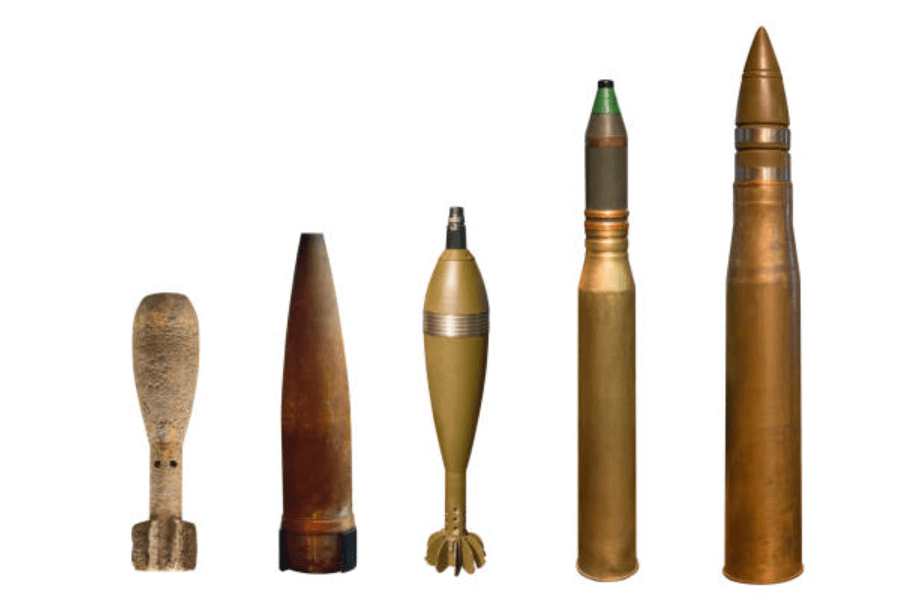
Mobile Production system for Cartridge Ammo and Ammunition ensures efficient, flexible and rapid field-based manufacturing of defense supplies: A Mobile Ammunition Micro Plant is a compact, self-contained manufacturing solution engineered to deliver reliable, on-demand production of small- to medium-caliber ammunition in environments where traditional fixed factories are impractical or inefficient. Designed around the concept of mobility and rapid deployment, the system is typically integrated into standard ISO containers or modular skids, allowing it to be transported by road, rail, sea, or air and installed close to the point of need. This approach reduces dependency on long and vulnerable supply chains while enabling consistent, controlled output in remote, temporary, or infrastructure-limited locations. The micro plant concept responds to modern operational requirements where flexibility, speed of setup, and scalable production capacity are critical factors.
At its core, a Mobile Ammunition Micro Plant combines multiple precision manufacturing processes into a streamlined, space-optimized layout. These processes generally include case forming, trimming, annealing, washing and drying, primer insertion, propellant charging, projectile seating, and final inspection and packaging. Each stage is engineered for compactness without compromising process stability or product consistency. Advanced automation and synchronized control systems coordinate the flow of materials and operations, ensuring repeatable quality across production batches. The integration of programmable logic controllers and human-machine interfaces allows operators to monitor and adjust parameters such as pressure, temperature, feed rates, and tolerances in real time, maintaining strict adherence to production standards.
The structural design of the plant emphasizes durability and environmental resilience. Reinforced container frames, vibration-dampening mounts, and climate control systems ensure that sensitive processes can operate reliably under varying external conditions, including high humidity, temperature fluctuations, and dusty or corrosive environments. Internal zoning separates critical operations to enhance safety and maintain process integrity, while integrated ventilation and filtration systems manage airborne particulates and fumes generated during production. Power supply configurations are flexible, allowing operation from grid connections, generators, or hybrid energy systems depending on site availability.
One of the defining advantages of a Mobile Ammunition Micro Plant is its rapid deployment capability. The system is designed for minimal site preparation, often requiring only a level surface and basic utility connections. Setup and commissioning can typically be completed in a short timeframe compared to conventional factories, enabling fast response to changing operational demands. Modular architecture allows multiple units to be combined or expanded to increase production capacity, providing scalability without significant redesign or construction effort. This makes the system particularly suitable for applications requiring phased growth or temporary production surges.
Quality assurance is integrated throughout the production cycle. Inline inspection systems, including dimensional measurement, weight verification, and visual defect detection, ensure that each component meets specified tolerances before proceeding to the next stage. Data logging and traceability features record production parameters and batch information, supporting process optimization and compliance with applicable standards. The use of calibrated tooling and controlled process environments contributes to consistent performance characteristics of the finished ammunition.
From an operational perspective, the Mobile Ammunition Micro Plant is designed for efficiency and ease of use. Ergonomic layouts and intuitive control interfaces reduce operator workload and training requirements, while automated material handling systems minimize manual intervention. Maintenance considerations are built into the design, with accessible components, modular assemblies, and predictive maintenance capabilities that help reduce downtime and extend equipment lifespan. Spare parts management and remote support options can further enhance system availability, particularly in geographically isolated deployments.
Logistically, the containerized format simplifies transportation and storage. Units can be pre-configured and tested before shipment, ensuring readiness upon arrival at the destination. The standardized dimensions facilitate integration into existing transport networks, while secure enclosures protect equipment during transit and operation. When production requirements change, the plant can be relocated or redeployed with relative ease, preserving investment value and operational flexibility.
In summary, the Mobile Ammunition Micro Plant represents a modern approach to distributed manufacturing, combining compact design, advanced automation, and mobility into a single cohesive solution. It enables controlled, scalable production in diverse environments while reducing reliance on centralized infrastructure. By aligning engineering efficiency with operational adaptability, the system provides a practical and versatile platform for meeting evolving production needs in a wide range of applications.
A Mobile Ammunition Micro Plant is best understood as a highly engineered industrial platform designed for distributed production capability, rather than a traditional factory fixed to a single location. Its main value lies in the ability to bring controlled manufacturing capacity closer to where it is needed, reducing logistical strain and improving responsiveness in environments where supply continuity, infrastructure limitations, or rapid demand changes are critical factors. Instead of relying on large centralized facilities, production is broken into compact, containerized modules that can be transported, deployed, and interconnected as required, forming a flexible industrial footprint that can scale up or down depending on operational requirements.
The system architecture is typically built around modular integration principles, where each containerized unit performs a defined function within a larger coordinated production ecosystem. These modules are designed to operate in synchronization under a unified control framework, allowing centralized monitoring of performance, output consistency, and system health. This structure enables operators to manage production remotely or on-site with a high degree of visibility over throughput, resource usage, and operational status. The emphasis is on predictability, repeatability, and controlled industrial performance within a compact and mobile environment.
From an engineering perspective, such systems are developed with a strong focus on environmental resilience and operational stability. They are designed to function in a wide range of climates and field conditions, with considerations for temperature regulation, dust control, vibration isolation, and power conditioning. The internal layout of each module is optimized for workflow efficiency and safety separation, ensuring that sensitive operations remain isolated from external disturbances while maintaining smooth material and component flow between stages of the system. This allows consistent performance even in temporary or rapidly changing deployment environments.
A key aspect of the Mobile Ammunition Micro Plant concept is its scalability. Additional modules can be added to increase capacity, introduce redundancy, or expand capability without redesigning the entire system. This makes it suitable for phased investment strategies or evolving operational requirements where production demand is not static. The modular nature also supports relocation and redeployment, enabling assets to be reused in different locations over their lifecycle, which improves long-term efficiency and strategic flexibility.
Digital integration plays an important role in modern configurations, with advanced control systems providing real-time data acquisition, system diagnostics, and performance analytics. This enables predictive maintenance strategies, reduces unplanned downtime, and supports continuous optimization of operational parameters at a system level. The data-driven structure also allows better resource planning and traceability across production cycles, contributing to more controlled and accountable industrial output.
In broader industrial and strategic terms, a Mobile Ammunition Micro Plant represents a shift toward decentralized manufacturing models in specialized sectors where agility and deployment speed are as important as production capacity. It supports scenarios where infrastructure may be limited, where rapid establishment of local capability is required, or where distributed production reduces dependency on single large facilities. By combining mobility, modular engineering, and integrated control systems, it provides a flexible platform that can be adapted to a variety of operational frameworks while maintaining industrial-grade consistency and control.
A Mobile Ammunition Micro Plant can also be viewed as part of a broader transformation in modern industrial strategy, where production capability is no longer strictly tied to permanent infrastructure but instead distributed across flexible and redeployable assets. This shift reflects increasing demand for adaptability in supply systems, particularly in sectors where geopolitical conditions, logistics constraints, or rapid changes in demand can make centralized production less efficient. By decentralizing capacity into modular units, organizations gain the ability to position industrial output closer to operational zones, thereby reducing lead times and improving responsiveness while maintaining centralized oversight through digital control systems.
From an investment and lifecycle perspective, such systems are typically designed with long-term operational reuse in mind. Rather than being single-location factories, they are treated as movable industrial assets that can be redeployed multiple times across different projects or regions. This changes the traditional cost structure of industrial production, as value is derived not only from output capacity but also from mobility, redeployment potential, and scalability. The modular approach allows incremental expansion, meaning capacity can be increased step by step without requiring large upfront infrastructure commitments. This makes the system particularly attractive in scenarios where demand forecasting is uncertain or where operational requirements evolve over time.
In terms of operational philosophy, the focus is on standardization and repeatability within a controlled and enclosed environment. The plant is designed to maintain consistent production conditions regardless of external environment, which helps ensure uniformity in output quality and reduces variability caused by site-specific factors. This controlled approach is essential for maintaining industrial reliability across multiple deployments, especially when systems are relocated or operated in geographically diverse environments. The emphasis is not only on producing output but on ensuring that the entire production chain behaves predictably under different operating conditions.
Logistically, the containerized structure provides a significant advantage in terms of transportation, installation, and redeployment. Units can be shipped using standard global freight systems and integrated into existing transport networks without requiring specialized infrastructure. Once delivered, they can be brought into operation with relatively limited site preparation compared to conventional industrial facilities. This reduces dependency on fixed industrial zones and enables deployment in remote or temporary operational areas. It also supports contingency planning, where production capacity can be shifted quickly in response to changing conditions.
Technologically, these systems increasingly rely on integrated digital ecosystems that connect machinery, monitoring systems, and operational dashboards into a unified platform. This allows real-time visibility into system performance and supports data-driven decision-making. Over time, collected operational data can be used to optimize efficiency, improve maintenance planning, and enhance system reliability. The result is a more intelligent production environment where physical manufacturing capability is supported by continuous digital analysis and control.
Strategically, the concept of a Mobile Ammunition Micro Plant aligns with the broader trend of distributed manufacturing networks. Instead of relying on a single large production center, capability is spread across multiple smaller, mobile nodes that can be activated, relocated, or scaled according to demand. This reduces vulnerability associated with centralized infrastructure and increases overall system resilience. It also allows organizations to align production capacity more closely with operational needs, reducing unnecessary transportation and improving supply responsiveness.
Overall, the Mobile Ammunition Micro Plant represents a convergence of modular engineering, mobility, and digital industrial control. Its value lies not only in its physical production capability but in its flexibility as an asset that can adapt to different environments, requirements, and strategic contexts over time.
A Mobile Ammunition Micro Plant, when considered in its broader industrial context, reflects a shift in how modern production systems are being conceptualized and deployed. Instead of relying solely on large-scale, geographically fixed manufacturing hubs, industries are increasingly exploring distributed models where smaller, self-contained production units can be positioned dynamically based on demand, logistics, or strategic requirements. This approach aligns with wider trends in modular engineering, containerized infrastructure, and rapidly deployable industrial systems that can operate independently or as part of a larger coordinated network.
The defining characteristic of such systems is their emphasis on flexibility. Rather than being designed for a single long-term location, they are engineered to function across multiple environments with minimal structural adaptation. This means that their value is not only measured in output capacity but also in their ability to be relocated, reconfigured, and reintegrated into different operational settings. Over time, this transforms them into reusable industrial assets that can support multiple missions or production cycles across different regions.
Another important aspect is the way these systems integrate with modern digital infrastructure. Industrial operations today are increasingly data-driven, and mobile modular plants are no exception. They are typically designed to interface with monitoring systems that track performance metrics, system health, and operational efficiency in real time. This enables remote supervision, predictive maintenance planning, and continuous optimization without requiring constant physical oversight. The result is a production model that combines physical mobility with digital control, allowing operators to maintain oversight even when the system is deployed in distant or difficult-to-access locations.
From a logistical standpoint, the containerized nature of these systems is a key enabler of their mobility. Standardized dimensions and transport compatibility mean they can be moved using established global logistics networks. This reduces the need for specialized transport arrangements and allows rapid redeployment when necessary. Once on site, the modular design supports relatively straightforward setup compared to traditional factory construction, which often requires extensive civil engineering work and long commissioning periods. This speed of deployment is one of the core reasons such systems are considered valuable in dynamic operational environments.
In terms of industrial philosophy, these systems also represent a move toward decentralization and resilience. Centralized production models, while efficient at scale, can be vulnerable to disruption if a single facility becomes unavailable. Distributed modular systems mitigate this risk by spreading capacity across multiple units that can function independently or in coordination. This improves overall system robustness and allows production to continue even if individual units are relocated, serviced, or temporarily offline.
Over a longer time horizon, mobile modular plants also support more adaptive investment strategies. Instead of committing to large fixed infrastructure projects, organizations can incrementally expand their production capability by adding additional modules as needed. This phased approach reduces initial capital exposure while maintaining the ability to scale up when required. It also provides greater strategic flexibility, since capacity can be reallocated or repositioned rather than being locked into a single geographic site.
Ultimately, the concept reflects a broader evolution in industrial thinking, where mobility, modularity, and digital integration are becoming just as important as raw production capacity. The focus is shifting toward systems that can adapt, relocate, and scale in response to changing conditions, rather than remaining static. In this sense, the Mobile Ammunition Micro Plant is part of a larger trend toward agile industrial infrastructure designed for a more fluid and uncertain operational world.
A Mobile Ammunition Micro Plant can also be understood as an example of how industrial ecosystems are evolving toward portability and distributed capability. In traditional manufacturing models, production is centralized in large facilities that require significant infrastructure, long construction timelines, and stable long-term planning. In contrast, modular mobile systems represent a more fluid approach where production capacity is treated as something that can be deployed, repositioned, or reconfigured depending on shifting requirements. This fundamentally changes how capacity planning is approached, because it introduces the possibility of physically relocating industrial capability instead of rebuilding it from scratch in each new location.
This type of system also reflects increasing emphasis on operational agility. In modern industrial and defense-related supply chains, timing and responsiveness often matter as much as total production volume. Being able to establish production capability closer to demand centers can reduce delays, shorten supply loops, and improve responsiveness in rapidly changing conditions. At the same time, mobility allows organizations to avoid overdependence on a single geographic location, which can improve continuity in unpredictable environments. This combination of proximity and flexibility is one of the key reasons modular container-based systems have gained attention across multiple industries.
Another important dimension is the engineering discipline behind integration and standardization. A system like this is not just a collection of machines placed inside a container; it is a carefully designed ecosystem where mechanical, electrical, environmental, and digital subsystems must all work in harmony within a confined footprint. Space efficiency becomes a critical design parameter, as does thermal management, vibration control, and system isolation. Every element must be optimized not only for performance but also for transportability and repeatable setup. This leads to a design philosophy where modular consistency is prioritized, allowing units to be replicated and deployed with predictable behavior across multiple installations.
Over time, these systems also become increasingly dependent on advanced control architectures. Rather than operating as standalone machines, they are typically managed through integrated control platforms that coordinate multiple subsystems simultaneously. This allows for centralized oversight of distributed assets, meaning that even if multiple units are deployed in different regions, they can still be monitored and managed under a unified operational framework. This kind of architecture supports scalability, since additional units can be added to the network without fundamentally changing the control structure.
From a lifecycle perspective, mobile modular plants are often designed with redeployment and reuse as core principles. Instead of being tied to a single fixed infrastructure project, they are treated as assets that can move through multiple operational phases. This introduces a more dynamic asset utilization model, where equipment is continuously reassigned to where it is most needed. It also encourages design for maintainability, since systems must remain functional across multiple transport cycles and operating environments.
In broader industrial terms, this reflects a shift toward distributed manufacturing philosophies where production is no longer strictly centralized but instead dispersed across multiple nodes. These nodes can be activated or deactivated depending on demand, creating a more elastic production network. This elasticity improves resilience, since the failure or unavailability of one node does not necessarily halt the entire system. Instead, capacity can be redistributed or supplemented by other available units.
Overall, the Mobile Ammunition Micro Plant concept sits within a larger movement toward mobile, modular, and digitally integrated industrial systems. These systems prioritize adaptability, redeployment capability, and networked control over static infrastructure, reflecting a more modern approach to industrial planning where flexibility is as important as scale.
Rapid Setup Ammo Production Module
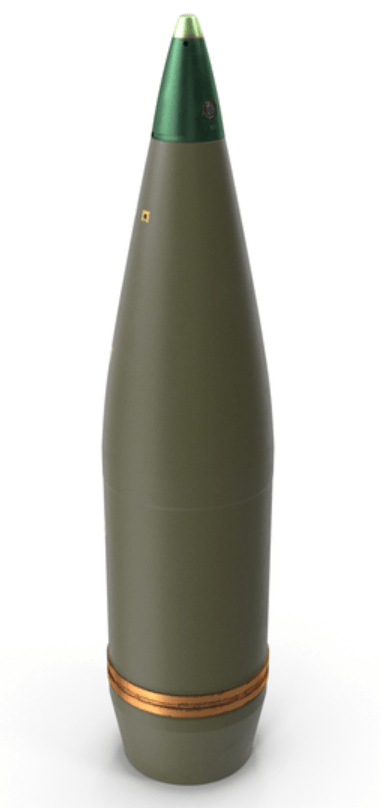
A “Rapid Setup Ammo Production Module” can be understood as a compact, pre-engineered industrial unit designed around the principle of minimizing installation time while maximizing operational readiness in a controlled manufacturing environment. The core idea behind such a system is not only mobility, but also pre-integration, meaning that most mechanical, electrical, and digital components are assembled, aligned, and tested at the factory level before deployment. This significantly reduces the complexity of on-site commissioning and allows the system to transition from transport mode to operational status in a much shorter timeframe compared to conventional fixed industrial installations.
In a broader sense, this type of module represents a shift in industrial design philosophy toward plug-and-play manufacturing infrastructure. Instead of building production facilities piece by piece at the destination, the system is delivered as a largely self-contained unit that already includes the necessary internal architecture for operation. This includes structural framing, environmental control systems, power distribution networks, and centralized monitoring interfaces. The emphasis is on reducing dependencies on external construction efforts and enabling a more predictable and repeatable deployment process across different sites.
A defining feature of rapid setup modular systems is their reliance on standardized interfaces. These interfaces allow multiple modules to be connected or scaled without requiring major redesign of the system architecture. As a result, a single module can function independently for smaller production needs, or it can be integrated with additional units to form a larger coordinated production network. This scalability is a key advantage in environments where demand can fluctuate or where operational requirements evolve over time.
Environmental control and stability are also central to the design of such systems. Because they are intended to operate in diverse and sometimes challenging conditions, they typically incorporate insulation, climate regulation, and protective enclosure systems that maintain stable internal operating conditions. This ensures that performance remains consistent regardless of external temperature, humidity, or environmental variability. The goal is to create a controlled micro-environment inside a mobile structure, effectively replicating factory-like conditions in a transportable format.
Digital integration plays a major role in how these modules are managed and operated. Modern rapid setup systems are usually equipped with centralized control interfaces that allow operators to monitor system status, performance indicators, and maintenance requirements in real time. This can include automated alerts, diagnostic tools, and data logging functions that support long-term performance optimization. In more advanced configurations, multiple modules can be linked into a unified digital network, enabling coordinated operation across different locations.
From a logistical perspective, the value of a rapid setup module lies in its ability to significantly reduce the time between arrival and operational readiness. Traditional industrial facilities often require extensive groundwork, installation, and calibration before they can begin production. In contrast, modular systems are designed to bypass much of this process by arriving as pre-tested, pre-configured units that require only basic site preparation and connection to essential utilities. This allows production capability to be established in a fraction of the time typically required for conventional factory construction.
Strategically, such systems are aligned with modern concepts of distributed and flexible industrial capacity. Instead of concentrating production in a single large facility, capacity can be distributed across multiple modular units that can be deployed where needed. This approach increases operational flexibility and reduces dependency on fixed infrastructure. It also enables faster response to changing conditions, since modules can be relocated, reassigned, or redeployed as priorities shift.
Overall, the Rapid Setup Ammo Production Module concept reflects a broader evolution in industrial engineering toward mobility, standardization, and rapid deployment capability. It combines pre-engineered design, modular scalability, and digital control systems into a unified approach that prioritizes speed, adaptability, and operational continuity in dynamic environments.
A Rapid Setup Ammo Production Module can also be viewed as part of a wider transformation in how industrial capability is designed, deployed, and maintained in modern supply ecosystems. Instead of relying on fixed-location factories that require long construction cycles and significant permanent infrastructure, the focus shifts toward creating self-contained production assets that can be activated quickly wherever they are needed. This approach is increasingly relevant in environments where demand is unpredictable, logistics chains are sensitive to disruption, or operational requirements can change rapidly over time.
At the heart of this concept is the idea of pre-engineered completeness. The system is designed and assembled in such a way that most integration work is completed before it ever reaches its final location. This means that mechanical alignment, electrical wiring, control system configuration, and environmental calibration are largely standardized during manufacturing. As a result, once the module is delivered, it behaves less like a construction project and more like an industrial appliance that can be brought online through a defined and repeatable activation sequence. This significantly reduces uncertainty during deployment and makes planning more predictable.
Another important aspect is the emphasis on operational independence. These systems are typically designed to function as standalone units, meaning they do not rely heavily on external infrastructure beyond basic utilities such as power and communications. This allows them to be deployed in a wide range of environments, including remote or temporary operational zones where full-scale industrial facilities would be impractical. At the same time, they can still be integrated into larger production networks when required, allowing multiple modules to operate in coordination under a unified management structure.
The engineering behind such systems also reflects a strong focus on compactness and efficiency of space utilization. Every component must be carefully arranged within a constrained physical footprint, which leads to highly optimized internal layouts. This includes careful consideration of workflow direction, maintenance access, and system separation to ensure that operations remain stable and manageable even in a reduced spatial environment. The result is a tightly integrated system where multiple industrial functions coexist within a single transportable structure.
From an operational management perspective, rapid setup systems are increasingly supported by digital monitoring and control platforms. These platforms provide real-time visibility into system performance and allow operators to track operational status remotely or on-site. This reduces the need for constant physical supervision and enables more efficient allocation of human resources. Over time, collected operational data can be used to refine performance, improve reliability, and optimize maintenance schedules, contributing to a more intelligent and adaptive production system.
Logistically, the modular and containerized nature of these systems provides a significant advantage in terms of mobility and redeployment. Because they are built within standardized transport formats, they can be moved using established global logistics networks without requiring specialized handling infrastructure. This makes it possible to reposition industrial capability relatively quickly in response to changing operational needs. It also supports a more dynamic lifecycle model, where equipment is not fixed to a single site but can be reused across multiple locations throughout its service life.
Strategically, this type of system supports a broader shift toward distributed industrial capacity. Instead of concentrating production in a single centralized facility, capability is spread across multiple mobile units that can be activated or relocated as needed. This improves resilience by reducing dependence on any single point of failure and allows production capacity to be scaled more flexibly. It also aligns with modern approaches to supply chain risk management, where flexibility and responsiveness are prioritized alongside efficiency.
Overall, the Rapid Setup Ammo Production Module represents a convergence of modular engineering, mobility, and digital industrial control philosophy. It reflects a move away from static infrastructure toward adaptable systems that can be deployed, operated, and redeployed with minimal friction, supporting a more agile and responsive industrial model in complex and changing environments.
A Rapid Setup Ammo Production Module, in a broader engineering interpretation, sits within the evolution of what could be called “elastic manufacturing infrastructure,” where production capacity is treated as something dynamic rather than fixed. In traditional industrial thinking, factories are long-term capital investments anchored to a specific geography, often requiring years of planning, permitting, and construction before becoming operational. In contrast, modular rapid deployment systems invert that logic by prioritizing readiness, transportability, and reusability from the very beginning of the design process. The physical structure becomes less of a permanent building and more of a reusable industrial asset that can be activated in different contexts over its lifecycle.
This shift has important implications for how organizations think about capacity planning. Instead of forecasting demand and then committing to a single large facility, capacity can be distributed across multiple smaller units that can be staged, relocated, or scaled incrementally. This reduces exposure to long-term uncertainty and allows production capability to follow demand more closely rather than being fixed in place. It also enables a more modular investment approach, where additional capacity is added in discrete units instead of requiring large, irreversible infrastructure commitments.
Another defining characteristic of these systems is the emphasis on repeatable deployment cycles. A well-designed rapid setup module is not intended for one-time installation but for repeated relocation and reactivation. This requires a high degree of mechanical robustness, structural reinforcement, and system stability so that performance does not degrade significantly across multiple transport and installation cycles. In practice, this leads to engineering priorities focused on durability, alignment retention, and simplified reconnection of key subsystems during redeployment.
From a systems perspective, such modules are increasingly designed as part of a larger network rather than isolated units. Even when physically separated, they can be digitally connected through centralized monitoring and coordination platforms. This allows multiple units to function as a coordinated production ecosystem, where performance data, utilization rates, and system health can be observed across the entire network. This networked approach introduces a layer of abstraction where physical production capacity is managed much like a distributed digital resource, dynamically allocated based on need.
The operational philosophy behind rapid setup systems also places strong emphasis on minimizing downtime between deployments. Time is a critical factor, not just in production output but in transition states—how quickly a system can move from inactive, to transported, to fully operational. To support this, systems are typically designed with standardized connection points, pre-configured internal alignment, and simplified commissioning procedures that reduce the complexity of field setup. The goal is to make activation as predictable and repeatable as possible, regardless of location.
Environmental adaptability is another important dimension. Since these systems may be deployed in a wide range of climates and conditions, they are generally engineered to maintain internal stability despite external variability. This includes managing temperature, humidity, dust exposure, and other environmental factors that could affect equipment reliability. The concept is to create a controlled internal industrial environment inside a mobile external shell, ensuring consistent operational behavior across different deployment scenarios.
Over time, systems of this type also contribute to a broader industrial trend toward decentralization. Instead of relying on a few large production hubs, capability is spread across many smaller, mobile nodes. This distribution reduces systemic risk, improves responsiveness, and allows production to be closer to operational demand points. It also creates redundancy, meaning that if one node is unavailable, others can compensate without requiring a complete shutdown of capability.
In essence, the Rapid Setup Ammo Production Module concept reflects a broader industrial transformation where mobility, modularity, and digital coordination converge into a new form of manufacturing architecture. It prioritizes adaptability over permanence, deployment speed over construction scale, and networked coordination over isolated production, representing a shift toward more fluid and responsive industrial systems overall.
A Rapid Setup Ammo Production Module can also be understood as part of a broader evolution in industrial resilience strategy, where the main objective is not only to produce output efficiently but also to ensure continuity under changing and sometimes uncertain conditions. In traditional models, resilience is achieved through redundancy in large centralized facilities or through geographically separated factories. In newer modular approaches, resilience is instead built into mobility itself. The ability to relocate production capacity means that disruption at one site does not necessarily translate into loss of capability, because the system can be redeployed elsewhere with comparatively short lead time.
This introduces a more dynamic relationship between infrastructure and geography. Instead of treating location as a fixed constraint, modular systems treat it as a variable. Production can follow operational requirements, logistical constraints, or strategic considerations. This makes the system more adaptive to external pressures and reduces long-term dependency on any single site. It also allows for more responsive planning, where capacity can be repositioned as conditions evolve rather than being locked into long-term static layouts.
From an engineering standpoint, achieving this level of mobility requires a careful balance between compact design and operational stability. Systems must be rigid enough to maintain precision and alignment during transport, yet flexible enough to be installed and commissioned without extensive reconstruction. This leads to design approaches that prioritize structural integrity, vibration resistance, and modular internal segmentation. Each subsystem is designed not only for performance but also for survivability across multiple operational cycles and physical relocations.
Another important dimension is lifecycle efficiency. In conventional industrial infrastructure, a facility is built, operated in a fixed location for many years, and eventually decommissioned or repurposed. In contrast, modular mobile systems are designed for multiple operational lives across different environments. This means their value is not limited to a single deployment context but is distributed across a series of use cycles. Over time, this can change how organizations evaluate return on investment, shifting focus from static output per site to cumulative output across multiple deployments.
Digitalization plays an increasingly central role in enabling this model. Because physical systems are distributed and mobile, centralized visibility becomes essential. Monitoring platforms, remote diagnostics, and integrated control systems allow operators to maintain oversight regardless of where individual modules are deployed. This creates a hybrid structure where physical production is decentralized, but information and control are centralized or at least unified through a shared digital layer. The result is a system that is geographically distributed but operationally coherent.
Maintenance and serviceability are also key considerations in such designs. Since modules are expected to move and operate in varying conditions, they must be engineered for ease of inspection, replacement, and repair. This often leads to a design philosophy where components are standardized and modular at multiple levels, not just at the system level but also within internal subsystems. The goal is to minimize the complexity of maintenance actions in the field and to ensure that performance degradation does not accumulate significantly over repeated use cycles.
Strategically, these systems reflect a broader shift toward “industrial flexibility as capability.” In this view, the ability to deploy production capacity quickly and relocate it efficiently becomes as valuable as the production capacity itself. This is especially relevant in environments where demand is uneven, infrastructure is limited, or conditions change rapidly. Instead of committing to fixed capacity in fixed locations, organizations can maintain a portfolio of mobile assets that can be dynamically assigned.
Overall, the Rapid Setup Ammo Production Module concept sits within a larger transformation of industrial thinking toward mobility, modularity, and distributed operation. It reflects a move away from static, location-bound production toward systems that are designed to move, adapt, and integrate continuously within changing operational landscapes, while remaining connected through unified digital control and management frameworks.
Portable Tactical Cartridge Plant
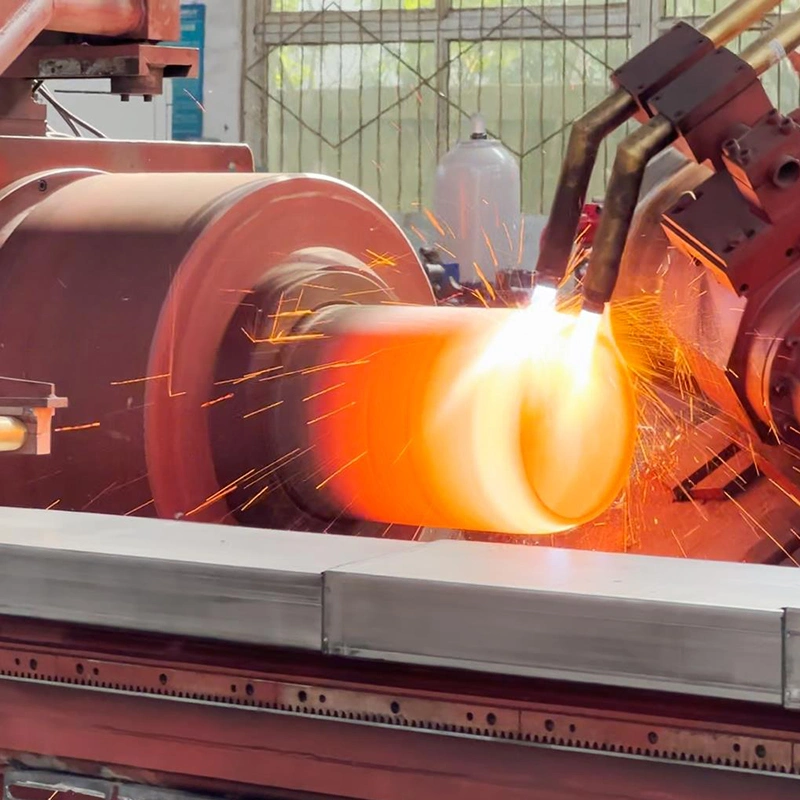
A Portable Tactical Cartridge Plant, in a conceptual industrial sense, can be understood as a highly mobile and modular manufacturing system designed around the principle of bringing compact production capability into rapidly changing operational environments. The emphasis of such a system is not only on mobility, but also on autonomy, meaning that the entire production workflow is designed to function as a self-contained industrial ecosystem that can be transported, deployed, and operated with minimal dependence on permanent infrastructure. This makes it fundamentally different from traditional factory-based production models, where location, scale, and infrastructure are fixed and long-term in nature.
At its core, this type of portable plant reflects the broader industrial trend toward decentralization and distributed manufacturing. Instead of concentrating all production capacity in a single large facility, capability is broken down into smaller, standardized modules that can be deployed wherever needed. These modules are designed to operate either independently or as part of a larger coordinated network, allowing production capacity to be scaled dynamically based on demand. This flexibility introduces a more adaptive industrial structure, where capacity is treated as something that can be repositioned rather than permanently installed.
The engineering philosophy behind such systems prioritizes compact integration and system harmonization. Because all industrial functions must fit within a transportable form factor, careful attention is given to spatial efficiency, subsystem coordination, and structural stability. The internal design is typically highly optimized, with a focus on minimizing wasted space while maintaining clear separation between different functional zones. This ensures that the system can operate consistently across multiple deployments without requiring fundamental redesign or reconstruction.
Another defining characteristic of portable modular industrial systems is their reliance on standardized interfaces and pre-engineered connections. This allows individual units to be rapidly assembled, connected, or disassembled without complex on-site fabrication. As a result, deployment becomes more predictable and repeatable, reducing the uncertainty often associated with setting up industrial operations in new environments. This standardization also enables interoperability between different modules, making it possible to expand or modify system capacity without disrupting existing operations.
From an operational perspective, such systems are increasingly integrated with digital control and monitoring architectures. These systems provide real-time visibility into performance, system status, and operational conditions, allowing for centralized oversight even when physical units are geographically dispersed. This digital layer effectively decouples management from physical location, enabling operators to coordinate multiple deployments from a single control framework. Over time, this data-driven approach also supports continuous improvement by identifying patterns in performance and optimizing system behavior across deployments.
Environmental adaptability is another important aspect of portable industrial systems. Since they may be deployed in a wide range of conditions, they are designed to maintain stable internal environments despite external variability. This includes considerations related to climate control, structural protection, and system isolation from external disturbances. The goal is to ensure that the internal industrial processes remain consistent and reliable regardless of where the system is deployed, which is essential for maintaining uniform operational standards across different locations.
Logistically, the portable nature of such systems provides significant advantages in terms of deployment speed and relocation capability. By using standardized transport formats and modular construction, these systems can be moved through existing global logistics networks without requiring specialized infrastructure. This enables rapid repositioning of industrial capacity in response to shifting requirements, making it possible to align production capability more closely with operational demand.
Strategically, Portable Tactical Cartridge Plants represent a shift toward more flexible and responsive industrial architectures. Instead of relying on permanent infrastructure investments, organizations can deploy modular capacity that can be repositioned as needed. This reduces long-term rigidity and increases resilience by distributing capability across multiple mobile units rather than concentrating it in a single fixed location. It also supports a more agile approach to planning, where production capability can be adjusted dynamically rather than remaining static over time.
Overall, the concept reflects a convergence of mobility, modular engineering, and digital industrial coordination. It embodies a broader transformation in manufacturing philosophy, where adaptability, redeployability, and networked control are increasingly prioritized alongside traditional measures of industrial output and efficiency.
A Portable Tactical Cartridge Plant, viewed through a broader industrial lens, represents an extension of the general shift toward distributed and rapidly reconfigurable production ecosystems. In this model, industrial capacity is no longer treated as a static asset anchored to a single geographic location, but rather as a movable capability that can be repositioned according to operational priorities. This reflects a deeper change in how modern engineering systems are designed, where adaptability and redeployability are increasingly considered core performance metrics alongside output efficiency and reliability.
One of the key ideas behind such systems is the decoupling of production capability from permanent infrastructure. Traditionally, manufacturing required long-term investment in buildings, utilities, and fixed installations, which limited flexibility and made relocation expensive and time-consuming. In contrast, portable modular systems are designed from the beginning to exist in a transportable form factor, allowing them to be integrated into existing logistics networks and deployed without the need for large-scale construction projects. This enables a much faster transition from non-operational to operational status, which is particularly valuable in dynamic environments where timing and responsiveness are critical.
Another important aspect is the emphasis on system standardization. To achieve portability and repeatability, these systems rely heavily on standardized mechanical interfaces, electrical connections, and control architectures. This allows individual modules to be combined, separated, or replaced without requiring custom engineering for each deployment. Over time, this standardization also creates a form of industrial compatibility, where different units can operate within a shared ecosystem, even if they are deployed in different locations or at different times.
From an engineering perspective, the design of such systems requires a strong focus on structural integrity and transport resilience. Because the equipment is expected to be moved multiple times throughout its lifecycle, it must be able to withstand mechanical stresses associated with transportation, installation, and reconfiguration. This influences material selection, structural design, and internal arrangement, leading to compact and reinforced configurations that prioritize durability and stability under repeated operational cycles.
Operationally, these systems are increasingly supported by integrated digital control layers that unify monitoring, diagnostics, and performance management. This allows operators to maintain oversight across distributed deployments, ensuring that multiple units can be coordinated as part of a larger system rather than functioning as isolated entities. The use of real-time data collection and analysis also enables more efficient maintenance planning and performance optimization, reducing downtime and improving long-term reliability.
In broader industrial strategy, portable modular systems contribute to the development of distributed production networks. Instead of relying on a single centralized facility, production capability is spread across multiple mobile nodes that can be activated, relocated, or scaled depending on demand. This reduces systemic vulnerability and increases overall resilience, since the loss or relocation of one node does not necessarily interrupt the entire production chain. It also allows capacity to be aligned more closely with regional or situational requirements, improving responsiveness.
Another important dimension is lifecycle mobility. Unlike traditional fixed infrastructure, which is tied to a specific site for its entire operational life, portable systems are designed to move through multiple environments over time. This introduces a more dynamic concept of asset utilization, where equipment is continuously reassigned based on need. As a result, the value of the system is not only defined by its output at a single location, but by its cumulative performance across multiple deployments.
Overall, the Portable Tactical Cartridge Plant concept reflects a broader transformation in industrial design thinking, where mobility, modularity, and digital integration are combined to create flexible production systems. These systems prioritize adaptability and redeployment capability, enabling industrial capacity to function more like a distributed and reconfigurable network rather than a fixed physical installation.
A Portable Tactical Cartridge Plant, in its broader systems interpretation, can also be seen as part of the increasing convergence between manufacturing engineering and network-based infrastructure design. In earlier industrial eras, production systems were largely linear and location-bound, meaning that raw materials entered one end of a fixed facility and finished products exited the other, with limited flexibility in how or where that transformation process occurred. Modern modular approaches, however, treat production more like a distributed service, where capability can be deployed, replicated, and relocated depending on shifting requirements. This creates a more fluid industrial landscape in which manufacturing is no longer strictly tied to geography but instead behaves more like an adaptable resource.
This adaptability introduces new ways of thinking about industrial efficiency. Instead of measuring performance only in terms of output per fixed facility, evaluation increasingly includes deployment speed, redeployment efficiency, and operational uptime across multiple locations. A portable system may not necessarily outperform a large centralized factory in raw scale, but it can offer advantages in responsiveness, resilience, and flexibility. These characteristics become especially valuable in environments where demand patterns are unpredictable or where logistical constraints make centralized production less effective.
The underlying architecture of such systems is typically based on modular decomposition, where complex industrial processes are broken down into discrete functional units. Each unit is designed to perform a specific role within the overall system while maintaining compatibility with other modules. This allows the system to be reconfigured or expanded without fundamentally redesigning the entire structure. Over time, this modularity becomes a key design principle, influencing everything from mechanical layout to control systems and maintenance strategies.
Another important aspect is operational continuity across different environments. Since portable systems are expected to function in varying conditions, they are designed with a focus on environmental robustness and internal stability. This includes maintaining consistent operational conditions despite external fluctuations, which is achieved through controlled internal environments and protective structural design. The goal is to ensure that the system’s performance remains consistent regardless of where it is deployed, which is essential for maintaining reliability across multiple operational contexts.
Digital integration further enhances the effectiveness of these systems by enabling centralized oversight of distributed assets. Through networked monitoring and control systems, operators can observe performance metrics, system status, and operational health across multiple deployed units simultaneously. This creates a unified operational picture even when physical systems are widely dispersed. It also allows for more efficient coordination, since adjustments or optimizations can be applied across the network without needing direct physical intervention at each site.
From a logistical standpoint, portability fundamentally changes how industrial assets are managed throughout their lifecycle. Instead of being permanently installed in one location, systems can move through different phases of deployment, service, and redeployment. This introduces a more dynamic asset management model, where utilization is measured across multiple operational cycles rather than a single continuous installation. It also enables more efficient use of capital equipment, since the same system can serve multiple roles over time in different environments.
Strategically, this approach contributes to a broader shift toward decentralized industrial capability. Rather than concentrating production in a few large facilities, capability is distributed across multiple mobile units that can be activated or repositioned as needed. This reduces dependency on fixed infrastructure and increases overall system resilience. It also allows for more granular control over production capacity, making it possible to align output more closely with localized or situational demand.
In a wider sense, the Portable Tactical Cartridge Plant concept reflects the evolution of industrial systems toward greater adaptability, mobility, and network integration. It embodies a shift away from static infrastructure toward dynamic systems that can be deployed, coordinated, and redeployed as part of a larger flexible production ecosystem.
A Portable Tactical Cartridge Plant, when viewed in the context of modern industrial evolution, represents a broader shift toward what can be described as “industrial mobility as infrastructure.” In this paradigm, manufacturing capability is no longer permanently embedded in physical structures that define a single location, but instead exists as a transferable asset that can be repositioned according to demand, logistics, or strategic necessity. This fundamentally changes how industrial systems are planned, because the focus moves from building fixed capacity to designing adaptable capacity that can exist in multiple places over time.
This approach is closely tied to the increasing importance of flexibility in global supply systems. In many modern contexts, production requirements are no longer stable or predictable over long time horizons. Demand can fluctuate, operational environments can shift, and external constraints can emerge unexpectedly. In such conditions, static infrastructure can become a limitation rather than an advantage. Portable modular systems address this by allowing capacity to be reallocated rather than rebuilt, effectively turning manufacturing capability into a movable resource that can follow operational needs rather than being constrained by geography.
At the engineering level, this requires a high degree of integration between structural design, mechanical systems, and digital control architecture. The system must be compact enough to be transported efficiently, yet robust enough to maintain precision and stability after repeated movement and reinstallation. This introduces design priorities that differ significantly from traditional factory planning, where permanence is assumed. Instead, portability demands reinforcement, modular segmentation, and standardized interfaces that ensure the system can be repeatedly assembled and disassembled without loss of functional integrity.
Another important characteristic is the increasing role of system autonomy. While these systems are often integrated into larger operational networks, they are also designed to function independently if required. This means that each unit must be capable of maintaining internal coordination, monitoring its own performance, and sustaining stable operation without relying on continuous external intervention. This balance between autonomy and network integration is a defining feature of modern distributed industrial systems, allowing them to operate both as standalone units and as parts of a larger coordinated structure.
Digital infrastructure plays a central role in enabling this model. Through integrated monitoring and control systems, distributed production units can be observed and managed as part of a unified operational environment. This allows for real-time visibility across multiple deployed systems, even if they are geographically separated. It also supports predictive maintenance, performance optimization, and coordinated deployment strategies, ensuring that the system behaves coherently at a network level rather than as isolated units.
From a lifecycle perspective, portable systems introduce a more dynamic concept of industrial asset utilization. Instead of being tied to a single site for their entire operational life, they move through multiple deployment phases. This creates a more continuous and flexible usage pattern, where the same system can serve different roles in different locations over time. As a result, value is not only derived from production output, but also from adaptability, redeployment potential, and cumulative operational usage across multiple environments.
Logistically, this model aligns with the increasing efficiency of global transport networks and standardized container systems. By conforming to established transport formats, modular industrial systems can be moved using existing infrastructure without requiring specialized handling. This reduces friction in deployment and allows for faster repositioning of capability. It also makes it possible to integrate industrial systems into broader logistical planning processes, where movement and deployment are treated as part of normal operational flow rather than exceptional events.
In a broader strategic sense, the Portable Tactical Cartridge Plant concept reflects a transition toward distributed resilience in industrial systems. Instead of relying on a single point of production, capability is spread across multiple nodes that can be activated or repositioned as needed. This reduces systemic vulnerability and increases adaptability in uncertain environments. It also supports a more responsive industrial model, where capacity can be adjusted in real time rather than fixed in advance.
Overall, the concept represents a convergence of mobility, modular engineering, and digital coordination, forming part of a larger trend toward flexible and reconfigurable industrial systems that prioritize adaptability and networked operation over static infrastructure.
Mobile Ammunition Assembly Container
A Mobile Ammunition Assembly Container can be understood in a general industrial engineering context as a standardized, transportable production unit designed around the idea of modular assembly-based manufacturing in a controlled, self-contained environment. Rather than representing a fixed industrial facility, it functions as a movable production cell that integrates mechanical systems, automation infrastructure, environmental control, and digital monitoring into a single enclosed structure that can be deployed wherever operational needs require. The central idea is to combine portability with industrial-grade consistency, enabling assembly-oriented manufacturing processes to be relocated without losing repeatability or control over system behavior.
From a design philosophy perspective, such a container reflects the ongoing shift toward modularized production ecosystems. In this model, complex manufacturing workflows are decomposed into smaller functional segments that can be physically packaged into standardized container formats. Each container acts as a discrete industrial node, capable of operating independently or as part of a larger coordinated network of similar units. This allows production capability to be distributed rather than centralized, creating a more flexible industrial topology where capacity can be scaled or repositioned based on demand.
The structural foundation of a Mobile Assembly Container is typically based on reinforced modular framing that ensures rigidity during transport and stability during operation. Because the system is intended to be moved between different environments, it must maintain alignment and operational integrity even after repeated relocation. This requirement influences every aspect of its construction, from internal mounting systems to vibration isolation and environmental sealing. The goal is to ensure that once the system is deployed, it can quickly reach a stable operating state without extensive recalibration or reconstruction.
Environmental control is another key aspect of such systems. Since assembly-oriented industrial processes often require stable and predictable internal conditions, these containers are designed to maintain controlled temperature, humidity, and airflow regardless of external climate variations. This creates a consistent internal micro-environment that allows industrial operations to remain stable across different geographic locations. In practice, this means the container behaves like a self-contained industrial room that is isolated from external variability.
Digital integration is increasingly central to the functionality of mobile modular systems. A Mobile Ammunition Assembly Container would typically be equipped with centralized control interfaces that allow operators to monitor system performance, track operational status, and manage workflows in real time. This enables remote supervision and reduces the need for constant physical oversight. It also allows multiple containers to be coordinated as part of a distributed production network, where each unit contributes to a broader system-level output rather than functioning in isolation.
Another important characteristic is scalability. Because these containers are standardized, additional units can be added to increase production capacity or to introduce redundancy into the system. This modular expansion capability allows organizations to adjust their industrial footprint dynamically without redesigning the entire system architecture. It also supports phased deployment strategies, where capacity is gradually increased over time as requirements evolve.
Logistically, the containerized format provides significant advantages in terms of mobility and deployment speed. By conforming to global transport standards, these units can be moved using established infrastructure such as road, rail, or sea freight. This reduces the complexity of relocation and enables rapid redeployment of industrial capability. Once delivered to a new site, setup typically focuses on connection, stabilization, and initialization rather than construction, which significantly reduces deployment timelines compared to traditional industrial facilities.
From a systems perspective, Mobile Assembly Containers also contribute to the broader trend of distributed manufacturing networks. Instead of relying on a single centralized plant, production capacity is distributed across multiple mobile units that can be activated, relocated, or reconfigured as needed. This improves resilience by reducing dependency on any single site and allows production capacity to be aligned more closely with real-time operational demand. It also introduces a more flexible model of industrial planning, where capacity is treated as a dynamic resource rather than a fixed asset.
Overall, the concept of a Mobile Ammunition Assembly Container represents a convergence of modular engineering, industrial mobility, and digital coordination. It reflects a shift toward adaptable production systems that prioritize flexibility, redeployability, and networked operation, enabling industrial capability to function in a more dynamic and responsive way across changing environments.
A Mobile Ammunition Assembly Container, in a broader engineering interpretation, is part of a wider transformation in how production infrastructure is conceptualized in modern industrial systems. Instead of being tied to permanent buildings and fixed utility networks, production capability is increasingly designed as something that can be encapsulated, transported, and redeployed as a complete functional unit. This reflects a shift in thinking where manufacturing is no longer viewed purely as a location-based activity, but rather as a portable capability that can be positioned where it is most needed within a larger operational framework.
This approach is closely linked to the rise of modular industrial architecture. In such systems, complex production processes are broken down into smaller functional blocks that can be individually engineered, tested, and standardized before being integrated into a containerized structure. Each container effectively becomes a self-contained industrial environment, designed to replicate stable factory conditions within a transportable enclosure. The advantage of this model is that it allows consistency of operation across multiple deployments, because the internal system remains largely unchanged even when the external environment changes.
A key aspect of this type of system is predictability. Because the unit is pre-engineered and standardized, its behavior is intended to be repeatable across different locations and conditions. This reduces the variability typically associated with setting up new industrial operations in unfamiliar environments. Instead of rebuilding processes from scratch at each site, the system is activated in a controlled and predefined manner, allowing it to reach operational stability more quickly and with fewer external dependencies.
Another important dimension is the relationship between physical infrastructure and digital control. Modern containerized industrial systems are increasingly designed with integrated monitoring and management layers that provide continuous visibility into system status and performance. This allows operators to manage distributed production assets as part of a unified network rather than as isolated installations. Even when units are deployed in different geographic locations, they can still be coordinated through centralized or cloud-based control frameworks that synchronize operational behavior and performance tracking.
From a logistical standpoint, the container format plays a crucial role in enabling mobility. By adhering to standardized transport dimensions and interfaces, these systems can be moved using established global logistics networks without requiring specialized handling infrastructure. This significantly reduces the friction associated with relocation and enables rapid repositioning of production capacity in response to changing requirements. It also supports a more dynamic operational model where industrial capability can be deployed, withdrawn, or reassigned with relatively short lead times.
The engineering challenges associated with such systems are primarily related to maintaining stability and performance across repeated cycles of transport and deployment. Because the system is expected to be moved multiple times during its lifecycle, it must be designed to withstand mechanical stress, vibration, and environmental variation without degradation of function. This leads to design strategies that emphasize structural reinforcement, modular internal mounting, and robust subsystem integration, ensuring that performance remains consistent regardless of relocation history.
Over time, these systems also contribute to the evolution of distributed industrial ecosystems. Instead of relying on a single large production site, capacity is spread across multiple mobile units that can be deployed in different locations depending on demand or strategic priorities. This distributed approach enhances resilience by reducing dependency on any single facility and allowing production capability to be rebalanced dynamically across the network. It also enables a more responsive industrial structure, where capacity can be shifted closer to areas of need rather than being fixed in place.
In a broader sense, the Mobile Ammunition Assembly Container concept reflects the convergence of mobility, modularization, and digital integration in modern industrial design. It represents a move away from static, location-bound manufacturing toward systems that are inherently flexible, networked, and reconfigurable, supporting a more adaptive and fluid approach to industrial capability in complex and changing environments.
A Mobile Ammunition Assembly Container, in a broader conceptual sense, can be understood as part of the ongoing transition in industrial engineering toward highly adaptable, containerized production ecosystems. This transition is driven by the need for greater flexibility in how and where industrial capacity is deployed, especially in environments where traditional fixed infrastructure is either impractical or too slow to respond to changing requirements. Instead of constructing large, permanent facilities, the focus shifts toward building standardized, transportable units that can be rapidly activated and integrated into different operational contexts.
This model fundamentally changes the relationship between manufacturing and location. In traditional systems, the factory is the center of production and everything is designed around it being stationary. In modular mobile systems, however, the production unit itself becomes the portable element, and location becomes a variable rather than a fixed constraint. This allows industrial capability to be repositioned dynamically, aligning more closely with real-world demand patterns, logistical constraints, or strategic considerations. It also introduces a more fluid concept of industrial presence, where capability can be temporarily established in a region and then relocated when no longer needed.
From an engineering standpoint, the design of such systems requires careful balancing between compactness, structural durability, and operational stability. Because the system is expected to function in a variety of environments and endure repeated transport cycles, it must be built with reinforced structural integrity and robust internal stabilization. At the same time, it must remain compact enough to fit within standardized transport formats, which places constraints on internal layout and system integration. This leads to highly optimized designs where every component is carefully positioned to maximize space efficiency while maintaining functional separation and accessibility.
Another key aspect is system autonomy and integration. These containerized units are typically designed to function independently but also to connect seamlessly into larger networks when required. This dual capability allows them to operate as standalone production nodes or as part of a coordinated multi-unit system. In networked configurations, multiple containers can be managed under a unified operational framework, allowing centralized monitoring, coordination, and optimization. This creates a hybrid structure where physical production is distributed but operational control remains integrated.
Digital systems play an increasingly important role in enabling this level of coordination. Integrated control platforms allow real-time visibility into system status, performance metrics, and operational conditions. This makes it possible to manage multiple distributed units as if they were part of a single coherent system, even when they are geographically separated. Over time, this also enables data-driven optimization, where operational patterns are analyzed to improve efficiency, reduce downtime, and enhance overall system reliability.
Logistics is another defining factor in the effectiveness of such systems. Because the entire unit is containerized, it can be transported using established global logistics infrastructure without requiring specialized handling or construction processes at the destination. This significantly reduces deployment complexity and enables faster activation compared to traditional industrial setups. The ability to rapidly relocate production capability also means that industrial capacity can be dynamically reassigned as conditions change, improving overall responsiveness.
In a broader strategic context, systems like this contribute to the development of distributed industrial networks, where production capability is no longer concentrated in a few large facilities but instead spread across multiple mobile and modular nodes. This reduces dependency on any single location and increases resilience by allowing capacity to be redistributed if one node becomes unavailable or needs to be relocated. It also supports more adaptive planning models, where production resources can be allocated based on real-time needs rather than fixed long-term assumptions.
Overall, the Mobile Ammunition Assembly Container concept represents a convergence of modular engineering, transportability, and digital coordination. It reflects a shift toward industrial systems that are designed for movement, flexibility, and networked operation, enabling production capacity to function as a dynamic and reconfigurable resource rather than a static infrastructure asset.
A Mobile Ammunition Assembly Container, in a more general industrial interpretation, fits into a wider evolution of manufacturing philosophy where the emphasis is shifting from permanence to adaptability. Instead of building large, fixed industrial complexes designed for long-term single-location operation, modern engineering increasingly explores compact, transportable systems that can be deployed, used, and redeployed as part of a flexible production strategy. This reflects a broader recognition that industrial demand, supply chain stability, and operational environments are no longer static, and therefore the infrastructure that supports them also needs to be capable of change.
In this context, the containerized system is essentially a way of packaging industrial capability into a standardized and mobile format. The container acts not just as a transport shell but as a structural and environmental boundary that preserves internal operating conditions. Inside this boundary, the system is designed to maintain consistency and repeatability, ensuring that the same operational behavior can be achieved regardless of where the unit is deployed. This consistency is important because it reduces the variability typically introduced by changes in external environment, infrastructure quality, or local conditions.
One of the most significant conceptual elements of such systems is the idea of industrial encapsulation. Instead of relying on external infrastructure to support production, the necessary conditions are built into the module itself. This includes structural support, environmental regulation, power distribution compatibility, and integrated control systems. As a result, the unit becomes a self-contained production environment that can operate independently once deployed. This reduces dependency on local infrastructure and allows the system to function in a wider range of locations.
Another important aspect is modular interoperability. These systems are not designed as isolated, one-off installations but as standardized units that can potentially be combined or networked with other similar modules. This allows for flexible scaling, where capacity can be increased or reconfigured by adding or rearranging units rather than rebuilding entire facilities. In this sense, production capability becomes a configurable system rather than a fixed installation, enabling more dynamic responses to changing requirements.
The operational model behind such systems also reflects a shift toward distributed control and centralized visibility. While the physical production is decentralized and mobile, the monitoring and management of these systems is often unified through digital platforms. This allows operators to maintain oversight across multiple deployed units, even when they are geographically separated. It also enables more consistent performance management, since operational data can be collected and analyzed across the entire network of modules rather than being limited to a single site.
From a lifecycle perspective, mobile modular systems introduce a different way of thinking about industrial assets. Instead of being permanently tied to one location, the same unit can be deployed multiple times in different environments throughout its operational life. This creates a more fluid usage pattern, where the value of the system is derived not only from continuous operation but also from its ability to be repositioned and reused. Over time, this can lead to more efficient utilization of capital equipment, as assets are not confined to a single fixed application.
Logistically, the use of standardized container formats is a key enabler of this mobility. By conforming to widely used transport standards, these systems can be moved using existing global logistics networks without requiring specialized handling. This reduces the complexity of deployment and makes relocation more predictable and efficient. It also allows industrial capacity to be integrated into broader supply chain planning, where movement and deployment are treated as part of normal operational flow rather than exceptional events.
In a broader industrial sense, systems like the Mobile Ammunition Assembly Container reflect a movement toward more adaptive and networked production architectures. Instead of concentrating all capability in large centralized facilities, production is distributed across multiple mobile nodes that can be activated or repositioned as needed. This improves resilience, increases flexibility, and allows industrial systems to respond more effectively to changing conditions. It also represents a shift in mindset, where manufacturing is no longer seen as a fixed location but as a distributed capability that can be configured dynamically across space and time.
Overall, this concept sits within the larger transformation of industrial systems toward mobility, modularity, and digital integration, where adaptability and redeployment capability are becoming as important as traditional measures of scale and fixed infrastructure.
Deployable Ammo Fabrication Unit
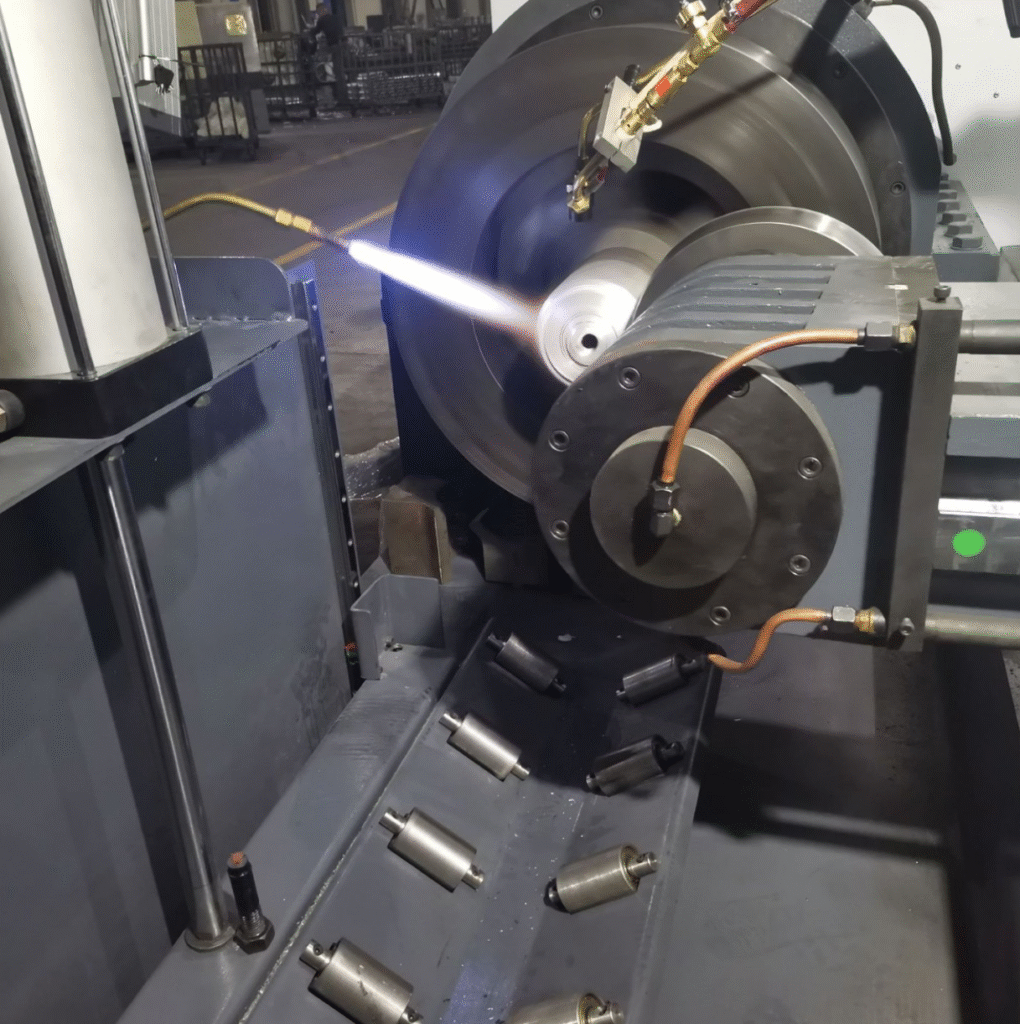
A Deployable Ammo Fabrication Unit, in a high-level industrial engineering context, can be described as a compact, self-contained and transportable manufacturing module designed around the principle of rapid deployment and localized production capability within a standardized containerized structure. Its conceptual foundation is rooted in the broader evolution of modular industrial systems, where complex manufacturing processes are no longer confined to permanent factories but instead distributed across mobile, reconfigurable units that can be transported and activated in different operational environments as required.
The main idea behind such a system is to encapsulate a complete production capability within a controlled and standardized physical envelope. This envelope is typically based on container architecture, which provides both structural protection during transport and a defined internal environment for stable operation once deployed. Within this framework, the system is designed to maintain consistency and repeatability across multiple locations, meaning that its performance characteristics remain stable regardless of where it is installed. This is achieved through careful standardization of internal layout, subsystem integration, and environmental control.
From an industrial systems perspective, the Deployable Ammo Fabrication Unit represents a shift away from traditional fixed-site manufacturing toward distributed production networks. In this model, production capacity is not concentrated in a single large facility but instead distributed across multiple mobile nodes. Each node can be deployed independently or integrated into a larger coordinated system, allowing production capacity to be scaled dynamically based on operational requirements. This flexibility is one of the key drivers behind modern modular industrial design, as it enables faster response to changing conditions and reduces dependency on long, static supply chains.
A defining characteristic of such systems is their emphasis on pre-engineered integration. Instead of assembling complex industrial infrastructure on-site, the system is designed, built, and tested as a complete unit before deployment. This means that most alignment, calibration, and system validation is completed during manufacturing, reducing the complexity and uncertainty associated with installation in the field. Once delivered, the unit is intended to transition into an operational state through a relatively standardized activation process rather than extensive construction or setup work.
Another important aspect is environmental independence. Since these systems are designed to operate in a variety of locations, they typically incorporate internal regulation mechanisms that stabilize temperature, airflow, and other environmental variables within the container. This creates a controlled internal micro-environment that isolates industrial processes from external fluctuations. As a result, the system can maintain consistent operational behavior across different climates and conditions, which is essential for ensuring repeatability and reliability in distributed deployments.
Digital integration is also a central component of modern deployable industrial systems. These units are typically equipped with monitoring and control systems that provide real-time visibility into operational status, performance metrics, and system health. This allows operators to manage multiple distributed units from a centralized or networked control environment. Over time, this digital layer also enables data-driven optimization, where operational performance can be analyzed across multiple deployments to improve efficiency, reduce downtime, and enhance system reliability.
From a logistical standpoint, the containerized nature of the system provides significant advantages in terms of mobility and redeployment. Because the unit conforms to standardized transport formats, it can be moved using existing global logistics infrastructure without requiring specialized handling or construction support. This allows production capability to be repositioned relatively quickly in response to changing requirements. It also supports a more dynamic lifecycle model, where the same system can be deployed, used, relocated, and reused across multiple environments over time.
In a broader strategic sense, Deployable Ammo Fabrication Units reflect the growing importance of distributed resilience in industrial planning. Instead of relying on a single centralized production site, capability is spread across multiple mobile systems that can be activated or repositioned as needed. This reduces systemic vulnerability and increases adaptability, since production capacity can be redistributed in response to disruptions or shifting operational priorities. It also introduces a more flexible planning model, where industrial capability is treated as a scalable and movable resource rather than a fixed asset.
Overall, the concept represents a convergence of modular engineering, mobility, and digital industrial coordination. It sits within a wider transformation in manufacturing philosophy, where adaptability, redeployability, and networked control are becoming as important as traditional notions of scale and permanence in industrial infrastructure.
A Deployable Ammo Fabrication Unit, when viewed through a broader systems engineering lens, can also be interpreted as an example of how industrial capability is increasingly being treated as a movable and reconfigurable asset rather than a fixed installation. This reflects a deeper structural change in modern manufacturing philosophy, where the primary constraint is no longer simply production capacity, but the ability to position that capacity dynamically in response to shifting operational, logistical, or environmental conditions. In this sense, the system is designed less as a traditional factory and more as a portable node within a larger distributed production network.
This shift is closely tied to the increasing importance of modularity in industrial design. Instead of building monolithic systems that are optimized for a single location and long-term stability, modern approaches favor breaking down production capability into standardized modules that can be independently engineered, tested, and deployed. These modules are then integrated into containerized or transportable structures, allowing them to be physically relocated without requiring fundamental redesign. Over time, this creates a form of industrial architecture that is inherently flexible, where capacity can be added, removed, or repositioned depending on demand.
A key concept underlying this type of system is controlled standardization. By ensuring that internal systems, interfaces, and operational parameters are consistent across units, it becomes possible to replicate performance across multiple deployments. This consistency is critical in distributed systems, because it ensures that a unit deployed in one environment behaves predictably in the same way as a unit deployed elsewhere. Standardization also simplifies maintenance and interoperability, since components and subsystems can be designed with shared specifications across the entire system family.
Another important dimension is the emphasis on operational independence combined with network connectivity. While each deployable unit is designed to function as a self-contained system capable of operating on its own, it is also intended to integrate into a broader coordinated network when required. This duality allows for both autonomy and collective optimization, depending on the operational context. In a networked configuration, multiple units can be coordinated in terms of scheduling, resource allocation, and performance monitoring, creating a distributed but unified industrial system.
Environmental stability is also a central consideration in such designs. Since deployment environments can vary significantly, the internal system must be insulated from external variability to ensure consistent operation. This is typically achieved through controlled internal environments that regulate key conditions and protect sensitive processes from external fluctuations. The result is a self-contained operational space that behaves consistently regardless of external geography or climate, which is essential for maintaining reliability across multiple deployments.
From a lifecycle perspective, deployable systems introduce a more dynamic utilization model for industrial assets. Instead of being permanently installed in a single location, the same unit can be moved through multiple operational contexts over time. This means that value is generated not only through continuous operation in one place, but through repeated cycles of deployment, use, relocation, and redeployment. This significantly changes how industrial efficiency is measured, placing greater emphasis on flexibility and total lifecycle utilization rather than static output alone.
Digital integration further enhances this model by enabling centralized visibility over distributed assets. Through networked monitoring systems, operators can observe performance, status, and operational conditions across multiple deployed units simultaneously. This allows for coordinated management of geographically dispersed systems and supports more efficient decision-making at the network level. Over time, the accumulation of operational data also enables optimization strategies that improve reliability, reduce downtime, and refine system behavior across deployments.
Logistically, the use of standardized transport formats is what makes this entire concept practically viable. By aligning with global container and transport standards, these systems can be moved using existing infrastructure without requiring specialized handling processes. This reduces deployment complexity and allows for rapid repositioning of capability in response to changing requirements. It also integrates industrial mobility into existing global logistics systems, making movement of production assets a routine part of operational planning.
In a broader industrial context, systems like the Deployable Ammo Fabrication Unit are part of a larger transition toward distributed manufacturing ecosystems. Instead of concentrating all production in a few large facilities, capability is distributed across multiple mobile nodes that can be activated or repositioned as needed. This improves resilience by reducing dependence on any single location and allows capacity to be redistributed in response to disruptions or shifting priorities. It also introduces a more adaptive industrial structure where production capability behaves like a scalable, networked resource.
Overall, the concept reflects a convergence of modular engineering, transportability, and digital industrial coordination, representing a shift toward manufacturing systems that are designed for movement, flexibility, and continuous reconfiguration within a dynamic operational environment.
A Deployable Ammo Fabrication Unit, when interpreted within the broader evolution of industrial systems, represents a continuation of the trend toward making production infrastructure more elastic, portable, and reconfigurable. In traditional manufacturing paradigms, production is anchored to fixed facilities that require substantial long-term investment, infrastructure development, and stable operating conditions. These facilities are optimized for scale and continuity, but they lack flexibility when conditions change. In contrast, deployable modular systems are designed to decouple production capability from physical location, allowing it to be repositioned as a functional resource within a wider operational network.
This decoupling fundamentally changes how industrial capacity is conceptualized. Instead of thinking in terms of a single factory producing output at a fixed rate, the system is viewed as a collection of mobile production nodes that can be distributed across different environments. Each node is capable of functioning independently, but also contributes to a larger coordinated structure when connected through digital and logistical frameworks. This allows production capability to behave more like a distributed system rather than a centralized one, which introduces new levels of flexibility in how resources are allocated and managed.
A key principle in this type of system is repeatable deployment. The unit is not intended for one-time installation, but for multiple cycles of transport, activation, operation, and redeployment. This requires careful engineering of both structural and functional elements to ensure that performance remains stable over time. Mechanical integrity, subsystem alignment, and internal calibration must all be preserved across repeated transitions between locations. As a result, these systems are typically designed with a strong emphasis on robustness and long-term operational consistency rather than single-site optimization.
Another important dimension is the integration of industrial processes into a confined and controlled environment. By encapsulating production capability within a containerized structure, the system creates a stable internal operating space that is isolated from external environmental variability. This allows processes to remain consistent regardless of external conditions, which is essential when the same system is expected to operate across multiple geographic regions. The container essentially acts as both a physical enclosure and a controlled industrial environment, ensuring that internal conditions remain within defined operational parameters.
Digital systems play a central role in enabling the functionality of such deployable units. Through integrated monitoring, control, and communication systems, operators can maintain visibility over performance and operational status in real time. This enables distributed systems to be managed as part of a unified operational framework, even when they are physically separated. Over time, this also allows for the accumulation of performance data that can be used to improve efficiency, optimize maintenance schedules, and refine operational behavior across the entire network of deployed units.
From a logistical perspective, standardization is what makes mobility practical. By adhering to widely used transport formats and interface standards, these systems can be moved using existing global logistics infrastructure. This eliminates the need for specialized transport solutions and reduces the complexity of deployment. It also allows industrial capacity to be treated as a movable asset that can be repositioned relatively quickly in response to changing requirements. In this way, logistics and production become more closely integrated, forming a continuous operational chain rather than separate stages.
Another key aspect is scalability through modular expansion. Instead of increasing capacity by building larger single facilities, additional units can be deployed to expand output. This allows for incremental scaling, where capacity is added in discrete, manageable steps rather than through large infrastructure expansions. It also provides redundancy, since multiple units can operate in parallel or compensate for one another if needed. This distributed scaling model improves resilience and makes production systems more adaptable to changing conditions.
In a broader industrial sense, systems like the Deployable Ammo Fabrication Unit reflect a shift toward treating manufacturing capability as a networked resource. Rather than being tied to a single location, production is distributed across multiple mobile nodes that can be coordinated, relocated, or reconfigured as needed. This reduces dependency on fixed infrastructure and increases the overall adaptability of the system. It also aligns with modern trends in supply chain design, where flexibility and responsiveness are increasingly prioritized alongside efficiency.
Overall, this concept illustrates a broader transformation in industrial design thinking, where mobility, modularity, and digital integration combine to create production systems that are inherently adaptable. Instead of static facilities, the focus shifts toward dynamic systems that can move, scale, and reconfigure in response to evolving operational demands, forming part of a more fluid and distributed industrial landscape.
A Deployable Ammo Fabrication Unit, in a broader systems and industrial engineering interpretation, represents an evolution in how production infrastructure is designed to interact with geography, logistics, and operational variability. In conventional industrial models, production is tied to permanence, where facilities are constructed with the expectation of long-term stability in a single location. This creates efficiency through scale but limits flexibility. The deployable modular model reverses this assumption by treating production capability as something that can move, be reassigned, and be reconfigured as conditions change, effectively turning industrial capacity into a portable asset rather than a fixed installation.
This approach is closely aligned with the increasing importance of adaptability in modern supply systems. Global environments today are characterized by uncertainty, fluctuating demand patterns, and varying degrees of infrastructure availability across regions. In such conditions, static production systems can become inefficient or slow to respond. A deployable system addresses this by enabling production capacity to be physically relocated closer to where it is needed, reducing the delay between demand and supply and increasing responsiveness. This mobility introduces a more dynamic relationship between production and consumption, where industrial capability is not geographically locked but operationally fluid.
From an engineering standpoint, the design of such systems requires a balance between portability and structural integrity. Because the system is expected to undergo repeated transportation and reinstallation cycles, it must maintain mechanical stability and alignment across those transitions. This necessitates reinforced construction, modular internal architecture, and carefully designed interfaces that preserve functionality despite physical movement. At the same time, the system must remain compact and standardized enough to fit within global transport constraints, which influences almost every aspect of its physical design.
Another defining characteristic is the emphasis on self-contained operational environments. Instead of relying heavily on external infrastructure, these systems are designed to carry much of their required operational support within the container itself. This includes environmental regulation, internal system stabilization, and integrated control architecture. By creating a controlled internal environment, the system reduces its sensitivity to external conditions and ensures more consistent behavior across different deployment locations. This internal consistency is a key factor in making distributed production viable.
Digital integration further extends the capabilities of such systems by enabling centralized visibility and distributed execution. Through connected monitoring and control frameworks, multiple deployed units can be observed and managed as part of a unified system. This allows operators to maintain oversight across geographically separated installations and ensures that performance data can be aggregated and analyzed at a system-wide level. Over time, this creates a feedback loop where operational data informs optimization, improving efficiency and reliability across the entire network of deployed units.
Logistics plays a foundational role in enabling the practicality of deployable systems. By conforming to standardized transport formats, these units can be moved using existing global logistics infrastructure without requiring specialized handling processes. This significantly reduces the friction associated with relocation and makes rapid redeployment feasible. As a result, industrial capacity becomes something that can be repositioned as part of routine operational planning rather than a complex infrastructure project, which fundamentally changes how production systems are managed.
In a broader structural sense, these systems contribute to the development of distributed industrial networks. Instead of relying on a small number of large, centralized facilities, production is spread across multiple smaller, mobile nodes. This distribution increases resilience by reducing dependency on any single location and allows capacity to be adjusted dynamically based on changing conditions. It also enables redundancy, since multiple units can operate in parallel or compensate for each other if necessary.
Ultimately, the Deployable Ammo Fabrication Unit concept reflects a wider transformation in industrial design philosophy, where flexibility, mobility, and digital coordination are becoming central principles. It represents a move away from static infrastructure toward systems that are inherently reconfigurable, allowing industrial capability to adapt continuously to shifting operational environments and demands.
Container-Based Cartridge Production Facility
A Container-Based Cartridge Production Facility, in a general industrial engineering context, refers to a modular and transportable manufacturing system designed to encapsulate a complete production environment within standardized container architecture. The central idea behind such a system is to transform traditional fixed-site industrial capability into a mobile, reconfigurable asset that can be deployed, operated, and relocated as needed. This reflects a broader shift in manufacturing philosophy where flexibility, scalability, and rapid deployment are increasingly valued alongside conventional efficiency and output metrics.
In this type of system, the container serves as both a structural framework and a controlled industrial enclosure. It provides physical protection during transport while also defining a stable internal environment once the system is operational. Inside this enclosure, industrial processes are arranged in a compact and highly integrated layout, designed to maximize space utilization while maintaining clear separation between functional subsystems. The goal is to ensure that the system can operate consistently regardless of where it is deployed, reducing dependency on external infrastructure and minimizing setup complexity.
One of the key conceptual drivers behind container-based production systems is the idea of decentralization. Instead of relying on large centralized factories, production capability is distributed across multiple smaller, mobile units. Each unit functions as an independent node within a broader production network, capable of operating on its own or in coordination with other similar units. This distributed approach enhances operational flexibility and allows production capacity to be scaled incrementally, depending on demand or strategic requirements.
Another important aspect is the emphasis on pre-engineered integration. These systems are typically designed, assembled, and tested in controlled environments before deployment. This ensures that most alignment, calibration, and system validation processes are completed prior to transport, reducing the complexity of installation at the destination. Once deployed, the system is intended to transition into operational status with minimal external construction or modification, which significantly reduces setup time compared to traditional industrial facilities.
Environmental control is also a critical component of container-based systems. Because the internal industrial processes must remain stable across varying external conditions, the container is typically equipped with systems that regulate temperature, humidity, airflow, and internal cleanliness. This creates a consistent internal operating environment that is largely independent of external climate variations. As a result, the same system can be deployed in diverse geographic locations while maintaining consistent performance characteristics.
Digital integration plays an increasingly central role in modern modular industrial systems. A Container-Based Cartridge Production Facility would typically include integrated monitoring and control systems that provide real-time data on operational status, system performance, and maintenance requirements. This allows operators to manage distributed production units as part of a unified digital network, even when they are physically separated. Over time, this data-driven approach supports optimization of system performance, predictive maintenance, and improved operational efficiency across the entire network of deployed units.
From a logistical standpoint, the use of standardized container formats is what makes mobility practical. By conforming to globally recognized transport standards, these systems can be moved using existing logistics infrastructure without requiring specialized handling or infrastructure modifications. This enables relatively rapid relocation of production capability and allows industrial systems to be integrated into broader supply chain and transport planning frameworks.
Scalability is another defining feature of this approach. Additional container units can be added to increase production capacity or to introduce redundancy into the system. This modular expansion capability allows for gradual scaling of industrial output without requiring major redesign or reconstruction of existing infrastructure. It also provides operational resilience, since multiple units can compensate for one another in the event of maintenance or relocation.
In a broader industrial context, container-based production facilities reflect the ongoing transition toward distributed manufacturing networks. Instead of concentrating production in a few large facilities, capability is spread across multiple mobile nodes that can be deployed and coordinated as needed. This reduces dependency on any single site and increases overall system adaptability. It also enables a more responsive industrial model, where production capacity can be adjusted dynamically in line with changing conditions.
Overall, the Container-Based Cartridge Production Facility concept represents a convergence of modular engineering, transportability, and digital industrial coordination. It reflects a shift toward flexible, reconfigurable production systems that prioritize mobility and adaptability, allowing industrial capability to function as a distributed and dynamic resource within modern operational environments.
A Container-Based Cartridge Production Facility, in a broader engineering and industrial systems context, represents an evolution in how manufacturing capability is structured, deployed, and managed across space and time. Instead of treating production as something that must exist within large, permanent, and geographically fixed facilities, this approach reframes it as a modular and relocatable capability that can be embedded within standardized transportable units. This shift reflects a wider transformation in industrial design thinking, where flexibility and responsiveness are increasingly important alongside traditional priorities such as scale and efficiency.
At the core of this concept is the idea of industrial encapsulation. The entire production environment is contained within a defined structural envelope that serves multiple functions at once, including physical protection, environmental stabilization, and system integration. Within this enclosure, all necessary subsystems are arranged in a tightly coordinated configuration designed to operate as a unified whole. This integration reduces dependency on external infrastructure and allows the system to function in a more autonomous and self-sufficient manner once deployed.
A key characteristic of such systems is their modular nature. Rather than being designed as a single monolithic installation, the production capability is broken down into discrete functional segments that can be engineered, tested, and standardized independently. These segments are then integrated into the container structure in a way that preserves both functional separation and overall system cohesion. This modular approach allows for greater flexibility in design, maintenance, and scaling, since individual components or entire modules can be modified or replaced without redesigning the entire system.
Another important aspect is deployment mobility. Because the system is built within standardized container dimensions, it can be transported using existing global logistics networks. This significantly reduces the complexity associated with relocation and enables production capability to be moved relatively quickly between different operational environments. The container format ensures compatibility with common transport modes, which allows the system to be integrated into established supply chains without requiring specialized infrastructure.
Once deployed, the system is designed to establish a controlled internal environment that supports stable and repeatable industrial operation. This involves maintaining consistent internal conditions that are insulated from external environmental fluctuations. By controlling factors such as temperature stability and internal airflow dynamics, the system ensures that operational performance remains consistent across different geographic locations. This environmental independence is a key factor in enabling distributed manufacturing, as it reduces variability caused by external conditions.
Digital integration is another defining feature of modern containerized industrial systems. These facilities are typically equipped with centralized monitoring and control architectures that provide continuous visibility into operational status and system performance. This allows for real-time oversight and coordination, even when multiple units are deployed across different locations. In a networked configuration, these systems can be managed collectively, enabling centralized decision-making while maintaining distributed physical execution.
From a lifecycle perspective, container-based industrial systems introduce a more dynamic model of asset utilization. Instead of being permanently installed in one location, the same unit can be deployed, operated, relocated, and redeployed multiple times over its service life. This creates a usage pattern that is more cyclical and adaptive, where value is derived not only from continuous operation but also from mobility and redeployment capability. This can lead to more efficient use of capital equipment and more flexible long-term planning.
Scalability is inherently built into this modular approach. Additional container units can be added to expand capacity or introduce redundancy into the system. This allows production capability to be increased incrementally rather than requiring large-scale infrastructure expansion. It also provides resilience, since multiple units can operate in parallel or compensate for one another if needed. This distributed scalability supports a more adaptive industrial structure that can respond to changing demand conditions over time.
In a broader sense, Container-Based Production Facilities reflect the ongoing shift toward distributed industrial ecosystems. Instead of relying on centralized production hubs, manufacturing capability is distributed across multiple mobile nodes that can be activated or repositioned as needed. This reduces dependency on any single facility and increases overall system robustness. It also enables a more responsive approach to production planning, where capacity can be adjusted dynamically in relation to operational requirements.
Overall, this concept represents the convergence of modular engineering, containerized infrastructure, and digital industrial coordination. It reflects a transition toward production systems that are inherently flexible, mobile, and networked, enabling industrial capability to function as a distributed resource that can be continuously reconfigured in response to changing conditions.
A Container-Based Cartridge Production Facility, when examined from a broader manufacturing systems perspective, represents a shift toward viewing industrial capability as something that can be packaged, transported, and redeployed rather than permanently embedded in a fixed physical site. This idea is part of a larger trend in modern engineering where flexibility and mobility are increasingly prioritized in addition to traditional goals such as efficiency, scale, and cost optimization. Instead of constructing large, immovable production complexes, the emphasis moves toward creating standardized, self-contained units that can be deployed wherever they are needed and integrated into local operational environments with minimal adaptation.
This approach fundamentally changes how production infrastructure is planned and utilized. In conventional systems, capacity is built around long-term forecasts and anchored to specific geographic locations, which creates efficiency but also introduces rigidity. In contrast, container-based systems allow capacity to be treated as a dynamic resource that can be repositioned over time. This means that industrial capability can follow demand patterns rather than being fixed in place, which is particularly relevant in environments where requirements shift or where infrastructure availability varies across regions.
A key design principle behind such systems is integration within a constrained and standardized physical envelope. The container is not just a transport medium but also a structural and environmental boundary that defines the operating conditions of the internal system. Within this boundary, all subsystems are arranged in a highly coordinated manner to ensure compactness, stability, and functional coherence. This requires careful engineering to balance space efficiency with accessibility, maintainability, and operational consistency. The result is a tightly integrated system where all components are designed to work together within a limited physical footprint.
Another important aspect is the emphasis on operational consistency across different deployment environments. Since the system may be used in multiple locations over its lifecycle, it must be able to maintain stable performance regardless of external conditions. This is achieved through internal regulation mechanisms that isolate the production environment from external variability. By controlling internal conditions and shielding processes from external fluctuations, the system ensures that its behavior remains predictable and repeatable across deployments, which is essential for maintaining reliability in distributed operations.
Modularity plays a central role in enabling this flexibility. Instead of being designed as a single unified installation, the system is composed of multiple functional segments that can be independently engineered and standardized. These segments can then be combined within the container structure to form a complete operational unit. This modular design allows for easier upgrades, maintenance, and reconfiguration, since individual components can be modified without requiring a complete redesign of the entire system. It also supports scalability, since additional modules or containers can be introduced to expand overall capacity.
Digital integration further enhances the effectiveness of these systems by enabling real-time monitoring and centralized oversight. Through networked control architectures, operators can track system status, performance metrics, and operational conditions across multiple deployed units. This allows geographically distributed systems to be managed as part of a unified operational framework. Over time, the accumulation of operational data supports continuous improvement, enabling optimization of performance, reduction of inefficiencies, and more effective maintenance planning.
Logistically, the container format provides a significant advantage in terms of transportability and deployment speed. Because the system conforms to standardized dimensions, it can be moved using existing global transport infrastructure without requiring specialized handling. This reduces the complexity and cost of relocation and allows industrial capacity to be repositioned more quickly in response to changing requirements. It also enables integration with broader supply chain systems, where movement of production capability becomes part of normal logistical planning.
From a strategic perspective, container-based industrial systems contribute to the development of distributed manufacturing networks. Instead of relying on a small number of centralized facilities, production capacity is spread across multiple mobile nodes that can be activated, relocated, or scaled as needed. This improves resilience by reducing dependency on any single site and allows for more adaptive allocation of resources. It also supports a more flexible industrial model where capacity can be adjusted dynamically in response to real-world conditions.
Overall, the Container-Based Cartridge Production Facility concept reflects a broader transformation in industrial design philosophy, where mobility, modularity, and digital coordination converge to create production systems that are adaptable, distributed, and capable of operating across a wide range of environments as part of a flexible and reconfigurable industrial ecosystem.
A Container-Based Cartridge Production Facility, as a concept within modern industrial engineering, can also be understood as part of a broader movement toward “portable industrial ecosystems,” where the traditional boundaries of factories are redefined. Instead of being permanent structures rooted in a single geographic and infrastructural context, production capability is increasingly envisioned as something that can be packaged into standardized, transportable units and deployed in a variety of environments. This reflects a significant shift in industrial thinking, where adaptability and redeployment are treated as core design objectives rather than secondary considerations.
This evolution is closely linked to changes in global supply chain dynamics. Modern production environments often face fluctuating demand, uncertain logistics conditions, and varying levels of infrastructure readiness across different regions. In such a context, fixed manufacturing plants can become less responsive to sudden changes. A container-based system, by contrast, introduces the possibility of repositioning production capacity closer to where it is needed, reducing the time and complexity associated with long supply chains. This creates a more responsive industrial structure where capability can be aligned more closely with real-time requirements.
From a systems engineering standpoint, the key challenge in such designs is achieving a balance between mobility and operational stability. A containerized facility must be robust enough to withstand transport, handling, and repeated deployment cycles, while also maintaining precise internal alignment and consistent performance during operation. This requires a high degree of structural reinforcement and careful internal organization. Components must be arranged in a way that minimizes sensitivity to external mechanical stress while preserving functional integration within a compact footprint.
Another important dimension is environmental isolation. Because these systems are expected to operate in diverse external conditions, they must be able to maintain a stable internal environment that supports consistent industrial processes. This involves controlling internal variables and insulating critical systems from external fluctuations. The container effectively becomes a controlled micro-environment, ensuring that external factors such as climate or site conditions do not significantly affect operational performance. This consistency is essential for ensuring that the same system can be deployed across multiple regions without requiring major recalibration.
Modularity remains a central principle in this type of industrial design. Rather than building a single tightly coupled system, the production process is divided into functional segments that can be independently designed, tested, and standardized. These segments are then integrated into the container structure in a way that allows for both cohesion and flexibility. This modular approach not only simplifies manufacturing and maintenance but also enables incremental scaling, where additional units can be deployed to expand capacity without fundamentally changing the system architecture.
Digitalization further enhances the effectiveness of these systems by enabling centralized visibility across distributed operations. Through integrated monitoring and control systems, multiple containerized units can be managed as part of a unified network. This allows operators to track performance, diagnose issues, and coordinate activity across geographically separated deployments. Over time, the accumulation of operational data enables optimization of system performance and more efficient lifecycle management, contributing to improved reliability and reduced operational inefficiencies.
Logistics is another critical enabler of this model. The use of standardized container formats allows these systems to be integrated into existing global transport networks without requiring specialized infrastructure. This significantly reduces barriers to deployment and makes it feasible to relocate industrial capacity quickly and efficiently. As a result, production systems become more closely integrated with logistical systems, forming a continuous chain from manufacturing to deployment and redeployment.
In a broader industrial context, container-based production facilities contribute to the emergence of distributed manufacturing networks. Instead of concentrating production in a small number of large facilities, capacity is spread across multiple mobile nodes that can be activated or repositioned as needed. This distributed model increases resilience by reducing dependence on any single point of production and allows for more flexible responses to disruptions or changing demand patterns. It also supports a more dynamic approach to capacity planning, where industrial resources can be adjusted in real time.
Overall, the Container-Based Cartridge Production Facility concept reflects a wider transformation in industrial systems design, where mobility, modularity, and digital integration converge to create flexible, networked production environments. These systems are designed to operate not as fixed assets, but as adaptable components of a larger industrial ecosystem capable of continuous reconfiguration in response to evolving operational conditions.
Mobile Munitions Manufacturing Hub
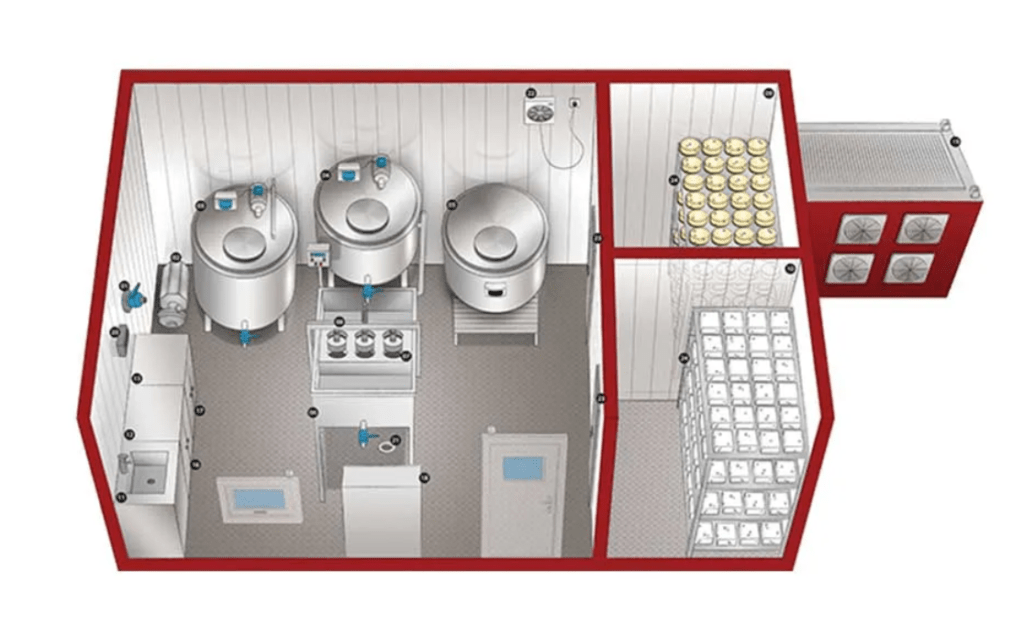
A Mobile Munitions Manufacturing Hub, in a broad industrial and systems-engineering context, can be described as a transportable and modular production ecosystem designed to provide flexible, deployable manufacturing capability within a self-contained operational framework. Rather than functioning as a conventional fixed industrial complex, the concept is based on the idea of transforming production infrastructure into a movable and scalable asset that can be positioned according to changing logistical, operational, or strategic requirements. This reflects a wider evolution in manufacturing philosophy where adaptability and distributed capability are increasingly prioritized alongside traditional measures of efficiency and scale.
The defining characteristic of such a hub is its modular architecture. Instead of concentrating all functions within a single permanent structure, production capability is divided into standardized and interoperable modules that can be transported, assembled, and coordinated as part of a larger system. Each module typically performs a specific industrial role while remaining integrated into the overall operational framework. This modular approach allows the hub to expand, contract, or reconfigure depending on demand, creating a more dynamic and responsive industrial structure compared to traditional fixed-site facilities.
At the physical level, the hub is generally based around containerized or transport-compatible infrastructure that supports mobility and rapid deployment. These transportable structures serve not only as shipping units but also as operational environments that maintain internal stability during both transport and active use. By encapsulating industrial systems within standardized enclosures, the hub can preserve operational consistency across multiple deployment locations while minimizing the need for extensive on-site construction or permanent infrastructure development.
One of the key principles behind this type of system is operational flexibility. Unlike traditional industrial facilities that are optimized for a single long-term location, a mobile hub is designed to function across multiple environments over its lifecycle. This means that its value is not tied solely to continuous operation in one place, but also to its ability to be redeployed, adapted, and reused in different contexts. As a result, the system becomes a reusable industrial asset that can shift in response to changing operational priorities or logistical realities.
Another important dimension is the integration of digital control and monitoring systems. Modern mobile industrial hubs are increasingly designed as networked environments where operational data, performance metrics, and system diagnostics are continuously collected and analyzed. This digital layer allows multiple distributed modules to be managed as part of a unified production ecosystem, even when they are physically separated. Real-time visibility into system performance supports predictive maintenance, operational optimization, and coordinated resource allocation across the network.
Environmental independence is also a critical design factor. Since mobile hubs may operate in diverse climates and infrastructure conditions, they are engineered to maintain stable internal operating environments regardless of external variability. Climate regulation, environmental sealing, and controlled internal airflow are used to create consistent operating conditions within the transportable structures. This ensures that industrial systems remain stable and predictable across different deployment regions, which is essential for maintaining reliability in distributed operations.
From a logistical perspective, mobility is enabled through adherence to standardized transport dimensions and interfaces. By aligning with existing global transportation systems, the hub can be moved using conventional road, rail, sea, or air logistics without requiring specialized infrastructure. This significantly reduces deployment complexity and enables production capability to be repositioned more rapidly than traditional industrial facilities. The ability to relocate industrial assets efficiently becomes a strategic advantage in environments where flexibility and responsiveness are important.
Scalability is another major advantage of the modular hub concept. Additional units can be integrated to increase overall capability, introduce redundancy, or adapt the system to changing requirements. This incremental approach to expansion allows organizations to grow capacity gradually rather than committing to large-scale permanent infrastructure projects from the beginning. It also provides resilience, since distributed modules can continue operating independently if one section of the network becomes unavailable or requires maintenance.
In a broader industrial sense, the Mobile Munitions Manufacturing Hub concept reflects the transition toward distributed manufacturing ecosystems. Instead of concentrating production in a few centralized sites, capability is spread across multiple mobile nodes that can be activated, coordinated, and relocated as needed. This distributed approach improves resilience, increases adaptability, and enables more flexible allocation of industrial resources across changing operational landscapes.
Overall, the concept represents a convergence of modular engineering, transportable infrastructure, and digital industrial coordination. It illustrates how modern manufacturing systems are evolving away from static and location-bound models toward flexible, networked, and reconfigurable industrial ecosystems capable of adapting continuously to dynamic operational environments.
A Mobile Munitions Manufacturing Hub, when viewed through the lens of broader industrial transformation, can also be interpreted as part of the ongoing movement toward decentralized and adaptive production architecture. In traditional industrial systems, production capability is concentrated within large permanent complexes designed around assumptions of geographic stability, predictable logistics, and long operational timelines. While such facilities provide efficiency through scale, they are inherently rigid, often requiring major investment, fixed infrastructure, and long development cycles before becoming operational. The mobile modular approach redefines these assumptions by emphasizing portability, redeployability, and rapid integration into changing operational environments.
This evolution reflects a wider change in how industrial value is measured. In earlier manufacturing models, value was strongly tied to physical size, fixed output capacity, and permanence of infrastructure. In newer distributed models, flexibility itself becomes a strategic capability. The ability to move production assets, establish operational presence quickly, and reconfigure industrial systems in response to changing conditions becomes just as important as total production volume. As a result, mobility is no longer viewed simply as a logistical feature but as an integral component of industrial strategy.
The concept of the hub is especially important in this context because it implies coordination rather than isolated functionality. A mobile manufacturing hub is not merely a single containerized unit, but a networked ecosystem of interoperable modules that work together within a unified operational framework. Each module may serve a specific role within the broader system, while digital coordination layers ensure synchronization and operational coherence across the network. This transforms the industrial structure into something closer to a distributed platform rather than a traditional factory layout.
Another important characteristic of such systems is lifecycle fluidity. Unlike permanent facilities that remain tied to one location for decades, mobile industrial hubs are designed to move through multiple deployment cycles over time. This creates a more dynamic relationship between industrial assets and operational geography. The same system can be activated in one region, redeployed to another, expanded with additional modules, or reconfigured to suit different operational conditions throughout its service life. This adaptability significantly changes the economics of infrastructure utilization because assets are continuously repositioned rather than remaining static.
Engineering for mobility introduces unique design priorities that differ substantially from conventional factory planning. Structural integrity must account not only for operational stability but also for repeated transport cycles, vibration exposure, and environmental variability. Internal systems must remain aligned and operational after relocation, which requires reinforced mounting structures, modular subsystem integration, and careful spatial organization. The challenge is not simply to make the system compact, but to make it repeatedly deployable without compromising long-term reliability or functional consistency.
Environmental independence also becomes a defining feature of these systems. Because deployment conditions can vary widely, the internal industrial environment must be insulated from external fluctuations. This leads to highly controlled internal operating conditions where temperature stability, airflow regulation, and environmental sealing are integrated directly into the container architecture. In effect, the mobile hub creates a portable industrial micro-environment capable of maintaining consistent operational behavior regardless of external geography or climate.
Digitalization further strengthens the effectiveness of this distributed model. Through integrated monitoring and control platforms, geographically dispersed modules can be supervised as part of a single connected ecosystem. Real-time operational data allows centralized visibility into system health, utilization, and performance across all deployed units. Over time, this creates a continuously evolving operational intelligence layer where data from multiple deployments contributes to optimization of efficiency, maintenance scheduling, and overall system reliability.
Logistics also takes on a more strategic role in this framework. Because the system is designed around transport compatibility, mobility becomes embedded directly into industrial planning rather than treated as a secondary support activity. Standardized dimensions and interfaces allow the hub to move within existing global transport infrastructure, reducing barriers to deployment and enabling faster repositioning of production capability. This integration of logistics and manufacturing creates a more fluid operational structure where industrial assets can adapt to changing conditions with significantly reduced transition time.
In a broader industrial context, the Mobile Munitions Manufacturing Hub concept reflects the emergence of manufacturing systems that behave more like distributed networks than isolated facilities. Production capability becomes modular, mobile, digitally coordinated, and continuously reconfigurable. Instead of relying on permanence and concentration of infrastructure, the focus shifts toward adaptability, resilience, and the ability to reposition capability dynamically across different operational environments.
Ultimately, this concept illustrates how industrial systems are evolving toward greater flexibility and interconnectedness. Mobility, modular engineering, environmental independence, and digital coordination combine to create manufacturing ecosystems that are no longer constrained by traditional geographic limitations, enabling production infrastructure to function as an adaptable and responsive industrial resource within an increasingly dynamic global landscape.
A Mobile Munitions Manufacturing Hub can further be understood as an example of the broader convergence between industrial engineering, logistics optimization, and digitally coordinated infrastructure systems. In earlier industrial eras, manufacturing facilities were designed primarily around the assumption of centralized permanence, where efficiency was achieved through concentration of equipment, workforce, and utilities in a single physical location. Over time, however, the increasing complexity and unpredictability of global operational environments has encouraged a shift toward systems that emphasize adaptability and redeployability. Within this framework, industrial infrastructure itself becomes mobile, modular, and capable of integration into changing operational networks.
This transformation is closely linked to the evolution of supply chain philosophy. Traditional supply chains are generally structured around long transport routes connecting centralized production centers to distributed points of demand. While efficient under stable conditions, such systems can become vulnerable to disruption or delay when conditions change rapidly. A mobile modular production hub alters this relationship by reducing the physical distance between production capability and operational need. Instead of transporting large volumes of output across long logistical corridors, capability itself can be relocated closer to where it is required, creating a more flexible and responsive production structure.
Another important dimension of this concept is the transition from infrastructure as a fixed investment to infrastructure as a deployable asset. In conventional industrial planning, facilities are often designed around decades-long operational assumptions tied to a specific site. Mobile modular systems introduce a different model where the same industrial asset can serve multiple deployment cycles in different regions throughout its lifespan. This creates a more dynamic pattern of utilization, where value is derived not only from continuous output but also from adaptability, redeployment capability, and operational responsiveness across changing environments.
From an engineering perspective, this mobility requires a high degree of integration between structural design and operational stability. Systems must be capable of enduring transportation, environmental variability, and repeated deployment cycles without significant degradation of performance. This leads to design priorities centered around reinforced architecture, subsystem isolation, modular internal organization, and long-term maintainability. Components are typically arranged with careful consideration for both transport resilience and operational accessibility, ensuring that systems remain stable and serviceable over extended lifecycle use.
The modular nature of the hub also supports scalability and reconfiguration. Because the overall system is composed of standardized and interoperable units, capacity can be expanded incrementally by adding additional modules rather than constructing entirely new facilities. This creates a more elastic form of industrial growth, where capability can scale in proportion to evolving requirements. It also introduces redundancy into the production network, since individual modules can continue operating independently even if others are offline, relocated, or undergoing maintenance.
Digital coordination is another foundational aspect of modern mobile industrial systems. Rather than operating as isolated installations, deployable modules are increasingly integrated into centralized monitoring and management frameworks that provide continuous operational visibility. Through these digital layers, performance metrics, system diagnostics, and resource utilization can be monitored across geographically distributed deployments in real time. This transforms the industrial ecosystem into a connected network where physical decentralization is balanced by informational centralization, allowing coordinated management despite spatial distribution.
Environmental control systems further reinforce operational consistency. Since mobile hubs may be deployed in diverse climates and infrastructure conditions, maintaining a stable internal environment becomes essential for reliable operation. The containerized structure functions as both a transport shell and an environmental boundary, allowing internal systems to remain insulated from external fluctuations. This controlled internal environment ensures that operational behavior remains predictable regardless of deployment geography, supporting repeatability across multiple operational cycles.
Logistically, the use of standardized transport formats significantly reduces deployment friction. Because the modules are compatible with established global transportation systems, they can move through existing road, rail, maritime, or air logistics networks without requiring extensive modifications or specialized handling infrastructure. This enables rapid repositioning of industrial capability and allows deployment planning to be integrated directly into broader operational logistics strategies.
In a larger industrial context, systems like the Mobile Munitions Manufacturing Hub are representative of the transition toward distributed industrial ecosystems. Production is no longer concentrated exclusively in massive centralized complexes but distributed across smaller, mobile, and digitally coordinated nodes. This distributed structure increases resilience, enhances flexibility, and enables production capability to respond more dynamically to changing conditions. It also reflects a broader philosophical shift in industrial design, where adaptability and reconfigurability are increasingly considered essential characteristics of modern infrastructure.
Ultimately, the concept embodies the idea that manufacturing capability itself can become fluid and mobile rather than static and location-bound. By combining modular engineering, transportable infrastructure, environmental independence, and networked digital coordination, the Mobile Munitions Manufacturing Hub illustrates how modern industrial systems are evolving toward more adaptive, resilient, and continuously reconfigurable forms of operation within an increasingly complex global environment.
A Mobile Munitions Manufacturing Hub can also be interpreted within the broader context of industrial decentralization and adaptive infrastructure strategy, where the focus of manufacturing design shifts from permanence toward responsiveness and mobility. In many traditional industrial frameworks, the factory is viewed as a long-term geographic anchor around which logistics, workforce organization, and supply systems are built. Such facilities are optimized for scale and continuity, but they also create dependencies on stable infrastructure, predictable transport routes, and fixed operational conditions. The emergence of mobile modular production systems reflects an alternative philosophy in which industrial capability itself becomes fluid, capable of being relocated, expanded, or reconfigured in response to changing operational realities.
This evolution parallels developments seen in other sectors of advanced manufacturing, where distributed production models increasingly replace centralized architectures. Instead of relying entirely on a small number of massive production sites, industrial ecosystems are gradually moving toward interconnected networks of smaller, more agile nodes. Each node contributes a portion of overall capability while remaining capable of independent operation if necessary. This creates a more resilient structure because disruption to one location does not necessarily compromise the functionality of the entire network. The industrial system becomes less dependent on single points of concentration and more capable of adapting to environmental or logistical variability.
Within this framework, the mobile hub acts as both a production platform and a logistical asset. Its value lies not only in what it produces, but also in how efficiently it can be repositioned and integrated into different operational environments. Mobility therefore becomes a defining industrial characteristic rather than merely a transport consideration. The ability to relocate capability reduces the need for extensive permanent infrastructure expansion and allows production resources to be allocated more dynamically across different regions or operational contexts. Over time, this creates a manufacturing ecosystem that behaves more like a responsive network than a static industrial footprint.
The physical architecture of such systems reflects these priorities. Containerized or transport-compatible structures provide standardized external dimensions while allowing highly customized internal configurations optimized for compactness, durability, and operational consistency. Structural engineering focuses heavily on transport resilience, ensuring that internal systems remain stable despite repeated movement, vibration exposure, and environmental changes. At the same time, the internal layout is designed to maximize maintainability and modular accessibility, allowing components or subsystems to be serviced, replaced, or upgraded without extensive disassembly.
Environmental control also becomes central to the operational philosophy of mobile industrial systems. Since deployment environments may vary significantly in terms of climate and infrastructure quality, the system must create its own stable operational conditions internally. Controlled airflow, thermal regulation, and environmental isolation ensure that the internal industrial environment remains consistent across deployments. In effect, the hub becomes a portable industrial micro-environment capable of reproducing stable operating conditions regardless of the external setting.
Another defining aspect is the increasing convergence between industrial machinery and digital infrastructure. Modern deployable systems are not simply mechanical assemblies; they are digitally coordinated environments where operational data flows continuously between subsystems and supervisory control layers. Sensors, diagnostics platforms, and centralized monitoring interfaces allow operators to maintain real-time visibility into system behavior across multiple deployments simultaneously. This level of digital integration transforms distributed physical assets into components of a unified operational ecosystem, enabling coordinated oversight even when production nodes are geographically dispersed.
Lifecycle flexibility is another major advantage associated with mobile modular systems. Traditional facilities are typically designed for decades of continuous use at a single location, which limits adaptability once strategic or logistical conditions change. Mobile systems, by contrast, are engineered with redeployment as a core expectation rather than an exception. Over their operational life, they may move through multiple deployment cycles, serving different functions or regions at different times. This creates a more fluid utilization model in which industrial assets are continuously reassigned according to evolving requirements.
Scalability within this framework is incremental rather than monolithic. Additional modules can be introduced gradually, allowing capability to expand without requiring entirely new facilities. This approach reduces the financial and logistical burden associated with large-scale infrastructure projects and provides greater flexibility in responding to fluctuating demand. It also enables distributed redundancy, since multiple modules operating in parallel can compensate for one another during maintenance, relocation, or temporary downtime.
From a strategic industrial perspective, the Mobile Munitions Manufacturing Hub concept reflects a larger movement toward infrastructure that is modular, networked, and continuously adaptable. Production capability is no longer treated solely as a fixed physical investment but increasingly as a mobile operational resource that can shift according to changing conditions. This transition alters the relationship between manufacturing, logistics, and geography, creating systems that are inherently more responsive and resilient in dynamic operational environments.
Overall, the concept illustrates how modern industrial engineering is evolving beyond static factory models toward distributed ecosystems built around mobility, interoperability, and digital coordination. By combining transportable infrastructure, modular architecture, controlled operational environments, and integrated network management, these systems represent a broader transformation in how industrial capability is structured and deployed within increasingly complex and rapidly changing global landscapes.
Compact Field Ammunition Plant
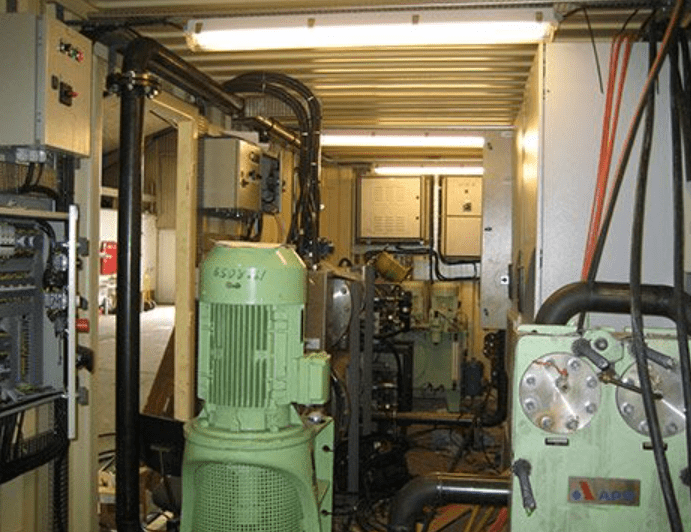
A Compact Field Ammunition Plant, viewed from a high-level industrial and modular infrastructure perspective, can be understood as a small-scale, transport-oriented manufacturing environment designed around mobility, rapid deployment, and operational flexibility within a self-contained industrial framework. Unlike conventional large-scale production facilities that rely on permanent infrastructure and centralized industrial zones, the compact field-oriented model emphasizes portability, adaptability, and integration into changing operational environments. The concept reflects a broader transformation in modern manufacturing systems, where industrial capability is increasingly designed to function as a movable and reconfigurable asset rather than a geographically fixed installation.
At the center of this idea is the principle of industrial compactness combined with functional integration. In traditional manufacturing architecture, industrial processes are often distributed across large buildings with extensive supporting infrastructure. In a compact field system, however, these functions are condensed into a much smaller and highly coordinated footprint. Mechanical systems, environmental controls, utility interfaces, and digital monitoring layers are integrated into a tightly organized structure designed to maximize efficiency of space while preserving operational stability. This requires a high level of systems engineering, where every internal component must contribute to both functionality and spatial optimization.
The field-oriented nature of the concept also introduces unique design priorities. Since the system is intended to operate in varying environments, it must maintain stable internal conditions regardless of external circumstances. Environmental isolation therefore becomes a key architectural feature. Temperature regulation, controlled airflow, vibration resistance, and structural reinforcement are integrated directly into the system so that the internal industrial environment remains predictable even when external conditions fluctuate. This creates a portable micro-environment capable of sustaining repeatable industrial performance across different deployment regions.
Mobility is another defining characteristic. A Compact Field Ammunition Plant is not designed around permanence but around repeated relocation and redeployment throughout its operational lifecycle. This changes the way industrial infrastructure is evaluated. In addition to production capability, value is also derived from deployment speed, transport efficiency, and adaptability. The system must therefore balance durability with portability, ensuring that it can withstand repeated transport cycles without compromising alignment, stability, or long-term reliability. Structural engineering in such systems often prioritizes modular reinforcement and transport resilience to preserve operational consistency over time.
From a broader industrial systems perspective, compact deployable facilities contribute to the emergence of distributed manufacturing ecosystems. Instead of concentrating capability within a small number of large centralized facilities, production capacity is dispersed across multiple smaller nodes that can be deployed independently or coordinated within a wider network. This distributed approach increases flexibility and resilience because capability can be shifted, expanded, or reconfigured more dynamically in response to changing operational conditions. It also reduces dependency on fixed infrastructure and long logistical chains.
Digital coordination further strengthens the functionality of these systems. Modern modular industrial platforms increasingly incorporate integrated monitoring and control architectures that provide real-time visibility into operational status, system health, and performance metrics. Through these digital frameworks, geographically separated units can be managed as components of a unified industrial ecosystem. This allows centralized oversight while maintaining distributed physical deployment, creating a balance between local operational autonomy and network-level coordination.
Scalability is also embedded into the modular philosophy behind compact field systems. Rather than expanding through large permanent construction projects, additional units can be deployed incrementally to increase overall capability or introduce redundancy. This enables a more flexible growth model where capacity can evolve gradually according to operational requirements. It also enhances resilience, since multiple smaller units can continue functioning independently if one node becomes unavailable or requires relocation.
Logistically, the compact design improves transportability and deployment speed. Because the system occupies a smaller and standardized footprint, it can integrate more easily with existing transportation infrastructure. This reduces the complexity associated with movement and allows industrial capability to be repositioned more rapidly when required. Over time, this mobility transforms industrial planning itself, since production assets become capable of moving in coordination with operational and logistical priorities rather than remaining tied to one location.
In a wider industrial context, the Compact Field Ammunition Plant concept reflects the continuing shift toward adaptable and networked manufacturing systems. Instead of viewing industrial facilities as static physical structures, modern engineering increasingly treats them as configurable operational platforms capable of relocation, expansion, and integration into broader distributed ecosystems. This transformation is driven by the growing importance of resilience, responsiveness, and flexibility in modern industrial strategy.
Overall, the concept represents a convergence of modular engineering, compact infrastructure design, transportable architecture, and digital industrial coordination. It illustrates how manufacturing systems are evolving toward smaller, more agile, and continuously reconfigurable forms of industrial capability that can adapt dynamically to changing operational environments while maintaining stable and integrated performance.
A Compact Field Ammunition Plant, when considered within the wider context of industrial mobility and modular infrastructure evolution, can also be viewed as part of a broader transition toward agile production ecosystems designed for adaptability rather than permanence. In traditional industrial development, manufacturing facilities were generally conceived as static entities that required substantial investment in land, utilities, structural construction, and long-term logistical integration. These facilities prioritized centralized efficiency and large-scale throughput, but they were inherently dependent on geographic stability and long operational planning cycles. Compact field-oriented systems introduce a fundamentally different model in which industrial capability becomes deployable, reconfigurable, and responsive to changing operational conditions.
This shift reflects the increasing importance of flexibility in modern industrial strategy. In environments where logistical routes, infrastructure availability, or operational priorities may evolve rapidly, the ability to relocate production capability becomes strategically valuable. Rather than expanding industrial presence through permanent construction alone, organizations can reposition compact modular systems according to current needs. This transforms manufacturing from a geographically fixed activity into a mobile operational resource that can be distributed dynamically across multiple regions over time.
The compact nature of the system introduces a distinct engineering philosophy centered around integration efficiency. Because the available physical footprint is limited, all internal systems must be organized with a high degree of coordination and spatial optimization. Mechanical assemblies, environmental management systems, electrical infrastructure, and digital control platforms are arranged in a tightly integrated configuration where each subsystem contributes both functionally and structurally to the overall design. This creates an industrial environment where compactness is achieved not simply by reducing scale, but through deliberate systems integration and elimination of unnecessary spatial redundancy.
Another important aspect is operational autonomy. Compact field systems are typically designed to minimize reliance on extensive external infrastructure. Instead of depending on large permanent utility networks or specialized facilities, they incorporate much of their operational support directly into the deployable structure itself. This includes environmental stabilization, internal power distribution compatibility, and integrated monitoring systems. By encapsulating these functions within the unit, the system becomes capable of operating more independently across a wider range of deployment environments.
Environmental consistency is particularly important in mobile industrial systems because deployment conditions may vary substantially between locations. To address this, the system creates a controlled internal operating environment insulated from external fluctuations. Temperature stability, airflow management, structural isolation, and environmental sealing work together to ensure that internal processes remain predictable and repeatable regardless of the external climate or site conditions. In effect, the facility behaves as a portable industrial micro-environment capable of reproducing stable operational conditions wherever it is deployed.
The lifecycle model associated with compact deployable systems also differs significantly from that of traditional factories. Conventional industrial facilities are typically designed around long-term continuous operation at a single site, whereas compact modular systems are engineered with repeated deployment cycles in mind. Over time, the same unit may be transported, activated, deactivated, relocated, and reconfigured multiple times across different operational environments. This creates a more fluid pattern of infrastructure utilization where industrial assets continuously adapt to evolving logistical and operational demands rather than remaining permanently fixed.
Digital integration plays an increasingly central role in enabling this flexibility. Modern compact industrial platforms are equipped with networked monitoring and control systems that allow real-time visibility into operational status, system health, and performance conditions. Through centralized digital coordination, multiple distributed units can be supervised as part of a unified ecosystem despite physical separation. This creates a layered operational structure in which physical decentralization is balanced by informational connectivity and centralized oversight.
Scalability within such systems is inherently modular. Instead of expanding through large construction projects, additional units can be introduced incrementally to increase overall capability or to create redundancy within the network. This allows industrial growth to occur in smaller and more manageable stages while preserving flexibility. Distributed scalability also enhances resilience because operational capability is spread across multiple independent nodes rather than concentrated in a single large facility.
From a logistical perspective, compact transport-compatible architecture significantly improves deployment efficiency. Standardized dimensions and transport interfaces allow the system to move through established road, rail, maritime, or air logistics networks with reduced infrastructure requirements. This enables faster repositioning of industrial capability and integrates manufacturing mobility directly into broader operational planning. As a result, logistics and industrial deployment become closely interconnected components of a unified system rather than separate activities.
In a larger industrial sense, the Compact Field Ammunition Plant concept reflects the ongoing convergence of modular engineering, distributed manufacturing philosophy, and digitally coordinated infrastructure systems. It demonstrates how industrial capability is evolving away from static centralized models toward adaptable networks of mobile production assets capable of continuous reconfiguration in response to changing environments. The emphasis shifts from permanence and geographic concentration toward resilience, flexibility, and operational responsiveness, creating manufacturing ecosystems that behave more like dynamic networks than conventional factories.
Ultimately, this concept illustrates a broader transformation in industrial design philosophy where production infrastructure is increasingly defined not by immobility and scale alone, but by its capacity to move, integrate, adapt, and remain operational across a wide range of conditions. By combining compact architecture, modular systems integration, transportability, environmental independence, and digital coordination, such facilities embody the emergence of a more fluid and adaptive industrial paradigm suited to rapidly changing global operational landscapes.
A Compact Field Ammunition Plant can further be interpreted as part of a broader industrial movement toward modular operational ecosystems that prioritize adaptability, deployment efficiency, and continuous reconfiguration over the traditional assumptions of permanence and centralized infrastructure. In many conventional industrial models, manufacturing capability is deeply tied to physical geography, requiring large facilities, stable utility access, extensive construction timelines, and long-term logistical integration. Such systems are highly optimized for scale and continuity, yet they often lack the flexibility necessary to respond quickly to changing operational environments. Compact field-oriented systems address this limitation by transforming production infrastructure into a transportable and reconfigurable capability that can evolve dynamically alongside operational demands.
This evolution reflects a deeper change in how industrial resilience is understood. Historically, resilience was often associated with the robustness of a single large facility and its ability to maintain output over time. In distributed modular systems, resilience instead emerges from flexibility and redundancy. Capability is spread across multiple smaller units that can be relocated, scaled, or reorganized independently. If one node becomes unavailable or unsuitable for continued operation, other nodes within the network can continue functioning or absorb additional capacity. This decentralized approach reduces dependency on any single location and creates a more adaptable industrial structure overall.
The compact nature of the system also drives innovation in systems integration and engineering efficiency. Because physical space is limited, each subsystem must be optimized not only for functionality but also for spatial compatibility and maintainability. Internal architecture is therefore highly deliberate, with careful attention given to subsystem arrangement, accessibility, thermal management, and structural balance. The result is an industrial environment where compactness is achieved through integrated design rather than simple reduction in scale. Every component contributes simultaneously to operational performance, structural stability, and deployment practicality.
Transportability remains one of the most defining characteristics of such systems. Unlike permanent facilities that require years of construction and fixed utility development, compact field systems are engineered to move repeatedly throughout their operational lifecycle. This introduces unique design priorities focused on durability under transport conditions, including resistance to vibration, mechanical stress, and environmental variability. Structural reinforcement, modular mounting systems, and protected internal configurations all contribute to preserving operational reliability after repeated relocation cycles. Mobility therefore becomes embedded directly into the engineering philosophy of the system rather than treated as an external logistical consideration.
Another important dimension is the creation of self-contained operational environments. Since field deployment may involve locations with inconsistent infrastructure or environmental conditions, the system is designed to reproduce internally the stable conditions typically associated with permanent industrial spaces. Climate regulation, controlled airflow, insulation, and environmental sealing work together to isolate internal operations from external variability. This allows the system to maintain repeatable operational behavior regardless of geography, making deployment possible across a broad range of environments without major modification.
Digital infrastructure increasingly acts as the connective layer that unifies distributed modular systems into a coordinated operational ecosystem. Modern deployable industrial platforms rely heavily on integrated monitoring, diagnostics, and control frameworks that provide continuous visibility into system status and performance. Through these digital networks, geographically separated units can be supervised collectively, enabling centralized oversight despite physical decentralization. Real-time operational data also supports predictive maintenance, optimization of resource utilization, and coordinated scaling of capability across multiple deployments.
The lifecycle flexibility associated with compact field systems significantly alters traditional concepts of industrial asset utilization. Rather than remaining fixed in one location for decades, the same system can pass through multiple operational cycles, serving different roles and regions throughout its service life. This creates a more fluid infrastructure model in which industrial assets are continuously repositioned according to evolving logistical and operational priorities. The value of the system is therefore measured not only by output capacity but also by redeployment efficiency, adaptability, and long-term utilization across multiple environments.
Scalability within this framework is modular and incremental rather than centralized and monolithic. Additional units can be introduced gradually to increase capability, create redundancy, or adapt to changing operational conditions. This allows expansion to occur in smaller stages without requiring entirely new facilities or extensive infrastructure construction. Distributed modular scaling also improves resilience because operational capability remains diversified across multiple independent nodes instead of being concentrated within a single large installation.
From a logistical perspective, compact standardized architecture enables integration into existing transportation systems with minimal friction. Because the systems conform to transport-compatible formats, they can move through established logistics networks using conventional infrastructure. This dramatically reduces deployment timelines and allows industrial capability to be repositioned much more rapidly than traditional facilities. As logistics and manufacturing become increasingly interconnected, the distinction between production infrastructure and deployable operational assets begins to blur.
In a broader industrial context, the Compact Field Ammunition Plant concept represents a continuation of the transition toward distributed manufacturing ecosystems built around mobility, modularity, and digital coordination. Instead of static industrial concentration, the emphasis shifts toward adaptive networks of deployable production capability capable of responding continuously to changing operational realities. This transformation reflects the growing importance of flexibility and responsiveness within modern industrial strategy, where infrastructure is expected not only to produce efficiently but also to move, adapt, and integrate dynamically into evolving operational environments.
Ultimately, the concept embodies a wider redefinition of industrial infrastructure itself. Manufacturing capability is no longer viewed solely as a fixed physical structure tied permanently to a single location, but increasingly as a modular and transportable operational resource capable of continuous reconfiguration. Through the integration of compact architecture, environmental independence, digital coordination, and modular scalability, systems of this type illustrate the emergence of a more fluid and resilient industrial paradigm designed for adaptability within rapidly changing global conditions.
A Compact Field Ammunition Plant can also be analyzed within the larger trajectory of industrial modernization where the distinction between manufacturing infrastructure, logistical mobility, and operational adaptability becomes increasingly blurred. In older industrial paradigms, production capability was inseparable from the physical permanence of the factory itself. Industrial success depended largely on concentration of machinery, workforce, and utilities within fixed geographic centers designed for long-term uninterrupted operation. These centralized facilities created economies of scale but also introduced rigidity, making rapid adaptation difficult whenever operational requirements, transportation routes, or regional conditions changed unexpectedly. Compact modular systems emerged as a response to these limitations, introducing the idea that industrial capability should be capable of movement, reconfiguration, and redeployment rather than remaining permanently tied to one location.
This transition reflects a broader shift in industrial strategy from static optimization toward dynamic resilience. Traditional facilities are generally optimized for maximum efficiency under stable conditions, but they are often less effective when flexibility and responsiveness become more important than pure output scale. A compact field-oriented system prioritizes adaptability by enabling industrial capability to move alongside logistical and operational requirements. In this framework, manufacturing is no longer treated as a geographically fixed process but rather as a flexible operational resource that can be positioned where it provides the greatest strategic or logistical value at a given time.
The engineering philosophy behind such systems emphasizes multifunctional integration within a constrained spatial footprint. Because compact deployable infrastructure must maintain both mobility and operational stability, each subsystem is designed to serve multiple complementary purposes. Structural components may also provide environmental isolation, internal frameworks may contribute to vibration resistance during transport, and digital control layers may simultaneously manage operational monitoring and predictive maintenance functions. This integrated approach allows complex industrial capability to exist within relatively small transport-compatible environments without sacrificing consistency or reliability.
Another defining characteristic is the emphasis on repeatable deployment cycles. Unlike permanent factories that are constructed once and expected to remain in place indefinitely, compact modular systems are engineered with relocation as a normal part of their lifecycle. This creates unique requirements related to structural durability, subsystem stabilization, and operational continuity. Equipment must remain aligned and functional after repeated movement, exposure to varying climates, and repeated activation and deactivation cycles. As a result, transport resilience becomes deeply embedded into the architecture of the system itself.
The containerized or transport-compatible nature of such systems also contributes to their operational flexibility. Standardized external dimensions allow them to integrate directly into existing transportation and logistics networks without requiring extensive adaptation or specialized infrastructure. This significantly reduces the time and complexity associated with repositioning industrial capability. Over time, this mobility changes the relationship between logistics and manufacturing, since production infrastructure can now move within the same operational framework as other deployable assets rather than remaining fixed and dependent on long supply corridors.
Environmental independence remains another central design priority. Because field deployment conditions may vary widely, compact systems must maintain internally stable operational environments regardless of external variability. Climate regulation, airflow control, insulation systems, and structural sealing collectively create a self-contained industrial micro-environment capable of supporting consistent operation across diverse locations. This internal consistency is essential for enabling distributed manufacturing because it ensures that the same operational standards can be maintained even when deployment geography changes repeatedly.
Digitalization further reinforces the viability of distributed modular systems by providing centralized informational coordination across physically decentralized assets. Modern deployable industrial platforms increasingly operate within interconnected digital ecosystems where sensors, diagnostics systems, and supervisory control layers continuously exchange operational data. Through these integrated frameworks, operators can maintain real-time visibility across multiple deployments simultaneously, enabling coordinated management despite geographic separation. The result is an industrial network where decentralized physical capability is unified through centralized digital awareness.
The modular nature of compact field systems also enables incremental scalability and adaptive configuration. Rather than expanding capacity through massive permanent infrastructure projects, additional units can be introduced gradually according to operational requirements. This creates a more elastic industrial structure where capability can expand, contract, or redistribute dynamically over time. It also enhances redundancy and resilience because operational capacity is distributed across multiple independent modules rather than concentrated within a single large facility.
From a broader industrial perspective, systems of this type illustrate how manufacturing infrastructure is increasingly evolving toward distributed operational ecosystems rather than isolated fixed plants. Industrial capability becomes modular, mobile, digitally connected, and continuously reconfigurable. Instead of relying entirely on centralized concentration and permanence, the focus shifts toward creating networks of interoperable production nodes capable of adapting to changing logistical, environmental, and operational conditions with greater speed and flexibility.
Ultimately, the Compact Field Ammunition Plant concept reflects a wider transformation in industrial engineering philosophy where mobility, modularity, environmental autonomy, and digital coordination collectively redefine the nature of manufacturing infrastructure. Industrial systems are no longer designed solely for static efficiency within a permanent geographic footprint, but increasingly for dynamic operation across multiple environments over extended deployment lifecycles. This creates manufacturing ecosystems that behave less like immovable factories and more like adaptive industrial networks capable of continuous repositioning and reconfiguration within complex modern operational landscapes.
Transportable Ammunition Production System
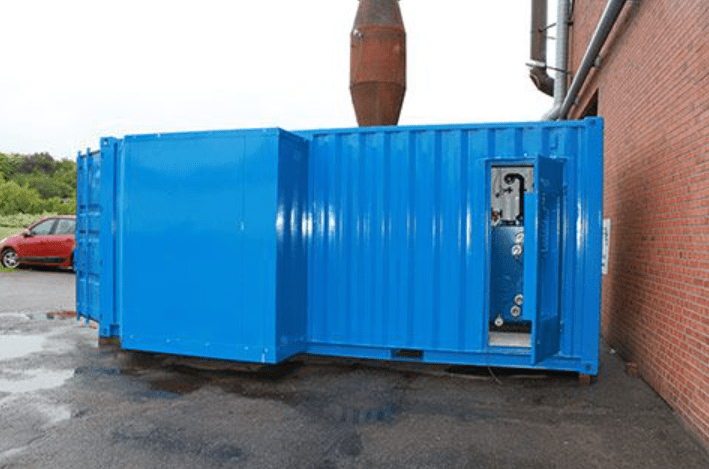
A Transportable Ammunition Production System, in a broad industrial and modular infrastructure context, can be described as a mobile and self-contained manufacturing platform engineered around the principles of deployability, flexibility, and distributed operational capability. Rather than relying on permanent industrial installations, the concept is centered on creating production infrastructure that can be relocated, reconfigured, and integrated into varying operational environments while maintaining consistent internal performance and structural stability. This reflects a larger transition in modern manufacturing philosophy, where industrial systems are increasingly designed to function as adaptable operational assets rather than static geographic installations.
The defining feature of such a system is its transport-oriented architecture. Every aspect of the structure, from the external framework to the internal subsystem arrangement, is optimized to support repeated movement and redeployment throughout its lifecycle. Unlike conventional facilities that are built around fixed foundations and permanent utility integration, transportable systems must preserve alignment, operational integrity, and functional consistency despite exposure to transport vibration, environmental fluctuations, and repeated installation cycles. This requires a high degree of structural reinforcement and systems integration, ensuring that mobility does not compromise long-term reliability.
At the core of the concept is modularity. Production capability is divided into interoperable functional units that can operate independently or in coordination with other modules within a larger network. Each module is designed with standardized interfaces and integrated support systems, allowing the overall configuration to expand, contract, or reorganize according to changing operational requirements. This modular philosophy introduces significant flexibility into industrial planning because capability can be scaled incrementally rather than through large centralized infrastructure projects.
Another important aspect is the creation of self-contained operational environments. Since transportable systems may be deployed in locations with varying infrastructure quality and environmental conditions, they are engineered to maintain stable internal operating parameters regardless of external surroundings. Climate regulation, environmental sealing, airflow management, and internal stabilization systems work together to create a controlled industrial micro-environment within the transportable structure. This environmental consistency is critical for ensuring repeatable operational behavior across multiple deployment locations.
From a systems engineering perspective, transportable industrial platforms represent a convergence between manufacturing, logistics, and infrastructure design. The production system itself becomes part of the logistical ecosystem rather than remaining separate from it. By conforming to standardized transport dimensions and compatibility requirements, the system can move efficiently through existing road, rail, maritime, or air transport networks. This significantly reduces deployment friction and allows production capability to be repositioned more rapidly in response to changing operational or logistical conditions.
Digital coordination also plays a central role in modern transportable systems. Integrated monitoring and control architectures provide continuous visibility into operational performance, system health, and maintenance status. Through networked digital infrastructure, multiple deployed units can be managed collectively despite geographic separation. This creates a unified operational framework in which decentralized physical assets remain connected through centralized informational oversight. Real-time data collection further enables predictive maintenance, performance optimization, and coordinated resource allocation across distributed deployments.
The lifecycle model associated with transportable systems differs fundamentally from that of traditional industrial facilities. Permanent factories are typically designed around long-term operation at a single location, whereas transportable platforms are engineered for repeated deployment cycles across different environments. Over time, the same system may be activated, relocated, reconfigured, and redeployed multiple times, allowing industrial capability to shift dynamically alongside changing requirements. This creates a more fluid and adaptive pattern of infrastructure utilization where mobility itself becomes part of the operational value of the system.
Scalability within this framework is modular and distributed. Additional units can be introduced incrementally to increase capability, create redundancy, or support evolving operational demands. Because capability is spread across multiple independent modules rather than concentrated in one large facility, the system gains resilience and flexibility. If one unit requires relocation or maintenance, others within the network can continue functioning with reduced disruption to the overall operational structure.
In a broader industrial sense, the Transportable Ammunition Production System concept reflects the ongoing evolution toward distributed manufacturing ecosystems characterized by mobility, interoperability, and digital integration. Industrial capability is increasingly viewed not as a fixed physical investment tied permanently to one site, but as a movable and continuously reconfigurable resource capable of adapting to dynamic operational environments. This transformation aligns with wider trends in industrial strategy where resilience, flexibility, and rapid deployment are becoming as important as conventional measures of scale and centralized efficiency.
Overall, the concept represents the merging of modular engineering, transport-compatible architecture, environmental autonomy, and networked industrial coordination into a unified operational philosophy. It illustrates how modern manufacturing infrastructure is evolving toward systems that are mobile, scalable, and continuously adaptable, enabling industrial capability to function as part of a distributed and responsive operational ecosystem rather than a static and geographically fixed industrial installation.
A Transportable Ammunition Production System can further be understood as part of the broader industrial transformation in which manufacturing capability is increasingly detached from permanent geography and reorganized into flexible, mobile, and network-oriented operational structures. In traditional industrial models, manufacturing infrastructure was closely tied to long-term geographic stability, requiring extensive site preparation, dedicated utilities, and large permanent construction projects. These facilities were designed around assumptions of continuity and centralized operation, often prioritizing maximum scale efficiency over adaptability. In contrast, transportable modular systems are designed with movement and reconfiguration as inherent operational characteristics, fundamentally changing how industrial capability is deployed and utilized.
This transition reflects a growing recognition that modern operational environments are increasingly dynamic and unpredictable. Supply chains may shift rapidly, infrastructure accessibility can vary between regions, and operational priorities may evolve faster than conventional industrial development cycles can accommodate. A transportable system addresses these challenges by enabling industrial capability itself to move within the operational landscape. Rather than relying solely on transporting finished output across long logistical corridors, the production platform can be repositioned closer to areas where capability is required, reducing dependence on static infrastructure and increasing responsiveness.
The engineering approach behind such systems emphasizes integration efficiency and lifecycle durability. Because the system is intended to endure repeated deployment cycles, structural and mechanical resilience become primary design considerations. Internal assemblies must remain aligned and operational despite exposure to vibration, transport stress, and varying environmental conditions over time. This leads to highly integrated architectures in which structural reinforcement, subsystem isolation, and modular mounting solutions are carefully coordinated to preserve operational consistency throughout repeated relocation cycles.
Another defining aspect is the relationship between compactness and operational completeness. Unlike conventional facilities where functions can be spread across expansive industrial layouts, transportable systems must condense essential operational capabilities into highly optimized spatial arrangements. Every subsystem must coexist within a constrained footprint while remaining accessible, maintainable, and operationally stable. This creates an engineering environment where efficiency is driven not merely by reducing size but by maximizing functional integration and eliminating unnecessary spatial redundancy.
Environmental autonomy also becomes a critical component of the design philosophy. Because transportable systems may operate in diverse climates and infrastructure conditions, they must create internally stable operational environments independent of external variability. Climate regulation, environmental sealing, thermal management, and controlled airflow systems collectively establish a self-contained industrial micro-environment capable of maintaining predictable operational behavior across different deployment regions. This consistency is essential for distributed industrial operations because it allows systems to maintain reliability without depending heavily on external site conditions.
Digital infrastructure further transforms transportable systems into components of broader networked industrial ecosystems. Integrated monitoring platforms, diagnostics systems, and centralized supervisory controls provide continuous operational visibility across geographically dispersed deployments. Through these digital coordination layers, multiple independent units can function as part of a unified operational network despite physical separation. Real-time data exchange supports predictive maintenance, performance optimization, and coordinated resource management, allowing distributed manufacturing capability to behave as a coherent system rather than isolated installations.
The transport-compatible architecture of these systems also redefines the relationship between logistics and manufacturing. By conforming to standardized transportation frameworks, deployable industrial units can move through existing global logistics infrastructure with reduced complexity. This integration allows production capability to be repositioned rapidly using conventional transport systems rather than specialized infrastructure projects. As a result, industrial mobility becomes embedded directly into operational planning, enabling infrastructure to respond more fluidly to evolving logistical or regional conditions.
Scalability within transportable modular systems is incremental and distributed rather than centralized and monolithic. Additional units can be introduced gradually to increase capability, introduce redundancy, or support changing operational requirements. This modular expansion model reduces the need for massive fixed infrastructure investments while providing greater adaptability over time. Distributed scalability also improves resilience because operational capability is dispersed across multiple nodes rather than concentrated in a single facility, reducing vulnerability to localized disruptions.
From a broader industrial perspective, the Transportable Ammunition Production System concept represents a continuation of the shift toward adaptive manufacturing ecosystems built around mobility, modularity, and digital coordination. Production infrastructure becomes less dependent on permanence and more focused on responsiveness, interoperability, and redeployment capability. Instead of viewing manufacturing as a static industrial footprint anchored permanently to one site, the system treats industrial capability as a movable operational resource capable of continuous reconfiguration within changing environments.
Ultimately, the concept illustrates how modern industrial engineering is evolving toward more fluid and distributed operational models. By combining modular subsystem integration, transport-compatible architecture, environmental independence, and digitally connected management frameworks, transportable industrial systems embody a manufacturing philosophy designed for flexibility, resilience, and continuous adaptation. These systems reflect an industrial future where capability is increasingly measured not only by production capacity itself, but also by the speed, efficiency, and reliability with which that capability can move, integrate, and operate across diverse operational landscapes.
A Transportable Ammunition Production System, when viewed through the broader evolution of industrial design and distributed manufacturing theory, represents a continuation of the shift toward highly adaptable, mobile, and network-integrated production architectures. In this paradigm, industrial capability is no longer understood as something that must be permanently anchored to a fixed geographic location. Instead, it is increasingly treated as a deployable resource that can be repositioned, scaled, and reconfigured in response to changing operational demands. This redefinition of manufacturing infrastructure reflects a deeper structural change in how industrial systems are planned, optimized, and integrated into wider logistical ecosystems.
One of the core principles underlying this type of system is operational portability. Rather than constructing large and immovable production complexes, the system is designed as a self-contained industrial unit capable of being transported and reactivated in multiple environments throughout its lifecycle. This introduces a new layer of flexibility into industrial planning, where production capacity can follow demand rather than being fixed in advance to a specific region. As a result, the spatial relationship between production and utilization becomes more dynamic, allowing industrial capability to be deployed closer to areas where it is required.
This mobility requires a fundamental rethinking of industrial architecture. Every subsystem within the platform must be designed not only for functional performance but also for transport resilience and structural stability across repeated deployment cycles. Mechanical systems, control infrastructure, and environmental management components must remain aligned and operational despite vibration, movement, and varying environmental conditions during transport. This creates a design environment where robustness and modular integration are as important as efficiency and throughput, since the system must function consistently across multiple physical contexts.
The compact and integrated nature of such systems is another defining characteristic. Unlike traditional facilities where production processes can be distributed across large spatial layouts, transportable systems must compress all essential functions into a highly optimized internal arrangement. This requires careful spatial engineering to ensure that each component contributes efficiently to both operational performance and structural coherence. The result is a tightly integrated industrial environment where space utilization, system accessibility, and functional coordination are all balanced within a constrained footprint.
Environmental independence plays a critical role in enabling reliable operation across diverse deployment locations. Because the system may be used in varying climates and infrastructure conditions, it must maintain a stable internal operating environment regardless of external variability. This is achieved through integrated environmental control systems that regulate internal temperature, airflow, and isolation from external conditions. By creating a controlled internal micro-environment, the system ensures consistent operational behavior even when deployed in geographically or climatically different regions.
Digital integration further enhances the effectiveness of transportable industrial systems by enabling continuous monitoring and centralized coordination across distributed deployments. Modern systems are increasingly equipped with real-time data acquisition, diagnostics, and remote control capabilities that allow multiple units to be managed as part of a unified operational network. This creates a layered industrial structure in which physical production is decentralized, but informational oversight remains centralized. Through this digital connectivity, operators can optimize performance, anticipate maintenance needs, and coordinate activity across multiple deployed systems simultaneously.
From a lifecycle perspective, transportable systems introduce a more fluid model of industrial asset utilization. Instead of being permanently installed in a single location, the same unit may be deployed, operated, relocated, and redeployed multiple times over its operational lifespan. This creates a cyclical pattern of use where value is derived not only from continuous production but also from the ability to adapt to changing operational requirements over time. Industrial assets thus become more dynamic in their utilization, contributing to multiple operational contexts rather than remaining fixed within one environment.
Scalability in this framework is achieved through modular expansion rather than large-scale infrastructure development. Additional units can be introduced incrementally to increase capacity or provide redundancy within the system. This allows industrial capability to grow in a flexible and distributed manner, reducing dependency on centralized facilities and enabling more adaptive responses to changing conditions. Because capacity is distributed across multiple units, the overall system also gains resilience, since operational functionality is not concentrated in a single point of failure.
In a broader industrial context, the Transportable Ammunition Production System concept reflects the ongoing shift toward distributed manufacturing ecosystems characterized by mobility, modular design, and digital coordination. Industrial capability is increasingly understood as a networked resource rather than a fixed asset, capable of being repositioned and reconfigured across different operational environments. This transition aligns with broader trends in global industrial strategy, where adaptability, responsiveness, and logistical flexibility are becoming as important as traditional measures of scale and centralized efficiency.
Ultimately, the concept illustrates how modern manufacturing systems are evolving toward architectures that prioritize mobility, modular integration, and continuous adaptability. By combining transportable infrastructure, environmental control, digital coordination, and distributed scalability, such systems represent a shift toward industrial models that are inherently dynamic, reconfigurable, and capable of operating effectively across a wide range of changing conditions.
A Transportable Ammunition Production System, when further examined from a systems engineering and industrial architecture perspective, can also be understood as part of a broader redefinition of how industrial capability is spatially and operationally organized in modern manufacturing ecosystems. Instead of relying on static infrastructure designed for long-term fixed production, contemporary approaches increasingly emphasize mobility, modularity, and interoperability as core design principles. This reflects a fundamental shift in industrial thinking, where adaptability is no longer a secondary feature but a primary requirement embedded into the structure of the system itself.
In this context, transportable production systems represent a convergence of multiple disciplines including mechanical engineering, logistics design, environmental control, and digital systems integration. The goal is not simply to create a smaller version of a traditional factory, but rather to reimagine production as a distributed and relocatable capability that can be deployed in response to evolving operational needs. This requires a deep integration of functional systems within a compact architecture that remains stable across a wide range of physical and environmental conditions.
A central aspect of this concept is the idea of operational continuity across movement. Unlike conventional industrial installations that assume long-term immobility, a transportable system must maintain integrity through repeated cycles of deployment, operation, and relocation. This introduces unique engineering constraints, particularly in relation to structural fatigue resistance, subsystem alignment stability, and long-term calibration consistency. Over time, the system must preserve its operational characteristics even as it transitions between different physical environments, which requires careful design of both its mechanical framework and its internal system interactions.
Another important dimension is the increasing emphasis on self-contained operational environments. Because these systems may be deployed in locations with varying levels of infrastructure support, they must be capable of functioning independently of external industrial facilities. This leads to the integration of internal environmental regulation systems that stabilize temperature, airflow, and internal atmospheric conditions. The purpose of this controlled internal environment is to ensure that operational performance remains consistent regardless of external variability, effectively decoupling production capability from geographic constraints.
Modularity remains a foundational principle in enabling this level of flexibility. Rather than designing the system as a single rigid structure, functionality is divided into discrete but interoperable subsystems. These subsystems are engineered to fit within a standardized physical and digital interface framework, allowing them to be rearranged, upgraded, or replaced without requiring a complete redesign of the entire system. This modular structure supports both scalability and maintainability, making it possible to adjust overall system capacity in response to shifting operational requirements.
From a logistical standpoint, transport compatibility is essential to the viability of such systems. By conforming to standardized transport dimensions and handling requirements, these production units can be moved using existing global logistics infrastructure without the need for specialized transport systems. This integration significantly reduces deployment complexity and enables faster repositioning of industrial capability. As a result, logistics and production become increasingly interconnected, forming a continuous operational chain rather than separate functional domains.
Digital integration further enhances the effectiveness of transportable industrial systems by enabling real-time coordination across distributed deployments. Through embedded monitoring systems and networked control architectures, operators can maintain continuous visibility into system status, performance metrics, and operational health. This allows multiple units to be managed as part of a unified digital ecosystem, even when they are geographically separated. Over time, the accumulation of operational data enables system-wide optimization, predictive maintenance, and improved resource allocation strategies.
The lifecycle model associated with transportable systems also differs significantly from traditional industrial infrastructure. Instead of being tied to a single location for decades, these systems are designed to undergo multiple operational phases across different environments. They may be deployed, operated, relocated, and redeployed numerous times throughout their service life. This creates a more dynamic utilization pattern in which value is derived not only from continuous output but also from adaptability and redeployment efficiency.
Scalability within this framework is inherently distributed. Rather than expanding through the construction of larger centralized facilities, capacity is increased through the addition of modular units that operate in coordination with one another. This distributed scaling approach provides greater flexibility in adjusting production capability over time while also introducing redundancy into the system architecture. Because functionality is spread across multiple units, the system is less vulnerable to disruption at any single point.
In a broader industrial sense, Transportable Ammunition Production Systems reflect the ongoing transition toward decentralized manufacturing ecosystems that prioritize mobility, adaptability, and digital coordination. Industrial capability is increasingly treated as a networked resource rather than a fixed asset, capable of being repositioned and reconfigured in response to changing operational conditions. This shift represents a significant departure from traditional models of industrial organization, where permanence and centralization were primary design objectives.
Ultimately, the concept illustrates the evolution of industrial systems toward architectures that are inherently flexible, continuously reconfigurable, and deeply integrated with digital control networks. By combining transportable infrastructure, modular design principles, environmental autonomy, and distributed operational management, such systems embody a manufacturing paradigm that is designed to function effectively across diverse and changing environments, rather than being confined to a single static industrial footprint.
On-Site Mobile Cartridge Factory
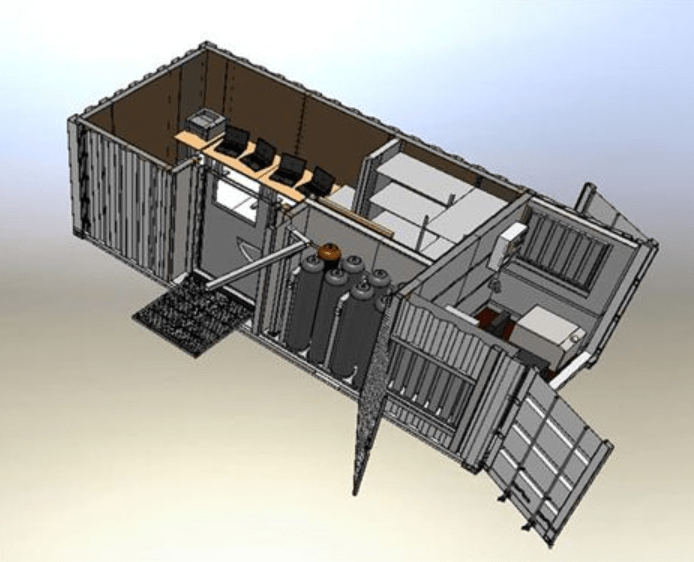
If we treat the idea more generally, an on-site mobile manufacturing factory can be understood as a rapidly deployable industrial unit designed to bring standardized production capability directly to where it is needed, without relying on permanent infrastructure. In this model, the emphasis is on mobility, modular setup, and quick commissioning, allowing a full production workflow to be established in temporary or remote environments with minimal external dependencies.
Such systems are typically built around the principle of pre-integrated industrial modules, where core manufacturing functions, utilities, and control systems are engineered into compact units that can be transported and assembled on location. Instead of constructing a traditional factory over months or years, the system is designed so that most configuration and validation is completed before deployment, enabling a much faster transition from transport state to operational state once it arrives on site.
A key aspect of this approach is operational self-sufficiency. Since deployment locations may vary widely in terms of infrastructure availability, the system is designed to function with a high degree of independence. This often involves internal resource management, contained environmental regulation, and integrated power and control distribution systems that allow the plant to operate consistently even in environments with limited external support. The goal is to reduce reliance on fixed utilities and make the production unit adaptable to different operational conditions.
Another important element is scalability through modular expansion. Instead of a single monolithic factory, the system is typically structured as a set of interconnected units that can be added or removed depending on required capacity. This allows production capability to be adjusted dynamically, either increasing output by deploying additional modules or reducing footprint when only minimal operation is needed. It also improves logistical flexibility, since individual modules can be relocated or replaced without shutting down the entire system.
From a logistical perspective, these mobile factories are designed around standardized transport constraints, allowing them to integrate into global shipping and overland transport systems. This enables rapid repositioning of industrial capability in response to changing demand, emergency conditions, or remote project requirements. The factory effectively becomes a movable asset rather than a fixed installation, shifting the relationship between production and geography.
Digital integration is also central to the functionality of modern mobile manufacturing systems. Real-time monitoring, remote diagnostics, and centralized control interfaces allow operators to manage distributed production units as part of a unified network. This improves operational consistency, supports predictive maintenance, and allows performance optimization across multiple deployments, even when they are physically separated.
Overall, the concept of a mobile on-site factory represents a shift toward more flexible, distributed, and rapidly deployable industrial systems. It reflects a broader trend in manufacturing where capability is no longer bound to permanent structures, but instead designed as a transportable, adaptable resource that can be positioned and reconfigured according to operational need.
An on-site mobile manufacturing factory can also be understood as part of a wider evolution in industrial design philosophy where production capability is increasingly treated as a flexible, deployable asset rather than a static and permanently anchored facility. This shift is driven by the growing need for industrial responsiveness in environments where demand patterns, logistical constraints, and operational priorities may change more rapidly than traditional factory development cycles can accommodate. Instead of building large centralized plants that require extensive infrastructure and long commissioning periods, the focus moves toward compact, pre-engineered systems that can be transported, installed, and activated with significantly reduced setup complexity.
At the core of this concept is the idea of pre-integrated industrial functionality. In a conventional factory, individual systems such as production equipment, utilities, environmental controls, and monitoring infrastructure are often installed and configured on-site over extended periods. In a mobile system, these elements are instead designed as integrated modules that are assembled and tested prior to deployment. This allows the majority of alignment, calibration, and system validation to occur in controlled conditions, reducing the variability and uncertainty associated with on-site construction. Once transported, the system can transition more quickly into an operational state because its core subsystems have already been engineered to function cohesively as a unified whole.
Another key characteristic is operational independence. Since deployment environments can differ significantly in terms of infrastructure maturity, climate, and logistical support, the system must be capable of functioning with minimal reliance on external resources. This leads to the incorporation of self-contained support systems that manage essential operational conditions internally. Rather than depending on extensive external utility networks, the mobile factory maintains its own regulated environment and integrated operational support structure, allowing it to operate in locations where permanent industrial infrastructure may not exist or may be limited.
The physical architecture of such systems is heavily influenced by constraints related to transportability and repeated deployment. Unlike permanent installations that are designed for static conditions, mobile factories must withstand mechanical stresses associated with transportation, including vibration, movement, and environmental exposure during transit. This requires reinforced structural frameworks and carefully designed internal layouts that maintain system alignment and stability across multiple deployment cycles. Over time, the system is expected to be relocated and reactivated multiple times, making durability and long-term consistency essential design considerations.
Modularity plays a central role in enabling both flexibility and scalability. Instead of a single fixed production line, the system is divided into functional modules that can operate independently or as part of a coordinated system. These modules are designed with standardized interfaces, allowing them to be combined, expanded, or reconfigured depending on operational requirements. This modular structure enables gradual scaling of production capacity, where additional units can be introduced as needed without redesigning the entire system. It also provides redundancy, since individual modules can be serviced or relocated without completely interrupting overall system functionality.
Environmental control is another critical element of mobile factory design. Because these systems may operate in a wide range of external conditions, they must maintain a stable internal environment to ensure consistent operational performance. This is achieved through integrated systems that regulate temperature, airflow, and internal atmospheric conditions, effectively isolating the production environment from external variability. By maintaining a controlled internal micro-environment, the system ensures that operational processes remain consistent regardless of geographic location or external climate conditions.
Digital systems integration further enhances the functionality of mobile manufacturing platforms. Modern implementations typically include networked monitoring, control, and diagnostics systems that provide continuous visibility into operational performance. These systems allow for real-time oversight of multiple distributed units, enabling centralized coordination even when physical assets are deployed across different locations. Over time, this connectivity supports data-driven optimization, predictive maintenance strategies, and more efficient resource utilization across the entire system network.
From a logistical standpoint, standardized transport compatibility is essential to the viability of mobile industrial systems. By conforming to established transport dimensions and handling requirements, these factories can be moved using existing global logistics infrastructure without requiring specialized transport mechanisms. This significantly reduces deployment time and complexity, allowing industrial capability to be repositioned more efficiently in response to changing operational needs. As a result, production capacity becomes more closely aligned with logistical mobility rather than fixed geographic placement.
In a broader industrial context, on-site mobile manufacturing factories represent a shift toward distributed and adaptive production ecosystems. Instead of concentrating industrial capability within a limited number of large facilities, production is increasingly distributed across multiple smaller, mobile units that can be deployed and coordinated as needed. This distributed approach improves resilience by reducing dependency on single locations and allows for more flexible allocation of resources across different operational environments.
Ultimately, the concept reflects a fundamental transformation in how industrial infrastructure is understood. Manufacturing capability is no longer seen solely as a permanent physical installation, but increasingly as a modular, transportable, and dynamically reconfigurable system. By combining mobility, modular design, environmental independence, and digital coordination, on-site mobile factories embody an industrial model that is capable of adapting continuously to changing conditions while maintaining consistent operational performance across diverse environments.
An on-site mobile manufacturing factory can also be interpreted as a manifestation of the broader convergence between industrial decentralization and infrastructure virtualization, where the physical boundaries of production are increasingly decoupled from fixed geography and instead expressed as configurable, relocatable systems. In this evolving paradigm, manufacturing is no longer strictly tied to long-term civil engineering projects or permanently installed production halls, but instead emerges as a flexible capability that can be deployed, activated, and integrated into different environments as needed. This reflects a shift in industrial thinking from permanence and scale toward agility, modularity, and responsiveness.
One of the most significant implications of this shift is the redefinition of what constitutes industrial infrastructure. Traditionally, infrastructure implied immovable structures such as buildings, utility networks, and fixed machinery installations that required extensive time and capital investment to establish. In a mobile factory model, infrastructure becomes something closer to a system of coordinated units that can be assembled and disassembled with relative efficiency. This transforms industrial capability into something closer to an operational toolkit rather than a static facility, where production capacity can be relocated in alignment with evolving operational contexts.
This flexibility introduces new approaches to planning and deployment strategy. Instead of relying on long-term forecasts tied to a single production site, organizations can distribute capability across multiple potential deployment points and activate capacity where it is most needed at a given time. This allows industrial systems to respond more dynamically to shifts in demand, logistics, or external constraints. The result is a more fluid model of production allocation, where infrastructure itself participates in adaptive decision-making cycles rather than remaining fixed and pre-assigned.
From an engineering standpoint, achieving this level of mobility requires a deep integration of structural design, systems engineering, and operational standardization. Each component of the system must be designed not only for its individual function but also for its behavior under transport conditions and its compatibility with repeated assembly cycles. This introduces constraints that are absent in traditional static facilities, where equipment is installed once and remains largely immobile throughout its lifecycle. In mobile systems, however, every subsystem must maintain stability, calibration integrity, and functional reliability across repeated transitions between transport and operational states.
Another key aspect is the internalization of infrastructure dependencies. In conventional factories, many essential functions such as environmental control, utilities, and monitoring are provided by external site infrastructure. In a mobile configuration, these dependencies must be partially or fully integrated into the system itself. This leads to a higher degree of self-sufficiency, where the factory effectively contains its own operational environment. As a result, the system becomes less dependent on external conditions and more capable of functioning in diverse and potentially underdeveloped locations.
Environmental stability within the system is therefore a critical design objective. Because external conditions can vary widely between deployment sites, the internal environment must be controlled in a way that ensures consistent operational behavior. This involves managing thermal conditions, airflow, contamination isolation, and structural sealing in a coordinated manner. By creating a stable internal operating environment, the system reduces variability and ensures that performance remains consistent regardless of external geography.
Modularity further enhances this adaptability by allowing the system to be divided into functionally independent yet interoperable units. Instead of a single tightly coupled production line, the system is composed of discrete modules that can be rearranged, replaced, or expanded as needed. This modular structure supports both scalability and maintainability, since capacity can be adjusted incrementally and maintenance can be performed at the module level without requiring full system downtime. It also allows for more flexible configuration depending on deployment requirements.
Digital integration adds another layer of coordination across the entire system. Through networked monitoring and control frameworks, distributed mobile units can be supervised as part of a unified operational environment. Real-time data collection enables continuous assessment of system performance, while centralized oversight ensures coordination across multiple deployed assets. This creates a hybrid structure in which physical decentralization is balanced by informational centralization, allowing for coherent management of distributed industrial capability.
Logistics plays a foundational role in enabling the viability of mobile manufacturing systems. Standardization of form factors and transport interfaces allows these systems to integrate into existing global transport networks. This reduces friction in movement and deployment, making it possible to reposition industrial capability with relatively short lead times. Over time, logistics and production become increasingly interdependent, forming a continuous chain where manufacturing capacity can be dynamically aligned with transport availability and operational demand.
In a broader sense, the on-site mobile manufacturing factory reflects an ongoing transformation in industrial systems toward distributed, adaptive, and networked architectures. Instead of concentrating capability in a limited number of large and permanent facilities, production is increasingly distributed across multiple mobile nodes that can be coordinated and reconfigured as needed. This distributed model enhances resilience by reducing dependency on single points of failure and increases flexibility in responding to changing operational environments.
Ultimately, this concept represents a shift in how industrial capability is conceptualized, moving away from static infrastructure toward dynamic, transportable systems that can operate across a variety of contexts. By combining modular engineering, environmental autonomy, logistical integration, and digital coordination, mobile manufacturing systems embody an industrial paradigm that is inherently flexible, continuously adaptable, and capable of functioning effectively within diverse and evolving operational landscapes.
An on-site mobile manufacturing factory can also be understood as part of a broader transition in industrial civilization toward what might be described as fluid infrastructure systems, where the traditional distinction between factory, logistics platform, and operational deployment site becomes increasingly blurred. In earlier industrial eras, production was deeply tied to immovable infrastructure, and the location of manufacturing capability dictated the structure of supply chains, workforce distribution, and even regional economic development. Over time, however, advances in modular engineering, transport standardization, and digital control systems have enabled a different model in which industrial capacity can be disaggregated, containerized, and reassembled in multiple locations over its lifecycle. This fundamentally changes the relationship between production and geography.
In this evolving model, manufacturing is no longer solely defined by buildings and permanent installations but increasingly by systems that can be deployed as units of capability. These units are designed to be both physically transportable and operationally self-contained, meaning that they carry not only the machinery required for production but also the supporting infrastructure needed to sustain stable operation. This includes internal environmental regulation, power distribution frameworks, control systems, and safety monitoring layers, all integrated into a compact and pre-engineered structure. The result is a shift from site-built factories to pre-engineered industrial modules that behave more like deployable technological assets than fixed construction projects.
A key implication of this transformation is the increasing importance of system interoperability. Because mobile factories may be deployed in varying configurations and combined with other units in different operational contexts, they must adhere to standardized interfaces both physically and digitally. This allows multiple modules to be linked together into larger production networks without requiring custom integration for each deployment. Over time, this creates a kind of industrial ecosystem in which capability is distributed across a network of compatible units that can be assembled, disassembled, and recombined depending on operational needs.
Another important dimension is the role of temporal flexibility in industrial planning. Traditional manufacturing infrastructure assumes long-term stability, with facilities designed to operate in a fixed configuration for decades. Mobile systems, by contrast, introduce the concept of temporal elasticity, where industrial assets are expected to move through multiple phases of deployment, rest, reconfiguration, and redeployment. This creates a more dynamic lifecycle model in which the value of a system is not only determined by continuous uptime but also by its ability to be repositioned efficiently and reactivated in new contexts with minimal delay.
This mobility also introduces new engineering constraints related to structural endurance and operational continuity. Because the system must survive repeated physical movement, it must be designed with a level of mechanical robustness that ensures long-term integrity under non-static conditions. Internal subsystems must maintain calibration and alignment across multiple transport cycles, which requires careful isolation from structural stress and environmental variation during movement. At the same time, once deployed, the system must quickly transition into stable operational mode, minimizing downtime between relocation and production readiness.
Environmental independence remains a defining feature of these systems. Since deployment locations may differ significantly in terms of climate, infrastructure availability, and surrounding conditions, the internal operating environment must be carefully controlled and insulated from external variability. This creates a self-contained industrial space that behaves consistently regardless of external context. Such control allows for repeatable performance across different geographic deployments, which is essential for maintaining reliability in distributed production networks.
Digital coordination further extends the capabilities of mobile industrial systems by enabling continuous synchronization between physically distributed units. Through integrated monitoring architectures and networked control systems, multiple mobile factories can be observed and managed as part of a unified operational framework. Data flows continuously between systems, allowing for performance optimization, predictive maintenance, and coordinated resource allocation. This transforms what would otherwise be isolated production units into interconnected components of a larger digital-industrial ecosystem.
From a logistical perspective, mobility changes the role of transportation from a secondary support function into a core component of industrial design. Because production units are built to move, transportation becomes part of the production lifecycle rather than an external dependency. Standardized transport compatibility ensures that these systems can be moved using existing global infrastructure, allowing for rapid redeployment without the need for specialized logistics chains. This tight coupling between manufacturing and mobility reduces the latency between demand and production capacity.
In a broader industrial sense, on-site mobile manufacturing factories represent a shift toward decentralization and adaptability as defining characteristics of modern production systems. Instead of concentrating capability within large, immovable hubs, industrial capacity is increasingly distributed across networks of smaller, mobile, and digitally connected units. This distribution enhances resilience by reducing reliance on any single point of production and allows capacity to be dynamically adjusted according to changing conditions.
Ultimately, this concept reflects a deeper transformation in how industrial systems are conceived. Manufacturing is no longer simply about fixed assets producing goods in a static location, but about the orchestration of movable, configurable, and networked systems that can respond to evolving operational environments. Through the combination of modular design, transportability, environmental control, and digital integration, mobile manufacturing systems embody a new paradigm in which industrial capability becomes inherently adaptive, continuously reconfigurable, and capable of functioning across a wide spectrum of spatial and operational contexts.
Modular Ammunition Production Station
If we treat the idea in a general industrial engineering sense, a modular production station can be understood as a compact, reconfigurable manufacturing unit designed around standardized modules that can be combined, expanded, or relocated depending on operational needs. The core idea behind such systems is to replace fixed, monolithic factories with flexible production building blocks that can be deployed in different environments while maintaining consistent performance and process control.
In this kind of modular industrial architecture, each station is typically designed to handle a defined segment of a broader manufacturing workflow. Instead of one continuous facility, production is distributed across multiple interconnected modules, each optimized for a specific function such as forming, assembly, inspection, packaging, or quality control in a generic sense. These modules communicate through standardized interfaces, both physical and digital, allowing them to operate as a coordinated system even when arranged in different configurations.
One of the key advantages of this approach is scalability. Production capacity can be increased simply by adding additional modules, rather than rebuilding or expanding an entire factory structure. This allows industrial systems to grow in a more incremental and adaptive way, matching capacity more closely to demand. It also introduces redundancy, since individual modules can be serviced or replaced without shutting down the entire production line, improving overall system resilience.
Another defining feature is portability. Modular stations are often designed with transport compatibility in mind, meaning they can be relocated using standard logistics infrastructure. This enables production capability to be repositioned geographically, supporting distributed manufacturing strategies where production is brought closer to demand points rather than centralized in one location. As a result, the system becomes less dependent on long supply chains and more responsive to regional or situational requirements.
Environmental control and self-sufficiency are also important design considerations. Because these systems may operate in a wide range of conditions, they are often built to maintain stable internal operating environments independent of external variability. This can include internal climate regulation, power distribution integration, and controlled operational conditions to ensure consistent output quality regardless of deployment location. In essence, the system creates a controlled industrial micro-environment within a portable structure.
Digital integration plays a central role in modern modular production systems. Through connected monitoring and control platforms, operators can oversee multiple distributed modules as part of a unified network. Real-time data collection allows for performance tracking, predictive maintenance, and system optimization across the entire production setup. This transforms modular manufacturing into a coordinated digital-physical ecosystem rather than a set of isolated machines.
From a broader perspective, modular production stations represent a shift toward decentralized industrial ecosystems. Instead of relying on large, centralized factories, production capability is distributed across smaller, flexible units that can be deployed, reconfigured, or scaled as needed. This improves adaptability, reduces infrastructure dependency, and allows manufacturing systems to respond more dynamically to changing operational conditions.
Overall, the concept reflects a wider trend in industrial design toward flexibility, mobility, and modular integration, where production systems are no longer fixed installations but adaptable frameworks capable of evolving continuously with operational needs.
A modular production station, when considered in the broader context of industrial systems engineering, represents a shift toward distributed, reconfigurable manufacturing architectures where functionality is decomposed into interoperable building blocks rather than concentrated in a single fixed facility. This approach reflects an ongoing evolution in how production systems are conceived, moving away from monolithic industrial plants and toward flexible configurations that can be assembled, expanded, and relocated according to operational requirements. In this model, manufacturing capability becomes less about physical permanence and more about system adaptability and integration efficiency across multiple environments.
At a conceptual level, the modular station is designed around the principle of functional separation combined with systemic unity. Each module is responsible for a defined segment of the production workflow, yet remains part of a larger coordinated structure through standardized mechanical, electrical, and digital interfaces. This allows the overall system to be configured in multiple arrangements depending on space constraints, production volume requirements, or logistical considerations. The flexibility of configuration enables the same core system to operate in different scales and layouts without requiring fundamental redesign, which significantly enhances long-term usability and adaptability.
A defining characteristic of such systems is their emphasis on scalability through incremental expansion. Instead of requiring large upfront infrastructure investments to increase production capacity, additional modules can be integrated gradually as demand evolves. This allows industrial systems to grow in a controlled and responsive manner, reducing inefficiencies associated with overcapacity or underutilization. It also enables phased deployment strategies, where initial operational capability can be established with a minimal set of modules and then expanded over time as needed.
Portability is another central aspect of modular production stations. These systems are often engineered to be compatible with standardized transport frameworks, allowing them to be moved between locations using existing logistical infrastructure. This introduces a level of geographic flexibility that is absent in traditional fixed factories, where relocation is impractical or economically prohibitive. In a modular context, production capacity can be repositioned closer to areas of demand, supply constraints, or strategic importance, thereby reducing dependency on long and complex supply chains.
The integration of environmental control systems is essential for ensuring stable operation across different deployment contexts. Because modular stations may be installed in environments with varying temperature ranges, humidity levels, and infrastructure conditions, they must include internal regulation mechanisms that stabilize operational conditions. This creates a controlled internal environment that is largely independent of external variability, ensuring consistent performance regardless of geographic location. In effect, the production system carries its own localized industrial environment wherever it is deployed.
Digital integration plays an increasingly important role in the coordination and optimization of modular production systems. Through networked monitoring and control architectures, multiple modules can be supervised as part of a unified operational framework, even when physically distributed across different locations. Real-time data collection enables continuous performance analysis, predictive maintenance scheduling, and system-wide optimization. This digital layer effectively binds physically decentralized units into a coherent operational network, allowing for centralized oversight with distributed execution.
From a lifecycle perspective, modular systems introduce a more dynamic model of industrial asset utilization. Rather than being permanently installed in a single configuration, modules can be reconfigured, relocated, or repurposed over time. This creates a fluid infrastructure model in which industrial assets transition through multiple operational states and environments throughout their service life. The value of the system is therefore derived not only from production output but also from its adaptability, redeployment efficiency, and long-term configurational flexibility.
Another important aspect is resilience through distribution. In modular architectures, production capability is spread across multiple independent yet interconnected units. This reduces reliance on any single point of failure and allows the system to maintain partial or full functionality even if individual modules are offline or undergoing maintenance. The distributed nature of the system enhances operational continuity and provides greater tolerance to disruption compared to centralized industrial structures.
In a broader industrial context, modular production stations reflect a transition toward highly adaptable manufacturing ecosystems where physical infrastructure, digital coordination, and logistical systems are tightly integrated. Instead of static factories designed for fixed roles, industrial capability becomes a configurable resource that can be assembled and reassembled in response to changing operational demands. This shift aligns with wider trends in global manufacturing, where flexibility, responsiveness, and distributed operation are increasingly important.
Ultimately, the concept illustrates a move toward industrial systems that are no longer defined solely by scale or permanence, but by their ability to adapt, relocate, and integrate within diverse operational environments. Through modular design, standardized interfaces, environmental autonomy, and digital coordination, such systems form the basis of a more fluid and resilient industrial paradigm capable of continuous reconfiguration in response to evolving conditions.
A modular production station, when extended as a concept, can also be seen as part of a broader shift toward what might be described as reconfigurable industrial ecosystems, where production capability is no longer tied to a single fixed arrangement of machines and infrastructure, but instead exists as a flexible network of interoperable units that can be rearranged over time. In this model, industrial design moves away from the idea of a permanently optimized layout and instead embraces continuous adaptability, where systems are expected to evolve in response to changing operational demands, spatial constraints, and logistical realities.
This approach fundamentally changes how industrial capacity is planned and deployed. Instead of designing a factory around a single long-term configuration, engineers design a set of standardized functional components that can be assembled into multiple configurations depending on need. This allows the same underlying system to serve different production scales, different site conditions, and even different operational roles over its lifetime. The emphasis shifts from static optimization to dynamic configurability, where efficiency is measured not only in output but also in how easily the system can be reorganized or expanded.
A key element of this philosophy is interchangeability. Each module within the system is designed to communicate and interact with others through defined interfaces that ensure compatibility regardless of how the modules are arranged. This creates a kind of industrial grammar, where modules function like building blocks that can be combined in structured ways to produce a wide range of operational outcomes. The result is a system that is less like a fixed machine and more like a configurable platform.
This configurability naturally extends into the physical logistics of deployment. Modular production systems are often designed with transport and installation in mind from the earliest stages of engineering, meaning that their physical form is constrained not only by operational requirements but also by considerations of movement, handling, and assembly. This introduces a dual-purpose design logic where every component must be both operationally effective and structurally compatible with repeated relocation and reconfiguration. Over time, this creates systems that are inherently cyclical in their lifecycle, moving between active operation, transport, reassembly, and redeployment.
Another important aspect is the role of operational independence. Modular systems are increasingly designed to function with reduced reliance on external infrastructure, allowing them to be deployed in environments that may lack fully developed industrial support systems. This requires a higher degree of internal integration, where supporting functions such as environmental stabilization, power distribution coordination, and operational monitoring are embedded within the system itself rather than supplied externally. The result is a more self-contained industrial unit capable of functioning in a wider range of contexts.
Environmental adaptability becomes particularly important in this type of system design. Since deployment conditions may vary significantly, the internal environment must be regulated to ensure consistent operational conditions regardless of external variability. This creates a stable internal production space that is decoupled from external fluctuations in temperature, humidity, or other environmental factors. Such control is essential for maintaining repeatability and consistency across different deployment scenarios.
Digital coordination adds another layer of structure to modular industrial ecosystems. Through integrated monitoring and control systems, distributed modules can be managed as part of a unified operational network, even when physically separated. Continuous data exchange allows for real-time assessment of system performance, enabling adjustments to be made at both local and system-wide levels. Over time, this creates a feedback loop where operational data informs future configuration, maintenance strategies, and deployment planning, gradually improving system efficiency and reliability.
From a strategic perspective, modular production systems introduce a form of industrial elasticity that traditional factories do not possess. Capacity can be expanded or reduced without fundamentally altering the underlying system architecture, and configurations can be adapted to suit different operational priorities over time. This elasticity supports more responsive industrial planning, where production capability can be aligned more closely with real-world demand patterns rather than fixed forecasts.
In a broader sense, modular production stations reflect a transition in industrial thinking from static infrastructure toward adaptive systems that behave more like networks than buildings. Instead of being defined by a single physical location, industrial capability becomes distributed, mobile, and continuously reconfigurable. This shift is closely tied to developments in logistics, digital control systems, and standardized engineering practices that together enable a more fluid relationship between production, space, and time.
Ultimately, the concept represents an ongoing transformation in how industrial systems are imagined and constructed. The emphasis moves away from permanence and rigidity and toward flexibility, interoperability, and continuous evolution. In this way, modular production systems embody a wider industrial trend in which manufacturing is no longer confined to fixed structures, but instead exists as an adaptable and networked capability that can be reshaped in response to changing operational environments.
A modular production station, when extended into a broader conceptual framework, can also be understood as part of the ongoing transformation of industrial systems into adaptive, reconfigurable networks that prioritize flexibility over permanence. In this paradigm, manufacturing is no longer viewed as a fixed asset anchored to a single geographic location, but rather as a distributed capability that can be assembled, adjusted, and relocated according to shifting operational requirements. This reflects a structural change in industrial thinking where the emphasis moves from maximizing output within a static environment to optimizing responsiveness across multiple environments over time.
This shift is closely linked to the increasing complexity and variability of modern supply and production ecosystems. Global logistics conditions, regional infrastructure differences, and fluctuating demand patterns all contribute to a more dynamic operational landscape in which rigid industrial structures can become less efficient or slower to adapt. Modular systems address this by introducing a level of configurational freedom that allows production capacity to be reshaped without requiring complete reconstruction of infrastructure. Instead of building entirely new facilities for each change in requirement, the system can be reconfigured through the addition, removal, or rearrangement of standardized functional units.
At the heart of this approach is the principle of functional decomposition. Complex industrial processes are broken down into discrete operational segments that can be independently engineered and then integrated into a larger system. Each segment is designed to perform a specific role within the broader production sequence, while also maintaining compatibility with other segments through standardized interfaces. This allows for a high degree of interchangeability and system-level flexibility, enabling different configurations to be assembled depending on spatial constraints, capacity needs, or operational priorities.
Another important dimension is the lifecycle adaptability of the system. Unlike traditional factories, which are typically designed for long-term continuous operation in a fixed configuration, modular production systems are intended to evolve over time. They may be assembled in one configuration for a specific task, reconfigured for another purpose, relocated to a different environment, or expanded with additional capacity as required. This creates a dynamic lifecycle in which the system is not static but continuously transitions between different operational states, each optimized for current conditions rather than permanent assumptions.
This mobility introduces additional engineering considerations related to structural durability and system integrity. Since modules are expected to be transported and reassembled multiple times, they must be designed to withstand repeated mechanical stresses without loss of alignment or performance consistency. Internal systems must maintain calibration across these transitions, and structural components must provide stability both during transport and during operation. This dual requirement for mobility and operational precision is a defining characteristic of modern modular industrial design.
Environmental independence is another essential feature of these systems. Because deployment may occur in locations with varying levels of infrastructure development and environmental conditions, the system must be capable of maintaining stable internal operating parameters regardless of external variability. This is achieved through integrated environmental control systems that regulate internal conditions such as temperature stability, airflow consistency, and isolation from external disturbances. The result is a controlled internal environment that allows for consistent operation across diverse geographic contexts.
Digital integration further enhances the capabilities of modular production systems by enabling coordinated control across distributed units. Through networked monitoring architectures, multiple modules can be observed and managed as part of a unified operational system, even when physically separated. Continuous data exchange between modules and control interfaces allows for real-time performance monitoring, system optimization, and predictive maintenance planning. This creates a feedback-driven operational model in which system behavior can be adjusted dynamically based on observed conditions and accumulated data.
From a logistical perspective, modular production systems benefit significantly from standardization. By adhering to consistent dimensional and interface standards, modules can be transported and deployed using existing global logistics infrastructure. This reduces the complexity of relocation and enables rapid redeployment of production capability. Over time, this integration between logistics and production creates a more seamless operational flow in which manufacturing capacity can be repositioned with much greater agility than in traditional industrial systems.
In a broader industrial context, modular production stations represent a move toward distributed manufacturing ecosystems characterized by flexibility, scalability, and interconnected operation. Rather than concentrating production in large, permanent facilities, capability is distributed across multiple smaller units that can be combined in different ways depending on need. This distributed structure enhances resilience by reducing dependency on single locations and allows for more adaptive responses to changes in demand, environment, or operational constraints.
Ultimately, this concept reflects a deeper evolution in industrial architecture, where systems are designed not as fixed installations but as adaptable frameworks capable of continuous transformation. Through modular design, transportability, environmental control, and digital coordination, industrial capability becomes a dynamic resource that can be reconfigured and redeployed across different contexts, enabling a more flexible and responsive approach to manufacturing in complex and changing environments.
Tactical Ammo Manufacturing Container
If we keep it at a general industrial engineering level, a tactical-grade manufacturing container can be understood as a compact, transportable industrial module designed for rapid deployment of controlled production processes in constrained or remote environments. The core idea is to package a complete, self-contained manufacturing workflow into a standardized containerized structure that can be moved, installed, and activated with minimal external infrastructure requirements.
In this type of system, the container acts as both a structural shell and an operational environment. It is engineered to provide physical protection during transport while also serving as a stabilized internal workspace once deployed. Inside, industrial subsystems are arranged in a tightly integrated configuration where mechanical operations, environmental regulation, and control systems are designed to function as a unified whole. The focus is on ensuring that the system remains operationally consistent regardless of where it is deployed.
A key design principle is mobility with operational readiness. Unlike traditional factories that require extensive on-site construction and commissioning, a container-based manufacturing unit is typically pre-engineered and tested before deployment. This means that most calibration and system integration work is completed in advance, allowing the unit to transition more quickly into active operation once it arrives at its destination. This reduces setup time and makes production capability more responsive to changing needs.
Another important aspect is environmental independence. Because deployment conditions can vary widely, the system must maintain stable internal operating conditions regardless of external climate or infrastructure availability. This is achieved through integrated environmental control systems that regulate temperature, airflow, and internal stability, effectively creating a self-contained industrial micro-environment. This ensures that operational performance remains consistent across different geographic and climatic conditions.
Modularity is also central to this concept. Instead of being a single rigid installation, the system can be designed as part of a broader modular ecosystem where multiple containers can operate independently or be combined into larger production networks. This allows for scalable deployment, where additional units can be added to increase capacity or reconfigured to support different operational layouts. It also improves maintainability, since individual units can be serviced or replaced without shutting down the entire system.
From a logistical perspective, containerization provides compatibility with existing global transport infrastructure. Standardized dimensions allow these systems to be moved using conventional shipping, road, rail, or port handling equipment without requiring specialized transport solutions. This makes it easier to reposition industrial capability in response to shifting operational demands and reduces the time required to establish production in new locations.
Digital systems integration further enhances functionality by enabling centralized monitoring and control of distributed units. Through networked control platforms, operators can track performance, system health, and operational status in real time. This creates a coordinated industrial network where multiple mobile production units can be managed as part of a unified system despite being physically separated. Over time, this data-driven approach supports optimization, predictive maintenance, and improved operational efficiency.
In a broader industrial context, container-based manufacturing systems represent a shift toward distributed and flexible production ecosystems. Instead of relying solely on large, fixed industrial facilities, production capability is increasingly being broken into mobile, scalable units that can be deployed where needed. This improves adaptability, reduces dependency on permanent infrastructure, and allows industrial systems to respond more dynamically to changing operational environments.
Overall, the concept reflects a modern industrial direction where manufacturing is no longer strictly tied to location, but instead exists as a configurable and mobile capability that can be deployed, connected, and reconfigured as part of a wider adaptive industrial network.
A container-based manufacturing system, when expanded as a concept, fits into a wider shift in industrial architecture where production is increasingly treated as a portable and reconfigurable capability rather than a fixed asset tied to a single geographic site. This shift is closely linked to broader trends in global logistics, distributed manufacturing, and modular engineering, where flexibility and responsiveness are becoming as important as raw production capacity. Instead of building large, permanent facilities that require extensive infrastructure investment and long commissioning cycles, industries are increasingly exploring systems that can be deployed quickly, adapted in the field, and repositioned as operational requirements evolve.
In this framework, the container is more than just a transport unit; it becomes a fully engineered operational environment. It provides structural integrity during movement, environmental stability during operation, and a standardized interface for integration with other systems. Inside this controlled enclosure, industrial processes are arranged in a compact, highly coordinated layout where each subsystem is designed to interact seamlessly with the others. The goal is to ensure that the entire system behaves as a unified operational entity, regardless of where it is deployed.
One of the key drivers behind this approach is the need for rapid scalability. Traditional manufacturing expansion often involves significant construction timelines and fixed-site commitments, which can limit responsiveness to changing demand conditions. In contrast, modular container-based systems allow capacity to be increased incrementally by adding additional units. This creates a more elastic industrial structure where production capability can expand or contract in alignment with real-world requirements rather than long-term static forecasts.
Another important aspect is operational consistency across diverse environments. Because mobile systems may be deployed in locations with different climates, infrastructure quality, and logistical support, they must be capable of maintaining stable internal conditions independently. This leads to the integration of environmental regulation systems that manage temperature stability, airflow, and internal isolation from external disturbances. The result is a self-contained operational environment that behaves consistently regardless of external variability, ensuring repeatable performance across different deployment scenarios.
The engineering challenges associated with such systems are significant, particularly in terms of maintaining structural and functional integrity across repeated transport cycles. Unlike stationary facilities, containerized systems must endure vibration, mechanical stress, and environmental exposure during transit while preserving precise internal alignment. This requires robust structural design, careful subsystem isolation, and long-term stability engineering so that performance does not degrade over multiple deployment cycles.
Digital integration plays a central role in enabling coordination across distributed modular systems. Through networked monitoring and control architectures, multiple units can be managed as part of a unified operational ecosystem. Real-time data collection allows for continuous performance tracking, predictive maintenance, and system optimization. This creates a feedback-driven operational model where system behavior can be adjusted dynamically based on observed conditions, improving efficiency and reliability over time.
From a logistical perspective, standardization is a key enabler. By aligning with established transport dimensions and handling systems, container-based manufacturing units can be moved through existing global infrastructure without requiring specialized logistical frameworks. This significantly reduces deployment complexity and allows production capability to be repositioned more quickly in response to shifting operational needs. Over time, this tight integration between logistics and manufacturing reduces the separation between production planning and physical deployment.
At a broader level, these systems contribute to the emergence of distributed industrial networks, where production is no longer concentrated in a few large centralized facilities but instead spread across multiple smaller, mobile, and interconnected units. This distribution increases resilience by reducing dependency on single points of failure and allows industrial capacity to be allocated more flexibly across regions. It also supports a more adaptive industrial model in which production can be brought closer to demand, reducing delays and improving responsiveness.
Ultimately, container-based manufacturing systems reflect a deeper transformation in industrial thinking, where infrastructure is no longer defined solely by permanence and scale but by mobility, adaptability, and networked coordination. By combining modular engineering, environmental autonomy, standardized logistics compatibility, and digital control integration, these systems represent a shift toward industrial architectures that are inherently flexible and capable of continuous reconfiguration within changing operational landscapes.
A container-based manufacturing system, when viewed in a more extended industrial and systems engineering context, can also be interpreted as part of a broader movement toward what might be called “industrial portability,” where the defining characteristic of production infrastructure is not its size or permanence but its ability to move, integrate, and reconfigure across different operational environments. This represents a gradual but significant departure from traditional models of industrial development, which were historically built around fixed assets, centralized facilities, and long-term infrastructural commitments. In contrast, modern modular approaches treat manufacturing capability as something that can be distributed, relocated, and dynamically reassigned as part of a larger operational network.
In this evolving paradigm, the container is essentially a standardized spatial and structural unit that enables industrial processes to be packaged into a transportable format without losing functional integrity. It provides a controlled boundary within which complex systems can operate reliably, while also ensuring compatibility with global logistics infrastructure. This dual role as both a protective enclosure and an operational platform is what makes the container-based approach so significant in modern industrial design. It allows production systems to be both physically mobile and operationally stable at the same time, which historically were competing requirements.
The internal organization of such systems is typically guided by principles of compact integration and functional efficiency. Since space is limited, every subsystem must be carefully arranged to minimize redundancy while maintaining accessibility and serviceability. This leads to highly optimized internal layouts where mechanical, electrical, and digital components are designed to coexist within tightly defined spatial constraints. Over time, this results in a form of industrial design that prioritizes system coherence and interdependency rather than isolated optimization of individual components.
A further important dimension is the adaptability of these systems to different operational environments. Because deployment locations can vary significantly in terms of infrastructure availability, climate conditions, and logistical support, the system must be designed to function with a high degree of independence. This requires internal stabilization mechanisms that maintain consistent operating conditions regardless of external variability. In practice, this creates a self-regulating industrial micro-environment that isolates core processes from external fluctuations, ensuring that performance remains stable across different geographic and operational contexts.
The concept of modular scalability is also central to the value of container-based manufacturing systems. Instead of relying on a single large production facility, capacity can be distributed across multiple container units that operate either independently or in coordinated clusters. This allows production capability to be expanded incrementally, depending on demand, without requiring major structural overhauls. It also introduces redundancy into the system, since individual units can be taken offline for maintenance or relocation without completely disrupting overall operational capacity.
From a logistical perspective, the standardized form factor of container-based systems is a key enabling factor. By conforming to widely used transport dimensions and handling protocols, these units can be integrated into existing global shipping and transport networks. This reduces the complexity of deployment and allows industrial capability to be repositioned with relatively low friction. The result is a more fluid relationship between production and geography, where manufacturing capacity can be moved in response to changing operational requirements rather than being permanently fixed in one location.
Digital systems integration further enhances the effectiveness of these modular industrial architectures. Through embedded sensors, monitoring systems, and networked control interfaces, container-based units can be connected into larger operational networks that span multiple locations. This enables real-time visibility into system performance, coordinated management of distributed assets, and continuous optimization based on operational data. In effect, physical decentralization is balanced by informational centralization, allowing complex distributed systems to function as unified operational entities.
Another important aspect is lifecycle flexibility. Unlike traditional industrial facilities, which are typically designed for long-term stationary operation, container-based systems are expected to move through multiple phases of deployment, operation, decommissioning, and redeployment. This cyclical lifecycle model means that the value of the system is not limited to a single location or configuration but is instead distributed across multiple operational contexts over time. This increases overall asset utilization efficiency and supports more dynamic industrial planning strategies.
In a broader sense, container-based manufacturing systems are part of a wider shift toward distributed industrial ecosystems, where production capability is no longer concentrated in a small number of large facilities but instead spread across interconnected, mobile units. This distribution increases resilience by reducing dependence on single points of failure and allows industrial capacity to be more closely aligned with regional or situational demand. It also enables more flexible responses to disruptions, since production can be reallocated or relocated rather than requiring long-term reconstruction.
Ultimately, this concept reflects a fundamental rethinking of industrial infrastructure itself. Rather than being defined by permanence, scale, and geographic anchoring, modern manufacturing systems are increasingly defined by adaptability, mobility, and networked coordination. Container-based systems embody this transition by combining transportability, modular design, environmental control, and digital integration into a unified framework. The result is an industrial model that is inherently dynamic, capable of continuous reconfiguration, and better suited to operating within complex and rapidly changing global environments.
Container-based manufacturing systems, when examined further, can also be seen as part of a broader evolution toward adaptive industrial ecosystems where physical infrastructure behaves less like fixed architecture and more like a configurable operational layer. In this model, manufacturing is increasingly decoupled from permanent spatial commitments and instead expressed through modular units that can be repositioned, combined, or reconfigured depending on shifting operational requirements. This reflects a deeper structural change in how industrial capacity is conceptualized, moving from static production sites toward distributed networks of mobile capability.
At the core of this approach is the idea that industrial functionality can be encapsulated within standardized spatial units that are both transportable and operationally complete. These units are designed not merely as containers for equipment, but as fully integrated environments in which all necessary subsystems coexist in a tightly coordinated structure. This includes mechanical systems, control infrastructure, environmental stabilization, and operational interfaces, all arranged in a way that allows the unit to function independently once deployed. The emphasis is on reducing dependency on external infrastructure while maintaining internal coherence and stability.
This shift introduces a new relationship between engineering design and spatial constraints. Because the system must remain compatible with transport frameworks while also supporting complex internal processes, design decisions are heavily influenced by dual requirements: mobility and operational density. As a result, internal layouts tend to prioritize compact integration, where space is used with high efficiency and where multiple functions may be layered or combined within shared structural frameworks. This creates an environment where engineering solutions are driven as much by spatial optimization as by functional performance.
Another important aspect is the concept of deployment fluidity. Unlike traditional industrial facilities that require long planning horizons and fixed installation processes, container-based systems are designed for relatively rapid deployment cycles. This means that the transition from transport state to operational state is minimized through pre-integration and standardized configuration. In practice, this allows industrial capacity to be activated in response to changing conditions with far less delay than conventional infrastructure models would allow.
Environmental autonomy remains a critical design requirement in this context. Since deployment environments can vary widely, the internal system must be capable of maintaining stable operating conditions regardless of external influences. This leads to the incorporation of internal regulation systems that manage environmental variables such as temperature stability, airflow consistency, and isolation from external disturbances. The goal is to create a controlled internal environment that ensures repeatable operational behavior across different geographic and climatic conditions.
Modularity also plays a central role in enabling system-level flexibility. Rather than relying on a single unified production structure, functionality is distributed across multiple interoperable units that can be arranged in different configurations. This allows systems to be scaled incrementally, adjusted for different operational requirements, or reconfigured to suit changing constraints. It also supports maintenance and upgrade cycles that do not require complete system shutdown, since individual modules can be serviced or replaced independently.
From a logistical standpoint, the use of standardized transport formats is essential for ensuring global deployability. By aligning with widely used container dimensions and handling systems, these industrial units can be integrated into existing global transport networks without requiring specialized infrastructure. This reduces friction in deployment and enables more flexible positioning of industrial capability across different regions. Over time, this creates a closer integration between logistics systems and production systems, where movement and manufacturing become part of a continuous operational flow.
Digital coordination further enhances the capabilities of these modular systems by enabling distributed operational oversight. Through networked monitoring and control systems, multiple units can be connected into a unified digital environment that allows for real-time performance tracking and centralized coordination. This creates a hybrid structure where physical operations are decentralized, but informational control remains integrated, enabling complex systems to function coherently across multiple locations.
Lifecycle considerations also become more important in this model. Instead of being treated as static installations, container-based systems are designed to move through multiple operational phases, including deployment, active use, relocation, and redeployment. This cyclical usage pattern increases overall system utilization and introduces greater flexibility into long-term industrial planning. It also allows the same physical assets to serve multiple roles over time, depending on changing operational requirements.
In a broader industrial context, these systems contribute to the development of distributed manufacturing networks in which production capability is spread across multiple mobile and interoperable nodes. This reduces reliance on centralized infrastructure and increases resilience by ensuring that capability is not concentrated in a single location. It also allows production to be positioned closer to demand points, improving responsiveness and reducing delays associated with long supply chains.
Ultimately, container-based manufacturing systems represent a shift toward a more fluid conception of industrial infrastructure, where capability is defined not by permanence but by adaptability, mobility, and integration. Through the combination of modular design, environmental control, standardized logistics compatibility, and digital coordination, these systems embody a manufacturing paradigm that is inherently flexible and capable of continuous adaptation within evolving operational environments.
Mobile Cartridge Production Module
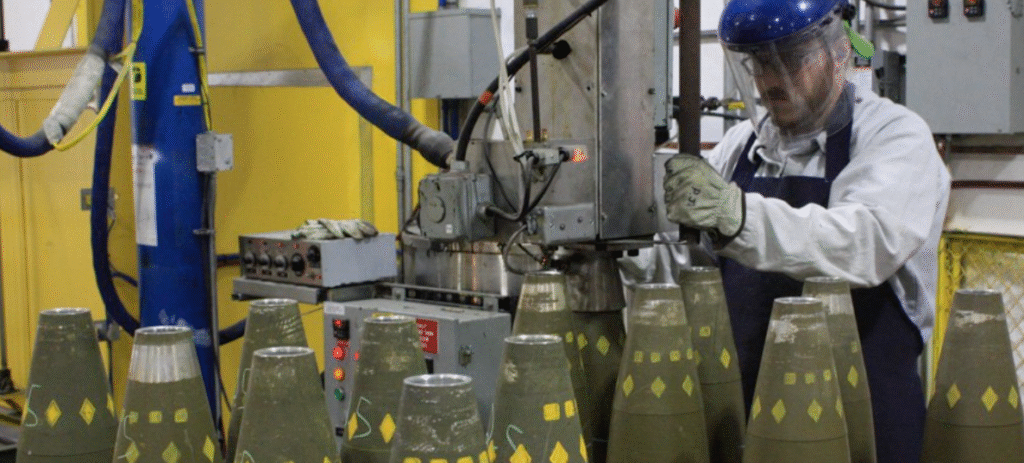
If we treat it in a general industrial engineering sense, a mobile production module can be understood as a compact, transportable manufacturing unit designed to deliver a specific segment of a production workflow in a flexible, relocatable format. Instead of relying on a permanent factory layout, the system is built as a standardized module that can be deployed where needed and integrated into a wider production network.
The core idea behind such modules is portability combined with operational readiness. Each unit is engineered to be fully self-contained, meaning it includes not only the core machinery for a defined manufacturing function but also the supporting infrastructure required for stable operation, such as environmental regulation, control systems, and structural housing. This allows the module to transition from transport state to operational state with minimal external setup requirements.
A key design principle is modular integration. These units are typically built around standardized mechanical and digital interfaces so they can connect with other modules in a larger system. This allows multiple units to be combined into a scalable production line that can be expanded, reduced, or reconfigured depending on demand. The same module might operate independently in one scenario or as part of a coordinated multi-unit system in another.
Mobility is another defining feature. The system is designed around compatibility with standard transport infrastructure, enabling it to be moved using conventional logistics networks. This makes it possible to relocate production capability in response to changing operational needs, rather than being tied to a fixed industrial site. As a result, manufacturing becomes more geographically flexible and can be deployed closer to where it is required.
Environmental independence is also essential. Because deployment locations may vary widely, the module must maintain stable internal operating conditions regardless of external climate or infrastructure quality. Internal regulation systems manage temperature, airflow, and isolation from external disturbances, ensuring that the production environment remains consistent and controlled.
From a systems perspective, digital integration plays a central role in coordination and oversight. Networked monitoring systems allow multiple modules to be managed as part of a unified operational framework, even when they are physically separated. This enables real-time tracking, performance optimization, and predictive maintenance across a distributed set of units.
Overall, mobile production modules reflect a broader shift in industrial design toward flexible, distributed, and reconfigurable manufacturing systems. Instead of being fixed installations, production capability becomes a movable resource that can be deployed, connected, and adjusted as needed, allowing industrial systems to operate with greater adaptability in changing environments.
A mobile production module, when viewed as part of a broader industrial systems evolution, represents a shift toward highly adaptable manufacturing architectures where production capability is no longer bound to static infrastructure but instead exists as a deployable and reconfigurable resource. In this model, industrial processes are increasingly designed to operate within self-contained units that can be transported, installed, and activated in a variety of environments with minimal dependence on permanent site development. This allows production systems to respond more fluidly to changing operational requirements, geographic constraints, and logistical conditions.
At a structural level, these modules are built around the principle of functional encapsulation, meaning that a complete segment of a production process is contained within a single engineered unit. This unit integrates mechanical systems, control electronics, environmental regulation, and safety management into a unified internal architecture. The intention is not simply to miniaturize a factory, but to repackage a defined industrial function into a standardized, transportable form that retains operational integrity across multiple deployment cycles.
A key aspect of this approach is the emphasis on interoperability. Each module is designed to communicate and physically interface with other modules through standardized connection points, allowing multiple units to be arranged into larger production systems. This creates a flexible architecture where capacity and functionality can be expanded or modified by adding, removing, or rearranging modules. Over time, this leads to a system that behaves less like a fixed production line and more like a configurable industrial platform.
The mobility aspect of such systems introduces additional engineering considerations. Because modules are expected to be transported repeatedly throughout their lifecycle, they must maintain structural integrity and internal alignment under varying mechanical stresses. This requires robust chassis design, vibration resistance, and secure internal mounting of critical subsystems. The system must transition reliably between transport conditions and operational conditions without degradation in performance or precision.
Environmental independence is another essential feature. Since deployment may occur in locations with differing climate conditions and infrastructure availability, each module must be capable of maintaining stable internal operating parameters on its own. This is achieved through integrated environmental control systems that regulate temperature, airflow, humidity, and internal isolation from external disturbances. By creating a stable internal environment, the module ensures consistent operational behavior regardless of external variability.
From a logistical standpoint, standardization is a key enabler of scalability and deployment efficiency. By adhering to widely recognized transport and handling formats, mobile production modules can be moved through existing global logistics networks without requiring specialized infrastructure. This significantly reduces the friction associated with deployment and allows industrial capacity to be repositioned more rapidly in response to demand shifts or operational needs.
Digital integration further enhances the functionality of these systems by enabling coordinated operation across distributed deployments. Through networked monitoring and control systems, multiple modules can be managed as part of a unified operational ecosystem. Real-time data exchange allows for continuous performance monitoring, system optimization, and predictive maintenance. This creates a feedback-driven operational environment where physical production is closely linked to digital oversight and control.
Another important dimension is lifecycle flexibility. Unlike traditional industrial facilities that are designed for long-term fixed operation, mobile modules are intended to move through multiple phases of deployment, operation, relocation, and redeployment. This cyclical lifecycle increases overall asset utilization and allows the same system to serve different operational contexts over time. As a result, industrial infrastructure becomes more dynamic and adaptable, rather than static and location-dependent.
Scalability in this context is inherently modular. Instead of expanding through large centralized investments, production capacity can be increased incrementally by adding additional modules. This distributed scaling model provides greater flexibility in adjusting output levels and introduces redundancy into the system architecture. Because functionality is spread across multiple units, the system can maintain partial operation even if individual modules are offline or being serviced.
In a broader industrial context, mobile production modules are part of a larger transition toward distributed manufacturing ecosystems. These ecosystems rely on networks of interoperable, transportable units rather than single large facilities, allowing production capability to be distributed across multiple locations. This improves resilience, reduces dependency on centralized infrastructure, and enables more responsive alignment between production capacity and real-world demand.
Ultimately, the concept reflects a fundamental change in how industrial systems are designed and understood. Manufacturing is increasingly viewed not as a fixed physical installation, but as a configurable, mobile, and networked capability that can be deployed and adapted across different environments. Through the combination of modular engineering, environmental autonomy, transport compatibility, and digital coordination, mobile production modules represent an industrial paradigm that is inherently flexible, continuously reconfigurable, and capable of operating effectively within diverse and changing conditions.
A mobile production module, when extended further as a concept, can also be understood as part of a broader reconfiguration of industrial geography, where the location of production is no longer a fixed determinant of economic activity but becomes a variable parameter that can shift dynamically over time. In traditional industrial models, factories were anchored to specific regions due to the high cost of infrastructure, the complexity of utilities integration, and the long-term nature of capital investment. This created a relatively rigid relationship between production capacity and geographic location. In contrast, modular and mobile systems introduce a more fluid structure in which industrial capability can be redistributed across space depending on operational priorities.
This fluidity changes not only how production is deployed but also how it is planned and managed. Instead of designing for a single fixed configuration, engineers and planners increasingly work with systems that are expected to operate in multiple configurations throughout their lifecycle. This introduces a design philosophy centered on adaptability rather than permanence, where the primary objective is not to optimize a single static layout but to ensure consistent performance across a range of possible arrangements and environments. As a result, industrial systems become inherently more versatile, capable of responding to changing conditions without requiring complete redesign.
A defining characteristic of this approach is the tight integration between physical and digital systems. In modern modular production environments, physical machinery is increasingly paired with continuous digital monitoring and control frameworks that allow the system to be observed and adjusted in real time. This creates a layered operational structure in which physical processes are complemented by informational systems that provide feedback, coordination, and optimization. Over time, this integration allows the system to become more self-regulating, as operational data is used to refine performance and anticipate maintenance needs.
Another important aspect is the standardization of interfaces. For modular systems to function effectively at scale, individual units must be able to connect seamlessly with one another regardless of their specific internal configuration. This requires carefully defined physical connection standards, as well as compatible communication protocols for digital systems. The result is an ecosystem in which modules can be combined in flexible arrangements without requiring custom engineering for each deployment. This standardization is what enables true modular scalability, allowing systems to grow or contract in response to changing requirements.
Transportability remains a central constraint shaping the design of these systems. Because modules are expected to move between locations multiple times, their structure must be optimized not only for operational efficiency but also for mechanical resilience during transport. This includes resistance to vibration, shock, and environmental exposure, as well as the ability to maintain internal calibration and alignment after relocation. The system must therefore be robust enough to endure repeated transitions between static operation and mobile states without degradation in performance or reliability.
Environmental control is also a critical factor in ensuring operational consistency. Since deployment environments can vary widely, from controlled industrial zones to remote or infrastructure-limited locations, the system must be capable of maintaining stable internal conditions independently. This involves regulating temperature, airflow, and other environmental variables to create a consistent operational space within the module. By isolating internal processes from external fluctuations, the system ensures that performance remains predictable regardless of location.
From a broader logistical perspective, mobile production modules represent a convergence of manufacturing and supply chain systems. Instead of treating production and distribution as separate stages, they become more tightly integrated, with production capability itself becoming part of the logistics network. This allows manufacturing to be positioned closer to demand points, reducing delays and increasing responsiveness. Over time, this contributes to a more distributed industrial structure in which production is not concentrated in a few large hubs but spread across a network of adaptable units.
In terms of lifecycle management, these systems are designed for repeated use across multiple operational phases. Rather than being permanently installed, they are expected to cycle through deployment, operation, relocation, and redeployment. This creates a usage pattern where industrial assets are continuously repositioned and recontextualized over time. The value of the system is therefore tied not only to its output capacity but also to its flexibility, durability, and ability to remain functional across diverse operational scenarios.
Ultimately, mobile production modules represent a broader shift toward industrial systems that prioritize adaptability, mobility, and integration over static scale and permanence. They reflect a changing understanding of infrastructure as something that can be reconfigured and redistributed rather than fixed in place. Through modular design, environmental independence, standardized interfaces, and digital coordination, these systems form the basis of a more flexible and responsive industrial paradigm capable of operating effectively in a wide range of conditions.
A mobile production module, when extended further as an industrial concept, can also be understood as part of a broader transition toward what might be described as “reconfigurable infrastructure ecosystems,” where the boundary between equipment, facility, and system becomes increasingly fluid. In this perspective, industrial capability is no longer tied to a single fixed architectural form, but instead exists as a distributed set of functional units that can be assembled into different configurations depending on operational needs. This fundamentally alters how production systems are conceived, moving away from static optimization and toward continuous adaptability across both space and time.
This shift is closely linked to the increasing importance of uncertainty and variability in modern industrial environments. Demand patterns are less predictable, supply chains are more globally interconnected, and operational constraints can change rapidly due to external factors. In response, industrial systems are evolving toward architectures that can absorb change without requiring complete structural redesign. Mobile and modular production units serve as a response to this challenge by providing a way to relocate and reconfigure capability rather than rebuilding it from scratch.
In such systems, the concept of “function” becomes more important than the concept of “facility.” Instead of thinking in terms of buildings that contain processes, the focus shifts toward processes that can be encapsulated into movable units. Each unit represents a defined functional capability that can operate independently or as part of a larger coordinated structure. This abstraction allows industrial design to become more flexible, as functions can be redistributed across space without breaking the overall integrity of the system.
A significant implication of this approach is the increasing importance of coordination layers that operate above the physical infrastructure. As production becomes distributed across multiple mobile units, the need for synchronization, scheduling, and system-level optimization grows. This is typically handled through integrated digital frameworks that connect individual modules into a unified operational network. These frameworks provide continuous visibility into system status and enable dynamic adjustment of operations based on real-time conditions. In effect, the physical dispersion of capability is counterbalanced by informational centralization.
Another key dimension is the engineering of consistency across variable environments. Since mobile production units may be deployed in locations with different environmental and infrastructural conditions, they must be designed to maintain stable internal operating parameters regardless of external variability. This leads to a strong emphasis on internal regulation systems that control environmental factors such as temperature stability, airflow management, and isolation from external disturbances. By maintaining a controlled internal environment, the system ensures that operational performance remains consistent across different deployment contexts.
The mechanical design of such systems must also account for repeated transitions between transport and operation states. Unlike fixed installations, mobile units are expected to undergo multiple cycles of movement and reactivation throughout their lifecycle. This introduces long-term structural and calibration challenges, as components must maintain alignment and functional integrity despite repeated exposure to motion-induced stress. As a result, durability and structural coherence become central design objectives, often influencing material selection, mounting strategies, and internal system layout.
Standardization plays a critical role in enabling scalability and interoperability. Without consistent physical and digital interfaces, modular systems would be difficult to integrate into larger configurations. Standardized connection frameworks allow different units to be combined in predictable ways, reducing the complexity of system expansion. This also enables a plug-and-play style of deployment, where additional capacity can be introduced without requiring extensive custom engineering for each new unit.
From a logistical perspective, mobility introduces a closer coupling between production systems and transport infrastructure. Because production units are designed to be moved as part of their normal operational lifecycle, transportation becomes an integrated component of industrial planning rather than a separate support function. This allows production capability to be repositioned more rapidly in response to shifting requirements, effectively turning logistics into a dynamic extension of manufacturing strategy.
In a broader sense, mobile production modules contribute to the emergence of distributed industrial networks, where capability is spread across multiple nodes rather than concentrated in a single location. This distribution increases resilience by reducing dependence on any one facility and allows for more flexible allocation of resources across different regions. It also enables more granular control over production deployment, where capacity can be adjusted at a local level without affecting the entire system.
Ultimately, the evolution toward mobile and modular production systems reflects a deeper transformation in industrial thinking, where adaptability, connectivity, and reconfiguration become primary design principles. Instead of treating infrastructure as static and permanent, it is increasingly viewed as a dynamic system that can be assembled, disassembled, and reassembled in response to changing conditions. Through the combination of modular engineering, environmental control, transport compatibility, and digital integration, these systems represent a shift toward industrial architectures that are inherently flexible, continuously adaptive, and capable of functioning across a wide range of operational contexts.
Field Deployable Ammunition Unit
If we translate the idea into a general industrial engineering context, a field deployable manufacturing unit can be understood as a portable, self-contained production system designed to operate in temporary or remote environments where permanent industrial infrastructure is unavailable or impractical. The central purpose of such a system is to bring controlled manufacturing capability directly to the point of need, reducing reliance on fixed facilities and enabling faster operational response in dynamic conditions.
At its core, this type of system is built around the principle of integrated functionality within a compact, transportable structure. Instead of distributing production across a large factory footprint, all essential subsystems are consolidated into a single deployable platform or a set of tightly coordinated modules. These typically include the primary production machinery, environmental regulation systems, power management, control interfaces, and monitoring infrastructure, all engineered to function as a unified system once deployed.
A defining characteristic of field-deployable systems is their emphasis on rapid setup and operational readiness. Unlike traditional facilities that require extensive on-site construction and commissioning, these units are designed to transition quickly from transport state to operational state. This is achieved through pre-engineered integration, where most system calibration, alignment, and testing are completed before deployment. As a result, the system can become operational in a significantly shorter timeframe once it arrives at its destination.
Mobility is another fundamental design requirement. These systems are typically engineered to be compatible with standard transport methods, allowing them to be moved using existing logistics infrastructure. This enables production capability to be repositioned as operational needs change, rather than being permanently fixed in one location. Over time, this creates a more dynamic relationship between production and geography, where manufacturing resources can follow demand rather than remain static.
Environmental independence is also critical for reliable field operation. Since deployment environments can vary widely, the system must be capable of maintaining stable internal operating conditions regardless of external climate or infrastructure limitations. This is achieved through integrated environmental control systems that regulate temperature, airflow, and internal isolation. By creating a controlled internal operating environment, the system ensures consistent performance even under variable external conditions.
Modularity further enhances flexibility and scalability. Field deployable units are often designed as part of a larger system of interoperable modules, allowing multiple units to be combined into expanded configurations or operated independently depending on requirements. This modular approach enables incremental scaling of capacity, where additional units can be added as needed without redesigning the entire system. It also improves maintainability, as individual modules can be serviced or replaced without shutting down the entire operation.
Digital integration plays a key role in coordinating these distributed systems. Through networked monitoring and control architectures, multiple units can be managed as part of a unified operational framework. Real-time data collection enables continuous oversight of performance, predictive maintenance planning, and system-level optimization. This transforms physically distributed units into a coherent, digitally connected industrial ecosystem.
From a broader industrial perspective, field deployable manufacturing systems reflect a shift toward decentralized and adaptive production models. Instead of relying solely on large centralized factories, industrial capability is increasingly distributed across mobile units that can be deployed where and when they are needed. This increases responsiveness, reduces dependency on fixed infrastructure, and allows production systems to operate more flexibly in complex and changing environments.
Ultimately, the concept represents a move toward industrial systems that are defined less by physical permanence and more by adaptability, mobility, and integration. Through modular design, environmental control, standardized logistics compatibility, and digital coordination, field deployable production systems form part of a broader evolution toward flexible, networked industrial architectures capable of operating effectively across a wide range of conditions.
A field deployable manufacturing unit, when further developed as a concept, represents a continuation of the broader industrial shift toward systems that prioritize mobility, adaptability, and rapid configuration over permanence and scale. In traditional industrial paradigms, production capability was strongly associated with fixed infrastructure, where factories were designed as long-term investments tied to specific geographic locations. This created a relatively rigid structure in which production capacity was concentrated in centralized facilities, and any change in demand or location required significant logistical effort and time to adjust. In contrast, field deployable systems introduce a more dynamic model where industrial capability can be repositioned and reactivated in response to evolving operational requirements.
This transformation is closely linked to the increasing complexity and variability of modern operational environments. Supply chains, demand patterns, and logistical conditions are no longer static or predictable over long periods, which makes fixed infrastructure less efficient in certain scenarios. As a response, engineering approaches have evolved toward modular, transportable systems that can be deployed where needed and reconfigured as conditions change. This allows production capability to follow operational demand more closely, rather than being constrained by geographic permanence.
A central idea in this model is the consolidation of complete operational capability within a self-contained unit. Instead of relying on external infrastructure for critical functions, a field deployable system integrates all necessary subsystems into a single coordinated structure. This includes not only the primary functional machinery but also supporting systems responsible for environmental regulation, internal stability, control coordination, and operational monitoring. By integrating these elements, the system becomes capable of functioning independently once deployed, reducing reliance on external facilities.
The internal design of such systems is heavily influenced by spatial efficiency and functional integration. Because the unit must remain transportable, space is a constrained resource, which leads to highly optimized internal layouts. Components are arranged in a way that minimizes wasted space while maintaining accessibility for operation and maintenance. This often results in tightly coupled system architectures where multiple functions are integrated within shared structural frameworks rather than being separated into distinct physical zones.
Another important aspect is operational stability across varying environments. Since deployment may occur in locations with different climatic and infrastructural conditions, the system must ensure consistent internal operating parameters regardless of external variability. This requires robust environmental regulation mechanisms that maintain stable temperature, airflow, and internal isolation from external disturbances. The goal is to create a controlled internal environment that allows the system to perform reliably across a wide range of deployment contexts.
Mobility introduces additional engineering constraints related to structural durability and lifecycle resilience. Field deployable units are expected to undergo repeated cycles of transportation, installation, operation, and redeployment. Each of these phases introduces mechanical and environmental stresses that must be accounted for in the design. As a result, structural integrity, vibration resistance, and long-term calibration stability become critical design considerations. The system must retain its functional precision even after multiple transitions between mobile and operational states.
Modularity is another key principle that enables flexibility and scalability. Rather than functioning as a single fixed system, field deployable units are often designed as part of a larger modular ecosystem. This allows multiple units to be combined into larger configurations or operated independently depending on requirements. Capacity can be expanded incrementally by adding additional modules, enabling a more adaptive approach to scaling production capability. This modular structure also supports easier maintenance, since individual units can be serviced or replaced without disrupting the entire system.
Digital integration further enhances the effectiveness of these systems by enabling coordination across distributed deployments. Through networked monitoring and control systems, multiple units can be managed as part of a unified operational environment, even when physically separated. Real-time data exchange allows for continuous performance monitoring, predictive maintenance, and system-wide optimization. This creates a feedback-driven operational model where physical systems are continuously adjusted based on digital insights.
From a logistical standpoint, standardization is essential for enabling global mobility. By conforming to established transport dimensions and handling systems, field deployable units can be moved using existing infrastructure without requiring specialized logistics solutions. This significantly reduces deployment complexity and allows industrial capability to be repositioned quickly in response to changing needs. Over time, this creates a tighter integration between manufacturing systems and global logistics networks.
In a broader industrial context, field deployable manufacturing systems reflect a shift toward distributed production ecosystems where capability is no longer concentrated in a few large facilities but spread across multiple mobile and adaptable units. This distribution increases resilience by reducing dependence on single locations and allows for more flexible allocation of resources. It also enables production to be positioned closer to where it is needed, improving responsiveness and reducing delays.
Ultimately, this concept reflects a fundamental transformation in industrial architecture, where systems are no longer defined by static physical installations but by their ability to adapt, move, and integrate within changing environments. Through modular engineering, environmental independence, transport compatibility, and digital coordination, field deployable manufacturing systems represent an industrial paradigm that is inherently flexible, continuously reconfigurable, and capable of operating effectively across a wide range of dynamic conditions.
Field deployable manufacturing systems can also be interpreted as part of a larger transition toward industrial decentralization, where the concentration of production capability within massive permanent facilities is gradually supplemented by networks of smaller, mobile, and interoperable operational units. This transformation reflects changing priorities in modern industrial strategy, where responsiveness, resilience, and adaptability are becoming increasingly important alongside conventional measures of production efficiency. Instead of assuming that the most effective industrial structure is always the largest and most centralized, contemporary engineering approaches increasingly explore how distributed capability can provide greater flexibility in uncertain and rapidly changing environments.
Within this framework, industrial infrastructure begins to resemble a dynamic network rather than a collection of isolated buildings. Production capability becomes something that can be distributed geographically, repositioned over time, and coordinated through digital systems rather than being permanently fixed to a single location. This changes the way manufacturing ecosystems are planned because the emphasis shifts from maximizing the efficiency of one site to optimizing the interaction between multiple interconnected units operating across different environments. As a result, mobility itself becomes a strategic characteristic of industrial capability.
One of the most important consequences of this shift is the increasing convergence between logistics systems and manufacturing systems. Traditionally, production and transportation were treated as separate domains: factories produced goods, while logistics networks distributed them. In a field deployable model, however, production capability itself becomes transportable. This means that logistics is no longer simply responsible for moving finished products, but also for repositioning industrial infrastructure as operational conditions evolve. The manufacturing system becomes part of the broader mobility framework, integrating more closely with transport planning and deployment strategies.
This convergence introduces a different way of thinking about industrial scale. In centralized systems, scale is often achieved through larger facilities and higher concentration of machinery in one location. In distributed modular systems, scale can instead emerge from coordination among multiple smaller units. Each unit contributes a portion of overall capability, and the network as a whole behaves as an integrated production ecosystem. This distributed scaling model provides greater flexibility because capacity can be expanded incrementally rather than through major infrastructure projects. It also improves resilience because the operational impact of disruption at any single location is reduced.
Another significant dimension is the growing importance of lifecycle adaptability. Permanent industrial facilities are generally designed for a relatively fixed operational role over long periods of time. Field deployable systems, by contrast, are engineered with the expectation that their operational context may change repeatedly throughout their service life. A single unit may operate in multiple geographic regions, under different environmental conditions, and within different network configurations over time. This creates a cyclical lifecycle pattern in which deployment, operation, relocation, and reconfiguration are normal and recurring phases rather than exceptional events.
Engineering for this kind of lifecycle requires careful attention to durability and modular maintainability. Components must withstand repeated transport stress while remaining easy to access, replace, or upgrade. Structural systems must preserve alignment and stability even after multiple redeployments, and operational interfaces must remain compatible as technologies evolve. This leads to industrial architectures that emphasize long-term flexibility and maintainability rather than single-site optimization alone.
Environmental autonomy remains another defining characteristic of field deployable systems. Because deployment conditions can vary widely, the system must be able to create and maintain its own controlled internal operating environment. This includes thermal regulation, airflow management, isolation from external contaminants, and stabilization of operational conditions. By internalizing these environmental controls, the system reduces dependence on local infrastructure and ensures that operational consistency can be maintained across diverse deployment scenarios.
Digitalization further strengthens the viability of distributed industrial networks by providing centralized visibility over decentralized assets. Through integrated monitoring systems, real-time diagnostics, and networked control platforms, multiple field deployable units can operate as coordinated components of a unified system. Data flows continuously between physical assets and supervisory systems, enabling predictive maintenance, adaptive scheduling, and system-wide optimization. In effect, the digital layer becomes the connective structure that allows physically distributed capability to behave coherently.
The standardization of interfaces and dimensions also plays a crucial role in enabling interoperability and scalability. Without consistent physical and digital standards, modular systems would be difficult to integrate or expand efficiently. Standardization allows units to be connected, rearranged, or replaced with minimal modification, supporting rapid deployment and long-term flexibility. It also facilitates compatibility with existing transport and logistics infrastructure, reducing deployment friction and improving operational responsiveness.
From a broader perspective, field deployable manufacturing systems illustrate how industrial capability is evolving from a static physical asset into a configurable operational resource. The focus moves away from permanence and toward adaptability, where the ability to relocate, reconfigure, and integrate becomes just as valuable as production capacity itself. This reflects a wider transformation in industrial philosophy, where resilience is increasingly achieved not through immobility and concentration, but through modularity, distribution, and continuous adaptability.
Ultimately, these systems represent an industrial paradigm built around movement, interoperability, and networked coordination. By combining transportable architecture, modular engineering, environmental independence, and digital integration, field deployable manufacturing units demonstrate how modern industrial systems can function as flexible ecosystems capable of operating across changing geographic, logistical, and operational conditions.
The evolution of field deployable manufacturing systems also reflects a broader convergence between industrial engineering, systems architecture, and network-oriented operational design. As manufacturing becomes increasingly distributed, the distinction between production infrastructure and operational infrastructure begins to diminish, creating integrated ecosystems where mobility, coordination, and adaptability are treated as fundamental design parameters rather than secondary considerations. In this environment, industrial capability is no longer evaluated solely by output volume or facility scale, but also by how effectively it can be repositioned, synchronized, and sustained across multiple operating contexts.
This transformation is strongly connected to the rise of modular engineering methodologies, which prioritize repeatability, interoperability, and scalable integration. Instead of constructing unique facilities optimized for a single location and purpose, modern industrial systems are increasingly built around standardized modules that can be reused across different deployments. These modules act as independent functional units that can operate autonomously or as part of larger coordinated systems. Over time, this creates a manufacturing architecture that resembles a configurable network more than a traditional factory complex.
The concept of reconfiguration becomes particularly important in this context. In conventional industrial facilities, changing production layouts or operational flows often requires major structural modifications, extended downtime, and substantial capital investment. In modular deployable systems, however, reconfiguration is treated as a normal operational capability. Modules can be rearranged, expanded, reduced, or replaced depending on changing requirements. This ability to evolve without fundamental reconstruction significantly increases long-term operational flexibility and allows industrial systems to adapt more efficiently to changing conditions.
Spatial efficiency also becomes a defining engineering challenge. Because field deployable systems are constrained by transportable dimensions, every internal component must justify its use of space. This encourages highly integrated system layouts where functions are consolidated and redundant structures minimized. Mechanical systems, control infrastructure, and environmental management components are arranged with careful attention to accessibility, serviceability, and operational coherence. The result is an industrial design philosophy centered around dense functional integration rather than expansive physical separation.
Another important aspect is the relationship between decentralization and resilience. Distributed manufacturing architectures reduce dependency on single points of failure by spreading capability across multiple independent units. If one module or deployment site becomes unavailable, other units within the network can continue operating or compensate for the disruption. This distributed resilience contrasts with centralized industrial models, where disruptions at one major facility can have widespread consequences across the entire operational chain.
The increasing integration of automation and digital oversight further strengthens the viability of deployable industrial systems. Through embedded sensing technologies, real-time diagnostics, and networked control frameworks, mobile units can continuously communicate operational data to centralized management systems. This enables predictive maintenance strategies, adaptive resource allocation, and dynamic optimization of system performance. Over time, the industrial network becomes progressively more data-driven, allowing operational decisions to be informed by continuous feedback rather than static planning assumptions.
Environmental independence remains a foundational characteristic because these systems are expected to function in a wide range of geographic and infrastructural conditions. Integrated regulation systems maintain stable internal operating environments regardless of external climate variability or infrastructure limitations. This ensures operational consistency while also reducing dependency on local utilities and support systems. In many ways, the deployable module functions as a self-contained industrial environment capable of reproducing stable production conditions wherever it is positioned.
Mobility itself introduces a unique temporal dimension into industrial planning. Traditional facilities are designed with the expectation of remaining stationary throughout most of their operational lifespan. Deployable systems, however, are engineered with movement as an expected lifecycle phase. This means that deployment, operation, relocation, and redeployment are all integrated into the design philosophy from the beginning. The system is not optimized solely for stationary performance but for maintaining functionality across repeated cycles of transport and reactivation.
Logistical compatibility also plays a central role in enabling effective deployment strategies. By aligning physical dimensions and handling requirements with established transportation standards, deployable units can move efficiently through existing logistics infrastructure. This reduces the barriers to rapid repositioning and allows industrial capability to be deployed with greater agility. Over time, this integration between production systems and logistics systems contributes to the emergence of more fluid industrial networks where movement and manufacturing operate as interconnected processes.
From a broader strategic perspective, deployable manufacturing systems reflect an industrial philosophy increasingly focused on responsiveness rather than static optimization. The ability to adjust capacity, relocate capability, and adapt configurations becomes a major source of operational advantage. Industrial infrastructure is no longer seen purely as a permanent capital installation but as a flexible operational asset capable of evolving continuously alongside changing conditions.
Ultimately, field deployable industrial systems embody a transition toward manufacturing architectures that are modular, transportable, digitally coordinated, and environmentally self-sufficient. They illustrate how modern industry is moving away from rigid centralized structures and toward distributed ecosystems capable of continuous adaptation. Through the integration of modular design, lifecycle flexibility, logistical compatibility, and networked control systems, these architectures represent a broader transformation in how industrial capability is created, managed, and sustained across complex and dynamic operational environments
A containerized production line, in a general industrial systems context, represents a highly integrated manufacturing architecture designed around mobility, modularity, and rapid deployment. Instead of relying on permanent industrial facilities with extensive fixed infrastructure, the production environment is encapsulated within standardized transportable units that combine machinery, environmental controls, operational interfaces, and digital coordination systems into a unified structure. This approach transforms manufacturing from a geographically fixed activity into a flexible operational capability that can be repositioned and reconfigured according to changing industrial requirements.
Within such systems, the container itself functions not only as a transport enclosure but also as an engineered operational framework. Structural design, environmental stabilization, and internal equipment integration are coordinated so that the system can transition efficiently between transportation and active operation. The result is a production architecture capable of maintaining consistent internal performance while operating across diverse geographic and infrastructural conditions.
The modular nature of containerized systems also enables scalable deployment strategies. Rather than constructing large centralized facilities, production capability can be expanded incrementally through the addition of interoperable modules. This creates distributed industrial ecosystems where capacity is flexible, relocatable, and adaptable to evolving operational needs. Digital monitoring and networked control systems further enhance coordination across multiple units, allowing distributed manufacturing assets to function as part of a unified industrial network.
From a broader perspective, containerized manufacturing systems illustrate a significant transition in industrial design philosophy, where adaptability, transportability, and systems integration increasingly define the value of production infrastructure. By combining modular engineering, standardized logistics compatibility, environmental autonomy, and digital connectivity, these systems form part of a new generation of manufacturing architectures optimized for dynamic and rapidly changing operational environments.
Containerized manufacturing systems can also be interpreted as a reflection of the broader evolution of industrial infrastructure toward architectures that emphasize adaptability, mobility, and distributed operational capability. In traditional manufacturing paradigms, industrial production was deeply tied to permanent facilities that required substantial construction, fixed utility integration, and long-term geographic commitment. These facilities were optimized for stability and scale, often operating under the assumption that production conditions, logistical pathways, and regional demand structures would remain relatively constant over extended periods. Modern industrial conditions, however, increasingly favor systems capable of responding dynamically to shifting operational environments, leading to the emergence of modular and transportable manufacturing concepts.
Within this evolving framework, the containerized production environment functions as a standardized industrial platform capable of integrating complex operational processes into a compact and relocatable structure. The importance of standardization in this context cannot be overstated, because it allows industrial capability to align directly with existing transportation and logistics networks. By conforming to globally recognized dimensional and handling standards, containerized systems can move efficiently across ports, rail systems, road transport corridors, and intermodal logistics chains without requiring extensive specialized infrastructure. This integration significantly reduces deployment friction and transforms mobility into an inherent characteristic of the production system itself.
The internal architecture of such systems is typically based on dense functional integration, where multiple operational layers coexist within a constrained spatial envelope. Mechanical systems, environmental regulation mechanisms, electrical distribution frameworks, and digital control interfaces are arranged in highly coordinated layouts designed to maximize efficiency while preserving maintainability and operational accessibility. Because spatial limitations are strict, engineering decisions often prioritize multifunctionality, modular compatibility, and compact system design. This creates a manufacturing environment where every subsystem contributes simultaneously to operational capability and spatial optimization.
Another defining characteristic of containerized industrial systems is the integration of environmental autonomy. Since deployment locations may vary widely in climate conditions and infrastructure quality, the internal operating environment must remain stable regardless of external variability. To achieve this, containerized systems incorporate integrated environmental regulation technologies capable of maintaining controlled operational parameters such as temperature stability, airflow consistency, and isolation from external contamination or disturbances. This internal environmental independence ensures repeatable performance across diverse geographic conditions and allows systems to operate reliably even in infrastructure-limited environments.
Mobility introduces additional engineering considerations that are fundamentally different from those associated with permanent industrial facilities. Because containerized systems are expected to undergo repeated transport and redeployment cycles, they must maintain operational integrity despite exposure to vibration, mechanical stress, and environmental fluctuations during transit. Structural frameworks therefore need to balance transport resilience with operational precision, ensuring that internal systems remain aligned and functional after repeated movement cycles. This dual requirement for mobility and stability shapes nearly every aspect of system design, from structural reinforcement strategies to subsystem mounting configurations.
Digital integration further extends the capabilities of distributed containerized manufacturing networks. Through embedded monitoring systems, networked control interfaces, and real-time data exchange, physically separated units can operate as coordinated components of a unified industrial ecosystem. Operational metrics, maintenance diagnostics, and performance data can be continuously collected and analyzed, enabling centralized oversight of decentralized manufacturing assets. This creates a feedback-driven operational structure where physical production systems are tightly coupled with digital coordination frameworks.
The modularity of containerized manufacturing systems also enables incremental scalability and long-term configurational flexibility. Instead of expanding capacity through major construction projects, organizations can increase production capability by adding additional modules that integrate seamlessly into the existing operational structure. This distributed scaling model provides a more adaptable approach to capacity management, allowing industrial systems to evolve progressively rather than through disruptive large-scale expansion phases. Modules can also be rearranged, upgraded, or repurposed over time, extending the useful lifecycle of the overall system.
From a strategic perspective, distributed modular manufacturing reduces reliance on centralized production hubs and introduces greater resilience into industrial ecosystems. By distributing capability across multiple interconnected units, operational continuity can be maintained even if individual sites experience disruption. This decentralized structure also enables production capability to be positioned closer to demand locations, reducing transportation dependencies and improving responsiveness to changing market or operational conditions.
The lifecycle dynamics of containerized systems differ significantly from those of traditional fixed infrastructure. Rather than remaining permanently anchored to a single location, these systems are designed to transition repeatedly between deployment, operation, relocation, maintenance, and redeployment phases. This cyclical operational model increases asset utilization efficiency and allows industrial resources to be allocated more dynamically over time. Industrial infrastructure, in this sense, becomes less about static permanence and more about continuous operational adaptability.
In a broader industrial context, containerized manufacturing systems illustrate how modern production architectures are evolving toward distributed, interoperable, and digitally coordinated ecosystems. The emphasis shifts away from immovable facilities and toward configurable networks of modular capability that can be repositioned and reorganized according to changing requirements. This reflects a deeper transformation in industrial philosophy, where flexibility, resilience, and integration increasingly define the effectiveness of manufacturing systems in complex and rapidly evolving operational landscapes.
Ultimately, containerized industrial architectures embody a model of manufacturing in which production capability is mobile, scalable, environmentally self-sufficient, and digitally interconnected. Through the combination of standardized logistics compatibility, modular engineering principles, environmental regulation, and networked operational coordination, these systems represent a new generation of industrial infrastructure designed to function effectively across diverse conditions while maintaining continuous adaptability over time.
Containerized industrial architectures also highlight the increasing convergence between manufacturing systems and broader infrastructure ecosystems, where production capability is no longer isolated within dedicated industrial zones but becomes integrated into wider networks of transportation, energy distribution, communications, and operational logistics. This convergence changes the traditional perception of the factory as a singular destination-based structure and instead positions manufacturing as a mobile operational layer capable of interacting dynamically with multiple environments over time. As industrial systems become more modular and transport-compatible, the distinction between infrastructure and equipment begins to blur, creating hybrid systems that function simultaneously as production platforms, logistical assets, and digitally coordinated operational nodes.
One of the most transformative aspects of this shift is the emergence of manufacturing as a geographically flexible capability rather than a permanently localized one. In previous industrial eras, production capacity was strongly linked to specific regions because factories depended heavily on fixed utilities, specialized infrastructure, and long-term workforce concentration. Containerized modular systems challenge this model by reducing the dependency on permanent installations and enabling industrial capability to move according to operational priorities. This introduces a fundamentally different relationship between manufacturing and geography, where production can adapt to changing economic conditions, logistical realities, or infrastructural constraints with much greater fluidity.
The increasing emphasis on modularity within these systems also supports a more evolutionary approach to industrial development. Traditional facilities often require large-scale capital commitments before operational capability can be realized, making expansion or adaptation a lengthy and resource-intensive process. In modular architectures, however, industrial systems can evolve incrementally through the addition or rearrangement of standardized units. This creates a phased growth model where production capacity can be adjusted progressively, allowing organizations to respond more precisely to changing requirements while minimizing the inefficiencies associated with overbuilt infrastructure.
Another important dimension is the role of interoperability as a foundational design principle. For modular industrial ecosystems to function effectively, individual units must be capable of integrating seamlessly into larger operational structures regardless of deployment context. This requires consistent standards for physical connections, electrical systems, environmental interfaces, and digital communications. Standardization therefore becomes more than a logistical convenience; it becomes the underlying language through which distributed industrial systems coordinate and expand. Without interoperability, modularity would remain limited to isolated deployments rather than scalable ecosystems.
Environmental self-sufficiency remains central to the operational viability of containerized manufacturing systems. Since deployment conditions may vary from highly developed industrial zones to infrastructure-limited environments, systems must maintain stable internal operating parameters independently of external support structures. This leads to highly integrated environmental management systems that regulate internal thermal conditions, airflow, operational isolation, and energy distribution within the module itself. The result is a self-contained operational environment capable of reproducing consistent industrial conditions across diverse geographic settings.
The relationship between mobility and durability also becomes increasingly significant in this context. Unlike permanent facilities, containerized industrial systems are expected to move repeatedly throughout their lifecycle, requiring structural frameworks that can tolerate transportation stresses without compromising operational precision. Components must maintain alignment and calibration despite vibration, handling impacts, and environmental fluctuations encountered during transit. This creates a unique engineering balance where systems must simultaneously function as rugged transportable structures and high-stability operational environments.
Digital coordination technologies further amplify the effectiveness of distributed manufacturing architectures. Through integrated sensing systems, remote diagnostics, and networked operational controls, geographically dispersed modules can function as interconnected components of a unified industrial ecosystem. Real-time performance data enables centralized oversight while supporting localized operational flexibility. Over time, this creates highly adaptive industrial networks where production capability can be monitored, optimized, and reconfigured continuously in response to changing conditions.
The distributed nature of containerized systems also contributes to greater systemic resilience. Centralized industrial facilities often create concentration risk, where disruptions affecting a single site can have large-scale operational consequences. By distributing capability across multiple modular units, industrial networks become more tolerant to localized disruptions. Individual modules can be serviced, relocated, or replaced without completely interrupting overall operational continuity. This distributed resilience becomes increasingly valuable in environments characterized by uncertainty, infrastructure variability, or fluctuating logistical conditions.
Lifecycle adaptability represents another major departure from conventional industrial infrastructure models. Traditional facilities are generally designed around long-term permanence and relatively stable operational assumptions. Containerized modular systems, by contrast, are engineered with the expectation of repeated redeployment and reconfiguration over time. Industrial capability therefore becomes fluid rather than fixed, allowing the same physical assets to support multiple operational scenarios across their service life. This cyclical operational model increases utilization efficiency while enabling more responsive industrial planning strategies.
At a broader philosophical level, containerized industrial systems represent a shift toward viewing manufacturing as a networked operational capability rather than a static architectural installation. Production is increasingly defined by the ability to coordinate modular resources across changing environments rather than by the existence of a single centralized facility. Through the integration of transport compatibility, modular scalability, environmental autonomy, and digital connectivity, these systems embody a manufacturing paradigm centered on adaptability, interoperability, and continuous operational flexibility.
Ultimately, the continued development of containerized manufacturing architectures reflects a larger transformation in industrial strategy itself. The value of industrial infrastructure is no longer determined solely by size, permanence, or concentration of capacity, but by how effectively capability can be distributed, synchronized, relocated, and sustained across dynamic operational landscapes. This transition marks the emergence of a more fluid industrial ecosystem in which modularity, mobility, and networked coordination form the foundation of modern production capability.
The continued evolution of containerized and deployable industrial systems also reflects a deeper transformation in the relationship between infrastructure, time, and operational flexibility. Historically, industrial development relied on the assumption that production systems would remain geographically stable for decades, allowing long-term optimization around a single physical location. This created industrial environments characterized by permanence, centralized planning, and relatively inflexible spatial arrangements. In contrast, modern modular manufacturing architectures increasingly assume that change itself is a constant condition, requiring systems that can adapt structurally, operationally, and geographically over time without losing coherence or efficiency.
This shift toward adaptive infrastructure fundamentally alters the meaning of industrial scalability. In conventional systems, scaling production often involves constructing larger facilities, expanding physical footprints, or concentrating more equipment within centralized complexes. Modular and containerized systems introduce an alternative model in which scalability emerges through network expansion rather than spatial concentration. Capacity can be increased by deploying additional interoperable units across multiple locations, allowing industrial ecosystems to grow horizontally instead of vertically. This distributed scaling strategy reduces dependency on singular infrastructure hubs and allows operational growth to occur incrementally and flexibly.
Another important aspect of this transformation is the increasing abstraction of industrial functionality from fixed architectural forms. In earlier industrial paradigms, the building itself often defined the operational structure of production. Departments, workflows, and process sequences were physically embedded into the architecture of the facility. In modular systems, however, functionality becomes encapsulated within independent operational units that can be rearranged or redistributed without fundamentally changing the underlying process architecture. This creates a more fluid industrial logic in which processes are portable and infrastructure becomes dynamically configurable.
The rise of digitally coordinated operations further accelerates this transition. Modern deployable manufacturing systems increasingly depend on continuous data integration, real-time monitoring, and networked decision-making frameworks that allow distributed assets to operate coherently despite geographic separation. Through integrated sensing technologies and centralized operational oversight, production modules become nodes within a larger informational ecosystem. Physical decentralization is therefore balanced by digital centralization, creating industrial structures where coordination depends more on information flow than on physical proximity.
This integration of digital systems also supports predictive operational strategies that were difficult to achieve within traditional industrial environments. Continuous performance monitoring enables maintenance needs to be identified before failures occur, operational inefficiencies to be corrected dynamically, and resource allocation to be adjusted in real time. Over time, the manufacturing network becomes increasingly self-optimizing, using accumulated operational data to refine deployment strategies, improve reliability, and enhance overall system responsiveness.
Environmental autonomy remains a critical requirement because distributed manufacturing systems are expected to function across highly variable conditions. Rather than depending on the surrounding infrastructure to provide stable operational environments, deployable units internalize environmental regulation through integrated climate control, airflow management, energy stabilization, and operational isolation systems. This capability allows production modules to reproduce consistent internal conditions regardless of external climate variability or infrastructural limitations, effectively creating portable industrial environments that maintain operational continuity across diverse contexts.
The engineering emphasis on modular interoperability also introduces long-term strategic advantages. Because modules are designed around standardized interfaces and connection systems, individual units can be upgraded, replaced, or reconfigured without requiring complete redesign of the larger network. This creates an industrial ecosystem that evolves progressively rather than through disruptive replacement cycles. Technological advancements can be integrated incrementally, extending the operational lifespan of the system while preserving compatibility across different generations of equipment.
Mobility itself increasingly becomes part of the operational identity of industrial infrastructure. In traditional systems, movement was generally limited to products and raw materials, while production assets remained fixed. In deployable modular architectures, however, the infrastructure itself becomes mobile. Production capability can shift geographically in response to demand fluctuations, logistical constraints, or changing operational priorities. This mobility transforms industrial planning from a static exercise into a dynamic process involving continuous reassessment of where capability should be positioned at any given time.
The distributed nature of these systems also encourages greater operational resilience through redundancy and diversification. Because capability is spread across multiple interconnected modules, disruptions affecting one deployment site do not necessarily compromise the entire industrial network. Other units can continue operating independently or compensate for localized interruptions. This decentralized resilience becomes increasingly valuable in environments characterized by uncertainty, infrastructure instability, or rapidly changing logistical conditions.
At a broader systemic level, containerized and modular manufacturing systems contribute to the emergence of industrial ecosystems that behave more like adaptive networks than traditional factories. The emphasis shifts away from maximizing the efficiency of a single centralized facility and toward optimizing the coordination, mobility, and interoperability of multiple distributed units. Production becomes less about static concentration and more about dynamic orchestration across a flexible operational landscape.
Ultimately, these developments reflect a larger industrial transition toward architectures designed around continuous adaptability rather than permanent stability. Through modular engineering, transport compatibility, environmental independence, digital integration, and distributed operational coordination, deployable manufacturing systems represent a new paradigm in which industrial capability is fluid, scalable, and capable of evolving alongside changing technological, logistical, and operational conditions.
Compact Mobile Munitions Plant
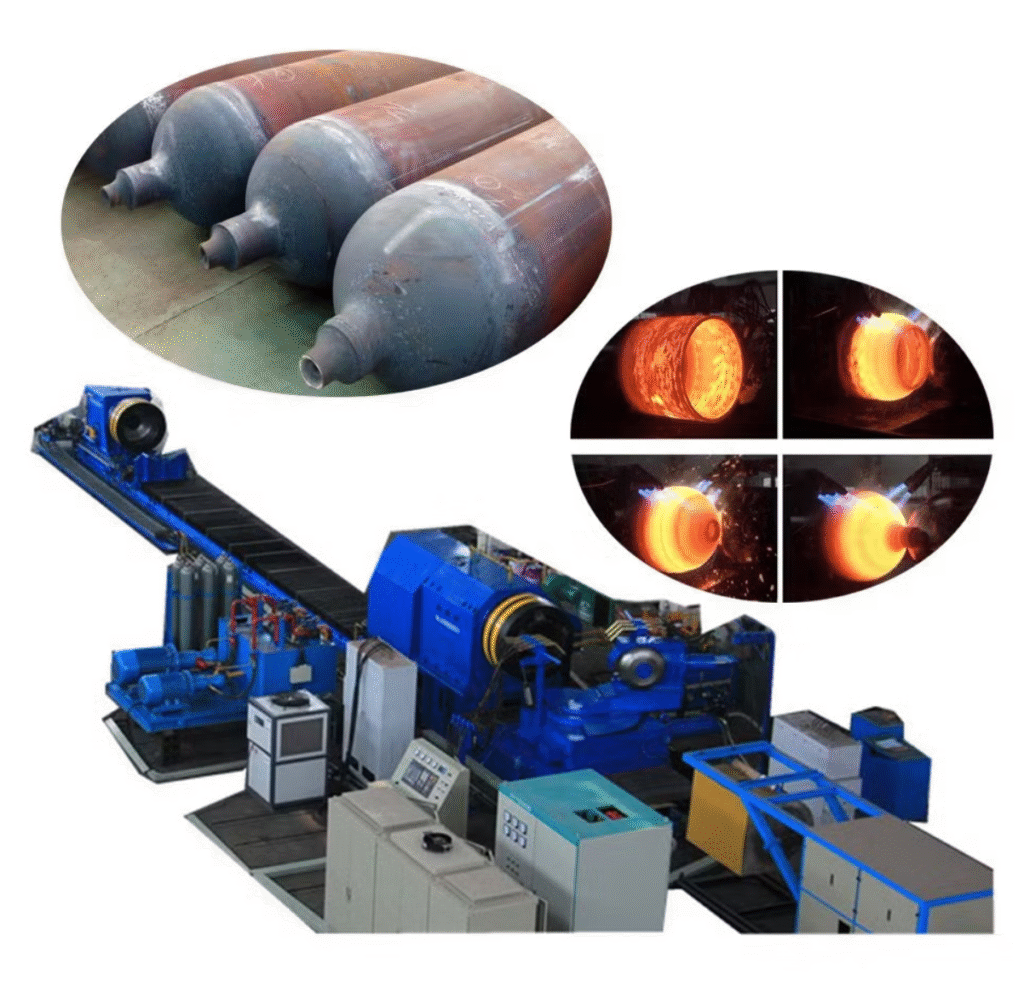
A compact mobile manufacturing plant, in a general industrial systems context, represents a highly integrated approach to portable production infrastructure where operational capability is condensed into a transportable and modular format. Rather than depending on large permanent facilities, the system is engineered as a self-contained industrial environment capable of rapid deployment and flexible operation across multiple geographic locations. This approach reflects broader trends in modern manufacturing toward adaptability, distributed production capability, and reduced dependence on fixed infrastructure.
Within such systems, compactness is not simply a matter of reducing physical size but of optimizing spatial efficiency through dense integration of mechanical, electrical, environmental, and digital subsystems. Every component must serve both operational and structural purposes while remaining accessible for maintenance and reconfiguration. The result is an industrial architecture where functionality is concentrated into a tightly coordinated framework designed for mobility without sacrificing operational consistency.
The mobile aspect introduces additional engineering considerations related to structural durability, transport compatibility, and deployment readiness. Systems must maintain alignment, calibration, and operational stability despite repeated transport cycles and varying environmental conditions. This requires robust chassis engineering, vibration-resistant mounting systems, and integrated environmental regulation capable of maintaining stable internal conditions independent of external infrastructure quality.
Modularity further enhances the adaptability of these systems by allowing capacity to be scaled incrementally through interoperable units. Additional modules can be integrated into the operational network as requirements evolve, enabling flexible expansion without large-scale reconstruction. Digital coordination systems connect distributed modules into unified operational ecosystems, supporting real-time monitoring, predictive maintenance, and centralized oversight of geographically dispersed production assets.
From a broader industrial perspective, compact mobile manufacturing plants illustrate the ongoing transition from centralized static factories toward distributed and reconfigurable production networks. Through the combination of modular engineering, standardized logistics compatibility, environmental autonomy, and digital integration, these systems represent a modern manufacturing paradigm centered on flexibility, mobility, and continuous operational adaptability.
Compact mobile manufacturing systems also illustrate how industrial design is increasingly influenced by the need for operational agility in environments where permanence is no longer assumed to be the most effective model for production infrastructure. Traditional factories were historically designed around long-term stability, fixed utility integration, and centralized operational concentration. These facilities often depended on extensive civil engineering, permanent transportation access, and geographically stable supply chains. Modern modular manufacturing architectures, however, increasingly prioritize the ability to adapt to changing conditions, allowing production capability to shift geographically and structurally over time without requiring complete reinvestment in new infrastructure.
This transformation reflects a broader industrial movement toward distributed capability networks, where manufacturing assets are organized as interconnected modules rather than concentrated in singular large-scale facilities. In such systems, production becomes less dependent on one fixed location and more dependent on the ability of multiple coordinated units to function collectively across diverse operational environments. The industrial ecosystem therefore evolves into a flexible network structure where capacity can be redistributed, expanded, or reconfigured according to changing requirements.
One of the most important characteristics of compact mobile systems is the integration of operational functionality within highly constrained spatial boundaries. Because mobility imposes strict dimensional limitations, engineering design must maximize efficiency at every level of the system. Mechanical components, environmental control systems, electrical distribution infrastructure, and digital monitoring frameworks are all arranged within tightly coordinated layouts that prioritize accessibility, maintainability, and operational continuity. This creates an industrial architecture where compactness is achieved not by eliminating functionality but by integrating multiple functions into cohesive structural and operational layers.
The emphasis on mobility also changes the relationship between industrial infrastructure and logistics. In conventional manufacturing systems, logistics primarily concerns the movement of raw materials and finished products between fixed locations. In mobile manufacturing architectures, the production infrastructure itself becomes part of the logistics network. Industrial capability can be repositioned according to operational priorities, creating a more dynamic relationship between production and geography. This flexibility allows manufacturing resources to follow changing demand patterns rather than remaining permanently anchored to a single region.
Environmental autonomy remains another foundational aspect of compact mobile manufacturing systems. Since deployment conditions can vary widely in terms of climate, infrastructure quality, and utility availability, the internal operating environment must be stabilized independently of external conditions. Integrated environmental management systems regulate temperature consistency, airflow, and operational isolation, ensuring that internal processes remain stable across diverse deployment scenarios. In effect, the manufacturing unit creates its own controlled industrial environment regardless of external variability.
The modularity of these systems further supports long-term adaptability. Instead of relying on a single fixed production structure, functionality is distributed across interoperable units that can be combined into different configurations. This allows industrial capacity to scale progressively through the addition of modules rather than through major construction projects. It also enables systems to be reconfigured or upgraded incrementally as operational requirements evolve, reducing the disruption associated with traditional large-scale infrastructure modifications.
Digital integration significantly enhances the coordination and efficiency of distributed manufacturing architectures. Through embedded sensors, remote diagnostics, and networked operational control systems, multiple mobile units can function as components of a unified industrial ecosystem. Real-time operational data allows centralized oversight while enabling localized flexibility, creating an environment where distributed assets remain synchronized despite geographic separation. Over time, this data-driven coordination model supports predictive maintenance strategies, operational optimization, and adaptive resource allocation across the network.
Another important implication of distributed mobile manufacturing is increased resilience through decentralization. Large centralized facilities can create concentration risks where disruptions at one site affect the entire production system. In contrast, distributed modular networks spread operational capability across multiple units and locations, reducing dependence on any single point of failure. If one module becomes unavailable due to maintenance or external disruption, other units within the network can continue operating independently or compensate for the interruption. This distributed resilience becomes especially valuable in environments characterized by operational uncertainty or rapidly changing conditions.
The lifecycle model of compact mobile systems also differs significantly from that of traditional industrial infrastructure. Rather than being permanently tied to one location and one operational role, these systems are designed to transition through repeated cycles of deployment, operation, relocation, maintenance, and reconfiguration. Industrial assets therefore become continuously reusable across multiple contexts, increasing utilization efficiency while allowing production capability to remain adaptable over time.
At a broader level, compact mobile manufacturing systems represent a shift in industrial philosophy from static optimization toward continuous adaptability. The effectiveness of infrastructure is increasingly defined not solely by production output or facility size, but by the ability to integrate, relocate, and evolve within changing operational landscapes. Mobility, interoperability, and digital coordination become just as important as mechanical capability itself.
Ultimately, these systems embody a manufacturing paradigm in which industrial capability is modular, transportable, environmentally self-sufficient, and digitally interconnected. Through the integration of compact engineering, standardized logistics compatibility, scalable modularity, and networked operational control, mobile manufacturing architectures illustrate how modern industry is evolving toward flexible and adaptive ecosystems capable of functioning efficiently across diverse geographic and operational environments.
The continued development of compact mobile manufacturing architectures also reflects a broader industrial tendency toward operational decentralization combined with high levels of systemic coordination. As industries increasingly operate within environments shaped by fluctuating demand, evolving logistics conditions, and rapidly changing technological requirements, the traditional assumption that manufacturing must be concentrated within massive permanent facilities becomes less universally applicable. Instead, there is a growing recognition that flexibility itself can serve as a major source of industrial efficiency. In this context, compact mobile systems provide a framework through which manufacturing capability can remain responsive without sacrificing operational consistency or structural coherence.
One of the defining features of this emerging industrial model is the transformation of infrastructure into a configurable operational resource. Historically, industrial infrastructure was designed around permanence, with facilities optimized for long-term use in highly stable configurations. Mobile modular systems challenge this model by introducing architectures intended to evolve throughout their operational lifecycle. Capacity can be redistributed geographically, modules can be integrated into new configurations, and systems can adapt to changing requirements without requiring complete reconstruction. Infrastructure therefore becomes dynamic rather than static, continuously adjustable rather than permanently fixed.
This adaptability is closely linked to the concept of operational modularity, where industrial processes are divided into discrete but interoperable functional units. Each module performs a specific role while remaining compatible with the broader system through standardized physical and digital interfaces. This allows production architectures to scale incrementally and evolve progressively over time. Rather than committing to one monolithic configuration, organizations can develop distributed ecosystems where capacity and functionality are continuously optimized according to operational conditions.
The engineering implications of such modularity are significant. Systems must maintain interoperability even as individual modules undergo upgrades, relocation, or reconfiguration. This requires rigorous standardization of interfaces, communication protocols, structural dimensions, and operational compatibility. Standardization becomes not merely a logistical convenience but the foundation upon which distributed industrial ecosystems can function coherently. Through standardized integration frameworks, modules from different operational phases or deployment cycles can remain compatible within the same evolving infrastructure network.
Mobility also introduces an important temporal dimension into industrial planning. Traditional facilities are optimized around long-term stationary operation, often assuming decades of minimal structural change. Mobile systems, however, are designed with repeated movement and redeployment as integral aspects of their lifecycle. This changes the engineering priorities of the system, emphasizing transport resilience, structural durability, and rapid transition between deployment states. Components must remain stable despite repeated exposure to vibration, handling stress, and environmental fluctuations associated with movement across different operational regions.
Environmental self-regulation continues to play a foundational role because operational consistency cannot depend entirely on local infrastructure quality. Compact mobile systems therefore incorporate integrated environmental stabilization technologies capable of maintaining controlled internal conditions regardless of external variability. Thermal regulation, airflow control, humidity stabilization, and operational isolation become embedded within the system itself, enabling reliable performance across diverse climatic and infrastructural conditions. This environmental autonomy effectively allows the manufacturing environment to travel with the system rather than remain tied to a specific location.
The integration of digital coordination systems further enhances the effectiveness of distributed manufacturing ecosystems. Through networked operational platforms, real-time diagnostics, and continuous data exchange, physically dispersed modules can function as synchronized components of a unified industrial structure. Centralized oversight enables operators to monitor performance, allocate resources dynamically, and optimize deployment strategies across multiple locations simultaneously. Over time, the industrial network evolves into a highly adaptive system where operational decisions are increasingly informed by continuous streams of real-time information.
Another important aspect is the relationship between compact mobile systems and industrial resilience. Centralized infrastructure can create vulnerabilities because disruptions affecting a single major facility may interrupt large portions of operational capacity. Distributed modular systems reduce this concentration risk by spreading capability across multiple independent units. Individual modules can continue functioning even if others become temporarily unavailable, creating a more fault-tolerant operational environment. This distributed resilience becomes especially relevant in contexts characterized by logistical uncertainty, infrastructure instability, or rapidly changing operational demands.
The scalability of mobile modular architectures also differs fundamentally from conventional industrial expansion models. Traditional growth often requires extensive construction projects, large capital investments, and lengthy implementation periods. Modular systems allow for incremental scalability through the addition of interoperable units. Capacity can therefore expand progressively in response to actual operational demand, reducing inefficiencies associated with overbuilding or underutilization. This phased growth model aligns industrial expansion more closely with evolving operational realities.
At a broader conceptual level, compact mobile manufacturing systems illustrate a transition from industrial structures defined primarily by physical scale toward systems defined by adaptability, connectivity, and operational fluidity. Production capability becomes increasingly detached from permanent architectural forms and instead emerges through the coordination of modular, transportable, and digitally integrated operational units. The industrial ecosystem behaves less like a static facility and more like a responsive network capable of continuous reorganization.
Ultimately, these developments represent a profound shift in industrial philosophy. Manufacturing infrastructure is increasingly understood not as an immovable physical asset, but as a flexible operational framework capable of evolving alongside changing technological, logistical, and economic conditions. Through the integration of modular engineering principles, environmental autonomy, digital coordination, standardized logistics compatibility, and distributed operational architectures, compact mobile manufacturing systems embody a new industrial paradigm centered on adaptability, resilience, and continuous configurational flexibility.
The long-term implications of compact mobile manufacturing ecosystems extend beyond engineering efficiency alone and begin to influence the broader philosophy of industrial organization itself. As production capability becomes increasingly modular, transportable, and digitally coordinated, the industrial landscape gradually shifts away from rigid geographic concentration and toward more fluid operational structures. In this environment, manufacturing is no longer defined primarily by the existence of a single large facility, but by the ability to coordinate distributed capability across multiple interconnected operational nodes. This creates a manufacturing paradigm where adaptability and synchronization become as strategically important as production volume or physical scale.
One of the most notable consequences of this transition is the emergence of industrial flexibility as a measurable operational asset. Traditional industrial systems often optimized around stability and predictability, assuming that infrastructure, supply chains, and operational requirements would remain relatively constant over long periods. Mobile modular systems are designed around the opposite assumption: that change is continuous and that infrastructure must remain capable of evolving without losing functionality. This fundamentally alters how industrial efficiency is evaluated. The value of a system increasingly depends not only on what it can produce, but on how quickly it can adapt to new configurations, environments, or operational demands.
This adaptability is strongly connected to the principle of distributed capability. In centralized industrial models, operational strength is concentrated within a limited number of large facilities, creating efficiency through scale but also introducing structural dependency on fixed locations. Distributed mobile systems approach the problem differently by spreading capability across multiple interoperable units. Each unit contributes to the overall operational network while retaining a degree of independence. This allows the system to continue functioning even when individual modules are offline, under maintenance, or being relocated. The resulting architecture is inherently more resilient because operational continuity no longer depends entirely on one centralized asset.
The increasing role of digital integration further transforms these systems into highly coordinated industrial networks. Real-time communication between modules enables continuous synchronization of operational status, resource allocation, and maintenance planning. Through integrated data environments, distributed manufacturing assets can behave as components of a unified operational ecosystem despite being physically separated. The importance of information flow therefore grows substantially, as coordination increasingly depends on digital connectivity rather than physical proximity.
Over time, these digitally integrated systems begin to exhibit characteristics associated with adaptive networks rather than conventional factories. Operational behavior becomes more dynamic because the system can respond continuously to changing conditions through data-driven adjustments. Capacity can be redistributed, maintenance schedules optimized, and deployment configurations modified in near real time. This creates industrial ecosystems capable of evolving progressively rather than remaining locked into static organizational structures.
Another important dimension is the changing relationship between industrial infrastructure and time. Permanent facilities are generally optimized around long-term stability, often remaining structurally similar for decades. Mobile modular architectures introduce a cyclical operational rhythm in which deployment, operation, reconfiguration, relocation, and redeployment become expected lifecycle phases. Infrastructure is therefore designed not for permanence in one location, but for sustained adaptability across multiple operational contexts over time. This cyclical lifecycle increases asset utilization and allows the same system to fulfill different roles throughout its operational existence.
Environmental autonomy remains central because operational consistency must be preserved independently of deployment conditions. Integrated regulation systems maintain stable internal operating environments regardless of external climate variability or local infrastructure limitations. By internalizing environmental control functions, mobile manufacturing systems effectively decouple operational reliability from geographic dependency. This enables deployment across a wider range of locations while preserving consistent system behavior.
The compact nature of these systems also encourages a highly integrated engineering philosophy. Space constraints require components to serve multiple purposes simultaneously, combining structural, operational, and support functions within tightly coordinated frameworks. This dense integration reduces inefficiency while enhancing mobility and maintainability. It also encourages the development of multifunctional subsystems capable of supporting several operational layers within the same structural envelope.
Standardization continues to serve as the foundational mechanism enabling scalability and interoperability. Without common interface standards, distributed modular systems would struggle to integrate effectively into larger networks. Physical dimensions, connection systems, communication protocols, and operational interfaces must all remain compatible across different deployment scenarios and lifecycle stages. Standardization therefore acts as the structural language through which modular industrial ecosystems maintain coherence while continuing to evolve.
From a strategic perspective, compact mobile manufacturing systems also support more responsive industrial allocation models. Production capability can be positioned closer to operational demand, reducing logistical latency and increasing deployment responsiveness. Instead of concentrating manufacturing exclusively within major industrial regions, capability can be distributed more flexibly according to evolving requirements. This allows organizations to respond more rapidly to changes in market conditions, supply chain disruptions, or infrastructure limitations.
At a broader industrial level, these developments illustrate a transition from infrastructure-centered manufacturing toward network-centered manufacturing. The effectiveness of the industrial system increasingly depends on the quality of coordination between distributed units rather than the sheer scale of any single facility. Manufacturing becomes a continuously configurable operational ecosystem where mobility, modularity, environmental independence, and digital integration function together as interconnected design principles.
Ultimately, compact mobile manufacturing architectures represent a larger transformation in industrial thought, where flexibility replaces permanence as a defining characteristic of production infrastructure. Through the integration of modular engineering, distributed operational design, environmental autonomy, digital coordination, and transport compatibility, these systems embody a manufacturing paradigm capable of adapting continuously to changing technological, logistical, and operational conditions while maintaining coherent and resilient industrial capability across diverse environments.
Portable Cartridge Manufacturing System
A portable manufacturing system, in a general industrial engineering context, represents a compact and transportable production architecture designed to deliver controlled manufacturing capability in environments where fixed infrastructure may be limited, temporary, or operationally impractical. Rather than relying on permanent facilities, the system integrates production machinery, environmental management, power coordination, and digital control frameworks into a self-contained and relocatable operational unit.
The portability of such systems fundamentally changes the relationship between manufacturing and geography. Instead of concentrating production capability in one fixed location, industrial resources can be repositioned according to changing operational priorities, logistical conditions, or infrastructure availability. This creates a more adaptive industrial structure in which manufacturing capacity becomes mobile and dynamically deployable rather than permanently anchored.
Within these systems, modular engineering principles play a central role. Individual functional units are designed around standardized interfaces that allow interoperability, scalability, and reconfiguration over time. Additional modules can be integrated into the operational framework to expand capacity or support different process arrangements, creating a manufacturing ecosystem that evolves incrementally rather than through large-scale reconstruction.
Environmental autonomy is another critical characteristic. Portable manufacturing systems are typically designed to maintain stable internal operating conditions independently of external climate or infrastructure variability. Integrated environmental regulation systems control thermal conditions, airflow stability, and operational isolation, ensuring consistent performance across diverse deployment environments.
Digital coordination technologies further enhance system effectiveness by enabling real-time monitoring, predictive maintenance, and centralized operational oversight across distributed deployments. Through networked control architectures, physically separated units can operate as synchronized components of a unified industrial ecosystem, allowing distributed production capability to function coherently despite geographic separation.
From a broader perspective, portable manufacturing systems reflect a wider industrial transition toward distributed, adaptable, and network-oriented production architectures. By combining modular scalability, transport compatibility, environmental independence, and digital integration, these systems embody a modern manufacturing philosophy centered on flexibility, resilience, and continuous operational adaptability across changing industrial environments.
Portable manufacturing systems also represent a shift in how industrial efficiency is defined, moving away from purely static measures such as facility size, fixed throughput capacity, or long-term location optimization, and toward more dynamic indicators such as deployment speed, reconfiguration capability, and operational continuity across multiple environments. In this sense, the performance of a system is no longer evaluated only by how much it can produce in one place, but also by how effectively it can be relocated, reactivated, and integrated into different operational contexts over time. This introduces a more flexible understanding of industrial productivity where adaptability becomes a core metric alongside output.
This evolution is closely tied to the increasing need for distributed industrial responsiveness. In many modern operational scenarios, demand does not remain concentrated in a single geographic region, and supply conditions can change rapidly due to logistics, infrastructure, or external disruptions. Portable systems address this by allowing production capability to be positioned closer to where it is required, reducing delays and minimizing dependence on long supply chains. Over time, this creates a more decentralized industrial structure where production is no longer fixed at a distance from consumption but can be dynamically repositioned.
Another important dimension is the engineering focus on lifecycle versatility. Portable systems are not designed for a single static deployment but for repeated use across multiple operational cycles. This means that their design must anticipate repeated installation, operation, disassembly, transport, and redeployment phases. Each cycle introduces mechanical stress, calibration shifts, and environmental variation, all of which must be accounted for in the structural and functional design. As a result, durability in this context is not only about long-term stationary use but also about sustained reliability across movement and transformation.
The integration of multiple subsystems into a compact operational footprint further defines the character of these systems. Mechanical processes, control systems, environmental stabilization mechanisms, and data processing units must coexist within a tightly constrained spatial architecture. This encourages a high degree of functional integration, where individual components often serve multiple roles or are designed to interact closely with adjacent systems. The goal is to minimize redundancy while maintaining operational robustness, creating a balance between compactness and functionality.
Standardization continues to be a critical enabler of this entire approach. Without consistent design frameworks for mechanical interfaces, electrical systems, and digital communication protocols, portable manufacturing systems would be difficult to scale or integrate into broader industrial networks. Standardization allows different units to remain compatible across different generations, locations, and operational configurations. It also simplifies logistics, maintenance, and system expansion, since components can be exchanged or upgraded without requiring complete redesigns.
Environmental control remains essential for maintaining operational stability across diverse deployment conditions. Since portable systems may operate in regions with varying temperatures, humidity levels, and infrastructure availability, they must generate and maintain their own controlled internal environments. This involves regulating airflow, thermal balance, and internal isolation to ensure that production processes remain consistent regardless of external variability. By internalizing these environmental functions, the system reduces its dependency on surrounding infrastructure and increases its operational independence.
Digital integration further enhances the functionality of portable manufacturing systems by enabling continuous communication between distributed units and centralized monitoring platforms. Real-time data exchange allows operators to track system performance, identify inefficiencies, and coordinate multiple units across different locations. Over time, this creates a unified operational network where individual modules contribute to a larger, coordinated production ecosystem. The system becomes increasingly data-driven, with operational decisions guided by continuous feedback rather than static planning assumptions.
The modular nature of these systems also supports gradual and scalable expansion. Instead of requiring large capital investments in fixed infrastructure, capacity can be increased incrementally by adding additional compatible modules. This reduces financial and operational risk while allowing production capability to evolve in alignment with actual demand. It also enables more flexible experimentation with different configurations, since modules can be rearranged or repurposed depending on changing requirements.
From a strategic standpoint, portable manufacturing systems contribute to a more resilient industrial structure by reducing reliance on centralized facilities. Distributed networks of mobile units can continue operating even if individual nodes are disrupted, creating redundancy and flexibility within the system. This distributed resilience is particularly valuable in environments where infrastructure stability cannot be guaranteed or where rapid response capability is required.
Ultimately, portable manufacturing systems represent a broader transformation in industrial design philosophy, where the emphasis shifts from permanence and centralization toward mobility, modularity, and continuous adaptability. Through the integration of standardized interfaces, environmental autonomy, digital coordination, and scalable modular architecture, these systems form part of a new generation of industrial infrastructure capable of operating effectively across diverse, changing, and distributed environments.
Portable manufacturing systems can also be understood as part of a wider shift in industrial logic where production is increasingly treated as an adaptable service capability rather than a fixed physical asset. In earlier industrial models, the emphasis was placed on building large, permanent installations that were optimized for long-term stability, high-volume output, and centralized control. These systems were efficient when conditions were predictable and when supply chains, energy access, and labor distribution remained relatively stable. However, as global industrial environments become more dynamic and interconnected, the need for systems that can adjust quickly to changing circumstances has become more important than ever.
In this evolving context, portability becomes more than a physical attribute; it becomes an operational principle that influences how entire production ecosystems are designed. A portable manufacturing system is not simply a smaller version of a traditional factory but a rethinking of industrial structure itself. Instead of relying on a single static configuration, the system is designed to exist in a state of continuous readiness for relocation and reconfiguration. This means that the same industrial capability can be deployed in different locations over time, serving different operational roles while maintaining consistent performance standards.
This adaptability is closely linked to the idea of modular decomposition of industrial processes. Rather than treating production as a single linear chain contained within a fixed facility, modern systems break down manufacturing into discrete functional stages that can be independently managed and recombined as needed. Each module is responsible for a specific portion of the overall process, and these modules can be arranged in different sequences or groupings depending on operational requirements. This creates a flexible architecture where production flow is not rigidly fixed but can be reshaped according to context.
The physical constraints of portability also encourage a high level of engineering optimization. Since space, weight, and transportability are limiting factors, every component must be designed with efficiency and multifunctionality in mind. Systems are often densely integrated, with mechanical, electrical, and control elements arranged in compact configurations that minimize wasted space while preserving accessibility. This leads to designs where subsystems are layered and interdependent rather than isolated, creating a tightly coupled industrial environment within a limited footprint.
At the same time, portability introduces a strong requirement for structural resilience. Equipment must be capable of withstanding repeated movement, vibration, and environmental exposure without losing precision or operational stability. This necessitates robust mechanical design, reinforced mounting structures, and careful consideration of how components behave under dynamic conditions. Unlike stationary systems, where stability is primarily static, portable systems must maintain stability across both operational and transport phases.
Another defining characteristic is the integration of self-sufficient operational environments. Because portable systems may be deployed in locations with limited or inconsistent infrastructure, they must generate and regulate their own essential operating conditions. This includes maintaining stable internal environments that support consistent industrial processes regardless of external fluctuations. By controlling these conditions internally, the system reduces dependency on external utilities and ensures predictable performance across diverse deployment scenarios.
Digital coordination further enhances the effectiveness of portable manufacturing ecosystems by enabling distributed units to operate as part of a unified system. Through continuous data exchange and centralized monitoring, multiple mobile units can be synchronized even when operating in different geographic locations. This creates a networked industrial structure where physical separation does not prevent operational cohesion. Over time, this digital layer becomes essential for maintaining efficiency, as it enables real-time optimization and system-wide coordination.
The scalability of portable systems is also fundamentally different from traditional industrial expansion models. Instead of requiring large-scale infrastructure investment to increase capacity, additional modules can be introduced incrementally. This allows industrial capability to grow in a gradual and controlled manner, aligned with actual demand rather than projected forecasts. It also allows for greater flexibility in experimentation, since different configurations can be tested and adjusted without dismantling existing systems.
From a broader perspective, portable manufacturing systems reflect a transition toward industrial ecosystems that prioritize responsiveness over permanence. The value of infrastructure is increasingly measured by how quickly it can adapt to new conditions, how easily it can be relocated, and how effectively it can integrate into changing operational networks. This marks a shift away from viewing factories as fixed destinations and toward viewing them as mobile nodes within a larger industrial system.
Ultimately, portable manufacturing represents an industrial philosophy centered on continuous adaptability, where production capability is no longer bound to a single location or configuration. Through modular design, environmental autonomy, structural resilience, and digital coordination, these systems create a form of industrial infrastructure that is inherently flexible, distributed, and capable of evolving alongside shifting operational demands and global conditions.
As portable manufacturing systems continue to evolve, they also begin to reshape how industrial planning and long-term capacity management are approached at a strategic level. Instead of treating production infrastructure as a fixed capital investment tied to a single site, organizations increasingly view it as a movable portfolio of capabilities that can be reassigned, redeployed, or rebalanced depending on changing operational priorities. This introduces a more dynamic form of industrial economics, where value is not only generated through output but also through flexibility, redeployability, and the ability to respond quickly to shifting conditions without incurring large structural delays or reconstruction costs.
This shift also influences how risk is distributed within industrial systems. In traditional centralized models, a significant portion of operational risk is concentrated within a limited number of large facilities. Disruptions at a single point can therefore have cascading effects across entire production chains. In contrast, distributed portable systems spread operational capacity across multiple independent but interconnected units. This reduces dependency on any single location and creates a more resilient structure where localized disruptions can be absorbed without systemic failure. The system becomes more fault-tolerant by design, not because individual units are invulnerable, but because the network can continue functioning even when parts of it are temporarily unavailable.
Another important aspect of this evolution is the changing role of time in industrial operations. In fixed infrastructure models, time is often structured around long production cycles, planned maintenance shutdowns, and extended periods of stable operation. Portable systems introduce a more fluid temporal structure where deployment, operation, relocation, and reconfiguration cycles are more frequent and more tightly integrated into the normal operational rhythm. This requires new approaches to planning, where readiness and transition speed become as important as steady-state efficiency. The ability to move quickly between operational states becomes a core performance metric in its own right.
The increasing sophistication of control systems also plays a central role in enabling this level of flexibility. Modern portable manufacturing environments rely heavily on integrated monitoring and automation frameworks that allow for continuous adjustment of system parameters. Instead of operating in a fixed configuration, systems can dynamically adapt to variations in load, environmental conditions, and operational demand. This creates a feedback-driven operational model where real-time data directly influences system behavior, improving both efficiency and stability over time.
In parallel, the design philosophy of these systems increasingly emphasizes lifecycle adaptability rather than single-phase optimization. Each unit is expected to remain functional across multiple stages of its operational life, including initial deployment, repeated use, relocation, upgrades, and eventual reintegration into different system configurations. This requires a long-term perspective in engineering design, where components are selected not only for immediate performance but also for durability, compatibility with future systems, and ease of maintenance over extended periods of use.
Material selection and structural engineering also reflect this emphasis on long-term adaptability. Components must be capable of withstanding not only operational stresses but also the mechanical and environmental stresses associated with transport and redeployment. This leads to a focus on structural integrity under variable conditions, where stability is defined not only in static terms but also in dynamic scenarios involving repeated movement and reconfiguration. The result is an engineering approach that treats mobility as a continuous condition rather than an occasional event.
At the system level, interoperability becomes a defining requirement for scalability. Portable manufacturing units must be able to integrate seamlessly into larger networks without requiring extensive customization for each deployment. This is achieved through standardized physical interfaces, unified communication protocols, and consistent control architectures. These standards allow different modules to function together as part of a coherent system even if they originate from different deployment cycles or serve different functional roles.
Over time, this leads to the emergence of industrial ecosystems that are less hierarchical and more networked in structure. Instead of a clear separation between central facilities and peripheral sites, the system becomes a distributed mesh of operational nodes that can be dynamically reconfigured. Production capability flows through the network rather than remaining fixed in place, allowing industrial activity to be redistributed as needed. This creates a more adaptive and responsive manufacturing landscape capable of adjusting to both local and global changes in demand or supply conditions.
Ultimately, portable manufacturing systems represent a fundamental rethinking of industrial infrastructure as something that is not static but continuously reconfigurable. Through the combination of modular design, distributed operation, digital coordination, and structural mobility, these systems define a model of industry in which adaptability is not an added feature but a core organizing principle. In this model, industrial strength is measured not only by scale or output but by the ability to evolve, relocate, and reorganize in response to an ever-changing operational environment.
Rapid Deploy Ammunition Factory
A rapid deploy manufacturing factory, in a general industrial engineering context, refers to a highly modular and transportable production system designed to be activated in a very short time frame after arrival at a designated location. The core idea behind such systems is to minimize the traditional gap between infrastructure installation and operational readiness by pre-integrating as many functional elements as possible into a self-contained structure. Instead of building production capability on-site over months or years, the system is engineered to arrive in a preconfigured state where the majority of commissioning has already been completed prior to deployment.
This approach is closely tied to the increasing demand for agile industrial response capabilities in environments where timing, logistics, and adaptability are critical factors. Rather than relying on static infrastructure that requires long planning cycles, rapid deploy systems prioritize readiness, mobility, and reconfiguration speed. The manufacturing environment is essentially “packaged” into a standardized transportable form that can be quickly positioned, connected to minimal external utilities, and brought into operation within a significantly reduced timeframe.
A key characteristic of these systems is pre-engineered integration. Mechanical subsystems, control architecture, environmental regulation, and power distribution are all designed as a unified framework rather than assembled independently on site. This reduces complexity during deployment and ensures that system behavior remains predictable once activated. The factory is effectively designed to function as a single coordinated unit rather than a collection of separately installed machines.
Another important element is operational independence. Rapid deploy systems are typically designed to function with limited external dependency, meaning they can operate in environments where infrastructure support is minimal or inconsistent. Internal systems handle environmental stabilization, process control, and operational monitoring, allowing the unit to maintain consistent performance even in variable external conditions. This autonomy is essential for ensuring reliability during early-stage deployment phases.
The emphasis on speed does not eliminate the need for durability; rather, it intensifies it. Because these systems may be transported and activated multiple times over their lifecycle, structural integrity and long-term resilience become critical design priorities. Equipment must remain stable through repeated transitions between transport and operational states, maintaining calibration and alignment despite mechanical stresses associated with movement.
From a systems perspective, rapid deploy factories are also closely linked to modular scalability. Additional production modules can be integrated to expand capacity or modify functionality depending on operational requirements. This allows the same base system to adapt to different production scenarios without requiring complete redesign or reconstruction. Over time, the system becomes a flexible industrial platform rather than a fixed-purpose installation.
Digital control and monitoring systems further enhance this adaptability by enabling real-time visibility and coordination of operations. Through integrated data systems, performance can be tracked continuously, allowing for rapid adjustments, predictive maintenance, and efficient resource allocation. This ensures that the system not only deploys quickly but also stabilizes quickly into efficient long-term operation.
In broader industrial terms, rapid deploy manufacturing systems reflect a shift toward infrastructure that behaves more like an operational resource than a permanent structure. The focus is no longer solely on where production happens, but on how quickly and effectively it can be established, adapted, and relocated as conditions change.
Rapid deploy manufacturing systems, when viewed in a broader industrial context, represent an evolution in how production capability is planned, allocated, and sustained across changing operational environments. Instead of relying on long construction timelines and permanently fixed infrastructure, these systems prioritize pre-engineered readiness and structural portability, allowing industrial capacity to be activated with minimal delay once it reaches a designated site. This approach reflects a shift in industrial thinking where responsiveness becomes as important as scale, and where the ability to initiate production quickly can be a decisive operational advantage.
At the core of this concept is the idea of pre-integration, where most of the complexity associated with industrial setup is resolved before deployment. Rather than assembling individual machines, utilities, and control systems on site, the entire production environment is designed as a unified system that arrives already configured for operation. This reduces the dependency on local construction conditions and shortens the time required to transition from delivery to functional output. It also improves predictability, since the system is tested and calibrated as a complete unit prior to deployment, reducing variability during commissioning.
Another important characteristic is structural self-containment. Rapid deploy systems are engineered so that critical functions are internally supported within the unit itself, minimizing reliance on external infrastructure. This includes internal environmental regulation, power distribution management, and system-level control integration. By internalizing these functions, the system can operate in environments where external support may be limited, inconsistent, or temporarily unavailable. This independence allows deployment across a wide range of geographic and infrastructural conditions without requiring extensive site preparation.
Mobility is not only a logistical feature but also a defining design constraint that influences every aspect of system architecture. Because the system must be transportable, components are designed to withstand repeated movement cycles without loss of alignment, performance degradation, or structural fatigue. This introduces a balance between robustness and compactness, where equipment must be both mechanically resilient and spatially efficient. As a result, internal layouts are often highly optimized, with careful attention to how mechanical, electrical, and control systems interact within a confined footprint.
The operational lifecycle of such systems is also fundamentally different from traditional fixed facilities. Instead of a single long-term deployment phase, rapid deploy systems are expected to move through multiple cycles of installation, operation, relocation, and reactivation. Each cycle introduces new environmental and mechanical conditions, requiring the system to maintain consistency across variable contexts. This cyclical lifecycle design encourages engineering approaches focused on long-term adaptability rather than single-location optimization.
Modularity plays a central role in enabling this adaptability. Production capability is typically divided into interoperable units that can function independently or as part of a larger coordinated system. This allows capacity to be adjusted dynamically by adding or removing modules based on operational needs. It also supports gradual system evolution, where upgrades or modifications can be introduced without requiring a complete redesign of the entire infrastructure. Over time, this creates a flexible production ecosystem capable of adapting to changing requirements without structural disruption.
Digital integration further enhances system performance by enabling continuous monitoring and coordination across all operational components. Real-time data exchange allows for dynamic adjustments to system behavior, improving efficiency and stability during operation. Predictive analytics can identify potential maintenance requirements before failures occur, while centralized control systems can optimize performance across multiple deployed units simultaneously. This creates a feedback-driven operational environment where physical systems and digital intelligence are tightly interconnected.
Environmental control remains a critical requirement for ensuring consistent performance across diverse deployment conditions. Since rapid deploy systems may operate in locations with different climates, altitudes, or infrastructure availability, they must maintain stable internal operating conditions regardless of external variability. Integrated environmental systems regulate temperature, airflow, and internal isolation, ensuring that production processes remain unaffected by external fluctuations. This internal stability is essential for maintaining repeatable and reliable output across multiple deployments.
From a broader industrial perspective, rapid deploy manufacturing systems reflect a shift toward viewing infrastructure as a flexible and mobile capability rather than a fixed asset. Industrial strength is increasingly defined not only by production capacity but also by the ability to reposition and reconfigure that capacity in response to changing conditions. This introduces a more dynamic understanding of industrial systems, where adaptability and responsiveness become core performance indicators.
Ultimately, these systems represent a convergence of modular engineering, transportable infrastructure design, environmental autonomy, and digital coordination. Together, these elements create a manufacturing model capable of operating effectively in distributed, variable, and time-sensitive environments. The result is an industrial architecture that is not defined by permanence, but by its ability to continuously adapt, relocate, and reorganize while maintaining operational continuity across changing conditions.
Rapid deploy manufacturing systems also highlight a broader shift in how industrial ecosystems manage uncertainty and variability. In earlier models of industrial development, uncertainty was often addressed by building redundancy into large, centralized facilities or by maintaining extensive inventory buffers within established supply chains. These approaches depend heavily on stability and predictability, assuming that demand patterns, logistics routes, and operational environments remain relatively consistent over time. In contrast, modern deployable systems respond to uncertainty by increasing structural flexibility rather than increasing static capacity, allowing production capability to move and adapt instead of remaining fixed and overprovisioned.
This change introduces a more dynamic relationship between industrial planning and geographic distribution. Instead of permanently assigning production capacity to a single region, capability can be repositioned based on real-time requirements. This creates a more fluid industrial geography where manufacturing presence is not constant but variable, shaped by operational demand and logistical constraints. Over time, this leads to a form of distributed industrial presence that behaves more like a network of mobile nodes than a collection of fixed installations.
The underlying engineering philosophy supporting this shift emphasizes interoperability at every level of system design. Mechanical interfaces, electrical systems, control architectures, and communication protocols are all standardized to ensure that different modules can function together without requiring extensive customization. This standardization is what allows rapid integration and redeployment, as it eliminates the need for reconfiguration during each deployment cycle. It also enables long-term compatibility between system generations, ensuring that newer modules can still operate within established networks.
Another important dimension is the increasing role of system autonomy. Because rapid deploy systems are expected to function in a wide range of environments, they must be capable of maintaining operational stability without relying heavily on external infrastructure. This leads to a design approach where essential support functions are embedded within the system itself. Power distribution, environmental stabilization, and operational control are managed internally, allowing the system to operate independently once deployed. This autonomy is particularly important during early deployment phases when external support infrastructure may not yet be fully established.
Structural engineering plays a critical role in ensuring that this autonomy remains reliable over repeated cycles of use. Unlike stationary systems, which are designed for continuous operation in a single location, deployable systems must maintain performance across multiple transitions between transport and operational states. This requires careful attention to fatigue resistance, vibration tolerance, and long-term mechanical stability. Components must retain alignment and functional precision despite repeated movement and environmental variation, which places significant emphasis on durable construction and robust internal architecture.
Digital coordination systems further extend the capabilities of these distributed industrial networks. Through continuous data exchange and centralized monitoring platforms, multiple deployed units can operate as part of a synchronized system even when geographically separated. This allows for real-time performance tracking, adaptive resource allocation, and coordinated operational planning across multiple sites. Over time, the system becomes increasingly responsive, with operational decisions informed by continuous streams of data rather than static planning cycles.
This integration of digital intelligence with physical infrastructure also enables more advanced predictive operational models. By analyzing performance trends and environmental conditions, the system can anticipate maintenance needs, optimize operational parameters, and adjust configurations dynamically. This reduces downtime, improves efficiency, and enhances overall system reliability. In effect, the industrial system begins to exhibit adaptive behavior, continuously adjusting itself in response to changing internal and external conditions.
Scalability in rapid deploy systems follows a fundamentally different logic compared to traditional industrial expansion. Instead of scaling through large, centralized investments, capacity is increased incrementally through the addition of compatible modules. This allows expansion to occur in smaller, more manageable steps that align closely with actual demand. It also reduces the risk associated with overbuilding infrastructure that may not be fully utilized. The system can therefore grow organically, adapting its structure over time rather than requiring large-scale redesigns.
From a resilience perspective, distributed deployment also provides significant advantages. Because production capability is spread across multiple units rather than concentrated in a single facility, the system is less vulnerable to localized disruptions. If one unit becomes temporarily unavailable, others can continue operating independently, maintaining overall system continuity. This distributed resilience is particularly important in environments where external conditions may be unpredictable or where rapid response capability is required.
Ultimately, rapid deploy manufacturing systems represent a shift toward industrial architectures that prioritize adaptability, mobility, and networked coordination over static optimization. They reflect a broader transformation in how industrial capability is conceptualized, moving away from fixed infrastructure toward flexible systems that can be continuously reconfigured. Through modular design, environmental autonomy, structural durability, and digital integration, these systems form a foundation for manufacturing environments that are capable of operating effectively across diverse and changing conditions while maintaining coherent system-wide functionality.
As rapid deploy and modular manufacturing systems evolve further, they begin to influence not only the physical structure of production but also the organizational logic of how industrial operations are managed over time. In traditional industrial environments, decision-making is often strongly hierarchical, with centralized planning determining production schedules, capacity allocation, and long-term infrastructure investment. In more distributed and mobile systems, however, decision-making becomes increasingly decentralized and data-driven, with operational adjustments occurring closer to the point of deployment. This creates a more responsive organizational model where feedback from real-world conditions plays a much larger role in shaping production behavior.
This shift is closely tied to the growing importance of real-time operational awareness. Because modular systems may be deployed across multiple locations simultaneously, maintaining a clear and continuous understanding of system status becomes essential. Digital monitoring systems therefore act as the connective layer that unifies distributed assets into a coherent operational picture. Instead of relying on periodic reporting or delayed updates, operators can observe system performance continuously and adjust parameters dynamically. This reduces the latency between detecting a condition and responding to it, which in turn improves both efficiency and stability.
Another important development is the increasing emphasis on configurational flexibility. In earlier industrial models, production lines were typically optimized for a specific output and remained relatively unchanged unless significant retooling occurred. In modular systems, configuration becomes a variable that can be adjusted more frequently and with less disruption. This allows production environments to be tailored more precisely to current requirements, whether those requirements involve changes in output scale, process sequencing, or operational constraints. Over time, this leads to a more fluid understanding of what a production line actually is, shifting it from a fixed arrangement to a reconfigurable system.
The physical design of these systems reflects this same emphasis on flexibility. Instead of rigid, single-purpose installations, components are designed to support multiple operational states and integration scenarios. Structural frameworks are often built to accommodate both transport conditions and active operational conditions without requiring major modification. This dual-mode design philosophy ensures that the system can transition smoothly between mobility and production states, which is essential for maintaining efficiency in environments where redeployment is frequent.
Energy and resource management also become more tightly integrated in portable and modular systems. Because these systems may operate in locations with varying access to external utilities, internal resource balancing becomes a key design consideration. Energy distribution, consumption optimization, and load management are often handled within the system itself, reducing dependence on external infrastructure stability. This internalization of resource management contributes to overall system independence and allows deployment in a wider range of environments without significant pre-existing support structures.
As these systems scale into larger networks, coordination complexity increases significantly. Managing multiple distributed units requires not only technical compatibility but also consistent operational synchronization. This is where layered control architectures become important, separating local control functions from higher-level coordination systems. Local systems manage immediate operational behavior, while higher-level systems handle optimization across the entire network. This layered approach allows complexity to be managed without overwhelming any single control layer.
Over time, the accumulation of operational data across distributed systems creates opportunities for continuous improvement. Patterns in performance, maintenance needs, and environmental interaction can be analyzed to refine both system design and deployment strategy. This creates a feedback loop where each deployment contributes to the evolution of future systems. Industrial design therefore becomes increasingly iterative, with each generation of systems benefiting from the operational experience of previous deployments.
Another important aspect is the changing relationship between capital investment and utilization. In traditional infrastructure models, large upfront investments are required to build fixed facilities that are then amortized over long periods of stable use. Modular mobile systems allow capital to be deployed more gradually and more flexibly, aligning investment more closely with actual operational demand. This reduces the risk of underutilized infrastructure while also enabling faster response to changing market or operational conditions.
At a systemic level, these developments contribute to the emergence of industrial ecosystems that are less rigid and more adaptive in structure. Instead of being organized around a small number of large production centers, industrial capability becomes distributed across many smaller, interconnected nodes. These nodes can be reconfigured, relocated, or expanded as needed, creating a continuously evolving network of production capacity. The overall system behaves less like a static hierarchy and more like a dynamic, adaptive mesh.
Ultimately, rapid deploy and modular manufacturing systems represent a broader transformation in industrial logic, where adaptability, connectivity, and reconfiguration become central principles. Production infrastructure is no longer defined primarily by permanence or scale, but by its ability to adjust continuously to changing operational realities. Through the combination of modular engineering, distributed coordination, digital integration, and transportable design, these systems create a manufacturing paradigm that is inherently flexible, resilient, and capable of evolving alongside the environments in which it operates.
As modular and rapidly deployable manufacturing systems continue to mature, they also begin to reshape expectations around industrial planning horizons and investment cycles. In traditional manufacturing environments, infrastructure decisions were often made on multi-decade timelines, with a strong emphasis on long-term predictability and amortization of large capital expenditures over extended operational periods. This encouraged conservative planning models where flexibility was limited, because altering production structures after deployment was costly and time-consuming. In contrast, modular and mobile systems introduce shorter operational cycles and more iterative planning approaches, where infrastructure can be adjusted, relocated, or repurposed in response to evolving conditions without requiring full-scale reconstruction.
This shorter and more dynamic planning horizon also influences how risk is managed across industrial systems. Instead of concentrating risk into a single long-term facility investment, modular systems distribute both operational and financial risk across multiple smaller, interchangeable units. This distribution reduces exposure to localized failures and allows organizations to adjust capacity gradually rather than committing to large irreversible expansions. As a result, industrial strategy becomes more fluid, with greater emphasis placed on optionality and adaptability rather than permanence and scale alone.
Another important dimension is the evolution of operational continuity as a design objective. In stationary industrial systems, continuity is often achieved by minimizing change and maintaining stable operating conditions over long periods. In mobile modular systems, continuity is achieved through controlled change, where systems are designed to transition between states without losing functional stability. This requires a fundamentally different engineering mindset, where change is not treated as disruption but as an expected and managed part of the system lifecycle. Deployment, operation, relocation, and reconfiguration become integrated phases of a continuous operational flow rather than separate or exceptional events.
This continuous operational flow depends heavily on advanced coordination mechanisms. As systems become more distributed, maintaining coherence across multiple units requires precise synchronization of operational data, control signals, and performance metrics. Digital infrastructure plays a central role in this coordination, allowing geographically separated modules to function as parts of a unified system. Rather than relying on physical proximity, system unity is maintained through constant information exchange and centralized analytical oversight. This creates an operational model where physical dispersion is offset by informational integration.
The increasing reliance on data-driven coordination also enables more adaptive forms of optimization. Instead of relying solely on pre-defined operational parameters, systems can adjust dynamically based on real-time feedback. This allows for continuous refinement of performance, where inefficiencies can be identified and corrected during operation rather than after the fact. Over time, this leads to systems that become progressively more efficient through accumulated operational experience, effectively learning from their own deployment history.
Material and structural engineering considerations remain equally important in ensuring long-term viability. Because modular systems are expected to operate across multiple environments and undergo repeated transport cycles, their physical construction must balance durability with adaptability. Materials must withstand both operational loads and transport-induced stresses, while structural assemblies must maintain integrity across varying environmental conditions. This creates a design requirement that goes beyond static strength, emphasizing resilience across dynamic and evolving conditions.
Another significant factor is the increasing importance of system interoperability across different technological generations. As industrial systems evolve, new modules are introduced with updated capabilities, improved efficiency, or enhanced control systems. To maintain continuity, these newer modules must remain compatible with existing infrastructure. This drives a strong emphasis on backward compatibility and standardized interface design, ensuring that system evolution does not fragment operational networks but instead enhances them over time.
Energy and resource optimization also become more complex in distributed environments. Rather than relying on a single centralized supply system, modular deployments often require flexible energy management strategies that can adapt to local availability and constraints. This may involve balancing multiple energy sources, dynamically allocating consumption across units, and optimizing load distribution to maintain stable operation. The system therefore becomes not only a producer of output but also an active manager of its own resource environment.
From a broader perspective, these developments reflect a transition in industrial systems from static structures to adaptive ecosystems. Instead of being defined by fixed physical boundaries, industrial capability is increasingly defined by the relationships between distributed components. The system’s strength lies not in any single unit but in the coordination, flexibility, and responsiveness of the network as a whole. This represents a fundamental shift in how industrial power is conceptualized, moving from concentration toward distribution and from permanence toward adaptability.
Ultimately, modular and rapidly deployable manufacturing systems illustrate a broader redefinition of industrial infrastructure as something inherently dynamic. Through the integration of distributed architecture, digital coordination, structural resilience, and lifecycle adaptability, these systems establish a model in which industrial capability is continuously reconfigurable. In this model, the effectiveness of manufacturing is determined not only by output capacity but by the ability to evolve seamlessly in response to changing operational landscapes, ensuring sustained functionality across diverse and shifting conditions.
Containerized Ammo Production Unit
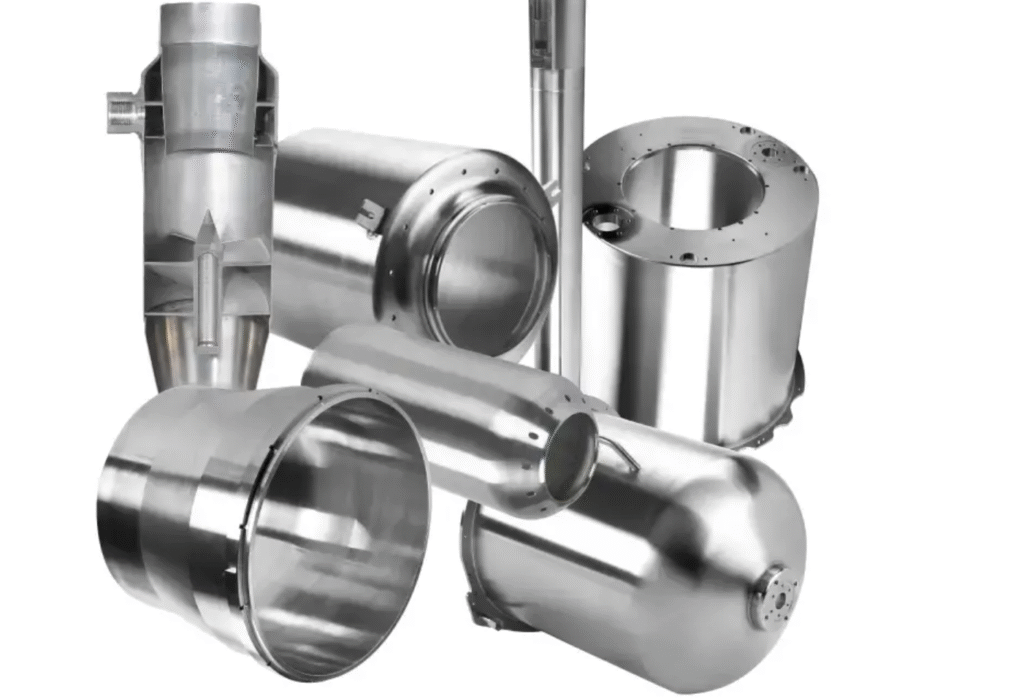
A containerized industrial production unit, in a general engineering context, refers to a self-contained manufacturing system housed within a standardized transportable structure designed to function as a complete operational environment. The concept is based on integrating production machinery, control systems, environmental regulation, and support infrastructure into a single modular enclosure that can be transported using conventional logistics networks and rapidly deployed at a designated location.
The core principle behind such systems is operational completeness within a confined spatial envelope. Instead of distributing production processes across multiple buildings or installations, all essential functions are consolidated within a single engineered containerized structure. This includes mechanical processing systems, automation and control layers, power distribution management, and internal environmental stabilization systems. The result is a unified industrial unit capable of operating independently once deployed, without requiring extensive external facility development.
A defining feature of containerized systems is their reliance on standardization. By adhering to globally recognized container dimensions and handling formats, these units can be moved efficiently across road, rail, and maritime logistics systems. This compatibility reduces deployment complexity and allows industrial capability to be repositioned quickly in response to changing operational requirements. Standardization also ensures interoperability between multiple units, enabling them to be combined into larger production networks when needed.
Modularity plays a central role in extending system flexibility. Each containerized unit typically performs a specific function within a broader manufacturing workflow, and multiple units can be connected or arranged in sequence to form complete production lines. This allows capacity to be scaled incrementally by adding additional modules rather than constructing entirely new facilities. It also enables reconfiguration, where units can be repurposed or rearranged depending on evolving production needs.
Environmental control systems are essential to maintaining stable operation across varying deployment conditions. Because these units may operate in locations with different climates and infrastructure availability, they must regulate internal temperature, airflow, and environmental isolation independently. This ensures that production processes remain consistent regardless of external variability, effectively creating a controlled industrial environment within a transportable enclosure.
Digital integration enhances operational efficiency by enabling real-time monitoring, coordination, and system optimization. Through embedded sensors and networked control systems, containerized units can transmit performance data to centralized or distributed management platforms. This allows operators to oversee multiple deployed systems simultaneously, adjust parameters dynamically, and perform predictive maintenance based on operational trends. Over time, this creates a data-driven industrial network that continuously improves performance through feedback loops.
From a broader industrial perspective, containerized production systems reflect a shift toward distributed manufacturing ecosystems where production capability is no longer tied exclusively to fixed infrastructure. Instead, manufacturing becomes a mobile, reconfigurable resource that can be deployed where and when it is needed. This improves responsiveness, reduces dependency on centralized facilities, and supports more flexible industrial planning strategies.
Ultimately, containerized industrial production units represent a modern manufacturing paradigm built around mobility, modularity, and system integration. Through standardized transport compatibility, environmental autonomy, scalable architecture, and digital coordination, they enable industrial systems that are capable of operating effectively across diverse environments while maintaining adaptability and continuity over time.
Containerized industrial production systems also reflect a deeper shift in how industrial capability is distributed and managed within modern economic and logistical frameworks. Instead of treating production as a fixed asset that must be permanently anchored to a single geographic location, these systems treat manufacturing as a deployable function that can be activated wherever supporting conditions exist or can be minimally established. This fundamentally changes the relationship between infrastructure and production, because infrastructure is no longer a prerequisite that must be fully built before operations begin, but rather a configurable environment that can be partially internalized within the production system itself.
This internalization of infrastructure functions is one of the most important conceptual developments in containerized manufacturing design. Functions that were once external dependencies, such as environmental control, system monitoring, and operational coordination, are increasingly embedded directly into the production unit. This reduces reliance on external facilities and allows the system to operate with a higher degree of independence. As a result, the production unit behaves more like a self-contained industrial organism than a conventional machine or assembly line, with internal systems managing not only production tasks but also the conditions required for those tasks to remain stable.
Another key aspect of this evolution is the increasing emphasis on rapid operational transition. In traditional industrial setups, significant time is often required to move from installation to stable production, as systems must be assembled, calibrated, and integrated into local infrastructure. Containerized systems are designed to compress this transition period by pre-validating system integration before deployment. Most functional subsystems are tested and synchronized prior to transport, so that once the unit is positioned and connected to minimal external inputs, it can transition into stable operation with relatively limited additional configuration. This reduces downtime and allows industrial capability to become more immediately responsive to operational demand.
The spatial constraints inherent in containerized systems also drive a high level of engineering density and integration. Every internal subsystem must justify its physical footprint, leading to design strategies that prioritize multifunctionality and compact arrangement. Mechanical systems, control electronics, power distribution networks, and environmental regulation mechanisms are often layered and interdependent, forming a tightly coupled internal architecture. This density of integration not only optimizes space utilization but also reduces internal latency between subsystems, improving overall system responsiveness.
At the same time, this compact integration introduces complexity in system coordination, which is increasingly addressed through advanced digital control frameworks. Modern containerized production systems rely on continuous data acquisition and analysis to maintain operational stability. Sensors distributed throughout the system monitor performance parameters, environmental conditions, and system health, feeding this information into control algorithms that adjust operations in real time. This creates a feedback-driven operational model where the system is constantly adapting to maintain optimal performance within defined parameters.
The ability to scale production through modular expansion is another defining feature of these systems. Instead of expanding capacity through large, monolithic infrastructure projects, additional containerized units can be deployed and integrated into existing networks. Each unit contributes a defined functional capability, and multiple units can be arranged in various configurations depending on production requirements. This modular scalability allows industrial systems to grow incrementally and adaptively, aligning capacity more closely with actual demand rather than projected estimates.
Logistics integration plays a critical role in enabling this level of flexibility. Because containerized systems conform to standardized transport formats, they can be moved efficiently using established global logistics networks. This compatibility reduces the friction associated with deployment and redeployment, making it feasible to relocate industrial capability across regions as needed. Over time, logistics and production become increasingly interdependent, forming a unified operational system where movement and manufacturing are closely linked processes.
Environmental independence remains essential to ensuring consistent performance across diverse deployment contexts. Since containerized systems may operate in regions with varying climatic and infrastructural conditions, they must be capable of maintaining stable internal environments regardless of external fluctuations. This requires integrated systems that regulate temperature, airflow, humidity, and operational isolation, ensuring that production processes remain unaffected by external variability. By controlling these conditions internally, the system reduces sensitivity to location and increases operational reliability.
From a broader systems perspective, containerized production units contribute to the emergence of distributed industrial networks, where manufacturing capacity is spread across multiple interoperable nodes rather than concentrated in a single facility. These nodes can operate independently or as part of a coordinated network, depending on operational requirements. This distributed structure enhances resilience by reducing reliance on any single point of failure and allows production capability to be dynamically reassigned across the network.
Ultimately, containerized industrial systems represent a shift toward manufacturing architectures defined by flexibility, mobility, and integration rather than permanence and centralization. Through the combination of modular design, internalized infrastructure functions, digital coordination, and standardized logistics compatibility, these systems create a form of industrial capability that is inherently adaptable. They are capable of operating across varied environments, reconfiguring their structure over time, and maintaining continuous functionality within distributed and evolving operational landscapes.
Containerized industrial production systems continue to evolve toward increasingly autonomous and self-regulating operational models, where the distinction between infrastructure, machinery, and control architecture becomes progressively less rigid. In earlier industrial paradigms, these layers were clearly separated, with buildings providing environmental stability, machinery performing production tasks, and external systems handling coordination and monitoring. In modern containerized systems, however, these functions are increasingly merged into a unified operational framework, where the production unit itself incorporates many of the roles that were previously distributed across an entire facility.
This convergence leads to a more integrated understanding of industrial functionality, where the system is designed as a complete operational environment rather than a collection of independent components. The container becomes not only a physical enclosure but also an active participant in maintaining the conditions required for production. Structural elements contribute to stability, internal systems regulate environmental consistency, and embedded control platforms continuously manage operational behavior. The result is a tightly interdependent system in which each layer supports and reinforces the others.
As these systems become more sophisticated, the importance of adaptive control increases significantly. Rather than operating under fixed parameters, modern containerized production units are designed to respond dynamically to changes in workload, environmental conditions, and system performance. This adaptability is achieved through continuous data collection and automated adjustment mechanisms that allow the system to recalibrate itself in real time. Over extended periods of operation, this creates a form of self-optimization, where the system gradually improves its efficiency based on accumulated operational experience.
Another important dimension is the increasing role of distributed intelligence within industrial networks. Instead of relying solely on centralized control centers, intelligence is embedded at multiple levels within the system architecture. Local control systems manage immediate operational functions, while higher-level coordination systems oversee performance across multiple units. This layered intelligence structure allows decisions to be made closer to the point of operation while still maintaining overall system coherence. It also reduces latency in response times and improves the system’s ability to handle complex, distributed operational scenarios.
Material and structural engineering considerations remain central to ensuring long-term stability and repeatability of performance. Because containerized systems are frequently subjected to transport, installation, and redeployment cycles, they must be engineered to withstand a combination of static, dynamic, and environmental stresses. This requires careful attention to structural reinforcement, vibration damping, and fatigue resistance across all critical components. The objective is not only to ensure durability in a stationary state but also to preserve operational integrity throughout repeated transitions between different phases of use.
Energy management within these systems is also becoming increasingly sophisticated. Rather than relying on a single uniform power input model, modern containerized units often incorporate flexible energy distribution systems capable of adapting to different sources and load conditions. Internal balancing mechanisms ensure that energy consumption is optimized across subsystems, reducing inefficiencies and maintaining stable operation even under variable external supply conditions. This contributes to overall system resilience and reduces dependency on highly specific infrastructure setups.
As deployment scenarios become more diverse, the importance of configurational flexibility continues to grow. Containerized systems are increasingly designed not for a single fixed function but for a range of possible operational configurations. This allows the same physical unit to be adapted for different roles over time, extending its useful lifecycle and increasing overall system efficiency. Configuration changes can be implemented through modular reorganization, software updates, or integration of additional functional components, depending on operational requirements.
From a network perspective, these systems contribute to the formation of distributed industrial ecosystems where production capacity is no longer concentrated but dispersed across multiple interconnected units. These units can be coordinated to function as part of a larger system or operate independently when required. This dual capability enhances both flexibility and resilience, allowing the overall network to maintain continuity even when individual components are offline or reassigned.
The increasing integration of digital systems also enables more advanced forms of predictive and adaptive maintenance. By continuously analyzing operational data, the system can identify early indicators of performance degradation or potential failure. This allows corrective actions to be taken before disruptions occur, improving reliability and reducing downtime. Over time, this creates a more stable operational environment where maintenance becomes increasingly proactive rather than reactive.
Ultimately, containerized industrial production systems represent a shift toward highly adaptable, self-contained, and networked manufacturing architectures. Their design reflects a broader industrial transition in which flexibility, mobility, and continuous adaptability are prioritized alongside traditional metrics of efficiency and output. Through the integration of modular engineering, embedded intelligence, environmental autonomy, and distributed coordination, these systems establish a framework for industrial capability that is capable of evolving continuously in response to changing operational conditions and long-term structural transformations in global manufacturing landscapes.
As these containerized and modular industrial systems continue to mature, they increasingly blur the traditional boundaries between production infrastructure and operational intelligence, forming environments where physical machinery and digital control layers are inseparably linked. In earlier industrial generations, machines were largely passive systems that executed predefined mechanical tasks, while intelligence was concentrated in human operators or external supervisory systems. In contrast, modern containerized production units embed intelligence directly into the operational fabric of the system, allowing machines not only to execute tasks but also to continuously interpret, adjust, and optimize their own behavior based on real-time feedback.
This integration of intelligence and machinery fundamentally changes how industrial systems respond to variability. Instead of requiring manual recalibration or external intervention when conditions shift, the system is designed to recognize deviations automatically and adjust operational parameters accordingly. This creates a form of continuous stabilization in which performance is maintained not through rigid control, but through adaptive regulation. Over time, this leads to systems that are capable of maintaining consistent output even in environments that are partially unpredictable or non-ideal.
Another important development is the increasing abstraction of production logic from physical configuration. In traditional manufacturing systems, production processes are closely tied to the physical layout of machinery, meaning that any change in output or process design often requires significant physical reconfiguration. In modular containerized systems, however, much of the production logic is defined digitally, allowing process changes to be implemented through software-level adjustments rather than mechanical restructuring. This separation between physical structure and operational logic significantly increases flexibility and reduces the cost and time associated with process evolution.
As systems become more distributed, coordination between multiple units becomes a defining factor in overall performance. Instead of operating as isolated production points, containerized units increasingly function as nodes within larger coordinated networks. These networks rely on continuous data exchange to maintain synchronization across different locations, ensuring that production capacity can be balanced dynamically according to demand and operational conditions. This networked structure allows industrial capability to behave more like a distributed system than a collection of independent facilities.
The importance of communication infrastructure in this context cannot be overstated. Reliable, low-latency data exchange becomes essential for maintaining coherence across distributed systems. Without stable communication channels, the benefits of coordination and synchronization would be significantly reduced. As a result, modern industrial systems are often designed with integrated communication redundancy and layered data architectures to ensure continuous connectivity even under challenging conditions.
In parallel, the concept of operational modularity extends beyond physical hardware into system architecture and process design. Not only are physical components modular, but software systems, control logic, and even maintenance protocols are increasingly designed as modular elements. This allows different parts of the system to be updated, replaced, or upgraded independently without requiring a complete overhaul of the entire infrastructure. Over time, this leads to a highly evolvable system architecture that can incorporate new technologies and improvements in a gradual and non-disruptive manner.
Energy and resource efficiency also become increasingly central in such systems, not only from an operational cost perspective but also from a system stability perspective. Because containerized units may operate in environments with varying levels of resource availability, they must be capable of adapting their internal consumption patterns to match supply conditions. This requires intelligent load balancing and adaptive resource allocation strategies that ensure stable operation even under fluctuating input conditions. In some cases, systems may also be designed to prioritize critical functions dynamically, ensuring that essential operations remain stable even when resources are constrained.
From a lifecycle perspective, these systems are designed to remain relevant across multiple technological generations. Instead of being replaced entirely when new technologies emerge, they are structured in a way that allows incremental upgrades to be integrated into existing frameworks. This reduces waste, extends operational lifespan, and ensures that capital investments retain value over longer periods. It also supports a more sustainable approach to industrial development, where evolution occurs continuously rather than through complete system replacement.
Ultimately, containerized and modular industrial systems represent a shift toward environments where adaptability is not an auxiliary feature but a core design principle. Industrial capability is no longer defined solely by static capacity or physical scale, but by the ability to respond, reconfigure, and evolve in alignment with changing operational realities. Through the convergence of digital intelligence, modular architecture, distributed coordination, and adaptive control systems, these technologies establish a framework for industrial operation that is inherently flexible, continuously evolving, and capable of maintaining coherence across complex and dynamic environments.
Mobile Ammunition Micro Plant
If what you’re aiming for is a general industrial concept, the closest neutral equivalent would be something like a mobile micro manufacturing plant or compact deployable production unit. In that context, the idea focuses on a small-scale, transportable industrial system that integrates multiple stages of manufacturing into a single enclosed and modular environment. These systems are typically designed to provide localized production capability in situations where building permanent infrastructure is impractical or too slow, allowing industrial processes to be initiated in a much shorter timeframe and with minimal site preparation.
A mobile micro manufacturing plant is usually built around a high degree of integration, where processing equipment, control systems, energy distribution, and environmental regulation are all combined into a single cohesive structure. Instead of separating production into large distributed facilities, the entire workflow is condensed into a compact footprint, often container-based or skid-mounted, enabling rapid deployment and relocation. This compactness requires careful optimization of internal layout so that every subsystem can operate efficiently within limited space while still remaining accessible for maintenance and adjustment.
The operational model of such systems is heavily dependent on automation and digital coordination. Because space and manpower are limited, many functions that would traditionally be handled manually are instead managed through integrated control systems that continuously monitor performance and adjust parameters in real time. This allows the system to maintain stable output with minimal intervention, even when operating in environments with varying external conditions. Over time, these control systems can also accumulate operational data, enabling gradual optimization of efficiency and resource usage.
Another defining characteristic is environmental independence. Since deployment locations may not always provide stable external infrastructure, the system must be capable of regulating its own internal operating conditions. This includes maintaining consistent temperature, airflow, and power stability, ensuring that production processes remain unaffected by external fluctuations. This internal stabilization effectively creates a controlled industrial environment within a portable structure.
Scalability is typically achieved through modular expansion rather than structural enlargement. Additional units can be added to increase capacity or introduce new production stages, allowing the system to grow incrementally based on demand. This modular approach also supports flexibility in configuration, since individual units can be reconfigured, upgraded, or replaced without redesigning the entire system.
In a broader sense, mobile micro manufacturing plants represent a shift toward distributed and flexible industrial ecosystems, where production capability is no longer fixed to a single location but can be repositioned and adapted according to operational needs. This approach emphasizes responsiveness, modularity, and system integration, enabling manufacturing to function more as a portable service infrastructure than a permanent facility.
Mobile micro manufacturing systems, when viewed from a broader industrial development perspective, also represent a gradual redefinition of how production ecosystems are structured in relation to space, time, and operational demand. Instead of relying on large centralized facilities that require extensive planning cycles and long construction phases, these systems embody a more fluid approach where production capability is treated as something that can be distributed, relocated, and reactivated as conditions change. This introduces a form of industrial responsiveness that aligns more closely with modern logistical realities, where supply chains, demand centers, and operational environments can shift rapidly and unpredictably.
One of the key implications of this approach is the decoupling of manufacturing capability from fixed geographic infrastructure. In traditional systems, industrial output is closely tied to specific locations that have been developed over time with specialized buildings, utilities, and workforce concentrations. Mobile micro systems break this dependency by embedding essential infrastructure within the production unit itself. This allows manufacturing to be deployed in environments that may not have fully developed industrial support systems, effectively extending the reach of production capability into new or temporary operational zones. Over time, this creates a more distributed industrial geography where capability is not concentrated but dynamically positioned.
This flexibility is closely connected to the idea of temporal compression in industrial operations. In conventional manufacturing models, the time required to establish production capability can be significant, involving site preparation, infrastructure development, equipment installation, and system integration. Mobile micro systems aim to compress this timeline by pre-integrating as many operational elements as possible before deployment. As a result, the transition from transportable unit to operational system becomes significantly faster, enabling a more immediate response to emerging needs or changing conditions.
At the engineering level, this requires a high degree of system integration and coordination. Mechanical systems, control architecture, energy distribution, and environmental management must all be designed to function cohesively within a compact and transportable structure. Rather than operating as separate subsystems, these components are increasingly designed as interdependent layers of a unified operational environment. This reduces internal fragmentation and allows the system to behave as a single coordinated entity rather than a collection of loosely connected machines.
The importance of control systems in this context becomes particularly significant. Because operational environments may vary widely between deployments, continuous monitoring and adaptive control are essential for maintaining stability. Embedded sensors and automated control logic allow the system to respond dynamically to changes in load, environmental conditions, and operational parameters. This creates a feedback-driven operational loop in which performance is continuously adjusted in real time, reducing variability and improving consistency across different deployment scenarios.
Another important aspect is the growing emphasis on configurational adaptability. Rather than being designed for a single fixed production function, mobile micro systems are increasingly built to support multiple operational configurations over their lifecycle. This means that the same physical system can be reconfigured, repurposed, or upgraded to support different production requirements as needed. This adaptability extends the useful lifespan of the system and allows it to remain relevant even as technological or operational requirements evolve.
Energy and resource management also play a central role in ensuring operational independence. Since these systems may operate in locations with varying levels of infrastructure support, they must be capable of managing their own internal resource distribution efficiently. This involves balancing energy consumption across subsystems, optimizing load distribution, and ensuring that critical functions remain stable even under constrained conditions. In more advanced implementations, systems may also incorporate multiple energy input pathways to increase operational resilience.
From a structural perspective, durability under mobility is a defining requirement. Unlike fixed installations, mobile systems must withstand repeated cycles of transport, deployment, and operation without degradation in performance. This requires robust mechanical design that can tolerate vibration, shock, and environmental variation while maintaining precise alignment and calibration of internal systems. Structural integrity is therefore not only a matter of static strength but also long-term resilience across dynamic operational cycles.
As these systems scale into broader networks, coordination between multiple units becomes increasingly important. Distributed production environments rely on continuous data exchange to maintain synchronization across different locations. This allows production capacity to be managed as a unified system rather than a collection of independent units. Through this networked structure, industrial capability becomes more elastic, capable of expanding or contracting in response to changing demand without requiring large structural adjustments.
Ultimately, mobile micro manufacturing systems represent a broader shift in industrial thinking, where flexibility, distribution, and adaptability become central design principles. Instead of optimizing solely for maximum scale or permanence, these systems prioritize responsiveness and configurational fluidity. Through the integration of modular architecture, embedded control intelligence, environmental autonomy, and distributed coordination, they establish a framework for industrial production that is capable of evolving continuously in response to shifting operational, logistical, and environmental conditions.
As mobile and modular manufacturing systems evolve further, they increasingly begin to function as part of larger adaptive industrial ecosystems rather than isolated production units. In these ecosystems, the value of a single system is not only defined by its individual output capacity, but also by how effectively it can integrate into a broader network of distributed resources. This shifts the focus from standalone efficiency toward systemic coordination, where the performance of the whole network depends on the smooth interaction between multiple mobile units operating in different locations under varying conditions.
This interconnected structure changes how industrial capacity is perceived and managed. Instead of treating production as a fixed asset tied to a specific facility, it becomes a distributed capability that can be reallocated dynamically across regions. This allows industrial systems to respond more effectively to fluctuations in demand, disruptions in logistics, or changes in operational priorities. Over time, the industrial landscape becomes less about static centers of production and more about flexible nodes of capability that can be activated or repositioned as needed.
A key factor enabling this transition is the increasing sophistication of digital coordination layers. These systems provide continuous visibility into the status of distributed units, allowing operators to monitor performance, detect inefficiencies, and coordinate activity across multiple sites simultaneously. The reliance on real-time data creates a more responsive operational environment, where decisions can be made based on current system behavior rather than historical assumptions or delayed reporting. This significantly reduces the gap between observation and action, which is critical in distributed industrial settings.
At the same time, the role of automation continues to expand within these systems. Because mobile manufacturing units often operate with limited on-site personnel, many operational tasks are increasingly handled by automated control systems. These systems manage process stability, adjust operational parameters, and maintain internal equilibrium across changing conditions. As a result, human involvement shifts more toward oversight, planning, and system-level optimization rather than direct manual intervention in day-to-day operations.
Another important development is the growing emphasis on system resilience through redundancy and distribution. Instead of relying on a single high-capacity facility, production capability is spread across multiple smaller units that can operate independently or in coordination. This reduces vulnerability to localized disruptions and allows the overall system to maintain continuity even when individual components are temporarily offline. In effect, resilience is achieved not through strengthening a single point but through dispersing functionality across a wider network.
The engineering of these systems also reflects an increasing awareness of lifecycle adaptability. Rather than designing equipment for a single fixed purpose over its entire lifespan, modern systems are built with the expectation of multiple operational phases. These phases may include initial deployment, active production, relocation, reconfiguration, and eventual integration into new system configurations. This lifecycle-oriented approach encourages designs that are inherently flexible and capable of evolving alongside changing technological and operational requirements.
Material and structural considerations remain fundamental to ensuring that this adaptability is sustainable over time. Systems must be engineered to withstand not only operational loads but also the stresses associated with repeated movement and environmental variation. This includes resistance to vibration, thermal fluctuation, and mechanical fatigue. The goal is to ensure that performance remains consistent even after multiple deployment cycles, preserving both reliability and precision throughout the system’s operational life.
Energy management also becomes more complex in distributed and mobile environments. Since these systems may operate in locations with differing access to external power infrastructure, internal energy balancing mechanisms play a crucial role in maintaining stability. Efficient distribution of power across subsystems, adaptive load management, and optimized consumption strategies all contribute to ensuring that the system can operate reliably under variable conditions. In some cases, systems may also be designed to integrate with multiple energy sources to enhance operational flexibility.
As these systems scale into larger networks, interoperability becomes increasingly important. Different units must be able to communicate and function together even if they were deployed at different times or configured for different roles. This requires consistent standards for physical interfaces, communication protocols, and control architectures. Without such standardization, the ability to form cohesive distributed networks would be significantly limited.
Ultimately, mobile and modular manufacturing systems represent a broader transformation in industrial architecture, where flexibility, distribution, and continuous adaptability become central organizing principles. Rather than being defined by fixed infrastructure and long-term permanence, industrial capability becomes a dynamic resource that can be repositioned, reconfigured, and coordinated across multiple environments. Through the combination of digital integration, modular design, structural resilience, and distributed operation, these systems establish a framework for industrial production that is capable of evolving continuously in response to changing operational realities.
As these distributed and modular manufacturing systems continue to mature, they also begin to reshape the economic logic behind industrial investment and capacity planning. In traditional frameworks, industrial expansion typically required large upfront capital commitments, long development cycles, and relatively fixed projections of future demand. This meant that infrastructure decisions were often made with a strong emphasis on long-term stability and predictable utilization rates. In contrast, mobile and modular systems introduce a more incremental and reversible approach to investment, where capacity can be added, removed, or repositioned in smaller steps that more closely follow real-time demand conditions rather than long-range forecasts.
This shift has important implications for how industrial risk is structured. Instead of concentrating risk into large, irreversible infrastructure projects, modular systems distribute risk across multiple smaller, reconfigurable units. This reduces exposure to single-point failures and allows organizations to adjust their operational footprint more fluidly. If demand decreases in one region or changes in character, capacity can be redeployed elsewhere rather than remaining underutilized. Over time, this creates a more elastic industrial system where capacity is continuously aligned with actual conditions rather than locked into static configurations.
Another important dimension is the way these systems influence operational responsiveness. Because production units can be deployed relatively quickly and configured with pre-integrated systems, the time between recognizing a need and establishing production capability is significantly reduced. This temporal compression allows industrial systems to respond more effectively to short-term fluctuations in demand or disruptions in supply chains. Instead of relying on long lead times and centralized planning cycles, operations can be adjusted in a more continuous and iterative manner.
This responsiveness is closely linked to the increasing sophistication of embedded digital systems. Modern modular manufacturing environments rely heavily on continuous data collection, real-time analytics, and automated control mechanisms to maintain operational stability. These systems function not only as monitoring tools but also as active participants in decision-making processes, adjusting system behavior dynamically based on changing inputs. Over time, this creates a feedback-driven operational environment where performance is constantly being refined through data-informed adjustments.
At the same time, the physical design of these systems reflects a strong emphasis on integration and efficiency. Because space and transport constraints are fundamental design limitations, internal architectures must be highly optimized. Mechanical systems, electrical distribution networks, environmental control mechanisms, and digital infrastructure are all arranged within tightly coordinated layouts. This dense integration reduces inefficiencies related to space usage and system latency while also improving overall reliability by minimizing unnecessary complexity between subsystems.
The concept of lifecycle adaptability becomes increasingly important in this context. Rather than designing systems for a single static purpose, modular manufacturing units are engineered to remain functional across multiple phases of use. These phases may include initial deployment, active operation, relocation, reconfiguration, and eventual integration into new system configurations. This lifecycle-oriented approach extends the usable life of industrial assets and allows them to evolve alongside changing technological and operational requirements.
Environmental independence is another key factor that enables these systems to function effectively across diverse deployment conditions. Since mobile units may operate in environments with varying climate conditions and infrastructure availability, they must be capable of maintaining stable internal operating environments without relying heavily on external support. This includes regulating temperature, airflow, humidity, and other environmental parameters to ensure consistent production conditions regardless of external variability. By internalizing these functions, the system reduces its dependency on location-specific infrastructure.
As these systems scale into broader networks, coordination between distributed units becomes a defining characteristic of overall performance. Rather than operating as isolated production points, individual units are increasingly designed to function as nodes within a coordinated industrial ecosystem. This requires continuous communication between units, allowing for synchronization of production schedules, resource allocation, and operational adjustments. The result is a distributed system that behaves cohesively despite being physically dispersed.
Interoperability is essential for maintaining this level of coordination. Standardized interfaces and communication protocols ensure that different units can work together regardless of when or where they were deployed. This allows systems to evolve over time without losing compatibility, supporting gradual upgrades and expansions without disrupting existing operations. It also enables heterogeneous systems to coexist within the same network, increasing flexibility in system design and deployment strategy.
Ultimately, modular and mobile manufacturing systems represent a broader shift toward industrial architectures defined by adaptability rather than permanence. Instead of being built around fixed locations and long-term static configurations, industrial capability becomes a dynamic and reconfigurable resource. Through the integration of distributed architecture, digital coordination, environmental autonomy, and modular scalability, these systems create a form of industrial infrastructure that can continuously evolve in response to changing operational, logistical, and economic conditions, maintaining coherence while remaining flexible across time and space.
EMS Metalworking Machines
We design, manufacture and assembly metalworking machinery such as:
- Hydraulic transfer press
- Glass mosaic press
- Hydraulic deep drawing press
- Casting press
- Hydraulic cold forming press
- Hydroforming press
- Composite press
- Silicone rubber moulding press
- Brake pad press
- Melamine press
- SMC & BMC Press
- Labrotaroy press
- Edge cutting trimming machine
- Edge curling machine
- Trimming beading machine
- Trimming joggling machine
- Cookware production line
- Pipe bending machine
- Profile bending machine
- Bandsaw for metal
- Cylindrical welding machine
- Horizontal pres and cookware
- Kitchenware, hotelware
- Bakeware and cuttlery production machinery
as a complete line as well as an individual machine such as:
- Edge cutting trimming beading machines
- Polishing and grinding machines for pot and pans
- Hydraulic drawing presses
- Circle blanking machines
- Riveting machine
- Hole punching machines
- Press feeding machine
You can check our machinery at work at: EMS Metalworking Machinery – YouTube
Applications:
- Beading and ribbing
- Flanging
- Trimming
- Curling
- Lock-seaming
- Ribbing
- Flange-punching